
Cal Sailing Club Begins Summer Open-House Sundays
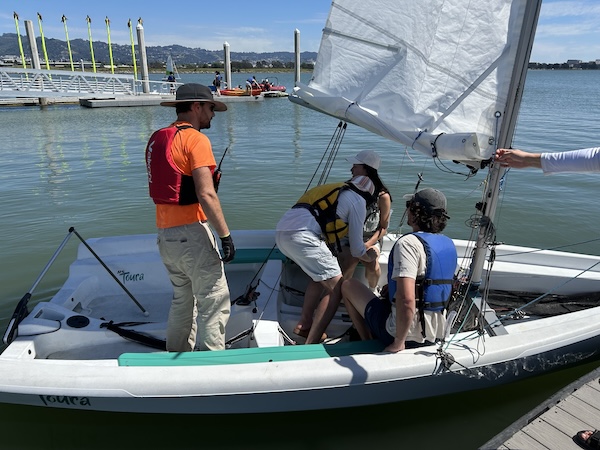
The view of white sails out on San Francisco Bay on a sunny day causes many to wistfully wonder what it might be like to be on one of those boats or windsurfing boards. To satisfy that curiosity, the Cal Sailing Club (CSC) holds open houses each month at the Berkeley Marina, offering free introductory 30-minute sails to the public onboard sailing dinghies or keelboats.
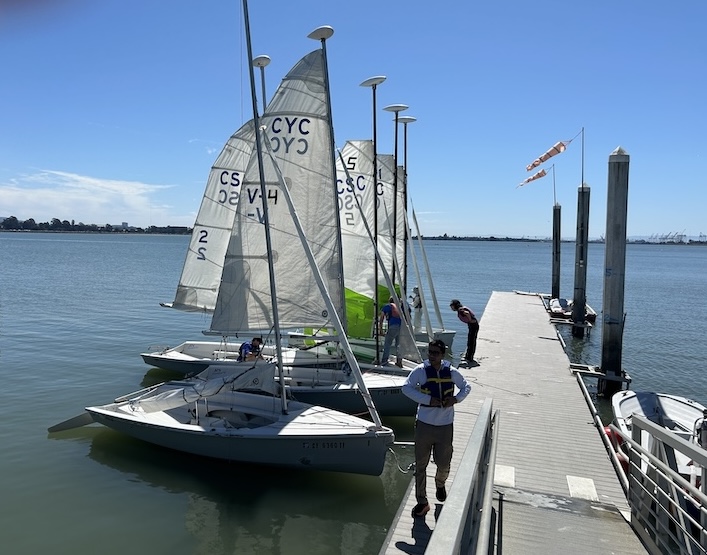
Enthusiasm for sailing runs high for those just completing their first sail, raising questions about how to further engage with the sport and gain access to boats they have just sailed on. Cal Sailing Club offers memberships at $150 per quarter, or discounted to $450 annually, which includes instruction on all craft operated by the Club. This instruction leads to increasingly advanced certifications that allow for access to the larger and more complicated boats in the CSC fleet of 26 sailing dinghies, six keelboats and 80 windsurfing boards.
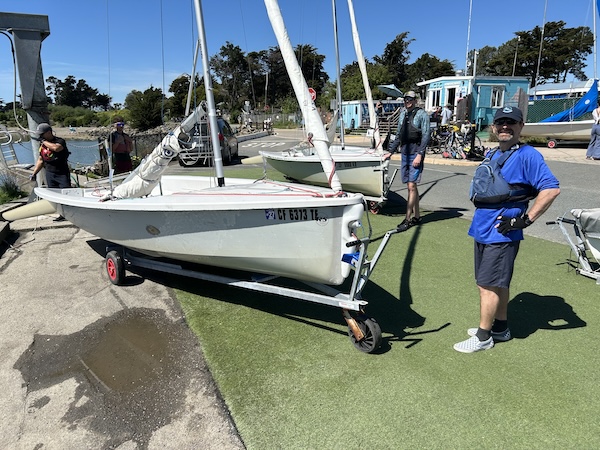
Sailing lessons for beginners are offered Monday and Thursday afternoons and Saturday mornings. Windsurfing lessons are available on Saturday and Sunday mornings. For those whose competitive juices need an outlet, dinghy races are held most Sunday mornings from 10 a.m. to 1 p.m. Any CSC member can crew, but only members with a Junior Skipper rating, or higher, and who have passed the racing rules test, can skipper.
Another important component of membership is the modest work requirement of two hours per quarter, which can be performed in a wide range of tasks ranging from cooking to member registration duties. The work projects are all organized and managed by volunteers, and give every member an opportunity to socialize with like-minded members.
We chatted with new members Turi McCarthy and Gideon Pearsall, who are drawn to the Cal Sailing programs as a “low cost way of gaining the skills needed” to operate their own boat they’re planning to buy soon. Several women who joined our conversation felt the sailing dinghies were too complicated to learn, so they opted to begin their learning process on a windsurfing board instead. The open house on Easter Sunday drew 187 adults and 30 kids (minimum age is 5), so those planning to attend should arrive well before the 1 p.m. start time. Life jackets are provided, and windsurfing instruction by the Club is a fun way to pass the time while waiting in line!
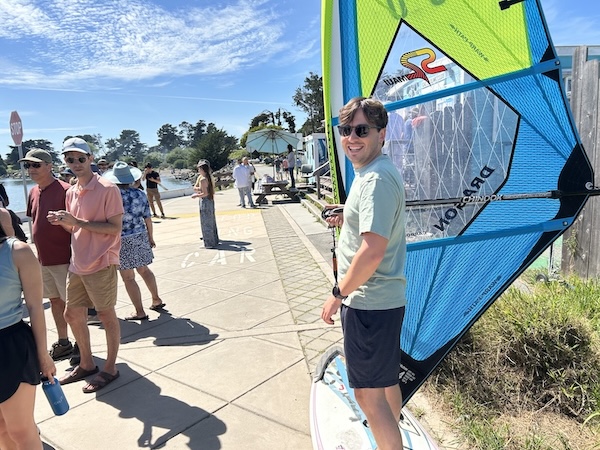
The open houses are scheduled from 1-3 p.m. on the following dates:
Saturday, May 2
Sunday, May 31
Sunday, June 28
Sunday, August 2
Sunday, August 30
Sunday, October 4
Prospective members are encouraged to sign up online at: www.cal-sailing.org.
Who Has Summer San Francisco Bay Area Cruising Plans?
Though the sailing season heats up, the Bay can cool down, but that doesn’t mean you have to sail where it’s chilly. We’re thinking about the summer season ahead and where you go when you want to go cruising in Northern California. The Bay Area has a reputation for not having many cruising destinations, but that’s a misperception. There are far more than most people realize — or take advantage of. We’re sharing some of our favorite spots below.
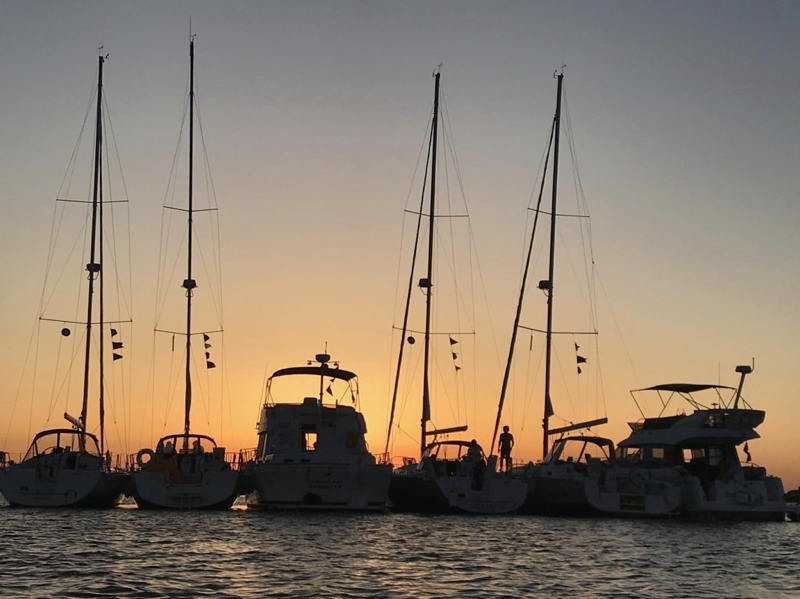
The warmest, largest and most protected area is the California Delta, where some boats spend the entire summer cruising the sloughs, rivers, harbors and anchorages. Rather than cool, it can be too hot, but it also offers the relief of very swimmable, fresh water.
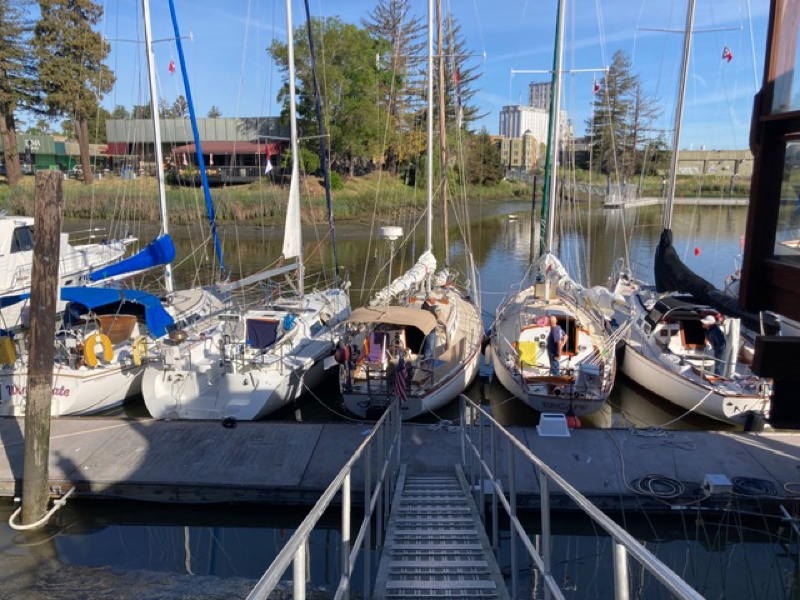
Rich Brazil sent us this photo of a raft-up at the docks in downtown Petaluma. Closer to the Bay and not quite as hot as the Delta are destinations like Petaluma, Napa, Vallejo and Benicia. This is the area Jack London loved to cruise. It’s also where he served as a member of the “Fish Patrol” trying to do environmental conservation work over 125 years ago! (The 150th anniversary of London’s birth was on January 12.)
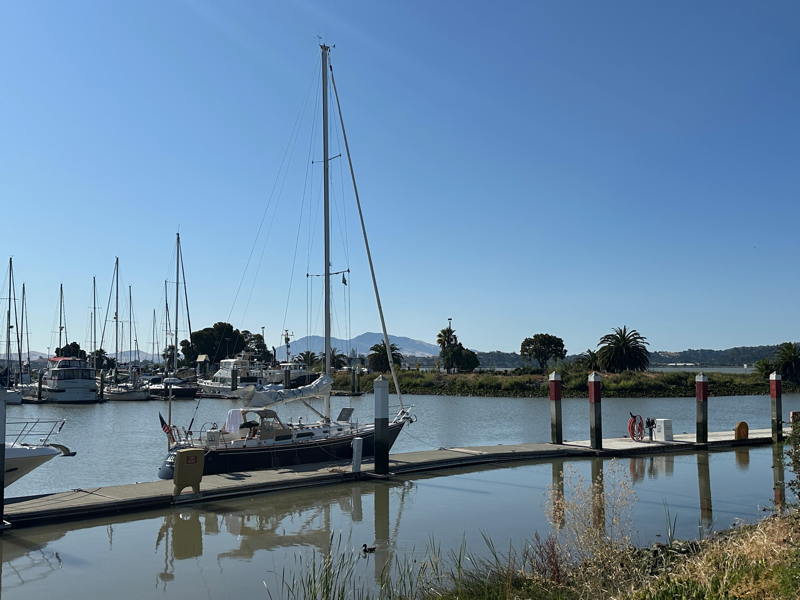
Heading toward the Delta is an easy choice for a long or short cruise. But there are lots of one-night weekend cruises as well. The Alameda Estuary can be surprisingly warm and comfortable, with lots of guest slips available in the many marinas. A cruise to Westpoint Harbor in Redwood City is a way to cruise south inside the Bay.
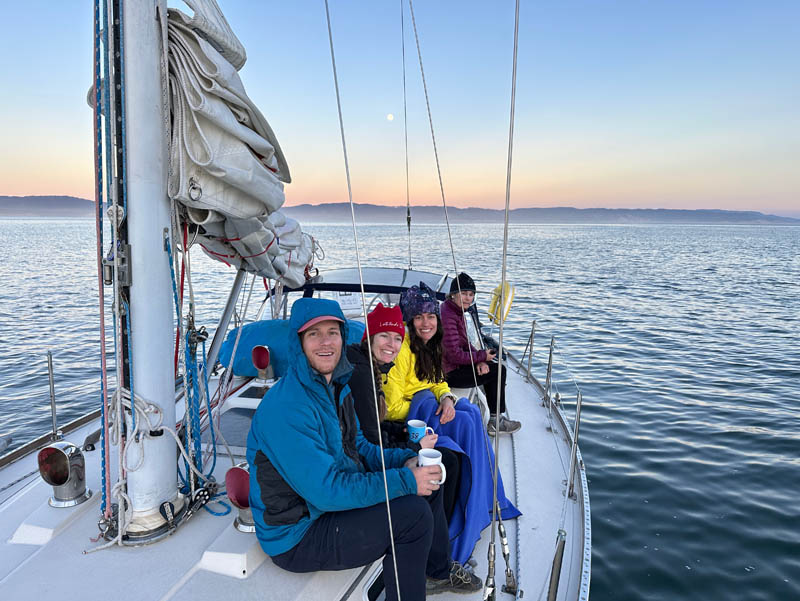
Outside the Bay, you have Drake’s Bay, Half Moon Bay and many stops in Monterey Bay. These close-to-home getaways get you out into the Pacific Ocean but with nearby destinations. Who’s planning to go farther and sail south and cruise the Channel Islands this summer?
Have you made summer plans? Let us know where you plan to take your boat this summer, or some of your favorite places to drop anchor, raft up, get a guest slip, or get beyond the always-pleasurable daysail on the Bay.
We’d love to hear about your favorite Northern California cruising destinations in the comments below. Or email us here (and send photos too!).
Looking for a boat to sail this summer? Check out our Classifieds.
Join the Spinnaker Cup 2026!
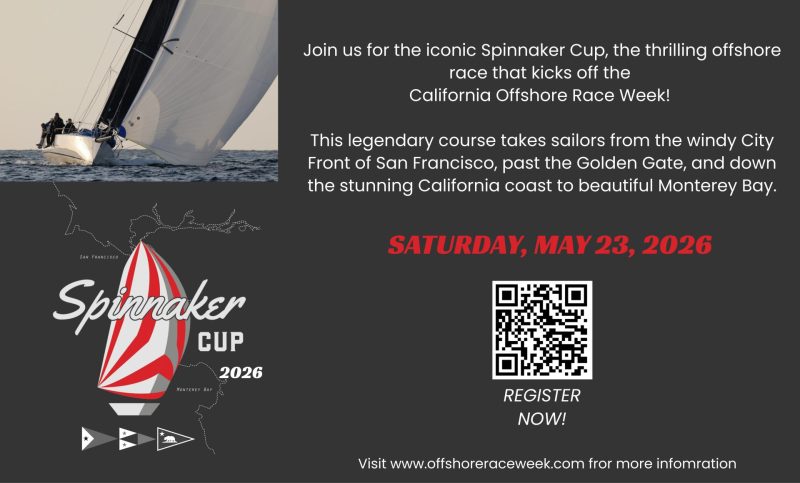
Join us for the iconic Spinnaker Cup, the thrilling offshore race that kicks off the California Offshore Race Week!
The Resourceful Sailor Crafts Affordable Galley Pot Holders
Pot holders: for securing a pot on your boat’s galley stove, not to be confused with pot holders for handling a hot pot on your boat’s galley stove. Or any stove for that matter. Both are useful.
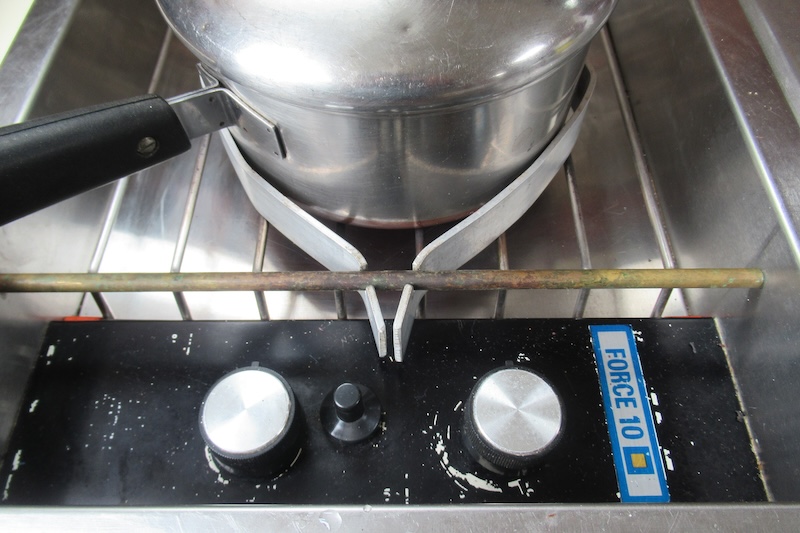
Are you preparing for a lengthy cruise? Are the hundred-dollar bills flowing from your wallet like the prevailing winds? Did you discover that a factory-made pair of pot holders from your favorite propane store would continue this trend? The Resourceful Sailor experienced this while outfitting Sampaguita, a 1985 Pacific Seacraft Flicka 20, before a Pacific tour, inspiring him to ask, “What’s an innovative solution for galley pot holders?”
I lived on and cruised Sampaguita for 10 years without needing or using pot holders (the kind that hold your pot on the stove). However, I knew I would need at least one set for ocean sailing. To boot, the stove (no oven) did not gimbal. Let’s start by saying that if your cook will feel slated because you didn’t buy the nice factory pot holders, buy them. It will be worth it. However, when you’re the cook, you can improvise and save. Here was my solution:
I had a 1/8- x 1-1/4- x 30-inch aluminum flat bar in my metals bucket, salvaged from somewhere unknown years ago. Using a vise and a hacksaw, I cut it in half and bent it into the shape of the factory-made versions. Notches were made to receive the brass rail integrated into the Force 10 stove, and which the factory versions would normally screw down onto. A little filing and sandpaper to soften the edges, and I had a free set of pot holders.
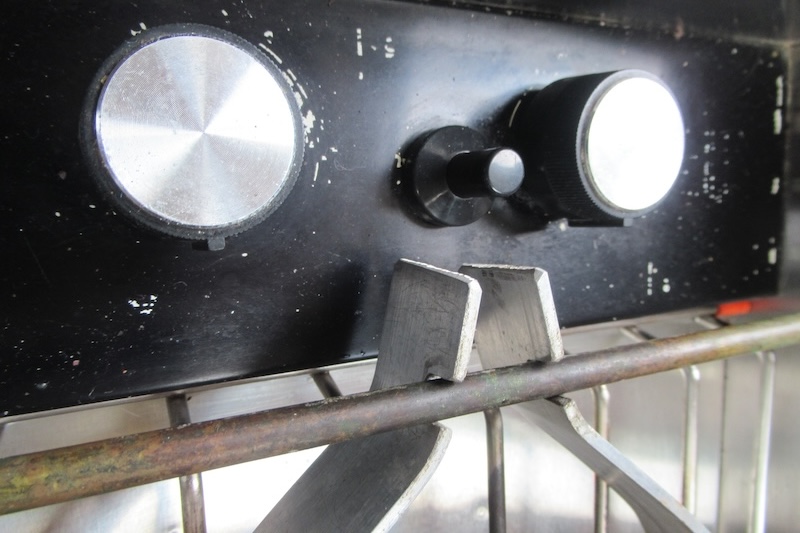
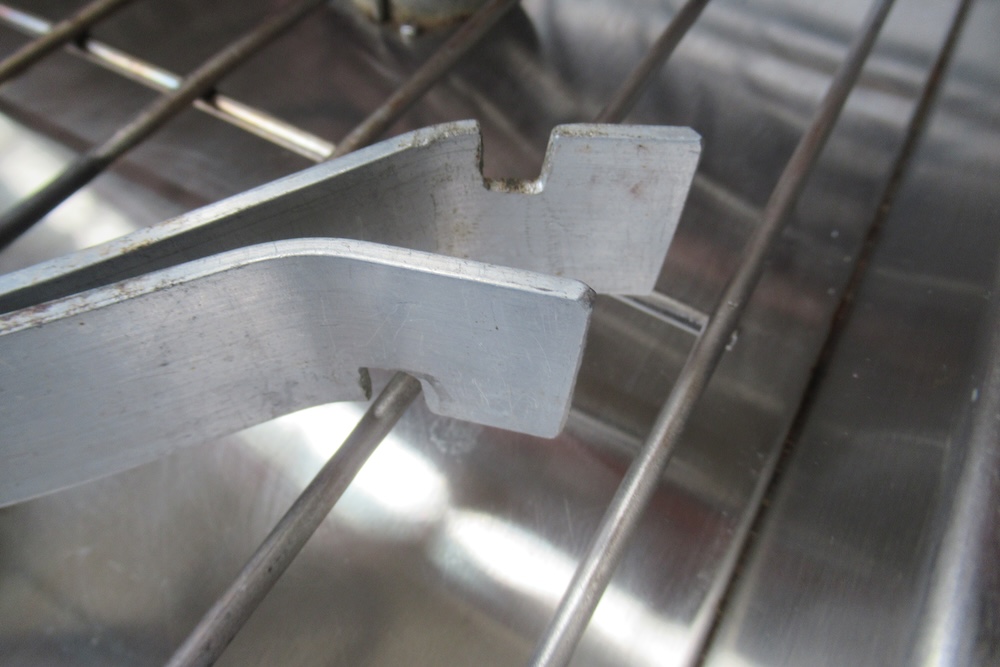
Whereas the factory version uses plastic knobs to secure the pot holders to the rail to hold your pan, my version uses opposing forces. The plastic knobs make a very positive connection, but are prone to melting, and the stainless steel gets very hot. The thin aluminum of The Resourceful Sailor’s version also gets hot, but cools quickly. Both require mindful use and a stove mitten.
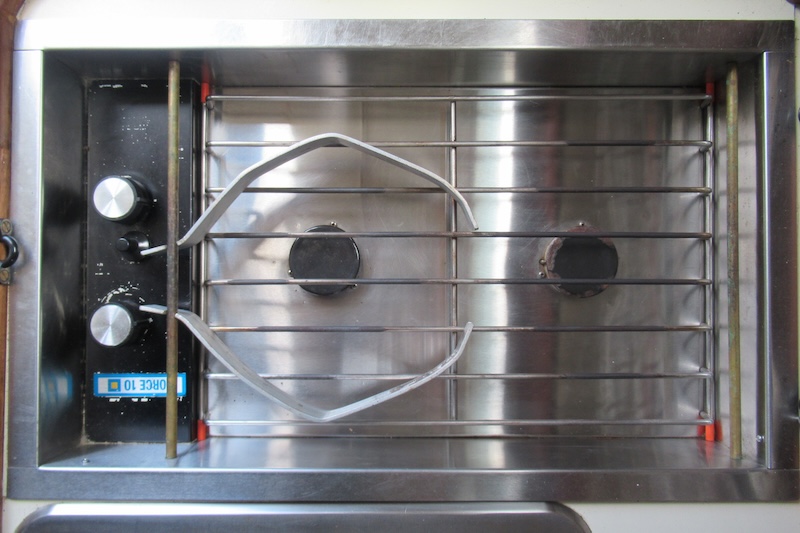
These improvised holders worked well for me on the rolling Pacific. I rarely used more than one pan at sea, and a single set was adequate. As an aside, I used a tall pan to mitigate the lack of gimbals, which had no bearing on the pot holder’s functionality.
Remember, keep your solutions prudent and safe, and have a blast.
A (Mostly) Gentle Delivery Over a Graveyard of Ships
It is not uncommon for people to tell me what a terrific lifestyle I have: Getting paid to drive boats must be the best deal on Earth. Some days it is, many days it isn’t; there are days when you earn your wages. Here on the US West Coast, many of the days when you earn your pay fall between October and March. The question is when to pull the trigger and go. And it is not so much the time of year as the predicted wind and sea state. Some vessels stayed out cruising longer than planned, or perhaps the yard project took longer than estimated and now the winter holidays have arrived and the owners are calling and emailing delivery skippers for a winter foray up or down the coast.
Estimates of shipwrecks for the area from San Diego to the Strait of San Juan de Fuca range as high as 7,000 unfortunate vessels. Interestingly, as many as 70 are likely buried beneath the streets of San Francisco, abandoned during the 1849 gold rush and left to founder and eventually be built right over. The majority of these vessels came to grief at the harbor entrances guarded by river bars. The Columbia River Bar is the most notorious, likely due to the fact that it has more traffic, and to the size and power of the seas that can develop. Other vessels like the USS Shark, whose cannon came to rest on a beach in Oregon, were simply lost along a lee shore now more renowned for weddings and The Goonies.
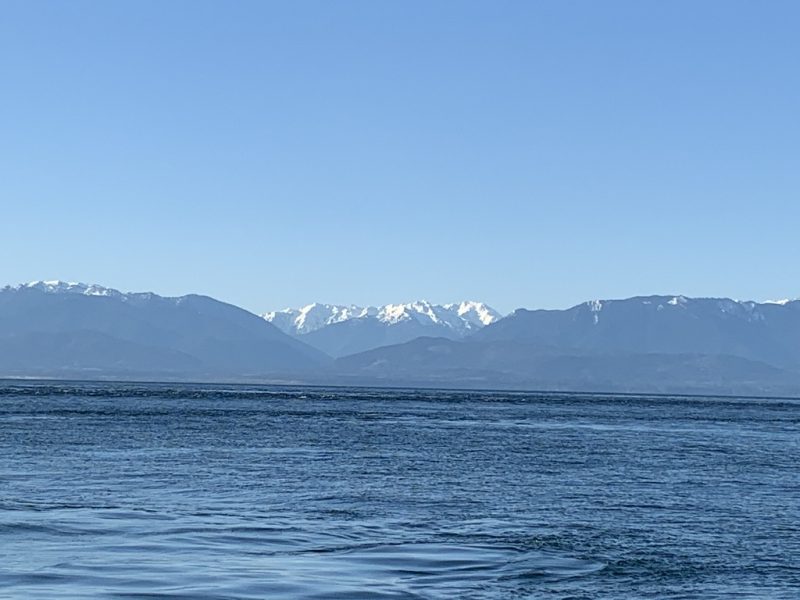
Deciding a departure used to rely on a combination of watching the barometer, the 11 o’clock news, NOAA weather forecasts, SSB broadcasts out of Point Reyes that allowed you to draw your own map, discussions with local fishermen, and whether the bar crossing was open, or closed by the US Coast Guard. Now the modern mariner has myriad free websites and professional weather routers at their disposal. Even so, most pleasure boats simply just stay comfortably in their slips. Though certainly not all. I can tell you, this year there was some fine weather in January and owners who just couldn’t wait for the spring flowers to appear before moving their vessels.
Catch the Winter Special at San Francisco Boatworks