

An Update on Overnight Anchoring Applications for Clipper Cove
Treasure Island Development Authority (TIDA) has notified us that the online location of the Clipper Cove short-term anchoring application form has changed. Whereas previously one would find the web form on Google Forms, it is now located on MS Forms. You might have bookmarked the old site — it’s time to update that bookmark.
The form itself is still the same, TIDA’s Peter Summerville tells us, but the URL is new.
The new URL is: https://forms.office.com/g/uAm71XLL9h.
“[The] easiest reminder for folks is to look for the office.com [in the] URL; don’t use the one with a Google URL anymore,” Peter writes.
The old Google Form page will remain for a little while as a “skeleton,” with a link to the new page. So even if you forget, you’ll still land in the right place, for now.
You can also find the link on the TIDA Cove webpage.
It’s great that we’re getting this news now. With summer approaching sailors will be planning nights at anchor whenever possible.
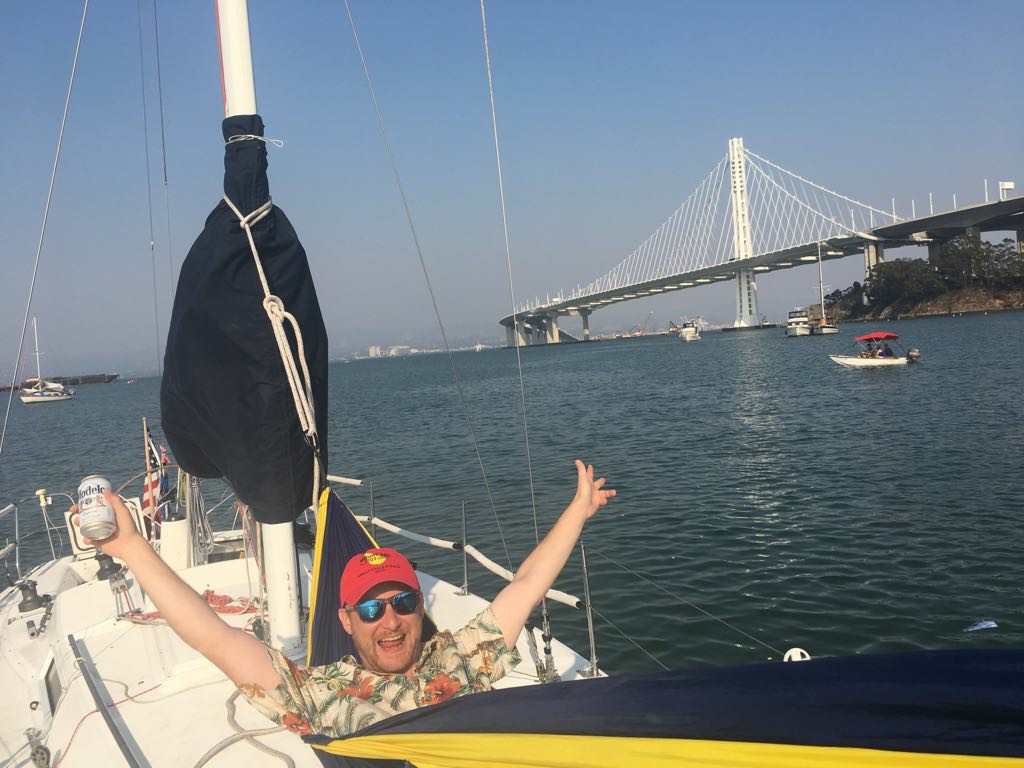
While we’re on the topic … what’s your favorite summer anchorage? And why? Let us know in the comments below, or email us at [email protected].
Good Jibes #235: Rod Scher on Historic Shipwrecks, With Host John Arndt
In today’s episode we catch up with with author Rod Scher to discuss what we can learn from some of the most fascinating and tragic shipwrecks in West Coast history. Rod has published several books, including an annotation of Richard Henry Dana’s Two Years Before the Mast, Sailing by Starlight: The Remarkable Voyage of ‘Globe Star’, and Ship of Lost Souls: The Tragic Wreck of the Steamship ‘Valencia’. He is currently writing a book on the wreck of the steamship Pacific.
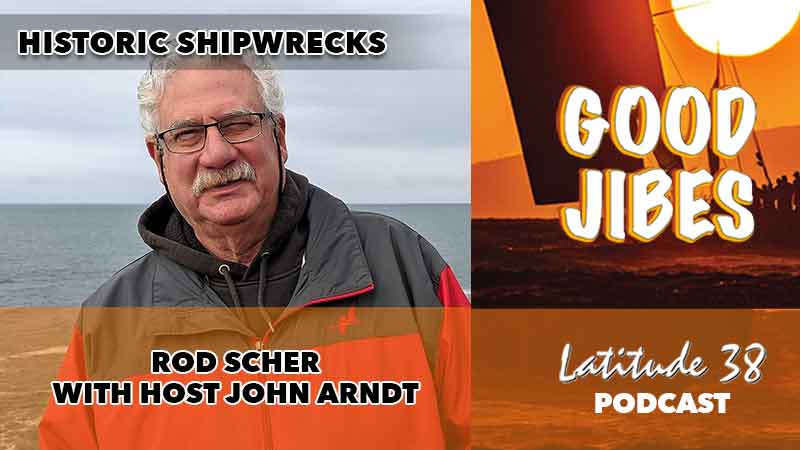
Hear about the mistakes that led to the wrecks of Valencia and Pacific, why you need to trust your instruments, how to avoid catastrophes, who is really in charge on the water, and why it’s important to read about disasters.
Here’s a small sample of what you will hear in this episode:
- Defining the Graveyard of the Pacific and its thousands of shipwrecks
- Captain Oscar Johnson’s cascade of fatal mistakes
- Life jackets made of tule reeds
- How the Titanic finally forced safety reforms
- The collision of the sailing ship Orpheus and the steamship Pacific, the latter sinking in 15 minutes
Listen to the episode on Apple Podcasts, Spotify, and your other favorite podcast spots — follow and leave a 5-star review if you’re feeling the Good Jibes!
Learn more about Rod and check out his books at RodScher.com.
Check out the episode and show notes for much more detail.
Get Paid to Sail at Modern Sailing
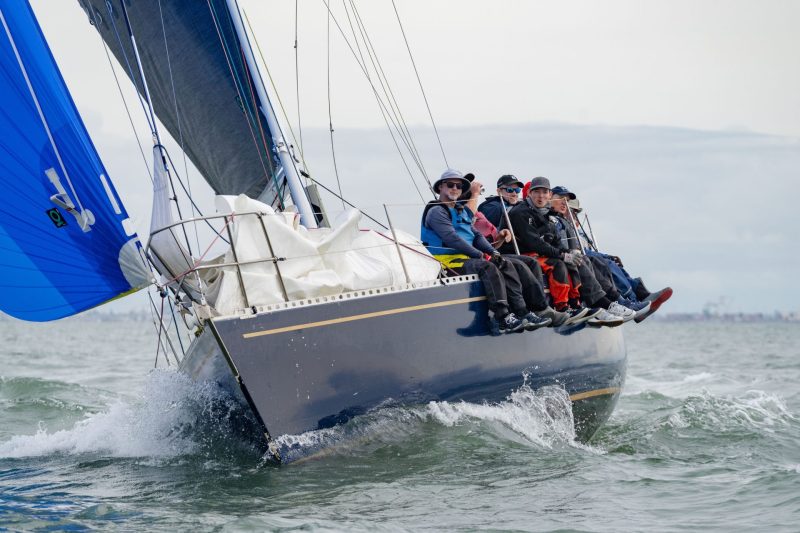
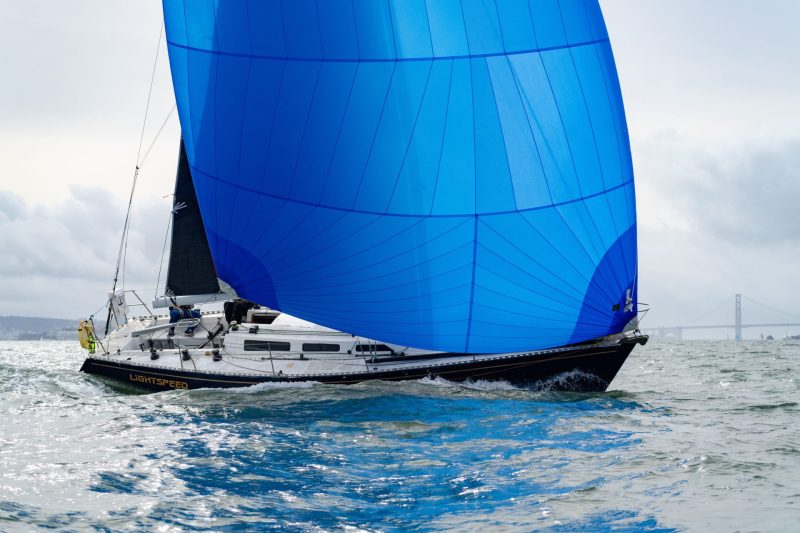
Gilles Combrisson and ‘Lightspeed’ Prepare for the 2026 Pac Cup
With 2026 being a Pacific Cup year, Latitude 38 is working to highlight as many as we can of the sailors and teams racing to Hawaii in July. Today’s feature is on Gilles Combrisson and his Wylie 39 Lightspeed, sailing under the Richmond Yacht Club (RYC) burgee.
Latitude 38 (L38): What inspired you to sail the 2026 Pac Cup?
Gilles Combrisson (GC): I’ve raced in a lot of Pac Cups, but never on my own boat. Lightspeed fell into my lap. It’s a great boat, so here we are.
L38: Is this your first crossing? What’s your favorite Pac Cup or Transpac memory?
GC: Seven Pac Cups and three Transpacs, and one failed Transpac attempt. Sailing into the finish off Kaneohe at dawn on Jubilant was one of the most memorable arrivals; still get goosebumps from that one!
L38: What is your background as a sailor outside of ocean racing?
GC: I’m a newcomer to sailing. I fell in love with the sport in my late 20s, bought a boat, quit my job and became an apprentice, and later started my own rigging business.
L38: Who will you be racing to Hawaii with? Can you tell us a little bit about them?
GC: I’m sailing with a bunch of awesome friends and sailors. Ron Tostenson (Ron and family were the first people I ever raced with and are responsible for my addiction!), Mark Jordan, Andy Schwenk and Ken Haas. This will be Ken’s first Pac Cup, but he has sailed extensively offshore since he was a kid. Mark and Andy are industry pros with huge experience. Andy Schwenk is the prankster who said we fouled him on the radio in 2014 when we crossed paths in the middle of the night hundreds of miles offshore. He was, of course, joking, but in my stupor I took it seriously and chewed out poor Karl Robrock, who was driving at the time and had absolutely no idea wtf I was yelling about. We still laugh about it today.
L38: What are you most looking forward to in the crossing?
GC: Collecting the fruits of five years of work on Lightspeed, and the good times and camaraderie that will ensue.
L38: Anything else we should know?
GC: Andy Schwenk will be chained to the windward rail for the first three nights as payback for his prank.
We hope Andy manages to talk his way off the rail!
NOAA Tide Page Bug Highlights Risks of Relying on a Single Navigation Data Source
Louis Benainous, owner of the CS 30 Blue Note sailing out of Berkeley Marina, was developing the tide web app Tide Tracker when he identified a timing discrepancy on official tide pages published by the National Oceanic and Atmospheric Administration (NOAA). This raises broader questions about the importance of verifying critical marine navigation data across multiple sources.
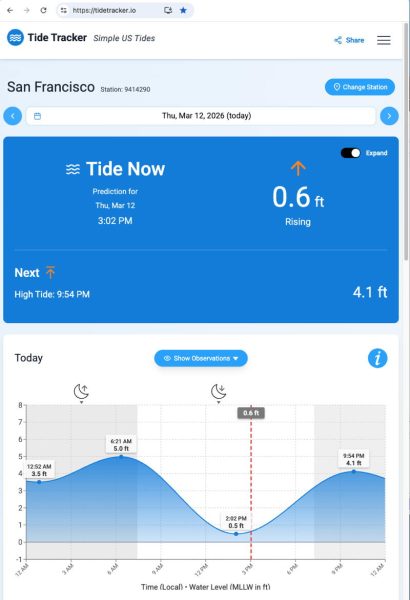
While testing Tide Tracker, the development team noticed that predicted high- and low-tide times displayed in their app differed by exactly one hour from those shown on the NOAA station page for the San Francisco Tide Station.
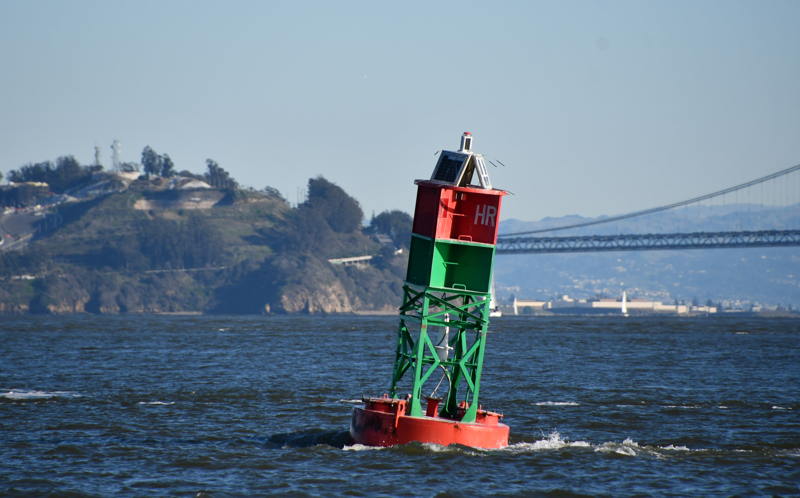
For March 12, Tide Tracker displayed a predicted high tide of 5.0 feet at 6:21 a.m., while the NOAA station page listed the same tide event at 5:21 a.m.
The team initially suspected a daylight-saving-time error in their own code. After extensive testing and code review failed to identify a problem, the developers contacted NOAA’s Center for Operational Oceanographic Products and Services (CO-OPS) to investigate.
In response, NOAA staff confirmed that the discrepancy is due to an issue affecting the station home pages themselves.
“Our IT staff is aware of this issue with the station home page. I cannot provide any guidance as to when this may be resolved or corrected,” the NOAA representative said.
The NOAA tide predictions available through the agency’s data APIs — the source used by Tide Tracker and many other marine applications — appear to be correct. The issue appears limited to how the station pages display the times, which currently (no pun intended) do not adjust for daylight saving time.
NOAA’s tide and current data are widely used by sailors, commercial mariners, harbor operators, fishermen, coastal planners and recreational boaters throughout the United States. Discrepancies in timing can matter when navigating shallow waters, entering harbors, or planning vessel movements.
“Like many marine app developers, we rely heavily on NOAA data,” said Tide Tracker’s lead designer, Louis Benainous. “Our first assumption was that we had introduced a bug. It took quite a bit of investigation before we realized the discrepancy was coming from the station page itself.”
The discovery underscores a longstanding principle of seamanship: “The prudent mariner will not rely solely on any single aid to navigation.”
Tide Tracker is a free web application designed to present NOAA tide data in a simplified format that shows predicted tides, observed water levels where available, and the current tide level (“Tide Now”) at thousands of US tide stations. Based on what NOAA staff have said, it seems the prudent mariner will do well to get the Tide Tracker app.
The web app is available at https://tidetracker.io
Westwind Yacht Management — Washing, Waxing and Varnishing
Westwind Yacht Management: Premiere Yacht & Fleet services for the San Francisco Bay Area.