
MPYC Hosts Boxing Day Regatta on December 27
The Monterey Peninsula Yacht Club (MPYC) held its annual Boxing Day Race a day late this year, sailing on December 27, as Saturdays always seem easier. Coming on the heels of a robust winter storm, the race day felt like a gift — clear skies, cool air, and a light, manageable breeze that made simply being on the water a victory.
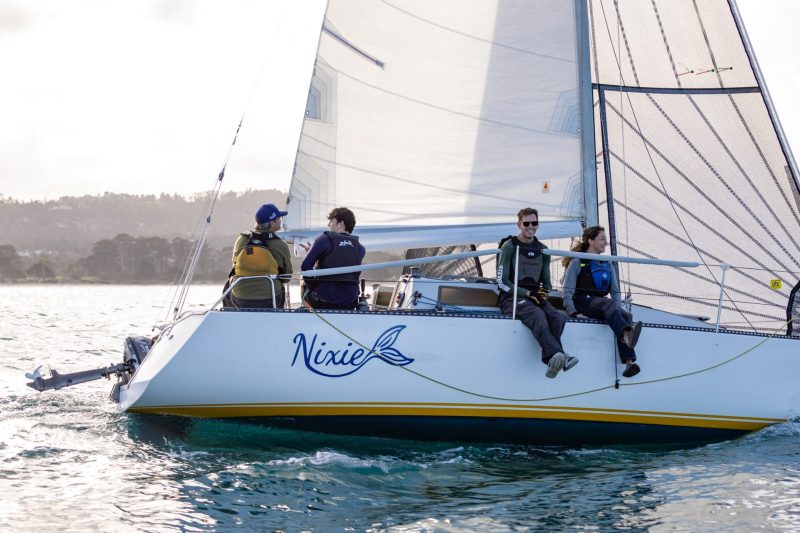
Only three boats made it out to the starting line, giving the race an intimate, almost club-practice feel. The fleet included the Shields-class sloop Charlotte, the ubiquitous Santana 22 cleverly named 22 Scadoo, and the Olson 25 Nixie. Small in number but high in spirit, the boats milled near the line, crews smiling and shaking off the excesses of the holiday season.
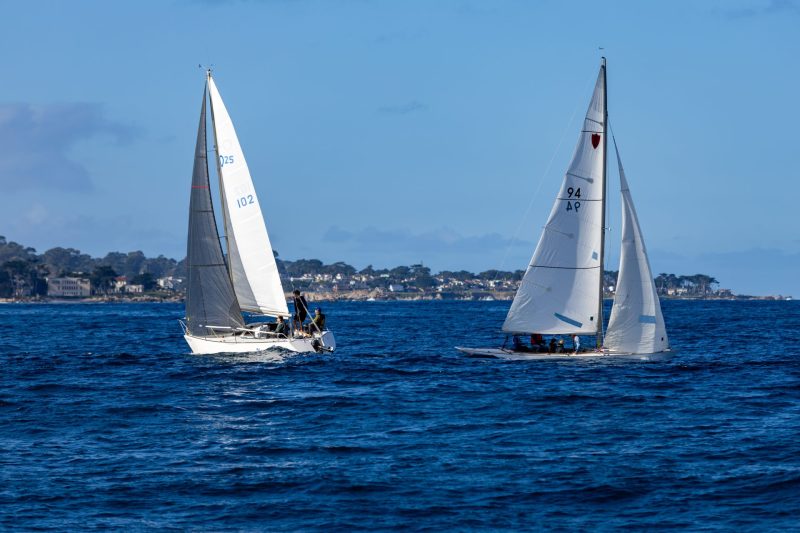
At the start, Charlotte chose to play the rabbit, heading north on a port tack and stretching her legs early. The other two boats crossed her stern on the favored starboard tack, aiming toward the shoreline and whatever pressure might still linger there after the storm. It was a classic split, the kind that sparks quiet confidence on one boat and hopeful glances over shoulders on the others.
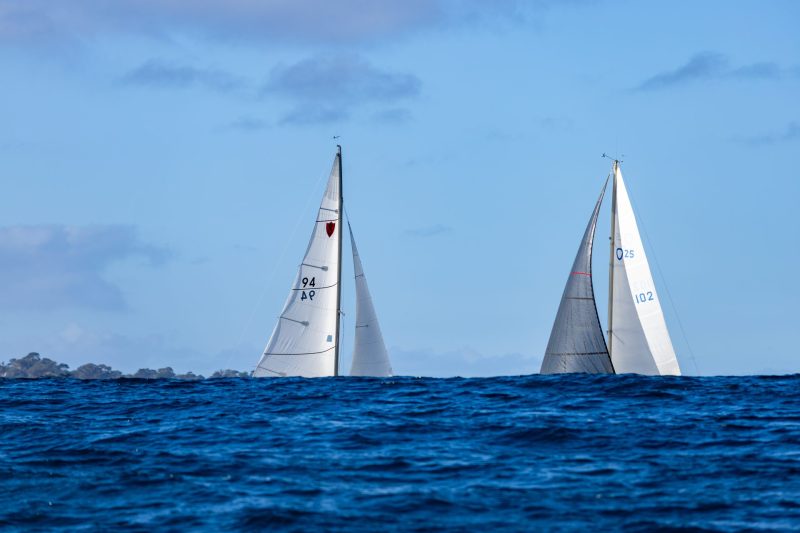
The racing was relaxed but honest, with enough breeze to reward good sail trim and enough calm to invite conversation and laughter aboard. More than anything, it was a day to enjoy Monterey Bay in its post-storm clarity — clean air, bright water, and the simple pleasure of sails drawing again.
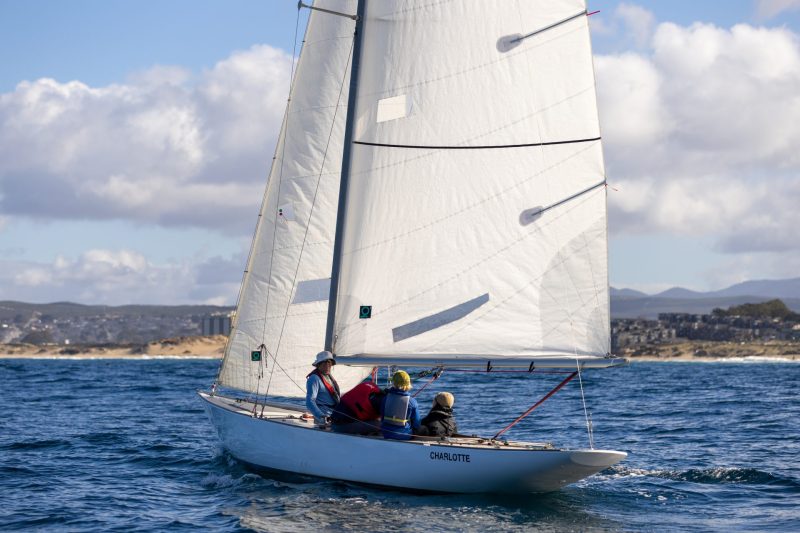
Back at the dock, the results mattered less than the expressions on the sailors’ faces. By all accounts, everyone had a great time, and with boats safely tied up and stories already growing in the retelling, another Monterey Peninsula Yacht Club Boxing Day Race was officially in the books.
Good Jibes #225: Annie Gardner on Trailblazing Women’s Sailing and Windsurfing, With Host John Arndt
As we introduce this week’s episode of Good Jibes, we want to extend a big “Thank you!” to our listeners and sponsors — we recently surpassed 200,000 downloads of the Good Jibes podcast!
This week’s guest is sailing and windsurfing renaissance woman Annie Gardner to talk about blazing her own trail and empowering women sailors. Annie placed second in the 1984 Olympics for women’s windsurfing, has over a dozen national and international titles to her name, and was a navigator on the 1995 all-women’s team in the America’s Cup.
Tune in as Annie chats with host John Arndt about how to build your independence as a sailor, how to read and react to the wind, how she teaches women how to sail and race big boats, parallels between cruising life and racing, and the magic of sailing you truly can’t get anywhere else.
Here’s a sample of what you’ll hear in this episode:
- Early independence and offshore racing at SORC
- Creating Women’s Week Offshore
- 1984 Olympic windsurfing and women’s inclusion
- Training for the 1995 America’s Cup
- Cruising by catamaran and mentoring women sailors
Listen to the episode on Apple Podcasts, Spotify, and your other favorite podcast spots — follow and leave a 5-star review if you’re feeling the Good Jibes!
Learn more about Annie and Wind Goddess Retreats at WindGoddessRetreats.com.
Steering the Dream With Hydrovane
Hydrovane is your best crew member: an independent self-steering windvane and emergency rudder/steering system … ready to go!
The (Sailing) Rose Bowl Converges on Long Beach
University of Indiana’s New Year’s Day demolition of the Alabama Crimson Tide in the 2026 Rose Bowl Game and College Football Playoff Quarterfinal wasn’t the only Rose Bowl athletic event that helped ring in 2026 in Southern California.
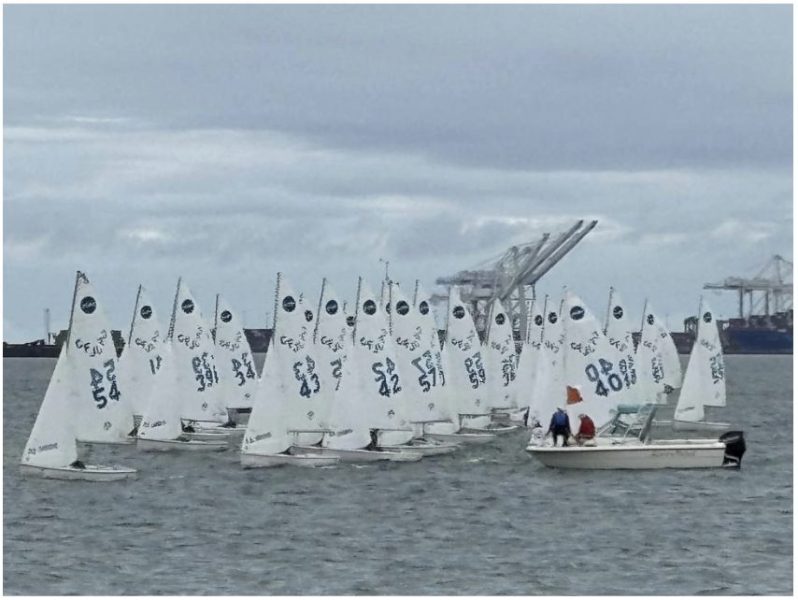
One hundred eight high school and college teams converged on the US Sailing Center in Long Beach (USSCLB) for the first weekend of 2026 to compete in the regatta. The USC sailing team is the official host of the regatta each year. Twenty-four college teams competed, with teams from five of the seven collegiate sailing conferences represented. Eighty-four high school teams competed across Gold, Silver and Bronze fleets. The regatta is among the largest collegiate and high school regattas in the world annually.
“Racing took place during a weekend forecast for rain and light to moderate winds,” the USSCLB press release says of the regatta. “Sailors braved the elements and experienced light rain Saturday afternoon and Sunday morning before the racing. A southeasterly breeze ranging from three to eight knots presented some atypical Long Beach conditions.”
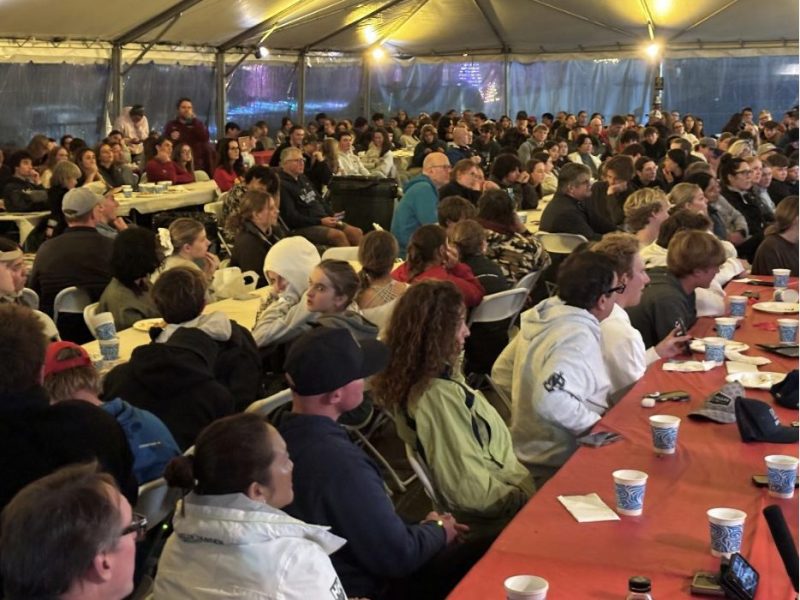
One of the longstanding traditions of the Rose Bowl Regatta isn’t even an on-the-water tradition. Each year the regatta hosts a Saturday night dinner in the Sailing Center. This serves as one of the biggest annual recruiting events for college sailing teams. The collegiate sailors competing in the regatta speak to the crowd of hundreds of high school sailors about the perks of their school, in both sailing and academic terms. Rose Bowl is such an important recruiting event for college teams that most varsity programs will send an assistant coach, or sometimes even their head coach, to recruit sailors, even if their team isn’t sailing in the regatta itself. Often during the regatta, college coaches at the event are just as concerned with walking the beach to talk with prospective high school sailors as they are with coaching their own teams.
On a personal note, this writer remembers both being in the crowd of high schoolers wondering where he should sail in college, and then several years later standing in front of the crowd extolling the perks of Connecticut College and its wonderful sailing team.
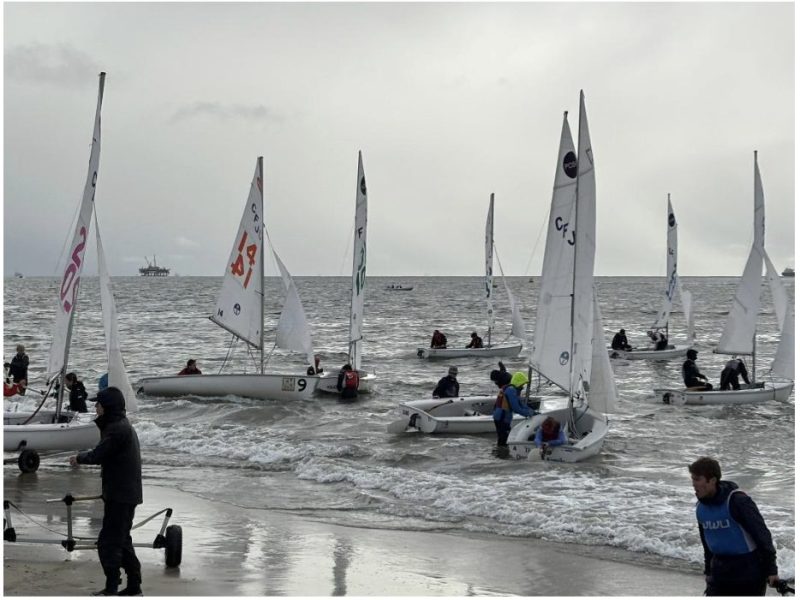
On the water, the collegiate division was dominated by two teams from the New England Intercollegiate Sailing Association (NEISA). The Brown University Bears won the event, tallying a total of 42 points from 12 races (six in both A and B divisions). The Bears’ A division duo of skipper Blake Behrens and crew Vera Allen finished outside the top five in only one of their six races, and won races three and six. The B division duo of skipper Noah Stapleton and crew Dominic Ciccimaro finished in the top three of all races but one, also recording two bullets. The Bears finished five points ahead of the second-place Boston College Eagles.
The high school Gold fleet was won by the San Marcos Royals, who tallied 66 points from the 12 races between A and B divisions. The Mater Dei Monarchs finished second, and likely would have won the event were it not for a 30th-place finish in race 3B (there are no drops in high school or college sailing). The highest-finishing Northern California team was The Bay School of San Francisco in 13th place.
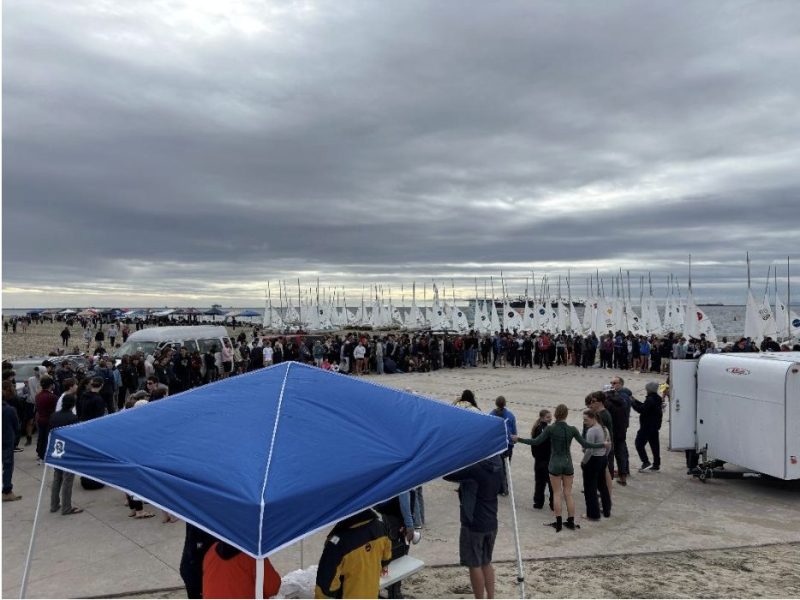
“With pretty short races the starts were super-important, and if you were able to get off the line, [you were] pretty well set up for the rest of the race,” Bay School A division skipper and 2025 C420 national champion Caleb Everett tells Latitude. “Big congrats to the winners, and shout-out to all of my competitors, who are all very talented sailors and great sports. They’re really fun to be out on the water with. Overall, it was a solid weekend, but we’re leaving with a desire to do much better in the upcoming Golden Bear. I know that we have it in us, so watch out for the Bay in the spring.”
High school Silver fleet was won by La Jolla High School, which totaled 132 points from 16 races. High school Bronze fleet was won by out-of-conference Grosse Point South High School of Michigan, tallying 62 points from 16 races.
Caption Contest(!) — January 2026
Welcome to our first Caption Contest(!) for 2026! We’re taking the relaxed approach to the year ahead. We hope you’ll join us. Start by sharing your comments on the photo below.
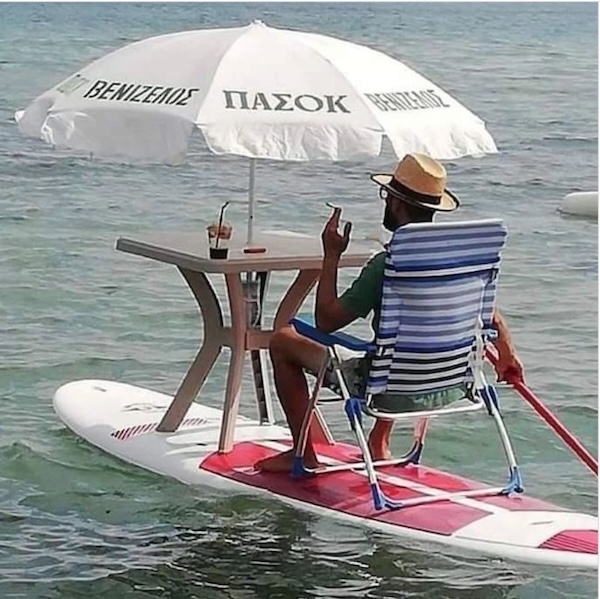
You can check out December’s Caption Contest(!) winners in the January issue of Latitude 38 Sailing magazine here.
Tackling Unexpected Challenges on the Baja Bash
It was to be a routine Baja Bash delivery aboard my friend Manny’s SV Dolce Vita, a 47.3-ft Beneteau, from the Sea of Cortez to Emery Cove, San Francisco Bay. Jeanie and I (the crew) flew in to San José del Cabo, Mexico, where we familiarized ourselves with the boat, quickly made a provisioning list, and took an Uber to the local grocery store.
Within minutes of our departure, we noticed a substantial discrepancy between the chartplotter compass and the fixed magnetic compass in the cockpit, leading us to ask, “Where is the fluxgate compass located?”
“Ahhhh …” I said, “we just stored some canned foods in that very location!”
It was a quick and easy fix as we relocated anything with metal to another location. For the next hour we enjoyed sailing in sunny conditions — until the wind died and the sea became flat. We set our three-hour watch schedules as we motorsailed in the company of whales, dolphins, birds, and a huge sea turtle leisurely paddling by our vessel.
A starry and moonless night followed as we averaged 5 knots. The reflection of the phosphorescent lights surrounding Dolce Vita’s hull set us up for a peaceful mood as we continued into the night. All systems, as well as the three people aboard, were in sync and happily moving along — that is until at noon the following day we noticed white smoke emanating from the exhaust, a slight increase in engine temperature, and an increase in pressure on the Racor housing gauge, all indicative of the need to change the diesel fuel filter, which we did.
We continued on to Bahia Asunción, where we refueled and reprovisioned with the help of a friendly local fisherman, Lery Espinoza, who operated a water taxi service. Under rather breezy conditions we continued on to Turtle Bay. Here we joined a nearby multihull for a lovely home-cooked shepherd’s pie, prepared à la French cuisine. What a treat!
By day seven we had lively sea conditions with apparent wind speed of 25 knots on the nose, and 5- to 7-foot seas at nine seconds. We passed Isla Cedros averaging 3 knots in washing-machine-like conditions and wrapped in dense fog, a heavy marine layer all around us.
On day nine we reevaluated our slow progress. There was no sign of relief gathered from the various weather sites. PredictWind was our most reliable source, while Navionics showed us nearby anchorages.
At 0300, our speed over ground was less than 2 knots against a stiff headwind. We also noticed the white smoke again, and some oil and water drips below the engine.
Visit Antioch Marina, the Gateway to the Delta