
Invitation to ‘Clover’s Open Day With VetsBoats In Richmond
This past May, Latitude 38 introduced readers to the VetsBoats organization and their majestic yacht, Clover (see Sightings, May 2025). VetsBoats founder Terry Moran and volunteers had brought Clover a long way from her near-sinking condition years prior. Recently, after some time on the hard, she was relaunched and ready for the next phase of her restoration.

“She was on the hard for nine months while we replaced every metal structure holding the keel and framing together in the bow,” says Moran. “Eight stainless steel floors were installed, several frames were repaired, and over 140 feet of planking was replaced. We also wooded the entire hull and treated it with epoxy. We were happy to find the rest of the hull undamaged.”

Clover represents an opportunity to reestablish military veterans’ health and well-being through the “transformative power of wooden boats and sailing.” She serves a dual purpose as a mechanism for personal growth while promoting the craft of wooden-boat restoration.
Her relaunch and subsequent introduction to her new home at the Marina Bay Yacht Harbor in Richmond represents a significant step in her restoration. Now that she’s afloat, all her systems, as well as her original gaff cutter sail plan, can be put in place and made ready for setting sail in 2026.

If you’d like to visit Clover, learn more about her restoration, and support VetsBoats, stop by their open-house event on Wednesday, October 1, starting at 9:00 a.m., Marina Bay Yacht Harbor, Dock F, Richmond.
Further information is available at VetsBoats.org.
SailGP 2026 Schedule Skips California
The first five seasons of SailGP always included an event under the Golden Gate Bridge as a season-ending finale to the SailGP’s world tour. The most recent three seasons also included a Los Angeles stopover. The 2025 season will finish up with the Grand Final in Abu Dhabi, followed by the start of season six in Perth, Australia. The 2026 schedule does not include a California stopover.
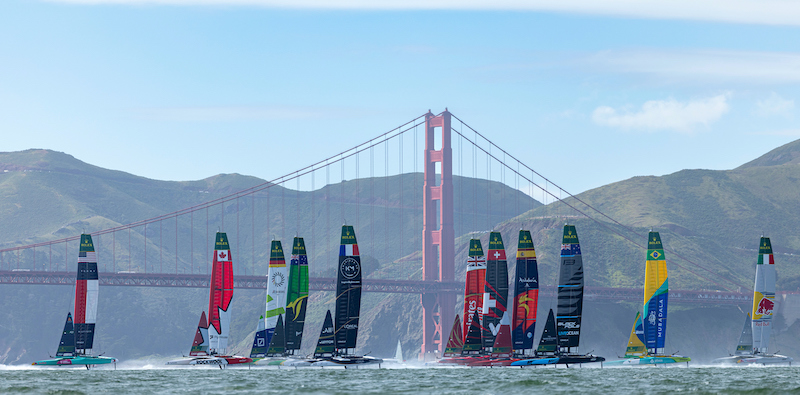
Mark Reid reached out to SailGP, which reported, “As background, while events in Los Angeles and San Francisco were not logistically feasible within our 2026 Season calendar, we remain open to returns to both venues in future seasons, including 2027.” So California fans will have to jump onto a jet or sail to some distant places to see the tour live in 2026.
The 2025 season will be finishing up with the last season race in Cadiz, Spain, on October 4–5 and the Grand Final in Abu Dhabi on November 29–30. If you want to fly to Abu Dhabi for the final, you can buy tickets here. You can see the schedules for 2025/26 here.
Discover Your Next Horizon With Richard Boland Yachts

Transforming Shipping With the Power of Wind, Sail and Sailors
In 2017, French singlehanded sailor François Gabart did the seemingly impossible by sailing around the world solo, aboard the 100-ft trimaran Macif, in an amazingly fast, record-setting time of 42 days, 16 hours, 40 minutes and 35 seconds. For comparison, the first solo, nonstop sail around the world by Sir Robin Knox-Johnston took 312 days! Gabart’s record is one of the many ways France continues to lead in pioneering sailing-technology breakthroughs.
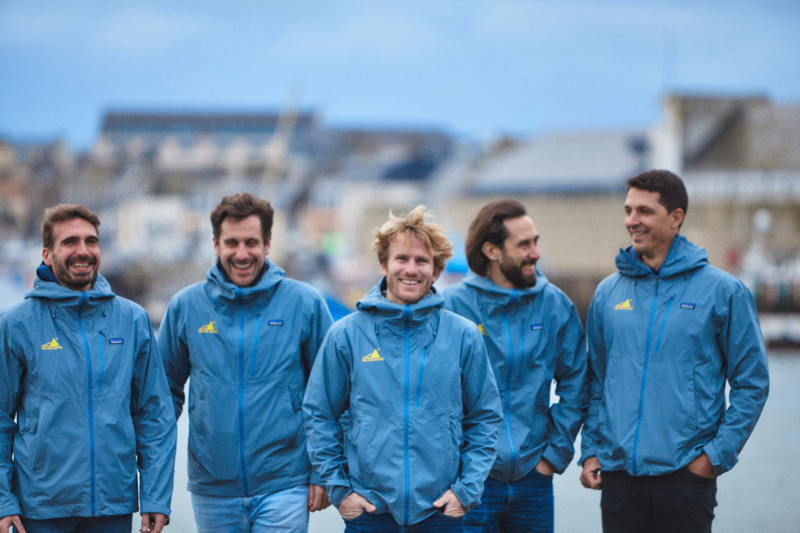
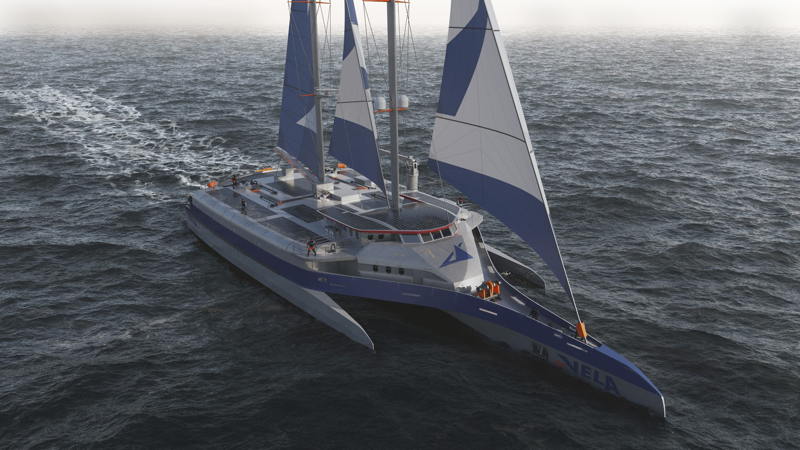
François Gabart is now a co-founder of another pioneering effort: to create sustainable shipping — a wind-powered trimaran designed to transport cargo between Europe and the Americas. The company, VELA, will operate the world’s first sailing cargo trimaran, powered 100 percent by wind when at sea, as it sails between Europe and the US. The cargo service will kick off with a partnership with Japanese pharmaceutical company Takeda, which is set to become the first company to transport its products between Europe and the US using VELA’s first-of-its-kind sailing cargo trimaran. VELA is planning to operate a fleet of these new-generation sailing cargo vessels. The maiden voyage is planned for late 2026.
Despite the current headwinds facing the renewable energy sector in the US, the rest of the world and many blue tech enterprises in the US continue to forge ahead with sustainable, low-impact solutions to transportation, commerce and even recreation on the water. While wind energy is being banned in the US (hopefully that won’t include sailing), we see entrepreneurial pioneers continue to tinker and improve clean energy technology regardless of government headwinds. Just a few years ago the wind- and fuel cell-powered French catamaran Energy Observer cruised through the Bay Area on its fossil fuel-free circumnavigation.
China continues to make miraculous progress in diversifying away from fossil fuels. It added almost 400 gigawatts of solar and wind power to its energy grid the first half of 2025, and accounted for 67% of the world’s increased solar energy capacity this year. California was a leader in wind farms when it built what is still one of the world’s biggest wind farms on Altamont Pass, though Texas has since surpassed California as the top wind power-generating state in the country. California still has far more sailors and sailboats than Texas.
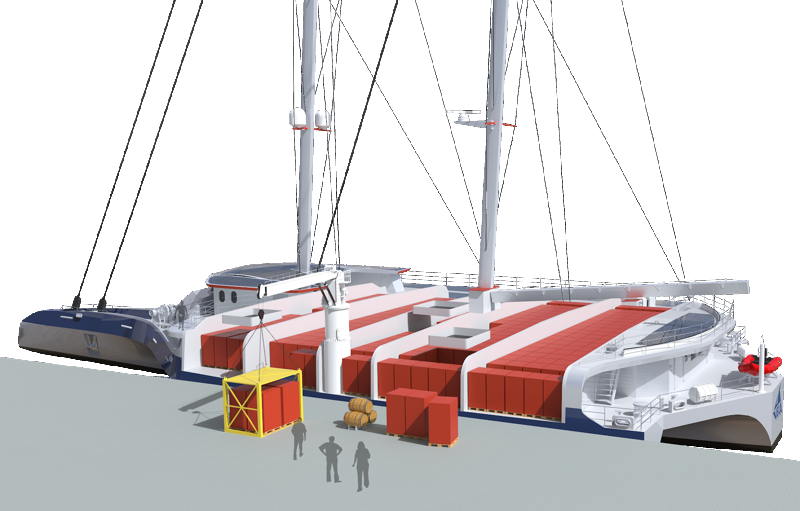
Much of the credit for improvements in sustainable, clean energy comes from the marine marketplace. Sailors are inveterate tinkerers, which, combined with their connection to the planet through the oceans, continually inspires them to technological improvement while minimizing impacts on the ecosystem. Like the early electric cars that were the pioneers ahead of Tesla, we expect to see continuous improvement and growth in wind-assisted ships as shipping companies try to reduce fuel costs and environmental impact.
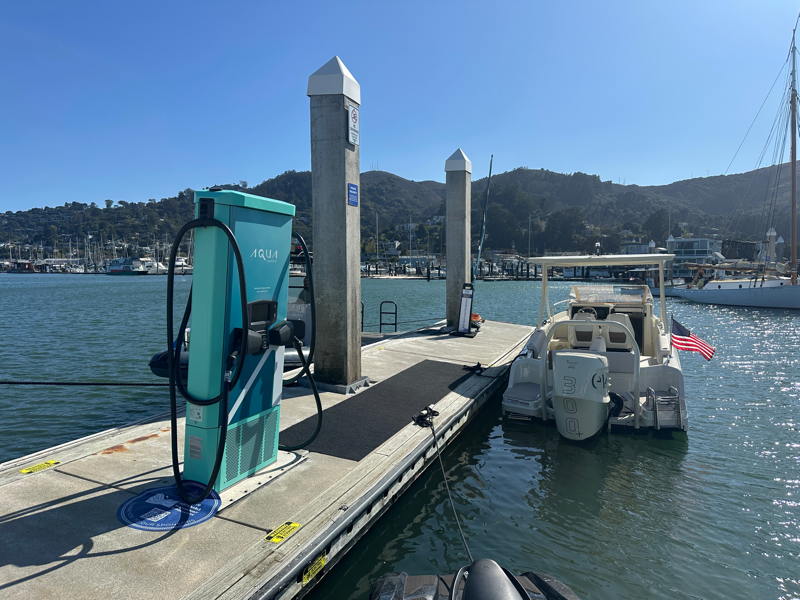
The past weekend’s Sausalito Boat Show featured a few electric powerboats alongside Clipper Yacht Harbor’s high-speed charging station on the docks. Like EV car owners, early adopters are getting on board to help spur future improvement and deployment of the technology. Berkeley Marina now has an electric inflatable for the harbor, sold by Vita Electric of France. Locally, Vita is managed by another sustainability-committed French sailor, Tanguy de Lamotte, who did the Vendée Globe in 2013 and 2017 (dismasted).
It’s amazing how many sailors like François Gabart step back onto land with an inspired connection to preserve the ocean and planetary health. Dame Ellen MacArthur, SailGP, 11th Hour Racing, Sailors for the Sea and so many other sailors, sailing organizations and sailing events are embedding sustainability at the center of their mission. Surely there is a long way to go and many innovations ahead, but the inventive minds of sailors will undoubtedly remain at the forefront of improving sustainability for the planet. François Gabart’s shift from record-breaking circumnavigations to sustainable-shipping pioneer is more evidence of this trend.
Max Ebb — The Art of the Squirrel
“To quote Cmdr. Jack Aubrey,” I shouted up the open companionway hatch from my seat at the nav station, “‘The Spanish are good fighters, but they are never ready.'”
“Actually,” Lee Helm corrected me less than a minute later, “The full quote is: ‘The pleasant thing about fighting with the Spaniards is not that they are shy, for they are not, but that they are never, never ready.'”
Lee was in the pilot berth outboard of my nav station, and I had no idea she was still awake. It was a long ocean race on a big boat, and I was signed on as navigator and assistant cook. Lee Helm was a watch captain. But the titles didn’t fool anyone: Lee was calling the shots, I was doing the grunt work of downloading new weather files as they became available.
“Yikes, Lee, have you memorized the whole Patrick O’Brian series?” I asked.
“Thank Starlink and my favorite AI server, and, like, my cellphone’s Wi-Fi,” Lee admitted from her bunk, phone in hand. “I’m trying to, like, make a point. We might need to go back to the A2 spinnaker any time; let’s be ready!”
The A2 runner had been doused a few minutes earlier, and had been left as a big, tangled heap of sailcloth on the cabin sole.
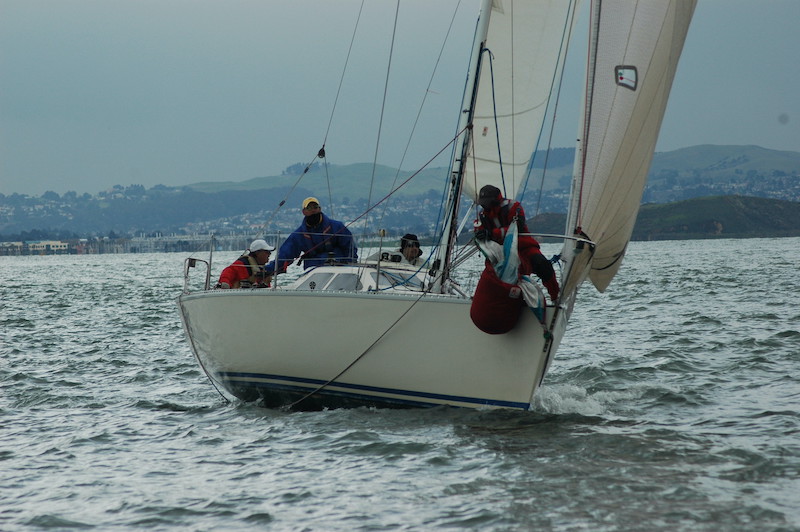
“Jack Aubrey is a fictional character, and his words are made up,” protested a very tired voice from the quarter berth. He needed to sleep on his too-short off-watch rather than crawl out of his berth and pack a spinnaker.
“But you know, Patrick O’Brian made extensive use of narrative lifted right out of the contemporary Naval Chronicles,” Lee answered. “That’s why his battle scenes read so true. I’ll bet that British naval officers in the Napoleonic wars actually said things very much like that quote.”
“It’s a clever combination of respectful praise and a prejudicial insult,” I added. “Point is, if the wind drops we’ll need the A2.”
But the crew in the quarter berth had already started to snore.
“Let’s get the chute packed,” I suggested to Lee. “I’ll run the tapes and run the zipper, if you can help me stuff it into the bag.”
Ever since leaving broken rubber bands in the ocean became verboten, racing sailors have been looking for an alternative. Velcro looked promising, but tended to be too easy or too hard to break out. The answer is zipper luffs.

At least, zippers are the answer for big sails where the extra weight is not significant. They reliably unzip from the bottom up, so the sail fills with no twists. And zipping up a sail is faster than rubber-banding, and much faster than tying yarns.
Haul Out Special for September and October