
Spaulding Marine Center To Host Latitude 38 Fall Crew List Party
“Baja Ha-Ha or Bust! Cheers to 31 Years — Latitude 38 Crew List Party”
The Latitude 38 Fall Crew List Party is on Thursday, September 4th, and above is the message Spaulding Marine Center is sharing with its community this month. We’re beyond stoked to be a part of it!
Spaulding writes, “We can’t wait to host this annual party once more! The Latitude 38 Fall Crew List Party is your opportunity to meet skippers, find crewmates, and get involved in the Bay Area cruising community. This year is extra-special — we’re celebrating the final Baja Ha-Ha Rally. Join us as we toast the legacy of this iconic cruising event. We’ll be in charge of the no host bar — all proceeds go to our youth and adult programs.
“Come early to catch the Cruising Baja Seminar with a special, seasoned speaker, the ‘Assistant Poobah,’ Patsy Verhoeven.”
Here’s some info about the seminar:
This year’s fall Crew Party will be an information-packed afternoon. We’re excited to present our Mexico cruising seminar. “Assistant Poobah” Patsy Verhoeven will share experiences from her numerous decades of sailing her Gulfstar 50 Talion in the last 15 Baja Ha-Ha’s. Hear stories, get tips, and bring your questions.
The seminar is aimed at Baja Ha-Ha sailors and any cruisers preparing to head south. It will run from 4 to 5 p.m. with a half-hour Q&A from 5 to 5:30 p.m. Doors for the cruising seminar will open at 3:45 p.m.
Next is party time!
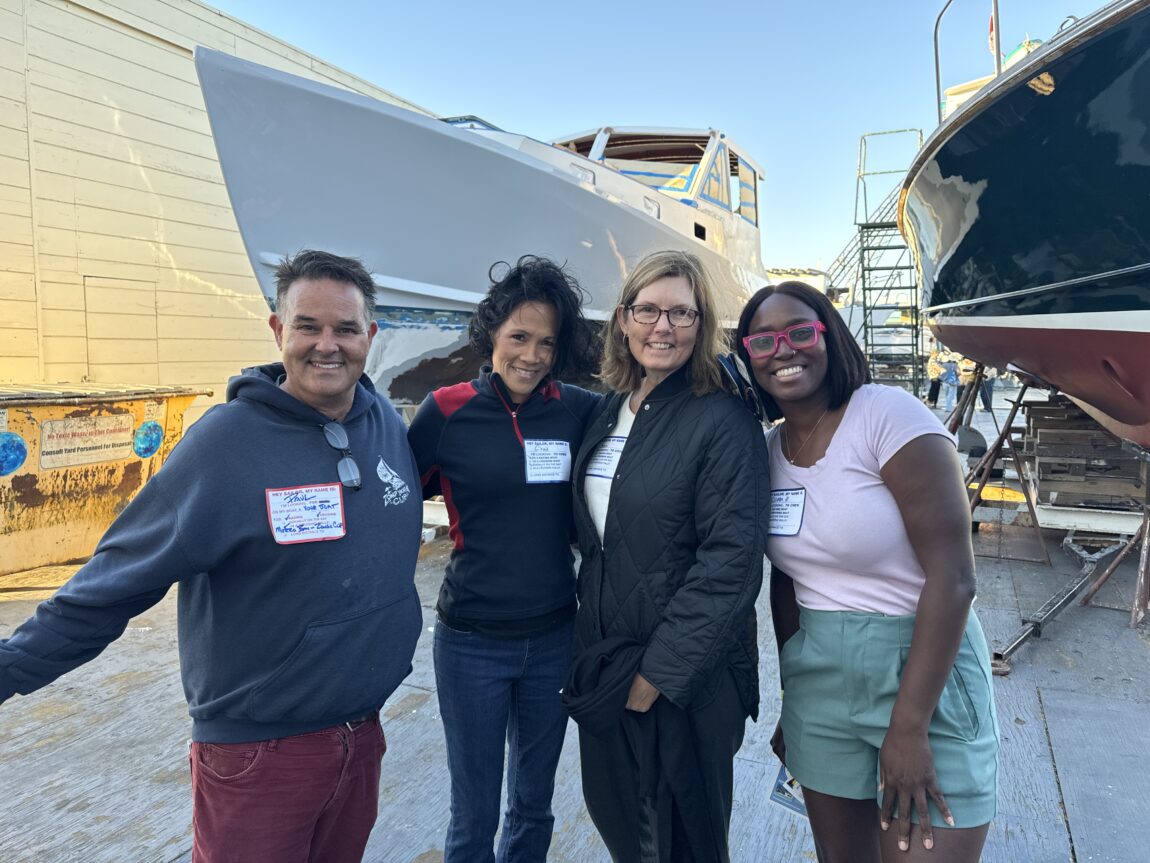
The Party – Thursday, September 4
From 6 to 9 p.m., hang out with skippers, sailors, and sponsors in the Spaulding Marine Center boatyard. Throughout the evening, Baja Ha-Ha sponsors will be available to answer questions about heading south. You’ll also meet with folks from local marine businesses, San Francisco Science Sailing Center, Island Yacht Club, and more.
And while the Spaulding crew runs the bar in support of their educational programs, the great folks from the Casablanca Mediterranean food truck will be parked outside preparing their delicious array of scrumptious foods for everyone to enjoy.
There’ll also be raffles, resources, and the incredible Bay Area sailing energy.
Admission –
Seminar Only: $10
Party Only: $10
Both: $20
Free admission for 2025 Baja Ha-Ha skippers and first mates.

Bonus
Admission includes a free First Timer’s Guide to Mexico ($15 value), door prize entry, and access to the most vibrant sailing network in Northern California.
Parking
Please do not park at Clipper Yacht Harbor. View the Parking Map for available locations near Spaulding Marine Center.
Note: This is a mostly outdoor event, so please dress in layers!
See you there! – Latitude 38
Dear Warm-Water California Sailors: An Invitation to the PNWO
Dear Warm-water California Sailors:
When asked why he wanted to climb Mount Everest, George Mallory said, “Because it is there.” Those of us who compete in the Pacific Northwest International Offshore Yacht Race (aka PNWO or just “the Offshore”), formerly known as the Oregon Offshore International Yacht Race, are often asked the same thing, and the best most of us can come up with is the same — because it is there.
Next year will be the 50th running of the race, and I am writing to invite you to consider joining the hardy and, admittedly slightly crazy, souls on the journey. The Notice of Race has not yet been published, but the race will almost certainly begin Thursday, May 14, 2026.
The Offshore starts just outside the mouth of the Columbia River, then goes up the Washington coast to Cape Flattery, then down the Strait of Juan de Fuca to finish at Victoria, B.C., for a total of 193 nautical miles. Racers gather in Ilwaco, Washington, where the night before the start there is a skippers’ meeting and weather briefing. Depending on various factors, racers generally finish in 24 to 48 hours. The fastest record of about 15 hours was set in 2014. The slowest record, set by yours truly in 2013, was a few minutes under the race limit of 72 hours. In my defense, it was my first Offshore, I have a slow boat, there was very light wind, and we refused to give up.
Given its various challenges, the Offshore is certainly not for everybody. (1) Everybody has to first travel some distance to get to Ilwaco, with some coming down from Vancouver and Seattle; (2) Just to get to the starting line one has to cross the Columbia Bar, known as one of the most dangerous bars in the world, and affectionately referred to as the Graveyard of the Pacific. (3) Both the starting and finish lines are virtual, thus requiring navigation skills not usually employed. (4) From a tactical and navigational standpoint the race is broken down into three parts, each with its own difficulties — the sail north to the turn at Cape Flattery, with its often-adverse winds and currents, plus variable weather systems; the race inbound up the strait toward Race Rocks, also with its own weather and currents; and finally the leg between Race Rocks and the finish line, requiring the decision whether to go through or around Race Rocks. (5) Regardless of the weather, it usually involves being wet, cold and sleep-deprived, and at about halfway through, wondering what possessed you to sign up for such a race, though the approach to Victoria erases those memories. On the other hand, it is a true offshore race in offshore conditions, and the scenery can be amazing and often involves seeing a good deal of wildlife, including whales (grays, humpbacks and orcas).
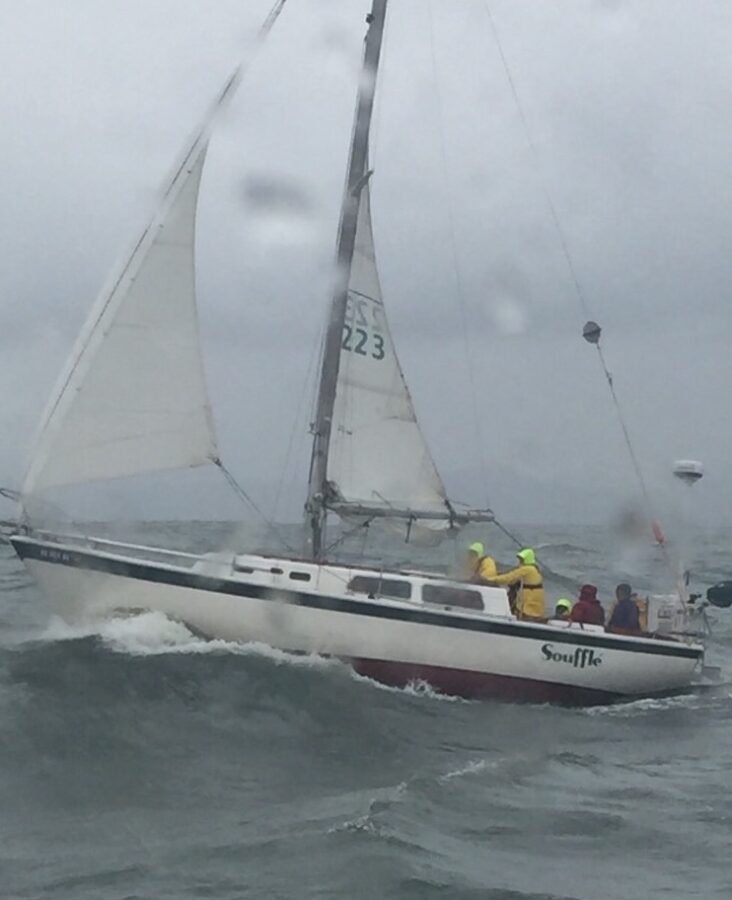
Safety is an important component and is given serious attention by the race organizers. Each boat must meet safety criteria set out in the Safety Equipment Rules. For the SERs applied to the 2025 race, along with other information, go to https://www.cycportland.org/race-information. It bears noting that to date nobody has gone overboard, been seriously hurt, or died. I cannot speak to any effects it has had on pocketbooks and/or marriages.
Not all who participate are highly competitive handicap racers sailing big high-tech sleds. But all who can meet the safety standards are welcome. A few, like me, sail classic, old, slow boats and compete in cruising class. But all who make it to Victoria achieve a great sense of accomplishment and satisfaction. Plus, we are met by a welcoming committee with hot towels for all on board and a bottle of (admittedly cheap but satisfying) sparkling wine. And, on Sunday, we are bussed to the Royal Victoria Yacht Club, a right proper yacht club, for BBQ and awards and more camaraderie.
Other benefits of competing in the Offshore include being present to participate in the 81st running of the Swiftsure International Race; the Offshore’s status as a qualifying race for those interested in the famed Victoria-Maui Race as well as the Pacific Cup; and visiting Victoria, not only a beautiful city, but right around the corner from the scenic San Juan Islands and the Canadian Gulf Islands.
So again, the Offshore, with its physical and mental challenges, is certainly not for everybody. But I certainly hope that you will consider joining us next year. If you have any questions, write to [email protected] or visit www.pacificnwoffshore.org.
– Phil Lewis, Soufflé, Cal 34
Don’t Get Behind — Schedule Your Service With KKMI Today
Breault Wins Record Fifth USWMRC Title on Home Waters
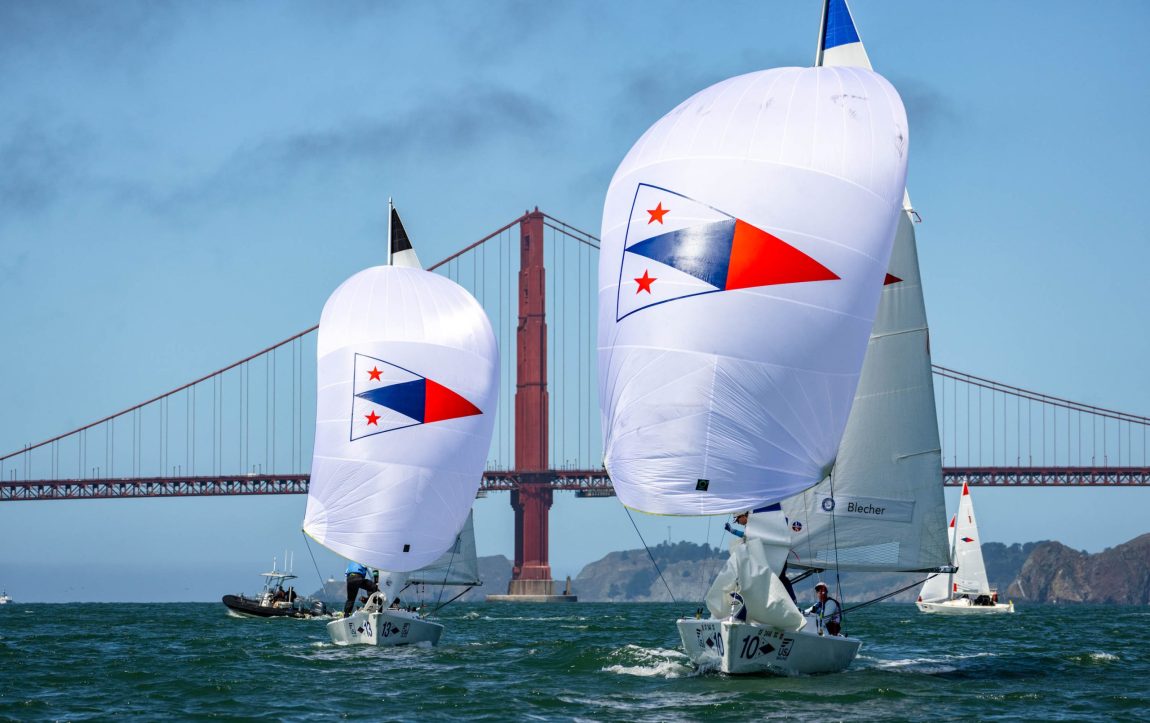
The US Sailing Women’s Match Racing Championship was sailed at the St. Francis Yacht Club (StFYC) on August 15 through 17. Ten teams from across the country competed, but it was the three local teams sailing under the burgee of the host yacht club that dominated. StFYC teams swept the podium, taking all of the top three spots over the three days of racing. The advantage of familiarity with the StFYC J/22s, the home venue, and the hours of Monday match-racing practices were apparent.
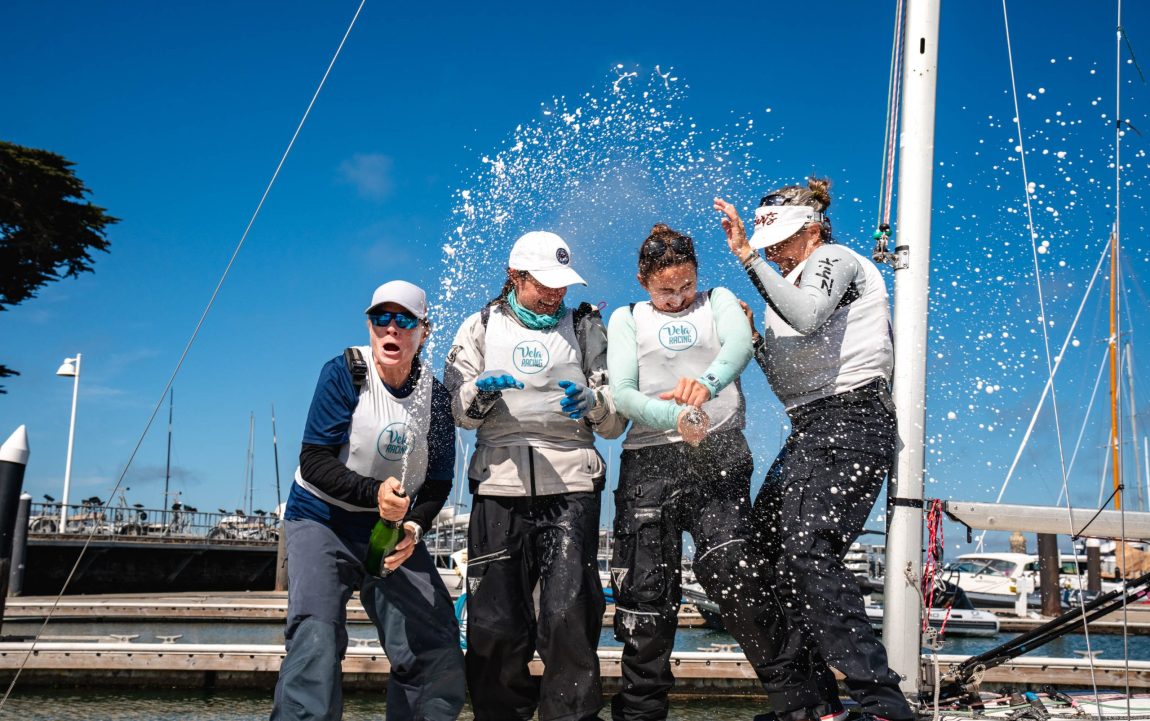
Nicole Breault and her Vela Racing team, the eventual champions, lost only one race throughout the three days of sailing en route to lifting the Allegra Knapp Mertz Trophy. The win marked Breault’s fifth title, breaking a tie with Allie Blecher of California Yacht Club, who had won the previous three titles. The Vela Racing Team is made up of Breault, Molly Vandemoer, McKenzie Wilson, and Hailey Thompson.
“It feels really good to win here,” Breault tells Latitude. “It’s a very tough venue … there are just so many variables that you have to piece together and stay strong through. We saw a bunch of people up on the race deck watching, which was very exciting. It’s just a beautiful place to race, and I can’t describe it: It’s very special to me.”
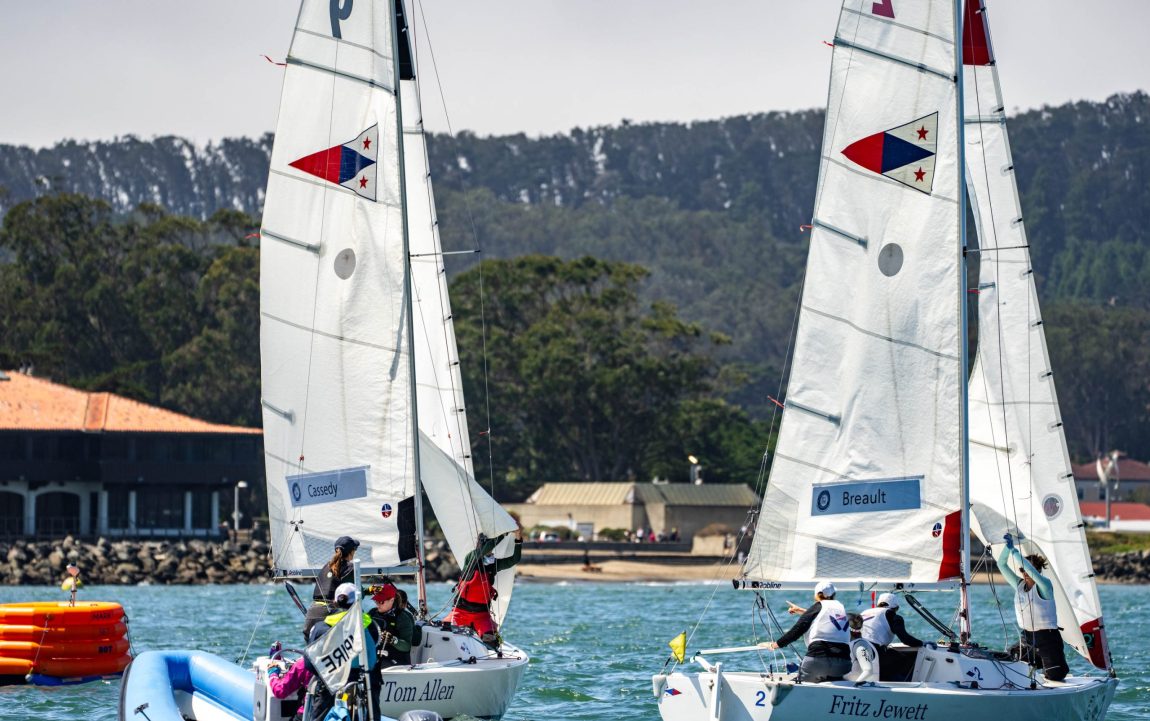
Breault went undefeated in the round robin. She then swept Marilyn Cassidy’s (California Yacht Club) team and Caroline Bayless’s (Annapolis Yacht Club) team to reach the final. The other semifinal was an all-StFYC showdown between Lindsey Baab and Molly Carapiet’s teams, which went all five races and saw the final race decided by a few inches and an umpire call.
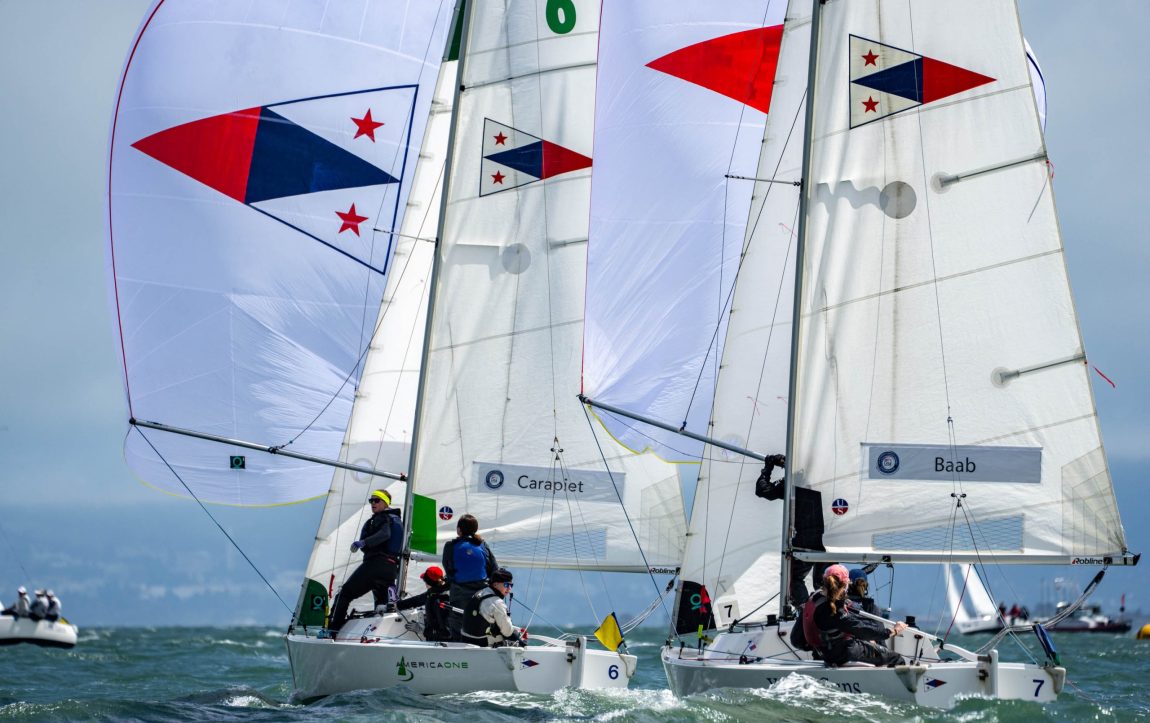
“We were watching the excitement of the semifinal between Molly Carapiet’s team and Lindsay Baab’s team, and they just were totally at war,” Breault says. “They were close in all their matches; they went all the way to five races. We didn’t know who was going to win as they finished across the line. They were just tangled up — it was on a call; it could’ve been either one of them, and I was just like, ‘Wow, this club has some really good sailors.'”
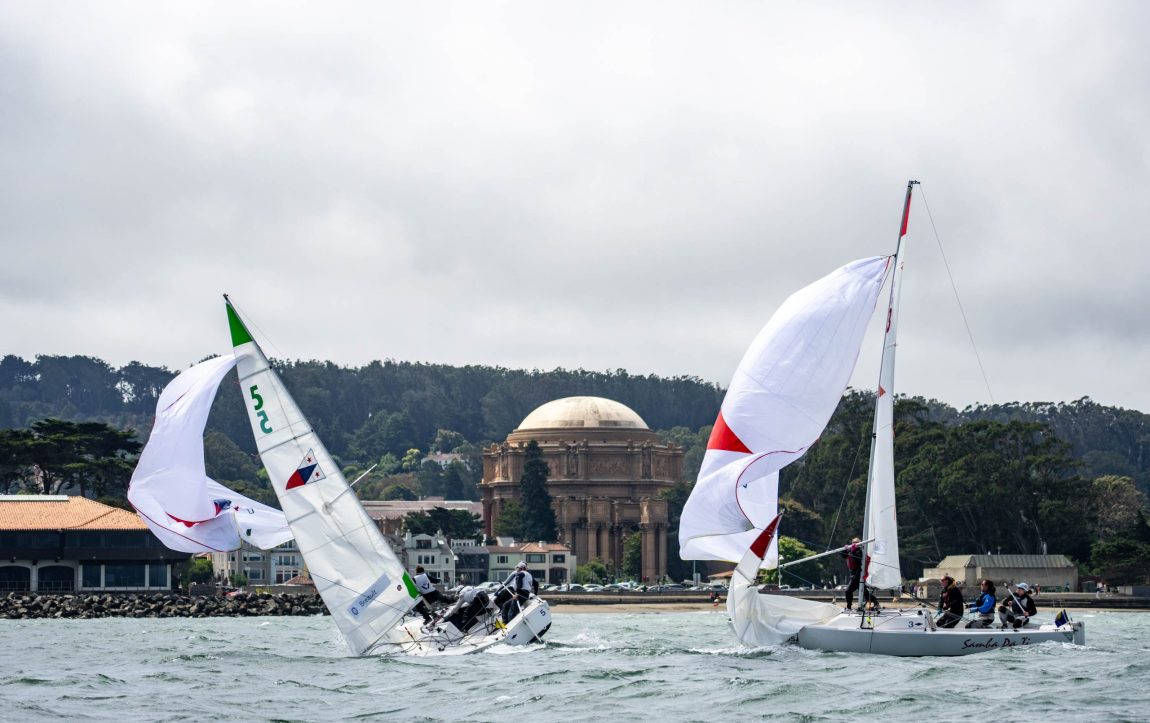
After winning the first race of the final, Breault finally saw a blemish on her scoresheet as Baab took race two. Breault and her team quickly regrouped, winning races three and four to claim the title, which was punctuated by champagne celebrations on the water and then on the dock.
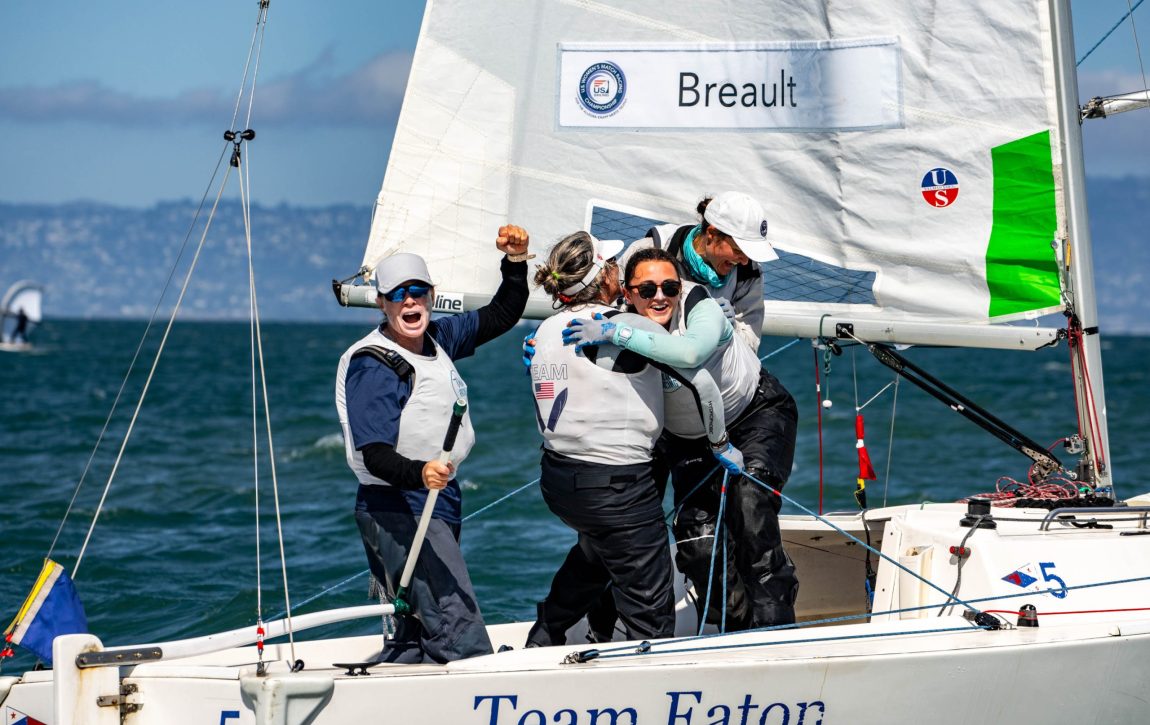
“[Molly Vandemoer and I are] both a little bit older than the average sailor here,” Breault reflects. “We’ve sailed with, trained, and coached a lot of these sailors, and the ones in particular that we knew we were going to meet today. We were really excited about it; we’re really excited about how they’re sailing. Of course you can’t resist a day in the sun. We gave it all we could and I’m happy that we came away with a win. but as I said, ‘The train is a-comin’.’ These teams are good and they want it. They’re hungry, and I’m really proud of them.”
Full results of the 2025 US Sailing Women’s Match Racing Championship can be found here.
Max Ebb — Puzzled
The wind went light and backed around to the north, and we could finally tack onto port in a much smoother sea. This was after days of beating north in the trades.
Lee Helm usually works summers in her chosen field, naval architecture and computational fluid dynamics. But her cred as an ocean racer had reached the point where she was offered a well-paid gig as a delivery skipper. She decided, just for a change, to bring a Transpac racer back from Hawaii. It had to be on her terms, though: “No motoring and no jerry cans of diesel fuel strapped to the lifelines,”
she insisted. “It’s a sailboat.”
That sounded OK to me, so in a moment of irrational exuberance I signed on as one of Lee’s crew. Though the morning after I signed Lee’s Articles of War for the voyage, I recalled a legendary sign in Merlin‘s cabin. Put up for the delivery crew, it read:
“DIESEL FUEL IS CHEAPER THAN SAILS.” But this boat was not Merlin, and displayed no such reminder.
We all knew what to expect for those first few days: Close reach to get north, small jib, mainsail reefed, don’t let the boat go fast enough to pound. It was still a nasty motion down below. I had brought fishing gear, but no one felt like dealing with a live fish on deck, so we spent most of our time horizontal, except Lee, of course, who remained almost annoyingly cheerful.
The first real challenge had been deciphering her watch-rotation scheme. With five on board, in cruise mode, we each had only one three-hour watch during the day, and one two-hour watch at night. Five people standing watch for five hours each, for a total of 25 hours covered. But a day is only 24 hours long. Where did the extra hour go? We could figure it out later. The schedule seemed easy enough. Instead of just “on watch” and “off watch,” there was a “standby” position so a second person was always on call. Also, we each had the same hours every night, a feature I was sold on after a couple of days.
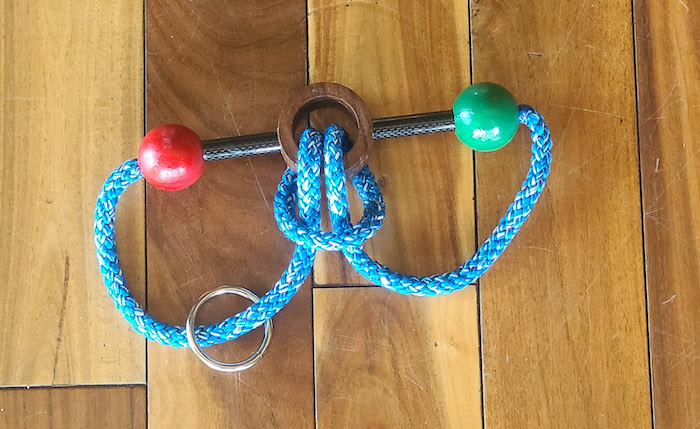
Over a large breakfast, now that our appetites had returned, the second challenge was produced by one of the other graduate students that Lee had recruited — a physicist studying string theory — so naturally he’d brought a rope puzzle for us to solve.
Learn More About the Smarter Way to Own a Boat With Club Nautique