

Join the New San Francisco Bay Navigator’s Race, August 9
Seeking a race format for S.F. Bay that would appeal to racers who want a novel sailing challenge, Evan McDonald from the Berkeley Yacht Club searched the Web for “unusual sailboat race formats.” Many of the results pointed to triathlon-type racing events with a single leg of sailing, but several results referenced the Prince Henry Navigator Race run by the Narragansett Bay’s Twenty Hundred Club.
The race appeared truly unusual: seven start lines, a course at the discretion of the sailor across a web of allowed sailing legs between navigation marks, and a fixed sailing time window for all boats, with the goal of sailing the most corrected miles within a time window. The race’s divergence from a standard set-course/best-time race format was extreme, but judging by the attendance at the Three Bridge Fiasco, Evan figured that Bay Area sailors might like the puzzle. The race format was imported and modified to fit the S.F. Bay racing venue, and the San Francisco Bay Navigator’s Race is the result.
The race generally works as follows (see venue map below):
1) Competitors may start at one of four starting areas. These include Paradise Cove, Aquatic Park, McCovey Cove, and east of Angel Island, north of Quarry Point.
2) Competitors perform a fisherman’s start — at anchor, with sails lowered, furled or doused (not covered), with all competitors belowdecks.
3) At the race start time, competitors emerge from belowdecks, raise sails, and proceed to the designated starting mark associated with their starting area. All racers start at a specific GPS time from within a starting area, with no warning or start line.
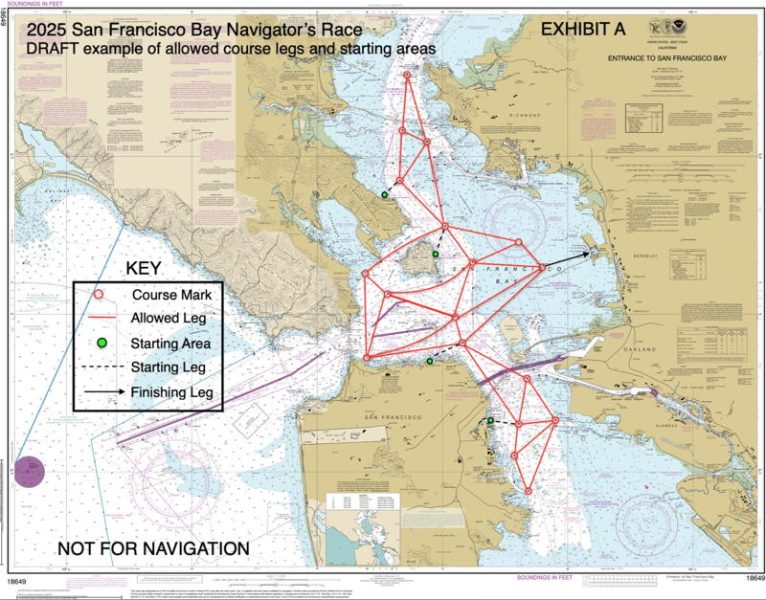
4) The choice of course marks sailed by each competitor after the starting mark is at the discretion of that competitor, selected from the list of allowed course marks, subject to the following constraints:
a) Only the allowed course legs may be sailed.
b) The sequence of legs sailed must make a continuous line from the starting area to the finish line. A discontinuity in the course sailed by a competitor from the start through the finish results in disqualification.
c) A leg may be sailed no more than twice, except the legs from each starting area to that area’s starting mark or from the finishing mark to the finish line, which may be sailed only once.
d) Sailing a leg in either direction counts as sailing that leg once.
e) Sailing any leg three times results in disqualification. A leg may be sailed twice, once, or not at all.
5) Competitors must finish the race by crossing the finish line within a one-hour finishing window. Competitors who fail to cross the finish line within the finishing window are disqualified.
6) The boat that sails the greatest corrected distance is the winner of their division.
If you want to try a new race format that rewards local knowledge of weather and currents, careful planning, and boat handling, give the S.F. Bay Navigator’s Race a go. You can register on Jibeset at the link HERE.
‘Gary’s Goddess’ Bilge Ballet: I Didn’t Want To Do It
Gary Girard hoped to find a professional to do some work on his boat, the Catalina 470 Gary’s Goddess. Things didn’t quite turn out that way …
It was time to have my Catalina 470, Gary’s Goddess, rerigged. I made an appointment, and eight months later the day was here. I did not want to do any work myself; let the experts handle everything. Rerigging led to the replacement of the radar, which in turn led to replacing the chartplotter, etc. Scott, the rigger, recommended the best technician/installer in Ventura. I was excited. I hadn’t upgraded the electronics since I bought the boat in 2003.
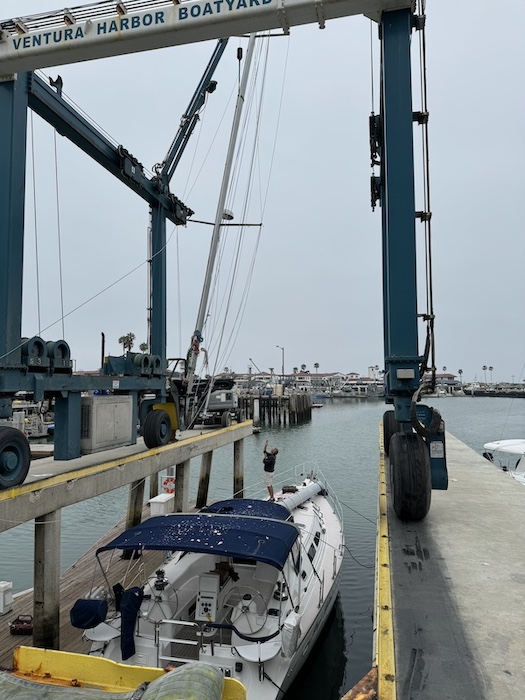
I told the tech that I would buy everything through him and not shop on the internet. I thought this would facilitate the project. I don’t know what happened, but he never purchased the equipment and he never arrived. It seemed to be a personal issue. I next hired another well-known electronics installer/supplier. Every time he walked down the dock he would wave and say, “I haven’t forgotten about you.” After a month I moved on. The next introduction was recommended as highly reliable and good. He called me immediately and said, “You’re on the schedule, six months from today.” That was it; I would do the work myself. I purchased all the equipment and had it shipped.
Scott installed the antennas, wind instruments, and radar. He ran all the wires to the bilge, and labeled them for me. To my amazement I installed all the equipment and pulled the wires. Pulling the wires was unforgiving. The console, cabinets, and headliners had to be removed. I reached into holes and into places that were not accessible for an arm to enter. The bilge ballet and contortions were hard on the body for this long-in-the-tooth sailor. My body hurt; the tutu did not fit and the ballet was hard to learn. I had my body in places that only a young, enthusiastic installer should.
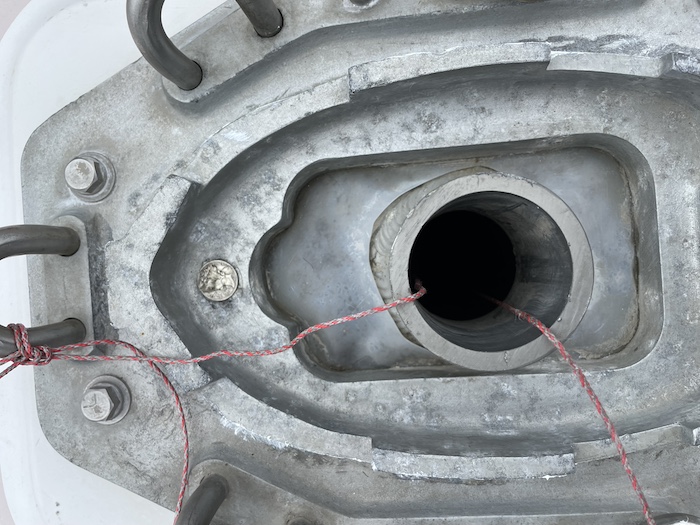
After a few days my wife said, “Stay the night and finish the project.” At this juncture I could only work approximately four hours a day. I told her if she wanted me to continue to be able to walk I would have to take a few days off between installations. I wasn’t kidding. I finally reinstalled all the cabinets, cockpit console, etc. Everything was connected. I was very nervous: Would it work?
I waited until the morning and threw the switches, and to my amazement everything worked. Fantastic! Twenty minutes later it crashed. I did not know what to do so I called the experts at Raymarine. They walked me through the situation and I opened a factory wire, pulled out the specified colored wire, and cut and terminated both ends as instructed. I turned the units on and VOILÀ! Thank you, Raymarine.
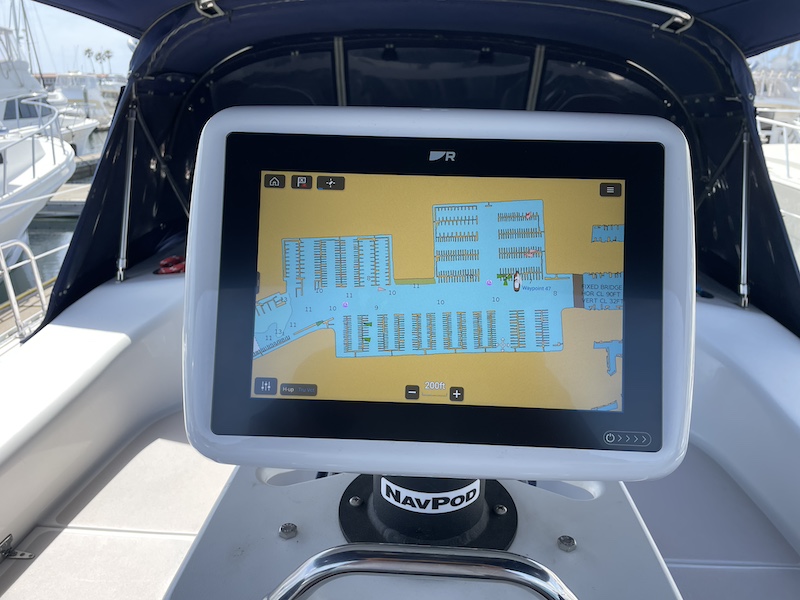
I am still shocked that everything functions properly ….
Don’t Get Behind — Schedule Your Service With KKMI Today
Singlehanded Farallones Race Starts in Light Air
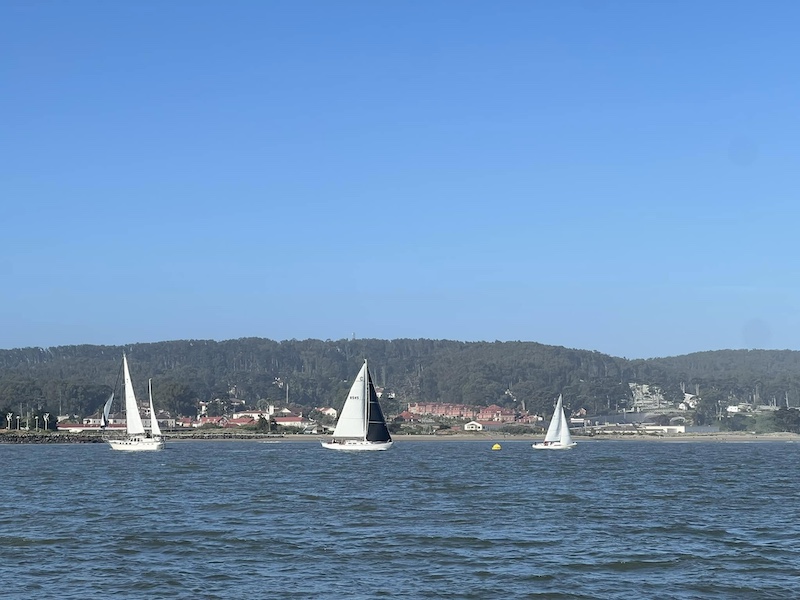
The Singlehanded Farallones Race (SHF) and the YRA Offshore Duxbury Lightship Race were originally scheduled for Saturday, May 17. Both were moved to May 31 due to a gale warning. The SHF started ahead of the YRA Duxship Race. Randy Leasure on the Westsail 32 Tortuga reports that “The forecast for the new date was definitely better, with forecast light winds building into the 20s by late afternoon.
“Tortuga had a great start with the ebb pushing us out. The light winds were definitely an issue past Point Bonita. We spent a few hours thrashing around in the big seas and light breeze trying to make our way out, only making a few knots of boat speed. When the wind did fill in, it was nowhere near the forecast, and nothing over about 15 knots when there was some. It was hard to get to windward with the big swell pushing the bow and full keel down in the light winds.”
“It was a warm day with loads of whales all around. I saw a few whales full-on breaching and doing jumps and splashes.” By the time Randy could reach for the camera, the show was over.
“I had the small jib up in anticipation of the heavier breeze. There was a moment when it felt like it was building and I took a reef in, but then I shook that out about an hour later. We were still about 8-9 miles from the island around 5 p.m. only doing about 4.5 knots. I was still going to need to put in another tack and I figured that I wouldn’t be able to get around the island and back into the Bay in time for the midnight cutoff, so I turned around and headed back in.
“I got under the bridge just before 9 p.m., so I’m glad I made the call not to be out until midnight or longer trying to get back.”
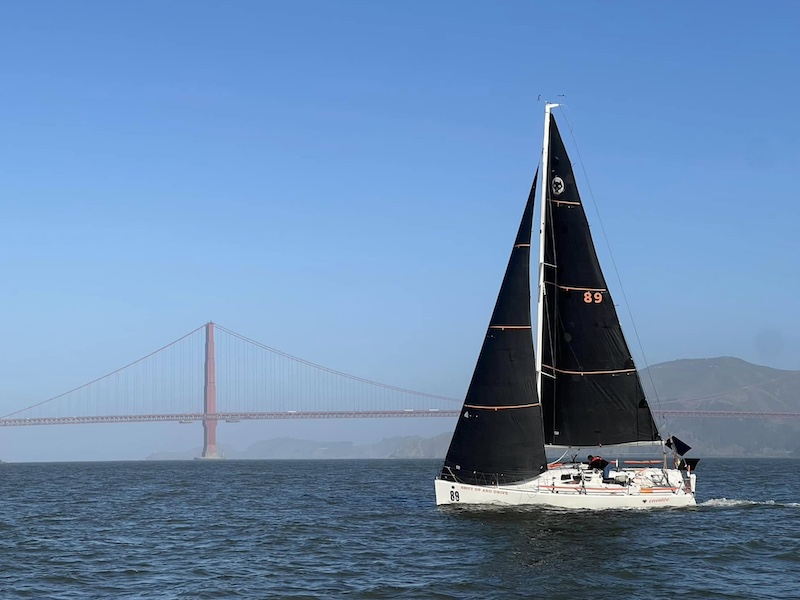
Chris Case sailed his Cal 40 Fugu and says that “All the forecasts missed the mark. Other than two hours of 3-5 knots of wind as the ebb shoved us over the bar, there was wind to move with all day.
“Crossing the bar with its ebb-enhanced leftover swell and chop was very frustrating, sometimes stopping the boat completely as the sails slammed and slatted.
“Just as I was beginning to look at the time and wondering when I would need to call it and head home, a NNW wind first gave the power to fight the chop, then built to a max of 14 knots, and I easily fetched the north side of the island with safe distance.”
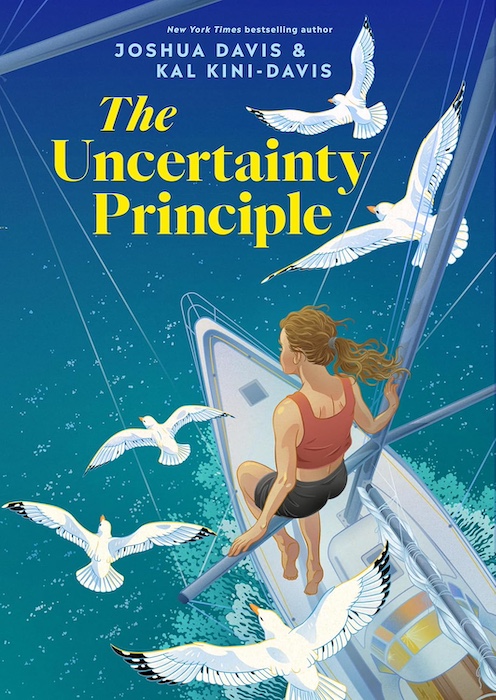
An Epic Journey Becomes ‘The Uncertainty Principle’
Five years ago, my 13-year-old son Kal and I started writing a novel about sailing together. It was 2020 and we were sailing a catamaran in the Caribbean. Though there weren’t many boats out there at that moment in the pandemic, we occasionally spotted a superyacht and sometimes dropped our hook nearby. At night, isolated on our own boat, we looked across the water at those gleaming, hulking vessels and talked about what it would be like to meet the people on board. Kal pushed it further: What if a bored and lonely teen (perhaps resembling himself) met a strikingly good-looking teenage girl from a megayacht?
That simple conversation blossomed over the months looking out at the water. We came home to San Francisco and Kal suggested that our main character meet not just one teenager but two, and be forced to choose between them. The other sailor wouldn’t be a rich kid on a fancy boat, but rather someone trying to make every dollar last. Would our main character choose the soulful sailor or the life-of-the-party heiress?
After two years, we had a manuscript and sent it to publishers. By that time Kal was racing FJs in the Bay with the San Francisco School of the Arts high school sailing team. He wanted to go fast while the rest of the family was content to bob around in the Bay on our Dufour 310, Grace. So, on weekends, Kal used Latitude‘s Crew List to find crewing spots with other like-minded speedsters.
Initially, the book was rejected by publishers. We were told that young adults weren’t interested in the sailing life. Kids were too focused on the digital lifestyle and wanted books that reflected the modern world. Kal didn’t feel that way. He liked the old ways, the feeling of working with your hands to make something real. As artificial intelligence rose, it felt right to wield a hammer and chisel. On Tuesday nights, we volunteered at the Dolphin Club in San Francisco to help take care of the Whitehall rowboats under the guiding eyes of master boat builders Jon Bielinski and Julia Hechanova. We started hearing people talk about the “toolbelt” generation, young people who wanted to learn craftsmanship. Perhaps this next generation did care about something more than Instagram and TikTok?
Finally, in 2023, we received an email from Penguin Random House saying that they wanted to publish the book. We got on the phone with an editor who said that she knew nothing about sailing but was taken by the core idea of the book: a family walking away from the modern world to live closer to nature on a sailboat.
There was a hitch, though. We would need to make revisions, so Kal took a semester off regular school and we set up shop on Grace, which was docked at Fort Mason. We called it “boat school,” and when we got tired of writing, we’d shove off and sail around Alcatraz.
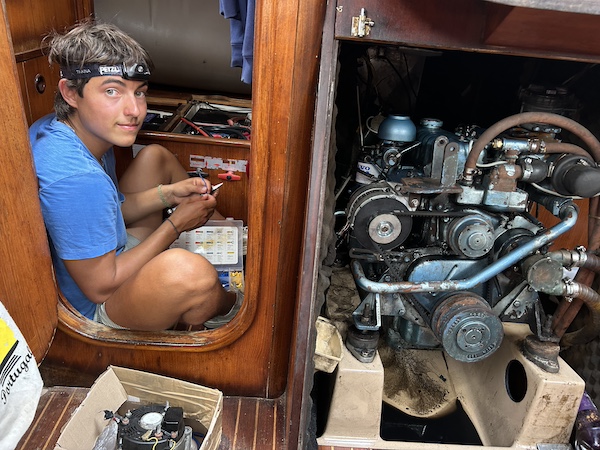
Now, five years from that moment of deep isolation during the pandemic, the book is finished and we’ve tried in fits and starts to walk away from the modern world, just like the family we wrote about. Kal graduated from high school and now studies at the Northwest School of Wooden Boatbuilding in Port Hadlock, Washington. He dreams of building his own wooden boat to go bluewater sailing. And my wife and I just got back from where it all started, sailing a catamaran from St. Martin to Grenada over a period of six weeks. Hopefully, the book will help bring others to the magic of the sea.
Dreaming of Your Next Boat? Start With Cruising Yachts