

Maritime Youth and Leaders Fight to Save S.F.’s Gashouse Cove Fuel Dock
It takes a village — and sometimes just one person. How does the boating community help preserve Gashouse Cove for recreational use? Captain Maggie Hallahan, a leader, with the S.F. Sea Scouts’ Makani Maritime Explorers, is that one person, bringing the attention of the maritime community to the threat hanging over San Francisco’s Gashouse Cove fuel dock — the city’s last remaining marine fuel dock. Without the fuel dock, Gashouse Cove will have no gas.
“The San Francisco Recreation and Park Department (SFRP) is advancing a plan that threatens Gashouse Cove by falsely claiming the fuel dock must be removed for the PG&E cleanup” Captain Hallahan says. “In fact, the California Water Board has confirmed that PG&E’s cleanup does not require removing the dock. It can remain in place, saving taxpayers money.”
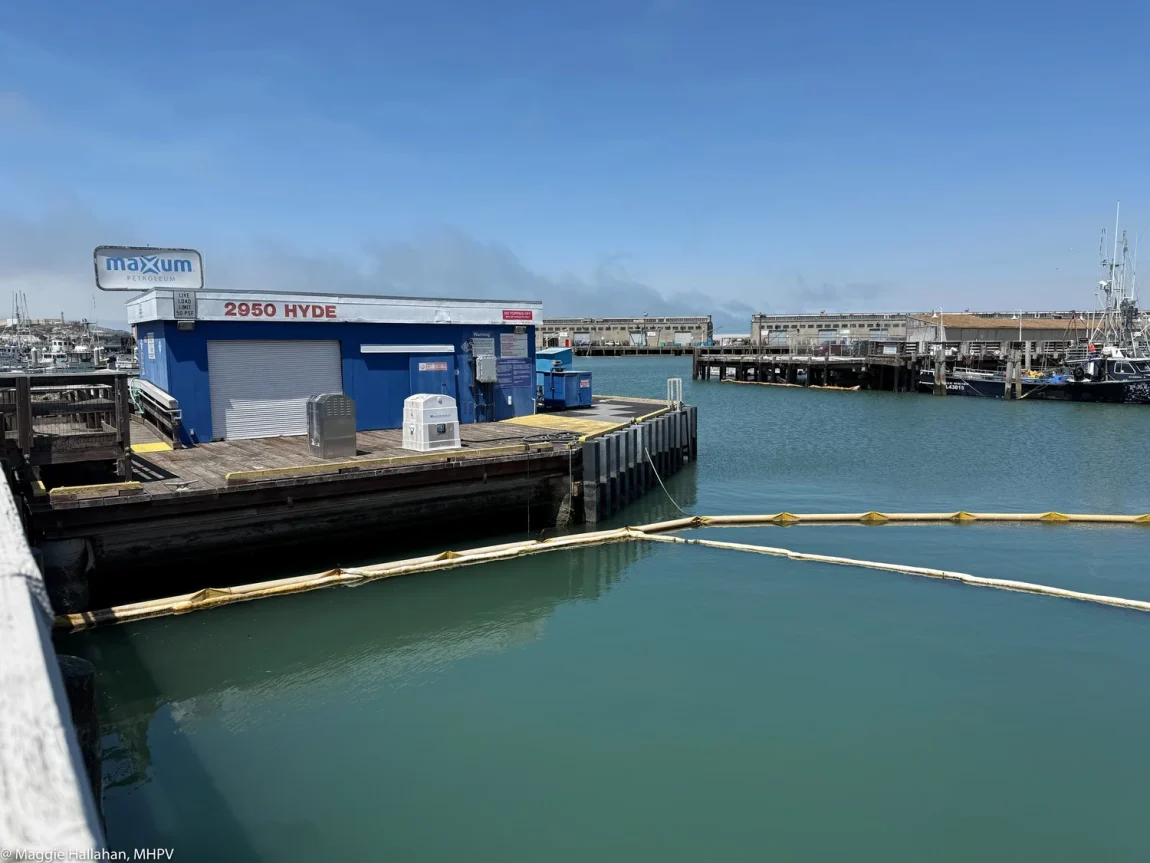
Captain Hallahan is calling on the community to have their say at a public hearing: One-Minute Public Comment (Hybrid Meeting), next Thursday, September 18, at 10 a.m. (PT), at City Hall, Room 416.
Following is some of the information Hallahan has shared in a press release:
“For 175 years, Gashouse Cove has been San Francisco’s safe harbor for small boats, youth training, and maritime access. Substantially upgraded with state funding in the 1960s, it remains a vital full-service marina — not a swimming hole or kayaking cove. The Laguna Street sewer outfall makes the water unsafe for paddling or swimming; local youth already call it what it is: ‘the cesspool.’
“Despite SFRP’s proposals for a recreational kayaking area, the sewer outfall will remain exactly where it is. Meanwhile, for fueling, launching, and loading boats, the existing setup has served the public effectively for more than 60 years — and no agency requires it to change.”
But the deficit would be greater still. The press release highlights several “critical consequences” to the removal of the Gashouse Cove fuel dock:
• Deprives emergency responders of a critical refueling site in San Francisco, forcing maritime police and fire department vessels to cross to Sausalito or Emeryville for fuel.
• Removes the only public boat lift available to launch and recover boats in San Francisco.
• Eliminates a key extraction site in San Francisco, forcing maritime police and fire department vessels to connect with emergency vehicles in less-than-ideal ways.
• Eliminates the last fuel dock in San Francisco, which includes underground gasoline and diesel tanks set in bedrock and upgraded by the State of California.
• Eliminates more than 200 small-boat berths and storage spaces on the deck near the boat lift.
• Takes away the fuel dock, depriving boaters of a critical refueling site when heading out under the Golden Gate Bridge or visiting San Francisco.
• Shrinks boating access by filling navigation channels leading to the Gashouse Cove Marina site.
• Encourages unsafe recreation by promoting swimming and paddling in waters polluted by the Laguna Street sewer outfall.
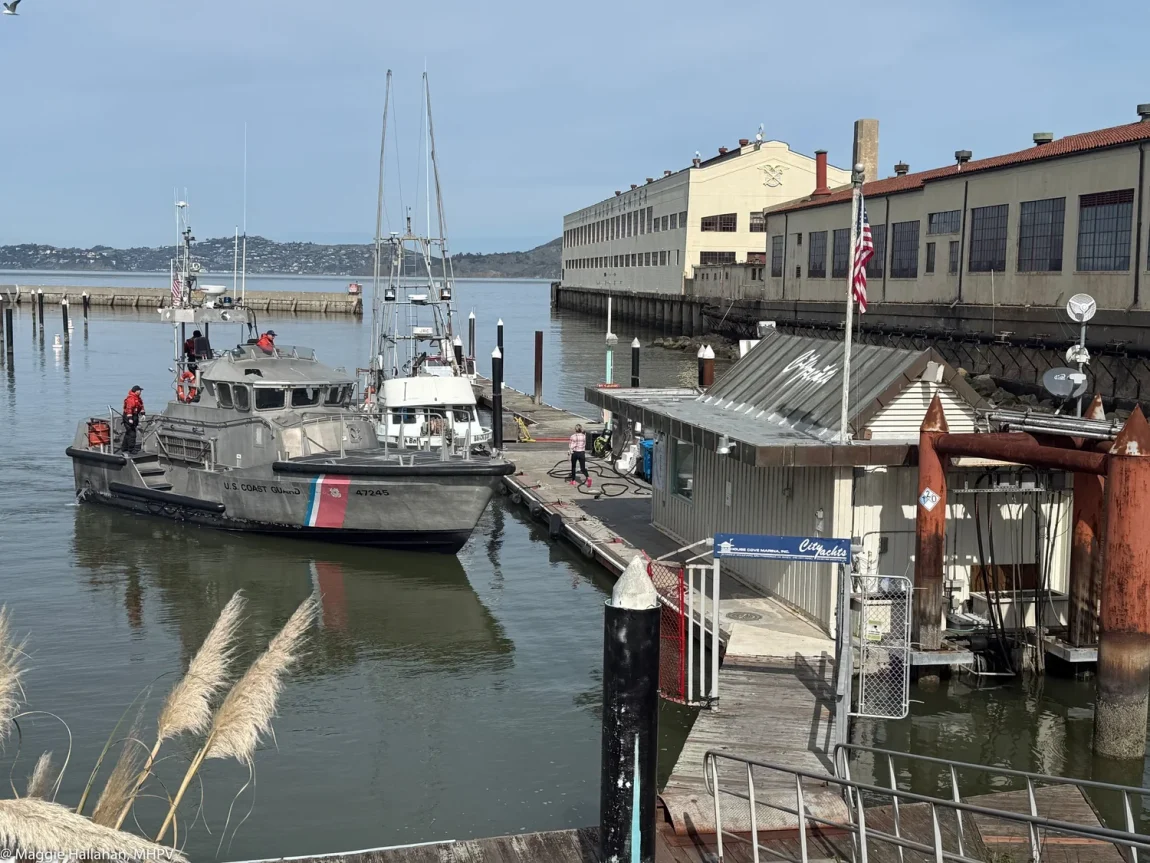
“As we all know, San Francisco Bay is a unique treasure for the boating community. It provides unparalleled opportunities for aquatic enjoyment: fishing, sailboat racing, leisurely cruising, etc. The majority of boats on the Bay routinely need access to fuel, and the ability to get that on the San Francisco waterfront is not only a necessity, but also a major attraction. Available fuel means that boaters can visit the marinas and patronize local establishments. Our clubs [comprise] recreational boaters, but in addition to our requirements, we are keenly aware of the need for marine emergency services and marine rescue units to have ready access to fuel. Police and fire departments should not have to go across the Bay to fill up, nor should support services like BoatUS Vessel Assist. Emergency response times on our sometimes dangerous San Francisco Bay should never be impeded by the need to detour for fuel,” said David Jackson, commodore, Pacific Inter-Club Yacht Association (PICYA), representing over 100 yacht clubs across Northern California.
“The youth maritime community, swimming and boating community, and ocean advocates call on the San Francisco Recreation and Park Commission to:
• Preserve the fuel dock and boat lift for youth programs, emergency services, and small-craft boaters.
• Tell the truth about the Laguna Street sewer outfall on SFRP’s plan drawings.
• Adopt a balanced plan that supports PG&E’s cleanup while maintaining maritime use.
• Ensure accountability through an independent review of SFRP’s flawed April 2025 S.F. Planning permit application.
“If SFRP’s plan proceeds, San Francisco will lose 30% of its water access while taxpayers face $4 million a year in debt for the next 30 years. By the end of 2025, the SFRP governing commission could approve the request to begin remediation of Gashouse Cove at S.F. Marina and decommissioning the only San Francisco fuel dock. These maritime youth advocates, swimming, canoeing, and boating communities, including boating clubs, water-safety organizations, maritime educators, and water groups committed to safe, equitable, and resilient aquatic sports access, call on you to give public comment at the upcoming meeting.”
The meeting is on Thursday, September 18, at 10 a.m. (PT), at City Hall, Room 416. Community members are urged to provide public comments and testimony to meetings on the calendar at https://mhpv.net/sfmarina. Learn more about the Gashouse Cove issue here.
Tomorrow the San Francisco Maritime National Historical Park Association will be running a Sea Festival in Aquatic Park from 11 to 5.
Thanks for the article. As a sailor I’m pretty disappointed in what’s going on with “our water.” And it’s usually somebody on land that initiates it.
⸻
I am both a licensed Boat Captain and a Registered Nurse. The Gas House Cove Fuel Dock, located in the San Francisco Marina near the St. Francis Yacht Club, provides a vital service for recreational boaters. More importantly, it is essential infrastructure for emergency service vessels—including the U.S. Coast Guard and San Francisco Fire Department boats. These agencies rely on convenient access to fuel in order to respond quickly to urgent situations, such as search and rescue missions.
Additionally, restoring the small boat mooring slips (under 35 feet) in East Cove is critical to supporting youth sailing programs. Groups such as the San Francisco Sea Scouts, including the S.F. Vikings—the High School Girls, 2023 National Champion Sea Scout Club—depend on boat moorings for training, education, and safe access to the bay. https://www.facebook.com/share/p/1GachEoRAK/?mibextid=wwXIfr
It all boils down to the Benjamins, doesn’t it?
I am both a licensed Boat Captain (USCG 50 ton) and a Registered Nurse. The Gas House Cove Fuel Dock, located in the San Francisco Marina near the St. Francis Yacht Club, provides a vital service for recreational boaters. More importantly, it is essential fueling infrastructure for emergency service vessels—including the U.S. Coast Guard and San Francisco Fire Department boats. These agencies rely on convenient access to fuel in order to respond quickly to urgent situations, such as search and rescue missions.
Additionally, restoring the small boat mooring slips (under 35 feet) in East Cove is critical to supporting youth sailing programs. Groups such as the San Francisco Sea Scouts, including the SF Vikings—the Girls 2023 National Champion Sea Scout Club—depend on smaller moorings for training, education, and safe access to the water.
Thank you to the all thd decision makers!
Save the Fuel Dock! ⛵️
What if the FireTug that saved the Marina in 1989 needed fuel that day?
Dianne Feinstein would never have put up with this kind of threat to public and maritime safety. This is a billionaire-and-Scott-Wiener land grab — through the corporate property develloper lobbying group known as YIMBY — through and through.
Feinstein is the one who funded the fireboat Phoenix in the first place. Our current blinded-by-corporate-greed City Hall does not care one bit about the public interest!