

Saying Yes to an Unexpected Call To Crew the Ficker Cup
I was sitting at dinner when my phone lit up.
“How much do you weigh — and are you in town this week?”
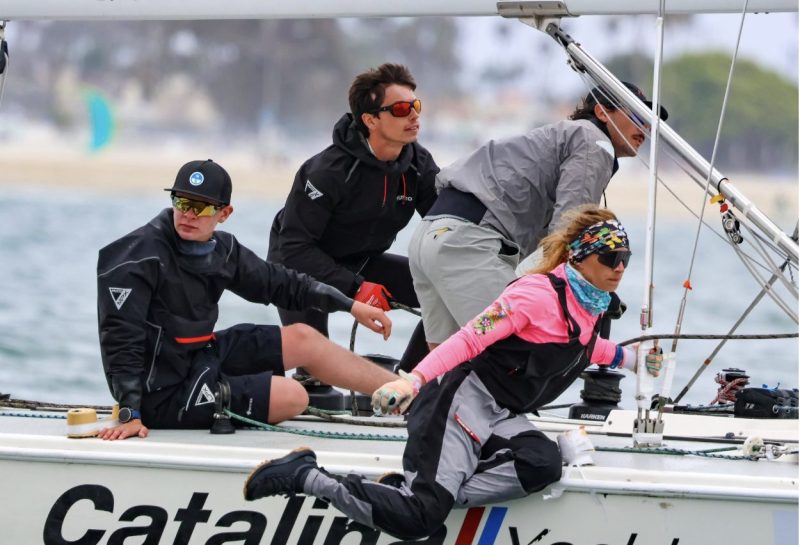
The call was from Ryan Sanders. He was talking with Tom Picot, who needed a last-minute foredeck for the Ficker Cup [April 23–24]. They were looking for 190 pounds. I’m 129. A week later, I was on the boat.
That’s the part everyone sees. What they don’t see is the five years before that.
For nearly five years, I tried to get into match racing in a real way. Rankings, events, teams — it always felt just out of reach. Not because I couldn’t sail, but because there wasn’t a clear path in. Especially in the US. Especially if you weren’t already part of a program. Especially if you weren’t willing to wait.
So I stopped waiting.
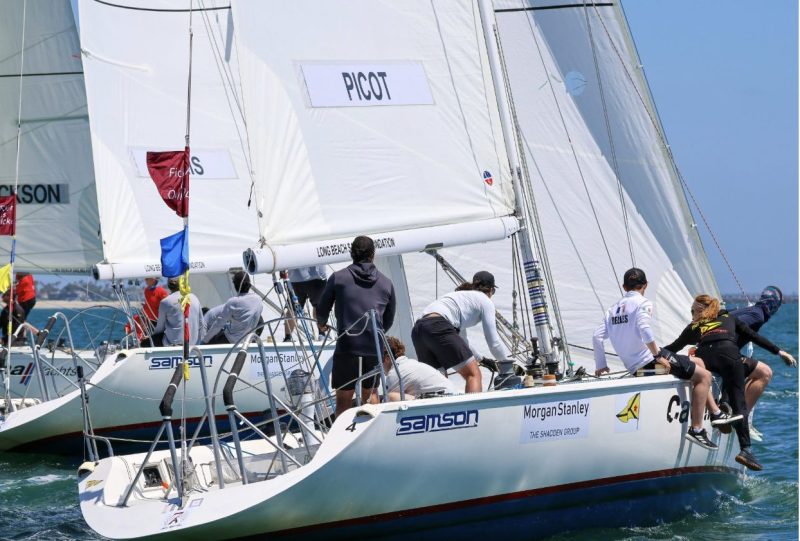
If the door wasn’t open, I’d build something next to it. That’s where the pop-ups started. Clinics. Friday match-racing days. Whatever I could piece together at Long Beach Yacht Club with the boats and people we had. It wasn’t polished. It wasn’t perfect. But it was reps. And reps are everything.
I wanted in. And I wasn’t taking no for an answer anymore. So when that text came through, there wasn’t really a decision to make.
What I thought was an Australian team turned into a French-speaking group chat within minutes. I was translating messages, figuring out who was even in the country, and realizing I’d just stepped into an international team coming from France, New Caledonia and New Zealand. I didn’t understand a word. Didn’t matter.
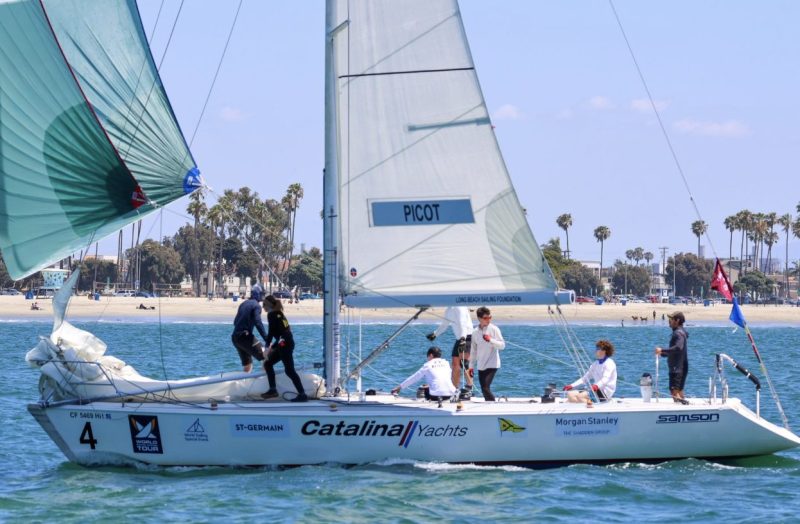
We met Thursday morning. Weighed in. Signed papers. Walked straight to the dock. And then everything flipped.
They had never sailed a Catalina 37. I had. These boats don’t exist anywhere else. If you haven’t sailed in Long Beach, you haven’t sailed them.
So there I was, the last-minute fill-in, now explaining rigging, systems, the symmetrical kite, dip pole, timing … everything that doesn’t show up on paper. This would have been Tom’s third time driving a wheel boat. And it didn’t matter.
That’s the thing about high-level sailing. You don’t wait to be comfortable. You get up to speed, fast. Practice was messy. Not bad. Just off. Timing a half step early. A half step late. Nothing major, but enough to lose races. “Tack and set.” “Port layline.” That was it.
By the end of the day, we had it — motion, timing, all of it. At some point, it stopped being about where anyone was from, or anything else for that matter. They forgot I was even a woman, until the bucket started making its way up the hatch. And even that just turned into a laugh.
Friday came fast. No sleep. Just running through systems in my head, hoping I had covered enough. First race. Port entry. Suddenly I’m hiking in a dial-up with a team I’d met 24 hours ago. No time to think. The first races weren’t clean. We hit marks. We were over early once. Simple mistakes. But at this level, that’s the race.
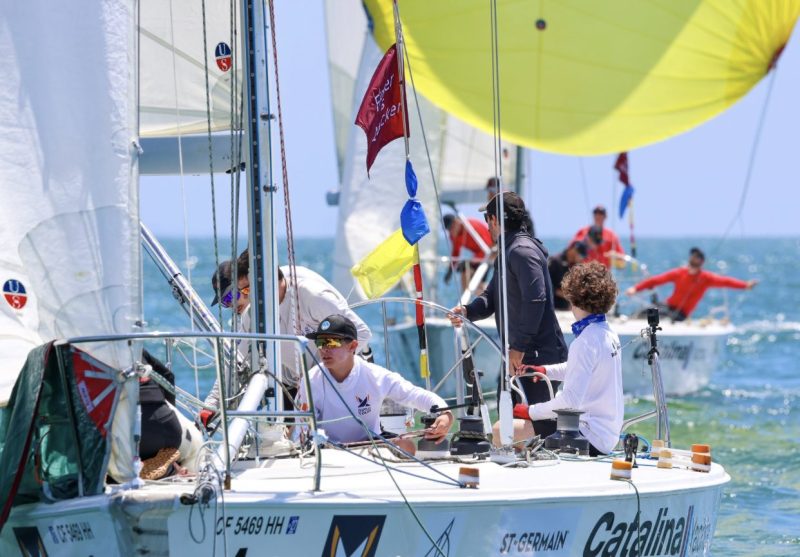
Then it clicked. We lined up against Scotty Dickson. Pre-start slowed everything down. You feel it more than you think it. Tom shut the door early, forced Scotty out, and we were gone. Clean start. Clean acceleration. Ten lengths. Then 15.
But it’s never over. They clawed back. Five lengths. Then three. Covered us all the way down the final leg. We held. Crossing that line wasn’t just a win. It was proof. We weren’t chasing the level. We were in it.
Day two showed the other side. We were ahead again in one race, managing the second leg cleanly. At the top mark, we made a move that used to be standard — engaging at the rounding. Rules changed. Inside the zone, you sail proper course now. We got penalized. Race gone.
Later that day, contact with another boat cost us -0.5 and ultimately knocked us out of the top four. No finals.
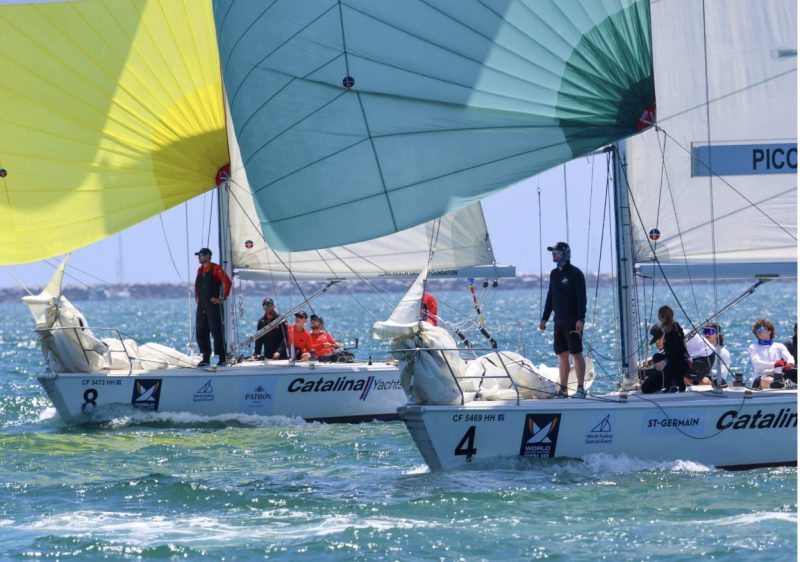
That’s match racing. Not about big mistakes. About when they happen. We had the speed. The skill. The ability. We just didn’t put it all together when it counted.
Sunday, we were off the water. Sitting at dinner with a group that had been strangers just two days before and now felt like family.
The next French team, friends of Tom and the crew, was arriving for the Congressional Cup. We wouldn’t be there to share it. That part stung.
But it also made one thing clear: We’d all be back.
I’ll sail with anyone; doesn’t matter what country they’re from. I’ll be back for the Ficker Cup. And yes, the Congressional Cup. Skipper or crew, I’ll get there. This is my path. I’ve got a long runway ahead, and I’m not slowing down.
Come down to Banderas Bay. We have half a dozen of what we call “Capri 37″s. They are Catalina 37s. The local fleet sails every month. Boats have been modded for asym kites.
I’ve been trying to talk up match racing with the fleet for years. Perhaps you can make it happen?
Wow what a great story. It had me enthralled from beginning until the end. Thank you for capturing your experience in a way we all can relate to in the game of life and sailing. ⛵️
Excellent writing style as well as character with persistence in accepting the short notice and becoming a leader with what you knew about the Catalina 37 and this new team. Inspirational.
I’d like to see Marissa weave nautical tales at the Corinthian Club Speaker Series. How bout you?
Well written, now — William P. Ficker. Who saw him sail a star?
Great story. Shame about the penalty but clear you will be in the finals next time!