
$152 Million to Start Turning Alcatraz Back Into a Federal Prison
We suspect most sailors sailing up the “cone of Alcatraz” to find some current relief are not imagining that Alcatraz could once again be an active federal prison, but according to the New York Times, President Trump is asking for $152 million from Congress to begin transforming Alcatraz back into a maximum-security prison. Given its current economic benefits to the local economy and the extraordinary cost to rebuild and operate it as a prison, it’s hard to imagine anyone in Congress or the Bay Area would actively support the idea. But that isn’t deterring the president from making the proposal.
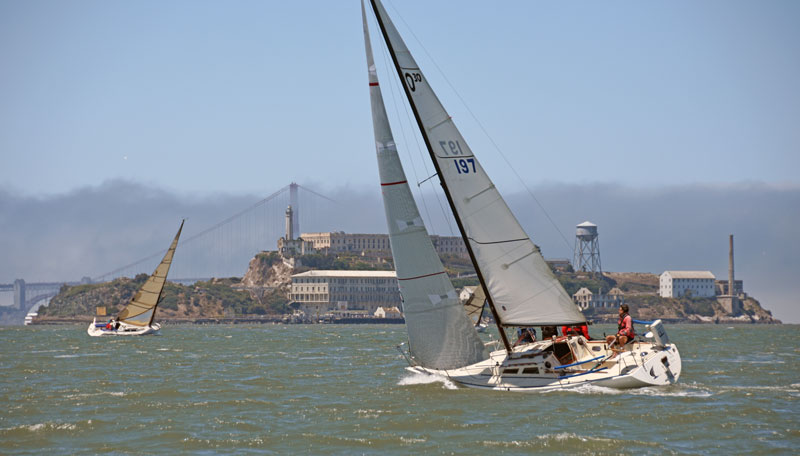
Last year, when the idea was originally floated, Mayor Daniel Lurie was quoted as saying the idea was “not a serious proposal.” There are so many great San Francisco Bay infrastructure projects, like dredging, that could benefit from more federal funding. We’re also sure there are many better places where an efficient government could cost-effectively build and manage a federal prison.
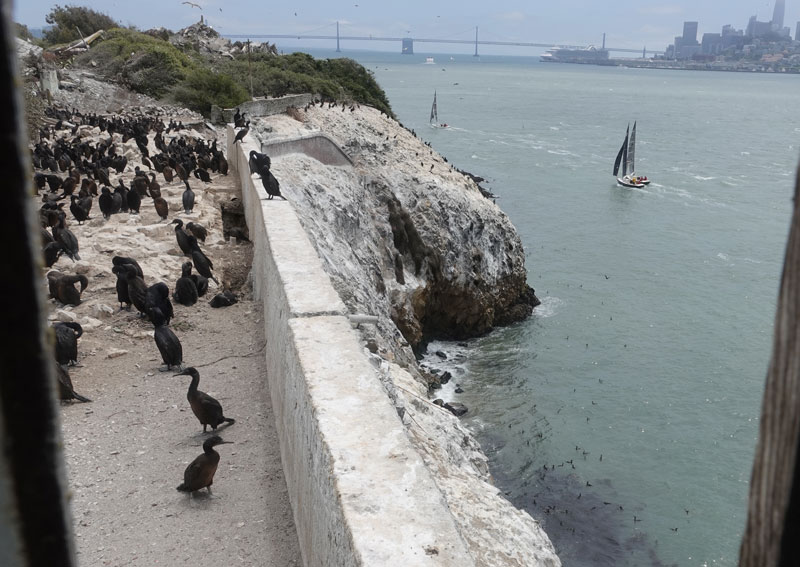
According to the NYTimes, the island now receives about 1.4 million tourists a year as part of the Bay Area’s multi-billion-dollar tourism trade.
It’s hard to imagine the proposal getting serious traction, though it may distract tourists, sailors and politicians for years from far more productive endeavors. The tumultuous water and weather that surround this barren rock may be relatively calm compared to the turmoil this proposal could cause.
Editors’ Note: This story invites lots of political commentary about the current administration so we tried to keep our comments limited to the merits of the proposal. We wrote the story because the idea impacts a central feature of sailing the Bay and is clearly of interest to the sailing community. We will not be approving comments that use the opportunity to hash out well-known political views since there are endless better forums to do that. Like the prisoners on Alcatraz, we look at the Bay as an opportunity to escape.
Rites of Spring 2026: A Record-Breaking Renewal at Oakland Yacht Club
If the 2026 sailing season was looking for a bellwether, it found a resounding one last Saturday, March 21, at the Oakland Yacht Club’s annual Rites of Spring. This year’s edition, the first race of the YRA PHRF Bay Series, didn’t just signal the return of spring — it signaled a major surge in Bay Area racing enthusiasm.
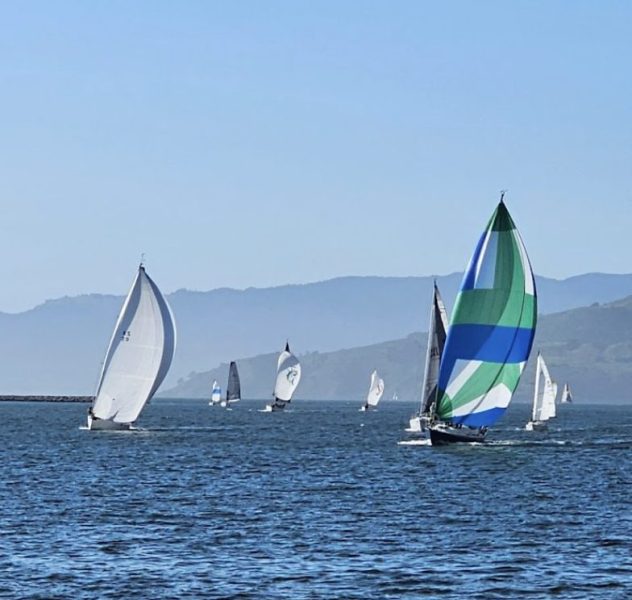
We were thrilled to see 36 boats registered for the event, nearly doubling our participation from last year. But the real story wasn’t just on the entry list; it was on the starting line. In a rare “perfect attendance” showing, every single one of the 36 registered boats made it to the starting area east of Treasure Island.
Tactical Starts and the I-Flag
The conditions provided a classic Central Bay challenge, and the race committee kept the sailors on their toes. We flew plenty of flags this year, most notably the “I” flag. With Rule 30.1 in effect, the “round-the-ends” requirement ensured a clean, competitive start for all fleets, effectively banning dip starts and keeping the pressure high from the first gun at 1255 hours.
Fleets were sent on two different courses, ranging from 13.8 to 14.5 nautical miles. The sight of 36 boats maneuvering through the flood and the surprisingly windy Slot was a testament to the skill level present in this year’s fleet.
Determination and Course.
The afternoon was a test of endurance and tactical patience. While five boats ultimately had to retire, the remaining 31 showed incredible grit, tirelessly working the shifts and current to reach the finish line.
In Fleet A (Santana 22), Hank Lindemann’s Anemone took the top spot in a tight, two-and-a-half-hour-long one-design battle, finishing only eight seconds ahead of High & Dry. Fleet B (Non-Spinnaker) saw Nicholas Crescimanno’s Wylie 31 Custom Moonshadow claim victory, leading a large nine-boat fleet across the line.
Over in the spinnaker divisions, Cal 20 Can O’Whoopass dominated Fleet C, proving once again that these small boats are fierce competitors in Central Bay breeze. Don Ahrens’ Farr 36 Red Cloud took honors in Fleet D, while Nesrin Basoz’s J/111 Swift Ness lived up to her name, securing the win in the high-performance Fleet E. The multihulls were represented by Truls Myklebust’s Explorer 44 Caliente, which posted a blistering elapsed time of two-and-a-half hours to take Fleet F.
Celebration at OYC
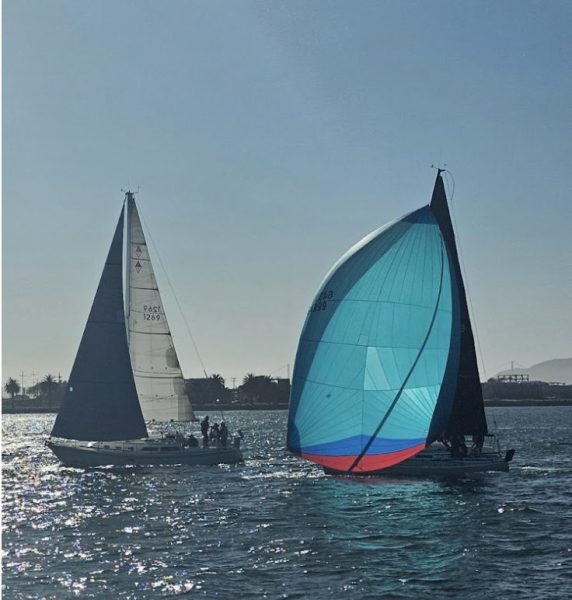
The fun didn’t end at the finish line. At 1830 hours the festivities moved to the Oakland Yacht Club, where racers shared stories of the day’s tactical triumphs and “almost” moments over drinks and awards.
The 2026 Rites of Spring wasn’t just a race; it was a celebration of a growing, vibrant sailing community. If this turnout is any indication of the year to come, the S.F. Bay Series is going to be one for the history books.
You can see the full results here.
Steering the Dream With Hydrovane
Hydrovane is your best crew member: an independent self-steering windvane and emergency rudder/steering system … ready to go!
Alameda Community Sailing Center’s Work Day Success
On March 14, Latitude 38 ambassador Gerry Gragg spent a couple of hours at the Alameda Community Sailing Center’s annual Work Day helping to get their fleet fully operational and ready for splashing. “I was VERY impressed with the quality of their volunteers and the leadership provided by the program director, Emily Zugnoni, and her volunteer coordinator, Rachel Finci,” Gerry says. Below is Gerry’s full report on the day.
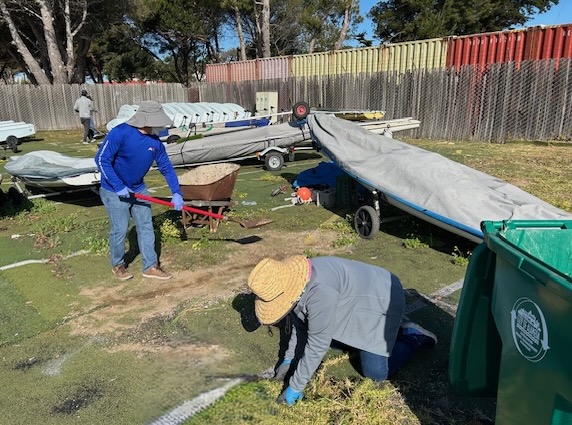
Alameda Community Sailing Center (ACSC) program director Emily Zugnoni and volunteer coordinator Rachel Finci led 15 energetic volunteers in ACSC’s annual Work Day dedicated to getting their large fleet fully operational and ready for the water in just a single Saturday! Emily’s grandfather, Emil Zugnoni, introduced Emily to sailing on the Bay at an early age aboard his Tartan 30, Lelo Too. Emily has continued this family tradition with award-winning leadership recognized by US Sailing with the Outstanding Program Director (2021) and the Outstanding Community Sailing Program award in 2023.
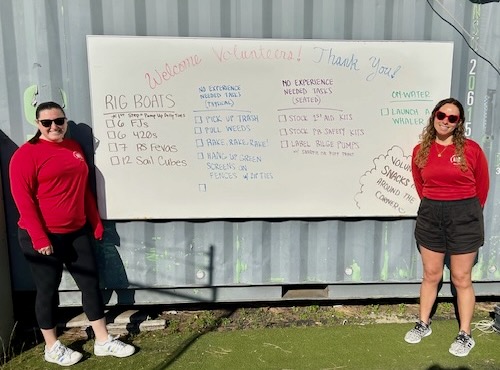
The ACSC is located on the northwest tip of Alameda Island on land owned by the City of Alameda. Sailing activities are funded by donations, grants from the CA Division of Boating and Waterways and summer camp tuition of $1200 per person for a two-week session. Scholarships are offered for students with limited ability to pay. Classes are staffed by 40 instructors and counselors and run weekdays from 9 a.m. to 4 p.m. Students are grouped according to age, ranging from 7 to 17, with certifications at various skill levels allowing access to boats of increasing size and complexity.
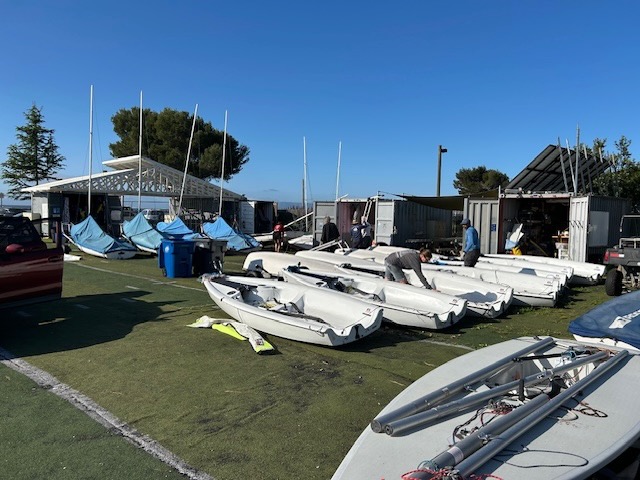
The fleet consists of an impressive variety of craft: 12 Sail Cubes made from plastic to better endure rocky groundings, as well as FJs (6), 420s (6), RS Fevas (7) and Lasers (4), all of which are supervised on the water by six RIBs and two Whalers.
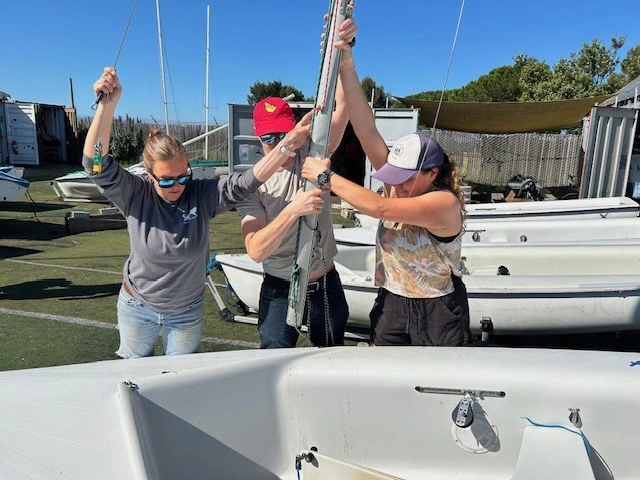
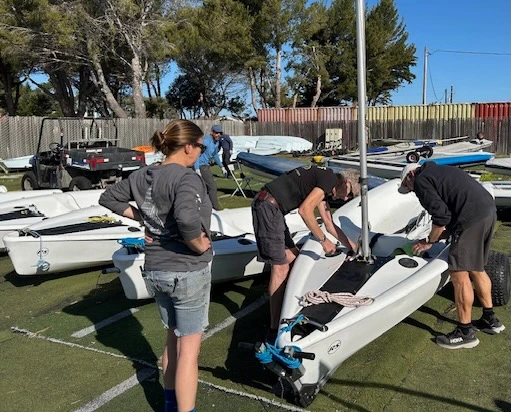
Open sails are available to the public on Saturdays between 11 a.m. and 2 p.m. at a cost of $45, and Sundays have regularly scheduled and supervised adventure sails to various points across the Bay.
The volunteer staff are welcoming to all interested sailors and strive to make the ACSC the “Third Place” you would rather be, after home and office! Volunteers are a necessary component of many sailing organizations, particularly those dedicated to teaching young sailors how to sail. With limited financial resources, these groups use volunteers for the manpower required to operate, maintain, and administer their sailing activities, reserving paid positions for summer camp instructors and counselors.
For more information on ASCS’s sailing programs, or to make a donation or volunteer your time and skills, go to sailalameda.org.
*Check out this Good Jibes podcast with Emily Zugnoni as she shares the story of her transition from sailing passenger to sailing instructor.
Miniyachts, Mega Adventures — Megayachts, Mini Adventures
We have an upcoming podcast with Josh Kali, who recently finished the McIntyre Mini Globe Race around the world in his 19-ft sloop Skookum. The scale of his small yacht, which just sailed 24,000 miles around the world, provided sharp relief to the megayachts tethered to the docks in English Harbour, Antigua. Up until about 30 years ago, places like Tahiti, Tonga, Antigua, St. Barts and many more were destinations for adventurers and explorers. The voyages were often inspired by people like Captain Cook, Joshua Slocum, Webb Chiles, the Pardeys or Robin Lee Graham. It was Robin Lee Graham who said, “One learns from the sea how little one needs, not how much.”
We were thinking of the adventures of people we’ve written about in Changes in Latitudes, and Josh Kali whose stories we’ve shared in ‘Lectronic Latitude, and wondered if it is even possible to have an adventure on a megayacht. With the enormous amount of indoor space and comfort, one wonders how much the guests know about what’s going on outside. How different is the yacht from their home or office?
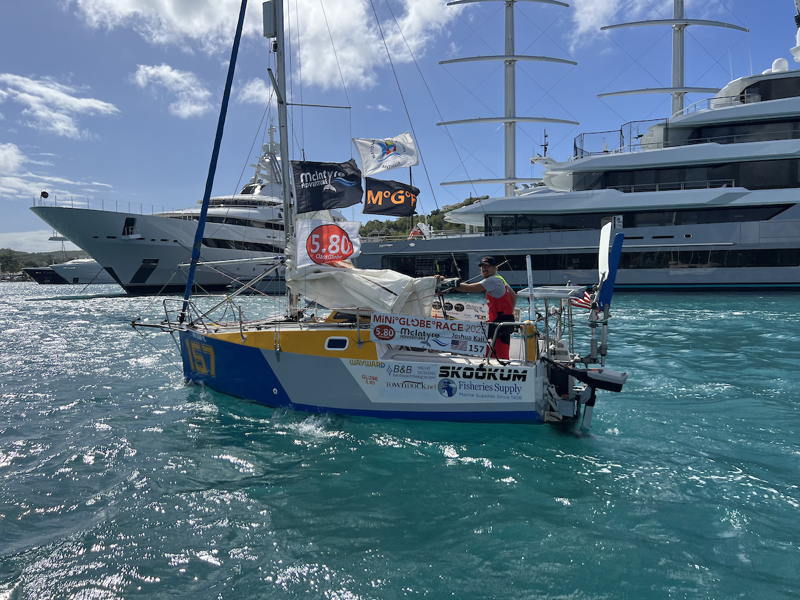
We know we get excited by your adventures in the Baja Ha-Ha, the Pacific Puddle Jump, or by anyone who just sets off on their own over the horizon. Randall Reeves’ Figure 8 voyage around the world was an epic cruise that started right outside the Golden Gate. The cloistered world of megayacht owners has them traveling in packs to places like St. Barts at New Year’s where dozens of them gather to see and be seen. Most cruisers we know are trying to keep it simple and “get away from it all.” Sadly, there are the oligarchs who are showing up and bringing it all with them. They say, “You can’t take it with you,” but the oligarchs are trying their best.
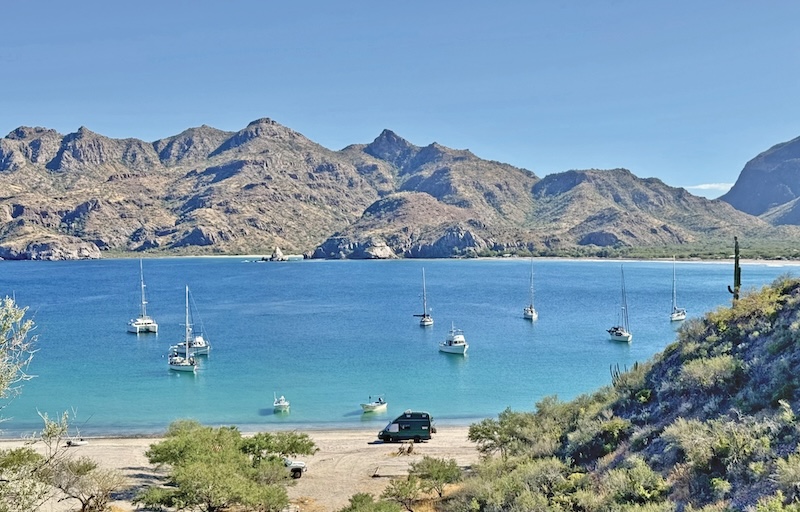
To find real sailing adventures, have a look at this month’s Changes in Latitudes, where you’ll find the story of Scott and Jennifer Brigham, whose Valiant 40 Pendragon is anchored in the photo above. If you’re currently on a real sailing adventure, we’d love to hear your sailing story. Email us here.
Midwinters Roundup: Norse Gods Smile on Corinthian Yacht Club
Buoyed by the momentum from January, 68 boats lined up on February 21–22 for the second half of Corinthian Yacht Club’s “Valhalla on the Bay” Midwinters Regatta. It’s unclear exactly which Norse god controls the weather, but whoever was on duty clearly smiled on the fleet. Racers were treated to mild temperatures, some blue sky, and enough breeze to send the fleets off without a single postponement — surely a modern Midwinters record.
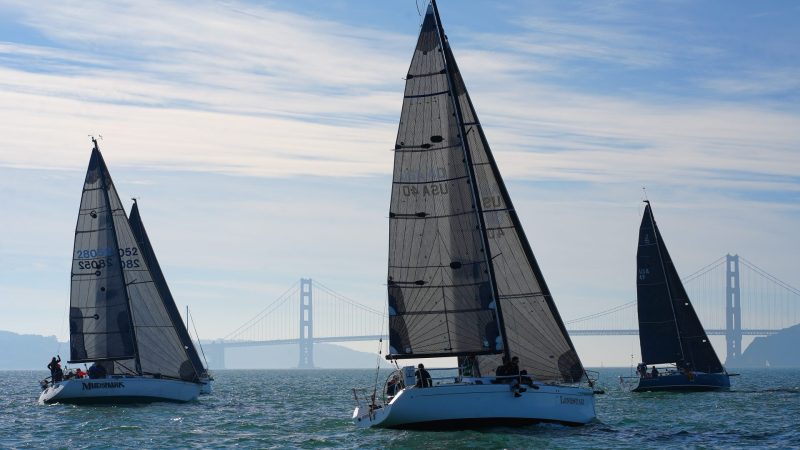
Of course, a cooperative breeze doesn’t mean predictable. The Bay still delivered its usual bag of tricks: wind shifts, occasional holes and a persistent current that forced tacticians to keep their heads out of the boat. Regardless, the healthy flood combined with a patchy breeze to produce the usual mix of chaos and a few retirements, no doubt owing to the breeze turning off in the wrong corner of the course.
Saturday’s racing sent the fleet on a tour of the Central Bay, with courses stretching to Blackaller buoy and along the Cityfront. The breeze filled early enough to keep the schedule moving, and the race committee took the opportunity to make up races that had been abandoned during the January weekend. For several fleets, that meant a quick windward/leeward race before embarking on a more traditional Midwinters course.
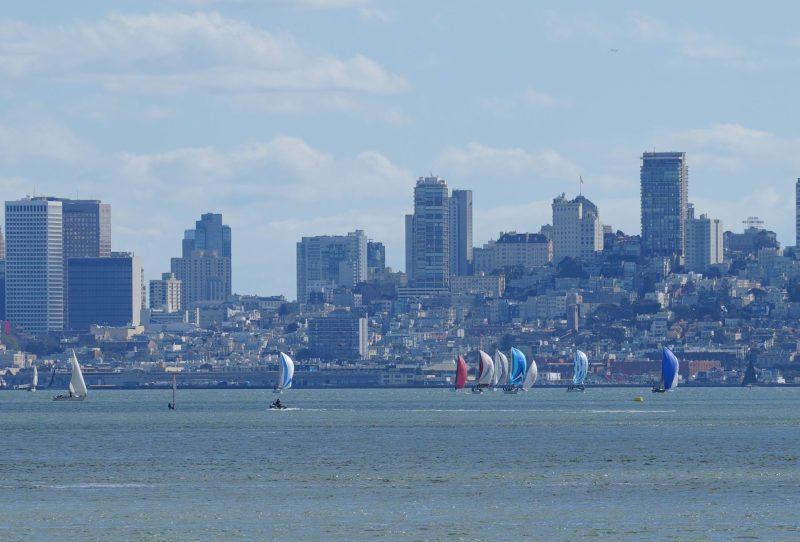
Those shorter windward/leeward courses gave crews a chance to gauge the flood, as a wind shift turned the weather leg into a reach until the flood required the fleet to harden up to avoid losing the layline. The second race of the day pushed the fleet farther afield, but as the afternoon progressed, the breeze softened, and the course was ultimately shortened to keep everyone moving.
Naturally, as is often the case on San Francisco Bay, the wind returned just in time for cocktail hour.
Back at the club, sailors packed the bar and dining room to thaw out and relive the day’s racing. The Midwinters have always been as much about the shoreside camaraderie as the competition on the water, and this year was no exception. By mid-evening, the firepits were glowing, the band was playing, and Viking helmets — the unofficial uniform of the event — were everywhere as sailors traded stories about mark roundings, missed shifts, and the eternal question of whether it really was better on the left (or right).
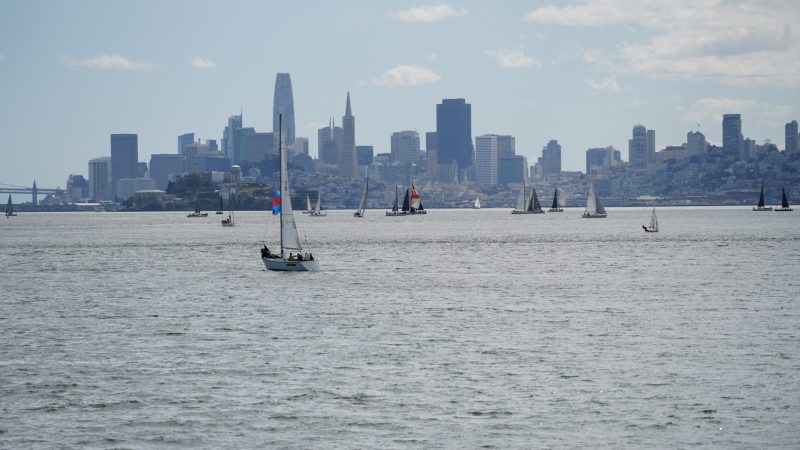
Sunday featured a pursuit-style race around the Bay, a format that spreads the fleet out and turns the day into a long tactical chase. Patience proved essential on the opening leg as boats worked a light-air reach against the flood toward Blackaller. Crews faced a classic Bay decision: Stay left and beeline for the Cityfront in search of pressure, or head right toward Yellow Bluff hoping to find relief from the current along the shore.
After rounding Blackaller, the fleet found more favorable current and a steadier breeze on the reach toward Blossom Rock, followed by a reach back to Harding and finally a run to the race-deck finish.
By late afternoon, the fleet streamed back toward the harbor, arriving in time for the final shoreside festivities and the announcement of results. Once again, the Midwinters delivered what sailors have come to expect: challenging racing, off-season Bay conditions, and a reminder that even in the depths of winter, San Francisco Bay remains one of the best racecourses anywhere.
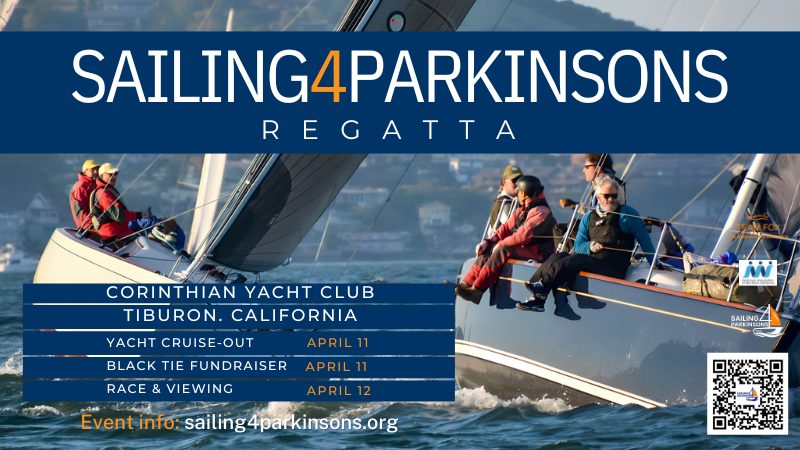
Join the Sailing4Parkinsons Regatta at CYC