
College of Charleston Victorious in Port of Los Angeles Harbor Cup Regatta
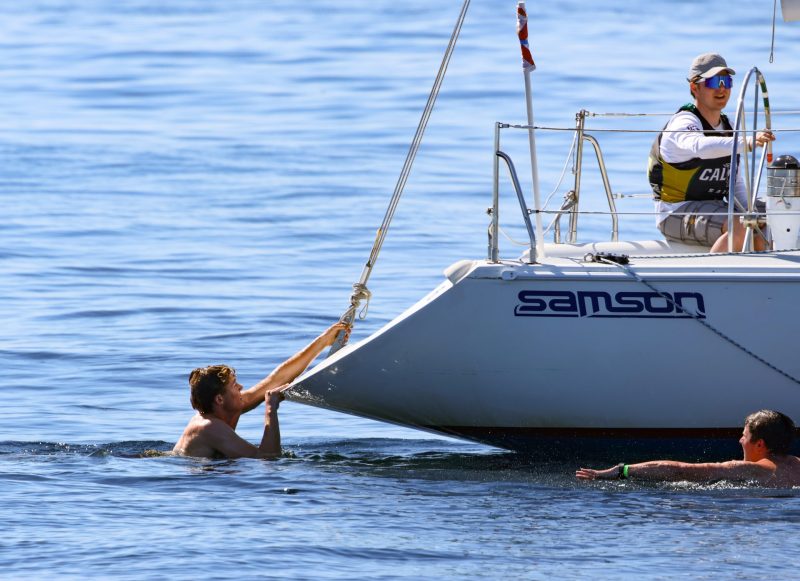
On March 6 through 8, Cal Poly Maritime (CPM) and the Los Angeles Yacht Club (LAYC) co-hosted the 2026 Port of Los Angeles (POLA) Harbor Cup. The POLA Harbor Cup is one of the most prestigious annual college sailing keelboat regattas. Nine teams from across the United States and one from Canada competed, with the College of Charleston Cougars ultimately coming out victorious.
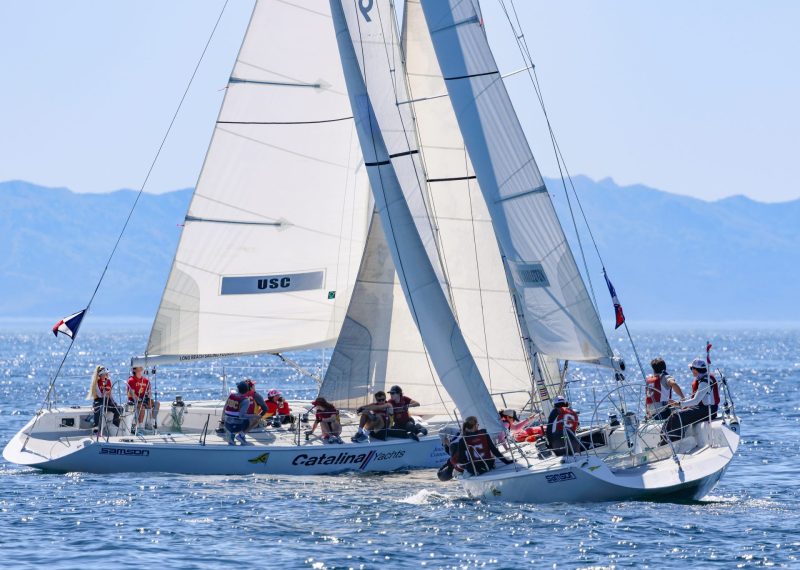
The Cougars jumped out to a massive early lead by winning the first three races of the event. The closest team behind them after the first three races was the USC Trojans, with 11 points after back-to-back second-place finishes in races one and two, and a fifth in race three.
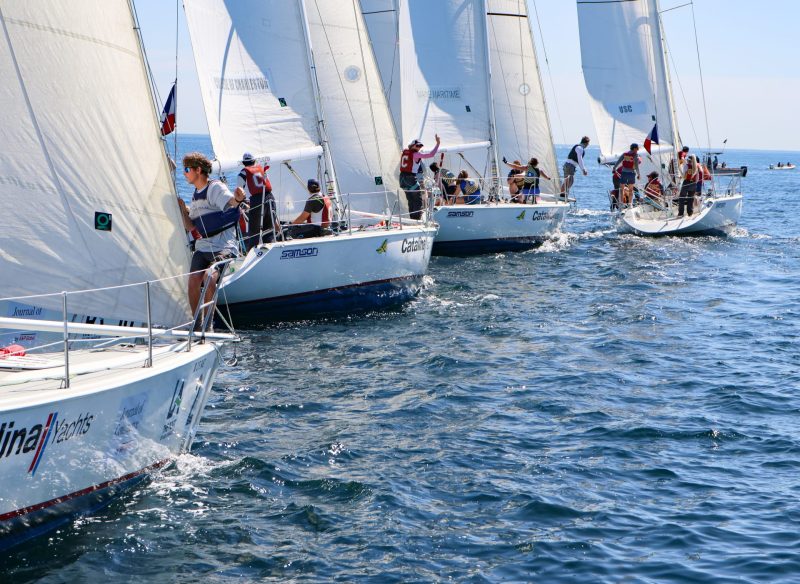
Initially, it looked as if the official co-hosts of the regatta, Cal Poly Maritime, wouldn’t be in the conversation to win the regatta. The Keelhaulers finished second-to-last in race one, and then seventh in race four after back-to-back third-place finishes in races two and three. It was in race five that the CPM team made their charge up the standings. From races five through 10, the Keelhaulers finished outside of the top two only once — a fifth in race six — and won races eight and 10. At the same time, the Cougars started to slip, not finishing in the top three for any of the final six races of the event.
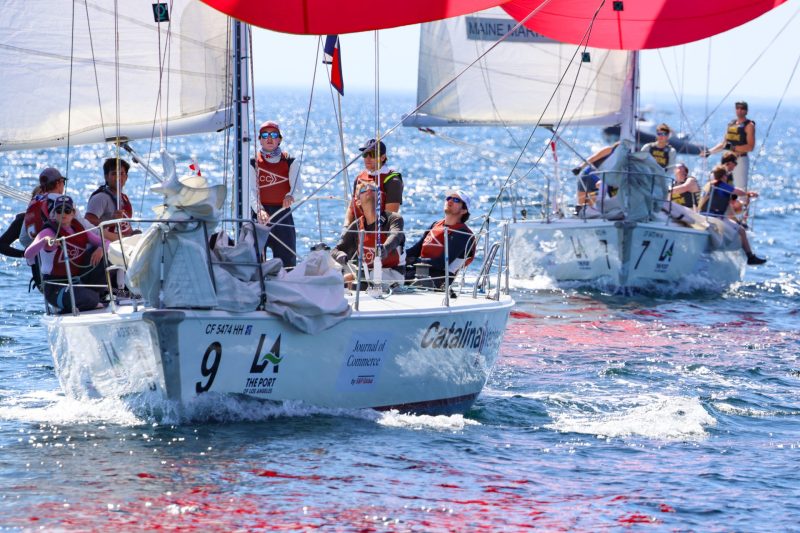
While College of Charleston wasn’t quite as dominant on the back end of the regatta as they were right out of the gate, it was their consistency and ability to avoid the disaster race that allowed them to hold on and win the regatta: Their worst finish was fifth place. The Cougars finished the regatta with a final total of 32 points from 10 races, three ahead of the Keelhaulers with 35.
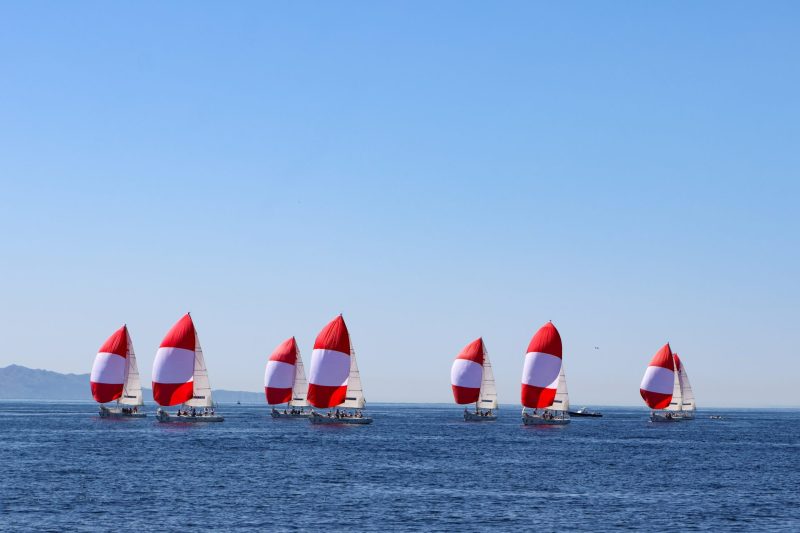
“Being from the East Coast, the biggest challenge for us is the waves and different water conditions,” College of Charleston helm John Polek said of the racing, per the LAYC press release. “So it’s a little tough sailing in the West Coast conditions, but we just try to stay calm and keep doing what we do best.”

The college teams across the country, including all 10 that raced in the POLA Harbor Cup, will turn their eyes toward their respective conference championships in dinghy fleet and team racing. Teams will then focus on team- and fleet-racing nationals from late April through late May.
You can see the full scores from the Port of Los Angeles Harbor Cup here.
Storied Islander 36 ‘Geja’ Seeks New Owner for New Adventures
Andrew Vik and his 1976 Islander 36 Geja (pronounced “Gaya”) have had numerous appearances in the pages of Latitude 38 magazine, along with a guest spot on our Good Jibes podcast, and a story or two in ‘Lectronic Latitude. After almost 20 years of sailing the Med, Andrew is ready to retie the dock lines and hand over Geja’s helm to a new owner. The USA-flagged boat is located in Croatia, well-equipped and ready to cruise the Dalmatian coast and the Mediterranean.
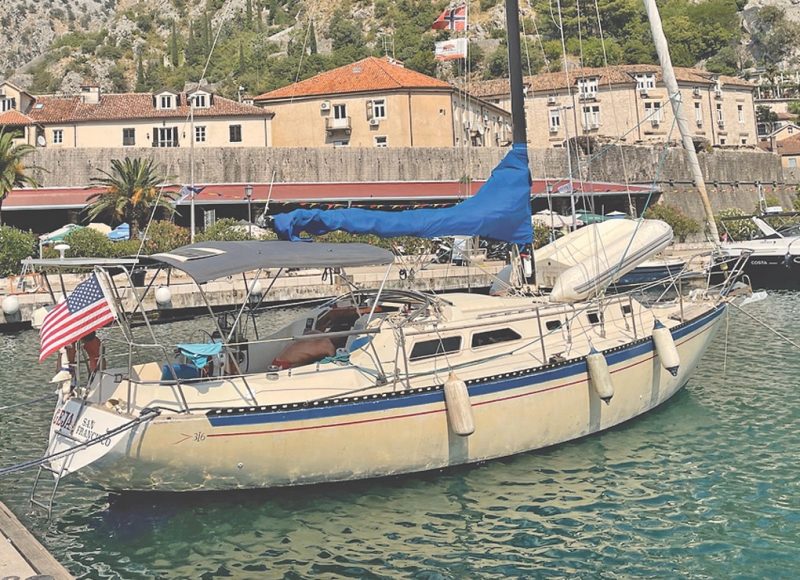
“Yes, I’m selling my beloved Geja, which I bought sight unseen in 2008 through the pages of the Northern California magazine, Latitude 38,” Andrew writes in the description. Andrew appeared ready to sell Geja in August 2024. We can only surmise that it has been difficult to take that final step and openly list her for sale. But here she is, listed in Latitude’s Classy Classifieds as “Cheaper and better-equipped than most Islanders.…”
Although he is based in California, Andrew has spent 15 summers sailing Geja 13,000 miles to nine Mediterranean countries and two continents. Along the way he welcomed more than 90 different friends, family and acquaintances as crew (not all at once, of course). “She has plenty of life left in her, fully equipped and ready to go for more seasons to come,” he says.

Is there anything wrong with her? “Well,” Andrew says, “she is aesthetically challenged. The hull above the waterline has long needed a paint job. The toe rails leak in a couple of spots, a very common issue. I’ve taken the Band-Aid approach by caulking their edges from the outside, but at some point they should be removed and properly re-caulked, a weekend job for two if things go smoothly. Even with these issues present since my purchase in 2008, they haven’t prevented me from safely and comfortably voyaging thousands of miles through the Med.”
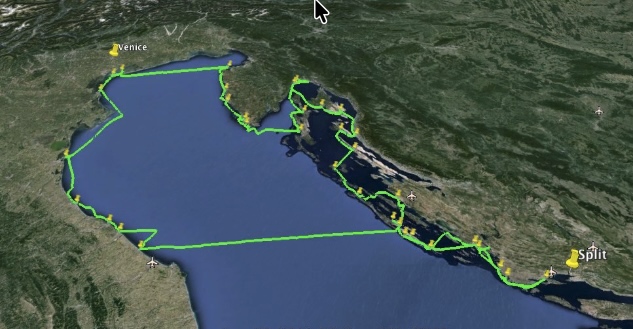
When she was last listed for sale, Geja was based in Italy. And there she remained while Andrew bought the Islander, sight unseen from San Franciscans Eli and Sara Bottrell who had cruised her in the Med for seven months. Geja was built near Los Angeles, California, during what Andrew describes as a boom of fiberglass boatbuilding. “The hull is thick and strong,” he continues, adding that Islanders were not made for crossing oceans. “Still, I’ve had her out in some very challenging conditions, which she has always handled well.”
Having owned Geja for what amounts to half of his life, Andrew says she has given him more than a lifetime’s worth of adventure and is excited to see an “equally passionate owner” take her over.
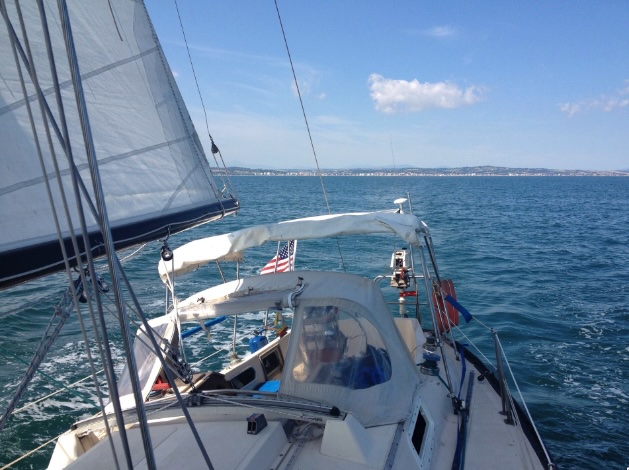
Learn more about Geja here.
If an Islander 36 is not the boat for you, view other listings in the Classy Classifieds here.
And if you’re just curious about Geja, read up on some of the adventures she and Andrew have shared over their 18 or so years together here.
Steering the Dream With Hydrovane
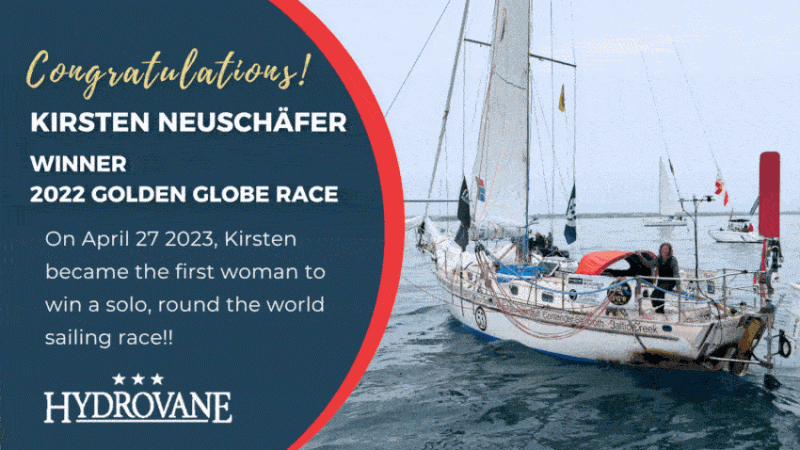
Hydrovane is your best crew member: an independent self-steering windvane and emergency rudder/steering system … ready to go!
Jim Brown Is Creating a History of Multihulls in Video: ‘Mavericks & Multihulls’
The history of multihulls starts with Polynesian voyagers in the Pacific. In the 1950s, pioneering sailors started designing and building more modern multihull designs that have since transformed sailing. On the front lines were people like Arthur Piver from Mill Valley, West Coast sailor Jim Brown, Rudy Choy from Hawaii, and many more. (Rudy’s Aikane X5 smashed the Transpac speed record in ’89 when she arrived in Honolulu in just 6 days, 22 hours.) Jim Brown is currently in the process of chronicling the history of multihulls in a video called Mavericks & Multihulls.
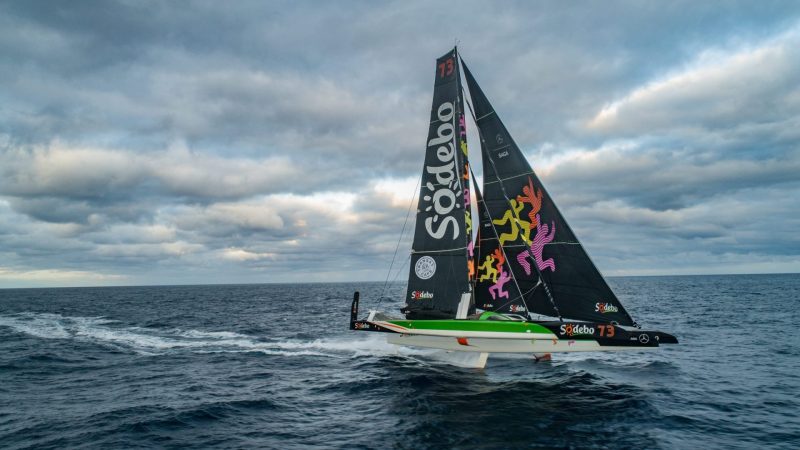
Jim started building multihulls in coastal California in the 1950s. In 1974, he and his family cruised from Santa Cruz, California for a three-and-a-half-year odyssey through Mexico and Central America aboard Scrimshaw, their Searunner 31 trimaran. In today’s sailing world, multihulls have only become faster, and for cruising, much more popular. If you’re a BAMA member or multihull fan it’s amazing to see the progression from early plywood designs to modern foilers and global circumnavigators.
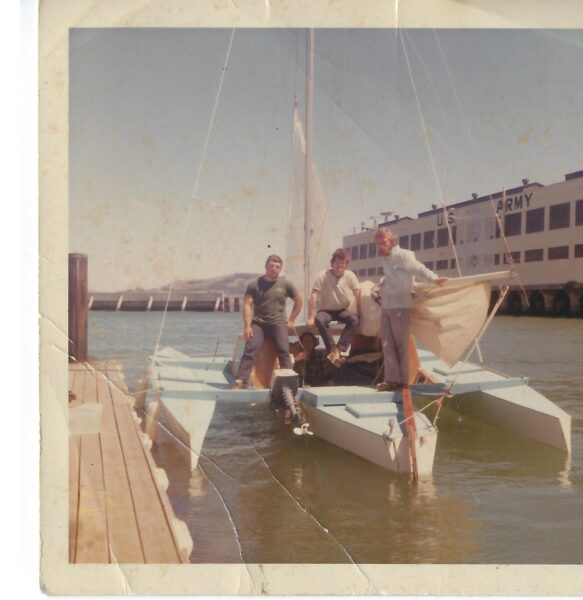
The West Coast has figured prominently in that history, with many boats designed and built here. Schooner Creek Boat Works continues to build multihulls for the Hawaiian charter trade, and Morelli & Melvin remain at the forefront of multihull design. The first multihull in the America’s Cup raced in San Diego in 1992. The multihull world continues to rapidly evolve toward higher speeds or greater comfort.
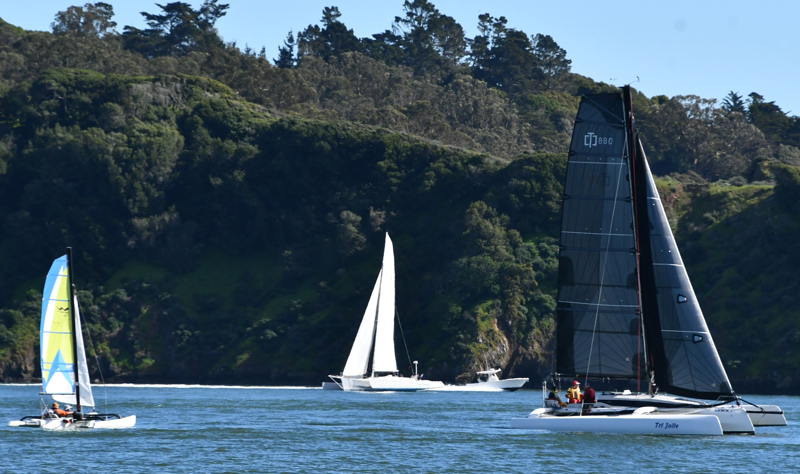
If you’ve got a piece of West Coast multihull history, let us know in the comments below and connect with the Mavericks & Multihull creators to contribute to the story.
Max Ebb — Happy Endings
Every boat needs a playlist. Good music sets a positive mood, and a long set of favorites can help those long hours of the night watch go by quickly (even though any given watch between midnight and sunrise should never be longer than two hours). Why did they pick me to assemble the playlist? I’m far out of touch with popular culture, and my taste in nautical-themed songs is obscure. But it wasn’t that hard, once I got into it. Instrumental Hawaiian tracks are great for background. Surf guitar for the squalls. Show tunes and novelty songs to pass the time when things are stable enough for the crew on deck to have their earbuds in. But I was having trouble with the sea chantey genre. They all seem to end badly, usually describing some sailor who is robbed blind by a romantic connection on their first night ashore right after being paid off, requiring them to sign up again for a dangerous trip around Cape Horn. Not to mention that the encounter might have “set fire to my mainmast.” Or the song describes a shipwreck with catastrophic loss of life, or a brutal captain with an equally brutal dog.

Artificial Intelligence was not much help. It listed some good inspirational songs and some daring rescues, but the context was always downbeat. So I did what I always do when I have a problem preparing for an ocean race: I emailed Lee Helm for assistance, knowing that she would be up late.
“It’s a problem with nautical culture,” she agreed in her email response. “Professional sailors have had, like, a bad deal over the centuries, and the music reflects that. There are exceptions.”
“Spill!” I demanded.
“Here’s one of my faves,” she typed. “It makes the case for an alternative family structure, although you have to project a little into the future of the protagonist beyond the song’s ending. It’s ‘Morning Glory’, by the Corsairs. Here are excerpts from the lyrics:”
At the end of the day, I like a little
drink,
To raise up me voice and sing.
And an hour or two with a fine brown
brew,
And I’m ready for anything.
At the Crosskeys Inn there were
sisters four,
The landlord’s daughters fair.
And every night, when he put
out the light,
I would tiptoe up the stairs.…
[The sailor is gone for two years of
service in the Napoleonic naval wars.]
Join the Sailing4Parkinsons Regatta at CYC