
21-Year-Old Bay Area Sailor Hoel Menard Embarks on Olympic Campaign
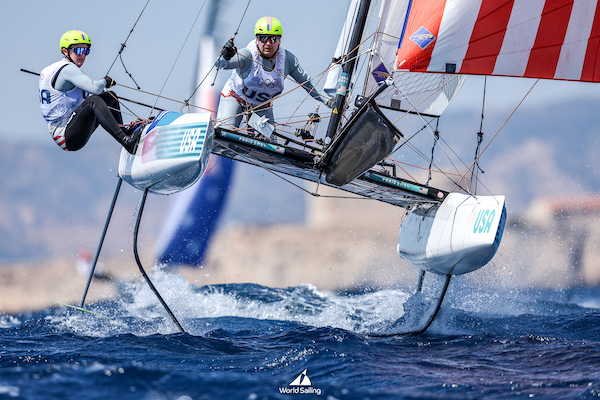
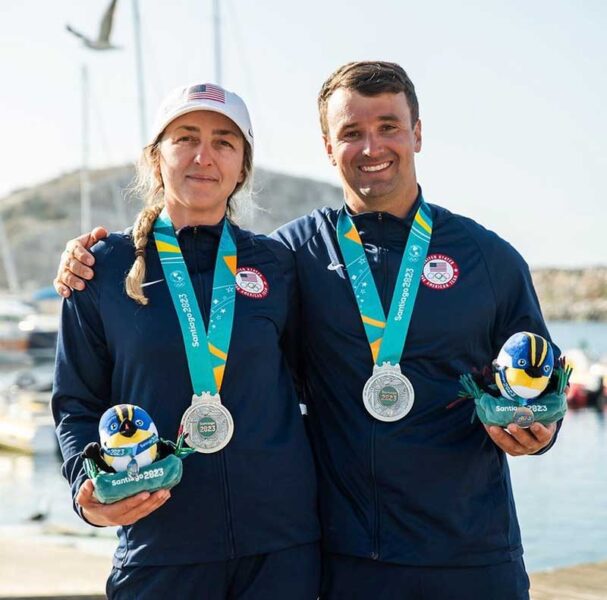
While the world gears up for the start of the 2026 Winter Olympics in northern Italy, we have exciting news about the 2028 Summer Olympics in Los Angeles. It was recently announced that a local 21-year-old sailor, Hoel Menard, is campaigning for the Games in the Nacra 17 class with Paris 2024 Olympian Sarah Newberry Moore.
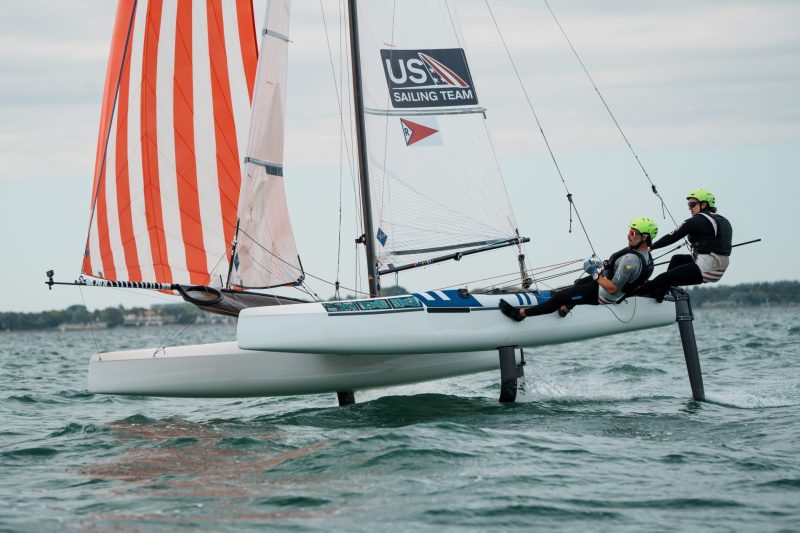
Menard grew up racing on the Richmond Yacht Club (RYC) and San Francisco Yacht Club (SFYC) Opti teams, competing both nationally and internationally. After outgrowing the bathtubs, Menard made the big leap straight into racing Nacra 15s with the support of RYC and St. Francis Yacht Club (StFYC). After several years in the Nacra 15, Menard focused on racing 29ers, first with San Diego sailor Kelly Holthus, and then with current Stanford Sailing senior Sophie Fisher. While in the 29er class, Menard finished third at the Orange Bowl Regatta with Holthus, and finished 19th out of 190 boats at the 29er Worlds while racing with Fisher.
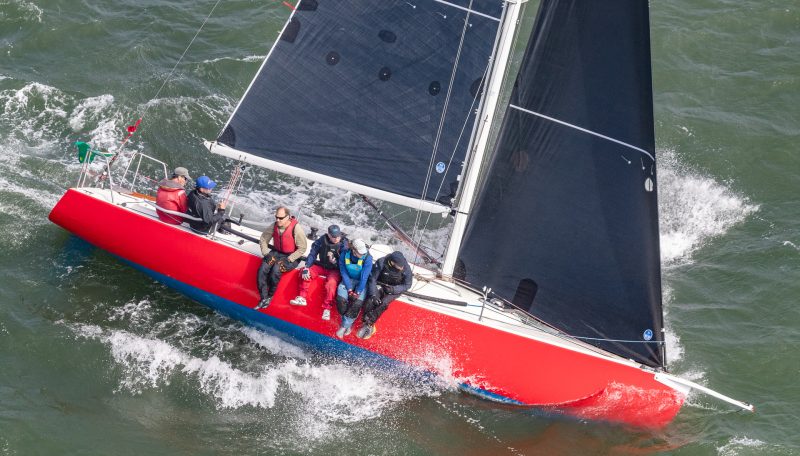
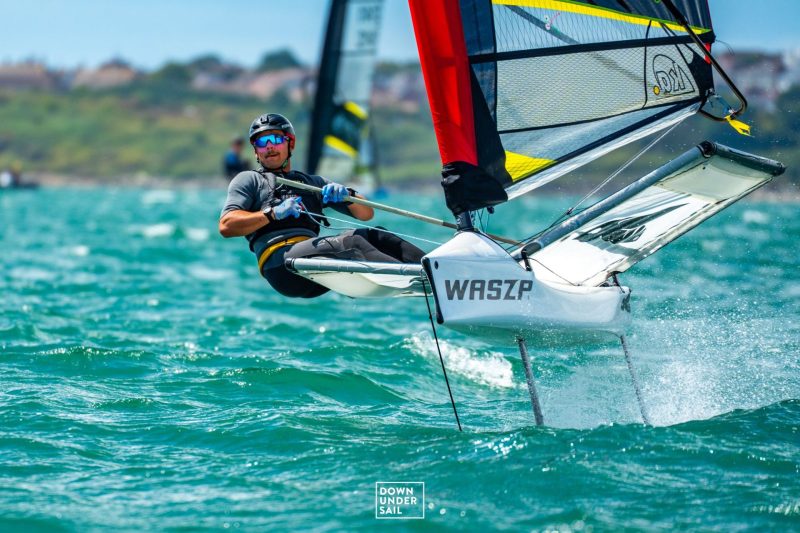
Throughout the years, Menard has been an avid and incredibly successful Waszp sailor, finishing 12th in the Waszp Worlds, and second in the US Waszp Nationals. In the world of keelboats, he has served as the tactician and main trimmer on Zach Berkowitz’s J/100 Feather, helping the team win its division in the Rolex Big Boat Series the past two years.
“I was really fortunate to grow up between three yacht clubs in the Bay Area that offered so many different people who were great mentors,” Menard tells Latitude about his Bay Area sailing education. “I think names that come to mind are Hill Blackett (he goes by “Buzz”) from RYC, and Zach Berkowitz from St. Francis. I’d say those two have been really great mentors locally in the Bay.”
Menard officially became Sarah Newberry Moore’s new Olympic campaign crew in late 2025, after she had sailed with another RYC sailor, David Liebenberg, in the Paris 2024 Olympics. Newberry Moore, who welcomed her second child into the world in early 2025, was looking for a new crew. Menard was one of the last crews to try out with her in late November, and several days later the two agreed to campaign together.
“Sarah’s got a ton more experience than I do,” Menard tells us of the duo’s dynamic. “She’s on her third Olympic campaign, and she went to Paris in 2024, so she brings a lot of that experience: that calmness and guidance in terms of big-picture campaign things. On the boat, we work really well together in terms of helping each other with our own personal jobs. Like, what I can do with my sheeting to make her life easier and the boat faster. If she’s struggling with something, my mindset is, ‘what can I do to help?’ and if I’m struggling with something her mindset is, ‘what can she do to help [me]?’”
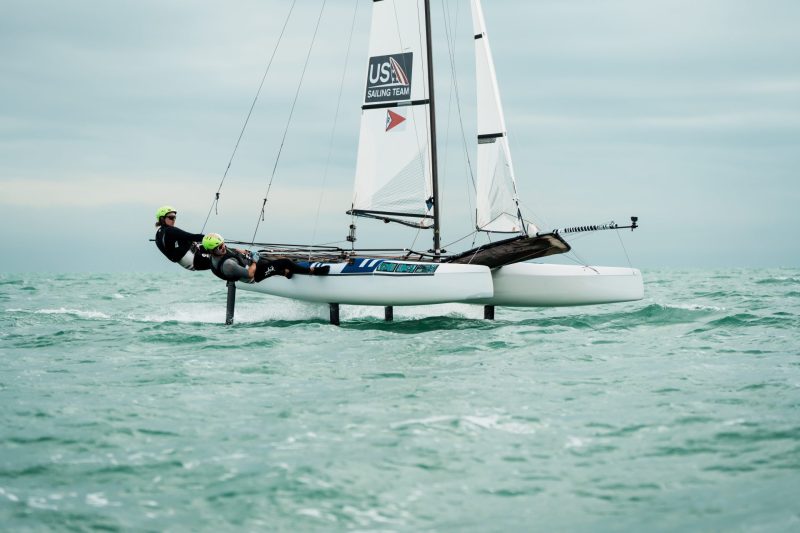
Most of the duo’s training has taken place in Miami, Newberry Moore’s hometown. Menard is still a college student, and as he finishes up his senior year at UCLA, he will have to balance the demands of an Olympic campaign with the demands of college.
“The first regatta of the season is the Trofeo Princesa Sofia, which is in Palma [de Mallorca], Spain, but we decided not to attend that,” Menard tells us of their schedule. “Our first regatta will be the Worlds in France in May. We feel that with me balancing school and campaigning, that that is the best way for us to be the most prepared and be ready to tackle our first event; not rushing into a race.”
“Our goal there is to check in with the fleet, make sure we’re happy with the direction we’ve chosen for the settings and the development of our platform, and test our racing comms and how we put together a strategy and tactics as a team,” Menard says. “Continuing on that, I graduate school right after Worlds, and we’re going to start training full-time and put a lot of focus into the second half of the year. We’re going to train for a month in Kiel, Germany. We’re going to race in Kieler Woche and Europeans, which are also in Kiel. The goal there is to train with the international fleet and get up to speed. There will be areas where we’re missing things because we’re training on our own most of the time. We want to find those areas and work on them.”
After their summer swing in northern Germany, the duo will spend time training in Miami and Los Angeles, as well as another stint in Europe.
One of the many challenges of Olympic campaigning is the fundraising. Menard noted that while sailing has never been a cheap sport at the level where he has competed for most of his life, the Olympic campaign side of fundraising is no joke.
“Olympic campaigns cost a lot of money, and we’re funded by donations,” Menard tells us. “Richmond Yacht Club is super-helpful in terms of supporting us, but there’s so much grassroots support. Putting the pieces together from smaller amounts of money. It’s definitely a ‘strength in numbers’ mentality.”
Latitude 38 will be following Menard and Newberry Moore’s campaign closely, and wishing them the best. Stay tuned to ‘Lectronic Latitude and the print edition of the magazine for more coverage of their campaign.
You can donate to their Olympic campaign here.
You can visit their campaign page here.
Corinthian Yacht Club Midwinters Battles the Ebb
January has been ideal for sailing, and last weekend there was no place better than the sunny Corinthian Yacht Club Midwinters. It actually started on Thursday night, when Kame Richards gave a talk at the skippers’ meeting to help everyone understand how to overcome the weekend’s ebb reinforced by melting snow from the Sierra. The snow is supposed to stay up there this time of year, but it’s been wet and warm so the meltwater is running out the Gate.
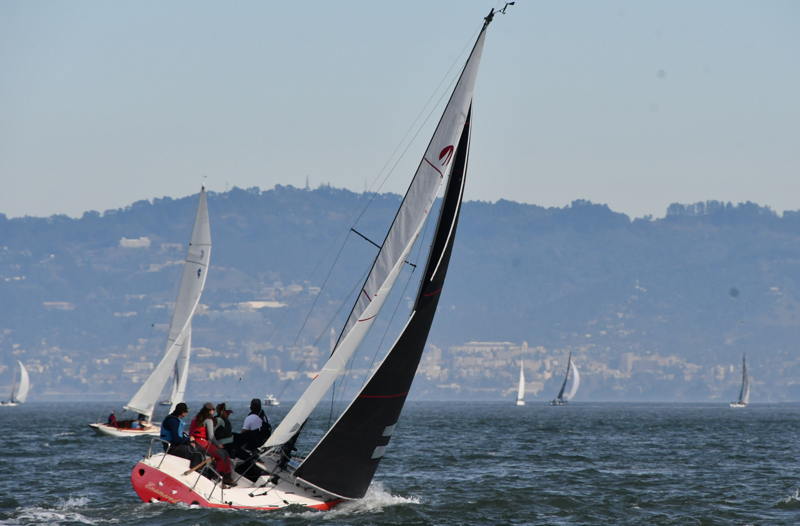
As always, lessons learned in “class” are often hard to apply outside the classroom. Kame shared a cool online tool from the Bay Area Sea Kayakers website that really helps you visualize the current. Despite the pre-race help, it doesn’t tell you where to point the boat to successfully run the Saturday course, crossing the ebb to Blackaller buoy. Many boats held high enough to land at the buoy, while many others found themselves swept toward the Gate and forced to drop kites and close-reach to make the buoy.
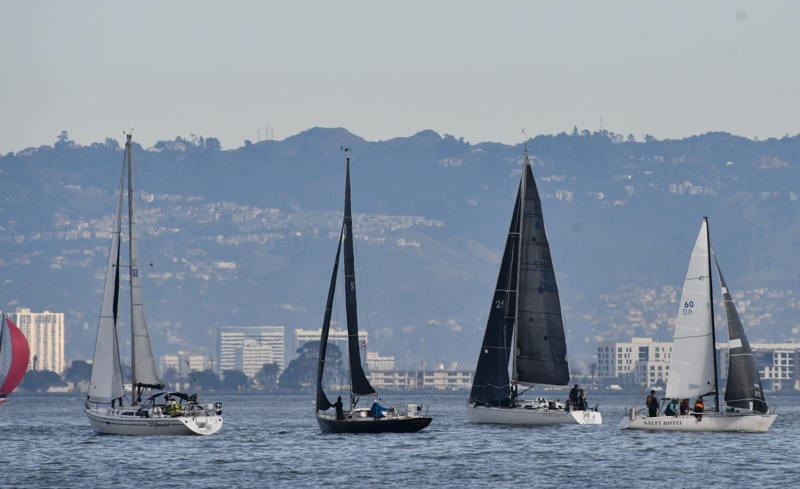
Current predictions help, but they don’t show you where the wind will be. That’s part of the puzzle that makes racing the Bay so much fun. Do you round Blackaller and reach off to Crissy Field to get out of the ebb as you head toward the Phil Perkins buoy off Fort Mason? Or do you stay farther off the beach where you have more breeze to help you sail into the teeth of the ebb? Every boat found its lane to sail right up to the wind hole off Fort Mason. Fortunately, the wind returned with enough force to get everyone around and heading home.
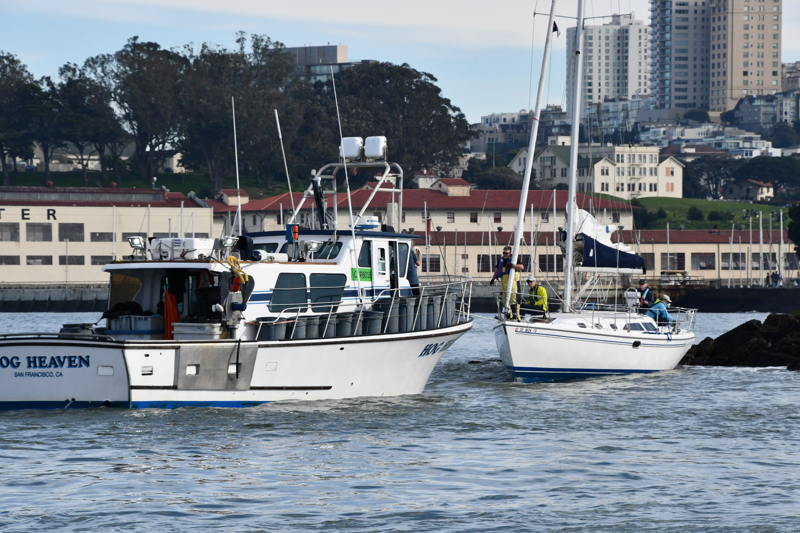
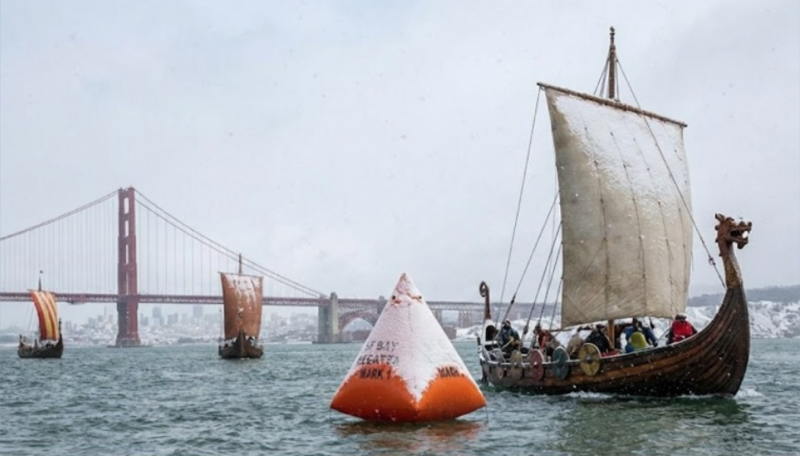
The great thing about a race weekend is the party between race days. Instead of sailing home after the race on Saturday, the fleet all pulled into the CYC docks for a party. It was better than watching the Niners. Corinthian provided a timely Nordic theme as the on-the-water warriors came ashore to don Viking helmets for music, drink, food and festivities, and if you did it right, collect a daily trophy.
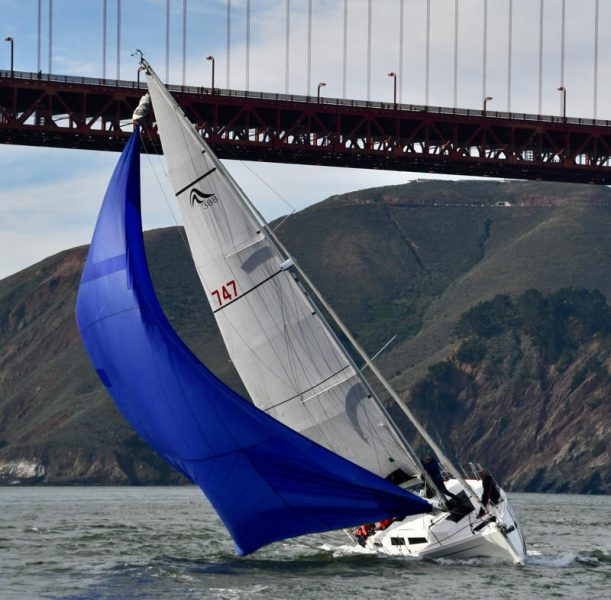
Sunday was similar, so all the lessons from the Thursday-evening current talk and the Saturday race could be applied to perfection. Except it’s never that easy. Competitors force you to go where you don’t want to go; someone takes a flyer that undermines the confidence you had in your pre-race strategy; and the wind doesn’t care what racers want. The wind was enough for some good sailing, but every midwinter race needs a wind hole to restore hope to those who fall behind. The powerful ebb slowed the boats and caused one race mark to go rogue and head for the Gate. Racers picked their way through the on-the water, mini-golf-course obstacles to find their way back to the finish line to complete a two-race, weather-friendly weekend of midwinter racing.
After the winter wrangle, the eight class winners were:
PHRF 1 Jeannette, Custom Frers 40, Bob Novy EYC
PHRF 2 Lucky Duck, J/90, Dave MacEwen SFYC
PHRF 3 Rhapsody, Sabre Spirit 36, Laurence Pulgram SFYC
J/105 Cal Maritime/USA 46 J/105, Dennis Deisinger StFYC
NSPN 1 Q, Schumacher 40 Custom, Doug Wilhelm SFYC
NSPN 2 Abba-Zaba, Tartan Ten, Ross Tibbits and Michelle Farabaugh SFYC
PHRF 4 Lilith, Wyliecat 39, Tom Paulling RYC
PHRF 5 Salty Hotel, Express 27, John Kearney CYC
We have another weather-friendly weekend of midwinter racing ahead at South Beach Yacht Club, Sequoia Yacht Club, Berkeley Yacht Club and the Coyote Point Yacht Club. If you’re out there sailing, send some pics and a story to [email protected].
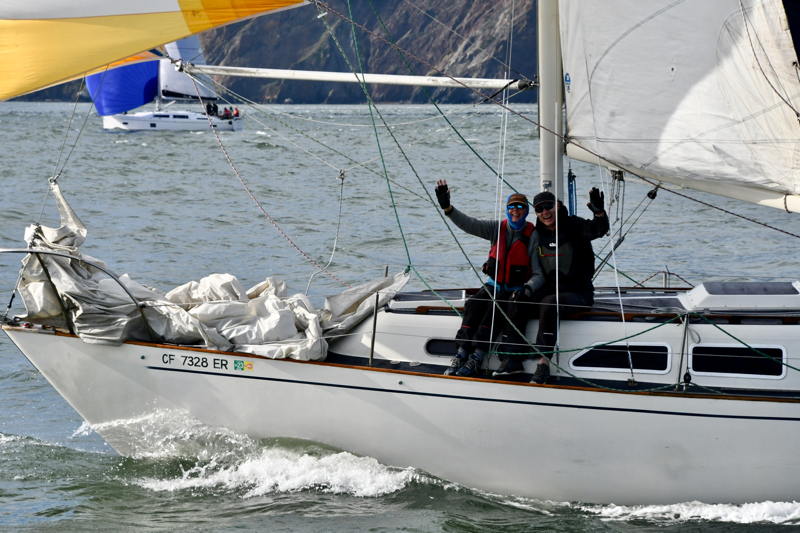
You can find a link to the BASK current guide and many other weather resources and Bay Area webcams on our weather page.
New BVI Sailing Video With Captain Glenn Shephard Now Live
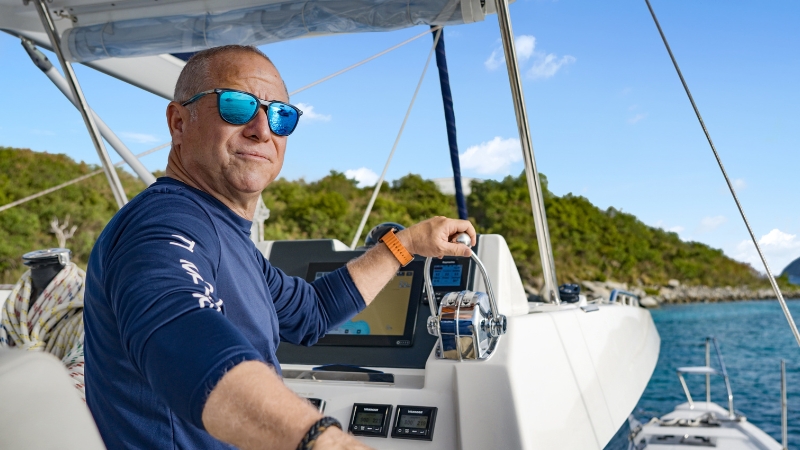
Watch the star of Below Deck Sailing Yacht explore The Baths, Saba Rock, Bitter End Yacht Club and other must-see stops in the British Virgin Islands on his recent charter with The Moorings.
The Resourceful Sailor — A Portable All-Round and Anchor Light with Sensor
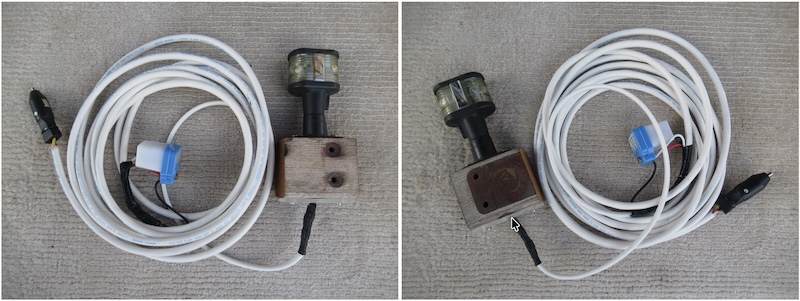
How would I leave Sampaguita, a Pacific Seacraft Flicka 20, unattended at anchor for an extended time? What if I were sailing in Mexico or the Marquesas and needed to travel to the United States for a few weeks? Or, what if a bird damaged my anchor light? While there were several concerns regarding these scenarios, such as ample ground tackle, security or accessibility, this installment focuses on creating a portable low-power anchor light using a cigarette lighter adapter, spare boat cable, an old fixture, and a light-sensor switch.
Regarding security, any accessories that could be easily removed would need to be locked below. Included in that were the flexible and temporary solar panels used to charge the boat‘s batteries. By design, the panels were easily removed and relocated (“Sampaguita’s Solar Solution,” ‘Lectronic Latitude, August 2024). This means that the anchor light would draw on the system without replenishment.
I had replaced the anchor light with a new tricolor/anchor/strobe light in 2021. This new light was superior to the old in every way, except that it drew 0.5 amps, compared to the 0.2 amps of the older one. For the mathematically challenged, the new light used 150% more energy!
I had installed the previous anchor light in 2014 and fitted it with LED bulbs. By the time I replaced the light in 2021, the weather and sun had degraded it sufficiently that it held no meaningful secondhand value. I kept it as a spare.
Once I had imagined a need for a low-power, set-it-and-forget-it anchor light, it came together quickly. I already had spare duplex wire on board, the old fixture, a well-stocked electrical kit, and my trusty scrap bin. From Amazon, I purchased some inexpensive male cigarette lighter plug adapters (I needed some of these on hand anyway) and light-sensor switches (three for $10).
I attached the light fixture to a salvaged piece of Sampaguita’s old teak bow platform, providing a base. (I had replaced the platform two years before.) This wood already had holes drilled into it that would accommodate the electrical wiring and lashing the fixture to the backstay. Also from the scrap bin, plastic tubing served as a conduit through the teak, and foam bits filled any vacant space. I connected the fixture’s wire leads to an 18-foot length of duplex wire, adding adhesive heat shrink over the connections to keep moisture out, prevent chafing, and provide strength. A small piece of acrylic, already conveniently and appropriately drilled (“Keep the Stern Light in Sight,” ‘Lectronic Latitude, August 2021), stabilized the area.
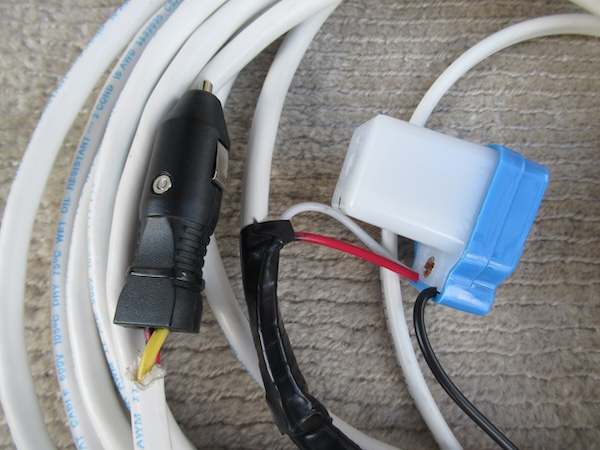
Two feet along the cable from the light, I wired in a light-sensor switch. When the sun set, this switch would complete the circuit, and the light would automatically switch on. These wire connections were challenging to cover fully with heat shrink, so I wrapped them well with the next-best thing: electrical tape.
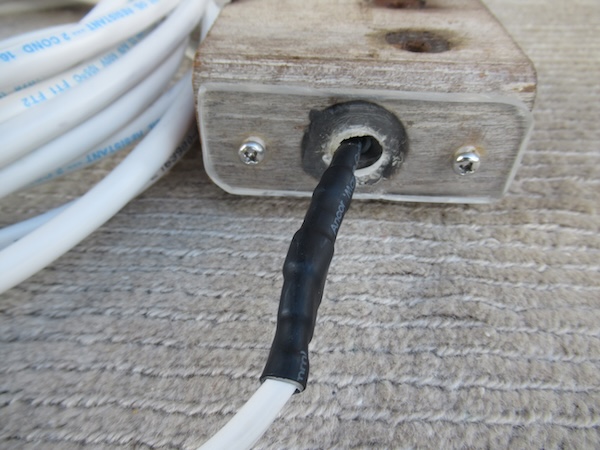
Finally, I added a male cigarette plug adapter to the bitter end of the duplex cable. The adapter plugged into the cigarette lighter terminal in Sampaguita’s cabin. The cable would lead through the slight space between the drop boards and the companionway sliding hatch, through the cockpit to a backstay, where it would be lashed as high as I could reach with some clever marlinspike seamanship. The cable would also be lashed to the stay below the sensor switch, mitigating wire movement and relieving stress on the connections.
Have I used it? I have, but not for its original purpose. As stated in “Sampaguita’s Solar Solution,” I installed it when I had trouble with degrading solar panels in Baja, Mexico. It helped economize my electricity usage for a couple of weeks until I could replace them. During this time, I realized that I could also use it as my sole navigation light, if necessary. A Flicka 20 is under seven meters and can legally operate under power with a single, all-round, white light.
Some notes about the setup:
- There are simple dry-cell portable navigation lights. I had these on board, but they wouldn’t suit an extended absence.
- Sampaguita sported lithium batteries, which could better handle a semi-charged state without permanent damage.
- I used a cigarette lighter adapter because I had already outfitted Sampaguita with an outlet. USB was an option, but I am not sure about the compatibility of a USB plug and a 16 AWG duplex cable.
- 16 AWG was overkill for the job, but it was the size I kept aboard as a universal spare. If I had a more urgent need, I could cannibalize the portable anchor light for its wire. If I’m going to store extra wire on board, why not give it a secondary purpose?
- Nearly colliding with an unlit boat in an anchorage after dark has always given me a scare.
- If you have ever had an eagle roost on your masthead, or a pelican or booby strike at sea, bird damage is not far-fetched.
- The setup is also part of my small boat-delivery kit.
Remember, keep your solutions safe and prudent, and have a blast.
MPYC and SCYC Square Off in Veeder Cup
The 2025 Veeder Cup championship took place on Sunday, November 16, in a five-race match-racing format. The regatta was held just off Monterey Beach, with the winner being the first boat to score three points. Started in 1964, the Veeder Cup is a (mostly) annual race among the four clubs on Monterey Bay: Monterey Peninsula Yacht Club (MPYC), Stillwater Yacht Club (Pebble Beach), Elkhorn Yacht Club (Moss Landing), and Santa Cruz Yacht Club (SCYC). The Cup is named after Mrs. Grace T. Veeder, who at the time was an active member of the Stillwater Yacht Club. She created the regatta to bring together the area’s yacht clubs and crown a champion of Monterey Bay.
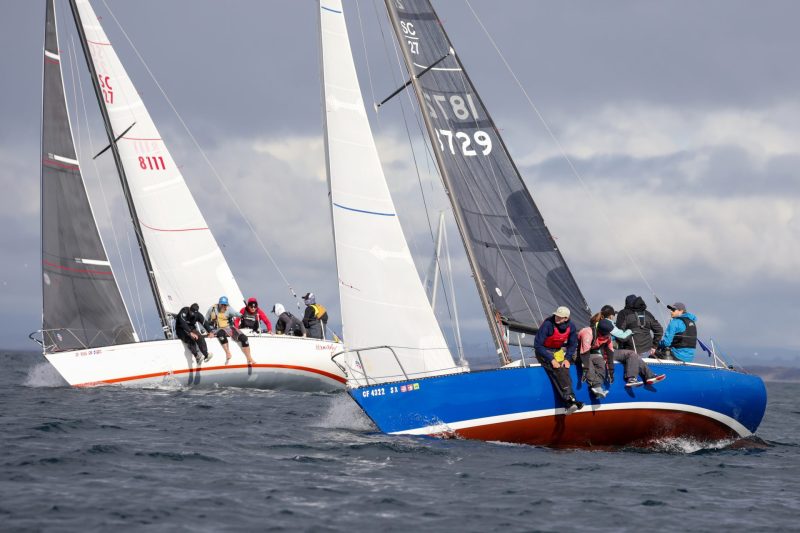
The current champion is the defender, and if more than one club is interested in challenging, the other yacht clubs have a sail-off to determine the challenger. Last year’s winner, MPYC, hosted as the defender, and Santa Cruz Yacht Club was the challenger. Over the years, MPYC has won the Cup 19 times, SCYC 20, and Stillwater three. The boats used vary from year to year, with Bill Lee’s Santa Cruz 27 being the weapon of choice this year. This event has featured some of the most accomplished area sailors, including several repeat champions: Bill Lee, Jack Halterman, Dave Hodges, Dick Clark, Mark Chandler, Jay Crum, Kate Conway, and Larry Gamble.
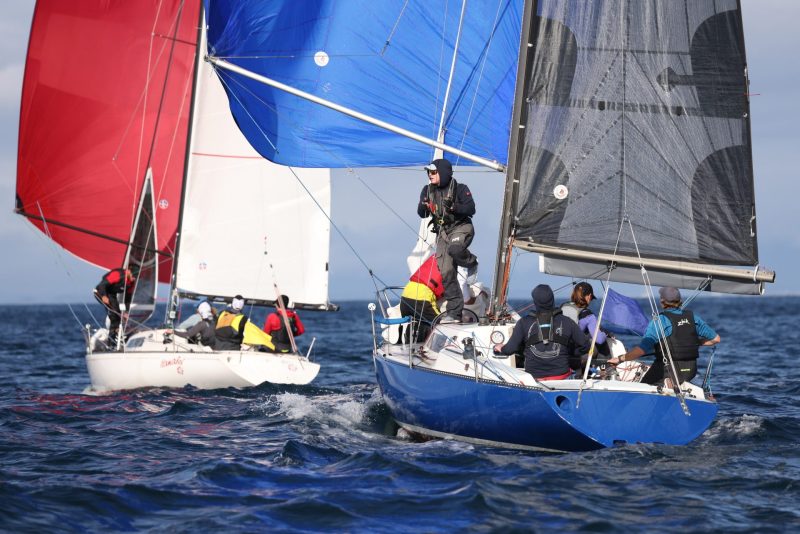
Racing for MPYC on Fearless were skipper/owner Jacob Paoletti with crew Brian Hoover, Kate Conway, Maya Hoffman, and Vince Schweitzer. All but Vince are former MPYC junior sailors. Racing for SCYC on Hanalei were skipper/owner Ryan Schuyler, Frank van Diggelen, Patrick Diola, Tom Preston, and Kaya Wilson. Ryan’s late father, Rob, had owned Hanalei, and had raced in the Veeder Cup in the past with Patrick Diola’s late father, Dave.
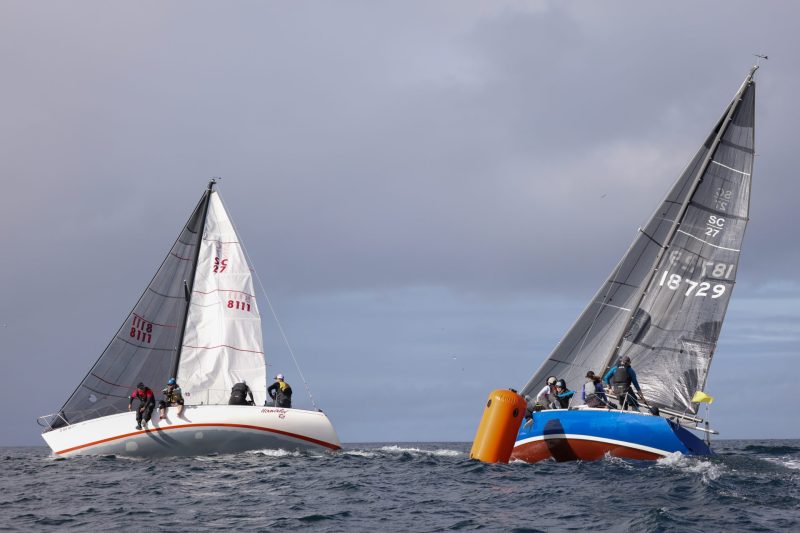
In the middle of a multi-day atmospheric river, the racing gods looked favorably upon the regatta on race day, with partly cloudy skies and winds varying from 5 to 15 knots out of the southwest. US Sailing umpire Rob Overton was officiating on the water, and MPYC past commodore Jerry Stratton was the principal race officer. MPYC members handled the marks, and a mix of MPYC and SCYC members were on the race committee boat overseeing the starts and finishes.
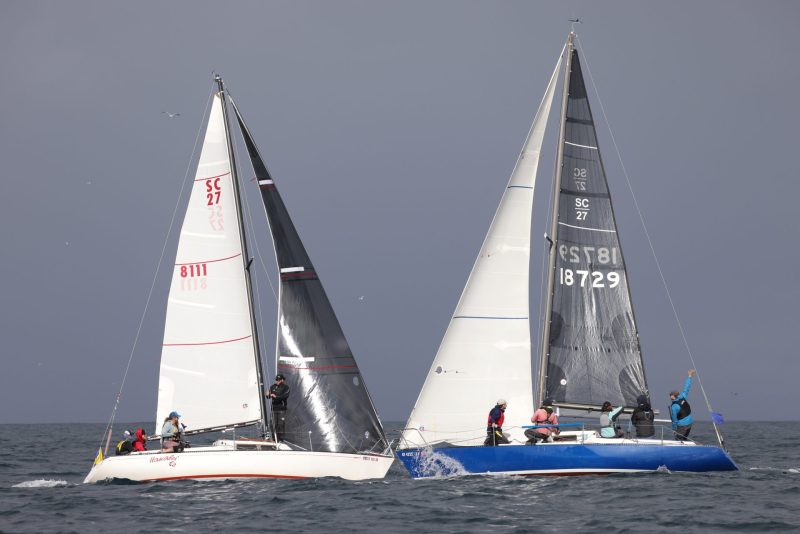
SCYC won the coin toss and elected to start the first race as yellow, entering on starboard. After a short dial-up, MPYC got into a controlling position and held it to win the start. MPYC held the lead through the race to take the first win.
With lightening winds, the boats switched to the genoas. Initially, MPYC pushed SCYC deep out of the pin end of the starting area, but a favorable wind shift allowed SCYC to tack across MPYC’s bow, get out of jail, and run back to the line and cross first. SCYC held the lead throughout the race to take the win.
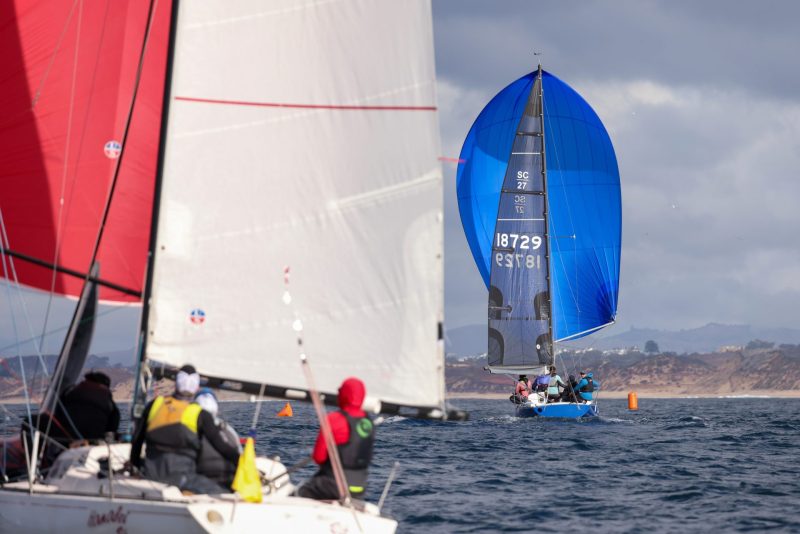
The winds picked up again, and the boats shifted to #3 jibs for the remaining races. The pre-start on this race did not have any close engagements, but SCYC had a better-timed turn back to the start line. This was the closest race, with MPYC within a boat length of SCYC at the windward mark. SCYC maintained and slightly extended their lead to take race three.
The fourth race featured some close pre-start maneuvers but ended up as a long run back to the start line, with SCYC leading and timing the start better. SCYC led by several boat lengths at the windward mark. After rounding the windward mark, SCYC turned downwind across the bow of MPYC as MPYC approached upwind on starboard. Maneuvering to avoid a port/starboard incident, MPYC threw the Yankee protest flag, possibly setting up for a fifth race. The umpire conceded that while it was very close, the incident was not worthy of a penalty and displayed the green flag. SCYC extended their lead to take their third win and clinch the regatta.
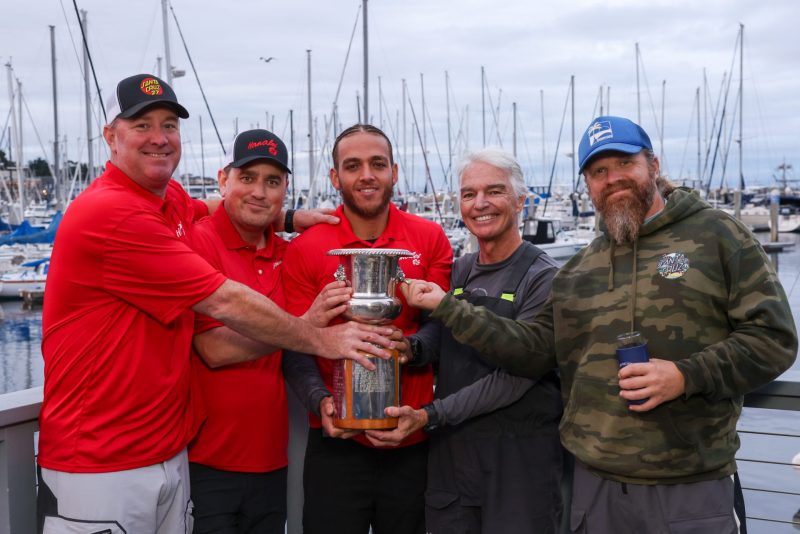
At the awards ceremony, Ryan Schuyler talked about how his and Patrick’s fathers had both won and lost the Cup in the past, making this win very special for them, especially with SCYC’s vice commodore De Schuyler (Ryan’s mother) watching from the race committee boat. A big thanks goes out to the MPYC and SCYC members who assisted with the regatta. Congratulations to the Hanalei team and SCYC for the win, and congratulations to the Fearless team for a competitive performance. MPYC looks forward to competing for the Cup next year!
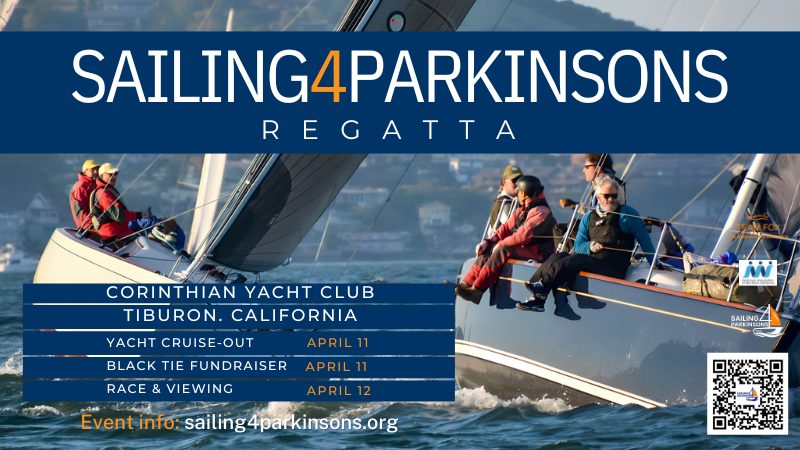
Join the Sail4Parkinsons Regatta at CYC