
The 31st Baja Ha-Ha Finishes in Cabo with Celebrations and Awards Party
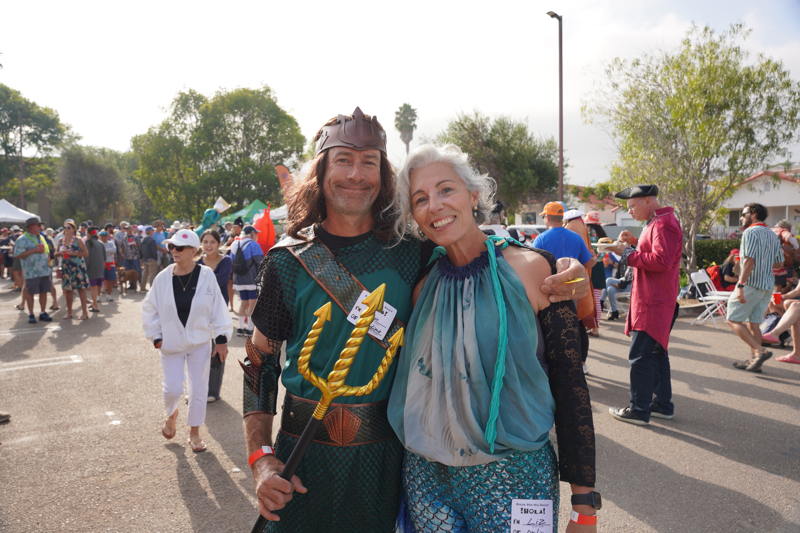
The 31st Baja Ha-Ha has sailed into Cabo with the “Can’t Believe We Cheated Death Again” dance and party madness. The party is on tonight at Squid Roe, and for the young at heart, continuing until the last body falls. It’s optional, but not to be missed. Tomorrow, everyone who survives Squid Roe tonight will head to the awards presentation at the Mango Deck’s upper patio overlooking the fleet anchored off the beach of Cabo. There’ll be plenty of food, wine, beer and margaritas, and sandy, waterfront fun to celebrate and savor a successful sail south.
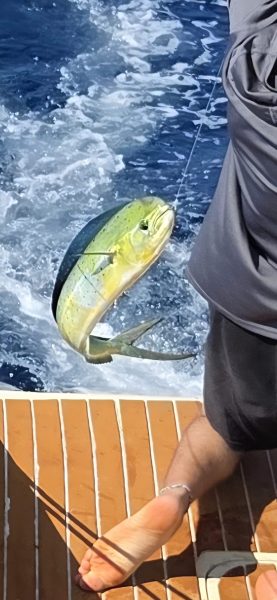
Overall the weather, sailing, surfing, fishing, spinnaker-reaching and parties were spectacular. The big announcement that came out during this Baja Ha-Ha is, it ain’t over till it’s over. We learned, to the relief of many, that Chuck Skewes will be running Baja Ha-Ha #32 in fall 2026. So it ain’t over. The good times sailing south in the company of other cruisers will be on the schedule for next year. Plan for an early-November departure.
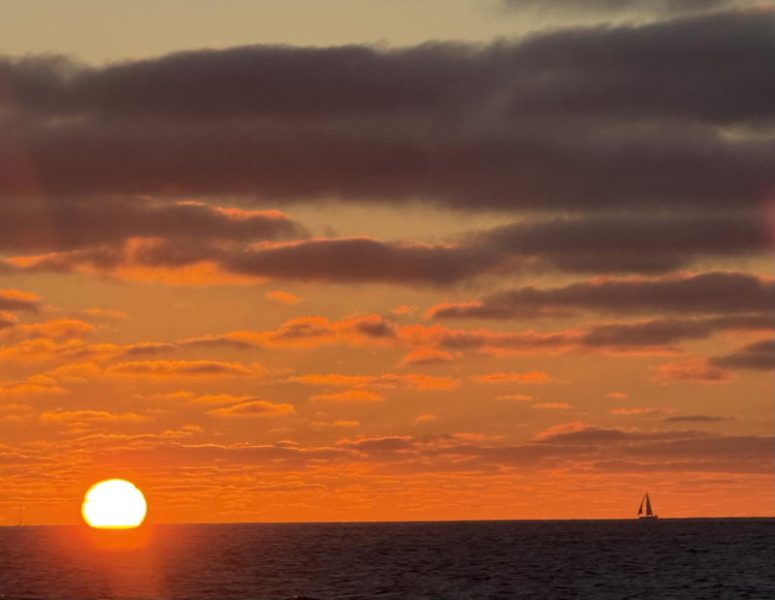
In other news, the sunsets were not to be beat. Hurricane season ended right on schedule, so the light-air start was a prelude to most of the trip. We’ve got plenty of sailing shots showing the breeze, but the lack of sail repairs indicates the winds were kind to the fleet most of the way down.
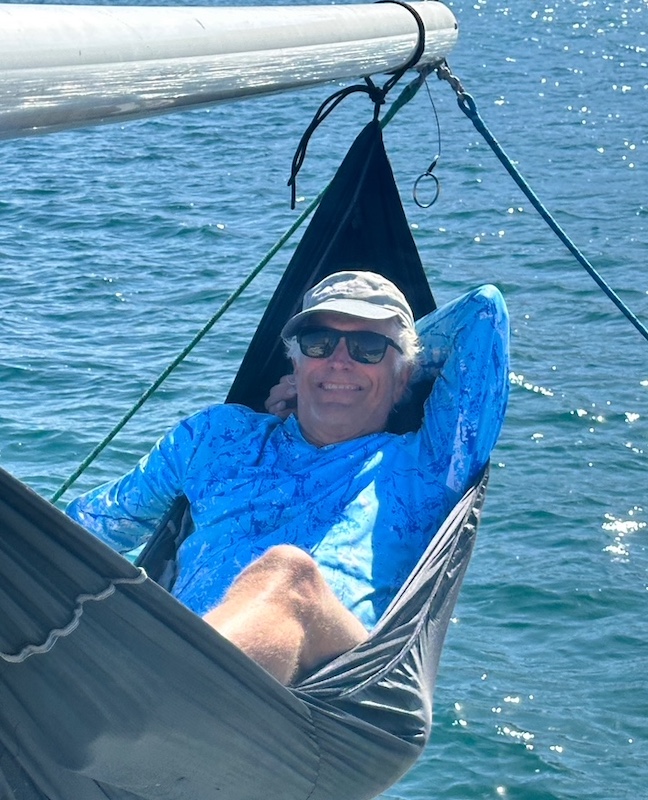
There are many annual rituals to the Baja Ha-Ha, yet every edition is different. The course always heads south, but from there, everyone has to figure out which way the wind blows and how they fit into the work/life balance. Since there is no work, it’s really a life/life balance.
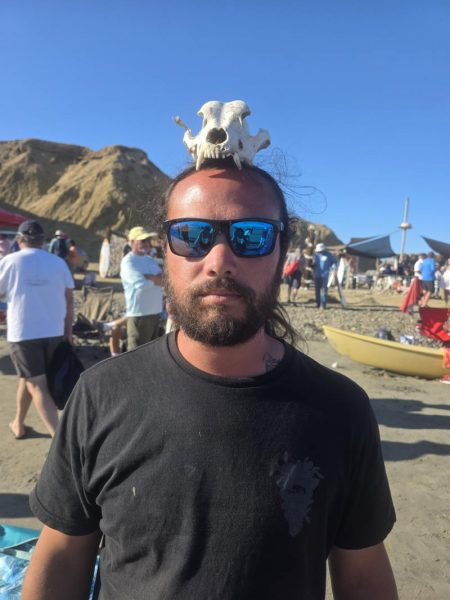
We’re sure Starlink causes many to stay connected to some details at home, but once you throw off the dock lines, there’s plenty at hand to make you forget life before the Ha-Ha. Did you remember to cancel your monthly cable bill now that you’re untethered?
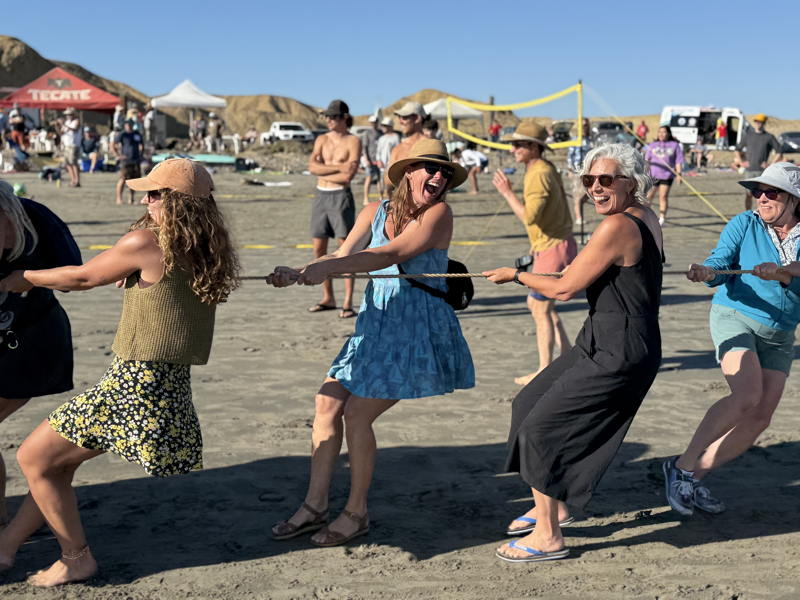
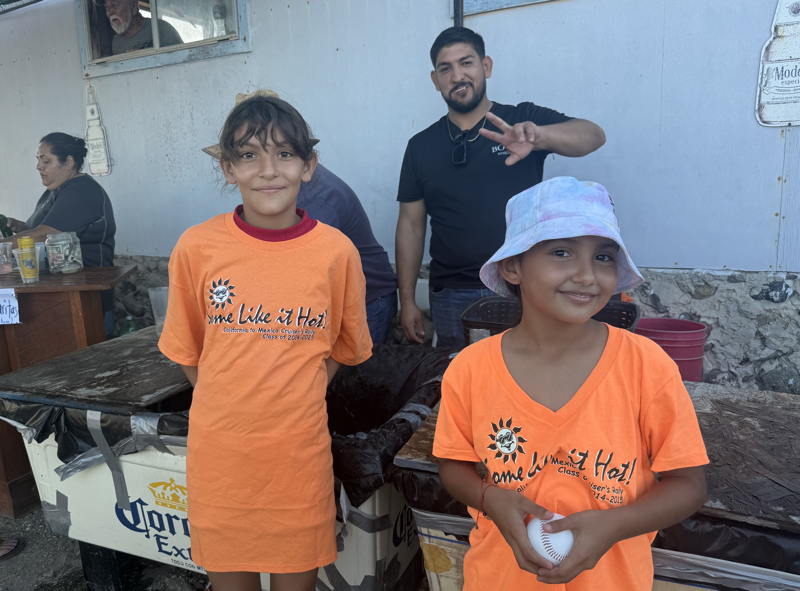
The Baja Ha-Ha is all about cruising south, although the shoreside sports, dancing, hiking, surfing, rock and roll, bazeball in Turtle Bay, and everything else ashore are far more than a sideshow. The people of Turtle Bay and the local welcoming committee at Bahia Santa Maria make it hard to decide whether life at sea or life on shore is more fun. Luckily, you don’t really need to choose. Everyone enjoys it all.
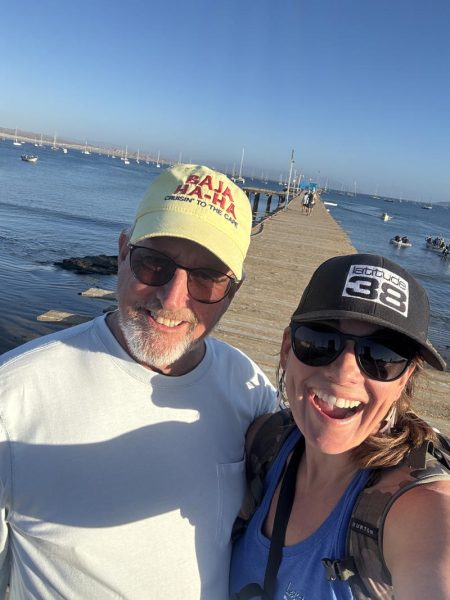
After the festivities in Cabo, participants will head off in all directions. A few will turn around to head back north, some south to Banderas Bay, and others to the Sea of Cortez for the La Paz Beach Party on Sunday, November 23, from 4–7 p.m., at La Costa Restaurant. The party features Mexican folk dancing, live music, food and drinks, door prizes, and more. The event is free for the first 50 Baja Ha-Ha 2025 participants, and everyone is welcome. After that you have the whole Sea of Cortez at your doorstep! Let us know where you’re headed in the comments below.
We’ll have more in a feature story in the upcoming December issue of Latitude 38. There’s an amazing cruising season ahead for Ha-Ha participants. Many will head off in the spring for the Pacific Puddle Jump, and some to the Panama Canal to head east. You can continue to follow many of their adventures in our Changes in Latitudes section of Latitude 38. In the December issue, you’ll read about the return of Randy Repass and Sally Christine Rogers to Santa Cruz after cruising around the world for the last 21 years (with many breaks)!
You can follow the last of the Ha-Ha fleet as they make their way to Cabo here. They’re cruising, so what’s the rush?
If you’re reading this in Cabo, don’t hesitate to send a few of your hi-res cruising shots to [email protected]. It’s always tough to receive them sitting at a desk in Northern California, but they’re way more fun than other viewing options on our screens.
SFYC Takes Second at Youth Sailing Champions League
From November 7 through 9, the San Francisco Yacht Club (SFYC) became the first American team to compete in the final of the Youth Sailing Champions League, sailed at Club Náutico Altea in Spain. The SFYC team qualified by winning the Sears Cup back in August, and raced against 23 other yacht-club youth teams, all from around Europe. The group from SFYC made the final four of the flighted regatta, and ended up finishing second behind the Norddeutscher Regatta Verein (Northern German Regatta Club, NRV) from Hamburg, Germany.
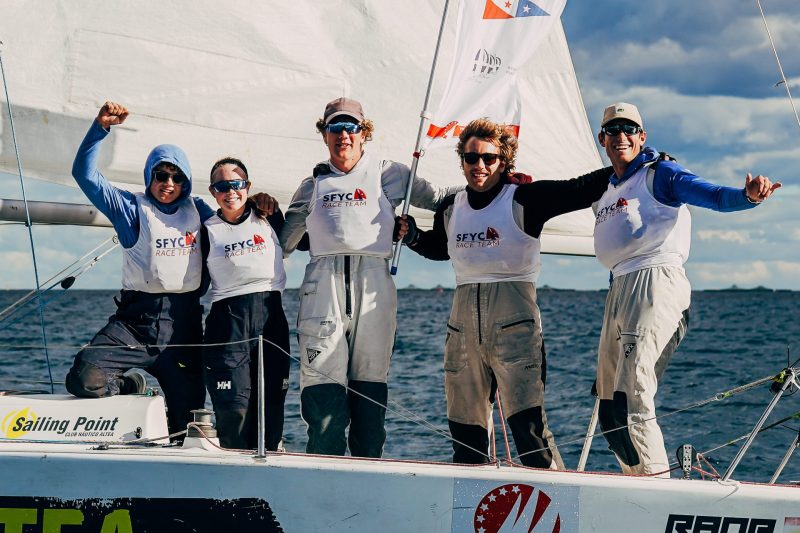
Mark Xu had skippered the SFYC team to the Sears Cup victory, but was unable to make the trip across the Atlantic. In his place, Nick Sessions, a recent graduate of the Hobart and William Smith Colleges sailing team, stepped in. The rest of the team was Julian Levash, Elsie Schroeder, Aaron Ziegler, and Rhett Krawitt, most of whom had been a part of the team that won the Sears Cup.
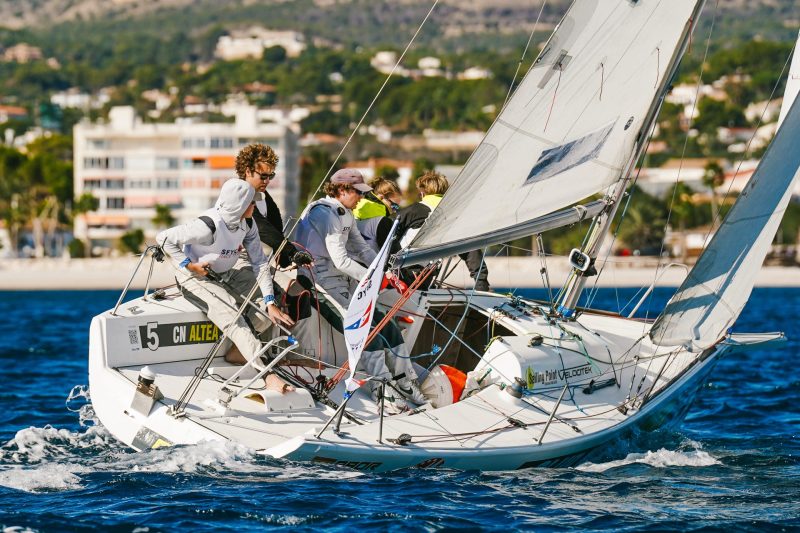
“It was awesome to jump in with a team that already worked really well together,” Sessions tells Latitude. “Their boat handling was great all weekend, and it showed. All the credit goes to [Mark Xu] and the team; obviously we wouldn’t have made it here without the team’s hard work.”
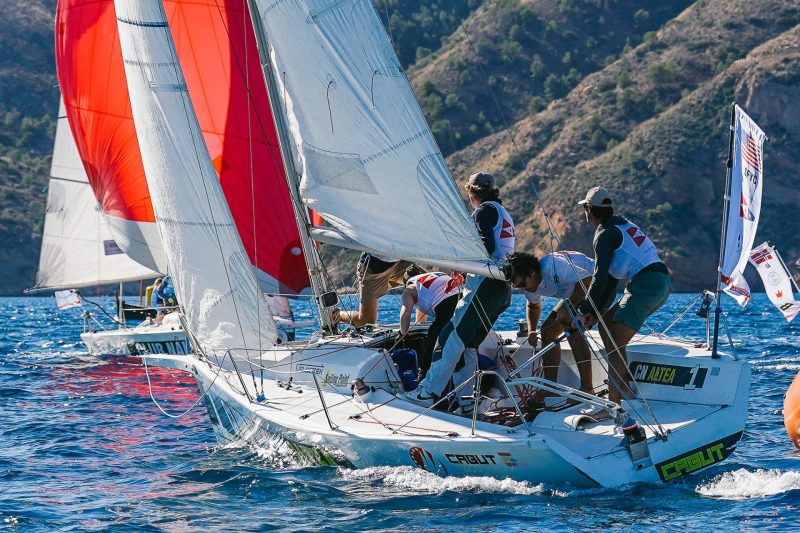
The format of Sailing Champions League regattas is not your typical fleet racing. Races are done in flights, with a set number of boats racing at a time. The top four teams qualify for the finals, with the first team to two race wins winning the event. The top team from qualifying enters the finals with one win already to their name. The NRV was the top team coming out of qualifiers, having won seven out of their nine qualifying races. SFYC posted two wins in qualifying and had consistent top-half finishes to book the final spot. Also qualifying for the final four were Segelclub Stäfa of Switzerland and Nesodden Seilforening of Norway.
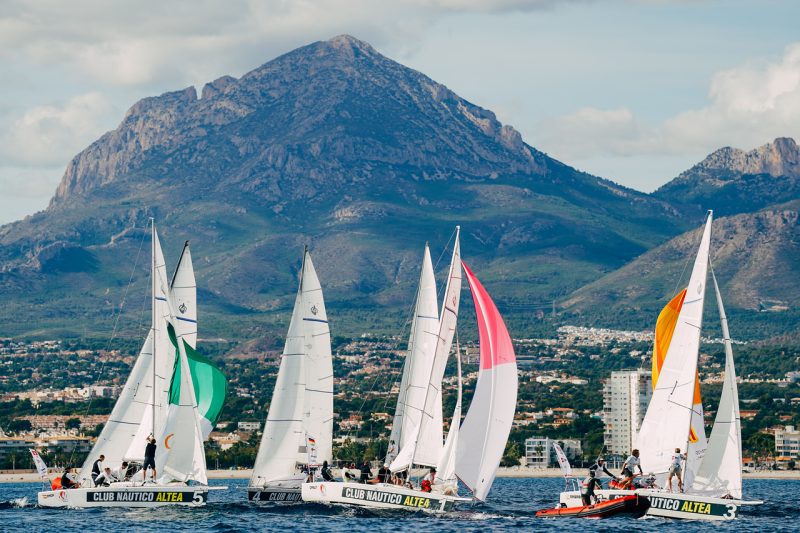
“Our goal going into it was just get top threes,” Sessions said of the team’s approach. “[The format] made the racing very strategic and tactical, because they were only 10-minute races. It was kind of a return to the college style of racing… If you can have good boat speed, and get off the line clean and hold, freedom to tack was huge. Our strategy for the regatta was to start at the boat half of the line, since there were only six boats to manage at a time.”
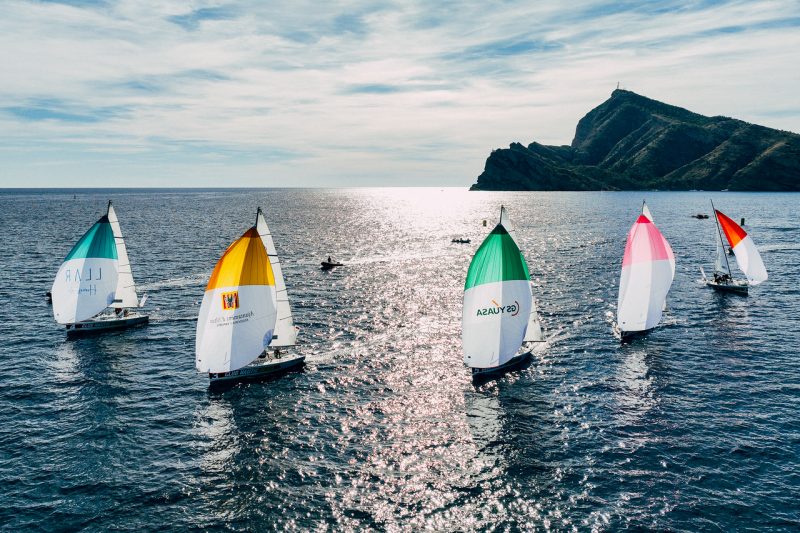
In the finals, team SFYC won the first race to put them, along with the NRV team, one win away from winning the whole thing, but the NRV took the win in the second race of the finals to win the event.
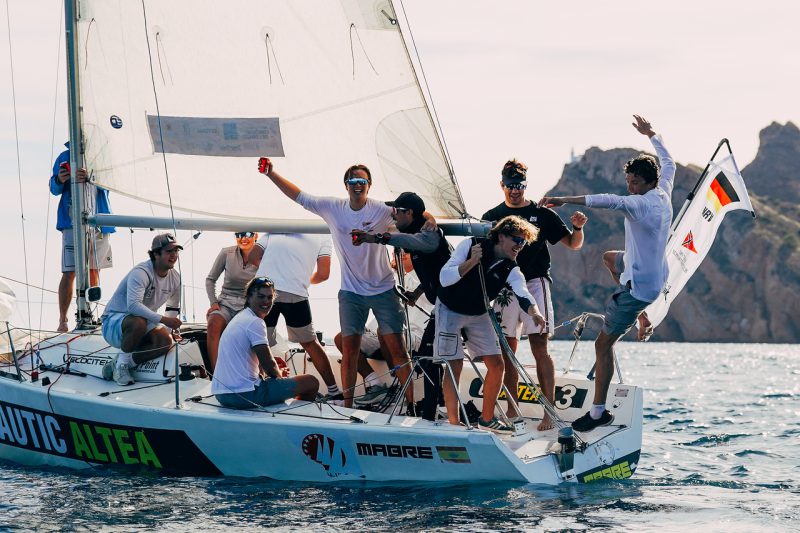
“The high point was winning that first race of the finals,” Sessions tells Latitude. “We had an amazing first race. A bit pin-favored off the line. The Norwegians won off the pin and had great boat speed. We had great speed off the middle of the line. We sandwiched the Germans between us.… We tacked on the Germans once they tacked to make sure they wouldn’t win. The middle lane worked the best on that upwind, and we were able to lee-bow the Swiss coming out of the right, and the Norwegians should have tacked on us but they overstood the layline.”
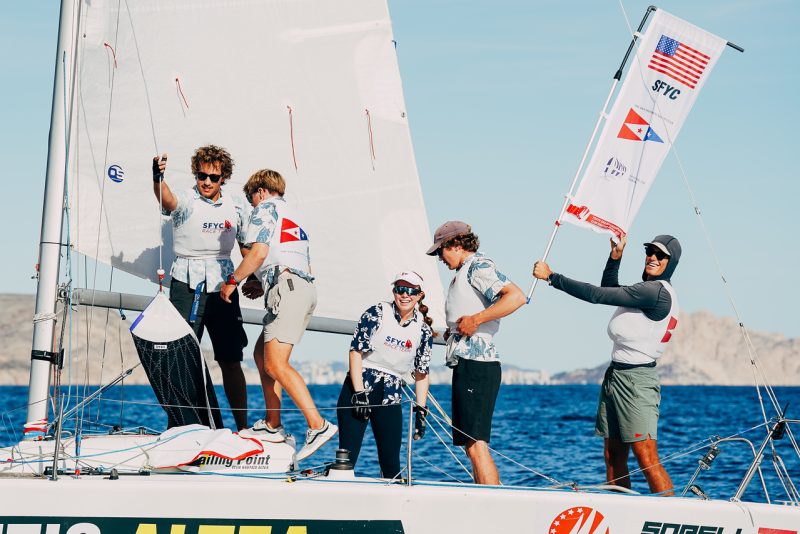
“I think it’s a really cool format, and just thinking about how similar this is to college sailing,” Sessions tells us of his desire to have more of this type of racing in the US. “This was my first time really doing short-course keelboat stuff. It would be amazing to have some sort of regional format and then national championship, and I could really see it taking off in the US. I think it would be a great step for former college sailors getting out on the water because you have provided boats.… We could easily do a California series and use SFYC’s RS21s, StFYC’s J/22s, and SDYC’s J/22s. It would be such an easy format. You can do it with six boats, eight boats or 10 boats and bang out 20 short-course races in a weekend. It’s totally feasible.”
Set Sail This Fall With Cruising Yachts

Challenged Athletes Foundation Brings Sailing to All
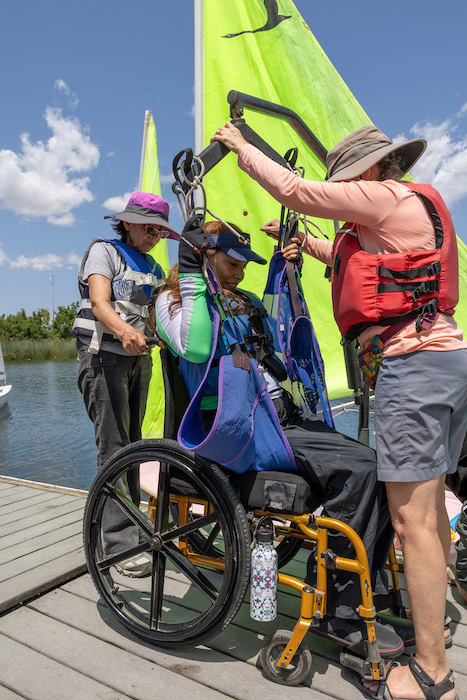
Around the Bay Area and along the West Coast, people with various disabilities are taking to the water on sailboats, thanks to the tremendous efforts of organizations such as Challenged Sailors San Diego, Bay Area Association of Disabled Sailors, BlindSail SF Bay, and Challenged Athletes Foundation. Plus there are organizations that assist veterans, underserved communities, cancer survivors, and people living with MS. No doubt there are other groups we haven’t heard about yet.
Challenged Sailors San Diego provides free adaptive sailing for people living with disabilities. The organization has been running for over 10 years with its fleet of small sailboats, removing the barriers to sailing for people with a wide range of disabilities.
Similarly, Bay Area Association of Disabled Sailors (BAADS) aims to make all aspects of sailing accessible. To this end they offer weekly small-boat and keelboat sailing. The organization also hosts and participates in a variety of regattas and informal races both locally and internationally.
Previously known as Marin Sailing School Program for the Blind, BlindSail SF Bay provides persons who are blind and visually impaired the opportunity to learn the fundamental skills of sailing and the basic principles of seamanship. The objective is the same as for sighted sailors: to harness the power of the wind and to experience all the challenges and rewards of sailing.
The Challenged Athletes Foundation (CAF) provides free adaptive sailing for people living with disabilities. Their mission is to provide therapeutic, recreational and competitive adaptive sailing opportunities for people with disabilities. CAF’s Christy Fritts shared the following story, which we published in Latitude 38’s November issue.
On a late-summer morning in West Sacramento, flags snap at Lake Washington Sailing Club (LWSC) while first-time sailors with physical disabilities trim, steer and smile into the same breeze the rest of us chase. That’s the Challenged Athletes Foundation (CAF) in action: Remove barriers, and a boat becomes the ultimate equalizer.
CAF launched its Northern California adaptive sailing effort with a two-day clinic at LWSC in September 2024. The partnership is deliberately practical — LWSC provides boats, adaptive setups, coaches and volunteers; CAF brings athlete outreach, support and grant resources that lower the cost of trying a new sport. Since that first weekend, CAF and LWSC have completed six consecutive weeks of clinics and a multiweek instructional course, building a steady pipeline of returning sailors and first-timers who now see the lake as theirs.

The model is simple and powerful. Sessions pair athletes with trained sailing partners for hands-on learning including helm time, sail handling, docking, and the thousands of small decisions that turn wind into a boat’s motion. LWSC offers regular opportunities and membership pathways so newcomers can become year-round sailors, not “one-and-done” participants. Several athletes now sail beyond program days, and at least one has their sights on nationals-level competition. That kind of progression is the point.
A key catalyst is Jim Thweatt, US Para Sailing Team athlete, physical therapist and longtime CAF mentor who helped spearhead the Northern California build. Thweatt worked with LWSC leadership to establish safety protocols, boat assignments and adaptive rigging; recruited and trained volunteers; and shaped a stepwise curriculum that ensures meaningful helm time on day one. He also introduced “pathway plans” for each participant, matching sailors with practice partners, encouraging club memberships, and tracking skills from first tack to first independent outing.
“The boat does not care how many arms you have, if you can see or speak, if you can walk, or where you came from,” Thweatt says. “Any barriers are created by the systems around us. I love helping clubs become more inclusive so more people can feel what a boat can do.”
What do participants gain?
Confidence and independence show up first. Tangible wins you can feel in a straight helm, a clean tack, or reading a puff before it hits. Community follows fast. The docks become a place to belong, with peer encouragement and shared milestones that keep people in the sport. Organizers benefit, too. Coaches and volunteers learn inclusive coaching, clubs welcome new members, and local fleets grow more diverse and resilient.
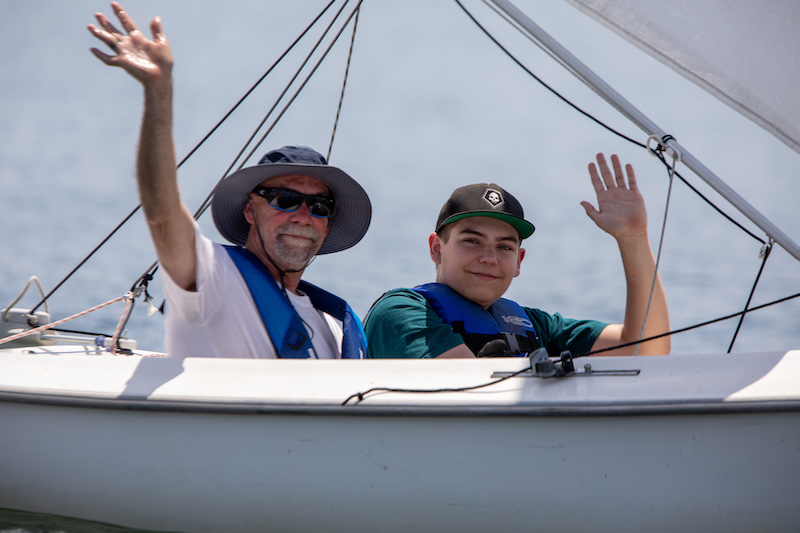
Learn more about West Coast organizations that help people with varying disabilities get involved with sailing: The Heeling Power of Sailing
Meet ‘Latitude 38’ November Cover Sailor Mikayla Scott
The Latitude 38 November cover photo was lifted from our July Sailagram gallery, submitted by Mikayla Scott. The photo was taken “[d]uring the long downwind leg of the YRA Encinal Regatta, [where] Miki Scott helps maintain proper sail trim on Tri Jolie, a Corsair 880 trimaran. 12.9-knot boat speed!”
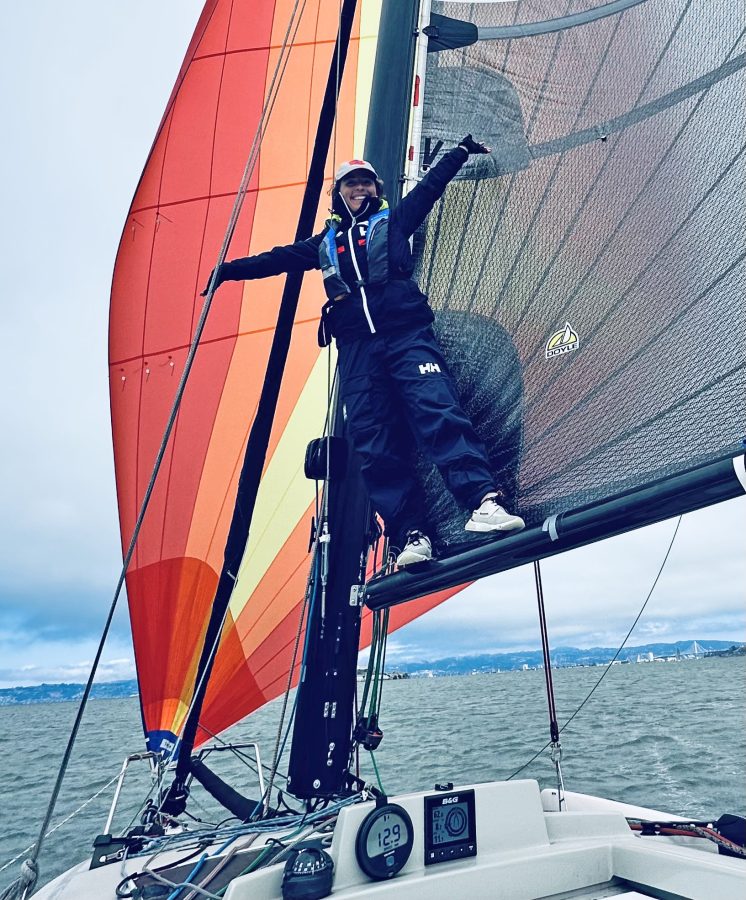
When Miki (Mikayla) saw herself on the cover of Latitude 38, she wrote to us.
“Hello team!
“My name’s Mikayla, and I’m on your November cover! That photo was taken during a race where I was crewing with my skipper, Rafi, on his Corsair 880. We were racing in the YRA Encinal regatta that weekend from East Bay out to Point Bonita and back, and he told me, ‘Climb on the boom,’ and sent y’all the photo haha.…
“I grew up sailing and started out on Optis when I was 5 years old, then moved onto Lasers, and then 420s in high school, but my passion was always offshore racing on the bigger boats. Most of my sailing in the last 15 years has been on trimarans, so when I moved out to San Francisco for a travel-nurse contract, I was stoked to find that BAMA [Bay Area Multihull Association] existed. I got connected with a couple of skippers and have been really lucky to crew on a couple great boats out here.
“Sailing in the S.F. Bay is wildly different than offshore in Florida. I love seeing that the sport is thriving out here on the West Coast though! I worked in San Diego for a little bit and was blown away by how active their racing fleet is — we had over 60 boats one night, all flying spins for a Wednesday night beer can race!
“I’m also really thankful for the travel opportunities that sailing has afforded me. I’ve spent my last few summers crewing on a sailboat somewhere new each year, which led me to New Zealand, French Polynesia, Greece, and the Bahamas.
“Thanks for the opportunity to introduce myself, and for featuring me on your cover! Looking forward to picking up a couple copies from a local spot today :)” – Mikayla Scott.
If you’ve been taking photos while you’re out sailing, or getting ready to sail, or even just messing around with boats, send us a snap or two. Who knows? You too might find fame on the cover of Latitude 38. And then as the song goes, you can go out and “buy five copies for my mother.” You can pick up free copies from your nearest distributor, or subscribe and be sure to never miss an issue.
Discover San Francisco Marina Small Craft Harbor