

Long Beach Olympic Classes Regatta Launches Run to 2028 in L.A.
The Summer Olympic Games are set to arrive in Los Angeles in 2028, and the region started preparing itself and competitors with the 2025 Long Beach Olympic Classes Regatta organized by Long Beach and Alamitos Bay yacht clubs. Though the 2028 Olympic venue will be split — Long Beach will host the boardsailing, and Port of Los Angeles dinghy racing — this first regatta was held entirely in Long Beach.
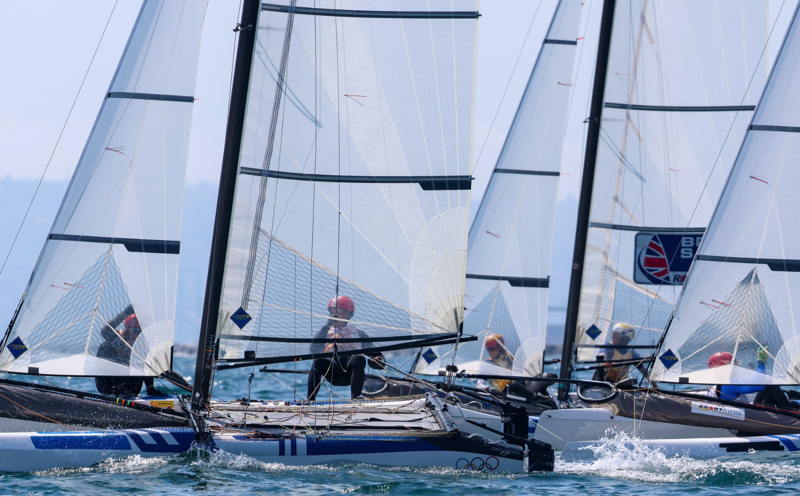
The racing was held July 12–20 with well over 200 Olympic hopefuls participating. The US has its work cut out as American sailors managed top-10 finishes in only three out of 10 classes. The strongest were Nevin Snow and Ian MacDiarmid taking first in the 49er, and Paris Henken and Helena Scutt taking second in the 49er FX. 2025 ICSA College Sailor of the Year Justin Callahan and Lara Dallman-Weiss took first in the six-boat 470 class, though five of the competitors were from the US and one from Canada.
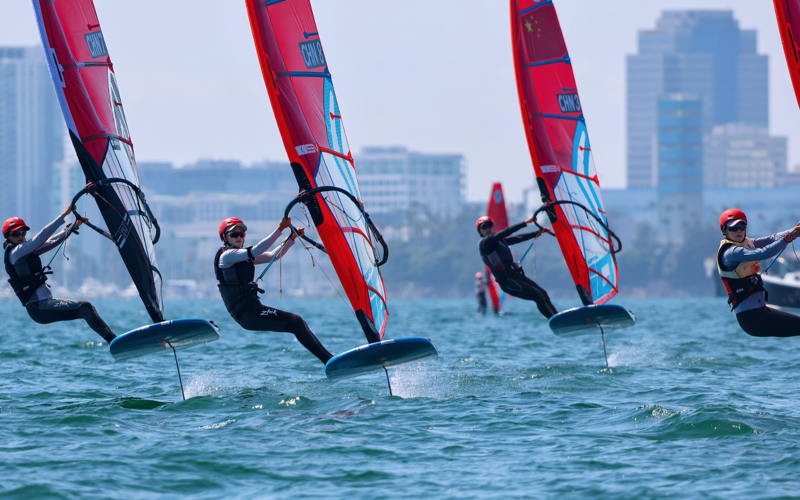
The iQFOILs and kiteboarders were able to test out their Olympic racing venue, while the dinghy classes will have to wait a little longer to start their training in the Port of Los Angeles.
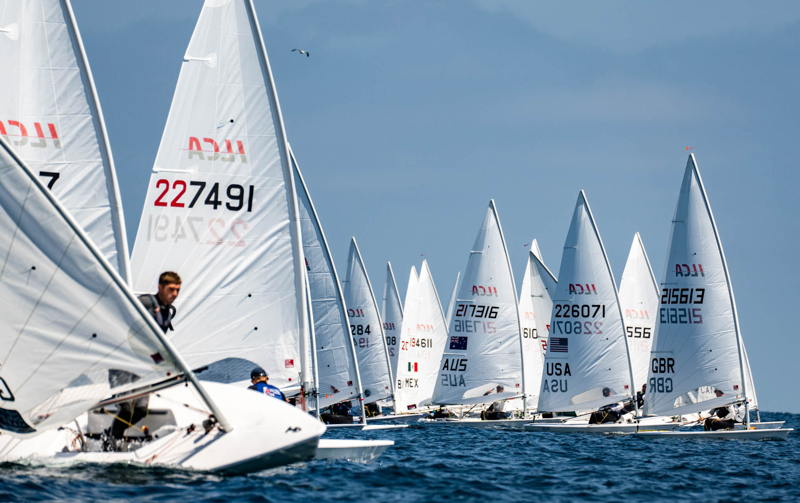
Ian Barrows and Hans Henken picked up the US’s only medal in the 2024 Olympics, earning a bronze in the 49er class. Hans’ sister, Paris Henken, has reunited with 2016 Rio Olympic partner Helena Scutt to pursue an Olympic medal in Los Angeles in 2028.
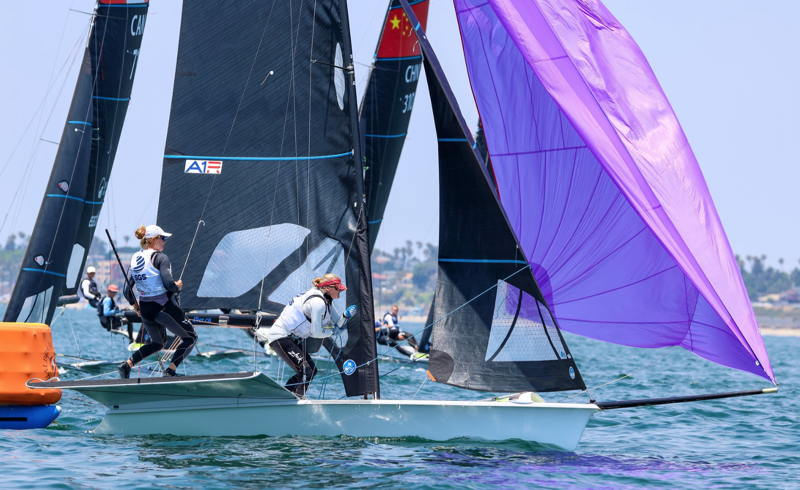
California will be the home of many more competitive Olympic dinghy classes as they start arriving to train and prepare for the 2028 Summer Olympics.
You can see the full results of the Long Beach Olympic Classes Regatta here.
NTSB Releases Preliminary Report on Tahoe Tragedy
The National Transportation Safety Board (NTSB) has released a preliminary report on the capsizing on Lake Tahoe in which eight people died. Ten people were aboard a privately owned 28-ft Chris-Craft when it capsized amid 30-knot winds and a six- to eight-foot swell on Saturday, June 21. The NTSB states that the report, released on July 23, is subject to change. Below are details of the report.
The capsized vessel, named Over the Moon, was a 2023 Chris-Craft Launch 28 GT with a fiberglass-reinforced-plastic hull and an eight-cylinder, 6.2-liter, 430-hp Volvo Penta direct-injected gasoline engine. The vessel had seating capacity for 12 people and was fitted with two 1,100 GPH bilge pumps. Over the Moon was California-registered to two owners, one of whom was the sole operator of the boat.
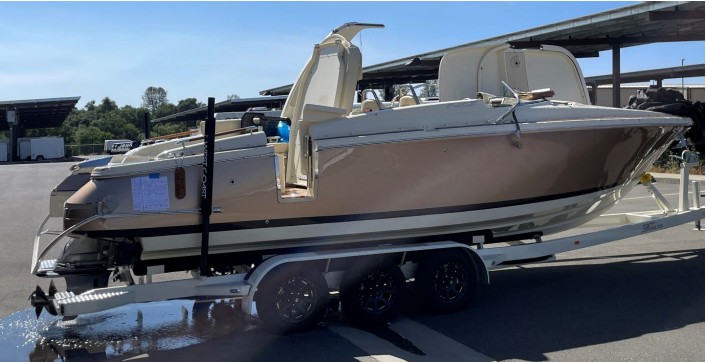
Over the Moon was launched from a boat ramp in Tahoe City at about 1040 on the morning of the accident. Four adults were aboard including the boat’s second registered owner. The operator drove the vessel to two nearby marinas; six additional adults boarded at the second marina.
At 1158, with all passengers aboard, the boat traveled to Emerald Bay (about 10 miles south), a sheltered area popular with boaters, on the west side of Lake Tahoe. The boat anchored in Emerald Bay for about an hour to an hour and a half. Weather conditions at the time were clear skies, light southerly winds, and an air temperature of 54°F. The National Weather Service had issued no marine warnings or small craft advisories for the Lake Tahoe area for the day, although the local forecast indicated a slight chance of thunderstorms.
Sometime before 1400, the clouds increased, and the boat operator decided to return to the marina where he had picked up the passengers. However, after he got underway, the winds, rain, and waves increased, and he returned to Emerald Bay. After about 10 minutes, the operator made a second attempt to return to the marina.
One of the survivors told investigators that once Over the Moon was away from Emerald Bay, two- to three-foot waves splashed into the boat with the pouring rain, but no water was accumulating on the deck. The winds increased. The survivor reported marble-sized hail collecting in the boat, waves increasing to eight to 10 feet, with some breaking over the sides and bow, and about an inch of water accumulating on the boat deck. The operator turned on the bilge pumps.
Time lapse footage recorded at about 1436 from a camera about a mile and a half south of the accident site (looking toward South Lake Tahoe) captured whitecaps on the lake and low-layer clouds moving from north to south. About 1445, the footage showed blowing rain and mixed freezing precipitation, and at 1449, blowing snow. At 1453, an automated weather station about seven miles southeast of the location recorded winds from the north at 14 knots with a peak wind of 34 knots. The water temperature was reported to be 54°F.
At some point, with the vessel between 50 and 100 yards offshore, Over the Moon’s engine stopped, and the boat ended up broadside to the waves. The boat took on water, and some of the passengers attempted to bail the water out of the boat. The boat listed to starboard, submerging the starboard aft corner. At one point, a particularly large wave overtook the boat, causing water to enter. One of the survivors donned a PFD and distributed PFDs to everyone else in the boat. No one else immediately donned their PFD. Shortly after, the boat rolled over to starboard, and the passengers entered the water. The survivor recalled that it started snowing after the boat rolled over while the people were in the water. No distress calls were made from the boat.
About 1457, a group of hikers witnessed the boat capsize after a large wave washed over it. At 1458, one of the hikers called 911. Another hiker and a California State Parks lifeguard helped recover the survivors from the water. Multiple agencies responded; the marine unit reported eight-foot waves in the area. Eight people, including the two survivors, were recovered. Six of the recovered people (one of whom was the operator) were pronounced dead on scene, some following CPR efforts. None of the six were wearing PFDs. Of the two survivors, one was wearing a PFD and the other was clinging to one. The remaining two passengers were found and recovered from the lake bottom near the casualty site the next day. Four PFDs and one life ring, all from the vessel, were recovered from the accident site.
About 1605, the snow stopped, and the weather began to clear, with cloudless skies about 1725.
The Chris-Craft was recovered on June 22 and later examined by USCG and NTSB investigators and party representatives. They reported no evidence of hull leak, grounding, or contact with an object. Onboard were found one PFD still in its packaging with tags on it, one infant life vest still in its packaging, an unzipped life vest stowage bag, and five inflatable PFDs in stowage compartments. Electronic systems were recovered and sent to the NTSB laboratory for further examination of any potential internal memory. The vessel’s two bilge pumps and engine fuel filter were retained for further examination.
NTSB investigators have interviewed one survivor, a lifeguard, witnesses and good Samaritans, salvage company personnel, and personnel employed for the stowage, launching, and recovery of the boat.
Toxicology tests for alcohol and other drugs for the deceased were conducted; the results are pending. The NTSB investigation is ongoing. You can view the full report here.
Your Local Sail Experts Marchal Sailmakers Are Back
How To Get Into Racing Part 2: Buying a Race Boat
In a previous post, Andy Newell talked about getting into racing aboard OPBs. The next step for many people is racing aboard their own boats. Together with Lori Tewksbury, Andy suggests some steps to make that dream a reality.
Previously we talked about getting started with sailboat racing on OPBs (other people’s boats). Most of us spend years on OPBs because of the simplicity of just having to show up, get free lunch and beer, and spend hardly any money. It’s a great way to go, especially for younger sailors who lack the funds or time needed to campaign a boat. But what if you have been sailing on OPBs for years (or decades) and you decide you want to race your own boat?
Figuring out what kind of boat you want is the first step. Start by deciding what you want to do for the next five years or so (this is your first boat, but it does not need to be your last!). Some things to consider include: Do you want to race a boat that requires a large crew, or to be able to sail by yourself or with one other person? Do you want a boat that is easy to maintain (no galley, no inboard motor, no head), or would you rather have a boat with all the bells and whistles? Do you want to race only or have a boat that you can race and take friends and family out on? Do you want to have a trailerable boat (20- to 28-ft) or a boat that is permanently in the water? Do you want a boat that has a one-design fleet (a fleet of the same kind of boat)?
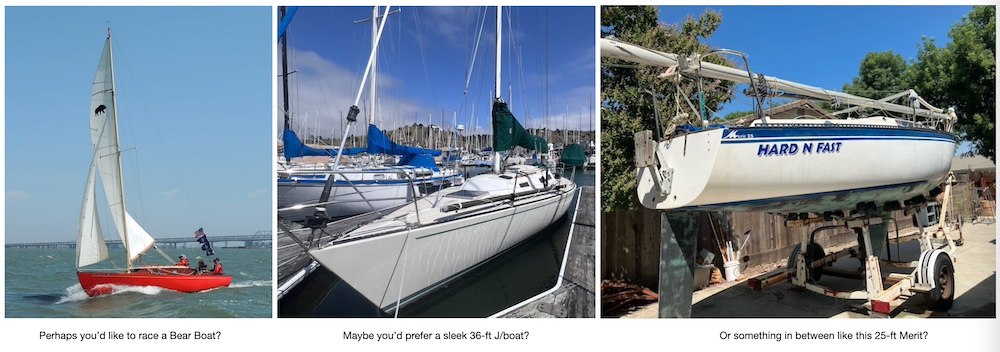
See if you can set up a ride on boats like the one you want to buy to give you a better idea of racing that type of boat. Talk with the owners about their costs and if there are any issues that they think you should know; get a feel for what owning the boat might be like.
Now that you know what you want, you will need to make a budget of ongoing expenses. These include storage ($200 per month on a trailer, $400+ in the water); insurance ($500–1,000 per year depending on the boat); a diver if you are in the water ($4/foot per month). These are very rough estimates and do not include maintenance, upgrades or new sails.
Most people do not buy a brand-new sailboat — some of the best racing boats have been around for 20+ years and are no longer made. When you find a boat you want to buy, you would be remiss not to get it professionally surveyed (and your insurance may require this). Surveys run $25–30 per foot, usually with a minimum, and if it is an in-the-water boat you will need to do at least a “haul and hang” where you have the boat pulled out temporarily so the surveyor can inspect the bottom. The survey can tell you what might be wrong with the boat and help in negotiating the price, or provide a to-do list to bring the boat up to par. If your dream boat is small, $500–1,000 for a survey is a lot. Maybe you can get the skipper who’s selling to help you check out the boat.
Next time we will share ideas on putting together a crew for your new boat.
— Andy and Lori
When you have your boat, and you’re waiting for Andy and Lori’s next installment, sign up on the Latitude 38 Crew List pages — you can look through the available crew, and place your own listing as a skipper. To meet even more sailors, grab a ticket for the Latitude 38 Fall Crew List party on September 4 at Spaulding Marine Center, Sausalito.
Sea Stories Abound in the 2025 Master Mariners Regatta
Spring on San Francisco Bay can be as windy as — but less predictable than — summer. On Saturday, May 24, sailors in the Master Mariners Regatta recorded wind into the 30s, and even an apparent wind gust of 40 during the afternoon’s last leg across the Slot.
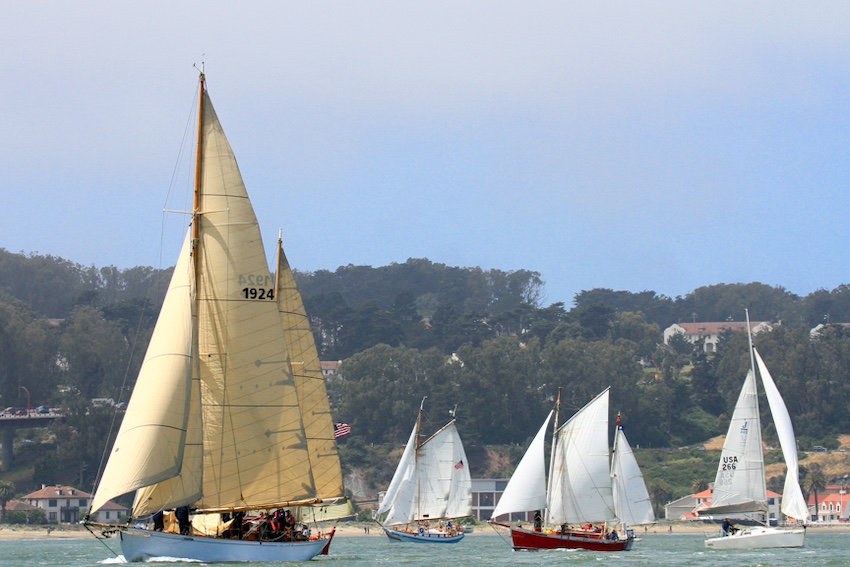
The Master Mariners Regatta is a Memorial Day Weekend tradition on San Francisco Bay, and an opportunity for wooden-boat caretakers to put down the caulking gun and varnish can, hoist various sail configurations, and get their competitive juices flowing.
The Master Mariners Benevolent Association puts on the regatta, with assistance from Sausalito Yacht Club for running the start and finish, Encinal YC for hosting the after-race party, and St. Francis YC for hosting the Sponsors’ Luncheon, this year held on Friday, May 16. Yes, it takes a village.
The starts go off in reverse-handicap order from in front of St. Francis Yacht Club. It’s not exactly a pursuit race like the Three Bridge Fiasco; starts happen every five minutes after noon rather than at odd times such as 12:06:47. Five 23-ft Bear Boats started at noon, followed by Bird Boats five minutes later. The final division, the Parade Class, went off at 12:55.
As these boats vary greatly in their characteristics, from gaff tall-ship schooners to smallish Marconi sloops and everything in between, courses vary depending on division. But everyone finishes in the relative shelter of Treasure Island’s eastern shore, and everyone is invited to sail under the Bay Bridge, past the Port of Oakland, and down the Estuary to a raft-up, party, and overnight stay at Encinal YC in Alameda.
The top story of the day belonged to Jack Reynolds and the crew of the 54-ft Colvin steel pinky schooner Roxy and Stephen Carlson, who singlehanded his 1961 36-ft Angelman Sea Witch gaff ketch Sea Quest. Roxy was easy to spot on the race course, as she has a black hull and tanbark sails. Sea Quest is white with a blue stripe and a dinghy on davits perched over the stern. We caught up with the two sailors ashore at EYC.
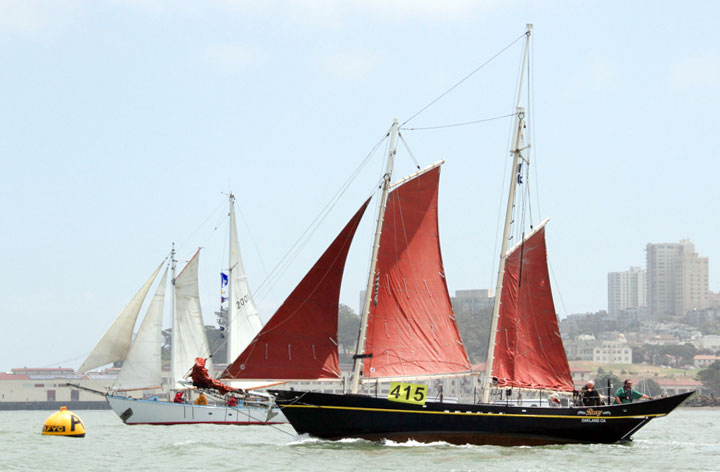
“At the first yellow mark [Hank Easom, aka Yellow Bluff] by Sausalito, maybe a half mile from there,” said Stephen, “I was messing with my backstay and the boat did a lurch.” Sea Quest was sailing along, heeled over on starboard tack. Stephen turned his back and a wave hit the boat, knocking him overboard, head first into the Bay. “I grabbed for the shrouds and they weren’t there,” he said. “I thought you guys saw me fall off,” he added in an aside to Jack.
Sea Quest took off like a rocket on her own.
Don’t Miss the Latitude 38 Fall Crew Party

Don’t miss the Latitude 38 Fall Crew List Party in Sausalito Thursday, September 4, 2025 at Spaulding Marine Center. Whether you’re cruising to Mexico, racing this winter, or just want to meet local sailors, this is your chance to find a boat, find a ride, or find crew. Tickets and more info here.