

A 1983 Classified Ad Forges a Cape Horn Adventure and a Lifelong Bond
An innocuous classified ad placed in the September 1983 issue of Latitude 38 set off a remarkable chain of events. Franz McVay, a Silicon Valley pioneer and owner of the Swan 65 Cygnus, needed crew to help him cross the South Pacific. Meanwhile, 24-year-old Rob Andrews had just hitchhiked from Vancouver, Canada, down the US West Coast in search of a bluewater adventure. Rob answered the ad, landed a job preparing the Sausalito-based yacht for the Pacific, and eventually worked his way up to captaining the vessel.
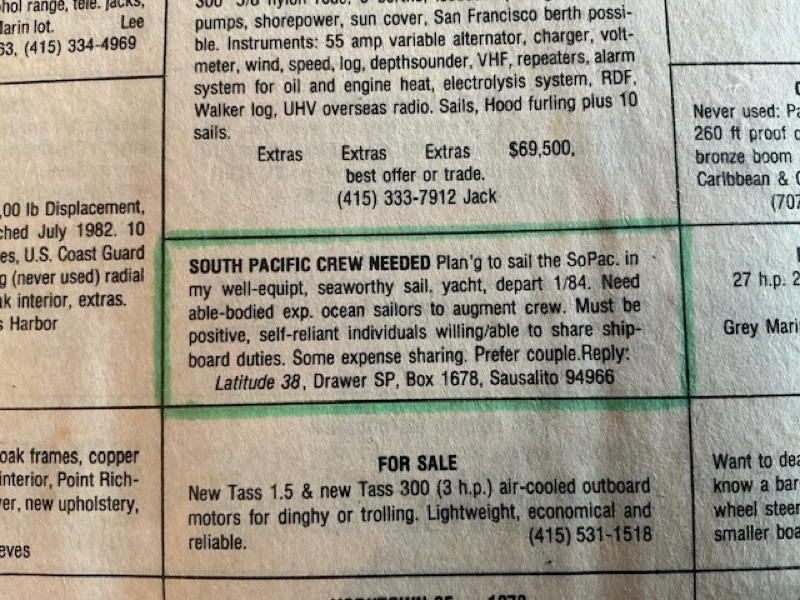
Meanwhile, Max Fletcher had left Maine with his wife and 9-month-old son for a planned circumnavigation aboard his Westsail 32, Christopher Robin.
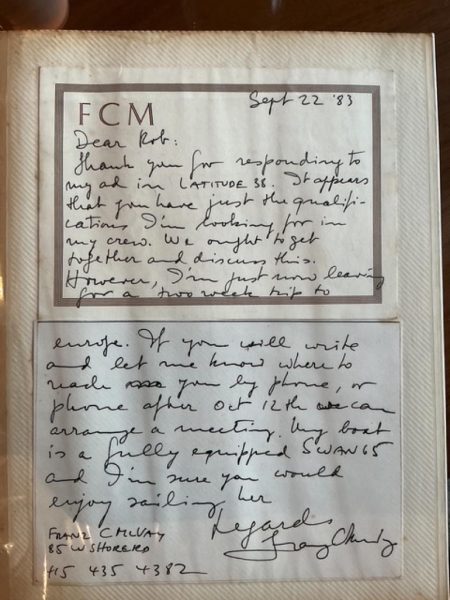
The two sailors’ paths crossed when Rob and Max both decided to climb Rainmaker Mountain in Pago Pago, American Samoa. A fast friendship was forged, and Cygnus and Christopher Robin frequently crossed tacks over the next few months as they cruised through Tonga, Fiji and New Zealand.
A Change of Course in the Bay of Islands
New Zealand’s Bay of Islands is one of the world’s great cruising crossroads. Max and Rob spent their days working aboard their respective yachts and their evenings socializing with fellow cruisers at the historic Duke of Marlborough Pub in Russell, NZ.
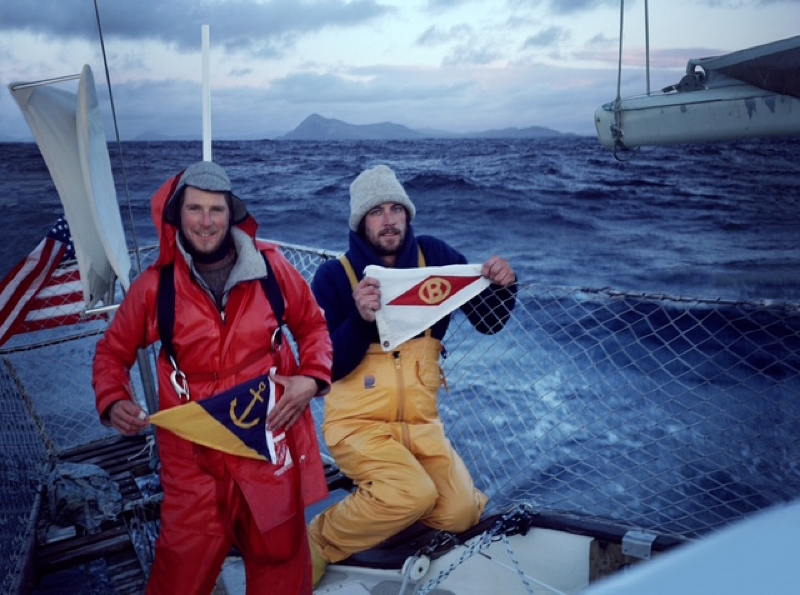
Fate intervened when Max required an extra hand to sail Christopher Robin on the long journey back home to Maine. Over a few beers, the two friends came to a bold realization: The quickest, most direct route back to the East Coast was east — via the Southern Ocean and Cape Horn.
Rob made the pivotal decision to leave his captain’s billet on the luxurious Swan and join Max on the rugged Westsail 32 for the adventure of a lifetime, following in the wake of their intrepid sailing heroes. They spent three weeks transforming an already seaworthy cruising boat into a hardened vessel capable of weathering the planet’s most treacherous seas.
Facing the Southern Ocean
On January 9, 1985, Christopher Robin departed Opua, New Zealand. Just a week into the passage, they encountered a fierce southeast gale. After lying hove-to for two nights, they awoke to a massive wave that rolled the boat more than 45 degrees past horizontal. Fortunately, the mast held, and their meticulous pre-trip preparations limited the amount of water that got below.
A month later, near Point Nemo — the most remote spot on Earth, farthest from any land — the ocean tested them again. Under bare poles, they spent 60 grueling hours steering by hand on a rotation of two hours on, two hours off. They surfed down the faces of monstrous 40-foot seas, still managing to log an impressive 130 miles per day.
The Milestones
Days at Sea: 47 days to round Cape Horn from New Zealand.
Total Passage: 52 days to reach safe harbor in the Falkland Islands.
A Lifelong Bond
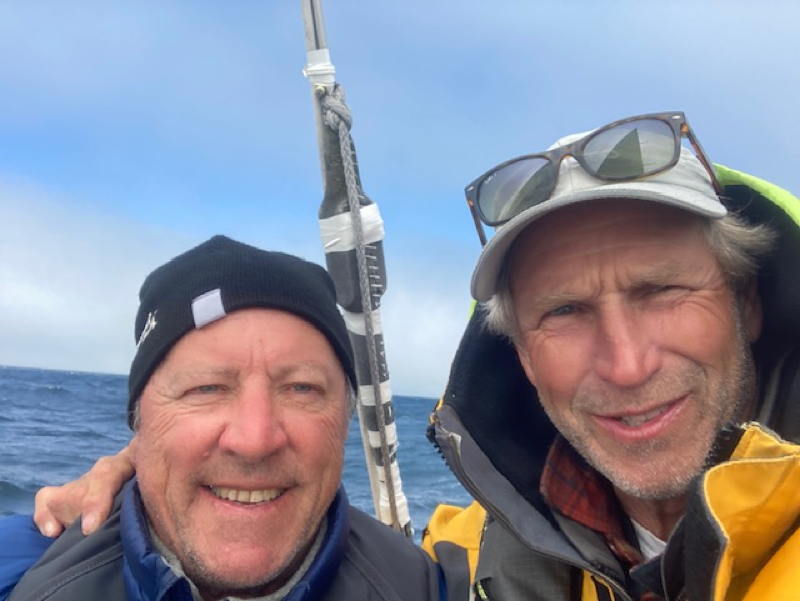
Forty years later, the ocean’s bond remains unbroken. To this day, Max and Rob speak every single February 25 to celebrate the anniversary of their Cape Horn rounding. Despite living on opposite coasts, they still manage to slip away and share an occasional bluewater passage together.
Looking to connect to sailing and adventure? Put your name on our Crew List and come to the annual Fall Crew List party at Spaulding Marine Center in Sausalito on September 10.
Franz McVay, owner of Cygnus took possession of the boat in Finland, at the factory. He subsequently sailed the Med, Caribbean etc before bringing Cygnus back to California. He was an extremely capable captain/owner and probably the most influential person in my life.
At some point in the South Pacific voyage, less than a year from leaving California, the made the decision to ship Cygnus back via container ship to Long Beach from Singapore. I believe this was due to crew related issues.
Prior to Cygnus leaving for the South Pacific I assisted Franz in trips to Mexico, Southern California for the Rolex Cup etc.
What a privilege and joy it was to crew on the Cygnus.