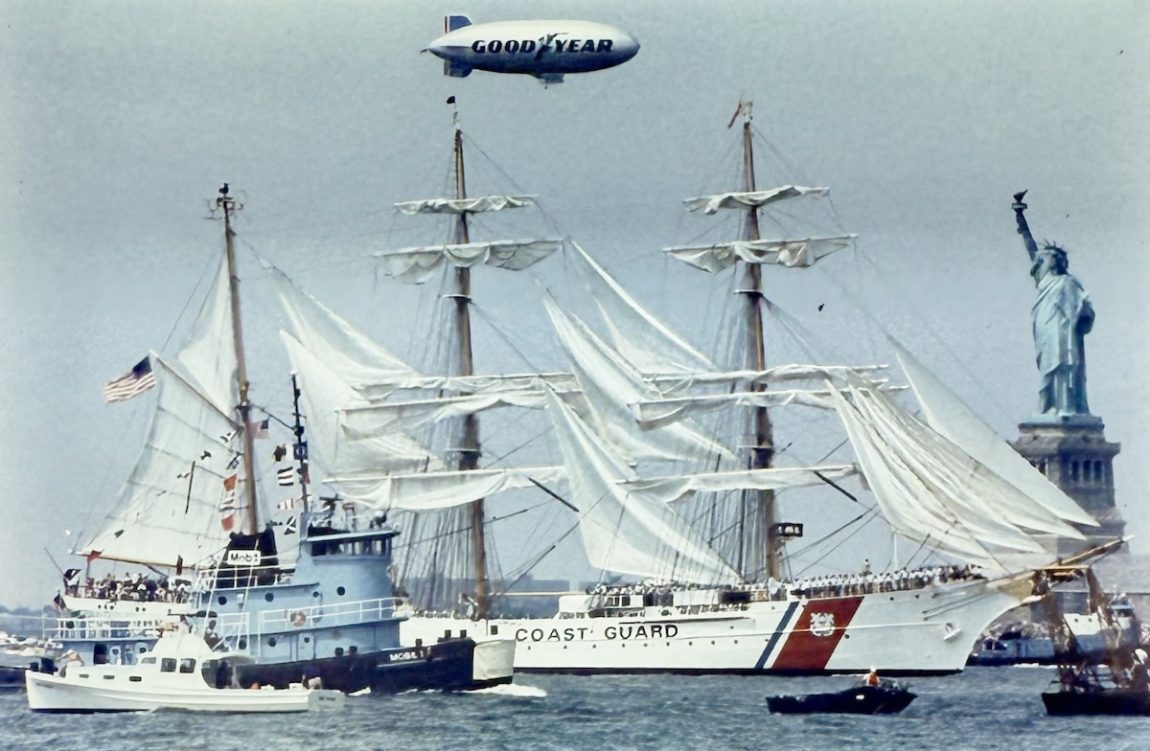

USCG ‘Eagle’ As Seen Through the Ages
Have you ever wondered about life aboard a tall ship, not just for a short time, but across the years as the ship sails the oceans decade after decade? California sailor Will Sofrin has created a picture of life aboard the USCGC Eagle as seen through the eyes of the young men and women whose lives have been altered as they worked their way through USCG officer training aboard this 295-ft, three-masted barque.
Sofrin’s book USCGC Eagle: The Legacy of America’s Tall Ship not only shares the experiences of modern-day cadets, but also incorporates the experiences of generations of Eagle’s officers and crew across her 80 years of service. Each chapter in Sofrin’s tale captures a different decade of the ship’s life, beginning with her post-World War II delivery to America in 1946.
Built in Blohm & Voss Shipyard in Hamburg, Germany, in 1936, and commissioned as Horst Wessel, the barque was one of three sail-training ships operated by the German navy prior to World War II. After the war, Horst Wessel was taken by the US as reparation, sailed to New London, Connecticut, and recommissioned as the USCG Cutter Eagle.
The voyage across the Atlantic was nothing short of dramatic. Under her first American commander, Gordon McGowan, the ship sailed with members of her former German crew and was nearly lost in a hurricane just 24 hours out of New York.
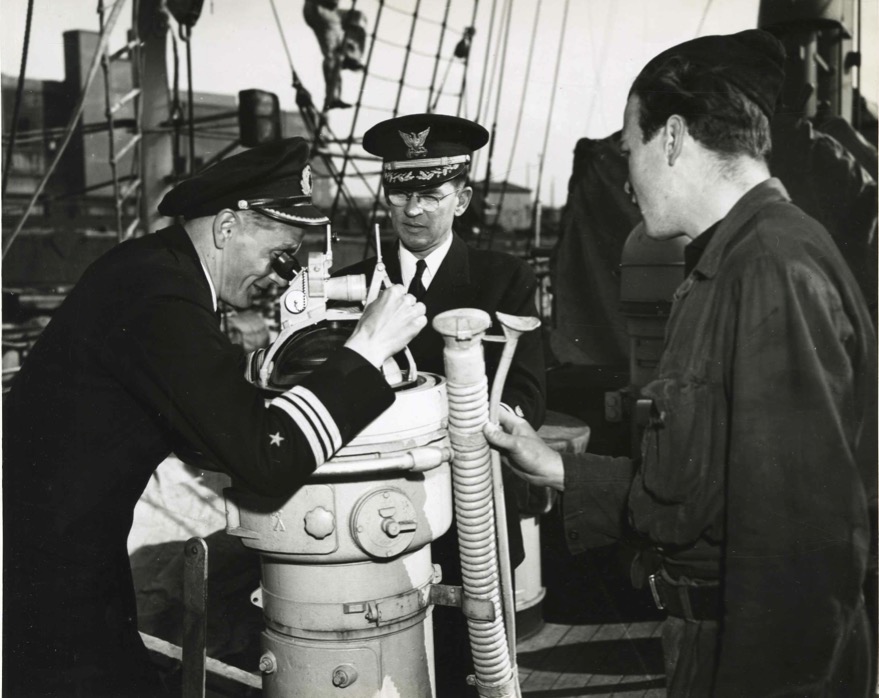
The following excerpt from Sofrin’s book describes McGowan’s meeting of the ship:
“Stepping on board for the first time, Commander McGowan received a crisp hand salute and full military honors. Awaiting him was the former German captain, Kapitänleutnant Barthold Schnibbe, a tall, thin, 35-year-old officer with a deep voice and a strong command of English. His crew respectfully called him ‘Herr Ka-Leut,’ a shortened form of ‘Kapitänleutnant.’ McGowan’s gaze swept forward and then aft, taking in the barren teak deck. The wooden planks were worn and splintered, etched with scars where countless sailors had once trod.
“Once gleaming with care, the rails and brass fittings were mottled with the coarse texture of corrosion. Amidships, jagged stumps of broken bolts and splintered wood marked the former positions of two quad anti-aircraft guns, silent witnesses to the barque’s wartime role and the passage of years. The rigging was sparse, with a few strands of frayed wire swaying like forgotten cobwebs in the wind. Blocks hung idle, their metal fittings pitted from salt and neglect. Stripped of its glory, the barque was a shadow of its former self, its grandeur replaced with quiet, somber dignity.”