
Tackling Unexpected Challenges on the Baja Bash
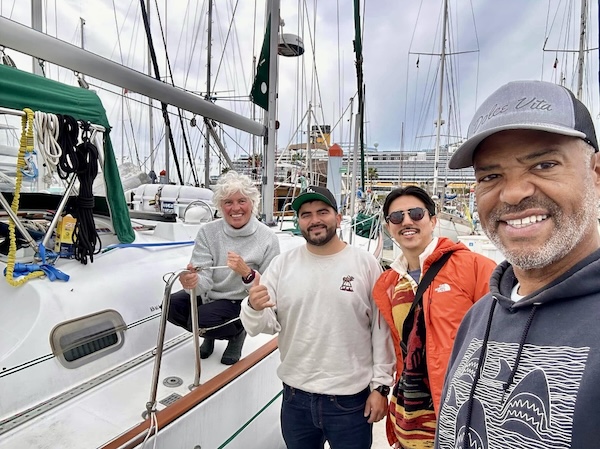
It was to be a routine Baja Bash delivery aboard my friend Manny’s SV Dolce Vita, a 47.3-ft Beneteau, from the Sea of Cortez to Emery Cove, San Francisco Bay. Jeanie and I (the crew) flew in to San José del Cabo, Mexico, where we familiarized ourselves with the boat, quickly made a provisioning list, and took an Uber to the local grocery store.
Within minutes of our departure, we noticed a substantial discrepancy between the chartplotter compass and the fixed magnetic compass in the cockpit, leading us to ask, “Where is the fluxgate compass located?”
“Ahhhh …” I said, “we just stored some canned foods in that very location!”
It was a quick and easy fix as we relocated anything with metal to another location. For the next hour we enjoyed sailing in sunny conditions — until the wind died and the sea became flat. We set our three-hour watch schedules as we motorsailed in the company of whales, dolphins, birds, and a huge sea turtle leisurely paddling by our vessel.
A starry and moonless night followed as we averaged 5 knots. The reflection of the phosphorescent lights surrounding Dolce Vita’s hull set us up for a peaceful mood as we continued into the night. All systems, as well as the three people aboard, were in sync and happily moving along — that is until at noon the following day we noticed white smoke emanating from the exhaust, a slight increase in engine temperature, and an increase in pressure on the Racor housing gauge, all indicative of the need to change the diesel fuel filter, which we did.
We continued on to Bahia Asunción, where we refueled and reprovisioned with the help of a friendly local fisherman, Lery Espinoza, who operated a water taxi service. Under rather breezy conditions we continued on to Turtle Bay. Here we joined a nearby multihull for a lovely home-cooked shepherd’s pie, prepared à la French cuisine. What a treat!
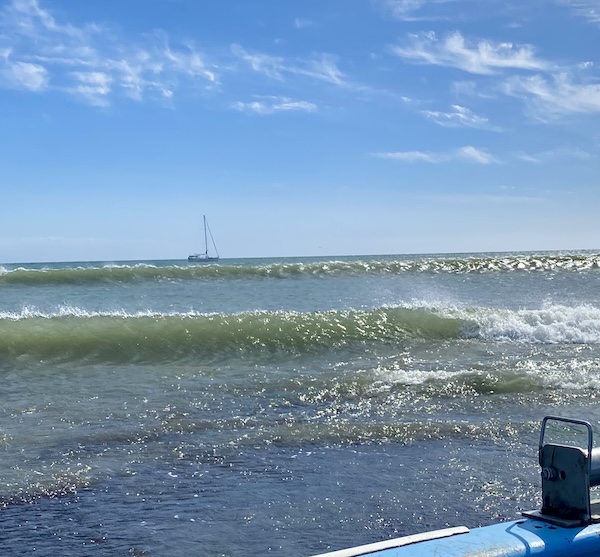
By day seven we had lively sea conditions with apparent wind speed of 25 knots on the nose, and 5- to 7-foot seas at nine seconds. We passed Isla Cedros averaging 3 knots in washing-machine-like conditions and wrapped in dense fog, a heavy marine layer all around us.
On day nine we reevaluated our slow progress. There was no sign of relief gathered from the various weather sites. PredictWind was our most reliable source, while Navionics showed us nearby anchorages.
At 0300, our speed over ground was less than 2 knots against a stiff headwind. We also noticed the white smoke again, and some oil and water drips below the engine.