

Remember the Feeling of Screen-Free Sailing?
One of the great attributes of sailing is leaving all the mayhem of digital distractions ashore. Sailors often describe being fully present and engaged in the act of sailing as a reason they find both escape and pleasure in it. This remains true in small boats and most dinghy sailing, but as technology continues to force its way into our lives, it has also taken over a significant portion of our sailing lives. Screen time is no longer something you only have ashore.
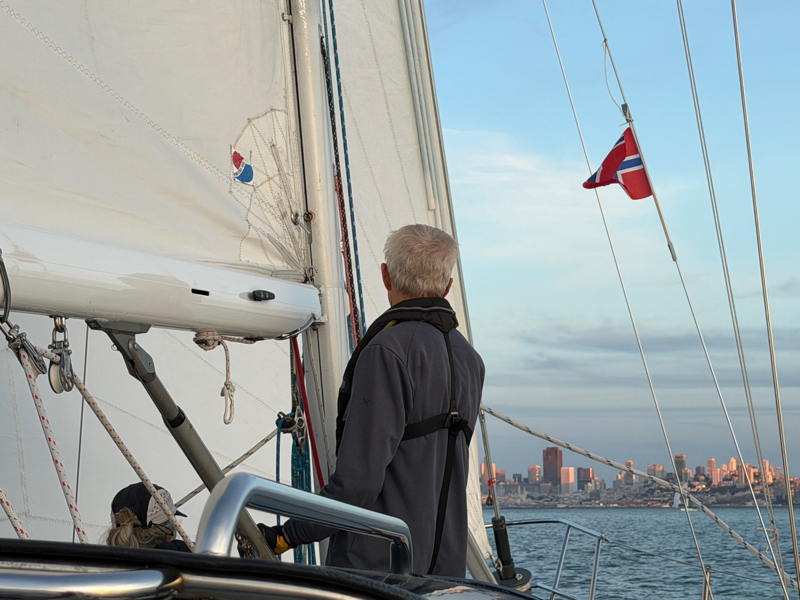
Screen time is seen as time using a phone or social media. But what about all the screens that distract us while sailing? We find them a mixed blessing. There are numerous times we appreciate our chartplotter, autopilot and wind and speed instruments, plus the various apps on our phone. But we can also get saturated with all this screen input pretty quickly. It can help keep us safe and can help us go in the right direction when racing, but it also dulls our senses as we try to “feel” the wind and current.
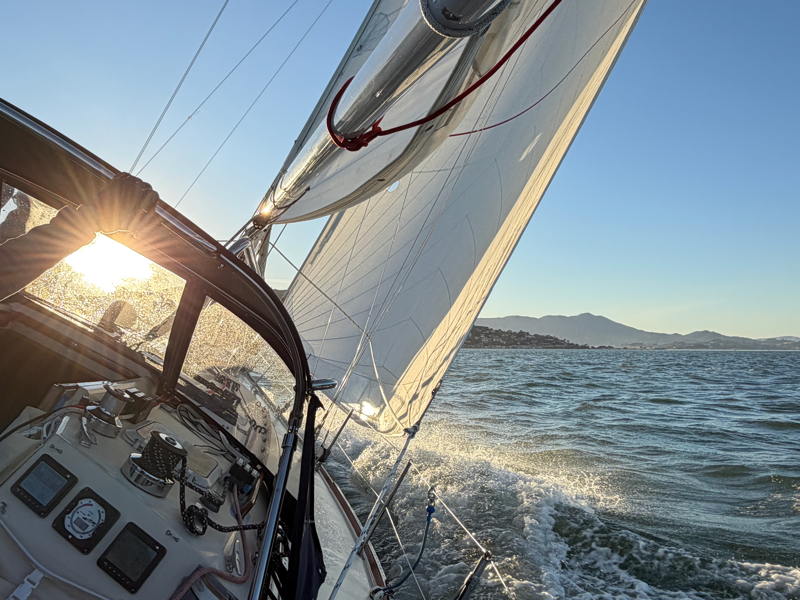
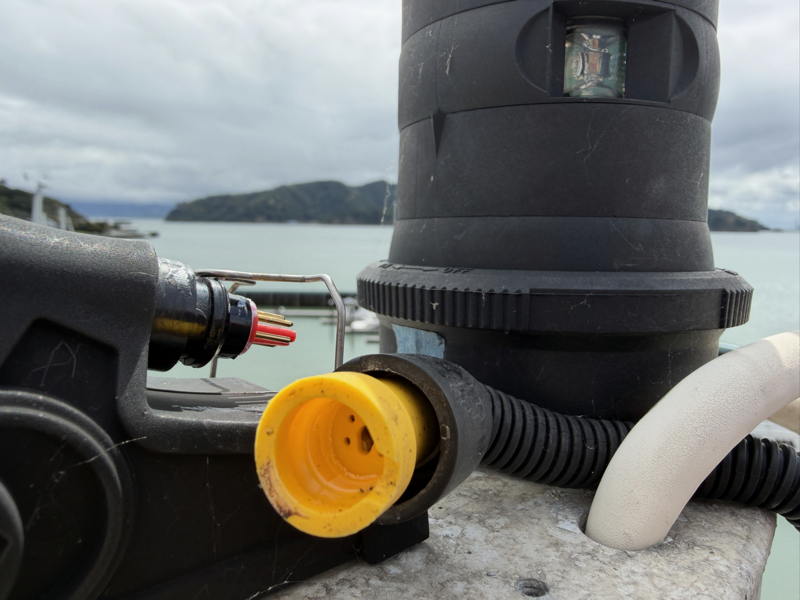
We thought about this more as we tried to fix our failing Simrad AP28 autopilot. We’ve cleaned wire leads, replaced the rudder reference unit, and reset the unit, and after a while, it feels like being at the office fussing with the computer rather than sitting on a sailboat. The same with our Simrad anemometer, which has been working fine, but for some reason, the wind-direction indicator started failing. A trip to the masthead and disassembly to clean the leads, and we successfully killed the windspeed too. The trip up the mast was made easier by a different e-tool: The electric Ewincher winch handle made it easy to get up the rig.
Our electronics failures are slowly working us backward to a simpler time when we simply looked at the yarns on the shrouds and the ripples on the water to sort out the sailing conditions. Just like when ashore, we find one of our favorite buttons on just about everything is the “off” button. Shutting the engine down, turning the phone off, or just sailing with the wind and water is a great way to enjoy the moment.
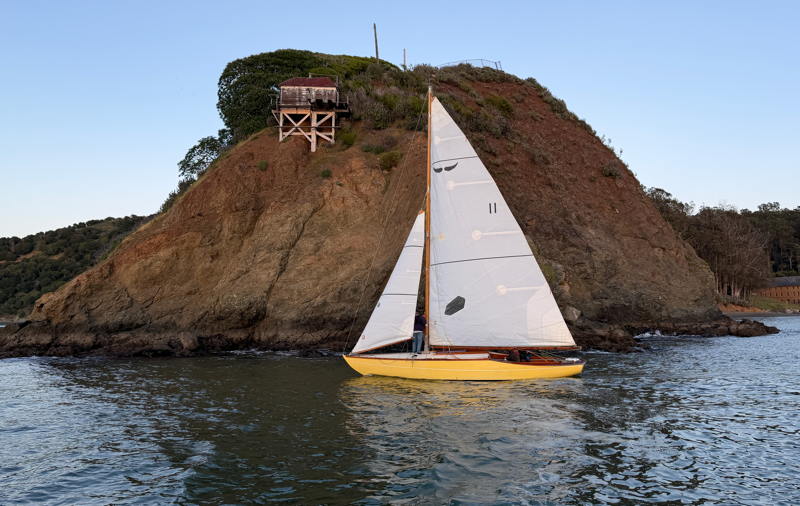
We’re told we use only about 10% of our brains, and we’re guessing we similarly use about 10% of the features offered on our digital devices. We really appreciate having them, especially when they work, but we also like the time when the screens are off and life is at its fullest. It’s also why learning to sail in smaller boats is so powerful. Engines, instruments, winches, radios and all the rest are a real distraction from understanding how to move a sailboat through the water.
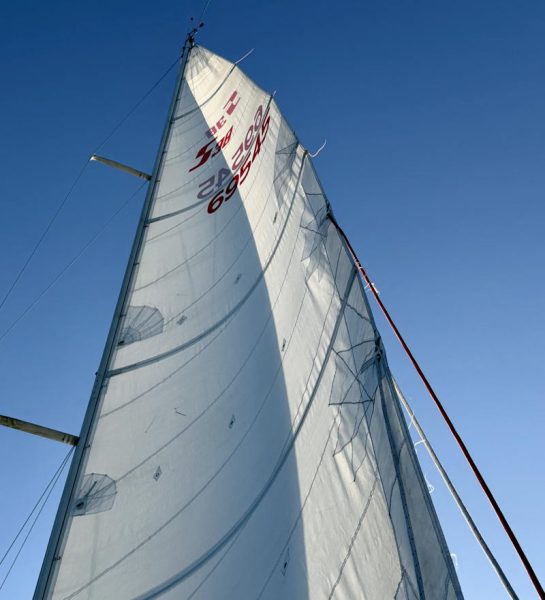
Adding electronics to your sailing later can increase safety, speed and convenience, but the real soul of sailing emerges when your mind and body are connected to the physical elements of sailing.
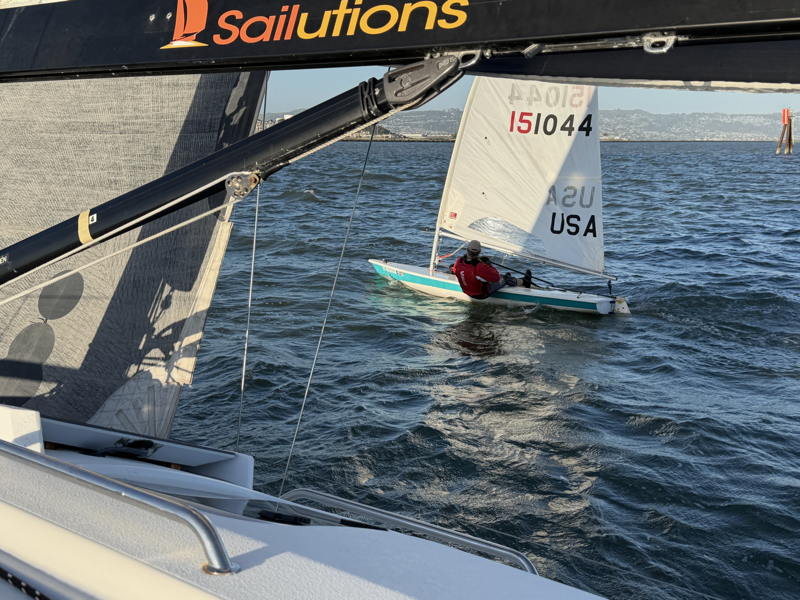
Sometimes it’s good to remember that you have to disconnect to connect.
What is a good starting app for my iPhone – primarily time & distance to the line.
How about checking out Ted Wilson’s new app: https://pathfindersailing.com/
I got the Pathfinder app and will try it out next week. Thanks for the suggestion.
Absolutely, being on the water is a great opportunity to disconnect and declare our independence. We’ve all been manipulated into computer dependency. How long can we go without? Surely, a sail. The longer the better, right? I’d wager there are some younger sailors who have never had screen-free sailing to remember.
Sorry I missed the outhaul, I was taking pictures with my phone.
😎
I got the Pathfinder app and will try it out next week. Thanks for the suggestion.