

One Boat Completes Full Course in 55th Shaw Island Classic Race
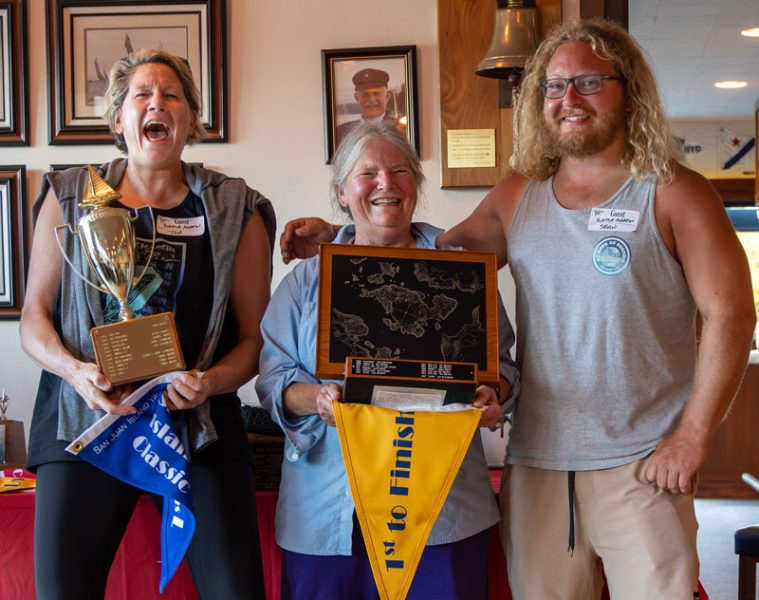
The story of the 55th Shaw Island Classic race, hosted by San Juan Island Yacht Club, begins with a remarkable finish. Purple Martin, a Martin 242 skippered by Betsy Wareham, received a standing ovation as the only boat in a fleet of 35 to finish the full course, placing first in the PHRF-C division, first on elapsed time, and first on corrected time. The Perseverance Award in honor of Wally Lum, who has sailed in every Shaw Island Classic, goes to the last boat to cross the finish line before the deadline. Purple Martin swept up that award as well. Crossing the line at 5:52:20 p.m., minutes before the deadline, Betsy Wareham and her crew, Tina Brown and Sean Staley, showed true perseverance.
Saturday, August 9, was a picture-perfect day to be on the water but promised to be challenging due to light winds and a 9-ft tidal change. This unique race starts and ends in Friday Harbor and rounds Shaw Island in either direction, with a mid-course boat recording times in case no one finishes the full course.
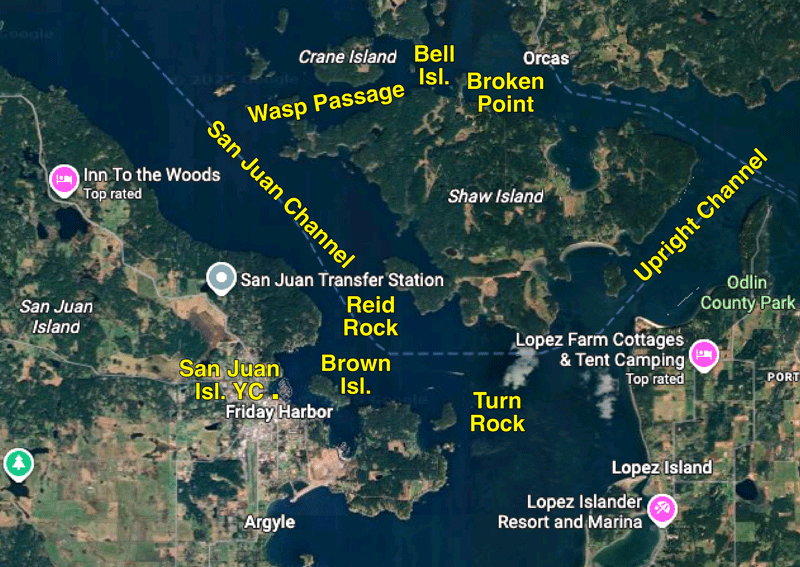
Most of the fleet attempted a counterclockwise course, betting there was enough wind at the start to make it to Turn Rock and catch the flood in Upright Channel. This would allow riding the current through the notoriously narrow and windless Wasp Passage.
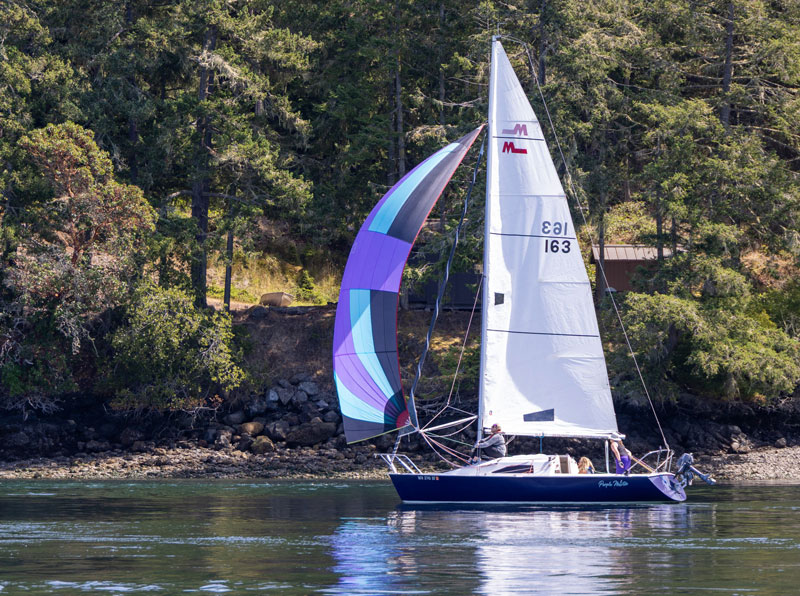
“We were going to go counterclockwise, but I kept looking at the wind coming down San Juan Channel and there was no wind ahead to the east. We started going east but I kept looking at that northerly breeze and changed my mind. Off we went clockwise,” said Betsy Wareham, skipper of Purple Martin. “We set the kite going into Wasp Passage and kept to the Shaw shore until Horton’s Hook, then jibed out past Bell Island reef. We had breeze until just past Broken Point, where we ran into converging winds. The easterly won out and we were moving again. But, uh-oh, here came the leaders of the counterclockwise boats [across the mid-course line]. So, we figured we had to make it all the way around to win and hope they ran into dead air.”
Dead air indeed! The lack of wind spurred creative strategy and tactical maneuvers. Matt Wallis, skipper of Pulelehua, a Dash 34, first-place winner of the PHRF-A division on mid-course time going counterclockwise, shared his strategy: “After the start, we took a flyer, sailing back through the harbor and around Brown Island to use a shore breeze and avoid the currents in San Juan Channel. It worked as planned. However once we got to the narrow, rocky exit channel there were light, shifty winds and strong currents. We were able to string together a few puffs to get out — barely. I appreciate my crew trusting that we could pull off this unique strategy at the start.”
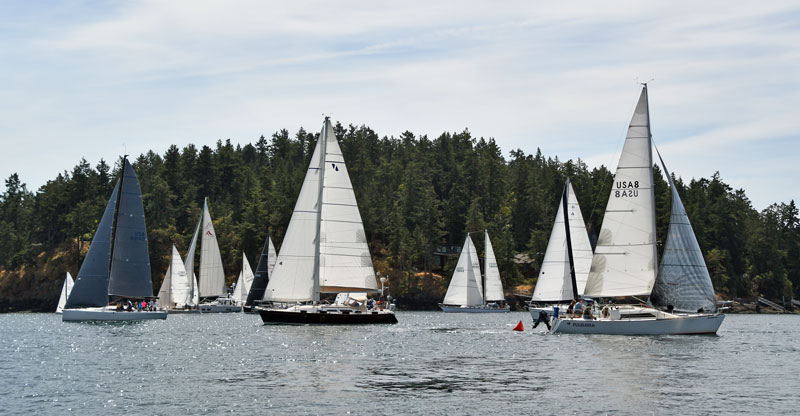
“Big flood, no wind. Find back eddies. Go to Turn Rock, cross fingers for a little breeze, and make it across,” said Boris Luchterhand, skipper of Riff, a J/70, first-place winner in the PHRF-B division on mid-course time going counterclockwise. “Battling through the [Wasp] passage and coming out, we hesitated going to Shaw or crossing to San Juan. Shaw was money. We passed the fleet who went to San Juan. But then we saw the Black Pearl, aka Betsy and gang on Purple Martin, miraculously appear as the only clockwise boat. What? How? They beat us all. Kudos, Betsy!”
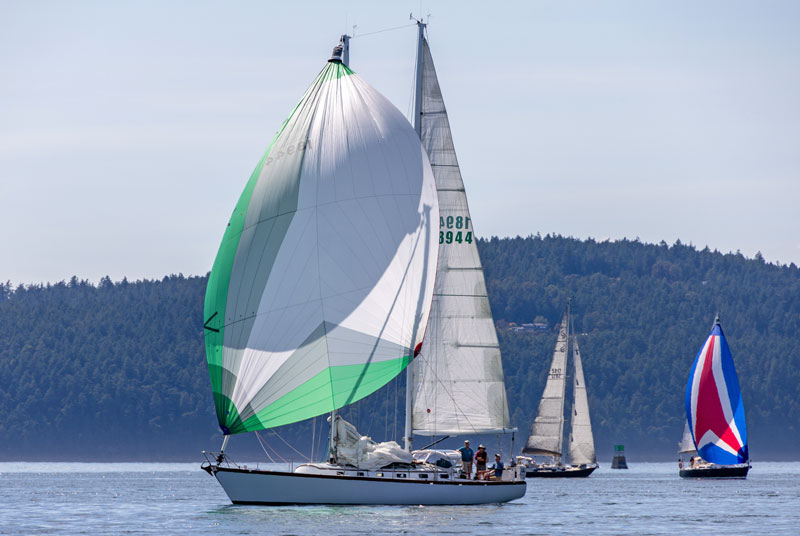
Meanwhile back on Purple Martin: “Everything was great until Reid Rock, where the current was insane, pushing us around like a washing machine. We couldn’t even figure out which way the wind was blowing,” said Betsy Wareham. “We took a chance, to hoist the chute without the pole to see what would happen. It tried to fill. We were all yelling instructions at each other and finally put the pole up, and the kite filled out. We were thinking, ‘We are going to make it.’ We did and were ecstatic!”
Spirits were high as racers gathered at the lovely SJIYC clubhouse overlooking the harbor for post-race banter and a hearty lasagna dinner served by the First Mates. “Challenging, but a great day,” added Wareham. “I am still in disbelief. Kudos to my outstanding crew!”
Thank you to the Washington State Ferry captains who maintained communication with the race committee and, once again, carefully maneuvered through the racing fleet.
Complete results and photos are posted at the club’s website at http://sjiyc.com/shaw.
Should You Do the Last Baja Ha-Ha? We Answer a Skipper’s Question
A reader and delivery skipper wrote in, asking, “A client I did a delivery for between S.F. and Oxnard invited me to be the skipper on his Catalina 42 for the last Baja Ha-Ha. Is it really the last? I’ve never done it and have never been that enthused. If my buddy Dave had ever pushed to do it on his boat I would have, of course, signed on. Your opinion? You asked if I was a cruiser or a racer. I am a cruiser that thinks every sailor should do some racing for their own benefit. Is the Ha-Ha kind of a race?”
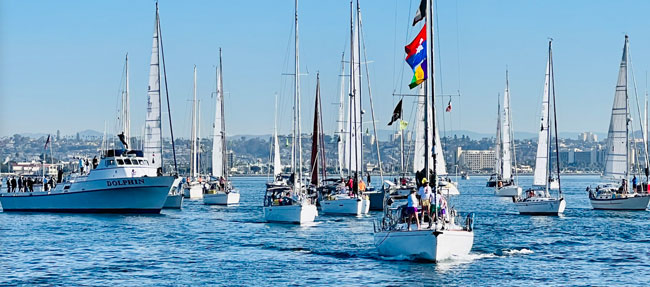
“I’m going to Santa Barbara to hang out with my daughter and take a look at the boat,” the reader continued.
This is how we responded:
We’re quite sure it’s the last Ha-Ha Richard and Doña will do, but who knows if he’ll find a successor or what will happen?
Lots of people have been hesitant to join the Baja Ha-Ha “mob,” but I’d say of those who do, 99.9% love it. If you’re really, really looking for quiet, empty coves, maybe you don’t want to do it, but the social side is not a wild Burning Man party scene. It’s quite a community of sailors meeting and helping other sailors while enjoying a great sail south in the company. I’d say do it.
The best way to get a feel for it might be to read about last year’s Baja Ha-Ha.
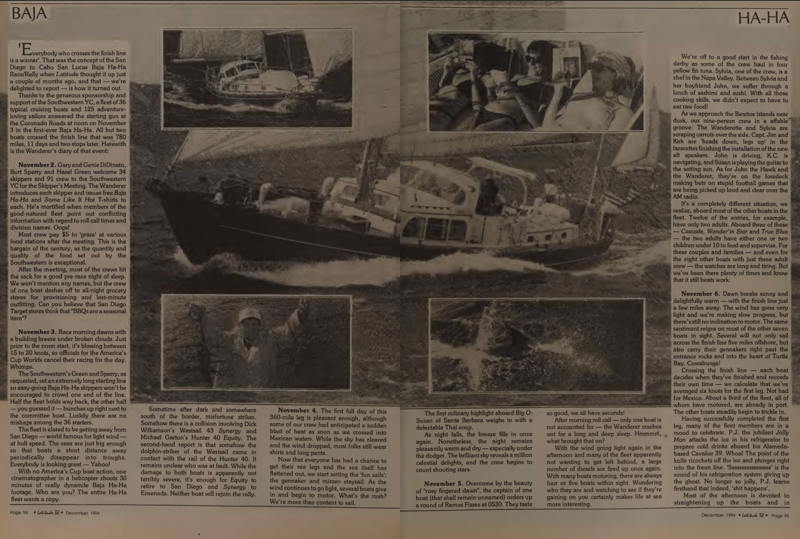
Or pick up any back issue since 1994 (scroll down) and read stories of each Ha-Ha, covering all of the its 30 years, in the December issues. You can read about the very first Baja Ha-Ha here. They’re all a little different and all fun.
He responded, “Thanks so much. You may have just sold me on doing the trip.”
We’re not trying to sell anyone. We’re just saying that finding someone who didn’t have a good time is not impossible but very difficult. It’s hard not to love the Ha-Ha.
We forgot to mention: It’s not a race. It’s a rally, but like most sailors, some people just can’t help themselves.
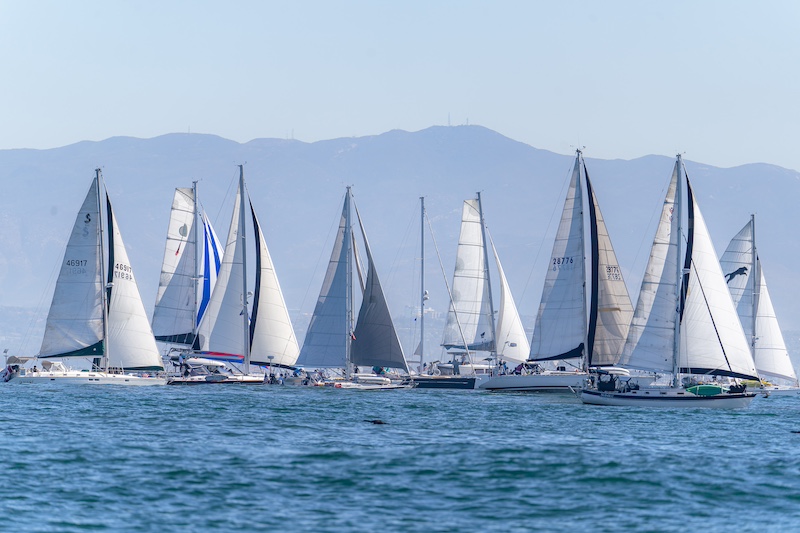
If you need crew or want to be crew, come to our Latitude 38 Fall Crew List Party on Thursday, September 4, at Spaulding Marine Center in Sausalito.
Looking for the Perfect Place for Your Boat? Discover Oyster Point Marina

Sausalito Rotary Fundraiser Supports Call of the Sea
Tall-ship fan and sailing supporter Alison Healy sent us a note telling us the Rotary Club of Sausalito Charitable Foundation is holding a fundraiser to support Call of the Sea’s youth scholarships. As development pressures put the squeeze on youth access to the water up and down the California coast, it’s appreciated when community organizations like Rotary recognize the value of outdoor adventure on the water for the next generation. That’s one of the reasons we all live by the Bay!
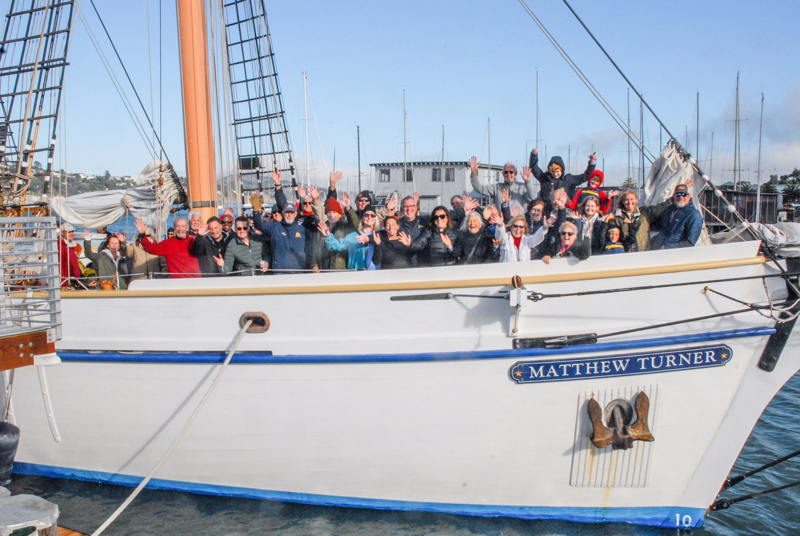
The fundraiser will be held on Friday, September 12, 5–8 p.m., aboard the Matthew Turner. It will include a picnic dinner, beer, wine, raffles and sea chanteys for $125/ticket. Space is limited, but both the dreams you can fuel and the amount you can donate are unlimited.
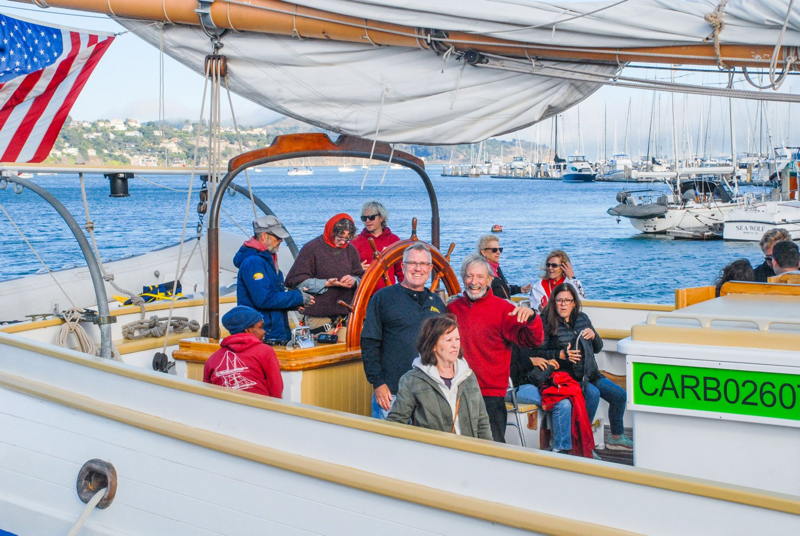
When we think of youth sailing in Sausalito, we often think of 12- or 13-year-old Hank Easom sailing his small dinghy alone, from Tiburon, to work at Clipper Yacht Harbor. What an amazing experience to have as a kid! And what a sailor and human Hank Easom became. It’s exceptionally difficult to have that kind of childhood today, but it’s amazing to have a 100-ft sailing ship, the Matthew Turner, built on the Sausalito waterfront, and available to give kids a chance to connect with the Bay and Sausalito’s maritime heritage.
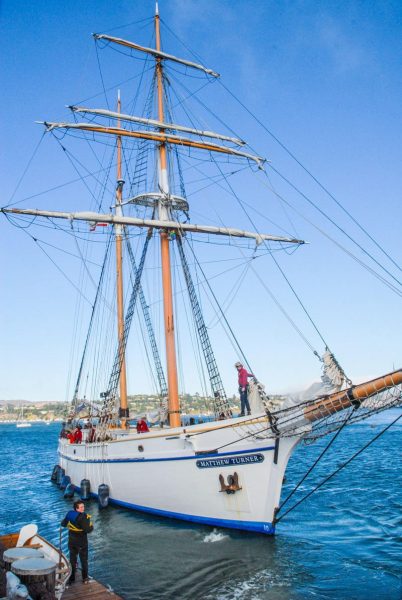
We’re grateful the Rotary Club is engaging the larger community to support this worthy cause (and to Alison for sending us this note!). Buy your tickets here.
The Resourceful Sailor: Stepping a Small Boat Mast With a Tripod
We recently shared the story of The Resourceful Sailor unstepping the mast of a 19-ft modified Augie Nielsen Spitzgatter-design sloop using the foremast of a 65-ft wood-hulled, gaff-rigged schooner. In this second part of the sequence, he assists with the stepping of the newly varnished mast back into its rightful place.
Naturally, The Resourceful Sailor said yes when asked about helping step the mast of Murrelet (a 2019, home-built, 19-ft Spitzgatter), using her purpose-built tripod (also called a gyn). Murrelet would be on a trailer at Port Townsend’s Boat Haven Marina and ready for launch at the next high tide. Bertram Levy, Murrelet’s builder, had hauled her out just five days earlier for yearly topsides and antifouling work. It’s best not to keep wooden boats out of the water for very long.
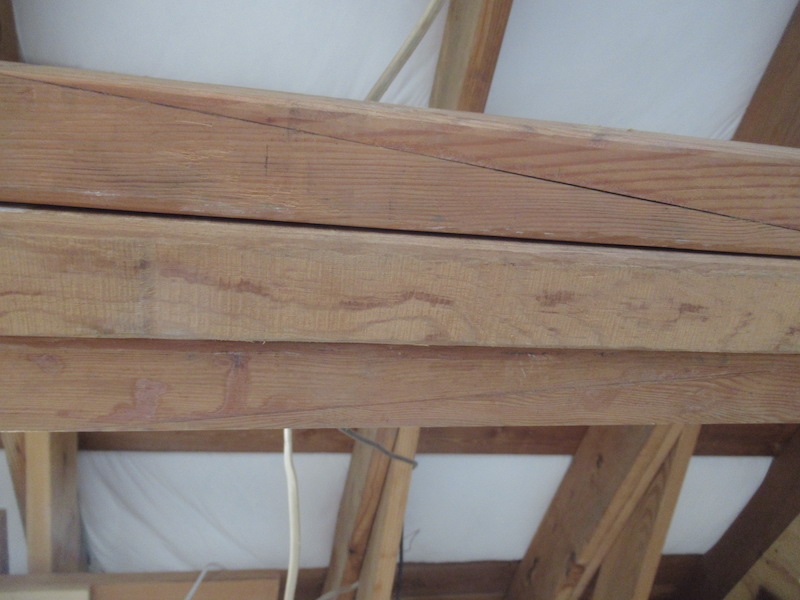
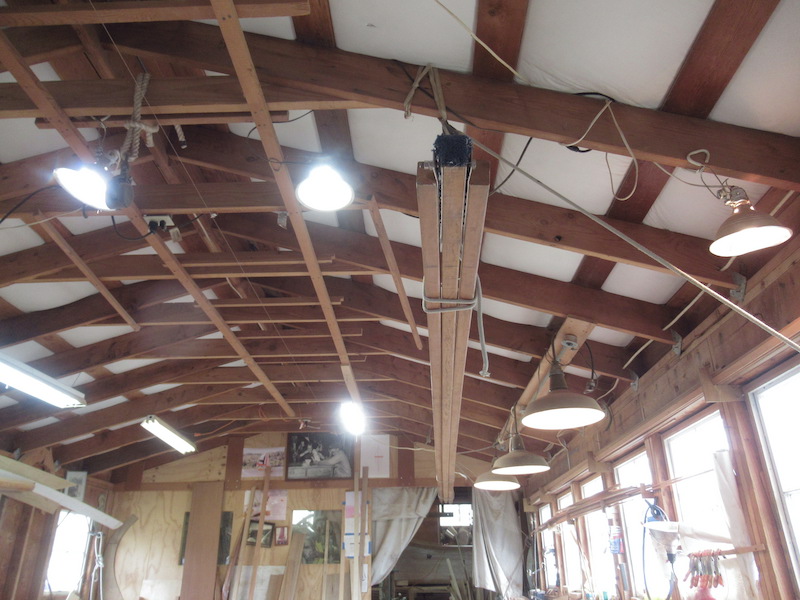
If you built a 19-ft, deep-keeled, wooden sailboat (and it’s not your first or biggest), it’s nothing to make a proper-sized tripod for stepping and unstepping its mast. It’s easy to store in the boat shop’s rafters and easy to use. The tripod consisted of three legs, made of two-by-three-inch lumber about 18 feet long, bolted together at one end through stainless steel straps riveted in place. The bolt included a U-shaped bracket that the fixed block of a two-part tackle (also called a gun tackle) would hang from. A tuft of carpet was added to the peak to protect the mast’s varnish. The tripod feet were tapered, each sandwiched by stainless straps, and brought close together for pinning to Murrelet’s stay chainplates and headstay fitting.

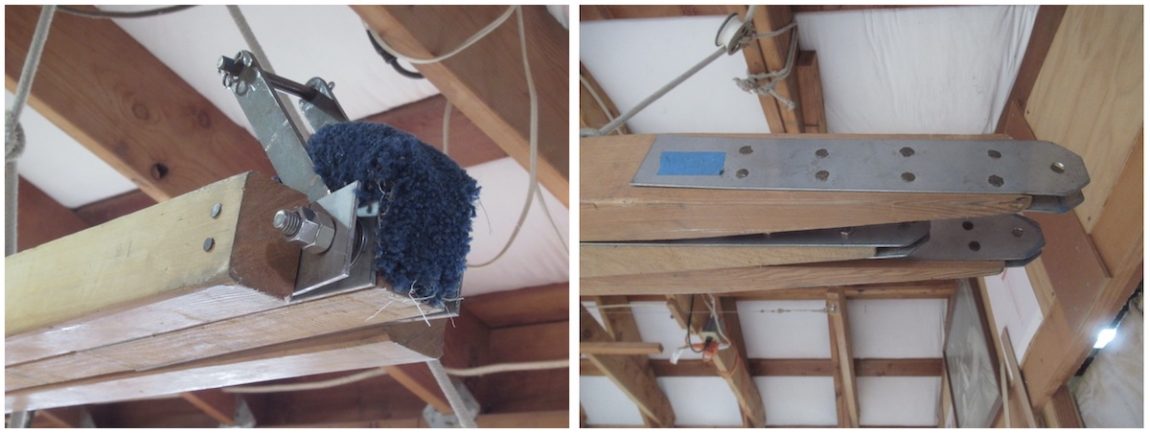
“The trick is knowing the balance point of the mast,” Bertram says about determining the perfect height of the tripod, explaining that there may be some trial and error. “The legs were made a bit too short at first, and extensions had to be scarfed in.”
Murrelet’s deck, when on the trailer, was well over my head. The towing vehicle, with the mast on the rack, was unhitched to allow room to set up the tripod, which was opened into a large “Y” configuration directly in front of and in alignment with the boat, the top of the “Y” to the bow. The “Y” was lifted and moved onto the deck, the two legs then being pinned to the shroud chainplates on each side of the boat, aft of the mast. The peak of the tripod was lifted by walking the third leg toward the bow, then pinning it to the forestay fitting.
The tripod was ready, and the mast was moved on board from the aft quarter of Murrelet, the base of the mast forward. There was a small sawhorse and cushion on deck for setting down the mast. The gun tackle’s movable block was shackled to an endless strap doubled around the mast. This strap was not girth-hitched; the shackle was clipped to both ends of the loop. We added a choker/retrieval line around the strap on the mast side of the shackle, with a loose round turn and a bowline. Led lower on the mast and tied off, this would cinch the loop down tight in the correct balance spot (we already knew where this was), opposing the upward pull of the hauling line. Later, after the mast was stepped, this choker line became a retrieval line. The cinch was loosened, and the strap and tackle were pulled down. The shackle worked well because it wasn’t a bulky knot that might have taken the critical extra inch in the haul height. The strap worked because it bound when cinched down and ran smoothly on the newly varnished mast on retrieval.
With the mast connected to the tackle, I hauled on the lifting line. I thought the gun tackle was perfect for this. The mast felt half its weight, and went up quickly without oodles of line stacking up on deck. Less hang time, less time for trouble. As I lifted, someone else held the mast base, causing the mast to stand up. By the time I reached the top, the mast could be guided to the mast partner, with just a few inches to spare over the deck. Once at the partner, I gently eased the line, lowering the mast through it. Bertram was below to guide the base to the step. It went in easily. We would have added the stays, but with Murrelet, we just added the mast wedges because the stays needed to wait until the tripod was removed. This was sufficient for her. The tripod was disassembled in the opposite order of assembly, and the stays were secured. Murrelet was ready to launch at the next high tide and return to her slip.
It turns out that the options for stepping and unstepping a small sailboat’s mast are aplenty. The Resourceful Sailor keeps learning new ways himself: gin poles, pole hoists, booms, yards, tripods (and cranes). What’s next? These are real-world physics at work (and play), and they are not exclusive to sailors. Do you need to stand a windmill, pull a well pump, or raise a barn? These might help. Remember, keep your solutions safe and prudent, and have a blast.
Here’s a video demonstrating the sequence [You’ll want to see this – Ed.]
Plan Your Trip to Annapolis Sailboat Show This Fall