

West Coast Teams Head East for High School Nationals
Point Loma and San Marcos sailing teams are headed east!
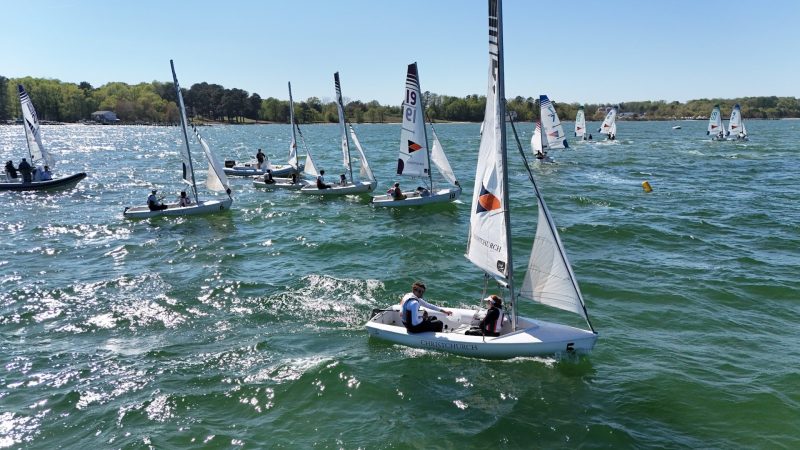
The two Southern California powerhouses qualified for the 2026 ISSA Baker Team Race National Championship after a hard-fought Pacific Coast Interscholastic Sailing Association (PCISA) qualifier on Mission Bay in April, earning the right to represent the West Coast at this year’s national championship on the Rappahannock River in Virginia.
Hosted by Christchurch School May 15–17, the Baker Trophy is one of the premier events in high-school sailing. It brings together the nation’s top team-racing programs for a weekend that often serves as the only true East Coast vs. West Coast measuring stick of the season.
“The East Coast/West Coast rivalry has gone on forever, and this is one of the only times we meet,” said Christchurch head sailing coach Rob Deane. “We don’t really know where they are, and they don’t know where we are until we face each other on the water.”
Point Loma once again arrives as one of the favorites. The San Diego-based program has consistently been near the top of the national podium in both team and fleet racing, and qualified alongside San Marcos after an impressive day of racing at Mission Bay Yacht Club. Mater Dei, often one of California’s strongest national contenders, narrowly missed qualification this year in what Deane described as “a bit of a shakeup.”
But while the West Coast teams bring pedigree and experience, the venue itself may become one of the defining storylines of the regatta. Last year’s Baker Championship was held at Mission Bay Yacht Club in conditions familiar to Point Loma and Mater Dei. Southern California sailing venues often feature relatively flat water and consistent breeze patterns inside protected harbors. The Rappahannock River offers something very different.
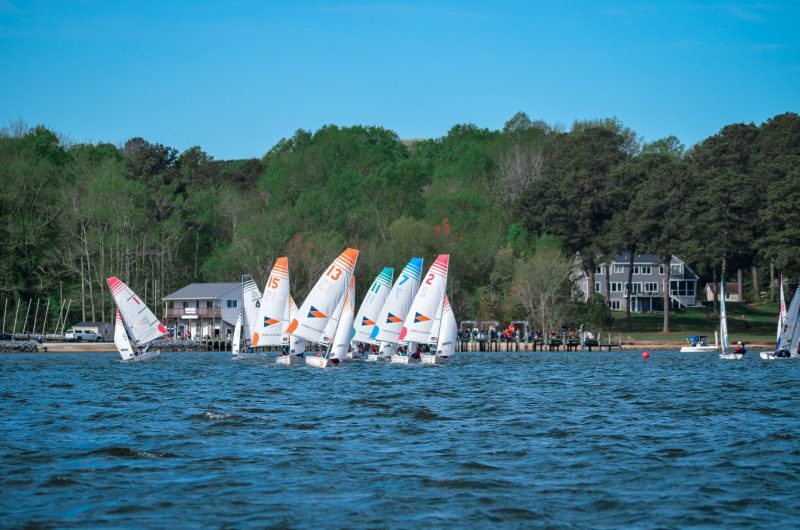
“Here on the Rappahannock, it can blow hard and have big waves,” Deane said. “This will be much more open-water sailing than they are used to. Our waves can get very steep and close together because of the shallow waterways. It can be extremely challenging.” That challenge extends well beyond the California teams.
“It’s probably the same for schools like St. George’s, Tabor, even some of the Florida programs,” Deane added. “You might get one condition in the morning and something completely different in the afternoon.”
Unlike collegiate or Olympic-level programs with extended training blocks, high school teams arriving for nationals have little time to acclimate. “The other schools get about 10 to 15 minutes when they launch to feel out the river,” Deane said. “There’s definitely a home court advantage.”
Still, Deane believes the significance of the event transcends geography or conditions. “At any national level, you have young sailors who have prepared for nine months, or really their whole lives, to get here,” he said. “For many of these sailors, this may be the biggest event they ever compete in.”
That reality is part of what continues to make the Baker Trophy unique within youth sports. Only a small number of high school athletes in any sport compete for true national championships, and the sailors arriving in Virginia represent the highest level of their discipline. “If you become the very best at what you do, no matter what it is, it really says something about you,” Deane said. This year, the proving ground happens to be the Rappahannock River.