

Tule Reeds and Boating — Exploring California’s Indigenous Roots
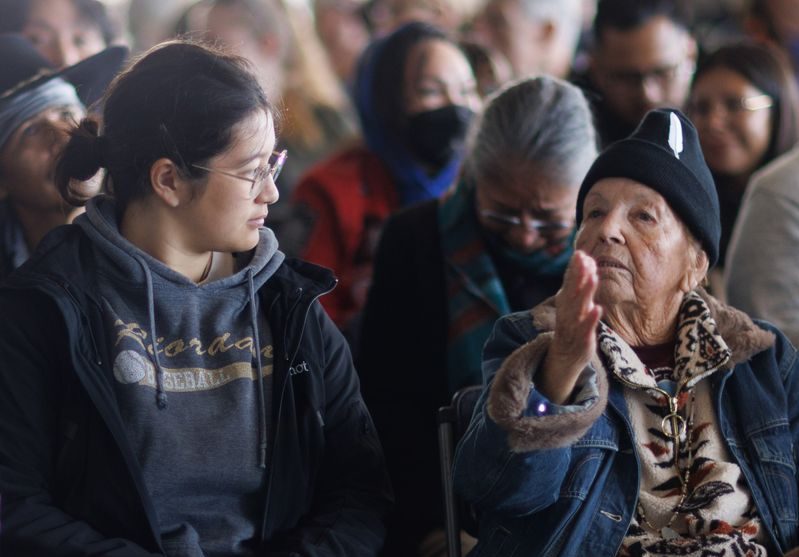
Chaan-hee Mata-Lee is a member of the yak titʸu titʸu yak tiłhini Northern Chumash tribe, a California Indian tribe on the Central Coast. As a student at Archbishop Riordan High School and someone who was born and grew up in San Francisco, Chaan-hee has never been far from the ocean. She learned to swim through the Wahine Project in Monterey, created by strong women dedicated to keeping the beach clean and to raising awareness about our coast’s waters. Her younger brother is a Makani Sea Scout. Recently Chaan-hee had the opportunity to participate in Tule Boat Day and connect with some of her ancestral lessons and traditions.
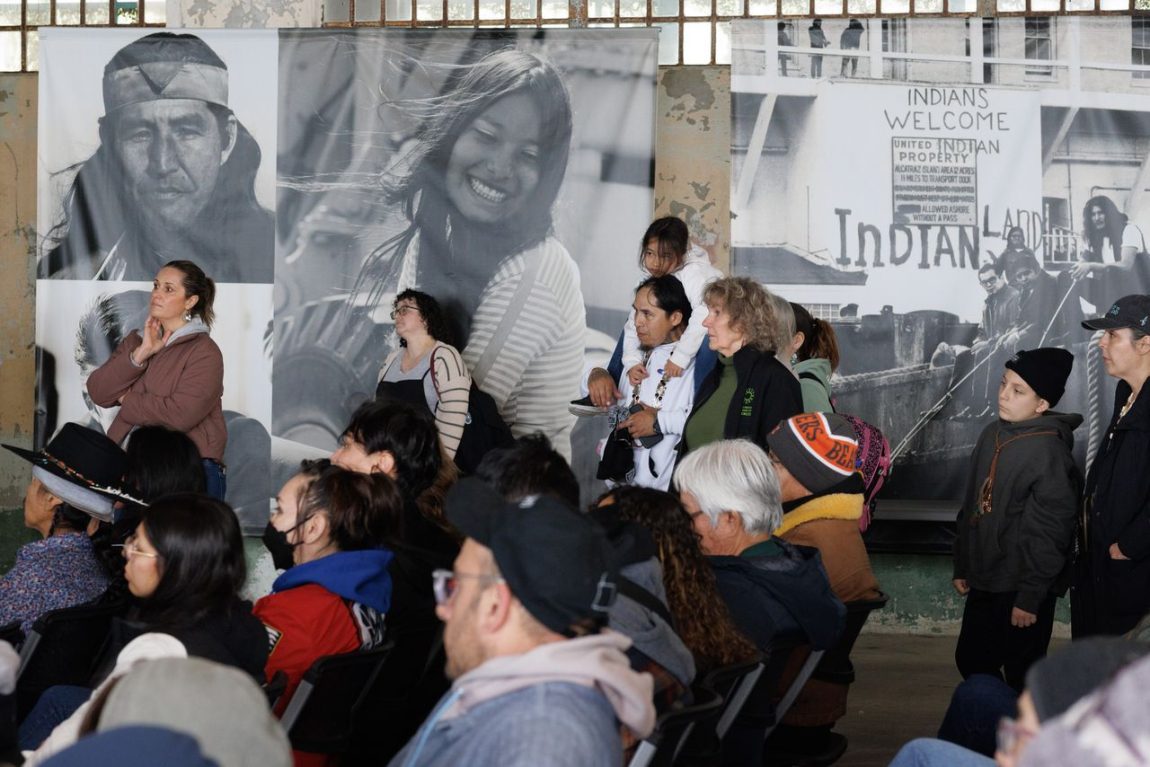
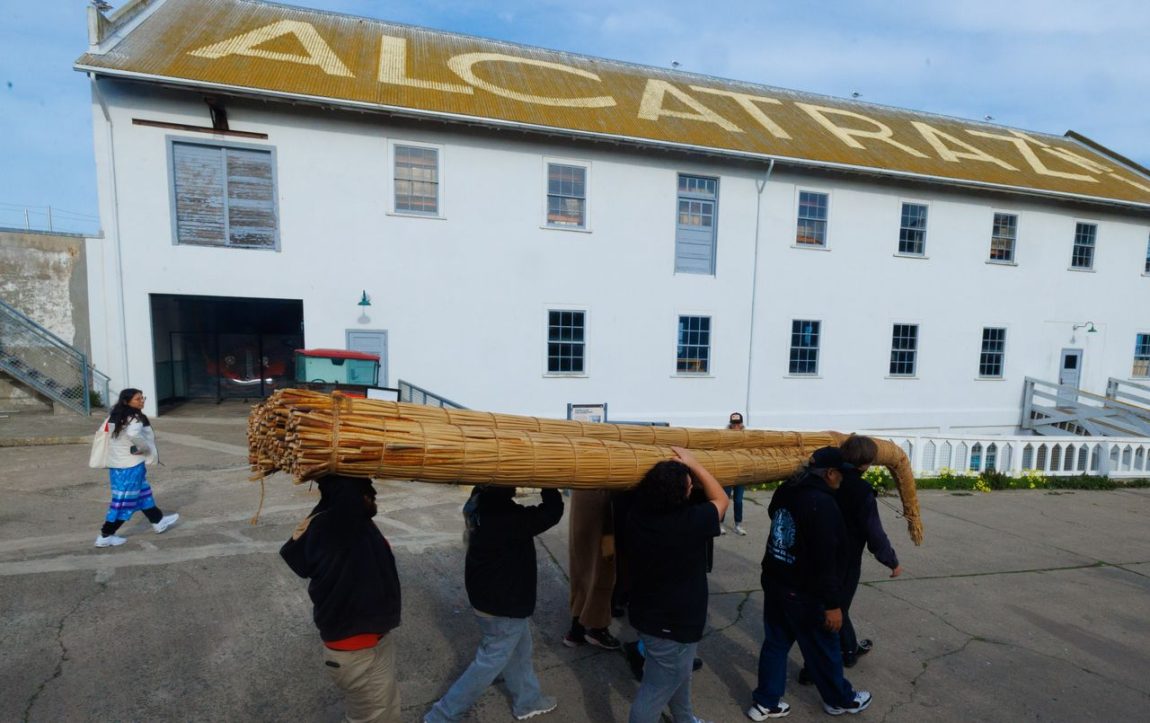
The rush of the water beneath the boat felt surreal, the wind blowing hard against the faces of those who sat and stood on the deck at 8:40 a.m. on the last day of January. As the island came into clearer view, the red paint against the beige and pale building stood out distinctly, symbols of Alcatraz’s Indigenous history. Today, we were coming to the island to once again use the space to spread awareness surrounding California’s original peoples during the Tule Boat Day event hosted by the National Park Service on Alcatraz Island.
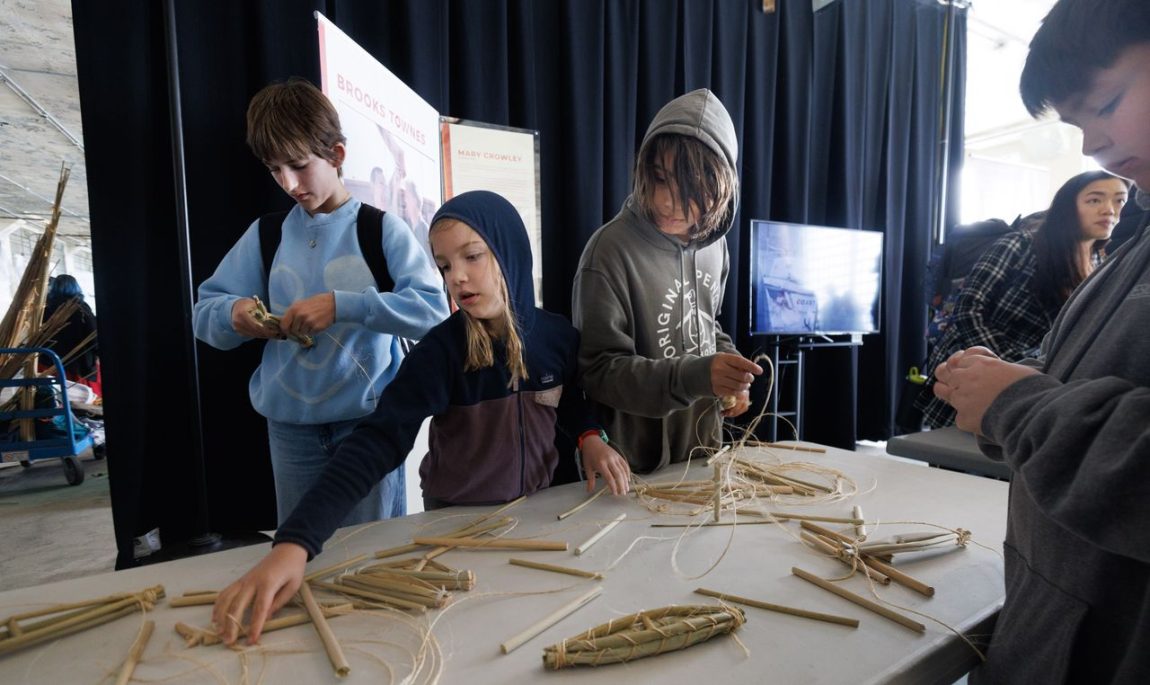
Tribes like the Ramaytush Ohlone, the original peoples of San Francisco, use these powerful reeds to create homes, baskets, nets, and fishing boats, just like the one that was brought onto Alcatraz as a part of the “Red Power on Alcatraz” exhibit. I learned from Mike Bonillas, one of the people who contributed to collecting tule and building the boat that is exhibited on Alcatraz, that tule reeds come in two shapes: triangular and round. Tule reeds are tall and strong, standing around 8 feet tall at their peak. These beautiful plants provide shelter and food, and are a key species in freshwater habitats such as Clear Lake, the oldest lake in California. More recently, the lake has fallen victim to pollution, and many tule have died. Without the precious reeds, fish and animals that need shelter and food suffer and the entire ecosystem is damaged. Tule is sacred not only to Indigenous tribes, but also to the creatures that have always depended on the plant.
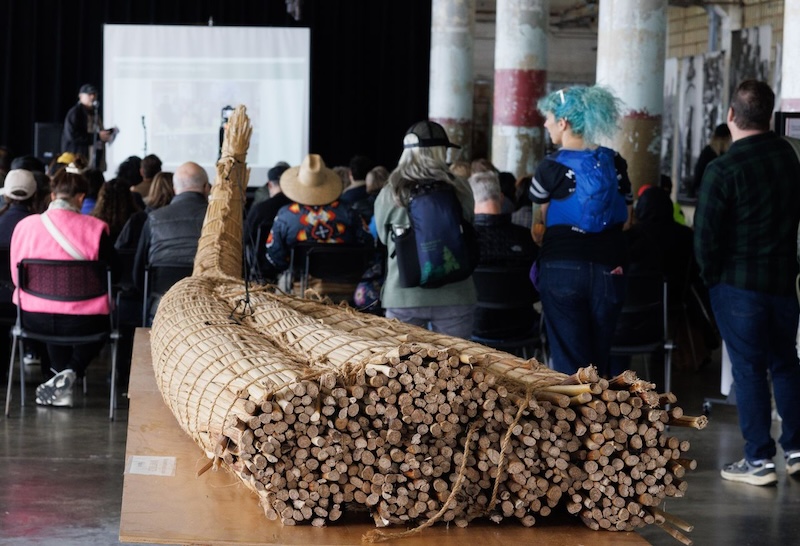
Both species of tule have hollow interiors; however the round variety is more favorable for using when it comes to constructing boats and homes. I was also told that in order to harvest the tall reeds, they are cut near the base instead of pulled up so they can continue to grow even after the majority of the plant is gone. Then the reeds are separated by length and assessed for whether the plant has been damaged or eaten by parasites. The tule is strung up into sorted bundles, transported, and then dried. Only dried tule is suitable to be worked with as it is less likely to snap or break and is sturdier. It was difficult not to feel privileged to learn so much in so little time, and to hear from first-person accounts about where to find the strongest tule reeds and the kind of respect you need to use when collecting it. That respect includes not gathering and collecting resources from areas of other Indigenous people without their consent, and making offerings to the land and peoples. I’m thankful that we continue to recognize and respect the unique stories and lives of California Indian people in San Francisco, and that events such as this can bring us together to share knowledge and build our future together.
We’ve written about reed boats over the years, most recently in the February issue of Latitude 38 in which we share the story of Expedition Amana — a project aiming to cross the Pacific on a reed boat built in acknowledgment of and in accordance with the traditions of the Bay Area’s Indigenous communities. You can read that story here.