

Episode #253: Phil Mills on Restoring Old Boats, With Host John Arndt
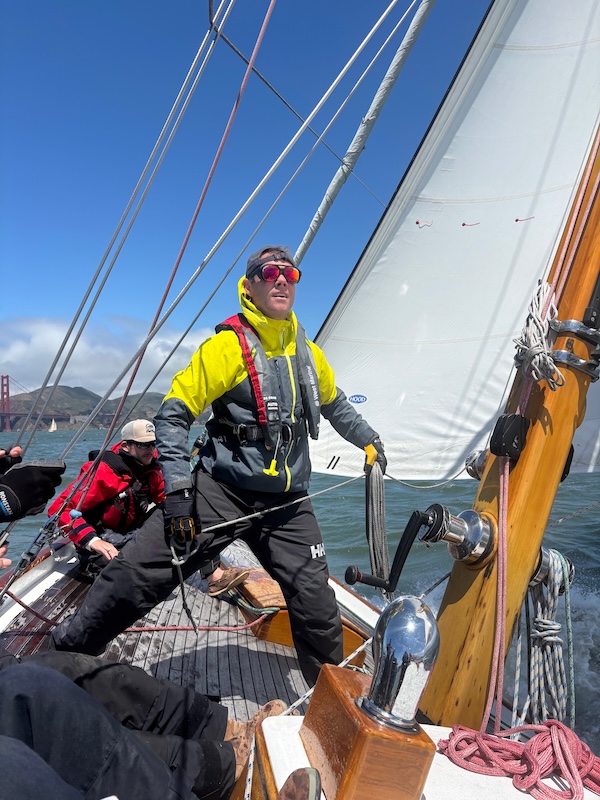
In this week’s Good Jibes we chat with Phil Mills about the beauty of restoring old boats. Phil is a West Coast sailor who loves restoring classic wooden boats and is heavily involved in the Master Mariners.
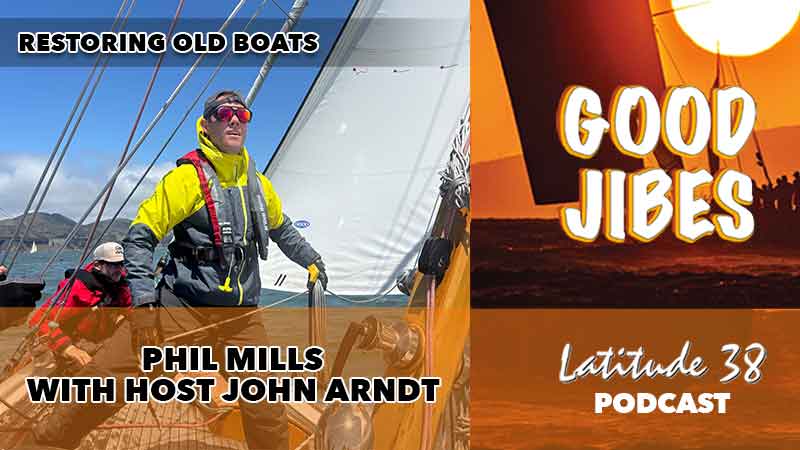
Hear why you should consider buying a cheap old boat, how working on boats brings people together, how to restore boats without spending a ton, how to get your kids to love sailing, and the value of the Crew List Parties.
Here’s a small sample of what you will hear in this episode:
- How you can learn to sail without spending anything
- Why little boats make kids feel in charge and like they’re at play
- How to actually restore a classic plastic boat with zero prior experience
- Why more people should sail the Bay (and how to get the most access)
- What a year and a half of piecemeal cabin reconstruction actually looks like
Listen to the episode on Apple Podcasts, Spotify, and your other favorite podcast spots — follow and leave a 5-star review if you’re feeling the Good Jibes!
Learn more about Phil in ‘Lectronic Latitude — Phil Mills Sails His Arch Davis-Designed Dinghy Home, and Against the Grain: The Master Mariners Wooden Boat Show.
Check out the episode and show notes below for much more detail.
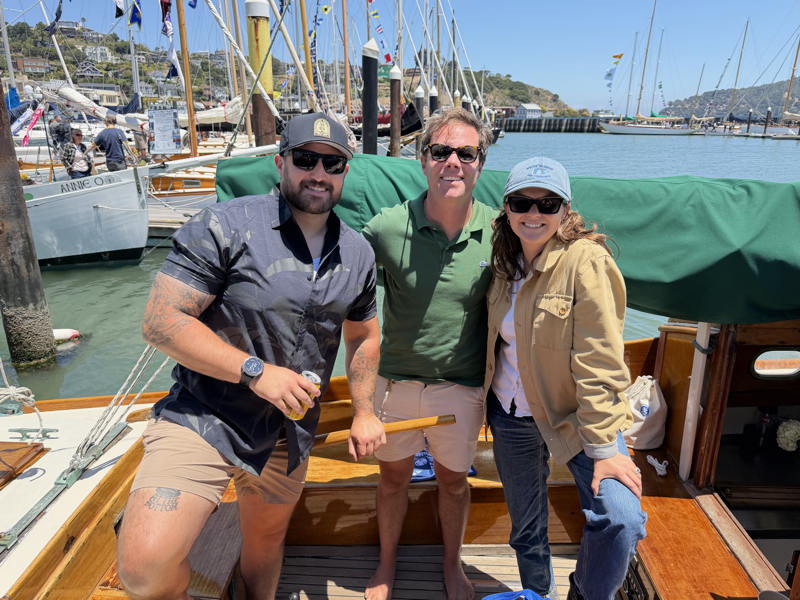
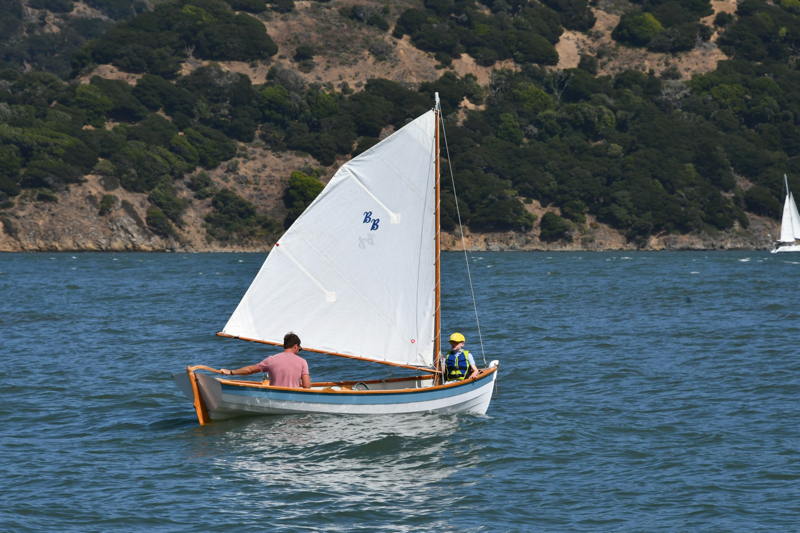
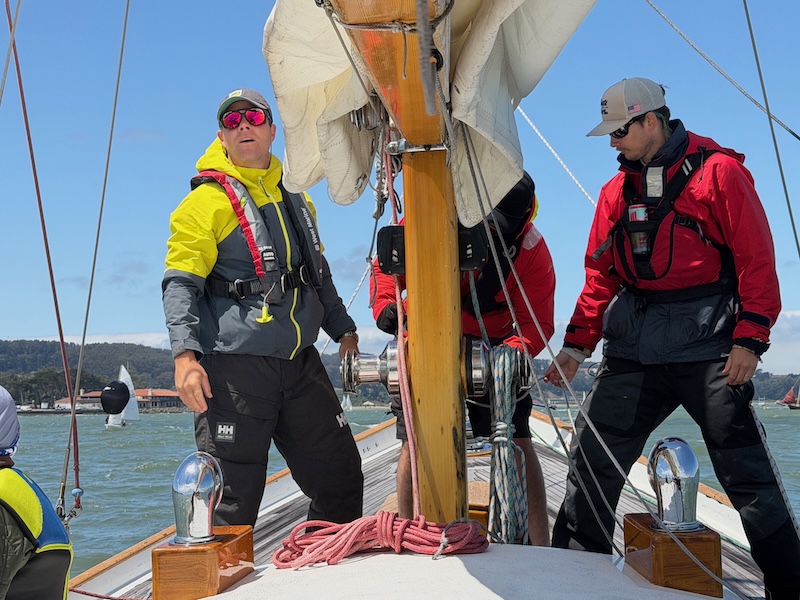
Show Notes
- Phil Mills on Restoring Old Boats, with Host John Arndt
- [0:14] Welcome to Good Jibes with Latitude 38
- [0:38] Welcome aboard Phil Mills!
- [1:36] The Pearson Commander he just sold: how he found it for a few hundred dollars and why letting go was hard
- [4:01] Why the Pearson Commander is actually a perfect Bay boat
- [6:22] How to actually restore a classic plastic boat with zero prior experience
- [9:17] From the Commander to a Dyer Dhow dinghy to a wooden boat
- [13:03] How Phil got into sailing
- [15:51] How you can learn to sail without spending anything
- [19:06] Latitude 38’s crew party is September 10th, check out our crew list at Latitude38.com
- [23:03] Would you like to sponsor Latitude 38? Email us to learn more!
- How to get kids sailing sooner
- [24:29] The Hurricane class sloop built by the Nunes Brothers in Sausalito in the 1950s
- [29:23] What a year and a half of piecemeal cabin reconstruction actually looks like
- [33:13] Why this boat matters! Of 17 Hurricanes ever built, this is the only one left afloat
- [34:33] John and Andrew Eggleston and the restoration of the 1928 P-class cutter Water Witch
- [37:26] How to get kids to love sailing and why to let them solo a dinghy as soon as possible
- [43:09] Why little boats make kids feel in charge and like they’re at play
- [45:01] Letting a six-year-old solo a Dyer Dhow around Ayala Cove at Angel Island
- [46:29] What’s next for Phil?
- [49:43] Check out our Classy Classifieds at Latitude38.com
- Short Tacks
- [50:21] What’s Phil’s dream boat?
- [51:10] Any serious racing Phil would get into?
- Check out the July 2026 issue of Latitude 38 Sailing Magazine
- Make sure to follow Good Jibes with Latitude 38 on your favorite podcast spot and leave us a 5-star review on Apple Podcasts
- Theme Song: Pineapple Dream by SOLXIS
Transcript:
Please note transcript not 100% accurate
00:02
That’s kind of how I feel about all these things, like, how much should I make it the way if, like, in my dreams it would be? And it ends up taking longer than I always think that it would.
00:14
Well, hi everyone. Welcome back aboard the good ship Latitude 38. We’re here to talk with West Coast sailors, learn a little bit more about their sailing adventures wherever they are in the world on San Francisco Bay or anywhere around the world. And it’s all brought to you by Latitude 38, the magazine for West Coast sailors since 1977.
00:38
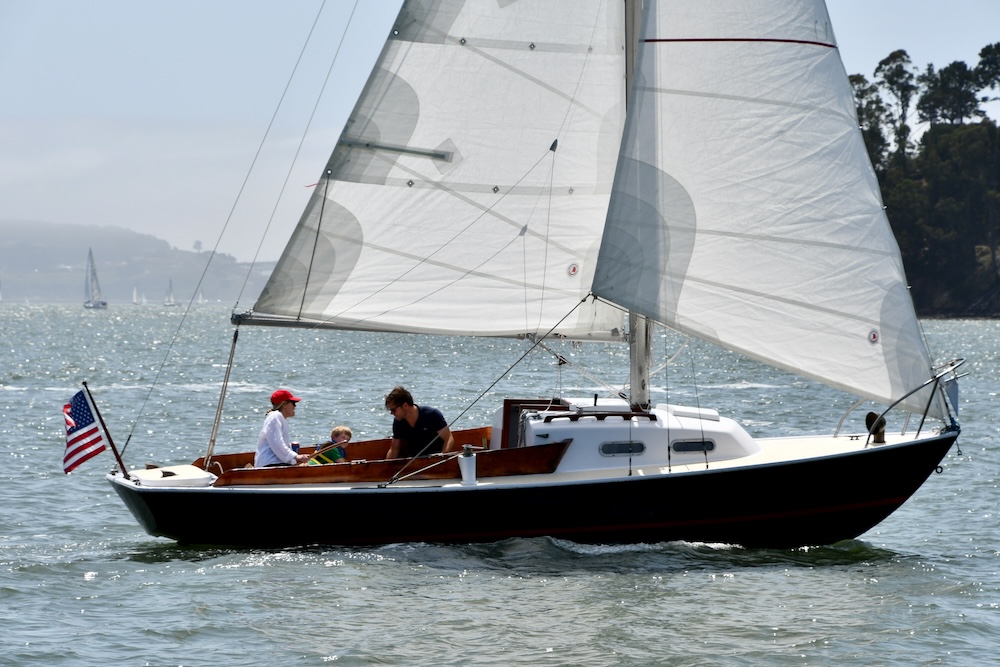
And today we have West Coast sailor Phil Mills, who’s actually we’re talking to in the East Coast in Castine, Maine. uh But Phil, welcome aboard. Thank you so much. Long time listener, first time caller. Great to have you on. Yeah, no, great. Obviously, I met you when I think I took a picture of your lovely little Pearson commander on Raccoon Strait.
01:06
And with that, you said, hey, that’s a great shot. Can we get a copy of that? And we sent it your way. And it was a beautiful little boat. since then, we’ve raced together in Master Mariners, taken a picture of your Penobscot 14. I think that you were sailing off the Black Thune Strait as well. And so we’ve had some sailing experiences together and seen your beautiful boats. So I’d love to learn a little bit more about that. It’s great to have this. It’s so rare.
01:36
to have cool pictures of yourself going sailing. So I was just so happy to have that. It looked so good. And you have a good camera. Every other picture is just from the cockpit facing forward with an iPhone. so it was awesome to see those. I was very excited. Yeah. Yeah. Well, the boat looks so sweet, That Pearson Commander, which you just sold, sadly, right, in our classifieds? I did. Yeah.
02:05
I was reluctant to sell it, but it was time. I mean, if I, you know, in a different world, I would have kept it forever. like, just, but we have two boats. actually we have many, we have a few boats, but we have a 30 footer and that’s a 26 footer. having two boats about the same size doesn’t make any sense. the, you know, and, know, we really just wanted to pivot fully into wooden boat world anyway. and, and, and we just, because the other one’s a little bigger and we have a
02:34
growing family, two kids now. just, and I don’t know, it just seemed like I didn’t want it to sit there. I spent so much time making it beautiful and I was so reluctant to sell it. So I was like, when I was getting people asking about it, I was like, I remember the guy who bought it. I like went over everything else. If you have any questions at all, just call me. I’m here. You know, I just wanted to make sure that he, he really enjoyed it. Cause it, are awesome boats, but they are great. It was time to just, to sort of.
03:03
Wean the fleet down to just a few bucks. Yeah, I understand. Well, the piercing commander, took it. I was going to send you another shot. I don’t know if I did. I was looking at Sam’s docks. There was sort of an aquamarine piercing commander tied up there the other day. And I thought, oh, there’s a sister ship. Yeah, you know, it’s funny because I thought I knew about all the ones in the Bay Area because there not that many of them. There’s one over in Berkeley. It’s like light blue. And they use it for a sailing program of some kind. I mean, it’s on Treasure Island. And then there’s a
03:32
One, another one in Sausalito that’s also like a sky blue color. And I’ve seen him out on the water. We’ve been out on the water together because they have an owner’s group and it’s a great, very active owner’s group of like people who are, and also Ariel’s too, Pearson, Ariel’s and Pearson commanders. It’s a Facebook group of people asking questions, know, sharing pictures, suggestions. It’s a great group. So I always try to keep in, it was keeping in touch with the folks who have them in the area, but because they’re built in Rhode Island, there’s not a ton of them out here.
04:01
ah They’re out back in the bay. But it’s funny because they’re actually perfect for the bay because they’re heavy, they’re full keel, they weigh like 5,500 pounds, which is a lot for a 26 foot boat. So they’re great in a blow. They’re easy to sail. have a big cockpit so you can fit a ton of people. It was my favorite thing about it is you could fit so many people on that boat and we’d have like eight people on there and it was awesome. It didn’t feel too cramped. So they’re perfect for the bay.
04:28
Yeah, I know they’re great boats. Actually, what year was that boat too? You know, I think it was a 64, but I’m not totally certain it was it was. But they they changed them at some point in the 60s to have a bridge deck and ours did not have that. So I know it’s it’s not one of the later ones, but they but it was was like mid early 60s. think yeah, yeah, well we we have a as I think I’ve told you a Pearson ensign from 1966 that’s on the coast of Maine and you know.
04:58
We do a lot of stories, sadly, about boats from the 60s, uh like the Pearson Commander or uh Coronado 25 or all those great plastic classics from the 60s, which are now a lot of them falling into repair or there’s owners that have not been able to keep them up and they’re getting crushed. And marinas are not happy to take them, unfortunately. You know, it’s really hard to find a marina and all of that kind of stuff. and a lot of people, a lot of them get sold for a dollar.
05:28
and therefore they get sold to someone who maybe isn’t prepared to take care of it or upgrade it or knows what they’re doing with it. But I don’t want to get people into trouble buying boats for a dollar because people can get into trouble when they get a great deal. That’s my favorite thing. Well, so that’s what I wanted to ask you is to have you explain that thing so that uh we can…
05:53
because some of these boats should be saved and there are great opportunities for people to get into sailing, but they ought to go in eyes open and be prepared to do what maybe you did. I think, well, and I will say when I got the Pearson Commander, I’d always thought they were awesome. My brother-in-law’s family had a Cape Drey typhoon. I’d always liked the Alberg boats. I’m from the East coast originally. I just like classic boats with classic lines and sailboats that look like sailboats. uh To me, it should look like a little kid drew a sailboat. What would that look like?
06:22
I want my sailboat to look like that. um, like that’s just my, my personal preference. So I wanted to get one of these things, but, I quite saw a couple, but I had no prior experience restoring boats at all when I got, uh, the Pearson commander, but I, I talked to a friend of mine and I was like, this is doable. And I knew there’d be a couple of friends who’d pitch in to help every now and then. And I kind of figured with those sixties boats, the plastic ones, they’re so well built that you don’t have to worry about.
06:52
I think a lot of things you’d worry about with maybe the seventies or eighties boats because they’re, they’re so overbuilt. Like everybody always says, like they use 12 layers of fiberglass when they only needed to use three or whatever. So typically there’s no soft spots on the hulls there. You know, if, if, if the major systems and the advantage of a little boat is there are no major major systems, but if the major things like the rig and the hull are fine and it takes an outboard motor, which you can get for like a thousand dollars new.
07:21
then you know, you’re, it’s not, it’s at that point, you’re like, all right, how, how good do want this boat to look? Cause it’s, can sail it when it’s, when it’s kind of junky, but I really wanted it to look great and like really fix it up. So I went in and I was like, my goal with this was I got it for a few hundred dollars. And I just thought, I want to make this look like the boat that I’ve always wanted. And so I spent like a year and a half learning along the way, watching YouTube videos. People would walk by on the dock and they would go, they’d give like a long low whistle and they’d be like,
07:50
Looks like a lot of work. But then like a year later, people would walk by on the dock and go, that’s a beautiful boat. What is that? And I was like, yeah, but the, uh, but you know, we, I, you know, did things wrong, had to redo them, ordered wrong parts, had to send them back. But it was, I did find some people who could help with some of them, you know, things that were heavier lift, but mostly it was sweat equity. did a lot of it during COVID. Um, you know, I was working from home. I’d take meetings in a lunch break. I’d put in an hour of work. go after work.
08:19
I’d work on it on the weekends. Certainly if I had been doing it full time, it would have gone faster. And if I knew what I was doing originally, it would have gone faster. But I spent a year or so. But my thing is like, it’s also fun to do that kind of stuff. Like what else are you going to do? You know, I mean, like it’s better than scrolling through your phone or doing the things that we do to distract ourselves. So I thought it was fun to work on the boat and I wanted it to look extra awesome. So I put a lot of time and effort into it. And then I did things that were totally unnecessary.
08:48
But just to make it, you know, I was, you know, but I, I, if I could do it, anyone could do it. I honestly, like, I have no particular, at this point I’ve been doing it, you know, now I’ve been doing it for like seven years, eight years, like working, restoring boats, I guess in a way, but I’m still not an expert by any fathomly stretch of the imagination. I’m 100 % amateur. And, but I get to go sailing and like, you know, we fixed up, we got the boat for a few hundred bucks. We fixed it up. We get to go sailing. It’s awesome. The boats.
09:17
Beautiful. It’s fun. And then we did it. And then we did it with a dinghy. did it with, um, we got a dinghy. got a dire down for like nothing. was completely in terrible condition. And we just brought it home on the roof of the car and it sat in the garage for a long time. But then after a while was like, this’d be fun to do after work. I called the people at the Anchorage where they made them and they talked to me through how to restore it. And yeah, it was, they were so helpful. And then I,
09:46
And then now it’s like this beautiful dinghy. It’s awesome. You can sail it and you can row it. Um, and then, and then now we’re doing it. We did it with the wooden boat. You know, I know people really like strip boats down and rebuilt them. And, it’s, I’m not capable of doing anything like that, but you can always find like a boat that, know, maybe it looks a little ugly or, know, whatever needs some, needs some work, but honestly, like I’d rather see those sixties boats get restored and used than someone by like a 1998.
10:15
whatever. I don’t know. just think they don’t make boats like that anymore. Hinkley doesn’t make sailboats anymore. Little Harbor doesn’t make sailboats anymore. If people don’t take care of the awesome class plastic classics, they’ll be like, they’ll go the way of the wooden boats and they’ll be secure fewer and fewer of them. And then because those boats are like those bigger plastic boats are awesome cruising boats. like if I ever wanted to go cruising, that’s what I would do. I’d find like a classic plastic heavy boat, like a little harbor someday when I’m older and have money and I could restore.
10:44
something like that and then go cruise on that. Yeah, yeah. Well, as I there’s lot of great boats out there. And I think that I wish well, actually, I do have some pictures of your Pearson Commander. So I’ll put those in the show notes because it really did. If you were a kid drawing a boat, I think it looked just like that. And you fixed it up like it’s mint and shouldn’t get wet. But actually, I had a lot of fun on it. And I think one of the other beauties for people who are just getting into sailing and buying a cheap old boat is
11:11
You know, if you don’t fix it up for a while, you can bang it around and you don’t suffer all the scratches because the boat’s already old and kind of dinged. so why you don’t worry about the boat? Whereas if you get a brand new boat to learn on, it’s pretty terrifying. Precious about it. Yeah, I know. I also feel like I have the other added problem of I fixed it, so it’s probably going to break. Is my mentality like because I’m because, you know, I’m like, wow, I if I did it, that means
11:41
You know, I do my best, but sometimes I just don’t trust my own work. But so I’m always a little bit more reluctant. But I think that, I mean, that’s the thing. There’s the barrier to entry is not as high as I think people would think it is. I think the insurance thing is tough though. I had a hard time getting insurance for the wooden boat we have, but the, but there are other, there are ways around it. And I asked a lot of people and you you can do umbrella policies. The most important thing is just making sure you can get the insurance for the Marina.
12:11
The actual insurance for the vessel itself, it’s not the end of the world. In my opinion, I’m like, it’s a risk worth taking. If the boat gets lost, that sucks, but I don’t think it’s going to happen. But as long as I can keep it in the marina and I have liability insurance, but yeah, it’s getting harder. It’s funny because up here in Maine, there’s much more of an appetite for older boats. I look out at the harbor and there are some new boats, but it’s mostly older boats. I would say it’s like 40 % wooden boats out there. It’s crazy.
12:39
Well, Maine is Maine is the hub of, uh, you know, wooden boat building and a lot of trades people, crafts people. There’s certainly some awesome ones here in the Bay area and on the West coast. Oh yeah. But I think people who get to Maine, uh, discover a whole nother culture around sailing and boat building. Oh, but even there it’s, changing a lot. Yeah, that’s true. It’s, amazing. You know, backing up because I want to hear more about your, your new.
13:03
old boat. But before we get to that new old boat, I want to actually hear a little bit more about just how you started sailing. What got you into this whole thing up to your eyeballs? You know, I also like I am a late bloomer with all this stuff. I did sailing like sailing camp here in this town in Maine when I was little. It’s you know, they have a number of summer activities that a lot of the summer kids and locals do. And we did a sailing camp here.
13:29
And then I always thought it was fun. I, had family friends with boats. We never had one. My family was never, we never had like a sailboat or anything, but we had family friends with boats and we’d go sailing with them. And I always really liked it, but I was, I didn’t grow up, you know, in a sailing family or with, you know, anything really like that. My dad did a little bit of sailing in his, when he was younger in the Chesapeake Bay, but, then, I did, I did the racing team in college that I kind of didn’t really sell much in high school or anything. I did the racing team in college for like one year.
13:58
Just cause I thought it’d be fun. I wasn’t really that serious about it though. I just thought it would be a great way to do something like that. This was at Cornell. And so we sailed on the lake and then we did some regattas like in Boston Harbor and stuff like that. And then Chesapeake Bay. And then I didn’t really sail much at all until, mean, like in the summers we’d be up in Maine. We’d go out, someone would invite us out on their boat and we’d go sailing with them. And then when I was in my…
14:26
I remember I moved to San Francisco when I was like 23 and I lived in the city and I always was just like, at that point I’d look out at the Bay and I’d see all the sailing and I’d be like, oh, that looks awesome. Lived there for three years, never once got out on the water and then moved to New York city. And when I was in New York city, I met this guy who was like a lot older than me. He was probably like 60, I think, but he, I don’t know. I was wearing a sailing shirt or something and he.
14:54
He was like, oh, do you sail? And I was like, oh, I love sailing, but you know, don’t really get down, I really go that often. And he was like, I have a sailboat on city Island. He’s like, we should go sailing. And I was like, that sounds awesome. His name was Bill and he was such a cool dude. we, he is a cool dude. still around. But anyway, we would go sailing together all the time and like through into November and like when it would get really cold in New York and this was up in Long Island sound. And that just, I think, reign ignited something in me again. And I was probably in my.
15:23
late twenties or something, middle eight twenties at the time. And I just started getting really, really into it. And then I ended up moving back to San Francisco. And when I moved back here, this was 10, 12 years ago or something. I was like, I’m not going to look out at the Bay anymore and not, you know, I just got really, really into at that point. So it’s probably like almost, almost 30 or something. And then I was just really into it. And, um, and so I put a post up on next door and I was like, does anyone need crew for a race? You know, I used to sail a bunch.
15:51
you know, to learn whatever, swab the decks. And a whole ton of people responded and were like, oh, you know, asking me if I would crew on their boats. And I ended up trying out like three or four different people in the city and Berkeley and, and, and, and Marin. And, um, and then I met a guy in, in Golden Gate Yacht Club. And I ended up racing with him every Friday all the time for like years, think like two or three years.
16:18
And that, and at that point I was like, Oh, this is great. And then I, and then I really wanted to get my own boat. And then, and then it sort of, sort of off to the races from there, but it was, yeah, it was like, was, I wasn’t, it was kind of late in life. And the thing I thought was cool though, was like, I didn’t have any friends with boats. didn’t have, you know, being relatively new to the Bay area. didn’t have any people, I didn’t know how to like, I like, what do do? Like, how do you go sailing? If you don’t know anybody, you don’t own a boat. I was like,
16:44
realize and you can crew on any like so many people would take you sailing if you’re willing to be if you’re willing to crew you could go I was like I can go sailing every Friday get a free meal and free beer and it cost me zero dollars and I could do that like all like most of the year I was like this is awesome and I by the time it by the time a year went by I was like a moderate asset to have on the boat you know like pretty decent and then so you know I think that was really cool to be able to just
17:13
to just dive in for free. And then I thought, you know, I kind of would be really fun to have my own boat, you know. And then there was Barriered Entry was priced. So was like, the free boat sounds great. I’ll fix it up. I can do that. Yeah. Well, there you go. Well, I mean, that sounds like the classic path we’d love to try and share. Obviously, I grew up sailing. Parents who sail little boats on the main coast as well. So I kind of had the easy entree, but.
17:41
But I think around the Bay Area, so many people like yourself look out at it and go, how do I get there? And they imagine wealthy people in stuffy yacht clubs that, you know, don’t want to hear from them. And yet the opposite your experience is yet completely different. I think for the most part, people are falling over themselves to get new people sailing and to have them crew. Like most people I know, and now myself included, starting to do some of the beer can races and some of the
18:10
you know, other races, the club races and things. I would love to have anybody come crew on by like, need it, you know, you and whether they’ve experienced or not, it’s, it’s really fun to have someone who’s never really done it before because their enthusiasm for doing something that maybe we take for granted now is the best. And if you have someone who knows how to do a sale and race, and that’s, that’s great too. So I think that the, if you’re willing to just go for it, there’s so many people who would take anyone sailing. And I would say that’s the, I would say the default.
18:39
And there are some jerks that would be like, much experience do you have? Sure. But I wouldn’t want to sail with them anyway. So, you know, no big deal. Well, you know, I guess this is where I should pause and think we’re recording this in the end of July. In the beginning of September, we have our crew party at Spalding Marine Center on the 10th. So anybody who’s listening between now and September 10th, 2026, just in case you’re listening two years from now.
19:06
ah We have our crew party and we have a crew list on our website as well. I think our experience with our 50 years of crew list parties almost is exactly as you’re describing. There’s so many boat owners that want to, that need crew, would love to take people out. And of course there’s loads of people that look longingly at the bay and scratch their heads and wonder how to get there. And I think they run into people like you who ran into somebody else like you and just love to pass it along and share it.
19:37
Yeah, I think it’s, it’s definitely, um, it demystified the whole thing for me because I thought everything seemed like a barrier to entry. Like how do you, don’t know anybody. It’s if I did, they probably wouldn’t want me to come or whatever, or it might be expensive. And none of that turned out to be the case. And then it was the same with owning a boat. I was like, I don’t really know. Like as someone who had not, you know, grown up woodworking or restoring, you know, using
20:04
two part epoxies and fiberglass and everything. But you’re watching YouTube videos and you give it a try, you do it wrong, you do it again. It’s doable. And sometimes I look at my work and I’m like, this doesn’t look like a professional did it, but hey, I’m not a professional. And that also was a bit of a mistake. And also along the same lines, I met a lot of people along the way who were excited and willing to help.
20:34
just to like, you know, maybe they had done something similar themselves and they’re like, oh, let me, let me pitch a hit. I remember at one point I was doing some work on the Pearson commander in, in paradise K I did, and I had it there and it slipped and I was working on it for like a year. And at one point there was like four people working on the boat with me and I like stepped back and took a picture and I sent it to my brother-in-law and I was like, these, don’t.
20:59
Like some of these people I don’t know and some and none of them I’m paying there just like came by and wanted to help and they’re like, Oh, I see what you’re trying to do. You know what? have a thing for that. I’ll be right back. And he’d run down to his boat. He’d bring back a bronze part. And then, you know, so there was so much of that going on and, I’d be like, Hey, I’m trying to repair these companion way catch rails. Uh, I don’t even know what, you know, and then some guy would be like, actually, you know, you want to do for that. He drew me like a thing for it so I could cut it. Anyway, that a lot of people just.
21:29
were very generous with their time and expertise. And that also was, in retrospect, I would do the same thing, but it was very surprising at the time, because I felt like I would have been completely isolated in that. But I have found it to be a very welcoming community. It’s awesome. Yeah, I think that’s the thing. A lot of marinas, it was a place to just go work on your boat off it, and you go down.
21:55
and puzzle these things out. And that’s kind of actually doing a project together, you know, is what brings people together. And sometimes there’s people that prefer working on their boat to actually sailing it, it seems, you know, it is fun, honestly. Yeah. Like the, the, and I think there’s, there is, mean, this is sort of anecdotal, but it seems to me that like in the last five years or so, there is a, a recurrence in interest or like a growing interest in like, in just DIY stuff with like millennials and Gen Z and stuff.
22:25
It’s like you just see a lot of content about it people are getting into it and a lot of people seem to be drawn toward doing hands on things. think probably is some sort of pushback against everything being kind of digital and non-personal and whatever. um it’s a great, if anyone had that kind of itch, and you don’t only want to do house projects or gardening, it’s a great way to sort of exercise some DIY muscles. And I think,
22:55
It wouldn’t surprise me if you saw more people doing it just because that might coincide with that current trend.
23:03
Hey, listen up. We hope everyone is enjoying listening to the stories of West Coast sailors on our Good Jives podcast. We’ve heard lots of great feedback from the 150,000 listeners who’ve tuned in over the last couple of years. And if you have a marine business, we’d like to give you an opportunity to connect with them during upcoming podcasts. If you’d like to be a sponsor of future podcasts, you can email Latitude38 to learn more about how your company can benefit from sponsoring Good Jives.
23:32
No, think that’s of course, it’s also a hope for the marine industry because like a lot of uh industries, there’s a shortage of workers that know the trades. You you could probably go get a good job at a boatyard now with all you’ve been doing. But really, truly boatyards and these types of boats that are languishing are not getting repaired, partly because there’s lack of skilled people. And I think getting into the trades these days, as opposed to working with a keyboard and mouse.
23:59
is really a great career option as maybe keyboard mouse jobs are getting displaced by AI. You know, it’s hard to do a plane or a wood saw, whatever, with AI. There’s a guy, one of the guys, yeah, exactly. So one of the guys, I had someone come and help me rebuild some of the deck frames for the wooden boat we have. And a job that was certainly beyond my ability to do that in a way that was structurally sound, although I was intending to. And also I had gotten to a point where
24:29
piecemealing it was taking me months and months. And there was just, I had to cut away a huge section of the cabin top of my boat. So everything from the mast forward on, this is on the wooden boat on the hurricane, everything from the mast forward on the cabin house was chopped off. And I was rebuilding it over, we were very slow. And, and I was, my friend was helping me and we were making some good price. I ended up having someone come in and help me actually finish it. And he was, he was a wooden boat guy. You know, he
24:58
I can’t remember his name, but he was very skilled and he was recommended to me by someone at Spalding. They’re like, you should call this guy. I’ll come and help you. Um, cause I went over there and I was like, I think I want to get this done before the reins gets too crazy. And I’m like spending two hours a week at this point on it and it’s just not going to work. So he, anyway, I was joking with him. He was saying like, he’s like, yeah, AI is never going to take my job. I was like, that’s for sure. You are safe. The anyone who’s in tech is, you know, screwed. So yeah.
25:27
But it was awesome. Yeah, no, that’s good. Well, I think the same thing we did a podcast a while ago with Terry Castleman. I don’t know if you heard that when he bought a catamaran in Stockton for $2 and also brought it up to Emeryville or Emery Cove Marina and sort of fix it up there with a bunch of friends. I went over to visit at one point and he had his sister, his sister’s friend. There were like six people all in their 20s working on this boat or in 30s.
25:54
And it was just like, wow, look at this, what this $2 catamaran is collected. And they’re all, you know, peeling out putty and taking windows off and trying to fix this beater of a boat. But at the end of the day, he got it fixed up and sailed it to Los Angeles from here. That’s awesome. Yeah. And still sailing it out to Catalina, enjoying it. And he does say he put like at the end of the day, $25,000 into it with some partners.
26:20
But he had three, yeah, he also had three partners. So they bought it for $2. So 50 cents each was what they all put in and then split the rest of it. And yeah, it’s been a good project. It’s funny. There’s definitely, you know, when I was thinking back and like probably how much money ended up going into the Pearson Commander, the most expensive things were like some major vanity projects. Like I got custom canvas covers for everything because I had spent so much time on the Pryke work and
26:47
ah And I’d stripped everything or I knew, you know, ah you like the hand rails and things that were all new, like the other ones had broken off. So I’d like buy new ones. And then of course the new ones, the whole where they go through the cabin top is a different place. So now you have, you have filled in holes repaired, but in a factory molded non skid. So that’s never going to look right. So that had to grind the factory molded non skid off the entire boat was the only option and then put in my own, put my own non skid back on.
27:15
just to do the handrails. That was because I had to new handrails on. know, if I’m going to restore my boat, I’m going to hire you because you sound meticulous. don’t think a lot of people, you really took this thing apart and no wonder it looks so Yeah, the before pictures are great because you’re like, hey, but I was like, I don’t want it to look all wonky. I was like, I’m doing it, as well, you know, I’m just no rush. But they, but I spent so much time on all that stuff that I wanted like, someone was like, oh, if you get cuff covers, you don’t, you know, you probably won’t have to redo the varnish very often.
27:45
Although I don’t mind doing varnish at this point, I do so much of it, especially with the new wooden boat. There’s a lot. But I kind of, that’s kind of Zen. It’s like a rock garden. Um, but the, um, so I got canvas custom canvas cars for everything. And that was expensive. Um, and that was, that was probably the most expensive thing in the whole restoration by like a factor of two X like precision sales did the sales for like $700 for the main. And this was in 2021. So was like, they’re probably more expensive now.
28:13
But still like that’s not that much money. And then I got a brand new outboard from that place in Oakland for like 12, 13, $1,400 or something. So none of it was like crazy expensive. I mean, a lot of the bronze parts added up. A lot of the old aluminum stuff was corroded and gnarly. And I was like, this would look better in bronze. So I got like a new bronze clamshell beds and chocks and cleats and everything. Those were kind of, you know, a few hundred dollars here and there, but.
28:38
You know, Harley wanted to add up the whole total maybe, but yeah, maybe and also like totally unnecessary. Like you don’t need to do custom bronze clamshell vents on the back for the engine laser it is, but looks really good when you do it. Yeah.
28:54
Oh, that sounds great. Well, you know, I guess we’ve referenced this other boat, your new boat, and you’ve moved from fiberglass to wood and got, you you had this 1964 boat and you decided that was way too new, I guess. Yeah. I just wanted to get something even older. Maybe tell us about your new boat, your new old boat. I always wanted a wooden boat. I’ve always been one of those people who’s like wooden boats are kind of like, those are the real boats, you know? But maybe it’s the being, you know, so much time in Maine and all that.
29:23
But I’ve always been racing on wooden boats too. I love wooden boats. so the, the Eggleston’s who are friends of ours who own Water Witch, was a 1928 P class cutter, beautiful wooden boat that they restored entirely. Like rebuilt. They introduced us to somebody who was selling. John had always been an advocate for us to get our own wooden boat. He’s like, you guys should do this. And I always felt like that was a bit of a heavy lift for us, you know, in terms of what we were capable of doing.
29:53
But then he uh showed us that there was this family, the uh Claussons, who were well known for building the Richmond Marina. um Brickyard Cove, right? Brickyard Cove, that’s right. Bert Claussen was a structural engineer and uh his son as well. And they had a hurricane that was built for them, essentially, and partially by Bert Claussen in late 40s, early 50s. I think they launched in like 55.
30:21
But anyway, they had it in their family forever. And then they were looking to like essentially pass it on to somebody. I know we saw the article, John sent us the article in latitude about it. There was this article and there was pictures of the boat and he gave it to he should go check it out. And I was like, all right. And I didn’t know if they were selling it, if it would be expensive or whatever, but then they were really looking for somebody to just take it over and make sure that it didn’t end up in the scrap heap. And they’d raced it actively and it was…
30:49
my wife and I went and checked it out and we’re like, this boat’s awesome. And so we just decided, you know what, let’s do it. Let’s do it. And so we did it. We got it. And then we didn’t really do anything with it for a while. We kind of, didn’t know if it needed much done and it didn’t really, we could have just gone, gone for it. We could have just got it and then started sailing. We could have done that, but we didn’t. Yeah. It doesn’t sound like that’s your nature. I did. Yeah. I didn’t know what I was. Well, I thought it would be like, we’ll do a little bit. No, no, no.
31:19
So I ended up with a family friend of the Claussens who is, who had also grown up like working on that boat and stuff. He knows a lot about it. So he was sort of like the reference. And then we took it out of the water and that in San Rafael at the DIY boat yard, took the rig down, new rigging, redid the bottom. I was like, you know, started to do some stuff I’d never done before, like my own bottom job and some rigging work and took the spars out. And then we got it back in the water and then realized that there was a big.
31:48
Like I was saying, I to cut away part of the cabin, a lot of the cabin because it would rot it actually. so I thought I’ll just see how far it’s going. And then I realized it was going really far, had coughed all of it. And then also we did the interior. re like kind of gutted it a little bit and redid a lot of the galley and the floors and the, you know, the drop table and the V berth and stuff like that. And then, so while I was doing that, cut away the cabin top and then uh Andrew Eggleston and I like,
32:16
relaminated some deck beams for it and I had to put a big Dutchman in where the side of the cabin house was. And this ended up taking over a year and a half because it was piecemeal. But by the time it was done, which was only this March, like just recently, like a couple of months ago, we’d had, you know, we had taken the spars out and replaced them. had, I’ve added a rolling furler so I had a much easier to sail with kids. Cause I didn’t want to like climb on the four deck solo sailing this thing with kids.
32:43
and try and wrestle the jib down in a blow. Not going to happen. plus, you know, so but finally got it sailing again. And now it looks great. We repainted the whole thing. We’ve got it’s re I’ve stripped all of the bright work down to bare wood and redid all that. So now it’s really cool. We had in the boat show this year. And so we probably could have done just got it and gone sailing. But I was like, you know what? Let’s make this awesome. Let’s just go. Let’s just make this the boat we want it to be the boat like like
33:13
That’s kind of how I feel about all these things is like how much to make it the way if like in my dreams It would be and it ends up taking longer than I always think that it would so human frailty that thing. Yeah, it takes longer cosmo But it looks beautiful. It was yeah, it’s a fun boats 30 feet there. I think and I’m almost positive It’s the last hurricane left. They were built the Nunes brothers boatyard. They’re like the folks who built the bare boats Yeah in Sausalito
33:40
they built 17 of them. Ours is number seven. And I know there were two for a while. One was recently cut up in Sausalito. um And so I believe ours is the last one afloat. Certainly the last one sailing if there is one afloat somewhere, which I don’t think there is. So it makes it extra special. It’s a piece of San Francisco history. And that’s even cooler to me because everyone asks about it I get to tell them like, oh, this is built in Sausalito. like, you know, it’s got some importance for the, you
34:09
In the 60s, 70s, you would have seen 17 of these things sailing around in the race. And now you see there’s one. So, and if that, if it goes, then they’re gone forever. The goodbye hurricane class from Sausalito permanently in the history books. And I think that would be a real shame and it sells really well. It’s fun to have, it’s fun. Family boat. It’s fast. Yeah, no, it’s great. I did go to the master Mariners wooden boat show at the end of June there.
34:33
and saw the boat and you did another incredible job upgrading it, looked beautiful. And of course, I talked to you and Andrew aboard, I didn’t realize he’d done so much work with you on it. you know, Andrew’s story is I think also interesting in that he worked with his dad on Waterwich for basically his whole lifetime restoring a 50 foot stone built boat, what 1920? 1920, there’s pictures. Yeah, there’s pictures of him as a child.
35:01
like a young child up a ladder with power tools. you know, they, yeah, he literally grew up, they rebuilt that entire boat from scratch, like as a family. And, and, it’s, it’s, it’s spectacular. It’s, it’s truly, um it’s like one of the most beautiful boats in the bay. And I love that they did that. Yeah. Yeah. But it’s a great history too. There’s like pictures of it at the St. Francis yacht club. I mean, it’s like, this boat is incredible. And yeah, he, he’s a very qualified.
35:30
He’s a good woodworker and just like his dad is. And so he’d, you know, and I’m pretty close to their family. So I didn’t feel too bad constantly badgering him to be like, Hey, what do I do? like, you know, or, know, they, and they have a great workshop at their house. came over and used that. Yeah. Yeah. Well, I felt super privileged to sail aboard water, which for this year’s master mariners are gone. And of course I’ve admired the boat like everybody else on the Bay for years and years and years. And she’s got such.
35:57
elegant lines. mean, just the shape of her is gorgeous. But then you see what the Eglinton’s have done with her over what, 25 years or something. And you go, holy smokes. It’s just such a labor love and, uh a beautiful sailing boat. mean, when you’re sailing her to the motion and the feeling. It’s just so steady. You know, they’re also good example of the kind of people who are very generous with their, with their time and with the boat. They’re always inviting people out, new people. They’ll take anybody out. Kids too. They really like
36:27
love having kids on the boat. you know, we, I remember going, he took my, me and my son and some friends of ours and their kids out offshore, like, like way miles out just, just to do it. And we saw some whales and you know, it was amazing. And he just shared that with every, I think he just, loves, you know, having people, especially people who’ve not really sailed much out on that boat and loves having kids out on it. And I’m always like, I want to be like that when I grow up, you know, I don’t want to just big have a, you know, have that kind of thing where I can just,
36:56
Invite people and especially invite people and kick to kids. It’s such a great adventure to be able to do stuff like that Yeah, well, I think that was the other fun stories I wanted to bring up but remember you were telling me about your kids and taking them out on boats and how a Strategy you had for getting them to love Sailing and being on a boat that had to do with snacks and food and so maybe share that with with our listeners because I think that was really that was a There’s tourists. Yeah, I think um
37:26
There’s, stole this idea from somebody I knew who I used to sail with, but every time I would take, especially when my son was younger and he was like four or five, I would, when I take him out on the boat, I would always bring like junk food or whatever snacks he wasn’t normally allowed to have at home. He could kind of have on the boat. like, so there was like this extra, so it’s sort of like Pavlov’s dogs. he’d be like, we’re going sailing. And then maybe he gets, know, but he never really.
37:53
outwardly said that’s why he liked going, but I just always would indulge him a little bit when we were on the boat. And so he always thought that always ended up uh going well. And then the other was like, a friend of mine told me this and he said, always quit when you’re ahead. if you’re out with this, because you can’t go snag for very long with little kids, it’s hard to do. Some people cruise the world with little kids, but this is my experience. That little kids tend to like, if you’re doing an activity with them, they’re having fun and at some point they maybe melt down and then it’s not fun.
38:22
And then you’re like in, you know, and then you’re getting back to the Marine and everyone’s kind of, you know, maybe there’s somebody crying and you’re like, all right, you know, whatever. So it’s like right when it’s perfect and it’s going really, really well, turn around and go home, call it a day. And, they will associate that really positive memory, right. Rather than the last thing that happened, which might be like a meltdown or whatever. So that’s especially when they’re a little, so we’d always like try and keep it short and sweet and like, make sure that if you sat like, try and call it right when everyone’s really having fun. And then the last one was we.
38:53
Also, always made it like felt like a privilege to go. So it wasn’t like, you’re going sailing. Whereas like, Hey, you know, if you’re, if you’re well-behaved, you do, you know, whatever good report at school, like we’ll go sailing after school or something that always phrase it as a treat rather than like, this is what’s happening. Um, but the thing that really, I think helps, well, at least with my son, the thing that really turned for him, and this was very recently, it was once he got to actually sail his own little boat, like in a camp or something.
39:22
it unlocked something because still, even if it’s fun as it is bringing them out on big boats, they’re not doing it much themselves. Even if you let them steer and things like that, they’re not in charge. They’re still under the control of the grownups, but they’re out on an Opti or a little or Dyer Dower, whatever. That’s them. They’re on their own. They’re in freedom. You know what I mean? And I think, and he was like, this is what I’m talking about. he really liked that. Now I’m the captain. Yeah, exactly.
39:48
No, I think I gotta write those down because I think those are just great strategies that I think, you know, the junk food, right? Like at home you can’t have this stuff, but when you get to the boat, it’s you know, it’s like, my gosh, well, it’s all this candy down here. I how that got there. Well, let’s have it. Yeah, no, so the road is always a reward and not exactly. Yeah, no, that’s that’s a great thing. And I think so many people I do talk to, you know, my age or whatever who had kids and say, well, my kids didn’t really take to it.
40:19
And you know, think what was it? think so. I mean, when I was a kid, my parents took me sailing and I fell in love with it I was able to get my own little turnabout in Maine is the little boat. yeah. Yeah. And then I had my freedom and my brother and I had our freedom to go do that. But so that was a big, big thing. But but I think also these little ideas of just making sure you leave when they have fun. And I got to say, listening to that in my if my kids listen to this, they’ll say, oh, no, that wasn’t you, Dad.
40:47
You were cold and miserable by the time we got home. but especially plans are always. Yeah, I mean, it doesn’t always work is the other thing. I mean, there are definitely times where it ended in it ended in tears and acrimony. But, you know, I think, you know, for the most part, I try to make it, you know, when he was little, he stopped and like dress up as a pirate and stuff when you’re on the boat anyway. So you’d have like a cutlass in one hand and a flintlock in the other. That sounds great.
41:16
Yeah, good. So are your kids sailing? Well, so you also built a little boat, right? Was it a Penobscot 14? You said that that was well, we didn’t build that. Yeah, we just the boat. We the only one that we really I did. The only boat I built was a like from scratch was I built my daughter, who’s 18 months old, a four foot boat. That’s a that I put wheels on. It’s a wagon. I’ll send you a picture of it because
41:45
ah I spent about a month building it. I just looked at like a lot of how classic dinghies were built and I was like, I’ll make it look just like that. You know, with like, you know, the, you know, all the, the, the gunnels and in whales and the breast hook and the, you know, raped transom and everything. And I varnished it and painted it with Marine paints, a real little dinghy. I wouldn’t try and float it because it’s not cocked or anything. But, so I built my daughter a boat wagon, which we tow her around the neighborhood in. And that’s awesome.
42:12
That’s a really funny little thing. And then we have the little dinghy that we rebuilt. it’s, um, we spent like a year doing that. The Penobscot, we did a little bit of work on it. We repainted it. We re varnished it. put new hardware on it. Um, but didn’t have to do much to it. That one I impulse got because it was, I think someone was selling it up in Rio Vista or something or Benicia. And I just thought, Oh, this thing is awesome. And it’s like, yeah, 14 feet long. can row it or sail it, stick it in the garage.
42:41
I’ve used it in, um, tomorrow’s Bay and, uh, Lake Sonoma and, even in out on the Bay, like you saw, went out and sailed it on there. Yeah. I mean, it’s like a lapstrike little boat. It’s, it’s pretty awesome. I love little boats like that. There’s something really, I don’t know, sailing on a little boat is just kind of the best. Yeah. Well, as I think that’s another challenge for sailing, because I think so many people, obviously what advertising is all about sailing is big boats.
43:09
And people don’t get to start in little boats. My kids who grew up in Maine a little bit doing small boat sailing, but we have a bigger boat out here and they didn’t like it as much. They weren’t getting wet. The splash wasn’t hitting them as much. It was not like you’re rolling like in the snow in the winter. You know, kind of play and it’s playing. there’s, it feels like lower stakes. I took my two nephews out sailing on a laser yesterday afternoon and one of them’s five and the other seven and they loved it.
43:38
And like we were getting wet, there was like a water in the little, you know, little in the boat and they were getting splashed. you know, I was like, it’s like, even if we ended up flipping this thing over, like we have life jackets on, the water’s not that cold, we’ll swim. And uh they had so much fun because you’re not going that fast, but you’re so close to the water. really they just, they really, they were like, let’s do it again, again, again. So that, think they probably enjoyed more than getting to go out on like family friend of ours was like a beautiful big New York 32.
44:08
That’s great, but they love the laser. Yeah. No, I think that’s, I mean, I do remember as a kid too, I was sailing around in turnabouts in a 420 in little boats and my dream boat someday, if I could have it, would be a Ranger 23. uh And Robin Lee Graham had been sailing around the world on his Columbia 24, I think it was. And, but when you’re little, um that seems achievable and approachable and the big things are.
44:34
frightening. There’s a lot forces and pressure when you’re in a 40 foot boat or a 30 foot. And all the forces are just way bigger than you are as a kid. And so it’s intimidating, I think. Little boats are toys. And you get to be, you know, there’s no scenario in which kids are in charge, or even remotely in charge of bigger boats. And when you put a kid on a little boat, they can be pretty young. And they have full autonomy. I think it’s really good for their self confidence.
45:01
It’s kind like when they learned to ride a bike and you just get to the first time we we towed our dire doubt to angel Island and we let my son sail around on it in Iowa Cove on his own and he was six. And, uh I was reluctant to, and I thought, well, worst case scenario, there’s people here with dinghies. just hollered someone and we’d go out and get them or whatever. was playing through all the disasters in my mind, the fact that he wanted to, um, I thought I should let this happen. I should let him do it.
45:30
And he sailed around in Iola Cove on his own. And uh I could tell like the way he looked so serious. Like he was, I was like, oh boy, this is really good for him. So I was glad I overcame my parental fear. was like, he can do it. I’ll be fine. Yeah, no, that well. And Iola Cove can be squirrely. The winds swirl around in there. It’s there. The boat’s everywhere. He could hit one of them. Yeah, I know exactly. Aim for something cheap. that way. Yeah, don’t hit that gold plater. Yeah.
46:00
Yeah, no, well, that’s awesome. Yeah, I think that too, when a kid filing a dose, it just gets it enough that they can sail off on their own. And it’s just such a treat for a kid. So you’re sailing a laser yesterday and now you’ve got your hurricane here on the bay. What’s your sailing life like today just to go sail? Like have any like plans to cruise the Delta or what are you going to do with the hurricane? I think with the hurricane, we’re going to do the Belvedere Classics.
46:29
And we need crew because I don’t have anyone, but I registered for it. So I want to do, I want to race it. Um, but I don’t want to make that the primary use of the boat. Uh, but I think it’d be the thing I’ve realized now as I life gets busy with having little kids and everything is like the advantage to racing is it gives you a hard excuse to use the boat. You don’t wait for the opportune time. You’re like, Oh, we’re the race is the 22nd we have, we’re going.
46:53
So that’s nice. ah And because I’m not super, I’m not a professional, I don’t care if we don’t win. And if it’s like the wind, if the weather’s terrible, we’ll just, we’ll call it, who cares? So, but I think we’ll try and do some racing for sure. I would love to get it a little bit more dialed in so that we can do some weekending on it. I think it’d be really fun to do. I was picking your brain about this when we were together about where we could go and find anchorages in the Bay. Cause I think, you know, one thing that I’m not,
47:21
You know, and I think many I think some people know a lot of this information But you know, know a couple of them but there there are places as I’m learning now that you can cruise around in the bay and Fabric and do it and have a good time some friends of ours told us they did they cruise to South Beach in the city then they went up to Benicia they spent a weekend in Benicia which is like the dealt not not as far as the Delta so I’d love to get it we don’t have a head on the boat or anything like that, so it’s gonna be hard to
47:46
cruise it right now, but we’re going to build one. We’re going to retrofit the V berth a little bit and then get the galley dialed in so we can do some fun week ending. think with the kids, maybe next year, which would be fun up here. We’re doing, um, I have some friends with wooden boat, a wooden boat in New York 32. I’m going to do one of the, uh, the, egg mug and reach race. do it. It’s like 200 wooden boats to that thing. It’s crazy. Like a hundred, don’t know, 104, I think did it. 104 wooden boats last year. So we’re to do that. And then we’ve got, you know, we’ve got, there’s a laser down on the beach and
48:15
We have a sea sprite now. Our family finally owns a sailboat. We have a sea sprite we bought in 2020 and uh that’s a fun boat. Also built by Carl Alberg who built the Commander. I call it the toy boat. It has nothing but sheets and halyards. There’s nothing else on the boat. It’s got a mainsheet, jib sheets and halyards. If you take people sailing, there’s no like my… um
48:42
My sister-in-law always calls it, she always gets yelled at to verb the noun and she never knows what it means. Verb the noun. And she’s like, what’s the noun? What is verbing it? You know, it’s like, you know, slack this or blow the thing or it doesn’t know. So you don’t have that problem with the sea sprite because there’s only one thing to grab onto. And, um, it’s a, it’s a very neat little boat to sail. again, you know, no systems, no, uh, no electronics, no, uh, spinnaker rigging. So yeah, we’re mostly, you know,
49:10
What the little kids were mostly just day sailing now, but I think as they get a little older, it’ll be fun to do some excursions. Maybe up here in Maine too. Maybe one of my things I’ve always wanted to do is spend some time cruising the Penobscot Bay. And I’ve heard that you could spend five lifetimes doing it and never run out of new things to do. Yeah. Yeah. No, the main coast in general from, it’s longer or as long as the California coast, but it’s, of course, lots of nooks and crannies. That’s because of all the little tiny coves and islands.
49:38
It’s a really amazing coast. He can do that forever.
49:43
Hey good Jibes listeners and Latitude 38 readers. Have you looked in our classy classifieds lately? It would be impossible for us to know how many boats have sold to new owners over the last 45 plus years of publishing Latitude 38. But we’re sure they have helped countless people realize their sailing dreams. Every month there are new boats listed that will fill someone’s sailing adventures. If you have a boat you want to sail or looking for that next boat in your life, the pages of Latitude 38 will surely have something to suit your fancy.
50:13
Pick up a magazine at a local marine business or visit our classy classified pages at latitude38.com to find boats, gear, job opportunities and more. Then tell us your next sailing story. Gosh, well, thank you for all of this. really appreciate it. I have a few short tacks or maybe some quick questions for it, have you got a hurricane? Do you have a dream boat in your life? What would you want to get if you’re
50:41
I think I would like a Sparkman Stevens y’all. Yeah, a y’all. Okay. Yeah, I think or maybe Concordia. Yep, Concordia. I love that. I think like that would be the ultimate boat for me. Yeah. They are so cool. Well, of course, there’s beautiful one at the Wooden Boat Show this year. And uh yeah, and they’re a classic that deserves and gets restored. You probably see them right there in Egomag and Reach, I’m sure.
51:10
They have their own class. There’s so many of them in the race. Wow. That’s amazing. Yeah. Great. And so you sound like more casual, but any more serious racing you’d be into or you’re, you’re, you’re a recreational sailor. I did a lot more racing like a few years ago. I I’ve done, I it’s funny. I did some of the offshore races and I did, um, you know, light ship Farallon’s and, um, uh, Spinnaker and some of the other ones. And, and, and as well as like, I used to do as many Bay races as they had.
51:40
But now I don’t race as much. One of the reasons is just time. Like I don’t have as much time. And then if I own my own boat now and then I don’t race it aggressively, because I don’t really, it’s not set up that way. And it’s not really like the goal. If I get the opportunity to go sailing, let’s say I have a weekend where it’s like, you I’m not, get off parent duty and I don’t have any major other things going on. And I’m like, I can go sailing this weekend. If I use my chit to race, that means I’m not using my own boat.
52:09
And so it’s like, I have to be a little more judicious with what I can do. But I think it would be fun. Although I think as I’ve gone through a bunch of races, nothing major, some of the smaller offshore races, I think I want to do more cruising and less racing. I like racing, but I’ve done it enough, I think. I don’t know. I mean, I’m not like a major racer, but I’ve done it enough to know. Like it’s fun and I love doing it, but…
52:38
It’s different to me if you just get to point the boat where you want to and rather than where you have to. Yeah. Oh, that’s it. Yeah. Well, good thought. Yeah. But I agree with you too, that we like signing up for races because it makes us use the boat. you know, there’s so many, I do the Friday nights out of Corinthian and there’s so many nights people say, oh man, it’s so windy and cold at the bridge and da da da. Gosh, should we go out? And then we go out and it’s beautiful. And, and you go, if we hadn’t signed up.
53:05
Uh, we wouldn’t have gone out and that’s the thing is a lot of times you first. The first race we did on the hurricane was a Friday night race, a Corinthian, a month or so ago. And the forecast, was honking. It was crazy. And I was like, I just finished doing all this work. And I was like, the boat’s going to break. I was like, we’re going to break the boat. And, and, um, and my friend Andy who came with us was like, how about this? We’ll go out. We already signed up for the race. We’ll go out. If it’s too windy, we’ll just go back.
53:32
you know, and no big deal and ended up being perfect. The weather was phenomenal and and so glad I didn’t chicken out because I was so nervous and everything was a snap off in my hands. Yeah, well, I can’t tell you how many times that’s true. You just go or midwinners. You sign up for a February midwinter and oh, there’s a front coming through. It’s going to rain. It’s going to be miserable. We did have one like that this winter, but but it was so fun. It was just a blast to be out there.
53:59
And everybody came back from this stormy, rainy day of racing and was like, wasn’t that awesome? Great stories, you know? Yeah, no, really, really, really fun. How about just the Bay Area here? Of course, you are new to sailing. We’ve talked a lot about just getting involved, but why get out there? You obviously have completely embraced the sailing world and life from a non-sailing point of view. And you live in the Bay Area. And what changes getting off the land and under the Bay? Or why should more people do this?
54:28
think it gives me heaps of gratitude, which I think is something that everybody can use, myself included. I just think you get out there and you go, oh my gosh, we live here? This is crazy. It’s unbelievably beautiful. The Bay is huge. You forget about everything else. Someone once said that like monotasking is as good as meditation and surfing is like that. You can’t do anything else while you’re surfing.
54:56
Often that’s the same with sailing. can’t do anything else. You’re only doing that thing. And so I find it to be very restorative. even if you go out for an hour, feels like… And then if you get to do something like I did a few times, an overnight on the mooring in Angel Island, that felt like a vacation. It felt like we were a world away. felt like it was like, we came back and was like, what did we just do? It was amazing. And I just think like, and then you just realize where you live is…
55:26
is this big, gorgeous, like, oh man, it makes you feel, every time I’m out there, like, it doesn’t get old. think it, you know, walking around your neighborhood all the time, you can get a little bit like, it just feels like you’re on repeat, but then you get out there and every, it’s different every time. And you just have, to me, I mean, it’s just like, everybody always talks about, wow, look at that, look at the fog coming over, the beautiful sunset, whatever it is, just, I’m just constant blabbing of gratitude.
55:50
Yeah, yeah. No, that’s, that’s a great way to describe it. And I gotta say, feel the same way. And so lucky to be able to get out there. And obviously you love to share it. And so many other people love to do it too. And so, and I always think of the 8 million people in the Bay area that, you know, I was writing about the other day and thinking, you know, it’s kind of like national parks. You, kind of need a trail head and that’s what we’re short of in the Bay area to get into the whole, you know, like there’s these little docs or marinas or launch ramps.
56:18
But there aren’t many of them aren’t enough of them and uh yeah those trailheads really give you access to the biggest park in the Bay Area, which is the Bay Yeah, I think I don’t know what it used to be like but it seems to me the access to the water is limited and Hard to find if you don’t know where to look And I think it’d be cool if there was more, you know community boating things like you can I mean, I don’t know I think they used to be I don’t know there’s a
56:47
place down here not far from where we are where they, you can rent wooden boats. It’s in a Buck’s Harbor and they, they, they, have classics to rent because they want people to get the feel of, they want people to try out. They’re like, how are people going to get into wooden boats if they’ve never sailed on one? So they have like a hair shop. They’ve got like a y’all over there. They’ve got like a bunch of classics like for rent. Yeah. Cool. That’s very cool. Yeah. I love that. Yeah.
57:12
No, that’s great. Well, in San Francisco Bay, can go to Spalding where they have little pelicans that they built there at Spalding Marine Center and kids can sail in their pelicans, which is a local design here too. it is. know. Did they let that is that open to the public? I mean, I don’t think you can walk up and rent a boat and go sailing. I think you have to be in the camp there. the program. Yeah, in a program. still cool.
57:33
Yeah, I think there is. Yeah. And I think there is, there’s a lot of great community programs and a lot of great programs that help get people in the water. And of course, a lot of public doesn’t know how to find them. We have, we have some on our website, but, but there’s more, more needed. And of course, and also battle just to preserve what still exists today. I mean, some of it’s going away. so it would be cool if there was something like, you know, cause I know that San Francisco Bay can be hairy and you don’t want to like have people go out and, know, getting 25 knots of wind, but
58:03
know, Richardson Bay is pretty big and it, you know, and with a shallow draft boat, you could kind of sail most of it. And I think it would be really cool if there’s just a, you know, more of an opportunity for people. But it’s, you know, it’s hard because as waterfronts get developed, there’s less like public access or where would you even keep the boats? You know, it’s like hard to, you know, it’s hard to do, but yeah, I think there’s, there’s still enough people though. I would say if anyone really does want to get into it or doesn’t know where to turn. Ask like just, you can find someone to crew with. And that’s a great way to start is like, go, just go racing.
58:32
Or if you’re new to the city and you’re like, oh, you know, whatever, just like a million people will recruit you to crew. You will be able to sail all the time. You can do every single race of the year. Like if you wanted to, like, even if you’re an amateur and like don’t have much experience, you can race every Friday night, every Wednesday night. You could do the mid winners. could do, I mean, like you could be like, yeah, I sell four times a week for free for the free dinner and beer. You know, it’s like, you could do it.
58:57
Well, like most sailors actually sail for free. They think sailor is so expensive. It’s only the boat owner that is, but there’s every boat has crew. so the crew are all sailing for free generally. That was awesome. Yeah. So that’s amazing thing people don’t realize. Yeah. Yeah. It’s great. It’s life hack. You just want free dinner. Go for it. Free dinner. Yeah, exactly. Yeah. All right. Well, let’s see. Like last question. You got a favorite book you’d like to recommend? You have a sailing book that… Oh, man.
59:26
or something you’ve captivated you? I did just recently read a chemo it’s called, but it’s the new biography of Captain Cook. It’s kind of a sailing book. um I’m also on my, as what people call their first circumnavigation of the Aubrey Matron series. So I’m 19 books into that. But I think there is an old sailing book by guy named H.A. Callahan, and it’s called The Yachtman’s Omnibus.
59:54
Okay, this I found like a garage sale or something. Oh, it was like a antique store or something. And it is the cool, like the way he writes, he’s a phenomenal writer. He’s written a few books as I Googled him, but he wrote this book about sailing. It’s essentially like a, like a, you know, like it’s informational book for people who are getting into sailing, but written in like the forties, maybe or fifties. Um, but he’s just, but the way he writes, he has a chapter, a whole section of the books about cruising.
01:00:22
But his introduction to it makes you want to drop everything and go cruising. It’s crazy. It’s so good. So I like to leaf through that. So that’s a funny book. uh But then, yeah, I’m currently reading the Mattron Aubrey series, which are pretty awesome. Yeah, that’s right. That’s an amazing series as well. Yeah. Well, there’s no shortage of books on sailing or about sailing, those are, I haven’t heard of the Yachtman’s Omnibus. That’s a new one on us. that’s, we’ll have to share It’s like 80 years old.
01:00:50
It’s out of print, I’m sure. Yeah, we’ll have to go around the uh flea markets and see what we can find one. So, all right, well, great. Well, Phil, it’s been so awesome to talk to you. And I love the way you fixed up these boats and love your little strategies for helping kids enjoy getting out sailing, because I think those are great lessons for all parents. too late for me, but I’ll pass them on to those who can use them. Yeah. I think that’s uh
01:01:20
If I can do it, anyone can do it. Hopefully, the boats stay afloat. Yeah, yeah. Sounds like that. Otherwise, yeah, just go for a swim. So, yeah. All right. Yeah. Yeah. You got to just keep your life jacket on. All right. Well, Phil, thanks so much. And I’ll let you get back to your vacation and or work in Maine. Thanks. It’s good to see you.
01:01:44
Yeah, good to see you too. Yeah, I look forward to seeing you out in your hurricane when you get back here in the West Coast, because she looked beautiful at the Master Mariner’s Boat Show. mean, really, you a great job. uh Yeah, great to have these boats preserved. Yeah, and I’m going to hopefully try get as many people out on her as I can and have an open door policy. OK, all right, sounds good. Well, you’ll get bombarded after this. We’ll let the world know. Good. All filled. Yes. All right.