

James Bender’s Croatian Summer Cruise
A few days ago, Petra and I brought Vinka to Rab. It felt great to be back on the island, especially spending time with Jogi (pronounced Yo-gi) and his family. We’ve been friends for at least 15 years, and as always, Jogi was there to help us get ready for the trip. His knowledge of these islands is hard to beat, and with his help, Vinka is ready for the adventure.
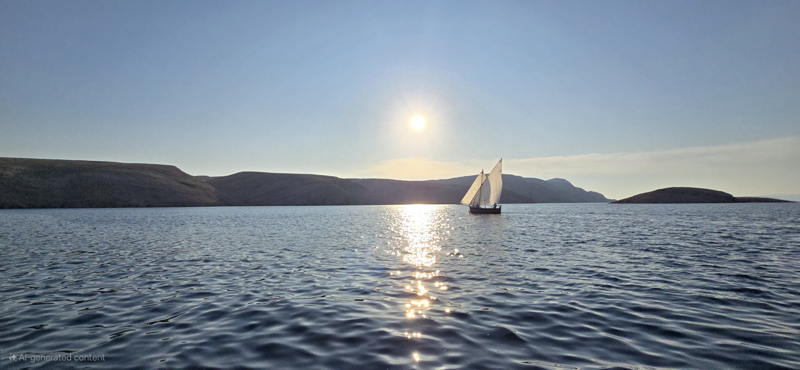
On our way north, we stopped on the island of Pag to visit Maša and our other friends. That’s one of my favorite parts of traveling by boat in Croatia — the friendships scattered across the islands. It feels good to sail from place to place and know you’ll see familiar faces and welcoming harbors along the way. Yesterday, we loaded up the boat and brought her to Jablanac, where our trip will officially begin.
Daniel will be joining us with his boat Špongola. That’s also his nickname. Špongola means sponge in Latin, and he used to be a sponge farmer. His boat is a bracera, another traditional Croatian sailing vessel. We’re all looking forward to the students arriving and the start of the Felix Arba Expedition. The adventure is just about to begin!
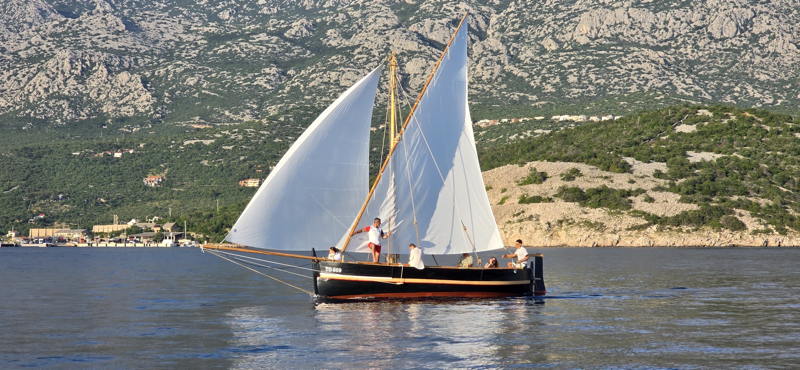
Sailing around the island of Rab on Vinka isn’t just another summer adventure — it feels like stepping back in time. Along this rugged coastline and in the quiet towns tucked away in hidden coves, life feels slower, simpler, and full of tradition. These places have held onto their old ways, as if time forgot them. That’s exactly what makes them so special, and Vinka is the perfect vessel to carry us on this journey into the past.
Everywhere we go, Vinka draws attention. People stop to ask about her — Who built her? Where is she from? How old is she? The boat itself becomes the conversation starter, a symbol of the old skills, traditions, and knowledge passed down through generations. For us, sailing Vinka isn’t just about the destination; it’s a glimpse into the heritage of the Adriatic, a connection to the people and history that came before us.
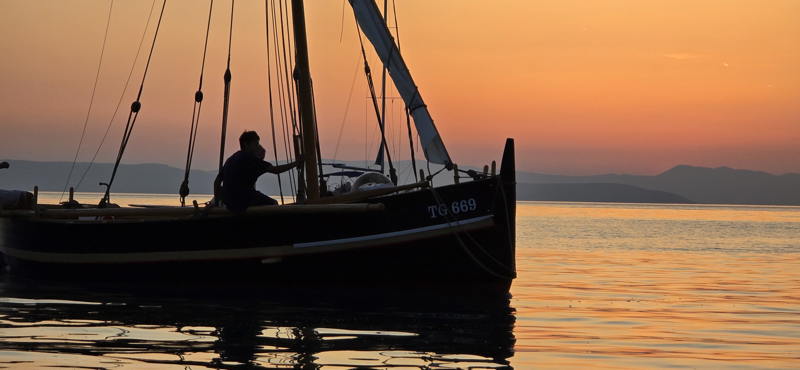
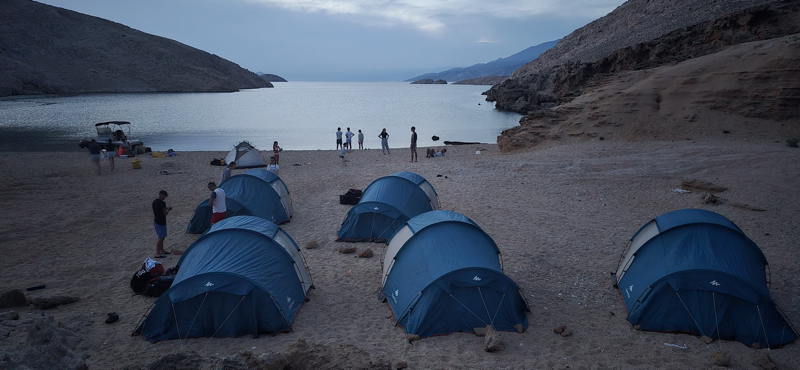
We left Jablanac behind, the little port shrinking on the horizon, and set out into unknown landscapes. Our first stop was Mag Beach, where the water shimmered in the twilight like polished glass. The bay was almost barren — the fierce bura winds had stripped away the trees and plants, leaving the land raw and exposed. It felt as if we had drifted not only through time but space itself. When we set up our tents, it felt more like landing on the moon than camping on the Croatian coast. We waved goodbye to Špongola and Daniel, our sponge-diving friend, who had helped us cross the Velebit Channel.
One of the most powerful moments of the trip was visiting Goli Otok — “Naked Island.” It once served as a political prison during Yugoslav times, a place Tito sent dissenters. Our friend Pato, who grew up on Rab, met us there. He told stories of his childhood and how one of his neighbors had worked as a guard on the island. It was a stark reminder that even in paradise, history runs deep, and not all of it is easy to hear. This is especially true for our group, made up of students from former Yugoslavia who now live in their respective countries across borders that once never existed.
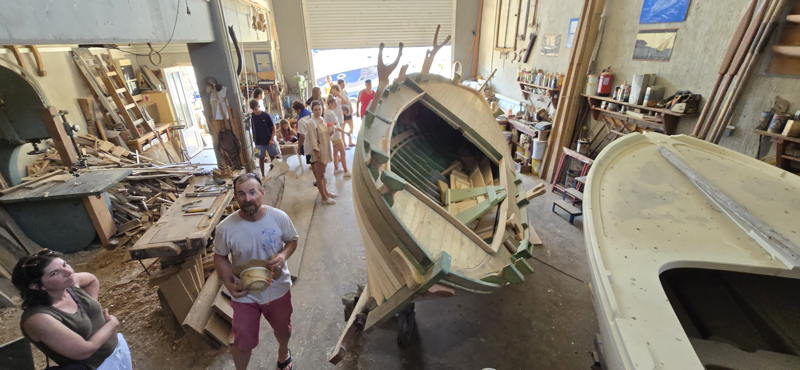
A special moment on Rab was meeting Petar Španjol, the last traditional boatbuilder on the island. He had just finished restoring a beautiful gajeta, a classic wooden boat of the Adriatic. Like his father and his grandfather before him, Petar carries the skill of boatbuilding in his hands — a craft passed down through generations. After a week sailing on Vinka, our students could truly appreciate what goes into building and maintaining these traditional boats. Meeting Petar helped them see that Vinka isn’t just a boat — she’s part of something much bigger, a floating reminder of the hard work and tradition that shaped life along the Adriatic.
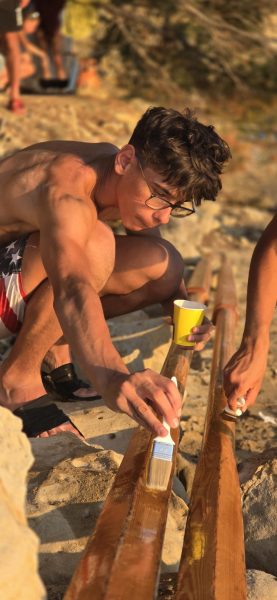
But exploring history isn’t just about looking backward. For us, it’s also about building the future. Our group of students from different backgrounds, and even countries that were once divided by conflict, created their own community — one of peace, teamwork, and shared adventure. In that way, our journey wasn’t only about discovering the past but also about making history together.
This trip couldn’t have happened without the help of so many generous friends and supporters. Thank you to Daniel (Špongola) for being part of our crew, to Lučka Uprava Rab for providing a berth for Vinka and a delicious lunch, to Hotel Ablana and our friend Darko for the warm welcome and solid base, and to Jogi from Sea Kayak Croatia, who guided us around his home island with care and pride. And of course, a huge thanks to all the supporters who made this unforgettable expedition possible.
Captain James Bender is a Redwood City High School teacher who, for the past several years, has spent his summer break running youth sailing camps in the islands of Croatia.