

Challenged Athletes Foundation Brings Sailing to All
Around the Bay Area and along the West Coast, people with various disabilities are taking to the water on sailboats, thanks to the tremendous efforts of organizations such as Challenged Sailors San Diego, Bay Area Association of Disabled Sailors, BlindSail SF Bay, and Challenged Athletes Foundation. Plus there are organizations that assist veterans, underserved communities, cancer survivors, and people living with MS. No doubt there are other groups we haven’t heard about yet.
Challenged Sailors San Diego provides free adaptive sailing for people living with disabilities. The organization has been running for over 10 years with its fleet of small sailboats, removing the barriers to sailing for people with a wide range of disabilities.
Similarly, Bay Area Association of Disabled Sailors (BAADS) aims to make all aspects of sailing accessible. To this end they offer weekly small-boat and keelboat sailing. The organization also hosts and participates in a variety of regattas and informal races both locally and internationally.
Previously known as Marin Sailing School Program for the Blind, BlindSail SF Bay provides persons who are blind and visually impaired the opportunity to learn the fundamental skills of sailing and the basic principles of seamanship. The objective is the same as for sighted sailors: to harness the power of the wind and to experience all the challenges and rewards of sailing.
The Challenged Athletes Foundation (CAF) provides free adaptive sailing for people living with disabilities. Their mission is to provide therapeutic, recreational and competitive adaptive sailing opportunities for people with disabilities. CAF’s Christy Fritts shared the following story, which we published in Latitude 38’s November issue.
On a late-summer morning in West Sacramento, flags snap at Lake Washington Sailing Club (LWSC) while first-time sailors with physical disabilities trim, steer and smile into the same breeze the rest of us chase. That’s the Challenged Athletes Foundation (CAF) in action: Remove barriers, and a boat becomes the ultimate equalizer.
CAF launched its Northern California adaptive sailing effort with a two-day clinic at LWSC in September 2024. The partnership is deliberately practical — LWSC provides boats, adaptive setups, coaches and volunteers; CAF brings athlete outreach, support and grant resources that lower the cost of trying a new sport. Since that first weekend, CAF and LWSC have completed six consecutive weeks of clinics and a multiweek instructional course, building a steady pipeline of returning sailors and first-timers who now see the lake as theirs.

The model is simple and powerful. Sessions pair athletes with trained sailing partners for hands-on learning including helm time, sail handling, docking, and the thousands of small decisions that turn wind into a boat’s motion. LWSC offers regular opportunities and membership pathways so newcomers can become year-round sailors, not “one-and-done” participants. Several athletes now sail beyond program days, and at least one has their sights on nationals-level competition. That kind of progression is the point.
A key catalyst is Jim Thweatt, US Para Sailing Team athlete, physical therapist and longtime CAF mentor who helped spearhead the Northern California build. Thweatt worked with LWSC leadership to establish safety protocols, boat assignments and adaptive rigging; recruited and trained volunteers; and shaped a stepwise curriculum that ensures meaningful helm time on day one. He also introduced “pathway plans” for each participant, matching sailors with practice partners, encouraging club memberships, and tracking skills from first tack to first independent outing.
“The boat does not care how many arms you have, if you can see or speak, if you can walk, or where you came from,” Thweatt says. “Any barriers are created by the systems around us. I love helping clubs become more inclusive so more people can feel what a boat can do.”
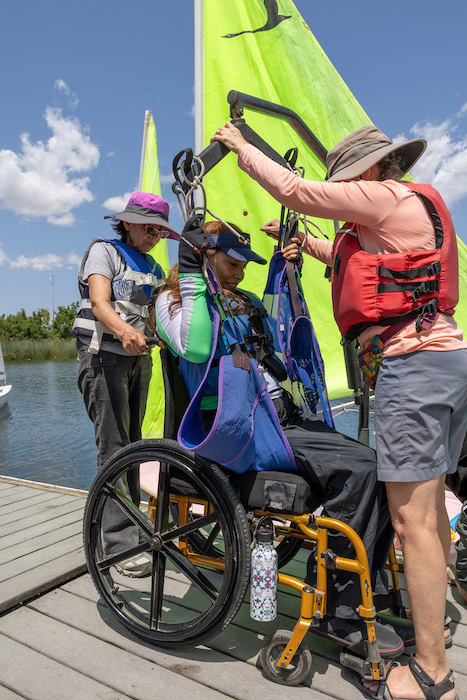
What do participants gain?
Confidence and independence show up first. Tangible wins you can feel in a straight helm, a clean tack, or reading a puff before it hits. Community follows fast. The docks become a place to belong, with peer encouragement and shared milestones that keep people in the sport. Organizers benefit, too. Coaches and volunteers learn inclusive coaching, clubs welcome new members, and local fleets grow more diverse and resilient.
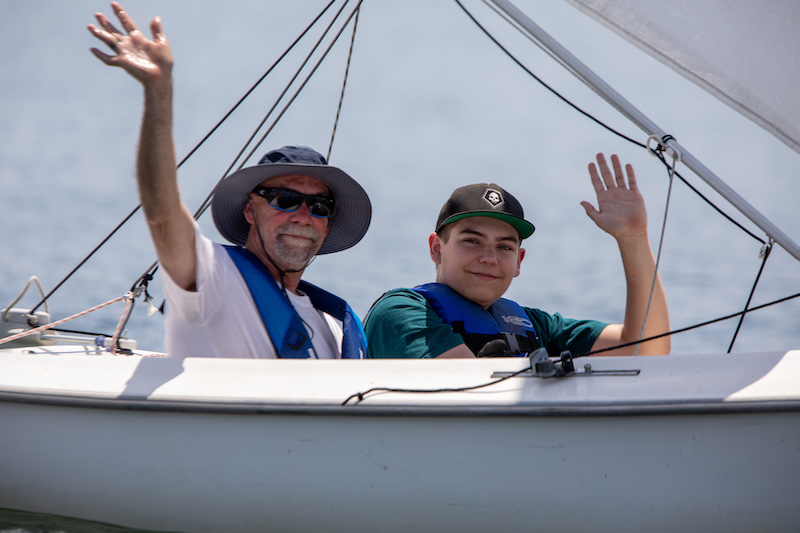
Learn more about West Coast organizations that help people with varying disabilities get involved with sailing: The Heeling Power of Sailing