

The (Sailing) Rose Bowl Converges on Long Beach
University of Indiana’s New Year’s Day demolition of the Alabama Crimson Tide in the 2026 Rose Bowl Game and College Football Playoff Quarterfinal wasn’t the only Rose Bowl athletic event that helped ring in 2026 in Southern California.
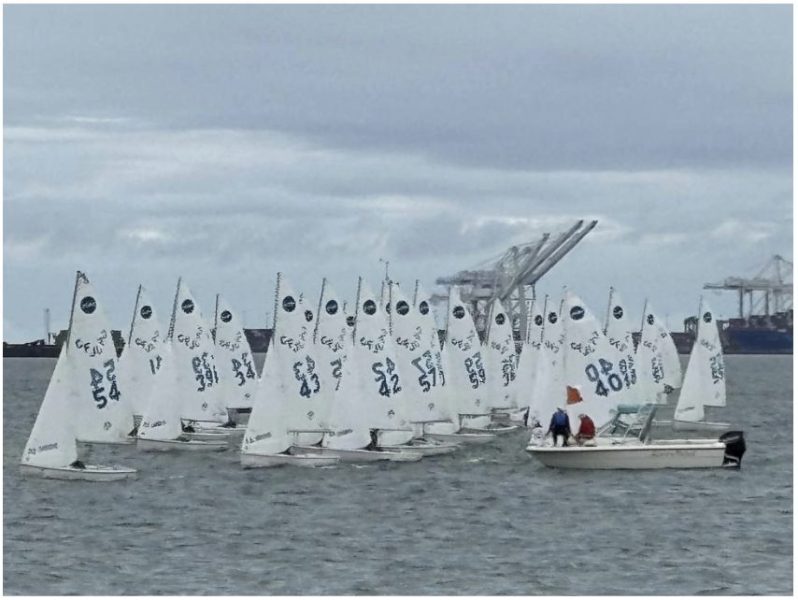
One hundred eight high school and college teams converged on the US Sailing Center in Long Beach (USSCLB) for the first weekend of 2026 to compete in the regatta. The USC sailing team is the official host of the regatta each year. Twenty-four college teams competed, with teams from five of the seven collegiate sailing conferences represented. Eighty-four high school teams competed across Gold, Silver and Bronze fleets. The regatta is among the largest collegiate and high school regattas in the world annually.
“Racing took place during a weekend forecast for rain and light to moderate winds,” the USSCLB press release says of the regatta. “Sailors braved the elements and experienced light rain Saturday afternoon and Sunday morning before the racing. A southeasterly breeze ranging from three to eight knots presented some atypical Long Beach conditions.”
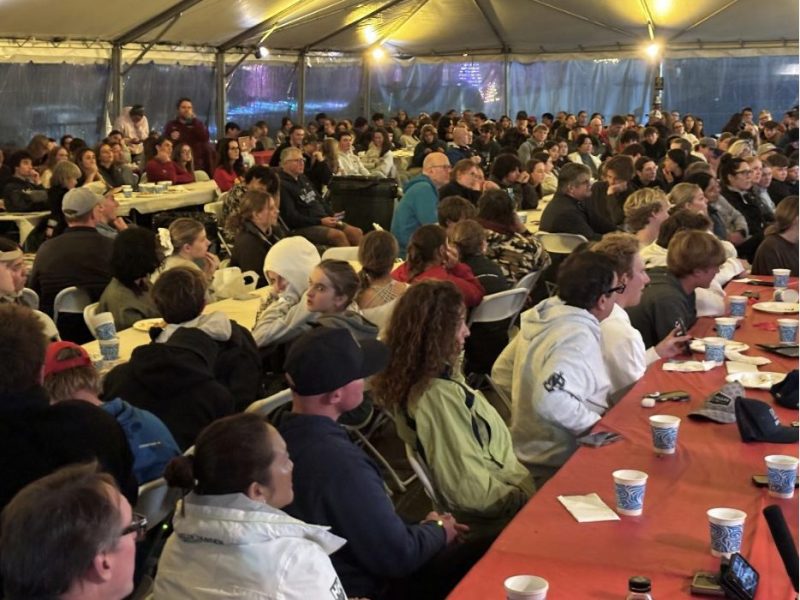
One of the longstanding traditions of the Rose Bowl Regatta isn’t even an on-the-water tradition. Each year the regatta hosts a Saturday night dinner in the Sailing Center. This serves as one of the biggest annual recruiting events for college sailing teams. The collegiate sailors competing in the regatta speak to the crowd of hundreds of high school sailors about the perks of their school, in both sailing and academic terms. Rose Bowl is such an important recruiting event for college teams that most varsity programs will send an assistant coach, or sometimes even their head coach, to recruit sailors, even if their team isn’t sailing in the regatta itself. Often during the regatta, college coaches at the event are just as concerned with walking the beach to talk with prospective high school sailors as they are with coaching their own teams.
On a personal note, this writer remembers both being in the crowd of high schoolers wondering where he should sail in college, and then several years later standing in front of the crowd extolling the perks of Connecticut College and its wonderful sailing team.
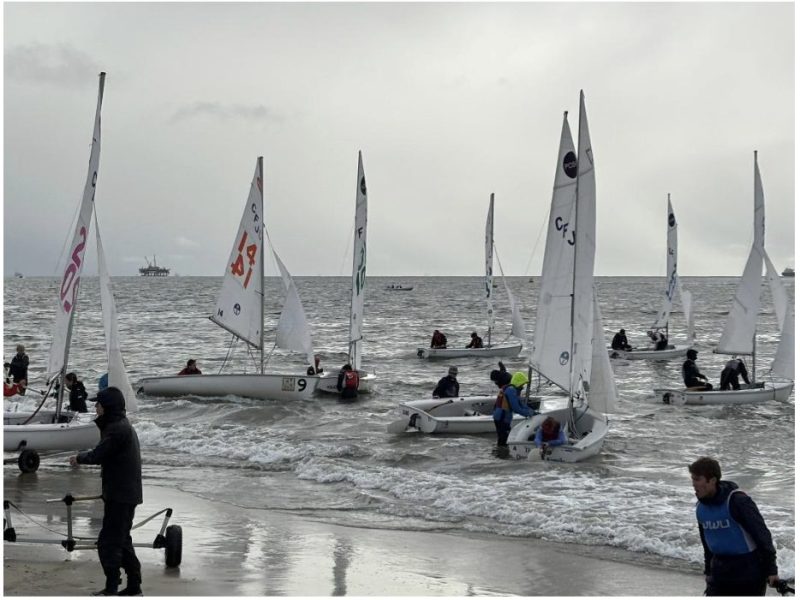
On the water, the collegiate division was dominated by two teams from the New England Intercollegiate Sailing Association (NEISA). The Brown University Bears won the event, tallying a total of 42 points from 12 races (six in both A and B divisions). The Bears’ A division duo of skipper Blake Behrens and crew Vera Allen finished outside the top five in only one of their six races, and won races three and six. The B division duo of skipper Noah Stapleton and crew Dominic Ciccimaro finished in the top three of all races but one, also recording two bullets. The Bears finished five points ahead of the second-place Boston College Eagles.
The high school Gold fleet was won by the San Marcos Royals, who tallied 66 points from the 12 races between A and B divisions. The Mater Dei Monarchs finished second, and likely would have won the event were it not for a 30th-place finish in race 3B (there are no drops in high school or college sailing). The highest-finishing Northern California team was The Bay School of San Francisco in 13th place.
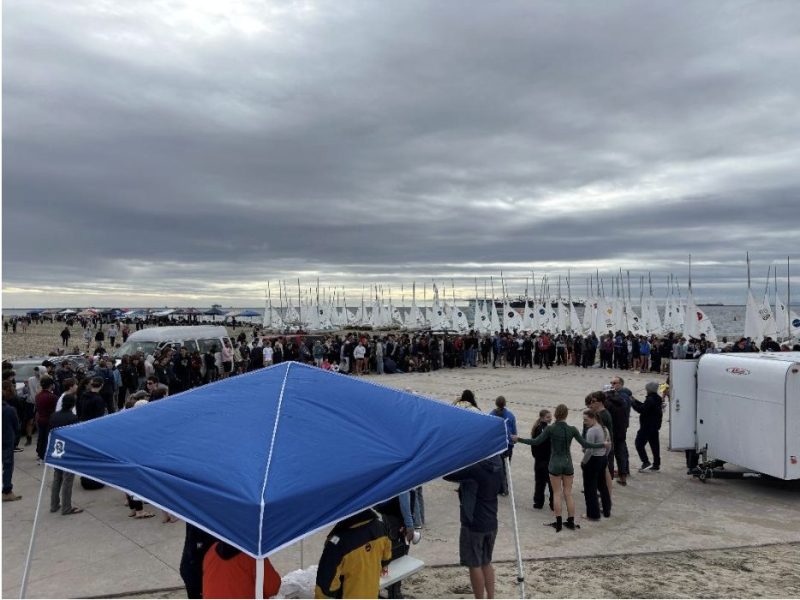
“With pretty short races the starts were super-important, and if you were able to get off the line, [you were] pretty well set up for the rest of the race,” Bay School A division skipper and 2025 C420 national champion Caleb Everett tells Latitude. “Big congrats to the winners, and shout-out to all of my competitors, who are all very talented sailors and great sports. They’re really fun to be out on the water with. Overall, it was a solid weekend, but we’re leaving with a desire to do much better in the upcoming Golden Bear. I know that we have it in us, so watch out for the Bay in the spring.”
High school Silver fleet was won by La Jolla High School, which totaled 132 points from 16 races. High school Bronze fleet was won by out-of-conference Grosse Point South High School of Michigan, tallying 62 points from 16 races.