

Episode #219: Lin Pardey and David Haigh on Life Aboard ‘Sahula’
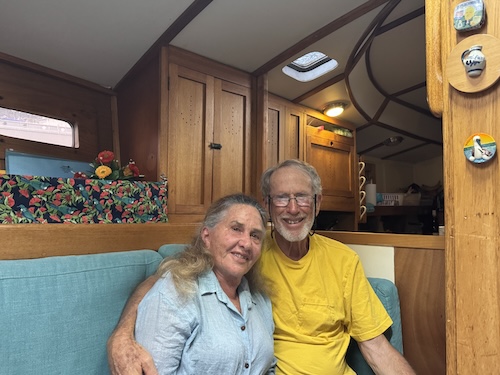
This week we travel down under to Brisbane, Australia where we meet up with 3rd-time returning Good Jibes guest Lin Pardey and her partner David Haigh aboard Sahula. Lin has sailed over 200,000 nautical miles, completed two circumnavigations, and has experienced many more adventures of a lifetime.
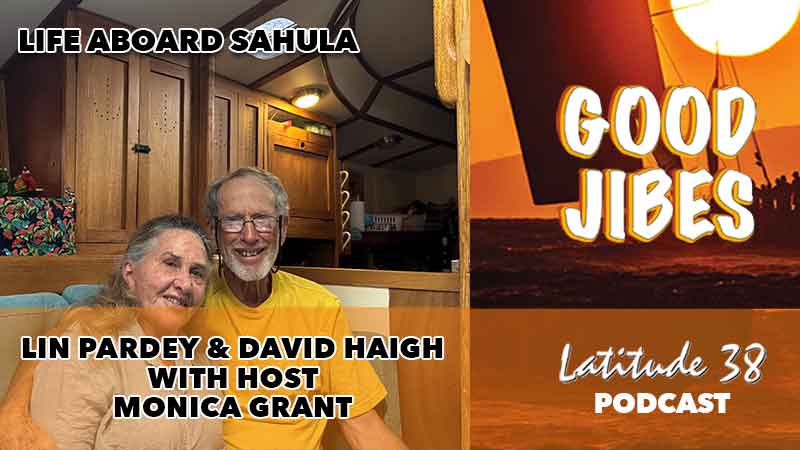
Join Lin, David, and Good Jibes host Monica Grant as they chat about how Lin’s first time camping in the outback compared to sailing in an ocean, the pros and cons of being connected to technology at sea, the essentials for a cruising lifestyle, how sailing with David aboard the 40-ft steel-hulled Sahula differs from cruising aboard Lin and Larry’s smaller, wooden boats, and how to never fall out of love with sailing.
Here’s a sample of what you’ll hear in this episode:
- Why Lin and David choose not to have Starlink
- Being close to nature vs comfort
- What is David’s background and sailing story?
- Some tales from 47 years of cruising
- Do you ever fall out of love with sailing?
Listen to the episode on Apple Podcasts, Spotify, and your other favorite podcast spots — follow and leave a 5-star review if you’re feeling the Good Jibes!
Check out Lin’s previous Good Jibes episodes: #77: Lin Pardey on Storytelling for Sailors and #18: Lin Pardey on Staying Simple and Just Getting Out There
Visit Lin’s website: https://pardeytime.blogspot.com/, and learn more on Lin Pardey’s Facebook.
Check out the show notes below for much more detail.
Show Notes
- Lin Pardey & David Haigh on Life Aboard Sahula, with Host Monica Grant
- [0:14] Welcome to Good Jibes with Latitude 38
- [0:43] Introducing Lin Pardey and David Haigh – legendary sailors based in New Zealand
- [2:54] Why Brisbane, Australia? Exploring the Great Barrier Reef and family reunions
- [6:42] Embracing simplicity – the philosophy of “going small” in cruising
- [8:33] The authentic experience – being close to nature vs. comfort
- [10:52] Adventure inland – camping in Australia’s Outback
- [14:38] The question of connectivity – why they choose not to have Starlink
- [15:35] Meeting young cruising influencers and the changing face of sailing content
- [20:47] The difference between creating content and cruising – finding balance
- [23:41] Working while cruising – the three-month-per-year rule
- [25:39] Comparing sailing experiences with Lin Pardey and David Haigh
- [28:24] Are you thinking of sailing to Mexico or across the Pacific? Latitude 38 has a resource page called “Heading South” & the “First Timer’s Guide” to help you prepare
- Miles and Memories
- [29:26] The importance of adventure – safety vs. freedom in modern sailing
- [33:40] The challenge of over-preparation – getting trapped before departure
- [36:28] 47 years of cruising – counting the miles and memories
- [40:43] The man-overboard drill story – different sailing styles and communication
- [46:00] Two admirals on one boat – navigating partnership at sea
- [51:02] Check out our Classy Classifieds at Latitude38.com
- Sailors for Life
- [51:47] Do you ever fall out of love with sailing? Lin’s answer
- [55:10] Inspiring women sailors – breaking barriers in a male-dominated world
- [57:54] The Lifetime Achievement Award at Annapolis Boat Show
- [1:02:36] The home base in New Zealand – building a boatyard and community
- [1:07:37] Future projects – untold stories from decades at sea
- [1:10:28] Meeting Tom Robinson – encouraging the next generation of ocean mariners
- [1:13:20] David’s background in environmental law and protecting marine heritage
- Make sure to follow Good Jibes with Latitude 38 on your favorite podcast spot and leave us a 5-star review on Apple Podcasts
- Check out the November 2025 issue of Latitude 38 Sailing Magazine
- Theme Song: “Pineapple Dream” by Solxis
Transcript:
Please note: this transcript is not 100% accurate.
00:03
Our object is to go out and have some challenge, something new, and try something different than the life we have on shore.
00:14
Welcome to the Good Jibes podcast brought to you by Latitude 38, magazine for West Coast sailors since 1977. Each week we bring you the stories and the adventures and the voices of the people who make sailing on the West Coast so special, whether it be about racing or cruising, exploring, or anything in between. Today we chat with Lin Pardey and her partner, David Haigh. Lin needs very little introduction in the sailing community.
00:43
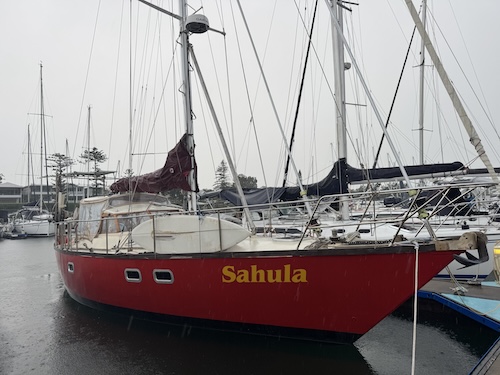
She spent over 40 years sailing with her late husband Larry Pardey and together they sailed around the world twice and wrote more than a dozen books about their adventures at sea. These days, Lin is based in New Zealand where she and David continue to sail and explore this big blue world aboard the 40 foot steel hull Sohula. We met with Lynn and David aboard Sohula in Brisbane, Australia, where they have docked their boat for the Southern Hemisphere cyclone season, after which
01:13
they will return to explore more of Australia’s cruising grounds. I’m your host, Monica Grant, and we hope you enjoy this Boat Cabin Conversation with Lin Pardey and David Haigh.
01:26
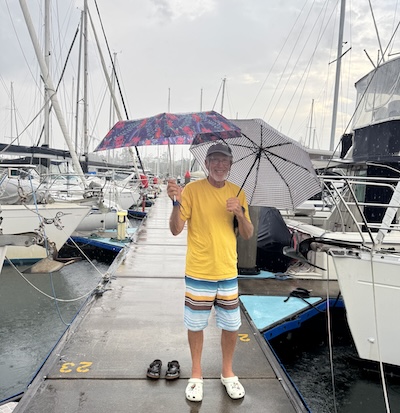
We’re sitting here aboard Sahula and we are going to have a chat with Lynne Pardey and David Haig. And the idea here is not so much to go over things we’ve already talked about in podcasts. We’ve had Lynne on podcasts twice already and there’s a whole host of information, which is so interesting. Lynne and David are currently dockside in the Wynnum Manley Marina in Moreton Bay, which is in Queensland, Australia.
01:55
So as far away from California as you could get almost, except it’s just a little sail across the Pacific. But the idea today is really just to catch up. When I saw that Lynn was in Queensland, I have to admit I got a little bout of fangirl happening. I was so excited. I’d never met Lynn before, but you know, I’ve read about Lynn and Larry and in recent years about David. And it was just exciting to see that they’re in my neighborhood because I happen to be here right now as well.
02:24
And so I thought, let’s see if we can meet and have a chat. And I’d like to say, well, I can’t really say welcome aboard, Lynne and David, because I’m on your boat. Welcome aboard. aboard. It’s great to be here with you both. Before we started recording, we were just having a little chat. I guess in Australia you’d call it a chin wag or a chit chat. And I thought we should start recording because there are very interesting stories that they’ve been telling and more still to come.
02:54
So I think possibly if we could just start with why are you here in Brisbane? Well David and I sailed over from New Zealand which is our home base at the moment and to uh explore a bit more of the Great Barrier Reef and also to uh catch up with David’s family. It was a bit of a family reunion and township. And friends. Friends from university and what-nose years.
03:23
in North Queensland and in Brisbane. So you went to University of North Queensland, In Queensland. Oh nice. At Queensland Uni in Brisbane. Okay, yeah, I know that one. So it’s been a real friendship and family, I mean real reunion things, but also David wanted to get me out into his Australia, the outback. Oh. And David is quite the outdoorsman in his own way. I’m just a sailor and yes I’m outdoors, but I’ve only slept in a tent.
03:54
four or five days of my whole life. And so we spent over a month in a SUV we rented and boy, it’s that isolated country. It’s gorgeous in its own harsh way. to make a long story short, we realized that we didn’t want to sail this boat back to New Zealand right away because there’s so much more we’d like to see. So we decided to
04:23
find a safe place for the boat for the cyclone season. And we sealed it down here because this is beneath the cyclone belt. Right. And very good marina. And by amazing fortune, uh because of Facebook, I’m mentioning that I was looking for a place for the boat, we were invited to be guests at the marina here. We were paying for the marina berth, but we’ve been made honorary members of the club.
04:50
That’s very nice. Very nice. Very, very pleasant. Yeah. And it’s great because David has so many neat friends around here. It’s given us a chance to catch up with them and get to the art galleries and just have a little town before we head back to New Zealand for six months. Right. And then we want to get back up there and do a little bit more exploring because we’ve never actually anchored on the outer reef and done some skin diving and…
05:17
When you say get back there, you talking about back to… To the Great Barrier Reef area. North Queensland. And you would probably want to do that in the winter. Yes, definitely. For those listening, the weather patterns here in Queensland, Australia are pretty much the opposite to California in so much as winters traditionally are warm, I would say…
05:44
around about mid-20s during the day, as in Celsius. So what would that equal? we found… high 60s? No, actually, we found that up in Queensland, most of the coastal area, once you’re north of it’s about 75 to 80 degrees in the daytime. Yes. And when you get up near Cairns, you’re getting up to 85 degrees in the daytime. Right. But it’s really pleasant.
06:13
nights can be quite cool. And when you get out into the outback, can be downright cold. It can. But dry as can be. Right. Which is wonderful because when we were out camping, we were using David’s trekking tent and just putting the fly screen up and leaving the top off completely. Right. And under the stars and the, as you say, the outback is magnificent. So how would you say
06:42
that that compares, you said you’ve only been uh in a tent, what, four or five nights or something. But you talk about, you know, go small and don’t have a lot and be in small spaces. A tent is even smaller than a boat, smaller than the smallest boat, particularly a trekking tent. So how does that feel in comparison, do you think? Well, look, I like it because it’s a bit of an adventure to try to make life comfortable when you’ve got
07:12
you know, this is a small tent to sleep in. And, you know, couple chairs and we’re just in a SUV. I like the adventure of it. What does it feel like? It’s so nice to get back to the boat where there’s no dust. I got all my favorite pots and pans and you know, so the tenting is an adventure. But and I want to talk about adventure later because this is something certainly rare.
07:39
We’d go into a campsite and there’s all these campers, see. This is the big wave in Australia. Everyone buys a camper to do their retirement or whatever. They do. And they’re out there in the West. Right. That’s where they go. So… When you say the West, you’re saying the West of Queensland or the West of Australia? West of Queensland. well, West All the way to the West. I mean, they’ll proudly say how they cross whatever desert in middle of Australia in these four-wheel drives. They’re spending a lot of money on these things. They Anyway, the point I’m making is that we would go into these…
08:08
campsites, so it’s cool. And we’d have our little tent and we’d sit outside, you know, everything was kind of in the environment, if you like. Of course, next to us would be this big, rather large box with people in it all having a big facility you could possibly have. So we were a bit unusual. I certainly like it that way. Not so much being unusual, but certainly the basics. I enjoyed it.
08:33
And if you want to get down to, a like being at sea, if you want to get down to the basics and see dolphins in their real world, you’ve got to be close to the top of the water. And you’re not going to get that experience from a passenger ship. You get that from the deck of a small yacht, or a yacht. And that’s the thing that you get that people miss when they go out in their boxes, I’ll call them boxes. um
08:57
you know, as one couple said to us, don’t worry, I know we’re a bit close to you, but by six o’clock we go inside and you won’t see us again. Well, you could see what they were doing. had their Starlink and they had their computer on showing television. they were sitting there. They were actually watching television. we were in our little tent on the ground. We do have a nice air mattress. we’re sitting there watching Broga dancing.
09:25
20 feet away from us next to the creek as we’re getting ready to go to sleep and hearing the bird calls. It’s not very different, this type of thing, to be on a yacht. mean, you’ve got birds flying around and doing their thing in the wildlife of the oceans. Camping, at its basics, is like yachting at its basics. I wasn’t surprised that Lynn fitted in so well. mean, Lynn doesn’t…
09:55
It’s an adventure. And I guess that’s somewhat why we’re together. I mean, we both have this adventurous spirit thing. And she wasn’t put off by the fact that there are a few insects and things. But I’ve spent a long time, a lot of my life in my early years was spent in the Australian bush. And I guess I’d be a fair bushman in that sense. So I wasn’t worried about snakes and all the rest of it, centipedes and things that people would be all croc-a-dart.
10:24
We didn’t camp close to any… We didn’t camp to rivers. So we enjoyed the adventure and people should do those type of things. What’s important about yachting and cruising is that you have other experiences apart from the yachting. The yachting is adventurous, but if you’re doing it on a say a world trip, it’s a long time to be doing the same thing.
10:52
If you’re ashore you’d be doing many different things. So you really need to think about how you’re going to occupy the differences and I think that’s important. So going inland and Larry and Lynn did that in Africa quite substantially and us going out west. I think that’s just what you do when you go cruising. It’s not, it shouldn’t be unusual but I think it is to be honest and that’s fine. People do their own thing.
11:22
But I think it’s important and Lyn does her writing. I do art, I paint. And you can imagine I’m up here in my little alcove here at the chart table where I do set up my art stuff. Lyn sits over here writing. It’s quite a creative little bit. So, you know, we’ve got a number of items which allow us to have, if you like, varied life. Right. Yeah. Well, what’s fun is that when we were out in the exploring places like Porcupine Gorge, these… oh
11:52
You’ve got remember one thing for your Californians. Australians say they have mountains, they don’t. No, we don’t have mountains. They don’t have But they have gorges instead. They’ve got these places where the rivers have ripped into the earth. Right. And they’re stunning. And water is clear. The water is clear. It’s beautiful. It’s stunning, the bird lives. But because of that, David was quite inspired with his, he’s working with pastels right now.
12:22
We’d camp for three or four days in the same place. That’s one thing we learned really important and same with yelping. You must stay for at least three nights to feel like you’ve been in any place. Because if you come in on one day and you leave the next day, you haven’t had time there. And if you’re only there for two nights, once again, you haven’t really settled in and become part of it.
12:50
stopped quite often for three days at a time and David would set up his easel and I’d set up my little computer and do some writing or some… I was actually doing a lot of photo sorting and it really felt nice to just be and then you start to actually feel see what’s happening. I totally agree. One time we did this on what’s called the Capricorn Coast, is north of Buckhampton and it’s a military exercise area.
13:18
These military things, they’re exercising now, are quite big because the Chinese have been sending ships down here and so on, the military are getting into it. And we found a beautiful anchorage, Island Head Creek, and as you said, we stayed for a couple of days. Five days. We phoned up, it was really beautiful. We phoned up the local PSU rescue people who, you know, volunteer group.
13:41
And we said, can we have a weather report? they said, well, where are you? And we said, we’re in Island Head Creek. Oh my god, they said, you’re in the middle of a military exercise. They’re bombing the island next to us. my god. Have you seen the planes flying? No, we haven’t seen it. Because we had no internet. They stay exactly where you are. Otherwise, you’re going to get into trouble. Oh my goodness. So we had to stay for a few more days. But I think that’s important, like I say.
14:08
We don’t even see around this boat. It’s pretty basic. We certainly don’t have Starlink. mean, the last thing that I would want would be Starlink. Having everything that, you you suffer in a sense on shore with all the world going crazy and everything else. Why would you want Starlink when you’re trying to escape into these beautiful places? I mean, I don’t understand that. Well, I mean, that’s a question that I did want to talk about whether or not you had Starlink.
14:38
And it doesn’t have to be styling. It’s just connection in general. And we were talking earlier, Lynn, about, you know, young people. Actually, sorry, we weren’t talking about it earlier so much as I was listening to one of our previous podcasts in which you talked about meeting young cruisers who are all, you know, engaging with their audiences and using technology. And that is very good. But at the same time, how much do you think?
15:05
that affects their actual experience of the cruising life, which is what supposedly took them out there in the first place. please, anybody who is a cruising influencer, we’re not meaning to speak harshly or judge, but I’m genuinely curious. Well, it’s kind of interesting that you say that because I ended up mentoring or advising or just being a mother to several different influencers.
15:35
Ilana and Riley were getting ready to cross their first ocean together. Right, and what boat were they on? Vagabond. Vagabond, that’s right. Yeah, they contacted me and asked for some advice and asked if I’d talk to their live podcast, I think it was or something. I forget what they called it, in which I answered questions about what it felt like to be in a storm. And we ended up communicating back and forth quite a bit.
16:04
And that started me giving encouragement or suggestions to a couple of different influencers and Atticus, Sailing Atticus. I realized I had it easy as a writer. I guess you would have called me an early influencer of sailing because you know people, because we wrote books and did seminars and such. 13 books now you’re up to? uh
16:34
I feel that I admire the hard work they do. How does it influence their cruising? It isn’t cruising as I knew it because they have to always be thinking about this next episode. It’s hard work. And the problem is it cuts them off many times from meeting local people because they don’t have the time to do it.
17:01
They don’t settle in and spend two or three weeks. So are they not cruising? No, they’re cruising. But they’re having a completely different experience than they might if they didn’t have the obligation to be producing. The reason I say we had it easier is I never wrote about anything that happened that week or that month or even that year. We’d be out sailing and we’d see an interesting idea for a story.
17:31
And we’d look back through the last three or four years for, and said, oh yeah, I remember back in England, this happened, that would be a good incident. Or when I started writing my cruising and seraphim stories, I was writing about things that happened for three or four years previously sometimes. How did you remember those? Did you take notes as you went or you’d go look through photographs? And was this still, you’d have to take your photograph, you’d have to your film into?
17:58
somewhere and have it developed? I just went through 4,000 transparencies to see which ones I’d like to scan that I haven’t scanned. So I’m down to only 700. But yes, that was in a time that we took photographs and sent them off and three months later might get them back. Sometimes I got lost. But how did I remember? I’ve always kept a log. It might be a paragraph or two.
18:28
It might be an impression. mean, where we are, what we did that day, and maybe an impression or two. I’m very fortunate. I have a photographic memory, which is still remembering most of the photographs. I literally, for some reason, can recall a scene completely with, know, a few words will bring it back and I can tell you what people were wearing. Oh, that’s perfect. So it really, so it’s…
18:55
drives David crazy at times. Do you remember that day David when you said… I don’t remember! I haven’t forgiven you yet! But so that does help and I love to… I found that people like the stories, it makes them happy and so I love doing it too. But we had it so much easier because we could just go out and do something really interesting. The first 11 years of our voyaging together, in fact in the first 15 years or 17 years…
19:23
We were still working, but we had set a goal in our life to never work more than three months of the year for money. Right. And we stuck to that. Okay. So if we didn’t earn enough during the three months, we either worked harder or spent less. Right. So it meant that we, our work was concentrated into that three or four months. So if Larry was working in a shipyard, I’d be writing and I’d help him do the finished work.
19:53
I do better varnish work than he did. Same with pride. It’s something I enjoy. That was way of me contributing too. But the people, young, we’re talking about the young influencer, they’ve got to do seven or eight hours of editing for every 15 minute video. uh So they’re not only trying to find something to write about and videoing themselves, but then
20:23
finding the editing time and then the uploading time. It’s hard work, but I admire what they’re trying to Oh, absolutely. And I’ve met several of them and almost all them I’ve met are delightful. think the other thing, I could just come in, is that they seem to make a large amount of money. And one of the things with, I think Lynn and Larry are very effective saying is…
20:47
It wasn’t the money that they were really concerned about. It was the ability to continue cruising at a very low income. A low needs income, because I know, I didn’t ever notice. It made it easier than ever. oh But, you know, when I did cruising, I didn’t want to think about money. I was having a time which was an unusual time in my life. I wanted to just experience it on a day-to-day basis in its basic form.
21:15
I certainly didn’t want to be rushing off to a cafe and rattling off an article or something to some news, some magazine. I wanted to experience this adventure. And I’m not sure you can really say you’re doing that if your focus is on quite substantial amounts of money because it’s hard. They do make quite substantial amounts of money. of them. that’s the endeavor of most of them trying to make that.
21:44
I think you have to stort your cruising. mean, you might get yourself a bigger boat, a 60 footer or a 50 footer, but I don’t think you need that bigger boat. I think it’s also that it’s just a different approach to the cruising lifestyle. I mean, I think my, I guess my cruising life, although it’s much shorter than either of you have experienced, uh it was a blend of onshore work and sitting somewhere on the boat with my computer.
22:14
writing out something, feeling the pressure because everybody else is off doing something fun or sitting in a Starbucks in New York, you know? Because we were on the 79th Street boat basin. Oh my gosh. And I remember I’d walk up to Starbucks and use the internet for free and catch up with whatever work I had to do at the time. Yeah. And it did take a chunk out of that experience of being able to be there. at the same time, exactly, at least you’re out there. You’re not.
22:41
going to an office nine to five, Monday to Friday and watching all the other people have fun. The interesting thing that I look back at is that when I consider my 60 years of meandering around on boats, sailing boats, many of my best experiences involve the times we were working. Right now I’m getting ready to do a presentation next week in Drummond.
23:11
to Moine. Sydney. Thank you. didn’t know where that was. Sydney. In Sydney. I thought, oh, know, I’ve got a personal, I’ve got a Sydney-ize my side, sort of add something that’s particularly of interest to the people in Sydney. And immediately came to mind that we ended up sailing from New Zealand, looking for work, because times were getting hard in New Zealand and sailed into Sydney. And almost, you know, were within a
23:41
week we had two offers of really great jobs for Larry. One in the pit water with a wonderful band whose family had a little shipyard right in Sydney and his name escapes me the second. But the other in uh Valmain in Sydney Harbor and uh Kenny Beechel. Kenny Beechel, he built
24:11
one of the America’s Cup boats actually up the river there. You wouldn’t believe it. In the tiniest boatyard in the world. But his son was taken over and they wanted us to help restore a boat there. And the other was in a very busy area of the Sydney Harbor, River Keys. We chose the River Keys one because we were living in New Zealand on a very isolated island. And to live in a city sounded like fun. Oh, novelty.
24:40
a novelty. And we ended up restoring a 115 year old gorgeous little race boat, the after race boat. managing, I ended up being the weekend manager for the boat yard and then ended up helping create the first Sydney Wooden Boat Festival there. Really? And it was to me, and ended up with the politics of this. was by working in that country.
25:10
I became a bit part of something that was unique and learning. I really know a lot more about the Sydney politics, I’ll tell you. No more than I do. Yeah, so that was really interesting and you know, I look around at back of my cruising life I loved the fact that we had to stop for three or four months every year to earn money. Yes. In Gibraltar we did, you know, some really funny jobs that we never would have considered in boat building.
25:39
in the East Coast of the United States, we were rigging boats for people. And so it was a really nice contrast to cruising on all the time. Yeah. I suppose that one thing that Larry did was that they took off when they very young, relatively, and sailed for their lives, which was almost their whole life. Whereas most people would take off maybe when they were tired or a bit earlier than that. And, you know, they had…
26:07
financial issues to sort before they leave and to support. You hear about people selling up everything oh and waiting for this time or that time to go. When we went sailing, my husband and I, we bought a boat in Miami. And I remember going down there, I think we were in San Francisco in the Bay Area, and we’d gone down there to look at the boat, said, yes, we’ll take that boat, it’s 37 foot Teyana.
26:36
And we came back to San Francisco a little while later. My husband went down there for a few weeks and got some stuff done. Then I went down and I think it was 10 days and I’d been up at the marina and I was coming back to the boat with my dog, our dog, and I thought, oh, I’ll just make some lunch. And he says, well, you make lunch. I’ll start the engine and untie and we’ll go. I’m like, what? We’re going now? Are we ready? He’s like, sure, why not?
27:06
Okay, so that was my introduction to offshore sailing. My first time, six days and six nights, and it was a real eye-opener. but were fortunate. But you know, it’s been a wonderful life for me. I can’t imagine what my life would have been had I not run off with this gorgeous blue-eyed Canadian sailor with a…
27:30
lovely accent. Canadians do have nice accents. But, I fell for David’s British Australian accent. reason he sounds slightly more British than Ozzie is that when he was 17 years old, he ended up as a cadet on a British ship, Yeah, he was taught by the Brits how they were supposed
27:55
to speak. Right, okay then. Not deliberately. You know, in a culture, you pick up accents and other things, don’t you? I mean, I have a little bit of an American inflection turns up in my voice over so often. admittedly, when I was over there, people would say, oh, I love your accent. I’d be like, what accent? I don’t realize I have one. That’s exactly right.
28:24
Are you thinking of sailing to Mexico or all the way across the Pacific or maybe even further? We just heard from Joanna and Cliff saying, my husband and I subscribe to Latitude 38 and enjoy the Good Jibes podcast regularly. They went on to say they’re headed to Mexico in the fall and will continue across the Pacific to Australia. However, they’re looking to simplify all the choices they need to make to prepare. Of course, there’s tons of resources out there, but Latitude 38 does have a page on our website called Heading South.
28:54
And we also have LATTA 238’s First Timers Guide to Mexico available to read online on the Heading South page or a printed copy that is available to purchase in our online store. There’s a lot to know, but latat238.com is a good place to start. Lynn, you mentioned earlier you wanted to say something about adventure. Have we covered that or there was something else in particular? yet. We haven’t covered it. And it’s something that’s quite dear and important to me.
29:22
Thank you for giving me a chance to.
29:26
I am very concerned for the first people who are hoping to go cruising now, the ones that are getting ready to go. In that, when we started out, Larry and I, were talking, I’ve been cruising since it was 21. delivering boats from 21, we actually set off on our very first cruise. It took us three years to build the boat, so was 24. At that time,
29:56
When you went to a marine hardware store, there was rope and wire and shackles and life jackets that weighed a ton. Very little equipment as such. Remember when we started out to get a transmitting radio, have been $8,200 and it cost us $7,000 for all the materials to build our 24 foot sailboat, including the timbers from Quality Timber. So you’re talking about how much.
30:25
So we did, there was very little and the Marine, if you could look at the Marine magazines, the things they were advertising, it was completely different. They were advertising boats for sale and Marine fittings like screws, the better screws. The word safety was never mentioned. equipment did not exist. We built our own man over bird pole because unless you were willing to pay for the fancy racing one, there was only one company making anything. But.
30:55
Now there is so much emphasis on the equipment you should buy and on safety because it sells things. Right. Motherhood and safety are two ways of selling. And so there’s a huge amount for sale and it’s emphasized and there’s courses and there’s lessons. I’m not saying you shouldn’t join courses and lessons, but I think we are forgetting the fact that our object is to go out and beach.
31:24
have some challenge, something new, and try something different than the life we have on shore. Right. And so when Larry and I used to do all-day seminars, which we haven’t done, well, since Larry has not been on, he will too, I’m still doing some seminars, but at the end of the day, after talking to people for eight hours about handling storms, how do you get away, but at the end of the day, we always used to put a sign up.
31:53
on the board, on the writing board we were using, safety and security, safety and comfort do not equal adventure and freedom. I think that people are forgetting it’s supposed to be an adventure. Right. That’s why we’re doing it. Yeah. We’re not doing it to take our whole home with us and the responsibilities and our whole life. And it
32:21
worries me that that is stopping so many people from going. And then when they get out there, they get a little uncomfortable. And instead of feeling, this is part of it all, it’s making them either end their voyage or say they need to buy a bigger boat to do it. Right. Yeah. So I say that you got to remember that almost everything advertised in that magazine
32:45
every bigger boat. Except for Latitude 38. We only advertise good things. Of course you do. But everything in there uh is hopefully making someone else money to save up enough so they can go cruising. Right. They’re not to particularly help you go cruising. I’m not saying they’re trying to stop you. I’m just saying remember there’s advertising is an important part of our industry and I’m not putting down in advertising. So
33:13
Just remember that it’s supposed to be a bit of an adventure and you can’t take your apartment with you. You’re going to be uncomfortable sometimes. Yeah, yeah. And you can’t avoid heavy weather. down, you know, better you make your chances better. But just be careful of being trapped by it. think I see something similar in we we have now, but we had for a while been trying to sell our Teyana because just
33:40
where we’re at at the moment, isn’t suiting us to have the both just sitting at the dock languishing. She needs to go to a good home. And we had been, or well, more my husband than I had been in the process of doing some refit on her. It’s mostly cosmetic on the inside, right? Cabinetry and whatnot. And people would come in and they’d be put off. Also the engine, we thought the engine didn’t work, turned out it just needed somebody who had the right kind of know how to get it started. But so the engine does work.
34:09
Anyway, it felt like our experience and combined with some other bits and pieces I was hearing or picking up that people were looking for boats that are ready to go. They don’t want to have to put the time into it or the knowledge or the whatever. I mean, you know, I put so much sweat into our boat. Yeah. And but that I actually enjoy that.
34:32
It’s a learning, it’s to know the boat. Exactly, it’s the whole DIY thing and it is, it’s getting to know the boat and it’s getting to become, you become family, you and your boat. I think that is something that’s so important, it’s getting to know the boat. I’m not saying that you should always buy something that you have to fix up, it, and each person has different abilities and different financial situations. I’m just saying don’t let people convince you that you have to have things.
35:01
And the other thing that goes along with that, people trying to outfit their boat absolutely completely before they get off. say, sail the boat every minute you can, use it as it is, and gradually add things when you find you desperately need them. Cause you can buy them later, but you can’t, I watch people getting trapped by trying to get that boat up to perfection. And they’re going to miss out on the adventure. I want them out there.
35:31
Yes. And I know that, sure, Larry and I, Larry Coyne came up with the motto, go small, go simple, go now. But it is really an important thing to think about. And small is all relative. Would I want to go off cruising again in a little 24 foot seraphim? In some ways, yes, because I could take her sailing by myself. Right. And other ways, of course, no, it’s kind of fun to have a…
35:58
Rompitorium sized bunk with your partner and you know, it’s fun to have a hanging locker that I can put more than three dresses in. Yes, but I heard about the button on the anchor. The button on the foredeck. the anchor comes by. Everybody wants one of those. But yeah, there’s a luxury, but we had the luxury of getting out young and having an adventure that was incomparable.
36:28
So can you tell me exactly how many years you’ve been cruising? I sat down and figured out actually voyaging and exploring. know, when I was… Well, and this includes like your three months at land in between. So just years. About 47 years. 47 years. And how many thousands of miles have you done? Because the last count I’ve read everywhere is around 200,000. You must be way past that by now. Not really, because David and I have been mostly in the…
36:57
Pacific out here. 235, I think I figured it was a couple of days ago for me. of course, Larry cut off at 205. He aged out. we did deliver yachts for people, and that pushed it up a bit. It also pushed up the percentage of storms we had to put up with because we…
37:24
You can’t choose your seasons quite as easily. I know with deliveries. I think what made my life particularly fortunate with Larry is not only was he a delivery skipper and charter skipper, but we were in an era, in area where there was a lot of schooner racing. So I got to sail on so many different kinds of boats, big old gaffers and little old gaffers and get to know what other boats I mean.
37:54
To be honest, is no boat in the world that went to Windward better than a Cal 39. Oh, really? We had to deliver the first Cal 39 to Mexico. to be on a boat that just loved going to Windward was a treat. Nice. And I loved it. On the other hand, the most restless boat I’ve ever been on, an anchor. Oh, really? Yeah. She jittered over the bloody place. So, you each
38:23
But I have this wonderful experience of knowing what different boats feel like. And I also had the very comfortable adventure of having a boat built custom for me, because Larry built the boat to fit me. And the rig was set up for me. So when we graduated to a big boat, 29 foot Tullison, I could sail it completely on my own.
38:53
I could hoist the mainsail, I could hoist the… At night I’d take the head sails down. It didn’t have roller furling. I thought nothing of taking a genoa off and putting on a little working jib by my shelf. But that’s because he did things like the winches on her mast used to drive other men crazy the first time they sailed on it because they were so low. Then they said to her, why are your winches mounted so low? He says, you watch a woman work.
39:22
she’s got more strength in her hips than she does in her shoulders. He said that way Lynn can just use her hips. Because I need her up there working. So now David’s boat is set up for a six footer and it wasn’t designed for somebody who didn’t grow tall enough. So I can’t hoist the mainsail myself. Right. Does that feel a little bit disempowering for you? Like, oh, I can’t do that now. It’s okay. I don’t mind anymore. Let’s say that’s…
39:51
It’s a 50-50. I’m in my eighth decade and I’m not as strong as I once was. I could not, I look back at the time and the things that Larry and I did in an engine-free boat and some of the stunts we pulled and they were stunts. We practiced and figured them out and did a lot of getting into play.
40:14
I hated it when someone would say, oh, but you can’t sail in there because you don’t have an engine, because that meant we had to do it. You just watch me. You just watch me. So like, hold my beer. Yeah. But I couldn’t do that because it meant sometimes doing all-nighters, short-tacking the boat, you know, one of us standing on the foredeck, sounding our way into places. But it was a wonderful thing to do. It made it. There is a joke. Jokingly say, cheap thrills, but it’s what kept us sailing.
40:43
Well, it was cheap, but it’s not cheap thrills in the negative sense that people are accustomed to it. It leads me to wonder how much of a difference did you find in sailing with Larry and now sailing with David? And I say this because I, at sea, trust my husband implicitly. I’m 100 % feel safe. I can’t imagine feeling that way with any other sailor.
41:13
any other captain. mean, I’m not competent like you are, so I definitely rely on the captain. But it’s just a question that came to mind. How much adjustment is it? How? It’s quite different. Yeah, I trust David. I feel very safe with David. I feel that he’s almost too cautious at times compared. He doesn’t push the boat near as hard as we used to our own boat, which is, I guess, once again, at my age on a new boat with someone else.
41:42
But no, I feel there’s a funny joke. uh When David and I took our very first few days sailing just the two of us, the first time I joined David on an overnight type, know, we had there was a young girl. I couldn’t go with David when he wanted to go down to Fiordland at the south of New Zealand, because we’d just met and I had obligations. I was coordinating a music festival uh on this island, so I couldn’t join him at first.
42:09
but he had this friend who really wanted to go along, so they sailed off to Fiordland. And then when I was free, I flew down and joined them and we had a lovely time. But she decided to, because David now had someone to sail with him, to fly back to England for some reason. So he and I had our first sail together, overnight or a couple days, it was actually a three or four day sail, from the south of New Zealand up to Christchurch. And we left with a
42:40
following wind and about three or four hours out I was on the wheel and David was down below and I noticed that the paddleboard that he likes to keep on the fore deck poor thing he must pay $20 for when he got it he’s gone around the world for $20 but I noticed it was moving a little so I called him up and I said David I’m gonna go up and secure the paddleboard I just don’t feel it’s tight enough
43:10
And he looked and he said, oh yeah, you’re right. And he says, but how about I’ll do that? He says, cause you haven’t worked on the foredeck of the boat before. And so you just, you know, I know the boat better and I agreed. Okay, no problem. And as he stepped out of the cockpit, he turned and came back and he said, Lynn, as a matter of fact, what would you do if I happened to fall overboard? I said to him, as he was getting on the cockpit, I jokingly said, don’t fall overboard.
43:40
And he turned and came back and said, what would you do if I did fall overboard? And I looked at the sails we had up and I said, well, the first thing I would do would be run up into the wind and back the jibs, because we’re running wing and wing. I’d back the jib and basically heave two for a minute, get the head so down. Then I would, and I forgot what I said next, but then he said, hey, Lynn, stop for a minute. How about starting the engine?
44:09
Oh, I guess that would be a good idea. I’m just so used to it. Right. So, but how do I feel about sailing with David? He does not claim to have all of the boat, boat-sail handling, rigging and stuff that I’ve learned because working with Larry and shipyards and working on boats. But he’s a very competent sailor and I sleep like a rock. Nice.
44:39
But I’ve had to get used to the fact that Larry and I planned everything we did beforehand. We discussed each move, unless it was something we’ve done dozens of times. So like, if you’re coming into a new port, we’d talk about what we were going to do. We’d do a trial run, because we didn’t have an engine. So I feel that David and I could do better on communications at times, because he…
45:08
We don’t make decisions beforehand. Not saying we’ve gotten into any trouble, there’s things we could do. Planning. A little bit of planning, but that’s different people. I we met in our seventies and it’s amazing that we two old farts look us get along so well together. Do you have anything to say about this David? Well, look, know.
45:32
you’re certainly going to have some conflicts if you have two admirals on a smored yacht. that’s what we’ve got. em I’ve sailed this yacht for decades and Lyn has sailed her yachts for decades. This is different yacht. And it’s a different way of sailing. And yes, Lyn’s right, I am cautious. I’m very cautious. But I’m cautious to the extent that I’m still here and able to enjoy sailing because of it, I think.
46:00
In fact, I urge caution and did a major facet of any sailor. you know, there are times, like for instance, Lynne, invariably will let the sails out more and I will tighten them up. I’m a sailor jester. I feel he strangles the boat just a bit, but he doesn’t ever like to see it. Look, I want it to the luff occasion because it means I’m right on that line.
46:29
Yeah, so it’s just a difference in sail use. I don’t mind. mean, if she wants to tighten a of that and stack up the sail, that’s fine. I’m coming to watch after that. So you basically, whoever’s on watch are at the helm, it’s their call. Yeah, that’s right. That’s what happens. But what is fun is that because our boats were all designed for Southern California, light wind sailing, because that made it so it worked really well for sailing engine free. When I met David, I
46:59
Realized that he was not sailing the boat in winds that would keep her moving Mm-hmm, so I bought him a birthday gift on his first birthday that came along after that I bought him a big nylon drifter Which you know a reacher right? It’s about very lightweight mm-hmm, and I let him choose the colors They’re not what I would have chosen, but they are fun because she’s gold the boats bright red. It’s actually Bengal red it’s called and uh He chose
47:28
and it’s got the names in very large name in yellow, as you noticed. And he got a yellow, green, and turquoise drifter.
47:42
Which is trying to put that together in my imagination. I’m not sure if it works or not, but it’s Okay. This is Turk wise. Yeah. The settee. Yeah. Right. And so he’s in love with that sale. Nice. He can’t wait to put it up. And you know, if we were feeling rich, we’d get a nice spittaker too. match. Yeah. Yeah. I quite like it. I think it’s
48:10
seems to be more sailing when you’re using it. Right. I’m a color man, that’s my art thing. I really do like the colors. That does make sense. So yeah, there’s interesting differences. Thank God. The nicest thing that people aren’t going to see David in these pictures, but in this talk. I’m going to take some photos and use them for the… But when David and I first met, most…
48:40
One of things I was really pleased about, he’s a mountaineer from his early days. is… Well, excuse me. Australia has no mountains. Where did you go, David? When I was at university, I was a rock climber in Sydney. And then I went to New Zealand. uh And I’ve been up Mount Cook a couple of times, have serious mountaineering. And of course, that’s where I get my continuing caution. Because if you don’t…
49:09
be careful on the mountains, it’s far more dangerous than You’re going to die. Well, you’re to have a problem. So I was always very cautious and I think that’s stood me well and I think it’s something which most people who go to sea or take what I call the risk adventures, which sailing certainly is, um then you should be cautious and slow to take action in things.
49:38
Sink it through a little more so that you’re lessening that chance of it going haywire. Well, let’s just say you can’t deliver yachts if you want to be super cautious. We’ve had to nurse some boats across oceans. But let’s say that what I loved about, what made it easy for me to create a relationship with David is everything about him was so different.
50:05
because he’s tall and very slender. Larry was built like a bulldozer. Dave is more of a wicket. uh he’s, like I said, he is not a mechanical type person. I’ve ended up having to do the woodwork on the boat because it’s just not his forte, this sort of thing. He can do the basic maintenance things, but he’s not the least bit interested in re-rigging a boat. But also…
50:34
He trusts me. And when I said I just didn’t like the running back stays on this boat, he said, well, tell me why you don’t like them. And he says, OK, get rid of them. So there was a mutual trust. So this is the boat that you had already, David, when you two met? Yeah, same boat. I’ve only had two boats, one was a little Swanson 28 and this one, Carpendingy.
51:02
Hey good Jibes listeners and Latitude 38 readers. Have you looked in our classy classifieds lately? It would be impossible for us to know how many boats have sold to new owners over the last 45 plus years of publishing Latitude 38. But we’re sure they have helped countless people realize their sailing dreams. Every month there are new boats listed that will fill someone’s sailing adventures. If you have a boat you want to sail or are looking for that next boat in your life, the pages of Latitude 38 will surely have something to suit your fancy.
51:32
Pick up a magazine at a local marine business or visit our classy classified pages at Latitude38.com to find boats, gear, job opportunities, and more. Then tell us your next sailing story.
51:47
I have a question for you, Do you ever, actually my sister asked me this to ask you, do you ever fall out of love with sailing? Actually, after an incident, after getting caught in a hard storm off of the 60 miles off the coast of Fraser Island, which is a couple hundred miles over here, and I was injured, and then getting into Maluliba, got swept by wave.
52:16
In the mouth of Mulullaba? Yeah, it’s a nasty That’s a nasty place. When we were going in to get me some rest, I remember saying I was never going again. Okay. And then about three weeks later, said, come on, let’s get back to New Zealand. And we set sail. But falling out of the… There’s so much to it. Okay. Where I feel fortunate and where I feel that working along the way and then having time to
52:46
really get to know local people. Like in Ireland, we… and changing our plans whenever we felt like it. ah Like in Ireland, ended up sailing, we were planning to sail around Ireland and just happened to not be able to anchor where we wanted to in some of the islands one day and looking for safe anchorage. We ran into a fleet of Galway hookers that were racing at different festivals around the country and ended up…
53:15
spending the whole summer, mean, four months, racing, Galway hookers. Our life has led us into so many different aspects of sailing that I never get tired of. My brain is always, there’s always something new to learn. Right. Right. And I, it’s not that I’m a sailing nut. like the different aspects of sailing, even to the point of helping, uh, it was believe it or not, it was Larry’s idea that
53:45
boat shows have seminars. If you look back and do research, find that there were no seminars of boat shows until 1980. it was Larry who said, of course attendance is dropping off at boat shows because people are getting tired of just paying to be advertised to. Give them something, some other reason to come here. you know, so that’s just what I’m saying is the sailing life to me,
54:15
is everything from getting on board the boat and going and hiding like he says in Fort Quentin just by ourselves and walking on sandbars that were underwater an hour ago and chasing pelicans. uh it’s also racing. I’ve really enjoyed a lot of around the boys racing. in boat, you know, helping them, you’re working in boat yards.
54:43
writing about it, it’s just such a broad field that I just feel, no, I’ve never gotten bored with it. Well, you certainly inspired a lot of people. think particularly women ah because, you know, traditionally sailing has been seen as a man’s world. I believe now it’s not, it’s totally not. There’s so many ah really good women sailors and not
55:10
I mean, in addition to the ones who are known and who have a name around the world, just locally. The funny thing is, uh here in Sydney in particular, there’s always been women who loved classic boats. David was asking, we restored a boat down in Sydney for an owner of a shipyard. when he put it up for sale finally, there was three women vying to buy it. Nice.
55:39
and all of them married with families. Did one of them end up with it? Oh yeah, she and her children will show up at boat shows wearing costume from the right period and they sail the boat in costume. It’s just gorgeous. But when I started sailing, I was the only woman in the waterfront working on boats except one other gal. Millie Villa? No, it wasn’t Millie Villa.
56:07
But Peggy Slater was racing her own boat called Valentine. So I met her soon, but no, women were not involved. I never had any problem because Larry just introduced me as a sailor. Right. And I was just accepted as, you know, just one more crew. Especially when people found out I do enjoy cooking. That didn’t hurt. like feeding people. Somebody has to cook.
56:36
of the business of young people and the baby boomer generation or whatever they called the next generation in Maine where Lyn was doing a number of talks. And one of them was that she was going to present a prize, one of these, what call it, trophies. This was at the young.
56:58
The International Cruisers Award for the Young Cruisers Association. Anyway, Lynn went up on the stage. They’d been having a good old time. were well-off, very well-dressed. It very formal type of evening. It wasn’t really, but they thought it was, so they were dressed up. They took a spoof on the Academy Awards. youngish people. Anyway, they went up. Lynn went up and sent the prize and then said, okay, well, thank you. they were walking off. And he said, oh, no, just hold on a second.
57:27
And she was presented with, what was the name of the trophy again? Lifetime Achievement Award. Lifetime Achievement Award. And the whole audience just went, amazing. mean, they were yelling. It was quite incredible. oh And I think what it showed is that that generation was certainly on the appreciative version.
57:54
area where they really did appreciate Lynne and Mary’s contributions of their lives. But it was just the number. were so many of them in this hall. It was a big event. This was when? At the Annapolis Boat Show two years ago. There 510 of these. You know, and at another time, we were at another one up that area where Lynne was talking. At the end of the talk, someone said, I don’t know who it was.
58:20
Put your hands up if know, Vinamari influenced your sailing, all the hands were up. And then when Lin was ready to leave, they all stood up. It was such a nice appreciation and quite emotional. And I thought, well, you know, there was not all the older people at this thing, there were younger people, in 50, 50 maybe. So I think, you know, there are basics in sailing which…
58:49
just something which carries on, something which doesn’t age, which crosses the age groups. Could you tell us what they are? Well I think it’s the love of the sea and a genuine love of the sea and the adventure that Lin talks about and I think it’s a kind of almost a craving for a simpler life.
59:16
in what is a very complex life now and what we’re seeing, you know, with just environmental issues and the politics of it and it’s what you can get away from it on a boat, which you can’t really of course, but you can get away from it if you don’t take your starling. And I think that’s an enormous attraction. And Lynne and Larry, they epitomise this more than any other sailor, I think.
59:46
because they didn’t have the gadgets and my goodness, they had a plan that trips in because of the leverage. So, you know, I think that they, those things don’t change, I don’t think. There’s still wonders out there. Oh, I’m sure. I mean, I know when we sailed to Mexico, one of the most fascinating things that I recall off the top of my head was lying on the deck at night. I didn’t even have to be on watch because I was a cook, but I wanted to be because it seemed like so much fun up there and it was dark and there’s these…
01:00:16
big black frigate birds flying through the sky and they’re making literally making a black hole that you look like you can your hand through they’re amazing yeah yeah that’s the things that makes it all so wonderful the whales and the stingrays jumping yeah that’s right flapjacks that’s what they’re flapjacks flapjacks? that’s the rays oh yeah yeah know in Baja California you hear splat right and then you hear splat splat that’s what they’re doing they’re jumping in the air
01:00:43
doing backflips. Yeah, yeah. You don’t have to start around the world to get this type of thing. You can do it by just taking it, you know, off to some localised area. If you’ve got a week off, then go and do something that’s, you know, really adventurous. You know what we used to do sometimes, you know, when we were getting ready to go cruising and still couldn’t quite leave because we had to finish something. This was the first time? It went by in Thomas and when, you
01:01:13
Right. uh We used say, excuse the sea trial, we’d head offshore for three days, heave two for half a day and then sail back. And it felt like a wonderful holiday because we got away from all the noise, all the should do’s and could do’s. And we were just out there. uh so, no, I don’t get tired of sailing as you can hear, but I enjoy it. I still do. So you’ll be on shore here for?
01:01:43
Well, specifically here, but throughout the summer. We’re sailing, we’re flying to New Zealand in a few days. We’re leaving the boat here and going back to New Zealand in early December. Then we’ll come back in May, later parts of May. And maybe take the boat up to North Queensland again. Yeah, we should. There’s a possibility of crossing up on the northern regions of the Papua New Guinea.
01:02:09
So on. we could get in at 10th night, we’re not sure. We’re not sure. But we won’t be away from sailing because I have a home base there that Larry and I, 42 years ago we sailed into New Zealand to rendezvous with some people we knew, Eric and Susan Hisscock, we’d met in various places but we’d never had time together. We were always rushing off to deliver a boat or something else.
01:02:36
and they want us to spend the summer cruising and getting just some time together. um they told us a wonderful little day where they had spent the winter on one of their boats. We had written a book and we ended up sailing into that island and to make a long story short, a wrecked boatyard was for sale. Oh yeah? And uh we thought it looked like a…
01:03:06
Larry’s comment when we found out it actually was affordable because it was such a mess. It was condemned completely. The boatyard was wrecked. It was not a boatyard for wrecked boats. No, the boatyard. The land had fallen. The cliff had clived in and there was no flat land anywhere. And Larry and I stupidly thought it would be fun to fix it up. Larry also said something important. He said, Lynn, they’re not making any more waterfront property. It’s not perfect.
01:03:35
but we can make it better and we don’t need it now, but it would be nice to have some kind of base when we’re older. We might like it, he says, but worse comes to worse, we can clean it up and make it look so much nicer that we could sell it. Well, it was the best thing we ever did because it gave us a home base and we were able to fix it and we were able to make it. uh
01:04:03
major engineering job. It literally popped off a cliff into the water. was no land except where the house was on the mystery of the basin. So they had to put a wall, many, about 10-15 meters out from the bottom of cliff. They built this themselves out of timbers. 700 feet of it.
01:04:31
700 feet, I mean it’s not on a substantial wall and the wharf is kind of over dangle so they pulled it up. The shed had to be rebuilt, maybe double the size of it. And they rebuilt the house. It is not a minor job. It sounds like a big job. But we did it over a five year period and went cruising a couple times in the middle of it. It was hard work. But you when you’re 40.
01:04:56
It feels good to build something. Absolutely. And let us get to know New Zealand and we became citizens. we still have the home there. And Larry was right. I’m sure glad we did it. uh But unfortunately…
01:05:14
It now has seven boats waiting for us. So we will not be away from sailing. We have two laser dinghies, because there’s laser dinghy racing around our code. We have two kayaks. ah We have a rowing boat. We have a speed boat. We have a barge. Oh my gosh, we’ve got everything. We’ve got everything that uh
01:05:44
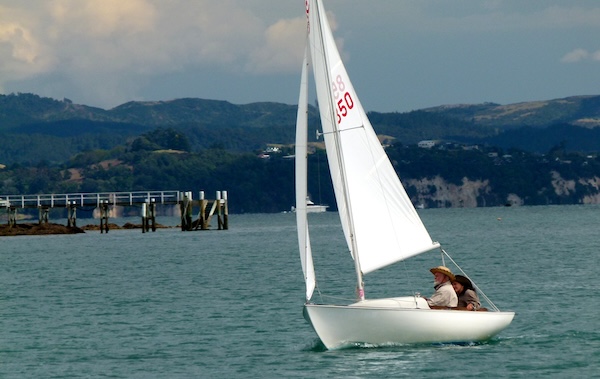
We’re looking forward to some fun, the best thing we’ve got I haven’t mentioned. Larry, as a birthday gift when I turned 65, was it 65 or 60? I figured he gave me two boats for birthdays. He bought me a Herrschof 12 1 1 2 1 2 designed in 1914 by Nat Herrschof. And it is the most wonderful little day sailor and it’s got a keel. It looks just like a
01:06:14
big size boat, but it’s miniature. And you can take it out sailing. It’s a five minute job to get her ready to go. And you can go out in 25 knots of wind and have fun with her. Nice. And so I’ve got, so we won’t miss sailing while we’re there. Nice. Yeah. Yeah. It’s kind of, very, I feel extremely fortunate. Definitely. She me said the story of her. got to, I don’t know if she was,
01:06:42
Larry was in some shum yard somewhere where these boats were and he said, oh let’s go and have look at these boats. And she said, what do think of that one? What do you think of the name? The name is Felicity. And Lynn said, well I really like the name, it’s wonderful. Oh that’s good because I just bought it. We were at Cape Cod, you know, we were just, we were doing a lecture tour of Cape Cod.
01:07:09
And the boat is now in New Zealand. Yeah, we’ve shipped it off to New Zealand. uh And I’m glad we did. It’s been a delight. And when I met David, I will say he came for dinner and ended up staying. It’s a long story, a long, fun story about how we met. if you want to read it, it’s in passages, Cape Horn and beyond. It’s in… Cape Horn and beyond. Passages and Cape Horn and beyond to find the story of how David and Lyn met.
01:07:37
But on the morning after he came to dinner, he stayed the night, and I took him sailing in Felicity. And the way he fell in love with that boat, it’s the only reason we’re probably together. It sounds like that kind of thing, doesn’t it? There’s got to be something like that. In fact, argue over it. Sometimes it’s nice to go out just on your own. We sometimes argue over it. The other thing, sometimes David will want to go sailing and
01:08:06
middle of a chapter on that book because that’s the last book I wrote and he’ll say come on let’s go saving and I said I’m too busy and about three minutes later I see the sail going up and just when I start to run down there he’s gone already I should have not said yeah yeah don’t ever be too busy never never be too busy what’s your current and future project
01:08:29
catch up with myself. I’m kind of drawn, well, there’s a couple of things that I have in mind. David hasn’t heard the latest, so I’m going to get in trouble here. I do want to write a few of the stories that I never told. Especially one that keeps haunting me about a decision that Larry and I made that we feel had longer reaching effect and we might have done different
01:08:58
It involves a cyclone, it a sinking, it’s quite complex. But I’d like to write it to get it off my mind. Is that a book-length story? I don’t know how long it’ll be. I know it’ll be much longer than an article. So it might be the beginning of a book, or put some other stories. But I do want to write that. But then as I was looking at it, I thought of other stories that never got told, because…
01:09:27
Although the Cruising and Seraphim series was four books written over a seven-year period and told pretty much of the most interesting things that happened on Little Seraphim and the lessons she taught us. I never wrote about many stories about about 20 years of our voyaging on Taliesin because we got involved in making videos which are still available and people still find fun and interesting. They’re full of ideas.
01:09:58
But I’ve got stories from that period that I think would interest people. Each has, they all have lessons. Every story you tell has a lesson. Every time you go out at CEE, there’s a lesson. That’s what’s wonderful about sailing, you keep learning. And I want to keep learning. What I like is the people that introduce me to the night. We had dinner the other night with one of most charming young people, a fellow named Tom Robinson.
01:10:28
And Tom came up to me at the Hobart Wooden Boat Festival just before I met David. I was imported for the festival. And he was 16 years old. And he had a copy of Larry’s Boat Building book that had pumpkins all over it. said, know you didn’t write this, would you sign it? And we talked for almost an hour. And I encouraged him because he was designing a boat.
01:10:56
to grow across the Pacific. 16 years old. And that was his goal. And then several years later, after COVID, Steve Stone, who has something called Off Center Harbors, a video site for sailing videos and boat building videos, he contacted me and he says, there’s this young guy who we’re trying to help out. And he told me all about Tom who had…
01:11:25
finished building the boat and had shipped it to Peru and was just getting ready to set off across oceans to be the youngest person to row the Pacific. Wow. And he ended up at Penryn after 156 days of rowing. And Steve said, you know, he could use a little bit of encouragement, and we were able to communicate and town alive.
01:11:55
We became friends, communicated back and forth. He did accomplish sailing really across the Pacific. Unfortunately, he lost his boat off of Anahuatl, but he was already across the Pacific, so he was given the Guinness Book and all that. But he’s 26 years old. He came and had spent the evening with us, and I said, David, you’re going like this guy. I said, you’re going to like this young man. Yeah, he’s quite a character. So being around young people like that.
01:12:24
That’s what keeps me. Absolutely, I can relate to that. Yeah, to show. And now he’s set up a little company doing boat repairs because there’s a lot of boats around. Small wooden boats here. For some reason, there’s real love of small wooden boats that were built 70, 80 years ago for going out to the islands and rowing. And there’s only a few boat builders left. Right. Yeah.
01:12:51
So problem everywhere. All right. Well, we do need to wind this up. Yeah. So if I may say thank you, David, thank you, Lynn. It’s really been a pleasure. It’s a pleasure. And thank you for welcoming me aboard your boat. And I’m really happy that we got to do this. it’s nice to meet you. It’s fun. It’s fun to talk about something. think both David and I, we just love being able to have a boat. It’s a privilege, isn’t it?
01:13:20
One thing just so you know the thing that did attract me to David is that You wouldn’t call me a greenie as such but Larry and I always felt that we should have a small footprint mm-hmm and of course living on a 24 foot boat was pretty small yeah, no engine all but David spent a major portion of his life as a solicitor, but teaching environmental law mm-hmm and uh
01:13:50
you know, being James Cook, you know, and uh working to protect, you know, prevent development of some of the islands within the Great Barrier Reef, Hinchinbrook Island, and you know, also World Heritage Law is a specialty. So it was, it’s really interesting to be around someone who is an artist, and he’s quite, he’s,
01:14:18
He’s modest, but he does beautiful work and learning and always learning. And so I’m having to learn an awful lot. I’ve never went to art galleries and really looked at art galleries. It’s fascinating. There’s a difference. Yeah. But also someone who’s quite caring about this world we all live in. uh one thing I’ll say about sailing, it makes you realize how big and beautiful it is, but it’s also fragile. So it’s been a lovely addition to my life. Nice.
01:14:48
Well, thank you, David. It’s okay. Thank you both. We hope you enjoyed today’s episode and thank you for listening. Without you, there would be no Good Jibes podcast. If you enjoyed this conversation, please subscribe to the podcast to be notified of each new episode. Oh, and tell all your friends so they too can feel the Good Jibes!