

Episode #247: Kat Hartman and Sarah Kerley on the Race to Alaska, With Host Moe Roddy Wieneke
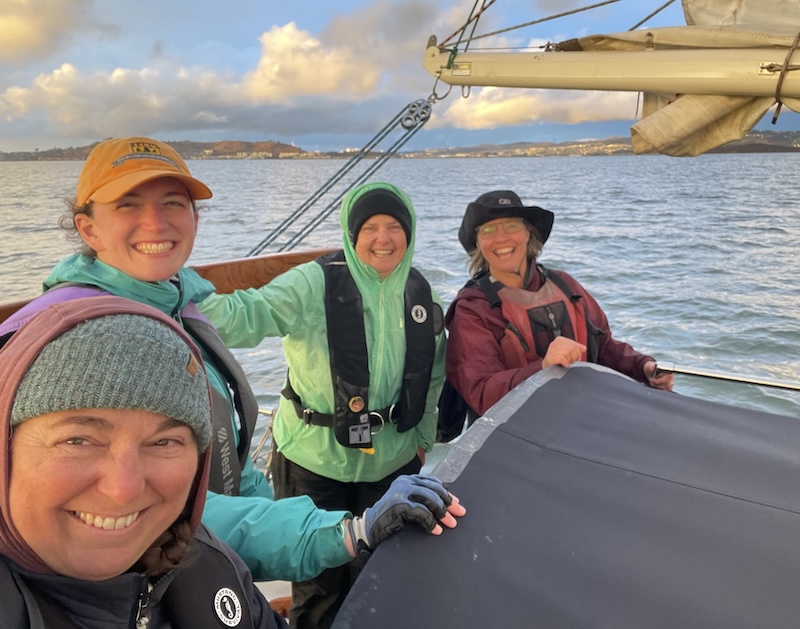
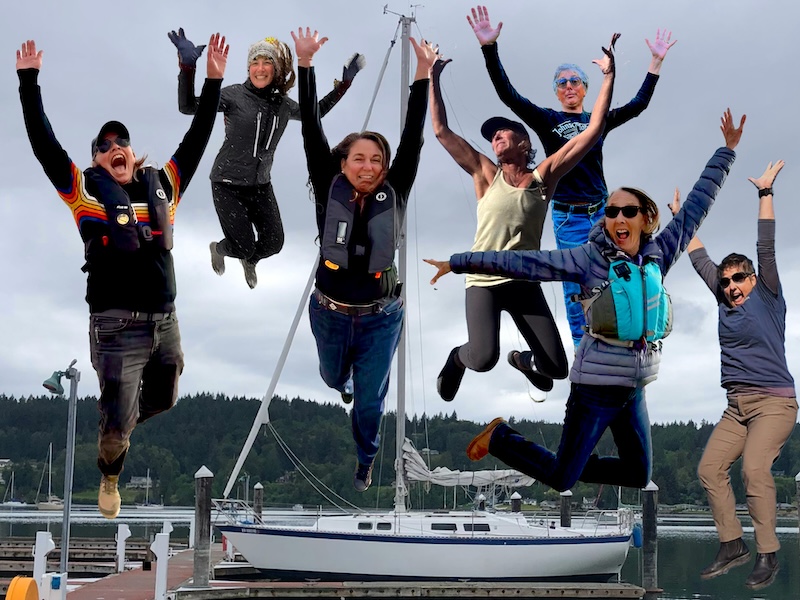
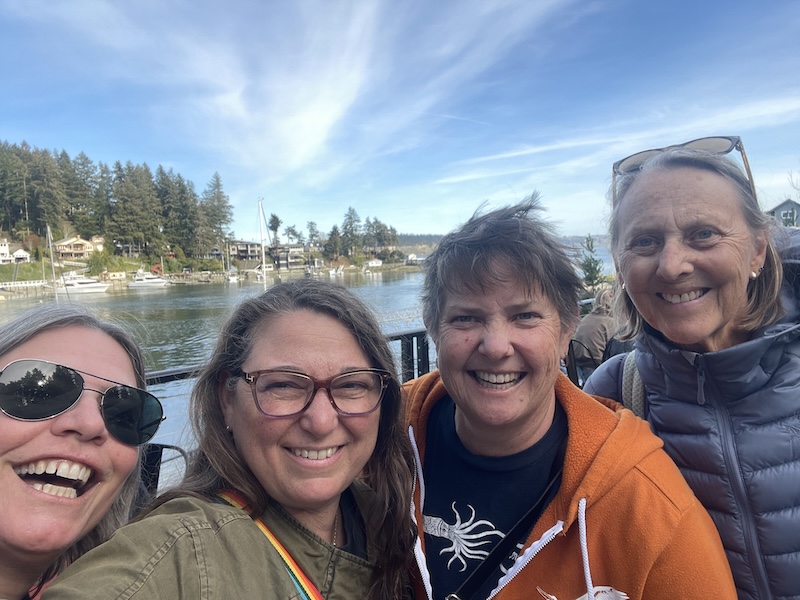
In this week’s episode we chat with Kat Hartman and Sarah Kerley of the all-women Team Hell ‘n’ Ready about their participation in the Race to Alaska (R2AK). The R2AK is an annual 750-mile adventure race from Port Townsend, WA up the Inside Passage to Ketchikan, AK. Any form of boat is allowed, as long as it has no motors.
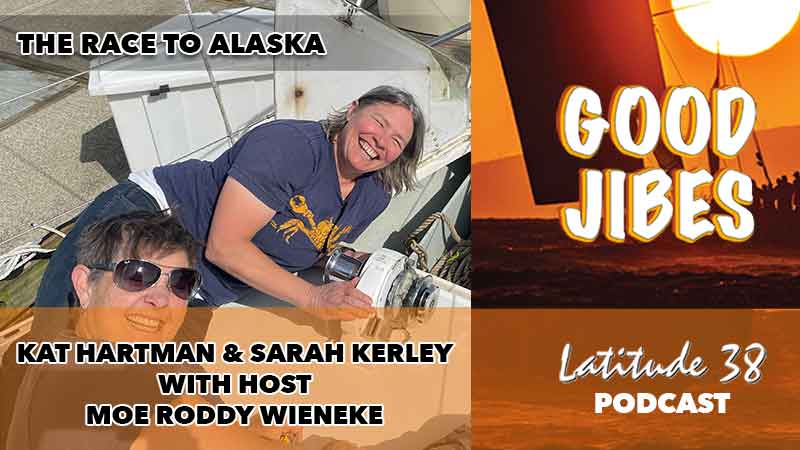
Tune in as Kat and Sarah share with Good Jibes host Moe Roddy Wieneke their thoughts on why it doesn’t matter what age you started sailing, the most intimidating aspects of the R2AK, the unpredictable weather during the race, how to stay ahead of the Grim Sweeper, and the important role humor plays during an endurance race.
Here’s a small sample of what you will hear in this episode:
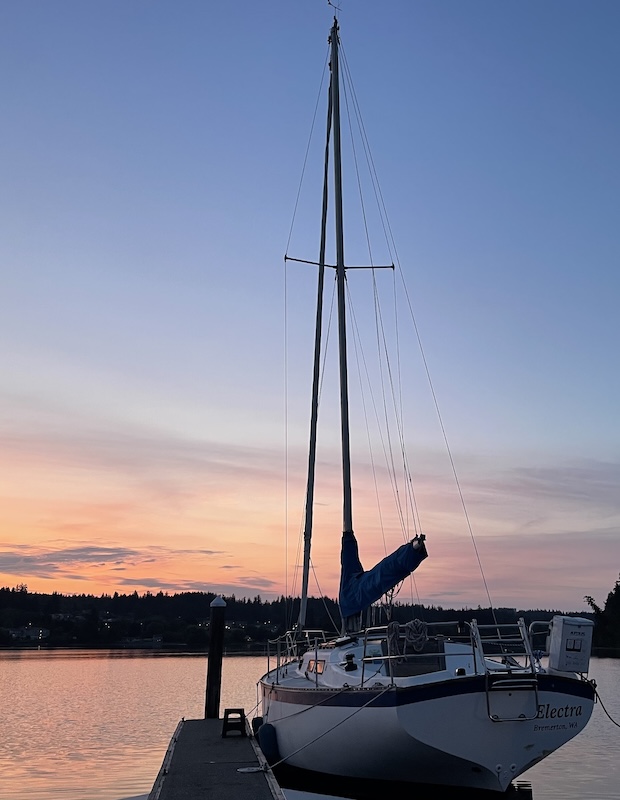
- The Columbia 10.7 designed by Alan Payne
- Food for the race, making all the dehydrated meals, plus eight pounds of peanut butter
- “We are women, hear us row”
- Does the R2AK change the image of sailing?
- What they’re looking forward to at the finish
Listen to the episode on Apple Podcasts, Spotify, and your other favorite podcast spots – follow and leave a 5-star review if you’re feeling the Good Jibes!
Learn more at R2AK.com
Check out the episode and show notes below for much more detail.
Show Notes:
- Kat Hartman & Sarah Kerley on the Race to Alaska, with Host Moe Roddy Wieneke
- [0:14] Welcome to Good Jibes with Latitude 38
- [0:47] Welcome aboard Sarah Kerley and Kat Hartman!
- [2:43] Kat’s sailing origin story from kayaking to a Modern Sailing 101 course in 2015 to buying a boat the same week
- [7:52] Sarah’s time aboard the Bark EUROPA, a 190-foot tall ship
- [13:35] How Sarah and Kat met at a women’s sailing seminar, started sailing together, and somehow ended up entering the Race to Alaska
- [17:26] What the R2AK actually is: 750 miles, no engine, wind and human propulsion only, and a boat called Helen Ready
- [18:52] Are you thinking of sailing to Mexico or across the Pacific? Latitude 38 has a resource page called “Heading South” & the “First Timer’s Guide” to help you prepare
- The Logistics
- [21:29] The most intimidating challenges like anchoring in extreme depths with no engine and the unknown of what each day will bring
- [26:12] The Columbia 10.7 designed by Alan Payne
- [31:00] Systems still being sorted such as custom bronze windlass fittings and new sails that already showed what the boat can do
- [36:40] Food for the race, making all the dehydrated meals, plus eight pounds of peanut butter
- [39:36] Check out our Classy Classifieds at Latitude38.com
- [40:45] Kat on volunteering with women’s sailing programs and how lowering the barriers for women changes everything
- [44:07] Does the R2AK change the image of sailing?
- Short Tacks
- [48:38] Favorite sailing books: Pacific Lady by Sharon Sites Adams with Karen J. Coates and The Complete Sailing Manual by Steve Sleight
- [49:42] Most overrated and underrated sailing gear?
- [51:04] Kat and Sarah’s favorite places they’ve ever sailed
- [51:36] Best seamanship lesson?
- [52:53] Who inspired them most? Kat: Pip Hare; Sarah: Sharon Adams, first woman to solo sail to Hawaii in 1965
- [53:53] Who’s most likely to miss a tide gate?
- [54:52] What they’re looking forward to at the finish?
- [56:16] Just say yes, take the baby steps, and you can’t finish a project until you start one
- Check out the June 2026 issue of Latitude 38 Sailing Magazine
- Make sure to follow Good Jibes with Latitude 38 on your favorite podcast spot and leave us a 5-star review on Apple Podcasts
- Theme Song: Pineapple Dream by SOLXIS
Transcript:
Please note: this transcript is not 100% accurate.
00:03
just like the stupidest and also the best decision ever made.
00:14
Welcome to Latitude 38’s Good Jibes, where we explore the people, stories, adventures, and characters that make West Coast sailing such a remarkable community. I’m your host, Moe Roddy Wieneke. Whether you’re racing around the buoys, cruising to a quiet anchorage, planning your next offshore passage, or simply dreaming about life on the water, Good Jibes brings you conversations with sailors whose experiences inspire, educate,
00:42
and remind us why we love this sport.
00:47
Today, we’re heading north, way north, to talk about one of the most challenging and unconventional races in sailing, the Race to Alaska. Imagine a 750-mile race from port towns in Washington to Ketchikan, Alaska. No engines, no support crews, no shortcuts. Just sailors, their boats, powerful currents, unpredictable weather, wildlife, sleep deprivation,
01:16
and a whole lot of determination. Joining us today are Sarah Kerley and Kat Hartman, two sailors who have decided that this sounds like a great idea. I don’t know. Sarah brings years of San Francisco sailing experience, extensive hands-on boat restoration experience, expertise rather, and a perspective of someone who has stood watch on a traditional tall ship for 45 days crossing the Atlantic from Tenerife to Argentina.
01:45
Kat is a passionate sailor, instructor, mentor, and boat owner whose love of sailing extends far beyond the helm. She has spent years helping introduce women and young people to the sport while building a reputation as a thoughtful sailor who believes that taking care of your boat is one of the foundations of good seamanship. Together, they’re preparing their Columbia 10-7 for one of sailing’s ultimate tests of endurance, teamwork, problem solving, and adventure.
02:14
and they’re actually doing it with a crew, but these two are leading the charge. So Sarah, Kat, welcome to Good Jibes. We’re thrilled to have you with us. Thanks so much, Shmo. Cool. So we’ll start. Well, let me just say, of course, I’m going to get into both of you, but Kat and Sarah, who’s the skipper? Kat. Yes, I am. OK. All right. So Kat, where does your sailing story begin? OK, well, it started back in 2015.
02:43
been kayaking for about 20 years. you know, kayaking is pretty limited when it’s windy out. And I thought, what else can I do, you know, to get out on the, on the water and embrace the wind and modern sailing happened to have a great sale going on during that time. You could do 101, 103 for the cost of one of those courses. So my wife and I signed up, did, you know, this week intensive course and just absolutely fell in love with sailing.
03:14
and ended up deciding to buy a boat right after that because I thought it was going to be so much less expensive than chartering. Little did you know. As you can see, decision making is, you know, some interesting decisions have been made. anyway. What kind of boat was it? She’s a CNC in 1976, 30 foot CNC. Yeah, still have her.
03:42
I hate to tell you this, but I better not. Go ahead. I don’t want to say anything bad about the brand because they’re actually wonderful boats. But a friend of mine had a 40-footer back on St. John and the Virgin Islands and he’s all set to go offshore. Got her all ready to go. And they got out there. I don’t know. They were like 100 miles offshore and the keel fell off. No. Well, I got to blame it on them too because they didn’t check the keel and the keel bolts and everything.
04:08
That’s not the CNC, but that’s my memory of a CNC. association with a CNC, they drop their keels. Well, but it was his fault, not theirs. exactly. The keel bolts are accessible, yes. Oh my God, okay, so I saved that, I think. Sarah, what brought you to sailing? What’s your first, where did you get exposed to boats?
04:31
The funny thing, maybe not so funny, my dad was in the Navy and yet we didn’t do any sailing or boating until the mid 70s. We kind of had moved all around the South and California. In Orange County, they had a man-made lake and they had these little Sabbaths. And so that was like the first time, you know, even we’d heard all the stories of boating and sailing and that he did. And so that was really my first experience of like,
05:00
This is great because we could take them out on our own and you know, but it was a manmade lake. So there’s not that much excitement until I moved to the Bay Area in the 90s. And I was just, you know, I crossed the Bay all the time. I was like, I just really want to sail. So I took dinghy, dinghy one in Richardson’s Bay. And it was so fun. I just had a had a blast. But then I ended up having to move away. And so it was kind of sporadic until
05:27
Finally, a few years before, now it’s almost 15 years, I took 101 and 103. I’m like, you just need to do it. And then a little bit after that, I bought my West sail, which was, I was like, I want to buy the boat that I want to like go sailing. I’m just going to learn it and figure it out. I don’t want to buy a bunch of boats. So that’s kind of how I ended up, with my West sail and, and really starting to sail. Well, you can go around the world on that West sail. You certainly can. Yeah.
05:57
What was the moment you shifted from this is interesting, this is fun on the Sabbath to this is part of who I am? I think it really was, to be honest, it was the dinghy sailing. Like it’s exciting, it’s fast, you’re in the wind, you can, you know, flip it and slide up to the dock. They put a floating dock out there to practice your docking. And I just just, plus I’ve always really loved the water. So I think that was just like,
06:26
I have to figure out how to make this more part of my life. Yeah. Yeah. How old were you when you started to sail in these sabbots? Oh, I was just in, oh, Lord, are you just like fourth grade? So what was that? Like, you know, 10, 11, something like that. Yeah. So you came up through this program, understanding, learning. I say that because it’s such a juxtaposition between Kat, who just started sailing in 2015. I think that’s pretty new. And here you are.
06:56
uh, just thrown in with everything you’ve got into it. And, um, it’s, I say that because I want other women to understand that you don’t have to grow up sailing. You can get into it later in life and still do great things and still, um, yeah, have fun. Yeah. And I would have to say mine was super piecemeal and I like, like, I think Kat and Rhea are like a
07:22
billion times better sailor than I am because I think they’ve had a lot more, they just are a lot more experience on the water and then the teaching. I think that makes you an excellent, a much better sailor. So while I had all of this kind of early sporadic stuff, I really didn’t get this like jump in, stay in it for decades. So you can come at it from all the places I think and pick it up at any time, which is a great part of this sport. Yeah. Yeah.
07:52
So tell us, how did you get on the uh tall ship? And what was the name of it? And tell us about that real quick. So Bark Europa is uh a 190 foot ship out of the Netherlands. They pretty much sail all the time unless they’re on dock. And I had signed up the year of COVID. I was going to be going in April and they canceled it. So then that happened. So I didn’t get to go on that time.
08:21
And then kind of last minute, I said, you know, I just really should look at it. So it was a few years ago and they had a space open. So I said, sure, I’ll just, I’m going to do it. And so I showed up into the reef, Spain and we had to have three days of quarantine. was, know, pretty much after COVID, but three days of quarantine to make sure you could get on the ship and off we went. uh It was, it was one of the best experiences probably of my life so far. Yeah.
08:50
uh to be out there in the ocean, not see land for that long. was really, that part was really unknown to me. Was I going to like it? Was it going to be too scary or, but I actually absolutely loved it. I didn’t care that I see land. Yeah. I was like going to get seasick. Oh, well that was the right. I hadn’t before on other boats and other fishing trips and, but I was like, well, if I do, do, you know, there’s, can’t go back.
09:19
They’re not going to let you off the boat for seasick. We’re not pulling into Brazil for it just because you’re seasick. And what about you, Kat? Have you been offshore before? No. You’ve never been offshore yet? No. Oh my God. This is going to be amazing. OK, so everybody’s got to follow you guys. You guys are so brave. OK. oh We feel like there are a lot scarier things in the world than doing this.
09:48
Yeah, well, you know what? You’ve got to start somewhere. Why not start big? Face your fear. Go for it. Yeah. I think I think a lot of you know, and we are doing it, but it is going to be the inside passage to so it’s, know. Yeah. And there’s how many of you are on the crew? Sorry, there’s seven of us. Karen Manson, she’s our seventh. She just really wanted to do part of this with us and has been a great supporter of us.
10:17
And so she’s going to do the Port Townsend to Victoria. So we’re really excited to have her to have extra hands and have her she did it uh in her 20s. And so she has the experience of doing that. So and then there’ll be six of us going forward up to Port Townsend. I mean, to catch can. OK, we’re going to talk about that in a minute, because I have a lot of questions about the race itself. But I’m not done with both of you yet. OK. uh
10:46
So Kat and Sarah, where are you from originally? I grew up in Phoenix, Arizona, and then moved to Santa Rosa pretty early on. so originally from there, but I’d say definitely grew up, you know, high school and all those good things in Santa Rosa. That’s my, I’d say that’s my hometown. And then I’ve been in San Francisco for the last 30 years. So it’s, yeah. So you’ve been around the water a bit. Definitely his home. And Sarah, you’re a military brat like me. Yeah.
11:14
I was born in California, actually, but my parents are from both from Tennessee. So they had none of their kids in Tennessee, but we end up moving back around the South for numerous years and then coming back to California, like I said, in the mid 70s. And I went to college in Redlands out in California. So I’ve kind of stayed in California since then. I was just trying to see where the water came into all of this.
11:43
And Kat, you described yourself as someone who loves boats in every way. I have to tell you, I’m the same way. I will look at a boat out on the water and I can tell you who designed it, how much fuel it carries, how much water it carries, the whole thing. I I love boats. where do you think that curiosity comes from, from you? I just love trying to figure out how things work. And I also just, I love tinkering and making things.
12:12
And I just feel like a boat allows you to do all of that. You know, there’s so many different systems to try to figure out. And then also trying to, you know, just fix things yourself. And it’s just so rewarding. It’s very humbling and it can be, um you know, teardrop inducing when you do these things, but the gratification when you actually solve a problem on a boat, I just find it’s just unbelievably rewarding.
12:38
Yeah. Yeah. So that’s what I love about it. I love working on the boat, even though, you know, when you put yourself in, you know, pretzel position and you’re just like, you know, you get covered in fiberglass and resin and all of those things, it’s challenging. But when you get to stand back and look at what you did, it’s pretty cool. Yeah, exactly. So I’m a nurse by profession, but I took a year off and down on St. John and I varnished.
13:06
And I got so much satisfaction where at the end of the day, I could look back and see what I did. There was like, and it was wonderful. And so it was really kind of neat. A little different than sending somebody out of the OR back to the ICU or something where you never saw them again. Where did this conversation start with a race to Alaska? You too, like, you know, so you had to have met someplace and then decided and realized that you both have this interest. How did this come about?
13:35
So I met Kat at the women’s sailing seminar about, I think that’s three years ago now. My partner that I had that we were sailing, we weren’t together. So I was kind of looking for other women or people to go sailing and I had done it once before. So I just signed up again and Kat was the instructor on my boat. And so we hit it off and I was like, oh, I have a boat and she has a boat. And so then
14:03
I had a varied scheduled and so did she so we could like meet up during the week and sail on her boat and I was still doing some stuff on mine. And so then we just started sailing together and I met her wife, Raya, and so we all started sailing. And then that’s just kind of how that started three years ago. So, okay. And who brought it up? Who brought up the race to Alaska? Well, it’s kind of an interesting story. you know, again, I love boats.
14:32
I love sailing. And the very first time I actually took my boat out the CNC, I bought it, did a sea trial, no problems. And then the very first time I actually took her out under my new ownership, uh the exhaust system just ruptured. And I had no idea what was going on at all. And I was just filling the boat with uh water. And none of the bill just worked.
15:00
So the manual bilge didn’t work, the auto bilge didn’t work. And it was filling with exhaust. anyway, was just chaos. um Ended up getting the boat back safely to the marina. And this guy just came running over and he said, permission to come aboard and help you out. And I said, absolutely. Anyway, we hit it off that day on. And he actually was really my mentor for figuring out how to work on boats and systems. And he never.
15:29
told me what to do. He just kind of showed me and then just sort of just stepped back and let me do it myself. Anyway, we just, it was just a really good relationship. Anyway, he ended up moving away and I convinced him to buy a boat up here so that we could just keep working together on projects on boats, because I just learned so much. So he bought the boat up here and then he ended up moving again. And so it was an opportunity just to go ahead and just buy the boat.
15:58
And at that time, Sarah and I were, we’re sailing together. And then it was actually somebody else who brought up the race to Alaska. And we both said, that sounds like a good idea. We have, cause you know what? It looks like we’re going to have a boat up there. And I honestly didn’t even know what the race to Alaska was at that time. And, uh, we said, yeah, let’s go for it. We have the boat. Let’s, let’s, let’s get a crew together and let’s just, let’s just do it. So that’s how it kind of all came about. And, uh
16:29
Yeah, so the boat’s been up here for about four years and it’s been converted to electric propulsion. So the diesel engine and all that has been removed. It’s been converted from wheel to tiller. And then we put, we have a silicone bottom paint on as well, which is a really interesting bottom coat. anyway. Okay, we’re going to get to all of that. I want to hear about this because people don’t understand that you’re in Port Townsend right now. Prepping the boat. And this is
16:57
The boat you’re taking is not the West sale and it’s not the CNC. No, it’s the Columbia 10.7. So we’re going to hear about that. I just want to make that clear to people. So for our listeners who haven’t heard of the it’s called the R2, a.k.a. uh Race to Alaska. How do you explain it to people what the race is? Kind of just like the stupidest and also the best decision ever. oh How do you do one?
17:26
explain it. We haven’t done it yet. we, you know, we’re newbies to it. It’s an adventure race for sure. Right. But there’s no, no propulsion. All the propulsion has to be wind and human. Human. Exactly. So human propulsion, right? And so your motor actually physically has to be off the boat. It’s not just like tagged or anything like that. It’s physically removed. And so
17:53
That’s one of the reasons that we’re able to put this boat, which is the biggest boat in the race into the races. we are motors 58 pounds. I mean, to explain it is. I think we’re looking at a lot of variable weather situations. Yeah. Cold going to be long. It’s going to be scary and exciting. And we’re going to experience currents like.
18:22
we never have before or probably never will after this. And we’re doing it because, you know, we want to put ourselves in that situation because you you learn so much when you do these types of events. are listening to the Good Jives podcast brought to you by Latitude 38, West Coast Sailing Magazine since 1977. Latitude 38 here.
18:52
Are you thinking of sailing to Mexico or all the way across the Pacific or maybe even further? We just heard from Joanna and Cliff saying, my husband and I subscribe to Latitude 38 and enjoy the Good Jibes podcast regularly. They went on to say they’re headed to Mexico in the fall and will continue across the Pacific to Australia. However, they’re looking to simplify all the choices they need to make to prepare. Of course, there’s tons of resources out there, but Latitude 38 does have a page on our website called Heading South.
19:21
And we also have Lata238’s First Timers Guide to Mexico available to read online on the Heading South page or a printed copy that is available to purchase in our online store. There’s a lot to know, but Lata238.com is a good place to start.
19:40
Welcome back to the Good Jobs podcast. I’m your host, Mo Winnicki. I had this question for you where I basically said, this race has no engines, which sounds charming until you’re stuck in the current going backwards. oh So how much of this race is really about tides and strategy? And are you studying all of that? you been looking at all of that?
20:05
I’ll say so I’d say that 99.9 % is the strategy around the tides and the currents. I’ll tell you that Sarah and I, we are not the ones who are doing that. So we’re pretty much getting the boat ready itself, which has been, you know, it’s a pretty big lift. We have several other people who are on the navigation aspect. And so they’re the ones who are doing the deep dive into that.
20:35
while we actually install, you know, like the pedal drive system, build that with help. So anyway, so that’s how we parceled it out. Yeah. So the pedal drive, I want my listeners to understand what that is. That’s literally like a bicycle on the boat that you actually sit on a seat and pedal and move the boat, right? Well, hopefully. That’s the idea.
20:59
I got on it yesterday and it pedaled just great in the air while we were in the boatyard. Yeah, we’re on the hard. Easiest pie. Smooth sailing there. Yeah, it was great. Oh my goodness. uh I can’t wait to follow you guys. Especially after hearing all of this. What’s the most intimidating thing about it? Is it the distance or being cold or the current or lack of sleep? You guys have a nice
21:29
Well, watch system set up, what’s going to be each of you? What is the most intimidating thing about it? I would say the most intimidating thing for me right now is anchoring. Anchoring, interesting. Why? Well, it’s a very different environment up here for anchoring. We’re actually redoing our whole system to carry 200 feet of chain.
21:56
the water depths are just so extreme. It’s very deep, isn’t it? Yeah, it’s so deep. And there are lot of different, you know, lot of rocks and steep shelves. And, you know, your anchor is such a key safety piece of equipment. And the thought of not being able to actually, you know, lay that somewhere when there is an issue is the most intimidating thing to me. And also, again, we we’ve been practicing this, but
22:25
not with this system, but you have to set it and release it, you know, sale only, right? We’re so, the skill set is normally with an engine. We won’t be able to do that. It’s gonna be under sale only, which is, you know, a different skill set. yeah. And I’m assuming you can’t use an electric windlass. You’ve got to pull up that 200 feet of chain manually? We have a whole cranking system going. Okay.
22:53
Well, yeah, we have a, we do have a windlass manual, though manual. Okay. Yeah. Um, okay. And Sarah, what’s the most intimidating thing about this for you? In some, in some respects it is, it’s the unknown every single day that’s going to change every day and that it’s too big. Like, I, I sincerely hope it’s not too big because it just,
23:21
feels like so many people have done it and can do it, that we can do it. I realize our boat has a completely different makeup and profile. People are in Hobie cats where you can pull over to the shore or you if you wanna sleep, you can just pull over almost anywhere and we don’t really have that. So I think that just adds a little uh extra layer of complexity that is.
23:48
uh I hope we get to overcome and it’s that that part feels a little intimidating that there’s what maybe one too many elements but but I’m 100 % looking forward to trying because that’s really about all it is is all we can do is try. Yeah, I think sometimes things are more intimidating until you actually get into it and then you really see that oh I can handle this. This isn’t so bad. Yes, you know. Yeah, yeah, that’s what I’m hoping for.
24:16
I was like, then you listen to Mo’s opening for this whole thing and it’s like, wait, is she talking about? This isn’t insane. Wait, that’s not what we’re I’ve got to have a hug to get people to listen. think your personalities are going to be enough after this to get them to follow you. have either of you had a moment of like, oh my God, what have we gotten ourselves into?
24:45
Let’s see, what time is it? that often. We sure have had several of those already starting at 4 a.m. Oh my God. We just want to get going. think I can speak for the… We just want to go. We just want to get the boat out there, start testing out our systems and just go. Well, I think this is good time to talk about the boat, but let’s start with the race itself. People can go to the website, Race to Alaska.
25:15
and follow you and the name of your boat. You guys are great. I’m going to let you tell everybody what your team name is because it’s so cute. But go ahead. You tell us. But you know, especially at like the feminist of a certain age will really get it. But it’s called Helen Ready. we are women hear us row. Flash paddle. Yeah. Flash sale. Exactly.
25:42
So let’s through things going on. So it’s really ATLL and A-N-D, ready. Actually N, N, N, N, ready. And that’s for the younger generation. There was a singer from Canada named Helen Ready, and she sang a song, Us Roar, it’s R-O-A-R, and these guys are R-O-W. Exactly. Yeah, I am woman, hear me roar. Yeah, lovely. All right. um Tell us about the Columbia 10.
26:12
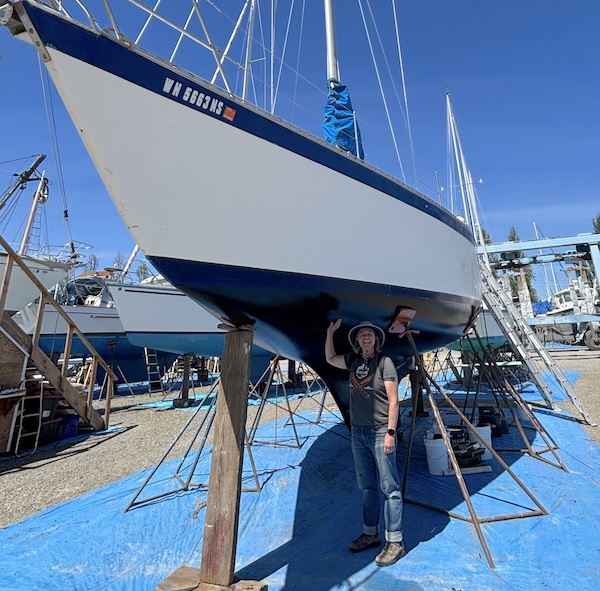
Point seven. What is that? Tell me what kind of boat is that? Who designed it? I mean, I love the Columbia 50s, but. So it’s Alan Payne and it is just a it’s a big fat boat. Yeah, yeah, it looks like a I think the best way to describe it when when we were just pulled her out of the water, she looks like a Weeble and I don’t know if he’s like a Weeble wobble like that. It’s just so interesting the deep, deep hole design of that boat.
26:40
Uh, so that, so again, so it’s, it’s a pretty well known boat. mean, the, 10.7, the 35 footers, he’s a very well known designer. He’s designed a bunch and bunch of boats. And, uh, it was, you know, it’s a, it’s a coastal cruiser is it’s rating. Well, let’s see what else about it. is thick, thick, thick fiberglass. And that’s one of the reasons that we’re taking it because we first discovered what an actual dead head is.
27:10
And by walking around Bainbridge Island and looking at these monstrous wood debris, you know, that are trees that again, that’s they get in the water in the current and they are known to take out boats. And they can puncture a hole in your hole in no time at all. But it’s going to be pretty hard for one of those to take this baby out.
27:41
So anyway, so God, sorry, I know it started to get a little distracted there, but yeah. So, okay. Yeah. So anyway, so that’s the, that’s the, it’s a modified, modified keel design, you know. Have you made any other changes to the boat for this either of you? So our furling system kind of went kaput. So we just decided that, uh, well, you know, it was probably a little easier in probably a lot of conditions or six of us. So.
28:08
We could hank it on better, hank different sails on as the conditions change. So we have done that. So we’ve taken off the furling and we’re putting back on the stay. And um we have a, what, a 90 % jib and a storm sail and a drifter. We got a drifter for the light winds. We decided that was probably our best option for light winds and a pretty large genoa. uh Our main has two reefs.
28:37
We’ve got new stuff set up for that with the traveler. So it’s a brand new sale. Yeah, we have a brand new sale for a jib in our main. we feel really, we feel the last one that came with the boat was kind of blown out with. We really noticed a difference when we brought the boat up to get on the hard from Kingston up to Port Towns. We were like, wow, hey, we got to start moving in this thing. She can scoot. Yeah. Are you worried about that? mean,
29:06
Because parts of it will be heavy wind. I think the Columbia 35 or the 10.7 is a heavy boat. so you’re going to need a bit of wind to get through the… And where is the prevailing wind coming from? You’re heading north. So I don’t know much about setting up there. So prevailing should be that we’re beating the majority of most of time. And neither do we.
29:36
know that much about we know wrong answer. It’s northwesterly. So so it’s gonna be a bit more of a beat than anything else. And yeah, like 10 knots, eight knots and what from zero to 50 honestly, mean, there’s times 40 up here at the at the lighthouse, you know, I’ve been tracking that does you know, 40 knots.
30:04
So I would expect us to actually to experience that. Yeah. I’m thinking summers, what summer, you know, what happens to the weather up there in the summer? know it’s pretty, pretty big systems come through, but are they done by that time of the year? No, no, no. The race, some of the stuff you read about the race is they chose June for the most unpredictable of weather.
30:33
that they could place this race in. So we’re pretty much guaranteed to have it be a lot of different things. The plan of the race was that. Exactly. was purposely planned for this time of For unpredictable weather in So what are you most focused on for the boat, on the systems right now? What’s the most important thing do you feel?
31:00
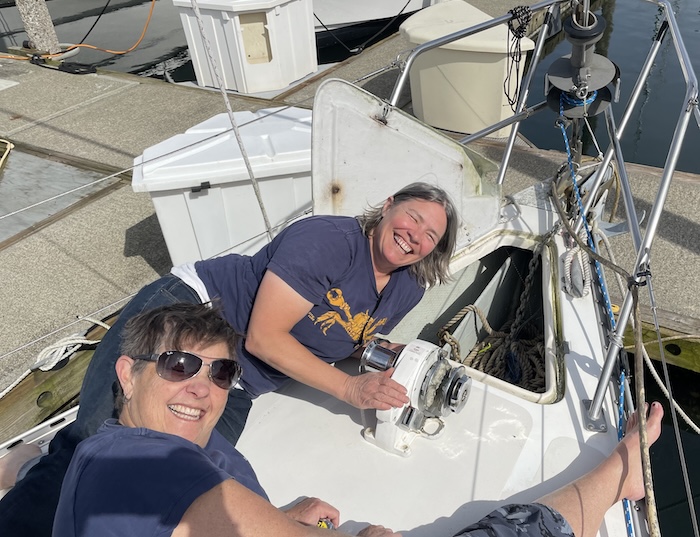
Well, we’re the anchor, like we were saying about the anchoring, because what we found out is that the boat, we thought we could just throw a windlass, manual windlass on there and kind of do something kind of funky and just make everything work. But it turned out the boat really wasn’t designed to have a windlass at all. It was designed to actually have just pull it by hand. So we are having the whole the hatch and everything rebuilt and structured and actually.
31:27
We’ll say you can talk more about this, the custom oh fittings that are being made by one of the bronze workers up here to attach it. So that’s actually, that’s the next big, big function that needs to be finished by next Wednesday. And so that’s, that’s on it’s that’s that’s happening though. Pete, our guide Pete is on it, man. He’s awesome. We love Pete. amazing. We love all the people who have been up here helping us. are incredible people up here helping us. So
31:55
that big system needs to be taken care of. And then we just got the the pedal drive system installed. And there are a couple little things that we have to sort out there. that we actually have a functioning system. But we have a pretty, pretty bad ass pedal frame. mean, it is.
32:20
It is a thing. It’s awesome. Thank you, Anton. Thank you. Thank you. Oh, man. I want you to take lots of pictures. OK, we have tons of pictures. You can follow us again. We’re posting them on Instagram. We’re trying to get those up. But yeah. So Sarah, there any scenario, any failure scenario that keeps replaying in your head that you worry about? Well, I unfortunately, there’s a
32:48
kind of a docu series on prime about the R2AK that compiles numerous years of races that you just get, of course you didn’t see all the failures and all the things that break and all. So I think I’ve seen that one too many times. So for me, it’s like the rig, right? I mean, I don’t think so. We have gone over it. We have people have gone over professionals, but I’m like, I would hate to lose our boom. or their backstay or anything that really
33:18
is dangerous, but also would put us out of the race. So I think that we have spent a lot of time. We thought we would do this race in 25, but they went from every year to every two years running this race. So it’s kind of been lucky that we’ve had so much other time to go through our systems and replace things that we think are not really installed correctly or need to be get beefed up. But yeah.
33:47
You know, I would hate to, I would hate for that to happen, but you know, that probably plays in my mind more. I don’t think it will. We’ve done so much work and it’s really a hearty boat. we’re, know. Yeah. Yeah. Sounds like it. How are you preparing physically? We’re climbing up and down. We’re climbing up and down. Ladders. Holding,
34:17
Yeah, wasting that pedal drive holding holding holding it up that way. So during the boat thing. Yeah, exactly. Are you having any experience with sleep deprivation? I just did what I did the the tall ship because we were on on watch four hours uh out of every 12. So four eight, but it would be like in the middle of the night. So it was really
34:46
you know, your sleep just gets really, it just gets messed up. it did, interestingly enough, after a week, you just kind of get used to it. You know, it was, you know, and with people too, it’s helpful. So we have crew and we’ll be up with our crew when we’re on watch. And I think that that helps you. Do you know what kind of watch system you’re going to have? We actually have somebody, yeah, we have somebody who’s actually, who’s working on that and who’s kind of doing,
35:17
a lot of research on that, talking to a lot of people and then I think it’s going to be a three on three off situation. But she’s managing that part. Yeah. OK. And I should tell you too, there’s a really neat resource called um it’s called Polyphasic Sleeping. And it was developed for NASA by uh one of the researchers, guy named Claudio Stampi. And he did the uh
35:45
back when it was the Whitbreads. he’s so you can go look at him up, look at his stuff. It’s really amazing. em He was he mentored me when I was single handing and he loves sailors. So it’s so cool. Claudia, that’s great. Look it up and maybe there’s something you can use. Yeah, thank you. Yeah. So I have a question here about the role. What does the role of humor play in surviving something like this? And I think you guys are all set there.
36:13
Yeah, you should see it when we all get together. It’s quite a scene. It’s quite a scene. of fun. Yes, we’ve already been told. Oh yeah, you guys are like going to be the fun team. I know I want to be. I want to go. Yeah, exactly. know exactly. mean, that’s how we’ve. Yeah, come on. You want to come back down? We’re still trying to sort that out. No. No, no.
36:40
Although it’s downwind now. It’s exactly. What kind of food are you bringing? So Anna, so Anna is our crew member from Alaska and she’s not from, she lives there, but she is a huge backpacker, outbacker, does all the classic Alaska stuff. So she is making all of our dehydrated food for us. She’s making it. Oh yes, she’s doing all of it. So we have a very varied
37:09
She brought some down. She came down when we were going to bring the boat up to Port Townsend. So we got to try it out and it’s mostly veggie, know, beans, some. It actually, I was a little hesitant, I’ll have to say, being the carnivore that I am, that our meals are, the dehydrated ones are mostly vegetarian, but there was quite tasty. And so she has made multiple different things for our main meal.
37:37
I did request some eggs. I didn’t feel there was enough eggs in our lineup. So she’s adding some of that. And she’s been very receptive to the uh egg somewhat meat eaters. So a bunch of snacks. She’s just really got it dialed in. Love it. I mean, because it’s just a huge thing that is kind of been taken off our plates to work on the boat and do other logistic stuff. But yeah, that’s oh, and we have a giant just my
38:05
My favorite, Shelly’s not kick care less, which is more for me, eight pounds of peanut butter. So I’m very excited about our peanut butter addition. Yep. Yum. And so you’re not going to all eat together. Are these little things you can just heat up somehow and just eat it when you’re off watch? Yes, exactly. Because it just requires the water for all the dehydrated foods. So that really was key to be able to make their own with the boiling water.
38:35
Yeah, and obviously you don’t have a water maker. No, no, correct. So you are allowed to stop to, just as you can, you know, you can have a support team, but you can uh get water, reprovision, things like that along the way. But then that takes time and then your time gets longer, Right. Exactly. Yeah.
39:01
I know, I mean, I know you say it’s a race and it is, but it’s more of an endurance thing, right? We just don’t want to get disqualified by having a, they have a boat that leaves Victoria called the Grim Sweeper. And if it catches you, you are out. So we have to stay ahead of the Grim Sweeper. Oh my God. That’s the key people from taking forever to finish, right? Yes.
39:28
I expect more from you guys now. Oh, it’s not going to happen. Oh that’s not going to happen. From the Hellenities. That’s that’s right. Exactly. Oh my God. You are listening to the Good Jibes podcast brought to you by Latitude 38, West Coast Sailing Magazine since 1977.
39:49
Hey good Jibes listeners and Latitude 38 readers. Have you looked in our classy classifieds lately? It would be impossible for us to know how many boats have sold to new owners over the last 45 plus years of publishing Latitude 38. But we’re sure they have helped countless people realize their sailing dreams. Every month there are new boats listed that will fill someone’s sailing adventures. If you have a boat you want to sail or are looking for that next boat in your life, the pages of Latitude 38 will surely have something to suit your fancy.
40:19
Pick up a magazine at a local marine business or visit our classy classified pages at latitude38.com to find boats, gear, job opportunities and more. Then tell us your next sailing story. So I’m going to switch gears here for a little bit. So Kat, you’ve been really involved with volunteering for women’s sailing programs, right? And why is that important to you? I just, you know, I…
40:45
Even just what you said even earlier, you know, think a lot of people are dissuaded or don’t think that they can enter into sailing who haven’t grown up with it. um And I just find that there are a lot of women, there are so many barriers. I mean, that’s one barrier. then just, just there’s so many barriers for women to get on the water, onto boats. You know, it’s, it’s very challenging, right? So I really like to volunteer and just bring my
41:15
enthusiasm and my just encouragement to any women that I sail with and just try to get them to acknowledge, yeah, you don’t have to grow up sailing. You can do this at any time in your life. And what you have to do is you just have to find people who can support you doing that. So you can get out that time on the water, because that’s the biggest thing. Time on water is just that’s the teacher, right?
41:45
and to find people who have boats and just connect, right? The community, it’s all about making community and getting people out there. And then just, you know, things start to open up. So I just, I just like with Sarah, you know, she had a boat, but she hadn’t really been sailing it so much. I just said, just come on my boat, let’s go. Let’s sail, sail, sail. And then we’d sail and then we’d go over to her boat and then we’d work out her systems. And then we got her boat out and then we were sailing her boat, you know, and then we’re bringing more women.
42:15
onto her boat to go sailing. So it’s just, I just really love that. yeah, I just love, I don’t know, love, women are just so amazing and they just don’t realize that they are as amazing as they are. They lack the confidence, but they have the knowledge. So yeah. That’s a profound. I sailed for 17 years with my former husband. And when the last day, when we broke up and the last day I was around our boat.
42:43
I got off the boat and I couldn’t tell you where the main Halyard was. And that was sailing for 17 years on that boat. And, you know, eight years later, I single handed to Bermuda, but I, but I realized I learned a lot. that 17 years was, was not for nothing. I learned a lot. had a lot of knowledge. I didn’t realize was there. I just, and I think a lot of women don’t realize that that that’s there. It’s there. You just have to have an opportunity to use it.
43:12
to try it. That’s right. That’s right. Yeah. And Sarah, you’ve sailed with now big crews, right, when you went offshore. Yes. What do you think makes a good teammate for being offshore? Probably calm in a perceived emergency ah is the best. That makes the best teammate. You don’t have to perhaps know how to solve a problem that arises or.
43:38
uh what to do, but being calm and being okay and having the confidence that we can get through it together and work together. That is really, that’s the best teammate to have. Yeah. I think women are really great there. Yes. You know, we like to mentor each other. We like to explain things in a, in yeah. I just think we’re doing really well there. Yeah. So this is for either one of you.
44:07
Do you feel like races like the R2AK are changing the image of what sailing can be? It’s a good question. don’t know because I mean, there are just so many different boats, right, in the race to Alaska. It’s not just sailing. mean, there are people putting things together, like the boogie barge. I don’t know if you’ve seen that or not. You’ve got to check out the boogie barge. Is that one of the boats? Yeah. I mean, people do it on kayaks, down at paddle boards.
44:37
Rowboats. Rowboats. Yeah, people row. I mean, it’s just, it’s so unique in that way. And I think that that’s what drew me to this race is that it’s not about a one design race, you know? It’s not about everybody looking exactly the same out on the water. It is just, it’s just a, whatever, know, bring whatever you want to try to do this, to try to do this adventure. All are welcome, know, crazy as fuck. So I don’t know, to be honest with you, if it changes.
45:03
Like as far as for me, anyway, I don’t see it as changing the perspective of sailing per se. But it does anyway, because it’s the diversity of it. It isn’t just like an America’s Cup boat or a J 105. is like it’s it’s a whole mix of crews and boats and propulsion and like, look at this, look at this beautiful water and look at all the different ways we can enjoy it. Yeah. Yeah. And have an adventure. think that’s the best lens for this is that
45:33
It’s a way to really experience and have an experience on the water that isn’t standard. you know, like seeing that documentary and seeing these people and these little teeny crafts and this man came over from France and his little hobi with his one sail and he’s rowing with his little sail and you just go, yeah, yeah, you know.
46:02
Yeah, you can get out there in that water. You don’t have to take a cruise ship or a big boat or that part was very inspiring to see how much I think maybe we have gotten away from a lot of water of being able to sail across the seas or have that away as being our transportation. And this kind of gave you a little window. I’m like, yeah, you can just like get yourself up the inside passage.
46:30
Exactly. ah Have you had anybody reaching out saying, um after meeting you guys and seeing what you’re doing, you know, say like, oh, maybe I can do this. No, no, no.
46:46
More like maybe I shouldn’t do this. No, I’m only kidding. think you guys are inspiring. Honestly, have heard, uh I’ve heard from several people, especially from the Yacht Club, who by the way, the Hapnubia Yacht Club has been an incredible supporter of ours. And just big shout out to them and all of the people who have been supporting us. I’ve heard from several people that they really do wish they could be a part of something like this. People want, it’s such an amazing uh project.
47:16
to be a part of and just all the different things that we’re doing, you know? And all the people that you meet along the way. It’s so phenomenal. are pretty amazing. Like, you know what I mean? Sometimes you think, you kind of look around, you’re like, things are pretty awful, you know? And you’re just like, God, you know what? Actually, people are pretty amazing. oh So it’s really, yeah. So that’s been great. And I definitely have heard that. Yes.
47:45
Not necessarily that they would want to truly do the race, but they would love to be a part of the project. Yeah, yeah. I had a similar experience too with just people helping me. I mean, it’s like, yes, I sailed to Bermuda by myself, but I didn’t really because I had a whole plethora of wonderful human beings who came out of the woodwork to help me get there, to make sure that I got there safely. Yeah. Yeah. And that was very wonderful. Yeah, it was special.
48:14
All right, so one more. One more. We’re going to tack again. So this is this is a part of the show that we call short tax. And so there are I think Stephen Colbert stole it from us and does it. Stephen Colbert question. But we had it first. But so I’ll just ask you quick questions and you just give me one or two uh answers to it. I’m going to ask you both first and I’ll start with you, Sarah. What’s favorite sailing book? The Pacific Lady.
48:42
by Sharon Sights Adams. Oh, OK. And Kat, what’s your favorite sailing book? The Complete Sailing Manual. I love that book. Oh, that’s good. Sarah, what’s your favorite non-sailing book? uh James and the Giant Peach. Oh, sweet. OK. And Kat, you’re not going to answer that one. Bay Sailing or Puget Sound? It’s impossible. She’s thinking. It’s impossible. That’s the answer.
49:12
It’s impossible. It’s impossible. Okay. Sarah, coffee or sleep? Oh, coffee. And Kat, what boat do you want to own someday? Oh, that’s a good question. I gosh, I don’t know. To be honest with you, I really can’t answer that right now just because I own two boats right now. don’t.
49:42
Maybe the answer is no boat. Maybe one boat. Or sailing on somebody else’s. The next boat will be a van. Yeah, there you go. Sarah, what’s the most overrated piece of sailing gear? Gloves. Gloves. They’re overrated. OK. What’s the most underrated? Gloves. No, I’m just kidding. I don’t know. I saw your question. I was like, I don’t know, but the underrated. I need all my things.
50:11
It’s hard for me to say. I fill my pockets with my knife and a little bit of line and I don’t know. For me, it was a knife. Yeah. I don’t ever step on a boat without a knife. Yeah. a life uh jacket. And Kat, what’s your favorite anchorage? Oh, well, I’m hoping to discover some new anchorages out this way, but I will tell you, mean, I’m just going to go with Port Townsend. Really? Nice.
50:41
Yeah. Not, I mean, not in the bay, not some, no place. Yeah. mean, it’s, yeah. I mean, I, China camp, I love China camp. love that anchorage over there. Okay. Sarah, what’s some, what’s your favorite place you’ve ever sailed? Probably the, the, the Tenerife to Argentina.
51:08
That’s just that water and that wildlife is outrageous. Okay, Cat, what’s the one thing you always overpack? Cat doesn’t overpack anything and that’s a problem. Yeah, so this is a real serious issue. Hopefully I had come with something to wear. God, well it’s cold. Make sure you get a jacket at least.
51:36
I’m just keeping that on the books. don’t forget. But yeah. Well, I’m going to stick with you, Kat. What’s the most important seamanship lesson you’ve learned?
51:44
Ooh, that’s a really good question. think the main thing is not to um overreact and to just pause. It’s taking the 10 to 30 seconds to sort out a situation before reacting to it is often the best course. So that’s what- people know, it’s like, think about this, the boat’s only going six knots. Yeah.
52:06
You’re not on a freeway doing a Exactly. That’s good. That’s right. Yeah. Yeah. Like, yeah, we’re okay. Like take a look around. We’re okay. Yeah. Okay. Yep. And Sarah, what’s the one skill every offshore sailor should learn? There’s so, okay. Uh, I would have to say, stay on the boat. Okay. So clip in. Always clip in. Yeah. Always. If you go over this day on the boat. Yeah. If you go over in this cold water, you’re not going to last long. Nope. Nope.
52:36
All right, I’m to go back to Cap. Who’s inspired you most? Hare. Pip Hare. Interesting. Pip Hare. OK. And what about you, Sarah? Who’s inspired you the most? Well, it would have to be Sharon Adams from The Pacific Lady. mean, she was the first woman to solo to Hawaii in 1965, I think, and then crossed in 1969 from Japan to San Diego.
53:05
first woman solo. was, I mean, it was in the 60s. They didn’t have navigation. She had a ham radio that only worked when you got close to the shore, right? I mean, it was probably one of the most inspiring women sailing stories I’ve read. Have you read anything about Naomi James? I’ve not. Oh, go put that on your list.
53:33
Okay, Naomi James is a British woman who sailed around the world. Her husband was a very famous professional sailor and he actually died on a boat, but she went around the world. She’s one of the first women to do it and her book is very inspiring. So this is for both of you. em Who’s most likely to miss a tide gate? Oh, Sarah. Sarah, who’s most likely to insist we can still make it? Sarah.
54:03
Who’s the better navigator? That. Who’s the better mechanic? Sarah. Maybe marginally. OK, who’s most likely to hallucinate first from lack of sleep? I’m going go with Sarah. probably. Which one of you will be harder to live with after five days of being wet and exhausted? Both of us. Both of you. Yeah.
54:32
I think you’re looking forward to doing at the end when you get there what’s the first thing you’re going to do when you when you finish. The bell. Cheeseburger haircut tattoo and I don’t know what order.
54:52
Nice. So some final thoughts here. What do you hope you feel when you finally reach Alaska? I mean, I have to tell you, I think we’re going to be so proud of ourselves. mean, Sarah and I have been really proud of ourselves the last couple of days, even just installing what we just did. But I think we’re going to be super proud of what we’ve accomplished. Just this whole project. yeah. Elation. Yeah, elation. And maybe a little uh sad that it’s over.
55:21
I think I’m going to be a little like, okay, wow. mean, you know, there’s going to be a little down part from, I mean, this has just been really hard and fun and exciting and hard, but I think I’ll miss it. Yeah, I always miss it at the end. I know when I got to Bermuda, I didn’t have an engine. I had a big problem and I had to go in Mediterranean style. And luckily there were actually people there that I knew.
55:49
um on big boats and they helped me with their dinghies. But when I tied off and I stepped off the boat and the customs woman said, welcome to Bermuda, captain. And I was like, Oh my God. That is great. Yeah. That is excellent. Yeah. So what do you hope listeners take away from your story? Go out and do it.
56:16
Just, you know, get out and get off the couch and go do something exciting and fun and bring your friends with you or make friends along the way. Yeah. Just just try. That’s all we could do is try. in the in the trying, this has opened up this whole world of different avenues and different options and opportunities. So, yeah, I people do whatever it is, whether it’s sailing or boating or not. Just try it.
56:45
Opens up pathways. Yeah. Yeah. So tying into that, because my next question is, what would you say to somebody who’s like, or thinking, you know, I could never do something like this. What would you say to them? You, of course you can. Of course you can. Of course you can. Yeah. Yeah. And finally, oh, go ahead. You go ahead, Sarah. Oh, I was just saying some of the times it’s just, it’s the baby step. Like you see us at this point, but it took a lot, a lot of baby steps to, to get to.
57:15
getting to enter, to getting accepted as an insurance, I mean, because we had to apply. So it’s always baby steps. And what’s next? Catching a flight here in a couple hours. So. After the race cap, what’s next? Well, I think I to bring, I would love to bring the boat back to the bay. So sail down from.
57:45
from here down to San Francisco. Before I really wrap this up and close it, is there anything you want to leave our listeners with? We’re just, we’re so thrilled. Thank you so much, A, for the opportunity to, you know, to talk to people about this, because we’re just so excited to do it. And again, we just want to encourage anybody to go out and do things again. You can’t finish a project until you start a project. So just start something. There’s nothing better than starting a project on a boat.
58:14
Just get out there and get boated. Yeah. Yeah. Yeah. And it’s just really been amazing. I mean, we have like these crew members that we some of them we didn’t know at all. I mean, didn’t know the next person, the next person. And it has just really opened up this community of people that we have found that just kind of was organic to.
58:40
that wanted to do this with us and have come along with us and that are gonna be our teammates. And sometimes just, I would say, look for those opportunities. It’s pretty surprising how things can turn out if you just say yes. Good one. Just say yes. Just say yes. say yes. oh So, um well, that wraps up another episode of Good Jives. And a huge thank you to Sarah Curley and Kat Hartman for sharing their story, their preparation.
59:10
and their willingness to take on one of the wildest endurance races in sailing, the Race to Alaska. You can follow their adventure and learn more about the Race to Alaska at their website. It’s R2AK.com. And as always, for the latest sailing news, stories, racing coverage, cruising adventures, and podcasts, be sure to subscribe to Latitude 38 at Latitude38.com.
59:35
Thank you so much for listening and for being part of the sailing community. Without you, the listeners, there would be no Good Jibes podcast and we’re grateful you continue to come along for the ride with us. I’m Moe Wieneke and I’ve been your host today. Until next time, take the word impossible out of your vocabulary and dream big!