

Episode #259: Andy Schwenk on Sailing a Schooner, With Host John Arndt
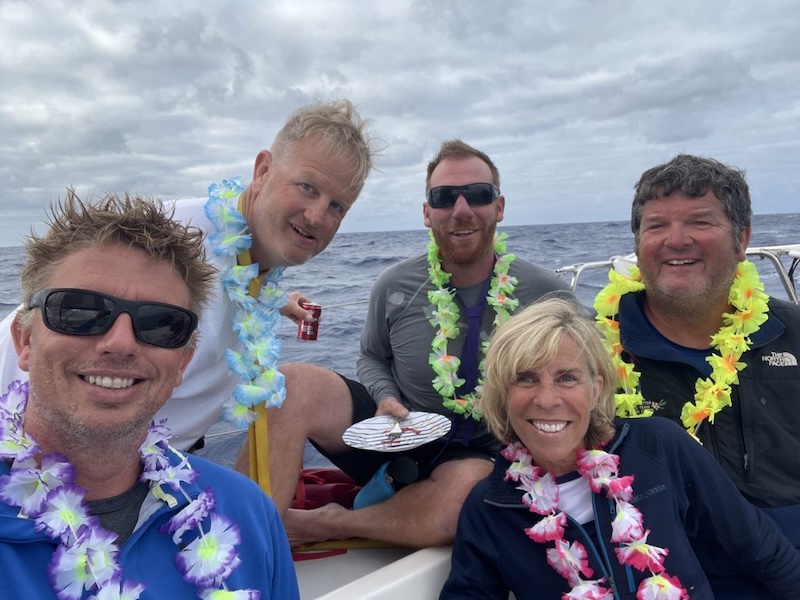
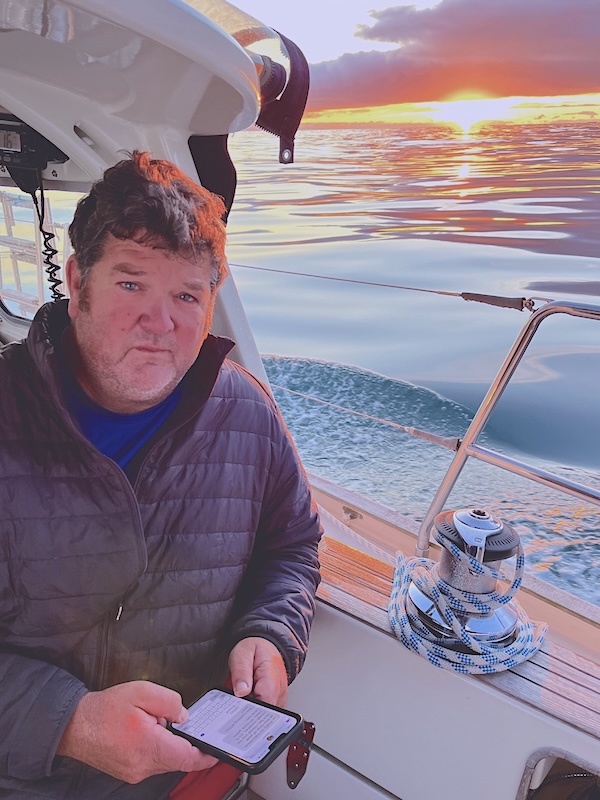
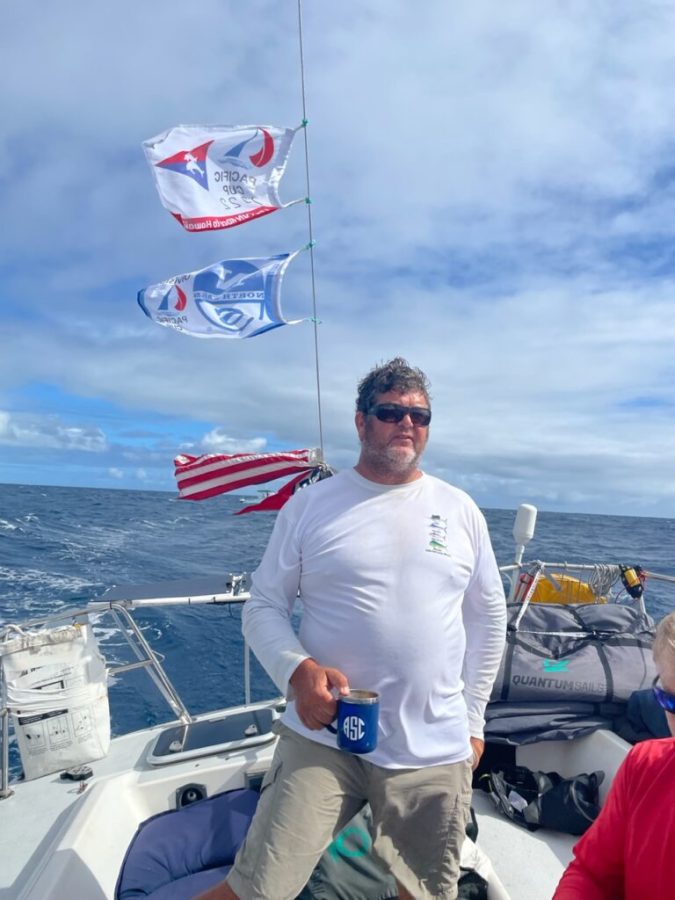
In this episode of Good Jibes, we chat with returning guest Andy Schwenk about sailing a schooner and what’s new in the world of sailing. Andy first appeared on Good Jibes Episode #82 in March 2023, and has sailed a million miles since then.
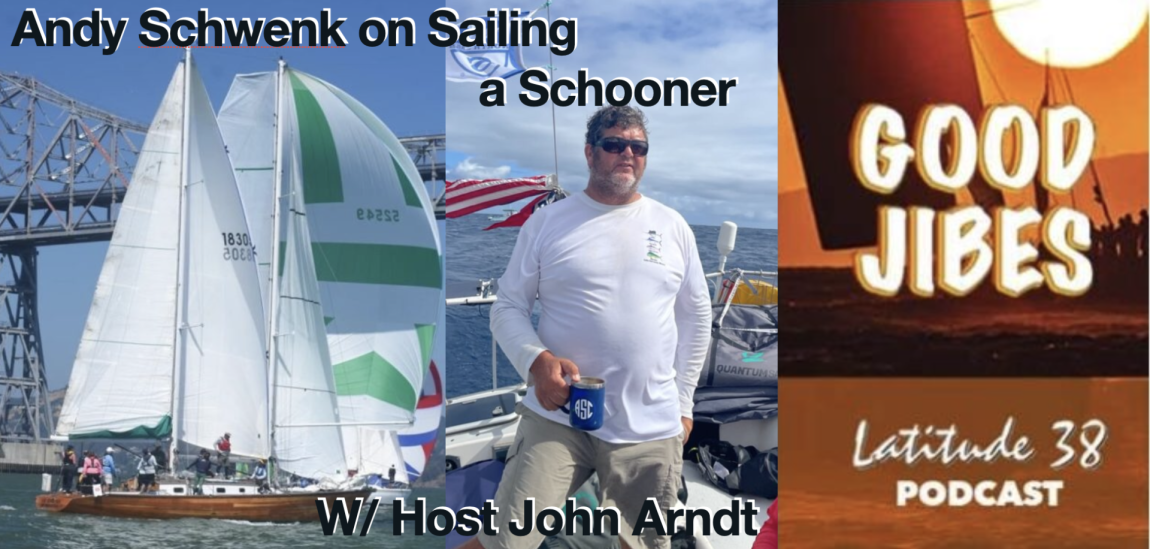
Hear how racing to Hawaii has changed over the years, how to get ready for a race to Hawaii, the software and technology required to sail fast, what it’s like sailing a schooner, and what you should look for in an old boat before you write the check.
Here’s a small sample of what you will hear in this episode:
- A $22,000 check from a childhood friend’s estate that closed the deal
- Why AI-controlled autopilots might be the next fight for race committees
- The three things that determine a race result
- From Express 37 to schooner to eyeing the Moore 24 50th Nationals in Santa Cruz
- Andy’s mom’s rule: Never go out on a boat shorter than your age
Read Andy’s articles on the 2026 Pacific Cup: https://www.latitude38.com/lectronic/andy-schwenk-knows-win-pacific-cup/ and https://www.latitude38.com/lectronic/high-times-2026-pacific-cup/
Listen to the episode on Apple Podcasts, Spotify, and your other favorite podcast spots — follow and leave a 5-star review if you’re feeling the Good Jibes!
Check out the episode and show notes below for much more detail.
Show Notes:
- Andy Schwenk on Sailing a Schooner, with Host John Arndt
- [0:14] Welcome to Good Jibes with Latitude 38
- [0:38] Welcome back aboard, Andy Schwenk
- [1:35] El Niño 2026 is the strangest conditions since 1982, greasy calm down the coast and 100+ degrees in LA
- [4:20] How the Pacific Cup has changed since 1977
- [6:43] Flying four headsails at once
- [9:29] How to prepare your own boat for a Hawaii race
- [13:17] Handicap racing to Hawaii, GPS routing vs. old barometer wisdom, and why AI-controlled autopilots might be the next fight for race committees
- [17:05] Check out our Classy Classifieds at Latitude38.com
- Sailing a Schooner
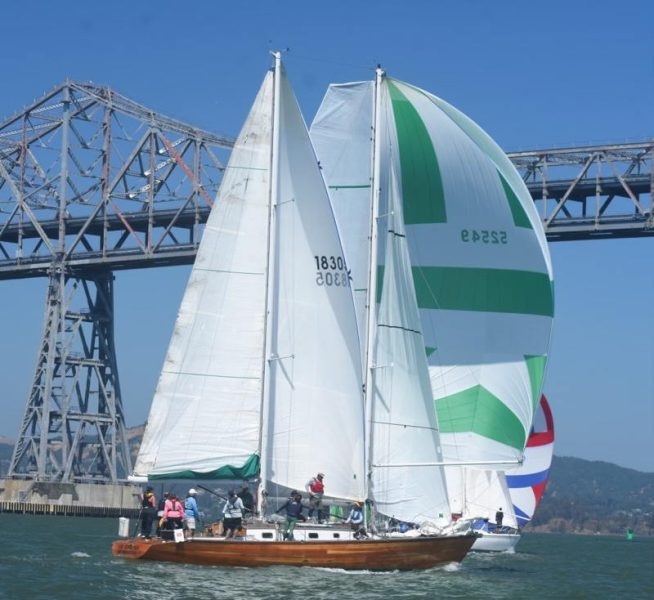
- [17:32] Sir Edmund: cold-molded Port Orford cedar, a bronze keel with lead poured in, and a $22,000 check from a childhood friend’s estate that closed the deal
- [20:48] What it’s actually like to sail a schooner
- [24:04] From Express 37 to schooner to eyeing the Moore 24 50th Nationals in Santa Cruz
- [26:55] The three things that determine a race result
- [29:18] Everyone around Andy when he was rescued at sea was under 30
- [33:14] Want to sponsor Good Jibes? Email [email protected] to learn more
- What’s Next
- [33:42] What to look for when buying an old, cheap boat
- [39:45] Schools, clubs, and community sailing
- [42:39] Andy’s mom’s rule: Never go out on a boat shorter than your age
- [44:07] What’s next for Andy?
- [47:58] Book recommendations: The Wager by David Grann, Into the Raging Sea by Rachel Slade, Two Years Before the Mast by Richard Henry Dana, and Astoria by Peter Stark
- Check out the October 2026 issue of Latitude 38 Sailing Magazine
- Make sure to follow Good Jibes with Latitude 38 on your favorite podcast spot and leave us a 5-star review on Apple Podcasts
- Theme Song: “Pineapple Dream” by SOLXIS
Transcript:
Please note: this transcript is not 100% accurate.
00:03
My mom always says you shouldn’t go out on a boat that’s shorter than how old you are.
00:14
All we’re casting off again for another episode of Good Jibes. I’m John Arndt, the publisher of Latitude 38 and the host of today’s episode of Good Jibes, a podcast about sailing through the eyes of the West Coast sailor. And we cover offshore, inshore, racing, cruising, fixing boats. It’s all brought to you by Latitude 38, the sailing magazine for West Coast sailors since 1977.
00:38
And today we welcome back Andy Schwenk who was last on our podcast, I think around number 80 or 70, something like that. So 150 episodes ago, a couple of years, few years, but he sailed a million miles since then. So we wanted to bring him back and catch up with some new things that are happening on the water, his sailing life and what he can bring to us. So thanks Andy for joining us again. Yeah, glad to be here. Thanks John. Yeah, great. Well, yeah, I wanted to just…
01:07
jump into some things and you know, I think of all the miles you sailed, you’re just finishing a delivery, I think right now down the coast of California, right? Yeah, just sitting in Long Beach. got in about 1 a.m. last night, pulled into Cabrillo, Way Marina on the boat I sailed to Hawaii back on the summer called the Halava to Andrew’s 56 owned by Kimo Winterbottom out on kind of Pleasanton by way of Kaneohe. Ah, fantastic.
01:35
No, that’s that sounds great. How was the sale down the coast? It was just greasy calm. It’s this has been the strangest years since 1982 was actually my first time I sailed to Victoria Mallory race was El Nino year. I think this is the first one first big one since then anyway. And so just happened we were between storms here and it was just greasy calm and it’s hot. It’s 20 degrees above average, over 100 today here in L.A.
02:03
Oh really good grief well yeah it’s been warm up here as well it’s it’s a whole 10 degrees cooler than l.a. I guess but that’s still bloody hot up here you know what in one story we’ve been following along the california coast which kind of blows me away is this woman cat breed who’s been swimming from oregon to mexico and we talked to heather richard who was on the on the uh… skipping the sailboat down the coast and she went down they said they anchored every night
02:29
along the Big Sur coastline, say between Monterey and Point Conception. And it seems kind of amazing, but I’m guessing you did it as a straight shot down the coast. Yeah, it’s 320 miles from San Francisco to Long Beach. And we burned about a gallon and a half an hour at eight knots and came in with 10 gallons to spare. we actually, it was on my mind. was like, generally I carry a couple extra jerrycans.
02:57
Just for situations where they start feeling that hair on the back of your neck, like, Oh, wonder fuel tanks draw like a water tank. The draw is off the bottom of the water tank. So you can get everything out of a water tank, but the way a fuel tank works, it has a tube that drops into it and it sucks up this tube. And the question is always, how far does that tube reach down into the tank? then when the fuel sloshes back and forth.
03:25
Yeah. Makes it a little trickier to get that last couple of gallons out of the diesel tank. And sometimes that’s not the fuel you want on these older boats. For example, the boat, uh, Halawa, she was built in 92. And a lot of times if people aren’t diligent about using the biocides and their fuel, then the tanks can get foul and that piles up at the bottom in general. Yeah. Yeah. No, you may not want to use that last gallon. You may not want to drink the last gallon of water either, but, uh, that’s if your engine conks out, yeah, that could be more, more dramatic.
03:55
How was the race to Hawaii this summer? And maybe El Nino year was it, you’ve done that a lot. What was the different standout? Yeah, it’s become the sailing hasn’t changed all that much. Um, it was kind of interesting. You said the magazine has been around since 77. I think that’s the first time I sailed a 77 or 78. Uh, I have to have an old t-shirt from 78. So I know I was selling 78, but I might’ve been out in 77 and,
04:20
Still, a lot of the boats are the same Cal 40s. They were around Islander 36s, J35s. So the boats haven’t changed all that much, but the technology is just, you know, when we first sailed, I remember laying out the pilot charts, which are charts that the old sea captains would make reports. They’d put these little symbols all over the chart of for whatever month you were looking at, which way the wind generally blew.
04:48
For us coming out of the Northwest, it was always like, well, you head South until the butter melts and then turn right, you know, and, just old adages. There used to be off the coast of California, there was a, uh, it was called Ocean Station November. And, uh, that was kind of where you’d sail South and then start to fade, right? So there’s all these kinds of typical things that had worked in the past, but now with, uh, the Starlink technology and, uh, the integrated with computers and the boats have.
05:17
software that shows how fast it ought to be going and you tie that in with the weather. So it’s really become a navigators challenge to keep the boat moving. they’re some of these boats, the navigators spending, you know, 14, 16 hours a day in the chair, trying to get the boat point in the right direction where this is a workout on deck hasn’t changed. You’re still flying. Maybe well, I guess asymmetrical spinnakers are new and, and now, now they’ve got outrigger poles now in a lot of the
05:47
bigger boats holding the smaller boats to holding the genoa is out to Lured so that you can get Stacil set inside. So it’s not uncommon to see some of these race boats going with two or three, uh, four cells now instead of just a spinnaker or a genoa. Yeah. I remember, I think I saw that on, um, Ron Epstein’s JPK 1180. And when they were doing the, um, the Sydney Hobart race and they had a ACM and then two, two heads set inside of that. And then a main cell, think.
06:16
you know, and screaming along on a reach. so how does that, how does that, what do you call that? An outrigger that, cause that’s a new term for me on the holding the jib out. Yeah. So typically as if you have compared back in the day, a lot of people are familiar with having a reaching stretch coming off the mast to help when you have a spinnaker pole up on a close reach. Um, but this is the opposite where you’re extending a pull out to Lured and it holds the jib cause it holds the jib.
06:43
Out wide because you know as you sheet in the sail it brings it into the center line of the boat You know, you’re not only pulling aft on the corner. You’re pulling it in board and that kind of jams up the slot so this keeps the slot open and so for example, the most we ever flew is uh we’d have an asymmetric, uh spinnaker flying off the uh pole on the front of the boat and uh the pole on Halawa she’s a 56 footer overall length
07:11
but the spinnaker pole coming off the mast is 27 feet long. So that extends the, the spinnaker quite a bit off in front of the boat. And then up the, and up the forest day, we’d fly the storm, we have up to forest day, and then we’d have a stacil set inside of the forest day and then another stacil set inside of that. So we’d have two stacils, so total of four head cells go in at once. Good grief. You did that on this year too, in the Pacific Cup? Yeah.
07:40
And what happens though, each sale has to be sheeded in sequentially tighter than the one ahead of it. So that’s why you got to get that first one extended out to Lured so that you can have room for the other one. So doesn’t get all otherwise they just get all stalled out on top of one another. Wow. Great. seems like, yeah, there was a period where there were fewer stacils being set, but that sounds like we’re going back. And of course the era with bloopers, you often had tall boys or thin stacils in there to keep flow going behind the main, but
08:10
sort of over time there were less Stacyls, but sounds like we’re expanding the Stacyl inventory these days. Yeah, everything as old as new again, and it just, we’ve been setting Stacyls, like I’ve got a scooter myself with two masts in it. So that even complicates it to another level. So now you’ve got two masts and spinnakers and Stacyls and it keeps the crew busy. so if you have the time and you can get the crew to show up to practice what we did.
08:38
on westerly in 23 when we were training for the trans pack as we’d come down and we’d set the boat at 110 degrees, know, apparent wind angle and, and try different combinations of sails to see, know, should we have a asymmetric spinnaker? And then boats carry different asymmetric, some are cut and smaller, depending on how much wind you’ve got and these kinds of things, how many stacils, you know, and then whether you have to put a reef in the main, the boat can only handle so much power.
09:06
And we tried different combinations to try to, they call it your crossovers when you go from one sale combination to another. Wow. Yeah. Well that’s amazing how technical that is. And I guess that was another question I had was thinking about doing the Pacific cup or the Transpac two Epic West coast races or the Vic Maui. You’ve done all three, uh, in both directions, uh, many, many times, but
09:29
If someone was gonna wanna do that with their own boat, it’s sort of a bucket list item for many sailors. They’d wanna take their boat to Hawaii and participate in one. But it’s a big undertaking to do that. And I’m wondering, when should anybody start as far as, or what would they need to do to get ready? Because my boat, the Sabre 38, did the Transpac in 2016. And I looked at the three ring binder of things you need to do to prepare for Transpac or Pacific Cup.
09:57
And maybe what would you recommend? Guide people who have the boat now and thinking I’d love to do that someday. would you coach them? You hear these adages, know, they know like Warren Miller here, you know, if you don’t do it this year, you’ll be a year older when you do. Real famous sailing couple of parties. was a, you know, go small, go simple, go now. And there’s a lot of truth in all those things because you never know what tomorrow holds as far as your fortunes and your health and your family and.
10:27
All the other things that affect your ability to take, five, you know, find it, unless you’re going to single handed or double handed, which can be a lot of fun for some folks as well. But in general, most people are trying to find at least four or five other talented, trustworthy people to take two weeks off. And really it’s more like three or four weeks by the time you sail over. most, know, Cal 40 is going to take, you know, better part of two weeks to sail over there. And then there’s a few days. And so you’re looking at a three week commitment minimum and
10:55
Now for a lot of folks, that’s a big chunk, family people. and, you know, and now people ability to work remotely and these kinds of things, there’s a little more flexibility, but for some of the work shifts and stuff, that’s a definitely a bucket list. Like you said, for a lot of folks, it is a bucket list rather than a lifestyle kind of thing. You know, obviously the first thing is for the guys that live around San Francisco, us, uh, take lap around the Farallones.
11:22
That pretty well shakes a lot of the bugs out. And then with our single-handed sailing society, they’ve got a pretty extensive list. But another thing is just get on the Transpac or PacCap website and look at the list of what they require because they can’t give you waivers. So you see the requirements. You’ve got to make that happen. It’s a tall order.
11:49
Yeah, yeah. Well, that’s and also as you’re saying the technology has changed and you’ve got, you know, software that does the expedition that does your routing, the weather routing. I don’t think that’s required unless you really want to try and win. But what is required? Because it seems like you need a real IT software person these days, which is something you wouldn’t have needed in the past. And maybe you don’t need it. But I’m wondering what’s required in that area. I think the minimum I believe right now would be a satellite phone, which is
12:17
pretty much just plug it in and you’ve got yourself a satellite phone. But most, I’d say if not all boats have some kind of integration between the weather, whatever. can’t use outside resources. It’s got to be publicly available. can’t pay some guy. There’s these weather routers that they do it for a living. The races, as far as I know, still don’t allow that. But certainly being able to stay in the wind is, you know, it used to be to watch the barometer and look at the sky around you and…
12:46
And, and then boats would call in each day with their local and they, but the best thing now is pulling down the grip files and you can see there on your screen, on your computer, where the wind is and where it’s not. Usually it’s somewhere you’re not right? Exactly. Remembering it’s still just a forecast. It’s not, that’s been a, wait a minute. This isn’t what the tour brochure said, you know, but, uh,
13:17
Yeah. So that kind of thing is that certainly you’ll get there quicker if you’ve got somebody who enjoys that kind of activity as much as we enjoy being out on deck trim and sales. Yeah. Yeah. Well, and also I’m wanting now the big conversation AI, think world sailing is trying to rule that you can’t use autopilots. I’m not sure. think Craig at Scuttlebutt wrote that recently that there’s a wind, know, change in the wind or weather these days in that maybe autopilots are not allowed and, or, you know, can you use AI?
13:47
to guide your boat because you could connect your expedition, your weather routing and your autopilot. There would still be humans to trim sales, but I don’t know what’s maybe what’s allowed or what’s changing. I don’t know if you know either, but it’s be an interesting thought. Yeah. think all my navigator friends will be out at Home Depot standing in the parking lot. Yeah, that’s funny. yeah, isn’t that crazy to even have that to think that AI is going to outsmart us and, and boy.
14:16
After all the time and effort I’ve seen navigators trying to solve those problems and that would be disappointing to see somebody to slash up a boat to an autopilot and lay waste to the rest of the fleet. yeah, well, I mean, you know, I think that’s one of the conundrums with sailing in general. know, obviously there’s a lot of technology, you know, unlike running the hundred yard dash or playing tennis and other activities, sailing is…
14:42
really incredibly integrated with lots of technology. And so it’s really up to race committees or racers to decide, okay, how much tech do we allow? You know, it’s different racing a laser on around some buoys than racing to Hawaii. And so the Hawaii races have to really think about this stuff. What can you do? And the other fact that all the boats are different. they’ve, they’ve got a real tussle going on with trying to integrate the rating system, trying to use the weather forecasts.
15:11
to make it a fair play. So for example, the boats don’t generally all start on the same day. So one of the ways to do well in the race is make sure you start on the windiest day, you know, because the computer has a really hard time compensating for if you don’t move down the race course and you’re just sitting there. So what happens is if you, the boats in a typical Transpac or Pac Cup from the fastest to the slowest boat might be as much as seven days difference as far as how quickly from.
15:39
From a quick boat might be able to get there in seven or eight days to a slow boat, you know, could take 14 or 15. And, uh, and so rather than based sitting in a way, you know, if we all started at once, we’d be sitting in a way for a week, which I don’t think it’s bad duty, but a lot of people, uh, you know, they don’t want to just sit there and wait for the last boat to finish before they, they sort out who actually won because it’s all on a handicapping system. So the way they try to compensate for that is they stagger into three. Typically there’s three different.
16:08
start dates so that the race, the race post generally finished within two or three days of one another at the other end, which makes it lot easier for organized volunteers. Instead of stringing them out for a week, you can hear everything done in two, three days. Right. Right. Yeah. Well, that’s again, trying to make a handicap racing fair. Uh, it seems like an elusive goal. I think they do a pretty good job and best they can, but obviously every year there’s a different weather system, different conditions and uh,
16:37
Sometimes it’s just not suited to your boat or your start day. But I guess they keep wrestling with these formulas to try and make it as fair as possible. Hey, good job listeners and Latitude 38 readers. If you looked in our classy classifieds lately, it would be impossible for us to know how many boats have sold to new owners over the last 45 plus years of publishing Latitude 38. But we’re sure they have helped countless people realize their sailing dreams.
17:05
Every month there are new boats listed that will fill someone’s sailing adventures. If you have a boat you want to sail or are looking for that next boat in your life, the pages of Latitude 38 will surely have something to suit your fancy. Pick up a magazine at a local marine business or visit our classy classified pages at latitude38.com to find boats, gear, job opportunities and more. Then tell us your next sailing story.
17:32
I’m curious too, since we talked last time you went from an Express 37 to a schooner and you’ve done the race in the schooner as well, but what prompted you get a schooner? That’s a pretty uncommon rig these days. Yeah, it’s a really special boat. It’s for sale right now. I’m plugging it, but if you’re interested in seeing it, it’s Rubicon Yacht Sales. I don’t know if I can say it or if I can’t sell you money. No, we’d love somebody to buy your boat if it’s for sale. Buy an ad.
18:00
So, but it’s a special boat. getting Rod Holt worked at Apple and had the schooner cold molded out of Port Orford Cedar and it’s Chuck Burton’s design. it’s kind of like an Express 37. In fact, it’s 50 feet long, but it rates the same as Express 37. So yeah, isn’t funny. It rates within three seconds. Express 37 rates 72 per foot and the schooner rates 69. So it’s a…
18:28
band of ratings or speed that I felt I could compete in. didn’t, you know, as the boats get bigger, gets to where financially, financially, just don’t feel I’m as competitive. And so, but at the express 37 level and my checkbook, feel like I can hang in there most days in that. And, so anyways, this boat was available and I couldn’t get a loan on it because it was made out of cold molded and kind of interesting sidebars.
18:57
I was about $20,000 short on making the deal on the schooner and, uh, went to my PO box and, uh, gentlemen had passed away. when I was a kid, I used to push his. Dot cart up in the Northwest. We have 12, 14 foot tides makes for steep ramps. And so I’d push the dot cart up and down the ramp and help him. He’d call me when cell phones came in and he’d call me on the cell phone and tell me I was coming to grab his lines. And, somehow in this estate, he found a way to leave me 20 grand. So.
19:26
You’re kidding. I know it was less than 48 hours was left on the schooner deal and I had to come up with 20 grand and I didn’t want to call you. So I opened my PO box and there was a check for $22,000 in my, I felt like, Wow. I guess I’m to buy it. Message from God. Yeah. Yeah. From the.
19:51
Yeah, it also remind people that never hurts to provide a little courtesy and haul somebody’s dock, dock cart. And you never know what’s going to happen. That’s a pretty great story. So you ended up as schooner owner. So what’s it like sailing? You know, the boat is very cool looking. I’m sure most Bay Area’s sailors and many people have seen this bright, varnished hull. It’s such a cool, majestic boat on the Bay or any race course. you know, we’ve been Friday night racing on the same course.
20:18
It’s just, it’s a different scene to see a schooner versus a sloop on the bay. But what’s the complications or fun of sailing a schooner? Well, everything’s a production. put the, you know, as most people know, putting your main up and down for most people, it’s easy to roll the jib out in and out. And most people you see them and they’ll roll the jib out and have a glass of wine. But when they have to go forward and hook the main halyard on, it’s got to clear the lazy jacks. You got to roll it out of the mast. A lot of people did never bother with the main. So now it’s like, guess what? Now you got.
20:48
two to bother with. So there’s that. The center one’s almost square. So it’s just big and powerful and provides a lot of power for the boat. The boat has a 10-foot keel. Oh, wow. But it can be interestingly, again, the Express 37 combination, the four triangles just about the same as the Express 37. And the person who bought my Express 37 still talks to me. But we did kind raid the storage locker for a few sales.
21:18
When I sold the boat, was like, I don’t want to have to buy that sail again. know there’s one in the stores. We were able to use a bunch of the sails off the express, fit pretty well on the scooter. then, yeah. then, and then the quantum sail loft, uh, Will Paxton was super helpful. He also put together a sale package for the Willity at, um, at a big boat series this year did real well, another schooner. And so he’s kind of been our little schooner guru here on the bay.
21:48
of what sales to set and when, and that kind of thing. then by having a number of different sales, like for example, at the pumpkin regatta last year we took out, we had 16 juniors from the Ock Club on board. So, yeah, and everybody got a chance to participate. so. I think that’s a benefit of a schooner. More people get to participate, right? Cause there’s more things to do. Yeah.
22:14
Isn’t there, isn’t there another sister ship of that boat up in the Northwestern or did they build a few of those? No, they built two. built Sir Isaac in 1980 and then Apple took off and his life went in different direction. He tried to buy it back in 2000 and the owner, John Bailey owned Sir Isaac, wasn’t giving it back. So that’s when he decided to build the Sir Edmund, a near sister ship. But of course, 20 years later, you know, like
22:41
For example, Sir Edmund’s got carbon spars and the keel is actually bronze with lead poured into it. And so it’s got some pretty incredible features. then, but again, then his life took off again in another direction. And I don’t think it had been sailed half a dozen times when I, when I bought, there was less than a hundred hours on the engine. was 21 years old and had less than a hundred hours on the engine. Wow. That sounds like my father in the last car we got there was.
23:08
25 years old and had 50,000 miles on it. It’s been driven 10 a year, anyway, a thousand miles a year or something, but that’s pretty sweet. So the engine and all that stuff is in good shape. got carbon sparse. And why did they put lead inside of bronze? I don’t know that I’ve heard of that. That sounds unusual. And I wasn’t able to talk to the owner that much about those, why did he do these kinds of things? But I don’t know.
23:37
He did. That’s what he chose to do. I don’t know why, but that’s what it is. it hauls. had, I think the quickest we got it going was maybe 21. I think everybody’s in 18, 19 club. got her going 21 knots running down a wave just outside the last day coming into Diamond Head. Yeah. Yeah. Wow. That Molokai channel. That’s where you get the big, the big last blast to hit your speed record. Yeah. Plus everybody’s tuned in. It’s just like if you go skiing for a week by the end of the week.
24:05
You know, it’s like, I could ski anything, you know, compared to the very first day where you’re just like, know, everybody’s a little rocky coming in after you get knocked over at the. Yeah. So, yeah. You’ve gone from Express 37 to schooner. Is there some other kind of boat you got your eye on now or what, what? Well, I’ll tell you, you know, they had that more, uh, 24 regard, you know, the 50th anniversary the other day down in Santa Cruz. And there’s, if you go to Santa Cruz yacht club, they have a,
24:33
Oh, sculpture up in front, right by the sidewalk at San Cruz Yacht Club. It’s dedicated to Bill Lee and Ron Moore and Alan Andrews and Wiley. And what was called when I started sailing in 1977 was here, Merlin was built and it was called the ULDB. was ultra light displacement boat and, you know, J boats and Melges’s and, you know, all these boats, like you were talking about the new, um, back in all just now and that kind of thing. Really. Oh, I think it happened simultaneously on other parts of the world as well.
25:04
But certainly the West Coast of America, they’re really tough to beat for value and fun. You can pick up a nice Olsen 30 or Express 27 for 12 or 15 grand and a new Pogo or something like this, 30 foot. yeah, they’re not the same boat, but I mean, for a $200,000 discount, you can have a lot of fun.
25:29
Yeah, no, exactly. mean, we’re that was something else I was thinking about is just all the great old boats that exist in, you know, in our classifieds and along this coastline in California was such a pioneer. 1977 is when you started. That’s the same year Latitude started in April is our was our first issue. And that’s when Merlin was launched in the second issue. May 77 is when Billy was on the cover on Merlin. And so that
25:56
That was such an incredible time in the California West Coast and global sailing industry that boy, all these boats, awesome boats from Santa Cruz and up and down this coast got created. And like the More 24 Nationals, which was an incredible family reunion, I went down for Thursday in the sort of opening warmup race. And it’s such a cool culture, great, the harbor itself, the culture that surrounds Santa Cruz and the More 24 class is.
26:24
just remarkable, really the kind of thing everybody wants to be part of. And so you’ve got your eye on something of that era. I yeah, it’s always fun sailing other people’s boats, I’ll tell you what. You know, just getting a chance to, you know, I feel, you know, I’m 61 now, and so I’m pretty much at the back of the boat. They don’t let me forward to the companion way very often, but being in the back of the boat and, you know, just mostly.
26:55
I guess there’s always how much of it is the boat, how much of it is the people and how much of it is the decisions you make. Those are the three things that affect. I’d say the older I get, the more it is the people I’m around is that that’s the important thing to me. And the boat is, you know, gets us there and hopefully make some good decisions along the way. But I think those, you know, I was at a Seattle boat show doing a speech and somebody said, what do you worry about out there? And you know what, what can go bad? What do you.
27:24
I was like, and I guess catching on fire for you had a fire, you know, like, cause you do batteries, talk about lithium and all this and you got a fire on the boat with where do you, where are you going to run to you? Dan, just go stand in the neighbor’s yard. so he said, you know what? You’re wrong. And I said, all right, well, lay it on me. He said, schedules, people make decisions on boats according to their schedule and they put themselves in a bad situation. then I think there’s a lot of truth to that is that these boats here that get wrecked, you’re having troubles and things.
27:54
People know the autopilot’s wonky, but I got to my girlfriend up at the airport, let’s go for it. And then now they’re having trouble with the engine and we got to get to the airport, know, got to pick somebody up. And whereas if they just stop and like you said, know, here’s this boat coming down the coast while you swim and just set the anchor each night, you know, wherever. I think that’s a lot about the people you’re with, you know, making those decisions. Yeah. Yeah. No, that’s right. That’s why that’s the same thing.
28:21
Brendan Huffman talked about with Ryan Folland, our podcast a couple of weeks ago, he did the Pacific Cup on or the trans of the Pacific Cup on his boat. And it was the people he was with that made the ride so great. And they actually won in the harmony, the crew, the people you’re with, think makes sailing, sailing with makes it so great. And I think that’s what the more 24 class had during that 50th nationals to 75 boats. was like just a fun family reunion for everybody to get together.
28:49
So one thought too, we have a lot of great old boats in our classifieds. There’s a lot of, as you say, great deals out there for 10,000, 5,000, 25,000. But a lot of people think, oh, I got this awesome deal on a cheap boat or a boat for cheap. a lot of people, think the boomers, my group and up sort of discouraged like kids these days don’t know how to work on boats. They don’t know what they’re doing. But of course, nobody was born knowing how to work on a boat.
29:18
you learn it by working on a boat mostly. And so I keep thinking more young people should actually buy a $5,000, $10,000 boat and do it. But a lot of people discourage that because they think people will get in over their heads. And recognizing if you buy a $10,000 boat, most likely you have to put some more money into it and you got to know the rest of the cost. But what would you say if you’re to a young person buying a whatever Express 27 or a Cal 29?
29:48
What should they look for or be careful of before they buy? Yeah, I think it’s probably us getting, you know, greater hair and stuff saying kids these days, you know, and it’s like, I bet our parents said the same thing when we were young. You know, and so, you know, when I, when I had my accident, you know, with my foot getting infected and then I got together, um, Mike Morazzo bought us all dinner at St. Francis about a year later after it all happened. And nearly everybody sitting around that table was under 30 years old, you know, that saved my life from the pill that came out.
30:17
rescued me at sea to the people at Stanford, to the people that were coordinated it. so kids these days, they can do it. So yeah, it just depends that passion again, when I think it was in 68, that was the observer around the world race with Crowhurst and that whole scene. Robin Knox Johnson. Robin Knox Johnson. And that was all 30 foot boats that were involved in that. And that’s
30:46
So certainly thirties plenty, you know, and it comes down to, you know, you can still go out there as a sextant. think they do have a race now that requires a boat to been designed in the sixties or inspired by the sixties and then use it. You know, the sextant still works. They still teach it at the Naval Academy and you can, there’s a book called One Day Celestial Navigation by Otis Brown that, you know, if you’ve got a calculator and a sheet of paper in that book in a sextant, there’s sort of like maiden voyage, know, Tanya Abyu and all those.
31:16
a woman that got on a boat in Tahiti and the skipper, I think it was she and the skipper and he was lost overboard and she was forced to get the boat in and she did and then went on to her career of sailing. And I’m sure there’s lots of other folks that have been in that situation. There’s a really good story of the Neptune’s car, a woman that- I just finished that, Yeah. And without giving the story away, but a woman, I think-
31:45
They figure her husband, the skipper of the boat was suffering from a brain tumor. You know, from what? I think it was. mean, yeah, but he was very ill. Yeah. And so she had to care for him with one hand and bring a whale boat home with the other with a bunch of knuckleheads on the crew. Yeah. So this is 1856 by yeah. Like this was a rasty crew and a 250 foot clipper ship. I mean, was a major ship she had under her command with her sick husband.
32:15
who’s the captain. So certainly young people can do it if that’s what they want. think it’s just a time thing. You we keep coming back to, know, when I was a kid, you know, I had rotary phones and, know, I still remember when you had to roll the washing machine out into the kitchen and hook it up, you know, and now we’re going to save all this time with microwaves and automatic laundry and electric garage door. But where’s the time? then boats, sailboats are incredible at the amount of time they can suck up out of your life.
32:45
And a lot of folks have a hard time given that amount of time towards it, you know, kind of thing. Hey, listen up. We hope everyone is enjoying listening to the stories of West Coast sailors on our Good Jives podcast. We’ve heard lots of great feedback from the hundred and fifty thousand listeners who’ve tuned in over the last couple of years. And if you have a marine business, we’d like to give you an opportunity to connect with them during upcoming podcasts. If you’d like to be a sponsor of future podcasts, you can email.
33:14
Latitude 38 to learn more about how your company can benefit from sponsoring good jibes. Well, I think, you know, one of the stories we did a while ago was Terry Castleman and bought a $2 catamaran in Stockton, which was a disaster zone. One of those boats you should never buy, but he and three friends bought it. They all chipped in 50 cents each and sailed it from Stockton to Emeryville, fixed it up and sailed it down to
33:42
to Los Angeles where they sail it back and forth to Catalina with some regularity. I talked to him recently actually about it, but we did a story. these are the kind of boats that to anybody like a boomer today would say, oh my God, don’t touch that thing. But most boomers that are alive today and started sailing in the 60s and 70s probably owned one of these boats, a cheap old boat. Later on you buy your bigger expensive boat. But I still think these boats are.
34:09
Very useful as long as you, yes, can devote the time and care about it or have friends that want to help you work on it. I think that’s one of the things, Terry Castleman had a huge group of friends who wanted to work on boats with him. And like you, think young people can do it if they just, if they want to allocate the time and energy to it. Yeah, for sure. There’s a local diver, Lowell Harrison. has a cannabis shop at Berkeley Marine Center and dives boats, but he and three friends.
34:35
You know, it started out Seattle, I think it was a 33 foot wooden boat. They picked up for, you know, pennies on the dollar and ended up, know, even I think he eventually got to Thailand and met his wife and flew home maybe five years later, you know. Yeah. Yeah. Well, those are, those are the stories that are fun and almost really endless. We’ve written about, uh, you know, people sailed around the world in a 24 foot plywood trimaran or, you know, obviously, know,
35:05
Jack Van Oomen, that one you had the other day, he was an anacortist guy. And I remember as a kid that that NIAID 29, you could build a boat with all you needed was a screwdriver. They provided everything else. He built that boat and sailed it for what? 25, 30 years till he lost it. And then he got another boat and kept on going. I don’t know if he was on fixed income or… Yeah, he was on social security. I mean, he was a senior and basically made his annual living, I think, off a social security check. And that covered his world cruising.
35:34
For like almost 30 years, I believe, wasn’t it? Yeah. Yeah. Yeah. Something like that. mean, Hey, by the way, just total sidebar. Okay. Just on the way down. Uh, the guy just finished walking around the world. Mike Bush B that’s must be a heck of a story. 28 years he spent, uh, to walk from the South tip of South America to England. Oh my word. Is he doing that? Is it national geographic? Cause I remember seeing a guy was a story with national geographic, but I hadn’t heard an update in a long time.
36:04
Yeah, it was just something I just came up on one of my feeds and those last night. Anyway, so another sidebar there. See, all you need is a pair of sneakers. Yeah, a few pairs. Well, so if somebody were going to buy an old Cal 27 or, yeah, Express 27, then you’re also a surveyor. So you look at all these old boats that people are buying and say, don’t buy that boat, or here’s what you got to watch out for if you do buy it.
36:31
What are the key things people should look at in an old boat before they write the check? Yeah. That, know, I was just saying like the more 24 years, you know, basic surfboard technology fiber, know, thin layer, fiberglass, a bunch of foam and other thin layer of fiberglass. And think they built 150 of them and here 50 years later, 76 of them made it to the starting line. And, and it’s not really that much of an anomaly. These boats, uh, you know, Maryland is another example, 77 foot are built with, you know, surfboard technology. so.
37:00
But then again, at the other end of the spectrum, there’s these boats, the Teanas and the passports and West sales and stuff where some parts of that may be as much as two two or three inches thick fiberglass, probably. you know, the certainly hull integrity obviously, you know, comes in there. But now the thing is, is the cost of re-rigging them, the cost of an engine. I don’t know. These are the things that you want to look for. You know, the classic one is you want…
37:26
you know, was trying to find a boat that already somebody did all the work on and then, you know, got hit by a garbage truck on the day that he thought he was going to set off, you know, around the world, you know, that’s diamond in the rough. And those boats are out there too, where it’s like, it’s not uncommon. There’s a magazine, I know you don’t believe it, but there’s actually another magazine out there called Practical Sailor. And they’ve got a article just recently on a Teyana 55 for 80 grand, you know, and it’s like,
37:56
And how could a boat that, know, a 55 foot cruising boat, you know, could cost well over a million dollars today. And here’s one that, and they take you through it. Here’s, here’s what you can get for 80 grand. it’s like, but if you got to, if you got to re-rig it, you know, pull the stick out of it, put all new rigging on it and lights and whatever. And then most people upgrade the electronics and paint the mass all this. You could probably spend 80 grand just on rigging a Teyana 55, you know, kind of thing. And, and so.
38:21
Or if you have to put a new engine in it, know, that could easily, in a 55 footer could easily run 50 grand, you know, to put a new, pull the old engine out and put a new one in and re, you know, and then all the stuff that would go with it, a new shaft and, you know, all the control panel and these kinds of things. So those big ticket items, you know, you need to be realistic what your plans are. If you’re just going to mess around in the estuary with your grandkids, I mean, the rigging might last 30 or 40 years if you just never get out.
38:49
uh, the Oakland estuary. the thing is, is, um, San Francisco Bay, you know, can blow in over 20, 25, 30 knots almost every afternoon all summer long. And, know, those kinds of breezes, you know, on a Cal 27, you pull the chain plate right out of the deck. If the, if the chain plates have been leaking and they’re just bolted into a piece of plywood and that plywood gets sopping wet year after year, it’s got mildew growing in it. Yeah. So, so having a surveyor.
39:18
that know, all these platitudes, know, an ounce of prevention is worth a pound of cure, you know, and that kind of thing. You know, the cost of a surveyor is practically what most people pay for a month of mortgage. I would, and you know, I am a surveyor, but I do believe we offer a good value for what we charge to the money we could save you if we, you know, and I try to tell people if we’re on the boat for an hour or two and I kind of get an idea of what the guy wants and.
39:45
I’d say, Hey, really? There’s no point in hauling this thing out. Let’s talk for a minute. I’ll try to say, Hey, here’s what I’m seeing and hear what I hear you’re saying. And like, before you pay for a haul out and we move through an entire survey, maybe, maybe it’s time to, to say, Hey, you know, pay me an appearance fee and I’ll tell you this, this boat is not for you. There’s better value. There’s better values out there. Yeah. Yeah. Well, I think, yeah, that’s true. It’s sort of a buyer beware thing. You got to be careful. And, and again, I think if,
40:13
If you’d looked at this $2 catamaran and gone, oh my gosh, guys. And they have spent some serious money fixing it up. mean, it’s not like, I don’t forget what he said, but it’s I think 25 grand or more over time to get that boat really sailing. So obviously the $2 upfront is like the cover charge for the bar. But once you’re in, you got more payments to make. But. And insurance is a really good one. Before you pull the trigger is to find out how are going to ensure that boat? Cause.
40:40
There are marinas now that won’t let in any boats over 30 years old. So you need to see them check out the mortgage situation and then also the insurance. So who’s going to insure it and how much are they going to charge you? Because there’s a, that’s really changed in the last five years. Yeah. Yeah. No, that’s right. Insurance. You know, if you want to ensure whole value or just liability and just check with the marina and make and check with the insurance company before you end up with a boat. Cause yeah, we’ve heard
41:07
These stories more in Southern California. think San Diego where people have bought a boat, paid the money, then walked up to the harbor master office to say, Hey, I’ve just taken over ownership of this boat in this slip. they say, Oh, well, you can’t stay here. And they find out they bought a boat that they can’t find a home for. Um, and so I think that’s that’s a critical thing to check all the steps again, buyer beware before you end up with a boat. But if you can land those things, uh, there’s some great deals out there and great opportunities to.
41:35
get started. And I think also the funny thing to think about, kids these days, mean, basically, as you get older, there’s more, appear to be more kids around, you call them, they’re much older than within your own kids. But all those more 24s, Express 27, Santa Cruz boats, they were built probably by 20 year olds. I heard Ron Moore speak at the 75th or the 50th reunion nationals and hearing him describe
42:00
Moor’s reef and building the first Moor 24s. mean, he was a kid then basically, or what I would call a kid. And so were all his coworkers and they were sort of, you know, not using, as you said, surfboard technology. It was a little bit seat of the pants and they came out with these beautiful boats and they’re still beautiful boats. Yeah. The other thing we haven’t mentioned either that deserves a shout out is a tremendous sailing clubs we have in the bay. We have both in Sauceto and Richmond and the Alameda we got.
42:29
tremendous schools, think very well, you know, I came out of charter boat country up in Pacific Northwest where I grew up and people chartering boats in the San Juan’s fractional ownership. It used to be huge tax advantage, like, you you get on boats back in the eighties and stuff. And, but now somebody who’s interested, you know, before they purchase that $2 catamaran or $25,000, you know, Catalina 36 or whatever is.
42:56
Maybe I’ll take some classes and sign up for a compaction to see if you enjoy it. And then you get a chance, get them through that sailing club. Maybe I want a 30 footer. Maybe the 30 footers, know, guys, you know, six, five and 300 pounds, you know, maybe that, you know, 25 is just not enough boat for him. And then he’s going to have to start out in a 36 or 38 footer, you know, kind of thing. And I think that’s money well spent.
43:19
Yeah, yeah, no, I’d agree. think that’s one of the things schools remind people of. You know, there’s great schools. Never hurts to have some good learning before you’re out at sea. And also if schools, you can try a lot of different kinds of boats, as you say, small boats, big boats, know, catamarans or monohulls. And you can get a better feel for what kind of thing you might want to own before you, if you charter for a few years or take school lessons and do that first, you get a better sense of it. But if certainly you cannot, you know,
43:48
It, these are the choices. You can find some very inexpensive boats and sort of bang around and boats you maybe don’t mind learning on, um, or take the lessons. And then there’s community sailing, of course too. Yeah. Your book always has a calendar right there in the front with all the activities and somebody who’s interested, know, pick up a latitude 38 and go through the calendar and see what catches your fancy. And if it’s, you want to see what Wednesday night sounds about, you know, find your local yacht club on Wednesday night and show up with six pack of beer and a smile.
44:16
And rarely does anybody get left on the dock. then, you you find out maybe I like sitting with two or three other guys and I’m more 24 or maybe I like being on a 42 foot or some people are just more comfortable on a. mom always says you shouldn’t go out on a boat that shorter than how old you are. That’s why it gets more expensive. The older you get, you know, when you’re in your twenties, a 24 footer might be just right, but yeah, it gets expensive when you get in your sixties or seventies and they can do it. I’m sure you’re familiar with that kid.
44:46
headed out out of Oregon with the cat and sailed across. from the time you started in Astoria, Oregon, until the time you finished in Honolulu, had the mayor turned out to welcome him into town, you know, and all that. Yeah. Yeah. No, it’s fantastic. Well, we’ve had this great Latitude 38 ambassador, Jerry Gragg, who’s been handing out magazines for us at different events. And he, this summer, this year, went to Cal Sailing Club in Berkeley for each of their open houses. They do one a month.
45:15
They just had their last one for the year. They’ll start again in the spring. But he said they had 2002 young people lining up for each of the, well, total across the summer, but like 300 people in some of these open houses of people coming down to the Berkeley waterfront who wanted to get on boats and just for a 20 minute sample sale. But Cal Sailing Club and lots of other community sailing clubs get people started.
45:41
And it’s amazing the interest and the young people that want to get out there in the Bay. So, and he handed out a lot of latitude 38s to all these new prospective sailors. And, and obviously from there, they can join Cal Sailing Club or one of the commercial sailing schools or, maybe buy an old boat and knock around a lot of pathways. That’s great. Well, so, so schooner time, and then you’re going to look around for some other smaller boats. What’s next on your offshore or inshore?
46:07
How many more deliveries you got this year or what’s the schedule look like for Andy Schwenk? Yeah, just like as I sit here today, I’ve got a powerboat buddy out of Oregon, buying an offshore 48 powerboat in San Diego. We once had brought up to Portland. Usually it was going to Portland. The owner will meet you in a story. If you get to a story just inside the river mouth, then they’ll run it up the river themselves. And then there’s a Highless 57.
46:34
Sitting in San Francisco, the owner had planned to take up to the Northwest earlier this year. And of course, through a number of reasons, it hasn’t started that trip. He still wants to get it up there and get it hauled out. A lot of times if a person purchases a boat, they have a certain amount of time to get it out of California before they have to pay taxes on it in California. And so just getting at least as far as band in or Kuzbe or something to save the tax kind of thing.
47:03
headed north as the year wears on, you have fewer fewer windows. We’re mostly, what I deal with is mom and pop, pleasure boats 30 to 50 feet long and they’re not expedition quality. When it gets lousy out there, used to, just as my dad would tell you, it’s a lot better to be at the bar wishing you were out there than being out there wishing you were at the bar. That’s a good way to put it. Yeah.
47:32
Well, it sounds like to like a boat like that. You know, the big danger is often time, so you want to allow time to take a boat north like that this time of year that you’re going to hopefully dodge any of those systems that will cause problems. So that’s you don’t want that time crunch to suddenly have to get the boat out of the state with very little time left. So that’s another that aspect again, but that’s a good. That’s a good reminder.
47:58
Well, thanks Andy. Great to catch up. Anything else that we should be talking about or that I haven’t asked you that you think we want to share or three? You mentioned in that when you ping me about this and I saw there’s three books. Oh yeah, people that enjoy. One my mom gave me is called The Wagers by David Grand. Really terrific story about a shipwreck of a British ship and and then the aftermath and maybe 1750 era.
48:25
kind of Master and Commander kind of stuff if you’re into that. It’s a crazy book. The other one that, recent, fairly recently was the story of the El Faro. It ran between Miami and Puerto Rico. I think it was COVID era, maybe 2020, I think maybe-ish. And that book was called Into the Raging Sea. really, they had a device on the bridge that was only supposed to pick up the last six hours.
48:53
of conversation on the bridge between the officers and it picked up the last 72 hours. And that was really interesting to hear how that unfolded and ended in tragedy. Another good story or terrific sailing story, of course, the classic one for the West Coast is Two Years Before the Mast by Henry Dana and this tremendous story about sailing up and down the coast. What they would do is pick up hides from the
49:21
farmers, ranchers up and down the coast in Monterey and places that you’re familiar with and trade finished goods from the East Coast, pots and pans and forks and flashlights, whatever they had. And no flashlights. weren’t there. And the last one, Astoria, it’s by Michael Stark. so Rockefeller wanted to get involved in the fur trade industry. They already had the Hudson’s Bay Company out.
49:49
West, but he wanted to start the American fur trade. was pretty soon after Lewis and Clark, he sent an overland party to form Astoria. And then he sent a ship named the Tonkin around. know, each one had a school teacher and a postmaster and then blacksmith to form a town. And so he sent an overland party and he sent a ship and they were to meet at the mouth of the Columbia and set up Astoria.
50:17
But the story of the Tonkin, the sailing ship is tremendous sailing story. Wow. Well, that’s what we like writing and having a magazine. There’s so many great sailing stories. That’s an amazing one. Yeah. A story by Michael Starr. But anyway, yeah, really. Yeah. Thanks, John. And thanks for all you do for our community. And I remember, you know, as a kid, we had to pay a dollar to get a latitude up in the Northwest, you know, and running down to West Rain to
50:44
Cause you know, we didn’t have the internet. So he was doing what and who won what and then all that. It’s always been a great source of information, you know, of everything from metal boats to cement boats, to wood boats, to race boats, you know, and a single handed and the mom and pop, you know, the Naha coming up this fall and everything. Yeah. Well, it’s, yeah. So many things over these since 19, you know, be our 50th anniversary next year. So since 1977, but yeah, the ferro cement boats, that’s a whole nother category of boats that
51:15
People, you don’t hear about them much anymore, but they’ve carried people around the world and all over the world. And many were built right on the shore of San Francisco Bay. I’m sure in the Northwest and everywhere else up and down our coastlines. That’s amazing. Great fun to cover and great fun to see the people who do those adventures. I’ll add, mentioned Mary Ann Patton to the two books. What was it? The Sea Captain’s Wife, which was that amazing tale of that woman who
51:42
had to command the ship around Cape Horn. And then there was another one I just finished called Marriage at Sea about a couple that had their boat stove in by a whale and spent 117 days in a life raft. But that was also a good one. And they survived that amazing, amazing tale. But Marianne Patton sailed from New York to San Francisco Bay around Cape Horn in the 1850s. And that’s a book that’s just been out a year and a half or so. So Andy, well, great.
52:11
Good luck. If you’ve got further to go on your delivery, are you, are you done? Yeah. So we’re out of here this afternoon, uh, fly home and then, uh, this weekend, totally dingy. We got out of Richmond yacht club in the El Toro stampede. So to classic San Francisco Bay regard, is that going to help out with dual race committee work this weekend? And then, uh, actually got hired me to fly out to Boston next week and, uh, do some surveying, uh, on a power boat. So, so.
52:40
So if you, anyway, I really look forward to seeing you around and it was a terrific competing against you this summer out on the Friday nights out of, of Corinthians. You had a good time. Yeah. No, it’s fantastic. Always fun to have a schooner in the fleet. So I hope somebody can pick it up and keep it going. And that sounds great. Well, Andy, great, great talking to you. And for all you listeners out there, there’s another 230 or 40 episodes. If you go way back, you can find another episode with Andy Schwenk on there.
53:08
and lots of great tales and stories from the West Coast sailors. So we’d love to have you sign up, give us a thumbs up, pick up your Latitude 38 at your local retailer, or subscribe if you’d like to read more about what’s going on in West Coast sailing. Thanks very much and we’ll be in touch Andy. Look forward to seeing you on and around the Bay. All right, thanks. Talk to you later!