

Episode #241: Scott Easom on Racing and Rigging, With Host John Arndt
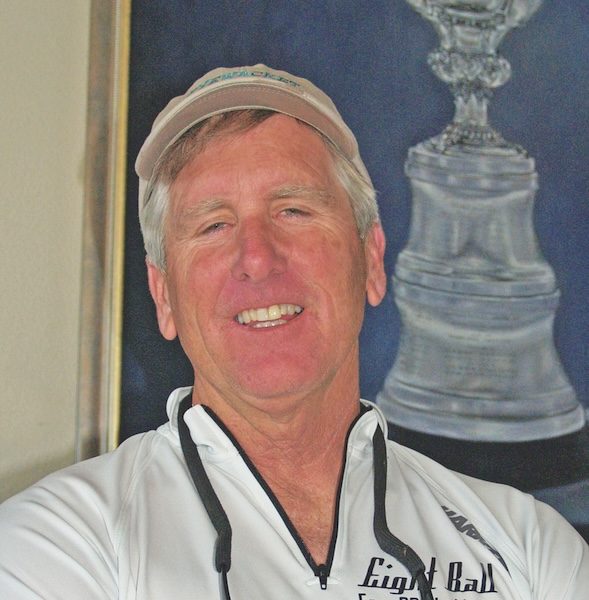
This week we chat with Scott Easom about his prolific career in racing and rigging. Scott is the owner of Easom Racing and Rigging, is the YRA Buoy Guy, and has more nautical miles to his name than just about anyone.
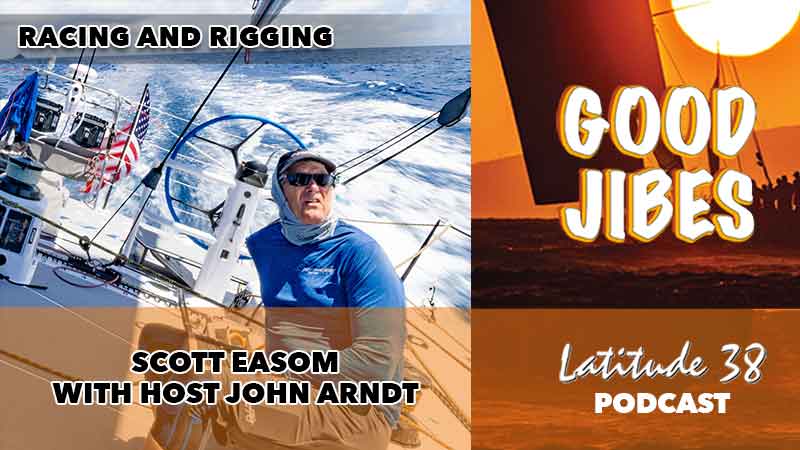
Tune in as Scott shares with Good Jibes host John Arndt how his family gave him the lifelong sailing bug at age 11, the most memorable boats and races from his racing career, the most common modifications racers are making to their yachts today, the behind the scenes of buoys on the Bay, and what’s changed the most in modern racing.
Here’s a small sample of what you will hear in this episode:
- Scott’s Olympic campaign in the soling class in 1985-86
- Scott’s idea to extend the Three Bridge Fiasco into a multi-race series
- Races Scott would still like to do, like the MEXORC regatta
- The challenges with how PHRF handles electric winches and stored power
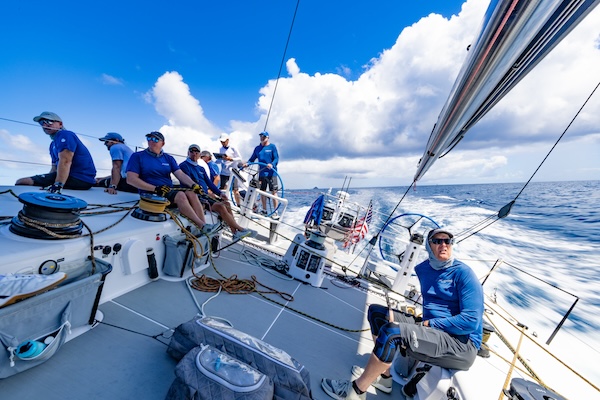
- The 2023 racing schedule for Pyewacket
Listen to the episode on Apple Podcasts, Spotify, and your other favorite podcast spots — follow and leave a 5-star review if you’re feeling the Good Jibes!
Learn more about Scott on Instagram @EasomRacingAndRigging and Facebook at Easom Rigging & Racing.
Check out the episode and show notes below for much more detail.
Support Your Company, West Coast Sailing and Latitude 38 When You Sponsor an Episode of Good Jibes !
Show Notes:
- Scott Easom on Racing & Rigging, with Host John Arndt
- [0:14] Welcome to Good Jibes with Latitude 38
- 1:07] Welcome aboard Scott Easom, Bay Area sailor and rigger
- [1:38] Scott’s childhood sailing story — parents sold everything to go cruising when he was 11
- [5:24] Scott’s early racing career on big boats like Bravura and doing events like Admiral’s Cup and Fastnet Race
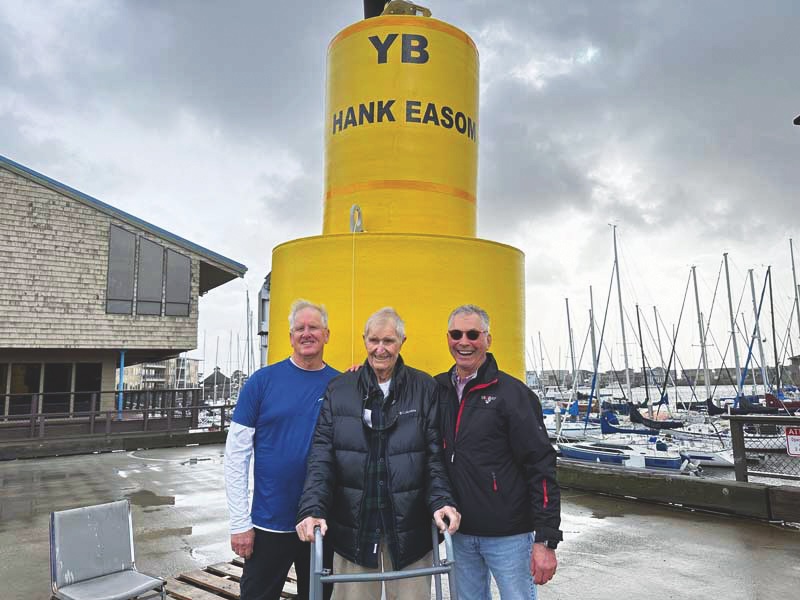
- [7:47] Scott’s father Bruce and uncle Hank Eason got into sailing after moving to Belvedere
- [10:32] Scott’s Olympic campaign in the soling class in 1985-86
- [11:29] How Scott got involved with the Pyewacket program, breaking the Transpac record on his first race
- [14:18] The evolution of the various Pyewacket boats over the years
- [23:52] Check out our Classy Classifieds at Latitude38.com
- Pyewackets
- 19:39] What’s been done to modify and optimize the current Pyewacket
- [22:30] The 2023 racing schedule for Pyewacket – PV race, Cabo race, Transpac, Long Point
- [24:20] Scott’s limited experience sailing with his uncle Hank Easom on Yucca
- [26:08] Scott sailing with Hank more in his later years on the Sabre 36 Serenade
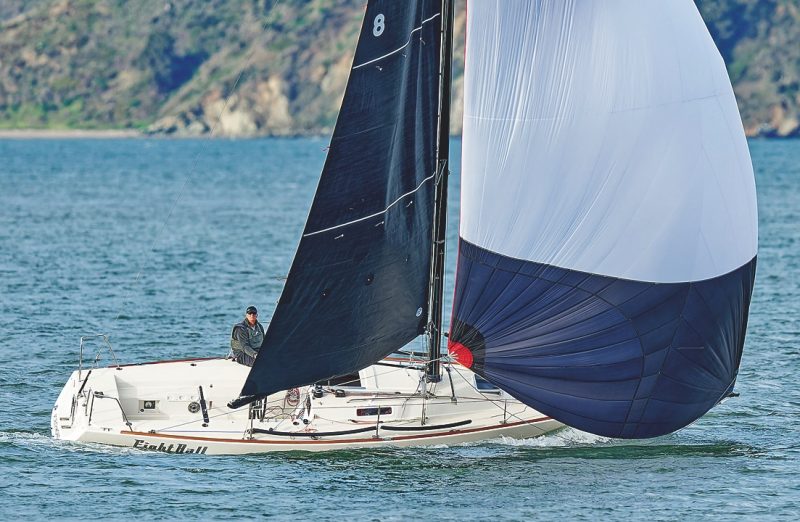
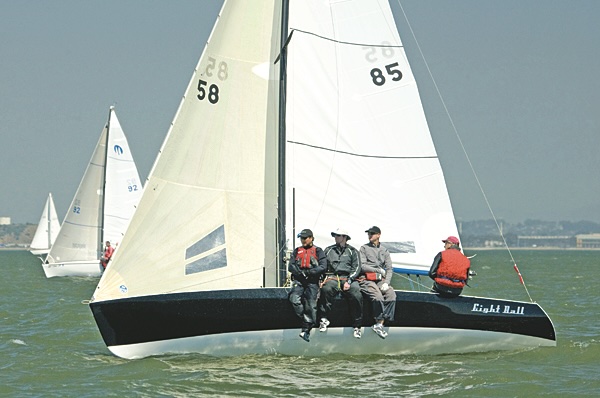
- [27:26] Scott winning the Three Bridge Fiasco singlehanded on his boat Eight Ball
- [30:07] The fully automated systems Scott has put on his and other people’s boats to make shorthanded sailing easier as people age
- [35:24] The challenges with how PHRF handles electric winches and stored power
- [37:54] Want to sponsor Good Jibes with Latitude 38? Email [email protected]
- The 8 Ball Program
- [39:39] Scott’s other 8 Ball boats over the years, including the Mercury fleet
- [43:55] Scott being honored as the St. Francis Yacht Club’s 2025 Yachtsman of the Year
- [45:54] Scott’s work maintaining the YRA buoys on San Francisco Bay
- [50:07] What boat might be next for Scott’s Eight Ball program
- [52:00] The challenges of finding good crew in the Bay Area compared to SoCal
- [54:49] Races Scott would still like to do, like the MEXORC regatta
- [55:47] How the physical demands of grand prix racing change as you get older
- [59:05] Scott’s favorite sailing book, Confessions of a Grinder by Brad Alan Lewis, and his preference for technical articles
- [1:01:00] Scott’s idea to extend the Three Bridge Fiasco into a multi-race series
- [1:02:48] Learn more about Scott on Instagram @EasomRacingAndRigging and Facebook at Easom Rigging & Racing
- Check out the April 2026 issue of Latitude 38 Sailing Magazine
- Make sure to follow Good Jibes with Latitude 38 on your favorite podcast spot and leave us a 5-star review on Apple Podcasts
- Theme Song: Pineapple Dream by SOLXIS
Transcript:
00:03
You know, I think we can race this thing, right?
00:14
Ahoy! Welcome back everybody. We’re on the good ship Good Jibes. My name is John Arndt. I’m the publisher of Latitude 38 and the host of today’s episode of Good Jibes. It’s a podcast to help you experience the world of sailing through the eyes of the West Coast sailor. And it’s also brought to you by Latitude 38, sailing magazine for West Coast sailors since 1977.
00:39
Today’s guest is Bay Area sailor and rigger Scott Easom. So welcome aboard Scott. Thanks John. I appreciate it. I really do. Yeah. Great to have you here. Let’s see. Scott and I have been working together for a long, long time. I like to say racing against each other a long, long time, but he’s never seen me on the course because I’ve been so far behind. but anyway, we’ve been on the water at the same time, which has been great. And it’s been great working with Scott at Easom racing and rigging all these years as well. But
01:07
To kick off, I just wanted to get maybe one story from your sailing life that sort of cemented you in the courts of making sailing so prevalent, important in your life. You’ve been a lifelong sailor and I don’t know, to pick one, because there’s a hundred or two. Yeah, that’s difficult to do, but the career path was kind of chosen early. I didn’t know it at the time, but when I was 11 years old, living in Marin County with a brother and sister, mother and father, my parents came home one
01:38
evening and call this kids into the living room and sat us down and they said, we’re going cruising. And in order for us to do that, we’re going to sell everything. And that means the house, the cars, you know, everything that was near and dear to my mother. Of course, father, he was like, great, let’s go. But you know, for, for the wife, it can be, you know, a tougher decision. And so we had a
02:05
50 foot boat that we had the use of and we sold the house, moved into an apartment in the canal district while we worked on the boat at Lowry’s Yacht Harbor in San Rafael. And in 1971, we left. And I think the plan initially was sail around the world. But since I was 11 years old, anything gets me out of school for any length of time, I’ll just like two thumbs up, let’s go.
02:35
We left and uh we ended up doing about 18,000 miles. uh John went south to South America, through the canal, through the Caribbean up the East Coast. And my brother got off and went with another family in the Virgin Islands and went over to England and went to school over there. And my sister was in high school until she was going back and forth. And then I would go to school where I could, but.
03:02
Going to school where you could was just you were taking a little time at schools you stopped at or? Yeah, exactly. Most of the kids that I knew were taking some kind of correspondence course and I did do that. I grabbed all my books when I left in sixth grade and put them on a shelf and really didn’t touch them much. There was so much going on out there in the world. Sure. So ah but if we were anyplace for any length of time.
03:29
then I would actually just show up at the local school and they thought it was cool. And they put me in there for a little while. And it was great for immersion purposes in the local customs and languages and things like that. So it was good. Wow. And then when I finally did get to go to school for any length of time, they had no idea what to do with me because I hadn’t been in school for like four years. Oh, you’re kidding. So I said, well, this put me back in sixth grade. I thought it’d be good. get picked first for every team, you know.
03:59
I thought that would have been good. So they tested me and uh I was at grade level or above in everything except for mathematics. So I got a tutor for two years and caught myself up. But the experiences of being and living on a boat and traveling the world is invaluable. Now there’s a lot of people out there that think the only way that you can be educated to sit in a classroom and read it from a textbook, but I can tell you from experience that
04:27
Yeah, smartest people and and are people who are homeschooled or are cruising kids. Yeah, because of the experiences that they’re exposed to. Yeah, it was great for me. I enjoyed every minute of it. So I’m sure I’m sure. did you sail back to San Francisco and go back to school here or we actually sold the boat on the East Coast uh four years later and then came back to live again in San Rafael. And at that point, the laser.
04:54
craze was going off. And so I knew Don Trask and I got into lasers from there. And then that started the racing career. I got pretty good, pretty fast at the lasers. And then once you’re successful in the lasers, then the offers started to come through to go sail people’s boats. Clarence Nelson, who had the green Buffalo, he offered me the green Buffalo for the Cal Cup when I was, I don’t know, 15 years old or something. so, yeah. And so we won that and
05:24
then it just turned into a career because when you get good, people want your help and then people start sending you airplane tickets and you start traveling around and you start seeing what a great career this could be. And it was a good time to start a pro career. I sailed with Irv Lube on the Bravura programs on the one tonner and the two tonner. So I came in late when Robbie Haynes took over the program.
05:53
And that was great. We traveled the world and did very, well with that boat. That was Admiral’s Cup and things like that? Admiral’s Cup, yeah. One ton worlds in Italy. Admiral’s Cup, like you said. And then some East Coast regattas. then, I mean, that boat was, the one tonner was an exception you could, but the two tonner was not as good as the one tonner. Yeah. Yeah. You’re a teenager at this point when you’re doing it? Yeah, probably still, barely. Yeah. Yeah.
06:22
And then I did, uh, Sydney Hobart, Randy Short, Sidewinder dropped the rig in that one. Oh boy. And, um, Randy Short, uh, Fastnet Race dropped the rig in that one. Uh, no, we just, we just broke everything, but the rig was actually still up. And then I was with Irv Lube with the one turn Fastnet Race and we dropped, we were winning the race and dropped the rig, um, five miles from Fastnet Rock. This must’ve been some good formative training, but.
06:50
for becoming a rigger because you want to know how to lose a rig or what to do after the rig goes down. You told me I’ll tell you what to do and how to do. And so what was kind of special this year is I did the Fastnet race again and actually got to finish it. So I didn’t I didn’t tell the guys I’d never finished one before that they knew that I had done the races, but I only Robbie Haynes knew that we had dismissed it because he was on board in 1989 when we dropped the rig on that one. So
07:18
It was felt really good to finish one this time. So yeah. Yeah. And that was on the Piwack at Volvo 70. Yeah. Yeah. Yeah. That boat is still in Europe in the process of being sold. I don’t know right where it is, but I think it’s close to being sold at this point. Great. What, just back up to your cruising with your family, what got your dad fired up to do that? Or what, what, what led to that? Yeah. Well, most people think that Hank Easom was my father and that’s not
07:47
That’s not right. We spent a lot of time together and I guess we kind of looked alike and things like that. So people assume that we were father and son, but my father was Bruce Easom, Hank’s brother, and they both grew up in Belvedere and stayed there all the time. They didn’t know anything when they moved to Belvedere about how to sail, but my grandfather built them a little boat and they started sailing in the cove and sailing to Richardson Bay. And so they were around the water all the time.
08:16
And my father did not make a living in the Marine business. He was in construction. I’m sure he wished because he just, loved Hank’s lifestyle, know, go sailing all the time and call it business. eh um, he did that very delicate balancing act about being able to sail on weekends and still be a father and, and do what’s right for, for the family and still, but only be able to sail on weekends. So, yeah.
08:43
What kind of sailing was he doing before cruising? Were you racing with your dad? I did. I raced with my dad until what usually happens when you’re a kid and you’re kind of fired up is it starts to get very difficult to sail with your father, in my case, because it’s like, oh, dad, what are you doing? That’s the wrong move. We should have had him, that guy. So it became kind of stressful. I think he was happy to see me go to the next level.
09:10
He had a Cal 20 that we sailed, then we had a Cal 29 that we sailed a lot together to Champaign, and then we had a Cal 39 that we sailed occasionally. So I liked to sail with them. had a boat called, well, the Carter 39 that we had for a little while that was, uh Peter Salis gave us to use. that was kind of my initiation into the bigger race boats.
09:36
Yeah, you know, I sailed, we sailed together as long as we could, I think is a good way of putting it and believe me, I was, you know, overbearing, kind of a loud mouth kid. You know, I get it. I don’t believe it. I wouldn’t believe that you certainly mellowed out since then. It’s a little lippy. So yeah, but anyway, that was the fire that, you know, that stoked my competitive spirit to go out and, you know, test my. Well, and obviously if you’ve been.
10:05
four years living aboard and sailing. mean, just being on a moving deck and on a boat, yeah, it gets pretty much in your bloodstream and pretty natural to spot what’s going on in the world. All right. Yeah. Another big transition for me was we did an Olympic program, 1985, 86 in the soloing program, which was underwritten largely by the Saasolo Joklum. Oh, right.
10:32
So I was about 21 at the time there. And so I had a couple of nice guys that I sailed with and we just, were way too light. We had all kinds of issues. And I went as far as I could with that. And then Jeff Madrigally took over for me because I had some other issues with a wife at the time. And so I had to go back and keep that together, which didn’t work out. But that’s when I really met uh Robbie Haynes, who was the actual gold medalist that year.
11:02
1987 down in Los Angeles. And Robbie and I had sailed a couple other boats together and we hit it up. We’ve always been very good friends. And so whenever Piwacket came to town for Big Boat series, it was the sled. And when I was hard at sailing with them, they’d always call me. I was local, I was available. And so I started trimming for them in the Big Boat series and also be in some local knowledge for them.
11:29
And I can remember we’re sitting down below after winning the big boat series one year. And I said, guys, this is great that I was able to sail with you. That was wonderful. You guys are awesome. But I want to get on for a long distance race. And they all started laughing at me. go, oh, dude, the list is long and you’re not even on it. So why don’t you just, you go, go think about something else with your life. You’re not going to ever get on this boat for a long distance race. And so I.
11:58
resigned myself to that. And later that year, Robbie called me said, uh what are you doing? I said, well, I’m just kind of working. He goes up. We’ve had some stuff pop up. Roy senior Roy Disney senior has been in a horrible auto accident in Ireland, and his leg is shattered. And Zandrijas who was working on the boat fell down the forward hatch broke his ribs. Can you make Transpac with us? And I said, I’m packing right now.
12:27
Yeah, when you want me. And so they’ve been trying for 20 years to break the Merlin record. So I step in and we say, I eight people on the 70 footer, which is a handful. Yep. And guess what? We break the record after those guys trying for years and years and years. I come in and we’re just fortunate enough. I’ve actually got a picture out here. Here it is. Anyway, we’re always in a wheelchair. Zan’s not there, but that was us breaking it.
12:57
And it was quite, it was, you know, it was a big deal to them. just kind of stepped in and got it done. And Roy was able to be board. Yeah. And the whole way across, they’re talking about this new bigger boat they’re going to build. And so I said, Hey, Robbie, you know, can I be a part of this new program that you’re talking about? It’s a bigger boat. need more people. And he said, Oh, we got to have a meeting and we’ll get back to you on that. So.
13:21
About six months went by and I said, Robbie, called him. said, Hey, I’m putting my sailing schedule together. I need to know if I’m in or am I out? And so he said, I’ll call you next week. And so they did call. said, you’re in and I’ve been in ever since. You know, I don’t think I’ve missed very many races at all with those guys. so, uh, it has been. I mean, it’s a fairytale deal. I mean, to be a part of that program and.
13:49
It’s once you’re in, man, you don’t want to go out. It’s one of very best programs in the world. It really is. How many Piwhackets have there been? It’s an Andrews 68 here in the West Coast, then you had the Volvo 70, and that was the Anecdote 70? Yeah. there was the earliest one that I remember was uh Nelson Merrick’s 68. OK. Which was not a good boat. So they immediately, Roy Senior, the way he does stuff or did stuff at the time, I think
14:18
The way it went down was the Nelson Merrick boat didn’t work out. So he called Bill Lee down in the Santa Cruz and said, hey, I’m going to bring in my own boat builders. We’d like to rent the molds basically. really? And so we brought a bunch of guys. They brought a bunch of guys in from, think, New Zealand, salt house boat builders is the way I’ve been told. And they came in and built the very first all carbon sled. And so.
14:46
Yeah, Roy spent a lot of money on that one. So the boat was light, the boat was stiff, it had headstay tension. It was an exceptional boat. It still is. It’s called Catapult now, and it’s still an exceptionally good boat because of the light stiffness of the hull and uh all the stuff that went into it. So we had that boat for quite a while, and then we stepped up to the Reichel Pugh 75.
15:12
The 75 was kind of a Lego boat because we had a transom that we could put on the back end and make it 77. We had different booms, sails, keels, depending on the kind of sailing that we were doing and which rule we were sailing under, we could swap parts in and out. so anyway, that was a very good boat. It was a pleasure to sail. We went all over Europe with that. won cork race week. won.
15:40
I think we won the Maxi Worlds that year. two feet you add on just was basically different rule or different. exactly. Yeah. And so we carried all these extra parts with us and it was a very good boat. And uh that boat then went away when we built the Maxi 86. Right. And Maxi 86 was like, oh boy, it was a big step up. And I went down to help.
16:08
to put the final touches on that in Auckland. And then we went on a world tour with that boat. And that was the Canter Keel front rudder back rudder boat. And that’s the boat we ended up completely ruining to do Transpac one year by cutting it in half. Right. With that longer bow on it, we put the wings on it to try to break the Transpac record. We put a much bigger rig, much deeper keel. I mean, the thing was
16:36
It was, uh, it was kind of a travesty. And then we got, we got punished for it by having a really terrible weather pattern. And we were drifting on day five or six out in the middle. like, is not happening for us. So yeah. that boat went away. happened to that boat after all of that? Did it get a chance to live beyond that or? Uh, it did. Uh, there’s a gentleman from Hong Kong. name is Frank Pong. He bought the 75 from us.
17:02
Yeah. And then he bought the 86 and to get the 86, the 86, I believe is still up at schooner Creek boat works outside Portland. And they had the, had to cut the wings off of it. Now we put wings on it to stack the sails on it because we couldn’t, the boat was narrow. couldn’t get enough stability with the big rig. So we carry all these extra sales and put them on the wings to try to keep the thing from healing over. It was very tippy. Was it water balanced too? wasn’t there a lot? No, no, it just had wings.
17:32
just had wings and m it was kind of a mess. Yeah, so anyway, it was a good try, but it was a swing and a miss for sure. then Roy got very, Roy Senior got very sick and he passed away and we kind of thought we were done. And then Roy Pat, his son called a couple of years later and said, let’s go do this again guys. So we got the band back together. We got the band back together.
18:01
Yeah, we really did. And uh we thought about chartering some boats and I finally called Robbie. said, Hey, the Pegasus is sitting up here on the hard at KKMI in Richmond. I said, to Philippe just put a couple million dollars into that thing. It’s and Zan rebuilt it. They totally rebuilt it down south, put a new deck on it and totally modernize the boat. And I said, well, here’s one that’s the turnkey deal. Let’s I think we ought to get that boat.
18:30
And that was a good call. So we got a very good boat right off the bat. And like any Disney program, the minute you get the boat, it’s time to make it a better boat. You never stop thinking about what to do to the boat to make it better. A race boat is never finished. It just never is. And so this is the way we handle the Paiwhacket program. that the boat you have now? Is that the end? It is.
18:59
Yeah, that is the boat. Yeah. we’ve done a lot to it, but a lot of it’s still original. Yeah.
19:09
Hey good Jibes listeners and Latitude 38 readers. Have you looked in our classy classifieds lately? It would be impossible for us to know how many boats have sold to new owners over the last 45 plus years of publishing Latitude 38. But we’re sure they have helped countless people realize their sailing dreams. Every month there are new boats listed that will fill someone’s sailing adventures. If you have a boat you want to sail or are looking for that next boat in your life, the pages of Latitude 38 will surely have something to suit your fancy.
19:39
Pick up a magazine at a local marine business or visit our classy classified pages at latitude38.com to find boats, gear, job opportunities and more. Then tell us your next sailing story. What’s been done? mean, not to list the whole modification plan since it was launched, but what are the primary changes that have come about since a boat like that was launched? I mean, is it just carbon and lighter?
20:09
The sleds were a little bendy to start with, because they wanted to be light. Well, now with carbon, you can make them as light as you want, they’re stiff as a board. so, yes, we have taken a lot of weight out of the boat and we put lead in in certain spots and rigging has been changed from carbon rigging to solid carbon rigging.
20:34
I mean, it’s just hundreds and hundreds of little things. No one thing makes a huge difference in most cases. It’s all a thousand things put together that actually make it better. Change the deck layout, new winches, faster speeds, know, all these things that you can do to them to make maneuvering better. it’s, you know, outriggers and you know, there’s just all kinds of stuff. And then of course, sales never stop coming.
21:04
Yeah, we’re always trying to optimize. Wow. mean, it seems like the boat must have had so many modification drilled holes in it, moves gear around that the boat would get sort of difficult to maintain just because it’s been cut up so much. But I guess carbon and the sort of things you use to fix it up, keep it solid. Yeah. Well, we don’t do any of this stuff ourselves.
21:31
That’s not what we do. So we always bring the best guys in to do this. Like Brad Fitzgerald will do all the carbon work that we have done. And we have special painters that we use that really are really good. So if there’s been equipment moved around, you can’t tell. If a block has been relocated for a better lead or a winch has been moved or clutches or whatever it may be, it’s all done perfectly. We don’t just slam them together and expect it to. eh
22:00
Good. And when you’re down below, the boat’s perfect down below too. It’s a very, very comfortable way to go offshore, especially at our age where we don’t want to live down below in a TP52 or something like that where it’s raining from the overheads the whole time. That’s not us anymore. We’re comfortable. You’re fast, but still comfortable. We are fast, but comfortable. What’s on the docket for the Paiwaket this year? Well, we were supposed to do PV a couple weeks ago.
22:30
and we were going to hang out and do mech sort. And so that got flushed. uh And so we are trying to fill our schedule right now with a couple other events prior to pack up and uh pack up. We’ll, put a good effort in for that. we’ll bring in the 18 for that one. And so the boat will be coming up here to the Bay area. Great. uh And, so it’s always great to have the boat in the backyard.
22:57
It’ll be a crew dinner at my house the night before the race, so. That sounds pretty fun. Who’s the competition this year in the pack up for you? Well, any 52 that’s going, which may be the meanie and it’ll be the tests. I think Zeus is going to that that 52 or 53 with the DSS board sticking out of the side. Any student anytime program is going to be a well-sale well prepared boat, and so there’ll be a handful for sure.
23:26
Great, great. And then there’s some unknowns. There’s that big Wiley 66 or something. There’ll be some boats. It’ll be good. Yeah, great. And then anything else planned for the rest of the year on Paiwacket? what’s following pack up? Longpoint Regatta. For anybody who can actually get an invitation to that, it’s Newport Harbor Yacht Club. Race from Newport on Friday to Catalina.
23:53
Then the anchor off the Catalina and then there’s a race up and down the island on Saturday. That doesn’t take more than about an hour and a half max. And then a race back on Sunday parties at the uh outpost for San Diego Yacht Club in Newport Harbor. Yep. It’s fun. Really a great event. And so if you can ever get a ride on it or get your boat invited to it, uh I highly recommend it. It’s a really fun event.
24:20
Another one to put on the list of hopefuls. Long point, we got a long point. got a great back on the bay. Want to just check in. You talked about Hank, your uncle ah and Yucca. spent a lot of time on Yucca race in the bay and Hank, you know, I think so many of us feel so fortunate to have known for all these years. Yeah. The gentleman, such a great guy to race against and with I’m sure, but I don’t know how, did, uh, how did the Yucca come into life for you and
24:49
How was the Yucca program? mean, Hank is- Yeah. Well, Hank was very loyal to his guys and I was young and I wanted to go fast. So I didn’t really get Yucca. I mean, yes, she was beautiful to look at, but going six and a half upwind or something like that is like, oh my God, I can’t do this. I can’t do it. I can appreciate it.
25:15
But I can count on one hand how many times, maybe two hands, how many times I actually sailed on the boat. Oh, really? I did some oh optimization for him and stuff, but it just wasn’t for me. When he got older in the last few years, I did sail with him quite a bit on the Serenade, the Sabre 36 Spirit. And I enjoyed that. I was older.
25:39
I was more mature. And Hank and I just worked so well together on the bay. He could actually sit there and drive and I could call tactics for him and always defer to him. It’s like, well, this is what I think, this is what I would do. What do you think? So there was a great deal of, I had massive respect for him as a competitor, as a gentleman, and obviously as a great sailor on San Francisco Bay.
26:08
Yeah. So it was hard to put my foot down hard sometimes when I really thought we should have done something. But I got the boat, I got him some really good sails and I taught the people how to use zeros and I tried to help make the boat go as fast as possible. And I think the results showed that we actually were quite good for those years when we were together.
26:30
Yeah, well, I think Hank must have a pretty big trophy room somewhere hiding in the Bay Area because he collected a lot of silver. He did. And you know, I always was hoping to be starting in the class behind his class so that we could see which way is Hank. Yeah, that was we wanted to make that shirt. What would Hank do? It’s like, do we go right? Do we go left? What would Hank do? he’s a to watch. Yeah, yeah.
26:57
Well, and and speaking of that, though, too, of course, you just won single handed in the three bridge fiasco. So I think I would also transfer where Scott going. You went the right way in the three bridge fiasco on eight ball. Yeah. And uh yeah, that’s that’s a tough race to win. But you won it. You won it a few times in single handed or what? I’ve won it a few times. I think I think I won it every time. But there was one year somebody beat me. I never saw the guy. It’s like, wait a minute.
27:26
We won’t go there, yeah, I, um, I created the eight ball because I spend so much time traveling that I don’t have time to organize a crew. So I wanted to do is find a great little boat that would sail well, shorthanded without a bunch of people sitting on the rail. So we had done a boat for a gentleman who just sold all of his stock at Uber. came out. I think you might know who I’m talking about. He now owns sale GP.
27:54
He had a 33 footer that he said, hey, all my friends are still working, but I want to go sail my boat on San Francisco Bay, but I’m by myself. And you helped me. So we totally gave him everything, push button, everything. So he could cheat in, cheat out, sales up, sales down, the whole deal. And then his accountant told him, the story he tells me is his accountant called one night and said, you got to get out of California. They’re going to come after you for taxes and all this stuff.
28:23
So he sold his brand new house in Pacific Heights and he said, you got to get my boat out of the state by January one. And I said, but we’re not done yet. He goes, just get it out of here. can finish it in Florida. And so we packed it up, got it out on the 28th of December and it went to Florida, actually finished the boat in Florida. And it was a great little boat. was called an E33 and I think it was designed by Doyle. And so we fully automated the boat for him.
28:51
But then it left. And so I came back and I was so, so sold on the concept of shorthanded sailing where as you get older, you can be competitive. Yep. And a woman can sail against a guy because they can push buttons as well as each other. There’s no strength. oh There’s no, there’s no issue with physicality. Yep. And so I
29:19
got the J 100 from San Diego. brought it up here and I put the same system in it that we did for Ryan McKillen. And, um, and then I started to sail it. And the whole idea was to keep people in the sport as long as possible. I saw way too many people walk through my door, sit down and they just go, I’m done. can’t do this anymore. It’s too physical. San Francisco Bay is a very physical place to sail in the first place. And so, and I said, well,
29:48
I have a solution for you. It’s not cheap, unfortunately, but I can keep you in. He goes, how long can you keep me in? I go, I’ll give you three to five years. And so we did, we did three boats fully automated. J100s or other boats? No, Larian 33, S and S 30. And the other three boats escape me right now. We’ve done, I did a spirit, I did the spirit.
30:18
Get to Corinthian. Iron’s old boat. So we did these things trying to keep these people in the sport. And then they would come back to me. And this is probably the most rewarding thing that happens when we fix their boats. They come back to me just wanting to sail with their friends for a few more years. They walk through the door and they sit down and they go, you know, I think we can race this thing, right? And I go, yes, you can. And so
30:45
Byron was out there racing until just this year. There’s some other guys, I won’t mention their names, that are way up there and they’re still racing. Now, nobody that I know of in this industry is trying to keep people from walking away from the sport. People love sailing, but it is a physical endeavor. I have the resources and the ways to put stuff on their boats to keep them.
31:09
from having to expend any energy and still enjoy sailing on San Francisco Bay, even if it’s blowing 25. And so unfortunately, while those people that I’ve done that to are very receptive and appreciative of what I’ve done, the PHRF committee is just socking it to us big time. And so it’s unfortunate and I’m about to have to go in front of the meeting again because of what we’ve done. They think that…
31:38
They think it’s unfairly. So they just smash the hell out it. Numbers wise. Well, you know, I kind of lean that way myself at times. I wonder about these push buttons and I’m, we’ve got my tired older guys in my boat trying to grind winches and log in sales and try to, it’s a, it’s a lot of, a lot of work to try and keep push buttons. There is a hit that we take. And that hit was, I actually did all the homework and I got all these boats.
32:06
I got other certificates from IRC and I got four different certificates for each boat ranging from fully automated to fully manual. And so I looked at the numbers on how IRC handled it. The worldwide authority on my boat from fully automated to fully manual was a 2.7 second difference.
32:32
I’m carrying a nine second a mile difference right now and they want to make it much greater than that. so, and so I went in front of the meeting and I said, you guys, don’t, you don’t know better than those guys. And if it was such a big advantage, more boats would be doing it. Those guys at that level of Admiral’s cup or any of that stuff, they will do anything. It doesn’t matter how much it costs to gain an advantage and very few boats in that size range are doing it. It’s mostly, you know, brand new.
33:01
50 footers and above that are going that direction. But anyway, so I’m fighting this battle. I’m gonna win the battle. I’m not saying that we shouldn’t get hit for it. It should be an assessment, not a penalty. And I’m trying to show them what the real numbers that the rest of the world are using to deal with this stuff. Somebody’s gonna deal with it. ORC has dealt with it. They’ve been asked, like the St. Francis Yacht Club two years ago,
33:30
didn’t accept my, I love this story. You gotta let me do this one. So, we’ll add to the hotline. not giving them a chance to rebut this, but they will have opportunities. Oh, I’d love to have them sit right here with me. So, two years ago, we had won the Big Boat series two years prior in a row. Got a Rolex, all that stuff was wonderful. With the J100, partially electric winch. Since we had fully crewed, because you need guys on the rail, we took some of the stuff out.
34:00
And so I was prepared to sell a big book series. had all the new sales here in the office. The crew was all lined up and the St. Francis sent out a, the notice of race. it said that they would be enforcing rule 52, which is, you know, stored energy. They weren’t going to allow it. And so I called, said, are you sure? And they go, yes. And I said, well, your ball, your rules. Okay. That’s it. About two weeks before the event, um, a
34:29
famous local boat captain called me and said, I understand that they’re not letting boats in with powered winches. And I said, that’s right, read the notice of race. Well, he freaked out because he didn’t read the notice of race. And so he had organized the whole thing, 15 crew, the whole deal. And I said, I said, they’re gonna find a way.
34:54
You got 18 guys on the rail. They want you in the restaurant. They want you in the bar. They want they just want numbers up. They’re going to find a way to let you in and keep me out. And so that’s exactly what happened. St. Francis released uh an amendment to the sailing instructions that said if you were over 40 feet, you could use 52. You could use the powered winches. But if you were under that, you couldn’t. And I pretty much lost my ass with those guys. And I said,
35:24
You know, it’s I called it and it was unfortunate that they they handled it. I said, why didn’t you just say no J100s with powered winches? Well, you know that the electric stored power issue is is not a small issue worldwide. Globally, it is in the America’s Cup as they’re dropping now to four grinders or whatever. So they have five sailors on the America’s Cup boats this year. So I think everybody’s struggled to wrestle with it and how to balance it.
35:52
You know, I give a little grace for people making adjustments to trying to figure that out. But yeah, it’s not an easy. These are not easy things. The IRC group has has dealt with it and have some numbers in the St. Francis, asked them to revisit it. And they did. And they came back and said, no, we’re happy. We’re happy with the number that we give it to to that. Now they are looking at takedown systems at this point, because, you know, these spinnakers have come down in two seconds.
36:20
Well, that’s definite time saver, but they don’t ask how fast my winters are. They don’t ask how heavy they are. They don’t ask anything about, you know, speed is an advantage to it’s definitely not fully crude racing. Not at all. Yeah. But shorthanded, single-handed sailing. Yeah. I’ll call it an advantage, but I get hit for it. So the question is what’s the proper hit and they shouldn’t be going down this road.
36:47
discouraging people from sailing whatever they want and just assessing it properly rather than hitting it, know, than penalizing. I know it’s semantics, but when my PHRF form says this boat does not comply to rule 52 and I’m the only boat that the certificate says that even though there’s all these electric boats in there, yeah, it’s personal for me at this point because, you know, yeah.
37:16
I’m taking the hits. guess they say pioneers take the hits. I’m just trying to keep people in the sport as long as possible. Yeah, you you got to learn to sandbag more and stop winning so much. That’s what you know. You got to sit there and say, all right. But I mean, I think the other thing clubs and fleets and everybody are trying to do is keep others in it. Of course, this is the challenge for racing is people spend a lot of money on boats. They tend to be the winners and discourages people who aren’t.
37:44
doing it, whether it’s accurate or not, obviously, uh you know, trying to discern whether electric is making the difference or just better sailors are making the difference or and all the other preparations you can make to have your boat win. uh Certainly, if I went out there on my boat, I could say I lost you because you had electric winches. But I know there’s 10 other things I could do besides being a better sailor to tune my boat up to get closer. And that’s it’s a hard thing, I think, when
38:13
Obviously racers, clubs, everybody are trying to keep numbers in the game as far as the number of racers. And it can be discouraging when people are losing to boats that are better funded. And I think that’s a challenge that’s hard to uh balance and hard for clubs to balance. It’s yacht racing. That’s always been the case. It’s just, you know, I pick and choose my boats sometimes depending on like my next boat, I have to think very carefully about because
38:42
There’s some well-funded programs out there that I go, no, can’t, you know, I can’t deal with that. I can’t deal with the crew chart. I can’t deal with the amount of sales that would be purchased, but I can get this other boat. That guy’s gonna be in this group. I’m gonna be in this group. Yeah, that’s where I’m going. I’m going in this group. Okay. As much as I’d to race against that guy, it’s like, okay, you know, it’s… Hard to keep up. Not gonna happen. Yeah. Hey, listen up.
39:11
We hope everyone is enjoying listening to the stories of West Coast sailors on our Good Jives podcast. We’ve heard lots of great feedback from the 150,000 listeners who’ve tuned in over the last couple of years. And if you have a marine business, we’d like to give you an opportunity to connect with them during upcoming podcasts. If you’d like to be a sponsor of future podcasts, you can email the How to 230 to learn more about how your company can benefit from sponsoring Good Jives.
39:39
What, so you’ve had a lot of eight balls too. Where’s the name come from and what other besides the J 100? I think you’ve had a few others. What others have you had? The first one was my father’s boat. It was an egg corn was designed by Jim Dewitt’s father. Oh, wow. Is the story that I heard. And so he had that when he was young um and it was called eight ball. And so I
40:03
One day we’re out sailing together and I go, what’s with 8Ball? And he goes, well, you’ve heard it’s not good to be behind the 8Ball. I go, oh, little trash talk. Okay. And so he was a great father and a wonderful guy. And I just thought, yeah, let’s, let’s pay homage here. And I thought it was a great name anyway. So I think the first one I did was the More 24, which was 8Ball, which was a very successful little boat. And then I had the Mum 30.
40:33
Yeah. And then I’ve got the J 100 and now I’ve got the, just re refurbished a Mercury and I just painted it black today, black and white. So it’s going to be eight ball five. Okay. Have you been racing the Mercury circuit? I did about four or five years ago. Uh, Benny Mitchell from San Diego and I did some racing together and, oh just a great group of people. Boat costs 400 bucks.
41:03
You know, it’s just the people are so nice and I always wanted to go down to Pebble Beach and sail in Stillwater Cove. so I called Benny and Benny and I, Benny Mitchell, both went down to Pebble Beach in consecutive years, about four years ago, and did the regatta on Saturday and Sunday. And then we stuck around on Monday and played Pebble Beach golf course. And, uh, pretty sweet. I just.
41:28
canceled all my reservations to Pebble Beach this year because we’ve just found out that the Long Point Regatta and the Stillwater Cove Regatta for Mercury is on the same weekend. So it’s like, ah wife is bummed. Cancel it all. Again, it’s an inexpensive little boat with super nice people. go up to Huntington Lake and they go to LA and they go
41:58
all these other places, but my impetus for doing it was sailing in Pebble Beach and it was absolutely fantastic. Right. And they get a pretty good fleet. What’s the Mercury fleet story? It’s an older boat, got about 20, 40. How many boats are racing in that? A good Regado get 20 boats out. Yeah. And there is a contingent in San Diego, Don Whalen in San Diego. Yeah. Rab is in San Diego. And then there’s some guys in LA, San Pedro.
42:27
It has a good fleet. San Francisco’s got a great little fleet of very, very good sailors. again, fun people that keep it in perspective. Yeah, it’s just a, you know, it’s a, I just sailed one other person and I can tow it behind the car and it’s just a simple, easy thing to do. Benny wanted to get back into it. So I grabbed a boat and I’ll, the boat will be ready in about three weeks probably. And here we go on this one. So I’ll do the nationals in,
42:56
Monterey, you know, or September. Yeah. It looks like a ton of fun. Tuesday, no spinnaker. Yeah. Weighing the out downwind, know, one jib. No electronics to speak of, you know, other than a Compass and a Speedo. So, yeah, it’s, I love the simplicity of the whole thing. And again, I love a fleet of people where you can talk about what you’re doing. I’m going to move my mask. I’m going to do this. It’s just open.
43:26
You know, there’s no secrets and it’s just share your ideas. and they, they were that when I came into the fleet a few years ago, that’s exactly the way they treated me. go, you know, if I were you, I’d do this. Cause this has been working for 45 years and you might want to try that. So, uh, sorry, I’m looking forward to get back in the fleet. So, yeah. Great. Well, Hey, I wanted to mention too. saw the, um, you’ve been honored 2026 San Francisco Yacht Club Yachtman of the Year.
43:55
think it’s 2025. 2025. Oh, okay. So I think I was Yotsma of the year for about two weeks. It was, was, I got it in December. think it was. Okay. right. Total surprise. Yeah. Total surprise. And, um, yeah, my wife, who I thought could never keep a secret, uh, kept a secret for about two months of she knew what was going on and got it all lined up. And friend of mine, Beth said, you got to go to the annual meeting. Um, Hank’s been
44:25
honored posthumously obviously and they’re going to give them a reward you need to get you need to be there to get it so here I am you know sitting in there and then she gets up and starts talking I just go no and I was it was very very emotional for me to try to hold it together because that’s just not part of you know I just don’t go looking for things like that and so I was I was very blown away and my family was here my brother came out from Boston my adopted daughter came out from France
44:56
I mean, it was just a total shocker. really was. Yeah. Well, that’s really fun. A nice honor. Great. How long have you been a member of the San Francisco Yacht Club? Oh, I don’t know. Hank got me in probably around 15, 20 years. Yeah. You might guess. Yeah. Yeah. But I had to apologize because the vast majority of the sailing that I do is not for the Yacht Club. I always sail eight ball for San Francisco Yacht Club because I love the club. I mean,
45:24
I sail more away from San Francisco than I do in San Francisco for sure. And I’m usually sailing for Roy and he’s all kinds of yacht clubs other than San Francisco. So I got to get him to be a member. Yeah. Next task. Okay. Yacht Spend of the Year. Yeah. Well, the other thing I should mention too, maybe a lot of people don’t know is you’re the buoy guy for all the YRA buoys on the Bay. Is that right? Are you still doing that? I’m still doing that. That’s one of the ways I give back is…
45:54
Hank was kind enough to leave me the Joy, which was his lobster boat. And so I’ve still got that. We had a wonderful deal with the Army Corps of Engineers, where they would help me launch those buoys. If you’re not aware, a buoy like Black Aller has a 500 pound anchor, has a bunch of one inch chain. I mean, it’s a heavy load and not having a boat. So the Army Corps of Engineers would
46:21
back up to my dock here in Point Richmond and we would load the buoys on and we’d go out and I’d launch them. their deal was that we will launch them, we will not recover them and we will not move them. So make sure that when you let it go, it’s right where you want it. And so that unfortunately that captain of the aluminum cataract retired and I have not been able to convince them to help us. so
46:52
The last one I just launched off the joy, was Knox. Knox is back in place with a bigger, brighter light on it, because it got run down. I’m sure it got run down by the Golden Gate ferry. Nothing’s going to leave a gouge like that at a mark unless it’s going 30 knots and it’s big. But it’s back on station. And so I live and die by when I drive back and forth to the city. I’m always making sure Easom’s in place and all the buoys that
47:19
why I raised responsible for are in place. so, m yeah, I, when those things go on walk about it’s expensive and it’s a real disappointment for me personally when they go away. Yeah. Well, much appreciated. I think that’s one of those things because of course rounding Eastman when that buoy was dedicated to Hank went over to your docs to saw the buoy out of the water. And it’s amazing the scale of a buoy when it’s
47:47
not floating in the vastness of the bay, but on a dock, it’s a huge thing. And you think, how the heck does that thing stay when you watch the current pull against the buoy? Well, what I find, what I ended up doing, it’s a little out of the ordinary. Like the Easom buoy is anchored in a hundred feet of water. Now you can’t have a hundred feet of one inch chain hanging on the thing, because it’ll sink the buoy. And I want to keep the buoys as high as possible. So I go down about 10 feet, eight feet with heavy chain.
48:16
And then from there, I use two inch Dyneema Spectra to go down about 75 feet. And then I hooked back on the chain again. So the Dyneema never drags on the bottom of the bay. So it doesn’t get worn away and just the heavy bottom chain drags around the bottom of the bed. And by using the Dyneema, it’s kind of a push cost wise, but the amount of weight that I save and the amount of drag or reduction in drag is
48:45
quite phenomenal. so, Oh yeah. Reduction in drag too. Yeah. Well, that’s quite a bit of engineering just to have a buoy float on the bay for all of us to sail around. Yeah. Yeah. um No, it’s, it’s, uh, it’s the way I give back. It’s cool. Yeah. That’s good. Somebody please don’t hit them. mean, I had a gentleman walk in not that long ago who absolutely T-boned the, uh, the Easom buoy and knocked the light off.
49:11
He felt so bad. He goes, can you just order up another light? I’ll go put it on myself. So I got a light for him. He went out and did it himself. And it’s working. But you know, when you guys drag your booms on them or you guys bounce into them, those lights on the top are almost 900 bucks. so please don’t knock the lights off the buoys. Yeah, so far so good. I got to say, I’ve come pretty close to not, you know, not because I wanted to because I misjudged, but.
49:41
Anyway, there’s a lot of current on those buoys. There is. It’s a river out there. And so we understand when it happens, but it’s at least having the decency to call us and tell us what happens so that we can… But I know it’s been knocked off and I can get it replaced. And if you’re really a good guy, you’ll send us a check. They’re not cheap, but yeah. Own it. You made a mistake, own the mistakes. the mistakes. All right.
50:07
All right, everybody. You heard that from Scott. Off the soapbox, stepping down. He’s some racing and rigging. Or the YRA. You can call in the contact. The YRA. She’ll make arrangements to have Scott fix the buoy. I’ll fix it. I will fix it. How about, you know, if you’re looking for a new eight ball, you got any, uh what kind of boat catches your eye? So the J109 looks like a logical next choice. um It rates well, it sails well, it’s got a nice interior.
50:36
You know, that seems to make sense to me. So I got to get rid of this eight ball first before I step into that. I’ve, I know I had serenade and then I had joy and then at eight ball and now I’ve got the Merc. And so I got, I got, you know, to, to save my marriage, I got to get rid of one before I grab another. That was like, you’re doing pretty well if you can have all that already. So I suppose there’s a limit. Yeah, there’s a limit. I’m self-imposed. I know when I’ve gone too far. So.
51:04
But the J109 seems like a really nice choice. I’d like to do a J111 too. That’s also an awesome boat, more people, just more logistics. I know what logistics are all about when you’re dealing with Paiwhacket programs, whether it’s the NUCT 70 where we have 17, 18 people, and then we have the 68, which 15 people around the buoys. So it’s not what I want to do is make 25 phone calls to try to find seven people that will actually show up.
51:33
It’s hard that way. really is. Yeah. You got to find a crew person on your crew who’s going to be the crew boss and do the crew organizing. I think if you want a crew in a boat, I think that’s a great role to take on. You’ll be a crew on any boat if you take on that job. I mean, really, I don’t know how some people do it. I know lots of people have problems, you because I have to make 25 phone calls to try to find six or seven people that will show up. With me, it’s hard because I
52:00
I’m not usually in town long enough to do an entire series because I come and go. And so people don’t want to sail one or two races of a four race series. Right. But it is hard to find good people in San Diego, Long Beach areas. You can get away with people that aren’t top notch. But on San Francisco Bay, you want two things. You want somebody who’s really, really good and weighs 225 pounds.
52:28
And so when we go to LA, well, we sail, you we’d sail a ton of events at San Diego Yacht Club in Long Beach. And I’m just, I think it’s so great to see so many women sailing on so many great boats. Yeah. But down there it’s, know, crew weight is not the A number one thing that you need. And again, back to the push button thing. I see a lot of women trimming on electric boats because they can push the button. And so.
52:55
I’m still a big advocate for that. think it’s, you know, really does level the playing field in a lot of ways. But that’s the difference we see in between San Francisco and SoCal is who are the people that get the offers to go sailing. You want heavy, strong people. in the line, you know, I always say just, you know, if you don’t mind not winning, you know, just being out there and competing, but I guess if you want to win, you got to put all those ingredients together. But I, know,
53:22
I think uh it’s great to be out there. Whoever can help you get the boat around the course. The last time we won Big Boat Series, think it was two years ago, I had two great girls doing the bow. And that was that really windy one where it blew 35 on the last day. And they’re underwater, and they’re hooking up. They’re just doing it, and they’re not missing a beat. And I had taken the lifelines off up forward because the rules, they didn’t.
53:50
read the rules oh properly. didn’t spec the rules properly. So I took the bow pulpice off and didn’t have anything up there. So they were working without a net basically. And they were up there underwater and they just did a great job. they did a super job. it’s not that they can’t do the job at all. I love sailing with women and uh I just wish it was a little more friendly towards that.
54:19
We had a lot at the crew party we had a couple of weeks ago. So definitely there’s a lot of women, know, they’re looking for crew jobs or actually they’re the boat owners too. So that’s also the case more and more these days, which is very cool to see. So, well, couple of last questions here to run by there. What is there a race you’d like to do, never done or what, or yeah, anywhere you haven’t failed that you want to go. You’ve done them all. I’ve done quite a few.
54:49
Yeah, I it. uh I don’t think there’s anything that I’ve done. was actually, mean, this is, you’d probably be surprised after the stuff I’ve done. This would have been my first mechs work. Oh, really? Yeah. And, uh and so I was really looking forward to that because, you know, we usually come in and play golf for a day or two and then we hightail it out of there. And I’m never around for mechs work. So I was really looking forward to that. But
55:18
Obviously it’s been happening. Yeah. Well, Banderas Bay is a beautiful place to sail and that’s definitely supposed to be one of the best. I haven’t done mixed or or Banderas Bay regatta, but it’s I think one of the best loved on the West Coast by many people. Yeah. How about how about a favorite boat in the Paiwhacket series or any other boat you’d like to sail on, on? I would like to get on board at 52, which may be in the future.
55:47
Yeah, that may be happening. So a TP 52, TP 52. Yeah, probably one of the better boats. And uh I mean, come on, you got to you got to notice that I’m not a young man anymore. And so to there are some boats like like the Volvo 70. When I have to go to Lourdes and put an outboard lead on a particular sale, we’re doing 30, 32 knots. I know that if they stuff the bow.
56:16
and that solid wall of water comes down the deck, I’m probably going to get pretty well screwed up. I’m probably going to get swept off and I’m going to hit something really hard on the way. safety was always a real concern. But when you get older, just, you know, you’re not as fast, you’re not as strong, you’re not all these things that you used to be. And so you have to be a little careful about what you do and when you do it. And fortunately, sailing with a bunch of pros,
56:46
when we do a sail change on the Volvo, there are times when, well, the mark is straight ahead, but we are stuffing the bow, we’re going 30 knots, we’re underwater. It’s unsafe to have people up forward. So as hard as it is, you turn the boat down, you slow the boat down, you turn the boat down, you do the change, and then you heat it back up and go 30 knots again, rather than hurting people. um
57:13
And it took some getting used to. mean, it’s still the skippers hate to turn down because they’re not going right towards the finish line. Yeah. You turn down, we do the change, we do it as fast as we can. And then we get back on track again. But my days are numbered. You know, we talk, that’s why we love the 68 so much as it’s an old man’s boat. The rig is short, so I can pick up the mainsail and carry it. You know, this is a perfect boat for us where the Volvo.
57:39
you know, us older guys, whether it’s Gary, Benny, Roy, myself, we always kind of felt the thing was trying to kill us. But we surrounded ourselves with Volvo world champions. And, you know, we just surrounded ourselves with really, really good guys that knew what to do at all times. And so that prolongs my career to have, to be surrounded with people like that. And so I really appreciate that. And I always thank Roy for, for everybody he brings on board.
58:08
Yeah, can’t do this forever. So I’ll do it as long as I can. Yeah. Well, you’ve been able to extend everybody’s, sailing time and I guess you can extend your own and also seven, some good crew really helps out. extend my own. Yeah. How about any guess on how many miles you’ve sailed total? you ever, you know, a lot of people kind of keep some kind of mental tally any. No, I think I’ve got, I think I have somewhere around 10 to 12 pack cups and have 21 trans packs.
58:36
So that’s a lot of miles there just in the Pacific. And then you add up all the other stuff I’ve done around the world. No, I’ve never added it all up. Yeah. All right. So a lot of miles. It’s also the variety of boats I’ve sailed on. I’ve done super yachting on Twizzle, she’s 200 feet, and then dinghies and lasers. And so kind of from America’s Cup to Wednesday night racing.
59:05
Yeah, it’s been fun. really has. Quite a few miles on San Francisco Bay. yeah, yeah, for sure. How about a favorite sailing book? Just to close up. Have you got a book you recommend for him? Only because it’s pertinent to my experience. It’s a book called Confessions of a Grinder by Brad. He was one of our grinders in the America’s Cup and he was a Olympic rower and we brought him on board to be a grinder and he
59:34
He had a different perspective. He had a different take on it. And so it’s kind of a funky book and we’re mentioned in there. And so it kind of, it was kind of fun, but I don’t, I don’t have a, I don’t have an absolute favorite book. I don’t do a lot of reading of books. I do a lot of reading of magazines and technical articles and things like that. And that’s how, that’s how I spend my time reading. I hope well, latitude 38. one right here, right? Yeah. See how far do I have to go?
01:00:03
Right there. Oh, there you go. You got latitude 30 right in your desk. Sounds good bird cage. have over here that I. You’ve been in latitude 38 plenty of time. That’s for sure. Three Bridge Fiasco. You’re in the lead. You’re the lead story this month in race sheet for Three Bridge Fiasco. Yes, I saw that actually. Thank you. Yeah, that’s great. I’m trying to. I’m trying to get that whole thing extended. I’m trying to sell the Bay Area on a.
01:00:31
But we always do in San Diego, we always do the Hot Rum series. It’s a great, well attended series. it’s the same course basically, unless there’s a storm or something, every time reverse order start. So it’s like a three bridge fiasco, except we all go the same way. But they do it three or four times in a two month stretch. And so what I want to do is do a three bridge starting at Golden Gate, then wait two weeks for a different tide cycle.
01:01:00
and then start one in Richmond, then start one at San Francisco Yacht Club and have it all add up. So you have to come back in order to score because it’s a series. You have to do it at different locations so you’re finishing differently and you’re in different tides. And I just think it would keep that massive amount of boats that we get for Three Bridge. It would keep it, it’d have momentum and it would keep it out. It’s great to see the Three Bridge in January, but then.
01:01:28
Yeah, it all evaporates until we do around the rocks or something else. It’s kind of fun or big daddy. Yeah, people enjoy that. They really do. I certainly do. And so I just want to, I’m not trying to reinvent the wheel. I’m just trying to tell you that I, I go here and we do this and it’s super successful. So why don’t we do it here? Yeah. Yeah. It’s a great, the three bridges, great fun. And if we could get that many boats out more often, would really get fun. Yeah.
01:01:54
Yeah, it’s just a party on the bay to see everybody noodling out how to figure out the currents, the winds, and the whole thing is a great puzzle. Exactly. It is a lot of fun, as it should be. Yeah, as it should be. That’s why we go out there. Thanks so much for joining us and sharing some of these many miles of sailing with us. It’s an amazing track record on the bay and around the world.
01:02:19
with Piwacket and really fun to catch up more and I did not know all about your years of cruising with your family as a starting as an 11 year old. That’s a great start. Yeah, that ruined me from ever getting a real job. think so. Lucky you. I think there’s a lot of people jealous. Yeah, appreciate it. Before we sign off any last things you want to say or things I should have asked you about or we could or how people can get in touch with you. Oh, yeah. So, you know, we’re still over here in Point Richmond and we do
01:02:48
Wonderful work here in the bay, but our best work, unfortunately, you guys never get to see unless you travel the world because we have our stuffs all over on boats all over the world, uh both cruising and racing. But if you ever want to come over and discuss a project or see what we’re doing because uh nobody’s doing what we’re doing around here, that’s for sure. They don’t have the clientele that we have. So we get to really think outside the box and do some pretty cool stuff. So come on over, say hello. Sounds good. All right. Scott, thanks so much.
01:03:17
Great to have you on good jobs. Great to have you in the Bay Area. And we will see you out on the Bay and I’ll be following around going, which way is Scott going? uh Careful. Thanks, Scott. All right.