

Episode #226: Chuck Skewes on the Baja Ha-Ha & Sailmaking, with Host John Arndt
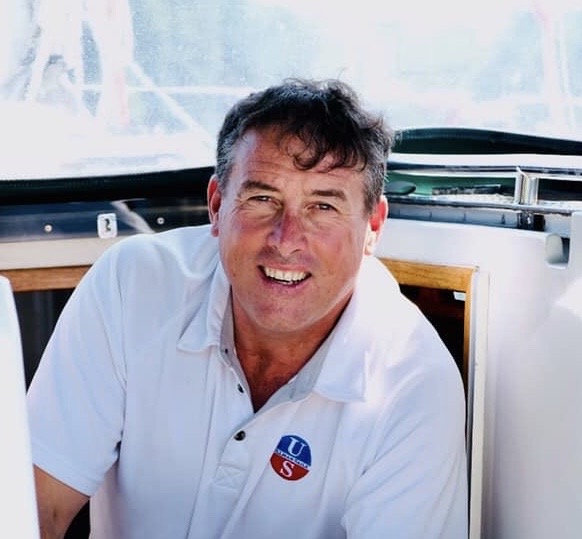
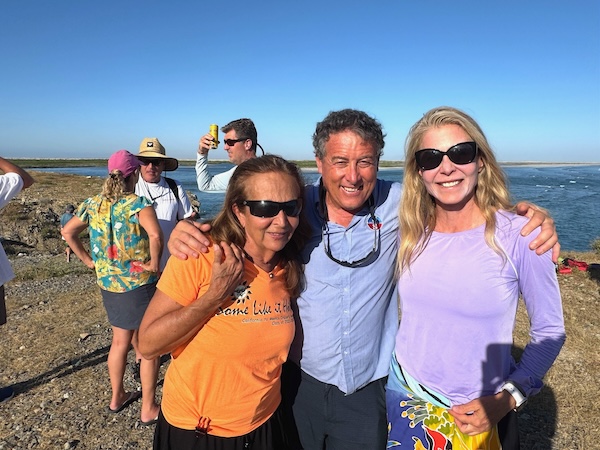
This week we chat with professional sailor, sailmaker, and new Grand Poobah of the Baja Ha-Ha Chuck Skewes about the present and future of sailing, his plans for the Ha-Ha, and sailmaking.

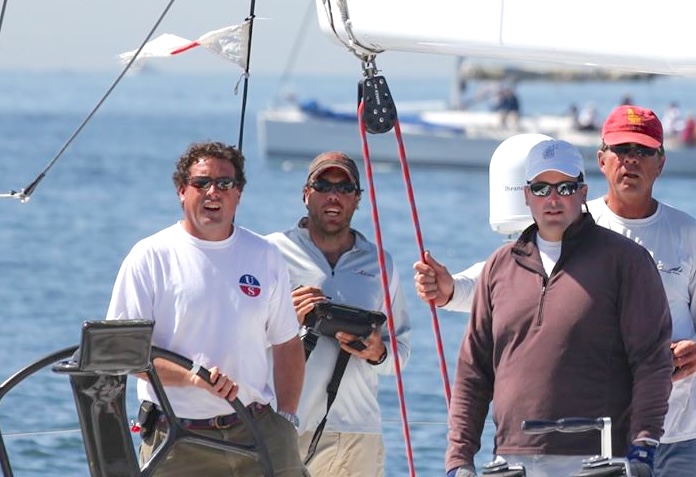
Chuck has been sailmaking for over 40 years and has won pretty much any sailing race you can think of. Tune in as he shares with host John Arndt how he learned to sail and teach sailing at a young age, how to become a sailmaker, the reasons you’ll want to make the Baja Ha-Ha your annual tradition, how to pack and prep for the Baja Ha-Ha, and what Chuck has planned to modernize this annual cruising rally to Mexico.
Here’s a sample of what you’ll hear in this episode:
- Shifting demographics: from “rum drinking crazies” to fitness-oriented sailors
- Essential spares: alternators and good water systems
- Chuck’s role as Ha-Ha sail repair expert: 38 repairs in one year at Turtle Bay
- Transitioning to offshore keelboat racing after moving to San Diego in 2001
- Life aboard Profligate: the responsibility of organizing vs. participating
Listen to the episode on Apple Podcasts, Spotify, and your other favorite podcast spots — follow and leave a 5-star review if you’re feeling the Good Jibes!
Learn more and sign up for the next Baja Ha-Ha at Baja-HaHa.com.
By the way, if you enjoy Latitude 38, consider joining our team. We’re looking for a new sales manager, perhaps it’s you!
Check out the Good Jibes episode and show notes below for much more detail.

Show Notes:
- Chuck Skewes on the Baja Ha-Ha & Sailmaking, with Host John Arndt
- [00:14] Welcome to Good Jibes with Latitude 38
- [00:38] Meet Chuck Skewes – San Diego sailmaker and new Grand Poobah of the Baja Ha-Ha
- [01:07] Chuck’s sailing background: 40+ years as sailmaker, Etchells world champion, multiple offshore races
- [02:03] Early sailing on Vashon Island and the most adventurous racing experiences
- [03:00] Racing on Alchemy with a world-class team and hitting 31.3 knots
- [04:28] The nightmare Cabo race: 40-45 knots from the south, massive gear damage
- [06:24] The incredible photo from the bow at 27 knots during a spinnaker peel
- [08:12] K2 skis connection and sailing with Bill Kirschner as a kid
- [10:07] Early success racing El Toros in the Pacific Northwest
- [11:35] From commercial fishing in Alaska to becoming a sailmaker with Dennis Clark
- [13:29] Sailing Thistles and discovering the thrilling International 14 class
- [16:15] Transitioning to offshore keelboat racing after moving to San Diego in 2001
- [19:05] If you’d like to be a sponsor of future podcasts, email [email protected]
- All About the Baja Ha-Ha
- [19:39] Why the Baja Ha-Ha is different from racing – relaxed cruising, community, and natural beauty
- [22:36] Why Mexico remains sailors’ favorite destination worldwide
- [23:29] The Ha-Ha creates a date to untie dock lines and provides safety in numbers
- [25:18] Life aboard Profligate: the responsibility of organizing vs. participating
- [27:37] Sailing past Turtle Bay 20 times racing – but never stopping until the Ha-Ha
- [28:32] Watching Turtle Bay’s community grow over 31 years of Ha-Ha visits
- [29:25] What participants discover: it’s not just partying, it’s valuable hand-holding into Mexico
- [30:23] Turtle Bay anchorage: incredible holding, well-protected, room for 150 boats
- [31:19] Bahia Santa Maria: massive protected bay with 27 miles of sand beach
- [32:41] Exploring mangroves, sand dunes, and desert landscapes at Bahia Santa Maria
- [33:04] The famous storm: 48 people sleeping ashore when surf got too big
- [34:04] What to pack: people over-provision food, but can restock in Turtle Bay
- [36:14] Common problems: charging systems, batteries, and sail condition before departure
- [37:10] Chuck’s role as Ha-Ha sail repair expert: 38 repairs in one year at Turtle Bay
- [38:38] Essential spares: alternators and good water systems (watermaker or tankage)
- [40:32] Worst moments: groundings in Turtle Bay that shouldn’t have happened
- [41:29] The importance of studying charts and not rushing into anchorages at night
- [42:28] What surprises people: cruising reality vs. the Jimmy Buffett fantasy
- [43:23] The friendships that last 15+ years from meeting on the Ha-Ha
- Check out our classy classifieds at Latitude38.com
- Future of the Baja Ha-Ha
- [45:17] Looking ahead: Chuck’s plans for modernizing the Ha-Ha with Starlink and Zoom
- [46:15] Zoom calls will create real-time community and YouTube live updates
- [46:41] The incredible medical support network within the Ha-Ha fleet
- [48:34] Amazing safety record: community has dealt with nearly every emergency
- [49:03] The fishing: incredibly easy to catch tuna and dorado
- [51:20] Changes ahead: more pre-Ha-Ha seminars, onshore immigration processing
- [52:19] Adding a second day of panga service at Bahia Santa Maria for more beach access
- [53:11] Shifting demographics: from “rum drinking crazies” to fitness-oriented sailors
- [54:01] Registration opens January 30th at the Seattle Boat Show
- [54:30] Getting to San Diego: the Coho Ho Ho Rally from Seattle provides tracking and community
- [55:23] San Francisco flotilla forming – and yes, Point Conception is often the roughest part
- Short Tacks
- [56:21] What’s the biggest misconception about the Baja Ha-Ha?
- [57:16] Favorite boats: International 14s for dinghies, sleds for big boats
- [59:40] How many miles has Chuck sailed?
- [01:00:08] Chuck’s favorite regatta
- [01:01:03] Chuck’s dream sailing venues: Banderas Bay is perfection; would love to race King’s Cup in Asia
- [01:02:26] Chuck still want to try foiling boats and wing foiling
- [01:03:21] Favorite sailing books: The Wide Wide Sea by Hampton Sides, Two Years Before the Mast by Richard Henry Dana
- [01:05:11] Final advice: Your boat doesn’t have to be perfect – just untie the dock lines and go
- Make sure to follow Good Jibes with Latitude 38 on your favorite podcast spot and leave us a 5-star review on Apple Podcasts
- Check out the January 2026 issue of Latitude 38 Sailing Magazine
Transcript:
Please note: this transcript is not 100% accurate.
00:03
It’s almost hard to explain how valuable and how incredible it is.
00:14
Ahoy, it’s time to cast off, laugh, learn, and have some more fun sailing. My name is John Arndt, and I’m the Publisher of Latitude 38 and the host of today’s episode of Good Jibes. It’s a podcast where we help you experience the world of sailing through the eyes of the West Coast sailor. And it’s all brought to you by Latitude 38, the magazine for West Coast sailors since 1977.
00:38
And today’s guest, have San Diego sailmaker, Chuck Skewes. Welcome aboard, Chuck. Thank you very much, John. It’s great to be here. Yeah, great to be here. I think I’ve seen you most lately either at the ha ha parties or on the YouTube videos that you’ve posted from being on the ha ha. Yes, correct. Yes. Yeah. There’ll be a lot more of those to come. Yeah, sounds great. Good. Well, a little background on Chuck, who is a sailmaker on the island for 40 plus years.
01:07
And he’s now also the new Grand Poobah of the Baja Ha-Ha. So the event will continue with the 32nd edition coming up in 2026. And in addition to his cruising rally life, he’s also a professional sailor, sailmaker, done all kinds of racing and cruising. Additionally, he’s a grand master in the Etchells as an Etchells world champion, a four time North American champion in a couple of classes, Pacific Coast champion in J24, J22.
01:36
International 14, I didn’t realize that dinghy life was so prevalent. J80 has done one in Transpac, Pacific Cup, and five Mexorques, and now done 10 HaHa’s, and just got back from a charter in Belize, which, yeah, hope to run a story on that in an upcoming issue with some pictures. But before we get into any more of all of that, maybe wanted to have you just,
02:03
gather, look back through all those years of sailing, sailmaking and see if there’s one sailing experience that leaps out at you. Yeah, it’s pretty funny because you know, I started so young that sailing was always part of my life. I started in the first grade and I was young for my grade. So I started in 1969 sailing and I grew up on a small island in Puget Sound called Vashon Island. It’s got a beautiful natural harbor and that’s where we sailed. mean, I look at it now it’s full of buoys and
02:33
anchored boats, we couldn’t do what we did then, but we had the life of kind of like flipper, you know, where we’re always out the water, out of the docks and our boats. And you look back at it now, it was pretty amazing thing. know, as far as adventurous sailing, I would have to say that my years on the alchemy program when we were racing sleds was actually some of my more adventurous, partly because we just had the
03:00
most incredible team. You know, we had Artie Means, who’s one of the world-class navigators and sailors, and Will Stout, who’s one of the best sailors in the world. And we had Mike Hurley from the Bay Area, know, sure sailor. uh And all of us were on the boat for, I think we raced that boat for about nine years. It was basically the same team. had Brad Rutnick, who’s an international 14 sailor, and Greg Clark. I mean, all these guys in their own right were incredible sailors.
03:30
And we all worked really well together. We loved being around each other. We party played and sailed together. We, we pushed the boat to the limits. And there was one time in the port of I are the race where we were become twice. were become the first night. Like completely become, I think actually spun a circle uh and then we were become off of Cabo where notoriously you get become. And we still got to port of I are the in less than four days.
04:00
We hit 31.3 knots with this boat shortly past Cabo being become. Say that again. 31.3 knots on a 70 foot sled. And you know, that’s a at that time, 30 year old, 25 year old boat. uh I mean, we did. We had a uh great owner and a great team and the boat was was there. But I mean, that time we pushed that boat so hard, we were going so fast for so long. Wow. And
04:28
to think of being able to sail from San Diego to Puerto Vallarta. And basically all you had to do is pack some, a few sandwiches. could have made it there. That’s amazing. That race. And then on that same boat, a couple of years later, we did a Cabo race. was a nightmare. You read about it. A huge front came through from the South and it blew 40 to 45 knots from the South with a 10 and a half foot Northwest swell.
04:58
Is this when you’re up in San Diego? Yeah. From San Diego to Cabo. Yeah. You actually it was a long beach Chicago. I’m sorry. We took out of, took out a long beach and then that first night about midnight, the wind came in. So we were probably about San Diego when the wind started picking up and we got so beat to death on that. And it was 48 hours of pounding up wind and this huge chop with the wind against it. A friend of mine explained it so clearly when someone says, well, how rough was it? And he says, well,
05:27
Unbolt your toilet from the floor and shake it till the lid broke. Cause in the first four hours, the lid broke on our toilet and we still have 40 more than 40 hours left going. It was, it was awful. So many boats dropped out a lot of rig damage and we even damaged our rig in that race, but we made it to the combo, but it was, we were beat up. Yeah. That was adventure, but not a fun one. That sounds like it. And a real gear buster.
05:57
Yeah, very much so. Yeah. Yeah. When you hit 31 knots on Alkui, what were you flying? Right? Seems like I’d see a spinnaker. You’re flying the A4. Yeah. There’s a great picture of that. If you go back, I’m trying to remember the year. I think it was 2014. It’s you got a cover on Latitude 38 taken from Artie Means. uh We had a fairly new bow guy, Jay Davis. He was a new bow guy then. Now he’s like a world class navigator and sailor. uh
06:24
Back then it was kind of new to the whole offshore sailing. And so we needed to peel from the A4 to the A3 as we were rounding when we were in the wind in Cabo, because we couldn’t lay Porta Vallarta and we needed to come up. so right at daylight, and we’re doing 27 knots, already goes out to the end of the pole to put the new kite on and it’s squared back in. And we hoist the new spinnaker and we peel the old one away and it goes flawless.
06:53
and the guys were shoving the spinnaker down the hatch and he pulled and so they had to wait till they were done to get let back into the boat. So he grabbed out of his he stuffed in his life jacket a little point and shoot camera took three pictures. Two of them are amazing and one was blurry but we got two amazing pictures and when you look at that picture you’re like how where was that picture taken from? Yeah yeah is there a reaching strut sticking out in that? Yes correct. I think I remember the shot.
07:19
Yeah, mean, it will and I will stop. I are in the back and we’re laughing because we can’t believe already pulled the camera out because it’s it’s pretty intense. Yeah. I mean, if we would have if we were rounded down a little bit there, which I don’t know, you know, I don’t know. A lot of things could happen. It was really windy. The biggest thing that would have been we probably wouldn’t have got that shot. It would have been washed away. I shot your program. We wouldn’t be able to have this interview either. that’s true,
07:49
Yeah, wow. You know, have to fashion island, which I want to give that guy. I always think of that as K2 skis. that exactly actually that there’s a sailing story there. So my mom really taught me to sail when I was really young because my dad didn’t have any patience and I was a disaster the first time. I mean, you know, five or six year old kid get in a boat, not knowing to set you loose because it was safe as a little harbor.
08:12
I couldn’t get going upwind and so my mom had to show me how to sail upwind basically. So she really started me. But my mom worked at K2 when it was in its infant stages. then years later, I was sailing out of the yacht club, little quartermaster yacht club in the inner Harbor there with a guy named Bill and we were sailing on an Ericsson 29. Now he didn’t own the boat, but he sailed on it. And I drove the boat at
08:41
I don’t know. I was probably 12 or 13 years old. I was a pretty decent sailor at the time. And so I drove the boat and the owner would do the main and bill did the genoa trim and the spinnaker trim and we raced, but we were fairly successful. mean, it was old PHRF and that was when you’re racing those old, you know, six, not boats. And, uh, and one day my mom came down and met us after we came in. And when we came home, she goes, what’s it like sailing with Bill? said, Oh, Bill’s awesome. He’s, he’s a fun guy.
09:10
She goes, you know who he is, don’t you? And I said, no. And it was Bill Kirschner, one of the Kirschner brothers that started K2. really? And so then later on, tried to snowboard. Burton and a couple other companies were the only ones making snowboards. So I tried to snowboard and I liked it. And I told him about it. And he goes, do you think they’ll last? And I said, yeah, I love them. And so they made a snowboard. He gave me one to try out and asked me what I thought of it. And they got into snowboards shortly after that.
09:38
Oh, that’s pretty funny. Yeah, that’s how long ago that was. that’s oh yeah. What’s a snowboard? Now there are. Yeah, people didn’t know what it was when I got off the ski lift. They’re like, what is that thing? Yeah, yeah. You some kind of California surfer or something. Yeah, that’s yeah, that’s great. No, I grew up in New England and K2 skis were the coolest ski. Oh, Many, that’s that was my association with Vashon. Spider Savage. You doing the doing the run? Yeah, yeah, yeah. No, that’s great.
10:07
Yeah, so you got an early start in El Toro’s, I think is uh a Bay Area boat. But I think a lot of people think it’s just a Bay Area boat. It grew up and there’s a lot of them up there. was a lot of them up here. We used to have a regatta annually on Bashan that all the El Toro fleets had come to and we’d get 55, 60 boats. Really? My real first success in racing, I got second at one of those regattas with 50 boats. Yeah. I can’t remember how old I was. I wasn’t very old.
10:36
My good friend won that race and uh I was so disappointed that I didn’t win. I’ve had some of those days. Because it was really high air so we were really little so we were really going to those. But they still race them in Hawaii and then in the Bay Area and then the Sabbaths that they race I think in Australia have the centerboard so they’re really more of an El Toro than a Napalm Sabbath. A hybrid, yeah, between the two, great. Well, so you grew up
11:05
Yeah, right from there you’re racing early. Was it was that a junior program or was it just kind of in those days they didn’t really have true junior programs. They had a sailing classes. It was adults and children taking it at the same time. And then we had, I think it was Tuesday night racing. And then if you won the series, you were asked to teach the next year. So when I was like 12 years old or 13 years old, I was teaching sailing to the adults the next year. Wow. So you know,
11:35
So now somewhere along the way you may transition bigger boats and became a sail maker. is that, is that, did you do any, a sailing instructor and then a sail maker? is there anything in between this? At age 15, I had the opportunity to work on a commercial fishing boat, a salmon saner in Alaska. Oh, fun. Someone that was a member of our yacht club and they took, and so I went to Alaska and I made quite a bit of money in the summer. Yeah. my age, made it for 15. Yeah. For 15, 16. I did it for nine years.
12:04
Oh, wow. And so I would go away in the summers. and when I after I’d done it for enough years, I knew that that was not what I wanted to do for the rest of my life. You know, it’s, it’s, it’s pretty harsh. know, the summers up there are kind of like a really harsh Northern California winter. Yeah. And, and then I came back to Washington state, which didn’t have a great winter. So I was bad weather year round. And, so I, decided that
12:33
I would do for the whole year is I’d save all my sailing magazines and I’d bring them on the boat in the summer and I’d read them when we were traveling between fishing locations. Wow. So I kind of had the dream of working on a charter boat in the Caribbean or becoming a sailmaker because at that time, know, Lowell North and, and Mark Reynolds and Dennis Clark and all these guys that were the great sailors at the time were sailmakers. There wasn’t pro sailing at the time. Yeah. Everybody that
13:01
you know, kind of made their livelihood in sailing were the good sailor. I wanted to improve my sailing. And so I said, you know, I’m going to do one of those things. I’m going be a sailmaker or work in the Caribbean. And I was only home for about two weeks from Alaska. And a friend of mine said, hey, there’s an ad for a sailmaker in the paper. And I went to work for Dennis Clark of Clark Sails and then Shore Sails ah that built the Clark boats, the San Juans and the. uh And he was a great sailor. And so I started sailing thistles with him.
13:29
My sailing got, I’d already had some success in lasers, but only in lighter cause I was pretty small, but I really got better sailing with Dennis in the thistle. In the thistle. Wow. That was a big thing. Yeah. Yeah. Yeah. There’s another classical class. I just saw something that I think Ventura Yacht Club has got quite a thistle fleet going on right now. Yeah. Which is, yeah, it’s fun to see some of these dinghy classes and, and I guess international 14 you saw.
13:57
our new cover. I did see that. There you are. It’s almost the same people that were sailing of what I was sailing. I sailed them for 16, 17 years. They’re incredibly neat boat and I built one and it was fun. You didn’t have to worry about the little intricacies of the rules because the rules are pretty vague in those. They’re just a box rule and you got to try new things and every time you went sailing there was a story to tell because it was exciting.
14:24
Yeah, yeah, you’re on the edge because if you’re not on the edge, you’re not in the game. Exactly. Right. Yeah. No, I mean, that International 14 is one those great classes like the moth, which is a developmental class or what is it? The international canoe, I think, is a bit like that. Exactly. Yeah. And and yeah, you got a lot of options. And I guess there’s some new activity and energy forming around the I-14 class here in the Bay. And I think San Diego still has some San Diego. Pretty good. Brad Rutnick.
14:53
We call him Dr. Brad. He, uh, he’s very, very active, very organized and just willing to take anybody out and has, has, uh, has a boat and then was worked on, uh, uh, one of our old 14 sailors passed away with a very good boat. And, uh, so he bought that boat or uh organized the donation of that boat and has a very good sailor sail in it. the, the skill level of the guys in the fleet is really high.
15:19
Really? Yeah, great. mean, and that still has an international following. that’s totally. I mean, I back in when I was in my early twenties, we were racing them to go to England and there’d be 150 boats. Unbelievable. And you did that 14 years, you say, or about that and just, yeah, I think closer to 16, 17 years. Yeah. I sailed them from before they were asymmetric spinnakers. So I sailed symmetrical spinnaker I-14s. Oh, really? Yeah.
15:47
I don’t want to learn. Yeah. Well, I teach you dating yourself there. I know. Yeah. that’s symmetrical spitikers anymore. Yeah. I let you know, I love those classes. It’s like the 505 too. And so many that have a star class that just have this real long history and real camaraderie. It’s like, you know, what Howie Hamlin, I don’t know how many years he’s been in the 505. I mean, he was in the 505 when I was a kid. I think he was a kid at the same time. We’re probably close to the same age, but
16:15
I would be at the top of that class. Amazing sailor. Amazing class. Yeah. Yeah. No, he’s a real tribute to himself, the class itself. And he’s been a real stalwart and advocate there. And it’s a great class. So it’s really fun to have those continue on. So somewhere you went to thistle sailing, dinghy sailing, but were you doing keelboat sailing all along the same time? Yes. mean, we started, my parents bought a uh
16:39
PC, which is they actually built in San Diego and they finished some of them in Seattle. So it used to be a Seattle, San Diego and Hawaii fleet of these wood boats that were built at Driscoll Boatyard. Oh yeah. And my parents bought one of those. So I got into keelboat sailing a little bit. I got out of it a bit and then, but then as a sail maker, I got back into it. Yeah. I didn’t really get into offshore racing. They don’t have true offshore racing up here in the Northwest, except for Dick Maui. Uh, they have a
17:07
a bunch of ones that might go 120 miles, but nothing, you know, nothing of real distance. Right. And, uh, so I didn’t get into really offshore racing until about 2000 when I 2001, when I moved to San Diego. Yeah. I was, I was supposed to do the port of iron to race in 1998 on taxi dancer and sup that the rig didn’t
17:34
something didn’t happen. They had a new rig for it and it didn’t fit quite right. So we ended up not doing it. then the next year I did it on a OneDesign 35 or the next two years later I did a OneDesign 35. then we did well. And so I got invited and then I became an offshore sailor. I’ve done almost every offshore race since then. Yeah. Wow. That’s it. Mostly West Coast stuff. you been out? Mostly West Coast. done, I mean, I’ve sailed in.
18:01
many continents. did some sailing in the English Channel. I did a little bit of sailing in Australia that other than the one design stuff I’ve done in Australia. I only did one design stuff in New Zealand. I did a little bit of sailing in South Africa. Cool. Yeah, that’s great. Yeah, we just had, I don’t know, what four boats in Sydney Hobart with West Coast sailors on them. yeah, I just saw Andy Schenck the other night. Oh, you did?
18:31
Yeah, with an Express 37 all the way down there. Exactly. That’s a long way to go up winded. Exactly. Oh, my. And yeah, we had a picture. We had a moniker who does our electronic latitude was in Tasmania and sent home a photo of the mountains with snow on them in Tasmania. don’t know why. Not deep snow. It was summer snow, but still, it’s like that’s it’s chilly down there. Yeah, it’s about the same latitude as northern Washington state. Really?
19:00
Yeah, yeah, cool. Yeah, amazing.
19:05
Hey, listen up. We hope everyone is enjoying listening to the stories of West Coast sailors on our Good Jives podcast. We’ve heard lots of great feedback from the 150,000 listeners who’ve tuned in over the last couple of years. And if you have a marine business, we’d like to give you an opportunity to connect with them during upcoming podcasts. If you’d like to be a sponsor of future podcasts, you can email Nikki, N-I-C-K-I, Nikki at latatoo38.com to learn more about how your company can benefit.
19:35
from sponsoring Good Jibes.
19:39
jump into some ha ha stuff. Cause that’s that one, you know, somewhere to you fit in some cruising. don’t know if you’ve done much cruising outside of ha ha. Has that been primarily your cruising? So growing up in the Pacific Northwest, the San Juan islands are exceptional cruising grounds. San Juan islands and Gulf islands. They actually call it the Salish sea. Now the Puget Sound all the way through Canada and it’s unlimited. If the water was warm here, you would be the most popular place in the world. And it still is a very popular place, but it’s still, you can still
20:09
be remote and ah it’s actually kind of magical in a way. So I run a little cruising rally up here, but I started that because of my ha ha experience years ago. Oh really? Okay. Exactly. then, and then, I did that kind of cruising. I never did any distance cruising until I really did the ha ha. I do, you know, a little bit of stuff, but nothing great. And then one year I, uh customer and friend was doing the ha ha. And I said, Hey, you know, I’ll do it with you if you need help.
20:38
I did it and that was the light came on like, wow, this is an amazing. It was not what I expected. And I think a lot of people sort of expect it as one thing, but it’s, it’s almost hard to explain how valuable and how incredible it is. How does it differ from racing, being out on the end of a pole from Long Beach to Cabo versus cruising? There’s people like, uh, I have friends I raced with my whole life up here and people that I know from Southern California racing.
21:08
And about a dozen of those people have done ha ha’s now. Oh, right. say that the ha ha’s the most fun they ever had in their life. It’s just so much more relaxed and we sail past, know, we’re right when I’m racing. That’s all I’m thinking about. I’m not thinking about uh sunsets and sunrises and fish and whales and, and things like that or, or cool little coves or
21:36
or just anchoring up and checking out beaches. I don’t even, the only reason I even know the lands there is because I know I can’t sail there. For the best wind and the weather and trying to push the boat as hard as possible and numbers are going through my head nonstop. I really can’t think of anything else. And so when you go down and you’re cruising and you actually get to read a book and you’re talking to someone on a friendly banter on the radio or something like that, that stuff is so nice. And so the cruising down there,
22:06
Then now I’ve done some cruising in Mexico. Right. Nothing extensive, not like Richard had, but. But Cortez. Yeah. Yeah. And I plan on doing more. just love it out of El Spirito Santo and. Yeah. Yeah. No, it’s one of the interesting things, I think, for all the around the world cruisers and people we followed at latitude. So many of them say they’ve sailed from San Francisco around the world, starting in Mexico, come back in Mexico remains.
22:36
their favorite of all the places they might go anywhere around the world. Yeah, if it’s not their favorite, it’s a close second. And a lot of people feel they leave Mexico too soon because it’s hard to get back to because it’s primarily upwind. And so you generally don’t want to do that. And you keep thinking, oh, I’ve got to go to the next spot. you know, everywhere I travel, go, well, Mexico’s got kind of all of it. You know, it’s yeah. Yeah.
23:00
Yeah, I think a lot of sailors here who dream of the South Pacific or dream of the Caribbean or the Mediterranean, and they don’t realize just south of the border is really a place that most around the world cruisers, if they’ve got to go to Mexico, if they’ve been lucky enough to go to Mexico, will say it’s one of the best things they ever did, the best parts of their whole world. That’s really where the ha ha comes in. It’s a date you have to untie your dock lines and go.
23:29
Right. As a sail maker, I’ve had people buy sails and setting their boats up to go cruising to Mexico and then they miss the season. So then they do it. They think they’re to make it the next year. Then the health issue or family issue comes up and some of the people never make it. Some people are much older when they get to do it. Yeah. This is just a date. Hey, let’s just untie the dock lines and go and the safety in the group and the knowledge of the group is so huge. Yeah. Yeah. No, I mean, it’s been obviously an amazing thing. Thirty one years.
23:55
and over what, 3,000 boats and over 10,000 people. That’s amazing numbers. Richard did an amazing job. Yeah, no, it’s got an incredible track record. as you know, it’s a thing every year we get so many letters of thanks and appreciation for what Richard and Donna have done. obviously the community that surrounds it, just go to that West Marine Kickoff Party in San Diego and.
24:20
Of course, it’s always a fun party. It’s the day before and everybody’s grinning, ready to go. Exactly. And when they ask how many people have done one before, the amount of hands that go up, that’s a big testament for how great it is. That’s true. That is really always amazing. You get all those people, but a lot of people have done it four times, nine times. I think there was a guy this last year did 17. Oh, really? Oh my word. Yeah. That’s a lot. That’s a lot of trips back up the coast. Yeah.
24:48
Yeah, that’s right. That’s a lot of trips up. Yeah, a lot of trips down. That’s great. What? many of those times have you done on the profligate or how many times? figured out the other day. I think I did five on the profligate. OK, great. So funny because I had to it was a little hard to figure out how many I had done because it seems like I’ve been on profligate forever. know, it’s really a family. know, Richard and I get along very well. Donia and I get along really well. And and just the evenings where we’re eating dinner and telling old stories and
25:18
Richard’s one of the few people that has more stories than I have. So we tell all these old war stories and all the funny things that happened back when, say, a little bit more of a pirate game. Yeah, that’s right. Well, now there’s cameras everywhere. That’s right. We’re much better behaved now. Yeah, have to be. getting on, I guess, won’t change when you got off another cruising boat and got on to Profligate.
25:45
What did you discover about the ha ha from a profligate view? I think when you’re on another boat, which this is good for participants of the ha ha is, is it’s all benefiting you. Like everybody’s there to help you. You can sleep in, you can participate in the parties or not participate in the parties. And you’re kind of learning when you’re on profligate, you’re part of the action.
26:13
You kind of feel like a responsibility for everybody. You’re constantly, you know, checking locations. You’re making sure conditions are right, that the locals are going to have Pongas ready to take everybody in that we know. You know, we know any idiosyncrasies go on when you, when you’re a participant and you pull into turtle Bay, you just wait on the radio to find the best way to get fuel or the best way to get water or where I sit or kind of the lay of the land.
26:39
When you’re on Provigate, we got to kind of call everybody ahead of time and figure all that out. Right. Because things change with the seasons in Mexico. Nothing’s stagnant. Everything changes a little bit. But that being said, I think things have gotten better. There’s a couple of things that got a little more complicated. The immigration thing obviously got much more complicated, but I think that’s probably everywhere in the world. Yeah, particularly trying to come to see us in America.
27:07
That’s right. We think Mexico is difficult. Try being a foreigner coming here. Yeah. Had you ever been to Turtle Bay before you did a ha ha? No, I had sailed by Turtle Bay and because I out of all the times, I don’t know how many Port of Arta races I’ve done, but it’s it’s got to be in the neighborhood of close to 20 because they used to have them every year. We do that out of Marina Del Rey every year, every other year than out of San Diego every other year. And then we did Cabo races.
27:37
every year and sometimes we barely get the boat home and then take off and race again. And so I don’t know how many times I sailed down that coast, but it was a lot. I’ve never ever come up that coast. Yeah. So I never stopped in Turtle Bay or Bahia Santa Maria before. I’d never stopped between San Diego. uh I mean, Ensenada and Cabo. I’ve been to Ensenada several times, but yeah. Yeah. No, that’s it. I’m yeah. Turtle Bay is such a great harbor and otherwise a sleepy fishing village.
28:06
until the haha shows up one, well, couple nights a year. it’s been amazing to watch the community grow and the children grow up. the ones that were kids when we were first doing it, or when I was first doing it, are now young adults. And how much more they appreciate the haha than they probably did in the beginning, and how they prepare for it, and how it just sets things up great for the people that come.
28:32
Yeah, yeah. Well, I’m sure for Richard and Donna first time 31 years ago, you know, so the 10 year olds then are now 41. I know, right. They probably own the businesses and they’re one of the exactly. Yeah, no, that’s great. But what about just, yeah, maybe share a little with people who are thinking about the haha about just the anchorages themselves and holding ground or safety. So the biggest thing that when I the first haha I went on was that I realized that it’s just
29:01
a great hand holding way to get into Mexico. Originally I thought it was just a party and a bunch of crazies going place to place. And then once I did it, I realized that is not at all what it is. If you want to get crazy, you probably could. Nobody really does anymore. You know, we’re all a little older and drink a little less. But the big thing was, is like when you get to a spot and you have the net or
29:25
If there’s a problem, for instance, we only had a minor problem this year and it turned out really not to be a problem. But we had one sailor who lost his crew. This crew decided to go on another boat in Turtle Bay. Oh, really? And they uh so he’s by himself and his personal AIS went off. Oh, we thought he had gone in the water because it had a location and he then he turned. Is or EPIRB? It was an AIS. AIS. OK. Yes, because it didn’t go to the Coast Guard. It just went to people’s.
29:55
Okay. Turned out that he dropped it, it turned on, he turned it off and it, it kept that same location. And so people turned around and went there and I was thinking, what an amazing thing. Because if he was by himself and not with the group and he really falling over, it would have been a thing. But when you get to, um, turtle Bay, when we have like 150 boats anchored in there, we take up this one little corner.
30:23
Yeah. Most of the Bay is about 20 feet deep. The deep part of the Bay is 35, I think. And there’s, there’s a little shallow spots on the edge and it’s incredibly good holding and it’s protected from all sides. And, uh, so if you went on the ha ha and decided to not didn’t like crowds, you’re only doing it for the safety. You could anchor on the other side of the Bay and you wouldn’t hear anything. The only thing you use all the mass lights at night. Right. And you know, we, um, we also had all the parties in daylight so you can get to your boat.
30:54
Behind your way home. Yeah, yeah, because it’s impossible to find your boat in the dark in these bays because there’s no there’s no reference at night. Yeah, there’s no. The anchorage is phenomenal. Yeah, really good. And it doesn’t know Turtle Bay. It can blow hard in there, but it’s so protected. You don’t get any chop or anything. Right. And then then we head to Bahia Santa Maria. But here Santa Maria is very protected.
31:19
It can get very windy there, but it’s got great holdings. It’s a sand bottom, it’s good holding in for sand. If a storm came in from the south, it would be exposed. that time of year, that’s really rare. And if that was the case, you could easily go into Mag Bay around the corner, which is only about a four or five hour trip. Now that we have much better weather routing, the chances are much less.
31:46
But that bay is probably four times the size of Turtle Bay. can’t remember. Richard told me one time the amount, the mileage of sand beach on that thing. it’s like 27 miles of sand beach in Sanamert. It’s another guy. know, the guy’s going to walk down the beach and put their towel down right next to you. Right.
32:11
Yeah, we actually every year we hire a panga and he takes us down about three miles and drops us off on the beach and we walk back. Oh, really? Walk back little as jewelry. There’s a there’s mangroves. There’s a little river exits there. Geographically, it’s kind of an amazing place because it has sand dunes and part of it. Yeah, it has mangroves and then it has desert rocky desert. So you can hike these hills up and see the view of the Pacific and the Bay or you can walk on these beautiful beaches over to this sand dunes.
32:41
Yeah, then as these mangroves and they and they change all the time, but you can take a dinghy in there and travel for a couple miles of mangroves. Oh, really? Yeah. It’s amazing. Yeah. Yeah. No, I mean, the one year I did it, I’ve done it just one time after all these years here. But it was the year that there was that southerly storm and a whole bunch of people had to sleep ashore because the oh, I guess you’re on the famous one.
33:04
Yeah, I was, I was there, but I actually got on the last Panga out. so I made my very last one. I, of course they were still on the radio every time. Yeah. That was, that was 48 people had to sleep on shore. think, right? Yeah. Yeah. Something like that. It was a good crowd. And when that, when the Mexican Pongas don’t want to get out there because it serves too big, it’s too big. It’s too big. Yeah. It was getting scary looking. So then everybody got back the next morning. So was sort of a nod of it, but it was, it’s quite the story.
33:34
Well, 2 a.m. trying to sleep. It was an event for those people. was definitely a little chilly. And there was not there obviously wasn’t enough beds for people. sleep on any beds. Donnie talks about that. She got the front seat of a truck or something. Oh, yeah. Well, yeah, she’s one of the lucky ones. Yeah. Yeah. Yeah. For people who are thinking like maybe what’s a maybe common problem or something people bring too much of to little love or.
34:04
That’s a that’s a good question because I think that what people think about is that they have to go to Costco and fill their bilges with food and all this stuff and realistically You’ve got to think how much food are Four or five six people however many people you have on your boat gonna eat in ten days Yeah, and you can go less than that because we reprovision fresh produce and and a lot of other things in Turtle Bay They actually have usable stores and for the people listening
34:34
Turtle Bay is a fishing village. It’s very remote. It’s modernized in some ways, but you can get there from the road. It’s about, I think it’s five, six, seven hours from the main road into Turtle Bay. It’s mostly dirt road on the way in if you were driving in. But they actually now have a coffee shop, an ice cream parlor. Besides their baseball field, they’re building a soccer field that looked amazing. uh
35:01
It’s got a few amenities. has like three grocery stores on a couple of tiendas that you could go to. You can get beer, ice, water, and lots of produce. And the grocery store is the type of grocery store that goes to like a Costco somewhere, like an Ensenada, then stocks up for half a year. it’s a, a, everything’s shelf life-able, but. Yeah.
35:23
You can you can you could literally have two days of food and then stock up in Turtle Bay and make it to Cabo if you really wanted to. So I think people over provision on foods. Yeah. And as as Mexico develops, you can get more American style foods like your special sauces and all that. They have important parts in all these big grocery stores now. So there’s less of that than there was 15, 20 years ago. Yeah. People.
35:49
One of the big problems you see is people don’t have a very good charging system or they test their charging or test their batteries before they go. think every year we have issues with that. With electronics or electrical system. Yeah, and not even removing propaganda from that. Well, they got hit by lightning though, right? Yeah, they got hit by lightning.
36:14
four weeks before were heading north and had to replace almost every electronic in the boat. Luckily, the boat’s very simple. That boat was built for the HAA. It’s very simple. they, yeah, there was some, but charging is an issue. Making sure your sails are ready to go. If they’re a few years old, have them serviced by your local loft because you’re not gonna be, there’s nowhere to get them serviced until you get to Porto Vallarta.
36:43
And it’s a bummer if you’re not be able to sail because you you didn’t look at that option before you left. Right. Right. Well, I knew being a sailmaker, I know you’ve been the HaHa official repairman. And if you’re going to have added duties on this next one, you you probably will feel a little less inclined to want to big sails. uh I mean, I’ll probably bring someone along to do it, but it’s it’s you know, there’s one year.
37:10
I don’t remember the years I’d have to actually go through records to find them. But one year we were one of the first boats into Turtle Bay, Prophagate I think anchored behind Cedros. They would have been the first in, it was pretty rough out there and they decided to hang out for a day behind Cedros. And we got in there and as the boats came in, we started doing sail repairs and we did 38 sail repairs. Oh my word. Do you bring a sewing machine? No, I used to, but it was a little tough.
37:39
What I mostly do is there’s there’s some adhesives now that use for that and then a lot of hand sewing. So we don’t do something that’s going to necessarily be a permanent repair for the rest of last week. Our goal is to get them into Mexico where they can get the rest of things so that they can write their sale down. It might get him even the rest of their season, but it’s not going to be 100 % permanent repair. You’re not doing a recap where you’re taking a little draft. Yeah, I’m not doing sale shape things. I mean, I’ve done some pretty major. We’ve done some spinnakers that were
38:09
ribbons and we’ve got them back together for these people to go sailing. Yeah, yeah. What about spares? Anything that is the comment? I remember Richard had this story. Somebody had a 3D printer that was printing on clothes. that was amazing. Yeah, he had had someone in Mexico rebuild his winches and they didn’t put the little plastic piece in itself, tailor, that pulls the line off of the winch. There’s a little uh triangle shaped piece and a guy said he had a 3D printer. We called him up. took, we had one
38:38
from one of the winches. took it, made new ones and they were better than the originals and they’re still in that boat. I mean, were in Turtle Bay. There’s no data in Turtle Bay for your phone. Like I said, Turtle Bay is a village. There’s no- No cellular. Bank. There’s no hospital. There’s no data. You can make a phone call most of time, but self-service is horrible there. Few places have wifi. The wifi is better from the boat with Starlink.
39:06
Yeah, here we’re having a custom part made for a winch down there. So but for spare parts, I think, you know, alternators is probably number one, starting alternators, because you have to be able to start that for charging that goes back into the charging. Right. And I can’t think of much else you want to have a good system for water. Obviously, Mexico is full of people and people drink water, you can get water, most of its purified, you know, they most places have a
39:35
purification system. It’s not as not as necessarily easy to get, but it’s possible to get but you want to have, you know, a good system for your water, either a good water maker or a lot of tankage. Yeah, yeah. Interesting. Yeah, I’m wondering, I’m trying to remember now from our surveys, how many people do go with water makers, but I’d say, you know, over 50 % of the fleet as well, but but definitely not 95%. I mean, yes, correct. Yes. Yeah.
40:03
I mean, it’s definitely interesting. What about, I guess, any other things that are worst moments on the Ha or most difficult things that you’ve had along the way? The worst moments is twice. I wasn’t on the one where the J-120 sunk, where I got hit by whales, but I was on the other two where the person turned in before Turtle Bay and another person who ran aground getting into Turtle Bay. And those were both, you know,
40:32
very easy to, they shouldn’t have happened, I guess. Yeah, easy, should be. It’s a big wide opening. Yeah. So when the windboat ran aground, Richard said, hey, can you just see how wide the Golden Gate is? And so I’ve measured it. And then I measured the opening to Turtle Bay and Turtle Bay was a 10th of a mile wider than the Golden Gate. Wow. Yeah. It’s plenty easy to get in there. You know, I just think a lot of people have not sailed offshore at night and they just
41:01
don’t necessarily have the experience reading charts very well. I navigate with electronic charts almost exclusively. I mean, that comes from my racing background because we use them for that. And so I think the good habit of zooming in and out and, but having a paper chart and just studying how you’re going to come in and not varying from that decision is probably a good idea. maybe not rushing in the dark if you’re at all worried about it, you can just.
41:29
you know, turn the engine off and drift out there. know, just make sure you’re a few miles out. You’re going to be fine. Yeah. But it’s actually pretty easy to get into. Yeah. Yeah. No, I mean, they’re nice big, bays. What what about what are people surprised by? mean, how many people if you say, you know, they’ve read, they’ve heard about the haha, they’ve prepared their vote. And by Turtle Bay, I think they’ve made a lot of friends and never have. But are people sort of what by the end of the trip, what do you think they’ve
41:58
think differently since before the trip? think really what it just it doesn’t necessarily good or bad but it changes their perspective of what the cruising life is. uh think when people originally think about cruising and this is especially for people from the northwest up here is they want the sunshine. They think of the Jimmy Boveck cruising you know there’s going to these golden sand beaches I’m just going to be sipping my ties and you know barefoot all the time.
42:28
And then when you get down there, you realize that’s not really the case. You know, it’s still sailing. It’s still obey. You still have responsibilities on your boat. You still have things to do. Uh, you’re there’s not this bored time. There’s not like a little beach bar everywhere. That is a big thing. I have a customers right now that didn’t go down with a ha ha because he was involved in the Baja 1000 and couldn’t come down.
42:53
Oh really? And he bought the boat, set it up, made it to Cabo and said, you know, this life’s not for me. And he’s bringing the boat back and selling it. Oh really? Oh, that’s interesting. unfortunately he got to where it really gets good. know, I mean, when you have, there’s goodness in the people and the resources and things like that. But the Sea of Cortez is where this cruising, like the day-to-day cruising gets really good. Yeah. I mean, that’s one of Jacques Cousteau’s famous, favorite diving spots in the world too, is this Cortez, right?
43:23
Now that’s that’s yeah, I think that’s incredible thing and I think also the friends everybody makes. mean people really create you know incredible friendships and camaraderie. Friends of mine for been a very very good friends of mine for over 15 years that I bet on the haha. Oh really? And it was it was I think my third haha. And we were on a boat called new able Luna and they were on a boat called new moon.
43:49
And they were not getting along with people because they did it. They met these people through the crew list and they needed a sale repaired. So they came over to our boat to do sale repair. And they were talking about taking a bus back to Tijuana, going back to San Diego. And we said, why don’t you guys just come with us? And, know, we didn’t really have that much space, but they came with us and it was, it was great. And so they got off new moon, got on new Avaluna. That’s so funny. uh And then, uh, and then they’ve done a couple more ha ha’s with me as well.
44:19
Really? Oh, that’s great. You have the boat names too? Yeah, perfect. Perfect lineup. Hey, good Jibes listeners and Latitude 38 readers. Have you looked in our classy classifieds lately? It would be impossible for us to know how many boats have sold to new owners over the last 45 plus years of publishing Latitude 38. But we’re sure they have helped countless people realize their sailing dreams. Every month there are new boats listed that will fill someone’s sailing adventures.
44:47
If you have a boat you want to sell or looking for that next boat in your life, the pages of Latitude 38 will surely have something to suit your fancy. Pick up a magazine at a local marine business or visit our classy classified pages at latitude38.com to find boats, gear, job opportunities, and more. Then tell us your next sailing story. Yeah. Well, so looking ahead to Ha Ha’s and running your first one coming up and, know, giving Richard and Donna a
45:17
time off after 31 years. um But what any thoughts have changes or what? No big changes because Richard’s done an amazing thing. And the formula obviously works. There’s a few things that I want to modernize because we used to uh we used to have single sideband and everybody at VHF and there was a net in the morning that made more of a community of the whole thing. Right now when we ask who has Starlink
45:45
I didn’t see a hand not come up. think there was maybe three or four boats that don’t have Starlink, but that’s about it. Right. So since people have high speed data now, we’re probably going to do some of these zoom calls. so everybody on the the haha will be able to talk. People outside will be able to just watch. It’ll go onto YouTube live. Oh, interesting. Yeah. And we’ll do that to kind of, you know, talk about things. So like if someone has a breakdown,
46:15
or something we can talk about it in real time and there might be somebody right there to help them and or health issues. And I haven’t even touched on the health issues of one of the things that’s a benefit of the ha ha. I was gonna say that you said no hospital in Turtle Bay and I thought, yeah, I mean, there’s always seems to be a doctor. There’s been very few medical issues on the way, but it does seem like every time there has been one somebody’s emerged from the fleet.
46:41
Correct. So we keep track of who are medical professionals and we keep a list of that. so when the first thing when the net starts is a, ah there any medical emergencies or things that need to be dealt with and someone will get on and then usually one of those doctors or we personally call one of those doctors say, Hey, are you willing to talk to this person? And many people in the fleet will have medication. We obviously don’t want someone that’s not a doctor subscribing.
47:08
prescribing medication that somebody just happened to bring along on their boat. two times there’s been very serious UTIs, urinary tract infections that are rippling. we had the correct medication on a boat and a doctor to be able to do it. And it was dealt with that one time this year. Yeah, amazing. Well, yeah, and you don’t want to have to call the sailmaker if you need stitches. Yeah, that’s correct. Well, and
47:35
And two years ago, somebody broke their arm and we had some. uh remember somebody that was specialized in in wrist and hand, and they had cast making stuff and made a cast of the first was taken. I mean, obviously, we’re not going to have that every year, but that was pretty special. Yeah, yeah. No, I know. I mean, I’ve been here all those 31 years and. Yes. Right. Well, you know, red haven’t been there all those times, but I certainly read the stories and most of those emergencies that come up. uh
48:04
seem to get dealt with. I it really is given all the people, all the boats and the fact that you’re sailing all night and adventuring offshore, there’s really a really few things that happen and those that do, there seems to be the help. Exactly. I mean, it’s been rare that we haven’t been able to deal with, to a conclusion, the problems that have arose. Yeah. As matter of fact, I can only think of one and that was some older lady died of a heart attack and that was the only one that we couldn’t deal with.
48:34
at the time, you know, and so we’ve been fortunate obviously, but it’s also, you know, we use precautions. Yeah, yeah. No, that’s really amazing. I like the idea too of you know, zoom replacement for the SSB net. That sounds, that sounds pretty fun. I think it’ll bring a bit of a little bit more realization of the, of the, of the environment people are in, know, like both either everything’s on the floor or everything is, you know,
49:03
Actually, one of the other fun things I always think in those stories is the fishing, you know, and the sushi. I mean, you know, it’s sort of Mexico. Cabo is famous for fishing. Obviously all kinds of people do it when you go on a cruising rally. You think you’re going on a sailing rally, but a lot of it looks like a fishing contest or tons of great. It is so easy. Yeah, well, it works for me. I brought along on a haha. We were on a Beneteau 62 and. You know, we throw these cedar plugs over the side and he goes.
49:33
what do those look like in the ocean? said, I don’t know, but they work. we were, we caught so many tuna and so many Dorado. And then you get through a school of Bonita, which, which I generally, I don’t eat because they’re, they’re like number four on the list of fish I want to catch. And so I put it back, but in less than an hour, we caught like 65 of them, you know, turning them all back. And he’s like, I’ve never seen fishy like this. So it’s a sport or someone who loves seafood.
50:02
It’s easy. And this year we quit fishing for Dorado after we boarded seven of them. Really? Wow. Yeah. It was, it’s just, uh, you know, we could only keep so much fish and we only, and there was, there was, uh, 11 of us, think on the boat. so we were, but yeah. Well, if you, yeah. So I think that’s another important thing is bring some good fishing gear, but also someone who knows how to prepare fish. Exactly. Yeah. I should do a video because I learned.
50:29
on a sail down, not on a ha ha, but on a separate trip down on a swan. This guy was a big sport fisher, taught me how to clean the tuna the easiest way. So then I now have taught it to several people on the ha ha. Yeah, yeah. mean, that’s because we get a lot of bloody fish pictures, but then a lot of nice sushi platters.
50:51
But somebody’s got to go from that flapping fish to the sushi platter. Yeah. Two years ago, the fish were huge. Normally we get between 15 and 25 pound tunas. And, but two years ago, I don’t think anybody caught under a 45, 50 pounder and there was some pushing a hundred. Yeah. That, mean, we didn’t actually catch any cause they kept straightening our hooks. didn’t have a gear, but you’d have to catch the bigger tunas. Straightening the hooks. Yeah. Wow. Yeah.
51:20
Well, that a tough fish. about any other thoughts on change besides SSB and sort of some kind of net or other things you might look into? Yeah, we’ll do that. We’re going to have a little bit more seminar, live seminars through Zoom and things like that pre-haha to kind of inform people so that we don’t get someone that shows up at San Diego unprepared. There not a lot of people show up unprepared, but there are some people that are kind of last minute trying to do things they didn’t realize they had to do.
51:50
And we’re gonna have a little bit more instructional stuff like that and we’re going to move the immigrations to onshore Yeah, so our plan right now and every like I said everything in Mexico is gotta be fluid is Do it at where the beach party is gonna be? uh And that way if someone’s at the end of the list to get registered they’re at the party already. Yeah, yeah simple and then I’m gonna add a
52:19
I’m talking with our guy Victor who kind of helps with that whole Bahia Santa Maria thing is I’m trying to get a second day of pongas, have the fishermen do two days of pongas for us. Yeah. So that people can do more hiking because some people were kind of stranded on the boat because the surf is a little too big to bring your own dinghy in. And so there wasn’t enough pongas to get everybody in. And so people were stuck on the boat one day and then the next day all the pongas were there to bring people in. Yeah. Yeah.
52:44
Great. Now let’s, yeah, obviously got a lot of tradition to follow up with here, but it’s, as you say, pretty magical and not really a lot that needs changing. em No, just it’s fine tweaks and, you know, just kind of the changing of times, you know, we go from where people were, you know, rum drinking crazies to now people are a little bit more fitness oriented. we’re like this year we started yoga.
53:11
Yeah, we did a couple of yoga’s and we’re to do, you know, organized hikes and things like that. But those aren’t, they’re not like something that big change, but it’s going to be, it’s just as the, since the younger people, cause of starline can able to work, it’s going to be a little, there’ll be some healthier options. Yeah. No more corn, beef and hash. It’s avocado toast. It’s avocado toast. got to change with the times a little bit. That’s right. So yeah, I know that sounds, that sounds really great. What about, um, you know,
53:39
Dates coming up, you’re planning to be at the Seattle Boat Show, think end of the month. January 30th through the 8th of February. Yeah, and you’re going to open registration for 2020? Registration will be open on January 30th. January 30th. Great. Yeah, so the first day of the Boat Show. All right, sounds good. We’ll have some latitudes coming up there for you to hand out.
54:01
Yeah, that sounds great. then I think the next, so at that point people will be able to fill out the online registration stuff. think the next, get all the information to you, the in-person date, the next thing I think is going to be our fall crew list party in Sao Paulo. And then that’s early September. And then we’ll get down to San Diego. But just for the West coast portion of the rally, which is not rallyish too much, it’s get yourself to San Diego so you can get ready.
54:30
Anything people should be thinking about who are not already in San Diego right now? Yeah, uh there’s a rally, uh go as you want rally at your own pace called the Cohoho, which is out of Seattle to San Diego. uh They have a seminar series and then they keep track of you and it’s a way to be tracked on your way down.
54:55
and not big brother like so not big brother no there’s nobody from the rally on the rally they kind of monitor it from land great yeah but they they connect you with everybody so like you have communication with people when you get places and ideas on on marinas and things like that yeah yeah and then there’s a group that’s going to try to start up that i got an email about i talked to you about from angel island yacht club i believe it is that wants to do it treasure island
55:23
Pleasure Island Yacht Club that wants to do a flotilla from San Francisco down. I think which is great because actually that’s almost the roughest weather you’re going to have on the whole trip. That’s also what people who sail around the world say the toughest part of their whole circumnavigation was leaving the gate and oh my God, point conception, know, point conception. just comes out of nowhere, it seems. Yeah, that’s right. Yeah. So it only gets better as you go south.
55:53
So unless you’re in the Sydney Hobart. exactly. Yeah. Yeah. So great. Well, I that sounds good. Anything else we want to tell folks about the Ha Ha? I’ve got a few short tax or quick questions to ask you. Just go ahead with the with the quick questions. I think that’s I think we have it. just I think what the big misconception is what it really is. Yeah. Safety and numbers, a little bit of guiding and and hand holding and it.
56:21
kind of builds a relationship. you’re cruising later on, you might, you’ll run into people with the same interests. Yeah. Yeah. And I guess the other thing I’ll mention is it’s a rally, not a race. A lot of times you see people like I’m going on the Baja race or, know, people might think there’s a little competition, which there can be, which is fun, but it’s a rally. It’s a rally. It’s pretty funny when we do the, cause we do have us prizes if you’re the fastest, but
56:47
It’s only you basically, if you sail the whole way and don’t motor you with. So yeah, that’s kind of how it works. know, was a for motoring. Yeah. penalty for motoring. Well, that’s great. I’m sure that was all inspired by sailmakers, wasn’t it? Exactly. Yeah. So great. Great. Well, so a couple of quick questions though. I mean, I’ve I-14s, El Toro’s, Alchemy, all these great boats, but you got a favorite.
57:16
make your model a boat that well, dinghies nothing compares to the international 14. I think that’s the like if I was a kid now, bonds and international 14 should be the thing. And the only reason I would get out of the office so I could sail with my buddy. But the international 14s are just so fun. And they develop your skill so high. And they’re just amazing boats. Yeah. You know, big boats. I really missed the era of the sleds.
57:46
You know, we think to a why we’re getting there as fast as like trans back 52 size boats, but we were dry and we were fast and they’re still manageable. And I, might be just because I had such a great time with a great team we had, but, uh, the sleds were really an incredible boat to race to why I did, uh, the last trans back I did is on a Rogers 46. And we went at basically the same as my very fastest time on a sled. Yeah.
58:15
but it was so significantly wetter and harder on me that it took years off my life, I felt. Yeah, mean, yeah, these high, of course you look at the Volvo or ocean race boats or these things and you go, everybody’s just wet and water pouring over the decks all the time. And it is fun for five, six, seven hours, but you don’t get helicoptered off after five, six, seven hours. You still have eight more days.
58:44
Yeah, ah no, well, there’s luckily there’s still a few of those sleds out there and having fun with them. But yes. Yeah. What about have you, if you just listen to all this racing and all these years, have you kept track of miles? You had any guess on how many miles you said? No, I used to keep track of the miles a little bit because my big tagline was that I sail more miles a year than I drive my car. Ah, good. Yeah. Yes. And so part of that’s that sailing is not that fast. So it takes the amount of miles I sail takes a lot of time. Right. Time to drive very far. But
59:13
but I don’t drive very far. so, was doing uh six or 7,000 miles a year for a while. oh I’m doing a little less now. I’ve lost a little passion for the racing. I’ve done enough of it. I just don’t have it after 13 Trans Pacific races, I’m just. uh
59:40
You know, I don’t have the desire. mean, there’s, there’s not saying I won’t do it again, but I don’t have the desire to do it anymore. And I don’t, and, and I’m the type of guy that like when I’m racing, I want to be competitive and going full bore. And so I just don’t, I just don’t see myself doing those. I I’m doing the Porta Vallarta race coming up. Oh, great. And Mexorc, Mexorc is my favorite regatta. And if nobody’s done that race, you, you’ve got to do a Mexorc. It’s a, it’s an amazing event.
01:00:08
Really great. What are you doing a port of a yard on? On Vellos, the Tanton 73. Oh, great. Beautiful. Yeah. Well that, yeah, I think, uh, all that racing, uh, that’s a lot of miles. I obviously the ha ha’s just got you soft and then it has made me soft. I’ve seen the other side. Yeah. I the other side. How about a longest off shore passage or longest sales? Is that Hawaii? did a San Diego to Panama. Oh, wow.
01:00:35
And so that was the longest I did. uh But short of that, it’s just been Trans-Pacific stuff. Yeah. Yeah. I mean, which is pretty far, you know. But I’ve been on fairly fast boats for the most part. uh Most of mine have been eight and a half days, with the longest being 12 and a half. Yeah. Right. What about, is there a favorite venue in the world of all the places you’ve raced at? Yeah, still Banderas Bay and Puerto Vallarta.
01:01:03
It’s unbelievable. It’s like there’s no wind in the morning and it’s hot and the whales are out on the race course and you’re just beautiful. Then at 1130 the wind comes in and you start your race and you’re in the number three and it’s blowing 18 to 20 and 85 degrees with 85 degree water and then shortly after you finish racing the wind shuts off. I just can’t explain it. It’s amazing.
01:01:31
Amazing. It sounds like you got a part-time job with the Chamber of Commerce or something. Yeah. How about a place that you’ve never sailed that you’d want to go or a race you’d want to race? I would love to do like the King’s Cup over in Asia. I’ve never officially been to Asia. I’ve been to Turkey, but some people call Asia, I could still call the Middle East. if I’ve never officially been to Asia, I’d love to do the King’s Cup or something like that over there.
01:01:59
Yeah, actually, that’s not one I’ve heard about for a while. We used to get some reports from people, I haven’t heard the case. haven’t heard from her about it in a couple of years, but I know I knew someone who did it and they loved it. Oh, really? That sounds fun. How about any kind of boat out there that you’d still like to try? It sounds like you sell just about everything, but is there some foiling? I’ve never done any foiling. Ah, yeah, that’s uh that’s kind of a. Something fun to try. Fun to try, yeah, I mean, I’m sure it’s like.
01:02:26
starting all over again, you know, I’ve done, I’ve done, uh, you know, wakeboard foiling. I know what are the concepts of it, but I’ve never done any of the wing foiling or the multi-hole foiling. I went out on an ACAT one time, there wasn’t enough wind to get on the foils. Yeah. I’ve done, I’ve tried the E foil boards, but I haven’t done it with the added complication of a wing. So, and it was tricky just with an E foil. Uh, so, but.
01:02:54
but it looks like a blast. Obviously the Bay Area, we’ve got tons of people doing it here and that’s an amazing, and New Mexico, Cia Cortez is a lot of it. Well, that’s it. Yeah. What about just last question, a sailing themed book? I read a lot of stuff of old sailing. I’m not really an old sailing boat kind of guy. I’m not a big huge wood boat fan. I need to go on an old ship or something, but I love reading about those guys who did. uh
01:03:21
And so a wide, wide world or wide, sea about cook, you know, his last voyage is I find it just amazing that these guys discovered places that were not around. Yeah. We sail to those places. We’re seeing the same view that they saw. But are two, three, four or 500 years ago. Yeah. We’re seeing the exact same thing in an area that’s undeveloped, like the Baja coast, for instance, or any of the islands off of.
01:03:51
off of Baja. They look exactly the same today. The sea looks exactly the same as it did in those days. So I love reading about that. You know how rough the how how tough these guys were. It’s insane how tough they were. Yeah. And in the end, to think that you know, most guys on boats that were basically homeless guys, and their only choice was to go on a boat. And then they went to a place like Tahiti where the water was plentiful, the food is plentiful, the beautiful women and this and
01:04:21
Like what amazing like for me to go to Tahiti. It’s amazing. I’ve lived an incredible life Where those guys are going to Tahiti? It must have been better than the most powerful drug in the world Yeah, I mean how the captain ever got him back aboard the boat. I I did how they did that. Yeah Obviously Captain Bly didn’t He said we’re staying
01:04:44
Yeah, no, that’s right. I love those books as well. Two years before the mast. oh Yes, two years before the mast was one of the first ones I read of that style and I loved it. And I read it because I was moving to Southern California and I wanted to know the history of that whole coast. And that’s incredible read. Yeah, no, that just is. I enjoy that too. It’s really fun to read. Well, fantastic, Chuck. I guess one last question is, is there anything I wish I’d asked or anything you want to tell people as far as
01:05:11
Sign up for the haha or stay. Obviously it’s a discounted price in the beginning. We used to give slips and Cabo, but there’s no slips and Cabo available anymore. So we’re all planning to anchor there. But yeah, come and just talk on to us about anything. Send us an email. I’ll have an email out shortly for you to publish. Yeah, that sends questions and or information that they did will have a link that explains some of the stuff because there’s a couple.
01:05:41
things like getting your temporary import permit that are super important and maybe a little difficult. It might be the most difficult thing you do is first getting ready to go. Getting your temporary import permit. Yeah, I think what people need to realize is that your boat doesn’t have to be perfect to go. Right. It’s never going to be perfect. You’re going to be working on it in Mexico or you’re to be working on it at your dock here in the States. So just get done the basics and all the luxuries can be done on the way.
01:06:10
just untie the dock lines and go. It really is not that difficult. You could almost do it with your eyes closed. It’s that simple. Get the basics ready, including that electrical system. That’s right. Yeah. Check that out. Make sure it’s working. Yeah. Check out the basics first. Yeah. Yeah. Great. Well, Chuck, well, thank you for your time here. And really happy you’re taking over the haha. I think that’s going to be great. And continue the tradition. It’s certainly been.
01:06:37
ah I remember working the very first ones in San Diego, sending people off and it was a pretty crude uh event at the time, but it was a ton of fun. And obviously it’s an institution you don’t want to fade away. Oh, absolutely. I think it’s one of the most important things for people to get people to Mexico, cruising and enjoying their boats. Yeah, yeah. No, absolutely fantastic. Well, great. Well, thanks very much. And we’re going to be talking more. We’ll look forward to that. you, John!