

Episode #225: Annie Gardner on Trailblazing Women’s Sailing & Windsurfing, with Host John Arndt
As we introduce this week’s episode of Good Jibes, we want to extend a big “Thank you!” to our listeners and sponsors — we recently surpassed 200,000 downloads of the Good Jibes podcast!
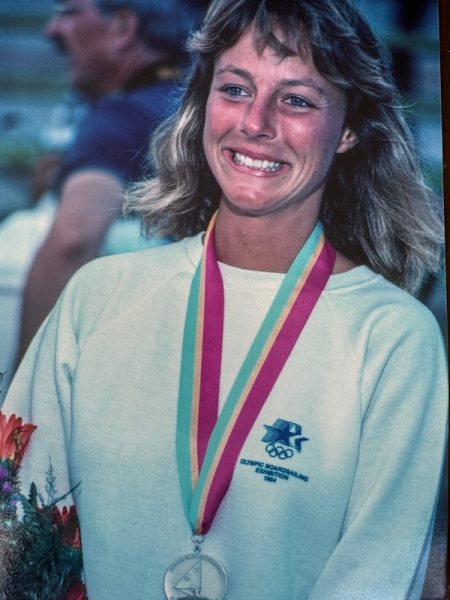
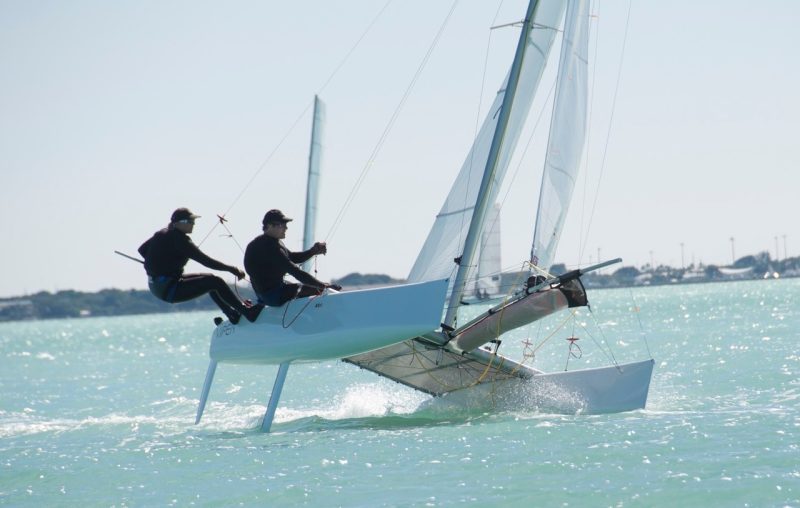
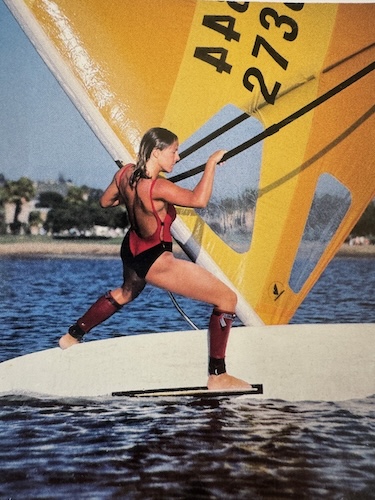
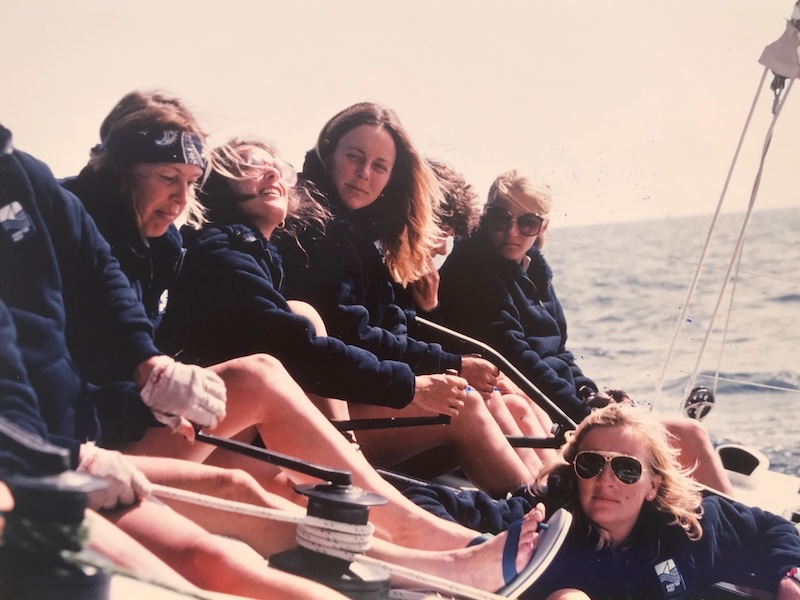
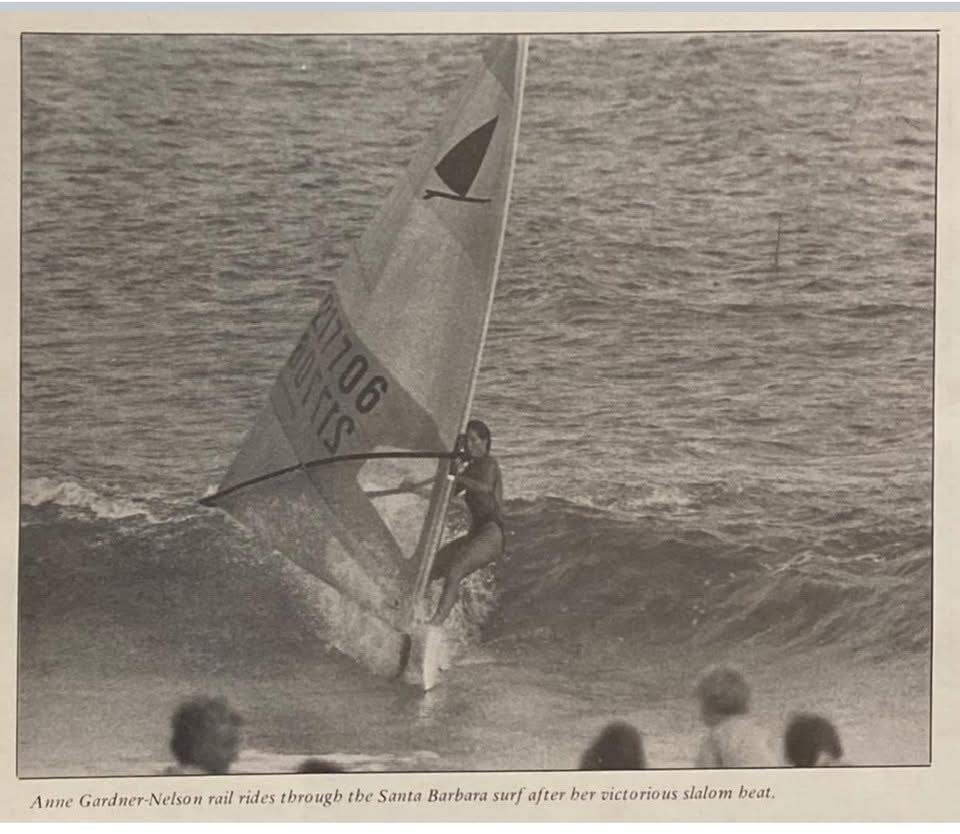
This week’s guest is sailing and windsurfing renaissance woman Annie Gardner to talk about blazing her own trail and empowering women sailors. Annie placed second in the 1984 Olympics for women’s windsurfing, has over a dozen national and international titles to her name, and was a navigator on the 1995 all-women’s team in the America’s Cup.
Tune in as Annie chats with host John Arndt about how to build your independence as a sailor, how to read and react to the wind, how she teaches women how to sail and race big boats, parallels between cruising life and racing, and the magic of sailing you truly can’t get anywhere else.
Here’s a sample of what you’ll hear in this episode:
- Early independence and offshore racing at SORC
- Creating Women’s Week Offshore
- 1984 Olympic windsurfing and women’s inclusion
- Training for the 1995 America’s Cup
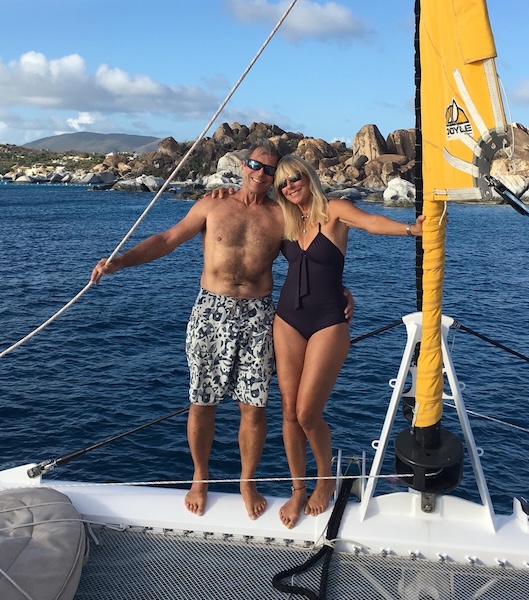
- Cruising by catamaran and mentoring women sailors
Listen to the episode on Apple Podcasts, Spotify, and your other favorite podcast spots — follow and leave a 5-star review if you’re feeling the Good Jibes!
Learn more about Annie and Wind Goddess Retreats at WindGoddessRetreats.com
Check out the episode and show notes below for much more detail.
Show Notes
- Annie Gardner on Trailblazing Women’s Sailing & Windsurfing, with Host John Arndt
- [00:14] Welcome to Good Jibes with Latitude 38
- [00:47] Meet Annie Gardner – USCG licensed captain, Olympic windsurfer, America’s Cup sailor
- [01:12] Annie’s wide-ranging sailing career: racing, windsurfing, big boats, and cruising
- [02:38] Early independence: pitching her father on racing SORC with an all-women crew
- [04:26] Breaking through resistance and gatekeeping in offshore racing
- [05:51] Baptism by fire: 40 knots, 20-foot seas, and major losses in an SORC race
- [07:47] How early freedom and trust shaped Annie’s confidence on the water
- [08:41] First boats: prams, Sunfish, and learning what makes sailing fun
- [09:40] Falling in love with sailing through independence and exploration
- [10:35] Discovering catamarans on a Hobie Cat and getting hooked on speed
- [11:04] Working to buy her own Hobie 16 and learning through community sailing
- [12:02] Discovering windsurfing and developing a deep physical feel for wind
- [13:27] Why Sunfish and Hobie Cats helped grow sailing participation
- [16:15] Returning to serious keelboat racing and higher-level offshore competition
- [17:14] Founding Women’s Week Offshore to create access to big-boat racing
- [18:10] Building elite instruction for women with volunteer coaches and donated boats
- [21:06] Working at North Sails and sailing alongside top-tier professionals
- [21:34] Quitting work to train full-time for Olympic windsurfing
- [24:14] How few women were allowed on boats – and why creating opportunity mattered
- [25:34] Progress is slow: visibility, representation, and persistence in women’s sailing
- [27:58] If you’d like to be a sponsor of future podcasts, email [email protected]
- Windsurfing & Sailing
- [28:12] Life as a professional windsurfer: sponsors, travel, and limited prize money
- [31:03] Olympics politics: Windsurfer vs. Wind Glider and exhibition status in 1984
- [33:29] First-ever women’s-only sailing event in the Olympic context
- [35:21] America’s Cup: hundreds apply, few are chosen
- [36:49] Joining the America’s Cup as a “big boat driver” and family consequences
- [38:16] The physical and mental grind of America’s Cup training
- [40:33] Elite coaching, afterguard leadership, and daily performance reviews
- [44:52] Transition from racing to cruising and the parallels between the two
- [48:15] Choosing a Catana catamaran and launching a global cruising life
- [49:15] Six years and 40,000 miles cruising across oceans and through the Panama Canal
- [51:08] Founding Wind Goddess Retreats to teach women cruising skills
- [56:20] Teaching from zero: anchoring, navigation, leadership, and empowerment
- [57:17] How women-only trips change learning dynamics onboard
- [01:00:36] Preparing couples for long-term cruising and shared responsibility
- Short Tacks
- [01:03:01] Favorite boats: Katana 472 and thoughts on ideal cruising size
- [01:05:49] Why sailing captivates: nature, challenge, and lifelong learning
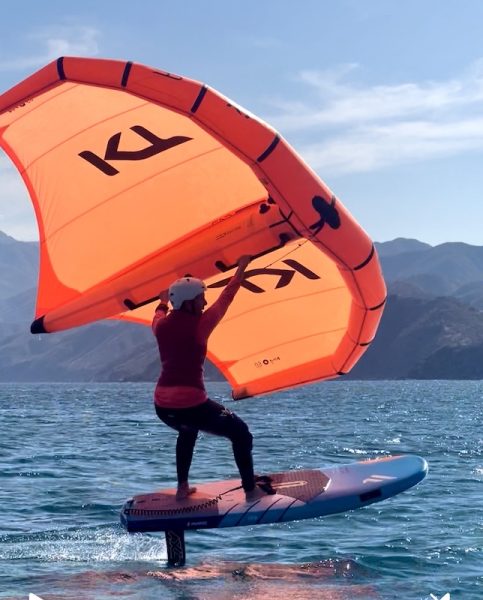
- [01:10:02] What’s next: wing foiling and future Pacific sailing dreams
- [01:12:02] ASA Sailing Courses, The Republic of Pirates by Colin Woodard, Desperate Voyage by John Caldwell
- Make sure to follow Good Jibes with Latitude 38 on your favorite podcast spot and leave us a 5-star review on Apple Podcasts
- Check out the January 2026 issue of Latitude 38 Sailing Magazine
- Theme Song: “Pineapple Dream” by Solxis
Transcript:
Please note: this transcript is not 100% accurate.
00:03
I’m a good big boat driver. I can drive this boat. I’m not scared of an 80 footer.
00:14
Oh hi everyone, it’s time to cast off and connect with some more West Coast sailors, have some more fun sailing. My name is John Arndt, I’m the publisher of Latitude 38 and today’s host of Good Jibes, a podcast to connect you with West Coast sailors and some of their adventures fun they’ve had over the last decade or the last few years of sailing. And today’s guest is, shall I say San Diego sailor, global sailor.
00:41
uh Mexican sailor now, Annie Gardner.
00:47
Welcome aboard, Annie. Hi, John. Nice to be here. Great to have you here. And it was great to connect with you at the start of the Baja Ha. That was a great morning. That was fun. That was fun. So a little background on Annie here, though. I’ve got a long CV of a million things she’s done, which we’re not going to be able to cover at all. uh a summary here is she is a 100-ton US Coast Guard licensed captain, which
01:12
is kind of the minor part of her boating history because she’s also a silver medalist from windsurfing as an exhibition sport in the 1984 Olympics in LA. She’s won 22 national titles and five world sailing championships and is included in or world champion in the Hobie 16 class. And Annie was crew and navigator on America Three Women’s team competing in the 1995 America’s Cup in San Diego.
01:41
She’s in the windsurfing Hall of Fame and frequently has been inducted into many other notary and notable Halls of Fame or groups of people that have been so successful over the years. But besides the race winning, she’s also cruised 40,000 miles with her husband on a 47 foot Katana El Gato. And she continues to sail as a wing foiler off the coast of Baja California.
02:09
She’s gone from windsurfer, lots of keel boats sailing in the middle, takes people sailing on women’s sailing trips around the world, but also now kite foiling. So that’s quite a selection of things and there’s many more things on the list you’ve done. But maybe to start, what’s maybe one sailing story out of all those sailing activities that stands out in your mind? Maybe they got you hooked. Wow, there’s so many that…
02:38
People keep telling me I should write a book and maybe I will someday. One of the fun stories I have is when I was pretty young, I had just graduated from college. I had studied aviation. My father had been a World War II pilot in the Pacific. As a graduation present, I staged what I wanted and I asked him if we could go to lunch and I…
03:04
presented a plan, which was I would take his Morgan one ton heritage, one ton, and the SORC, the Southern Ocean Racing Conference back then, that was the equivalent of the world championships and everybody who’s, who would go to those. But I lived in Florida. So to me, they were always coming to where I lived at the time I grew up in Miami. My father had raced it for years. I had watched him. I had greeted him at the dock.
03:34
I’d watched him win his class sometimes. And I also watched him be the chairman of the SORC. And I’d gone with him to meetings that were like a NASA, because it was every club had a representative and they’d have to get together. So I had this idea because I was very determined to raise.
03:56
at the highest level and my crew were women because we had started a foundation in Miami, a women’s racing group. And we only raced once a month, but I started when I was maybe 18, um, skippering my dad’s boat. And then I just, I don’t know, I had something in me. I really wanted to reach for the stars. So I presented this thing to him and he just sat there and, at the end of it, he said, yes. And then
04:26
I was called into his office a couple months later and I was told that I couldn’t do it because of insurance. I looked at him and I said, well, that’s not a good enough reason. I have an ex-boyfriend. His dad owns the insurance company here in Miami. Really, what’s the whole story here? What’s the one for an answer?
04:55
And I think at that moment, he looked at me and saw himself as a 22 year old in World War II. mean, I had chutzpah guts and I was fearless and I didn’t really know what my limitations were. mean, as a grown up now, I can look back and go, well, of course he was worried or it was really his partners that were worried. And they, when he had told them that I wanted to do it,
05:24
They told him he was crazy. We didn’t have the experience. We didn’t know what would happen if, you know, the mask fell down. But in the meantime, I had been studying. was getting the sale repairs done at Friends Sale Offs. I was doing all the work myself because I had no money. I was working, but I didn’t have a budget like other people do. Anyway, he, I think he saw that and said, okay. And so we did it.
05:51
And that was the year the largest cold front in the history of the SRC had rolled down. We had, it was also the St. Pete Fort Lauderdale race, the longest race, 360 miles. We had 40 knots, 20 foot seas because the current was going against the wind and 12 foot were dismasted, two went up on the reefs and sunk. And when the girls came in, my dad was at the dock with a
06:19
bucket of champagne for us and he was our number one fan. I mean, I miss him so much, but ah he and my mom supported my passion and I think they were pretty stoked that sailing became something so important in my life that, I still, and I still consider it part of my life blood. And wish I were around for them to share these stories with them again, but um they came.
06:50
That’s my story. Wow, that’s incredible. I think that’s, you know, I had that good fortune myself when I was in college, in the middle of college, I took a year off and my parents let me and my brother and a friend go to the Caribbean and back on a 35 foot stoop that was my uncle’s. We chartered it from him. And I’m sort of amazed at this, that parents would even let people do that, kids as we were, we call them now.
07:17
do that and I Stan Honey did the same thing. I think he took his dad’s 50 foot Kettenberg through the Panama Canal and back as a teenager or right at that age. you know, nowadays, I mean, as you say, you’re young and you think you know it or strong, you can, can do this. And people then went and still do go to war at age 22, which is like, so what should we hold them back from if not war, right? Yeah, helicopter.
07:47
parenting and the, well, we know so much more that can go wrong now, but, oh we didn’t back then necessarily. And yet, you know, my siblings say my parents raised us with benign neglect and I disagree, but I think you’re given a lot of independence and trust. And yeah, I value that so much. And as we know, sailing gives you that too. So as a kid, if you’re given a sailboat,
08:14
You learn independence and responsibility and how to deal with nature when you can’t control it. Right. Yeah. No, that’s it. You get humbled and you learn if you pay attention. So what was the first boat you stepped aboard of your own? Or did you start in a little boat? What did you start in? I started in a PRAM. Kind of an optimist dinghy. I’m not sure the difference between a PRAM and an optimist, but that’s what we had in Miami.
08:41
My dad had been the coach when my older siblings were young and they’d won the nationals. So I got it. I stepped into it when I was nine. They gave me a little boat. I named it Flower Power. It was pink and I put little flowers all over because this was the sixties. But I didn’t really take to it. I didn’t like sailing that much because I didn’t like tacking. I couldn’t get that boat in with the, you know, with the squared off bow.
09:10
I was young and I didn’t really like sailing. when I was even littler, took my dad, took me out with my brother and we went on a jet and I screamed bloody murder. I didn’t want to tip over and I didn’t want to get in the fishy water. They tell this story. I don’t remember anything. But what’s interesting is that when my father bought my sister and I, she’s nine years older than me. So she was 18 or 19 and I was 10 and she’d gone off to college. So I think it was really for me.
09:40
They bought us, he bought a sunfish and that’s when I fell in love with sailing. was given the independence to go out and not worry about tipping over and filling the boat with water. Like California Sabbaths do and Litos. something about California or Southern California, they like boats that fill with water and then you need to be rescued for learning. I don’t get, but so the sunfish.
10:06
And my girlfriends and I, would just take off. And because we’re in Miami, we could go to little islands and play Robinson Caruso. And before you knew it, I was taken off and going to the Florida Keys. You know, my parents had no idea where I was. And then one day we came out to California to visit my sister. Her husband was at Stanford getting his masters and his MBA. we drove down to San Diego. stayed at the Catamaran Hotel.
10:35
My dad rented a Hobie everybody gone on and it was light air. The thing was sinking. So I jumped off and swam behind it. And then when everybody got off, I got on and went out and flew a hull and I was 15 years old and I was booked. uh And it’s when we got back to Miami, I kept talking about it to my mom. My mom’s like, can you just go talk to your dad about this? Tell him how much you want one. So I went up to my dad and I go, dad.
11:04
I really love what happened and I want a Hobie cat. goes, well, I can help you get a loan. parents creating independence. So I worked two jobs after high school and I paid for my Hobie 16. We bought a brand new one. And the day that we launched it out of Matheson Hammock, my dad helped me set it up with my girlfriends. were three girlfriends. And then he
11:30
helped us put it in the water. And then he took off, went to the yacht club, coral reef yacht club, got his boat and went out and watched us. And we just, from then on, I was free, free as a bird until the day the windsurfed by us. And it was really light air day. And I asked the guy, could we trade? Would he like to get on the boat with all the girls? And I try windsurfing. And he said, yes.
12:02
I was hooked on that and that was probably when I was 17. So I was playing with catamarans and then windsurfers and at the same time racing my dad’s big boat, 37 footer, and I was learning to fly. That was my college education. So I had a lot going on, but they all work together.
12:28
I loved sailing in any form that it was and windsurfing really taught me how to read the wind and how to how to react to it. And because you have to feel it through your body and that part of it into everything else. mean, I really feel like the people that play on the little on the little toys. Well, everybody says you need to learn on the small boats. But if you try something where it actually the wind channels through your body, it’s a whole nother level of feeling the wind.
12:57
Right, right. Well, there you go. So I’ve been hooked on everything since I was young. Yeah, that’s interesting. And I think I think about the sunfish and the Hobie cat, two of the boats that rocked the world as far as sailing and got so many people started. There have been a ton of awesome boats, you know, designed, created, promoted since then. But that sunfish, I think, got more people started than any other boat and a Hobie cat as well. It got so many people hooked and they’re not out there as much.
13:27
There’s still active classes, but what’s missing maybe in modern boats that those two boats had or what was so great? I guess there was great communities around them too though. Just a ton of people. We called it the Hobie way of life with the catamarans and there were less choices, right? Nowadays everything’s vying for your attention and there’s so many new toys. But back then when the Hobie cat came out, we call the people that had our kind of spirit that want adventure and are going to like to go fast.
13:56
I mean, as soon as I felt the double hull and the speed of a catamaran, you I was 15 years old and I’ve been hooked ever since and I’ve never looked back and it took an America’s Cup for people to wake up and go, oh, actually, wow, these are pretty cool. And then of course, cruising and going and chartering a boat, everybody’s starting to realize the catamarans are 100 % more comfortable and
14:25
They go pretty fast. Yeah, I that’s are different. But, you know, it took people a long time to figure out the catamarans are pretty cool. And yeah, going back to your original statement, the sunfish and the hubby cats, I think it was just we had fewer choices and those were really good choices. Yeah, yeah. No, I the sunfish, again, as you say, somebody I was brought up sailing, Denise, it sank if you tipped them over. You had to drag them ashore and bail them out. Not that I I still loved what it was doing.
14:55
But a sunfish was such an easy thing to just go play on. It was like a big pool toy, but had independence. You could go wherever you wanted. And that was really one of the great aspects of it as well. Yeah, well, think about how many people probably got scared and didn’t want to sail again because of the act of tipping over and not being able to be rescued, or the water’s cold, or whatever it is. I can’t imagine how many people
15:22
might still be sailing if they’d started on something that was actually really fun, forgivable, and went pretty fast as well. I mean, the sunfish compared to the laser, I wish I’d bought my kids a sunfish, but there weren’t any when I was looking and they were young and we got them a laser and it was too tippy and it was a little too high performance for their age. And then after that, they were done. Really? Yeah. Yeah. Kids don’t sail. Frustrating.
15:50
rich, they can do a lot of other things. As I say, the world is full of a lot of choices these days. And yeah, I guess when your dad let you go off and do the SORC, that was started when your parents let you run off in a sunfish and not know where you were either. mean, that was, had a lot of independence very early on and you survived that. So maybe they got a better feeling about the SORC all those years later too.
16:15
You’ve also done the America’s Cup. mean, you did the SRC in a keelboat. You did do some pretty serious keelboat racing too outside of the windsurfing and Hobbies and cat and ran love. How was the keelboat world for you? It was good. So after the SRC the first time, had it boat the next year in 1982, a 41 foot cook design that had won the SRC a few years before it had been put away wet.
16:44
The owner saw some articles about me and my girls and approached me and said, do you want to do it again? I have a nice boat you can use. I will fund it, blah, blah, blah. went, yes. So it’s 82. And when that was over, my girlfriends and I, a couple of us, we sailed back through the Bahamas. That was one of the best parts of that. So I see us sailing home with a group of friends. As slowly as you could. Yeah, as slow as you could with other boats that were also making their way home.
17:14
And on the way back, the brainstorm was let’s try to share this experience that we gained from being around the best sailors in the world, because the guys would flock to our boat, as you can imagine, with 80 boats and one with women. We were a novelty. But they were also really uh helpful and wanted to give us information. I mean, we had coaches like Dennis Connor,
17:43
my future husband at the time, Bruce Nelson. had just a lot of people around. Peter Isler was there. Like there were a lot of people around that were happy to help, including a little North. And so we started this thing called Women’s Week Offshore. And the first one was in Long Island Sound. And we had four New York 36s donated to us from owners. And we helped Bill Gladstone came and ran.
18:10
the course. what we did is we had like a day of instruction in classroom and then we had a day of some course practice with a coach on each boat like Dave Perry came. We always had guys that were so willing to come and donate their time. Nobody got paid. We didn’t either. Everything was just like, well, let’s just put a budget together and how much is food and we’ll make the sandwiches. And everything was in a shoestring because I was used to doing that from my campaigns.
18:40
So we had um four boats for the first time, and then I moved to California, and then we did one in San Diego with 10 Santana 3030s. We did one in Newport Harbor Yacht Club. We did one in San Francisco, Sausalito, and we did another one in California. And then USYRU, at the time it was called, said, we’d like to put our stamp on that. And we said, sure.
19:08
We ran it with their name at the top of the title. And we had women sending their resumes from Canada and Mexico and all over the states so that they could be chosen to do it. Because there wasn’t anything out there teaching women exclusively how to race big boats. So we started that. My friend Sarah Kavanagh and I, one of my good longtime friends that had sailed with me in SRC in 1982.
19:38
Anyway, Sarah and I put that together and then I ran with it. And in the meantime, Lowell came down the street to Bruce’s office one day and asked if I knew how to type. And I held up this sheet of paper and I said, yeah, I just typed this. He didn’t know it took me a week, but it was all about how to do this Women’s Week offshore stuff. And he goes, well, my secretary just quit and um I need somebody. And so I just trotted behind him down the street, down to the originals. m
20:07
North sales loft in San Diego and sat behind Virginia’s desk next to Lowell’s office, the king. And I thought, Oh my God, how did I get here? I mean, I was 23. And again, I was running the women’s week offshores, but within a couple of weeks, the girl that had really wanted that job and knew how to type might’ve been the reason the woman quit and was given me daggers.
20:36
She made it really clear that I had her chair. so I talked to Lowell and he said, okay, we’re going to promote you. And I went into sales. And so then, you know, I was racing sometimes with Doug Peterson, with Lowell North. It was fun. I moved to San Diego, all these rock stars, as we call them. Yeah. And I didn’t know that. I grew up in Miami and we didn’t have the big names in sailing like they
21:06
had in San Diego. So now I’m surrounded by greatness. And that had been my goal. So now I was able to be around Gary Wiseman and Vince Brune and, you know, really good sailors. So then I sailed with some of the great guys on the big boats and the different regattas and things. And I sailed with Dennis down to Manzanillo, San Diego, Manzanillo race, 10 days out to sea doing that. then, and then I went for the windsurfing Olympics. And when I did that,
21:34
quit my job and I just trained and I did that. Quit your job at North Sales? Yeah. Wow. Yeah. Well, one of the things I kept running up against is that men didn’t really want a woman telling them what they needed. They cut her their jib. ah was, was, you know, I had some really good clients, but I also had to knock my head against the wall a few times. And then I realized, you know what? This isn’t my dream job either. So I had to, I was still trying to find myself and I got a job.
22:04
designing windsurfing accessories at a company that had a production plant in San Diego. So that was good. Then after the Olympics, I was able to get paid to go play. could rate the greatest equipment is I could go back and try to design it and sell it and all that stuff. So that was fun.
22:25
Yeah, I mean, it’s amazing to think that you did all that in S.R.C. And I’m just your crew, your female crew, was it hard for them to get permission quote from their parents? They were probably still at an age where they had to ask their mom and dad if they could go, right? No, they had to ask their boyfriends. And we were all I mean, I was the baby at 22 and most of them were probably 25 and 28. I think the oldest was probably 28. And one of them, Jackie, I remember her boyfriend wouldn’t let her go.
22:56
and let her and there was another one, Donut. She couldn’t go either. Their boyfriends didn’t let them go, which stings with me because I don’t think anybody should have to ask permission. Unless it’s your parents. Yeah. you know, they’re paying. They’re taking care of you and making sure that you’re safe. But yeah, there were two women that couldn’t go. And that was because their boyfriends didn’t allow them. And and those women, you know, they grew up
23:25
and we’re still, still mad that they didn’t go because it was an opportunity. They didn’t get to go experience what we did and they were there when we came back and they were like, dang it. They broke up with those guys. They should have done that first. They’re with them. It was like, yeah, they should have that first.
23:46
Well, but on the other hand, you were able to find enough experienced women. I you were experienced and obviously knew the boat and sailed a lot with your dad, but there were other women around that age at that time that also could, shall I say, man a boat in the SORC. Well, I would say no, there weren’t a lot of women that could man a boat at that time. There were so few women. But you found them. I the whole SORC, were five women other than my team, and they were…
24:14
One was Christy Steinman, who was a navigator, and the other four were chefs. They weren’t the women that were allowed on boats. So to get that experience was super hard. And after the first year, and these were women that I had trained with and we had learned together. After that first year, I started getting letters pouring in, even from other countries, asking if they could sail with me. Don Reilly told me later.
24:43
you know, years later that she was, she wanted to quit high school and come crew for me. There weren’t any opportunities. So yeah, this was a big deal. I heard there were a few things going out in San Francisco, because you sent me some articles, but at the time nobody was talking about it. And when the magazine covers came out, they were all in Europe. Our country didn’t cover the women doing their thing.
25:11
which inspired women and I wish they put more out there so that women could see that this is possible like we did with the America’s Cup. You know, it just showed that women can sail and we inspired so many women in 95 because we showed that yeah, yeah, you can go out and do this too.
25:34
Well, yeah, of course, this is as you get older, you realize how long it takes for change to happen. It’s amazing. I mean, there is a team of women right now sailing around the world trying to break the Jules Verne trophy record, which I really haven’t seen covered, but they’re in the Southern Indian Ocean just now, and they’re making good time. They’re 19 days into it. I’m so excited for them. And I love every time there’s another successful woman.
26:02
or female team, I’m just, celebrate that so much. I’m really excited that there are so many more opportunities, but also one of the things that I really recognize over and over is that women need to create their own opportunities. It’s one thing to say, this sucks, there’s no women on any of these boats. But then I also think, well, then we have to create an opportunity for that. You have to.
26:31
make it happen. And they are there, you know, they’re saying one woman, one woman has to be on each boat and around the world races are on the America’s Cup yachts. And with that experience, then those women who are having kids, some of them and have friends, you know, it just has to trickle out a little bit more. And someday when I’m long gone, you know, I think women will be right up there, hopefully in equal numbers. When you look at the race forces now,
27:00
You see women on almost every boat. Yeah. Yeah. Why? Because they work their asses off to get on one. Yeah. Now that we just have a women’s circuit on the bay now, too, where there’s women, women only racing circuit. But obviously in the general racing, there’s tons of women out there now and and many more women boat owners. mean, they’re not women crew. They’re women owners. And that’s a big difference, too, I think, is to have not just be more women on boats, but more women that are actually running the boats.
27:28
So that’s been a big change too, which is cool to see. exactly. Buying your own boat creates the opportunity. Yeah, yeah, yeah. Nobody can then you choose. Hey, listen up. We hope everyone is enjoying listening to the stories of West Coast sailors on our Good Jives podcast. We’ve heard lots of great feedback from the hundred and fifty thousand listeners who’ve tuned in over the last couple of years. And if you have a marine business, we’d like to give you an opportunity to connect with them during upcoming.
27:58
If you’d like to be a sponsor of future podcasts, can email Nikki, N-I-C-K-I, Nikki at Latitude38.com to learn more about how your company can benefit from sponsoring Good Jibes.
28:12
I want to just go back to Olympics in LA and windsurfing, which I mean covering up again all this ground, but windsurfing was a big part of your life, but just a piece of your sailing life. it was a really big sport then really growing with a lot of new demonstration sport, I guess at the LA Olympics. But how did you, how much time did you spend windsurfing and what were you doing in the windsurfing world? think I did. I spent about nine years having that as my, you know, passion.
28:40
Of course, it overlapped with some big boats, but I definitely took a break from the catamarans at that time. After the Olympics, I decided to go pro and I did that for probably three years. And then I hung up my sails because I decided we wanted to start a family, but I also just was tired of traveling by myself all the time, carrying all my gear. And the other part of that was
29:08
to be a good pro, you had to move to Hawaii or Hood River and I was married in San Diego and I wasn’t going anywhere and I had a dog and can’t go to Hawaii. Yada, yada, yada. It just wasn’t in my cards to be pro and that’s okay, because I’m one of those people that really likes to try different things and not just staying the same thing all the time. But men’s surfing was a big part of my life and I loved it. It was just…
29:36
And the Olympics was a goal. I’m very goal oriented and knowing that that was out there really made me focus. Like I said, that’s why I one of the reasons I quit working at North Sails. wanted to put everything into that and and it paid off. Yeah. And being a pro windsurfer, I mean, was there actually a paycheck in pro sailing windsurfing those days? mean, you get by or. Yeah, I got by, but you had to earn it. I mean, I was also working as a designer.
30:06
for win white caps. So I had a job, I also, I had sponsors. So all my equipment was paid for and some of the regattas definitely you had prize money. So I wouldn’t say you made any money. mean, there were a few people just like now. Well, there’s a lot more people now that make money as a pro sailor, but in the beginning of pro sailing, very, very few people made money.
30:34
And it was kind of like that. was hard to get by just on hoping you’ll win prize money. And the prize money was nothing. was small. But it was fun. Oh, that sounds like a great chapter in life and a great piece. And the Olympics, going back to that, we talked about Sunfish and Hobie Cats. Windsurfer was the first Windsurfer board sale.
31:03
It was huge worldwide Olympics being political like they are. They went to vote on what kind of board was going to be in the Olympics for the very first time. Well, this is the story. Hoyle Schweitzer showed up in his Hawaiian shirt and his board shorts to the meeting in Europe and the Eastern Bloc countries voted for this board called the Wind Glider. Well, nobody had a wind glider.
31:33
in, if they didn’t live in Germany. And maybe there were a couple other countries, but very few people sailed those. And we certainly didn’t in the States where it was a huge sport at the time. It was going off. And so they basically said they’re going to pick this other board. Well, Hoyle was probably devastated, but he was also mad as hell. And he had the patent.
32:03
for the windsurfer. And in the US, you cannot import a board unless it goes through him. So he said, fine, F you guys, you can’t bring the boards to the States and the Olympics are in LA. And they went, uh-oh, we screwed up. How do we fix this? Good grief. They came to an agreement. And I just heard last week from a
32:31
very dear friend who was president of Windsurfer International at time that Foyle was mad about this until, I mean, he’s never ever gotten over it. And he’s a lot older now and he’s not doing so well. But what happened was then he said, okay, they said you can do a Windsurfer event and you have to basically help pay for it. And that’s on you.
33:01
I mean, we’ll have medals and we’ll do the trumpets when they come in and had an Olympic site and they had a place for us to stay and it was treated like any exhibition. It’s an Olympic event. And yet what I’ve understood is that at the end of the day, when they say, well, China won this many goals and US won this many goals, it’s not counted. Oh, really? That’s the big difference between an exhibition. But everything else?
33:29
is pretty much the same. what was really cool, I think, for me and the other women that were competing was that it was the first time there was a separate women’s class in any sailing event in the Olympics. Now, it was until 88 that they added 470. Yep.
33:54
And that was the first women’s class that they added. And then they added the single-handed and then eventually they did windsurfing. you know, now it’s equal equal, but it, it was interesting because there were some women, even in our country that were not pro adding a women’s only event because they thought they should be able to compete against the men. And I was adamant. Cause I was involved with us. Why are you still that?
34:23
We do have separate women’s classes. You’re going to give so many more women opportunities in every country if you say, yes, you’re going to have your own class. If you’re just that one woman who’s like, well, I can compete against the men from my country, you’re being selfish. You’re not actually promoting for the good of the whole. And so the good news is it got voted down. And yes, we had our women’s class.
34:52
But in 84, the wind surfing exhibition was the first time that women were ever allowed to have their own sailing event. And I’m really proud of that. Yeah. Good for you. Oh, that’s great. And we should say USYRU, which is United States Yacht Racing Union is now US sailing. Changes game. We had the IYRU, International Yacht Racing Union, and the USYRU. uh But now it’s, yeah. Yeah, US sailing.
35:21
switching gears now another San Diego event, America’s Cup. That was a big event and that was to have an all women’s team as well. And that was a pretty great team in pioneering and successful entree of a women’s only team. That’s how that all came together. Well, that was funny because having been married to Bruce, I’d been around a couple of cup campaigns. I was in Australia when he was a designer and we won the cup.
35:50
back from Australia and came back to San Diego for a parade, went to New York City, had a ticker tape parade, went to Washington DC and met Reagan and Bush. And I knew those guys and I knew what kind of bodies they had to grind. And I thought, they’re going to do a women’s team? How are they going to, you know, that’s a whole nother level of strong. So I wasn’t, I wasn’t confident of
36:19
how they were gonna be able to compete. And then the word got out that, you they’re gonna have, you gotta apply and then they’re gonna have tryouts and they were looking for athletes. So they had 700 women apply. Wow. They chose 45 women and did three separate tryouts and you know, each boat racing had 16 on it. So some of the women were- 16 people on America’s Cup boat at that time?
36:49
Yeah, and the 17th man that was person that could apply to not say or do anything like Bill Coke or sponsor. So they tried us out. I applied thinking I’m a good big boat driver. I can drive this boat. I’m not scared of an 80 footer. I mean, I love driving big boats. So I put my name in the hat and I got the call back.
37:18
Meanwhile, Bruce was not happy about it at all. He thought, how could you do that? We have a three year old and a five year old and how could do that to me and to them? And I thought, how can I not? This is who I am and this is an opportunity of a lifetime and there’s no guarantee and there’s probably a really good chance that I won’t make the team, but oh my God, I’ve got to at least go for it. And that was before I got
37:47
the letter saying, yes, you can try out. Well, he was pissed when he found out that I’d applied and he was really pissed when he found out that I was gonna try out. And then you can imagine when he found out that I made it. And then the reality is we never recovered from that, but. Oh dear. No, and it’s okay because I have always remained true to myself, which we should all be. I had to do what I had to do.
38:16
And what was really cool was I had not been around female athletes in other sports. And it was so impressive, John, to go to the gym every morning. You had to be there absolutely early or on time. No, you could not be there at 6 0 1 a.m. or everybody had to do 50 pushups. You were on time and that’s in the dark. A lot of the times it was in the dark. And we worked alongside these
38:46
Olympic rowers and Olympic weightlifters and gladiators. And I was just pinching myself going, I can’t believe I’m here. You’re the windsurfer. uh I was a big boat driver. you know, Lowell knew I was a good driver. Dennis did too, or he wouldn’t have had me on his team. I, but I really,
39:11
Only 23 were chosen, I should go back to that. So there were 23 of us in the gym. We had a sergeant in charge of working us out and building us from, you know, doing one pull up to 10 and 10 pushups to 50 or 100. And yeah, we really gained a lot of strength, those of us that were not athletes and others, they learned new muscles too. And so, yeah, we did that.
39:38
Every day and then after a couple hours, we go eat everything we wanted at the restaurant next door. And then we go out and sail all day and come back home. And then I’d go home and cook dinner and take care of my babies and put them to bed and start all over again. And we did that about six days a week. It was one of those, if it doesn’t kill you, makes you stronger. 10 months of just a lot of work. Yeah. Mentally and physically the toughest thing I’ve ever done. And
40:07
It definitely helped shape all of us. And I was one of the older ones. were three of us that were 34 going into it. We turned 35 during the cup and the youngest was 20, 21. And most of them were mid twenties to, you know, thirties. Like Jayden, I think might’ve been 30. Dawn was about 30. Yeah. So they were.
40:33
We were young, we were a young team and we were sponges for learning. we had, I mean, again, I’ll pinch myself again, because the coaches that we had were like Dave Dellenbaugh and Buddy Melvins and John Coleus and they would rotate in and sail against and with us and just train us. And we had Barbara Falkwire was our jury liaison and coach. And we’d have
41:00
I was one of five in the after guards. was Leslie Egnaught, J.J. Eisler, Don Riley, Annie Gardner, dropped the Nelson. And Courtney Becker Day came in about halfway through. So we had five people that would be the brain trust in the back of the boat, um either on or off the boat. We’d rotate in and out and we’d have meetings with somebody at the end of the day after racing.
41:29
and go through it all. Yeah, so it was hardcore, awesome coaching and a recipe for from then on. Yeah, I mean the list of names that you rattle off at each phase of life here, or each chapter seems to be, yes, you always had some great Grand Prix sailors next to you, with you. Well, I guess that’s all that, you are obviously a leader pioneering woman in this realm, but are there other women at the time that you were thinking about that you looked up to or mentors in?
41:59
because a lot of these are the men you were um getting so much great experience and knowledge from, um and they were helping and sharing, but are there other women that inspired you or you were kind of blazing your own trail? Well, I was always blazing my own trail. know, Christy Steinman is somebody that I really admired because she was navigating for Dennis Connor and Ted Turner before anybody was doing anything. You know, she was the only woman out there, really.
42:27
Yeah, I don’t, I didn’t know of any other women. know, Dawn came back from doing an around the world race. that was cool. And that was, yeah, maiden. And she wasn’t, that was Tracy Edwards is program. And then, you know, Dawn went off to do her own. And then she did the America’s Cup thing on her own, but they, hadn’t done it yet. So I, I wasn’t looking up to anybody. I was just trying to hold my own and.
42:55
I had gone from, let’s see, this was 95. So I had taken a break. mean, when I hung up my windsurfing, I went into catamarans, but back to those because like windsurfing, there was just a lot of camaraderie. Some of my best friends still are some of my old windsurfing friends. And the catamaran thing was like that too. So I…
43:19
In 87, after we won the cup, I went into catamaran sailing. And as soon as I had babies, I was taking them with me to the events. um so I was family affair. Yeah. Well, I was able to compete at a high level. Yeah. Yeah. I was. Yeah, I could have my kids. Somebody would be in the tent or in the motorhome watching the kids while I went out and raised or my parents sometimes. And I come in and breastfeed and go back out or whatever. I didn’t have.
43:46
No, I was blazing away the whole time. then, yeah, I started hearing about some of the other women doing stuff. you know, I’ve always applauded other women. I’m a champion of others. So, but at the time, no, I was trailblazing and had nobody really to look up to. Yeah. Yeah. Amazing. That’s great.
44:07
Hey good Jibes listeners and Latitude 38 readers. Have you looked in our classy classifieds lately? It would be impossible for us to know how many boats have sold to new owners over the last 45 plus years of publishing Latitude 38. But we’re sure they have helped countless people realize their sailing dreams. Every month there are new boats listed that will fill someone’s sailing adventures. If you have a boat you want to sail or are looking for that next boat in your life, the pages of Latitude 38 will surely have something to suit your fancy.
44:38
Pick up a magazine at a local marine business or visit our classy classified pages at Latitude38.com to find boats, gear, job opportunities and more. Then tell us your next sailing story.
44:52
How about cruising life? I mean, you’ve got this whole racing thing, SORC and windsurfing, but now you spend a lot of time 40,000 miles on a cruising catamaran. A lot of people who are racers don’t know how to slow down and cruise, but you’ve, I guess, figured it out or you’re not. How’s the cruising life been? Well, some of them are losing learning how like Norm Devante went and bought a catamaran and Paula Schaeffer. I mean, some of our friends that were out cruising while we were cruising are we’re big racers.
45:22
I found the parallels to be many parallels for cruising and racing. You have to have really good preparation if you want to be successful. And in this case, successful means saving your life, saving your friends lives. You know, you can’t screw around with cruising or you could die. So I still love preparation, planning, navigating, planning fun places to go. What are we going to do when we get there?
45:50
Also, I love the spontaneity of not always planning and getting there and just going with the flow. And I grew up in Miami where our vacations were to go to the Bahamas. So in the summer, my dad would take us on his powerboat to the Bahamas and we’d go island hopping and remote playing. Yeah. Gary Islands and Abacos and the Exumas. And I never got that out of my system.
46:17
I that’s why I ended up loving sailing too is because I really loved the lifestyle. So when I was single again, my intention was to find a mate so that I could go cruising. Because as much as I love racing and I love the goal, I’m goal-oriented, as I said, I really wanted to go see the world and I always have. And I thought, you know,
46:46
a big catamaran and going cruising, that would be a great way to see the world. And when I met Eric, or I should say, we met him 30 years after we first met at a windsurfing event in San Diego, a pre-Olympic regatta. Oh, really? Yeah, it was the wind glider. We found each other online through Scuttlebutt, which is really funny. There was an online dating app called Fitness Singles, and he went on it and I went on it and I was ignoring it because I was in the BVI.
47:15
Captain in this 58 foot cat for a bunch of kids that requested me as their captain and daddy paid and flew them all in on a jet. But anyway, I was ignoring his letters and finally he got through to me and it turns out we had some mutual friends and he was an F-18 and F-16 distributor. So he enticed me to meet him when I had a job on the Chesapeake as a captain for a
47:45
a nice couple that I’d met in the BVI’s and we went out on a date. He let me drive his F16. We had a downwind spinnaker start, double trapeze, rolled the fleet with the smallest boat, won the race and the rest is history. But we both had the intention of like trying to or hopefully meet somebody that wanted to go cruising on a catamaran. so between the two of us,
48:15
After about a year, we were engaged and the plan was to get a cat. And he had been, his bedtime stories, as I like to say, were getting on Yachty World and looking to see what was for sale. And he zeroed in on the katana. And Waterhouse, who’s from Australia, Rod Waterhouse, we saw him at the, I think at the America’s Cup in 2013 when I was commentating with Bob Bellingham. I don’t know if you’ve that, at the Marina Green.
48:45
Yeah. Bob was there because his son was skippering or I think his son was skippering the youth team for Australia. And he said, if you’re if you get a katana, you can cross any ocean and you take it to Australia, we’ll sell it in five minutes. And we were like, that sounds great. So we found one in France. Last place we thought we’d buy a boat and start our cruising. But in 2014, we found the boat.
49:15
2015, we took off from, well, we did all the med and then we went to Gibraltar, Canary Islands, Cape Verde’s, did the ARC plus, and then we cruised for six years. And we had so much fun going up and down the East Coast and Cuba was on my bucket list. We went there. We went to Columbia. We went through the Panama Canal and then COVID hit and
49:42
we sailed home to San Diego where the boat had never been before. But the luckiest thing that had ever happened is I had put my name down on a wait list before I ever even met Eric. I manifested getting a boat slip. As soon as I met him, we went from, oh, we want a monohull slip to a catamaran slip. And by the time COVID hit, actually just before that, they told us we had a slip. so- Core.
50:10
couldn’t have been better and we came home and the boat’s been sitting there ever since, which is really sad, but we do take her to Catalina. We have taken her to Mexico or him. It’s a woke boat because it’s called El Gato and boats are supposed to be she’s, but it’s so confusing. It’s two halls. got to go in. Anyway, yes, we sailed all over and I really love that. But yeah, the cruising.
50:40
People that race, I think, would really love cruising because you can have the same amount of intensity, but the lovely thing is you can also just relax when you get the anchor down and you feel safe and have your cocktail like after a race or a mocktail if you don’t drink. I loved it because everything was always changing and challenging. Yeah. And maybe just a little bit about the cruising community. Did you find many women out cruising? Well, and actually now,
51:08
You’re actually, sorry, I’ve got the name here of your women’s goddess, wind goddess retreats. And you’re teaching and taking women sailing in Mexico or wherever they want to go, I guess, to do cruising on catamaran. Yeah, so after we got landlocked, Kim Dumas in San Diego with West Coast Money Hulls asked me if I wanted to captain a boat in La Paz. She had a bunch of women that wanted to go. And I said, sure. And it was before we bought our place down here.
51:38
did two back to back out of La Paz. This is still during the height of COVID. I think it was 2021. And then we came back the next year. But by then I was like, Eric, you know, it’s pretty cool down there. Why don’t you meet me down there with our van again, the pop-up tent, and we can go cruising and look around and check out Baja. So he did. And we looked around. And we had some friends that lived here in Los Borriles. And we fell in love with it. So.
52:07
We bought a place, but at the same time, we stayed at Dennis Choate’s house one time on the way down, or on the way back, I don’t remember, because we always stopped in Scorpion Bay with Elgato to go surfing and see the community. And Dennis Choate has a place there. He has a little compound. And he really gets off the grid there. And we stayed with him. And he said, Annie, you should just be doing this thing on your own. should do a, you should start a business where you take women cruising and you teach them, you do what you do.
52:35
I don’t know anybody else that does what you do and I think you could do a great job with this.” And I said, you know what? You’re my mentor. This is great. So I started my own thing. Eric always called me his wind goddess. So I named it Wind Goddess Retreats. And the first places I wanted to go were the BVI’s because I knew them so well from the back, like the back of my hand. We’ve gotten married there. I had crews there with him on El Gato.
53:04
And it’s so easy. I mean, it’s just so easy to cruise there. thought, okay, if I’m going to learn this business on my own, I’m to do it in BVI. So I did two back to back and then the next year another few. And then it was like, okay, I’ve done the BVI’s a lot. Let’s try something different. So now this year alone, I think it was BVI’s, Belize, Greek islands. And in January, I’m going to the Exumas. So I’m branching out.
53:33
I’m not doing BVI’s anymore unless somebody says, I have a group of women and I want to do it and I really want to go to the BVI’s, then I’ll do it for them. But in the meantime, just we did Croatia last year and the summer before that. And I say we because when I go to Europe, I bring Eric. Or if I have two boats now, which we’re doing in Exumas, we have two 50 foot catamarans and he’s licensed captain, ASA instructor.
54:01
So he has all the credentials. They call it a level three down there, which, you know, one out of three, you have to know how to cruise pretty well. And we had cruised the Exumas. I mean, we had sailed from Virginia to the Exumas, making that our first landfall. So I love that place. It’s super remote. It’s absolutely gorgeous. And that’s what we’re doing this year. But now after that, I’m just going to take a little break. want to just take a little break and then next fall go to Greece again, because it was so much.
54:31
Yeah, well, it sounds like you deserve a break in there, but I’m wondering over all these years too, since USYRU days and introducing so many women, has the nature of the group changed much? Like are more women feeling like I can do this or are they more intimidated? What’s changed in the character of the women that show up these days, maybe over these 40 years?
54:56
Or is there any change? Oh, there’s a lot more women that say I can do it. And I’ve met a few female captains that are doing what I do. I mean, yeah, I don’t know to what level or, you know, how they’re finding their people. But there I met a young thing not that long ago who grew up cruising with her parents and her parents had bought Eric’s parents boat and cruised around the world before she was born. Now they’ve that way.
55:22
Now she is a captain in the Bahamas. I love hearing those stories. Great success stories. So there’s more women doing it. And because I think of ASA, you know, helping people learn that, oh, there’s a way I can learn this. And it doesn’t mean they’re going to have the experience. Just having the license doesn’t mean you’re qualified to go out and charter a boat. uh So that’s why a lot of places won’t just let you have a boat because you have to
55:50
you know, the license one thing, but you need to have your resume. Anyway, going back to the women, I have a mixed bag of who comes on my boats and I have some really good repeat customers that are soaking up knowledge every time they come with me. And that’s fun. Like this next one, I have one woman who’s, she’s a paid customer, but she’s my first mate. I’ve put her down as a first mate. So that’s going to go on her resume and I’m going to give her,
56:20
responsibilities and put her to task and give her that feeling of empowerment because I’m all about empowering other people. When I do these, imagine this, I have a 50 foot boat that’s not mine. Everybody flies into Belize. Of course, I’ve done all the logistics and organized a lot of things ahead of time and prepared things. I shop for two days at eight stores to find provisioning in Belize because that’s hard.
56:48
We all get on board and nobody knows how to put an anchor down or up or, know, any of that stuff. So I have to instruct from the beginning and then let it go. I have to empower them because I have to drive the boat. So it’s really fun to watch women do that. And here’s the difference, John, between what I do and say when we do couples boats. Yeah. So we did Greece, we did.
57:17
a women’s boat for 10 days and they were all female, well, not all, but half of them were women pilots. And the other half were women that two of them had come with me before and they were soaking up knowledge. They wanted to know more. And then we did that for 10 days and Eric was on board. And then we did 10 days of couples. And normally I drive the boat and Eric does the anchoring or the mooring when we’re on our boat. And also when we’re doing a boat together.
57:46
So he goes up and he’s teaching everybody how to do it. And then when we had the couples, the men are like, okay, teach me, teach me, teach me. And Eric’s teaching them and the women are sitting back and letting the men do all things that they wanted to learn how to do. And that’s great. This very typical, the women are happy that their men are happy and the men are learning and they’re loving it. But the women aren’t hands on if there’s men around. And this is, you know,
58:16
This is just how it’s been forever. as um soon as Eric actually had to go do a delivery across the Indian Ocean, so he had to leave early. And as soon as he left, I grabbed the girls and I go, okay, girls, who wants to learn the stuff that your husbands have been learning? And they all said, we do. Well, okay, so are you good with your husbands teaching you or do you want me to teach you? Because as you know, if you have to teach somebody, you really have to know your stuff. So they went, no, we want our husbands to teach mine.
58:46
Great. So I watched as the men taught the women the roles that they’d learned from Eric and it was so much fun because now husbands and wives were teaming up and on the front of the boat and having a really good time. And going back to something you said earlier, how many women are out there cruising, Eric and I found mostly it’s couples. And it’s rare to see the guy that’s by himself and
59:14
Usually when we’ve talked to the guy and we’ve had him over for dinner or a drink, he’s looking for somebody to share it with. He doesn’t want to be alone. So I tell the women if they’re ever having any kind of trouble with their man or like role clarity or whatever it is, you’re one in a million. Don’t forget that. You have more power than you think. If he’s not treating you right, don’t forget he needs you.
59:44
to do this by himself. So keep that in your hat, you know, don’t use it against, know, don’t use it in bad way, but just know that as a woman that wants to go cruising out there, you’re one in a million. And for those of you that might be listening that are looking for that man, don’t forget you’re one in a million. And the guys are looking for somebody like you to
01:00:08
do this and if you can bring something to the table, which is what I like to do when Eric, and I’m gonna jump over to something, Eric’s a consultant, he gets clients that wanna live the dream, buy a catamaran and sail around the world and he just finished working with somebody that’s completing that now. I mean they’re halfway, almost three quarters away around the world and we both worked with them in the beginning because…
01:00:36
They’re a team, right? So my job with teaching the team is I like to, as I say, put my arm around the woman and say, look, again, you’re very important to this. It might not be your dream, but you’re willing to do this because it’s his dream and you love him. Let’s work on things that you can learn that will be super helpful because it’s a lot of work to run a boat by yourself. But if you know how to use a phone and you know how to use apps,
01:01:05
You can use this app and that app and this app and that app. And I show them the ones that are my favorites, like PredictWin and Navionics. I mean, we sailed 40,000 miles with those two apps. Wow. Yeah. And I have little pins all over my charts of where I should go or where I shouldn’t go or what we loved and where we want to go. And, you know, I said, you can prepare by getting the cruising guides.
01:01:35
But then you can put little notes on there and you can do this and you can learn what other people think and da da da. And women love to plan and we love to help. I don’t just talk about, and I rarely talk about provisioning. like, if you know how to cook, if you know how to. You’ll figure it out. Well, you go to these, these pre rendezvous clinics and the, you know, the women are tend to tend to go to the provisioning classes, which are great, but.
01:02:04
You know, there’s so much out there that you can learn and help your partner with that I just, I know. And then of course you can drive the boat. Women are good drivers. Learn how to use the autopilot. That guy is really, or that girl or whoever it is, we call it a day. Actually, we named ours Jorge. He’s a great driver. You just have to program him and that’s easy. So my job is to help women.
01:02:32
to empower women to feel comfortable on the big boats, whether I’m taking them out on Wind Goddess Retreat or helping Eric get a couple ready for long-term cruising or just, you know, anybody, anybody who wants to learn, I’m happy to teach. Well, you’ve definitely pioneered and showed the way. uh I want to jump to a couple of short, tap, quick questions. just as I mean, you’ve
01:03:00
cruise your boat, but I’m wondering if there’s a favorite sailboat maker model that you’d want, or what is it that you’ve sailed? Pick one boat. Well, Eric and I have a Katana 472, and it’s a 2000 model. That, we love our boat. We really, really love our boat. As one captain told us that was French, the Katana is the jeep of the ocean. So it has big.
01:03:28
It has a lot of volume in the bows. So you’re going to dive in and you’re not going to flip over. And I felt really, really safe on that boat. And it wasn’t slow. Eric’s absolutely head over heels for our boat. We’ve put a lot of love into it. with any boat, you just fall in love with your boat. I remember we’d climb up the hill and look down and go, oh, look at that boat.
01:03:54
That’s our boat. It’s like your baby if you’ve ever had a kid. You just look at him, you go, have so much love in your heart. You’re like, oh my God, that’s ours. But we treated that thing like our own baby because we had kids with other people and this was our collective baby. In terms of if I had a lot of money and I could buy a cruising boat and I hope he’s not listening. I really like the HH. I’ve known Pete Melvin for a really long time and I
01:04:22
I knew him from Miami, actually. And he’s a great designer, and they’re just so state of the art, but um it’s not in our budget, and we’re happy. We have what we want. I would get, I think what we both like, if it’s just two people, is something around 50 feet. You know, it’s just really manageable. When you start getting bigger than that, not only dock fees and repair costs, but…
01:04:52
you can get in more trouble. It’s just, uh it’s a lot of boats. And then a lot of people, when they get a bigger boat, they end up needing a captain. And that would be the last thing you want if you’re going to go cruising because then you have that third person on your boat, unless that’s what you want. And that’s different. But we loved being on our own and inviting friends to come do the long passages with us. And, and then just being by ourselves. Like we sailed from Panama all the way to San Diego by ourselves because
01:05:21
Well, we sailed to Mexico with our crew that was supposed to cross the Pacific with us. And then they got off, went home because of COVID. And then we took like four months sailing up, you know, all the way up to the Sea of Cortez and then around and up home. that was the beginning of our love for Mexico. Great. Yeah. Fantastic. What about a uh woman who’s just curious about your sailing and what do you say is so attractive about sailing and why they should try it? What do you tell them?
01:05:50
What’s awesome about sailing? like to be outside and you like nature. You know, I was thinking about this today, John, I really love sailing and being on the ocean. Lakes are cool. I mean, it’s nice to have fresh water and jump in and get back out. And lakes can be big and they can have their moments too. But there’s something magical about being on the water and being on the ocean, not just.
01:06:17
the wind and the waves and everything changing every day. So for people like me, I love that I’m never going to get bored. It’s always going to be different. Every day it’s different. But there’s sea life and that’s magical too. So some of my favorite things about sailing, cruising, is we had time to notice the sea life and look around and birds would land on the boat and we’d feed them. I mean, stay as long as you like.
01:06:45
They’d have a little herb garden and bugs and they’d go in there and sleep on the top of our bimini and things like that. to a woman that hasn’t sailed before, if you love nature, if you love being outside, mean, there’s being outside on the ocean at night and looking at the stars and just the reminder of how small we are and how, oh I don’t want to say unimportant because we are all important as people in this.
01:07:14
universe and our energy is really important, but you recognize a lot when you’re out in nature, whether you’re climbing a mountain or on a boat. And then I go back to the sailing part of things. You never stop learning. So if you’re a person that wants to do the same thing every day and likes a schedule and
01:07:41
likes a lot of control, then don’t go sailing. If you are somebody that likes to have challenges, who always wants to continue to learn and stretch and try new things, if you want to meet people that are like-minded, that are fairly intelligent, sailing is the bomb. mean, there’s, I don’t.
01:08:06
I’ve never found anything that compares to it, not just because I grew up doing it, but there’s just nothing that’s so multifaceted. You saw how many different types of boats I’ve sailed on. I didn’t even list them all, but if you don’t like this kind of boat, go on a different boat. If you don’t like the people that you’re sailing with, get on another boat. If the person on that boat is yelling at you, get off and don’t go back.
01:08:35
because that person’s not going to change. But there’s a hundred other boats that would love to have you on their boat. So, you know, that I always tell people like, don’t put up with that. Go away, find another place. And sailing is it’s just it just never ends. It’s always fun and challenging. Yeah. Yeah. Well, and now you’re kite or wing foiling, guess. Yeah. And kite foiling as well. And no wing foiling.
01:09:03
The kiting scared me. I didn’t like the strings. I saw kite mirrors. I heard kite mirrors. Yeah. And I just said, you know what? I’ve had my fun. didn’t. You don’t need this new sport. And I haven’t embraced wing foiling until now. We’ve been here for three full seasons. Eric is he’s addicted. And everybody that gets to the point where I’m finally at right now.
01:09:33
gets so tuned in and addicted to it. Like I was back in the day with windsurfing and I was looking for that feeling again with the sport, but I was struggling. I finally found a place to learn. I was able to do it in flat water. I started flying and I went, oh, I got it. So I’m still a brand new beginner, but I am foiling and it’s so much fun that I get it. And now
01:10:02
I look forward to doing it better and challenging myself to learn more tricks. Yeah, and still learning new things. Yeah. How about just one last, let’s see, any place you haven’t sailed? You’ve been all over the world. Is there a place you’d want to go that you haven’t been yet? We haven’t really done a whole lot in the Pacific. We sailed on someone else’s boat and helped them deliver their boat from the Marquesas to the Tuamotos.
01:10:31
and we were supposed to go to the Pacific. So I’m looking forward to um sailing, I think in Fiji next summer, because Eric has a client that he helped buy a boat and then learn the boat. And that boat has been in the Pacific for over a year, maybe two years now. So yeah, it’s really fun. Eric’s got the best job other than me in the world because he loves.
01:11:00
teaching people and then watching them like fledglings go out and like conquer it. So we have clients that invite us to come and babysit their boat and do stuff that. So I’m looking forward to Fiji and maybe doing a wind goddess retreat on the back or the front of that. And then yeah, the Pacific, think I’d like to do a little more. Cause our intention was to do the Pacific, go from New Zealand, the America’s Cup to Fiji during monsoon season, blah, blah, blah.
01:11:27
And then when COVID hit, weren’t able to do it. And then life just changed. We came to Mexico. We’re super happy here. We love our new careers. yeah, the Pacific would, it still calls. Sounds pretty idyllic, All right, fan-sectable. One last question I’d love to ask is a sailing-themed book. Is there a book out there in the sailing world that you recommend to people or that you loved? I will endorse the ASA courses again. I had to take them myself to get.
01:11:55
the proper licenses to be able to charter in some of these places. Even though I’ve had my captain’s license for 30 years, I had to do that. So I think those are really great sailing learning books. The latest book that I’m telling my uh guests to read before they come to the Bahamas is Republic of Pirates. It’s a really cool book about the Bahamas. And it’s about the day when the pirates ruled the seas and…
01:12:22
and they were headquartered in the Bahamas and they had a democracy and just have the king. was OK, we’re all going to split it. So it’s a really it’s a good read. That’s a good one. There’s a books out there, public. Desperate Voyage was a really cool book that’s a great one. You know, OK, that was a really cool book. So there’s great. Great. Well, any of this is.
01:12:49
Terrific. guess there any last things you’d want to tell our audience, listeners, readers before we sign off? Yeah, if you want to go cruising with all women to exotic places, then uh in my website, www.WinGoddessRetreats.com and then in that will have my contact info so you can just hit me up and I’ll let you know what’s happening. Again, I’m going to take a little break after Bahamas, but we’re looking at Greece and maybe Fiji next year. Wow.
01:13:18
That sounds pretty great. It sounds like there should be no shortage of people that want to go. A lot to learn from you there and really amazing what you’ve done. I mean, of course I’ve known been around as long and known all you’ve been doing for all these years, but I couldn’t say I could begin to tell you all that I’ve learned today because it’s just so much more than I understood. But I’m really happy to hear all you’re doing and continuing to share it with so many people because it’s it is a wonderful sport and really great to invite people in and have.
01:13:48
people like you who care a lot and try and give access to more people. So it’s a really terrific thing. Thanks for doing what you do with Latitude 38. I really am happy that you’ve taken the reins and you’re doing great things with it and changing it up and making it your own. I mean, I’m friends with Richard and Richard Spindler and I’m really happy that he started all that, but I’m stoked that it’s.
01:14:13
still going strong and I loved sailing in San Francisco. I used to go there every summer on sale. So I missed that high winds, but I love that people from San Francisco are coming down to Mexico and sailing. In fact, Johnny Heineken will be here any day. Sounds good. He’s right down the street from here. But yeah, he’ll be I know Mexico. There’s a lot of expat sailors in Los Bariles. So yeah, kiters and wingers. That’s right. All right. Well, thanks, John.
01:14:43
Yeah, thanks so much. Have a good rest of evening and great to see you. Thanks. Okay, great to see you too!