

Episode #257: Brendan Huffman on Winning the 2026 Pacific Cup, w/ Host Ryan Foland
Welcome back to Good Jibes! In this podcast, we bringing you the world of sailing through the eyes of the West Coast Sailor. Each week, you’ll hear stories and tips from the West Coast sailing community on cruising, racing and just plain sailing. Cast off, laugh and learn, and become a better sailor. Hosted by the team at Latitude 38 — the sailing magazine for West Coast sailors since 1977!
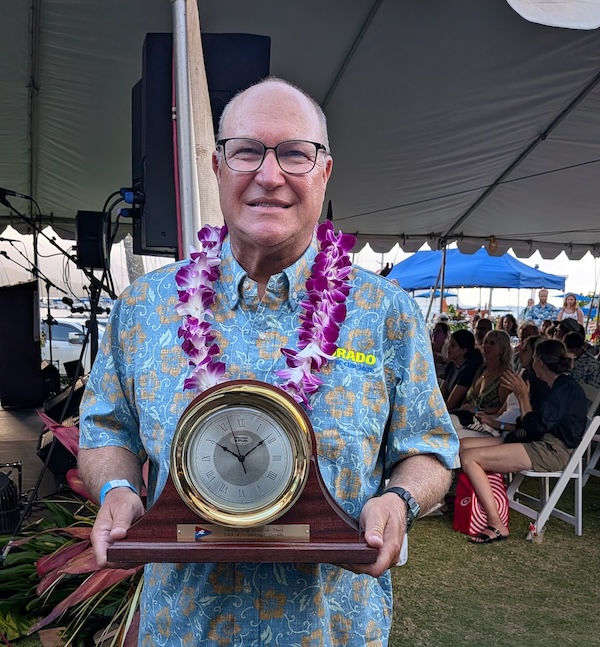
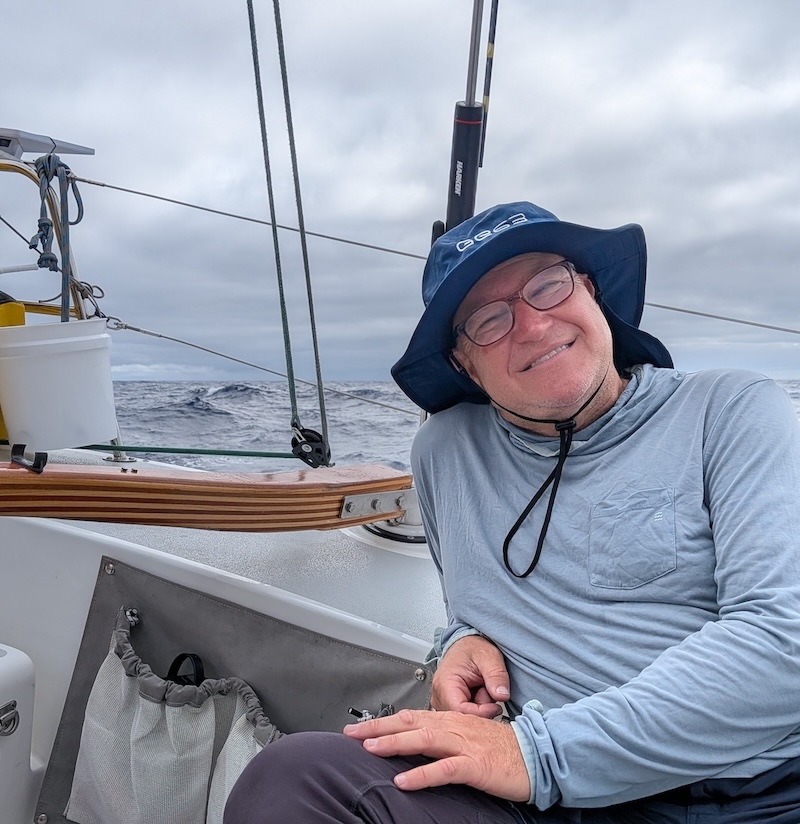
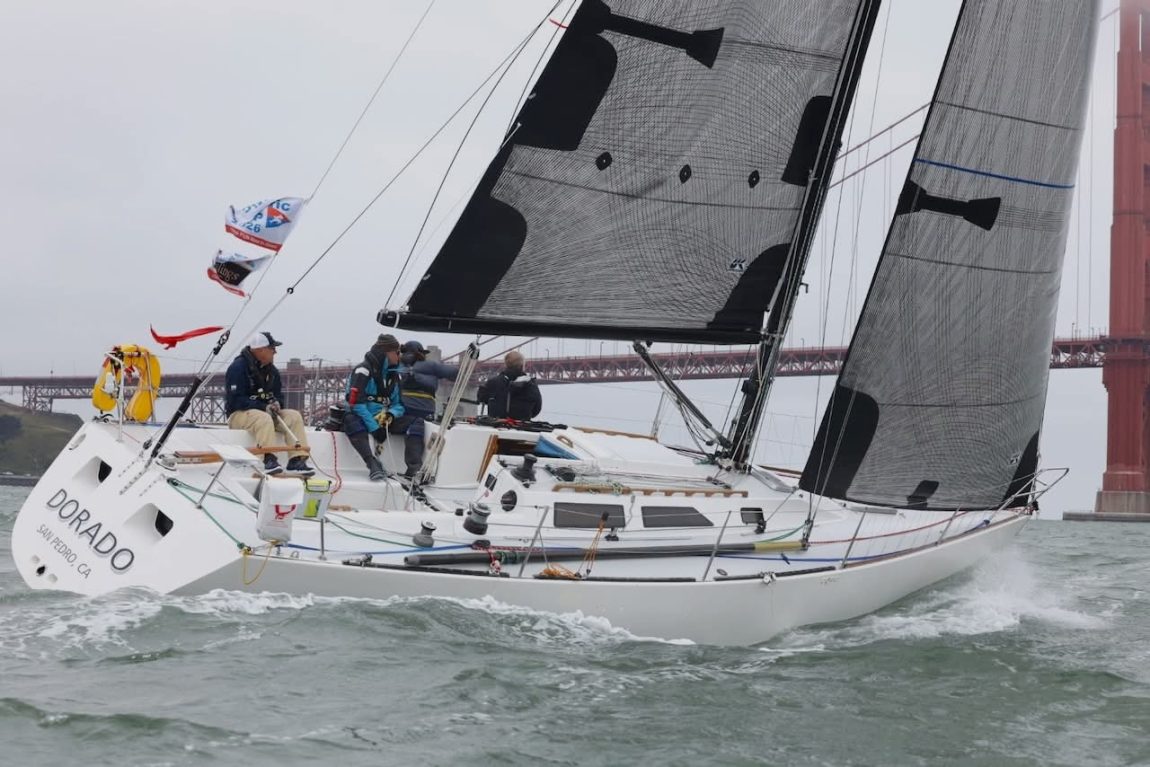
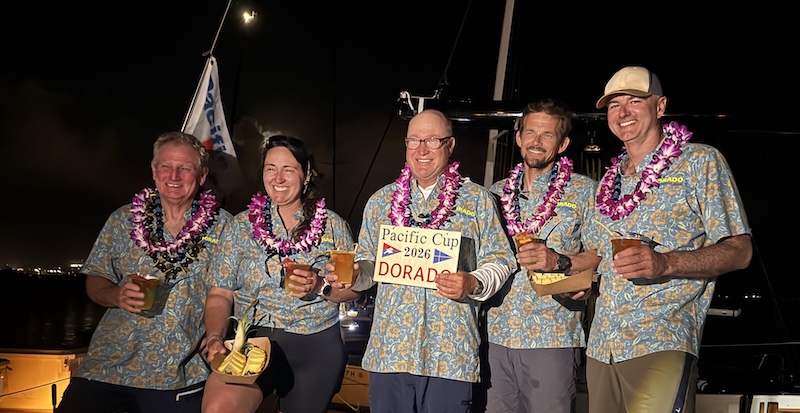
Well, it’s been a minute, and we’re happy to be back on board. This week we catch up with returning guest Brendan Huffman to chat about what goes into winning the Pacific Cup. Brendan and crew won the ORR 4 – Goslings Rum Division of the 2026 Pacific Cup aboard his Express 37 Dorado.
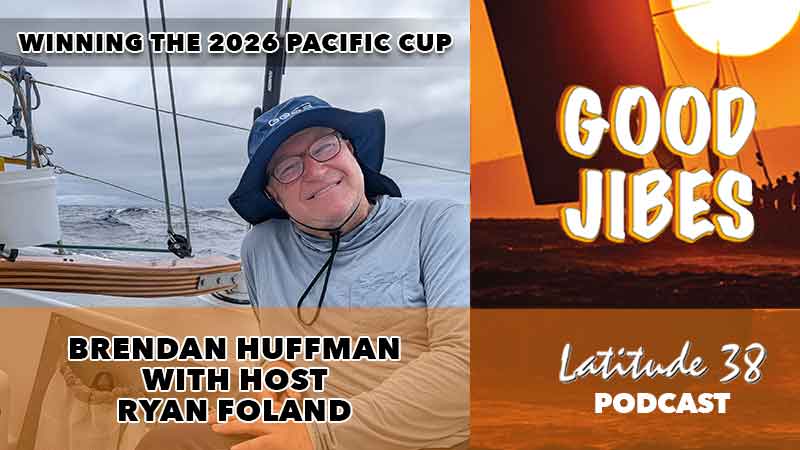
Tune in as Brendan shares with Good Jibes host Ryan Foland the sailing lessons he’s learned from his dad Fred, what makes the Pacific Cup different, why every boat project takes longer than you think, how to assemble the perfect racing crew, and how to make an epic final push in an ocean race.
Here’s a small sample of what you will hear in this episode:
- Finding the Express 37 Dorado in Santa Cruz
- The cascade of repairs
- Building the crew of five prioritizing chemistry over credentials
- Getting the boat to San Francisco after his mother passed away
- What made this crew special
Learn more about Brendan at UKSailmakers.com/Lofts/Los-Angeles and on Instagram @BruinSailor
Listen to the episode on Apple Podcasts, Spotify, and your other favorite podcast spots — follow and leave a 5-star review if you’re feeling the Good Jibes!
Check out the episode and show notes below for much more detail.
Show Notes
- Brendan Huffman on Winning the 2026 Pacific Cup, with Host Ryan Foland
- [0:14] Welcome to Good Jibes with Latitude 38
- [0:31] Welcome aboard Brendan Huffman
- [2:47] Brendan flying to Hawaii as a kid to meet his dad racing Cal 40s in the 70s
- [3:44] The man still trying to convince Ryan to put a roller furler on Bingo
- [6:56] Decoding the Hawaii race options
- [9:50] Finding the Express 37 Dorado in Santa Cruz
- [13:27] The cascade of repairs
- [17:15] Check out the Latitude 38 Crew List to find a boat or crew
- Building the Crew
- [18:13] Building the crew of five prioritizing chemistry over credentials
- [22:32] Getting the boat to San Francisco after his mother passed away and finding the passage north a good place to grieve
- [25:18] The oil-canning conversation that explains why the Express 37 is a far nicer ride than an early Cal 40
- [29:37] The sail inventory
- [35:40] Are you thinking of sailing to Mexico or across the Pacific? Latitude 38 has a resource page called “Heading South” & the “First Timer’s Guide” to help you prepare
- The Pacific Cup
- [38:13] Falling 50 miles behind mid-race
- [40:39] The final sprint: jettisoning water weight, hitting 99% of polars, and correcting out to a class win by two hours
- [42:07] What made this crew special
- [44:01] Getting the boat back from a delivery crew in 21 days
- Check out the August 2026 issue of Latitude 38 Sailing Magazine
- Make sure to follow Good Jibes with Latitude 38 on your favorite podcast spot and leave us a 5-star review on Apple Podcasts
- Theme Song: Pineapple Dream by SOLXIS
Transcript
00:02
We had a crew of five and it was most awesome crew ever.
00:14
Hello everyone and welcome back to another episode of Good Jibes, a podcast brought to you by the single-handed greatest magazine in the history of the world. It started in 1977, the one and only Latitude 38.
00:31
Whether you’re part of Latitude Nation or not, you are going to get a taste of somebody who’s been in Latitude quite a bit and is the kind of person that people write about because he’s out there with big sales. Well, I don’t know how big the sales are, but he’s out there putting boats together and racing. I’ve known him for a long time. Good friend of mine, Brendan Huffman. Welcome to The Good Jive Show. And you’re not this is not your first time. Welcome back. No, I’m hoping there’s like a club of SNL. So when I hit five times, I’ll get a gold jacket or something.
00:59
Okay, well let’s decide that, but what would you want? Tell me what you want. You want a gold jacket? mean, is that really what you want? Or a customized Berge? What would be cool? Probably just a beer would be cool. A beer? What kind I don’t want to put you guys out. No, no, no. This is actually maybe for your… Now this is your second time, is that correct? This is my second time. Okay, so the second time… First time you don’t get anything. Second time you get a beer. Okay, so that’s done. What do you want on the third time when you come back?
01:29
Let me think. I’ll let you know when we do the third time. Okay. Well, you know what? You will be the trendsetter. You will be the harbinger, which I always think of. Was it Roger Murray’s boat with the harbinger in the code? Yeah. Yeah. I always think of that. And I remember like asking my parents like, what does harbinger mean? And it’s like the forthcoming. It’s what’s the canary in the coal mine, essentially. But you’re not in the coal mine. You’re out there in the wide open ocean with
01:57
More than most of us have seen of the same scene for a long time. So you get a beer. Congratulations. What kind of beer do you want? I’ll bring it to you if you’re coming to the Chowder feed. Something local like a Sierra Nevada. Sierra Nevada. Do you like them dark? Do you like them light or do you like them? Kind of light now. Okay. We’ll go with a light Sierra Nevada. I will bring at least one, maybe two so that I can have one with you. Yeah, I don’t want to drink alone.
02:26
I’ve got a buddy who wrote a book called Drinking Rules. Tony Rico, shout out to him. He loves the island as well. And that’s one of, like, you can make up rules. And one rule that he has for himself is you don’t drink alone. So we all can guide ourselves by better rules. And today I’m gonna get some racing rules out of you because we’re talking with the champion.
02:47
So what’d you win? Let’s talk about it. And how did it all start? It all started many years ago when my dad was racing in Hawaii, Cal 40s back in the 70s mostly, Cal 48. And I was a little kid, and my mom and my brother and I would fly out to meet my dad. And I’ve just been interested in keelboat racing ever since and finally got to race to Hawaii the first time I was 22.
03:15
I’m a board medicine man. Andrew’s 56. Okay. Hold on. That’s just a start. You’re, you’re, you’re blasting over. Let’s talk about Fred for a minute. Let’s give Fred a minute here because your dad is not the normal dad. He is like, I mean, how would you describe Fred? Fred is amazing. He’s Fred’s your typical, um, character from the boating industry. Longtime rigger started the rigging boats in the fifties. He’s 88. Um, he’s still
03:44
figuring out if he’s actually retired or not. He is the rigger of When did he get into the rigging part? I didn’t really get into the rigging part other than in high school and college helping other riggers out with jobs. When did he get into that? Oh, when did he? Well, he grew up with it. Oh, so it was kind of like he was always rigging or it was always a natural path for him? Well, when he was growing up, you know, it was a working class family and it was much more do it yourself.
04:11
Boating in those days there weren’t marine hardware stores yet you scavenged and you manufactured your own tools and abilities to step mass clean the bottom. he learned a lot about that, but when he got started, he was varnishing boats they were all wood back then at San Pedro boat works, which is where via Cabrillo is now Marina.
04:35
And slowly gotten the rigging business as fiberglass got invented and had a lot more fun. For those who are from Marina Del Rey, my dad opened the original ship store in 1967, the first real chandeliery marine hardware store, and it is sorely missed. All the staff knew everything about boats. They had all the fasteners you need. And we’ll talk about fasteners in a minute when we talk about pack-up prep on my boat. Well,
05:02
I think Fred is the type of legacy character that started something and starts something and it just kind of continues to create its own momentum. He has been trying to convince me to put a roller furling on Bingo, my 1977 Cal 34, including like sketches out. Every time I see him, he’s like, when are we going to put the portler on? And he even got a few of the pieces off Facebook Marketplace. So I have them still. And
05:28
The next project might not be bingo because I’ve just keep looking at all these new boats, Brendan. It’s a terrible thing. And I see these ocean is three forty threes that seem to be like the next level of bingo. And so I might need to call Fred up again because none of these none of these puppies have step master tabernacles right out the gate. So we need Fred. Can he can he help me there? He’s probably the only rigger who has an old mayor and a roller furler designed for a tabernacle mast. Perfect. I’m going to hit him up after this.
05:58
Okay. So Fred is a big influence. When you said you were little going over the Hawaii, like what age, what does little mean? Was that like before you remember or is this a certain? Yeah, before I remember. So 1971, Transpact, their movies, home movies and photographs of me there. I think 73, 77 and a lot of Mexican races as well. Then when you were 22, that was your first like that was your first Hawaii trip. Yeah. Sweet.
06:26
And then how many people and what size of the boat? And for people like me who don’t know the ins and outs of the Hawaii trips and races, we know, I think everybody knows like, wow, you’re going to race to Hawaii. That’s epic. But there’s like different ones and different fleets and different flights and different situations. So how would you explain the option of races to get over to Hawaii? There’s some iconic ones. You’ve participated in this. How would you decode it to somebody?
06:56
If I prompt you like your Brendan AI and I’m like, with all of your data and information, how would you give, how would you explain to me? Like I’m a six year old, what all of this sailing to Hawaii is? Well, first of all, it should be fun and safe. Um, and after that you want to get there as fast as you can. And there’s several races to Hawaii. You know, I’m one of the few people who’s done Pacific cup, double handed Pacific cup, trans pack and single handed trans pack.
07:24
Then there’s Vic Maui. Hold on. OK. Unpack those packs real quick. OK. So that was great. I’m six years old. Well, I’m 46. But I like that. I like those four breakdowns because I want to see where I’m going to plug in because I’m to do it one of these days. So what are the four basic options? Yeah, they’re all different as far as culture, the types of boats that compete. Transpac is really considered the Grand Prix event, although you can still race your old heavy
07:54
clunker and have a great time. Pacific Cup is not quite as competitive. They allow smaller boats. Hold on. Do you think I could enter bingo into the Transpac? No, because there’s a rating limit and your PHRF rating is a little high, but you could do Pacific Cup or single handed Transpac. My uncle did two single handed Transpacs on his Cal 34 and then beyond Tahiti and Alaska. It’s a great boat.
08:23
No ship. That kind of makes me nervous, but it makes me excited as well. OK, so keep going with the with the categories. Yeah, so Pacific Cup, not quite as competitive, doesn’t attract all the professional crews and Grand Prix boats as Transpac does. So the culture is different. It’s more supportive. You see more cruising boats. You see smaller boats like more 24’s, Olsen 30’s. They have a huge double handed division, which is actually probably the most competitive division other than class A.
08:53
That’s a great challenge as well. From San Francisco, it tends to be colder and windier, at least the first part. The Pacific High is usually located right in the way. So it’s more of a navigational challenge, perhaps in Transpac. But it’s always a challenge out there. The weather, despite all the wind models, it never works out quite the way the wind models say it will. And you really have to know your boat to maximize the wind angles and what you think is going to happen in the next 48 hours.
09:22
All right, so let’s talk about the most recent adventure that you had out there. And we all know that it doesn’t start at the race. It starts before the start line. So when did you initially think that this last race was going to happen? What was the thought process behind the boat and what went into bringing on another task until you were ready for this thing? Well, I hate missing an opportunity to sail to Hawaii.
09:50
but I really love the Express 37. It’s a Carl Schumacher design built in the mid 80s. They built 64 of them. So three years ago, I was driving home from Big Boat series where the Express 37s had a 10 boat, one design class, even more for the nationals that year. I stopped in Santa Cruz to look at a listing. Bill Lee, the famous designer was the broker. So he gave me a tour of a boat that it kind of sat.
10:18
for many years, not many, but since COVID at least, clearly needed a lot of work. was delamination on the deck in three places. Halyards and sheets had been left out in the sun to rot. So I got what I thought was a pretty good deal on it with the plan to raise Transpac last year. So we got the boat down to Marina Del Rey and started tearing stuff apart, taking off all the deck hardware. How was the trip down? This thing had been sitting for a while. Like what would
10:48
Did you just hop on it and go or like, what’s the minimum viable? Yeah, there was some boat prep and provisioning. Um, so we left Santa Cruz Harbor, uh, right after Thanksgiving and the fan belt broke. So, uh, Toba had to bring us back to the dock and then it was, um, you know, Sunday and nothing was open. But my girlfriend, Margie also has the same engine and always has a full supply of spare parts. She drove out to Margie.
11:18
Yeah. Margie way to save the day. She, she drove, um, a fan, a fan belt down so we could leave the dock. There was no wind. We motor the entire way from Santa Cruz, Marina Del Rey, but it was a lot of fun. And the motor worked all right. She was, uh, fired up aside from the belt. The motor worked okay. Um, a lot of, um, upgrades since a big shout out to Lisp Marine, um, in the Bay area. Um, they always do a great job and the engine.
11:47
runs better than it probably has in 30 years. Nice. I’m just always interested because I recently, not recently, but out of necessity during Covid launched another business of mine, very unsuccessful business, Ginger Marine, where I guarantee to take it apart, but I do not guarantee to make it start. And so I’m always jealous about engines that are running properly. So this is great. All right. So you’ve got a ship shape engine. The ship is a mess. You get it back down home. And where do you even start with that? Do you create like
12:16
Does your program manager come out? Do you sit there and like create spreadsheets and lists and things like, or do you just bring Fred down? What do you do? A smart person would hire a program manager or project manager who’s much more organized than me. So my dad and I and a couple of friends just started removing deck hardware and not really organizing the fasteners, which were all barrel nets, which we ended up reusing for the most part.
12:45
Ordered a new rudder, ordered new rod rigging, had the deck repainted, had the delamination fixed. It’s been three months in the boatyard down in Delray getting repairs, some blisters on the bottom. All the bottom paint was stripped off. And all this is very time consuming. In the meantime, life is happening. So all the projects would get delayed in one form or another. I wanted to do Transpac last year.
13:13
but the boat wasn’t coming along fast enough. And also there weren’t that many small boats registering for Transpac, so I decided to hold off until Pacific Cup, where you do get more boats my size.
13:27
However, so this year, one solution leads to three new challenges. So the further we went along with the upgrades, the more that needed to be done, particularly things like the engine. We decided to put a high output alternator on it. And then the engine cover didn’t fit, so modifications needed to be there. Then the fan belts needed to be tuned because they were breaking.
13:55
Watermaker I’d purchased used ended up being too old and a couple of replacement parts were out of stock. So I bought a brand new watermaker a month before the race that was installed during the qualifier on Memorial Day weekend. A crack in the diesel tank developed, which leaked diesel not only into the bilge, but for some reason we had brand new water tanks with no water in them and the caps had been left off. So some of the diesel went into the water tanks.
14:24
So at a time where we thought we’d be practicing with the new asymmetrical spinnakers, you know, we’re putting baking soda and vinegar in brand new water tanks and not really focusing on how to sail the boat very well. Okay. Well, let’s just take a breath for a second. Yeah, I’m stressed out just talking about it. Have you ever heard of Hofstetter’s law? No. Okay. So this guy named Hofstetter, Douglas Hofstetter,
14:53
He had a book that he wrote about like brain complexity. And at the time there was a lot of talk around and this is like in 1970s. There was a lot of talk around computers getting to a point where they’re going to beat humans in chess like a big conversation. And there was prediction that in 10 years you know humans would be beaten by computers. And 10 years came by and it was still another 10 years until it was the case. And it ended up being.
15:22
this sort of law that, and he kind of makes a joke about it, where everything takes longer than you expect, even when you take into consideration Hofstadter’s law. And I had never heard of that. I had done some research for my next book, which is coming out October 13th. Wait, sorry, side plug here. My Getting Your Ship Together series. You know how excited I get about this. Speakership is out, I believe. Do you have your copy of Speakership?
15:51
He’s nodding. He’s nodding. I love the illustrations. Yes. So my second book in the series is Entrepreneurship and it is all ship shape and shipped and it’ll be out there shipping to the world. So I’m just fascinated with laws and I had come across this law in my research for that book. And it’s so applicable to sailing and it’s so applicable to maintenance and boat work and engine work. And here’s a question for you. If.
16:18
you would have known about Hofstadter’s law before this started. I mean, you probably already naturally knew about it. But if you knew this was like a law and you thought to yourself, I’m going to finish by this time and do these boat projects, but you knew it would take twice as long. Like, does that make the medicine go down easier? Does it create less frustration? Is it an expectation thing or does that even matter? And when it just takes too long, it’s just frustrating even if you know it’s going to take too long.
16:46
I think I’m kind of used to it being around boats for so long, especially older boats. You’re always finding one more thing that isn’t going to work or needs to be replaced. Anyway, I think that’d be a great name for a boat or a blog. So let’s let’s revisit that. I like it. Well, over a beer. Yeah, this podcast might take twice as long as we think. No, we’re going to end on time. Let’s get back on track. But go check out my book. You can check it out by finding me on my website, Ryan Dot online and.
17:15
Gosh, I’m so excited for that to come out. Hey, good Jives listeners. Are you looking to sail more? It’s the biggest mismatch on the California coast. There are thousands of boats not sailing because they need crew and thousands more sailors or soon to be sailors who want to sail but can’t find a boat. For over 45 years, Latitude 38 has been connecting boat owners with sailors to sail, or race the bay, or travel far over the horizon. Some connections have turned into thousands of blue water cruising miles.
17:44
or race winning crews, or long term relationships, or just happy days of sailing. If you have a boat or want a crew, add your name to the Latitude 38 crew list at latitude38.com. You don’t know where such a simple act will take you. So you are now in a spot where you’ve got water tanks, cleaned of diesel, you’re prepping for it. Tell us about like the other parts, not the boat, the crew, like how that all came together and
18:13
I’m assuming, did you just do this by yourself or did you have a team that sailed with you? We had a crew of five and it was the most awesome crew ever. Three of us had sailed together to Hawaii last time. That’s That’s a bold statement because you have done so many cruises. I just want to salute this team as the best ever. You know, I prioritize chemistry more and more as I get older, especially on a race to Hawaii. What did you study in college? Was it chemistry?
18:44
Political science. That’s kind of a type of chemistry. Okay. Yeah. And I had a different outlook in my 20s. I was much more competitive. And as I got older, I less tolerance for assholes. Stop it. You are very competitive now. Don’t tell me it was a different frame. If you were competitive then, you’re competitive now. Aren’t you? Different mindset. Different mindset. I don’t have as much to prove as I’m older and can enjoy.
19:11
Being there, I have a different outlook on winning and losing than I did in my 20s. Winning was everything usually, and now winning has a different meaning to me, especially with, you the handicap systems are never gonna be fair. So I take kind of a John Wooden approach and just do my best, try and beat the boats that I should be beating or within reach. But, you know, there’s always one or two boats that have that awesome rating for that one condition and no one’s gonna catch them.
19:42
All right, so back to the crew, the best. They were great. Three of us had raced to Hawaii, uh, two years ago and knew each other. Well, uh, one guy helped bring the boat down from Santa Cruz works on boats, very knowledgeable, not a competitive racer, um, but brought so much. did so much of the electrical and the plumbing before the race. And then during the race, he was monitoring the energy budget, the batteries, the water maker.
20:11
and fixing things before they broke. And just a wonderful guy to sail with, and that was Christian. So the two had sailed to Hawaii with me before. Kira, who works at ASA in the Bay Area, and Delivery Skipper. Chris Walker was a navigator. We met three years ago, Big Boat Series was the first one. And then the fifth one, Greg Clark, someone who also grew up in Marina Del Rey.
20:38
Our dads had IOR boats and we used to race against each other, but hadn’t spent a lot of time. Greg had owned an Express 37 and does a lot of racing on Westerly, highly successful Santa Cruz 52. He brought a lot as far as knowledge and skill sets that you only learn at Cal Maritime. There’s a plug for you. And together, all the personalities and skill sets complement each other perfectly.
21:06
Working on the boat before the race, we work well together, even though there are differences of opinion on how to do stuff. We’re able to try things out. quick, did you get them all at once? Did you have like two people and three people and you find four or five? How is it? Because that’s a whole process. Or did you just know like? No, I knew everyone. In January, there were three of us, the Transpac crew, two of the guys couldn’t do this year’s pack up. So there were three.
21:34
So we carefully did some outreach to people and wound up with, know, that I wouldn’t want to replace anyone. And I’d love to raise these people again as soon as possible. Now, this is naive question, but are you allowed a certain number? Does it have to be five? Could it be four? Could it be six? Is it about the weight? Like what determines the is are the rules around that? Not in the Pacific up so much. Having more weight will affect your ORR rating.
22:04
A little bit so we could have done double handed, which I didn’t want to do usually express 37 takes 6 people to why there is another express 37 with 6 people and I thought 5 was the right number. Thankfully, we didn’t have a lot of sale changes this year in the middle of the night and jibes and snafu’s. So we weren’t. Challenge to be waking up several times a night making sale changes and had we done that, it would have been nice to have.
22:32
six people on board, but I thought five was the right number for that boat. So tell us about the race. Like you guys are prepped, you’re down to the wire and all kinds of ship happens. You put it together. Like how does a process of practicing like this? I mean, it’s hard to get five people scheduled together, let alone find time to go out on the boats and stuff like that. Yeah, we had no time to practice. So my mom passed away a month before the start. And then 10 days later, my dad and I and another guy delivered the boat.
23:01
North and it’s that’s such a great place to grieve and process life. Just leaving the city and getting on the water, especially the central coast and Northern California. It’s such a beautiful place. So we arrived in San Francisco in under 72 hours, great delivery and came out with a better outlook on life and also remembering my mom and what her life.
23:31
how she had lived her life. So we got to Sausalito and just started getting the boat ready, provisioning, replacing things, looking for leaks that hadn’t been present before and kept working away until it was time to leave the dock and go to the starting line. Okay, with this looking for leaks, like I just had this vision. Are you just like pulling up all the floorboards and like looking for water? Like what does one do to look for leaks? Well, it’s an interesting thing. We replaced the lint.
24:00
We didn’t replace it. We re-bedded the lens on the forward hatch, which is pretty big. And the guy who did it knows a lot about boats, but what he didn’t factor in is that the lens is now setting a couple millimeters below the surface. So there’s a gap and water was coming in there. So we had to figure out ways without taking the time to re-bed it.
24:24
So my crew figured out some plugs to put in there so it attached to the hatch better. So we got rid of that leak, realized that port lights needed to be secured better with a knob, especially in heavy seas. And hosing the boat off is a great way to find out if you have leaks. Oh, the traveler, the new traveler suddenly had leaks. So we took that off and re-bedded that and haven’t had a problem since.
24:51
So you have to expect that you got water coming over the bow for how long was the journey? What is it? What was the, what was the time? we did the race in 11 and half days. Uh, the first couple of days are usually the wettest and the most uncomfortable. How uncomfortable, how wet on a scale of one to 10 for each one, one to 10 for wetness. Well, Northern California leaving the Bay is so interesting because I’ve left when it’s a dead calm and it’s
25:18
Beautiful and slow and I’ve also left when it’s a Gale guesting at 40 knots. Okay. So, when you get the Gale conditions, either north of you or on the race course. The C state gets very large the waves get steeper. The water is cold even an El Nino year and the air temperature is cold different size boats respond to wave heights differently. The bigger the boat. It might be a smoother ride the smaller the boat.
25:48
You’re really getting tossed by the seas. So we’re in the middle. A lot of herking, lot of herky jerky movements, poor navigator who’s staring at his computer screen, reading the GRIB files. You know, he got seasick and that’s pretty common for navigators. So I’d say about half of us were seasick the first night and the other half were not seasick, just exhausted from, you know, five days and nights of prep in the boat. Exhaust sick.
26:17
Exhaust stick. That’s new one. Sick by exhaustion. Now, when we were out there and I was with you on the Fairlawns, Fairlawns, I always mess that up. When we were out there and I remember that, was that your wavelength 24 when you had just got? Yeah, that was my Santa Cruz 33. OK. And that’s the sea state there is similar to what you get beyond the Fairlawns, only bigger. Because I remember like just, you know, being over the side like, you know.
26:45
doing my job, just distributing my weight. That’s about all I was good for. And I would fret in the back just as a boss on the the tiller. And just the I had never been in a boat where like it just like it just you would you would just it would smash on the front and you would just feel it just go. And I remember like my legs over the side being like, is that supposed to happen? And you’re like, yeah, she just absorbed in the waves like. yeah, so that’s called oil canning.
27:14
When the dual EBS came out early and that boat was from 1977, the early Cal 40s had the same issue. The the the hull was so light and thin that when the waves crashed against the the front of the boat, the parts of the boat or the fiberglass are compressing down to the rudder and the keel. And it’s a very disconcerting feeling. And the Express 37 doesn’t do that much nicer. OK.
27:43
Much nicer ride. never been able to duplicate that with bingo. She’s she’s a you know, an old salty heavy dog and when she smacks it’s like the whole thing but the oil can I like it. Yeah. Alright, so you’re oil canning you’re getting sick you’re out there you’re not really worried about winning you’re just doing the best you can and out there how focused are you on other boats or are you just like laser focused on yourself? Well both. It’s a tight reach.
28:08
It was in the mid 20s for the first 24 hours and we’re changing between the blast reacher and the jib top trying to sail a steady course and the navigator would ask us to come up or come down a couple degrees based on what he’s seeing for the next 48 hours. We’re aware of the other boats, especially who we considered our top competitors, as well as boats in other class. You want to keep a lookout, obviously, especially near the coast.
28:37
More ships going, going by, but we’re also trying to stay warm and not get seasick. So first night, the meal, the gourmet meal is cup of noodles and make your own. Okay. That sounds like a hearty meal. It is, but not everyone feels like eating and some people aren’t, they don’t want to eat at the time where someone else is. So if you can just heat up water and make it yourself, that’s easy. After that, we ate much better, but just.
29:07
keeping the crew hydrated and not too exhausted and the boat moving was the goal. One of the interesting things, this was only our second race on the boat by the way, is figuring out how the mast isn’t tuned just right, well too late now. Is this gonna work? Are these sheets gonna hold? Is the halyard too thin? Is this too much sail area for the boat? So we’re kind of learning it, but we held our own the first part. In the middle, we started falling behind.
29:37
And you also, I have to say this right, sell sale. Brendan sells sales down by the seashore. But you, I’m assuming this thing you tricked out with custom sales. How many did you have? How is that as an advantage of you’re the one who’s cutting it? Does everybody make their own sales at this level? I’m curious about that. I know.
30:00
Unless the sail maker owns their own boat and owns the loft they’re buying from people like me. There are lot of thoughts on what sales to purchase. So asymmetrical spinnakers are bigger. So this boat performs better. We wanted as much sail area as possible. So I had four asymmetrical spinnakers and a penalty pull. And doing the math with ORR determined that the penalty would be worth it.
30:27
And it was explaining me what that means. What does penalty pull in? OK, so the Express 37, the stock, they all have stock sale area and stock spinnaker poles. So to raise one design, we all need the same spinnaker size, the same spinnaker pole, main size, relative weight of the boat, et cetera. However, you can’t bring out the Whomper. You can, but you have to disclose that to the rating authority in this case, O.R.R.
30:57
So the sales had to be measured and the poll had to be measured. we owed more time to a stock Express 37 than we would. Interesting. Okay. Had we not done that, but our downwind vote speed was better. And since it was considered a light year, those bigger spinnakers and the longer spinnaker poll, I thought paid dividends. Another interesting thing that’s developed in the last 15 years or so with the wind apps,
31:25
is you know what the wind conditions are going to be for the next week. We left the large Genoa behind. Didn’t need the weight. We were never going to use it, but we brought a jib top, which is 155%. Blast Reacher started with the J3. We had an old J4 on board that we never used. A Genoa Stacil that we used with the jib top.
31:52
Then after that, was Spinnaker’s and Spinnaker Stacil. That sounds like a lot of sale. it is. Did you make them all or did you piece them? Did any of the original sales work from the boat or was it? Yeah, UK made all my sales except for the Genoa Stacil. Another competitor in the race loaned me or gave me his. It wasn’t clear. His office sold boat. He didn’t need it and it fit perfectly and was a great compliment to the Jib Top.
32:21
Alright, so if somebody wants to rig up their rig with a new sail, they can hit you up. They can hit me up and also we have some used spinnakers that might work for various boats. Well, you helped hook me up with my new main and my new, I don’t know what it’s what a 130, 115 I forget now. What do you think about a spinnaker for bingo? That’d be great. Probably an asymmetrical cruising spinnaker would be really nice.
32:51
An asymmetrical spinnaker gets- Do I need five crew to do it? I feel intimidated by the spinnaker, not to not lie. No, you and Cynthia can do it. A spinnaker snuffer or sock would help. I’m gonna call Fred and figure that out. Actually, Troy and Michelle, who are also members of the Blue Water Cruising Club, shout out to Blue Water. If you were a sailor anywhere up and down the Southern California coast and you want to find the most pristine, the most, I mean, how would you describe Big Geiger? It’s like a
33:19
It’s a moment back in time. There’s no Morians. It’s basically like it was from the history. Well, we built a little hut and come. How would you how do you describe Big Geiger Coat of people who’ve never been there? It’s the best anchorage on Catalina Island, if not the Channel Islands. I was just at Santa Cruz Island last month. It’s such a tranquil, peaceful place. There are no moorings. So you need to anchor with two hooks. That kind of scares off the riff raff.
33:47
And Ryan, I don’t know if you’ve noticed this, but in my lifetime, there’s more greenery. The vegetation has grown back since the goats and pigs were removed, and it stays green almost all year round in the canyon above Big Geiger. So that’s part of it. The other part is just the history and the culture of the club. It’s just this great cast of boating characters all bringing these.
34:14
Mostly amazing boating experiences and then some beginners who learn how to anchor and just they gel with the vibe of the club and the cove. Let’s see behind me is the Blue Water Burgee. Which I think of all Burgies is almost the most amazing Burgee. Like why didn’t somebody else come up with a single wave? Right. If you’re listening to this, it is a single blue wave where the crest is coming back towards where the baseline of the what do you call that part of the flag? I’m sure there’s name for it.
34:44
base of it? The bottom? I don’t know. So it’s the wave is on the bottom, but it’s curling towards towards the flag, not not towards the skinny part of the flag, but towards the fat part of flag. And then it’s yellow on top. It’s like, I mean, it’s literally the coolest of all flags that I’ve seen, but I’m just biased. Yeah. Well, as you know, my grandparents were charter members. My grandmother spent some time at UCLA, so I figured.
35:11
You know, there were some UCLA alums and they chose similar colors. But seriously, yellow and blue to me are the best colors on the water. And I love yellow spinnakers because they’re easy to trim, they’re easy to see, and they make great photographs. That’s interesting. All right. Well, I probably want an orange spinnaker to be part of my ginger theme and, you know, big red one because Bingo’s got it. You got it. Yeah. Challenge and yeah, challenge has that cloth and Bainbridge.
35:40
If you are learning more about Big Geiger Cove, you can go to Bluewatercruisingclub.org. We’re always looking for people to come over and check it out and we can help you get through the anchoring part. And if you’re the right people match, like it’s the most amazing spot. So Bluewatercruisingclub.org. That’s my plug there. Latitude 38 here. Are you thinking of sailing to Mexico or all the way across the Pacific or maybe even further? We just heard from Joanna and Cliff.
36:07
saying, my husband and I subscribe to Latitude 38 and enjoy the Good Jibes podcast regularly. They went on to say they’re headed to Mexico in the fall and will continue across the Pacific to Australia. However, they’re looking to simplify all the choices they need to make to prepare. Of course, there’s tons of resources out there, but Latitude 38 does have a page in our website called Heading South. And we also have Latitude 38’s First Timers Guide to Mexico available to read online on the Heading South page.
36:37
or a printed copy that is available to purchase in our online store. There’s a lot to know, but Latitude38.com is a good place to start.
36:48
But back to where I started with this tangent, Troy and Michelle, we were over there this last weekend with them and Troy was like, it was light wind and he’s like, I want to bring out my asymmetrical. And they did. They set it up with a big old sock and we saw them take off. And then what? The sock just comes down to douse it? What if it’s like, what if it’s 25 knots of wind right when I get to Huntington Harbor and like, I feel like it would get away from me? Yeah, actually they don’t do that.
37:15
So when you sail off the breeze a little bit, let the sheet out to collapse the spinnaker and then get in the wind shadow of the main, it’s very easy to pull the sock down. Now that’s smart. I didn’t even think of that. I just had the vision of it in front of me. And I’ve been on a few of these racing boats with these big spinnakers and it just takes like three or four people and it’s just absolute chaos. And all right, my birthday is coming up next year, almost the same time. We’ll see if we can do that. Maybe I’ll have my new 343 by then and
37:44
we can figure out how to do that. Back to the race. are what midway through it. When do you break out these asymmetrical spinnakers? And at what point did you sort of get that edge back? You were said, you said you did well and you kind of fell behind. Step us through. Yeah. So by by day three, we had the A3 up with which is a reaching spinnaker. And then as usual, the wind starts coming out more and gets lighter in the middle. We just weren’t sailing the boat well.
38:13
We hadn’t figured it out yet. Probably had the wrong spinnaker up by then. It was pretty light, so we were going with the A1, but the A2 would have been bigger and a better running kite, and we just weren’t aggressive on the sail changes. So we fell behind 50 miles or so to a similar boat in our class. So it was frustrating. It’s still beautiful out there, and there are other boats to kind of pace yourself with.
38:41
And the food’s great, but you know, we were getting frustrated, but there’s still a lot of race. 50 miles. That’s like two times a Catalina. I feel like if you were two times a Catalina in front of me, there’d be no way I could catch you. How do you come back from that? Yeah, so thankfully the Navigator, you know, really reviewed what was coming up ahead and positioned us to have a great angle and maximum wind speed into the finish. So we didn’t. We had the A2 up.
39:11
for the last 500 miles on a starboard pole and never jibed. We just sailed very deep, hitting our targets of not exceeding it. So all the boats now, Ryan, have pullers. And with computers, your instruments integrate with your computer program. And the B &G’s, which are telling you how deep you should be going and a certain amount of how much wind there is. And then that tells you what percentage of your pullers you’re hitting.
39:41
So if you’re in the nineties, that’s pretty good. But if you’re exceeding a hundred percent, that means you’re rewriting code in a way. Um, you’re setting a new standard for that boat. So we were in the high nineties a lot of the time. And by then the wind had started to come up. But like I said, it was light. We rarely saw 20 knots for the last 1500 miles, 1800 miles, 1600 miles of the race. When it did hit 20 knots, the boat just seemed to take off, but we weren’t.
40:10
We didn’t get a lot of that. It’s mostly 15 and 16. So we just slowly picked off mile after mile. The last day of the race, we were in third place on corrected time. The first boat had already finished. So we were pushing the boat and steering as best as we could and rearranging weight more and trying to jettison water we weren’t going to use. And we finished at about midnight and corrected out two hours.
40:39
Hold on, jettison water. you’re like, you’re just dumping stuff over to become lighter as you’re going down the final sprint. Yeah. And we had a water maker. So we knew we could make up to 18 gallons an hour if we needed to. But by then we knew. So all the water tanks were empty and we just kept, you know, four or five gallons left over and in a. In water bottles. That’s a that’s some gangster ship right there. I like it. Yeah, we started doing it earlier, but realized we had made more water than we needed.
41:09
Of course, we had a lot of diesel. We’re not going to jettison that, but we can move weight around with the sails down below so that the bow is not bearing and the rudder is making good progress. OK, so I didn’t mean to steal your thunder that you’re coming down there into the line like you’re making a mile by mile. How does that work? Because you’ve got the corrective time. Do you know right when it happens? Are you calculating it or you just focus to see after the fact? Set me through those last moments as you as you make it. Yeah.
41:37
We have a pretty good idea. You know, when it’s under an hour or 30 minutes, you’re not quite sure because of the handicap and the weather factor formula being applied. But two hours we got to the dock knowing that we had won our class. Nice. What did that feel like? I know winning is not everything, but how did that feel? All this prep, all this time, all these people, all the drama, all the time, everything. How did this one feel? Yeah, it’s a good feeling.
42:07
Especially when you enjoy your crew so much, you know, just everyone gelled and you become a family out there. One thing that I noticed, unlike the previous 10 races, including two single-handed, there were, I didn’t hear a single snarky remark. I did not hear unfair criticism of anyone. A lot of appreciation for what people are doing when someone went up the mast, when someone made dinner, when someone did the dishes.
42:37
You know, there’s just appreciation and love being expressed and just people were smiling. Even when we fell behind and we were frustrated, we were picking each other up and reminding ourselves it’s a lot of race left. When the wind starts filling in, our boat’s going to start performing better than our competitors. And that’s what happened. There’s a lot of wind left. I love that. And as you were describing what all this is to a six year old, the first thing you said was fun.
43:05
and safe and it sounds like the fun part was there and I’ve been on boats where way less opportunity to see the different range of emotions but I’ve seen the Yellers and I’ve seen the Criticizers and I’ve also been aboard boats where it’s like just like abundance and gratitude and just fun to be out there so that’s great that’s another victory on top of it so then what you get the trophy you get the Mai Tais you get your shirts out you get the Leys you probably get a lei you got all kinds of stuff right it’s a big party in Hawaii yeah a lot of Mai Tais
43:35
and Kaneohe Yacht Club, they’re such great hosts. They’re so friendly, the great bartenders. It’s just a wonderful place to spend time. And I love that part of the island. I usually stay at Lanakai or Kailua, which is nearby. I really enjoy it. So we got to Hawaii and enjoyed the hospitality and a lot of Mai Tais, but we also had to get the boat ready to return home.
44:01
There were hurricanes and tropical storms approaching. So there’s a time window. Getting the fuel was interesting. That’s another story. So four guys brought the boat back. I think it took him 20, 21 days. And we’re following him on AIS. Any of the same crew or this is a whole different crew? No, just different guys. I knew two of them. They delivered another boat back. And the delivery captain is the fiance of Kira.
44:29
who was on board for the race, but she couldn’t bring the boat back. Yeah, so the morning they arrived, before dawn, Margie and I had bought coffee at Pete’s and breakfast sandwiches, borrowed a rib, met them in Santa Monica Bay as the sun was coming up with coffee and breakfast sandwiches. They were not expecting us. They were kind of looking at us funny as we were getting close. Then they recognized us and saw the coffee and food and they were really excited.
44:57
The sun rose over Marina Del Rey. The boat got in the slip. Not only did nothing break on the race or the return, but they left the boat very clean down below and smelling great, which is very unusual unless you have really professional delivery skippers who pay attention to that kind of thing. Nice. So when is she going to show up in Big Geiger Cove? Taking it over to the Chowder Feed?
45:26
No, it doesn’t have a bow roller and the Catalina 42 is a better boat for Catalina. It has a windlass, electric winch for the main. I think my dad’s going to the chowder feed by the way. Okay, so maybe I’ll send that roller furler with him and you can check it out. Yes, I have other pieces and huge coils of cable in a storage locker that I still need to figure out. Yeah, maybe I’ll do that and then I can sell bingo for a premium.
45:55
because it’s a tabernacle with an old school reliable furler on the front. And I’ll tout the new sales that I have as, you know, I’ll just crush it. I’ll just get all kinds of money for a 50 year old boat. It’s going to be amazing. For sure. And by the way, there are two Cal 34s usually anchored at Big Geiger. There’s so many Lapworth designs in the cove, which is fun to see. Yes. Well, Brendan, congratulations on your race. Thanks for the education. Shout out to Fred and, you know,
46:25
Biggest condolences about your mom. I think she, you know, she is, she’s with us in the wind and the spirit, just like my dad and everybody else out there. So good shit, man. Lots of positive energy. Look at that. Cheers. Oh, we got latitude 38. Latitude 38. Brian want to thank you. My friends at latitude 38 keep up the great work. It’s the best sailing magazine in the world. I never miss a copy.
46:51
Nice. Well, we enjoy seeing you there a bunch. And if people want to connect with you, where do they find you? Whether they need to get sales or whether they need to get advice or whether they want to pitch you to be part of your crew or whatnot. Probably the best way is just call the loft. We’re UK Los Angeles, located in Venice, Marina Del Rey. My phone number is on there. on Instagram. My handle. Bruin sailor.
47:21
Ah, brewing like UCLA, not the beer. Nice. All right. Well, I’ll bring the Sierra Nevada and maybe I’ll have a beer with your dad if you don’t show up on the the chowder feed and we will see you soon, buddy. But it’s been a fun summer and it’s always great to hear our Blue Water crew out there crushing it, coming back with victory, victorious under the burgee, multiple burgees. But we’re proud to see the burgee up there. Appreciate it, Ryan. Thank you.
47:50
All right, and if you enjoyed this episode, of course you’re going to enjoy other episodes. We have 200 plus for you to check out and you should subscribe where you get your podcasts. And if you’re not on to the bandwagon for Latitude 38, get your grubby hands on the magazine at any local Marine store or even better yet, have it shipped to your house. That’s what I do. So don’t have to go anywhere. It just shows up in the mail and connect with Latitude 38 on social media. We’ve got all kinds of fun content and great things and
48:18
If you want to get your speaking ship together, go find Speaker Ship. You can get it at ryan.online forward slash speakership. then Entrepreneur Ship is coming out on October 13th. It’s boat size. It’s small enough. It can fit in your boat. And if you ever are inspired to build something meaningful plank by plank, I got your back. And then we’ll keep building ships from there. Leadership, relationship, salesmanship. I got a whole fleet of books coming out.
48:46
and I’ll see you online at ryan.online. That’s it. We had the show. Thank you, Brendan. And I hope you have a very lucky day. Congrats on your victory. Handshake virtually looks good. All right. We’ll see you soon, Fair win. Thanks, man. And follow me, Zs.