

Max Ebb — A Little Book Goes a Long Way
I have been putting “stabilized binoculars” at the top of my online wish list for years. This list is readable by anyone, and I know that my close friends and family all consult these lists to better inform their holiday shopping. And yet, year after year, the binoculars of my dreams never seem to appear under the tree.
So I finally had to buy them myself. I chose an $840 German model, the Sig Sauer 16×42. It seemed like a good balance of price, quality, and water resistance. And I’ve never looked back: They are great for those of us with failing eyesight in a “spray rich” environment. Now I’m the first to spot the mark, not the last.
Ever since then I’ve had a new gift in the top position on my wish list: Bernot on Breezes, an unassuming little book on coastal wind patterns. First published in French more than 30 years ago, this book is highly recommended by some of the world’s best navigators, but even used and a little worn, it has been listed at a higher price than my new binoculars.
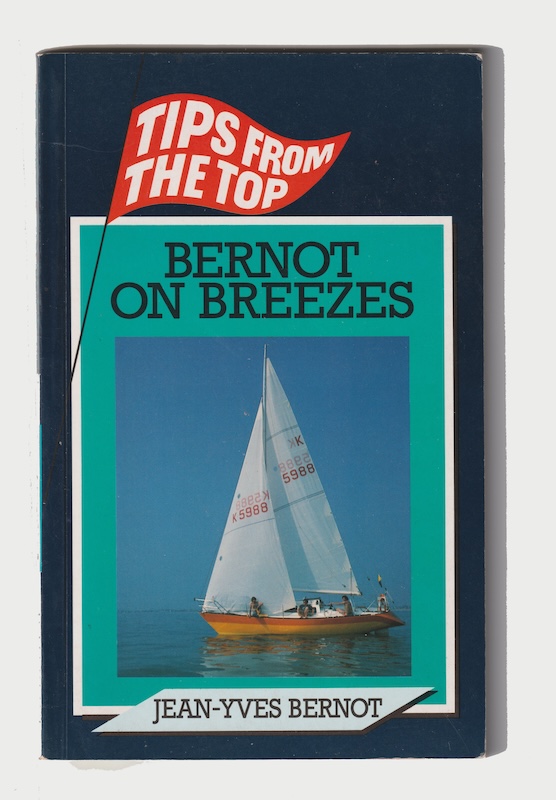
Until this year. There are suddenly a few copies available at the $150 price point. Still outrageous for an old 111-page small-format paperback, but someone who knew I needed this book had snatched one up and there it was, under the tree with my name on it.
Lee Helm, still a starving grad student, could not have spent that much money on a sailing acquaintance. It’s a dense book, information-wise, and I wanted her take on it. I knew I could find her at the University Sailing Club, even on Christmas afternoon.
“Cool!” she exclaimed when I showed her the coveted book. “It’s as good as they say it is for understanding the interactions of wind and land.”
“You’ve read it?” I asked.
“Someone that I know did something, like, sort of illegal, and I have a printout of a scan.”
“Great!” I said. “Maybe you can explain some of it to me.”
“No prob,” she agreed, and led me to the blackboard inside the damp little shack that serves as a clubhouse for college dinghy sailors, windsurfers and foilers.
“Bernot starts with the synoptic map,” she said. “High- and low-pressure systems. Air tries to flow from high pressure to low. But like, air does not have free will and does not really ‘try’ to do anything. I’ll ask you to accept that air will move from high pressure to low pressure in the absence of other forces.”
“No need to be that rigorous, Lee. Or did you end up in a philosophy class by mistake?”