

How To Get Into Racing Part 2: Buying a Race Boat
In a previous post, Andy Newell talked about getting into racing aboard OPBs. The next step for many people is racing aboard their own boats. Together with Lori Tewksbury, Andy suggests some steps to make that dream a reality.
Previously we talked about getting started with sailboat racing on OPBs (other people’s boats). Most of us spend years on OPBs because of the simplicity of just having to show up, get free lunch and beer, and spend hardly any money. It’s a great way to go, especially for younger sailors who lack the funds or time needed to campaign a boat. But what if you have been sailing on OPBs for years (or decades) and you decide you want to race your own boat?
Figuring out what kind of boat you want is the first step. Start by deciding what you want to do for the next five years or so (this is your first boat, but it does not need to be your last!). Some things to consider include: Do you want to race a boat that requires a large crew, or to be able to sail by yourself or with one other person? Do you want a boat that is easy to maintain (no galley, no inboard motor, no head), or would you rather have a boat with all the bells and whistles? Do you want to race only or have a boat that you can race and take friends and family out on? Do you want to have a trailerable boat (20- to 28-ft) or a boat that is permanently in the water? Do you want a boat that has a one-design fleet (a fleet of the same kind of boat)?
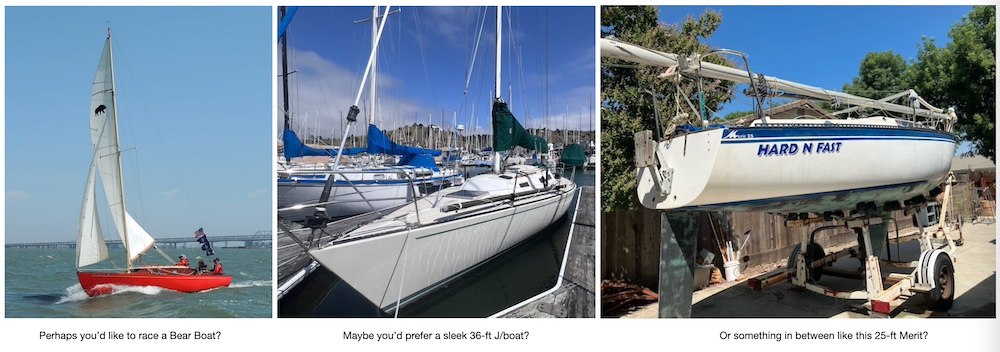
See if you can set up a ride on boats like the one you want to buy to give you a better idea of racing that type of boat. Talk with the owners about their costs and if there are any issues that they think you should know; get a feel for what owning the boat might be like.
Now that you know what you want, you will need to make a budget of ongoing expenses. These include storage ($200 per month on a trailer, $400+ in the water); insurance ($500–1,000 per year depending on the boat); a diver if you are in the water ($4/foot per month). These are very rough estimates and do not include maintenance, upgrades or new sails.
Most people do not buy a brand-new sailboat — some of the best racing boats have been around for 20+ years and are no longer made. When you find a boat you want to buy, you would be remiss not to get it professionally surveyed (and your insurance may require this). Surveys run $25–30 per foot, usually with a minimum, and if it is an in-the-water boat you will need to do at least a “haul and hang” where you have the boat pulled out temporarily so the surveyor can inspect the bottom. The survey can tell you what might be wrong with the boat and help in negotiating the price, or provide a to-do list to bring the boat up to par. If your dream boat is small, $500–1,000 for a survey is a lot. Maybe you can get the skipper who’s selling to help you check out the boat.
Next time we will share ideas on putting together a crew for your new boat.
— Andy and Lori
When you have your boat, and you’re waiting for Andy and Lori’s next installment, sign up on the Latitude 38 Crew List pages — you can look through the available crew, and place your own listing as a skipper. To meet even more sailors, grab a ticket for the Latitude 38 Fall Crew List party on September 4 at Spaulding Marine Center, Sausalito.
A good article – it so happens that my S2 7.9 is for sale. It checks almost all the boxes for affordability, low maintenance, single hand-ability, and highly competitive racing. see the S2 7.9 class page if interested.
May I humbly suggest a Cal 20. They will cost you anywhere from a few well chosen words to $1,500 at your local Marina. They are stout vessels, and have held up well for over 60 years. I will be happy to guide you through the refitting process to bring her up to racing condition. And, I have just finished shaping a super rudder for a new owner, and can do that for you, too. The boats aren’t royally fast, but are a ton of fun to sail, and will easily break 8 knots downwind, and have a stable and generous PHRF rating. I am happy to help you learn the tricks to sailing them to that rating, and offer a high bar to overcome, as you work up your learning curve. Then, you can take her down to SoCal for a reality check. Unlimited fun, for a fraction of the cost of a speedster.