

Episode #200: Reno Cambridge on Sailing Tall Ships & Rebuilding Your Boat
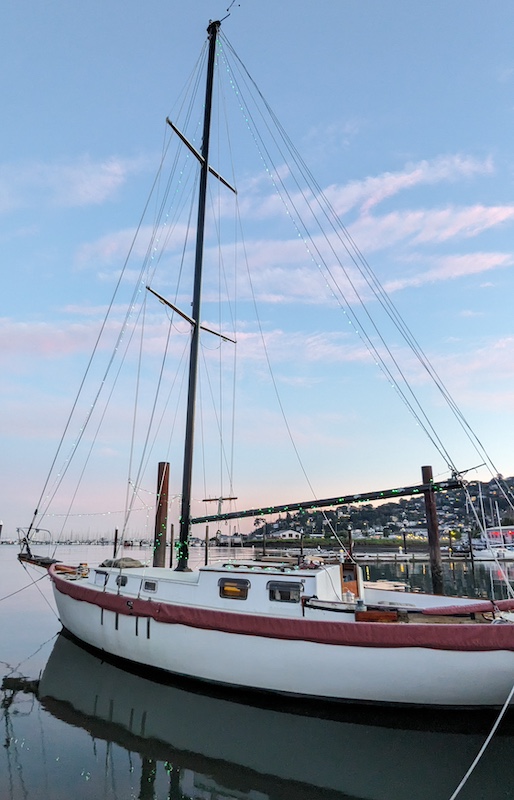
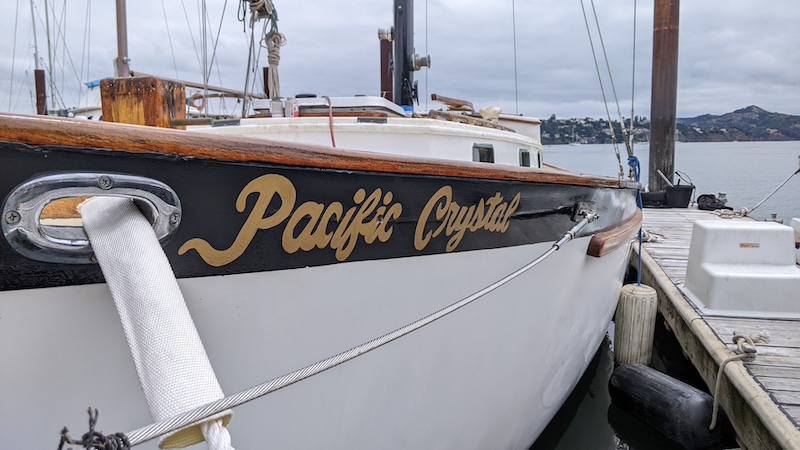
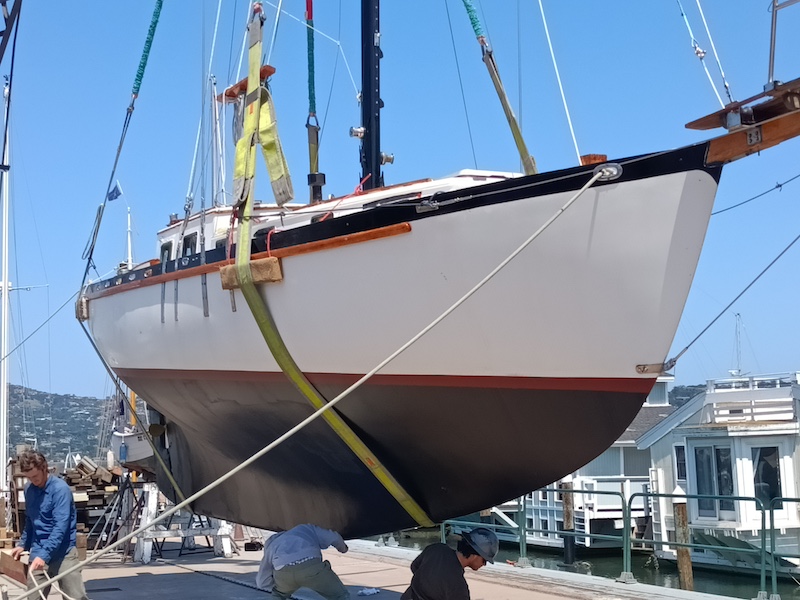
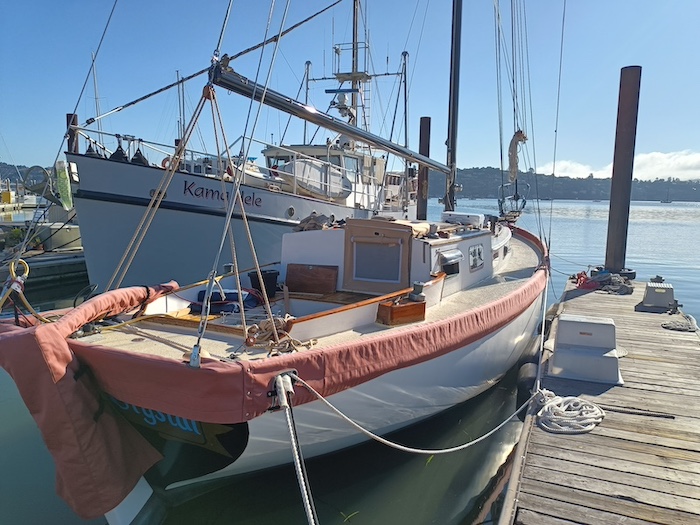
Welcome to Good Jibes Episode #200! This week we chat with Reno Cambridge for a special episode on sailing tall ships and rebuilding your boat. Reno is Captain of the Schooner Freda B and lives aboard his Cape George 36 Pacific Crystal, which he’s currently rebuilding.
Tune in as Reno chats with Good Jibes host John Arndt about how he got hooked the first time on a sailboat, what goes into leading giant groups of guests on tall ships, why tall ships create the closest friendships, what makes Galilee Harbor in Sausalito special, and how to rebuild your boat while keeping the morale high. Here’s a sample of what you’ll hear in this episode:
- How’s the social side of captaincy?
- Why none of Reno’s brothers are sailors
- How Reno mentors young sailors
- Sharing stories with the Ancient Mariners
- The legacy of the Cape George 36
Listen to the episode on Apple Podcasts, Spotify, and your other favorite podcast spots — follow and leave a 5-star review if you’re feeling the Good Jibes!
Learn more about Reno at GalileeHarbor.com, SchoonerFredaB.com, and on Instagram @ShapiroCambridge
Check out the show notes below for much more detail.
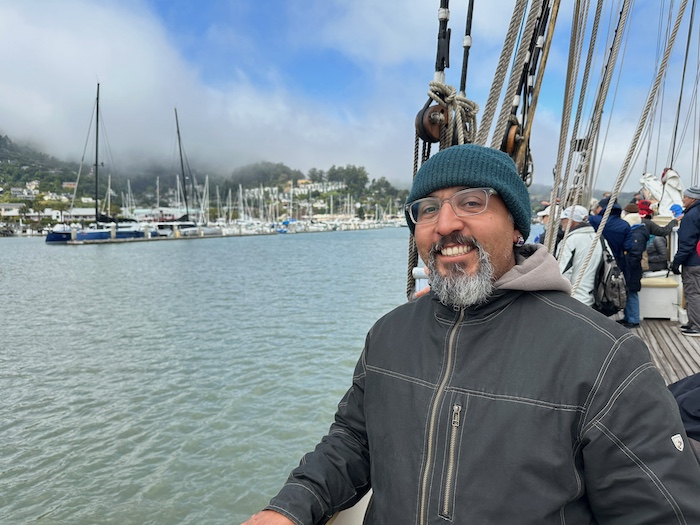
Show Notes
- Reno Cambridge on Sailing Tall Ships & Rebuilding Your Boat, with Host John Arndt
- [0:17] Welcome to Good Jibes with Latitude 38
- [0:41] Welcome to the show, Reno Cambridge!
- [1:41] Reno’s first trip on a sailboat
- [3:55] How long has Reno been sailing?
- [4:26] Where did he get his captain’s license?
- [6:00] What has Reno been sailing as a captain?
- [8:17] Is anyone in Reno’s family into sailing?
- [8:56] How’s the social side of captaincy?
- [11:42] Does Reno find young people to mentor?
- [14:25] Sailing on the Matthew Turner in San Francisco Bay
- [15:24] Find your own copy of Latitude 38 at Latitude38.com
- Rebuilding Your Boat
- [16:12] How long has Reno had his Cape George 36?
- [19:55] Has Reno been sailing on it for all 5 years?
- [21:04] Where does Reno live?
- [22:47] Sharing stories with the Ancient Mariners
- [25:47] Some heritage on the Cape George 36
- [29:20] What are Reno’s world sailing aspirations?
- [31:52] How Reno would get to Tunis, Tunisia?
- [33:54] What’s the culture like in the tall ship community?
- [37:55] How much time is spent in underway offshore jobs?
- [40:44] When will Reno take sail on his boat?
- [42:34] Any unique equipment on the boat?
- [44:58] How Reno standardizes his rebuild
- [45:31] Are you thinking of sailing to Mexico or across the Pacific? Latitude 38 has a resource page called “Heading South” & the “First Timer’s Guide” to help you prepare
- Short Tacks
- [46:16] Is there any other boat Reno is interested in?
- [47:32] Has Reno done any racing?
- [49:15] Longest sailing passage?
- [50:29] Reno’s dream destination
- [52:04] The scariest thing that’s happened on the water?
- [54:51] Reno’s favorite book: Endurance by Alfred Lansing
- [57:28] The Weekend Sailor
- [59:02] Reno’s last thoughts
- [59:42] Join Reno for Maritime Day 2025 on August 2nd at Galilee Harbor
- Make sure to follow Good Jibes with Latitude 38 on your favorite podcast spot and leave us a 5-star review on Apple Podcasts
- Check out the July 2025 issue of Latitude 38 Sailing Magazine
- Theme Song: “Pineapple Dream” by Solxis.
Transcript:
Please note: this transcript is not 100% accurate.
00:02
Sailing in front of me. You see like San Francisco was meant to be seen from the waterfront. It’s such a beautiful waterfront.
00:14
So welcome back aboard everyone. This is John Arndt, publisher of Latitude 38 and host of today’s episode of Good Jibes. It’s a podcast to help you connect, experience, learn, and have some fun with West Coast sailors wherever they are in the world. And it’s all brought to you by Latitude 38, the sailing magazine for West Coast sailors since 1977.
00:38
So today we have a guest who I just met while out on the bay, Shapiro “Reno” Cambridge and Reno, great to have you aboard. Thank you very much, John. I’m excited to participate today. And yeah, man, share some stories. Let’s have some fun. Sounds like you got a few. Reno and I met while we were aboard the Matthew Turner on a foggy Wednesday morning when the Coast Guard bark, the eagle came in under the gate to visit San Francisco for a few days. And it was.
01:06
Really great to see the eagle out there, the Matthew Turner, but also to meet Reno and hear a little bit of his sailing life, which is quite a few years on tall ships, so working in the marine industry, but also he’s living aboard and rebuilding his Cape George 36, which is right here in Sausalito. So that’s a pretty cool tale in itself. So anyway, before we kick off any more of your story there, I just wanted to hear like one story that got you hooked or that…
01:35
sort of stands out in your sailing life? You know, I didn’t have a whole lot of experience sailing growing up. But once I, you know, I still vividly remember my first trip on a sailboat and I think I got hooked right away. I was one of those very fortunate few that I knew right away when I was aboard, like, wow, you know, this is something I want to do. I was visiting Boston at the time and I had a free pass to go aboard the Schooner Liberty Clipper.
02:03
And I was reading in the pamphlet it had on there, like, learn how to tack, fire a cannon. And it was just all these things I kind of heard growing up in San Francisco with our maritime history. I heard some stuff about it. I’d never been aboard a sailboat. So as any excited tourist went aboard and showed the pamphlet, I was like, I heard I can learn how to tackle a boat. And I’m down to try it. And they kind of chuckled, told me to change into a t-shirt.
02:34
Uh, you know, get ready to haul in on some sales and, uh, the Liberty Clippers, 125 foot schooner. Uh, so it was by far not a small boat, but, uh, I learned how to tack. And I just remember looking over the bow and just seeing, uh, the water split around the bow. And, uh, as soon as the engines turned off, you know, just to really just be under sail power, it hooked me. And, uh, within a month I was on there as a, as an employee.
03:01
Four years later, I was leaving there and I had a small sense of like, this is something I want to keep doing. And I’ve been very fortunate enough to keep sailing in my life, you know, off and on at times. But, you know, as of today, it’s my career. I’m very fortunate to call it that. Yeah. Wow. That’s pretty, that moment when an engine gets shut off and you’re moving under sail alone, that’s a lot of things people, many people remember that moment. I mean, every day when they go sailing, it’s that,
03:31
That really hit you. Yeah. Vessel that size, just by the wind, it’s just amazing how much power is in the water and in the wind. Yeah, it was very impacting and it didn’t take me long to realize this is cool and something I want to do more. It was instant. How many years you’ve been doing it? I know it’s funny. I’ve been doing this math, but yeah.
03:58
20 years coming up on 20 years. It’s just started out with going to go see a baseball game in Boston. And now after all this time to be able to be at the helm, I started out as a green deckhand, a sail handling. And now I’m a captain on a a scooter here in San Francisco. And it’s just a great community. And man, it’s just such a whirlwind to kind of reflect back. And 20 years, it’s been a while. Yeah.
04:27
Where did you get your captain’s license? So actually, so I had my seat time from my time out East. And when I got back, I started working on free to be a moonlighting on weekends. And then I went to modern sailing and took the course just to kind of get a, you know, understanding of what the course was. I took the test and was able to, as I was told, you know, the captain’s license gets you a seat at the table. It doesn’t teach you everything, but.
04:52
Yeah, just seat at the table so that you have an opportunity to learn more and keep growing in that in that role. Yeah. Wow. And so how long before that you were a decan mostly working the East Coast on boats? yes. I spent six years on the East Coast. I went up to Lake Michigan. I did a little bit of work up in Traverse Bay. I was down in the Keys. I love the key warm water sailing. I should have been the hook, right? was warm water sailing to be able to sail in shorts and a T-shirt.
05:22
It was super special, yeah, know, it’s just to spend a lot of time out there. I moved back home to be closer to my brothers and my family here in 2015. And I was working at the Maritime Museum as a historic shipwrecker. Yeah, so I did a few seasons there and on weekends I would come up to Sausalito and sail Friday night, Saturday night and Sunday mornings on free to be. And realized, you know, it’s a lot better to…
05:51
sail them than it is to only restore them. it was, it was a smooth transition for me to come up and be at the wheel here. Yeah. Yeah. So you were deck handing out there and then got your captain’s license out here. And what have you, what have you been sailing as a, as a captain? What, kind of boats you’ve been doing is that? So, so again, you know, I’ve been working a lot on the traditional, uh, or the tall ships. Um, so I’ve been driving free to be, uh, for the last three and a half years. Um, I drive a, um,
06:20
Grand Banks 32 called Simba. She’s a, she’s an old charter boat here in San Francisco. So I’ve been driving her a little longer than Frida be. Um, and then in the past year I started helping out on a Frida over the Spalding Marine Center. So, uh, we’re getting her ramped up to, run some charters on her, little six pack. Uh, so I sailed that and, um, any opportunity I get, I was very fortunate to go out on a black witch, which is a friendship suit, um, a gaff, you know, gaff rig.
06:49
master mariners anytime. Yeah, it’s, still have the passion. I’d say after all these years, I’m still passionate, get on out and new boats are always fun. But you know, again, going from tall ships to now my Cape George, you know, I had to learn how to use a winch. You know, I didn’t know how to get I mean, really? Yeah, I never worked on a boat that had winches before. So it’s been a it’s, you know, I’m still learning. I’m still learning, still growing.
07:16
But I help out on Seaward from time to time. I’ve captained Seaward a few times, the Stacell schooner. And then when Turner was being built, it was such a cool thing to see over the few years of seeing Turner really go from just being like just the stem and ribs and knees to really getting planked over. I was fortunate to be able to put in a little time helping out with the rig.
07:42
And then, you know, when they were in the water, I was able to give a hand and help out with getting their certificate of inspection and get their COI documentation done. And it’s just such a cool thing to be able to see that growth and to be here close to home with my family and like just being able to participate in the community like this. It’s such a cool thing. And I wish I knew about it earlier growing up, you know, I would have been way more involved, know, better late than never.
08:08
Yeah, yeah. Well, sounds like you got plenty of time making up for lost time there. And have you taken your family sailing a bit? Have any of them got into sailing? So out of, there’s four brothers and they all get really bad seasick. Oh, you’re kidding. Oh yeah. For some reason, I was the only one to not get seasick. And I guess that was a telltale early on. yeah, I get some of my family come on out. I get my nephews. My brother will come out on free to be.
08:36
I’m excited to have my boat up and running. I’m aiming for September. So you know, it’s that choice time of the year for the San Francisco Bay. I’m hoping to get my family out of my boat soon. It’s an out for some calm sailing. What about it? know, being a captain on these boats, guess the other thing is you’re also the leader of a bunch of guests. You got your crew, but you’re also hosting a lot of people. What’s it like taking tourists or business groups or how’s the social side of the job?
09:05
Well, you know, that’s a great question. think, you know, going from being a deckhand and talking with guests and being a little bit more face to face and then rotating to behind the wheel where, you know, the responsibility is a big thing on my shoulders. I do feel, you know, it is my responsibility at the wheel. Safety is paramount. That’s my first priority. And right after that is their enjoyment.
09:34
You know, I want everybody to feel comfortable aboard and and it’s good. I think it helps temper me on not wanting just to barrel out the gate. I want to make sure the ride is stable and enjoyable for for all of our guests. But I think, you know, to be able to bring back people who maybe have never been on a sailboat or may have never been on a tall ship, to bring them back to the wheel or or just share a little bits of the day, having them take a picture back at the wheel. It’s such a cool thing.
10:02
It’s something special, especially like the youth to be able to have a young kid come on back and you know, occasionally if the conditions are good, they’ll pull us through a tack, you know, and to see the kids light up is pretty awesome. I also do a lot of memorial services. So on the opposite end of the spectrum to be able to take out people out for such a significant ceremony, to spend some time with them to, you know.
10:28
that was not in the brochure for becoming a captain is to help people out with, you know, remains for other loved ones. But it’s such a special thing I get to do. And it’s definitely been one of the more impactful opportunities for me to help and to share my profession and to take people out and bring them back safe and just provide a safe place that they can have their ceremony for their loved one. I think it’s such a cool thing to do.
10:54
Yeah, yeah, that’s I hadn’t thought about that. But of course, do not been out there with a couple of those and certainly the spectrum of bringing and seeing bright young kids coming out there and then people at the end of life and probably celebrations in between. Now, the spectrum of of the life aboard the water. So that must be a lot of great moments with all those various people young, young to old and deceased. Yeah.
11:20
Yeah, it’s a special thing. You know, I wish I knew about this when when I was going to my high school, there was no sailing team. Didn’t have a whole lot of access to the water growing up. But thinking back at it, if I knew that this was an opportunity, I would have took it on a lot earlier. I just such a special thing to be able to do. Yeah. Do you go out and actually talk to schools or others that, you know, in the Bay Area for all of us who do have access to the Bay and know what it’s all about and love it? You know, we’re always sitting here.
11:50
thinking how many people don’t know how to get to the bay. It sits right in the middle. And there are so many great programs, Cal Sailing Club, Blue Water Sailing, Pegasus Sailing, Matthew Turner and the Coliseum that are dedicated to getting youth out. But for some reason, always seems like there’s an enormous, like very few get the opportunity you had really to stay in it. I don’t know, are you finding young people to come in behind you or?
12:16
You know, speaking of like, you know, programs that Matthew Turner does, I think it’s really great. I haven’t youth come on out and put hands on lines and there are a lot of to get people exposure to these traditional boats. It’s a super cool thing that they’re doing. I have a lot of respect for, you know, for Allen and their program over there, Call of the Sea, to really encourage you to get involved.
12:41
You know, I’ve reached out some Native youth groups, you know, growing up here as a Native American in the city. I’ve had, you know, opportunity to go to our community centers and have some support that way. And so, you know, I talk with some of the youth programs and encourage them to try to come on out. I think the maritime workforce, the lifestyle of it is great. You know, it gives you an opportunity to work all around the world.
13:09
You know, I think I here in the San Francisco Bay, we’re we’re very fortunate to have like Cal Maritime so close by that if people aren’t interested in going to the traditional routes of the education, there’s still some programs that they could take to really grow and give themselves some career opportunities down the line. I know from myself working in the maritime industry and working with the Coast Guard, you know, the way that the Coast Guard wants us to work as maritime workers, I think it’s a good lifestyle.
13:37
I think it helps reinforce clean lifestyle, clean living. And I think that’s something that we shouldn’t encourage. I think it’s a good thing. And so I always, I do promote it and I do try to get our youth groups out to be on the water. Cause I think we can learn a lot by being in the elements more. And I think being on the water is such a good thing for the heart and for the soul. Yeah. Well, I mean, that’s why was looking forward to talking to you more. had a great chat with you on
14:06
on the Matthew Turner and I can see that, you know, just smile and enjoyment of being just on the water. You’ve been on it a lot and there we were in a kind of cool foggy gray day. But nonetheless, it was just awesome to be out there versus, you know, where we might be on land, wherever that might be, you know, so that was it was cool. And how many people there are probably 40, 60 people on the boat? I mean, was a early morning, but it didn’t seem for anybody mind it be too much being out there as a it’s a special, you know.
14:35
I think anytime we’re on the water, especially on a vessel like the Turner, it’s just such a good place to find yourself. And San Francisco Bay early in the morning. It’s like walking around San Francisco early in the morning. It’s just quiet. It’s a super peaceful, serene place. a couple hours later, it won’t be, but for those few moments, I think it’s always really special. Yeah, no, that’s right. And to see the eagle. seeing the eagle come in.
15:04
We’re in an iconic place. You know, you get the eagle coming in and out of the fog underneath the Golden Gate Bridge. Yeah, it was special. So it was nice to be out there and be with like-minded folks to enjoy that. Yeah, yeah. No, obviously there’s ton of people that appreciate the boat and the bay and the sailing life. And that’s also great. You may be asking, how can I find my own copy of Latitude 38 magazine? Well, it can be as simple as walking into your Marina, a Marine store, club or any California waterfront business.
15:34
You’ll likely connect with sailors when you walk in the door, and you’ll also find many more sailors as you read through the pages of Latitude 38. Bringing home a copy of Latitude 38 is also a great way to redecorate your coffee table, and reading one will help you unwind from the distractions of the day. It’s almost as good as a day of sailing itself. To find a copy of Latitude 38 near you, go to latitude38.com and click on Find the Magazine at the top of the page. Then go out.
16:03
and meet some sailors.
16:06
So how long have you had your Cape George 36? Is that your first boat? It is my first boat. I moved home in 2015 back to San Francisco and I started looking at boats right away. I had a very specific style in mind that I wanted. I actually wanted a gaffery cutter. I felt that it gave me some flexibility with my sail plan and that’s what I really was looking at. But it was hard to find.
16:36
I got my Cape George 2020. It was kind of the COVID time. had a lot of time on my hands, like a lot of people did. I felt it was time. No work, so time to try to buy a boat, right? Yeah. Who knew what was going to happen? So I felt it was a good time to buy a boat. The Cape George, it was super weird on how it came to me.
17:03
I was looking at boats for, like I said, for quite a few years and it popped up on Craigslist as like an auction due to some, an issue with the previous owner, or with the previous owner selling it to someone that fell through. They just wanted to recoup some of the money. And so it came up and I was like, no way that this boat is available. You know what they’re asking. I went to check it out and seeing the project that lied ahead. I was like, all right, I understand why they’re asking that much, but.
17:32
You know, I bought it from the original owners. I know it does happen a lot with boats is that the original owner, you know, they love the boat. Unfortunately, due to health concerns, things that happened that was unforeseen, the boats fall by the wayside and unfortunately, you know, get some damage and the wear and tear of just sitting. And that’s what happened with this boat. Unfortunately, they had some health issues. The boat sat for about six years and.
17:59
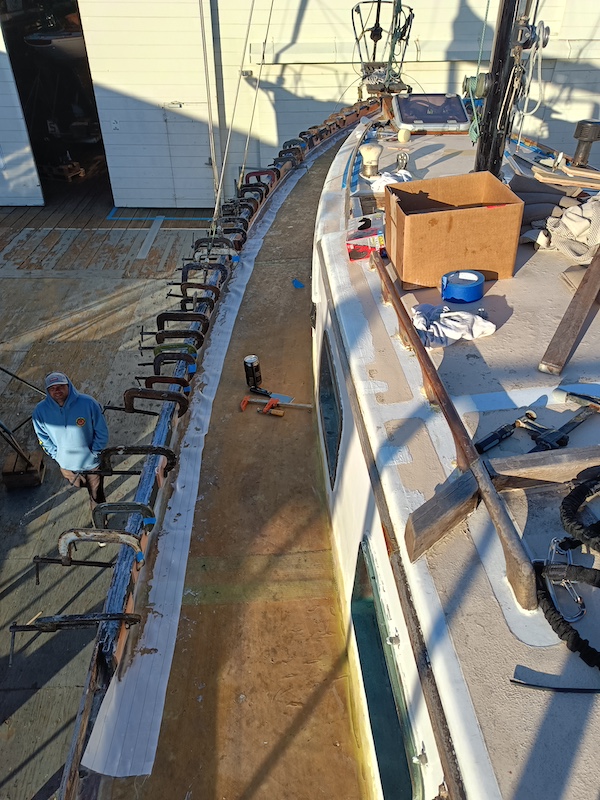
There is a design flaw with the Cape Georges of that era with the bulwarks and water getting to the end grain of the deck. And unfortunately, the deck didn’t need a refit, didn’t need a rebuild. And so I learned that pretty quick after I got it. I bought the boat in 2020. It was my first boat. And it had the pedigree of what I was looking for as far as the hull design.
18:25
The sales were in good shape. Like there was a lot of little things that made sense to buy that boat. And, you know, of course, you know, first time buyer, was just like, Oh, I could do that. I could do that. I have to say that in the five years since I’ve learned a lot, I’m, I still say I’m still in the honeymoon phase that I still enjoy the work. And, you know, it’s, you know, I’m still learning on it. I’m learning, you know, I doing the redoing the deck. was funny because I had to take out some of the,
18:55
the patches that I did earlier in my learning curve. And it was funny to see what three, four years of working with West Systems and working with all of these materials to kind of see how I grown and my skill set has grown. And yeah, no, I still passionate about it. Yeah, hang on to that honeymoon as long as you can. As long as you can,
19:19
What they say is that the best days of the day you buy it the day you sell it and I’m trying to beat that. Whereas I know I’m I’m thoroughly enjoying living on it. It’s not always the easiest to live on it and rebuild it. But you know making it work. Yeah, yeah. Well, you know, we’ll you sent me some great pictures of the boat. Obviously people can’t see it right now, but we’ll post them with this with this podcast because the boats really looking beautiful. Obviously you dug in deep there and have done a lot and she’s looking beautiful. So
19:50
Have you had her set? You’ve been sailing on her though. You haven’t been just working on her for five years. No, no, no, no. I kind of at the beginning I did the let’s let’s get it stable and then let’s get it out sailing and see what we got. But I learned real quickly that, you know, her boards were dry because she had a wooden deck. Yeah, boards were dry and anytime I put a rail in water just seeped into the boat. And so I had to shut her down. I sailed around for about a year with her and
20:20
Yeah, I had to shut it down and take care of the deck. And once I started that, then it was the famous words of, while we’re here, let’s fix this. And that’s what kind of kickstarted it all. But yeah, I know. I’m really happy. I had a survey done last year for my insurance and everything. And the surveyor, he pointed out a lot of my patches and a lot of the work that I’ve done.
20:47
It felt really good to know that I’m going in the right direction and I’m feeling more and more confident and comfortable with the boat. I’m excited. I have September as my, my, my sail date. So I’m excited. I’m getting close and I’m ready to get out out there and have some fun. Yeah. Great. Great. Where, where are you living aboard and keeping the boat? Where’s home? So I’m at Galilee Harbor. I moved up here, uh, 2021, 2022.
21:15
Uh, I was over at a Bayside shipyard and one of my neighbors, uh, was out of town on, doing some cruising down in Mexico and offered me, to kind of guess, you know, uh, take over their slip for a little bit. I got to meet the members, uh, got to meet the neighbors and there was an opening in the Marina and they offer, you know, they offered me to stay and to apply. So I’ve been a member now, um, over three years now. Yeah. But yeah, I really do like Galilee and.
21:44
We have a really unique community of artists and mariners and it’s a great place to be. Being able to walk to work in the morning is such a special treat to be able to walk along the waterfront at Sausalito. Just overall, Sausalito is such a cool town. Again, I had very little exposure to it growing up in San Francisco, but now that I’ve been up here, I just see how unique of a place it is. Yeah, it’s just a wealth of knowledge and it’s an awesome place to be able to call home.
22:13
Yeah, yeah, no, think Gallo Harbour is one of those unique little corners that’s got a really tight community, got a lot of history and heritage. I don’t know what I guess maybe explain what’s a little unique about it, because it’s really a throwback to a different kind of San Francisco waterfront that existed years ago. mean, I don’t know. I mean, in my few years of being there, I’ve been learning a lot from our community. have a community of some salty
22:41
As they call themselves there, the ancient mariners, you know, I got some neighbors who have sailed around some really cool places and they have some miles on them and, you know, share stories with the beverage in a hand. It’s great to hear them and sometimes read here, but you know, they’ve been there for the 30 years. You know, they’ve been there since the beginning, the creation of Galilee and they have the memories of being out on the the on the hook.
23:09
in Richardson Bay and then the opportunity to create Galilee, to create the charter for it and really to have that growth of just people wanting to have stable housing on the waterfront and not have to give up their boats to do it. Yeah. You know, it’s really cool to actually have a few of those members still there and they share their knowledge. And so for us that are recently moved in,
23:39
It’s on us to kind of keep up that spirit of participating with the community, making sure we’re participating in Sausalitos Charter and keep that community growing. You know, there’s a couple of spots like us along the Sausalito waterfront. We’re a quirky way. don’t, and we have some very interesting design boats, all in different phases of their, yeah.
24:07
What’s a good way to put that one? All in different phases of their build. But, you know, it’s such a cool thing to do. I really do love being there and being able to be fortunate to live on my boat in Sausalito and be able to afford it. You know, it’s not a cheap place. Yeah, yeah. No, it’s a great corner of Sausalito. There’s a Sausalito Cruising Club right there, Sausalito Community Boating. So it’s really got a lot of, you know,
24:33
In relative, I mean, it is expensive place to live, that’s, are relatively inexpensive access points to the Bay. of that. Yeah. And I think that’s one thing that really speaks for Sausalito is to create a place that there’s opportunity to have access to the water. Um, you know, San Francisco, was a, you know, it has its challenges with that, but you know, to come up to Sausalito and seeing that there’s a continued effort to make sure, uh, people have access to, the waterfront. Cause it’s.
25:02
such a important part of the Bay. know, growing up, I never really saw San Francisco from the waterfront except for Alcatraz, you know, going to Alcatraz, but you know, actually now sailing in front of you, you see like San Francisco was meant to be seen from the waterfront. It’s such a beautiful waterfront and like, you know, coming in from the bridge and sailing around, it’s just such a beautiful place. And so it’s nice to be able to have that, encourage that access. Yeah, yeah. And of course I, yeah, been doing the same for 35 or
25:32
more years out here and look up at Friday night race at the fog pouring over the Marin headlands. And it’s just endlessly fascinating, beautiful, a great way to end every week in the Friday night out there. I just want to a little more heritage on your boat. Cape George 36, this woman Kirsten, I don’t know if I say her name right, New Shafer? Yes. Who won the Golden Globe on the race. Pretty incredible story. Her own story is pretty amazing.
26:01
but it’s also a Port Townsend built boat. Maybe tell us a little bit more about the boat. Yeah. So the Cape Georges, they’re built up in Port Townsend, Cape Georges Marine Works, which is still active yard up there. They have a couple of designs and I should have, I should have wrote this one down, but I think they do the Cape Doria as well. But they started out with like the 28s. The 36 is by far one of their ones that they have the better pedigree on. There’s some 42s, there’s some larger boats.
26:29
but they were heavy duty built. So they’re built on the lines of a race boat from the East coast. so their Cecil Lang is the maker of it. And I’ll have to think about who was the original design, but Cecil Lang, he ended up starting up in Port Townsend. Heavy duty fiberglass, some parts of my boat are three quarter inch thick. You know, it was the early seventies, know, so my whole was laid up in 74.
26:57
And it’s the same mold that Kirsten’s Cape George was laid out of. So heavy duty fiberglass, sturdy, heavy displacement cruiser. Pacific Crystal, my vessel has some good pedigree. The previous owner, the original owner, he bought it. was basically a fiberglass swimming pool. So you could buy the Cape George’s in different stages of their build.
27:23
You could buy a fully built one that was done at the shipyard there. Or you can rent little spaces from the neighbors and really get your boat delivered to that spot. Finish the build there and then they’ll transport you and splash you and send you on your way. And that’s how the Pacific Crystal came around. The original owner, he bought the hull and it had the bulkheads and the hull laid up.
27:52
But really all the other interior he built to his design. And he was a deep sea diver. So he has all these compartments meant for his air compressor and his air tanks. Oh, nice. And so that was kind of interesting. I’m trying to track like, is, why is this compartment here? You know, it’s like, uh, but realizing like that’s what he built it for himself to, to go and do some diving and, uh, he put some miles on it, went down to the South Pacific and yeah, he, did some, some good.
28:21
good cruising around with it. when I saw the boat, started doing my research and there was a couple of stories of, you know, incidents that happened with the Cape George holes falling off the back of a truck underway. And, know, it basically accordion the bow, but no significant damage to the, to the boat itself. They were able to do a repair and get them fixed up. But due to the heavy build of the vessel of the hole in the keel that
28:51
Yeah, it’s a sturdy boat. And stuff the pavement. Yeah, yeah, exactly. And, you know, for the San Francisco Bay, you know, I wanted something that was 30. And with my aspirations going forward, I want to make sure I’m buying the boat for where I want to go and what I want to do with it. I don’t want to do it twice. So I figured, let me get the boat I want down the line and let me start with that. You know? Yeah, that’s what that’s what kicked it all up.
29:19
Yeah, well, you know, that was one of things I was going to ask you. It’s a sturdy boat. They can go around the world as Kirsten showed. What are your aspirations? You got some dreams of heading out there? Yes. You know, I didn’t have, you know, I actually follow along with what Kirsten did with her boat. And I’m glad to say that I started my build a little bit before she did. And we but we addressed a lot of the same issues that faced the design from the 70s.
29:48
In the early 80s, Cape George Marine Works started to shift their design slightly to fix the issues they were having with their deck from the 70s build. but, again, by that time they knew how strong fiberglass was. There were slight changes to the hull in those layups. But for Kirsten, for her, you know, her her path, she’s built a boat in a way to go around the world single handed.
30:17
I had a similar line in mind as far as how I was going to build the boat. I wanted to reinforce the design, fix what was wrong with it, and get it ready to go cruising. The Pacific, it’s challenging. With a lot of my sail experience on the Atlantic coast, I could see very quickly the difference in, yeah, it’s powerful. The Pacific is powerful.
30:45
So I’m building the boat to be able to cruise around. in my dream, mine is Mediterranean. Oh yeah? Yeah, I’ve always wanted to go to Tunis. Tunisia, I hear you can smell the spice markets before you can see the lights. And I heard that when I was young, and for some reason, it just always stood out to me. And then last year, I was out in Sardinia, and I got to see the Mediterranean water. It was just absolutely beautiful.
31:13
chartered a catamaran out there and just had a blast. But I was like, I want to bring my boat. I want to take my boat there and not have to give the boat back. I want to keep it. Yeah. We’ve written a lot with Andrew Vick on his Islander 36. He teaches at Modern actually, but he went there 15 summers. But I think his last time was in Tunisia. And I think that was a great trip he had there.
31:40
I don’t know if he’s still teaching it modern or not, but he, he’s had a lot of Mediterranean trips over the years, uh, on his Island or 36, but how would you get there? Would you go a West about or East about Panama Canal and up the East coast with Med or, the, you I have a lot of familiarity with the, with the golf. And I think going through the canal, uh, would allow me to get out to, you know, BBI and, and go down to, uh, see some, friends here are still down there from my, my early days of sailing. So.
32:09
It’d be nice to track down, you know, trace my old footsteps. did you do the whole Caribbean chain, West Indies chain while you were working in the East Coast? No, no, no. had, I was out like NASA, Freeport. I was a little farther up north, but I spent a lot of time in the Keys and I, again, just super beautiful, warm water sailing, you know, just it was, it was, yeah. How does it not hook you, right? yeah, know, it’d be nice go through there again.
32:37
As much as I love San Francisco and love being home, it would be nice to be in warm water again. Yep. Yep. Don’t swim in Galilee Harbor too often. Not me. Not me. Yeah. Yeah. Yeah. No spice. Are you a cook too? Is that what’s attracting you to tune is? Yeah. I do love cooking. It’s been fun to learn how to adapt to being on a boat as far as my cooking, but no, I do love it. I think it’s definitely one of my favorite expressions of culture.
33:07
is through food. It’s just one of those things that I’m not the greatest of linguists. So don’t learn languages as fast as I would like, but I think food is definitely the universal, it’s the universal equalizer as far as culture goes. You appreciate people’s food, they have a little soft spot for you. agree. Food brings people together for sure. It’s a great way to…
33:37
Breaking bread is a good thing to do together. Yeah, exactly. Wow. Fantastic. What about just working tall ships? mean, and yeah, you’ve worked at the Marine Museum and then worked on ships themselves. I don’t know what’s that community, of course, is very different from the pro sailing people who are maybe racing this week to Hawaii on a pro boat, know, carbon and Kevlar and all the other modern materials.
34:03
I don’t know if you’ve done any of that or if, you know, what’s the tall ship community like and what’s the draw to that? You know, the tall ship community, it was a great place to learn how to sail. I think a lot of those boats, especially on the East Coast, they don’t have the pay to like really bring in the top professional sailors, but it is an opportunity to learn. It’s an opportunity to grow in the sailing community. And, you know, the traditional aspect of it.
34:31
To go back, I love traditional, the fancy work, the Marlin Spike seamanship, to see how sailing is now kind of going back to it. A lot of using Delrin, using the Dead Eyes and using lanyards, starting to go back into with the Dyneema. Dyneema has just kind of changed a lot of the rigging of sailboats that are now going back to kind of a traditional style of rigging.
35:01
You know, it’s pretty cool to see that for the maritime, for the tall ship community. You know, it’s quirky. You’re going to get people from all over who come on out because of the romanticizing of the tall ship. But when you’re there, you know, it’s a, they’re big vessels, a lot of crew, lot of crew. And so I think anytime you put, you know, 10, 15 people together on a, on a boat.
35:29
You know, you’re pushing them to learn different habits, to work with each other. I think out of all of my life, going back to, you know, my younger days in school, some of my closest friendships are those I’ve sailed with on tall ships, because you’re dependent upon multiple people to get down those jibs or, you know, get down the headsails in all different types of weather and conditions. I think the bonds that grow in those moments underway
35:59
There’s just so special and it’s something that, you know, and it’s not for everybody. I’ve definitely been aboard boats and we’d have crew come on in and they were super excited. But when they realized it’s not a whole lot of pay, it’s a lot of work. If it’s not a passion of yours, it is sometimes it just doesn’t check all the boxes that people want to do as a job. And that’s understandable. But, you know, for the group of us that really took to it.
36:28
those bonds, those relationships, they definitely do supersede some of the rougher times together. But you know, I think for anybody to able to be on the water for a significant amount of time, what you see while you’re underway is some of the most magical things you can imagine. And to be able to do it with a group of folk, night watches, dog watches at 4 a.m. to 8 a.m. watch, you know, it’s tough.
36:56
but it’s also some of most beautiful sunrises you could ever see. It’s just really special. I think, you know, the exposure to it, I think it really bonds folk. And I think that’s what people stay with it. You see the Turner crew, or you see the Seaward crew, or even the Free to Be crew. We hang out together, we barbecue together.
37:18
is a unifying quirkiness to be able to do that job and go aloft and do all that stuff together that is really special. I love it. I still love it. I don’t have the, getting a little older, so it’s not so easy to go up the rigging and to do what some of us do, but it’s still a passion for me. so it’s still a special to go on those boats and see what they’re doing. Yeah. Yeah. No, it looks great. How much of your time is spent on sort of been overnight?
37:46
stuff versus day charter stuff. mean, are you taking, have you been on trips where you’re taking people out for a week or three days or what? What’s, what’s the, yeah, there was a, there was a time, uh, before my career that I did do like wind jammers and we’d go out for a week. Yeah. We’d have some passengers going on out when I first started out, when we did our transiting, cause we would summer in Boston and then winter down in the key in Key West. Yeah. Cool. And we would have passengers aboard and, uh, on the way down, you know, we’d go through New York. had.
38:15
Block Island Sound, Log Island Sound, down the East River, go through New York City. But we would do the Chesapeake Bay Schooner Race, so we got to go to Baltimore and Norfolk. And then we would sail around Florida down to Key West, and we’d have passengers along the way. And you know, that was unique. It was great to kind of see folk coming on out. Trying to figure out a nice way to say it. Yeah, no, it was a great way to see people come on out and.
38:43
You know, they saw the flyers and the pamphlets and the magazines. But then they get out there and, you know, it’s not for everybody to be out there. You know, it’s not for everybody to be out at sea, but it was definitely awesome to be underway for a week or 10 days at a time. As much as I love day sailing to be able to go home or get off the boat in the evening, to be underway for those long stretches, it’s special. You know, I remember my first morning
39:13
underway offshore that I didn’t see any lights off the cities. was sitting there just eating my meal, looking out. It just felt like a little Styrofoam cup bobbing out on the water. It was definitely one of the more meaningful moments that I had in my life at that time. Yeah. That’s pretty amazing. basically had a lot of those kinds of experiences growing up and have had.
39:39
But it’s still just an amazing thing. Still, after all these years to be out there and have a sunrise, sunset across the ocean. you know, like I think of the Transpac racers, which are out there now, you you start in a crowded starting line with Los Angeles right there. And 24 hours later, you know, you probably don’t see any boats until you land in Hawaii. You’re all of sudden alone in this big ocean, despite the fact that you have neighbors really not too far away, but they all disappear into the ocean.
40:09
It’s so vast and so quickly. You so you don’t often run into people out there. Yeah, that sounds great. mean, think I mean amazing to take it from where were you in in Florida to a baseball game in Boston and then suddenly you’re on a tall ship and you’re invited to go get a career. Now you got your own boat in Galilee Harbor. Pretty cool. I think it’s a it’s a it’s a great path and then so kind of what your time frame you’re going to try and sail September the boat and have it.
40:39
done done and then any timeframe on taking off out the gate? I’ve been on enough boats to kind of know you don’t rush. You don’t rush. I want to be prudent with it. I really have gone over everything on this boat. We repowered. I’ve redone all of my electrical system. I think my first year or two will be just testing out my systems.
41:05
seeing how much electricity I draw, how much water I use. I think this year will definitely be in the Bay. Next year, I want to stretch out and start doing Santa Cruz. know, growing up, I remember Friday night down at Santa Cruz and seeing the boats out there on the water with the live music going on during the summertime. Something I said I wanted to do. And then just a few weeks ago, my partner and I, went down to SLO and saw, went to Morro Bay. Oh, yeah.
41:35
And seeing that as like, that’s the checkpoint before you go around conception. you know, it’s just being able to ramp up and be able to get down there and sail around. And it’s just all those boxes I want to check before I start looking further, you know, further away, but over the horizon. Yeah. You know, I think, you know, on a boat that I’m rebuilding, I want to be prudent about it and be safe again, living on it.
42:03
It’s everything to me. You know, it’s not just the sailboat, it’s my home and you know, I want to make sure I’m being prudent in my steps going forward, but always looking forward. I’m still looking forward, I should say, you know, of what’s my next step. Yeah, yeah. Cool. Any unique pieces of equipment you’ve put on or anything that, yeah, it’s kind of, I mean, you’re getting it ready for cruising. I don’t know, water makers, you got, are you doing? So water maker is in line. I’m not there yet.
42:32
Really what I’ve been doing is stabilizing the boat, redid the deck, which that was a fun one. That was a big one, I’m sure. Cutting big holes in my deck to replace. You know, it took me a year. It was almost to the day, a year to redo my decks and, you know, to replace my bulwarks and to really seal up the boat and repair and upgrade what was there.
42:59
But, know, seeing how technology has changed, material has changed in the 50 years since my boat was built, you know, to be able to reinforce it. You know, I learned a lot about like the G10, you know, G10 material, you know, using as backing plates for my, all of my standing rigging, really beefing up the structure of my vessel. You know, it’s been a process. I’ve learned a lot, but I’ve definitely reinforced and strengthened my vessel to definitely put some miles on it.
43:29
Yeah, I think a lot of cruisers would really envy that because once you do all that work before you go cruising, you know your boat. know, so many people are stuck out on an island somewhere and you know, if they just bought the boat, they don’t necessarily know where the valve is or where the wiring runs or you know, the little problems are much more elusive if you didn’t build it yourself. Oh man, I have my boat Bible. I’ve drawn out all my electrical.
43:53
done redundancy in all my electrical. So I have, you know, isolated separate sides of the boat. So if, I have a short anywhere, or if I need to shut down a system, I still have lighting from the opposite side of the boat. I built all of my boat with Phillips head, no, no slotted screws. I down all the slotted screws. Wow. You know, just trying to standardize my build so that I can, I always feel like it’s like a classic car. You should be able to take it apart with a screwdriver and a crescent wrench if you need to. Yeah.
44:23
Because, you know, very seldom, you know, do things go wrong when it’s sunny and nice and smooth, you know, when it gets hairy, you want to be able to, you know, get to your problem with a screwdriver and a flashlight. You don’t want to have to dig too far in. And yeah, you know, I think the way that I’ve probably rebuilt the boat, probably wouldn’t have been the traditional way of the design of it, but I’ve built it in a way that makes sense to me.
44:50
And I think if someone was to look at my drawings that I’ve done, they would be able to see why I did it that way. And, you know, there’s a lot of finished washers. I took out all the bungs. I did all finished washers so that you could see where all my fasteners are and all my interior, you know, just to able to get to stuff. Wow. That sounds solid. Yeah, sounds great.
45:13
Latitude 38 here. Are you thinking of sailing to Mexico or all the way across the Pacific or maybe even further? We just heard from Joanna and Cliff saying, my husband and I subscribe to Latitude 38 and enjoy the Good Jibes podcast regularly. They went on to say they’re headed to Mexico in the fall and will continue across the Pacific to Australia. However, they’re looking to simplify all the choices they need to make to prepare. Of course, there’s tons of resources out there, but
45:41
Latitude 38 does have a page in our website called Heading South. And we also have Latitude 38’s First Timers Guide to Mexico available to read online on the Heading South page or a printed copy that is available to purchase in our online store. There’s a lot to know, but latitude38.com is a good place to start. Maybe you to shift to some short tacks and ask you some quick questions here, get a little more insights into things, but you’ve got a beautiful boat with a
46:10
great pedigree, but if you I hate to ask this when you put so much love into this boat, but is there any other dream boat or boat out there that’s in the world that you I mean a friendship sloop sounded like one for a while, but I think it’s like the first love the gafferig schooner. You know it will always have a place in my heart. I do love them. I’m very fortunate to be at the wheel of free to be and you know there’s a it’s a place in my heart, but understanding you know it takes.
46:39
people to run those boats. I found one that I can manage. Man, I was looking at the yaws. Yaws were always beautiful with that visit mass. But now that I’ve had a boat, think minimal rigging. I don’t need a second mast. But yeah, it’s one of those things. I appreciate a lot of the traditional designs. I think there’s definitely some boats out there who are aesthetically just very pleasing on the eye.
47:06
But for myself that the Gafferick schooner would probably be the one where I’d be like take that on. Yeah Well, you’ll probably there’s some out there always looking for Someone how about racing? I know you’ve done some master mariners races But have you ever been on the other like on the rail on the race boats or is it pretty much been traditional? This past master mariners that was I was welcomed aboard the black which which is a friendship sloop and and
47:34
Stan and Sandy invited me to go aboard and it was the smallest boat I’ve ever raced on. Oh really? sea water coming over the rails and through the scupper. It was like being on my very first race. was so awesome. I had a lot of fun on that. Well lot of my racing experiences on schooners. I did the Gloucester Bay schooner race up in Gloucester, Massachusetts. The Wreckers race down in Key West.
48:00
the Great Chesapeake Schooner Race out in Baltimore in the Chesapeake Bay. I raced a lot of the tall ships and those, mean, just absolutely, absolutely a blast. Some of the most ruckus would happen when you have, you know, 10 of those tall ships in the same community for a couple of days. I had some fun stories. Yeah. Yeah. Some fun stories from that time. But a lot of my races on the big boats, I’m looking forward to having my boat out.
48:28
I know the ferrelon race, the single hand and double hand. I want to get into that. I think that’s on my peripheral of where I’m building my boat for and to be able to sail out and back in under the Golden Gate Bridge and to get out to ferrelons and get some open water feelings. Yeah, I’m excited for that. yeah, no, those are two great events. And yeah, we’re lucky to have the bay to sail around on, but just poke your nose into the ocean. There’s a whole lot right there. Yeah, no, that’s great.
48:58
How about longest sailing passage? So the longest trip I could say would be NASA to Boston. But you know, I did do some deliveries on the East Coast and so it’d be Boston down to Key West. And I think the NASA we were out, we got, we went out deep to get around a little tropical depression and we were out 17 days. So we went from NASA, we to Freeport and shot out and ended up coming into Atlantic City.
49:28
and we just had to stay out to get around the storm. you know, it was funny. I never got seasick, but man, I sure got land sick. Like after after being out underway for that long. Oh, really? I got to shore and it’s for about three days. I couldn’t sit still. I was rocking in my stool or in my seat wherever I was. My equilibrium was a shot. It took a couple of nights out and about with the crew to kind of.
49:55
shock my equilibrium back into normalcy and just enough time to get back underway to continue up to Boston. To get shaky on your legs again. Yeah. Yeah. No, that is one of the weird feelings is to get comfortable on the ocean and lose the comfort on land. No, that’s funny. A lot of people do experience that. I think I was going to ask you, favorite sailing venue or dream destination, but it sounds like the Mediterranean and Tunis and maybe the rest of the med is your
50:25
The dream place. That’s the dream place. I’m looking forward to sailing around the Bay again. You know, we live in such a iconic place to be able to sail around it. You know, as much as everybody talks about the Central Bay, we have tons of waterways up the Delta. Yeah. You know, just being able to sail up the, you know, up the channel and get in some of the slows and cruise the Delta. Have you done that? Yeah. So I went with a couple of us, a couple of my crew.
50:54
at the Maritime Center. We took a little buddy boats and shot up the Delta and sailed up for a day and man, it just keeps going. we know we dropped the hook and one of the little slows and, and, you know, rafted up next to each other and had some dinner and some beverages and we had a grand O Tom up there for a long weekend. But man, there’s a lot of water up there. So you know, it’s, it’s one of those things that you know, can’t take
51:22
the Central Bay for granted. There’s a lot of water to explore and have fun up that way. Yeah, yeah. We did a weekend summer sales this weekend. We went up to Benicia overnight and even that’s a simple one-nighter and then we’re talking about Napa, Petaluma and of course, as you say, and we’ve done the Delta, there’s a lot of waterways up there and of course, the focus is the bay itself, but you’re right. There’s a lot more that not enough people get to discover. There’s more around. Yeah.
51:49
How about got big fear in water? What’s what’s been the scariest thing that’s ever happened out there? Oh man, there’s a couple times that I would say like you know things went wrong in the moment. You know the preservation of the boat. It supersedes that that I guess that the the the fear that. Hits you know that can back that that it does hit you know we blew out some sales during some pretty heavy wind on the East Coast and you know.
52:20
Not huge waves, but on Atlantic coast, eight foot waves are, they look a lot bigger than just eight foot, but we were out there and we were dunking the bowsprit. An old friend of mine, we went out and we were having to get down our head, so one of the jibs blew out and we’re trying to get it down and tied up and water’s creeping up the lake. Every couple of waves, we’ll get dunked a little bit. I remember
52:46
you know, rushing on out there and we got the sale. We’re just, you know, everybody’s just yelling and the wind is howling, sails flapping, flogging around, trying not to get hit in the cross the face with a sheet. Yeah. You know, but we get the sale down and we got some sale ties on it and secured it and got back on deck out of the head rig. And I just remember my buddy and I, just had this moment of just like, you know, it was just, it was just this joy. Like, oh my God, like, you know, we hugged and then we’re like, all right, let’s go back. And we’re like headed back.
53:16
And just at that same time, one of the main boom blew out and we had, we lost about a six foot section of the main boom and it ripped a big tear in our main sole. And so we had to secure that. It was absolutely just a crazy night. We got the sail down, put in a reef. So we were able to secure it and still sail into Charleston. were sailing into Charleston. I just remember after that, you know, we,
53:44
The adrenaline is flowing, you know, so it took a little while to get down. Everybody’s just kind of sleeping in our valleys. We pulled into Charleston and we just had one of the most epic times as a crew together. We went out, got some steaks, got some drinks and afterwards, know, it’s just, you know, that bond that we’re talking about on sailing away, know, sailing with folk and sharing those times, that fear of being out there and losing, you know, losing the grip, going in the water, you know, it’s a real thing.
54:12
Uh, but being able to, manage it and, secure the boat and stay safe. Um, I’m really happy that, you know, my body reacted in that way. And I hope it always does, you know, making sure that to stay safe. But, uh, I guess that would be my big fair is, know, just, um, Lose it, losing that grip. Yeah. Yeah. That’s it. When you get out in dark night and big waves and, and flailing sails, it’s, that’s the trickiest time sometimes. That’s, that’s. Yeah. Wow. Well, um, last question. Just want to ask.
54:42
favorite books or book that inspires you in sailing or what other story is kind of one that stands hands down favorite book that I’ve actually read multiple times Alfred Lansing’s endurance. Ah, cool. You know, I think not all not all trips and in success, but the fact that he was able to manage the challenges that they had, you know, a certain as chocolate into
55:11
to manage the challenges that they faced as a crew, to bring everybody back, to go through the Drake’s Passage in a 20-foot sailboat. mean, you can just name them off on just how many somewhat impossible feats that they accomplished as a group. You just gotta love the ability for a person to manage the emotions, the stress.
55:39
uh, the nerves, all of that and keep his crew together and to bring them all, you know, to safety. I think it’s, one of the most special, special stories, you know, shared. And, uh, out of all of it, I think the fact that when he was at the whaling port, um, and all the whalers came up and shook his hand and, uh, he, he stated, you know, it was the most significant of all the awards or all the ceremonies he, he received was to have other people who know those waters come up and shake his hand and.
56:09
I think it was just, read that book and I still bring up it, it still brings up tears at times just to know what challenges all those men faced and they were able to weather it and then as the book says to endure it and to bring them all to safety, special book. Yeah, yeah, no, that’s an amazing book and an amazing tale. It’s almost impossible believe it’s true. I have a friend of mine that’s…
56:37
That’s, mean, you know, I mean, it’s just so outstanding. And a friend of mine actually just flew down and went to South Georgia Island to go see this old museum for Shackleton down there. he, cause he’s got a great, he’s done a ton of sailing around there, around Cape Horn and stuff too. And just has a lot of reverence for that story, which of course a lot of sailors do it is it’s an amazing book. So yeah, that’s, that’s a powerful one and inspires you.
57:04
That one and then I don’t know if you have seen the weekend sailor movie. It’s actually on YouTube, but it’s about the 1976 Whitbread round the world yacht race, the very first one. Oh yeah. And it’s about Mr. Carlene with the Soyula 2. Yep. of them them sailing. I think the weekend sailor and it’s on YouTube. It’s free. Wow. It was on
57:32
crime, but I took it off. anyways, it’s a great story of just some young people who took a chance and joined a boat and sailed around the world. And one of the most epic races to go along the Clipper route and to sail around the world and going through the raw 40s. And yeah, another great passage is like, you know, there’s less people who sail around the horn than people who climb Mount Everest on a year to year basis.
58:01
And that’s also, think if there was something that I could pull myself to do, to round the horn would be a significant one. But you also gotta respect the passage and understand that it’s not for everybody. But that movie, if you have a chance to check that out, it’s an awesome movie. Yeah, that sounds great. I know the story of Sayula too. Obviously it’s a Mexican West Coast, Mexico.
58:30
boat and they were an amazing, you know, maybe a dark horse or nobody knew what this boat was coming, where it was coming from, who the crew was, and they sailed into history at that point. I mean, that was really an astounding feat that they did. So that’s great. Well, great. Reno, any, I guess, final thoughts or things we might share? there anything I should have asked you about? No, I really appreciate the opportunity to come on out and share. You know, I look forward to seeing you on the water.
58:59
I got some projects left to do before I’m sailing. yeah, no, it’s an awesome opportunity to come on board and share. I’m an avid reader. I love seeing the magazines out. Yeah, I look forward seeing you all in the water and hopefully doing some racing soon. Yeah, well, sounds great. Well, I hope maybe we’ll see you on the free to be the Seaward or somewhere, Matthew Turner sometime again, or I’d love to come by and see your boat project here at some point in Sausalito. That would be…
59:27
Oh, So Maritime Day at Galilee, August 2nd. Okay. Yeah, August 2nd. It’s the first Saturday in August every year. So perpetually. Yeah, we’re gonna have Frida from Spalding is coming on down. We’re gonna be showing some boats. I’m reaching out to some of the bare boat in the community to come on out and share some of the San Francisco Bay design boats. But we’re gonna have live music.
59:55
food. It’s a great time come on down and see what Galilee is and meet some of our members and see our connection to the city. love to have you down on Free To Be anytime. You can come on down and I’ll make sure to get you on out and get you some wheel time and we’ll have some fun out there on the water. Yeah, that sounds great. All right. Yeah, I think we were talking to Paul about Captain Paul about maybe getting out with some of the Latitude crew. So that would really be fun. And yeah, great.
01:00:22
Thanks for remembering too, Galilee Harbor August 2nd, beginning of August from Maritime Days. That’s a fun event too. So terrific. All right, Reno, well, thank you again for your time and great to have you aboard Good Jibes. Yeah, thank you very much, John. You have a great one and I’ll talk to you soon. See you out there. Sounds great. All right, thanks. Hey, Good Jibes listeners. Great to have another episode of Good Jibes out there with our friend Reno and his new Cape George 36. Well, five years old, but
01:00:51
He’s putting a lot of work into it. And it’s one of our favorite stories is when someone finds sailing, some point in their life and jumps in with both feet and finds a lifestyle, a community of friends and a great, great experience. And that’s the story we love to tell on good jibes. We hope you’ve enjoyed this episode. We hope you can give us a review and a five star rating and also share this episode with your friends. We’d love to have latitude 38 and good jibes connect with more of the West coast sailing audience. And of course we’re recording this in
01:01:20
early July of 2025, right after our new July issue has come out. So we’d love to have you get down to the waterfront, pick up the latest copy of Latitude 38. It’s at a Marine business near you, if you are on the California coast. So thanks very much for listening, and we look forward to talking to you again, sharing some of these stories of West Coast sailors. If you’ve got someone you think we should be talking to, please email us at [email protected] and let us know who
01:01:49
and how we can get in touch with them and we’d love to share their stories or your story as well. So enjoy your summer of sailing and we’ll look forward to seeing you on the bay, on the coast and listening to Good Jibes or reading and relaxing with the pages of Latitude 38 magazine. Bon voyage!