

Episode #256: Gilles Combrisson on Full Boat Restorations and Carbon Fiber, with Host John Arndt
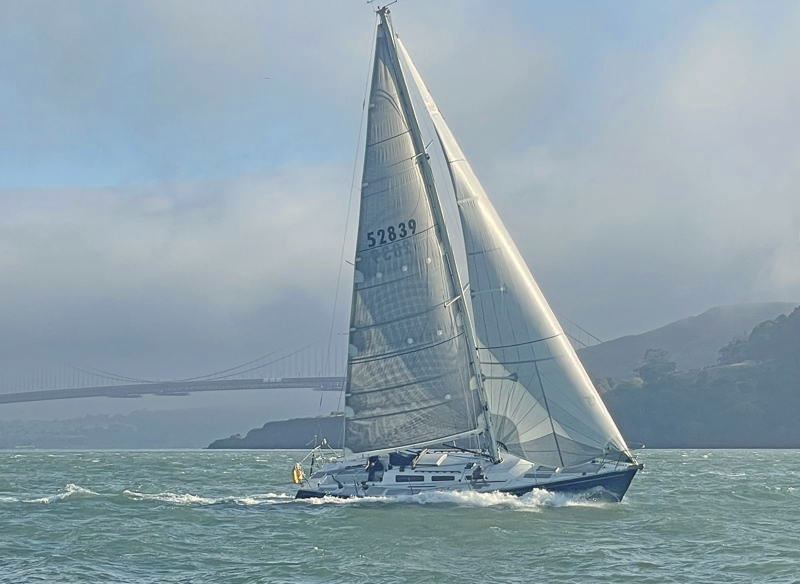
In this week’s episode of Good Jibes, we chat with Gilles Combrisson about every boat restoration imaginable and the pros and cons of carbon fiber. Gilles is a Bay Area sailor, rigger, and carbon aficionado who just got back from sailing his restored Wylie 39 Lightspeed to second in class in the 2026 Pacific Cup.
Tune in as Gilles shares with Good Jibes host John Arndt the details of his restoration of Lightspeed, how to restore an old boat, whether carbon fiber is right for your boat, how to create memories cruising and even racing with your family, and how we can preserve sailing in the Bay.
Here’s a small sample of what you will hear in this episode:
- From Amazon rainforest nonprofit work to restaurant shifts to apprenticing under Scott Easom
- Where carbon makes sense
- Where the rigging world is heading
- What’s next for Lightspeed
- Honest advice on old boat projects
Learn more about Gilles at GCMarine.net
Listen to the episode on Apple Podcasts, Spotify, and your other favorite podcast spots — follow and leave a 5-star review if you’re feeling the Good Jibes!
Check out the episode and show notes below for much more detail.
Show Notes
- Gilles Combrisson on Full Boat Restorations & Carbon Fiber, with Host John Arndt
- [0:14] Welcome to Good Jibes with Latitude 38
- [0:48] Welcome aboard Gilles Combrisson!
- [1:40] How Gilles discovered sailing
- [3:32] From Amazon rainforest nonprofit work to restaurant shifts to apprenticing under Scott Easom
- [6:25] Racing a Moore 24 double-handed to Hawaii on Snafu with Carl Roebrock
- [8:21] How Gilles found Lightspeed through friend Bruce Ladd
- [10:43] A full rebuild: new carbon mast from Offshore Spars, swept spreaders, new carbon chainplates, cored cabin topsides, a redesigned V-berth, and carbon pipe berths for sail storage
- [14:33] Honest advice on old boat projects
- [20:18] Check out the Latitude 38 Crew List to find a boat or crew
- [21:16] Where carbon makes sense, where it doesn’t, how to marry carbon to fiberglass without creating hard spots, and why fiber standing rigging needs to be unidirectional to avoid creep
- [27:05] Dyneema backstays, SK99 Max, and carbon rod stays inside braided socks
- [28:32] Other boats Gilles races
- [30:52] What came back broken from the Pacific Cup
- [34:11] Getting his son Kenji out sailing
- [37:01] What’s next for Lightspeed
- [40:38] Are you thinking of sailing to Mexico or across the Pacific? Latitude 38 has a resource page called “Heading South” & the “First Timer’s Guide” to help you prepare
- Short Tacks
- 40:38] Dream sailing destinations: French Polynesia (he’s French, he speaks the language), the Sea of Cortez, and one day Corsica and the natural harbor of Bonifacio
- [45:52] Why non-sailors should get on the Bay
- [49:48] Favorite sailing books: Adrift: 76 Days Lost at Sea by Steven Callahan, and Longitude by Dava Sobel
- Check out the July 2026 issue of Latitude 38 Sailing Magazine
- Make sure to follow Good Jibes with Latitude 38 on your favorite podcast spot and leave us a 5-star review on Apple Podcasts
- Theme Song: Pineapple Dream by SOLXIS
Transcript:
Please note: transcript not 100% accurate.
00:03
At the end of the day, know, should you just buy another boat?
00:14
Ahoy. Welcome aboard everyone. It’s great to have everybody back aboard and have some more stories from the West Coast Sailors. My name’s John Arndt. I’m the publisher of Latitude 38, the host of today’s episode of Good Jives. And it’s a podcast to help you experience the world of sailing through the eyes of the West Coast sailor. It’s all brought to you by Latitude 38, the sailing magazine for West Coast sailors since 1977. And if you do the math, that means 2027 is going to be our 50th year coming up.
00:44
Stick around.
00:48
Today’s guest is Bay Area sailor and rigger and carbon aficionado, Gilles Combrisson. And Gilles, welcome aboard. Thank you. Cheers. Yeah. Cheers. And how was my pronunciation of your name there in my pseudo French accent? Perfect. It’s very good. No, no. It’s actually very good. Very good. I’m impressed. Well, try it. We try it. Anyway, well, Gilles is.
01:13
just back from sailing his restored Wiley 39 Lightspeed to a second in class in the 2026 Pacific Cup. But of course, he’s been busy doing a lot more sailing long before that and rigging and building carbon things. And so I want to learn a little bit more about that. And just to kick off, wanted to see if you had one sailing story from all your sailing miles you might want to share that had a big impact on you or stands out significantly.
01:40
Well, the very first sailing that I did on San Francisco, the first racing that I did on San Francisco Bay really was with Ron, Ron Tostenson and his family. Oh, really? My sister, I came out here in 1995, but my sister ended up moving out here too, a little bit later. And to save money, she decided to buy a boat and to be a live board. So they pay rent, you know, high rents. And so now she had the sailboat. So we had to learn how to, we had to learn how to use it.
02:08
She got me into Olympic sailing. Back in the day when it was Olympic sailing, we both took our basic heel boat one and two classes. That sort of started my love affair with sailing. And shortly after that, I signed up. I put my name on sfsailing.com because I wanted to crew. And I got a response from Ron, Ron in the Tostenson family.
02:34
And so I went sailing with, went racing with them on city front and it was my first time, you know, racing on San Francisco Bay. And it was the one of the roughest days that you can imagine. And, um, at the end of the Saturday, you know, event, um, they were convinced that I was never going to come back and, know, not return phone calls. And I wouldn’t show up on Sunday morning for the second round. And I was, you know, Sunday morning, I was there like bright and early and, ready to go for more, more punishment. And that was, you know, that was, uh,
03:03
That was a long time ago and here we are 2026 and I had Ron. You know Ron was one of my crew on the Pacific Cup. really fantastic. It was great to have the people that got me into this into the sport back on board for this race. Yeah, all these. Yeah, so you so you you found discovered sailing here in the Bay and you’re older renting apartments at that time and not a sailor. What were you doing before you were a sailor?
03:32
I came out here, I was working for a nonprofit actually with the goal to preserve the Amazon rainforest, secure indigenous titles to land in South and Mesoamerica. So it was a completely different deal. But at the same time, working a lot and it was hard for me to make ends meet working with nonprofits. So I was working in restaurants at night.
04:02
And, but it was, was short, you know, shortly after starting my, to, say on race on San Francisco Bay, once again, you know, Ron and his family, I told them that first of all, I decided that I was going to buy my own boat. And so they convinced me to buy a more 24. I was going to buy a J24. They convinced me to buy a more 24. And I did that. And shortly thereafter, they put me in, I said that I was considering
04:31
maybe doing a career change or just the 180 degrees. you know, maybe I should, maybe I’d like to work on boats even, cause it, I was that crazy about it. They put me in touch with Scott Eason for me, some rigging and racing. And, uh, that was right before nine 11. So right when I was, you know, maybe going to have Scott, you know, take me in as an apprentice, we had nine 11 happen. And,
05:00
You know, big boats here was, was canceled and whole world came to a stop. Yeah. And, know, Scott told me, Hey, you know, not a good time. You know, the economy is not good jobs have evaporated. So, you know, come back, you know, in the spring. And so I did that. And, um, and in the spring, you know, he was really busy and had, had some openings and, or had an opening and took me in as an apprentice, you know, and that’s kind of where I. So at that point, I was no longer working for the nonprofit. was working.
05:28
and I was working for Scott during the day and I was working in restaurants at night, you know. Oh, wow. Yeah. Yeah. I’m doing double double shifts, but I’m trying, you know, making ends meet. And then and then it became after a while, it was clear that I was going to not work in restaurants anymore and focus on on rigging and racing boats. So now for fun. Did you have a did you have your more 24 at that point? I did. Yeah, that’s I had one of six. So it’s it was called.
05:56
Initially it was called Leviathan and then we changed the name to Numa Boa and then it became Blue Angel after that. had my good friend Mark Kinglish as a boat partner for a while. Oh yeah. He ended up buying the MAS, which he did the Pacific Cup double-handed on the MAS with Ian Rogers and those guys. I ended up doing Pacific Cup double-handed with Carl Roebrock on Snafu.
06:25
And then two years later, two years later, my good friend Mark did it with his buddy Ian and they they put four days on it. So we’re not too happy about that. Four days. Wow. They had a ripping ride, as I recall. They had a better they had a better weather year, but they they had an amazing ride and, you know, won the whole thing. So, yeah. I had my more 24 and that was kind of my first platform that I used to to mess around with composites and carbon and, you know, widgets and gizmos and things like that.
06:55
Yeah, yeah. Wow. Scott was my teacher at the time and was guiding me on how to work with those materials. Yeah, good place to cut your teeth there. Yeah, with Scott. Yeah, for sure. And now the More 24s this year, got 75 boats signed up for their 50th annual national. You know, that sounds amazing. I mean, that’s almost half the boats ever built. yeah, that’s gonna be crazy. We were supposed to be
07:24
sailing on Carl’s boat, but unfortunately I think that’s not going to happen now. yeah, not too bad. Yeah, well that’s going to be a very cool event. yeah, great. yeah, so then, yeah, I guess most of your sailing has been racing and jumping on different boats or what? Have you done any cruising or other kinds of sailing around the Bay or what’s your, is it like racing like? I do cruise, I cruise light speed, you know, my Wiley in a sense that we take it out. I take it out with my family and we go to Angel Island, the lock.
07:53
We like to park around Angel and hide from the elements and swim and listen to music. we have our stand-up paddle boards that we inflate and we paddle around the bay with those things. so that’s been great. We couldn’t really do that with the Morer 24. My partner, Fumiko, is happier with the bigger boat for sure. Yeah. Nice. How long have you had? Light speed.
08:21
How long, when did you get? A light speed I’ve had for about six years now. And you did a pretty full restoration, think, dug in deep in there. What kind of things did you do to get her fixed up? And how did you find her? What do you think? Wiley 39 is definitely a classic. My good friend, Bruce Ladd, who used to come to my shop all the time and hang out and talk sailing and racing.
08:49
Vendée Globe and you know, who’s winning what and who’s racing in what. Bruce ended up owning Lightspeed. And I had worked on her when I was working with Scott with Easom Rigging. We had done work on her when she was at the Sugar Dock. And at the time she was owned by Rick Elkins and Rick had hired Tom Wiley to do a pretty large refit job on her. We were called in, Scott was called in and we did some work on her.
09:19
we subsequently went back again. This was after I went independent and was no longer working for Scott. I think Tom called us in to do some composite pad eyes and things like that. those are still there and they’re still working. And then didn’t see LightSpeed for many years after that until my friend, Bruce Ladd, gave me a call one day and said, hey, you
09:45
You know, I know you love light speed. know you, you know the boat and I want to move on to a catamaran. So if, know, if you want to buy her, uh, just give me an, give me a price and she’s yours. Wow. So I went, I went to look at the boat. The boat was at a point Marina. Right. Right. And, uh, I gave him a price and he, so he accepted it. And, and that’s where the adventure began. But I, yeah, I basically, you know, I was sailing her as is and racing her as is a little bit, um, just doing Wednesday nights and stuff.
10:14
But it was pretty clear that like she needed a lot, you know, and it was areas where the balsa core was wet in the deck There was a lot of a lot of rot in the bulkheads on the inside Lot of area many areas of the boat were wet and and rotted out So, you know, I had sort of started tackling that and I knew the mast the mast needed a lot of work to the spreaders look really corroded the spreader tips so there was there was I decided to pull the rig and
10:43
here. So here at the sugar dock, we pulled the rig and anytime a rig is on the ground, and especially because this one was mine, I tried to I tried to lift it up to kind of get an idea how heavy this thing was. Yeah. And as someone, as someone who works with carbon, you know, I was just horrified. Yeah. I’m like, I’m like, there’s just no way can put this thing back in. Like, it’s not gonna ever go back in this boat. the rudder tips were in really bad shape. Like they basically I took the tape off.
11:10
spreader tips and they just crumbled, you know, there was a there was a lot of corrosion. At the time I was working with offshore spars for a different project. And I just called them up and I said, Hey, you know, what would you guys, can you guys give me a quote for like, you know, rough, rough numbers, you know, for a carbon mass, you know, for for a 39 foot sailboat, you know, and I would just you know, I need, I don’t need it finished, I don’t need painted, I don’t need the mass track, I just need the basic, you know, the tube,
11:38
the tube with the crane and the spreaders and the spreader bars and you know, I’ll take care of the rest. So they gave me a number and it was pretty reasonable. And I just thought, you know, if ever there was a time to do it, like now’s the time. And I knew the bones were good on this boat. So I pulled the trigger on a new rig and, but I also, didn’t send him any details. I hired an architect to, you know, design a new sail plan.
12:05
Doug, I hired Doug Frolic, was who was a, at the time, uh, think still is a general, general manager at KKMI South Salido. And Doug put together a sale plan for me and, and we decided we were going to grow the mass a little bit and we were going to sweep the spreaders, which required building new chain plates. So you got to up to your eyeballs pretty quickly, very quickly. And, uh, so before, you know, before I knew it, I was,
12:35
building new carbon chain plates for the, then building new structure on the inside of the boat to move the, to move the, uh, know, the chain plate location aft. Um, and, and I submitted all of the drawings for the, uh, you know, Doug’s Doug had all his drawings. submitted everything to offshore spars and those guys, you know, built us the mast. You know, that was, there were other big, big jobs that went on on the interior. I, um, I cored. Beside the cabin top sides, I decided to, you know, core them with, with,
13:04
with balsa core and recessed the windows. I built a whole new hatch. So the whole new carbon fiber internal hatch. What else did we do? Modified the interior in a sense that I got it out. I got it the whole bow, the whole V-Burth. I remember seeing some photos of your work you were doing. You were definitely digging in deep. Yeah. We turned the whole V-Burth into a more functional space where we
13:34
We can take kites down and store sales up there. Um, and then I built two carbon fiber, uh, you know, pipe earths on, on, on each side, um, that we can store sales on and kind of tip them up and get them out of the way. So they’re not on the floor at the time. Those were, those turned out to be really useful for backup. We restored all our gear up there, you know, our personal gear and stuff. Yeah. Uh, it was great until it was great until the day I, uh, I opened the Fordeck hatch during a very wild surf.
14:03
We had a tidal wave of water come in the boat. you don’t have a port of catch, it’s a great place to store your personal belongings. Whoops, whoops. Wow. Obviously, that’s big project you’ve taken on. There’s so many great old boats around. We’re big proponents of having people take over these boats because there’s such a great foundation by the same token. It’s hard to get insurance. A lot of people get lulled into a boat because it’s pretty cheap up front.
14:33
If you’re gonna go do what you did, you can really get over your head very quickly. But what would you say to people that are looking at a 35-year-old boat and maybe not wanting to go as far as you’ve gone, but how you could maybe have done your project in a different way, like a little bit every year, or maybe be more sensible as you’ll just, how would you be as sensible? No, because- Well, unfortunately, the math just doesn’t.
15:01
I mean, the math never pans out. We all know this, you know, math is pretty terrible. Yeah. You know, I could do it because because this is what I do for a living. So I’m kind of like, I’m like a contractor who who guts, you know, a house and brings it to its foundations and then rebuilds it, know. Yeah, but I didn’t do it. I didn’t do it with the intention of selling light speed at a profit. I own light speed. Well, I’m going to continue to own light speed for the foreseeable future. So I just did it. I did it because
15:30
You know, I love the boat. Um, the boat had really good bones. thought I felt that it was a great racing boat and also, you know, a great cruising boat. Um, but I think what I did, the light speed is most likely prohibitive. You know, most folks just won’t, won’t do on the thing or can’t do it. I’ve seen, I’ve, know of folks that have done the work themselves and done, they’ve done huge refits and a lot of the work they did themselves and were able to save, you know, save on that. And, but if you.
16:01
I mean, nowadays with the cost of labor and so on, I just don’t see how you can do that and have it be. You won’t be sailing during the year. I mean, I couldn’t sail the boat for a couple of years. And so you’ll be unable to sail and really enjoy the vessel. I have folks that come to me with ideas like that. to be honest, sort of try to turn them, I try to change their minds and say,
16:30
probably not a good idea. You should probably either, you should probably not buy a boat or wait until you have the funds to buy one. That’s that doesn’t need all this work because unless you can do it yourself or you have some sort of, you know, you’re retired and you have the funds and you have the time. Now it’s just not going to be, it’s not going to pan out. I’ve seen, I’ve seen over and over again, you know, uh, these types of projects don’t, they don’t come to completion. Yeah. Yeah. No, that’s definitely, they don’t end well, you know? Yeah.
16:59
There’s too many of those. Yeah, I got to go in wide open and with a realistic assessment. know, I mean, it seems, you know, my old Ranger 33, I sailed for almost 20 years and I didn’t put tons of money in it. I fixed up little bits here and there. Stole it to a guy over in the estuary, Wesley Nunes from Reliable Marine Electronics. He’s fixed up having a great time with it. You know, and it’s a, what was it? It’s a 1974 boat and you know, it’s been awesome.
17:28
But at some point you could spend a lot of money on a boat like that. But also without spending too much money, it’s done a lot of sailing with him, my family as well, and been great. But you got to be careful for sure. Well, I think it depends on the boats, it depends on the fleets. More 24s, for example, I’ve done several huge refits on more 24s.
17:58
It was a little bit more, I guess, know, the promise of having the great fleet and all these great events in that fleet. And the boat is so versatile and the bang for the buck is so big on that boat that I think, you know, it’s more, it’s not as painful, if you will, to spend all that money to end up with a great Mk 24 in the end because it’s so much fun to sail and the fleet is active and you can, you know, can take it to Huntington Lake one day and do the pack up the next day.
18:26
an amazing platform. I’ve unfortunately been involved in a big refit for Island of 36 that never reached its final end. We just couldn’t get to the final goal because it just got too big, too expensive, too complicated, and it dragged on and on forever. That’s another kind of experience that you don’t want to have.
18:56
So it depends on the boat, know, it depends on, it depends on a lot of different things, but in general, it’s, it’s, it’s a tough way to go. Um, and you know, putting the money up front, getting, just spending the money upfront on a, on a newer, more modern vessel is usually the better way to go for most people. Unfortunately, you know, have to be honest, you Yeah. Yeah. Well, that’s it. It takes certain kind, obviously some people are ready to roll up their sleeves and jump in like you did and others,
19:23
It’s best to, as you say, buy something that’s more complete, more ready to go. And that doesn’t have that secret secondary cost after you’ve made the purchase that all of sudden changes the whole thing. So, I have, I have, I have to be honest too. Like if I added up, I haven’t really been keeping track of my hours on light speed, but I can tell you that it’s, it’s probably in the thousands, not hundreds, but it’s, it would be completely prohibitively expensive to,
19:52
to do this and to build it out. So it really, it’s kind of one of those situations where I think the boat would have been condemned had I not really gone in. It would have continued to sail in its current state at the time. And I’m not sure what would have happened to the boat. But I felt like it was really worthwhile to salvage it.
20:18
Yeah, well, that’s great. Love to see a boat like that stay alive and have another chapter in its life. So that’s really great to hear. Hey good jives listeners, are you looking to sail more? It’s the biggest mismatch on the California coast. There are thousands of boats not sailing because they need crew and thousands more sailors are soon to be sailors who want to sail but can’t find a boat. For over 45 years Latitude 38 has been connecting boat owners with sailors to sail, or race the bay,
20:47
travel far over the horizon. Some connections have turned into thousands of blue water cruising miles or race winning crews or long term relationships or just happy days of sailing. If you have a boat or want to crew, add your name to the Latitude 38 crew list at latitude38.com. You don’t know where such a simple act will take you. What about the carbon world? I mean, you build carbon parts and you know, I’ve got a Sabre 38 with a big heavy
21:16
aluminum spinnaker pole, we like, we just do a wing and wing stuff. We’re not too big on that. The full spinnaker, but, this carbon looks great. It’s amazing. Of course, anytime you pick up a little carbon part, you just think it would fall apart if you’re not used to carbon because it’s so damn light. But how did you get into carbon and how it always seems prohibitively expensive. But I don’t know, is it getting more reasonable to build things out of carbon and how hard is it or?
21:46
Well, there’s probably going to be some promising developments in the 3D printing world. think they’re getting closer and closer. With the Yeah, mean, they’re 3D printing, know, metallic metal parts. There’s a whole process there. approaching, they’re now 3D printing reinforced plastics with carbon fiber in the plastics.
22:15
But it’s not really the same type of material as what we know as carbon fiber with epoxy laminate or even a polyester or vinylester resin, but they’re getting closer. So I would imagine that that world is gonna make inroads and possibly make it a lot cheaper and easier to build parts. But for the time being, the technologies…
22:44
I mean, it’s still, you’re still building a mold. You still, you still, you know, have that process. And, um, in, you know, so the, the, world of carbon is fun, but it’s as far as like the, the, costs, I don’t see the costs coming down or anything like that anytime soon on on carbon fiber itself has gotten more expensive. Just the material is more expensive. So, you know, um, I’m fascinated by, by the, you know, by the material, um, there’s, there’s a lot of things that makes
23:13
it makes sense to build out of carbon. then there’s things that it doesn’t make sense to make out of carbon. And there’s some applications where you introducing carbon can actually be dangerous or not really desirable for different reasons. But on light speed, I built carbon fiber chain plates, but they’re like a separate element and they’re glassed into traditional bulkheads made out of plywood and with a plywood core.
23:42
It’s carbon and plywood cores is the new bulkhead. you know, had to be a little bit careful not to create a massive hard spot in that boat because we you you introduce carbon, you have to kind of tie it in in a lot of different places. So you don’t have the carbon part just crack and break away from from the fiberglass boat. Right. you have it’s such a stiff material and it doesn’t behave like fiberglass. So you have to marry it to the fiberglass in in a way that it doesn’t, you know, break away from from the fiberglass.
24:11
So that’s a little tricky sometimes. Yeah. Yeah. We love working with carbon and it is an amazing material and we continue to work with it and build parts out of, know, out of carbon and do a lot of carbon fiber repairs, know? Yeah. I mean, a lot of that, that is usually, I mean, what are the best carbon parts that people, where do they add it or what do they add to their boat? If you’re looking to add carbon, mean, I think of spritz and poles or other elements.
24:43
Sure. Yeah. I mean, that’s where that’s typically, you know, where you’re going to find it. You’re going to find it. Spinnaker poles, you know, possibly like a tiller, you know, carbon fiber tillers, the rudder, obviously, yeah. Fiber rubbers are amazing in life. And we have Larry, we have, you know, water rat Larry Tuttle here in California that built amazing rudders, you know. So, yeah, the masts, obviously, you know, the radio, you know, a lot of boats now have optional. did a lot. do a lot of sailing on J112.
25:12
Grand Prix, know, J112 elegance Grand Prix, it has a carbon fiber mass. You know, you’re going to find it in those areas, you know. Yeah. Well, mass seem really nice. Don’t want to send all that weight up high. that’s, yeah, the mass seems like one of the best, What about other fibers? Yeah. You’ve been doing rigging, but the other question comes up, dyneema lifelines and things like that, or where are people changing?
25:41
doing many fiber rigging, standing rigging or lifelines or what’s, where’s other fibers being used? mean, it’s making inroads in certain fleets, but not so much here on the sort of weekend racer level that we’re working here in the Bay. You don’t see it often. It’s very expensive. mean, if you’re gonna get fiber standing rigging, you probably don’t wanna get a braided product. I don’t think that the…
26:09
the braided line, the braided Dyneema, even if it’s been pulled and it’s annealed and all that, I’m not sure that’s the way to go. In my experience, Dyneema suffers from creep and stretch. it’s great anytime you have a braided product, the fibers are not unidirectional, they’re not aligned. you pull on them really hard and they try to become aligned. And so it just gives a lot. So I would, in my view, in my experience,
26:37
you know, you can go to synthetic fibers for standing rigging, it should be, you know, unidirectional fibers, like just fibers in one direction only. And then, and they should be protected. They should be encased in something or, know, they should be, there should be a braided sleeve around them so that they’re protected from the UV and from shave and not, not just have exposed dyneema. So, I mean, you can get away with something like an exposed dyneema for a backstay and things like that. That’s fine.
27:05
backstay, you know, you’re constantly adjusting it. So if there is a little bit of stretch, it’s not the end of the world. And you should be careful with chafe, obviously, because, you know, the battens and so on can rub against it. And so, you know, I see a lot of Dyneema backstays and that’s fine. You know, there’s a lot of high grade low stretch Dyneema out there now. Marlowe’s got, you know, D12 Max and SK99 Max. So that stuff is
27:33
behaves much like wire. It’s super low stretch, super lightweight. So find to use that for shrouds. You know, recently worked on a catamaran. We explored, explored synthetic stays for, for shrouds and it’s either very expensive or it’s not the stuff you want because it’s really stretchy. Yeah. Interesting. And then the really, the really good stuff, the really expensive stuff now is carbon. It’s basically like
28:02
You know, carbon C6 is is pulled truited carbon rods inside of a braided sock, you know. Wow. Wow. Yeah. The technology keeps moving forward. It’s amazing how these materials just it’s astounding when you pick it up or see what it can do. It’s extraordinary. Well, actually just wondering whether boats you’re racing when you’re not sailing light speed, what other kind of sailing are you doing? If you’re going out with customers or you got any other races, classes, events you’re working in?
28:32
Yeah, I’ve been, well, I did the pack up with the Wilkinson and the Warner family on Jubilant. It’s a partnership on that boat. And so that’s the J112 Elegance that I mentioned. And I really like that boat. So whenever I can, I try to hop on and do some racing with those guys. We’re going to do big boats. We’re doing the Schwift Schirr Regatta this weekend. We’ll be doing big boat series this year.
29:02
So looking forward to that. Cause and that’s just a great boat. Um, you know, was great for pack up and it’s great for the bay. Um, you know, asym kites, Sprit really fast, super fun to sail. you know, great, like, you know, great boat. Do you know, I’ll hop on them. I’ll hop on a more every once in a while, you know, I’ll do the more 24 stuff. Um, you know, lately I haven’t, I’ve been really focused on light speed. It’s kind of taken over my whole.
29:30
my life and haven’t been able to do a lot of sailing on other boats. Typically, you know, if I, if I, if I do go, it’s, it’ll be with, with my customers or with my friends and it’s, um, varies. kind of varies. I mean, I did big boat series on gesture, which was a, in the classics division a few years back. Right. Um, cause I w you know, I did the standing rigging for those guys.
29:55
So it kind of depends. I like to go sailing with my customers oftentimes. And as a thank you, I’ll go sailing with them and race with them, you know, and go do an event. So. Yeah. Where’s Jester now? Is she in back East? think she’s in New York, believe, or she’s on the East coast. Yeah. She should be in Newport actually. But the boat moved to the East coast. Yeah. Yeah. Yeah. Too bad. It’s lovely to see them here on the bay. they were a beautiful boat.
30:23
What’s next for Lightspeeder? What’s your what’s your series or plan? mean, you got to doing midwinners or any. What kind of races do you look forward to doing with her? Right. Good question. Well, when I recover financially from the pack up, she’s back on the bay. Yeah, yeah, she’s right here. She’s she’s at my shop. Yeah. The list grew longer during the pack up. Oh, dear. So there’s some there’s some things.
30:52
We had a lot of water. took on a lot. We had a lot of leaks and stuff like that, you know, bad, just areas where the water somehow was getting into the boat. So that was, that was a problem. And so we’re, we knew, I knew that when, when she got back, you know, we would have to address these things. But you know, everything, the boat performed beautifully and, and, and, you know, no other, really no major issues aside from annoying, like a lot of annoying little leaks and things like that, were, that were.
31:20
you know, making our lives miserable on the inside. Beyond leaving the front, opening the front hatch when you’re diving into a wave, the water. That was a different problem, you know, but we did have water. Well, I sort of isolated all the different compartments because LifeSpeed doesn’t have a real bilge. It has a very, very shallow bilge. And so when there is water, with all of the openings and limber holes and stuff in the various parts,
31:49
of the floor on the floor of the boat, you know, before I plugged them all up, the water just flowed to the center of the boat. And so all it takes is literally like, I would say, you know, maybe a half gallon of water in the bilge. And when you’re healed over, it’s already sloshing over the floorboards. I mean, that’s just, it’s very flat bottom boat. You know, if you have more than that, then you have a lot of water sloshing around the main cabin, which is a problem. It sloshes.
32:17
You know, it’ll get into, it gets onto the banks. gets onto some of the electronics back aft. Um, and we discovered that during some of the testing, you know, that we did before the pack up, we frantically did some things, you know, real quick to try to stop the water from, collecting in the middle of the boat. we isolate, I isolated all the various compartments of the boat. So it would stay wherever it’s getting in. It’s going to stay there or not travel too far. Yeah. No, now I know where it’s coming in from and we’ll, and I’m in the process of.
32:46
of fixing all the leaks. But definitely the boats here at my shop will probably will be doing some Wednesday nighters. think, know, within a within hopefully catch the last few of the season. Yeah, we’ll do we’ll probably try to do the great pumpkin. And then I think, you know, I’m I’m hoping that we can do a Mexico race. mean, I’ve always loved the Mexico races. So I would if I was going to fund something
33:16
offshore, it would probably be, you know, something like PV and then stay in Mexico to do mechs work. Right. Right. That, you know, that depends if they, if the event is reopened and that whole thing kind of launches again. Yeah. Yeah. All right. I mean, I gotta imagine they’re going to want to do it. There’s a lot of racers and boats down there that, yeah, was a shame to have it, you know, canceled this year, but, but, you know, I think the demand’s probably there. So yeah, nobody wants to.
33:44
sit idle and leave their boats idles too long here. So yeah, that would be super fun to get that going. What about, have you taken, you have kids and you’re cruising up the cruising with the kids on this? Yeah, I have one son and he likes to do the cruising. He’s not really super hip on the racing. And that might change, but right now we go out, like I said, we go out on the bay, we throw the anchor or we…
34:11
tie up to a mooring and we just paddleboard and have fun on the boat. So that kind of stuff, he’s there for the super cold, crashing around the city. he’s not. Yeah. Well, yeah, think, know, key is focus on the fun first. The rest will, you know, take care of itself. yeah, you know, it’s nice to be able to just go. Yeah. Well, Carl and I took him on when he was really little.
34:40
We took him on a Delta ditch race. Oh, fine. Or 24. And that year we were we were following Bill Bill and Melinda Eerklund’s. Yeah. And we ran aground quite violently. First, they ran aground and they went sideways. And then we were shortly thereafter. We plowed into the same mud flats. And, you know, my my son Kenji was down below. And so, you know, he experienced that whole nightmare. Yeah. We broke the spinnaker pole. We, you know, there’s all kinds of problems.
35:11
And it was loud and scary. so he was, I think it was cured for life. I could never get him back on board for the racing after that event. Yeah. Yeah. Well, that, you know, that can set you back a bit. It takes a while to get the confidence back that this is all going to hold together and work out fine. Cause yeah, that, uh, yeah, I definitely scared my kids a few times too. And you know, they were like, you know, a boom breaking off of the yellow bar bluff them.
35:39
It’s all right. You know, we’re here. It’s still intimidating when you’re younger and you’re not sure what all this mayhem is all about. yeah, no doubt. Well, I secretly I think that when he’s older, you know, and maybe I won’t be around, but I think one day he’ll he’ll he’ll come back to sailing, you know. Yeah. Yeah. He has he spent quite a bit of time and you know, my whole life is boats and sailing and I just, you know, I bring it home with me.
36:05
He hears about it when I’m talking with customers or with my friends on the phone. He, he can hear, you know, the boat speak. Yeah. Weekends are spent on the water oftentimes. So, I mean, he’s immersed in it to, to, a degree where it’s gotta, it’s gonna have to, it’s there, you know, it’s implant. Maybe as when he gets older one day, you know, he’ll, he’ll remember, you know, his youth on the boats and he’ll, know, he’ll start, he’ll start, he’ll start sailing, but, but it’ll be fine. You know, whatever he decides to do will be, will be okay with me.
36:33
Yeah. Yeah. I don’t want, I don’t want to push them into it, you know, cause that’s, that’s not a good thing to do. Yeah. Yeah. Yeah. What the kids you want to have fun. if it’s not fun, it’s, it’s, yeah, it’s just not fun. So yeah. Great. Wow. Well that’s, that sounds good. Well, anything else as far as other things you’ve done to the boat or things you think other, mean, you put new sales on her probably too with a new rig, new sale plan. Yeah. And anything else you got sort of dream plans for the boat?
37:01
As far as tweaking and tuning the details now. Yeah, exactly. Well, I’m exploring, you know, we, don’t want to affect the rating too much, but you know, the boat we did when we went through the light, the lighter stuff during the pack up, it’s kind of, that’s where we fell back. I felt like we were not as competitive, you know, in the light breezes. Yeah. Um, and it felt like we were just starving for power, you know? So, yeah.
37:30
The fact is that I don’t have a sprint. I’m, I’m, I’m tacking the spinnaker is off of the, uh, off of the anchor roller. So it’s in kind of in cruisy mode because it’s got the anchor roller up on the bow. Yeah. We’re using that to talk to asims and it kind of, and there are in cases where the bowel pulp, it’s not too happy. Yeah. Should we put a sprint on it? You know, that’s kind of like that. There’s that, um,
37:56
Yeah, that could happen. A carbon craftsman sounds like they’re going to have to get to that. Yeah, but you know, I’m also, you know, I’ve I’ve I joined the PHRF committee and so I’m aware of like what happens when you put a spread on a boat from that. So, you know, I’m thinking to myself, you know, we’re going to take another hit. You know, is it worth it? then, you know, and then of course we have we have our kites right now. We’re built to the current.
38:22
set up so we’d have to get new kites so it’s expensive so that’s a major decision. I don’t think you know I think the boat we’re not we’re not underpowered when we’re here. One of the things I did was I decided to not have the overlapping jib so we don’t have any we’re not sailing around with a genoa and stuff like that. What I discovered what I discovered was like even though you’re not racing with genoas it would be nice to have them when you’re cruising. of course I don’t have them and I’m thinking to myself
38:50
you idiot, why don’t you have a cruising general deliveries and stuff and it’s light, we could have them on board and still go fast in the light air. I’ll probably be ordering a cruising general at some point. But when we’re in the normal conditions around here, we’ve got plenty of power. So I got to figure out what we’re going to do about the lack of power.
39:14
If we do something like the PV race, was going to say Mexico might get you to read. Right. We’re going to be really hurting along the, you know, Baja and stuff. it’s one of those years where it’s super light, yeah. Offshore, you know, I don’t know. We have to, we have to kind of work around. have to think, think about that, but I think, you know, you you can go, you can kind of go crazy and spend a gazillion dollars on a, on on a boat like light speed. And at the end of the day, you know,
39:42
Should you just buy another boat? Yeah, right. Right. That’s always the question, right? Yeah. Yeah. Are you thinking of sailing to Mexico or all the way across the Pacific or maybe even further? We just heard from Joanna and Cliff saying, my husband and I subscribe to Latitude 38 and enjoy the Good Jibes podcast regularly. They went on to say they’re headed to Mexico in the fall and will continue across the Pacific to Australia.
40:10
However, they’re looking to simplify all the choices they need to make to prepare. Of course, there’s tons of resources out there, but Latitude 38 does have a page on our website called Heading South. And we also have Latitude 38’s First Timers Guide to Mexico available to read online on the Heading South page or a printed copy that is available to purchase in our online store. There’s a lot to know, but Latitude38.com is a good place to start.
40:38
Well, sounds like you’ve done a great job with their well. And that was actually one of the quick questions you’ve done. The J112 sounds really great. But any other boats catch your eye? Like you, you’re on a lot of different boats. What’s the dream boat? There’s a new one. There’s a new one out here now. The J, I want to say JPK. Does that sound right? Yeah, it’s right here. Yeah. And in Corinthian. Yeah. So I’ve heard that one’s I’ve heard about that one. Yeah. Check it out. Yeah. And so we’ll see. But
41:07
You know, I’ve been literally, I’ve kind of been a hermit buried in my own boat for, for years now, trying to get that thing to the starting line. Yeah. And, uh, you know, but I eventually, you know, these boats, sometimes they around, they, end up, I end up seeing them in the yards or they come to me for work, you know, so eventually I get to, I get to find out and maybe sail on them or, know, check them out and see, you know, what they’re all about. So, yeah.
41:38
We shall see. Yeah. Yeah. Well, there’s always, yeah. Something next thing around the bend. Yeah. Yeah. Great. What about just other cruising dreams or vision PV race, or is there a other kind of dream trip or something you’d like to do? Yeah. Well, I mean, I still have to work, but I do plan on cruising when I don’t have to work anymore. Oh yeah. In the meantime, we, you know, if we did do, if we did do the PV race and we did mechs or
42:05
I think I would basically take the boat to Sea of Cortez after that. then maybe park it in La Paz or something like that. then just kind of spend some time doing some cruising in that area of the world and maybe just that and then bringing it back to California. Because I just can’t be away from work for too long. But it’s an area that I’ve heard a lot about and folks have sent me.
42:34
photos and stuff and reports. So I’m tempted to go there, but, um, you know, there won’t be, I’m not sure if light speed will be the one, know, when I finally like start really cruising, it might be a different, but, but, you know, I think obviously the circuit around here, which will happen and it might happen with light speed, but it will be, it’ll be, you know, uh, head South, central America, Galapagos.
43:02
French Polynesia because I’m French so I can go there and I can, and I speak the language and stuff. So it’s, helps. And I’ve, and I’ve, had the opportunity to do a Tahiti Pearl regatta some years back with some French, with some French friends and, um, you know, absolutely love that place. So I think, yeah, it would be a dream of mine to, to eventually take the, take the boat to, uh, to French Polynesia. Yeah.
43:29
And flat. Yeah. No, you take light speed or, or whatever boat you’re maybe looking at since then. Yeah. I mean, light speed, light speed would be great. I mean, it needs seven feet of water. Um, so, you know, the lagoon’s there, there are like, there’s a lot of coral and stuff. you know, now seven feet, not too bad, but I wouldn’t go with a deeper, deeper draft than that. You Yeah. Yeah. No, it’s nice to be able to.
43:56
anchor up in close and not be the furthest boat out in the harbor or anything like that. And, and of course the coral heads are always a little, a little threatening. Yeah. Yeah. Yeah. Wow. Um, let’s see where, you know, I guess outside of that, is that like, uh, any other offshore races or what kind of races would you want to do if you were Mediterranean Bermuda race, anything, anything catching your eye that. Yeah. I mean, it’s also a dream of mine, obviously to, the Mediterranean is really.
44:25
I had the chance to do some sailing and some, some, uh, some work actually in the med, know, delivering boats and stuff. And, I’ll never forget. I’ll never forget Corsica and the, Bonifacio and the streets of Bonifacio, you know, natural, the NARC, the natural harbor of Bonifacio. And that’s an area that I would, it would be my dream to, to one day maybe go and cruise around there, but the med is really busy and very expensive, very crowded, you know, in the, in the cruising world. So.
44:54
Yeah. I, I, I need to, you know, sort of familiarize myself with that, that world before bringing a boat out there and, and, and, and, cruising, but you know, France, there’s France is not too far away. And, and, um, I do go to France, you know, on a pretty regular basis. Oh yeah. You have family there still? Of course. Yeah. I have my family still there and friends and so on. So I wouldn’t rule out, you know, a Mediterranean adventure, uh, later on down the line, but.
45:24
It’s not going to happen until I’m done working. Yeah. Yeah. Well, that hopefully can blend a little bit. Obviously you can get a lot of sailing in anyway with your boat here. that, that, sounds, that sounds great. Well, great. Well, let’s see. I just want to just, you know, you, you jumped into sailing a little later in life and discovered it. I love to hear that. I grew up sailing and a lot of the sailing world of people who just sort of grew up in a family, but it’s, it’s always great to see people who discover sailing somehow. And I guess.
45:52
If you were to tell people listening to this that are not sailors or living in the Bay Area, you know, I’m forever frustrated how many people can’t find their way to the Bay or get out there sailing. But yeah, what would you say to people who are non-sailors and what you discovered and came to love? Yeah, get out there. Get, you know, there’s pay to play programs. You know, I’ve got my friend, Kevin Wasbauer. I may plug him and his company. He has a company called Shearwater Sailing. He’s in, he’s in,
46:22
He’s based in Monterey. He takes people out all the time. And right now he’s on his way to Hawaii with, with Atlanta. And, you know, they’re getting, they’re having an amazing, amazing experience. So there is a way to get on boats. In the beginning, it might be a, you know, a paying thing, but eventually you can crew. I I got on because I decided to be crew and I signed, I put my name on a crew list and I got the call and you know, it’s, and here I am. it’s.
46:51
You know, it changed my life, but that’s a big community is a lot of different fleets are here on the bay. It’s one of, mean, the bay is the most, I’ve yet to see a place that’s as, as perfect for sailing as San Francisco bay. Um, and I mean, there are a lot of, there’s obviously problems with depth and things like that. But in terms of having the theater that we have for racing and sailing here is, is, you know, unique in all the world. So, I mean, there’s just.
47:20
We’ve got to try to keep sailing alive on this bay. We’ve got to do everything we can to keep this sport alive and healthy on San Francisco Bay. There’s a lot of headwinds. And I’m in the industry and I see it all the time. There’s fewer and fewer marinas. There’s fewer and fewer places to park boats. There’s not a lot of deep water harbors. There’s not a lot of big places for big boats. And so we don’t have a lot of big boats in the bay. We’ve got a lot of little boats. And so there’s some headwinds, but there should
47:50
We should continue to try to do everything we can to keep the sport healthier here on the Bay. there’s tons of, I mean, if people want to race, I can’t understand how they can not get on a boat like quickly because there are so many racers out there looking for crew. So put your name on the lists and you’ll get the call. if it’s, and if racing is not your thing, then, uh, you you, you gotta find somebody who has a sailboat and
48:18
you know, befriend them and get on board or pay to play, you know, pay to play and get, if you want a major experience, like an offshore voyage, there’s, there’s companies out there that’ll take you and you have to Yeah. Oh, Kevin. Yeah. Exactly. Yeah. Well, of course now you remind me, you know, in a couple of weeks we have our crew party coming up, Spalding Ridden Centre, and we usually get a couple hundred people there, you know, people with boats looking for crew and people who want a crew and it’s a great place to meet. And of course we do have our crew list and that’s,
48:48
Yeah, for people who want to get on boats. It can be racing, can be cruising, you know, off to Mexico and, but come to the crew party and sailo and meet other sailors. And it’s either fun to meet and find boats to sail on. And, you know, that’s part of the challenge. You look at all these slips and all these masts. I ran a little story the other day, somebody sent some picture of racing on the estuary and there’s the marinas in the background with hundreds of masts sitting there and a few boats in the foreground sailing and all those.
49:18
Boats should be out sailing. that’s a problem. That is a problem. know that we have a lot of boats that are idle. and. But it’s also, you know, it’s getting very expensive like boat ownership is is not a cheap thing, so yeah, that’s why it’s good to be crew. Exactly as we say, OPB other people’s boats is all the best way to go, right? Having just funded a pack up campaign, I can tell you that OPB sounds really good right now. Yeah, I bet.
49:48
I bet. Well, Final Bunch, or actually is there a sailing themed book you’d recommend to our listeners, readers? Oh, boy. Yeah. When when captivated you? I know. mean, the 76 Days Lost at Sea, I guess. Oh, yeah. That one I’ve always. A Drift. Right. Yeah. That’s an amazing tale. You know, I learned a lot of, there’s so many great survival tips in that book.
50:17
Yeah, I never have to use them. But yeah, sort of gives you gives you hope that you know, like when when when the worst thing happens, you know, that it’s a that there’s there’s hope there’s hope like you can survive. Yeah. But you know, quite a tale. Yeah, but I’ve read I probably need to do some more. Oh, I read Longitude, believe. yeah. Which was a neat little book.
50:44
I learned a lot from that book and there’s lots of sort of funny passages. I was going to print one of those passages out for my navigator because I think it’s something about the Queen or King of England at the time, you know, wanted to find out why they were having all these naval disasters. There was a guy appointed to sort of research what was going on. you know, he basically comes back
51:12
from with his report saying that navigators really don’t have the slightest, you know, freaking idea where that where they’re going. And it’s the way it was written in this beautiful old English. I wanted to print that out and post it above the where my navigator sits in the light speed, you know. Yeah. To remind him that he’s really just a navigator. Yeah, exactly. Well, these days, you know, they’re way beyond the adventure that first clock, I guess. But but still.
51:39
boats run aground still today. yeah, yeah. So you gotta you gotta watch it. In a way, you know, when you read that book, you just have to, you know, you have to be so respectful and in awe of those early navigators. Oh, my gosh, they just use dead reckoning and they they really they knew where they were going to some extent. They had to write, but it’s amazing. But it’s amazing what they used and other senses, you know, and the stars and and and
52:07
you know, like what birds were flying around them and other indices like that, that that’s what they had at the time. That’s what they had to use, you know, you’re offshore, it starts to make sense because you know, you get close to Hawaii and you start seeing birds that you haven’t seen for you haven’t seen for days and the specific species of birds and all of a you know, you’re within a couple hundred miles of the islands or maybe 100 miles and boom, you start seeing this new species of bird, but you can’t see the islands.
52:35
getting close, know, so they got to be around here somewhere. I guess it’s working. Yeah. So, you know, those early navigators would use things like that to guide them, you know, and, know, it’s, it’s really. Yeah. No, it’s inspiring to think of what they did then compared to what we’re doing today, but that, yeah, it’s astounding. So, right. Well, well, Joe, great. Any final thoughts you want to share with listeners or, you know, anything I should have asked you that I.
53:02
I didn’t or? No, no, I think it’s pretty thorough and I just want to thank you for having me on the show or on the podcast I should say. I hope, because I repair boats mostly, so I hope I don’t have to see a lot of you folks out there that are sailing. if you have an accident or a problem or whatever or you have a project, give me a ring. Yeah, sounds good.
53:29
Jill, that sounds great. Well, it’s great to hear what you’ve done with Lightspeed again. I do, you know, I think so many people have an affection for some of these boats or Tom Wiley boats or see these boats that had, you know, have a great history and you know, some have to go away for sure. But it’s really beautiful that somebody’s there to, you know, take them on and carry them forward. So nice work on that and nice job on the Pacific Cup. like a great event. Great race. Thank you very much.