

Episode #255: Palmyra, Hawaii, the BVI — Three Sailors, Three Stories (Latitude 38 Verbatim), With Host Monica Grant
In this week’s Good Jibes we share three stories from the August 2026 issue of Latitude 38 sailing magazine. Hear “Return to Palmyra” by Dustin Reynolds, “High Times in the Pacific — 2026 Pacific Cup” by Andy Schwenk, and “A Surprise Victory in the Heineken Regatta” by Nick Wynn. Read by host Monica Grant.
Here’s a small sample of what you will hear in this episode:
- How 1000 miles becomes trivial
- A BVI charter that accidentally became a regatta entry
- The 1000th boat to finish a Pacific Cup
- Ragtime tops ORR-1, correcting out 18 hours ahead of Roy Disney’s Pyewacket
- Shake and Bake loses both rudders after an underwater collision
Listen to the episode on Apple Podcasts, Spotify, and your other favorite podcast spots — follow and leave a 5-star review if you’re feeling the Good Jibes!
Follow along and read the articles:
“Return to Palmyra” by Dustin Reynolds.
“High Times in the Pacific — 2026 Pacific Cup” by Andy Schwenk.
“A Surprise Victory in the Heineken Regatta” by Nick Wynn.
Check out the episode and show notes below for much more detail.
Show Notes:
- Palmyra, Hawaii, the BVI – Three Sailors, Three Stories (Latitude 38 Verbatim), with Host Monica Grant
- [0:14] Welcome to Good Jibes with Latitude 38
- “Return to Palmyra” by Dustin Reynolds
- Read it here: https://www.latitude38.com/issues/august-2026/#54
- [1:01] Palmyra: the place that defined what pristine meant
- [2:01] 5 years and 50,00 miles solo circumnavigating on Tiana
- [3:58] How 1000 miles becomes trivial
- [5:39] Creating situations where Jenny had to respond, rather than avoid
- [8:59] Meeting Matteo
- [10:35] An unexpected gift of this trip
- [11:25] 16 years ago, I sat with my arm torn off on the side of the road
- [13:22] The beat back to Hawaii
- [15:36] Stepping off the boat with grief as much as pride
- [17:28] Check out the Latitude 38 Crew List to find a boat or crew
- “High Times in the Pacific – 2026 Pacific Cup” by Andy Schwenk and the Latitude 38 team
- Read it here: https://www.latitude38.com/issues/august-2026/#50
- [18:18] Andy’s predictions met reality
- [20:05] The 1000th boat to finish a Pacific Cup
- [20:54] Division by division results
- [23:50] Shake and Bake loses both rudders after an underwater collision
- [26:51] Ragtime tops ORR-1, correcting out 18 hours ahead of Roy Disney’s Pyewacket
- [28:49] Why the Pacific Cup remains the best fun race in sailing — sign up for 2028
- [29:21] Are you thinking of sailing to Mexico or across the Pacific? Latitude 38 has a resource page called “Heading South” & the “First Timer’s Guide” to help you prepare
- “A Surprise Victory in the Heineken Regatta” by Nick Wynn
- Read it here: https://www.latitude38.com/issues/august-2026/#58
- [30:23] A BVI charter that accidentally became a regatta entry
- [32:56] 110 miles to windward from BVI to St. Martin in 24 hours
- [35:48] Racing in 20-25 knots double-reefed until an accidental jibe rips the mainsheet fitting
- [37:02] A personal bridge opening negotiated by the antiques dealer aboard
- [38:27] Fancy dress as pirates and a French maid earns second place in the serious fun competition
- [40:29] A week of downwind sailing to Anguilla and St. Barts to close it out
- Check out the August 2026 issue of Latitude 38 Sailing Magazine
- Make sure to follow Good Jibes with Latitude 38 on your favorite podcast spot and leave us a 5-star review on Apple Podcasts
- Theme Song: Pineapple Dream by SOLXIS
Transcript:
Please note: this transcript is not 100% accurate.
00:03
The ride was certainly bumpy, with only the occasional slam down onto a wave, which didn’t seem to slow us down.
00:14
Welcome to Latitude 38’s sailing podcast, Good Jibes. Here we share the world of sailing through the eyes of the West Coast sailor, with stories and tips about cruising, racing, adventure, exploration, or just plain sailing. This week, we’re sharing three stories from our latest issue, the August issue of Latitude 38. First up, we have a return to Palmyra by Dustin Reynolds. Next, we catch up with the Pacific Cup.
00:44
with Andy Schwenk’s High Times in the Pacific. And finally, we have a surprise victory in the Heineken regatta by Nick Nguyen. We hope you enjoy these stories. Sit back, relax, and enjoy the good jibes.
01:01
Return to Palmyra by Dustin Reynolds.
01:06
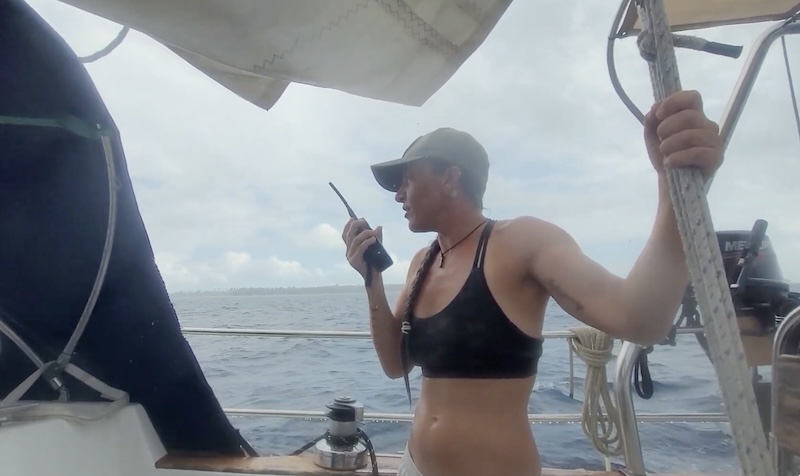
There are certain places in the world that refuse to stay in the past. You carry them with you, quietly at first, until eventually they demand a return. For me, that place has always been Palmyra Atoll. Sailing there again, years after my first landfall, was a return to a measuring stick. The place that defined what pristine meant before I had the miles to truly understand the word. And this time, I wasn’t alone.
01:37
There’s something strange about stepping back onto a boat that used to be yours. A boat you lived on, depended on, trusted across oceans through fear, failure, growth and triumph. A boat that helped define who you became. Being on Tiamar again with Jenny was a bit like hanging with an ex and her new lover, which is strangely how Jenny and I met.
02:02
I had spent nearly five years and more than 50,000 miles solo circumnavigating aboard Tiana. I knew every locker, every creek, every quirk. I could find tools in the dark, feel when something was off. Stepping aboard again, I felt like a guest in my own past. Jenny had made the boat her own. Lines led slightly differently, gear organized with her logic, not mine. The feel was familiar.
02:31
but not identical, like hearing a favourite song played on a different instrument.
02:39
For this trip, I would be captain again. But it was her boat, her journey, her dream taking shape. That dynamic somewhere between teacher and passenger, between past and present, set the tone for everything that followed.
02:56
Preparing for a 1,000 mile offshore passage is, in theory, a big deal. In practice, after enough miles, it becomes routine. We prepared methodically, safety gear checked and rechecked, rigging inspected, systems tested, food provisioned, and one last pilgrimage to Costco for the kind of haul that only makes sense when you’re about to disappear into the Pacific for 10 days.
03:24
Jenny’s nervousness was visible, though she tried to hide it. I understood it completely. The first time I made this exact passage, it was the beginning of everything. My first true offshore leg of what would become a solo circumnavigation. The ocean had felt impossibly large. Every decision carried weight, every mile earned. Now, a decade later, I had the opposite problem. Experience dulls fear.
03:54
thousand miles had become, in my mind, almost trivial. Not easy, but a familiar routine. To me, this was a grocery run. To Jenny, it was the longest passage she had done, multiplied by ten. Somewhere between those two perspectives, our journey began. We departed Honokua Harbour, sliding south under conditions that felt like replayed memory. Once we passed South Point,
04:24
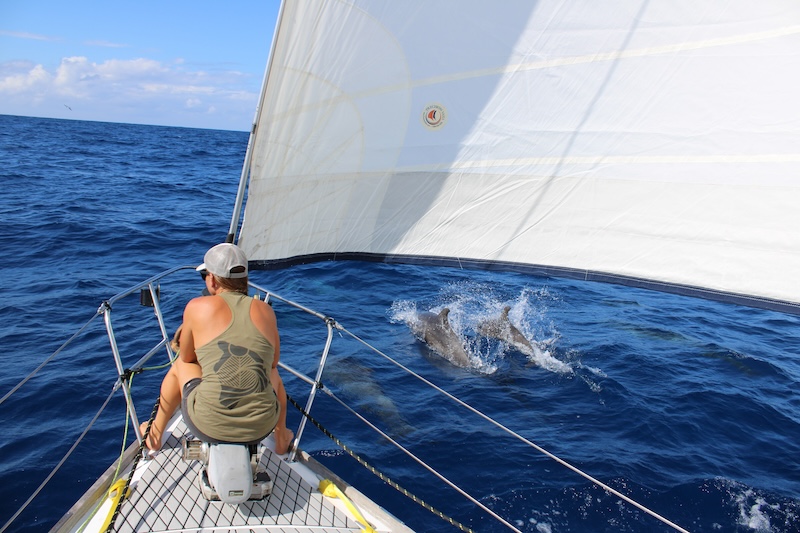
The wind settled into a steady pattern. The boat found her rhythm. Hawaii slipped behind us and the horizon widened into endless uninterrupted blue seas and uniform white trade wind clouds. The course to Palmyra is deceptively simple. Roughly a thousand miles southwest, often on a broad reach. The kind of sailing sailors dream about. Consistent wind, manageable seas and a boat that belongs at sea.
04:54
Of course, the ocean never lets you get too comfortable. Squalls rolled through periodically. Dark smudges on the horizon that grew into towering clouds before delivering bursts of wind and rain. Jenny took a conservative approach. Early reefs, smaller sail plans, caution in the face of uncertainty. It was the right instinct, but I found myself pushing against it.
05:21
Deliberately. I wanted her to feel the edge a little, to experience the moment when conditions shift and decisions matter. I wanted her to reef when it was difficult and scary. I nudged us closer to the squalls, encouraged slightly more sail, created situations where she had to respond rather than preempt. It wasn’t always comfortable, but it was effective. Teaching offshore sailing isn’t about avoiding discomfort.
05:49
It’s about learning to operate within it. This was my first time as a teacher, so we were both learning.
05:58
Approaching an atoll, you smell the aroma of guano from countless nesting seabirds and you start to feel the reflection of the waves off the island long before you see it. I’ve read that the Polynesian wayfinders could see the green reflection of the lagoon on the bottom of the clouds, but I’m yet to definitively see this. I didn’t know any of this when I approached Palmyra for the first time. I couldn’t see it from 15 miles away.
06:25
It was one of the first scary moments of my circumnavigation. I double and triple checked charts and GPS coordinates until I heard radio traffic on 16. What a relief that was. I had wondered whether Palmyra was as incredible as I remembered. It had been the first true wow moment of my circumnavigation. The benchmark against which I measured every reef, every atoll.
06:54
every supposedly pristine destination that followed. After visiting countless remote islands and diving some of the best reefs on Earth, I wasn’t sure if Palmyra would still stand above them. Thankfully, my memory was spot on. The reefs were alive in a way that’s incredibly rare. Schools of bumphead parrotfish moved slowly, crunching on the coral. Napoleon wrasse drifted through the water with an almost prehistoric presence.
07:25
So many sharks, barracuda, gropers and other large predators cruised the reef edge. A constant reminder of an ecosystem still functioning as it should. Manta rays glided through the channels. Giant clams dotted the seabed in impossible colours. It wasn’t just abundance, it was balanced.
07:48
Kalmyra is one of the few places in the world where the concept of a marine reserve actually works. Managed by the Nature Conservancy, the atoll benefits from strict protection, limited access, and most importantly, enforcement. Even so, it’s not untouched. Plastic still washes ashore, carried by currents from thousands of miles away.
08:15
Palmyra gets about 100 visitors a year and usually not more than 30 at a time. Fewer than 10 private sailboats are allowed to visit per year and normally not more than five actually do. Access is limited, logistics are complex and nearly all arrivals come via chartered flights every one to three months. Jenny and I changed the Palmyra population sign from 28 to 30 during our stay.
08:45
A full house. I made number 17 the last time I was there.
08:51
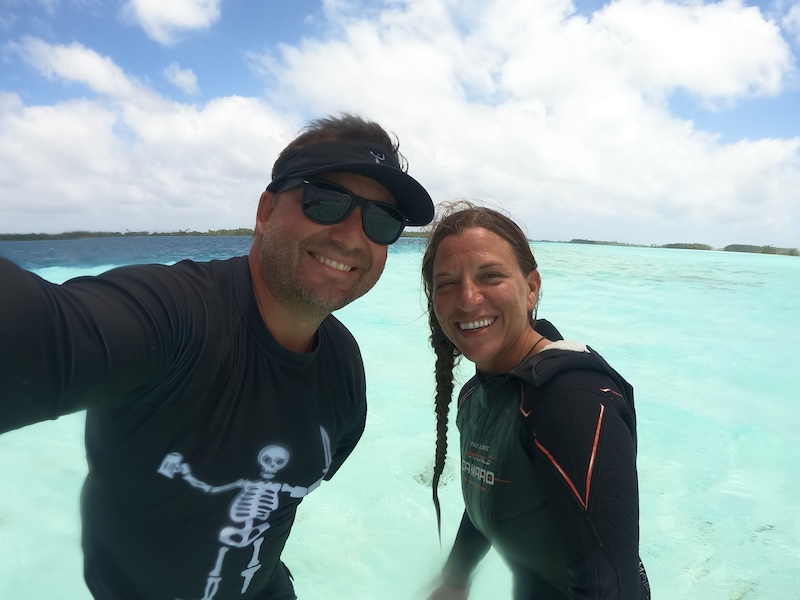
So when Matteo saw a double amputee walking along the beach, when no planes had landed, he was understandably curious. We explained that we had arrived via sailboat and that this was our shakedown cruise for Jenny’s solo circumnavigation attempt. A professional spear fisherman and an exceptional diver, Matteo was there as a research assistant, free diving to specific depths to take DNA samples out of the water column.
09:20
He was a fellow waterman who had also experienced many of the world’s most remote places. We bonded quickly over shared experiences and would later sail the BVI and Tacocas Islands together.
09:36
Time on the atoll settled into a simple rhythm. Wake up, dive, eat, rest, dive again. A shore we wandered among seabird colonies, watched nesting boobies, frigates and terns, and searched for massive coconut crabs in the forest. Evenings were spent with the conservancy staff, sharing meals and conversation. It was a rare kind of community. Small,
10:05
focused and deeply connected to its environment. The researchers, mostly PhD students, were trying to make the most of their limited time on the atoll. The Nature Conservancy staff were just as interesting, with a shared passion for protecting the last remote places left in this world.
10:28
One of the unexpected gifts of this trip was seeing Palmyra through Jenny’s eyes. After years of solo sailing, even the most extraordinary experiences can start to feel routine. Watching Jenny experience it all for the first time changed that. Her reactions were pure excitement, disbelief and joy, cutting through the layers of familiarity I’d built over years.
10:55
It reminded me what all this looked like before it became my normal. And in doing so, it made it new again.
11:04
Our final day at Palmyra carried a different kind of weight. It marked the 16-year anniversary of my motorcycle accident, which had cost me my arm and leg and nearly my life. This is a day I have celebrated every year since the accident, no matter where I am in the world. 16 years ago to the day, I was sitting on the side of the road with my arm torn from my body. I paused before calling 911.
11:33
I knew how badly I was injured and considered just letting it end there. Every year I celebrate that I chose to live on this day.
11:44
This year it was with Jenny on Anchor at Palmyra Atoll.
11:49
Jenny knew this and in her own quiet, thoughtful way had prepared something. She had reached out to friends and family ahead of time, asking them to voicemails. That evening in one of the most remote places on earth, I listened to those messages. Voices from across my life offering support, love and memories. It was grounding. A reminder of how far I’d come and how much I still carried with me.
12:19
Sailing back to Hawaii from Palmyra is the exact opposite of the typically comfortable, efficient and forgiving broad reach south. To get back to Hawaii, you’re working against the northeast trade winds and the westward flowing currents.
12:37
The key is to use the Intertropical Convergence Zone countercurrent near the equator to gain easting before turning north toward Hawaii. Turn north too early and you risk being pushed west into an exhausting upwind upcurrent battle. There’s a 40 mile wind free zone in the lee of the Big Island and we carried only 50 gallons of diesel. We motor sailed east for three days.
13:06
burning diesel as far as we dared. Then we turned north, committing to the long beat back to Hawaii.
13:14
At first everything looked good and we were consistently pointing 10 degrees higher than our target. But, as usual, something broke. The furler began acting up during reefing attempts. At first a subtle resistance, uneven tension.
13:33
Then it became clear something was wrong. We didn’t know it at the time. But the foil inside the furler had separated, causing the sail to twist improperly and preventing it from furling correctly. We suspected a halyard wrap. Jenny had just had some rigging work done. I sent her up the mast while underway. She inspected what she could and reported nothing obvious. That left us with limited options.
14:03
We switched to a Hancon jib. It was reliable, simple and slow. Suddenly our plus 10 degree margin became a negative 5 to 10 degree deficit. For a day and a half, I was convinced we hadn’t gone far enough east. Every mile lost to current felt like a mistake compounded. Every tack felt inefficient. The possibility of ending up west of the islands forced into a prolonged
14:32
pushing slog, loomed into my mind. I was grumpy and negative. I’ve made mistakes like this many times that turned into prolonged battles to get somewhere. Jenny was somehow immune to my pessimism and improved the mood aboard. Eventually the weather shifted 10 degrees in our favour. We were able to point higher, giving us a line that would carry us home. Sometimes the ocean gives you just enough.
15:03
Landfall came at South Point before we motored our way to Honokaua Harbour. After weeks of isolation at sea, civilisation is always jarring. The smell of land and smoke, noise, movement, people, but also relief. Jenny stepped off the boat with a kind of pride that’s hard to describe unless you’ve experienced it. The confidence that comes from completing a real passage.
15:33
The knowledge that you can do it, that you belong out there. And I felt something unexpected. Grief. Sailing the boat had been the right decision. At the time, it felt like closing a chapter and stepping away from a life that had defined me for years.
15:52
The being back aboard, making that passage again, feeling the rhythm of offshore sailing, stirred something I hadn’t fully acknowledged. I missed it. It’s not just the sailing, but the community, purpose and simplicity, and the clarity that comes with life at sea. Watching Jenny step into that world as I stepped away was bittersweet. There was pride, but also a sense of loss. And maybe, quietly,
16:22
the beginning of a return.
16:26
Its story has an odd symmetry. Jenny and I shared the same boat, the same dream, even a girlfriend, though not at the same time. Life has a way of weaving stories together in unexpected ways. But if there’s one thing that feels right about it all, it’s this. The boat, the dream, the experience. It all ended up with the right person. Sailing, at its core, is about movement.
16:54
not just across oceans, but through phases of life. Boats change hands, people change partners, roles shift, dreams evolve. What matters is that the journey continues. Jenny’s is just getting started. As for me, I’m not so sure I’m done yet.
17:17
That was Return to Palmyra by Dustin Reynolds. Hey good Jibes listeners, are you looking to sail more? It’s the biggest mismatch on the California coast. There are thousands of boats not sailing because they need crew and thousands more sailors, or soon to be sailors, who want to sail but can’t find a boat. For over 45 years, Latitude 38 has been connecting boat owners with sailors to sail, or race the bay, or travel far over the horizon.
17:44
Some connections have turned into thousands of blue water cruising miles, or race winning crews, or long term relationships, or just happy days of sailing. If you have a boat or want a crew, add your name to the Latitude38 crew list at latitude38.com. You don’t know where such a simple act will take you. Next we have High Times in the Pacific, the story of the 2026 Pacific Cup. Written by Andy Schwenk.
18:14
It is always my great pleasure to break out my magic eight ball and predict the fortunes of those lucky sailors who have the opportunity to set sail and bear away toward the former sandwich isles. Pacific Cup 2026 will long be remembered as the year the small boats got off to a lively start with steady 30 knot winds and heavy seas. The vessels that started a few days later got a little less wind.
18:40
and the Big Money campaigns got the opportunity to blast over the horizon with wind on the beam and set the colourful sails before the sun went down on the second day. Of course, none of this was obvious before the race started. But it’s still my best day when I get to write an article that predicts what I think is going to happen. See the July Latitude 38 for my shot at Who Was Who on the high seas. Of course,
19:08
When I wrote the article, the race had not started, and I had no idea I would actually be participating in the regatta myself.
19:17
It was my great privilege to be able to compete among Kimo Winterbottom’s excellent crew aboard his sleek blue Andrews 56 Haloa. Of course, I figured when I wrote my prediction article, it would be several weeks before I saw any of the sailors the story was written about. Now, in the land of sunshine and coconuts, I’m writing this just as the last vessels get off the course, and more than a few sailors have taken the opportunity to point out that I missed a few top performers.
19:49
2026 was also a milestone year, bringing the 1000th boat to race in the Pacific Cup across the finish line since the 2100 mile Fun Race to Hawaii was first run in 1980.
20:04
Finisher number 1000 was Penelope, a CNC 99 out of Portland, Oregon, correcting to 38th overall. A good number. With crew Ben Emery, who is skipper, Rich Ackerman, Jocelyn Emery, Elisa Few, Dennis Vanier, and Kevin Elk.
20:28
The top of the overall fastest lap time was Michael Furman’s hot blue Infinity 52 with her yellow foil boards, Zeus. Six hours behind them was Thomas Furlong’s RP 52 by Tessie. These two 52 footers posted faster times than the rest of the big boys in the fleet.
20:52
In the PHRF double-handed holocaue division, I got it all wrong. Nicholas Stevenson’s X332 surf proved she carried the right moniker and put herself in the victory circle with Greg Ashby’s tiny B-52 Okumu playing the bridesmaid with crew Andrew and Maya Peter and of course, Papa Daughter team, Lorne and Silver Cheeseman aboard their speedy Hobie 33 Bazinga in third.
21:22
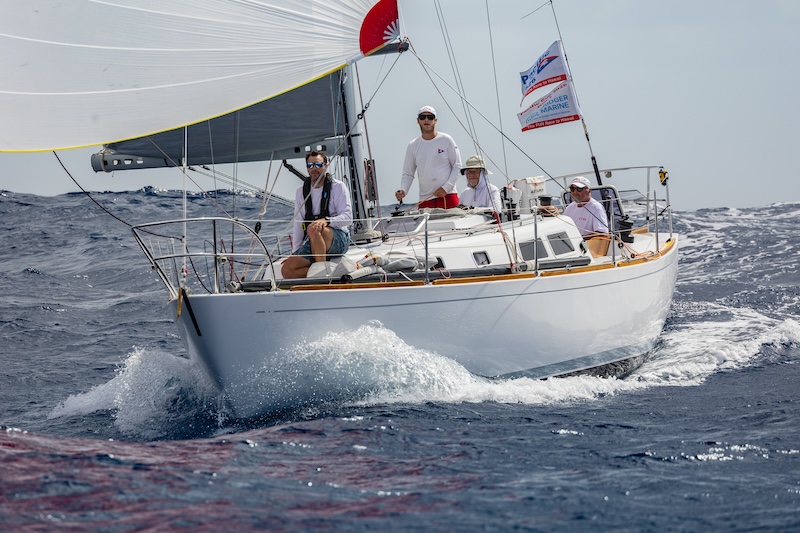
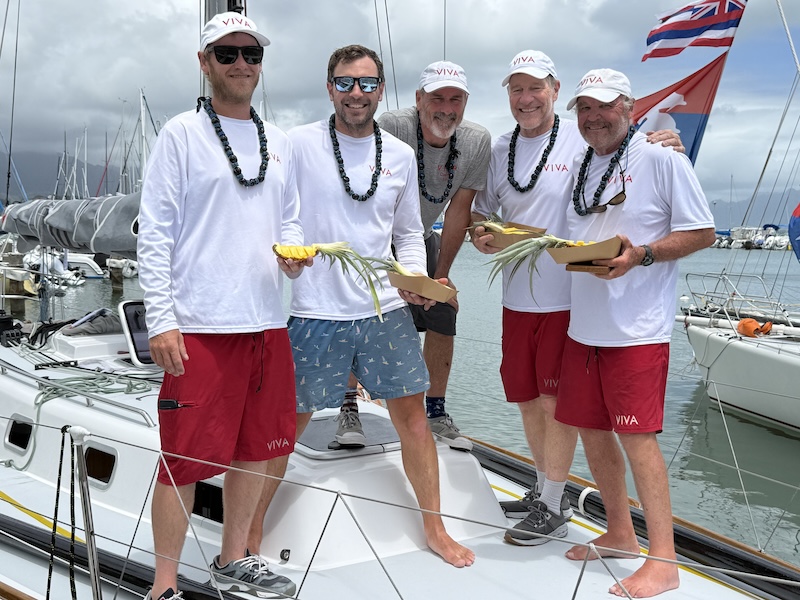
one of the three Hobies 33s in this year’s event that surfed their way to Hawaii. Anyone who follows offshore racing would know better than to bet against a Cal 40, but there were too many to choose from in the PHRF2, Bridger Marine Division. As predicted, Don Jesberg’s very polished Cal 40 Viva took first place in the division. However, Steve Smolinski’s Spencer
21:51
1330, true love from the Pacific Northwest proved the Cal Forte spoiler by slipping into second and Juende, which has often played bridesmaid, picked up a third place pickle dish.
22:07
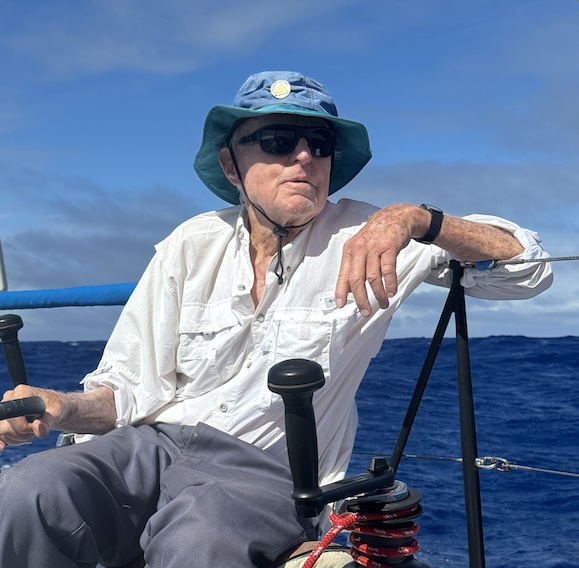
The PHRF-1, now Schotts Division, went to the indomitable 94-year-old Commodore Warwick Tompkins aboard his Wiley 39 Flash Girl with Jonathan Bird Livingston, Chris Klein, and Marcus Mispatch. Jonathan has raced about 25,000 miles with Commodore out of the hundreds of thousands Commodore has sailed. He noted that while age had slowed the Commodore, his eye remained extraordinary.
22:38
Jonathan added, a sailor like Warwick does not merely observe a boat. He understands her, a sail trimmed a little too full, a helmsman wandering slightly off course, a subtle change in the wind before instruments reveal it. Nothing escaped his attention.
22:58
In the double-handed ORR, Bobby Tosse’s division, it was Charlie Devenoe’s mighty Beneteau First 36, Rahan, that slayed the Transpac fleet last summer and turned on the proverbial afterburners again, flat out smoking the fleet like a three alarm fire. They were fast all the way, with the double-handed team also being the first boat in the entire fleet to sail across the finish line.
23:28
Bart Hackworth and Ben Landon on the Cal 40 Charmin and Christine Shope and Andrew Hamilton on the Donovan 30 Wolfpack performed as predicted with Charmin in second and Wolfpack in third. The Urklans aboard the Hobie 33 turbo camper. tourists, they touch terra firma so they can’t be too disappointed. Shaken Bake, a VAR X2, sailed by Jack Perak and Brett Perry.
23:55
lost one of her twin rudders to an underwater collision and then the second failed. The pair crawled along under drogue steering while they worked out a solution and counted up their food and water supplies. After some hours of work, they managed to get two rudders cobbled together out of supplies on hand and carried on with reduced sail to meet the next challenges. A creative mid-ocean recovery landing them 39th in elapsed time.
24:24
despite being wounded. In ORR4, I knew Mr. Reese and his pirates would carry third, but the ORR4 Gosling’s rum division went to Brendan Huffman on one of my favorite designs, his restored shoemaker designed Express 37 Dorado. Brendan said, this was only our second race on Dorado after purchasing her two and a half years ago and doing a major refit. This was my 11th race to Hawaii.
24:54
and more challenging than most. Dorado simply did what the Express 37 was designed to do, and Giles Combrason’s restored Wally 39 light speed, ably piloted by the aspiring young navigator Mark Jordan, was nearly close enough to see the stern light. In the ORR3, Weems and Plath division, the winner, J.J. Hoegh’s Hobie 33 TC, clocked in with a time of 10 days
25:24
7 hours, 15 minutes and 1 second.
25:29
They led Tim Roche’s J92 Zaff in by about four hours. Another standout performance in the OR33 was Buzz Blackett’s all-carbon Antrim 27 IO, which was the second boat across the finish line behind Rahan. Small boats did big things this year. ORR2, UK Sailmakers Division, would be considered a disaster for my predictions. But the silver lining
25:58
is I was actually called only about 48 hours before the start to get ready to go yachting and bring my son. As it turned out, we were able to join Kimo Winterbottom’s hulloer and we crossed the starting line first and never looked back. The anticipated performance of Doug Schwenk’s Swan Club 42 free bowl of soup was curtailed by a shroud problem when they had to return to port for repairs. That didn’t stop them.
26:26
They got back out on the Pacific to follow the fleet, playing course sweeper, all the way to Kaneohe. Just four hours behind Halawa was Wayne Zittel on his DK46 Kazan, and one hour behind him were the students from Kalpali Maritime on the school Santa Cruz 50 O’haka. In OOR1, Pasha Hawaii Division, I got the positions right, except I forgot to put Tina Roberts
26:56
Spencer 65 ragtime on top. This classic and beautifully restored speedster drawn by the hand of John Spencer is a fan favourite from the 1970s. It took the number one trophy in the fleet of the big guns. Originally infidel, Robert’s ragtime came to the US in 1977 to battle Chip Merlin’s magical Bill Lee 68 Merlin.
27:23
making this perhaps her finest hour to date. She corrected out about 18 hours ahead of second place finisher Roy Disney’s Andrews 68, High Wacket. The overall PHRF winner was, surprise, a Cal 40. Don Jesberg’s Cal 40 Viva mimicked the overall win by Allie Bell’s Cal 40 Restless in the 2025 Transpac by taking the overall win in PHRF
27:52
in the 2026 Pacific Cup. Arriving in Kaneohe on the windward side of the islands is like going back in time. The Kaneohe Yacht Club is little changed since the Winter Bottom Clan first sold the property to the club. Pickleball is new, the pool is cleaner, but the drinks are just as stiff as the dedication of the cornucopia of volunteers, who turn out biennially
28:19
to make sure every vessel feels the spirit of aloha and is welcomed properly. The time spent on the water is not counted against the time an individual is allotted, and certainly spending this time on the Great Eastern Pacific’s sledding hill to Hawaii is well worth the effort. From Greg Ashby’s tiny B-52 Okumu, just 25 feet overall, to Dave Rainey’s new Wiley 80 Jem, fresh from the builder’s yard in Portland, Oregon,
28:49
The Pacific Cup again proved its tilt toward plus-sized fun. For anyone with the spirit of adventure, Pat Cup is the place for you. Sign up for a Safety at Sea course near you now. Have a moment with your local rigger. Find some like-minded folks to set sail and enjoy the ride in 2028.
29:13
That was High Times on the Pacific, the 2026 Pacific Cup by Andy Schwenk. Latitude 38 here. Are you thinking of sailing to Mexico or all the way across the Pacific or maybe even further? We just heard from Joanna and Cliff saying, my husband and I subscribe to Latitude 38 and enjoy the Good Jibes podcast regularly. They went on to say they’re headed to Mexico in the fall and will continue across the Pacific to Australia.
29:41
However, they’re looking to simplify all the choices they need to make to prepare. Of course, there’s tons of resources out there, but Latitude38 does have a page on our website called Heading South. And we also have Latitude38’s First Timers Guide to Mexico available to read online on the Heading South page or a printed copy that is available to purchase in our online store. There’s a lot to know, but Latitude38.com is a good place to start.
30:10
This story is titled, A Surprise Victory in the Heineken Regatta by Nick Nguyen. Living on the peninsula in an adobe house is great in August, but not so much fun in winter. That’s why we keep Sipsy in the BVI, mostly charted out by Dream Yachts, but available for us when we need to escape. This year we were late and finally booked for the first two weeks in March without even teeing up a crew in advance.
30:39
With only four weeks to go, only Doug had signed up. So I was scrambling to fill the other berths when two of our usual suspects relented. Dave and John, both octogenarians, decided to come while still able-bodied with all faculties, as they put it. Then Sean, erstwhile shipmate on our 2016 Clipper training, signed up with his son James. So with a full boat and a two-week slot, we were hatching plans to visit St. Martin.
31:09
when Doug noticed our trip coincided with the 2026 St Martin Heineken regatta. I sought out the regatta rules and notice of race and procured sale numbers for Sipsy’s Bear mainsail, then signed us up for the regatta’s island time class, which seemed to be a good fit. And so it turned out to be.
31:31
We left SFO on a red-eye to BVI just as war was breaking out. Sean, who lives in Qatar, left Doha for Paris on the last day planes were still flying, oblivious as to what was to come. He denied getting tipped off, which I still don’t believe. Our upwind crew wanted a quick BVI tour, so we wafted down to Norman Island and then dinner at Willy T, then headed back for a session with BVI Immigration in Spanish Town.
31:59
far more relaxed than the staff in Road Town. Tuesday morning saw us cleared out and close reaching up the west coast of Virgin Gorda with both of our two reefs. When we got around Buck Island and headed southeast, it got choppy. Sipsy hammered along, however, and I felt vindicated in choosing a twin rudder boat. Not heading up in gusts more than compensated for the missing prop wash nudge when maneuvering into a slip.
32:29
Then boo-boo number one. I went below to store up some sleep without first agreeing on a watch system. Nobody else would come down. Only later did I find out that for most of the day we were all feeding the fish. At 11 p.m. I went up again to insist. Duh, no takers. They needed the fresh air.
32:52
At 3am, I went back up and my gallant crew made room for me in the cockpit. We tacked near Sabah and headed for Simpson Bay Lagoon on St Martin, arriving just in time for the first bridge opening. Quite a trip, 110 miles to Wynwood, sailing 180 miles in 24 hours, an average of 7.5 knots, all the while towing a dinghy. The ride was certainly bumpy, with only the occasional slam down onto a wave.
33:22
which didn’t seem to slow us down. Sipsy sailed himself on auto helm most of the way. We all just held on tight.
33:32
A stern tie slip should have been reserved for us at Port de Plaissance Marina. But it was not to be. They directed us to raft up with the other regatta contestants, three deep, but no problem for us. We easily claimed a dockside slot since the island time class always had the last regatta start every day. And flying the maple leaf from our backstay, we were clearly non-belligerent. I had brought the stick on sail numbers
34:02
So after a dinghy ride to clear immigration, while looking for somewhere to spread out the mainsail, I luckily noticed the regatta tent. Yes, they were expecting us, and no, we didn’t need to stick the numbers on the mainsail. We could latch our temporary regatta numbers onto our bow and stern rails. Getting the sailing instructions was the next challenge. I had left my laptop at home, and the race material was available only online.
34:32
But we had a 25 year old aboard, James, who expertly thumbed them into his phone. Then the icing on the cake. Sean even got the course mark locations up on our Navionics boating screen, winning his induction into the Nelson Society. We were all set to race. There were more than 100 boats in the regatta, and all the rated boats raced right around the island of St. Martin, clockwise one day and counterclockwise the next.
35:00
The cruisers in the island time class sailed two shorter courses over the four days of the regatta. The first day was an eastward beat to the end of the island, then a spirited beat to the north around Pelican Island, and then back downwind. Maybe we missed rounding one of the marks on this first day, but nobody complained. On the second day, we headed west to a mark off Pointe-aux-Carnonniers, beating back to the finish line.
35:28
Both races were about 15 miles, just short enough to catch the 230 bridge opening to get us back into the lagoon. By day three, we were accomplished races and driving down to the start line when boo-boo number two, an accidental jibe, took the wind out of our sails and slammed them into the other side. Each day had brought us 20 to 25 knot winds, so we kept our double-rifft setup.
35:55
Despite this, the jib ripped the main sheet fitting from the boom, which we then hastily lassoed. The same thing happened when Carol and I brought the boat over from Europe. We sailed the last 300 miles with the boom lashed, no bimini and only a code zero pulling us along. Now our day three race was over before it began, and likely the rest of the regatta.
36:21
We took the next bridge opening back into the lagoon and back to our slip. Well, the responsible thing to do was to fess up. So we contacted the Yacht Charter Base in Tortola to share the bad news. Richard, the base manager, got back to us in short order. He said, get round to the Dream Yachts Base at Anse-Marseille and Roger will sort it out. We had enough time to get there, but couldn’t get out of the lagoon. The Simpson Bay Bridge
36:51
is busy. It carries all the traffic to the St Martin airport and the next opening was for 4.30 which was too late for us to get to Anse-Marcey at the far north at the end of the island. But crewmate John had managed an antiques business and knew how to persuade. He managed to finagle us a personalized bridge opening. So we escaped to the lagoon and belted around the western end of St Martin and up the coast to Anse-Marcey.
37:21
Roger had said we needed to be there by 5pm and we made it with 5 minutes to spare. He had dingyed out to meet us and hopped aboard to pilot Sipsey up the meandering 20 foot wide channel to the marina. His team was ready on the dock and took only 20 minutes to get us ship shape. The sail cover on Sipsey sits in a groove along the top end of the boom, but not all the way to the end. Roger lashed the main sheet fitting to the boom with another spectra line led to the back end of the boom.
37:51
to restrain it from being pulled forward. All done. Wow. If only Carol and I had figured this out when it happened the first time, 300 miles out from Antigua.
38:03
Doug had been staying ashore in an Airbnb following his dive holiday. So after fetching him from the immigration dock the next morning, we left our dinghy on a defunct mooring buoy outside the lagoon and blew down to the start line for the last day’s racing. It was still windy, so we were more careful. We had a good race out to the west end, ticking off the marks and with everyone taking a turn on the helm. Then over the finish line and back for the last time under the bridge where the fancy dress
38:32
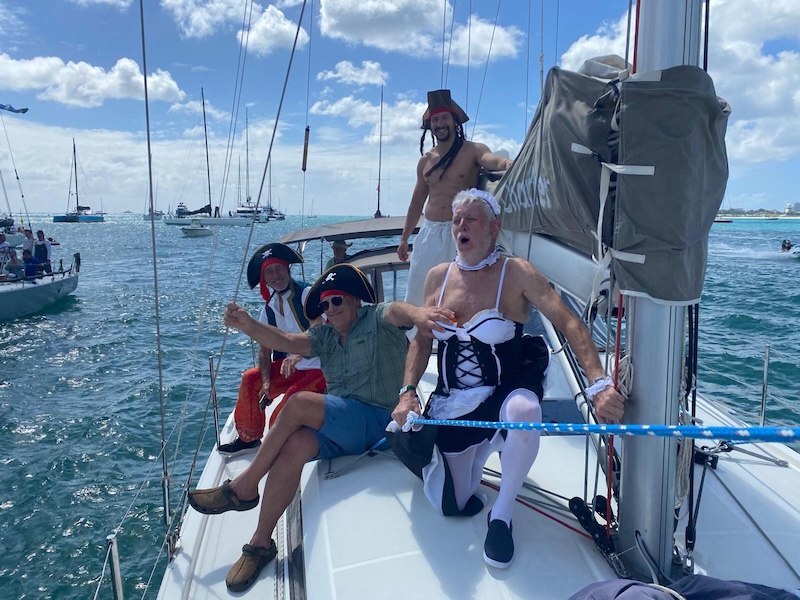
competition was judged from the adjacent St. Martin Yacht Club. Loud cheers and hoots for our show, Pirates and a French Maid. They throw a good party after the Heineken regatta. Caribbean food trucks and beer, all in a stadium-like arena, facing a massive stage. Music, flashing lights, and some dancing had us all entranced when we heard the Sipsy, over the PA. What? Us? What’s going on?
39:02
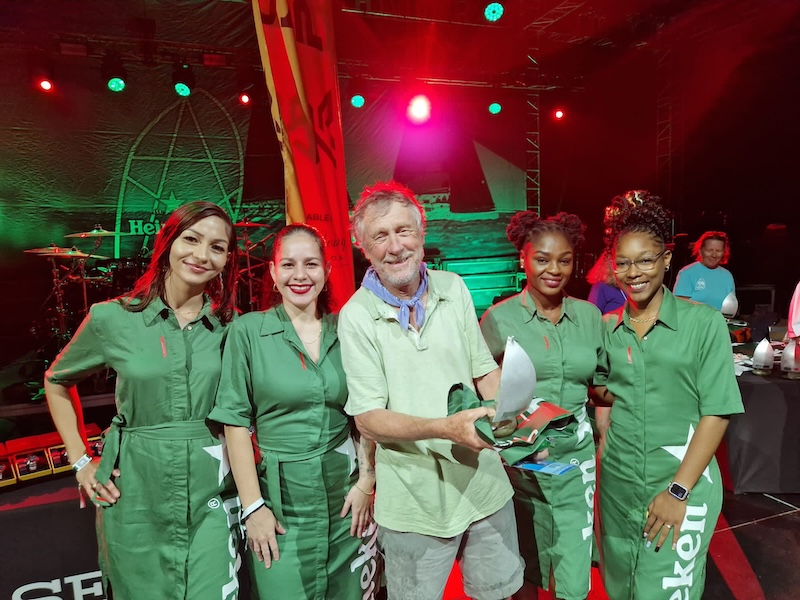
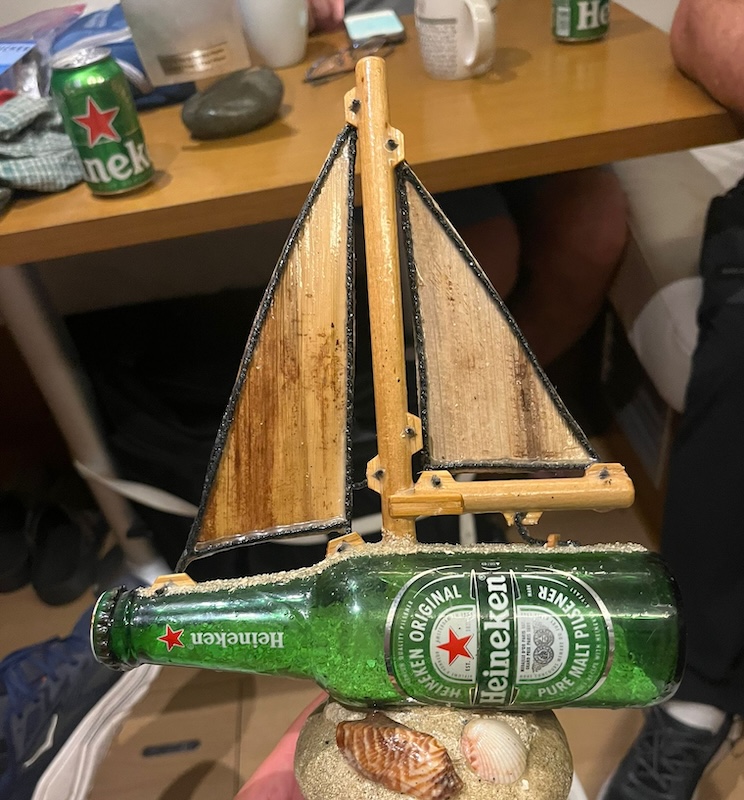
We were shuffled up onto the stage and learned our French-made encounters pirates were so admired that we had earned second place in the serious fun competition. We climbed down from the stage clutching the trophy and more beer cans. Then, while mingling with the other crews, we heard it again. Sipsy, sipsy! What? Us? What’s this? It turned out we were hauled back up onto the podium with a first-place finish on handicap.
39:31
in the last race. Another trophy and more beer. What a surprise! It was serious fun. We tried to convince Sean that his firm would understand his extending his holiday, not only to celebrate our victory, but also to skip the war in the Gulf. But he took off to Paris the next day anyway. Amazingly, he got back to Doha the day after that, reporting just the odd explosion.
39:59
The remaining downwind crew had another week, so took the opportunity to visit Anguilla’s gorgeous anchorage at Sandy Bay with a fantastic in and out, one stop immigration clearance on the beach. John and I were missing our step quota, so we set off to walk the four miles to Anguilla’s main drag, the valley. After 10 minutes, a couple of locals offered us a ride. So instead of our planned workout, we spent two hours with some very friendly folk sipping beer in a downtown pub.
40:29
Okay, where next?
40:32
The next morning we took off St. Bart’s motoring east up the north side of Anguilla then reaching across to St. Bart’s still glad of the double reef. Realising the gods were smiling on us we tried to catch a buoy on the main downtown harbour but no luck. We were sent out to another anchor on the other side of the fairway then dingy back in. Now we were not just the downwind crew but we’re tourists.
41:00
A visit to the Musée de Wal house detailed the history of the island. First Arawak before Columbus, 1943 visit, then settled by the French with the blessing of the French West India Company, then traded to Sweden in 1784 in exchange for trading rights in Gothenburg. This explained why the food was a notch up from our usual and why downtown had echoes of Haldun, my brother’s home in Norway. Feeling a little bit Scandinavian,
41:30
We swam off the city beach in our undies and nobody cared. Then hiked our way to the locals’ big grocery store, located over the hill by the airport. Even this walk was a thrill. Planes landing at St. Barthes need to skim the top of this downhill, so we spent some time on the top terrace videoing the prop planes coming in just 20 feet above us.
41:53
That afternoon we took off back to BVI, downwind all the way, so we rigged preventers and shook out our reefs. We wanted to get back to the Dream Yacht Base early so they could fix up Sipsey for the next charter. Our boom fix was thought to be temporary, and we had also ripped out the second reef leech kringle. While the boat was being sorted, our driver Doug hired a car and drove us to the pristine beaches he knew on the west end of the island. We were still bouncing.
42:22
but now on dirt roads. Tired, happy, and unusually victorious. After vainly racing the folk boat F103 for 10 years on San Francisco Bay, I had finally scored a win.
42:38
And that was a surprise victory in the Heineken regatta by Nick Wynn.
42:44
We hope you enjoyed this week’s They can all be found in the August issue, which is out now, and we will attach the links in the show notes. Stay well, fair winds, and we’ll see you next time on Good Jibes.