

Episode #237: Peter Molnar on the Ocean Genome Atlas Project, With Host John Arndt
This week we chat with Ocean Genome Atlas Project (OGAP) co-founder and board chair Peter Molnar about building a high-resolution genomic atlas of the oceans. Peter is on a mission to produce a global genomic atlas of the world’s oceans, providing critical information for planetary health, evolutionary and fundamental biology, and biomedicines of the future.
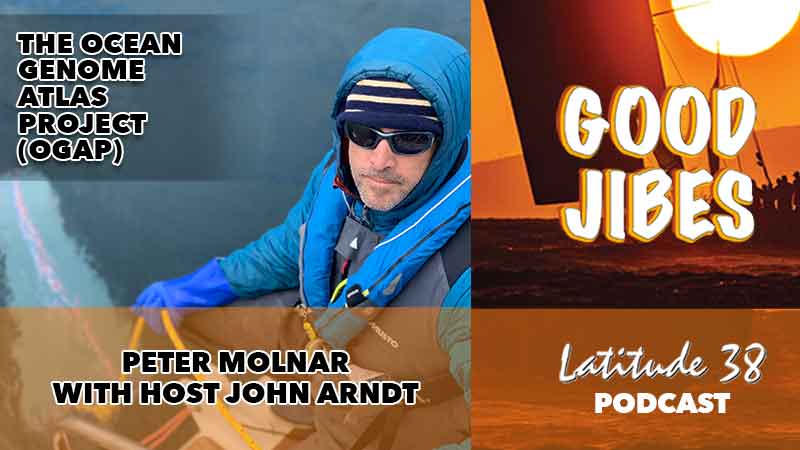
Hear how sailing brought Peter’s family to the Bay Area, why he started looking under the water, the super cool tech behind the OGAP boats, a status report on the health of the Bay today, and what we can learn from Copenhagen when it comes to the water.
Here’s a small sample of what you will hear in this episode:
- Harmful algae blooms, the sturgeon die-off, and the fight over nutrient loads
- Starlink changes everything: realtime AI analysis in the middle of the ocean
- The birth of OGAP
- From racing on the water to caring about what’s in it
- What ocean genome data means for fisheries and the food web
Listen to the episode on Apple Podcasts, Spotify, and your other favorite podcast spots –— follow and leave a 5-star review if you’re feeling the Good Jibes!
Learn more about Peter and help out the mission at OGAPvoyage.org
Check out the episode and show notes below for much more detail.
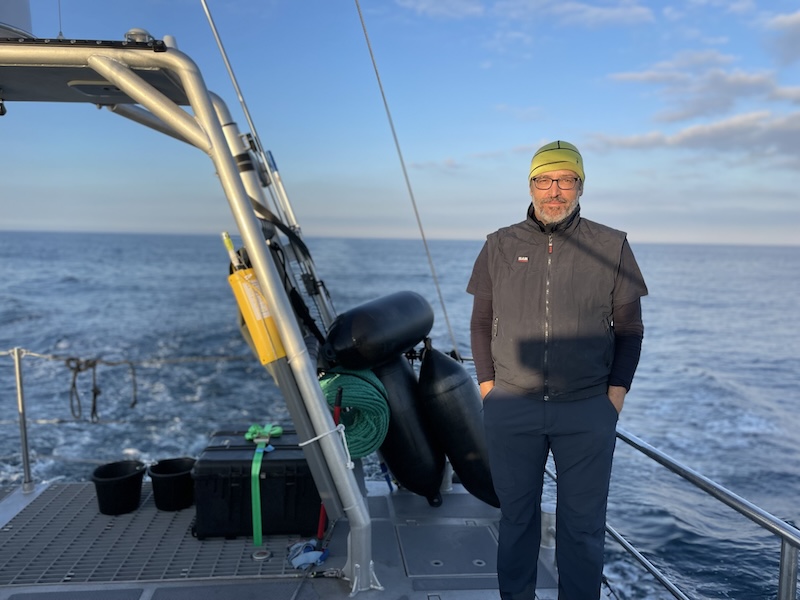
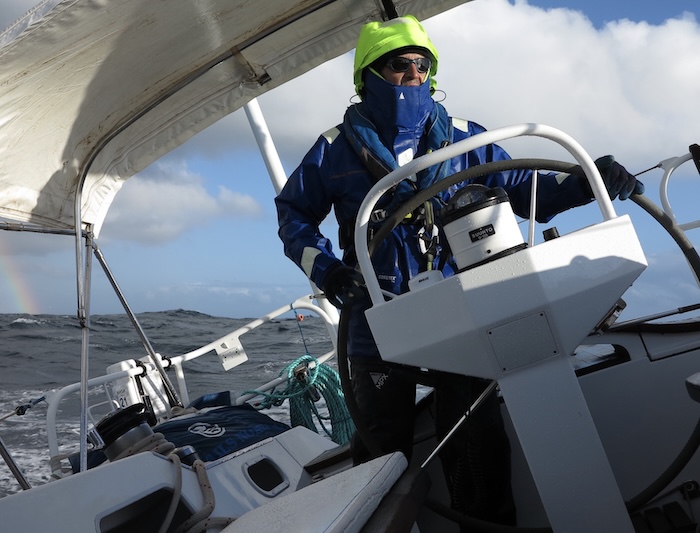
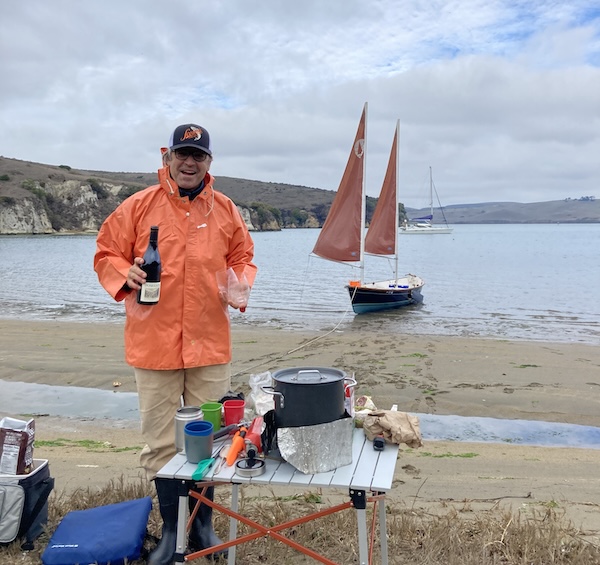
Show Notes:
- Peter Molnar on the Ocean Genome Atlas Project (OGAP), with Host John Arndt
- [0:14] Welcome to Good Jibes with Latitude 38
- [0:43] Welcome aboard, Peter Molnar!
- [1:42] Peter’s origin story: sailing brought his family to San Francisco in 1956
- [3:35] Growing up racing on the Bay: Richmond Yacht Club, St. Francis, and the Sears Cup
- [5:53] Sailing roots run deep: star racers and the Royal Hungarian Yacht Club on Lake Balaton
- [7:19] From racing on the water to caring about what’s in it
- [8:41] San Francisco Baykeeper: pollution patrol and asking “does it have to be like this?”
- [10:34] The birth of OGAP: putting cutting-edge science on sailboats
- [12:29] eDNA, single-cell genomics, and why the ocean is the least-understood biosphere on Earth
- [15:52] Three platforms: research vessels, partner boats, and remote shipping-container labs
- [19:13] Starlink changes everything: real-time AI analysis in the middle of the ocean
- [21:40] Learn more about Shearwater Sailing at ShearwaterSailing.net
- The Ocean Genome Atlas Project
- [22:36] How OGAP got started: plankton sampling from Cabo to Oahu in 2017
- [25:32] The breakthrough conversation: why research vessels are too big, too loud, too expensive
- [27:25] How OGAP is funded: 501(c)(3), NSF, NIH, and private donors
- [29:18] What ocean genome data means for fisheries and the food web
- [32:05] Back to the Bay: how much healthier is San Francisco Bay than decades ago?
- [34:24] Harmful algae blooms, the sturgeon die-off, and the fight over nutrient loads
- [37:43] Sea level rise and 1,300 legacy industrial pollution sites racing against the tide
- [38:40] Learn more about Shearwater Sailing at ShearwaterSailing.net
- The Health of the Bay
- [39:48] Are boaters a significant polluter? (Spoiler: not really)
- [42:14] Copenhagen as a model: a thriving urban waterfront and a clean bay are not incompatible
- [43:37] The Farallon Patrol and volunteering with Point Blue
- [44:32] How to get involved with OGAP: sailors, scientists, and supporters at ogapvoyage.org
- [45:29] Swimming the Sacramento River, Lake Tahoe, and the Bay with Team Poseidon
- [48:46] Full circle: the Bay as community, and what Latitude 38 means to West Coast sailors
- Check out the March 2026 issue of Latitude 38 Sailing Magazine
- Make sure to follow Good Jibes with Latitude 38 on your favorite podcast spot and leave us a 5-star review on Apple Podcasts
- Theme Song: Pineapple Dream by SOLXIS
Transcript:
Please note: this transcript is not 100% accurate.
00:03
The health of the Bay is good. It’s improved.
00:14
Well, hi everyone and welcome back aboard the good ship, Good Jibes with Latitude 38. We’re casting off to have another episode of Latitude 38’s weekly Good Jibes where we explore the world of sailing through the eyes of West Coast sailors. And this episode is brought to you by Shearwater Sailing, offering births aboard the FAR 58 Atalanta to Hawaii this summer. And it’s also brought to you by Latitude 38, the sailing magazine for West Coast sailors since 1977.
00:45
guest today is Bay Area sailor Peter Molnar. Peter, welcome aboard. Thank you so much, John. It’s good to be with you guys. Latitude 38 was a big part of my sailing upbringing here in San Francisco Bay. Yeah, great. yeah, we wrote a story about you in the February issue, or I should say, Ali Noble, for a great story about your current project. And I learned a bit about what you’re doing, and I’ve learned a lot more since. But you’ve done a lot of things with
01:15
I’ll say OGAAP, is Ocean Genome Atlas Project, uh and skippering a boat around the Pacific Northwest, collecting the genome of the ocean. And he’s been a ranked competitive sailor, guess, in high school and college, and done the National Outshore Leadership School, a patrol and chair of the San Francisco Baykeeper, and working in the Greater Fairlands National Marine Sanctuary, and a whole lot of stuff that.
01:42
I guess when you get involved in sailing in the ocean, you start to explore more than just the wind and the sails, but the ocean you’re sailing on. And I think that’s, uh, we’d love to learn a little bit more about all of that, but, just kick off. Wanted to just maybe hear a story from you about how did you get so involved with sailing or what, what started you and got you, uh, so compelled to stay in it. Well, sailing brought my family to San Francisco as it turns out in 1956.
02:11
My father with his first wife uh came here as guests of Henry Luce, who had owned Time Magazine and Sports Illustrated. She had defected after winning a gold medal at the Melbourne Olympics in 1956 in gymnastics. And she and my father and a number of defectors from that Olympic team during the revolution of 56.
02:35
came on the Hungarian Freedom Fighters Tour, which was sponsored by then new magazine called Sports Illustrated. And they were flown through from Melbourne to Tahiti, Tahiti, Hawaii, Hawaii, San Francisco. And they were met by the mayor of San Francisco and the governor of California. And they spent their first night at the Mark Hopkins Hotel. The long story of this is that my dad looked out the window and he saw all the wind and all the sailboats. And he just said, this is the place for me. And after
03:05
They toured the country for this part of this promotional thing for Sports Illustrated. It was the height of the Cold War. It’s a long and interesting story. But they decided to move back to San Francisco because my dad could sail. So um he said that the coffee was bad. The cars were cheap, relatively. um So he bought a coffee maker, an old car, and a sailboat the first year he was here. And he and his buddies got together and bought a Japanese wooden boat, a 26-footer. It was called a Maya.
03:35
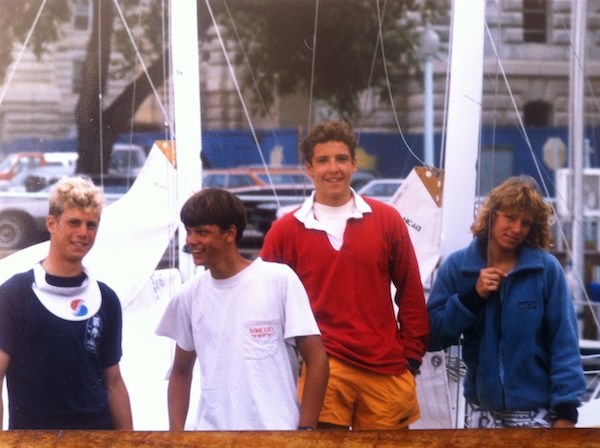
And as it happens, some years later, I went out on that boat for my first sail when I was three months old in the spring of 1968. we had that boat. We had a Cal 25. We had a J30. We had a 105. I grew up racing out of the Richmond Yacht Club program. I was invited to join the St. Francis program, which I captained in my senior year of high school. did the Sears Cup.
04:02
with Seed and Weissen and a group of four of us. you know, banging around in the 80s in the San Francisco Bay was just so fantastic. You know, was a height of, you know, Paul K. Art and John Gosteki was right ahead of us. I signed up for the heavy weather slalom when I was 17, 16 years old. I couldn’t even make it to the start line because I had an old laser. It filled with water and I was probably all of 145 pounds, but
04:31
Um, you know, it was just a great period of time in to sail and to race. were so many great teachers and coaches at both those clubs. And, um, you know, the hook just set really deep as many, does for many, many people in San Francisco. And I think at, know, one of the things you’ve heard us all say is so many times that if you can learn how to sail here, you can sail anywhere. And so I, this, just gave me this, um, set of skills, obviously, but that’s, you know, that’s part of it.
05:00
I think what really is just the excitement of the ocean and the Bay that we have. And it’s been a huge part of my life ever since. So, yeah. Well, that sounds like a great start. I think that era with the laser and as you say, John Kostacki, Paul K. R. Russell Vestry, John Bertran and yeah, Seedon and yeah, I just did a podcast actually with John Sweeney, which will be coming out. was sailing in that era too with all of that.
05:27
What a great year on the bay. But of course the bay hasn’t changed and it’s still great sailing. And we’ve maybe adjusted the way we sail, but it’s incredible. but your dad looked out the window and saw these sailboats. Was he a sailor before that? did he? was. Yeah, that’s a good question. As it happens, both sides of my family, my mom’s side and my dad’s side were sailors way back on Lake Boloton, which is the largest lake in Central, in Europe.
05:53
Yeah, it’s incredibly active small boat fleet. My dad was a star racer. ah My uncle was star European champion. My godfather went to the Olympics in star in 1960 ah in Rome. So I think my great grandfather started at that time it was called the Royal Hungarian Yacht Club. So they were sailing at that time well over 100 years uh and mainly dinghies and
06:23
and it’s still a fantastic place to sail. If anybody has a chance to get to Central Europe, an afternoon sailing on Lake Balaton is really a lovely, lovely pursuit. Not as salty, but it can be as windy as San Francisco Bay. Yeah, yeah. Well, and the star boat goes way back. Right now, you may know the 99th Bacardi Cup is going on, which is Star Regatta and Biscayne Bay. K. Art, I think, won the first three races so far, happening right now. the star… uh
06:52
The Starfleet is still super active and of course, yeah, it’s a hundred years old. It’s almost a hundred years old this event there. But well, that sounds like a great start. somewhere, yeah, you got to heck of a start doing all the racing and on the surface of the water, your life started to peer under the water and all these other, I think connections with the ocean itself and the health of the ocean. And maybe where did that shift from?
07:19
You’re still sailing now, but maybe start looking under the water and the condition of the water and the health of the bay and ocean beyond. How did that get started? Yeah, you know, I think when you when you turtle your laser and you get the top of your mask stuck in Richmond Bay mud, I did more than once. I got to clean clean that off.
07:41
You know, it’s just a visceral experience to drive around a laser when you’re 16 and 20 plus knots of wind. So you are in the water as much as you are on top of the water. And I think for me, the, the growing up in California in the time that we did in 1968, I was born, but you know, the environmental movement and the concern about and the understanding of what was going on both in the Bay, but you know, the Sierras, I did tons of hiking and climbing in the Sierras and skiing and all these sorts of things.
08:11
I mean, it was just in the air when we were growing up, know, like people cared about it. And it was a big deal. the Save the Bay was one of the early proponents. I’m a San Francisco Baykeeper, but you know, that was the time. And I think it just seeps into you. You know, it was just something that I felt like, well, if I’m going to use it and I enjoy it, I also want to help take care of it. So when I moved back to the San Francisco Bay in 1995, 94, I actually joined the dolphin club. became a Bay swimmer, continued to sail.
08:41
started working as a pollution patrol skipper for San Francisco Baykeeper. I’m just like, you you remember when you could sail up and down the Alameda channel or the Richmond channel, it’s just pretty industrial and not very attractive. And you had this feeling like, think we can do better than this. Does this have to be like this? Like, I just kept asking myself, I remember I have a picture of myself in a laser and it was this huge pile of scrap metal waste.
09:08
right on the edge of the water, right behind where the old natural gas tower was in Richmond. Do you remember the big green one? I think that was a natural gas tower. can’t remember what it was, but that was our landmark to get home very often. You can see that in even the deep fog. But yeah, I think it just was a little bit of that. And so when I got older and started thinking about where I wanted to spend my time and my energy and my skills as they are,
09:37
I think that was a natural for me. Yeah. And when you say your skills, are, what did you study that got you into the ocean biology and natural universe there? I’ve never officially studied ocean biology. I spent most of my time supporting scientists and advocates in their work through my sailing. So I studied economics and went on to my professional work is in agriculture, mainly wine.
10:06
Really early on, I was doing environmental work with Baykeeper starting in 1995. I um also was an instructor for the National Hydro Leadership School. We used to do remote sailing trips. They still do in Baja in British Columbia, two, three weeks on small and medium sized vessels and natural history and environmental education were big part of that. So it was a combination of just using my sailing.
10:34
my love of sailing and my skills of sailing and putting together expeditions and the logistics has kind of grown over time to what we do now with the Ocean Genome Atlas Project, but it was a progression. Yeah, right. And how long has the Ocean Genome Atlas Project been around it and maybe what’s its mission? maybe we can explain what it’s doing. the Ocean Genome Atlas Project is essentially
11:02
creating the logistical organization, vessels, crews, and funding to bring cutting edge scientists out to sea who are doing a wide range of analysis of the ocean and marine environment. And these scientists are taking the most advanced molecular biology tools from laboratories and deploying them in some of the most remote
11:30
remote parts of the world. have a vessel right now that’s actually just in Puerto Mons after a trip from Cape Horn to Antarctica back up, taking samples and doing work on our behalf. So the point here is that there is so little that we know of the ocean. So if you look at the rough numbers, we know maybe 10 % of the species. If you look at the myofauna, the smaller species, really the basis of the food web, we’re probably talking about less than 1%.
11:59
The vast majority of all life on this planet is in the ocean. You know, it is 70 plus percent of the surface of the ocean. But if you actually look at the volume of life, it’s by far the biggest biosphere in the world. And we know very little about it. And we’ve had very few tools to look at it in great depth. So in the last 20 years from the ocean, from the Human Genome Project, essentially a series of tools have come about. uh Sequencing, shotgun sequencing, sometimes called EDNA now.
12:29
uh single cell biology, single cell genomics. And there’s been sort of a long tail. Those types of technologies are driven by advanced medical research, typically the brain or cancer. That’s where the money is and that’s where the research is done. So those tools come out of there. Now, let me give you an example that EDNA and a lot of people are talking about and using now for understanding the ecosystem. That’s basically you can take fragments of DNA
12:58
from a tidal pool or from the middle of the ocean or from wherever and compare it to a reference base. And from even fragments of DNA, you’re able to find out what lives there. Super powerful, super interesting. There’s a lot of great work being done. John, that is a 20 plus year old technology. Wow. It took 20 years for that to become widely accepted and used in the marine environment, partly because the money’s not there. Partly because before it was too expensive.
13:27
So what we’re trying to do is not, let’s not wait 20 years. are advances in understanding how biology really works at the single cell level. And if you want, can tell you why that’s so important. There are jumping within months through AI and through a number of different technologies. We want to deploy those onto vessels and laboratories and shoreside laboratories within months or years and not decades. Right. Because of potential understanding of how ecosystems truly work.
13:57
how they stay stable, why organisms thrive, why they don’t thrive, how will they deal with a changing climate? You really have to go down to the single cell to really track how things are, why they live, why they live there, how they live and how they still healthy. That’s our work. We’re hoping that our techniques will be replicable, not just by our organizations, but by others. And our job is really assembling these
14:25
these sophisticated laboratories and putting them on a boat, putting them on a boat, somebody else’s boat, putting one on our research vessels, putting it onto some other research donated vessels time, or even remote laboratories, which is basically like you take a shipping container and you put an advanced genomic laboratory and you send it to a remote island in the South Pacific or the coast of Africa or places that have never had access to that kind of technology. And you’re able to bring the data to life.
14:54
stream it immediately through Starlink and other technologies and change the game. Yeah, yeah. Where does all that data feed into or who gets to look at all this data and then and how does it get shared or deployed? Like, because all that incoming is going to be a lot to manage. It is a lot to manage, even though it’s in our name. uh We don’t actually spend at this time. We’re not collecting the data and archiving the data yet. We are collaborating.
15:23
institutions such as the University of Florida, we do a lot of work with them. They have protocols both to process the data and also share it and make sure it’s publicly shared data. So this is all data that could be used by a wide range of scientists, whether they’re on the boat or not. So working with academic institutions is how we manage the data. We host those scientists. And uh part of our agreement is that that science will all be
15:52
uh open source for other scientists to use. Most of that data comes out through the typical scientific publishing process. There are journals, Nature, Science, et cetera, where a lot of this data is eventually uh put in a hypothesis and published. That’s the number one conduit. Is this something somebody with a sailboat could sign up and get involved with, or are you building your own boats, or how do you connect with?
16:20
getting the right boats to send out into the ocean? Our first and foremost, our core is basically assembling the laboratories on those boats. Now we can have various levels of laboratories. If we’re talking about high resolution genomic data, you’re talking about pieces of equipment that are quarter million dollars a piece, oh very sensitive, may or may not work in the uh marine environment. So let me just give you three different levels. The first level is essentially
16:48
our own vessels. have a vessel here that we use as a platform. It’s a 48 foot Garcia called Sam. That’s on the bay. It’s on the bay, but that’s the vessel we took down to Baja across to Hawaii, around Hawaii, up to the Aleutian Islands, and then down the British Columbia coast twice back and forth. that was a big long run. But we’ve also have a vessel in Holland that we’re rebuilding. It’s a 65 foot aluminum cutter.
17:17
at the shipyard KM. They’re the ones who do all the best of their boats, vessels. They’ve been great collaborators. We’re actually now in the middle of finishing the full planning stages and we’ll be putting a welding torch to haul here in the spring. But that is going to be a fully, the first vessel of its kind that we know of that will be fully capable of actually sequencing at sea.
17:47
Where is that being built? In Macomb, Holland. The vessel was built 2005, very capable out of Cancer Shipyard in Ontario. But we’re retrofitting it to a research vessel. The other platform is that we use other people’s vessels. We can put equipment on board with a scientist. And the fourth category is essentially using vessels that don’t have a scientist on board. And we could give people kits.
18:16
and they could do the work as they go. That is still in the future for development because what we found is we trickle down these techniques as we learn them on the various vessels and we want to make them reliable. To be scientifically accepted, there’s a lot of different protocols that need to be followed. Documented. Right, for the data to be kind of, you know, past muster, so to speak. But the equipment’s getting much cheaper.
18:45
The training is getting much easier with AI and videos and all kinds of different ways that we can do it. And also Starlink is a big game changer because suddenly we can correspond with people in real time and do Zoom calls. mean, we were… Yeah, you can say push that button. I remember we were up in British Columbia, very remote parts near Hidigwaya. We had two Zoom meetings going on in the boat at the same time. And that’s, you know, including…
19:13
Updates including uploading images and videos of our organisms and getting AI reads on them in the amount of time it takes to make a pot of coffee. Wow, that’s incredible. And these are are these are sailboats generally and you have a predisposition to using sail or is this a I do. do. um The sailboats are our default. I mean, we will use vest motor motor vessels. The biggest one is vibration. Yeah. Oh, OK.
19:43
These equipment and the videography that we do. So our methodology is to do high resolution photo photography and videography, and then also prepare the samples for genomic sequencing again off the vessel at this time, but hopefully on the vessel in the near future. The two together are really important. You see what the organism is doing and then you can see what the organ in real life. Is it eating? Is it reproducing? And then you also look and you say, well, what’s actually happening at the cellular level?
20:13
To do that kind of work, whether it’s the videography or the analysis and the sampling and the sequencing, vibration of any kind is really hard. Most motor vessels are always running and they’re not built to be dampened even when you have the generator on. So motor boats, generally their auxiliary power is much less horsepower, but when it runs, it’s much quieter and you don’t have to run all the time.
20:43
Yeah. All right. So that’s number one. Number two cost. Yeah. You know, you can hope you can. I think our 50 foot car, see, I use one and a quarter gallons an hour. You’re talking about research vessels that cost John 25 to $50,000 a day. The big ones that we all know. But even, even a mid size, say 60, 70, 80 foot motor vessel.
21:11
The fuel bill and maintenance can run up very quickly. Sailboats just don’t have that cost. Are you looking to spend some time on a serious offshore sailing yacht and you don’t have one? No problem. You can join Shearwater Sailing on their custom FAR 53 Fast Cruiser Atalanta. They have a variety of sailing adventures just for you. From day sails on Monterey Bay to coastal hops up and down the coast of California or
21:40
ASA sailing courses. And guess what? This summer, they even have a trip sailing to Hawaii and back. That’s right. These trips are fun, hands-on, instructional, and built for sailors like you, who want real experience on the water. Find more information about Atalanta and upcoming trips at shearwatersailing.net. I have heard from Kevin that the Hawaii trip spots are limited, so you need to act fast. Departure is mid-August.
22:09
and the return will be mid-September. And guess what? You can join either leg. You can sail to Hawaii or back from Hawaii or you can do both. Visit shearwatersailing.net to secure your spot now. Again, that’s shearwatersailing, S-H-E-A-R-W-A-T-E-R, sailing.net. Yeah, well that’s of course one reason a lot of people sail. It’s, and you know, the wind.
22:36
The wind powers you along and the quiet is something everybody seems to enjoy. Not have that thrumming engine, know, disturbing you, nevermind the microorganisms. Wow, that’s incredible. these boats, well, again, how long has this been going on with OGAAP and when did that start? My first introduction to this world was 2017. Wow, okay. I ran across a group called Seakeepers based out of Florida.
23:07
We were planning our passage from Cabo San Lucas to Oahu. And I connected them and they said, do you have, we scientists that would be interested. we had Dr. Leonid Moroz’s laboratory, Dr. Gabby Winters, now Dr. Gabriel Winters joined us. And we took plankton samples all the way across the 2,600 miles, twice a day. would drop two nets and we would just preserve those samples for further analysis.
23:36
So that was the beginning. The next year, we did a circumnavigation of Hawaiian islands and Dr. Moroes himself came out. Lee Enid is an amazing scientist and he was the first person to ever sequence an organism at sea in 2013 and 14 in a Gulf Stream off of Florida on a 141 foot vessel. What they did is they put a
24:03
shipping container on top of a 140 foot pleasure yacht and essentially built, rebuilt what you would find in any normal genomic laboratory in the university. That sequencing at sea that he did for the first time gave some breakthrough analysis on the very beginnings of complex animal life on this planet. There’s a big debate whether it was sponges, which are actually an animal, or tina forest, which are these absolutely beautiful
24:32
Organisms called come jellies. I won’t go into the But it really is very critical to understand because everything branches from these first organisms and the basic architecture of all animal life on this from small plankton all the way up is based on those early days and so Essentially well after a week of sampling across the Hawaiian Islands. It was awesome. You know, they were whales out and Rainbows and the organisms are just stunningly beautiful
25:02
under the microscope. So I started to understand the implications of this work, um both for understanding biology, health, Alzheimer’s, cancer, all kinds of different implications potentially. I asked, I remember we were off between Molokai and Oahu, and I said, Leon, listen, this has been a great week. We would, all of us would do this again. You know, this has been very amazing, amazing experience, amazing learning, amazing organisms. But be honest with me.
25:32
Is this really worth it? Is this really valuable for science? And Leon, it turns me around the back deck, sugar scoop of the boat and vessel. And he says, the biggest impediment to understand the oceans is the cost and complexity of their research vessels. They’re too big. They vibrate too much. They cost too much. You have to put multiple teams on there for too short of a time.
25:59
Nobody can ever do the work that they that they want to do in the time and the manner and the length they need to do it to really have the breakthroughs that we need for understanding how the ocean works. And I just like, hey, this is a problem we could this is a problem we can solve. Yeah, yeah. This is a problem we can solve. Imagine, John, for a second, if you took five percent. Of the engineering know how the shipyard know how the craftsmen.
26:29
the money, the Naval architects that currently go into pleasure sailing and yachting. Nothing wrong with it. We all do it. We all love it. But if you took 5%, let’s just pick a number, it would be a game changer. Mark Miller, who was the commander of Noah’s fleet, colleague of mine, a friend of mine, retired because he could not get the Navy, not the Navy, he could not get the Coast Guard and Noah to entertain smaller vessels.
26:58
Everybody wants to build these big ones. $250 million a piece, whatever the number is, $50,000 a day, et cetera. He said, this was now before the pandemic, I think it was 2019, they had 17,000 scientist days they couldn’t fulfill. Request scientists who they couldn’t put on the boats. didn’t have the room, they didn’t have the capacity. So this is a problem.
27:25
And this is a problem that we can solve. So I think from our OGAF’s point of view, it’s a pretty simple proposition. Like what platforms, how many vessels can we get out there? And can we get some of these leading scientists to do work that otherwise they only dream of? Yeah. Yeah. Well, how was OGAF funded? So where do you get the money? a of, yeah, it’s a, for we are a 501C3 is established in the state of California. We established in 2021. So we’re nearing our fifth.
27:53
a few months, our fifth anniversary. uh We get a combination of private funds and we get a combination of funds through our academic partners, usually National Science Foundation and the National Institutes of Health. Those are typically the biggest funders. those are our two private monies, individuals um and the academic, which is usually through the United States government.
28:21
of which we are actually beneficiary to, are a co-applicant in those. And the final one is foundations. And in fact, as it happens this afternoon, we’re meeting with the foundation who’s looking into our work right now. Right, great. What about commercial fishing? Or is there a fishing, is there commercial fishing interest in this kind of work or is it any related? It’s funny, we, he should say, I remember we were in Kodiak Island on that route above from Aleutians.
28:49
And we rafted up with some salmon fishermen. And, uh, you know, those are short nights, but we didn’t, we saw the dawn. We had some, we had some really good whiskey in the cabin and we talked about this with them quite a bit. One of our crew members knew one of those guys. Yeah. The implications are, can be, um, significant. Currently. When you see baselining how the ocean works is a huge challenge already. So we have lots of.
29:18
remote sensing buoys, have satellite data, et cetera. But baselining how life actually works, especially at the food web level, know, the basis of the food chain for fish and fish stocks, that’s still got a long way to go because of the cost and difficulty of doing that work. It’s early days and how that would be applied. But let me give you an example. If you…
29:44
really look at the food web, it is small plankton eating smaller plankton, eating smaller plankton all the way down. Yeah. And all the way up. When populations decline at this point, we can measure the decline, but we don’t often know what it is and what causes it. Our, our belief is that when you can read the biochemical machinery inside the cells as these organisms function. So, you know, the proteins, the DNA, the RNA, all the rest of it.
30:13
If something is off there, we can start to look for causes. That’s, for example, a good outcome. But first, you have to baseline it to see what healthy populations look like. that’s something that I think is an impact. Let me give you an example of those. We were up in British Columbia. We have a van that we use as a research vessel, a long-springer van, a cargo van. It’s on a vessel, a research lab.
30:42
And we use a small aluminum vessel to go out sailing, basically a covered fishing boat. And we went out and got samples in the very, very remote fjords in the Northwest of Vancouver Island. We were shocked at the populations we found. In late August, not high plankton season, usually in the spring, the concentrations of different organisms were much higher than we thought.
31:11
much wider range of different developmental stages. Same thing happened off the coast of Greenland two years ago when we were doing the fjords up there. So for example, going to fishing, we’re thinking about is these fjords actually may be nurseries, specific nurseries for specific types of plankton that then go out and feed the population of plankton in the larger ocean. So if we think about
31:38
ocean protection and fisheries protection and making sure fisheries are working well, we may have to really focus on some very specific parts of the coastline where it’s the basis of the food web. We have this imagination that life is equally distributed across the ocean. Well, anybody who’s walked from Marin County out to Salt Lake City knows that life is not equally distributed. Yeah. It’s pretty barren in some spots.
32:05
When you’re out there in Elko, Nevada, know, I love Elko, but you know, it’s a desert. And so the same thing happens underwater. We need to know where those hotspots are. Sometimes we call those the tipping points on the ocean. Wow. Well, maybe look back closer to home here too in thinking of this, because obviously you’re sampling the ocean at a particular point in time. It was probably very different 100 years ago. But also
32:30
the bay and the baykeepers work. I think there you are starting out swimming with a dolphin club. And I think a lot of people don’t realize how much swimming goes on in the bay and it’s often dirty. You maybe don’t want to three days after a day after a three day rainstorm because the outflows. But how much cleaner is the bay than it was 20, 40, 60 years ago? I mean, I think there’s a lot more porpoises. We’ve seen what feels like a lot more whales in the bay.
32:59
30 years ago, but how’s the health of the Bay? The health of the Bay is good. Yeah. It’s improved. The San Francisco Estuary Institute, if people are interested, is the independent organization that does reports on the Bay every year. One year they do Bay chemistry, the next year they do Bay biology, and then they alternate those year to year. So they’ve been doing those now for decades. um
33:27
In many, for many markers, uh the bay is healthier than it’s been. uh Pollution is down, raw sewage is down, nutrient flows are downish. And that means sort of fertilizers and… Fertilizers and also treated sewage. Treated sewage, okay. Which is not toxic, but it’s nutritious and it feeds… Algae bloom. Algae bloom, for example.
33:56
Yeah. We’re happy to report that the Bay is doing better. There’s been a lot of advocacy and a lot of concern, a lot of technology that’s come on that’s allowed people and institutions and organizations to do a better job around the Bay. There are a ton, there are many threats as we know. Yeah. So San Francisco Baykeeper is a group of 15 scientists, attorneys, people who run the organization, fundraisers, et cetera, but they are
34:24
They have a long-term strategy, and I say this, they have been involved. I was a board member, I was a board chair. I’m still a skipper and a board chair. But there’s a very specific set of threats that we assess and we develop multi-year plans for addressing those threats. So let me give you harmful algae blooms as a good example. Yeah, I mean, they were pretty, we had some.
34:51
Two years ago, seemed like there was a very big bloom now, I think almost three years ago, maybe before, but algae in itself is not harmful. Algae when it blooms is because basically it sucks all the oxygen out of the ocean, out of the water and everything dies. We had a huge die off that are very, very ancient sturgeon population during that, during that algae bloom. It started, was first seen down at the inlet between Alameda and
35:21
Lake Merritt, and it spread across the whole bay. was that rusty brown color, rusty red color. We were shocked at how quickly it moved. We were shocked at how widespread it was. The tipping points for these are basically warmth and nutrients. We have a cold bay. We have lots of tidal exchange. We’re getting very lucky.
35:48
But what we want to avoid is the ecosystem collapse that happened in Chesapeake Bay, which is shallow, big, and warm. And unfortunately, we may be getting to that point. The biggest problem is that we have the highest nutrient loads of any estuary in the country. And that is the 20 plus, I think it’s 25 major sewage facilities that are cleaning the sewage. So again, it’s treated sewage.
36:16
but it’s full of nitrogen and phosphorus when it comes out and it just feeds everything. So one of the things that Baykeeper has done based, we’ve been, we’ve been worried about it for a long time and Stockton’s had issues with this for Stockton. have the sewage issue. also have agricultural runoff up there, but we have, when this thing blew up, we went to the regulators and said every 10 years they come out with a set of targets for how much nutrients and other things they can. It’s called.
36:46
total daily maximum TMDLs, total daily maximum loads. And they give a number. They said, these are the legal amounts of nutrients that you could put. Well, through our advocacy and the general press and people’s pressure on it, they did a 30, I think 30 or 40 % reduction of nutrients in this last round of permits, which is great. Our scientists think if we can get it to 70 % of what it was, we’d get this table off. We would take this issue off the table forever. Yeah. Wow.
37:15
Right? We can do it, by the way. It’s going to cost $14 billion, as you have to admit, across all those facilities. But let’s put this in perspective. We’re putting 12 to extend the BART train down to South Bay. Wow. So it’s a huge amount of money, but it is doable. I always tell people if they put a quarter on top of their toilet every time they flush for the next five years, we’d all pay for this. But it is doable. So those are the kinds of pressures.
37:43
One of the things we’re also working a lot on is sea level rise. We don’t know how much it’s going to rise and how quickly, but we do know and we have mapped about 1300 or so legacy industrial pollution sites that are currently above water that will get underwater and then you can’t clean them up. So we have two decades, three decades, depends on how you calculate, to clean those up before
38:13
the disaster of them getting flooded. And some of them are even getting flooded now because the water is seeping underneath them and drawing out these. And we’re talking about, you remember that we had a big military industrial complex here. had munitions manufacturing, we ship manufacturing. There’s a lot of legacy sites. We know where they are. We know we can clean them up. But figuring out the regulatory push to do that is no small feat. So these some of the things we’re working on.
38:40
Ahoy! Ryan Follin here, one of your Good Gybes podcast hosts. And I’m here today to tell you that this episode is brought to you in part by a past Good Gybes guest, Kevin Waspauer of Shearwater Sailing. If his story stuck with you, you can actually go sailing with him. Kevin runs Shearwater Sailing aboard Atalanta, a custom Far 53, a fast performance cruiser. They offer everything from day sails on Monterey Bay to coastal passages
39:10
up and down California to ASA sailing courses and offshore trips. And coming up soon, they are sailing to Hawaii and back. That’s right. The Hawaii leg departs mid-August with the return mid-September. spots are limited. You can join either leg to or from Hawaii or you can do both legs. To learn more about Kevin and see what’s on the calendar, head over to shearwatersailing.net.
39:38
That’s ShearwaterSailing.net. S-H-E-A-R-W-A-T-E-R-Sailing.net.
39:48
Just a sense for recreational boaters, we know there’s pump outs and it seems to me the culture of boating now is pretty well adopted, adapted to using all of that. Are boaters a significant contribution? You my sense is no, I mean, obviously there’s a lot of boats, but a lot of it is this either agricultural, municipal, commercial or legacy industrial sites has much more impact than boaters, but obviously we should do our part.
40:17
Right. look, I can’t speak for the organization officially, but what I will say that our thinking, I mean, I’m on the board, but still our thinking is that we have five to seven million people who live around the Bay, depending on how far you draw the line. We all live here. We all do things. We drive. We use, we use our toilets. We have boats. have, you know, we’re living a life and we’re enjoying this incredible place to live in Northern California.
40:47
Can we do it the best way that we can? we often for industrial facilities, it’s called best operating practices, right? And the various terms, but what we’re pushing for or asking for is that let’s improve the technologies and the practices, whether it’s pumping out our vessels or running Chevron. The technology exists. can.
41:16
We can boat, can, well refining oil is hard to do with no impact, but my point, you see my point. We can run, run, mean, those little sewage facilities much better than we currently do. So to your question, no, boating impact is not very high on the scheme of things. Having said that, it is deeply appreciated and it’s part of the culture of living here. Like let’s do it the right way and not, let’s let that bay thrive.
41:44
Good behavior on the bay or however you act there is also maybe how you act on land. When you’re using the land facilities, same thing. Yeah, what do we do to minimize the impact at all levels? So. And again, it’s not, we’re not calling out people for being bad people for living and living their lives. The question is, can we continually improve the way we do things? I’ll give you a great example. Copenhagen, I don’t know if anybody, have you been there recently?
42:14
I remember being there in the eighties. uh My daughter was there and I visited her. You walk across the bridges, you can see all the way through the water crystal clear to the base of the bay of the harbor. There used to be an industrial working facility. There are swimming clubs up and down the canals, people swimming all times of the year, even in the winter for the crazy ones. But it’s a great example of how you can have a beautiful urbanest
42:43
urban setting and a thriving bay. The two are not incompatible. I think it’s false trade-off. Yeah. Well, and of course, Summer Olympics, they swam in the sand this year. They did. I don’t think that was quite as clean as I had hoped it would be at that time. But the point is, well, it’s doable. Yeah. They made giant strides forward. It may not be your club pool, but it’s
43:12
It’s certainly way, way better in the bay. mean, for all, mean, there’s a lot of people who swim in the bay all the time. And so that’s, that’s, that’s pretty amazing. But the other thing I just want to hear about the Farallon patrol and I I’ve done a run out there. I got to go as part of the Farallon patrol and walk the Island. And are you looking for boats uh to volunteer or what, or people to volunteer for that still? But is it blue point blue?
43:37
Point Blue does it. Yes, Point Blue does it. And they have a sign up through Point Blue. I don’t know how many current vessels there are, but I think they’re always looking for it. I don’t know them the organizational side. I have just volunteered my vessel and my crew. We’re actually going out March 14th for the next run. Oh, really? Great. Yeah. Yeah. You take a scientist out and a J105, you’re going?
44:04
Or that’s Sam. That’s Sam. It’s our 50 foot aluminum vessel. The Garcia. Yeah, the Garcia, yeah. Oh, yeah. Yeah. Oh, great. Well, that, yeah, I mean, that’s an amazing, another amazing research station and also a place and a great uh entity, think, that’s maintaining that and the scientists get in and out. That was a great trip for me to get part of, and it was really fun to see the island, as well as to see what the scientists are doing and uh trying to restore the environment here.
44:32
Well, great. I guess anything more about the, the OGAAP that we want to understand before we sign off or you, and you’ve got plenty of scientists and plenty of studies you want to do. there people, other ways people might get involved besides maybe donating money? uh Please visit our website, ogapvoyage.org, ogapvoyage.org, one word, no spaces. We are always looking to connect with.
45:00
talented sailors and people in the maritime community, engineers, naval architects and others. We have ongoing projects and we certainly want to have a list of people who are interested in contributing time and their knowledge. That’s number one. Number two, we’re continuing to expand the scientists that we’re working with. As you know, San Francisco Bay Area, Monterey is a hotbed of biology. And then number three, are always
45:29
looking for financial support for these vessels. We have various ways that people can contribute and all three of those are deeply appreciated. Yeah, yeah, terrific. Well, and you’re still out sailing the bay and are you still out swimming the bay? I am, swim. Two days ago, I’m gonna swim tomorrow. I… And that’s at the Dolphin Club? At the Dolphin Club, yeah. And we’ve also done some fun, a group of us called Team Poseidon, we do…
45:58
some fun adventure swims. We’ve done the swim from Sacramento down to San Francisco. That took us four days. We did a swim from Napa to Napa, Carneros to the dolphin club. That was a 24 hour swim. And last fall we swam around Lake Tahoe over four days. So. Oh my word. Okay. We like these kinds of fun and they’re relays and yeah, they’re, we’re not trying to break any records, but we usually raise some money for like we did for
46:27
keep Tahoe Blue, we raised some money for San Francisco Baykeeper. So yeah, it’s a great community to be more similar to the… If you’re crazy enough to try to dive between the Alcatraz and Pier 39 and 25 knots, or you’re crazy enough to swim in the winter, you’re good kind of crazy. Yeah, that sounds like… Wow, if everybody’s swimming from Stockton to the…
46:55
Sacramento, Sacramento to San Francisco. Yeah. Sacramento. So, I mean, obviously you’re trusting the water is pretty clean and pretty comfortable in the water for all. I I’ve spent a good, a fair, several weeks cruising the Delta, swimming the Delta. It’s, so much fun to have, able to cruise and swim there in the summer in fresh water and warm water. And so it’s, yeah, that’s a lot of swimming and a lot of time in the water. Yeah. I like it very much.
47:20
Um, yeah. And I have never gotten sick from the water, but I was just joking the other day. It somehow has bleached the color out of my hair, but that could be something at this stage. That’s must’ve been what happened to me too. Yeah. That’s right. That’s great. And so, and so, um, and you’re going sailing this weekend. said, are you racing? You have a J one Oh five or you racing? just going out sailing and, and, uh, during the weather. Yeah. I’ve done some, uh, single-handed stuff off the coast with it. Yep. Fairlawn space and so forth, but, uh, mainly just use it for sailing at this point.
47:50
Yeah, great fun. Yep. Well, that sounds great. What a great start to start here on the Bay 1956 with your dad landing here, looking out and going, what an amazing Bay. Obviously loads of people see these, the Bay out their windows, but not many people know how to get aboard it. Tonight we have our, or get on it. Today we have our crew party for latitude 38 at the Golden Gate Yacht Club, where we try and connect hopeful sailors, boat owners and crew. But we still feel like there’s so many people that
48:20
look at the bay like your dad did and think, how do I get on it? And it’s a great, great reward if you figure it out. And in latitude 38, as I mentioned before, you guys, the way that you have always made sailing a community and brought out the fun in it and the real peopleness of it, I think is a testament because, of course we always loved the America’s Cop and foiling this and all that kind of, but
48:46
The vast majority of people are out there just enjoying being on the bay and the way you guys presented is great. So thank you for all that work over the years. Well, thank you. Thank you for being one of those. You’re just going to go out and do that this weekend, go sail around. I think we’re big proponent. Yeah, the foiling and the cup and all this is fun, but uh there’s a lot more to sailing than just that. And I think uh it’s lucky we have so many great sailors to cover. It’s incredible. Absolutely. Bailing out in El Toro is…
49:13
You know, got to start somewhere. exactly. Sounds great. Well, Peter, thank you very much for your time. Really been great to learn more about what you’re doing and thanks for the work you’re doing to keep the Bay clean and the learn about the oceans, because I think obviously all humanity can be thankful for that. But sailors, too, when they get a face full of water and the foredeck or or fishermen going out to fish, um it’s really.
49:39
Great to keep the bay and the oceans healthy. So thanks for your work. I from a sailing point of view for sailors, I’ve seen this with all the crews that we brought out there. Everybody loves the ocean, but bringing out people and understanding how incredibly what incredible place it is and how important it is for the planet’s health as we all know, but actually seeing that in real under a microscope and hearing about it and being part of it, it gives a whole different dimension. Yeah, yeah, yeah. I’ve never got down to the microscope level, but.
50:09
Yeah, I’m ready to look. Yeah. Well, thank you. And, and we want to say thanks from Good Gybes and to our readers of Latitude 38 listeners of the Good Jibes podcast. And if you get on Apple or Spotify, give us a thumbs up and a review, share it with your friends. We’d love to have more listeners and readers of Latitude 38. And we’d love to see everybody reading or listening on the bay out enjoying what we have at our doorstep or up and down the California coast. So thank you very much.
50:38
Thank you, Peter. Thank you!