

Episode #235: Rod Scher on Historic Shipwrecks, With Host John Arndt
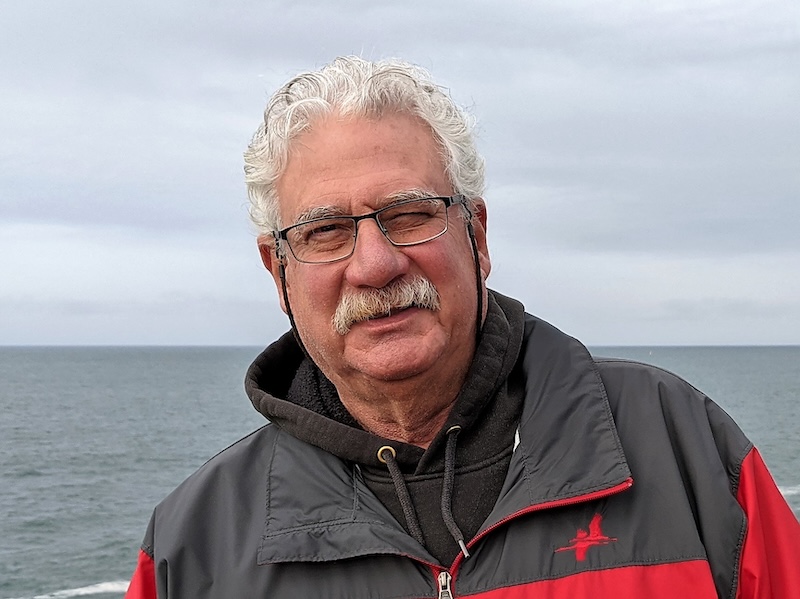
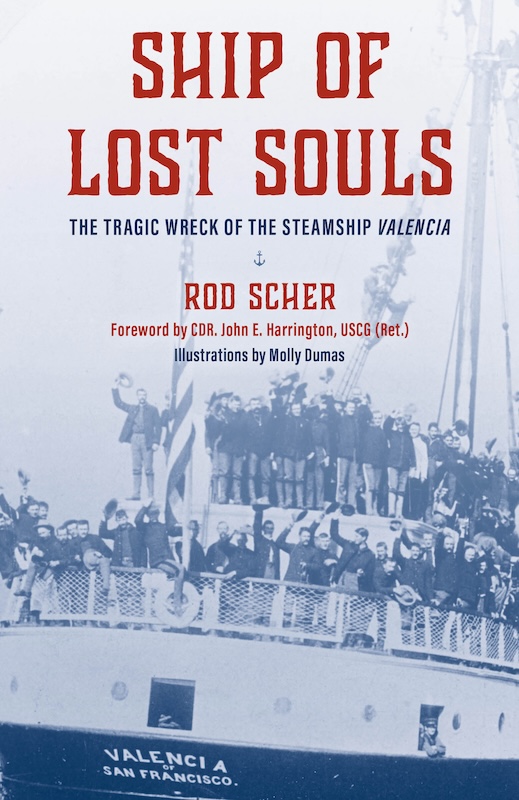
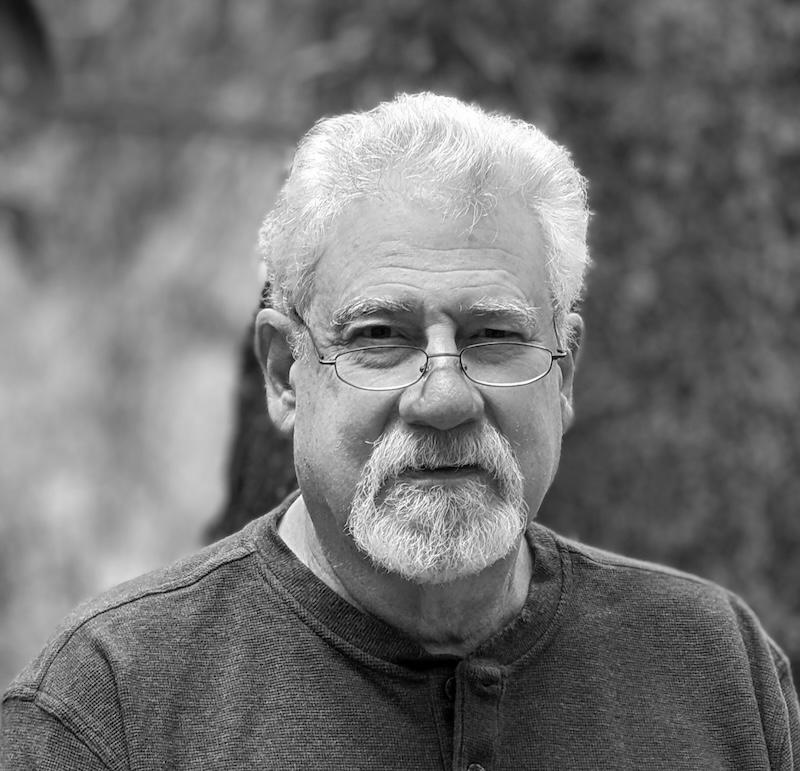
In today’s episode we catch up with with author Author Rod Scher to discuss what we can learn from some of the most fascinating and tragic shipwrecks in history. Rod has published several books including an annotation of Richard Henry Dana’s Two Years Before the Mast, Sailing by Starlight: The Remarkable Voyage of Globe Star in 2022, and Ship of Lost Souls: The Tragic Wreck of the Steamship Valencia in 2024. He is currently writing a book on the wreck of the steamship Pacific.
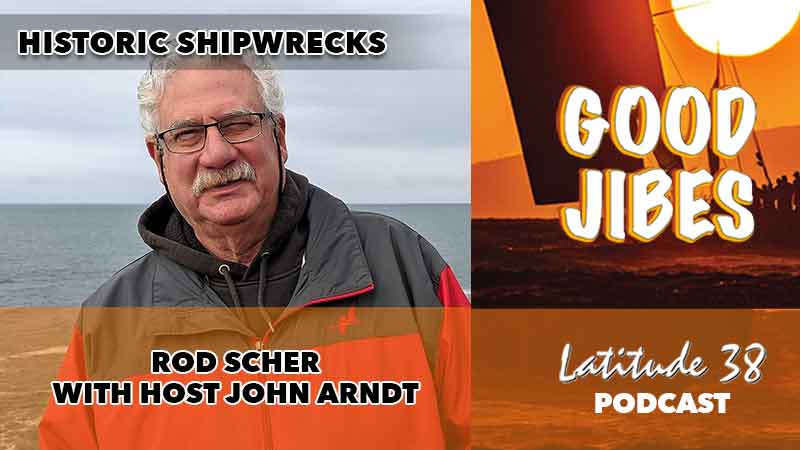
Hear about the mistakes that led to the wrecks of Valencia and Pacific, why you need to trust your instruments, how to avoid catastrophes, who is really in charge on the water, and why it’s important to read about disasters.
Here’s a small sample of what you will hear in this episode:
- Defining the Graveyard of the Pacific and its thousands of shipwrecks
- Captain Oscar Johnson’s cascade of fatal mistakes
- Life jackets made of tule reeds
- How the Titanic finally forced safety reforms
- The collision of the sailing ship Orpheus and the Pacific sinking in 15 minutes
Listen to the episode on Apple Podcasts, Spotify, and your other favorite podcast spots — follow and leave a 5-star review if you’re feeling the Good Jibes!
Learn more about Rod and check out his books at RodScher.com.
Check out the episode and show notes below for much more detail.
Show Notes
- Rod Scher on Historic Shipwrecks, with Host John Arndt
- [0:14] Welcome to Good Jibes with Latitude 38
- [0:48] Welcome aboard, Rod Scher!
- [1:15] Defining the Graveyard of the Pacific and its thousands of shipwrecks
- [2:16] Rod’s book on Marvin Creamer, who sailed around the world with no instruments: Sailing by Starlight
- [3:41] Why shipwrecks make compelling narratives
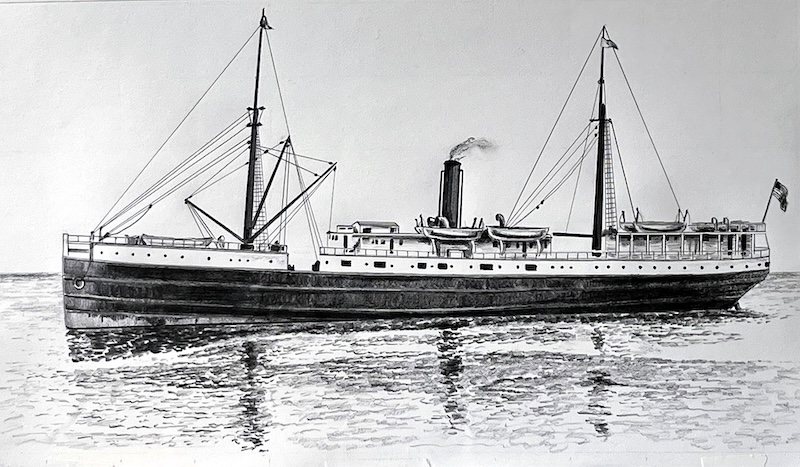
- [5:25] Background on the SS Valencia, a second-class ship with a second-class captain
- [7:17] The fatal role of the Davidson Current in the Valencia disaster
- [9:15] Why the Valencia was ill-suited for the San Francisco–Seattle run
- [11:09] The death toll: 136 of 172 aboard perished, including every woman and child
- [13:02] Captain Oscar Johnson‘s cascade of fatal mistakes
- [15:26] Ignoring the second officer and failing to take soundings
- [19:49] Learn more about Shearwater Sailing at ShearwaterSailing.net
- Last Ditch Efforts
- [21:16] Johnson’s last-ditch attempt to beach the ship
- [23:12] Why survivors on the cliff couldn’t deploy the Lyle gun line
- [25:38] Rescuers watching helplessly as the final survivors perished
- [28:57] Life jackets made of tule reeds and why sailors brought their own cork ones
- [30:23] How maritime disasters drove down accident rates over time
- [36:01] Learn more about Shearwater Sailing at ShearwaterSailing.net
- The Crash that Forced Safety Reforms
- [36:58] Why the Valencia sinking led to almost no regulatory changes
- [37:29] How the Titanic finally forced safety reforms including mandatory radio operators
- [39:18] Preview of Rod’s next book on the SS Pacific (1875)
- [41:44] Captain Jefferson Davis Howell and the catastrophically bad decision to flood lifeboats
- [42:44] The collision with the sailing ship Orpheus and the Pacific sinking in 15 minutes
- [46:07] Only 2 survivors out of more than 300 aboard
- [47:35] Sailing the Pacific Northwest coast today, better equipped but still humbling
- [49:03] Rod’s book Sailing by Starlight about Marvin Creamer’s no-instruments circumnavigation
- Learn more about Rod and check out his books at RodScher.com
- Check out the March 2026 issue of Latitude 38 Sailing Magazine
- Make sure to follow Good Jibes with Latitude 38 on your favorite podcast spot and leave us a 5-star review on Apple Podcasts
- Theme Song: Pineapple Dream by SOLXIS
Transcript:
Please note: this transcript is not 100% accurate.
00:03
He doesn’t even know he’s not in America. He’s completely lost.
00:14
Ahoy, everyone. Welcome back aboard the Good Jibes with Latitude 38. We’re here to have another podcast with a West Coast sailor, boater, and this time author of books of disasters of the West Coast. And we are brought to you by Sheerwater Sailing, which is offering berths aboard the FAR 58, Atlanta to Hawaii this summer. And also by Latitude 38, the sailing magazine for West Coast sailors since…
00:43
1977.
00:48
And so I want to welcome aboard our author and guest, Rod Scher, and welcome aboard, Rod. Thank you. It’s good to be here. Yeah, great to have you here. So Rod’s a writer, written some books, and really gotten to know this West Coast through disasters. And he’s got a book out now, Ship of Lost Souls, about the disaster in the Pacific Northwest in the graveyard of Pacific where they’re
01:15
is the Northwest, I guess, define what is the graveyard of Pacific? What are their boundaries? There are boundaries, but they vary depending on who you ask. And I guess that’s not surprising. But you could consider them going from, say, Florence, Oregon, all the way up to Vancouver Island, British Columbia, which is a long stretch. But there’s, you know, there’s a couple thousand, literally, no exaggeration, a couple thousand shipwrecks in there.
01:46
uh uh, ranging from the 1600s on. So, yeah, yeah. No, I, I’ve read the book about Sir Francis Drake. forget which was a secret voyage of Sir Francis Drake. He went up there and when was that 15 something and amazing to do that without, course charts, uh, without any knowing anything about what’s up there at all. There’s a braver man than I, that’s for sure. Well, all these people, seems. That’s true. That’s true. I wrote a book about a guy named Marvin.
02:16
creamer who sailed around the world with no instruments. And I always thought that’s just crazy. Yeah. Actually, many people told him he was crazy. And what year was that? That was recent. Well, relatively recent. was, I think, 1988 or something like that. Yeah. Yeah. I mean, he had instruments available to use, but he chose not to use them. Yeah. He had the Smithsonian packed him. This is sort of off topic, I guess. But the Smithsonian uh
02:46
packed him a duffel bag and they sealed it below decks. And I always thought that that actually gave him a bit of a psychological advantage. Yeah. Because you’re sailing on your little 35 foot boat and things turn south, go south, which they did. You know in your heart that you have a radio and a sextant and other material, GPS. Well, I guess you wouldn’t have had a GPS back then.
03:12
Yeah, I think I was giving him a little bit of an advantage, but that helps. still, he sailed around the world without around the world. Right. No sex. He bring a watch. Did never a swatch. Yeah. No compass, no sex, no watch. And he did it. And he did it. Yeah. That’s incredible. Well, the graveyard of the Pacific sounds a little bit also like the Bermuda Triangle. It’s one these zones where ships go in and do they come out? Yeah.
03:41
Yeah, it’s my publisher is seemingly very interested in shipwrecks. I didn’t mean to get into writing about shipwrecks, but that’s what they like. And when you think about it, when you think about the nature of a shipwreck, it’s, it’s got a built in narrative arc, you know, you know what’s coming. Right. So it becomes my job.
04:04
to make the telling of that tale sort of compelling, even though the reader knows this is not gonna end well. Yeah, yeah. Well, that’s the devil’s in the details, and I guess disastrous, of course. We all like to read about them, sort of, because they’re- I hope more people would like to read about them. We’ll see. Yeah, yeah, well, they, exactly. Well, they’re heart-wrenching, but they also, hopefully, we learn something and- uh We do. how to avoid them.
04:31
And that’s that’s that’s what we get uh out of it that I think is quite important. uh And a lot of things have improved because of them along the way. So right, right. Well, that’s right. I think the communications, we’ve just suffered a terrible disaster here in the Bay Area up in the Sierras with these these people back country skiing, which was an awful story. And then you do ask about what are the steps that led up to that?
04:59
that tragedy and the communication, the thought process, whatever elements create that. I did the same thing. guess the whole point would be to look at, in the case of this book, the Valencia, and to figure out, well, how did a decent ship with an experienced captain get itself into so much trouble that it couldn’t get out of?
05:25
And then there are answers to that. You know, of course, it’s easy to sit here and look back. Sure. Sure. The year was 1906, but we have we’ve broken it down to to try to determine where mostly the captain went wrong. Yeah. Yeah. Well, that’s 1906. Of course, it was quite a tragedy in San Francisco in 1906 as well. And this sort of got overshadowed, you know. Yeah. Yeah. Well, um
05:54
Well, so maybe give us a little background on the Valencia and you say a good ship. was, it to be fair. It had been called a second class ship under the command of a second class captain, but partly because it was getting old uh and a little battered and you know, things like radio had begun to come out wireless sets, but the Valencia didn’t have them only only
06:21
large commercial vessels, transatlantic voyages, people like that, had radio. So Valencia did not. what kind of ship was the Valencia? How was it rigged? was a steam ship. Steam ship. Okay. Powered by coal? Yeah. Coal powered. Okay. Had auxiliary sails as most of them did. Okay.
06:48
It just basically for a number of reasons, which we can talk about, basically steamed right into the rocks off the West coast of Vancouver Island. Yeah. At a point where there really is nothing but rocks. Yeah. Yeah. a lot of the West coast is like that. Yeah. You can run up on the West coast and big Sur or lots of places where you’re just facing a rocky cliff. Yeah. Once you, once you get north of, uh, you know, Los Angeles, Southern California.
07:17
and you’re on that coast, you’re going encounter a lot of rocks, a lot of reefs. Yeah. And these folks, sadly, basically for a number of reasons, just steamed right into them. Yeah. And what time of year was the trip? It was November. November. Yeah. Which is important for a couple of reasons. One is that the water is quite cold. Another is uh there’s a current there.
07:46
called the Davidson current, which flows more or less south if it exists at all during the summer, but more or less north in the winter and very strongly. captain apparent, this is one of the mistakes he made. He made six or seven important mistakes. And one of them was he did not understand that current. He’d only been there once before. It was the other time of year, was there in the summer.
08:16
So this current was driving him north toward Vancouver Island and past the Strait of Juan de Fuca, which is where he wanted to turn east. Driving him much faster than he realized. was one of his mistakes. A crucial mistake, as it turns out. Yeah. Well, that’s one of those that, in the course, they only had dead reckoning. didn’t have GPS or anything like that. No, no. Yeah.
08:45
Not even Lorraine or anything like that. Yeah. Yeah. And the Valencia, they were making regular runs San Francisco to Seattle. Is that their normal? know, they were, except that the Valencia was pulled into service while its sister ship was pulled out for repair. Yeah. So this ship had not been used to making that run. It was ill-suited for that run, really. Yeah. It was fairly narrow-beamed.
09:15
A very long bow, which meant that especially in inclement weather, which you’re going to hit on that coast at that time of year. Right. Right. A lookout on the bow could barely communicate with people at the helm. Ah, right. Because it’s just by shouting. Yeah, pretty much. That’s all you’ve got. Yeah. And I guess you could wave your hands. uh Yeah. In the dark in a storm, you’re not going to get seen. Yeah.
09:44
Well, and so people going in San Francisco to Seattle, they have this regular passenger service up and down. At what point, I mean, did people decide I want to go by railroad or were railroads available? Because it does seem to me amazing. Even these days, you have great weather forecasting. Back then, you just sailed out the gate whenever you had a full ship, I guess, and took people north without a many times an over-full ship. Over-full ship, yeah.
10:13
Yeah, I don’t there. There were obviously people that were taking the railroad because the river by 1906, the railroad had had really come into being and uh was pretty widespread. But. It’s a it’s in theory, it’s a three day trip from was a three day trip from, say, San Diego to uh Victoria. And that’s pretty quick.
10:43
Yeah. And there’s the romance of being on a ship and you know, right, right. Of course that romance, romance fades fast. Yeah. So, so the Valencia, so did it actually start in San Diego? Oh, no, no, this, this one, this one was one from San Francisco to, uh, to Victoria or to go to Victoria. Yeah. Wow.
11:09
And how many how many passengers, how many crew or maybe you maybe set us up for what? Well, you end up with about 172 people or thereabouts. 136 of them died, including every woman and child. Oh, my word. Yeah. Thirty seven numbers are a little fuzzy, but 37 more or less survived. And that was made up of two groups of about
11:38
nine or 10 each that actually managed to land on the rocks. You couldn’t say on the beach because there was no real beach. Yeah. So they landed on the rocks and they climbed a cliff up to what is now part of the West Coast Trail, which even today is rudimentary, very much unimproved. That’s improved from that day. But it’s a tough it’s one of the toughest hikes in the hemisphere. In fact.
12:06
But they got up to the top and then they made a terrible mistake. One went east and one group went west to look for help. They’re in the middle of nowhere. As a matter of fact, it’s still the middle of nowhere. That section is you have to hike 18 kilometers just to be at the spot to overlook the ocean where the ship sank. There’s no other way to get there unless by boat. Yeah. That’s dangerous. Yeah, yeah, yeah.
12:34
They left San Francisco loaded with crew had a, what was their trip North Lake? then how did, how did they get in trouble? had a, well, that’s an excellent question. They had a, they had a nice trip. Yeah. It was a, it was a milk run, you know, a three day trip inside of the coast almost all the time, as long as the weather cooperates, it’s a, it’s was, and probably still is a very nice trip, but mistakes started to be made.
13:02
And this is what got them into trouble. And I think the very first mistake, and this was the captain who should have known better. His name was Oscar Johnson. He was a Swede. He was not new to this. He entered the Swedish Navy at 14 and was in his early 40s, I think in 1906. So he’d been doing this a while. He should not have made these kinds of mistakes. The first thing he did, actually something he didn’t,
13:30
do was he didn’t do any lifeboat drills, emergency musters, that sort of thing. Now the law says you will do these and you will do them. think it says within 24 hours oh of your departure because later might be too late. Right. What they ended up with was a situation that I’ve seen in other like 19th century shipwrecks. You end up with a situation where an emergency occurs.
13:59
Nobody knows how to gather the passengers or where to gather them or how to deploy the lifeboats. It’s a big mess. The passengers are panicking. They’re just basically taking out knives and slicing at the ropes that hold the lifeboats on their davits. there’s no drill. mean, then most famously, the Titanic, I guess, didn’t do any lifeboat drills and didn’t have enough lifeboats.
14:27
These people had enough lifeboats, unlike I’m also writing a book right now about the Pacific that went down in 1875. They did not have enough lifeboats. These people actually had enough lifeboats, but they were wonky when they askew when they hit the water. Almost all of them capsized and sank or were smashed against the hull of the ship. They should have known better. And if he had done his job, I hate to lay this all at his feet. And the investigator said the same thing.
14:57
to blame him for this mainly because he’s not here to defend himself. Right. He went down with his ship. Wow. But there were no lifeboats. And he ignored his second officer who said, basically, you know, I don’t think we are where you think we are. Really? And you know, a good leader being at sea in a boat, your readers know is not a good place for a democracy. Yeah. Yeah. Decisions have to be made. And but a good leader will nonetheless.
15:26
seek counsel from his fellow officers and Johnson did not. ignored them. And Johnson at that point, he’s the captain. Is he also the navigator or is he the guy? And at this point, they were taking sunsights or they were, how are they? It’s nighttime in the middle of a storm. Oh, so they’re not taking any sites at all. Right. And they’re not, they’re not anywhere near where he thinks they are.
15:55
And one of the reasons that they don’t know where they are is that another thing he did not do was take soundings. In those days, I mean, you threw a lead weight overboard and then, you know, did your best to figure out how. But you could learn a lot by picking up that piece of lead and knowing how deep it went and what kind of bottom was stuck to the wax or whatever else you put on that lead weight. If he had done that, he would know that he wasn’t where he thought he was.
16:25
And that being the case, any captain worth assault would tell you, well, you know, in the dark, in a storm, I don’t know where I am. The safest thing for me to do is turn around and go out to sea and wait. I didn’t do that. Yeah. It’s interesting. I do think of going up a bold rocky shore like the West Coast here that a lead line is helpful, but you don’t find out.
16:52
You don’t hit the bottom until you’re pretty close to a rocky shore. It’s deep. uh might be too late. Yeah, it’s true. Yeah. He, you know, we talked a minute ago about the lookouts. He was running his lookout. Basically one guy at the bow for six to nine hours. That’s a long time to stand watch, especially in the dark in a storm. Yeah. Really? The committee that investigated it afterwards said, you know,
17:21
two hours is about right for somebody to be out there. And it’s because what’s going to happen is after five or six hours, the guy’s going to curl up and go to sleep. Right. Even if he doesn’t mean to. Yeah. Yeah. So he that wrong, too. It was a series of mistakes. When I give talks about this wreck, I sometimes ask if there are any pilots in the audience. And sometimes there are, which is always interesting because there are parallels between aviation accidents. Yeah.
17:51
and ship accidents. One of them is, know, if you’re a pilot, do you happen to be a pilot? I’m not a pilot. And actually, when you said pilot, I immediately thought bar pilot because we have bar pilots that are escorting ships. Yeah, you’re right. I should have clarified that. Yeah. One of the things that I guess they teach pilots, I’m not one either, is to don’t trust your gut, trust your instruments, because it’s very easy to get in a situation where
18:21
You not only lost track of which way is East and West, you’ve lost track of where up and down is. You need to be able to look at your instruments and trust them. Well, he didn’t have very many instruments, but he did have one. He had a patent log. Yeah. The sort of thing with a little propeller on it that you throw overboard. Yeah. And it counts the revolutions and you can help determine how fast you’re going. Right. And therefore how far you’ve gone. And he thought that
18:50
He didn’t trust that instrument. He said, it’s under running. It’s over running. It’s telling him that he’s gone further than in fact he had. But that wasn’t the case because of that current we mentioned a minute ago. The Davidson current was pushing him along faster even than the patent log was telling him. And so basically what happened is he went right past his easterly turn into the straight of Juan de Fuca.
19:20
And the next thing he knows, he’s on the rocks on the west coast of Vancouver Island. eh He doesn’t even know he’s not in America. He’s completely lost. Are you looking to spend some time on a serious offshore sailing yacht? And you don’t have one? No problem. You can join Scherwater Sailing on their Custom Far 53 Fast Cruiser Atalanta. They have a variety of sailing adventures just for you. From day sails on Monterey Bay.
19:49
to coastal hops up and down the coast of California, or ASA sailing courses. And guess what? This summer, they even have a trip sailing to Hawaii and back. That’s right. These trips are fun, hands-on, instructional, and built for sailors like you, who want real experience on the water. Find more information about Atalanta and upcoming trips at shearwatersailing.net. I have heard from Kevin that the Hawaii trip spots are limited.
20:18
So you need to act fast. Departure is mid-August and the return will be mid-September. And guess what? You can join either leg. You can sail to Hawaii or back from Hawaii or you can do both. Visit shearwatersailing.net to secure your spot now. Again, that’s Scherwater Sailing, S-H-E-A-R-W-A-T-E-R, sailing.net. Again, that era always amazes me that
20:48
Of course, Sir Francis Drake managed to do it without having a chart or having knowing that straight one to Fuqua was even there existed. But, ah but they were obviously very cautious. And I guess that’s sort of human nature too, is you get more information, you get more confident ah in where you are, whereas Sir Francis Drake had no information. So he was probably much more cautious. Captain Johnson.
21:16
could have had information that he either didn’t have or discarded, disregarded. He should have paid more attention to that. And then, from then on, he stuck. He started to act, what I would say, intelligently. He managed to get his ship off the rocks enough to turn it around. Oh, he did? Wow. So the stern was pointed toward the beach. I mean, there was no beach, but toward where there should have been a beach.
21:46
Cause he figured that would be easiest way to get the passengers off. Wow. How do you turn that ship around? he’s running ground, he’s basically impaled on a rock on rocks, but he’s managing to turn around. I mean, he’s got that pretty powerful steam engine. We’re not talking about a sailboat here. Yeah. is a single propeller. Yeah. Just a single. Wow. He thinks maybe he could in reverse beach the ship.
22:15
Of there is no beach. And so he just hits more rocks and then things continued to go wrong, but they were no longer his fault. Really. I mean, he already got had gotten everybody in trouble. Yeah. What, what time, what time of day was this? This is a night, nine, nine 30, 10 o’clock at night. Okay. In a storm. It’s cold. It’s it’s stormy. It’s very, the sea is very rough and you’re being pounded against those rocks. Right.
22:44
So what’s going to happen over a period of the next three days, it’s going to take about three days to completely demolish the ship. Wow. Killing everybody that’s still on board. A lot of people were still on board, including the women and children who basically lashed themselves to the masts because they thought that would keep them from being washed overboard, which it did. And they felt.
23:12
They did not want to enter the lifeboats that they had been deployed because they saw what happened to those lifeboats. They pretty much got demolished. And they knew they could see in the distance, especially as it came to be light, ships were coming. There were ships coming to supposedly rescue them. Now they didn’t radio to get these ships to come. Like how did ships get notified to even go look? That’s a great question. Remember the two groups that climbed the cliff?
23:42
And one went east and one went west. Well, that was a terrible mistake. The reason it was a terrible mistake is because on board the ship was what’s called a Lyle gun. I don’t know how many people are familiar with Lyle. I don’t know the term. It’s a little cannon basically, and it’s meant to fire a line. Okay. So you shoot a line from the ship to the shore or the other way around. Yeah. And then you, you, um, replace that line with a thicker line and you keep replacing it until you get one that’s thick enough.
24:11
to connect the Boatswains chair or some other device and you can start ferrying people, right? However, when those folks landed and climbed to the top of the cliff and headed east and West, they didn’t leave anybody. OK, well what happened was they successfully shot line to the to the shore. But there was nobody there to make that line fast. And nobody else could get it short of follow though. How did those people get it? People tried. There was a Greek.
24:41
One of the Greek sailors who actually tied a rope around his waist and jumped in the water and uh tried to swim only got about halfway there. He did survive. Yeah. And he made a handsome living afterward, traveling around the country, telling his heroic story of how he attempted to the ship. There was nobody there to catch to get this line.
25:08
But the two groups that went to answer your question did manage to contact somebody. They found a hut that was there to uh shelter telegraph line workers who occasionally came up there to replace the downed telegraph lines, which they were going down all the time, I guess. So they got in touch with some people at a lighthouse and people started to come to spread the word. And also a small group of people went overland.
25:38
back to where the ship had sunk. Well, hadn’t sunk yet, but by the time they got there, it was just about to go. Right. And uh all they could do because the line they could see lines, but the lines were parted. They couldn’t get to them. And so all they could do, was a terrible reading about it was was was quite affecting. know, they basically stood on top of this cliff and watched the last 50 people or so die.
26:06
Right, nobody. After them by that time, women and children. they just couldn’t figure a way to buy seed to be offshore and rescue people from offshore or rescue people from land sites. Yeah, that was the problem. They couldn’t get help from either direction. Now they did send ships out, like we said, and the people saw the ships coming. But the ships, this was a matter of some contention later on. Yeah, the ships did not come in close enough to rescue anybody.
26:35
They stood about a mile and a half out. That’s far away. And they said the water’s too rough or too shallow in case of the larger ships for us to get in there and help. We can’t even send a lifeboat because we would just lose our lifeboat and our people and and not save anybody. They got a lot of flack for that, though. That’s you you know, the whole Marine Maritime Code. You don’t walk away from somebody.
27:05
who’s who’s in danger. Right. uh And these people did. um And they they caught a lot of flack for it, especially the smaller tugboats that probably could have gotten in closer. It could have at least drifted in a lifeboat or drifted in a life raft. Right. Right. Eventually, a ship did pick up a raft of about nine with about 19 people.
27:31
including that Greek sailor who jumped overboard to try to save everybody. But that was it. Everybody else died. It was was a whole you know, we talk about tragedies, and we use the words pretty lightly. But this was truly a tragedy, especially given that it did not have to happen. Yeah, well, I think that’s probably true of too many tragedies in a way. There’s most obvious most is I think, yeah. Yeah, I think it’s
28:01
pretty rare. know, you’re a sailor. We talked to a lot of sailors. I’ve sailed. It’s rarely an unavoidable catastrophe that you could have done nothing about. Almost every time. Yeah. There was somebody made a stupid decision somewhere. Yeah. Yeah. Might’ve been you might’ve been me. know, right. Mistakes were made. Yeah. Yeah. Somewhere along the line.
28:28
It not have been you. It might have been the people loading the cargo in the ship. mean, know, somebody messed up. Right, right. Yeah. Well, or just to be often people say, oh, I dodged a bullet there because fortuitously something you discovered later didn’t happen. Yeah. And that happens a lot. I think you get away with a lot. You get back to the dock and you look below and you go, oh man, oh I’m kind of glad I didn’t know about this. Yeah. But glad I do now.
28:57
Yeah. And now did they have life jackets? That’s another. That’s another interesting. I guess everything about shipwrecks is interesting in a sad sort of way. They had life racks, life jackets made. Most of them were made of tool, Tully, like Tully reeds. Oh, really interesting. On the West Coast, will run into them. Yeah. And we just wrote about Tully reed boats being built in the bay. m
29:24
Exactly. Because they have air pockets in the tooling. They do. They don’t really make very good life jackets though, it turns out. And in fact, other people who sailed off, know, seaman, sailors who sailed on that shipping line, said, yeah, when we have to work with that shipping line, we bring our own life jackets made of cork. Oh really? Yeah. Cause cork life jackets work. Sure. And now they did test the life jackets afterward.
29:54
And the government tester said, hey, they work fine. know, so really, who knows? Yeah. Yeah. Well, I wonder if anyone had gone on or was actually saved because they put a life jacket on. That’s all. You know, I’m sure there were some of those people who ended up on the life raft, had to stay afloat long enough to get to the raft. Yeah. And uh in rough, cold water, that’s not an easy thing to do, especially if you’re closed. Yeah.
30:23
Well, yeah, I mean, all these years later, 120 years later now, there’s still a lot of analysis of any accident that happens. And I think because of all the analysis, there’s far fewer than there ever were, but there’s not zero. No, there’s not. And I actually charted them because I started to look at airline accidents and I thought, I wonder what the number of airline accidents look like over the years. And there’s certainly they’ve gone down as you would expect them to. Yeah.
30:51
Yeah. And then I did the same thing with commercial ships. And they’ve also gone down and for the same reasons, because when something terrible like this happens, agencies look at it and say, okay, let’s try to make this not happen again. Yeah. Yeah. Because this was horrible. Yeah. And they do a decent job of it. But like you say, it’s not zero and it probably never will be. Yeah.
31:17
Yeah, no, there’s some things, yeah, and as good as well-trained as you might be and you’ve mustered your things and other, there are sort of those perfect storms, as that other book was written, that situations that the confluence of events conspire to sort of overwhelm all the precautions and training. All of your safety systems. Yeah. You know, that whole Swiss cheese model where the holes eventually line up and mistakes get through. Yeah.
31:45
It’s bound to happen if enough things go wrong at the same time. Yeah, yeah. No, it’s it’s it’s. We in the sailing community, the US sailing has a very uh renowned uh safety at sea seminar, which does uh for if you’re racing to Hawaii or doing some of these offshore races, members of the crew need to go through that training, which does life raft uh training, uh survival suits, life jackets and all the steps. uh
32:15
And so definitely in the 50 years latitude, 38 has been published. Uh, we had a lot more disaster stories or not all disaster, but definitely dramas and near misses anyway. Yeah. Near misses, but also some disasters. mean, they, they do happen and, but there’s fewer today because of better navigation. technology is better. Communication is a big one. Yeah. Communication is much better. mean, you know, these people didn’t have E perbs or anything like that.
32:44
Right. No, it’s that. Yeah, it’s it’s too bad. And you didn’t have much of it back in 1906. You didn’t have a whole lot of life saving infrastructure. Right. You had spotted life saving stations, but they’re pretty spotty, especially on the Pacific coast. They were on the East Coast because that’s where the money was. Yeah.
33:11
Yeah. And so they had the money to pay for them. And they were doing a lot of commerce. Yeah. know, Boston Harbor, New York Harbor, they were bringing a lot of money in and out. And m so they got all those that infrastructure first. And eventually, you know, the West Coast caught up. But somewhat. as you say, that that stretch of coast is still incredibly remote. Yeah. There’s nothing on the west coast of Vancouver Island. If you go to Vancouver Island, which I did,
33:41
First of all, nobody on Vancouver Island remembers anything about this wreck. Yeah. And I asked around, why does nobody in it remembers this record? And everybody said, you know what? Nobody living on Vancouver Island actually comes from Vancouver Island. Right. They all come from Los Angeles or someplace. Oh, right. So yeah, I went. You can go up and down the east coast of Vancouver Island and it hits some fairly decent sized towns and cities.
34:10
But on the West Coast, once you start heading North from Victoria, there’s still nothing. It seems to be a West Coast, East Coast thing. East Coast always seem more populated. I don’t know why that is. Well, of course, the area’s coast is closer to mainland Canada. Yeah, exactly. I guess that has something to do with it. Oh, you know, we had a story, I don’t know, late 80s, early 90s of a guy sailing up the West Coast, but off Costa Rica.
34:36
Costa Rica and he was sailing solo on a 30 something foot boat cruising along no clothes on because he was sailing by himself in the tropics and warm and fell overboard and his boat sailed away and he was I forget how many he was eight miles offshore or something and he ended up swimming ashore uh making it the whole way. It’s a longer story but um the West Coast of Costa Rica at that point also had no civilization so he ended up.
35:04
crawling naked over coral rocks in surf, getting all cut up and barefoot and then walking several miles and scooping water out of old Clorox bottles that happened to be on the beach. mean, really starvation. And he eventually found a fisherman’s hut that had no fishermen in it. And he stayed there a couple of days. I mean, he was really on a survival situation. And luckily people found him and he got rescued.
35:32
told us the story, but that’s a great story. Yeah. uh Happy ending. Perseverance. Yeah. Yeah. No, absolutely. So yeah, these West Coast is a coastal thing. We don’t, I don’t know. Yeah. You know, it’s, interesting all the way up and down the coast. There’s a lot of barren stretches where there’s not a lot of help available. Ahoy, Ryan Folan here. One of your Good Jibes podcast hosts. And I’m here today to tell you that this episode is brought to you in part by a past Good Jibes guest.
36:01
Kevin Waspauer of Scherwater Sailing. If his story stuck with you, you can actually go sailing with him. Kevin runs Scherwater Sailing aboard Atalanta, a custom Far 53, a fast performance cruiser. They offer everything from day sails on Monterey Bay to coastal passages up and down California to ASA sailing courses and offshore trips. And coming up soon, they are sailing to Hawaii and back. That’s right.
36:31
The Hawaii leg departs mid-August with the return mid-September. And, spots are limited. You can join either leg to or from Hawaii, or you can do both legs. To learn more about Kevin and see what’s on the calendar, head over to ScherWaterSailing.net. That’s ScherWaterSailing.net. S-H-E-A-R-W-A-T-E-R, sailing.net.
36:58
So, you know, the other thing, guess I’m wondering after this accident, of course, we all sit this modern world and we curse regulation because it all intrudes on our life. accidents like this happen and people say, oh, we ought to change some rules. And I’m wondering, were there any rules changed after this particular accident or what was the… You know what? Sadly, the answer is pretty much no. Oh, really? Okay. It took the sinking of the Titanic a few years later.
37:29
Yeah. Um, and I, I’m not sure why that was, except maybe the Titanic, uh, well, there were more survivors, and more survivors means more people telling their story. Yeah. Maybe well, there’s also the. Yeah. Yeah. There were a lot of movers and shakers aboard the Titanic. They, they did have radio, which is in fact, there’s one reason why there were more survivors. That seemed to be.
37:57
If not the impetus, at least the straw that broke the camel’s back, so to speak. We started to get more regulations and laws about, yes, you have to have a radio operator on board every ship. If you’ve got more than, I think, 200 passengers or something. Yeah. And it has to be active 24 seven. Yeah. And you have to have so many lights and.
38:24
Right. And you got to do lifeguard, lifeboat practice and you’ve got to. Yeah. Within 24 hours. Yep. Your lifeboats have to be equipped thusly. Yeah. There were a lot of changes, but it took. A bigger accident. Many, many years worth of accidents. Right. To get there. Yeah. Well, that’s, that’s what I always say. Again, we’re all cursing regulations, but I think very few regulations seem to come in advance of an accident. They, they seem to come.
38:53
after a difficult lesson in loss. You know, the Coast Guard people say that their regulations are written in blood. Yeah. Yeah. That’s why they say that. Yeah. Yeah. That’s terrible. So and so the Valencia, this story, you’ve got out ship a lost souls, it tells the story of the Valencia. Now you’re also working on another book about the SS Pacific. Yep.
39:18
Maybe give us a little preview on what’s the difference or similarities in these. Well, lot of similarities. I think that when you look at human driven tragedies, I guess they’re almost all human driven, you’re going to find these similarities. Some of the same things happened. The ship went down in 1875 off the coast of Cape Flattery, Washington, probably about 40 miles out. They’re not 100 % sure. Yeah. Everybody there were there were.
39:47
More than 300 people on board, which is at least 50 more than the ship was certified to carry. Wow. How many more? At least 50 more. 50 more. And this is 1875 now. maybe what? How was this ship rigged or what was it? It was a paddle wheel steamer. OK, paddle paddle wheel on either side, which is not the best ocean going configuration in the first place. Yeah, I can’t imagine it was quickly being supplanted by by props, but.
40:17
They were still out there. Yeah. They were not particularly well suited to rough ocean water because once they tip, one of the wheels comes out of the water. Now the ship wants to turn in the direction of the wheel that is in the water. And, you know, it’s it’s kind of messy. But yeah, it’s the same sorts of mistakes. The same sorts of mistakes were made, though, at least some of them. Again, there was no uh muster. There was was no lifeboat drill.
40:46
So when disaster struck and it struck within the first 12 hours, yeah, the people again are slashing at ropes that to deploy the lifeboats, which didn’t go well. wow. And they were sailing from San Francisco up to Seattle or the Northwest. They were actually coming from they were heading south. OK, from from Victoria and that area down to San Francisco. OK, the ship was listing.
41:15
from the beginning, which should have been a clue. A careful captain would say, well, you know what? We’re going to turn around and figure out what the problem here is. And the problem, I think, not that I’m an expert, but was a poorly loaded cargo. had a lot of cargo on board. Wow. And 300 passengers. And 280 tons of coal that they were carrying as part of their cargo. coal shifts very easily. Yeah. I think.
41:44
that the goal began to shift. And that’s why they had a list almost from the beginning. And then he made a terrible mistake. He is a captain. Yeah. The captain, incidentally, was Jefferson Davis Howell, who was Confederate President Jefferson Davis’s brother-in-law. Oh, wow. He he decided, well, there’s it’s lifting to starboard. So I’m going to listing to starboard. So I’m going to fill all the port lifeboats with water. Oh, my word. And then they were listening the other way. So now he’s going to
42:14
fill the other lifeboats with water. It didn’t work, number one. And number two, I spoke to a lifeboat expert and he said, especially in the 19th century, that’s a great way to overstress your lifeboat. That’s a lot of water. Yeah. Well, it’s also high up in the air. Their lifeboats are high up in air and there’s a lot of… Your center of gravity is higher now. It was not a smart move. Yeah. But what actually caused them to go down? Well, they hit a sailing ship.
42:44
They hit a sailing ship. Yeah. They had a sailing ship called the Orpheus. Okay. And the Orpheus limped off and eventually went to ground a couple of days later, in fact. But the thing with the Orpheus was he should have stayed around. Yeah. But he thought that the collision was fairly light and it probably was, but the ship, the Pacific had been sunk and refloated and
43:13
left to rot on the mud flats for a couple of years. And then because there was a gold rush, money always seems to enter into this. Yeah, because there was a gold rush in British Columbia. They wanted more ships to ferry miners and bankers and people back and forth to the Yukon. guess that right now was well, in this case, it was the Cassiar range. OK, you come was later, but something would happen. They really they refitted it supposedly, but it was it was cosmetic.
43:43
it slapped some cock on it and drove some oakum into the between the boards and uh slapped a coat of paint on it and said, okay, you’re good to go. The upshot was when it hit this other ship, it crushed the steamship, not the sailboat, not the sailing ship. And so it went down and it went down within 15 minutes. Really? 282 foot sailboat or steamship just went down. Boom.
44:11
And the Orpheus didn’t see this. Was this night or foggy or what? did the, was it? It was, was rainy. was night. Um, but you’re still supposed to stick around until you know, you’re not needed. And in fact, captain of the sailing ship was eventually found guilty of manslaughter, but in Canada, he just never went to Canada. Uh, yeah. It’s another good story. Yeah.
44:40
But we see some of the same issues. Yeah. And you’re in the thick of writing that book. So you’re in the research or where are you in that? That’s why I’ve actually got a draft and my a couple of beta readers are looking at it right now. My editor is looking at a piece of it. Yeah. Wow. And we’ll see what she says. I hope she doesn’t say start over. Yes. You don’t want to do this to say that we don’t want to hear that. Yeah. Yeah. Wow.
45:09
Yeah, so there’s two books. Do you have a title for the book yet or what’s going to be Wednesday? I think it’s going to be called the wreck of the steamship Pacific and then a subtitle. How greed and gold sent hundreds to a watery grave or some such thing, right? uh I had greed and graft myself. But she was afraid that people won’t know what graft is. Yeah. Sort of arguing about that.
45:38
I would like to think that people that would read this book would know what craft is. Yeah. I don’t see. Still plenty of it around today. it’s a. Oh, yeah, exactly. Not a term that’s not even there. Yeah. And did they have uh Tully life jackets or anything aboard? Or what was it? Just the survival? The same sort of thing. The two people that survived, they survived because they encountered pieces of the wreckage floating by and they climbed aboard.
46:07
Just two people survived. Only two out of 300 and more. Wow. Right. Wow. Amazing. Wow. It was a good story, but a sad story. Bad story. Of course. And yeah, and these are just two of 2000 stories. Exactly. I don’t know many of them I’m going to get to tell. I’m not a young man, you know? Yeah, yeah, yeah. Well, these sound like two of the more dramatic ones and also a lot of lessons to learn. uh
46:37
The Graveyard of the Pacific, yeah, shares a few more of these stories, unfortunately, but these are big ones. There’s plenty more to talk about. And as you study them, you start to draw some of the same conclusions because the same things went wrong. Right. Which is sad. mean, even sadder than it would have been, but still. Yeah. Well, we’ve made a lot of progress in humanity in ways, but of course,
47:05
There’s a lot of similarities with 2000 years ago too with human nature. So there’s a lot of lessons we have to relearn. Sadly, yeah. Yeah. You hope that it’s not too late to relearn them. Yeah, that’s right. and hopefully, I like a lot of these things. There’s progress being made, but it’s never quite as quick as you hope. Not quite. Anyway. Yeah. Well, Rod, this is really great. Interesting to hear these stories. Of course, there’s sailors that
47:35
sail up and down this coast all the time. you know, a lot of people from the Pacific Northwest will be heading this fall down uh to uh go to Mexico and go cruising south. And then others will be going from here north because cruising the San Juan and Gulf Islands and the Pacific Northwest is a gorgeous destination and a beautiful place to sail. of course, so that happens frequently, but better safety equipment, better communications, better charts. And you’re a lot better off.
48:05
Unless you get lazy, you’re taking shortcuts or start thinking that you’re in charge because really it’s the ocean that’s in charge. Right. And you should remember that. Yeah. And most good sailors do. So I think that’s a sailors after a while you learn to be humble because yes, you realize otherwise you’re going to get humbled real quick. So yeah. Yeah. I think most sailors eventually you are humbled one many times and hopefully you learn.
48:35
in time. So great. Well, right. If people want to find the book or find you, what’s a good way to connect with you? They can connect to me uh via my website, of course, which is rodshear.com. OK, and spell it. Scher actually for us. S-C-H-E-R. OK. R-O-D-S-H-E-R. Yeah. And they can find the books on Amazon or Bungie Novel. OK, yeah.
49:03
So we should, we could Google your name also to find books on it. Cause you also written a couple of other books as well. one, the one or tell them just quickly about the guy who sailed around the world with absolutely no instruments and what that book is that’s fast. That’s called a sailing by starlight. Yeah. Um, Mark Kramer, he was a geography professor in New Jersey and in the middle, late eighties, he’d done a lot of sailing, including uh transatlantic sales.
49:32
You there’s that whole, he’d done that passage several times. And he said, you know, mostly it was a way of proving the point that ancient peoples could have in fact sailed around the world. Yeah. Like Contiki and you know, And he said, I’m going to do it. And so he got his little 35 foot sailboat and um set off. found crew as he went mostly. Okay. So he’d always had one or two people with him. Yeah.
50:00
Took him about two years. got into a lot of trouble. I mean, he, he, was, he had some luck. Yeah. He sailed into the Falkland islands. The war was over, but things were still tense. And he sailed right in there. Remember he had no radio to warn people he was coming. Yeah. So he just shows up. Wow. They did not like that. Yeah. Anyway, it was, was, it’s another good story. It was too bad that as a writer,
50:30
I was contacted by his family. Okay. And his family basically said, we have this, you know, our dad has this great story. Would you be interested in helping to tell it? And they sent me talk about a source material. They sent me a literal laundry basket full of notes and charts and journals and logs and scraps of poetry. it’s just, I don’t think Mars ever threw anything away. Okay.
51:00
He was an interesting guy and I almost got to meet him, but he passed away in 2020. Oh dear. At 104. Wow. He got remarried at 90. Wow, he sounds like quite an adventurer. He was. was a braver man than I, that’s for sure. Yeah, that’s amazing. Great. Well, Rod, great to spend time with you and learn more about the graveyard of the Pacific. And hopefully these stories will be fun and fascinating to read, but also help people avoid
51:29
similar challenges and remain humble. that they’ll do both things. Yeah. Yeah. Yeah. Great. All right. Well, thank you very much. again, thank you to Good Jives listeners and Latitude 38 readers for being with us for all these years since 1977. And you can find Good Jibes on Spotify or Apple podcasts or wherever you happen to pick up your podcasts. And we have over 200 other episodes out there for you to listen to.
51:57
So have a listen, a lot of good tales from sailors and adventurers up and down the West Coast and West Coast sailors who’ve sailed around the world. So, all right, thanks, Rod. Thanks for having me!