

Episode #232: AI Pacific Cup, Lauducci Family, and Honolulu Jail (L38 Verbatim), with Host Monica Grant
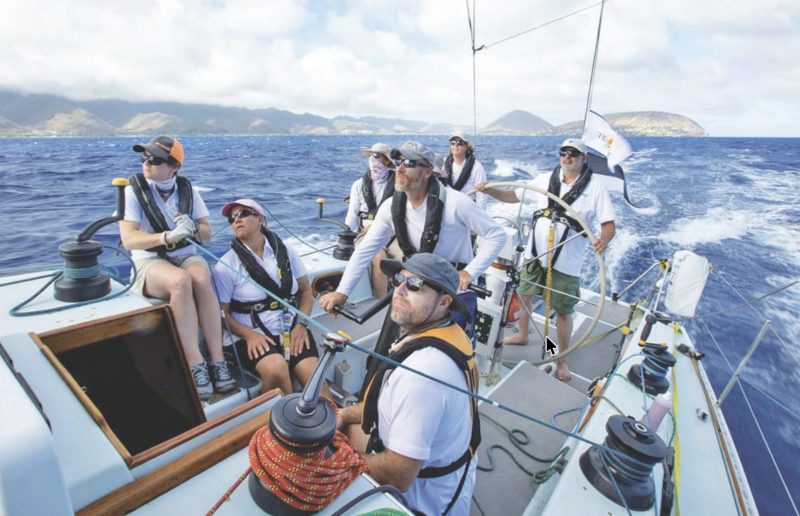
In this week’s episode of Good Jibes, we bring you two stories from the Latitude 38’s February 2026 issue and one throwback story from the February 2006 issue. Hear “Will AI Win the Pacific Cup? Not This Year” by Michael Moradzadeh, “Back and Forth” by Josie Lauducci, and “Helluva Homecoming — Jailed in Honolulu” by Jim Welch.
Here’s a small sample of what you will hear in this episode:
- What is Racing Rule 41?
- Where is La Cruz?
- Are monohulls or catamarans better?
- Why did Jim Welch get arrested?
- What are jails like in Honolulu?
Follow along and read the articles at
“Will AI Win the Pacific Cup? Not This Year” by Michael Moradzadeh.
“Back and Forth” by Josie Lauducci.
“Helluva Homecoming — Jailed in Honolulu” by Jim Welch.
Listen to the episode on Apple Podcasts, Spotify, and your other favorite podcast spots — follow and leave a 5-star review if you’re feeling the Good Jibes!
Check out the episode and show notes below for much more detail.
Show Notes
- AI Pacific Cup, Lauducci Family, and Honolulu Jail (Latitude 38 Verbatim), with Host Monica Grant
- [0:16] Welcome to Good Jibes with Latitude 38
- “Will AI Win the Pacific Cup? Not This Year” by Michael Moradzadeh
- [0:51] Follow along and read the article at https://www.latitude38.com/issues/february-2026/#46
- [1:43] Starlink
- [3:58] Racing Rule 41
- [5:46] VMG (Velocity Made Good)
- [6:55] Stan Honey
- [8:05] Sir Robin Knox-Johnston
- [10:25] Pacific Cup
- [11:58] Learn more about Shearwater Sailing at ShearwaterSailing.net
- “Back and Forth” by Josie Lauducci
- [12:53] Follow along and read the article at https://www.latitude38.com/issues/february-2026/#76
- [14:28] La Cruz
- [18:18] Puerto Vallarta
- [19:25] @AFamilyAfloat YouTube channel
- [19:55] AFamilyAfloat.com
- [20:02] Learn more about Shearwater Sailing at ShearwaterSailing.net
- “Helluva Homecoming – Jailed in Honolulu”
- [21:08] Follow along and read the article at https://www.latitude38.com/issues/february-2006/#128
- [23:08] Honolulu, HI
- [25:09] French Polynesia
- [29:32] Homeland Security Act
- Check out the February 2026 issue of Latitude 38 Sailing Magazine
- Make sure to follow Good Jibes with Latitude 38 on your favorite podcast spot and leave us a 5-star review on Apple Podcasts
- Theme Song: Pineapple Dream by SOLXIS
Transcript
Please note: this transcript is not 100% accurate.
00:03
The authorities at the Honolulu airport handcuffed me, put shackles around my ankles and transported me to the jail in downtown Honolulu.
00:14
Welcome back to Good Jibes. This week we bring you two stories from the February issue of Latitude 38. Will AI win the Pacific Cup? And the Lauducci family back and forth. We also bring you a third story from the archives. We reached back 20 years ago to February 2006 to see what was going on and came across the story, Hell of a Homecoming, Jailed in Honolulu by Jim Welch. So sit back, relax.
00:44
Cast off if you like, drop the anchor, and we hope you enjoy listening to this week’s Good Job Stories.
00:53
Will AI Win the Pacific Cup by Michael Moradzadeh. AI beats humans at chess, go programming and jeopardy. Is sailing next? As a Pacific Cup race board member, I wanted to share some of our thoughts about what keeps the fun in the fun race to Hawaii. Artificial intelligence is appearing everywhere. The magic technology is ghostwriting term papers and email replies.
01:22
and riding sophisticated software and even driving autonomous taxis. With the ability to learn over time and access wide swaths of data and convert it into an intelligible and useful format, AI has become a powerful and accessible tool in the hands of many. With Starlink, it operates offshore. Sailors will surely benefit. NOAA has recently announced the integration of AI into its weather models
01:50
And sail and yacht designers will use AI assisted tools to enhance their work too. For the racer and voyage planner, AI assisted polar generation and routing are already available for a modest fee from PredictWind or others. You can even get AI to help you write your blog posts as you cheerily tell folks on land about your adventures. Just over the horizon, however, things may not be so cheery. Starlink gives racers the ability to bring AI’s brain power with them.
02:20
so that AI and advanced instrumentation could easily destroy the fun. Imagine a race where each crew has a headset and gets instructions. Trim or two degrees to port every few seconds. The boat performs perfectly to her polars, winning the race. But nobody is smiling. The instructions come from an untiring, unfed, uncomplaining AI system somewhere. No tactical or boat handling decisions are made by anyone aboard.
02:50
Basically, the people on the boat are just meat-powered robots. The white collar jobs of navigator and tactician have been eliminated, leaving the blue collar jobs to execute the AI-generated tactics and strategy. Are we having fun?
03:06
Once again, sailing must decide the rules on an event by event basis, adjusting rules depending on whether it’s the America’s Cup, dinghy racing or offshore. It would vary as it does now for the Vendee Globe, the Ocean Race, the Jules Verne Trophy or the Global Solo Challenge. The tech provides the information and the human decider determines the outcome. Yet the day may still come when Waymo and Tesla are competing in the autonomous round the world race.
03:37
For fairness, brigades define what equipment may be used in a race. Many small boat races restrict what instruments are allowed and virtually all events prohibit outside assistance under racing rule 41, which states, a boat shall not receive help from any outside source except dot dot dot. One exception is help in the form of information freely available to all boats. Until recently,
04:06
freely available has meant no charge. Paid information like a super accurate weather forecast was forbidden. In the late 90s and early 2000s, it was explained there were sources of weather data costing thousands of dollars that could give one boat a significant advantage over another. Today, that cost difference has shrunk down to the price of a bag of pre-made sandwiches. The freely available term has been revised by World Sailing
04:35
and many race organisers to mean available even with a fee, as long as it’s equally available to all. You still need to buy all the technology and have a navigator who knows how to use it. This exception does not extend, however, to information customised for your boat. To make it clear, PAC-CUP and TransPAC rules double down on this prohibition. This prohibition, therefore, outlaws being able to ask chat GPT, or your Aunt Mabel,
05:05
for race advice during the race. One rationale for the rule 41 prohibitions is to require that the boat be crewed by people with the skills needed to navigate the boat around geographic and weather hazards. Many race organizers, such as the Newport Bermuda team, also see their race as promoting seamanship skills that would be lost if all the decisions were made by an off-boat human or machine. On the boat,
05:33
There can be integrated systems telling you wind and boat information and correlating them to your pollers to give you gybe angles, lay lines and performance against VMG. Soon an onboard system could direct the tactician toward that current relief on the city front or a lift to be expected on the face of a landmass. Local knowledge could be replaced by cyber knowledge. Fast forward as AI gets cheaper and cheaper in a laptop, you can put on the boat
06:02
and the system will be watching and learning the sail trim and rudder positioning and coaching or commanding each crew member on every step. It starts calling for trim and sail changes. Eventually, that system can take direct control of your powered winches, just using humans as ballast or a source of electricity.
06:23
I’ve talked about these issues with many sailors deeply involved in the leadership of our sport, including Stan Honey and Sir Robin Knox Johnston. They each have varying concerns. Stan, known as an uber guru of sailing tech, has been sounding the alarm about technology that analyzes the sea surface in front of the boat, guiding it to the peaks and troughs more efficiently than a human eye can. Day or night,
06:50
He’s been sharing language with race organizers to preempt that kind of technology. Other AI projects he pointed to that Maycord’s concern include recursive constant recalculation of routing based on frequent forecast and observation updates, autopilot control based on sea state history and the LIDAR, light detection and ranging, trim optimization.
07:15
course tactics advice based on SOG and COG data from the other boats when available. So Robin, the first non-stop single-handed circumnavigator and patron saint of the low-tech global solo challenge, draws a sharp distinction between the electronics supporting decisions and the electronics making decisions. In his ideal race, competitors might have wind instruments, knot meters, depth sounders and the like.
07:41
But these would not be connected to each other to report derivative numbers like tide readings and true wind. These, he suggests, should be judged or calculated by the humans on the boat.
07:55
Both Stan and Sir Robin, like many others, worry that AI in racing will take the fun out of sailing. Racing blends physical skills and stamina and tactical and strategic judgment calls, plus design, technology and preparation. Mastering these skills takes years or decades and can provide deep satisfaction. Onboard AI, either as a robotic controller or an onboard tactician,
08:22
can replace the human element of choosing a course, picking whom to cover, judging a lay line, or even finding the puffs and lulls. Removing these elements from the sport would make it immeasurably duller. It’s fair to say that we are approaching a technological tide line. When, or if, some competitors turn the management of their race over to AI to make all the calls or even to control the sails and rudder, they’ll do well. At some point,
08:51
the AI controlled boats will be the obvious winners. The rest of the fleet will then have the option to ignore AI, abort and lose, or adopt AI to compete, but without any fun. Before this happens, race organizers must help define what keeps racing fun, fair and safe. How do we focus on skill and performance and limit the endless arms race?
09:17
While the cruising sailor may find this hyper skilled robotic driver to be an uncomplaining extra crew for those long passengers, the racer may have a different view. It’s time for a set of common rules and definitions to guide competition and the development of sailing systems to keep humans relevant. Suggested tiers of decision support available from instruments could include one compass and wind gauge only to raw instrument data only no integration three.
09:46
No routing, but integrated instruments allowed. Four, routing permitted from pollers versus forecast. No tactics or trim advice provided. Five, unlimited. AI can call all the shots on the boat, humans optional. Levels one and two might be found in dinghy and one design races where pure racer judgment and skill are held to the highest premium. Level three would likely be a common condition on say San Francisco Bay.
10:16
We’re detecting current lines can be a critical element, but the distances reduce any need for routing. For the Pacific Cup and similar races, where routing by expedition or other programs has become the standard, we could expect level four. Off-boat custom advice is already firmly prohibited. The parade of AI horrors discussed above is not yet here, so we are in effect at that level. For level five, maybe America’s Cup races,
10:44
which are already trending this way, or other all-out technical contests like the Jules Verne Trophy, where, to be honest, fun for the crew is not a factor. For example, the IACC America’s Cup boats had 16 crew with room for a 17th guest. The recent 37th cup had eight crew per boat, and the upcoming 38th cup will have only five crew per boat. You can see the trend. Waymo versus Roomba for the 39th cup.
11:15
Considerable thought is needed to develop understanding and enforceable rules. Competitors must be confident that they are participating in a race with consistent limits on all players, including making the outcome of each race depend on human skill rather than superior programming. Racers then vote with their boat and choose events to fit their interests and budget. There is pleasure to be had in mastering a skill.
11:41
We should not surrender that to a machine except in pursuit of greater joy. The Pacific Cup, the fundraise to Hawaii, is working to keep the fun by leaving all the sailing and decisions to the humans on board. Looking to spend some time on a serious offshore sailing yacht? Join Shearwater Sailing on their custom 53-foot fast cruiser Atlanta for a variety of sailing adventures from day sails on Monterey Bay
12:10
to coastal hops up and down the California coast, to ASA sailing courses, and even a trip to Hawaii and back this summer. These trips are fun, hands-on, instructional, and built for sailors like you who want real experience on the water. Find more information about Atlanta and upcoming trips at shearwatersailing.net. Hawaii trip spots are limited. Departure is mid-August, and the return will be mid-September.
12:39
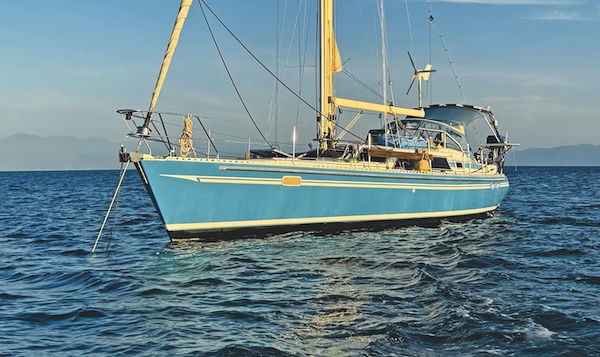
Visit shearwatersailing.net now to secure your bunk. That’s shearwatersailing.net, S-H-E-A-R-W-A-T-E-R, sailing.net. And now in changes in latitudes, the Lodici family from Sausalito travel back and forth aboard their Scepter 43 Luana. It’s not very often that you hear of a monohull sailor who switches to a catamaran.
13:08
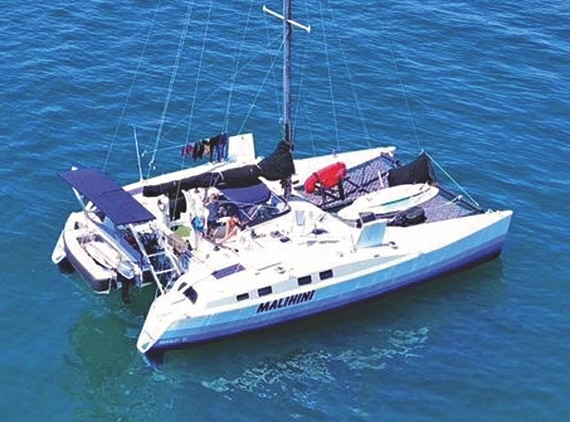
then later chooses to go back to Monohull. We are among the few who have done that. It’s been a while since we’ve updated on Latitude 38. You may remember us as a family afloat. For a quick recap, after sailing to New Zealand aboard our Stevens 40, Shawnegan, originally departing from Sausalito in August 2015, we ended up sailing our boat there, flew back and moved onto a 35 foot performance catamaran. The Shuttleworth 35
13:38
Malahini. After sailing her down from Portland to Emeryville at the end of 2021, we stationed ourselves in the Bay Area for a bit under two years, outfitting her to continue our cruising life while I worked full-time as a nurse at the Children’s Hospital in San Francisco.
13:57
We sailed down to Mexico at the end of 2023 and had two amazing seasons sailing around the typical west coast Mexico sailing route, a few hundred miles south of and around Puerto Vallarta for the winter and up to the Guayamas for the summers.
14:15
Last April, we stumbled upon a boat for sale in the cruise, known to many Mexica cruisers as Lingalonga. We’d originally met Kirk and Chris on Lingalonga, a Scepter 43, back in our early years of cruising in 2015 and 16. We’ve always admired the boat’s beauty. With some apprehension, we decided to go take a look at her. Feeling somewhat as if we were cheating on Malahini,
14:42
We weren’t completely sure going back to a monohull was the right choice, especially after boasting about how comfortable the cat is in a rolly anchorage. After many long conversations and weighing out the pros and cons of catamaran versus monohull, we came to the conclusion that going back to the monohull life was the way to go for us. Christian grew up on monohulls. We raised all three of our kids on a monohull.
15:09
The catamaran life seemed appealing to us on multiple levels, but mostly for more space for a growing family or having guests and having a flat night’s sleep at the Roli Surf Spot Anchorages. But the more we sailed around on this lightweight performance cat, the more we realized that we prefer the motion of the monohull and the security in knowing what conditions the monohull is capable of sailing in. I know many people have no doubts at all about multi-hulls.
15:38
And I’m sure that we could have pushed Malahini harder than we did. But ultimately, we just didn’t feel at ease with her underway if the conditions were blowing over 20 knots and the sea state was lumpy, large or confused. I actually got more seasick on the catamaran because of the different motion it has. Also, we are cruising family, not a racing one. Sure, it’s nice to be able to move easily in light wind, but we want to be able to move safely and comfortably in heavy winds.
16:08
and choppy, lumpy seas. On April 11, 2025, having already started sailing north on Malahini, we took the bus down from Mazatlan to do a sea trial and haul out survey on Lingalonga. We instantly fell in love. By May 1st, she was officially ours. We renamed her Luana. With not much time left in the season, we finished sailing Malahini up to Guayamas to put her on the hard, bussed back down to La Cruz,
16:37
hopped onto Luana and sailed her up to the Gaianas to also be stored on the hard. She needed her bottom painted, her leaking water tanks fixed, and a few other small upgrades with solar. But other than that, we just needed to move all our things from Malahini over to her. Having them in the same yard made that move so much easier, and surprisingly, we managed to find places for all of our things, including the plethora of surfboards and foil gear. Live afloat back on the monohull.
17:05
really started for us when we splashed and sailed away from Goyanas on November 7. She’s dialed in with a furling main and jib, solar and wind generator, hydrovane, water maker, and a new fridge. Oh, and an oven. Malahini didn’t have an oven. We can’t describe how right Luana feels. In Hawaiian, Luana means happiness and contentment. And that’s exactly how we feel about her. So now what?
17:31
Both Christian and I feel for the first time that we are happy with just waiting to see what feels right as far as where to go next. I continue to super commute from wherever the boat is. So that’s always something we consider with our sailing destinations. But other than that, we have the sense of happiness and contentment going with the flow for now. We plan to continue doing what we’re doing for an undefined time. With my current position as a per diem nurse at UCSF Children’s Hospital,
18:01
My only requirements are to work four shifts every four weeks. This means that sometimes I can arrange it so that I fly up from, let’s say, of Ayotu, work four at the end of one schedule, take a few days off, then work the next four at the beginning of the next four week schedule. Then I fly back to the boat and have about five to six weeks off before I have to fly back to work.
18:28
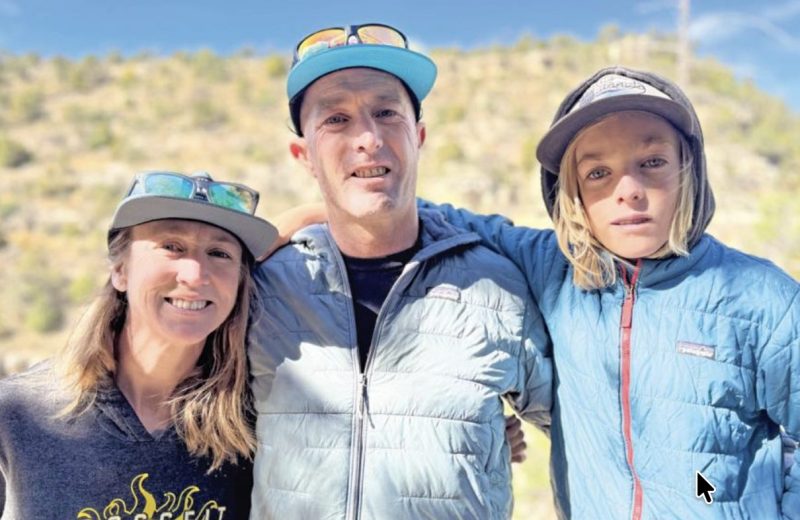
While all of this is going on, our eldest, Nina, is now 23 and works as manager of a ski shop in Phoenix. She’s loving her snowboarding, rock climbing and mountain biking. Ella May is now 18 and in university, studying to become a nurse. Taj is now 12 and remains on the boat with us. He’s pretty much into any and all water sports, including, but not limited to, surfing, foiling, diving and fishing.
18:56
Captain Christian continues to enjoy his water sports as well and is in charge of homeschooling and keeping the boat afloat physically. Meanwhile, I keep the boat afloat financially. That pretty much sums it up for us for now. We have Malahini listed for sail by owner at this time. Video can be found on our YouTube channel search family afloat. She’s a solid vessel even for crossing oceans.
19:23
So much so that we would even consider delivering her to the Caribbean or all the way to Australia if someone wanted her there. As for Monohull life, we might sail Luana up to Southern California this coming summer, then back down to Mexico and Central America next season. We shall see. The story was uh brought to us by Josie Laducci on December 26, 2025.
19:50
and the family, you can follow them at familyafloat.com. Ahoy, it’s Ryan Follin, one of your Good Gybes hosts. I’m excited to share that this episode is brought to you in part by one of our Good Gybes guests, Kevin Washbauer of Shearwater Sailing. If his story stuck with you, you can actually go sailing with him. If you didn’t catch the podcast, you can learn all about him and his charter adventures. Kevin runs Shearwater Sailing aboard Atlantis.
20:20
a custom FAR 53, a fast performance cruiser. They offer everything from day sails on Monterey Bay to coastal passages up and down California to ASA sailing courses and offshore trips. And coming up soon, they are sailing to Hawaii and back. The Hawaii leg departs mid-August with a return in mid-September. Spots are limited. To learn more about what Kevin’s got on the calendar, head to ShearWaterSailing.net.
20:49
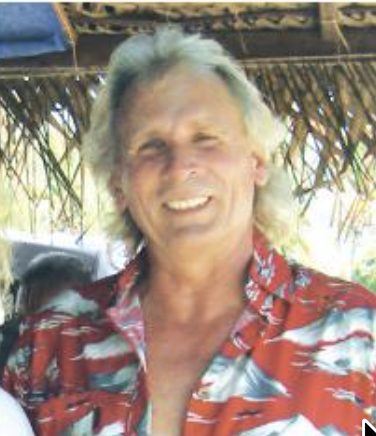
That’s Shearwatersailing.net. S-H-E-A-R-W-A-T-E-R sailing.net. This story is a hell of a homecoming. Jailed in Honolulu by Jim Welch. The authorities at the Honolulu airport handcuffed me, put shackles around my ankles and transported me to the jail in downtown Honolulu. I was put into a concrete cell with one small fluorescent fixture.
21:19
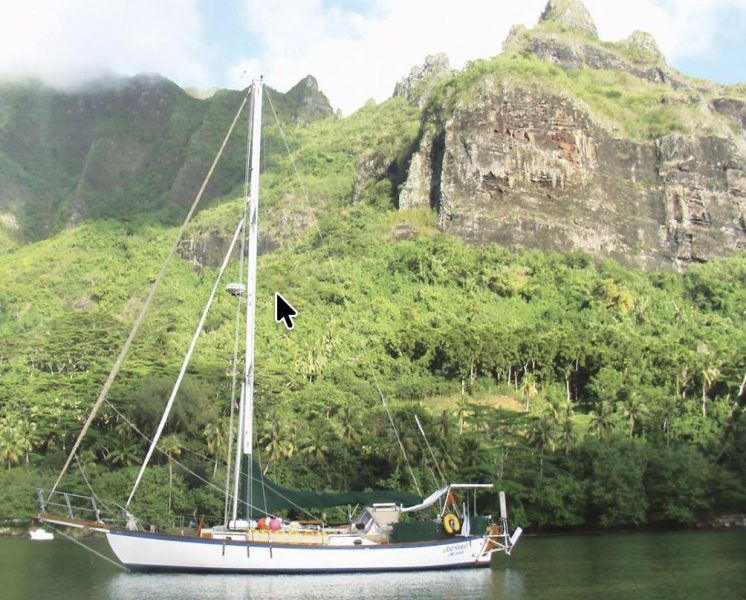
Meanwhile, my wife, Judy Meeks, was asked to leave the airport terminal. What an unbelievable turn of events. As just days before, we’d been living the life of a dream aboard our Alouella 38 Desire in French Polynesia. It all started on April 12 of last year when Judy and I set sail from Cabos and Lucas for the Marquesas and points beyond.
21:47
Right from the beginning, our adventures surpassed all our expectations. For nearly every stop, our faith in humanity was renewed by the genuine kindness and goodness of the locals and by fellow cruisers from all over the planet. To say that we were having a fabulous time would be a tremendous understatement. We reveled in the freedom unknown to most people, a freedom that not too long in the future would be taken from me.
22:15
Judy and I happily cruised through the Mercasus to the Tuamotus, then onto the Society Islands, where we decided to call it a season. We put desire on the hardened raiotea for cyclone season and made plans to return to the States to renew our cruising kitty, see family and friends, and plan for our next season of cruising. As the wheels of our plane lifted off the runway in Tahiti, Judy and I looked at each other with an unspoken sadness. Our cruising season was over.
22:44
but at least we were already making plans for our return. Our schedule was to fly through Honolulu, where my wife would remain for a time to visit family and friends, while I would continue on to Los Angeles and then to Georgia to visit my daughter and grandson. But it was in Honolulu that our trip through the Magic Kingdom and my personal freedom came to an abrupt halt. Since Honolulu was our port of entry back into the United States,
23:12
we were required to clear customs and immigration. We assumed this would be routine, but it turned into a shocking nightmare. I gave my passport to the immigration agent and after an unusually long time was asked some odd questions about whether I had ever been to Florida. Yes, I responded politely, why? I can’t tell you that, said the agent. I was then instructed to report to a secondary immigration station
23:41
for further questioning. I was caught completely off guard and couldn’t understand what it was all about. But the bad dream would only get worse. After a number of questions about my social security number and date of birth, I was asked if I could produce identification in addition to my passport. After 20 minutes of stuff like this, it became apparent to me that something really bad was brewing.
24:08
I was questioned about my history in Arkansas, a state that I had only passed through in years gone by. When two Honolulu police officers showed up, I knew things had taken a turn for the worse. Naturally, Judy was beginning to become very concerned, but she was asked to step aside while I was taken into a confined area. The police then informed me that I was going to be arrested on a felony extradition warrant issued by the state of Arkansas.
24:39
What? I was to be charged with writing a string of bad checks in Arkansas, Kansas and Texas. I was then shown the warrant, which had been issued in June of last year. At this point, I was very optimistic that things could be quickly cleared up as the stamps in my passport clearly indicated that I had been in Mexico in January, arriving in French Polynesia in May and didn’t leave Polynesia until September.
25:06
Surely this would prove that I was nowhere near Arkansas, Kansas or Texas when the bad checks had been written. I further suggested that the checks could be faxed so they could compare my signature with the fake, at which time I assumed all would be forgotten and I would be released. The Honolulu police were having none of it. They informed me that they were obligated to detain me as my name, social security number and date of birth all matched the description on the warrant.
25:34
I was to be held for extradition back to Arkansas. Then I was told it would likely take two to three weeks before someone from Arkansas showed up to get me. If that wasn’t bad enough, I was to be held without bail. All this was happening on a Sunday. So the Honolulu detectives weren’t able to reach anyone in Arkansas to verify that they would indeed follow through with the extradition.
26:01
Within the next 20 minutes, I was placed under arrest on false charges. As I stood there in disbelief, my brain felt like it was wrapped in a wet blanket, as there was just no sense to it. My wife was asked to leave the airport terminal and I was taken to the Honolulu jail, handcuffed and with shackles around my ankles. All my possessions were removed from me and I was taken to a concrete cell. It was about as far from the freedom of cruising the Pacific as one could imagine.
26:31
For some reason, there’s no mention of my having the right to speak to legal counsel. And as bail was not an option, the reality of the situation became as hard as the concrete walls of the cell. I tried to sleep as much as possible to avoid thinking about my situation, but I woke frequently as the cell was cold and I’d lost all concept of time. After what seemed like an eternity, I heard the public defender tell some inmates what to expect in court.
27:01
later that day. I overheard him say that it was 4 a.m. A short time later, two small chocolate-covered doughnuts were shoved through my cell door. They would be the sum total of my sustenance for the next 10 hours. No attorney, no bail, no food. I felt like I was in a scene from a prison movie in a third world country and that I was the star wrongfully accused of drug trafficking or some other crime punishable by death.
27:28
I thought that sort of treatment only happened in other countries because in the United States we are innocent until proven guilty, aren’t we? A few hours later I was transferred to the court building where I was placed in a cell with 24 other men for another nine hours. For some reason I was still the only one required to wear leg irons, which was a source of curiosity among the regulars in the cell.
27:55
After many hours of sitting on cold concrete with the steel of the leg-ines biting into my ankles, I was beginning to wish I had worn something more than shorts and slippers on the plane. Suddenly, the cell door opened, as it had many times before that day, but this time it opened for me. For even quicker than my nightmare had started, it was over. The Honolulu detective had finally contacted the proper authorities in Arkansas and discovered the truth of the situation.
28:23
A man using my social security number, along with my name and date of birth, had indeed gone on a check cashing spree, but it hadn’t been me. The unbelievable part is that the guilty man had already been arrested in San Mateo, California, and extradited to Texas where he was in custody. I had been held in jail overnight for a crime committed by a man who had already been in jail in Texas for two months. When I asked how there could still be an active warrant with my name on it,
28:52
when the guilty party had been incarcerated for months, I couldn’t get a straight answer. Having been falsely held, I had obviously missed my flight to California and needed to pay several hundred dollars to change my ticket. Surely some government agency would pay for this, and surely there would be some serious compensation for my ordeal. But no, I have since contacted several attorneys about the matter, and for the most part, they have shown no interest. I was informed that I would most likely spend a large sum of money to pursue such a case.
29:21
And because it would somehow fall under the Homeland Security Act, I would get nowhere. I found this more disturbing than my jail time. How could somebody not be held accountable for the mistakes that left me in jail? I can’t begin to tell you how helpless it makes you feel. Would I forfeit our cruising knowing what was going to happen at the end? Not on your life. No amount of bureaucratic nonsense can take away the fond memories of that special voyage from me. However…
29:49
I suggest that you dress warmly when flying home from the cruise in the tropics because you never know what Uncle Sam might have in store for you.
29:58
We hope you enjoyed our stories from the February issue of Latitude 38, and we look forward to seeing you next week for another issue of Good Jibes. Have a great week and sail well.