

Episode #230: Kevin Wasbauer on Chartering the Pacific, with Host Ryan Foland
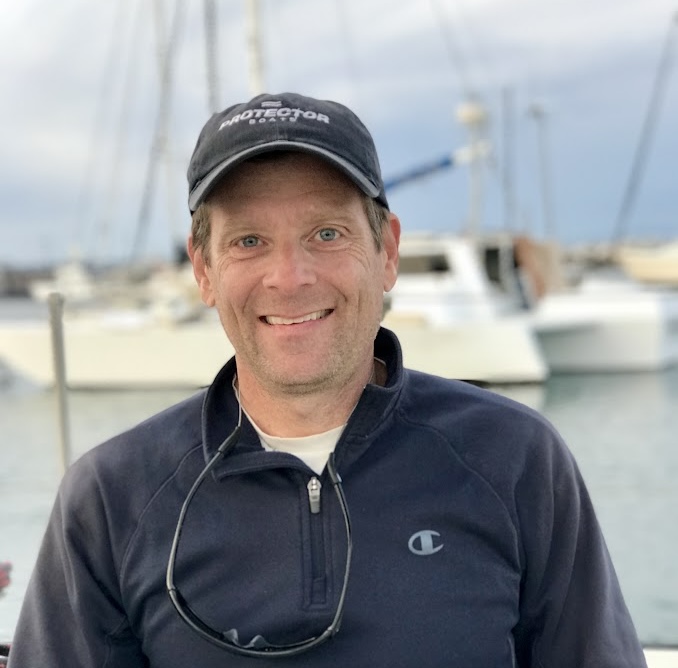
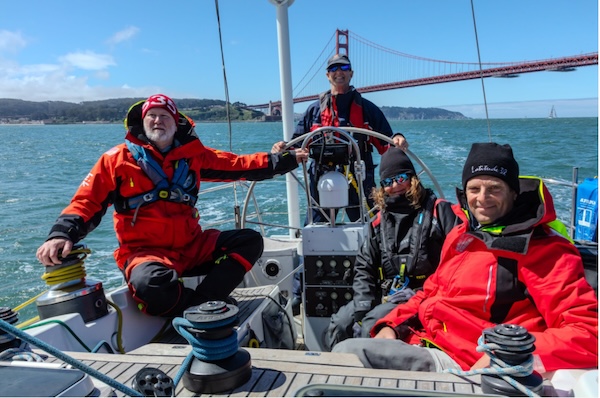
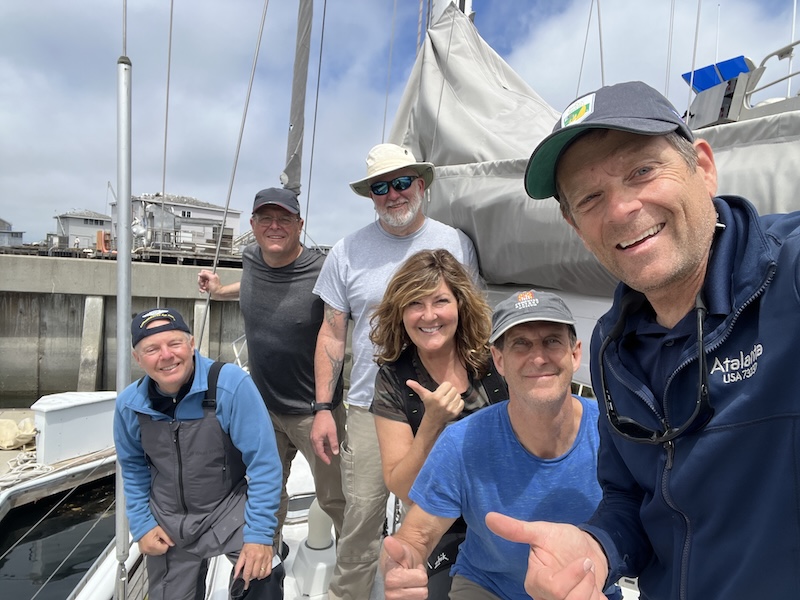
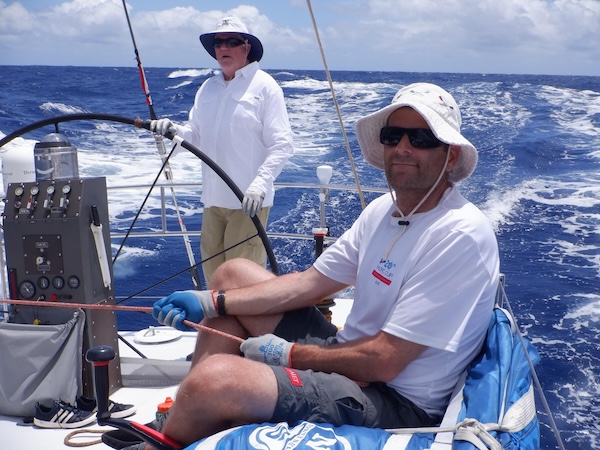
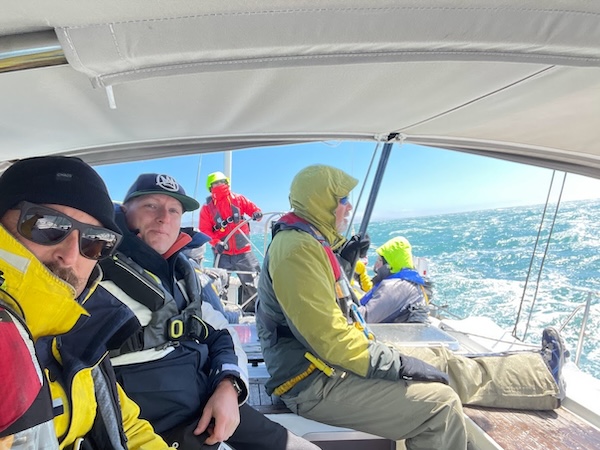
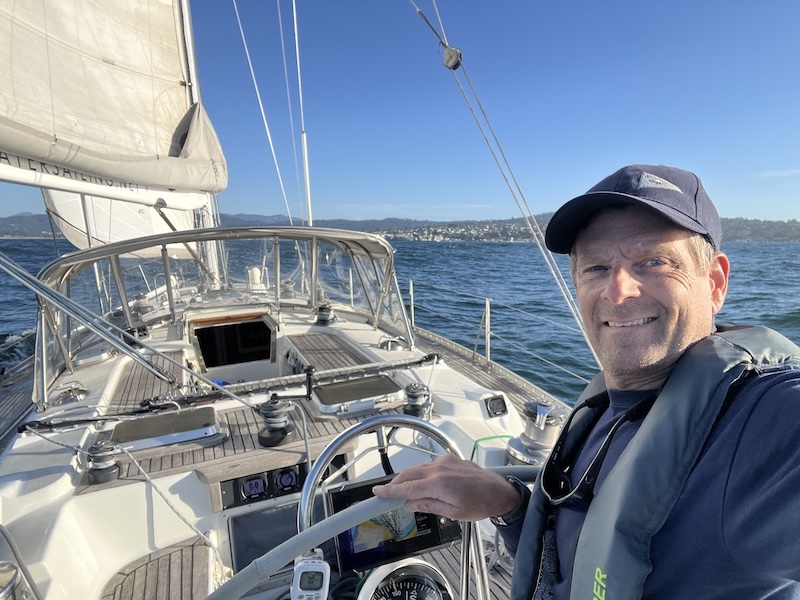
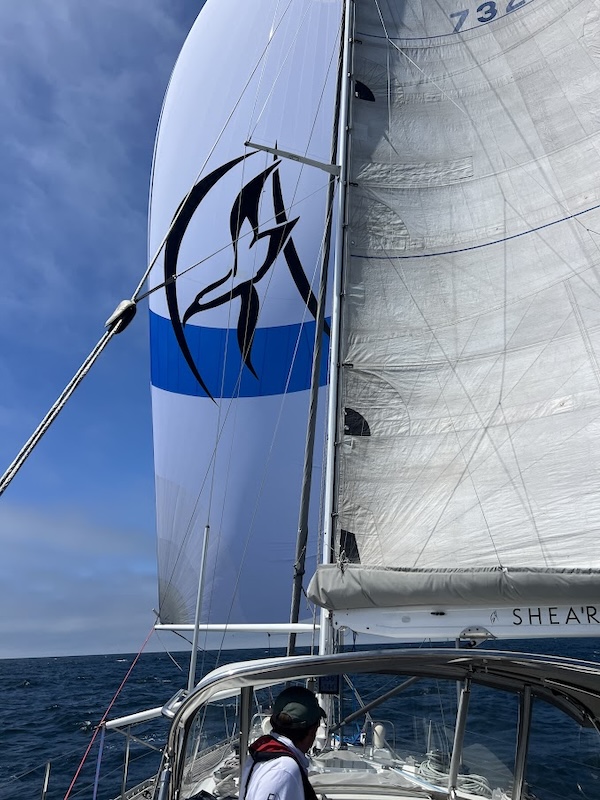
This week’s guest is Kevin Wasbauer of Shearwater Sailing. Kevin joins us to chat about providing sailing trips on Monterey Bay and offshore adventures across the Pacific Ocean. He has competed in hundreds of regattas on the world stage and sailed tens of thousands of miles on yachts small and large, and launched Shearwater Sailing in the summer of 2021.
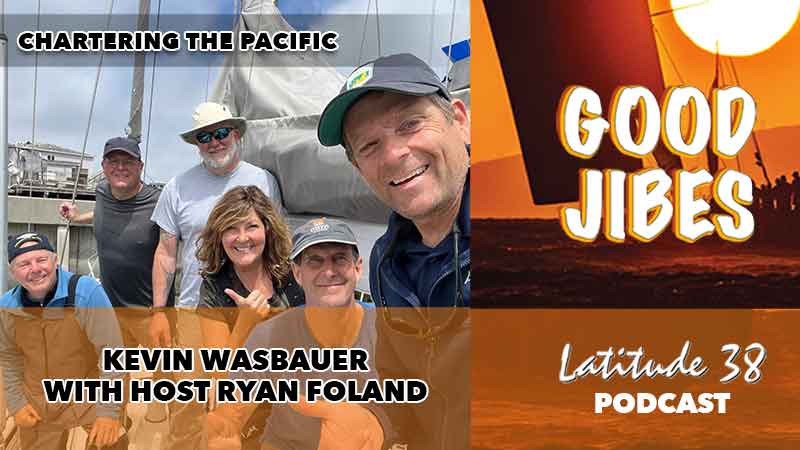
Hear how Kevin started sailing at age 8, the sailing mentors who made the biggest impact on his career, how to start a sailing business, how to leverage your sailing network, and how to seize the day.
Here’s a sample of what you’ll hear in this episode:
- San Francisco and Santa Barbara runs
- What actually attracts a mentor
- Building a business through bootstrap learning
- No matching strangers
- Understanding charter sails through nonprofits
Listen to the episode on Apple Podcasts, Spotify, and your other favorite podcast spots — follow and leave a 5-star review if you’re feeling the Good Jibes!
Learn more about Kevin at ShearwaterSailing.net and Ryan at Ryan.Online/SpeakerSHIP-at-Sea
Check out the episode and show notes below for much more detail.
Show Notes:
- Kevin Wasbauer on Chartering the Pacific, with Host Ryan Foland
- [00:14] Welcome to Good Jibes with Latitude 38
- [00:58] Welcome aboard, Kevin Wasbauer!
- [01:25] the sailing story that shaped Kevin’s life
- [02:19] meeting a German olympic sailor mentor
- [03:14] discovering family sailing heritage in old photos
- [05:07] remote control sailing club and early racing
- [07:04] college sailing and the dream of cruising
- [08:30] buying a pearson triton and living aboard
- [09:55] working at Mark Rudiger’s sail loft in Sausalito
- [12:20] learning to sew sails: hand work and machine work
- [13:12] what attracts mentors: enthusiasm and saying yes
- [15:48] Join our Crew List at latitude38.com
- Building a Charter Business
- [16:16] the transition from cruising dream to professional sailing
- [16:42] delivering a 74-foot cutter to san diego
- [18:05] working on yachts in antibes, france
- [19:23] settling down and meeting his wife on a laser
- [20:13] returning to the Bay Area and racing far 40s
- [23:35] the pandemic project: starting Shearwater Sailing
- [25:29] inspired by Andy Schell’s offshore sailing model
- [27:23] finding the far 53 Atalanta on craigslist
- [28:44] understanding charter sales through nonprofits
- [30:38] getting insurance and business setup
- [32:01] in-water survey with a network of experts
- [33:55] year-long refit managed by friend from Ecuador
- [36:13] private charters only: no matching strangers
- [37:30] whale watching in Monterey Bay‘s deep canyon
- [38:27] Are you thinking of sailing to Mexico or across the Pacific? Latitude 38 has a resource page called “Heading South” & the “first timer’s guide” to help you prepare
- Running Shearwater Sailing
- [39:16] San Francisco and Santa Barbara runs
- [42:04] building a business through bootstrap learning
- [44:29] polling customers on whether to cruise vs race to hawaii
- [48:12] quitting the day job
- [49:39] finding inspiration in loss and living without regrets
- [51:26] the extended sailing family
- [52:21] connect with Kevin and learn more about upcoming trips at shearwatersailing.net
- [54:17] be open and say yes
- Make sure to follow Good Jibes with Latitude 38 on your favorite podcast spot and leave us a 5-star review on Apple Podcasts
- Check out the February 2026 issue of Latitude 38 Sailing Magazine
- Theme Song: “Pineapple Dream” by Solxis
Transcript:
Please note: this transcript is not 100% accurate.
00:03
All of these things have kind of culminated in this moment.
00:14
Ahoy everyone and welcome to another episode of Good Jibes where we talk about West Coast sailing with West Coast sailors today. I am your host Ryan Folland and I’m here with Kevin Wasbauer and unfortunately we are not on his boat but we’re going to talk about his boat. We’re going to talk about his business. We’re to talk about where his business is going. But this podcast Good Jibes brought to you by Latitude 38 is a podcast a community for us to get together to swap stories.
00:41
talk sailing, to talk racing, to talk cruising, to talk chartering, so that wherever we are in the world, whether in the car or at the job, we can disconnect, hop onto this virtual boat and sail off into the sunset.
00:58
Kevin, welcome to the show. I’m excited to have you here and a big shout out to Archie for connecting us. Another one of our good jibes and latitude 38 community. Welcome aboard. Thanks so much, Ryan. Great to be here. And yeah, thanks for Archie for making the connection. All right, well, let’s kick this off. We usually just like to talk about stories, especially the ones that shaped you while sailing as a way to get to know you. So I’m here in the cockpit.
01:25
And I’m just getting to know you with all the thousands of people listening. What is a sailing story that shaped you? It could be crazy, could be not, but it’s something that has moved the needle for you. And you’re looking back and you’re like, damn, yeah, that actually makes sense. Now. I think about my family as not really being a sailing family because my parents didn’t sail when I was a kid. I went to a camp when I was eight at Sac State on Lake Natoma and sailed a Sabbath.
01:54
for the first time and absolutely loved it. And the next week I graduated up to a laser and it was just something that I knew right away. I just loved it. There was the boats and the water and the wind and something about it just sort of hooked me. And a couple of years later, I met a guy who had been an Olympic sailor in Germany on the Flying Dutchman. And he kind of took me under his wing and taught me the sort of fundamentals of
02:19
bigger boat sailing. had a San Juan 21 on Lake Canockdy. And he sort of got the boat out of the bushes in the backyard and said, okay, you know, here’s a bucket and a mop. I want you to clean the boat up. And then once it’s ready to go, we’re going to take it out sailing. And we did a couple of regattas. And he was really, I mean, that was an age I was just very, I was kind of absorbing everything like a sponge. And he was very patient with me, but in his German way. everything was very exact and uh it was great. And
02:49
Then, you know, I sort of proceeded to move up in sailing and racing college and had a career in racing when I was in my twenties. And then if you fast forward to just a couple of years ago, I was looking through some photo albums of my mom and found some black and white pictures of a catch that her parents owned in the forties right after the war in Antioch.
03:14
And it was pretty remarkable to find these pictures of my mom as a young girl with her brother and sister. And they were having these wonderful adventures out in the Delta. And I actually found my grandpa’s log book in his house when my mom moved him out and sold the house, you know, a couple of decades ago, the log book was still around. So I spent a couple of days just absolutely riveted to this book and reading about these amazing adventures and some of these places that I recognized in the Delta.
03:44
And I realized that on some level, I guess it really actually was in my blood. So that was kind of a, it was kind of a nice moment that brought it all back. your parents ever talk about sailing or it was just like a magical discovery after the fact? I mean, I knew that the boat existed. Um, and, my mom almost never talked about it and my grandpa very little. mean, I had heard a couple of stories, but really didn’t know much. And I had been, I had no idea what the boat looked like. I didn’t know anything about it. And I found.
04:13
In the log book, I found all the original plans. found all of the, you know, the, the invoices from the gear that they’d ordered when they were building the boat. And it was just totally fascinating. So yeah, I know it was more of a sort of a surprise moment, I guess. I want to go to Mr. Miyagi, Mr. German Miyagi. I feel like I was just feeling the karate kid Daniel-san kind of thing. How did you initially meet him? What age were you at?
04:39
And literally it just sounds like here’s a bucket swab. Was there a wax on, wax off? I’m curious how that ruined down. Yeah, it sort of was like that. I had spent some time racing some remote control boats, some Santa Barbara’s and some one meters when I was a kid and my dad kind of got into it with me. And so we did that for a couple of years. And in that club I had met Reimer.
05:07
Was it specifically like a remote control sailing club? small like little RC boats. Yeah. And these guys were very serious. I was the only kid in the club and all these older guys were like, you know, they were out there and they were taking no prisoners on the race course. So it was fun. And, you I met him there and he said, you know, if you’re interested in learning, I’ll, you know, take you out on my boat. So I went to his house and I, know, the boat was literally parked.
05:36
under a bush in the backyard, like covered with moss. And I was, you know, sort of my heart dropped, you know, in the way that an 11 year olds does. And, uh, and he said, well, this is it. And, know, he basically really did literally just hand me a bucket and a mop and said, it up, clean it up. that meant like the inside of course was filthy. So we had to get the cushions out and, know, everything had to be completely bleached and clean because the boat hadn’t been sailed for at least 10 years, maybe 20, I don’t know.
06:06
It took a long time, but eventually we got it going and he did some work on it, replaced the running rigging and did what he needed to do. We launched the boat and over the course of probably about six months or so, we did a number of regattas with it. He really just showed me how to tie a bowline and all the things that you need a mentor when you’re just starting, you need someone to show you the stuff, just the basics. Of course, he was a brilliant sailor.
06:35
He would sit out there on windless days on Lake Canockdy he’d light this big cigar, you know, and he’d smoke it, but he was more interested in seeing what the wind was doing. I mean, he was, aah he was a light air wizard and, you know, he would be able to just kind of ghost away from the rest of the fleet based on his observations. It was just super fascinating for me. So that had a really big impact on my early sailing career. And then I started racing in the Bay when I was in high school and there was a lot of great one design sailing in the late eighties, you know,
07:04
lots of fleets that had big, know, lots of boats. And so I did that. then, uh you know, really just enjoyed it and knew of something I wanted to keep doing. So when I got to college, I went to school up in Portland and I joined the racing team and we, you know, I spent four years racing for my college and that was great. And, you know, I was just into it more and more. And when I graduated, I knew that I wanted to do something with sailing, but I didn’t exactly know what. And I uh was
07:34
thinking that I might want to do some cruising. And I was reading articles in Practical Sailor and stuff about both. Now define cruising for that definition for you. Was that like, we’re just going to go set sail across and come back in a few years? Define Yeah, I think I sort of had that dream, you know? Like was in my early 20s and I was very influenced by the parties and others who were, you know, go small, go now kind of thing. And I was thinking like, I’d love to have an adventure like this. So…
08:02
started looking for a boat and I actually, through the process of thinking about this and looking for a boat, I actually met Myron Spalding at Spalding Boat Works at the time. He had a Pearson Triton for sale and so I bought the boat from him and he’s a fascinating person. I wish he were still alive so that he could come on the show and people could meet him. He was just an amazing character in Sausalito. And so I bought the boat and I…
08:30
took it home to my parents were living up in on the Oregon coast at that time. So I brought the boat up there and I lived on the boat in the Harbor in Brookings, which at that time, this was the mid nineties. I think I paid $50 a month for my slip and I lived on board and I worked on charter fishing boats during the day. And I did that for a season or so. And then I brought the boat back down to San Francisco because I was really wanting to get it ready to go, you know, take off on this big dream voyage of mine. when I got, how big was that boat?
08:59
How big is it? I’m sorry. That’s a 28 foot Pearson Triton. Built in the sixties. This one was built by Aero Marine in Sausalito back in the sixties and they had a reputation of being really stout. There was a guy that had circumnavigated on one engineless at the time. And I was really influenced by that story. Did you have an engine in yours? Interestingly, I had originally looked for one without an engine and then people convinced me that that was probably.
09:26
not the best idea that really having a boat with an engine would make my life a lot easier. um And so I ultimately bought one. The one from Myron had a small Yanmar in it, a one cylinder Yanmar. So a one cylinder Yanmar. So what was it? What was the puttin power on that? you’re kind of horsepower. Yeah, 10 horsepower, but the boat only weighed 8,500 pounds. So it was, it was light and that was enough to motor at five knots or so. Okay. Yeah. And I sailed it down the coast and under the gate and I parked it in Sausalito because I was getting some sales from
09:55
sail loft there. And the person who owned the loft was a pretty well known Bay Area sailor named Mark Rutiger. And uh Mark was uh super kind and helpful and got me, you know, connected with some new sails for the boat. And while we were at it, he offered me a job to come work at the loft. And uh I was, I didn’t really, you know, know that much about him. But obviously, I knew the name, he was a big name at the time. And so I
10:24
accepted because when you get offered to work with Mark Rutiger, you say yes. And uh so I moved on, moved my boat into a Marina in Sausalito and lived aboard there and worked at the loft and sort of apprentice there and learned how to sew. And it was an amazing experience. And I feel so fortunate to have had that time with Mark, even though was only a year. He was just such an amazing sailor and an incredible human being. And that was really, uh he had a big influence on me too. What was most surprising about
10:52
jumping into the sail making sewing process that maybe you had no idea before you just and I think it’s also interesting that you have a multiple Mr. Miyagis throughout your life. you didn’t you have it the sailing in your blood. It was said dormant in your immediate family. But I feel like you have this extended family that you have just sort of found connected through all these boats in the in the loft. What was something memorable? I mean, in my mind, I’m just seeing you like sitting there stitching. like what was so what was
11:21
memorable there. Yeah, it was an amazing experience. mean, had never operated a sewing machine. I didn’t know how to do any of that stuff, but it actually turned out what really struck me was that if you have somebody who’s helping you and willing to spend the time and Mark himself wasn’t really much of a sailmaker. mean, he did some, you know, he did some, and he did some design work and stuff, but he was more of the sort of sales and he had a person in the loft that was really doing the day-to-day work on the machines. And that person, his name was Fred.
11:51
He really helped me learn how to sew and learn how to do all the hand stitching and stuff. And what struck me about it was it really actually wasn’t that hard. was if you’re just having kind of an eye for detail and you pay attention and I just listened very closely and tried to soak up as much as I could. I found that after not that long, I was able to do, know, first I could do whipping of lines and then I could do some simple inlay repairs. And then I was moving on to more advanced stuff. And it was just a…
12:20
I mean, I could have totally seen having a career doing that because it was, just really enjoyed working with my hands. loved being in the loft and sewing on the machines and stuff. was just, for me, it was fun and exciting and interesting and cool. People were coming in the loft and Mark and I would take, you know, we’d go out on the boat and we’d take sales out and we’d look at sales and I’d help them out with that. And I just felt like I was part of this incredible.
12:45
community and this thing that was going on that was just really appealing to me because for all the reasons that I loved sailing it kind of checked all those you boxes it was like wow I get to go out on this boat I get to go out with amazing sailors I get to meet people it just was a fantastic experience. What do you think it was about you that consistently attracts individuals who want to help you out? I mean you mentioned that you’re listening you’re attentive your things like that
13:12
But this is like a common thread that happens. And I feel like there’s magic in those random Mr. Miyagi’s, but it almost seems like, you know, that used to happen in the past. Is that something consistent where you even now to this day are running into people and being sort of the grasshopper? Or have you been the grasshopper and now you are turning to Mr. Miyagi? I mean, we’re getting into what you’re doing now, but what is it about you that just attracts people to want to help you out? Is it your willingness to learn or is it just
13:43
You’re, you know, go small and go out there. You’re putting your neck out there. What do you think? What do think that is? Cause I think it’s really unique that all these people have guided you and all these crazy opportunities really. Well, I think I was just sort of so enamored with the sport and I just loved all of the, all, you know, all of the components of it from the gear to the strategy, to the weather. I mean, it’s so multifaceted and I was so in love with the sport that I really did want to learn. mean, I was very
14:10
I was very keen on, you know, absorbing everything that I could get. And especially when you have like a luminary, like Mark, who’s willing to sort of take you under his wing. For me, that was, you know, that was, I understood the magnitude of that. Even when I was, you know, 24 or whatever it was, it was like, wow, this is incredible that he’s willing to do this for me. And, and so I just wanted to learn as much as I could. Did you make an actual ask or like, and again, I’m just speaking for selfishly for myself and for other people.
14:38
it was just like a natural connection or I mean he offered you the job, offered you the bucket, these things. I’m just curious what, if there’s a secret catalyst to help build these types of relationships or if it’s just your enthusiasm and being in the right place at the right time.
14:52
I think it’s a little bit of both. think it’s some luck. And I also think it’s just a willingness to be open to things, right? To just say, yes, when someone makes you an offer to do something, I mean, that was not my plan. My plan was to be in the Bay for a couple of weeks and sort of do some work to the boat and then shove off, right? And go to Mexico. That was kind of, that was my dream. And when I got this opportunity, I was like, well, I can still do that at some point, but this is an incredible opportunity that just came, you know, sort of got.
15:21
thrown to me and you know, Mark needed somebody and it was the beginning of the summer and he needed somebody to help him aloft and needed a set of hands. And so it was just super kind of him to offer and I just, I couldn’t say no really. Hey good jives listeners, are you looking to sail more? It’s the biggest mismatch on the California coast. There are thousands of boats not sailing because they need crew and thousands more sailors or soon to be sailors who want to sail but can’t find a boat.
15:48
For over 45 years, Latitude 38 has been connecting boat owners with sailors to sail, or race the bay, or travel far over the horizon. Some connections have turned into thousands of blue water cruising miles, or race winning crews, or long term relationships, or just happy days of sailing. If you have a boat or want a crew, add your name to the Latitude 38 crew list at latitude38.com. You don’t know where such a simple act will take you.
16:16
So continue on, did you make the jump from somebody who wanted to sail across the world to now you’ve got your hands on the sails you’re sewing and now you own your own boat, your own business? Was it this incremental continue to step and did you ever get out there and cruise or how did we get to where you are now? Yeah, well, em I did not get out there and cruise actually because what happened was after I had been at the loft for a year or so.
16:42
uh A big sailing sort of super yacht came through that was on its way from Asia to Europe and it stopped at Schoonmacher and they came in to have some repairs done at the loft and I went down on the boat and the captain said, Hey, the boat is going down to San Diego. I’d like to have you help me deliver the boat down. So I asked Mark. There you go. Yes. That’s right. When someone offers you to go on a beautiful, amazing yacht like that, you say yes. So
17:09
I got on the boat and I was just the captain and me, just the two of us, and I’m double handing this 74 foot cutter. And it was one of those experiences that I’ll never forget because we sailed straight through to San Diego from San Francisco. We put the asymmetric spinnaker up. We sailed through the night. It was the first time I had ever really seen, especially, I guess it was in the neighborhood of Santa Barbara, just south of there, but seeing that incredible phosphorescence that you get sometimes down there.
17:38
and the dolphins, you know, looking like torpedoes through the water. I mean, was magical. And it was just, uh it was one of those moments where I was like, wow, okay, yeah, I definitely am doing what I want to be doing. And so when I got down there, the owner of the boat flew in and he happened to be the broker for, uh his name was Herbert Dom and he owned this company called Dom International. And they were the broker for Yelmert Yachts.
18:05
And Junger was a Dutch built company and it had been multi generations in their family building, you large sailing yachts. And I had actually lived in the Netherlands. So I speak Dutch and I had had some, had, this was as an exchange student in high school and I had some connections over there. So um when the owner got there, he said, well, Hey, I’ve got these boats in the south of France that I need to have somebody kind of help, help work on and help manage and maintain. And then we have clients that come in.
18:33
that live like in Canada, but their boats in the med. And so they come over and they want to do a race week. So we need crew. And I would just like to have you come and help me do that. So, you said, yes, I said, yes. Mark was, Mark was very understanding and I parked the boat back with Myron, um, and headed off to Antibes and ended up spending about a year in Antibes, um, working.
18:55
on these bigger sailing yachts. And that sort of got me into this whole thing in the med where I then moved on to a big swan and we were down in Porto Chervo in Sardinia for about six months and we were in Palma for about six months. And so I just was kind of doing it now more as a, as a living and I was living on boats and I was racing boats and um it just kind of, it snowballed from there. Wow. This all makes sense now that you’ve come full circle and
19:23
Tell us about how your pandemic project turned into what might be on the cusp of you taking possibly the largest leap since you had wanted to back when you were, you know, scouting out to go sail around the world. Yeah. So, I mean, after several years of sailing in the Med in the Caribbean kind of back and forth.
19:43
Um, I finally, you know, sort of decided that I wanted to settle down a little bit. was getting close to 30 and it was, uh, you know, I was thinking about a career and having a home and. Did you meet a lady too? Was that part of it? That, well, once I got home, yeah, I got home. And interestingly, um, when I was back at that lake where I had done my first camp, I ran into someone I had known from high school and we had actually been sailing together on that lake, but we hadn’t seen each other for 12 years. so.
20:13
when we kind of recognized each other, said, hey, we should go for a sail. And so we did. So that was our first sort of date. And you take her in a Sabbath or a laser? Yeah, it was in a laser. Yes. Oh, laser love. That is amazing. I have a laser as well. I think that’s one of the most pure forms of of love on the water. I’ve got a 1977 cow, 34. She’s not as fast and nimble, but wow, what a full moment. So you on the lake by yourself as an eight year old couldn’t get yourself out of it.
20:43
upgrading to a laser and then upgrading to a lady and a laser later on in life. That’s very serendipitous. your boat name? I know it’s not, but I feel like you should have a boat named serendipity or something like that. Say yes. Right. Yeah. Yeah. So on that first date when we went out, when we went out, it was very windy and we capsized and this woman named Erica, she went in the water a few times, but she always came back up with a smile and wanted to get back on the boat. And it’s sort of a best woman. I knew like, okay, yeah, this one’s a keeper. So.
21:13
We ultimately got married and uh we both had careers and uh had a couple of kids. And I was working at Stanford for a number of years and that gave me the opportunity to do a lot of racing on the Bay, which was great because I had been overseas so long. I didn’t really have a network in the Bay area anymore. So I had to kind of build that up when I got back. And again, I had people who really helped me. And one of the early programs I worked in was a FAR 40 program. And I just remember that the 2004
21:42
Far 40 worlds, had 39 boats on the line. So that tells you kind of the robustness of the fleet back then. And I sailed on a boat called Astra with Mary Coleman is the owner. And there was a guy on board named Solon Barry L who’s a well-known Bay area sailor and owns the UK loft in Alameda. And I met him at that time and he had already done, I think five or six America’s cups at that time. So he was an incredible sailor and I just wanted to learn from him. And.
22:10
He has a thick French accent, so we had to all pay attention closely to be able to understand him. But um he was an incredible sailor, just like Mark. He’s one of those people who just a natural talent. And so not only did I want to watch him and learn from him, but he had also like Mark, the added advantage of being just an amazing human. And you don’t always find that in professional sailing, sometimes, whatever. But Sylvain really is genuinely a great guy. um
22:39
And we stayed in touch and we sailed together on and off after that. And we continue to be in touch. And I sort of still regard him as a mentor for me. And he’s been helpful in my company, supporting me, getting the company off the ground. But I always enjoy seeing him and talking to him and racing with him. And I call him and ask him for advice sometimes. And he’s just, he’s great. again, somebody who was really um important to me in my own development and helping me.
23:07
get better at the sport that I love, but also get better as a human. And I think he’s just, he’s a remarkable guy. So that’s another, let’s see, not Mr. Miyagi, but Mr. Frenchyagi there, right? You had Mr. Germanagi, you Mr. Frenchyagi, a very international man of grasshopper-ness. Yeah. What prompted you to grab a sailboat and start a business in the middle of a pandemic?
23:35
Yeah, so that I mean, I had been then living in the Bay Area, we were living in Half Moon Bay at the time, actually, and both working a lot. And then when kids came along, uh you know, it was harder to make things work in the Bay Area, as it is for a lot of people with childcare and jobs and commutes and things like that. And so I got I had an opportunity to go to move to Monterey and to take a job that was a pretty big career step up for me managing a managing a
24:04
department. I talked to my wife about it and she initially wasn’t super excited, but we came down and looked at the place and the job was great. Monterey is an amazing place. I you just look at the bay when you drive in, it’s an incredible view and there’s all kinds of amazing outdoor stuff, hiking and big suras right here. From a natural beauty standpoint, it’s kind of unparalleled. I mean, I’ve lived in a lot of places and I find it just consistently to be a sort of
24:34
an amazing place, like everywhere you look, there’s just a lot of natural beauty. So we took the leap and we moved down and moved the kids down and bought a house down in Monterey. This was in 2011. And I had this big job and it was very intense and lots of travel and it was hard, but it was good. And we continued to raise our family. And I had also a Cal 34 here in Monterey, which I really loved. It’s a great boat, single hand.
25:02
Then I bought a Santana 35, which I had for a few years and I really enjoyed that too as kind of a family sedan. But then I was thinking just around the end of 2019, I had been watching some kind of those YouTube sailors and I had been listening to Andy Schell’s podcast on the wind and looking carefully at his company and thinking, wow, that’s kind of an amazing model. He’s taking people out and not that he was the first one to do it, but
25:29
but he was just so transparent about what he was doing. And I just found it fascinating that he was able to make a living doing that. And I loved his story about, yeah, you know, this is really hard, but I love doing this and I wouldn’t want to be doing anything else. You know, I get to work with cool people and I get to be on the water. And I was like, wow, that’s kind of amazing. People can do that. So I knew that because I had a couple of kids and I was tied to this job and I wasn’t able to really, you know, make a…
25:57
a leap like that, like I had in the past, right? You have some responsibilities and- couldn’t go small anymore and go now because you had a crew. I had a mortgage to pay. That’s right. I had a crew to feed. So I thought, well, okay, well, what if I work on some kind of hybrid model where I can do some local charters here in Monterey and maybe I do like some longer trips up and down the coast. And maybe I do, let’s say one long trip during the course of a year. And so I-
26:26
Just kept thinking about it and I kept shopping the idea around some of my friends, like close friends, not necessarily sailing friends, but people who know me really well, people that I’ve known my whole life. And people kept saying, wow, you know, the fact that you have, that you have this thing that you know, you want to give back to people and you know, you want to do, that’s like a gift, you know, not everybody has hoppers becoming the sensei. Yeah. And I thought, well, that’s true. And I don’t want to, I don’t want to waste the opportunity to do that. And.
26:56
And so I wrote a business model and I got some investors and I started looking for a boat and I started studying for my captain’s license. This was in 2020 and COVID was in full swing at the time and I couldn’t find a boat. was looking at swans in the Caribbean and in Asia and stuff like in the sort of 50 to 60 foot range. I was looking for something that was big enough to sail on Monterey Bay always and comfortably because it’s more of an open roadstead here.
27:23
on the bay rather than San Francisco Bay, which is much more protected. And so I wanted a fairly big boat, but that was also small enough to be able to single hand it. So I kept looking for boats and nothing was penciling out because the swans in the Caribbean, you know, they had a lot of UV damage. They were just, they were beat pretty hard because a lot of them were charter boats. And then you had to pay a lot of money for someone to deliver the boat up here from there. So nothing penciled out. And I was kind of…
27:50
I was sort of stuck and I had the business plan and I had people who are interested and I was getting my captain’s license and I couldn’t figure out the next move. And you know, sometimes the next move finds you, right? So obviously with you, every, mean, let’s, let’s say every move has found you pretty much. Yeah. feel so fortunate. I mean, and in this case, the same thing happened. I woke up one morning, I opened my laptop and I looked on Craig’s list.
28:16
And lo and behold on Craigslist, there was this amazing FAR 53 Adalanta that was listed for sale, but it wasn’t actually listed for sale. was listed for charter. So this was a charter sale from the Sea Scouts. I don’t know if your listeners have any experience with charter sales. I can tell you that my experience was extremely good. I called the broker, his name’s John Skoryak. When you say charter sales, what does that mean? It means buying a boat that has historically been a charter.
28:44
No, it means that a boat gets donated to a nonprofit and the nonprofit turns around and sells it. But in order to comply with the tax law, they have to hold onto it for a certain number of years. So in the meantime, in order to sell it, they charter it to the buyer until that period of time has elapsed. then the, then, they don’t charter it to like, other people. They charter it the buyer, ah to the buyer. And then after a certain amount of time, the title transfers to the buyer’s name.
29:13
Okay. And in this case, that was real quick, are they using it during that time or you as an owner, are you able to use it? What’s the, or are we not able to talk about that because of tax? No, no, it’s fine. They have the boat at their sales dock. I don’t know if the Sea Scouts use it. I think they may have done some, they have had some They have the access to it, but you don’t fully take ownership until the clock has reached, but you still purchase and it becomes a donation from them. Got it. Right. And, you know, I think
29:41
And they do this with a lot of boats. People donate the boats and they have some kind of um incentive for doing that. And then the nonprofit wants to sell the boat. in order to do that, they list it as a charter and it’s like a long-term charter. So I looked into it. And for me, um the mitigating factor was whether or not I was going to be able to get insurance, like a business insurance policy for the boat without owning the boat, without having the title.
30:09
But because I was the charter of the boat, I was able to get a policy. So I got not only a whole policy, but I also got a liability policy. because of that liability, that specifically to bring people out onto the boat as a business, as a charter or. Cause in the meantime, I’d gotten my hundred ton license and I was, I had my business license and I had everything in place from a business standpoint. I had the website built. I had already started my social media and kind of put everything in place.
30:38
This is the you’re rigging this business in this boat before it even existed and then it showed up in your feed. And so now you own the boat. You’ve got the insurance, but you don’t have access to the boat and you’re waiting for it to get access and then you get the title and then boom. actually, actually, I had you get the you get access to the boat right away. You just don’t get the title. So I went up to the sales doc and I worked with John Scoriac, who works for the Sea Scouts. He’s their broker.
31:07
a very well-known guy up in the Bay Area, works with Matthew Turner. He’s been also a fabulous resource for me and I have leaned on him a lot since. We developed this relationship through the process of buying the boat, but really uh the relationship has endured afterward. He’s advised me on all kinds of things to do with getting a Marad waiver for the boat because it’s a foreign-built hull.
31:32
And in order to get a coast-wise trade endorsement, you have to have a waiver for the boat and that’s complicated. So he advised me on that whole process and insurance. Another Mr. Miyagi in your life. at that. John’s been great. I have to give a shout out to him. And I will say that if anybody, it’s not the same as buying a boat from a regular broker, because you don’t get to have an out of the water survey. And there’s a few things that happen differently. So I basically leveraged my network in the Bay area.
32:01
The day I went up to look at the boat, had my rigger come and look at the boat. had a diver dive the hull. had my electronics guy come. I had five or six people come and look at the boat. And we basically did kind of an in the water survey for ourselves. There was no major problems, right? No cracking the bulkheads. had a keel, you you’re good. had a keel, right? Exactly. The boat was very well maintained. It had lived in front of the St. Francis Yacht Club for like 20 years. And the previous owner had been the Commodore of the club.
32:30
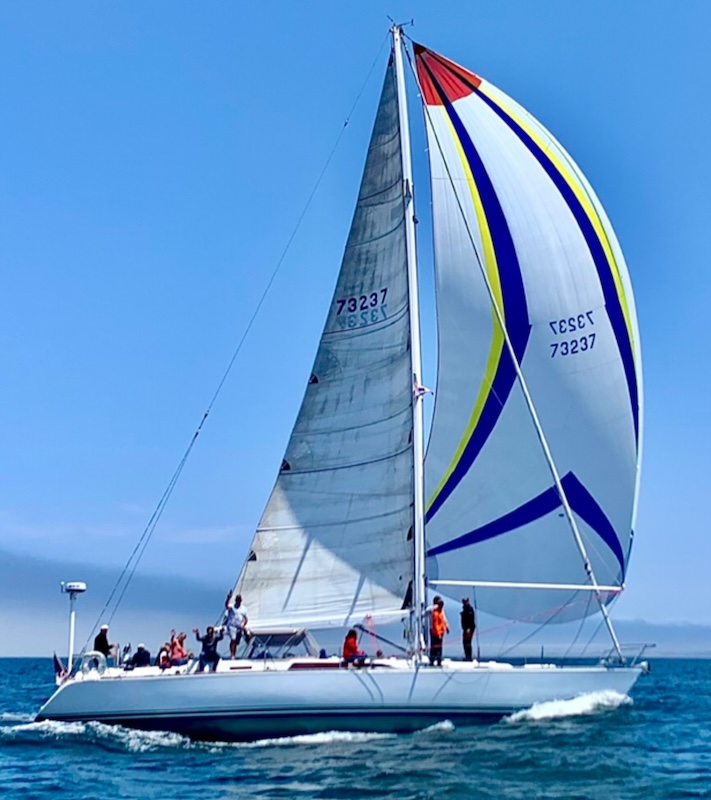
And in fact, I had walked by the boat when I was in high school or shortly thereafter, a number of times going to regattas at the St. Francis and always kind of admired it because it had these beautiful sort of 80s far lines to it. was a split cockpit like a swan with a center cockpit and then the aft cockpit with the helm in the back. And uh I had just always thought it was a beautiful boat. so the fact that it sort of found me all these years later was just kind of remarkable.
32:58
And working with John was great. so, you know, for people who are interested, the advantage of this is that they tend to, you know, the nonprofits, they want to turn the boat over and they tend to price them pretty. Fire sale. get it off. Yeah, it’s pretty competitive pricing. So you can get into a boat fairly cheap. Now you have to also assume some risk because you have to do the survey yourself and stuff, but as long as you’re, you understand it going in, it can be an amazing process. And so I recommend.
33:25
If people see those types of ads that are about charter sales, don’t be afraid, know, lean into it and, call the broker and talk to them because it can potentially lead to a really great bargain. I got on this boat. Now the boat had been sitting for a while, so it did need to have some work done. And I happened to have a friend that I had met when I was living. I had lived in Ecuador for a semester when I was in college and I had met a guy down there from the university of Madison named Jill.
33:55
And he’s a pretty well-known guy up in the Bay Area now who had worked for Scott Eason in his uh rigging shop and then opened his own shop. And I had no idea because we had lost touch after the 90s and uh I ran into him uh in the Bay Area and we sort of struck up a friendship again. We ended up doing a trans pack together and we just stayed in touch. And he had this business over in Richmond doing rigging and composites. so
34:25
I asked him if he would oversee the refit for me and he agreed. So he basically project managed a year long refit where we took the boat and really got it up to where it needed to be in order to have it operate commercially. I just wanted to have the systems all perfect and everything safe and everything that would be just, I don’t know, I don’t know exactly how to say it, but it had to be, if you’re going to pay money to go on a boat.
34:53
You don’t want to show up and find anything wrong. nothing, you can’t have any misgivings about it when you step on the boat. Yeah. So, um, and there were some things about it that I wanted to customize for charter work. Like for example, I had, um, the canvas works in Sausalito designed and built a nice big wraparound Dodger for the center cockpit, which is great because now when I have, you know, I can take up to six people cause it’s, it’s an uninspected vessel. So it’s a six pack limited boat.
35:20
but I can have my guests come on the boat and they can sit in that center cockpit. And not only are they protected from the spray and the wind, but they’re also in the area of the boat that’s not really so much of the sailing part of the boat. Most of the sailing controls are in the aft cockpit. So the winches and the sheets and the runners and the helm and all that stuff. And so for people who are non-sailors, and I do take out lot of really non-sailors on Monterey.
35:46
Bay, these are tourists who are in town who just want to experience, they want to go see whales, they want to go see what it’s like to go sailing. And if they would prefer, and I always encourage them to engage in the process of sailing the boat. So I put them on the helm, even if they’ve never done it before. You hit them a bucket and say, swab the decks. Yeah, no, not quite. uh But I do invite them to participate if they want to help sheet in the jib uh or if they want to help pull that main hired up or whatever. I encourage that type of participation.
36:13
generally for people who are complete non sailors, standing at the helm is about as much as they can do. And if I’m there to help them and show them that it’s not scary, they generally end up really enjoying it. So do these people, are they sort of all coming from different spots and you match up to a six or do you find that they all come like they six people all know each other together?
36:36
So, Shearwater Sailing only does private charters when I do these day trips. So, I don’t try to match people up. And the reason is because I’m so limited with my time working a full-time job that I couldn’t possibly try to cobble together people on a certain day. So, I just do only private trips. So, people book and it’s either a group of six or sometimes it’s a group of four or two or whatever. And they come out and I take them out for a couple.
37:03
hours, sometimes three or four hours, sometimes the whole day. We go whale watching. mean, as I’m sure most of your listeners know, there’s this incredible canyon that runs in Monterey Bay that’s a couple of miles deep. And so that brings up a lot of cold water upwelling with all kinds of nutrients in the water. So we have a lot of whales, lot of dolphins, a lot of orcas, all kinds of amazing wildlife on the bay. And so people really want to go out and see wildlife. That’s one of the main things.
37:30
But also just the sailing part is, is fun for folks too. And I have also experienced sailors who come and just want to go out for a couple of hours because they’re visiting from back East or wherever. I’ll take them out for a sail. And sometimes I don’t sail the boat at all though. They’re happy on the helm and they can be on putting around. Yeah. Yeah. So I bet your engine’s bigger than a 10 horsepower on this guy. Yeah, it is. It is. It’s 130 horsepower. So it definitely has some ability to motor fast.
38:00
Latitude 38 here. Are you thinking of sailing to Mexico or all the way across the Pacific or maybe even further? We just heard from Joanna and Cliff saying, my husband and I subscribe to Latitude 38 and enjoy the Good Jibes podcast regularly. They went on to say they’re headed to Mexico in the fall and will continue across the Pacific to Australia. However, they’re looking to simplify all the choices they need to make to prepare. Of course, there’s tons of resources out there, but
38:27
Latitude 38 does have a page in our website called Heading South. And we also have Latitude 38’s First Timers Guide to Mexico available to read online on the Heading South page or a printed copy that is available to purchase in our online store. There’s a lot to know, but latitude38.com is a good place to start. congrats. So you built this during COVID, you’ve got it going. How many years have been running this then?
38:55
Yeah, so I’m now uh running. This has been five years now that I’ve been running it and it’s been great. And I’ve done some coastal trips too, which have been really fun. uh Up to San Francisco several times down to Santa Barbara. The Santa Barbara trip is really fun because you kind of do it like in a leg. You can go down, can stop in Morro Bay if you want, or you can go straight through.
39:16
You get there. Do you sleep them on the boat as well? Okay. Yeah. The great thing about the boat is that it has a lot of individual bunks on board, which is something that’s kind of hard to find in newer boats. So this is a 1989 FAR 53, but the way it was designed was it has a lot of individual bunks, which makes it great for offshore sailing and people that don’t have to hot bunk. There’s no, you know, there’s, only one double in the boat and that has a lee board. So I can really keep people in their own space.
39:45
which is great. But like, for example, if we go to Santa Barbara, we can, we’ll sail through the night and get down there and have a lay day in Santa Barbara. So people can get off the boat and go to a restaurant, go to the beach. And then sometimes some people will get off the boat and I’ll have new people come on and they’ll sail back north with me. Uh, it just really depends. Um, some people do both legs. Some people just do one, but, um, I’ve really enjoyed the offshore trips because it invites a totally different type of person. You know, this is people who
40:14
oftentimes have their own boats or they’re in a sailing school, they’re doing some kind of, know, ASA course or something, and they just want to have more experience. They want to go offshore. Maybe they have a boat they’re thinking about going cruising one day and they want to see what it’s like, you know, to sail, you know, 30 miles off the coast. And um so I really enjoy interacting with those people because they already have a baseline knowledge. And so I can, I can really help them up their game.
40:39
I like to talk a lot about sail trim and things that are kind of informed by my racing background. And I feel like that’s something I offer that not all of the sailing schools really do as much and is just a focus on performance. Yeah, no, this is fascinating. And I love how homegrown it is and how it’s just this idea you came up with. It’s interesting. have uh a new book series I’m writing called Getting Your Ship Together. The first one is Speaker Ship.
41:07
Then I’m writing entrepreneurship. Then I’ve got leadership. If those three work out and are published, which they will, my wife is committed to co-author relationship. Then I have whole fleet, like all kinds of ships. And one of my visions, and this is inspiring because right now it’s just in my head, is to create like speakership at sea, entrepreneurship at sea, leadership at sea, to take six people is about the sweet spot for me.
41:35
to take them out and have an experience on the water, but also with a workshop and with lessons and stuff that I normally do business consulting with. And the way I’m hearing you talk about this, I love that it’s just the grind of putting it together. Like I feel like you’ve got those pieces together and it’s growing. So it went from idea to happening to five years in it. So what’s on the horizon with this? Where do you go from here? Because I see myself in this story. I’m like, I to see where this goes.
42:04
Yeah, well, I love it. For me, it’s been super rewarding because I literally had to just like bootstrap this thing. I mean, I didn’t know how to build a website. So I had somebody that had been a boat partner with me in my Cal 34 that knew how to do web design. And he helped me build the site. had to, you know, create social media. had to, mean, everything that’s involved in building a sole proprietorship, which then I quickly was advised that I needed to become an LLC, right? So I had to learn about all
42:34
the legalities of having a business and stuff. So over the course of five years, really, my learning curve was steep. And for me, that was actually great. Now in my fifties, it was like, wow, there’s still a lot left to do and to learn and to get excited about. so as I was thinking, one of the things that I had really been wanting to do was to do a longer trip. As I mentioned earlier, that was kind of part of the business plan was like, I want to be able to do like maybe one long trip a year, maybe even two.
43:02
But I didn’t want to be gone all the time because I had the family here and I just wasn’t interested in being always at sea. Like I had been sort of itinerant when I was in my twenties, the impossibility of doing a long trip while you’re working a 40 hour a week job and have kids and all that stuff. It just, got to be something that was really perplexing for me. And it was also kind of bothering me. was keeping me up at night. It was like, I want to be able to do this, but I can’t figure out how. so.
43:30
You want your cake and you want to eat it too. Exactly. Uh, and so I just, it just kind of dawned on me that like in order to be able, be able to do either one of these things, either my day job or my side job. Well, something was going to have to give, right? I couldn’t do both. was doing both, but not as well as I wanted to, um, in each. And so I just decided, okay, well, you know, here I am. I’ve done this for five years. The proof of concept is there. I know that I can, I can make this work.
43:59
And what’s the next step? How do I scale this the next step? Well, for me, was pretty obvious that I needed to do a Hawaii trip. I wanted to really send the boat offshore. wanted to provide people. And I had folks who had been on uh multiple five or six or seven offshore coastal trips with me. And I had written a blog post and done an informal poll about, people interested in doing a Hawaii trip? And would they like to do it as a race, like with the pack up? Or were they interested more in a cruise?
44:29
And like 97 % of people who responded said, we’d rather just do this as a cruise, not really interested in a race. So I thought, okay, that’s, that’s cool. discovery. Give the people what they want. Yeah, exactly. Just listen to, to, what people were interested in. And so I just decided, okay, well, I’m going to go ahead and put a Hawaii trip on the calendar for the summer of 2026 and, uh, let’s see what happens. And of course, immediately what I realized was I can’t keep working my day job, right? That’s just not going to be.
44:58
That’s not going to be feasible. I need to have the flexibility. I need to be open to things coming my way. need to have the ability to scale the business up both with this big offshore passage, but also with my local trips. And I think I can do it, right? I mean, just having the ability to say yes to people who want to do a charter on a Tuesday as it were, I can’t do that now because I’m working. I can only do it on the weekends. If I have the ability and I’m open to saying yes during the rest of the week.
45:27
I can do, I don’t know, I don’t exactly know the number, but I hope it’s, you know, 30 % more charters during the course of the year, like day charters. And if I, uh, if I don’t have the constraints of a day job, I can put a long trip on the calendar, like a Hawaii trip. And I can think about the time that I need to get the boat ready. All those things, like suddenly it just kind of all fell into place. It’s like, yeah, that’s exactly what I have to do. So did it. it’s a calendar date out there.
45:55
It is not exactly final. Oh, I’m sorry. The trip to Hawaii. Yes. The calendar it’s on the calendar. It’s in August. Do you have a full boat? It’s not quite full. I still have a couple of spots left, but the response was really quite remarkable. People called me up and they said, we’re in and we want to do this. And they, you know, they put a deposit down. And so I’ve got, I’ve got people on the boat. I, but you have room, you have room. do have room. have a couple more spots. oh
46:21
If you were listening to this and you were compelled at all by Kevin’s story and you are a grasshopper and you would like to meet the master of being the grasshopper and sail to Hawaii at the same time, it sounds like this is your opportunity that has shown up in your audio feed. Kevin, for the people that are now scrambling for a piece of paper, where do they grab the spot? Because we have thousands of listeners and the chance that one or two might jump on board is real. Where do they go? Where do we point them to?
46:50
Yeah, they can go onto my website, is shearwatersailing.net. it’s a .net because I did a .com and that’s a New York thing. So be careful about that. .net. .net. That’s right. Yeah. Or you can just Google, shearwater sailing Monterey and it’ll take you right there. And there’s a blog post, my most recent blog post that I wrote talks a lot about the trip. gives an itinerary, talks about the cost, talks about all the things that people will learn and what to expect and know, dates and.
47:18
There go. Ground where they’re hot. They’re going fast. Yeah. Yeah. No. And I would love to have, you know, uh, some of your listeners, uh, come on board and people who are interested in, seeing what it’s like to do a trip to Hawaii. mean, it is kind maybe if I go, we’ll do a, we’ll do a live podcast series along the way. Who knows? I’d love that. Yeah. I mean, it is kind of a bucket list thing for a lot of people and, know, and it’s, it’s a long trip. I think it’d probably be, you know, 11, 12 days over and I don’t know, 15, 16, 17 days back.
47:48
So, you know, it’s not for everyone. And I do hope that being able to offer some of the shorter coastal trips will be appealing for people. I’m going to be, the boat is in Richmond right now. are you taking the jump? you going to quit your job? Yeah. When you asked about dates, I thought you meant the date that I was going to be no longer, which is not quite set yet, but I am looking around sometime around mid May.
48:12
to be kind of stopping with my day-to-day work. congratulations on behalf of that 238 nation. This is your dream being fulfilled going back to when you were looking at taking that cruise and it’s your full circle. Thank you. Yeah, no, I’m super excited about it. feel like this is just the… All of these things have kind of culminated in this moment, right? Where I’m now able to really think about like, okay, I could stay working in my job for the next 10 years until I retire and you know…
48:41
I would have to keep you up at night and regret it for the rest of your life. That’s it. You know, I’ve been really influenced by people like, you know, Sterling Hayden and Joseph Conrad and uh even, you know, Montesier who, and they all have this thing about like, you know, life is short, right? And you, got to do what you love and don’t necessarily bend to the societal expectations all the time. I mean, I have to admit, I have been pretty conforming in my life. I’ve had a career, I’ve got a house, I’ve got kids, I’ve got, you know, a boat, but, but.
49:10
There has always been something in me that’s like, I don’t want to do that forever. know, life really is short and I’m taking care of my mom who’s got Alzheimer’s right now. And it just occurs to me like everybody is going to meet the same fate and what we do with our time. I think for me, it’s just really super important. So I want to make sure that I use this last chapter or this next chapter, I guess I would say, uh, in a way that’s really fulfilling for me. Well, hell yeah. That sounds awesome. And, and I echo that so hard.
49:39
There’s been a few. mean, I lost my father last year and we just lost a grandpa just recently. And aside from the sadness, I try to find the inspiration in it to just have the no regrets, to take the leaps to do it. And sometimes that’s hard to do. But when you hear somebody else doing it, you’re making me more more motivated to get my first spot on the calendar just to throw it out, get some friends to sort of test it out. The captain’s license has always been on a bucket list, but why not start that? So, yeah, man, let’s go. Yeah, let’s go.
50:08
That’s right. Absolutely. And I feel so grateful for all the people who have helped me, you know, and shepherded me along the way from the very early days to more recently, people have been supportive of me in my business. You know, I have people like Gilles over at GC Marine in Richmond who managed the first refit. He’s working on the boat right now. And he’s just been so great at helping me think through like the priorities of the boat.
50:32
for this refit I’m doing right now where I’m converting to lithium and I’m converting systems over, I’m getting rid of the generator. So I’m kind of updating the boat to be really a modern systems boat. know, Sylvan at UK has been really helpful in getting me sales for the boat. just, have continued to have people that support me in this work. I do feel like it’s an amazing community and I’m not doing this by myself. bro. It is a family. It is a family.
50:57
You’ve had it in your blood. It skipped a generation. You brought it back and you have like the largest extended family of sailing homies and friends and Mr. Miyagi’s that I’ve heard in a while. So kudos to you. I have a feeling that by the time this thing airs or after it airs, you’ll get a bunch of people up onto your waiting list. So maybe you’ll have to just kind of go back and forth to Hawaii. And now you’ll, you know, a whole nother set of good problems to have. But
51:26
I know why Archie connected us in the first place and I feel like this is going to be the first in a few conversations. I feel like I might be the grasshopper. You might be the Mr. Miyagi. I might need a lot of help and support as I get this going. But that’s what it’s all about is this sailing family. You don’t have to be brought up in a family of sailors to find community, to find family. And that’s the through line I take through this whole thing. So 100 percent. I totally agree with you. And Brian, I’d love to have you out in the boat sometime. Come down to Monterey and we’ll go out for a sail.
51:54
It’s a beautiful place down here. I don’t know if you’ve sailed much down here, but it’s different from the bay. I from there uh down south in a leg with the beach cities on a boat, which is amazing as well. But yes, I’ll take you up on that and I’ll bring some podcast gear and we’ll do a behind the scenes and then excellent. That’ll build to the business and I’ll learn. then we’ll just we’ll have the whole coast charter lockdown pretty soon once it’s all said and done. I love that. It’s great.
52:21
All right. So is your website the best way to contact you for anybody who wants to reach out and learn more? Yes. I think the website’s the best place to start. My contact information is on there. people are free to send me an email, send me a text, call me up, ask questions. I love talking to people. I love talking about these trips. I get excited about it. So people are just spent some time on the phone with me and people can find your social from there and everything. And I saw some YouTube videos and whatnot. Well,
52:48
Kevin, feel like you should be so proud of yourself and also thank your loving wife for continuing to get thrown overboard and come back with a smile because we have to appreciate our partners in all of this. That’s right. And you your kids now don’t have to file through an old grandpa’s logbook. They’ve got a boat and a whole, I mean, you’ve set a whole journey for them. So it’s just really great. I love the full circle from a Sabbath to something that’s a lot bigger. And maybe this is still just the beginning. There’s all kinds of chapters to be written.
53:19
And if you’re out there listening and see yourself in Kevin’s story, then hey, come on, join us in the podcast. The more people we can get rallied to quit their jobs and just go sail full time, the better off the world will be. Well, Kevin, thanks so much. And if this is your first time as a listener, make sure this is not your last. These are just fun cockpit conversations with people that are easy to learn and laugh and find a little bit more love out on the water. If you have not subscribed to Latitude 38 on all their channels,
53:48
make sure that you do. And if you don’t go get your grubby hands on a physical copy of Latitude 38 every month that it comes out, you can also get it shipped directly to you, which I do. It’s super easy. Lots of fun stories and all kinds of amazing sailors for you to have your vicarious thrills. And if you want to learn more about me and my upcoming Speaker Ship at Sea workshops, since I’m throwing it out there into the world inspired by Kevin, it’s going to happen. You can learn about me and what I’m offering at Ryan.
54:17
dot online. And you know what? I’m Kevin, I’m to go make a website and it’s going to be Ryan dot online forward slash speakership dash at dash C. So this is it. I’m going to get it up there. I’m on social. find me everywhere. And I love helping people get their ship together on and off off the water. Final word, Kevin, what do you want to say to everybody out there now that you’ve just admitted that you’re going to go quit your job and follow your passions out on the water? What do you what do you want to say to everybody here as we leave?
54:47
Well, I hope my boss isn’t listening to this conversation yet, but uh I just want to thank you, Ryan, so much. feel like, you know, this type of thing really does build community. I love this long form and I just feel like now you’re sort of part of my community and there’s a lot of listeners out there that I hope will become part of, you know, the sailing community, my community and what I’m trying to build. And I’m so excited for the.
55:12
the future chapters. And I love what you said about this, you there being lots more chapters. And I do feel that way. do think that just being open to things and seeing how they go and saying yes to things that will enable chapter after chapter. And I hope what’s going to be a long and fulfilling run for Shearwater Sailing. Let’s do it. And I might put up bingo for sale and go start searching on Craigslist. never know. I’m going to go talk to my wife about that though. Well, Hey, Kevin, great to meet you. I’m sure we’ll be in touch. We’ll sail soon, buddy.
55:41
Sounds great. Thank you, Ryan. All right. Thank you, everybody. We’ll see you on the next Good Jibes podcast. We are out!