

Episode #218: Tamara Sokolov & Simran Phojanakong on the San Francisco Sea Scouts
Join us this week as we chat with Tamara Sokolov and Simran Phojanakong from the San Francisco Sea Scouts about the incredible program shaping lives on the water. Tamara is the executive director and has been involved with the Sea Scouts for nearly 30 years, and Simran is the Boatswain, aka youth president.
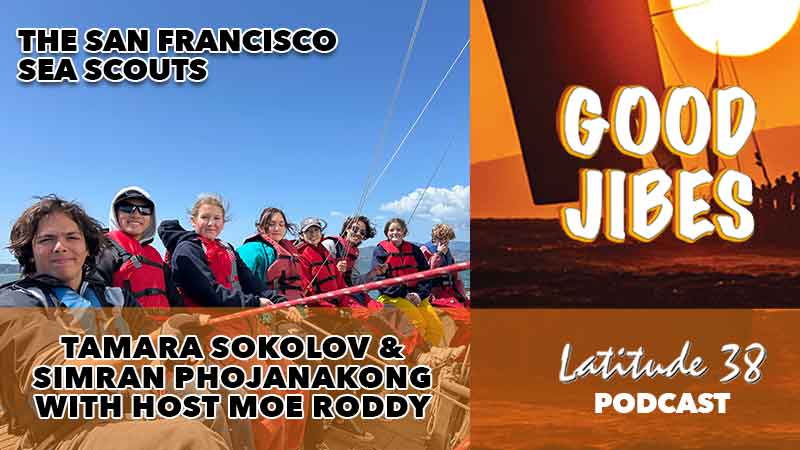
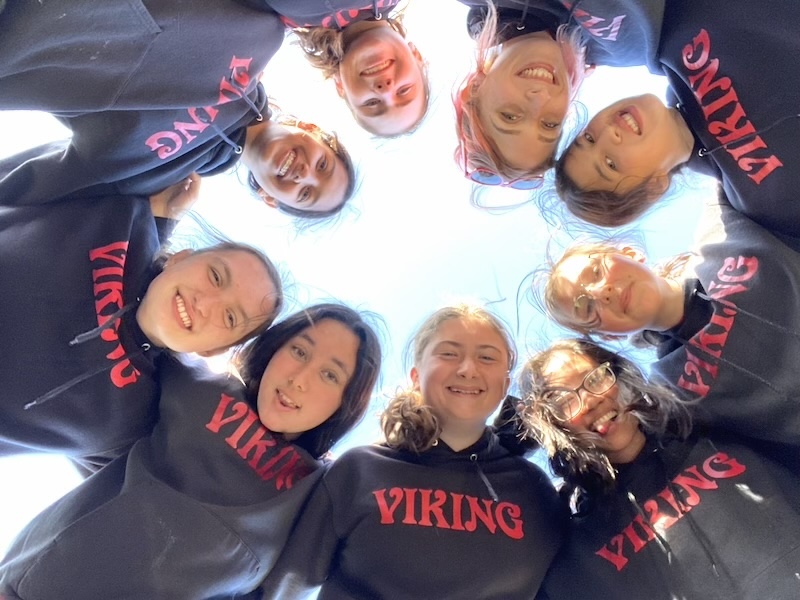
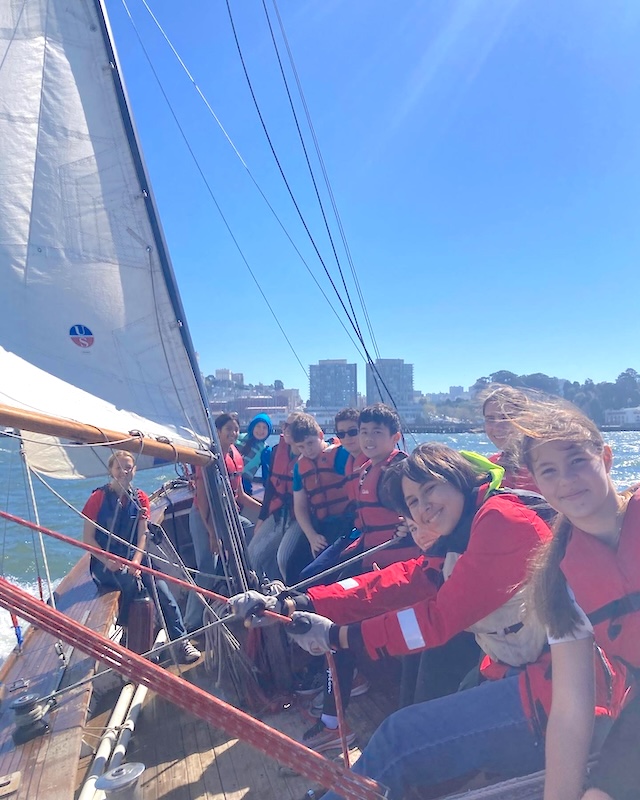
Tune in as Tamara and Simran chat with Good Jibes host Moe Roddy about the history of the San Francisco Sea Scouts, their rigorous and rewarding weekly schedule, stories from their all-girls SSS Viking crew, what the Sea Scouts has taught them about leadership and confidence, and how they create a safe, empowering space for young women, and young men, on the water.
Here’s a sample of what you’ll hear in this episode:
- Starting the junior program in 2019 and thriving through COVID
- The power of youth mentorship
- From East Coast to discovering Sea Scouts in 1997
- The all-volunteer leadership model
- Expanding girls-only programs around the Bay
Learn more about the San Francisco Sea Scouts and donate & volunteer at SFSeaScouts.org.
Listen to the episode on Apple Podcasts, Spotify, and your other favorite podcast spots – follow and leave a 5-star review if you’re feeling the Good Jibes!
Check out the episode and show notes below for much more detail.
Show Notes
- Tamara Sokolov & Simran Phojanakong on the San Francisco Sea Scouts, with Host Moe Roddy
- [0:14] Welcome to Good Jibes with Latitude 38
- Tamara Sokolov
- [0:51] Meet Tamara Sokolov, Executive Director of Bay Area Sea Scouts, and Simran Phojanakong, Sea Scout
- [1:20] History of Sea Scouts – from early 20th century to today
- [2:47] Why whale boats? The Navy’s WWII donation to Sea Scouting
- [4:10] Meeting at Aquatic Park – the boathouse and program structure
- [5:07] Age requirements: 14-21 for Sea Scouts, 11-14 for the Explorer Club
- [7:32] Meeting schedule: four times per week including sailing, rowing, and leadership
- [9:52] Tamara’s personal journey: from East Coast to discovering Sea Scouts in 1997
- [12:35] What drew Tamara to the water: risk-taking and adventure for teenagers
- [14:22] The all-volunteer leadership model
- [16:12] The power of youth mentorship – learning from peers just a few years older
- [18:33] Taking the helm of Ship Viking in 2004
- [20:01] Creating empowering spaces for young women in sailing
- [21:29] National Flagship Award – earned in 2015 and 2023
- [23:16] Starting the junior program in 2019 and thriving through COVID
- [24:36] Are you thinking of sailing to Mexico or across the Pacific? Latitude 38 has a resource page called “Heading South” & the “First Timer’s Guide” to help you prepare
- Simran Phojanakong
- [25:53] Meet Simran: joining during COVID and falling in love with sailing
- [26:51] Rank progression: Cabin Girl → Apprentice → Ordinary → Able → Quartermaster
- [29:29] Simran’s first time at the helm: terrified but exhilarated
- [30:38] Lessons in teamwork and interacting with different perspectives
- [32:05] Simran’s proudest moment: earning Junior Pilot credentials
- [34:01] The most important discovery: confidence and finding her voice
- [36:18] Tamara’s role on the Golden Gate Area Council Executive Committee
- [38:45] Simran’s vision: expanding girls-only programs around the Bay
- [41:32] The boats need help: 86-year-old wooden whale boats requiring restoration
- [43:57] Fundraising goals: $50,000 per boat for Viking and Corsair
- [46:24] Tamara’s hoped-for legacy: a mindset of growth and accessibility
- [47:24] Check out our Classy Classifieds at Latitude38.com
- Short Tacks
- [48:09] Simran’s funniest moment on board
- [48:52] Tamara’s favorite landmark
- [49:35] Simran’s favorite weather to sail in
- [50:01] If Tamara could sail anywhere in the world
- [50:34] Who gives the best pep talks?
- [51:40] Who inspires them the most as a leader?
- [52:54] The one question they wished Moe had asked?
- [53:22] Tamara’s 10-year vision for the program
- [54:19] How to support: visit SFSeaScouts.org
- Make sure to follow Good Jibes with Latitude 38 on your favorite podcast spot and leave us a 5-star review on Apple Podcasts
- Check out the November 2025 issue of Latitude 38 Sailing Magazine
- Theme Song: “Pineapple Dream” by Solxis
Transcript:
Please note: this transcript is not 100% accurate.
00:02
I love the water. think something about the risk, something about the boat tipping over, I loved just being on the water.
00:14
Welcome everyone to the Good Jibes podcast brought to you by Latitude 38, the sailing magazine for West Coast sailors since 1977. I’m your host today, Moe Roddy, and I’m so glad you’re here. Each week, we bring you the stories and the adventures and voices of the people who make sailing on the West Coast so special, whether it be about racing or cruising or exploring and everything in between. So settle in.
00:43
Drop your anchor and join me for another great conversation.
00:51
My guest today is a lifelong advocate for youth leadership and maritime education. And to tell that story, we’re also joined by one of her sea scouts. Though she didn’t grow up sailing, she’s become a passionate champion for getting young people on the water and keeping the proud tradition of sea scouts alive here in the Bay Area. Please welcome to the Good Jibes podcast, Tamara Sokolov, executive director of the Bay Area Sea Scouts and here to help her, Simran
01:20
Phojanakong, I hope I said that right, a proud Sea Scout. Welcome both of you to the show. Thank you. Well, let’s start with you, Tamara. Can you give us a history of the Sea Scouts and a general history across the country and then one for San Francisco? Yeah, for sure. Sea Scouts was started in the early 19th century, kind of shortly after Boy Scouts was formed.
01:48
when the leaders of the program kind of recognized the need for the older boys to have their own kind of higher level adventure. So they formed sea scouting for their kids that were aging up to 14 to 13 years to get on the water and do some more advanced things without the 11 year olds around. So it’s been around for a very long time in the Bay Area, particularly it’s really thrived. We have a huge boating
02:18
community here. uh At one point in San Francisco, we had about 12 different Sea Scout programs actually, um where almost every high school had their own team through Sea Scouts that would be rowing and sailing on the whale boats that we have today. It’s diminished a bit over the years, but San Francisco is still really thriving. We have programs all around the Bay Area, but we are one of the only ones that
02:47
primarily focuses on sailing. Other Sea Scout programs might have power boats or uh kayaks, canoes, different boating platforms, but we’ve kind of stayed with the traditional wooden boats locally. Why a whale boat? How did that happen? Do you know? That happened, yeah. um During World War II, the Navy kind of upgraded all of their lifeboats from these wooden whale boats to uh metal boats. I’m not sure exactly what kind.
03:15
And retired a huge fleet of wooden whale boats, donated a ton to sea scouting programs around uh California and I think broadly the West Coast. So uh that has been our main training platform ever since we’ve had, know, Corsair and Viking are two main whale boats were built in 1939. And we took them on in the forties and they’ve been our boats ever since.
03:43
Are you so in the Boy Scouts? They’re called troops. What are you called in the Sea Scouts? We call our programs in Sea Scouts ships. Which gets a little confusing because people think we’re talking about big boats. That’s just our program name. you know, we are like I run Sea Scout ship Viking. It’s the all girls program here in San Francisco. We also have Sea Scout ship Corsair. It’s the all boys program. We do a lot of our activities together. We meet at the same location. We have similar boats, but our own boats.
04:10
Yeah, so each program has its own name and then their own vessels. And where do you meet? We meet in Aquatic Park. We have a boathouse right along the water there and we keep our boats anchored in the cove. So it’s a really kind of convenient central location for our program. Yeah, I had no idea that this was even related to the Boy Scouts of America, but I did some research and I found out that you actually are.
04:38
part of the Boy Scouts of America. Now called Scouting America, actually. They’ve changed the name of their program. In 2019, they let girls into all of their programs broadly, but Sea Scouts has always had girls, not always, but since the 1970s, Sea Scouts has allowed females into their program. were kind of, the Sea Scouting program was sort of the trailblazer of that in Scouting. And now they have troops and cub packs and everything for everyone.
05:07
and ships and what for you, your age is it, you how there’s compacts of your certain age and how does that work for. We have Sea Scout ships start at age 14. So they’re basically kind of following the high school track. They’re from 14 through 21 actually. So we have a couple of college kids who stay really active who are in the area. That is the official age for Sea Scouts. Our program has started a junior program that we run through another division of
05:36
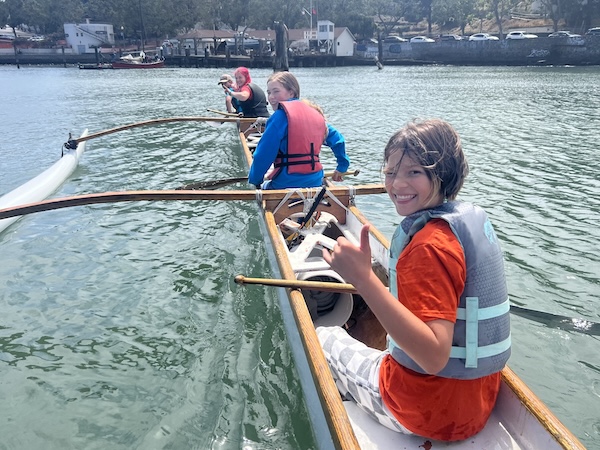
scouting called Exploring. So it’s our Explorer Club and that’s for youth ages 11 through 14. So they do more outrigger canoeing, kayaking. They just went sailing this last weekend. So they do kind of sample all of the offerings that there are on the waterfront at a younger age. uh And then many of them matriculate up to uh sea scouting. How old do have to be to be a sea scout?
06:04
And do you have to come up from the other ship? You don’t have to come up from the junior program. Our starting age in Sea Scouts is 14 for the sailing program. The junior program is 11. But many of our members start just straight from word of mouth through their friends. A lot of them do come from our junior program, but not everyone. Does it cost money? It does. It is roughly, I don’t have the exact dollar amount because it’s a goofy number, but it’s about
06:34
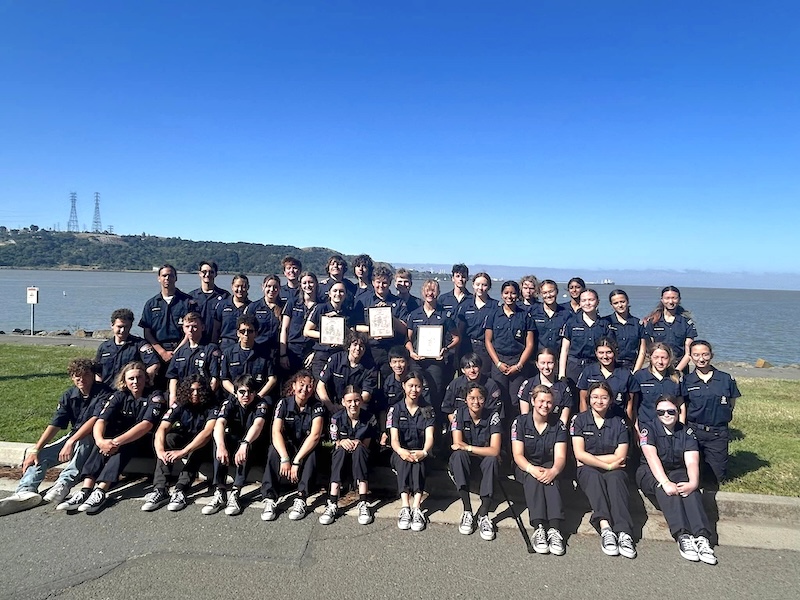
I think it’s about 225 per year to be a member for the the Sea Scout program. The junior program is about half that. That’s not bad. Does that include your uniform? Do you have a uniform that does not include our uniform? Our uniform is very affordable, though. It’s a pair of blue Dickie’s pants and a button up shirt. And we have and we give out patches that they add to it. We only really wear a uniform for special events on an average Saturday when we’re sailing.
07:03
uh We have our Viking t-shirt, it’s a red t-shirt with a logo on it that our girls wear and the Corsair t-shirt is blue that they wear. uh So they get, the membership includes the t-shirt and a hoodie. That membership fee covers things like uh program insurance, background checks for our adults, kind of vessel insurance, those sort of overhead things that it takes to run a boating program. And do you meet once a week?
07:32
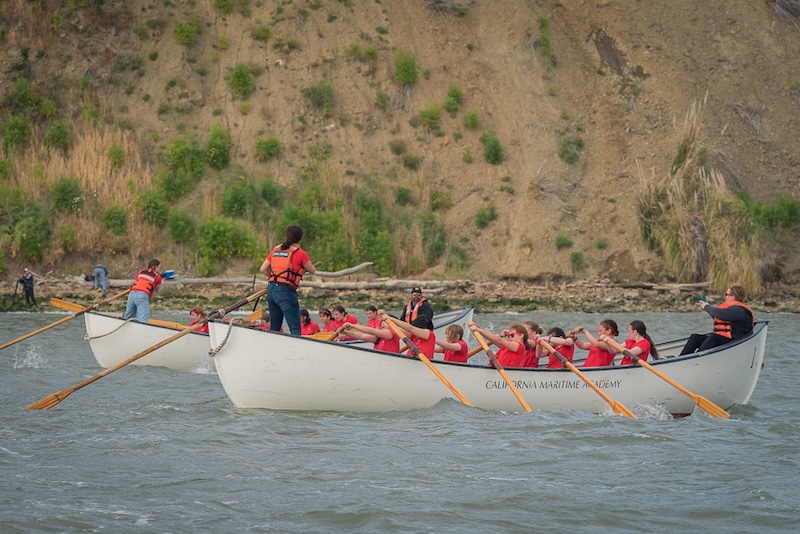
We actually meet four times a week throughout most of the year. We, um, we have our Saturdays are our main day. We meet all day long and do vessel maintenance, special projects and sailing. If it’s not good enough wind for sailing, we might go rowing or out on our motorboat instead, but usually there’s some element of boating. Um, on Sundays we have afternoon competition practices. Sea Scouts have these.
07:59
events called regattas. not like sailing regattas. They’re more like um field competitions in anything. There’s usually a sailing event, a rowing event, but also there’s a knot tying event, a uh charting test, um rules of the road, exams, obstacle course. It’s everything from physical to mental kind of tests of the kids’ abilities. So those are called the Sea Scout regattas. We practice for those on Sundays.
08:26
On Tuesdays, we meet to do kind of our classroom instruction on anything boating safety related, our leadership development activities, program planning. Tonight, for example, we have a what we call a quarter deck meeting. That’s our sort of youth uh leadership team meets and plans out the next month’s activities. So Simran Simran who’s on this call is actually our boss in that’s that’s like our youth president and she leads a team of peers to
08:55
to plan the month’s activities out on the first Tuesday of the month. And then the rest of the group meanwhile is doing a swim meeting. So they’ll be practicing their different swim techniques tonight. And then throughout the spring, we also meet on Wednesday mornings at 6 a.m. to go rowing. we’ve got the whole spectrum from sporty, know, team sport activities like the rowing to the classroom or leadership planning.
09:24
side and everything in between throughout the course of the weekend in our program. Wow. So Simran, you’ve been sitting there quietly. I haven’t forgotten you. So don’t worry. I’ve got a lot to ask you in a minute. So just hang in there for a little bit longer. I wanted to ask you a few more questions. Are you from San Francisco? I am not originally from San Francisco. I was born on the East Coast, but my family moved out here when I was about eight years old. So I mostly grew up here. So how did you find out about the Sea Scouts?
09:52
Because you joined in what 1997? did. We when we moved here. So it’s kind of a I think coming to San Francisco was sort of a culture shock for me. I grew up in a very suburban environment before that, where you could kind of go out and ride your bike and be home in time for dinner. Sort of, you know, 1980s childhood culture and coming here, you know, living. I lived right off Van Ness Avenue and there was no going outside and playing alone anymore.
10:20
My older brother, was on a walk one day and just passed by the Sea Scout base and saw a bunch of teens there out on the lawn folding sails and asked what was going on. And he was invited to join them for a sail and he joined and I followed in his footsteps. There are five of us in my family and we all went through sea scouting. So we kind of happened upon it by accident, but it was a good one. And all of you went through it. m
10:49
Did you have any idea that one day you would be running the whole program? I had no idea I would be running the program. But one of the really cool things about our program is that we do have an advancement structure. Many people are kind of familiar with what an Eagle Scout is in Boy Scouts, but um we have a similar structure where we have the quartermaster rank is the highest rank. so through each level, you kind of learn incrementally how to plan an activity, how to sail the boat.
11:19
how to do navigation, uh meal prep, meal planning, like everything that it takes to run a Sea Scout program and its trips, you kind of learn through the ranks. I sort of took over the program by accident at age 21 when there was our current leader retired and they needed someone to help run the summer cruise. Otherwise the girls wouldn’t get to go. So I had achieved quartermaster rank. had
11:46
learned all of the things that our program teaches. And I was 21 years old, my little sisters wouldn’t get to go on summer cruise if I didn’t help out. So I signed on and have been doing it ever since. Well, okay, so I was gonna ask you how long you’ve been doing it, but now everybody’s gonna know how old you are. So you don’t have to join in 97. And I’ve basically been a sea scout ever since.
12:09
There you go. And it’s been a while. It’s been more than a decade. It’s been more than two decades. It’s been it’s been about 30 years since I joined Sea Scouts at this point. Almost almost not quite. Yeah. Look out some rents. They’re coming for you. em What drew you to the water, Tamara? What didn’t draw me to the water? I’m kind of shocked that more people aren’t on the bay who live here. uh It’s beautiful. It’s exciting. It’s you know,
12:35
When I talk about having that childhood where you can kind of ride your bike around and go do whatever you want for the afternoon, there’s a lot of risk taking in that and the water takes it to a whole new level. So I think teenagers are sort of inherently wired for risk taking and something like sailing is a really healthy and natural risk to take.
13:03
And you know, it just, was just thrilling. I remember the first time I went out sailing on one of the whale boats, I was actually much younger because my older brothers were in the program and they would bring me along every now and then for, for guest days. And uh I just fell in love with it instantly. The healing over the thrill that you get from that. That just captivated me immediately. Wow. And so you went to high school, went to college, graduated from school and you had a financial back.
13:32
I worked in for a financial firm for a bit. I wouldn’t say I had a financial background. majored in history. I was the executive assistant to uh the president of a finance department at my old company. And I kind of wanted to spread my wings and try a few other things. So for a while, I worked in client relations there. But not I wouldn’t say I had any sort of
13:58
formal background. Okay, I was just wondering how that went, how you went from that to this, to becoming the executive director. And what was that like? I mean, were you nervous? mean, sounds like this is a really big job. Well, this is a volunteer job. is get out. No, no, no, no, this is this is what I do in my spare time. Get out. I am. Okay, everybody listening to this? This is this is a volunteer.
14:22
All of our adult leaders are volunteers. That’s one of the things I’m most proud about with our program is that all of the volunteers are good friends and almost all of us grew up in sea scouting ourselves. Many, many, many of the volunteers we have currently were sea scouts under me. we’re all kind of, like I said, with the training that I received in sea scouts setting me up for running it.
14:49
That’s the case for all of them. They all learned everything as teenagers and we’re still working on it as we go, but it’s something we kind of grew up with. Wow. You put me to shame. uh That’s amazing. It’s all volunteer run. actually um work as an executive assistant for a chief legal officer now. So nothing to do with sailing or nonprofit management professionally. Does your company know you do this?
15:19
They do, and they are incredibly supportive company. um A lot of the larger companies give back time to volunteer. So Autodesk, the company I work for, gives us six days off a year to volunteer. So we do a two week sailing trip every summer with the Sea Scouts. And I don’t have to take that much personal vacation time for that because of that program. They also have incredible matching opportunities. That’s something everyone should look into what their company supports as far as.
15:49
philanthropy. Well, I’m that’s you blow me away. I know I’m to keep talking about this. I’m going to have our editor edit out all my Oh my god. Was there a mentor in your life that believed in you and kind of like has been helping you in sea scouting? One of my favorite things about the program is that it is youth run.
16:12
And as a 14 year old, can still name all of the 17 and 18 year old girls who are in the program when I joined who taught me things. And I looked up to and they seem so old and so smart and so experienced. And, and I think really having that kind of close mentor in those girls was super impactful and made everything seem obtainable.
16:40
doable. Like if it was just the adult leaders, I don’t know that it would have, I would have stuck with it with as much enthusiasm. uh But when you see someone who’s just a couple grades ahead of you who can sail the boat that you’re a little bit scared of when it heals over, that is aspirational. So I think really, I would I would name off any of the senior girls when I joined as mentors or inspirations. eh
17:07
Did you face any pushback or like were you feeling any self doubt stepping into a world that didn’t look like your own? I mean, you didn’t grow up through a sailing program, a youth sailing program? No, I think I had the benefit of older brothers doing it that made it um seem like by the time I was the third child in our family, by the time it came around to me, it was like, this is just what we do. like we joined Sea Scouts when we turned 14. um
17:36
I do think like a lot of the kids that were in the program, they came from every single school, they all had different backgrounds. So it really, there wasn’t a typecast kid that does this program. We really, I really kind of saw that like, everyone can do this, everyone can succeed. So it wasn’t scary in that sense. Yeah. Well, let’s talk about when you took the helm of the Viking. That was 2004. You took the helm of the all girls ship, Viking.
18:05
um Explain why it was all girls and actually to explain this for me too. You came up through your quartermaster at this point. I’m going to assume to take the helm of the boat, right? So how long did it take you to work? Up to this and then what was that like to take the helm and I’m assuming that means you’re the captain of the ship. The boat yeah we so we call we call our program leaders skippers and there’s like the person who skippers the boat.
18:33
But the title, like the troop master for sea scouting is called the skipper. I earned my quartermaster in 2001, my senior year of high school. And I then took a little bit of a step back when I started college, I would still come around occasionally and help out. But it wasn’t until I turned 21, which is when you can officially be an adult leader in the program that I took over as the skipper of Viking.
19:04
And what does that mean? You take just girls out? In my capacity, I kind of run the program administratively. I provide guidance to the kids who are in charge of actually running the activities or planning activities and do a lot of trip planning, fundraising. A lot of the background organizing of the program kind of goes through me and the rest of the volunteers. It’s not all me.
19:32
but I’m sort of the main point person that communicates with parents, that does outreach, all of those good administrative things behind the scenes, and I get to take the kids sailing. So that’s the fun part. And how do you go about creating a safe, empowering space for young women that’s, know, sailing is so male dominated. I think everybody who’s a female out there sailing, we all know it’s very male dominated. em
20:01
How do you create a space for girls? That’s a good question. And I don’t know that we fully cracked that code yet, but I do think that by having Viking and Corsair as separate programs, even though we do a lot together, um it does create space for there to be female program leaders and male program leaders, and they have to work together. And I mean, youth program leaders, so the Simran’s of the world. She has a male counterpart in Corsair.
20:30
who also is planning activities and they work together as a team, but at the end of the day, she can make decisions for her girls and she can be empowered to run her boat the way she wants to run it. So I think that separation really helps. There aren’t that many non-coed places for kids to sort of exercise their decision-making and willpower anymore, I don’t think. So that’s one way we do it.
21:00
I do think just again, the youth leadership is a really big aspect of it. Having mentors to look up to who are like you really helps. I’m curious if Simran has any thoughts on how I’ve got a lot of questions for her. I am going to ask her. Actually, Simran, I’m getting really close to talking to you, just hang on. I wanted to ask about the flagship honors that you’ve gotten twice, the national flagship honors. What does that mean?
21:29
And what did that mean to you? The National Flagship Award is something that’s awarded to a Sea Scout ship nationally, annually. We’ve earned it twice. Once in, I think, 2015 and then again in 2023. It’s a award that is given out by scouting and in partnership with Boat US to honor a program that is like the most well-rounded program. it’s not
21:57
just about our sailing honorifics. It’s how many kids made a different rank level that year, earned quartermaster or the ranks below it. How many hours of volunteer service we logged as a group, how many trips we went on, how many uh different, like the variety of activities we have. I think we are really well positioned to win it because we have a really active and diverse program.
22:25
Many Sea Scout groups meet once a week or even less, but we meet really frequently and we have a really wide variety of the types of activities we have and a pretty big membership base compared to other programs. How many kids are in the Sea Scouts? We have 36 in Viking right now. Corsair is roughly similar. I don’t have their numbers in front of me, but
22:51
but they’re close to that amount. And then our junior program has about 70 kids right now registered. all in all, like we have over 150 kids that are kind of enrolled in our programs. And if I understand that right, that junior program is something you started. Yes. Yeah. That’s pretty significant. 2019. So we started it kind of right before COVID, unfortunately. Oh my God.
23:16
But, you know, ironically, you know, San Francisco had such stringent guidelines. I’m going on a little side tangent here about COVID. They had such strong guidelines that were, you know, hundreds of pages long of what you can do with youth programs and stuff. And I think a lot of people just said, like, forget it, we’re closing down our program and doing Zoom meetings. um I was following the updates weekly. There was, I think it was every Wednesday or something, they’d issue an update. as soon as they said,
23:42
kids can gather outdoors in social distanced activities. I was like, great, we’re busting out the kayaks and they can get on the water and stay, you know, uh paddle tip distance apart. kids just flooded to our program because there was nothing else to do. So even just setting up like a half hour sign up slots for initially kayaking and then eventually sailing.
24:10
Eventually you were allowed to do pods of like six people at a time. So we had a group of six girls build a small boat together. Like we really incrementally stepped up our program as quickly as we could for everything. And I think it really kept things going in a, good way. Very nice. You are listening to the good jobs podcast. We will be right back.
24:36
Latitude 38 here. Are you thinking of sailing to Mexico or all the way across the Pacific or maybe even further? We just heard from Joanna and Cliff saying, my husband and I subscribe to Latitude 38 and enjoy the Good Jibes podcast regularly. They went on to say they’re headed to Mexico in the fall and will continue across the Pacific to Australia. However, they’re looking to simplify all the choices they need to make to prepare. Of course, there’s tons of resources out there, but
25:03
Latitude38 does have a page on our website called Heading South and we also have Latitude38’s First Timers Guide to Mexico available to read online on the Heading South page or a printed copy that is available to purchase in our online store. There’s a lot to know, but Latitude38.com is a good place to start.
25:26
Welcome back to the Good Jive podcast. My name is Mo Roddy and let’s get back to our guest today from the Bay Area Sea Scouts. Okay, Simran. Is it Simran or Simran? Simran. Simran. How old are you? I’m 17. So you’re coming up to the final stages of this, but when did you get involved in Sea Scouts and how and why?
25:53
um So kind of like Miss Sokol was saying, there was nothing to do during COVID. So um my mom was calling around, she was trying to figure out something for me to do during the week and she found Sea Scouts. At this point, I was still young enough to be in Makani, which is our youth program. So I joined that first, you know, there was a few Zoom things where we would learn that kind of lessons, but I do remember the kayaking. And then as soon as I turned 14, I joined Sea Scouts and I just loved it. It was…
26:22
I love the water. think like Ms. Okloff said, something about the risk, something about the boat tipping over, I loved just being on the water. Now, do you live in San Francisco? I do, yes. Do you go to all the meetings, every four meetings a week? I try to make it most of the meetings a week. You sometimes something will get in the way, but I try to be there most of the time. OK, so now let’s go back to when you start. What are the different levels that you have to make and how do you do that? When you first come in,
26:51
we call you like a cabin girl. You kind of don’t know anything. You probably don’t know anything about sailing depending on where you come from. So the first one you make is apprentice and that’s just learning the basics of sailing. So that’s basic knots, like basic uh sailboat parts and sailing terminology. And that’s the first step. And once you have that, you know, we can trust you to like, you know, ask you to maybe like tie this line off or something, but you’re still, you know, at the very basic level. You’re gonna, but you’re a participatory member ah of our program. And then the next rank is ordinary.
27:19
And this is when you start getting a taste of leadership, I would say. You learn, think ordinary probably has the biggest learning load. So you do a lot of like practical learning. You learn how to chart, you learn all the rules of navigation. You learn some more specifics about just boats in general and parts of boats. And this is when you’ll start to kind of be like taking up little leadership opportunities. So maybe, you know, I’m like, hey, can you as an ordinary, as a…
27:46
As a leader, might ask an ordinary, hey, can you go grab this thing? Or hey, can you go make sure all of these things are put away? So you’re getting a little taste of leadership. But the next step, ABLE, I would say, has been the biggest step in my leadership journey, at least. This is where you really step up in helping the adults. So the adults here put a lot of trust into the ABLEs. um So you’re here, you’re managing projects, you’re making sure that boats come in and out and boats are rigged right. This is where you really get to experience what it’s like.
28:14
to be in charge of your own kind of thing. Here you’re managing other kids as well as managing projects. So that’s where I am right now. I’m an ABLE and I’m working towards quartermaster, but as an ABLE, I’ve been able to take on so many projects and leadership opportunities that have allowed me to really grow as a person. And there’s badges that you earn, right? Just like em the scouting scouts. What are some of the badges? They go on your left pocket and there’s a little emblem on top and then you get
28:42
uh like bars as you go up and then once you make Quartermaster you get a little pin that you get to put on your uh uniform. Okay, so it’s not like you have these patches all over your uniform? No, no, no. It’s kind of like, yeah, our uniform there’s less like kind of I guess in Boy Scouts you have like the sash and then all the patches here you just have one patch that kind of like as you go up in rank expands and you get more and more bars and then there are also patches to denote like leadership positions.
29:10
Yeah, we’re minimalists. like to keep the uniform clean. Yeah, you probably don’t want to get anything caught on the boat either when you move in. What was it like the first time you took the helm of a boat? To be honest, I was definitely terrified. had never worked on boats before. You know, I’d been kayaking with my family a few times, but that’s nothing compared to Viking. um So it was probably like maybe like a few months into when I joined Sea Scouts.
29:39
I remember I was in the back of the boat and they were like, Ms. Sokol was like, does anyone want to get on helm? And then no one said anything. And then she was like, okay, you’re going to go, you’re going get back here and you’re going to drive the boat. And so I came back there and I mean, it was just exhilarating. There’s nothing like it. There’s feeling of being in charge on the bay is just incredible. think, you know, calling the shots, you know, yelling out like ready about all that stuff. I felt just so much. I don’t think that the helm is honestly my favorite part, but being on helm is just like incredible. And you learn so much about.
30:08
the water and like feeling the tiller, think it was just incredible. Yeah. Well, then what is your favorite part? I love being on jib. That’s my favorite part of trimming, trimming the Trimming the sails, yeah. Trimming the jib. then we don’t usually like fly a spinnaker on Viking, but if there’s a spinnaker involved, I do like the spinnaker as well. Yeah. So that’s my favorite part. I think it’s just the little like minute adjustments and like watching your telltales being really attentive. That’s what I find really interesting. Yeah. What’s, is there something you’ve learned about teamwork?
30:38
um Yeah, I think that’s actually the place where I’ve grown the most in Sea Scouts. Before Scouts, I was kind of very introverted. You know, I didn’t talk to a lot of people, especially coming out of COVID. But through Scouting, I’ve been able to interact with so many people that I would have never been able to see because, you know, at school we like try to we find friends that were similar to but at Scouts, I’ve been like exposed to so many different perspectives and people that I wouldn’t have, you know, chosen to be friends with at school. But at Scouts, you know, we have to work together. We have to
31:08
be a team so that the boat runs smoothly. I think learning to interact with those different perspectives and learning the different ways that people approach problems has been really cool. Very nice. Do you have a moment where, um so I did this crazy race myself on a sailboat and as I was preparing for it I was over in there against a bay in Rhode Island and I was single-handing. was by myself on my boat and I was putting up my main sail and this big tourist boat came by and the
31:37
the guy on the skip ring, it was a friend of mine, and he gets on the bullhorn, he says, this girl putting up her, she’s by herself when she’s getting ready to sail to Bermuda by herself. And it was one of those things, it’s like, wow, is that really me? Did you have a moment like that? It’s like, wow, did I do that? Did I really just do that? It was actually on our most recent uh two-week summer trip. I earned my junior pilot’s, it’s not a license, but I earned that um accolade, and that means that I can…
32:05
with Ms. Hogle’s permission, I can kind of like pilot a boat with an adult on board, of course, because I’m not old enough, but with an adult on board, I can kind of be in charge of a boat and like, this is my boat, I run it, I make sure the crew is fine, I make sure, you know, we’re going where it’s supposed to be. So there’s this sail across Sassoon Bay. We woke up really early, the sun was just rising, it was super, super windy and we were on this little Cal 20 and I remember just, the boat was healed over so far, we were like barely making any headway, it was.
32:34
So windy we’re all hungry and cranky, but at the end of it. I just felt so accomplished I was like I really like that was I was in charge of that boat and I was able to Get you know these people from one place to another in these crazy conditions um So that was something that I was really I was just like wow like I’ve grown so much because I wouldn’t I was like I would never have been able to do this But yeah, that was something that’s really cool. Do you see yourself? Do you see a future continuing? I think I think I do because of these guts. I’ve also been able to
33:04
I have other opportunities outside of sailing. I’ve been connected with like other sailors, some people at St. Francis who’ve been allowing me to sail like on their boats and racing. So I’ve learned a little bit more about sailing outside of Sea Scouts. And I think that’d be really interesting. And then also part of Sea Scouts, I’ve been able to reach out to other ships across the nation. So maybe if I don’t go to college in near home, I could join a Sea Scout ship out there and help out there. Yeah. Have you thought about Cal Maritime?
33:33
I have, we have a lot of experience at Cal Maritime. One of our Sea Scout regattas is held there. So I get to interact with that a lot. And I think the programs are really cool there. They have such great resources, something about the water. oh What stands out for you is the most important thing that you’ve discovered about yourself from being a Sea Scout? I think the most important thing that I’ve discovered and kind of, guess, thrown, I mean, it’s kind of
34:01
all because of Sea Scouts is just like confidence in myself. I’ve never, I was never a vocal leader. I was never, you know, the one to be like, hey, like, let’s do this, let’s plan this. I was never that person before Sea Scouts, but I’ve been able to grow, just like being able to like say what I want to say and have opinions. And I think this is also a place where um being in a woman only group has helped me because I’m not afraid.
34:27
you know, inviting meetings to say my opinion, but sometimes in other situations outside of Scouts where maybe it’s more male dominated or maybe I feel really alienated, just having that confidence, knowing like, hey, like I can talk to a group of people like they deserve to hear my opinion. That has been something that I’ve learned and I’m really thankful to have through Sea Scouts because I would never have learned that. It’s just, I just have learned to be a leader and I’m so grateful for that. That’s amazing.
34:53
So what about what do your friends think? mean, on weekends, because you’re not around, you’re doing Sea Scouts. That’s what they are. There is I’m like, what are you doing Saturday? I’m like sailing. And they’re like, OK, yeah, we know you’re you work for the whole day. um But I think they all think it’s really cool. They’re always asking about it. Or like whenever I mentioned to them, oh, hey, like I did this or did this. They’re like, really? Like, how did you do that? Like, that’s really cool. Or like I’m talking about this podcast and they’re like, how do you get all these opportunities? I’m like, Sea Scouts. Sea Scouts is the way to go. And there was like.
35:23
busy and I’m like, but it’s so fun. Like you have to try it. Yeah. Do you know what you want to major in in college? Probably marine biology, something of that sort. really, I’m pretty STEM focused at school. So, but I love the water. was thinking, you know, marine bio is a great way to combine those. Yeah. Yeah. Oh, you’re going to be, you’re going to be great. Tamara, you have set this child up for, for a super future for sure. So both of you,
35:53
Join in whenever you want here, but Tamara, I have a question for you and Simran, please feel free to jump in here. Tamara, you served as the executive committee for Scouting’s Golden Gate Area Council. So what does that role let you do for the larger Sea Scout community? Yeah, so on the executive committee, I represent Sea Scouting and two of the other two.
36:18
senior programs for kids this age. There’s venturing, which is more broadly just outdoor exploration and leadership and then exploring, is a more career focused youth programs. But for sea scouting in particular, it’s really kind of opened doors for us to have me on the committee. I, you know, having not grown up in the traditional scouts programs myself and just joining through sea scouts, I really wasn’t that aware of what scouting did.
36:48
until I became really active on our board. And therefore I wasn’t really aware of all of the opportunities there are for our program. So something like the Junior Sea Scout program was really a creation that was possible because I had a broader understanding of the different program tracks and scouting. And since I started ours locally, there are now about five around the Bay area that other groups in our council have started. So that’s been really fun to model and see grow over time.
37:18
It’s also, you know, there’s a Boy Scout camp up in the Redwoods that has a beautiful lake full of lasers and we’ve started a Bay Area wide gathering of Sea Scouts. So last time we had about 300 Sea Scouts there all for one weekend and the waterfront was open. Simran planned a skit night with a few of her peers for everyone to do. It was just kind of classic.
37:46
Archery was open. There’s going to be rock climbing added next year. So we kind of, we’re building on it every year, but it’s sort of this organic event that has come through our connections to scouting. We started a day camp at our Sea Scout base for kids who aren’t scouts at all, but kind of run through scouting’s umbrella. So it’s brought in a ton of, know, we bring in about 50 more kids to the waterfront every year through that day camp. And it’s just these connections in the council has really helped us.
38:16
And it’s also given us a kind of voice, a seat at the table to advocate for sea scouting. We’re such a tiny slice of the membership pie for scouting on a whole. really having, you know, being one of 12 people on the executive committee in the room that can kind of advocate for our program has been really important. Yeah, very nice. And Simran, do you see what would you like to see the future for uh sea scouts, especially for girls? I think that just
38:45
continuing to expand our program, but also maybe seeing other programs open up around the Bay, because I know, or other girls only programs open up around the Bay. think that’s really important. There’s a lot of, you know, co-ed programs, but I think that being in a girls only ship has been a really unique experience that could be brought to other people. So um just making sure that our program also can expand because, you know, sometimes we don’t have enough space, know, but we need.
39:12
we don’t have time for it to onboard new members because we’re dealing with boats or something. I think seeing our program expand to just like bigger and better things, being able to have more capacity and then also seeing other programs around the Bay open up. But you think there’s a it’s it’s helped having it all girls for the biking instead of uh coed. I think that it’s a different experience. So um I think for me, it’s been very like powerful to be in a group of all girls. And that’s definitely something that
39:42
I think other girls, at least especially in the modern day, could benefit from. So I think you answered a question I was going to actually ask Tamara, and that is, what does it feel like when you see somebody, a shy 13-year-old girl, turn into a confident skipper? Do you feel like that happened to you? That encapsulates my Sea Scout journey perfectly. I was just a shy 13-year-old who didn’t know anything about boats, and now I’m the boatsman. I’m the youth president of this program.
40:09
I’m really proud to have had that journey and I other people to have that journey as well. And Tamara, how does that make you feel? I mean, that’s really the reason why I do it. And it’s and it’s something I’ve seen again and again and again. But it’s it’s been super impactful to me to kind of see that moment when and sometimes it really is just like a moment where someone suddenly like gets it on a boat or.
40:36
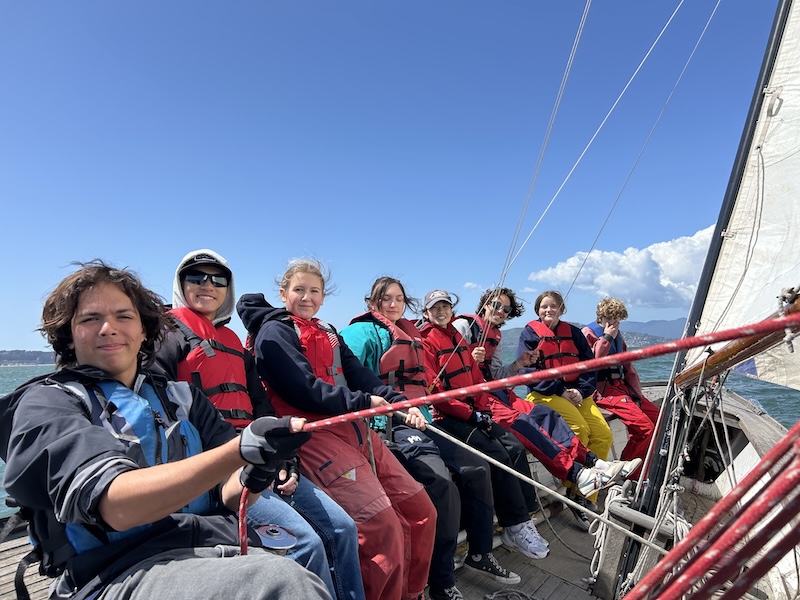
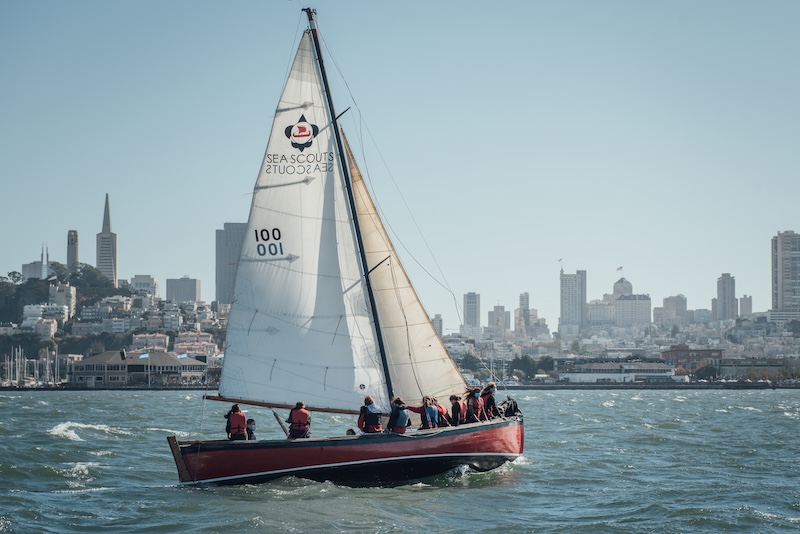
takes charge in a situation and it’s so, it fills you with pride. It’s really something to see. That’s why we do the whole thing. Well, that was my question. What keeps you showing up year after year? And I think you just answered that. That and like sailing is still fun. know, uh Viking in particular, we haven’t even really talked about how great of a boat Viking and Corsair, like what those whale boats are like, but they are like 30 foot lasers.
41:03
They are these big open boats that heel over dramatically and are really reactive and take 12 kids to sail. And it’s so much fun. Like it doesn’t get old and uh sea scouts are the only ones with these boats. So if I wasn’t involved in sea scouts, I want to get to sail them. It’s such a unique experience. Yeah. Well, I’d like to come out sometime. Can I come out sometime? Absolutely. Anytime. I’d like to see what it’s like. Well, that’s a good segue because let’s talk about the boats.
41:32
So they need repairs. Yeah, they are, let’s see, 86 years old now. What are they made out of? Wood. So they’re… Do you know what kind? Yeah, think mostly oak. The decking on Viking is teak. Corsair has mahogany trim, but the real structure of it is oak. Corsair in particular, uh we’re making a new keel for it. Corsair is…
42:00
much lighter than Viking and much more prone to keel over dramatically. sometimes capsize. we so we’re putting that not too long ago. I was actually Viking not too long ago. that’s a different story. But because you know, we’re putting a new keel on the structure needs, you need to reinforce everything to accommodate the weight. And it’s old. It’s it’s it’s really, really old. And we have
42:30
The kids do the majority of the day-to-day maintenance on the boats. So when we, you know, run the boat into the dock and crack the rail, the kids get to repair it. When we haul out the boats and sanding and painting needs to happen, that all happens at our base by the kids under our supervision. But something like this, like really taking apart the rails and getting in there and redoing the structure, that takes really skilled work and time that we frankly don’t have.
43:00
when we meet a few hours a week for maintenance, we really, our maintenance schedule is probably really four hours a week out of all of that time that we are at the base. So that’s something where we’re going to really need to take them to a yard and get someone who’s skilled in wooden boat building to focus on for Corsair, for Viking, uh same thing. It was last rebuilt in the 1970s. There’s wood that needs to be replaced. There’s…
43:29
structures that need to be reinforced and it’s going to take a lot. So how much money do you need? How much money you trying to raise to repair the boats? That is a good question. We have quotes for tens of thousands of dollars for each boat, but it’s also something you don’t really know until they take things apart and get beneath the water line and really kind of test the integrity of the wood and the structures. So we’re hoping
43:57
around 50,000 per boat, but we’ll see. Now, are you a 501C3? We are. So we have a 501C3 called the San Francisco Sailing Whale Boat Association that sponsors all three of our organizations, Corsair, Viking, and the Junior Club. So we do all of our fundraising through that. Our membership fees are tiny and go straight to scouting. So we don’t put the burden of that
44:27
funding on our youth members to try to keep it accessible to everyone. uh We do have a a huge alumni base that we kind of lean on every now and then for these bigger campaigns. And then we have a bunch of uh industry foundations and uh community partners that, that help us get over the finish line with, with grants and donations. So uh we’re currently actively campaigning to raise money for both vessels. We have one
44:57
matching grant out there right now for the repairs of Corsair. So we’re hoping to raise 25,000 by the end of the year. And if we do that, they’ll match it. And that’s really amazing. And we’re looking for similar funding options for Viking right now as well. This interview is happening in November. And so this is a good time if anybody’s listening and you want to, know, your year end giving for the year for your taxes, this is a good place to contribute.
45:26
Check your corporate matching, make sure they’re maxing out their, they’re giving funds as well. there a website or an email address or what? we have our website is sfcscouts.org. um All one word, SFC scouts, and we have information there. You know, we have information on our program fundraising, how to join. So it’s kind of a one stop shop for all of the information. And there is a tab that gives background on our nonprofit as well.
45:55
and how it supports our program. And to donate, okay. I just want to encourage all of my listeners. uh This is a great program. Go to their website and think about making a donation. Or send us your kids. accept numbers year round. We’ll take your money or your children. uh I think it’s a win-win there. What do you hope your legacy will be for young women who pass through this program?
46:24
It’s hard to think of something as my legacy, because this program kind of way outdates me. And there have been many, many leaders before me, currently with me and hopefully after me. But I think, you know, our program is steeped in such a heavy tradition. There’s a pretty prescribed program through scouting that we go through. And yet, we’ve changed and added and modified a lot of things over, especially over the last
46:54
six or seven years. So I think, you know, just having the mindset that you can always grow and change and modify things to sort of meet people where they are and make boning available to as many people as possible is really sort of what I’d encourage any of my peers or anyone who comes after me to always keep in mind. nice. You are listening to the Good Jobs podcast. We will be right back.
47:24
Hey good Jibes listeners and Latitude 38 readers. Have you looked in our classy classifieds lately? It would be impossible for us to know how many boats have sold to new owners over the last 45 plus years of publishing Latitude 38. But we’re sure they have helped countless people realize their sailing dreams. Every month there are new boats listed that will fill someone’s sailing adventures. If you have a boat you want to sail or looking for that next boat in your life, the pages of Latitude 38 will surely have something to suit your fancy.
47:54
Pick up a magazine at a local marine business or visit our classy classified pages at latitude38.com to find boats, gear, job opportunities and more. Then tell us your next sailing story.
48:09
Okay, so we’re going to tack. Okay, so we’re going to tack here. So this is what we call our quick tacks. So they’re just, I’m going to ask you questions and you just give me a quick answer. can be one or two words. It doesn’t have to be long or, and this is for both of you. So I’m going to start with you, Simran. What’s the funniest on board moment you’ve ever had? I think making sandwiches and then tacking and all of the sandwich stuff goes everywhere.
48:39
everyone’s laughing and everything. It’s good times. Trying to eat underway, think all of those situations are really funny sometimes. yeah. And Tamera, what’s your favorite landmark on the water in San Francisco Bay? Can I say the entire Delta? Yeah. I love the entire Delta. You we spend two weeks up there every year. It’s weird. It’s beautiful. There’s so many gems hidden in there. just, I love the Delta.
49:07
You guys are in open boats, so where do you stay? We sleep like sardines in the boats. The kids get their sleeping bags out and just sleep on the open deck. It’s really nice in the summer, actually. It’s quite warm on the Delta, so yeah. Sweet. Under the stars. There’s no head on the boat. No, but we usually stay at a marina or island yacht club. There’s always bathrooms where we stay. em And Simran, what’s your favorite weather to sail in?
49:34
Recently I got to experience a morning sail and that was really fun. So like in the morning, high winds, like the sun is rising, you know, as you’re sailing that is just a really unique experience. See, I like 10 knots. I know. I like high winds. People I’ve experienced, I mean, when I go to New York and I sail, there’s like no wind sometimes and I’m like, guys, this isn’t fun. Like I need, I need the wind, you know? Cameron, if you could sail anywhere in the world, where would it be?
50:04
My dream vacation is to someday charter a boat in Greece and just island hop. Very nice. That’s really what I want to do. And um Simran, who gives the best pep talks on your crew? um This was actually, she graduated a few years ago, but her name was Amelie and she would always just like calm the crew before any competition we had. So I think that a lot of people always, people are like, always do the Amelie thing where we all take a deep breath. I think she was the best pep talker and everyone tries to kind of emulate that.
50:34
Oh, and Tamara, if you could have coffee or tea, I was going to say wine, I didn’t want to say because someone’s here. If you could have coffee or tea with anyone in the world alive or dead, who would that be? You know, I’ll go for the I’ll go for the cheesy answer and say my parents because they’re no longer with us. But but also, I mean, anyone in there’s so many historical figures. I can’t this is this one stumps me.
51:02
Oh, well, don’t worry about being juicy because almost every single guess I’ve ever had has said their parents said their mom or dad. So it’s it’s I sort of set you up for that one. So who inspires you the most for the leadership side? Like Miss Sokolove inspires me a lot. I see everything she does. And it’s like, OK, I’ll go on the other side to go on the other side. But I think for leadership, when I someone I look up to, definitely Miss Sokolove and the other leaders in this program.
51:31
I really admire them and I think they all do something different really well. And I just find that like I take little pieces from each of them and try to become the best uh leader I can. And then I think that also my crew inspires me. They inspire me to be better. They inspire me to see things from different perspectives. And I’m indebted to both of them, both sides, you my crew and my leaders. And real quick for each of you, what’s your favorite book?
51:58
Not many Americans know this, but this is one of my most nostalgic book series. uh It’s called Swallows and Amazons, and it was written by Arthur Ransom. It’s a series about kids playing in sailboats on lakes during World War II. It takes place in England. They were sent away to the countryside, and it’s just their adventures while they’re sailing.
52:24
That was a series of books I liked well before I joined Sea Scouts, but it kind of really sparked imagination around that. Sweet. And what about you, Simran? I read a lot of nonfiction. So my favorite nonfiction book at the moment is The Spirit Catches You You Fall Down. It’s a book about just like California and like kind of how immigrants in California, but kind of similar to Miss Sokol of my other like my true favorite book series that I will always go back to um is The Mysterious Benedict Society. It’s just about a group of like
52:54
kids who just go on adventures and like solve problems and I think that’s my favorite book series. Great. Oh, thank you guys. Timmer, I have one more question for you. What’s the one question that I didn’t ask you that you wish I had? This stumps me as well. You asked such good questions. I’m running through the Rolodex of what you’ve asked and haven’t asked. I think, you you asked Simran this question and I was interested to hear her answer.
53:22
But, uh you know, what my vision of this program looks like in about 10 years, it’s kind of hard to envision doing more. But if I had a blank check and could update our facility and have more dock space and have more volunteers and have fully updated boats, it’s so kind of limitless how many youth we could get out on the water. And so I like to sort of daydream.
53:52
about that. I don’t know how we’ll get there, but I’m kind of confident that it will continue to grow. So that’s sort of what I’d like to see. Great. Okay. So one more time, tell everybody where to find you. If there’s a parent out there listening and they want to get their child involved in Sea Scouts, where do they find you? SF for San Francisco, seascouts.org. Okay. And what do you have a message for anyone who thinks sailing isn’t for them?
54:19
I think, you know, I got my best friend to join Sea Scouts and she was adamant that she would never ever want to sail. I think there’s so much about this program that isn’t sailing and you just have to give it a try. I also think a lot of people hear sailing and assume juniors programs, racing and dinghies and pretty aggressive environment. This is, this is very different. It’s a very different kind of sailing. So often it appeals to the people who might not want to race.
54:49
or compete. So give it a try. It’s always worth trying anything. Nice. Simran, is there anything you want to leave the audience with? Like kind of like what Ms. Sokoloff saying, just give it a try. I promise you’ll find something in Scouts that you like. It could be the boat building. It could be the sailing. You know, it could be the leadership. And even if you want to race, you know, you can, can find opportunities to race in Sea Scouts. So just give it a day. I promise you, let us take it, take you out on the water. It’ll be, it’ll just be so great.
55:18
You guys have been great. I want to thank you both for joining me today. You’ve been, you’ve reminded us that leadership, courage, and community can all be learned one tact at a time. I also want to thank you, our listeners. Without you, there would be no Good Jibes podcast. Remember to go to Latitude 38 and subscribe to the podcast. I’m Moe Roddy and I’ve been your host today. Thank you for listening. Until next time, take the word impossible out of your vocabulary.
55:47
and dream big!