

Episode #217: Don Trask, Detour to Alaska, Seaward Anniversary, & 21 Miles (Verbatim)
Listen in as Good Jibes host Ryan Foland, reads four articles from the November 2025 issue of Latitude 38 sailing magazine. Hear “Don Trask – Builder of Sailboats, Sailing, and Sailors” by John Arndt, “Detour to Alaska – 2,800 Miles from Hawaii” by Jim Immer, “Seaward – The Schooner That Started It All” by John “Woody” Skoriak, and “21 Miles to Go” by Ruby Gates.
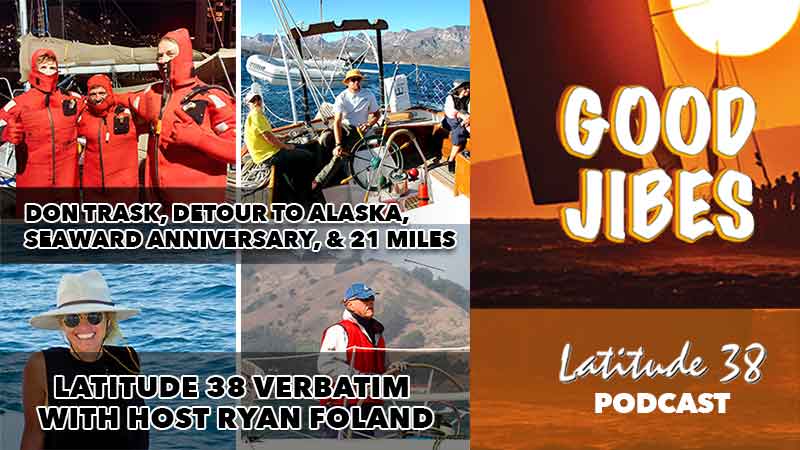
Here’s a small sample of what you will hear in this episode:
- Seaward‘s 13-year Mexico tradition
- Triple squall attack with no autopilot
- Swimming in 15,000-foot deep water
- Don’s impact on the laser generation
Follow along and read the articles here:
Don Trask – Builder of Sailboats, Sailing, and Sailors
Detour to Alaska – 2,800 Miles from Hawaii
Seaward – The Schooner That Started It All
Listen to the episode on Apple Podcasts, Spotify, Google Podcasts, and your other favorite podcast spots — follow and leave a 5-star review if you’re feeling the Good Jibes!
Connect with Ryan at Ryan.Online
Check out the episode and show notes below for much more detail.

Show Notes
- Don Trask, Alaska, Schooner Seaward, and 21 Miles (Latitude 38 Verbatim), with Host Ryan Foland
- [0:22] Welcome to Good Jibes with Latitude 38
- Don Trask
- [1:20] Don Trask as boat builder and Star Class sailor
- [2:18] Bill Kreisner remembers Don’s impact on sailing
- [2:47] 1966 Star North Americans victory
- [3:16] Don’s commitment to welcoming newcomers – NHYC locker room story
- [3:46] Paul Caerd on Don’s mentorship of junior sailors
- [4:45] Don built over 11,000 lasers in San Rafael
- [5:14] St. Francis Yacht Club – Circumnavigation of Alameda race
- [6:13] San Francisco Bay heavy weather slalom
- [6:40] Elfstrom Regatta – bringing Paul Elfstrom from Sweden
- [7:08] Don’s impact on laser generation – world champions and Olympians
- [8:36] Performance Sailcraft memories
- [10:33] 1966 Insignia Yacht Club – Star boat preparations
- [12:00] Pacific Northwest J-Boat dealer Bob Ross
- [12:59] Don as mentor, teacher, and friend to young sailors
- [13:29] Dave Branning – First Laser Worlds in Bermuda
- [14:27] Don’s advocacy for sailing and legacy events
- [14:56] Don Trask International Sailing Masters
- [15:42] Farewell to Don and his laser legacy
- Detour To Alaska
- [16:56] Departure from Honolulu on June 24th
- [17:52] Detour – 1980s French CMFP Via 42-foot aluminum expedition boat
- [18:21] Crew of four introduced
- [18:50] Tour of Kauai – Papui and Waimea Canyon
- [19:20] Initial passage – beat northward from Hawaii
- [19:49] Swimming in 15,000-foot deep water
- [20:20] Mechanical issues – genoa tear and head foil separation
- [20:49] Horse latitudes and setting the kite
- [21:47] German weather router – avoiding low-pressure system
- [22:16] Detour’s equipment – water maker, diesel fuel capacity
- [22:45] Approaching Alaska – temperatures dropping
- [23:14] Accidental jibe and boom pin damage
- [23:42] Final days – “type 2 fun” concept
- [24:40] Arrival in Sitka Harbor – July 18th after 21 days
- [25:10] Are you thinking of sailing to Mexico or across the Pacific? Latitude 38 has a resource page called “Heading South” & the “First Timer’s Guide” to help you prepare
- Seaward
- [27:05] Call of the Sea founder Alan Olson’s vision
- [27:35] 2006 – Seaward officially becomes floating classroom
- [28:31] Students age 12 to 17 – navigation and marine science
- [29:01] Annual voyages to Mexico (2006-2019)
- [29:58] Paradise Village Marina – Puerto Vallarta base
- [30:26] La Cruz Marina favorite stop
- [31:22] Rotary-supported voyages to remote fishing villages
- [32:20] Matthew Turner connection – Seaward as the springboard
- [32:49] 20th anniversary celebration
- [33:49] Seaward’s enduring impact
- [34:22] Check out our classy classifieds at Latitude38.com
- Changes in Latitude: McKennie
- [36:05] 21-mile sail from Huahine to Raiatea
- [36:33] Buddy boat Mar de Luz – Freya 39
- [37:33] Autopilot failure – tied to the helm
- [38:31] First squall hits – battens hung up on lazyjacks
- [39:27] Second squall approaches
- [39:56] Raiatea Pass navigation
- [40:54] Third squall – 35 knots in the anchorage
- [41:24] Successfully anchoring in extreme conditions
- [42:21] Update – Ruby and Makani in Vava’u, Tonga
- [30:00] Want to be a guest or hear someone specific on the show? Contact [email protected]
- Make sure to follow Good Jibes with Latitude 38 on your favorite podcast spot and leave us a 5-star review on Apple Podcasts
- Theme Song: Pineapple Dream by SOLXIS
Transcript:
Please note, transcript not 100% accurate
00:03
On the second day, the wind lightened enough for us to have a heave and swim in 15,000 foot deep water. A refreshing and unforgettable experience.
00:14
Ahoy and welcome to another episode of Good Jives, a podcast where we talk about sailing and all things sailing and then a little bit more sailing. My name is Ryan Foland and today we have a special verbatim episode where you get to hang out with me in a virtual cockpit while I read some stories from Latitude 38. Today I’ll be reading a story about the one, the only Don Trask. We will talk about a detour to Alaska.
00:41
We’ll cover the 20th C-word anniversary and we’re going to talk about some changes in latitudes. Here we go.
00:51
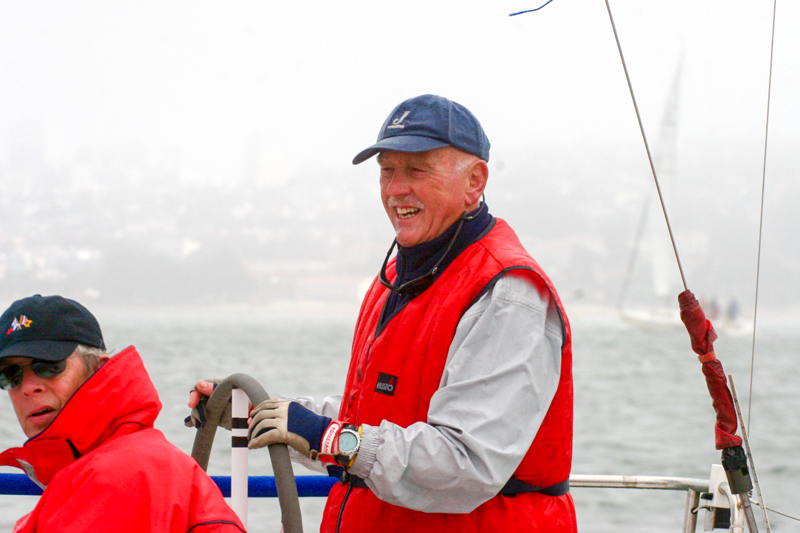
This article is called Dawn Trask. The Bay Area sailing community recently lost one of its most influential and passionate figures. Dawn Trask, a lifelong sailor, competitor, and builder of boats who shaped generations of sailors, passed away at the age of 92 on September 29, 2025, in Mooresville, North Carolina. He left behind a legacy that extended far beyond the San Francisco Bay. Dawn was best known
01:20
as both a boat builder and fleet builder of lasers and J boats, a competitive star sailor and a mentor who fostered a generation of Bay Area sailing champions. After starting in the Bay as a crew for his father, Don moved to sailing snipes against the likes of Jim DeWitt on Lake Merritt. He then gravitated towards the star class where he challenged Paul Ebelstrom and many of the world’s greats.
01:48
Star Sailing sharpened Don’s racing skills, demonstrated his competitive abilities, and solidified his dedication to the people and the boats in the one designed racing. We took on the impossible task of reaching out for comments from many sailors whose lives were touched by Don. The response was overwhelming. We’re sorry we can’t include more or even include a complete text from each of those quoted below. A comprehensive collection would fill several issues of Latitude 38. We hope the thoughts below
02:18
give a sense of Don Tass’ character and impact on West Coast sailing. Don’s laser business partner at Performance Sailcraft, Bill Kreisner, responded saying, Don had an impact on our sport that touches more folks than most realize. It’s not only his considerable sailing skills, it was his talent for introducing literally hundreds of people into sailing, many whom had no idea sailing was even a sport and making them feel welcome and part of an extended family.
02:47
I met Don for the first time in 1966 in Cleveland after his regular star crew had cancelled at the last minute. We went on to win the Star North Americans. I sailed with him for the next four years, during which time he met Ian Bruce and secured a Western license to build the then-new laser-class dinghy. One story that sums up Don, he had just gotten off the star class after a pretty successful snipe and fin record. After a day of racing, he was in the locker room at the
03:16
N-H-Y-C with most of the racers, but not a single one said hi, welcomed him or even acknowledged his presence. From then on, he vowed to welcome whoever was new and build as many friendships as he could. Ever after, it seemed he knew everyone. He and his wife Nancy were the most generous, open, friendly couple on the water. He was a fierce competitor, but had no time for folks who brought that to shore. His impact on our sport will outlast us mortals.
03:46
He was a true Corinthian in the best sense of the word. Paul Caerd, back from winning the 2025 Star Worlds, wrote, Don was a tremendous inspiration for the greatest generation of junior sailors to come through St. Francis Yacht Club. He mentored us, pushed us, and cultivated us. He gave his priority on his lasers and later J-24s. He loved the sport and wanted to help the next generation. One August afternoon in 1992 before the Star Worlds at St. Francis,
04:15
while sailing with his son Jeff, they got hit by a fishing boat and had to breach their star on the outside of the jetty to the east of the club. I was at the grill room looking at the star on the beach on its side. I forgot how he got it out of there. I remember Don doing push-ups on the deck of his laser between races in the 1977 North Americans. Stud. Laser champion Chris Broom wrote to the laser Ilka class, Don was the first laser builder in America
04:45
and built over 11,000 lasers in his factory in San Rafael, California. was a friend, mentor, and role model for how to be a great husband and father, and the kind of person who gives so much to others. He had a talent and passion for bringing people together. Don was as competitive as they come, but never lost sight of what our sport really was all about, which is building lifelong friendships. A few of the things Don spearheaded with a lot of help from others.
05:14
Don started the St. Francis Church Church circumnavigation of Alameda with a square box starting line big enough to hold the 54 boats that sailed the first race in the early 1970s. You could go either way around the island. There were 15 miles of sailing, wind and current choices, three bridges lower than a laser mast, and very narrow channels to track through at a low tide. It was an instant success. Don’s wife Nancy created laser bucket trophies.
05:44
filled with red and white checkered napkins, a couple bottles of wine, cheese, salami, French bread, a cutting board with wine glasses, as well as a corkscrew. Nobody ever left with any wine, but always left with stronger friendships. Don then thought, how about having a slalom course right in front of the St. Francis Yacht Club in San Francisco Bay in mid-July with the tops blowing off of the waves. The San Francisco Bay heavy weather slalom was born. This was another amazing laser event.
06:13
that was fun for the fans and amazingly close. By the final heat, all the sailors who had been eliminated and their friends were in the starting line room or up on the race deck cheering wildly for the final two sailors who fought it out for the championship. After placing third in the Star World Championships in Sweden behind Paul Eversholm and Lule North, he developed a close friendship with Eversholm, the world’s greatest sailor. So Don decided to ask Paul,
06:40
to fly from Sweden to San Francisco to race lasers in front of the St. Francis Yacht Club. Paul had never seen a laser but still said yes. This was an amazing treat for the local laser class. The Elfstrom Regatta is still held every year and the Elfstrom Trophy is one of the most prestigious events on the West Coast. He, Don, was the prime mover in the laser generation on San Francisco Bay in the late 1970s and early 1980s. This group
07:08
produced world champions, including two-time laser world champion John Bertrand, Olympians, around the world race winners, and untold friendships that endure to this day. Laser world champion John Bentron followed suit. Don Trask was a force of nature. He played a huge role in the laser to the US, especially to San Francisco Bay, where he inspired a whole generation of sailors who went on to great success. I was lucky to be one of them.
07:36
In the early 1970s, I was racing on a Banshee. Don would show up at the weekend SBYRA regattas with a trailer full of brand new lasers, usually about a dozen. He made a big deal out of it. And at the end of the event, he’d organize a champions race where all of the winners from the different classes were invited to race lasers against each other in a single shootout. It was brilliant. One by one, the top sailors climbed into these new boats and got a taste of something different. Don was relentless with me.
08:06
Every weekend he’d come over and say, John, you need to be in a laser. He kept that up until I finally did. That was my first experience with Don. He wasn’t just selling boats. He was building something bigger. He had the energy and vision to make it happen. Former St. Francis Yacht Club race manager, Matt Jones wrote, the best way for me to describe Don is a line from the movie Field of Dreams. If you build it, they will come. The community and fleets Don helped create around the boats he built and sold are active to this day.
08:36
I was privileged to work with Don on local, national, and international regattas,” Matt continued. His wife, Nancy, also participated in the planning and hosting of the shoreline activities around the events, helping to make them successful. During a birthday call to Don this past July, his wit and infectious laughter brightened my day. Laser racer Al Sargent wrote, My parents, Van and Donna Sargent, introduced me to Don Trask since they raced against him in Snipes back in the 50s. In 1978,
09:06
We bought our first laser at Performance Sailcraft in San Rafael. We couldn’t afford a good boat that cost $600, so Don offered a defective boat for around $400. We towed up to the Delta where I was a feral laser kid. I since raced lasers nationally in the 80s, 90s, 10s, and 20s, winning three national championships and placing fifth in the Masters Worlds in 2023 and 24. The passion for it all was sparked by Don.
09:35
It’s hard to overstate Don’s impact on the laser class, given the boat’s popularity, his impact on our sport in general. He helped the class achieve critical mass and momentum that continues to this day. Don’s infectious enthusiasm for promoting the sport helped establish the laser, now Ilka, as the most popular all-ages sailboat class in the world, Al added. Sailor and former Ronstoun rep Alan Persia added his memories. There are so many stories and adventures with Don.
10:05
I worked for Dawn at Performance Sailcraft starting in 1978. I worked there with three or four other high schoolers from Pelmont High. Initially, we worked only weekends, finishing deck layouts on the newly released J24. We worked side by side with Dawn, which was both a great learning and experience, and always entertaining. Dawn had a way of making even the most mundane jobs interesting. Canar and Mercury sailor John Burstad wrote, as you walked in the boatyard,
10:33
at Insignia Ya Club in 1966, you couldn’t help but notice the star boats getting ready for the district championships to qualify for the world championships. Good Grief, sailed by Tom Blackner with Gary Mull crewing. North Star, sailed by Lowell North. The Pope with Peter Barnett, the fin sailor, crewing and host of other great sailors. Malin Bernham, Ralph DeGrayer, Walter Crump, Nils Ericsson,
11:02
The boats of wooden hulls built out of cedar planks with wooden spruce mass built in Salcelito by Nellis Erickson, some boats sporting DeWitt sails. In the middle of all the boats being meticulously prepared stood Don Trask with the then crew Don Coleman. These two stood out. These two were straight out of Norman Mark’s gym. The boat, swinging star, was perfect in every way. This was a great deal of fun to watch.
11:31
As the season progressed, Don brought in Bill Kreisler to crew. They went on to win the North Americans in Cleveland. From there, they went on to Skovashed, Denmark, to finish third in Worlds, behind sailing Good Paul Ivershom. Second was Lowell North, with Peter Barrett crewing. Third place in the Worlds, elevated Trask in Kreisler, to world-class sailors. The rest is history. Don, the promoter and the boat builder. May he rest in peace.
12:00
with so many accomplishments. Pacific Northwest J-Boat dealer Bob Ross added, For me, Don was a mentor, a friend, and a business associate for many years. Starting in the late 1970s, Don would lend his hand in the NW, helping us properly represent J-Boats. He was instrumental in helping us start fleets of J24s, J30s, J29s, J25s, and many of the newer models. In 1984, he was there when we started J-Fest.
12:29
NW with great fanfare. was always there for us supporting our efforts from Woodblee Island Race Week to J Fest Northwest and boat shows. He sailed with us, our clients and friends. Local J sailors even started calling him Uncle Don. I remember hearing other sailboat brands saying if we could only break up the West Coast J Boat Mafia, we would sell more boats. Don assembled a great West Coast team of dealers to work with him to make J boats the performance brand.
12:59
to beat on and off the race course. Bay Area sailor and racer, Tad Luckley, wrote, for us young kids, Paul John, Ken, Steve, Billy, Doug, John, Tom, Evan, and the rest of us who grew up in the shadow of Dawn, he was a mentor, teacher, and friend who supported us on and off the water. He always had time to share with us and showed a genuine interest and enthusiasm for our racing. We were all fortunate to have Dawn in our lives, and he always encouraged us to do better.
13:29
Dave Branning wrote in saying, Don’s impact on me will be long lasting, starting with the 70s regattas in Clear Lake and Lake Dillon and introducing me to my wife, Sally, at Lake Merritt in Oakland. In 1974, we hooked up again in the first Laser Worlds in Bermuda, where Chris Bruhn finished third and I was able to qualify from Texas. Don came to Texas to support the North American Laser Championship I organized at Rush Creek Yacht Club in Dallas. Going home from DFW Airport,
13:58
After the Lazer Nationals, Don was stopped at security with his tiller extension in a bag wearing a new cowboy hat. The security guard asked, what’s in the bag? Don replied in a mocked Texas drawl, they’re my guns. Well, all hell broke loose. A great family and great memories. This writer remembers talking to Don before starting as an ad rep for Latitude 38 in the 1980s. We were racing the J29 class when after a race we told him,
14:27
we’d be calling on him for advertising. He responded, you’re not going to like that. He could be a tough customer, but it was all part of his competitive, jovial nature. It turned out to be a long, successful, and fun relationship with plenty of laughs. Don was a tireless advocate for sailing, who constantly supported new sailors and events. Another of his legacy event creations was a sailing masters, sailed by Paul Evershrim, along with many other legends of sailing.
14:56
It was originally raced out of the St. Francis Yacht Club in J24s and now is at the San Diego Yacht Club in J105s. The Masters was being raced as we went to press with San Diego Yacht Club officially changing the name to the Don Trask International Sailing Masters. Don last raced in the Masters in 2019. Friends and competitors remember Don’s determination, energy and humor. He could celebrate victory but shake hands and laugh with those who bested him.
15:25
The tributes could go on for many more pages, all echoing the thoughts of those above who benefited from his infectious enthusiasm for sailing and sailors. Fair winds, Don.
15:38
Written by John Arn.
15:42
Well, Don, our tacks or jibes never crossed. But after reading this and learning about the legacy that you’ve created and you being essentially responsible for creating the popularity around lasers, I feel like I know you because there’s nothing more exciting for me than being out on the water in my laser, Sandy Bottom. Now, I don’t know if you actually made it, but there’s a good chance that you did. And so…
16:11
Every time I take her out, I’ll give a little nod to the legacy that you created and I will sail fast and enjoy the ride. Farewell, it’s Don.
16:25
Alright, sit back, relax, we are going on a detour to Alaska. The pickup crew of the sailing vessel detour was ready to depart Honolulu on June 24th. After braving the chaos of a busy Walmart and completing $1,200 worth of provisioning at the more peaceful Safeway, we were stocked for a 20-day passage from the tropics to frosty Silca, Alaska. What followed taught valuable lessons through unexpected challenges.
16:56
We motored out of Aliwale Harbor, but ominously, we soon heard odd noises from the propeller. Quickly anchoring just offshore, we smircled to investigate. We found a trash bag tightly wrapped around the propeller shaft. Our captain, Quirkin, was concerned that the plastic might have drawn into the shaft seals, potentially allowing for seawater to enter the sail drive. Fortunately, we caught it early. After carefully removing the plastic,
17:23
We missed the fuel dock’s early closing time in nearby Kewa Bison Harbor, so we returned to the welcoming Waikiki Yacht Club for an unplanned, though pleasant, extra night. After feeling the next day, we set off on an overnight sail to Kauai, arriving just at sunrise. The sail was a gorgeous mix of broad and beam-reaching under the majestic Milky Way of a silver moon. Detour is a well-maintained 1980s French
17:52
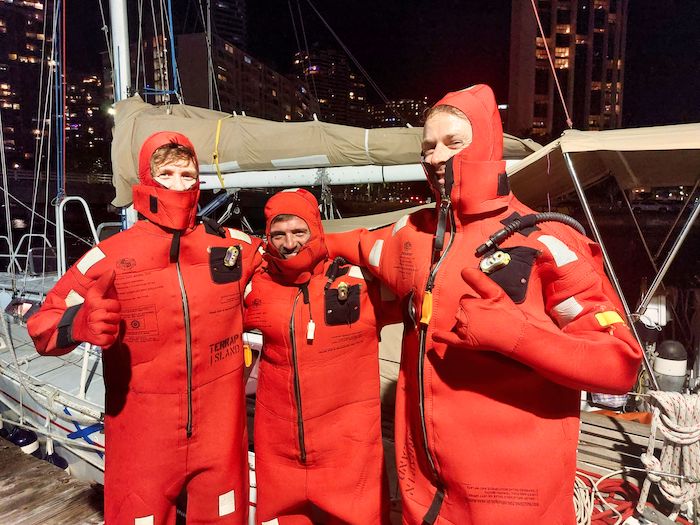
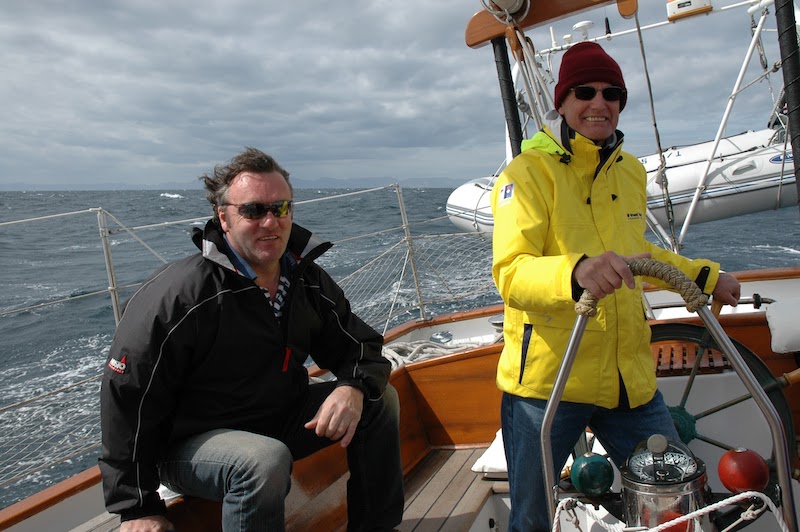
CMFP via 42-foot aluminum expedition boat with retractable keels. It was recently purchased in New Zealand by Quirkin Grossman, a 34-year-old Swiss citizen, licensed captain, sailing instructor, and PhD in systems engineering. A rotating cast of friends had helped sail the boat from New Zealand through French Polynesia to Hawaii. Our crew would take her to Alaska, and others would continue on to Europe. Our crew of four
18:21
Consisted of Quirkin, our capable captain, Tom Howard, a 33 year old British adventurer and novice sailor whom Quirkin had met during his travels in Thailand, Cecile Taylor, a 42 year old Florida based general contractor and surfer who excels at bottom repairs, and me, Jim Imptor, a retired 66 year old OPB sailor and chef from Sacramento. After securing detour and a tight slip at Nauwihili Harbor,
18:50
we rented a car and toured Kauai’s Papui and Waimea Canyon. Back at the dock, some generous local fishermen who heard of our last complaints gifted us three ahi tunas, which we promptly fretted and froze. That evening, we enjoyed a big roast chicken dinner from Costco, shared beers with friends from two other silka-bound boats, and had our last normal night of sleep. After a thorough cleaning, we departed the afternoon of June 27th, hoping for an 18-day passage.
19:20
Unlike my previous passages to the mainland, the initial multi-day beat northward wasn’t rough, with moderate winds and swells. Conditions were manageable. On the second day, the wind lightened enough for us to have a heave and swim in 15,000 foot deep water. A refreshing and unforgettable experience. From that point, each day felt like Groundhog Day. Rotating winches, sail adjustments, boat checks, and hardy males made easier thanks to our excellent portable freezer.
19:49
One night, a Russian freighter ignored our repeated radio calls and passed uncomfortably close, despite having an entire ocean from maneuvering. On July 3rd, our first mechanical issue struck. One pivot bolt on the gimbaled stove sheared off, threatening our ability to cook. 15 days remained. Thankfully, we had three capable mechanics, plenty of spare parts, and a stock of power tools. A new pivot was fashioned and installed in 30 minutes, just in time for pasta dinner.
20:20
hunger is a powerful motivator. The next day we discovered a small tear in the genoa. Unfortunately, we couldn’t fully lower the sail to repair. Cecile donned the climbing harness and, using two halyards for safety, went 30 feet up the mast. He found the head foil had separated in places, ominous sounding, but easily fixed by tightening several Allen screws. Within an hour, the sail was fully functional again, corrected while motoring downwind to create minimal apparent wind. After two days of motoring through
20:49
the horse latitudes, on July 6 the wind picked up from the west and we set the kite. That same day, two minky whales surfaced within 30 yards of us, swimming alongside briefly before disappearing into the fog. In the following days, the routine continued, adjusting sails to maintain over five knots, occasionally interrupted by dolphins or fresh-caught tuna. By then, our fresh vegetables were nearly gone and the eggs were starting to spoil. We transitioned to freezer and canned goods without an issue.
21:19
The longest lasting produce included cucumbers, Japanese eggplant, celery, apples, and oranges. Life on board included chess games, reading, movies, and fun conversations. On July 8th, we reached our mileage halfway point and jibed from a northerly to an easterly course, riding following seas for perfect tradewind sailing, though in dense fog. To celebrate, we baked homemade chocolate chip cookies, each enjoyed one with a cold beer.
21:47
We had been sailing due east on the advice of our German weather router who recommended staying south of a fast-moving low-pressure system moving out of western Alaska and packing 50-knot gusts. The weather router earned his very worthwhile fee. On the evening of July 10th, we jived northwards towards Sitka. Days of overcast and foggy weather meant our solar panels produced little power and the wind generator couldn’t fully keep up with our autopilot and refrigeration needs. To conserve energy,
22:16
We use Starlink only a few hours each day for weather, updated and limited communications. As a true blue water boat, Detour was well equipped. Sturdy handholds, a galley strap for cooking, safety bars at the mast, 155 gallons of water, a water maker and 125 gallons of diesel fuel, including jerry cans. Enough for 800 miles or 6 days of motoring. By this point, we had used about 60 % of our fuel and we had 2-3 days of motoring range remaining.
22:45
plus a small tank reserved for the diesel heater. As we neared Alaska, the night’s temperatures were now dropping to 45 degrees Fahrenheit. An accidental jibe and 20 knot winds nearly caused serious damage when a gloved finger accidentally adjusted the autopilot by 20 degrees instead of the intended 2 degrees. With the boom brake engaged to slow the jibe, the boom swung with somewhat less force. We were lucky. With winds gusting 25 knots,
23:14
We reduced sail to one third reef in the main in 60 % genoa to help the autopilot manage the confused seas. A few days later when raising the mainsail after charging the battery while motoring in light winds, Cecil noticed the boom pin at the massed goose neck was nearly falling out, likely a consequence of the accidental jibe. Thankfully, it was still in place and easily secured with a hammer and a new cotter pin. From that day forward, we inspected it daily.
23:42
As we closed in on Alaska with 500 miles to go, fatigue finally set in. Even simple tasks, like sail changes in the dark, became more difficult. Low on fuel and enduring cold, gloomy weather, we began dreaming of hot showers and burgers. Tom, our ever resilient British traveler who once biked across China, said we were experiencing type 2 fun. Not enjoyable in the moment, but deeply rewarding in retrospect. It was the best we could hope for at that time.
24:12
After a 12 hour motoring stretch and light winds, we hoisted the spinnaker again and sailed along at over 6 knots. It was so quiet, we felt as if we were barely moving. In the final days, the wind increased to a steady 15-20 knots, giving us fast and satisfying home stretch. Our last dinner at sea, pasta with Italian sausage and a garlic tomato sauce was served in a 30 degree heel. It was both celebration and bittersweet farewell to our voyage.
24:40
We arrived in Silca Harbor on July 18th after 21 fulfilling days at sea. We traveled 2,800 miles, bonded as crew, overcame challenges, had eaten through our 20-day food supply, and grown in harmony with the ocean. At 6.30 a.m., we toasted our arrival with a beer. Good morning, Silca. Article read by Jim Emmer. Well, that sounds like a fun trip, 21 days at sea, eating healthy,
25:10
swimming in 15,000 feet of water, camaraderie, and I think my favorite part, the type two fun. Not enjoyable in the moment, but deeply rewarding in retrospect. Well, I have yet to sail from Hawaii to Alaska, but now I feel like I’ve been there, sort of. I hope you enjoyed that story and hope you’re inspired to take sail on some crazy adventure yourself. Latitude 38 here.
25:37
Are you thinking of sailing to Mexico or all the way across the Pacific or maybe even further? We just heard from Joanna and Cliff saying, my husband and I subscribe to Latitude 38 and enjoy the Good Jibes podcast regularly. They went on to say they’re headed to Mexico in the fall and will continue across the Pacific to Australia. However, they’re looking to simplify all the choices they need to make to prepare. Of course, there’s tons of resources out there, but Latitude 38 does have a page in our website called Heading South.
26:07
And we also have Lata238’s First Timers Guide to Mexico available to read online on the Heading South page or a printed copy that is available to purchase in our online store. There’s a lot to know, but Lata238.com is a good place to start. And now an article titled Seaward. While many of the Bay’s sailors admire the striking silhouette of the tall ship Matthew Turner, few realize that her sibling,
26:36
the 80-foot schooner Seaward was quietly laying the foundation for Call of the Sea’s educational mission long before a single plank of the brigantine was laid. Now celebrating her 20th anniversary under the Call for Sea’s flag, Seaward has carried thousands of young people, students, and admiring sailors on voyages throughout San Francisco Bay, down the California coast, and as far as the Sea of Cortez and Puerto Vallarta, Mexico.
27:05
Her story is one of vision, grit, and the kind of quiet persistence that makes lasting change. A dream takes shape. Call of the Sea founder, Alan Olson, began dreaming of a large-scale educational voyage back in the 1980s, envisioning a purpose-built platform for youth education and offshore seamanship. In the early 2000s, he joined forces with Captain Ken Neal, an East Coast sailor and former crew of the U.S. Coast Guard, Bark Eagle.
27:35
Together, they began searching for a vessel that could carry their shared vision forward. The search ended in the East Coast with Seaward, an 80-foot steel schooner built for charter and ocean passages. Sea-worthy, roomy, and crucially affordable. A deal was struck, and unable to transit the Panama Canal during hurricane season, Seaward was loaded onto a freighter bound for Ensenada, Mexico. From there, her new crew sailed her north to South Solito.
28:03
where she soon became a familiar sight on the bay. And in 2006, Seaward officially began her new life as a floating classroom. A school without walls. Right from the start, Seaward was more than just a ship. She was a school without walls. Call of the Sea used her to teach Bay Area youth the fundamentals of navigation, marine science, and sailing. Daily, overnight, and weekend-long programs ran throughout the spring and the summer.
28:31
introducing students age 12 to 17 to life aboard a working schooner. Students stood watch, learned to navigate, cooked at sea, and cared for one another as shipmates. For many, it was their first night away from home and a life-changing experience. When the school programs, often serving more than 6,000 students each season, wrapped up in the fall, Seaward shook out her canvas and headed south. From 2006 to 2019, almost without interruption,
29:01
She made annual voyages to Mexico, typically departing right after Christmas. South to the Sun The southbound passages carried a professional crew along with co-ed sea scouts who learned the realities of offshore sailing firsthand. They rotated through watches, handled sail changes, cooked meals, and kept course on blue water legs. Once in Mexico, Seaward offered berths to sailors seeking offshore experience or simply a taste of cruising life.
29:30
Guests came from across the United States. Some to build skills, others came to reconnect with the sea. Everybody left changed. Each winner, Stewart’s characters followed a familiar rhythm. San Francisco to Los Angeles, LA to Cabo San Lucas, and then north to the Sea of Cortez. Stewart’s first base was in Puerto Vallarta’s Banderas Bay, where, thanks to the generosity of harbor master Dick Markle and his team, she tied up at Paradise Village Marina.
29:58
always had a berth near the Vallarta Yacht Club. From there, Stewart would take local use on day sails across the bay and nearby Yelta while awaiting her next boatload of charter guests. Life in Paradise For many sailors, Seaward was their introduction to true passage-making and the magic of Mexico’s coastline. Stops in Baja, later in La Cruz, Puenta de Mirta revealed a Mexico that still felt timeless.
30:26
where fishing pangos often mingled with cruising yachts and the parade of life slowed to the rhythm of the tides. Days were spent sailing, swimming, and exploring evenings, brought camaraderie, shared meals, and warm, starlit nights. La Cruz Marina, just around the corner from Puerta de Mina, became a favorite stop, a low-key harbor filled with liveabords, cruising families, and easygoing charm.
30:53
that reminded sailors of what coastal Mexico used to be like decades ago. Each weekend-long charter gave guests the opportunity to enjoy pristine, clear water anchorages with white, sandy bottoms, explore shore-hugging reefs, and visit unspoiled beaches. And whether it was surf run to Puente Muerta or a quiet anchorage in the islands of La Paz or a sunset sail past Salayuta, Seaward offered something rare. Adventure and comfort
31:22
challenge and beauty all in one voyage. Included in the winter charter schedule were rotary-supported voyages on which Stuart carried books, sports equipment, and clothing for distribution to remote fishing villages in Baja. Regardless of which charter they signed up for, guests were invited to become part of the crew and help aboard with rotating watches and turns at the helm. At the week’s end, Seaward returned their guests to paradise, the marina, that is.
31:52
Unwilling to just walk away, the now-seasoned sailors would sit on the yacht club’s terrace overlooking the marina with a cold drink in hand and a head full of memories. A legacy under sail. It’s easy to admire the impressive Matthew Turner, a tall ship built from scratch with sustainable timber powered in part by wind and solar and representing a bold commitment to environmental and educational values. But none of it would have happened without Seaward.
32:20
She was the springboard that made the dream possible. For two decades, this unassuming schooner has delivered on Call of Sea’s original promise, hands-on education, character building at sea, and meaningful connection to the maritime environment. She has taught thousands of students, launched sailing careers, transformed reluctant teens into confident leaders, and given countless adults a second chance at adventure. She even brought home the Belvedere Cup Schooner Class Trophy in 2024.
32:49
Seaward’s 12 years of winter voyages to Mexico left a long and proud wake, one that Matthew Turner may someday follow. Still at the heart of the mission, as Call of the Sea celebrates Seaward’s 20th anniversary, the organization is charting the next phase for both vessels. Together, Seaward and Matthew Turner form a two-ship fleet, one steel, one wood, serving the same purpose from different generations. Whether teaching chart plotting in San Francisco Bay,
33:20
leading overnight student programs, or preparing adults for lifelong voyages offshore, Seaward remains an essential and beloved part of the Call of Sea’s journey. She may not tower over the water like Matthew Turner, but for those who’ve sailed aboard her, from sea scouts to seasoned sailors, Seaward represents something even greater. The living proof that dreams built on purpose, persistence, and the love of the sea can carry on for decades and still set sail
33:49
towards new horizons. Written by John Woody Suryak. Well, cheers to Seaward, the schooner that started it all. It’s so awesome to see how a boat like this has impacted so many people. But not me, I haven’t been on it. Well, it’s because I’m not up in San Francisco and I haven’t necessarily jumped on the charter bandwagon yet. But this is now on my bucket list to go check out. Looks like a lot of fun. So cheers to the 20th anniversary. Let’s keep it going.
34:19
Fair winds.
34:22
Hey good Jibes listeners and Latitude 38 readers. Have you looked in our classy classifieds lately? It would be impossible for us to know how many boats have sold to new owners over the last 45 plus years of publishing Latitude 38. But we’re sure they have helped countless people realize their sailing dreams. Every month there are new boats listed that will fill someone’s sailing adventures. If you have a boat you want to sail or looking for that next boat in your life, the pages of Latitude 38 will surely have something to suit your fancy.
34:52
Pick up a magazine at a local marine business or visit our classy classified pages at Latitude38.com to find boats, gear, job opportunities and more. Then tell us your next sailing story.
35:07
Alright, now time for little changes in latitudes. With reports this month on McKennie’s short but drama-filled sprint from Juani to Relentia, another unscheduled trip to the backyard for Salty Dancer, the last leg of Iwa’s long voyage from Alaska to Cabo, and a locker full of cruise notes. McKennie, a Geno 39, Ruby Gates, 21 miles to go, Portland. It’s been a year and half.
35:36
since I crossed the South Pacific on my own in Makini, sailing almost 3,000 miles from Banderas Bay, Mexico to the Marquis, French Polynesia, the first leg in my intended solo circumnavigation. Since then, I’ve encountered all sorts of adversity, losing my rigging, lightning storms at sea, water sprouts just a few miles off anchorages so crowded I could reach across and borrow a cup of sugar, an onboard mouse with surprising intelligence,
36:05
and the ongoing misfortune of heavy-handed squalls. Yet, on a simple Sunday earlier this year, a no-nonsense 21-mile sail from the island of Jumeni to Ratialda delivered an epic slap to my growing tolerance for adversity. It all started out innocently enough. I departed in the morning in the company with my buddy boat, Mar Deluz, a Freya 39 skippered by Ron Cushira. At this point, we had covered
36:33
thousands of miles in company with each other and fell into our usual rhythm regarding the night watches and bickering about apparent wind angles. As part of having each other’s backs, I had a huge heavy nylon road flaked on my stern ready to tow him if his on-again off-again transmission went off again. I never towed anyone before, but really I reasoned could it all be that bad? As it turns out, that was the least of my worries. I set my sails under clear skies.
37:03
ready to enjoy an easy hop, skip, and jump across the channel to Rialta. Just in case a squall hit, I placed my second reef in my mainsail. By this stage of my South Pacific sailing, I’d learned squalls are the Houdinis of the atmosphere, appearing out of nowhere, cuffs and chains unlocked, and blowing without modesty to full house applause as they magically scare me to death. Satisfied all was well?
37:33
I started to head below when I heard a series of urgent beeps. I turned to see my helm suddenly break free from the autopilot as my controller decided to end its illustrious career at that moment. For a single handler, the autopilot is like the second person on board, freeing me up while the boat steers herself. Moreover, my hydrovane is useless in dead downwind sailing. It’s only 21 miles across the channel, I said to myself.
38:00
and accepted being tied to the helm like a tomato plant on a steak. I radioed Mar De Luz, gave him an update, and hoped his transmission didn’t need any cowgirl lassoing techniques for the next few hours. I sighed. This sail looked like a lazy afternoon stretch your legs stroll in the park. For 45 minutes, I trawled myself at the helm, steering Makani with a slight smirk of boredom. And then I heard it. A low whoosh that merged with a white roar.
38:31
I looked behind me and a huge squall running quickly upon me. Oh no, a squall with no autopilot? That meant the normal sail adjustments were out of reach for me, creating a sticky tricky situation. The moment I left the helm, my boat would turn to weather and chaos on an already 25 plus knot demanding squall. I stood at the helm, grateful for my second reef in the main, adrenaline hitting my bloodstream like a Greco-Roman wrestler in the ring. As the squall caught up,
39:00
Water poured from the sky. To my horror, when I looked at my mane, I saw that the battens were hung up on the lazyjacks, creating a huge pocket that was quickly filling with water, heavy water, and lots of it. The weight would surely break my lazyjacks, spilling my man-sew all over the deck, where the wind could pick it up, take it dancing, delivering a dire and possibly uncontrollable situation for me. I tried jiving back and forth to shake the battens from the lazyjacks.
39:27
But the weight of the water held the battens in a lover’s embrace, a long, wet kiss that wouldn’t end fast enough. Still at the helm, completely soaked and thinking that things couldn’t get much worse, I looked behind again and saw that they were about to. Another squall close on the heels of the one I was still in. Houdini coming up for an encore. I gripped the helm and peered through the sheets of rain at Mar de L’Oze. The rain was so thick I could barely see him, a slight ghost just ahead.
39:56
I was relieved he was still sailing well, but with his barely working transmission and my own issues, this little walk in the park had now become a tripping sprint through the rough side of town. The winds were howling and the Ralatia Pass was due to appear up ahead sometime soon, hopefully well marked with the proper buoys. One of the channel buoys in the Huéni had gone AWOL and had been replaced with a red rowboat.
40:25
Mardelus asking if I was okay. He obviously observed my transition from sailing effortlessly to my oafish state. I assured Ron that I was good, even though my waterlogged sails had me lumbering through the seas like a thick wart log. He could tell by the looks of me that I was struggling. I was grateful thinking about beer, or maybe two, how it would taste after I got through this mess. On Mardelus sailed, and on I pounded. As we neared the pass, the rain lightened, the clouds parted.
40:54
and the sun beamed down as though nothing had ever happened. Magic. Ron and I dropped our sails, started our engines, and entered the well-marked Mar de Luz’s transmission behaved, and the water drained from the pockets of my sails. Relieved, I motored towards the anchorage under the bright sun, but the excitement wasn’t quite over. Just as the anchorage presented itself, another squall hit, even more fiercely than the last two. Mar de Luz astutely dropped his anchor just before the winds peaked at 35 knots.
41:24
I was caught wandering blindly and soaked, carving circles as I tried to figure out where I could drop the hook among the other boats safely tucked away. In the midst of the maelstrom, my brain reminded me of another sketchy situation I had survived. And a little voice said, you made it through that so you can make it through this. I had anchored in a very narrow anchorage with rock walls around 35 knots blasting down off the cliffs. I’m not even sure how I managed to anchor that day, but now, in Realente,
41:53
It was all I needed to boost my nerves, get positioned and drop the damn hook, my boat heeling and swinging in the wind as I set back. I turned off the engine, wrung out my t-shirt, looked around and sighed. Just another day of sailing. Woo! That was by Ruby, submitted on October 1st, 2025. Check out more at www.sea.com.
42:21
n-i-x-i-e dot com. That’s w-w-w dot s-e-a n-i-x-i-e dot com. And an update, Ruby and Makani are currently in Vwawada Tonga through the cyclone season. Wow, that was exciting. My sail to Catalina is 26 miles and I can see how 21 you just be like, yeah, that’s no big deal until you get his with Squall 1, Squall 2, and then Squall 3. That was an exciting adventure that we all got to share.
42:47
from the safety of our little cockpit here or wherever you are. Well, there you have it for this special verbatim edition where you got to hang out with me in a cockpit while I read through some stories about some legends about a trip to Alaska, about a 20 year anniversary of a schooner that has made an impact on so many lives and in the changes, some changing weather. And I think from now on, whenever I hear about Esqual, I will think about Houdini.
43:17
Hopefully I don’t have to see his performance or his magic anytime soon. And with that, this concludes our episode and we hope that you enjoyed this and we hope that you stay tuned in. Each week we bring you fun sailing stories that are inspiring to help you get more time on the sea without spending any time on the water. But hopefully you’re listening to some of these on the water as you’re cruising around or looking for something to do during a long sail.
43:44
Good Jibes is a podcast brought to you by Latitude 38, so make sure to get your grubby hands on the physical magazine that’s been around for over 40 years, documenting all of what’s good in West Coast sailing. My name is Ryan Follin. It was a pleasure to be your host today and read through these stories. And if you want to get in contact with me, well, you can find me online at Ryan.Online. That’s right. My website is Ryan.Online. And if you have a guest in mind or you want to be a guest on the show, well, shoot me an email and let me know.
44:13
You can email me at ryan at latitude 38 dot com. Well, hopefully these snippets of sailing adventures helps your day be a little bit brighter, maybe a little bit windier. Until the next episode, we’ll see you. Fair winds and following seas and watch out for the squalls.