

Episode #212: Dennis Surtees on Sailing Championships Around the World
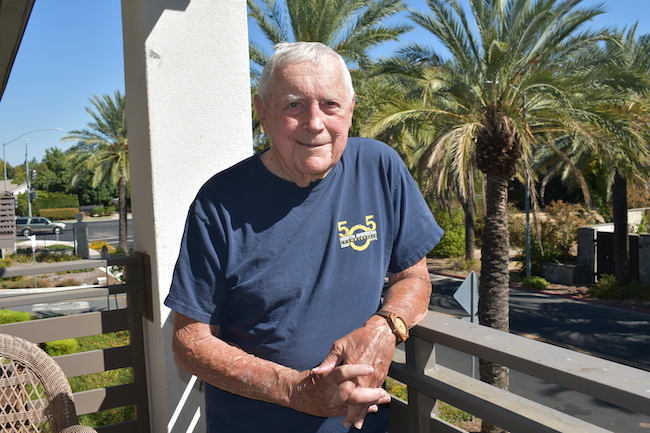
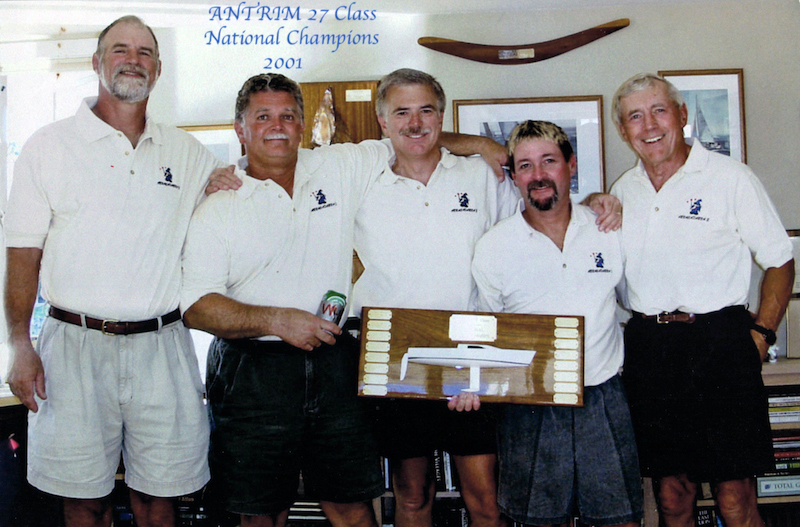
Welcome to Good Jibes Episode #212. This week we chat with Dennis Surtees about his lifetime of sailing championships with legendary crews. Dennis is a 95-year-old racer who has done it all in the 5O5 class, and also won on the Antrim 27.
Join Good Jibes host Christine Weaver as she chats with Dennis about how he fell in love with the 5O5, how he overcame his reputation for capsizing, what to do when your mast breaks, his stories from racing with a young Paul Cayard, and frightening tales from sailing with sharks.
Here’s a sample of what you’ll hear in this episode:
- The first Abracadabra origin story
- 1979 South Africa Worlds
- Everything broke in South Africa
- Insurance and carbon masts
- Racing in Japan
Learn more about Dennis Surtees and Tony English here.
Listen to the episode on Apple Podcasts, Spotify, and your other favorite podcast spots — follow and leave a 5-star review if you’re feeling the Good Jibes!
Check out the episode and show notes below for much more detail.
Show Notes
- Dennis Surtees on Sailing Championships around the World, with Host Chris Weaver
- [0:12] Welcome to Good Jibes with Latitude 38
- [0:38] First encounter with the 505 – Dennis’s introduction to competitive sailing
- [3:38] Buying the first 505 – Taking the plunge into boat ownership
- [4:56] First major success – 1964 North American Championship in San Diego
- [7:15] First World Championship – 1966 Australia trip
- [10:08] Adventures in Adelaide
- [13:17] The mast dispute
- [15:21] First Worlds results
- [17:08] 1979 South Africa Worlds
- [18:22] Meeting Paul Cayard
- [21:23] South Africa conditions
- [23:26] Join our crew list at Latitude38.com
- More Racing
- [24:32] Everything broke in South Africa
- [27:13] Other great crews
- [28:47] Trip to Japan after Sweden Worlds
- [31:07] Racing in Japan
- [33:50] Check out our Classy Classifieds at Latitude38.com
- Lessons Learned
- [34:34] Transition to Antrim 27
- [37:04] Delta Ditch Run disaster
- [39:24] Multiple mast breaks
- [41:18] Insurance and carbon masts
- [44:08] Tony’s sailing education
- [45:43] The first Abracadabra origin story
- Make sure to follow Good Jibes with Latitude 38 on your favorite podcast spot and leave us a 5-star review on Apple Podcasts
- Check out the October 2025 issue of Latitude 38 Sailing Magazine
- Theme Song: “Pineapple Dream” by Solxis.
Transcript:
Please note: this transcript is not 100% accurate.
00:02
They’re gonna break them up, don’t they? They’re gonna break another one, yeah.
00:13
This is Christine Weaver with Latitude 38 for another episode of Good Jibes, our podcast. Today we’re talking with Dennis Surtees and assisting me in this interview is Tony English, who used to crew for Dennis on his Antrim 27 Abracadabra back in the 1990s.
00:38
So Dennis, welcome to Good Jibes. We were going to talk first of all about your experience in the 505 competition back in the 60s. While I was in England, I never could afford to race a boat. It cost too much money. In 1957, when we came over to the States, I first saw a 505 in Boston. On beach, somebody was launching this
01:08
beautiful looking little boat. I was interested in it. What is that? It’s a 505. Would you like to go sailing in it? It looks too difficult for me and it would have been. But I looked at it then and I came away thinking that’s a boat that I’d like to sail one day. It just was a very sharp looking boat. Came to live in California in 1960.
01:39
I was going to a boat show and we were looking at various boats there and we came across an O’Day sailor, George O’Day sailor. I was looking at it with my wife and saying, course it’s no 505 but we could sail that. This hand descended on my shoulder from behind. Did you say 505? Yes, it was a very tall man, man named Derek Ridd.
02:09
who since became a very close friend of mine. But if you want to sail 505, you should come to our house in Palo Alto, our yacht club in Palo Alto. I lived in Los Altos at the time. No, I lived in Mountain View at the time. I lived in Los Altos houses. And I went with him to see the 505 sailing out of Palo Alto. And this gentleman, fellow…
02:38
whitey-polly. Would you want to go sailing in one of these? I really would like to. Well, it’s not a good idea to go out on your own to start, but he had taken my boat and he had a wooden 505, one of the original oh 505s built by Ferry Marines in England. It a beautiful wooden boat, molded fiberglass, molded plywood.
03:08
and I said, went and sailed around the harbor, which you may remember Palo Alto had a harbor once upon a time. uh And I was entranced by this boat. I couldn’t really sail it, but I was very keen on the boat. We came ashore and Derek, who had accosted me in a boat show, said,
03:38
Are you ready to buy one of these now? He well, yeah, I think so. Well, I know the man that built them. And he’s got a company now, but it was in Totness in Devon in England. So I got in contact with these people in Totness, and I bought my first 505.
04:09
And I don’t know what they cost now, they’re very expensive. But I paid a total of $1,500 for the boat and the trailer, the sails, and delivered in California from England. Extraordinary really is, I that’s something like $35,000, $40,000 now. But of course they’re much better boats too. But it was…
04:39
satirically to buy this wonderful boat. And a friend of mine called Don Lewis, bought another boat, had two boats uh delivered at the same time.
04:56
And I fell in love with it. And I started sailing the boat now as in 19… It’s been about 1962. 1964, we went to… We had a North American Championship in San Diego, Mission Bay. And I went down and sailed the boat. It was my first experience of doing well in the boat. I actually came second, which was extraordinary because I…
05:26
up to that point I was most known for the fact that they capsized the thing all the time. I capsized probably half the number of times I saw the boat. It was not a pleasant experience. Anyway, the winds were light variable. That time I got from my reading five…
05:55
a called, a guy called Stuart Walker, he rode a on using the compass when he was sailing. It was my first experience of using a compass to detect wind shifts. Never thought of that, never heard of that before. We went down to San Diego and the wind was shifting all the time. I instructed my crew what to do about
06:24
telling me to tack when it was time to tack when the wind shifted.
06:30
And it worked. We worked our way to the front of the fleet. There’s only one other boat that’s much faster than I. He won everything, but I came second, both in that and in the Pacific Championships, which followed.
06:52
And I was really…
06:55
That was sixty-five. Anyway, on the basis of getting that, I won the Pacific Coast Championship that year and I came second in the North American Championship.
07:15
On the basis of that I got uh my fair pay to go to Australia in 1966 as the first World Championship we ever went into. And this was very exciting. I came home to my wife, we were going to buy a new carpet for our living room. And I said, you know what, we could go to the Worlds. What’s that?
07:45
My wife really didn’t know much about sailing at the time. Well, we go, it’s in Australia. I’d like to see Australia. But we’re gonna buy a new carpet for the living room. She decided, well, we won’t buy the new carpet, we’ll go to Australia. So we spent the money for the new carpet on going to Australia, and then, fortunately, we did. That’s a good sailing wife.
08:13
oh I can see Jenny sailing. she said that it was, that was okay. We can get a new car for next year. And she’s been, had been loyal to me from that moment on the rest of our sailing lives. She always enjoyed meeting the crews afterwards, never wanted to sail herself. Actually, it one day we went sailing later on.
08:44
My crew didn’t show up as a Palo Alto. The wind there always gets up in the afternoon, about 12.30, 1 o’clock. And I thought, it won’t be blowing very hard. So she came in the boat, she’d never been in a boat before. And I had to teach her how to raise a spinnaker and jive a spinnaker.
09:11
And honestly, she didn’t really know what she was doing. And she was obviously terrified, but we got around the whole course. It just a simple triangle. We came ashore. We come into the dock and there’s a whitey pollock, guy that had loaned me his wooden boat some years before, standing on the dock with a drink in his hand. And she got off the boat, rushed up to him said, what’s that?
09:39
was a bourbon and something or other. It was a Manhattan I think. She’d give it to me and she drank it down. She’d never drunk a drink in her life before that. I needed that. She’d never ask me to come sailing again. Well it wasn’t that bad but she didn’t enjoy it. Anyway, 66. By virtue.
10:08
winning the North Americans. I was given the money to go to Australia and it wasn’t a lot of money. Didn’t pay for very much, only $300, but it paid for quite a lot. We went to Australia to Adelaide. My experiences there were kind of interesting. We arrived and a man met us.
10:39
off the airplane and getting an alpha that lane and he represented the company that built these 505s and uh he showed me the boat. You’re going to be sailing a borrowed boat. didn’t, in those days we didn’t take our own boats to worlds. Subsequently, we always took our own boat. But that one we didn’t take one. We borrowed the boat. But your boat.
11:09
or we had it at the Adelaide Brighton and Seacliffe Yacht Club it was. was the suburb of Adelaide. And we had the mast, which was unrigged. I had to put all the wires on it, hook up everything, which was, it was not an easy task. It took quite a long time to do. We got the wire, it all assembled. I rigged the boat.
11:38
and we were ready to go out for a sail and my host, the man who had met us at the airplane said, oh well, your boat’s gonna be used in the parade. At that time Adelaide had never hosted a 505 Worlds before and they got talked into it by the publisher of a local newspaper. And there was a huge effort on their part.
12:07
on the world. They’d never done it before. But they were going have a parade downtown. We were going to meet the mayor. My boat was going to be in the parade, as an example. But I’ve got it rigged. Well, we can unrig it. We’ll leave the mast here and we’ll just take the boat on a trailer. Okay, it’s a lot of work. So we did that. We all got dressed up, our blazers on and our ties. It was a big deal in those days.
12:37
to go to work. We dressed up and went to the champagne.
12:50
lunch. We didn’t drink more than was good for us, because we were going to go sailing the next day, but we did okay. We sat down, had these drinks, had canapes. It was a very nice reception. Went back to the club and I was looking for my mask.
13:17
And I asked around and the person, again the same person, the baller, he said, well, your mast has been taken by somebody else. But I’ve just rigged that mast. I know, but it was lying there, so he took it. And this guy had been taken by a guy called Marceau Buffet. He was a Frenchman. And at the time he was the oldest 505 sailor there.
13:45
doesn’t seem so old to me anymore, even in his 80s. But he said, oh yes, um I saw this mast lying here and we rigged it and put it in our boat. That’s my mast. No, it is not. It is my mast. I have rigged it and I put it in my boat.
14:12
Well, short of being a fight on the beach, which then nearly was, we gave up. Somebody said, we got another mask for you. So we gave up, but he sailed with my mask in his boat, which didn’t please me at all. we subsequently got to know this man. He’s a very important figure in French sailing.
14:41
We got to know him over the years and he was a delightful man. But on that occasion he wasn’t anything but delightful. uh
14:52
We sailed in that regatta and there were huge winds off Adelaide that year. They had the Australian Championship right before the World Championship. We went out and sailed in it and I think the second race I was in my mast broke and I had to be towed ashore and I got a new mast.
15:21
So the one I’d rigged didn’t really last very long. We sailed the five of the Australian Championships and then the World Championships followed it. think there were 75 boats taking part. I think I came 35th, which was considered to be a reasonable result for a first-timer. Mid-fleet. Yeah, but I was in love with the boat.
15:51
We met there a man who built the boats in England named Bill Parker and uh he talked me into buying one of his boats. I bought a boat from the Australians the year before we went to the Worlds and that boat cost $1,800. So that seemed expensive but we bought it.
16:17
It was a wonderful boat.
16:22
And I think I won because I’m not sure the boat was entirely legal. There was certain differences in the hull that were later on revealed by the measures. It really wasn’t a 505, but I won everything in it. But that was all right. How long did you keep racing 505s? 20 years.
16:51
20 years so until about the mid-80s? 79 was the last world I went to, it was in South Africa. Wow. And that was a terrific event.
17:08
We raced over a city called Bird Durban and I don’t know that they were really ready for us to come and do that. They weren’t ready for the number of boats to show up. There about 80 boats racing in that regatta. We all had to launch off the beach. There was a southwest, southeast facing beach and there a southeast wind blowing onshore.
17:37
rowers on the beach. We had to get through these to get into the water. So you took your own boat that year? Yeah, oh I took my own boat, yeah. Oh, I raced with a guy called Steve Owen.
17:52
I’d raced with him before. This was the third. I raced for five over… 63 World Championship in Hong Kong. And then 64 in Sweden, Maastricht. And 79. That’s… 73 and 74. And then 79 with the Worlds in South Africa. And that year I was like, I’m have to Paul Elfson.
18:22
to come sail with me. It was interesting how I met Paul Kaoard. I had a kind of secondary little business selling gear for small boats. There weren’t many places around in the 60s uh where you could buy good gear for small boats and I would import it from England. We’re talking with Dennis Sturtees.
18:49
I’m Christine Weaver for Latitude 38 and we’ll be right back.
18:55
Latitude 38 here. Are you thinking of sailing to Mexico or all the way across the Pacific or maybe even further? We just heard from Joanna and Cliff saying, my husband and I subscribe to Latitude 38 and enjoy the Good Jibes podcast regularly. They went on to say they’re headed to Mexico in the fall and will continue across the Pacific to Australia. However, they’re looking to simplify all the choices they need to make to prepare.
19:21
Of course, there’s tons of resources out there, but Latitude 38 does have a page in our website called Heading South. And we also have Latitude 38’s First Timers Guide to Mexico available to read online on the Heading South page or a printed copy that is available to purchase in our online store. There’s a lot to know, but Latitude38.com is a good place to start. This is Christine Weaver with Latitude 38, and we’re back talking with Dennis Sertiz and his former
19:51
crew member Tony English. Now Tony raced with Dennis on his Antrim 27, but we were still talking about one of Dennis’s rock star crew members, Paul K. Art, and this was at the Worlds in South Africa and remind us of the year? 79. 79. Yeah, Paul had come up to me.
20:18
I had a garage, three car garage, one bay of which was taken up by my 505. And I was selling equipment at the time. And Paul had bought, his father I guess, bought a sailing suit for him. He was 19 at the time. Anyway, so I first met him there, but then later on he came to my house and said, Dennis,
20:49
Who’s sailing with you now? The answer was, I was between crews, there nobody. said, I’d like to crew for you. He we can go win a world championship. This was as positive as he was. Okay, uh we’ll sail together. From that day on, he sailed with me for oh two years. And we went to the world in South Africa with him as my crew.
21:19
and uh… uh
21:23
Well, the weather there was very heavy and that favored me because he’s a big guy and there are other big guys. The big guys were winning everything in that race in that series. One of the things that was happening was that there were sharks in the water off of Durban and the roller
21:51
The swells came in from the southeast, as I’ve said, and you could see the sharks in the swells. We were convinced that these sharks were very dangerous. And they may have been or may not have been, but one of the skippers came ashore one day with a big lump, a bite out of his rudder. And it looked like something had bitten it out.
22:22
And somebody said, well, that’s a shark, right? And so we were convinced that there were sharks out there. One day, was out there training with Paul, and we were sailing along, and he’s a big guy. He was out on the trapeze, and the trapeze wire broke. One of many things that broke in the boat there, and he got dumped in the water.
22:51
And I’m left sailing the boat on my own and he’s back there floundering. And I’ve never seen a man sail.
23:01
swim so fast. He swam out of the boat and got aboard it. Thank God for that. I’m sure the sharks are going to get me. I don’t think so Paul, but don’t worry about it. Well, we’ve got to be careful from now on. On subsequent race, we capsized and the boat was absolutely upside down.
23:30
which was the centerboard sticking out, or the centerboard had broken, so we didn’t have a centerboard. So we couldn’t get it upright.
23:42
And I was trying to persuade Paul to go in the water too.
23:50
There’s techniques of getting the boat upright when you, if someone is willing to go in the water under the boat and help it right that way. But he said, I’m not going in the water. So I’ve done that once and I escaped. There are no sharks. Don’t worry about it. You’re kidding me. There are sharks all around us in these waters.
24:20
I’m not going in the boat, but water. Okay, so we waited until one of the patrol boats came along and helped us get it upright and tow us ashore.
24:32
everything on the boat broke that year. I broke my centerboard, broke the rudder, broke the boom bang at beginning of a race. Fortunately they cancelled the race because the boom was flying so hard. We had one picture of us taken on the the beach in front of our gear. All the broken pieces were standing all around us and I don’t know what I’ve done with that picture but it’s a
25:01
Fine picture of all the gear that can break on a 505. The centerboard, the rudder, the mast. Just about everything broke. We came second that year. He was convinced we could have won it. Oh, we broke our spinnaker pole, that’s right. The second triangle, we broke the spinnaker pole going up.
25:30
as we’re coming to the weather mark.
25:33
and we were rounding the weather mark and we going downwind. And he said, we could tie it together and put it up.
25:44
No, we can’t. You’re not allowed to do that. You can’t fly a spinnaker without a spinnaker pole. So we raced the whole race without a spinnaker. We actually came sixth, which was pretty good, but it wasn’t the first which we would have gone, had we not broken the spinnaker pole. And in the last race…
26:14
We won and uh we came ashore and somebody said, you won, you won. I know, but we didn’t win. We came second. Yeah, but you won this race. And I got a picture of Paul Coward on the wire in that race coming up to the finish line with a big grin on his face. And uh because you’re so happy that we won that race.
26:43
He was, I think he was 21 that year. Anyway, he was wonderful crew. I don’t think I’ve ever had a better crew. I’ve had three good crews. One was Steve Owen. Steve Owen has since passed away. we raced with him in 74 in Sweden.
27:13
And that we should have won. Very heavy winds coming down to the leeward mark. We were flying the spinnaker. We had to jibe to go around the mark.
27:27
So he said, let’s tack. No, no, we’re in a world championship. You can’t tack, she got around about it. We’ve got a jive, so we jived and of course we capsized. We went upside down and Steve got back in the boat and he was furious with me because I made the wrong decision. But I think it was the right decision. We just didn’t compete, didn’t deal with it very well.
27:56
And then we dropped back to seventh or eighth in that race. And that cost us the world that year we were winning. A couple of French brothers won it.
28:07
And shortly after the race, the representative of the people that sponsored the race, which was Dunhill Cigarettes.
28:16
Mark will consider today how anti-cigarette we all are, but Downhill Cigarettes will be sponsoring it. And they were going to give the winner of the race the affair to go to Japan to race in the Asia 505 races. And because the winner, the Frenchman, they were going to go from that race on to the World
28:47
FDs Championships, which they also won. The Flying Dutchman? Yeah. And so they couldn’t go to Japan because they were racing in the FDs. So they get, we were second, so they offered it to us. So I took them up on that and I said to my wife, we’ve been offered to go to Japan. She well, I’m not coming to Japan.
29:17
Sounds like something Linda would say. She’s not going. She’d had a good time in Sweden, but I’m not going to Japan. said, well, okay, well, I’ll go. I can’t turn that down. I’d never raced in Japan before. So I got my crew, Steve Owen, and we’re going to go to Japan.
29:43
How are going to get it? Your fare has been paid for by downhill. So is mine. So we’ve got a free trip to Japan.
29:52
So we went to the airline that was taking us, they took off from LA. And I went up to the, how we found out, in the airport, we found out we needed to be vaccinated.
30:09
There were strict rules in those days about going into Japan. So we had to go and look for somebody to vaccinate us. There were doctors around the airport that would do this. So we went driving that night looking for it and we found somebody and they vaccinated us and we got aboard the airplane okay.
30:38
weren’t going let us go, had we not done that, which would have been tragic. went to Japan and there were representatives of all the Asian countries including Australia and New Zealand, Australia, New Zealand, Hong Kong and the British champion.
31:07
the year time, he was given an airfare to go there and we went. We finished up in the racing at Hong Kong uh in Japan, goes Sajima was the name of the place we raised. And that’s a fascinating experience for us because we were offered rooms which were either Japanese style rooms or European style rooms. We chose the European style room.
31:37
We went and looked at the Japanese rooms and they were just mats on the floor. We’d with a mattress that you really lay down, but it would have been very uncomfortable. But we stepped in a uh proper bed.
31:56
We were loaned boats there by the Japanese. There’s a builder who just started building five of them and he loaned us one of his boats.
32:07
We’re the races and
32:12
wasn’t a long championship, only four races, but one of them, the last race, the weather, the wind had severe, bagged 45 degrees before the restart. So they chose to use the reaching mark as the weather mark. We didn’t know that. We were setting up and we wondered where we were going to.
32:41
the old weather mark, which was not there anymore. And we looked around us and saw that we were on our own. So we started following everybody else and we got back into the race and finished the race, which we probably would have won had we known where we were going. We got ashore and then they had the trophy presentation. We were fourth.
33:11
we finished for.
33:14
And I think we got one of the best trophies. was this opium girl, it was a geisha girl, she was tall girl in a beautiful black dress and holding this uh little pipe. And they said, she’s holding opium. That was what it was supposed to represent. Third place, somebody from Hong Kong.
33:42
They got these Buddhas, which were very handsome. In the second place, got another trophy.
33:50
Hey good Jibes listeners and Latitude 38 readers. Have you looked in our classy classifieds lately? It would be impossible for us to know how many boats have sold to new owners over the last 45 plus years of publishing Latitude 38. But we’re sure they have helped countless people realize their sailing dreams. Every month there are new boats listed that will fill someone’s sailing adventures. If you have a boat you want to sail or are looking for that next boat in your life, the pages of Latitude 38 will surely have something to suit your fancy.
34:20
Pick up a magazine at a local marine business or visit our classy classified pages at Latitude38.com to find boats, gear, job opportunities and more. Then tell us your next sailing story.
34:34
Well, I was looking for a boat to sail and I’d, after the 505 days, and I’d raced several boats on Etchells, was one of them, and I saw this boat at uh Richmond Yacht Club. It was an Antrim 27, and I asked what it was and they told me. And the skipper was Jim Antrim who designed the boat.
35:04
He was going to take the boat out and sail it around on the circle. So, would you like to go sailing? I did. I went out on this lovely boat. It was the boat that was my second love. It was fast and very exciting boat. I ordered one when I came ashore. They were being built by…
35:35
Ultimate yeah ultimate they were they were making a 24 foot boat then they would they got up to making the ultimate 27 as they call it Which was got changed to after 27 We bought a boat They the original entrance came with a an aluminum stick which was not very
36:04
strong. They had a very powerful cell plan, the phantrum. I think the rigging was strained to the limit a lot of the time and mass broke fairly frequently. I think we broke more than anybody. We broke three. You broke one. My health broke frequently.
36:32
We rigged the mast ourselves on our back deck. I lived at Point Rich from the time. I rigged the mast on the back deck and put it together and put it in a boat and sailing. If I remember, we broke one and had it spliced back together. Yeah. Then you bought a new mast. It wasn’t long before we broke that one.
37:04
What was the story about you borrowing the boat to do a Delta ditch run? You said, Jenny and I are going to England, take the boat and do the Delta. And so what happened in that race? Dennis wasn’t there, but we had an argument about where to stay in the channel. I kept saying, don’t go over there, don’t go over there. You know, when they dredge the channel, that’s where the mud goes. And somebody else said…
37:32
Well look, Jesberg’s over there in his melges. And I said, yeah, but he can cut across all of this and rejoin the fleet. No, we don’t need to do that. We don’t need to go. And all of a sudden the boats came to a grinding stop. Oh no. And was, all sheets are off. And brought the boom over and got back in the channel, re-sheeted everything and away we go. Driscoll, Dennis O’Criscoll?
38:01
When you guys went by me and he’s racing a D-Class catamaran and he’s got a hole in his mane where he went through it because he capsized. He said, you guys were completely out of the water. He said, but when you hit the channel, inside of the channel, your mast inverted, but you got everything off quite nicely. So we’re back running down the channel and we hit the puff that’s just off of Port Chicago.
38:31
and the boat comes out of the water again. And then all of sudden everything got quiet, settled back down. And I looked up and, oh shoot. The mast was coming down. Was it like the spinnaker was up and it just kept going forward? When the mast came down, the spinnaker was still flying, but the mast had buckled and so everything collapsed.
38:56
It goes very quiet after. It got very quiet. I the days on the bay when we broke the mast. It gets very quiet. does. I’ve been on five boats that have broken masts. They’re all the same symptoms. All of sudden all the noise goes away and everything sort of crumbled either on the deck or in the water. Unfortunately, I helped break two of Dennis’s. I also helped break the one on ET.
39:24
Yeah, Tony used to own the Antium 27 ET. I did, yeah. We wrote that mask before I bought ET. When I bought ET, it had a new carbon mask. Yeah, Liz Bailes owned it before you. Yeah, Liz and Todd. I picture when a mask gives way, breaks part way down this deck, you would think it would sound like an explosion, like it would be really loud.
39:53
But it sounds like it’s just the opposite. It just crumbles. Yeah, it’s just the opposite. Everything gets unloaded. It’s strange sensation. What happened? Oh. Exactly. The look on his face says it all. What happened? Oh. You look up and you see it coming down and you go, oh. It’s funny because when we broke E.T.’s mask, Sutter Shoemaker was on the boat with us. And she said,
40:23
I was really impressed. By what? By the way you guys just dealt with it. There was no yelling, no screaming. was just everybody knew what to do. And I said, I learned that from saying it with Dennis. Who’d done it before? Been here and done that. Not your first rowdy hour, was it? Yeah, Dennis had loaned us the boat and the last thing he said was, don’t break the new mast. But they did.
40:50
And the late Tom Montoya was the first one to call him and tell him what happened. And Tom called me and said, well, I talked to Dennis. I said, yeah, he’s not happy. Didn’t we expect him to be? And so I called Dennis and I said, hi, Dennis. And he said, I don’t want to talk to you. You broke my boat.
41:18
Yeah, the insurance paid for it, was extraordinary. Oh god, you were lucky with that. They pay for it twice, you know, which was really amazing. For two broken masks. Oh, they said, well, no more. We’re not insuring you. We’re not going to insure your mask anymore. You got to insure it. I raced with it. So I decided I could buy a carbon mask. I bought a carbon mask from Australia and had it shipped up here.
41:48
and uh that was a brilliant mast. The first one was like a foam pole. Yeah, they came very stiff but it was too stiff. We suddenly replaced it with another mast. I can’t recall that story. I got another carbon mast to replace that one. That one, that was just like a, it was a stiff mast.
42:18
Well the second one, the second carbon mask was shaped a lot like the original aluminum mask was. It was stiff at the bottom and bendy at the top. Kind of like a 505 mask. Beautiful. It was. And with that mask, Dennis worked with Jim Antrim and the builder and they came up with a layup I guess for the top of the mask that when a puff hit
42:46
The top of the mast would bend off a little bit just like a dinghy. It was just right. I don’t know quite what happened, but the boat sailed beautifully with it. And all subsequent carbon masts for the anthems were built on that mold. And then once people saw how well it worked, everybody else wanted one. Yeah. All right. Are there any last comments, any stories that we absolutely need to hear before we
43:16
wrap this up today? been a long time. I can think of one. I don’t know if I ever told you this, but we were coming back from Point Bonita to Ancetl and it was a really windy day and we were passing people like you can’t believe. And this is on Abra Cadabra, the end of 27? Yeah. Okay.
43:41
Simon Bell said as we passed him and the he was on, which is advantage three, he said, all they saw, first they heard all this hooping and yelling and they looked off to their, off to starboard and they saw this ball of foam and he said all we saw was sails and a mast sticking up. It wasn’t until the boat got by us that we saw who it was.
44:08
When it was next to us we couldn’t see it and it wasn’t until it got by that, oh we know those guys. And that was probably… They’re gonna break them up. They’re gonna break another one. With Abra Kadabra, I probably learned more on that boat than I have any other. I learned a lot with Jim Antrim when we sailed ET together. I learned a lot just watching Dennis drive. And Jim wants…
44:37
told me that you get about 95 % out of the boat downwind. He said, I get about 96, 97. said, Dennis gets 99 to 100. Thank you. He said, Dennis is the best downwind driver I’ve ever seen. Well, that’s nice of him to say. That all came from the Fiver. Probably the Fiver. Yeah. The techniques were just the same. The Antrim 27.
45:07
playing downwind like no other boat except the 5.0.
45:13
You adopted the same techniques. They describe in books what you do, but nobody does them. Until you have to do it. eh Do you know how we got the boat named Abracadabra? No. Oh, I do. Go ahead and tell the story. Well, I’ve got five daughters. Had five daughters. And we were going to pick up the boat in Denmark. We went via England and we stopped with friend of ours.
45:43
This little village in Suffolk. This is the first abrogate abalone. The first abrogate abalone.
45:50
and there’s a fair that John Davis was the crew. The previous, we’d been beaten in oh Hong Kong by this English boat, which had a guy called, John Davis was the crew, Peter White was the skipper, and they won the world’s in Hong Kong.
46:18
And are we talking about a 505 now? we’re talking about 505s. So this is the first abracadabra was a 505, is that right? No, we were moving on to the 505s at this stage. We’re going to buy a boat from a company in Denmark that were making three-quarter tonnets and they made this boat.
46:45
I remember how I heard of it, but one of the yachting magazines were describing this boat and I was interested in it. But I had to find a name for it, the boat we were going to buy. So John Davis was sitting in the garden of this village, a little house, and he said, well, what are you going to call it, Dennis? I don’t know, I’d like to a name and incorporate the names of my…
47:14
Five daughters. know, why don’t they, all their names begin with A, don’t they? Yeah, yeah, he said, well, the only word I can think of in our language is abrogadabra. It’s got five A’s in it. And I, well, so it does. What are you calling abrogadabra then? So we did, so abrogadabra it became.
47:41
And then we had African Gybe 2 and African Gybe 3. Did you even name the Meldes? Well, I don’t know. We haven’t put a name on it. I don’t think we did. Okay, with that, think we better wrap this up. We’ve been talking with Dennis Surtees and assisting me in this conversation is Tony English. Tony was previously, last year, a subject of his own Good Jibes episode. So be sure to look that up.
48:12
for Good Jibes and Latitude 38. I’m Christine Weaver. Thank you for listening!