

Episode #211: Women’s Match Racing w/ Betsy Alison, Allie Blecher, Nicole Breault, and Molly Carapiet
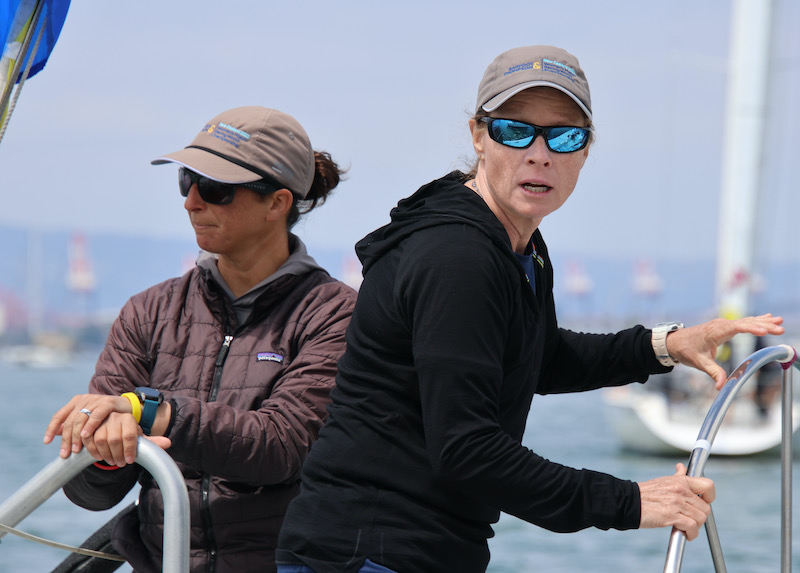
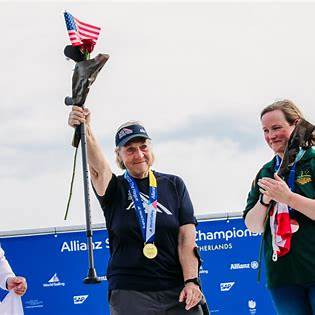
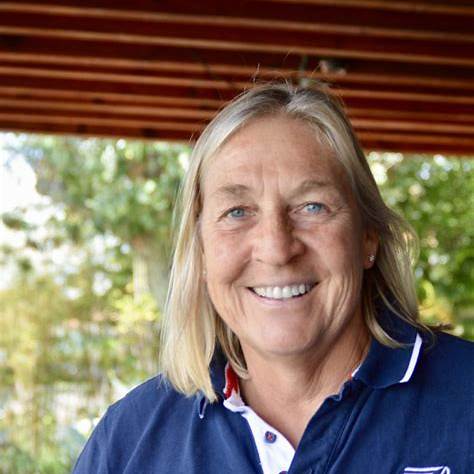
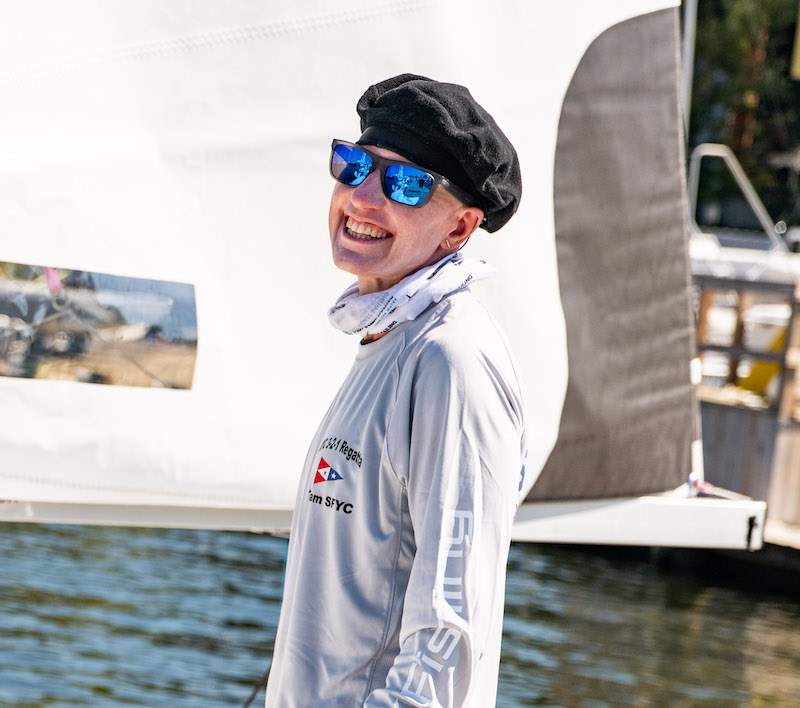
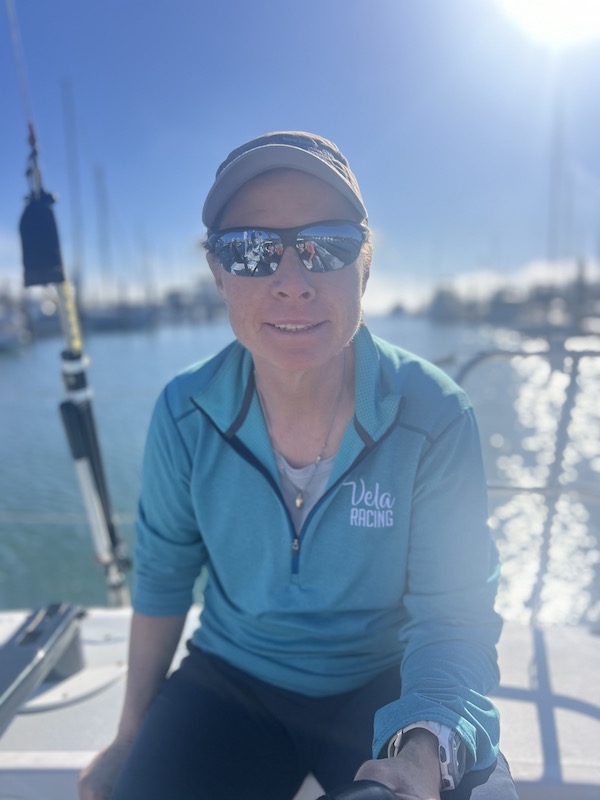
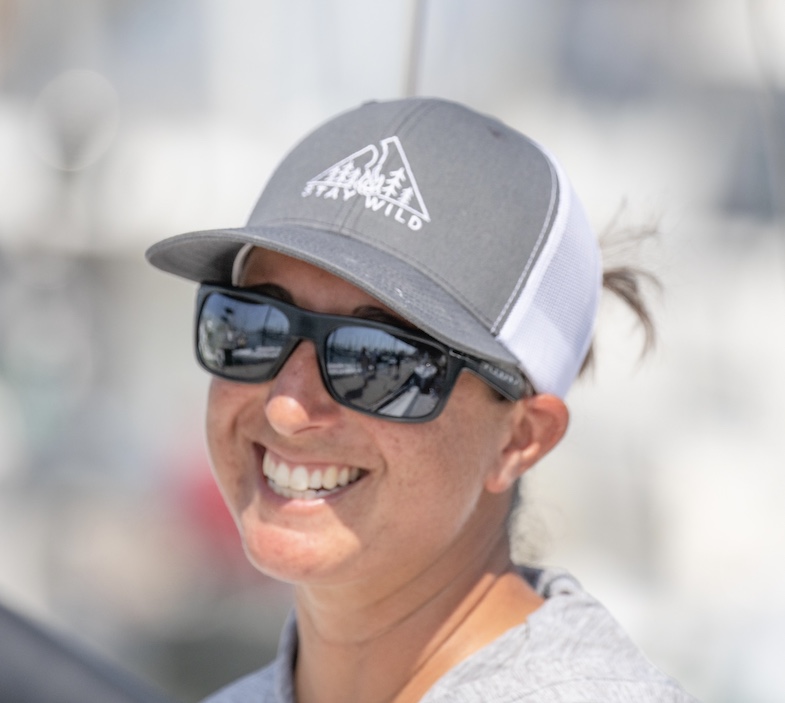
This week’s host, Moe Roddy, is joined by women’s match racing legends Betsy Alison, Allie Blecher, Nicole Breault, and Molly Carapiet to chat the past, present, and future of the sport. Betsy is a five-time Rolex Yachtswoman of the Year, Allie is a four-time Champion of the U.S. Women’s Match Racing Championship, Nicole is the #1 ranked women’s match racer in the U.S. today, and Molly is a five-time All-American sailor.
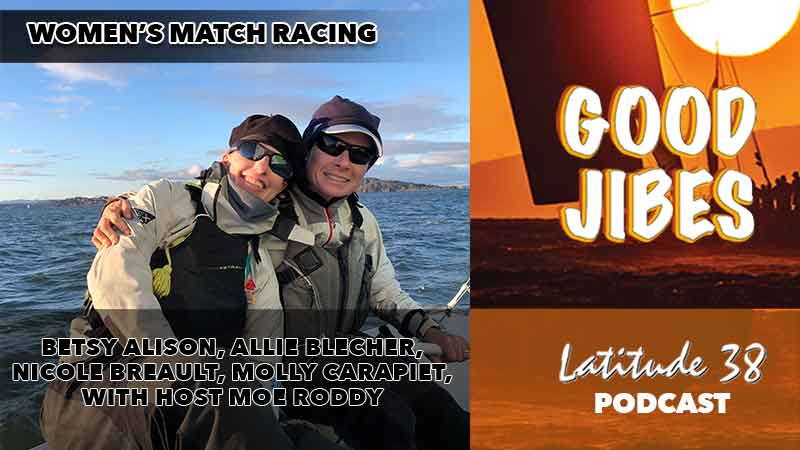
Hear the history of women’s match racing, how it compares to other forms of racing, how we can inspire more women to become match racers, the differences in match racing grades, and the mentors who have inspired them the most.
Here’s a sample of what you’ll hear in this episode:
- How Betsy discovered her aptitude for competitive sailing
- What are the transferable skills from team racing to match racing?
- The evolution of women’s match racing
- The match racing grade system explained
- Why Simone Biles is Molly’s role model
Learn more at WomensWMRT.com and USSailing.org
Listen to the episode on Apple Podcasts, Spotify, and your other favorite podcast spots — follow and leave a 5-star review if you’re feeling the Good Jibes!
Check out the episode and show notes below for much more detail.
Show Notes
- Betsy Alison, Allie Blecher, Nicole Breault, and Molly Carapiet on Women’s Match Racing, with Host Moe Roddy
- [0:12] Welcome to Good Jibes with Latitude 38
- [1:03] Welcome aboard Betsy Alison, Allie Blecher, Nicole Breault, and Molly Carapiet!
- [2:39] A sailing story that shaped each guest
- College sailing and competitive development
- [3:38] How Betsy discovered her aptitude for competitive sailing at Tufts
- [5:58] How Nicole met future teammates and mentors at Yale
- [8:18] Allie at College of Charleston with Ward Cromwell
- [9:41] Molly at Yale with coach Zach Leondard
- [12:02] Who influenced and mentored these women?
- [12:32] Dave Perry pushed Betsy into laser sailing
- [14:27] Alice Mannery, Alana O’Reilly, and Craig Guthric taught Allie her mental game
- [16:51] Nicole’s brother Mike simplified technical concepts
- [19:17] Molly learned from Zach Leonard, Stu McNay, and Nicole
- [23:26] Join our crew list at Latitude38.com
- Match Racing
- [24:25] What are the transferable skills from team racing to match racing?
- [27:46] What challenges do women face in match racing?
- [31:03] Betsy’s historical perspective: how the 1988 Olympic generations came together
- [36:22] Olympic inclusion hopes, and then disappointment. Then what followed…
- [39:20] The evolution of women’s match racing
- [43:37] The match racing grade system explained
- [47:35] Betsy’s vision of how the sport can grow
- [51:16] Grassroots development of match racing and aiming for the multiplier effect
- [56:00] Check out our Classy Classifieds at Latitude38.com
- Short Tacks
- [57:12] Favorite venues and pre-race meals
- [58:32] Who were your toughest competitors?
- [1:00:02] One word for match racing
- [1:01:13] Favorite sailing memories
- [1:02:23] Why Simone Biles is Molly’s role model
- [1:03:42] Who each woman would have coffee or tea with
- [1:05:30] Opening doors for the next generation
- Make sure to follow Good Jibes with Latitude 38 on your favorite podcast spot and leave us a 5-star review on Apple Podcasts
- Check out the September 2025 issue of Latitude 38 Sailing Magazine
- Theme Song: “Pineapple Dream” by Solxis
Transcript:
Please note: this transcript not 100% accurate
00:03
I think that really good sailors are constantly collecting intel.
00:14
Welcome aboard. Sailing has a way of teaching us, inspiring us, and connecting us in ways that few pursuits can. I’m Moe Roddy, and this is Good Jibes, a podcast where we share the voices and stories of the West Coast sailing community. Each week, you’ll hear from sailors who are cruising distant shores, racing at the highest levels, or simply finding joy and discovery on the water.
00:42
Their journeys and insights are here to guide, entertain, and remind us why we fell in love with sailing in the first place. Good Jibes is brought to you by Latitude 38, the sailing magazine for West Coast sailors since 1977. To keep these stories coming, visit our website and subscribe to Good Jibes, your weekly connection to the people, adventures, and lessons that shape our sailing world. Let’s get into it.
01:12
I have very special guests today on the Good Jibes podcast. It’s a who’s who of women’s match racers, those racing in the elite part of our sport. And today we’re diving into women’s match racing, its history, the challenges, and how to grow opportunities for more women sailors. You will be surprised. Three out the four of my guests are from the West Coast. Is it something in the water?
01:40
but I don’t want to make my lone sailor from the East Coast feel left out. She was the first woman inducted into the National Sailing Hall of Fame. To sing the accolades of all four of these incredible women would take up the whole show. Please welcome to the Good Jibes podcast, none other than five times Rolex Yachtswoman of the Year and first ever woman inducted into the National Sailing Hall of Fame in the same Hall of Famers class with Buddy Melges, Ted Turner and Dennis Connors.
02:09
Please welcome Betsy Alison. Also, welcome the number one ranked women’s match racer in the United States today, Nicole Breault. I’m not done. Also, welcome four time champion of the US Women’s Match Racing Championships, Allie Blecher. And finally, former crew member of Nicole’s and quickly climbing up the ranking in her own right, five time All-American sailor, Molly Carapiet. Personally,
02:39
I’m Starstruck. Welcome you guys. Thanks Mo. Thanks Mo. Thanks for having me. Absolutely. So I’d like to start at the beginning. I’ll start with you Bats. Tell us all a little bit about um how you grew up and where you were sailing in your life. Well, funnily enough, I grew up in a household where my dad was a passionate recreational club sailor.
03:08
He learned how to sail when he was actually in Panama, working on the Panama Canal project and decided that sailing was something he wanted to be part of his life. So when he and my mom had us three kids, my two brothers and I, they all decided that we should learn how to sail. And my dad frankly said he didn’t care whether we ever raced a day in our life, but he wanted us to know how to sail because we could do it whether we were nine or 90.
03:38
And funnily enough, all three of us went on to sail internationally, but I grew up in New Jersey. I raced club sailing. went to Tufts University and sailed on the sailing team there and was exposed to some really cool people that mentored me, that guided me, that gave me new perspective on the sport. And it was at Tufts that I really learned that I had an aptitude for the sport. And then from there,
04:08
things just escalated. took advantage of lot of opportunities that happened over time. And I think that’s, you know, where the trajectory went, but I feel very fortunate because I’ve had exposure to so many different people from around the country, whether it’s men, women, collegiate sailing, recreational sailing, had the opportunity to sail across the Atlantic ocean on 110 foot catamaran that had raced around the world. So,
04:35
You never know what’s going to come around the next corner and the people that you’re going to meet along the way and all the women that you have on on board today are fantastic. And I feel really privileged to have them be part of my life as well. Oh, nice. What about you, Nicole? Not unlike Betsy’s story. um I had a dad who became sailing obsessed and decided sailing would be part of his life.
05:02
um And he was sort of learning in his 20s and 30s, unbeknownst to my older brother and I, we were uh shepherded off on family cruising trips to the Southern New England, know, touristy spots. And we didn’t really know that someday we would know more than dad. um He was learning along the way. My mom knew though, and there were certain times when uh she would…
05:30
go down below to make us lunch because dad was trying to sail into Great Salt Pond and Block Island or something crazy. But it was a great start to my sailing life. And from there, we joined a little club, the Nynic Bay Yacht Club in Eastern Connecticut. And I learned sailing on Blue Jays and then raced I-420s as a teenager.
05:58
um I sailed in college too. I sailed for Yale and um probably where I sort of came into my own personal obsession with the sport and let all the other ones fall away and just kind of, it became a big part of my life through college and afterwards. I did some racing in the lightning class. Always had the family theme involved in my sailing, but um you know,
06:26
making friends through the sport. I continued on and I dabbled a little bit in the Olympic 470 game uh through Yale and 470 sailing is how I met Molly first. And then I kind of came into my match racing career a little bit later than some. And that’s been sort of a big driver of my sailing since I moved out to the West Coast.
06:55
I do a lot of sailboat racing with my husband in the J 105 class. And I have a great match racing program that I’m very fortunate to have. And I get to play on the water and on shore with all of you people. I wouldn’t call it play. You’re too competitive. Allie, I know the least about you of my other three guests. So tell us a little bit about yourself and enlighten me.
07:22
My parents grew up around sailing. That’s actually how they met when they were in elementary school. I’ve been exposed. Yeah, I’ve been exposed to the cruising world for a long, long time. The family boat we have is the boat that my mom’s family grew up on. So it was kind of ingrained, but I don’t think they ever thought I would take to the racing part of it. I actually didn’t start racing until I was almost in high school. They really enjoyed just going out and
07:49
being on the water and enjoying the time with friends. I lived far enough away that I was more into soccer than I was into sailing and more into golf than I was into sailing. And so it took me a little bit to get there, but I chose sailing for college and not golf. And the rest is kind of history. Where did you go to college? So I went to the College of Charleston back East and I was like, I want to get out of California for a little bit and see what it was all about.
08:18
Ward Cromwell was the coach at the time and he was like, this would be a really cool place for you. And that a few friends that were going as well. so we were pretty successful. I, you know, one of my still to this day, one of my mentors and good friends I now race with, which is kind of fun too. em And so it’s been, it was a really cool starting place for, you know, the next step in my sailing, whatever that was at the time.
08:46
And so I’ve kind of stumbled upon match racing and kind of been there ever since. That was all she wrote. Wow. You’ve come a long way for somebody who stumbled into it. And Molly, what about you? I grew up in San Francisco and my dad had a bird boat, which is an old wooden boat when I was really little.
09:11
And so we would go out on that as a family and race that. And I loved it from day one. I wanted to drive the boat and I wanted to race and I just loved every element of it. And so I convinced my dad and San Francisco Yapa to take me on younger than they typically took on kids because I didn’t want my brother to start sailing before me.
09:41
And so went up through the junior program at San Francisco Yacht Club and sailed every type of boat you could sail as a kid or, you know, from, I don’t know, the age of 14, I was obsessed and wanted to go to the Olympics and was doing everything I could to go down that path. And so when I saw, was looking at colleges and saw the
10:09
history of the Olympics, of all the Yale sailors. And Zach Leonard being the coach there, it was just the best opportunity. And I was so fortunate to be able to go to Yale and meet Nicole and JJ and Stu and so many great sailors there. And it really just fueled my love for the sport and the community.
10:39
graduated from college and did 470 Olympic campaign. That was challenging in its own right, but I also had the opportunity to start match racing at that time with Liz Bayless. And she brought me along and I didn’t know how to sail a big boat or which way to put the…
11:04
lying around the winch, but she had patience for me and really taught me a lot about the sport and how to be disciplined in match racing. And so that kind of seeded my love for it. I um had a lot of team racing experience from college and there’s a lot of parallels between the two aspects of the sport. And then Nicole asked me to do some sailing with her and I just loved sailing with her.
11:33
And just this year started to get back into driving a little bit more. And that’s been a super fun, humbling um experience. Sweet. Did you ever hear the podcast I did with Stan Honey? He talked a lot about his time at Yale and living at Yik Yik. And I think you guys missed all that though. That was before your time, right? No, I lived there. You did, Nicole? Yep. I lived there my senior year.
12:02
Oh, nice. Well, you each touched on something. So let me ask you each about who stands out in your memory as your mentor, really as a sailor who mentored you. You can go for a spitz. You know, I don’t think it was just one person. I know at different times, different people motivated me in different ways. So, for example, when I was at Tufts, we didn’t qualify for women’s nationals one year. So Dave Perry told me I should buy a laser.
12:32
and go race it and I had never sailed a laser before and I was like well okay so I went and bought a laser and campaigned it for any number of years it must have been five six years after that but I had no idea what I was doing when I jumped into that but he pushed me in that direction. While I was at Tufts I had the opportunity to sail with guys like Dave Curtis and Bill Shore in lightnings and other types of
13:00
classes where I would say they mentored me in my tactical development as a sailor in fleet racing. you know, so I think at different times during my sailing career and history, there were different people that came along that I was able to learn from. It was always people that encouraged me and pushed me to do better and to be better and to uh
13:30
you know, push my comfort zones because so often we find ourselves in uncomfortable places where we’re happy with where we’re at, but you never know what your potential is and what you can reach unless you push that extra little bit. And like I said, there were a lot of people along the way that were able to do that for me. I love that about women and sailing. And I’m going to tie this together with Nicole and Molly, but Ali,
13:58
Who would you say was uh your mentor, one of your mentors? Yeah, similar to Betsy, there’s a few people over the course of the years that have kind of shaped my sailing career and just me as an adult, really. When I was younger, I struggled with the mental aspect of the sport and how easy it is to get so frustrated when something doesn’t go your way and just seeing different ways to manage that.
14:27
and how to really overcome a lot of challenges or come back from a tough race. And I had a really phenomenal mentor and coach at the time, Craig Guthrie. Somehow he ended up in like coaching for my club at a time that he was the Canadian national team coach, which I thought was pretty cool. And so got to spend some time with him and really focus in on myself and, you know, things I learned from him, I still use today. And, uh you know, and then obviously when I got to college,
14:55
the game shifts a little bit from big, long fleet races to really short course racing and honing in on those skills. Alice Mannert is still a huge influence on my life there. Even to this day when she still makes fun of me for stupid moves I do on the race course. Nicole’s nodding her head for those of you can’t see her. But yeah, there’s a few people and I’ve even, Alana O’Reilly has been a huge influence on my life through college.
15:25
We didn’t actually overlap in school, but she was always around. And, you know, now I’m very, very fortunate that she said she’s agreed to sail with me. And so it’s been kind of fun to have a mentor on board as well. oh Over the years, there’s been a few people that have kind of come and gone, you know, even from the big boat offshore experiences and doing all that stuff. And just, you know, you bring people into your life that have a positive influence, you know, I think, to be honest,
15:51
the other three folks on this call have been an influence on my life in one way, shape or form, both on and off the water. And so I think, you know, the list can kind of keep growing. Oh, nice. Likewise, Ali. Likewise. And what about you then, Nicole? I think that really good sailors are constantly collecting intel. And that’s why you can’t get a direct answer from us, We’re like constantly being mentored by one another, our peers, our
16:21
our parents, our teammates, and obviously our coaches and people who have taught us along the way ah directly. So I think we’re revealing a secret to success, which is there are mentors all around you. I wanna acknowledge all of, like the whole village of sailors around me that I’ve learned from and I continue to. uh
16:51
I would say direct answer. My big brother was two years older than me. Uh, his name is Mike and, uh, he’s, he’s like the tech guy. like figures it out inside and out the reasons why applies all the engineering understands it completely. And then when, when we were young, he would just turn around and say, set your rate, get this.
17:18
Yeah, keep the boat flat, like give me like the distilled version. So he was able to teach me or facilitate me as a very natural sailor. I didn’t have to break it all down because he did it for me. And of course, you know, we we talked a lot and I would eventually learn the back the background. But he gave me a uh slingshot, slingshot me into uh being a competitive sailor. And then, of course,
17:48
We’re going to be talking a lot about Matt racing here and I can’t uh not bring up Dave Perry as a mentor to me. I met him. He was running the youth champs when I was a kid and he was like this amazing coach that with all this charisma that like drove us all like the pied piper to our very best that we could be. And then he was a alum at Yale and he’s one of those great sailors that would come to practice and
18:18
Coach us when he could and just kind of generally be someone that we admired and wanted to accomplish things like I went into education. He was a teacher in addition to being a coach. So I did a lot of teaching and coaching in my my 20s and 30s and now I’m I’m at race so. He’s pretty big pretty big influence on me, so I’d like to give him a big shout out that his influences reaches deep.
18:47
If you guys are all like on a 10.0 scale of racers, I’m a 0.01 scale. And I even know a Jenny Craig rounding from Dave Perry. And what about you, Molly? Who’s your inspiration and mentor? Oh my gosh, so many people. Like similar to everybody else. Like it’s hard to name people because over different
19:17
know, stages in my sailing, different people have really influenced me and had a large impact on it. But if I truly take a step back and think about over the years who’s really influenced me, know, Zach Leonard would probably be the first one. He was my college coach and started coaching me a little bit in high school at CESA clinics.
19:46
still remains one of my good friends and mentors to this day. Similarly, uh Stu McNei was my teammate in school and also was doing his second Olympic campaign uh when I was doing my Olympic campaign. So he was a few years ahead of me. He made it to that 2008 Olympics. That was his first Olympics.
20:15
um Clearly he stayed in it and did a lot better than I ever did. um But always guiding me and similar to Mike, Nicole’s brother is very technical and would simplify things for me often. And then um I’d be remiss to not say Nicole.
20:41
You know, met Nicole when I was in college and she was coaching and teaching and she just had such an amazing approach to the sport and how to be a competitor and how to compete against the boys and do that well and has just been a great friend and mentor all these years. So I’m super grateful.
21:11
Nicole. Yeah, I see that in you too, Nicole. mean, I see you bringing along Haley Thompson now and not just as crew, you actually let her drive. She drives. You don’t let her drive. She drives and you crew for her. A few years ago, we sailed the US Women’s Mattress Championship in Oyster Bay. Against Allie, right? Yep. And she was on the helm for that. I was crewing for her.
21:39
She’s a tiger. She has really what it takes. this year I’m inspiring her by having put her on the bow. She keeps telling me, I’ve got to get back on the helm after a tough day out on the bow. Hailey’s been a great teammate, but uh she was sort of identified to me when she was in high school. uh She was being coached by Sean Bennett, who’s a local Bay Area sailor here, who’s
22:09
He was also made a big splash in match racing himself as well as team racing. And he was coaching Haley and put her on my radar and said, this one, you tell her one thing, she applies it. She’s got it. She’s got the drive. And so we did a little bit of sailing and she crewed for me, I crewed for her. And she was sort of one of the first in this, I mean, sort of a uh phase of my match racing career where I’ve had some
22:38
incredible years sailing with friends. And one year I just said to everybody, said, you know, I want to keep sailing with all of you as much as I can. But I’m going to start trying to reach out to younger sailors to junior sailors and college sailors, try to introduce them to match racing by actually bringing them on board with me, in addition to some other things, just trying to influence young people and
23:05
show them the game, show them how you can play it and have fun and try to give them a leg up into the game if it’s something that they really want to pursue. I’m Mo Roddy and you are listening to the Good Jobs podcast brought to you by Latitude 38. We will be right back.
23:26
Hey good jibes listeners, are you looking to sail more? It’s the biggest mismatch on the California coast. There are thousands of boats not sailing because they need crew and thousands more sailors are soon to be sailors who want to sail but can’t find a boat. For over 45 years, Latitude 38 has been connecting boat owners with sailors to sail, or race the bay, or travel far over the horizon. Some connections have turned into thousands of blue water cruising miles, or race winning crews, or long term relationships.
23:55
just happy days of sailing. If you have a boat or want to crew, add your name to the Latitude 38 crew list at latitude38.com. You don’t know where such a simple act will take you. Welcome back to the Good Jibes podcast, where my guests today are Betsy Allison, Nicole Briold, Allie Bleacher, and Molly Carapiet. Let’s get back into it. Molly, so you’ve competed. We’re going to change gears a little. We’re going to do a little tack. So you’ve competed.
24:25
at the highest levels, including an Olympic campaign. In regards to mat tracing, how does mat tracing fit into your overall sailing journey? And how do you balance the different forms of competitive sailing? mean, what unique skills have you learned along the way that help you mat trace that others don’t, that other sailing doesn’t? The past 18, 20 years, mat tracing has kind of always
24:53
been an element oh of what I’ve been doing. It hasn’t always been the focus, but it’s something I kind of always am doing a little bit of. I think it both translates really well into other aspects of the sport and the other aspects, you know, help you become a better match racer too. So I was a big team racer in college and then, you know, that really honed my kind of
25:24
impactful, aggressive nature of really understanding the rules and how to position the boat to be in control of another boat. That team racing and match racing have a lot of parallels in that way. I think, you know, then going and sailing a 470 taught me how to make a boat go fast, which is really critical and how to boat handle with a spinnaker.
25:53
really well. And so I think that’s really helped me in my mattressing that, you know, I can generally make the boat go go pretty fast, especially when I’m driving. I love it. Sweet. And Allie, what about you? Because you’ve had a strong collegiate sailing background. And how did all of that prepare you for the intensity of mattressing?
26:21
Yeah, I have dabbled in a lot of things. eh And every, I guess every bit of that has played some style or some role in there. The joys of college sailing are that it’s a short course racing and everything happens so fast. And so you get really used to making quick decisions before the decision even has to be made. And so I feel like that’s a huge prep for it. The harder part is the amount of like offshore sailing I’ve done.
26:49
where you have days to figure out what you want to do. And it’s the complete opposite. But when you’re absolutely tired and don’t know what to do with your life because you’ve been up and awake for the last four hours and you’re waiting to go off watch and that decision has to be made, I think that’s been, it all ties together. I did a fair amount of skip sailing back in the day as well. it’s, you know, those decisions happen as you’re flying through the air, you know? And so,
27:18
I think all of that is prep for when you have to make that decision of, um I in the zone? Do I have rights here? Before you slam attack in or do something that would be totally within the rights to do, but it seems out of the ordinary. Yeah. Yeah. Do I have an overlap? Yeah. Nicole, from your perspective, what are the biggest challenges in getting more women at the helm in match racing? I think one of the reasons
27:46
that it’s challenging is there are fewer of us. So there’s sort of like a, when people are deciding what to do, they kind of look to see what other people like them are doing. And, know, if the numbers are skewed one way or the other, I don’t know. I don’t really know why people decide everything that they try to do. But I think one of the things that influences it is just like, you know,
28:14
women in sport and women in sailing. It’s been an uphill climb. It’s changed over the years. There’s great opportunity now, but we’re still talking about opportunity and how to create gender parity or gender balance in the game. So, you know, I think in terms of match racing in particular, I think a lot of women love to sail. I think a lot of men love to sail.
28:42
But I think match racing is one of the disciplines that is, um, it’s aggressive and it’s like a refined set of specific skills and a specific game that, you know, if you can’t devote a tremendous amount of time to dialing in your team and, and being able to execute the tactical maneuvers that everyone tends to get to know, it can be frustrating. You know, we talk a lot about
29:11
the need to create more opportunity for like the fun side of match racing and the learning side of match racing predominating so that those getting thrown into the cauldron of competition in an aggressive, highly tactical game isn’t as intimidating. It’s just fun. And I think that match racing for a really long time has this perception as sort of this elite game.
29:39
colored by the America’s Cup and these other high profile events that make it little less kind of pick up game, which team racing has a little bit of that reputation where you can kind of like going out, practicing team racing is super fun. the regattas are, they’re very competitive, but I think people pursue it because they know it’s chaotic and.
30:06
you come across the line and you don’t really know who won, but everyone’s like, feels like a winner. Cause it was really, it was really fun. uh A little bit of that answers the fuzzy stuff around why Matt racing might be a discipline that has a hard time recruiting more women into it. But, um, you know, we’ve been doing very well. And I think that, you know, having an opportunity like this to talk about it and to like, talk it up and how fun it actually is.
30:35
and talk about some other opportunities that aren’t as, you know, intense and elite end of the sport and show that it’s a game that’s really fun to play is one thing that can really help. So here’s our grand Dom of Matt tracing sitting here with us. That’s like pretty amazing. She’s here. That’s a, so you’ve been a trailblazer for like decades now in competitive sailing, not just Matt tracing, but in.
31:03
every form of the sport there is and in many different kinds of boats. And you’ve been such a leader in adaptive sailing and coaching. I believe you coached our parasailers in Beijing to Olympic gold medals. Nobody else has done that in quite a long time for the United States. What lessons carry over to women’s match racing today? And also, how did you get into match racing?
31:33
Are you saying I’m old Mo? Yes. But you’re younger than me, so stick with me. You’ll always be younger. Well, it’s really interesting listening to everybody because when I got we all have dinghy backgrounds behind us, the way we started and the way we came up. And then I got into keelboat sailing because they started this Rolex International Women’s Keelboat Championship and I took lightning friends of mine and we got together and
32:03
started sailing keel boats. And at the same time, it’s when the women’s 470 discipline came to be in the Olympic games for 1988. So during that same time, there were a lot of women that were coming out of college sailing at the same time. You have Lynn Jewel Shore, you have Allison Jolly and Corey Fisher-Sertle and, know, oh my God, there’s just so many people. Susan Deardorf Taylor. I mean, there were just tons of us. Mary Brigdon.
32:32
We were all coming out of college at the same time. And there was talk in the, after the Olympics, and we all did the 470 and sailed the Olympic trials. So we were sailing kill boats in 470s and everything in between. One of the differences back in those early days is we didn’t have a lot of coaching, regardless of what we did, except for some college coaches at the time.
33:00
When we would go to a laser regatta or a 420 regatta, there were no coach boats on the water. We didn’t have people on the water that would be talking to us in between races. We as sailors, whether we were male, female, whatever, would all come in and after racing at the end of the day, would talk about who was fast and people would talk about why they were fast and what their setups were.
33:25
what they did and we improved together. So there was a lot of information sharing going on in those early days. And then in the the in the 90s, we were all sailing keel boats and we went from sailing J-24s to sailing the Rolex and J-22s. And there was talk in ISAC internationally at the time that they were going to do women’s match racing for the 2000 games in Sydney.
33:51
Everybody started match racing, nobody really knew what we were doing at the time. But we were, there was a circuit of events that were set up. So there was an event in St. Pete every year ah that we would go down for. And there was the Santa Maria Cup that started in Baltimore Harbor and then moved to Annapolis. And there was, there was an event at Fort Worth Boat Club there. So there were a series of match racing events that started for women.
34:21
where a lot of us just showed up and we learned together and we got coaching de facto from the umpires that were really interested in helping us learn the rules and learn the game. So we were all learning together and it really all culminated with match racing at the um ISAF combined worlds in Dubai in 1998.
34:48
when it was a world championship. In fact, it was the first world championship, although it was at the combined world championship of Olympic classes, et cetera. So I know the team that I was sailing with were my J-22 crew, and we were used to match racing together and fleet racing together. So over the course of those seven days, we sailed 37 races because we would
35:14
match race in the morning, going around the marks to starboard. And then in the afternoon we would fleet race and go around the marks and fleet racing to port all in the J-22s. So it was really quite astounding that we came out of that one event having done so much boat handling practice together and we were confident in the teamwork and communication amongst each other. And I think that’s a big factor in match racing.
35:43
you have to be on the same page as your teammates and everybody needs to be acting as a unit. You may want to pull off a maneuver. You might want to love somebody. You might want to do a dial up or a bear away. But if your team doesn’t know what you’re talking about and you haven’t practiced it, it’s really hard to execute on the water. So in those early days at that worlds in Dubai,
36:09
We were, our team was fortunate enough to win that world championship and finished second in the fleet racing. And then after the next year, it was in Genoa, Italy. And then it, you know, it moved around the world and people started getting more and more serious about women’s match racing because there was the carrot out there that it was going to be in the Olympic games. And then the powers that be decided, no, we’re just joking you. You’re not going to sail match racing in the Olympic games. It’s going to be fleet racing.
36:39
and we’re gonna pick a boat that none of you guys have ever really sailed before. So the game changed around a little bit and then it evolved into match racing being in the games in the Elliott six meters. So there was a whole different generation of women that came into match racing at a different time than how it all originally started as a far more casual approach to the sport because we really didn’t know
37:08
a whole lot on how to play the game. the one thing I will say is it was really interesting because we would do events in Sweden, like go to the Swedish match cup and they had a women’s division in that. And in between races, when you weren’t racing, you were sitting in the little castle tower next to Peter Gilmore and Gavin Brady and all these guys that were racing at the same time in competition. And, you know, as bold as I am, I would just sit next to sit down next to Peter Gilmore and I’d be like, Hey,
37:38
in that move that they’re doing right now, can you explain to me? You know, I would just ask what I thought were dumb questions. And it was amazing. The answers that would come back and how they would talk to you about how they would apply a certain move or have you watch a maneuver or some circling that was happening on the water and would explain to you on how to do it better. So we had access to that and exposure to that.
38:05
in those early days and that really had a big influence on me and my teams. And I just see what’s happening now with the uh people that are sailing in match racing in the United States, whether it’s the women that you’re seeing here and the clinic audits that go on and the need to bring in new women and new participants and expose them to the game without them feeling
38:33
that they’re coming in knowing nothing and going to get hammered at these championships. It’s all about a learning experience. And I think that’s a big part of these women’s events and the nurturing that inevitably happens in order to bring new people along. So I know that was a long answer going into the question you asked, but there is a lot of history that came before. And I was fortunate in the early days to be around a
39:02
very large group of competitive women that came out of college sailing at the same time that was super interested in doing a million different things. So we sort of all elevated our, you know, the whole group along at the same rate. Well, for the record, all those women that came out with you, I called you old, not them. I don’t want to get trouble. It’s okay. I don’t mind, Mo. We’re still friends. uh
39:30
Well, all this is going on for the women. The men had a very strong mat tracing circuit going, right? The Swedish mat tracing and the gold cup in Bermuda. mean, wasn’t there a lot happening for the guys? That’s always been going on and it’s evolved into the mat tracing tour. There is now a women’s tour, which I think is fantastic. There wasn’t for a long time, but I think smartly.
39:55
the powers that be that are working on developing, sailing and promoting it saw the potential of having a women’s tour. And I think that that has proved to be very successful. Again, the big, in my opinion, looking at it now from an outsider’s view, because I don’t do this actively right now, but I follow it quite a bit is there is a need to build the base. need to get more women into the game.
40:23
And you see it in 2v2 team racing. explain that so that our audience doesn’t understand that’s two teams versus two teams. That’s what 2v2 means. Go ahead. So it’s like the team racing that goes on in college, but it’s done many times in keel boats and it’s done in club sailing. And we need to expose those same sailors to match racing because I have found in my own sailing career
40:51
that match racing and the maneuvers and the moves definitely have helped my fleet racing and my skill sets in all different types of sailing that I’ve done. And I just think it’s such a cool game that people are missing out by not trying it. I think we actually need to go like earlier in getting
41:14
More women sailing like I think the junior match racing circuit has actually really grown, especially in the US recently. But unfortunately, what you see in the junior match racing is it’s still very male dominated, especially for skippers. There are a few amazing young women um coming up, but uh just on a numbers basis, it is still very male dominated.
41:41
Some junior events are requiring one female on the boat, which I think I hate mandating, but I think is clearly necessary right now. And I would encourage organizers to take a step farther and even make it more even or encourage more junior girls to start match racing because get the, in college match racing.
42:10
And as such, if you catch the bug early, you may come back to it at some point. You may not stay with it the whole time, but like you may come back to it in your 20s or 30s or 40s. What about you, Allie? What are your thoughts on this? There’s definitely room for improvement, right? There’s always going to be room for improvement. think mandating is such a weird thing that we have to do. I’m hopeful that that goes away and that it becomes normal.
42:40
Um, like normalize that if we can, but it’s cool to see the opportunities that are there that weren’t there when I was a kid. Right? Like there’s all these foiling camps and all the crazy, cool new toys that the kids get to play with. And like, I wasn’t so much of a daredevil, but when you, when you sit and coach and teach these kids how to sail, like they’re super jazzed on all these fun new exploratory things. And. m
43:09
And all they want to do is go try out the new foiling, whatever, or just go check out that new catamaran. And I think just keeping that excitement alive, I think that’s going to pay over dividends like for years to come. about having more, em like, I’m not sure our listeners understand what the different grades are of mat tracing, like a grade five versus a grade three versus a grade one. How do we use those?
43:37
grades to incorporate more events for intermediate beginners and people at your level. What would you say to that, Nicole? There’s no question the US matracing scene needs to provide more grade fours and fives. We typically see grade five events attached to Klinigata’s. Oak Cliff is really great.
44:06
the Oak Cliff Sailing Center in New York is really great at providing a day-long clinic followed by a chance to put it all together on a one-day regatta that kind of emphasizes learning. The outcome isn’t quite as important as the sailors who came being able to apply all the things that they learned, but they’re still onboarding events. So you’ve actually experienced
44:33
all of the race administration that goes into mattressing, what the function of umpires are, the debriefs, it’s all of the bells and whistles so that you can get familiarized with it. And I know that whenever I’m involved in a clinic, the question always comes at the end, how can I do more mattressing? How can I get involved? And the answer usually is to look for these Clinicata opportunities and then to run down what
45:03
the typical mattress calendar looks like in the US, which often it’s driven a lot by US sailing events that are qualifiers for the open mattressing championship for the Prince of Wales bowl. And as soon as the events that are open to these newcomers to the game are labeled as qualifiers for national championships, it’s like, suddenly they feel like they’re in the
45:31
they’re gonna be thrown into the deep end. And so the messaging I always leave them with is…
45:40
These are the events that are available to you. You should go. You should not feel intimidated. You can’t play if you don’t ask. that it’s like the, have to get used to this invitation system. But unfortunately these events are sort of in high demand by practice match racing teams too. So you don’t necessarily always get a spot, but to go back to your original question, grade four and five events are sort of these lower.
46:09
level events, overall skill levels. Sometimes they still attract really great teams, by the way, that you can learn from. And then grade three events are sort of more prevalent around the country. The qualifiers for the open championship are usually grade three. The national championships, the US women’s mattressing championship, they’re grade three. um And then grade two and grade one are usually,
46:39
attract international teams. They’re sort of a higher level event. And we have the Grand Slam series in the summer that are mostly grade twos. And then we’ve got the world tour events, including the women’s world tour events, which are grade ones. I guess my message is institutionally to provide more opportunity for people onboarding, we need to try to come up with more of these.
47:07
grade four and five events that are more fun and learning opportunities so that we can attract people that might be intimidated by the opportunities that already exist here. But those people should not sell themselves short and they should go for it anyway. Betsy, you had a great idea about um a national one-day event for all over the country, didn’t you, to do it? Was it a grade five or?
47:35
Yeah, when I was in it when I was staying with you a few weeks ago, I mean, I think there’s an opportunity for us to do some regional work where perhaps we can, you know, whether it’s the same weekend all across the country in different regions that, you know, or maybe it’s a couple of different weekends where we can introduce
48:00
I mean, I even think youth sailors that have been coming out of team racing to encourage them to try match racing, you know, and I think if we did this for girls and women, that it could be a very powerful thing. Or college sailors, there are so many women that are sailing in college, not a lot, I mean, there’s a certain number that are Helms people, Helms women, but there are a ton that crew.
48:29
And a lot of them, when they graduate, don’t know what the next steps for them are. All of a sudden those racing every weekend goes away because they may be moving to a new town or a new city, or they just don’t know how to stay engaged. And I think there’s an opportunity that we all have to engage with the college sailing community and say, hey, if we’re running these, you know, weekend learn to match race type.
48:56
formats and we have some of the experienced match racers as mentors and coaches at that, it takes some of the intimidation factor out of it where you’re not afraid to make mistakes. And I’ve seen this quite a lot in the coaching that I’ve done over, you know, the past 30, 40 years. There are a lot of times when women and girls are
49:20
slightly intimidated to go to mixed events because they’re afraid if they ask a stupid question, they’re going to get picked on for it. You know, or someone’s going to roll their eyes and be like, oh my God, that’s such a dumb question. But the dumbest question is the one you don’t ask. And if you don’t ask those questions and you don’t feel comfortable to try something and make a mistake and not be faulted for it, it can be a very, very powerful learning experience and,
49:49
coming away from perhaps a clinic type regatta situation like that, that may not even be a grade five, it’s just a learn how to or try match racing, maybe the start they need to get motivated. I’m not really sure, I I think it’s one of those ideas that needs to get baked a little bit more, but for sure, I think there is a way to grow this discipline nationwide.
50:18
And I don’t think it would take a lot of effort to make it happen. So it’s just, you know, it’s just a thought that I had and I’m sure I’ll be fleshing out a little bit more with the rest of the women that are on this call. But I really do believe that there’s a space for it and a time for it. And I really think that once you try it, you’ll love it. It’s just one of those things that is just too much fun.
50:47
and you leave it all on the water and then everybody comes in and has a great time. Oh, I’m thinking about the first time I went out with you, but I won’t share that. No, please don’t. I actually agree with Betsy. I don’t think it would take too much. And the reason why relates to my last comment about being at the end of these clinics or regattas and the demand being there, like the question of how can I do more? And
51:16
In addition to saying all the things I said before, I often say, well, it only takes two boats of the same type and a bunch of willing sailors to make a mattress. And so the grassroots local regional yacht club based sailing can facilitate mattressing pretty easily. mean, you need some knowledge and
51:43
You need that base group of people and those two resources. But, you know, if we look around the country, you know, our umpires are living in all corners of the country. And if they catch wind of a group of people doing some mattressing, maybe on a weeknight or once a month or something like that, you know, it attracts interested parties who may want to learn how to run mattresses or may want to need to.
52:11
they’re studying to get like a certification as an umpire and getting more practice would be great for them. That like, if we could just like encourage a little bit more of that, I think we could see things develop. And I have a case in point. Katie Cornetta is a Bay Area sailor who she was a participant in a match racing course I did on weeknights a couple years in a row in the spring time. And
52:39
She was always wondering like, could she get into it? How could she put a team together? What regardless could she do? And I gave her that other answer of, well, you know, if you really want to do more of this, then you just need these, a group of willing sailors and two boats. And that’s exactly what she did over at Richmond Yacht Club. They had a couple of J-22s and she gathered her friends around her and she started doing Tuesday evening, match racing every other Tuesday. And
53:08
after two seasons of that, just pick up mattressing. She put her own team together and she’s a competitive woman mattresser on the California circuit now, looking for more opportunities. And the program she built is going to be running a grade five regatta uh later this fall. So that vision of just a little bit of encouragement with like a…
53:34
really interested person being a catalyst for that particular part of the country could create a little seat of map tracing that can attract others in and provide that onboarding that we are just talking about. Yeah, it’ll grow. Just think about this. If we had five clubs around the United States agree to host one of these introductory
54:04
you know, match racing clinics with training on the same weekend and 20 women showed up, which would be four on a boat. So you have five boatloads of women participating in that one weekend. You could have a hundred new women trying match racing out for the first time. I mean, what a powerful story that would be.
54:32
And even if only 20 % of them continued, there’s 20 new mattresses that are out participating on a new basis. I don’t think that it would take much to make this happen, but I think you could start that wave happening in a very simple way. You know, on a weekend, you do some boat handling in the morning.
55:01
You do a few maneuverings in the first afternoon, and then the next day you do more practice stuff, and then you race in the afternoon. And now all of a sudden you’ve had two days of great practice where you’re learning together. And if two matches are going on at the same time, you have a fifth team that’s watching the maneuvers going on and then they switch in. And it’s a cool concept on how to make something happen very easily. it doesn’t have, there doesn’t have to be a
55:31
prize at the end of it. The prize is learning something and coming away fired up to do more. So that’s just a thought. Says the coach who coached our team into winning gold medals in Beijing for the parasailers. So I’m listening to what you’re saying, Bets. I’m Mo Roddy and you are listening to the Good Jobs podcast brought to you by Latitude 38. We will be right back.
56:00
Hey good Jibes listeners and Latitude 38 readers. Have you looked in our classy classifieds lately? It would be impossible for us to know how many boats have sold to new owners over the last 45 plus years of publishing Latitude 38. But we’re sure they have helped countless people realize their sailing dreams. Every month there are new boats listed that will fill someone’s sailing adventures. If you have a boat you want to sail or are looking for that next boat in your life, the pages of Latitude 38 will surely have something to suit your fancy.
56:30
Pick up a magazine at a local marine business or visit our classy classified pages at latitude38.com to find boats, gear, job opportunities and more. Then tell us your next sailing story.
56:45
So we’ve talked about history, highlights, and the future, especially the future. I really want to get on board on that. But now it’s time to take something a little more fun. We’re going to wrap things up in this segment with, we call it Quick Tax. And it’s just 10 quick questions. I’ll rotate them between you. You’re not all going to answer the same one. But there are short answers, one word or phrase or whatever. um
57:12
They’re just to help people get to know you. Has anybody seen Stephen Colbert and he does a Stephen Colbert questionnaire? I’ve been doing this longer. All right. So Ali, I’m going to start with you because you’ve been the quietest now. That’s what you get your payment for this. What’s your favorite sailing venue? My favorite venue. I am a little bit biased. I do love Charleston, South Carolina. Okay. And Nicole, what’s your go-to pre-race meal? One fried egg over medium.
57:42
and a slice of my husband’s homemade bread toasted. Nice. The olive bread? One of them. Betsy, who’s the toughest competitor you’ve ever faced? Yikes. There have been so many. Oh my God. I would say over the years at a lot of different things, a woman named, a Swedish woman named Marit Soderstrom.
58:11
And where was this? What wasn’t it in? OK. It was a lot of different disciplines. Molly, what’s your dream boat to race on? Oh, look at her. goes, oh, you can’t see her face, you guys. But she gave me big eyes. Like, why didn’t you ask me that? Gosh, I don’t know. I got into some moth sailing in the past couple of years, and I really love it.
58:39
The speed and everything is really fun. Allie, back to you. One word to describe Matt tracing. Wild. And Nicole, what’s your favorite sailing memory? You know, it’s really hard to ask a question like that when you have a lot of great, great memories. It wouldn’t be fair to Molly or Allie to pick one because they’ve been with both of them have been with me. Very favorite moments.
59:09
That’s a cop out. Vladivostok, 2015, winning the nation’s cup against Colleen Courtois, who has been elusive ever since. Very good. um And Betsy, what’s the biggest lesson you’ve learned from sailing? I would say the biggest takeaway is that sailboat racing is just a game.
59:37
and we get to get up and play it again tomorrow. So whether you’ve won or lost or made a mistake, we get to keep going. I mean, there’s always another race. There’s always something else. And regardless of the success or disappointment, it’s a game we get to play. Nice. And Molly, who’s your role model in sports? Oh, these are tough questions. I really admire Simone Biles. Like I think um
01:00:06
how open she’s been about the mental challenges of sports is really admirable. And then she’s just an amazing athlete to watch. And so I think she’s really cool. And my last question for all of you for this quick round is I’m going to ask you all the same question. I’ll start with you, Allie. If you could have coffee with somebody or tea or a glass of wine.
01:00:35
with anybody who’s ever lived, who would it be? So Amelia Earhart would be one of them. So Amelia Earhart would be one and Ellen MacArthur would be the other. Great answers. I want to go to your tea party, Yes. You too. I think Ellen’s inspired me more than anybody because she’s so little.
01:01:03
And when I saw her going, you know, racing, first Kingfisher across the Atlantic and I wanted to go offshore single-handed and I saw her doing it and it’s like, she’s so little, she’s a lot liller than me. Well, she can do it. Maybe I can do it. She inspired me. Okay, Nicole? Ruth Bader Ginsburg. Oh, nice. Very nice. Betsy? I was just thinking as these guys were talking, I think a fascinating person to have tea and actually
01:01:34
explore a little bit of the things they went to would be the now deceased former Queen of England. Elizabeth. um Pretty cool. Okay. And Molly? You know, I heard this question asked once and somebody said a grandparent. And I think about that of, you know, if I could speak back to my grandmother.
01:01:59
my mom’s mom, um who’s just an amazingly strong woman and raised an amazing family. And I feel like I didn’t spend enough time with her understanding, you know, how she did it all. And I’d love to talk with her again. Nice. And my final question to each of you. mean, Nicole, you’ve been on the program before, so you’ve had this question, but it’s coming back to you. What’s the one question I didn’t ask?
01:02:29
that you wish I had. Betsy? This is what I would have loved for you to have asked because I think there’s a lot to it. If you are a woman and want to get involved with this part of the sport, but you don’t feel that your skill sets are honed into the racing side, the actual sailor side, how can you get involved?
01:03:00
And, you know, obviously the answer to that would be there’s the race admin side, there’s the umpiring side, there’s, you know, the regatta management side. think there’s a lot of ways that we can get more women involved and provide those opportunities for those that may not feel that they can fulfill their dreams in match racing as a sailor, but they can still be involved with this part of the sport. Yeah.
01:03:29
like umpiring especially that you get up close and I will say for myself because I’m too old to do this now on any kind of competitive level. I really enjoy watching it. I love sitting up in the stands or at a yacht club and watching the racing that’s happening. And it’s just wonderful. Molly, what about you? I think maybe what’s like challenging, what’s the most challenging element of, of match racing. And I think the mental
01:03:58
element that everybody’s kind of touched on is really hard of like, you either win or you lose. And it’s so binary and winning feels so good and losing can feel so bad sometimes. And I think I’d love to hear everybody’s perspective on on that mental element of the game. And I’ve spoken to Nicole and Ali about it a lot previously. But. Well, Ali, it’s your turn. What’s the one question I didn’t ask that you wish I had?
01:04:28
The challenge question comes up a lot, but then, you know, what’s the, what’s the moment you knew you were hooked? Like, what’s the moment that changed your life that you were, you’d go back and have the same answer, or maybe it was a different answer and you wish you changed it. You know, I graduated college and there’s an interview that’s somewhere online somewhere ah where they ask like, what are you doing next?
01:04:56
And I was like, well, I don’t know, mattressing sounds cool, I guess. And then that video surfaced like six years later when I finally did my first mattress. eh But just the gap between the two, was like, oh, know, looking back on it, maybe I should have actually like done something about that at that moment instead of just kind of letting it happen and moving on. Nicole? What does it feel like to win a mattress?
01:05:26
against a rival.
01:05:30
And I can’t answer it. Because it feels so good. OK, on that note. Sorry. That’s OK. Clearly, we have to do this again. But on that note, so thank you, Betsy, Nicole, Allie, Molly. I can’t believe you all agreed to do this. It’s been a fabulous conversation. You’ve shared.
01:05:58
not only your sailing journeys, but also the importance of opening doors for the next generation of women in mat tracing. Please, please don’t stop ever doing that. It’s wonderful. For our listeners, if you want to follow mat tracing, get involved in local sailing programs or just come out and watch. There are so many ways to support this sport. Thank you to our audience.
01:06:24
for sailing along with us on the Good Jobs podcast with Latitude 38. Remember to subscribe to wherever you get your podcasts and visit Latitude38.com to stay connected with the people and stories that make our sailing community so extraordinary. I mean, where else are you gonna hear for extraordinary women like this in one place? Never. I’m Moe Roddy and I’ve been your host today and it’s been a privilege to share today’s journey with you. Until next time.
01:06:53
Take the word impossible out of your vocabulary and dream big. Cheers!