

Episode #210: Harry Anderson on Sailing Seven Continents Solo
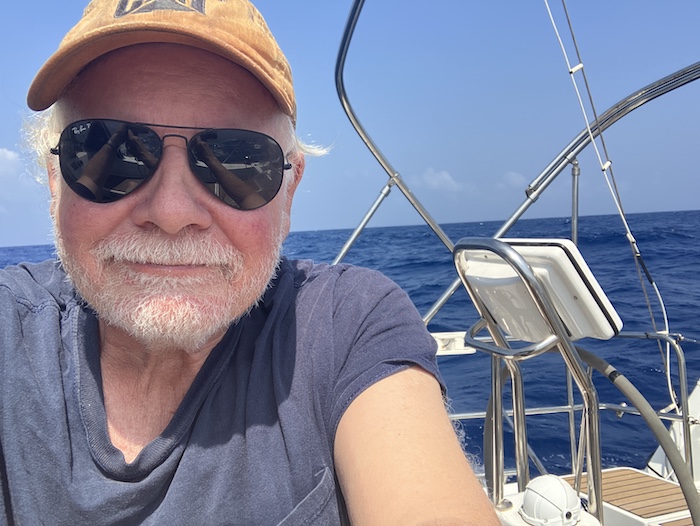
This week we’re joined by adventure pilot and sailor Harry Anderson to chat about what’s needed to sail around the world by yourself, and touch all seven continents for extra credit. In 2014, Harry completed solo flights to all seven continents. In January 2025, he completed a solo voyage to all seven continents, becoming the first person in history to both fly and sail solo to all the continents.
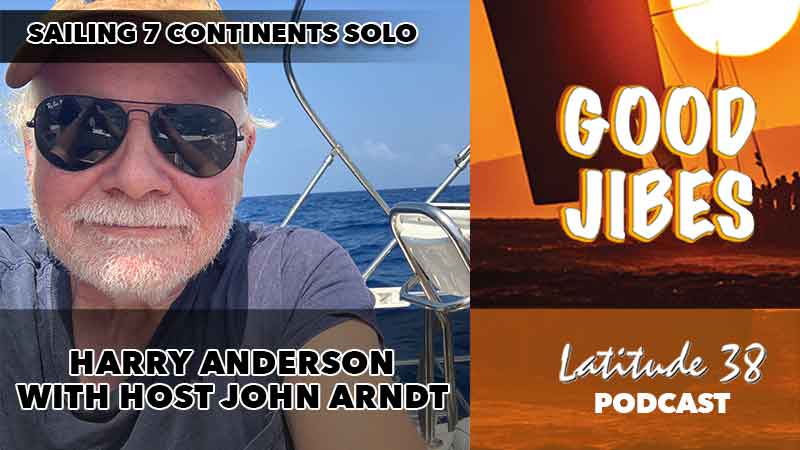
Tune in as Harry shares with Good Jibes host John Arndt why pilots make good sailors and vice versa, how to plan your route for a circumnavigation, what to look for in a boat to circumnavigate aboard, his most memorable stops along the way, and how he’s prepping for a solo Northwest Passage trip next year.
Here’s a sample of what you’ll hear in this episode:
- What was the most dangerous leg of Harry’s trip and why?
- What did Harry cook at sea?
- What usually happens in the Northwest Passage?
- How to plan an efficient route to hit all seven continents
- Harry’s favorite places and remote anchorages
Learn more about Harry and his upcoming book Sailing 7 Continents Solo at Phywave.com.
Listen to the episode on Apple Podcasts, Spotify, and your other favorite podcast spots — follow and leave a 5-star review if you’re feeling the Good Jibes!
Check out the episode and show notes below for much more detail.
Show Notes
- Harry Anderson on Sailing 7 Continents Solo, with Host John Arndt
- [0:12] Welcome to Good Jibes with Latitude 38
- [0:39] Welcome aboard, Harry Anderson!
- [1:57] Harry’s primary identity as an adventure pilot
- [4:12] What are some similarities between flying and sailing navigation
- [6:08] How to plan an efficient route to hit all seven continents
- [7:36] Solo sailing difficulties and sleep management
- [14:42] Equipment challenges & lessons learned
- [17:50] Join our crew list at Latitude38.com
- Sailing Logistics
- [18:19] Why an aluminum hull for Antarctica
- [21:35] The systems for communicating and navigating on open water
- [25:12] What it takes to route for and forecast weather
- [27:02] How long did Harry typically stay at a port?
- [28:28] Harry’s favorite places and remote anchorages
- [30:20] How Harry documented the process
- [31:16] Where to next for Harry?
- [43:39] What usually happens in the Northwest Passage?
- [47:21] What was the most dangerous leg of Harry’s trip and why?
- [50:05] What did Harry cook at sea?
- [52:29] Cape passages and coastal issues
- [56:24] Check out our Classy Classifieds at Latitude38.com
- Short Tacks
- [59:04] Harry’s advice for future circumnavigators
- [1:01:20] Does Harry enjoy plain old sailing without big missions or voyages?
- [1:04:15] Learn more about Sailing 7 Continents Solo at Phywave.com
- [1:05:43] How Harry’s boat got its name
- Make sure to follow Good Jibes with Latitude 38 on your favorite podcast spot and leave us a 5-star review on Apple Podcasts
- Check out the September 2025 issue of Latitude 38 Sailing Magazine
- Theme Song: “Pineapple Dream” by Solxis.
Transcript:
Please note: this transcript is not 100% accurate.
00:03
It’s really extraordinary to be out in the middle of the Pacific Ocean and be able to watch college football games, uh
00:14
Ahoy and welcome back aboard a new episode of Latitude 38’s Good Jibes. My name is John Arndt. I’m the publisher of Latitude 38 and the host of today’s episode of Good Jibes, a podcast to help you experience the world of sailing through the eyes of the West Coast sailor. It’s all brought to you by Latitude 38, the sailing magazine for West Coast sailors since 1977.
00:39
And today we’re welcoming aboard a new guest and a new addition to our circumnavigators list, Harry Anderson. Welcome aboard, Harry. Thanks for having me. I appreciate the invitation. Yeah, great to have you here. Harry Anderson is a sailor from Bainbridge Island, Washington. He’s written a book about his adventures solo circumnavigating the world in both a plane and a sailboat. We’re going to talk about the sailing book.
01:04
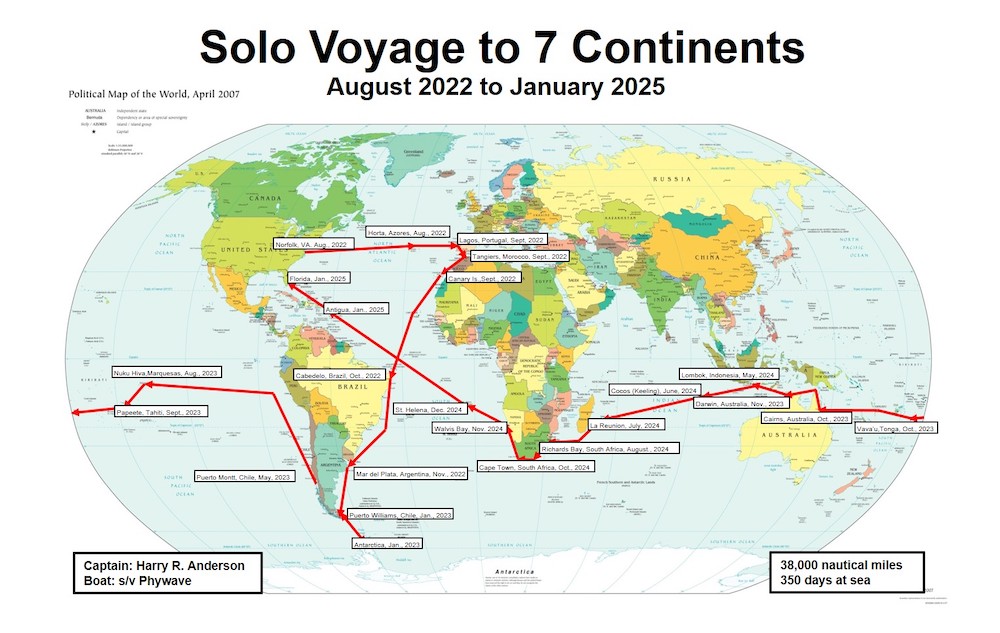
and his sailing adventures. But Harry circumnavigated starting in August 23 and sailed over 38,000 miles in 350 days, visiting all seven continents. And we wanted to learn a little bit more about Harry and why he took these adventures and explorations. And also, that’s a heck of a pace. 38,000 miles in 350 days is like over 100 miles a day. Well, yeah.
01:31
Yeah, it worked out about that way for my uh passage planning. I would typically use 100 to 120 miles a day as my estimate to work out how long it would take me to get someplace. So it turned out to be just about that way. Wow. Yeah, that’s a lot of, that’s quite a pace. let’s see, I wanted to ask you before we get into more questions is one story from your sailing.
01:57
history maybe before this adventure or during this adventure? How that sort of shaped your sailing experience? Well, I think I came at it from a different perspective than most people because I’m really an adventure pilot. OK, so it was really having completed solo flights to all seven continents and writing a book about that in 2015 that motivated me to consider uh really the second half of the story, which was sailing solo to all seven continents.
02:27
And I initially dismissed it. I said it’s too much work. You know, I’d sailed. I’d never offshore sailed before, but I’d sailed around Puget Sound and other places. And I dismissed it because I thought it’s too much work. It’ll take too long. The boat is much slower than the plane. And because you’re out there in the ocean for an extended period, you’re much more exposed to weather. Yeah. Plane ocean crossings would take hours and the boat, takes weeks. Yeah.
02:54
The plane, could easily fly around bad weather or just stay on the ground and wait for a better day. You can’t do those things with a boat. So I initially dismissed this idea, but I resurrected it five years later in 2020 when I was looking for something interesting to do. And so that’s really, really how I got started with this particular adventure. Yeah. Wow. And so you weren’t you had sailed, but weren’t really a sailor. You’d owned a boat before or? Yeah, I had.
03:20
I learned to sail with my dad off the coast of Southern California as a teenager. And then I had a small boat, a Capri 22, that I sailed on a big reservoir west of Eugene, Oregon, where I was living at the time. And when I moved up to Bainbridge Island, I sold the Capri and I bought a Bavaria 37. OK. I owned that for 12 years that I sailed around Puget Sound up the inside passage towards Alaska. So I got to know cruising boats from owning one boat.
03:49
But I actually sold it in 2018 thinking I probably wouldn’t own another boat. But I changed my mind as these things go. And I bought the Lures in 2020. Yeah, wow. So yeah, so you hadn’t done offshore passage making, but you were comfortable aboard a sailboat and knew what you’re doing with sailing. But the offshore thing was going to be new.
04:12
Yeah, the offshore would be new and I bought a boat which was similar in size to the Bavaria 37 because I felt really comfortable handling that on my own. And so, yeah, that’s why I went that direction. Yeah. Well, I mean, there is and there is a lot of overlap between being a pilot and sail. There’s a lot of pilots who are sailors and vice versa, it seems. And I don’t know what what connects those two for you or why is that so common? Well, I think certainly the navigation side of it is very similar.
04:42
The chart plotter and stuff I have on the boat are similar to the GPS navigating moving maps that I have on the plane. So I think that part of it feels like a natural transition between the plane and the boat. It’s also just sort of the freedom of it. The freedom of flying, the freedom of being on the water. I think that’s a strong association between the two. Yeah, yeah. Well, I think that’s a strong allure, I shall say, for sailing for most people.
05:11
just for the pilots who might be listening, what kind of plane you fly? Because I don’t know anything about it, but I know boats, but not planes. So what do you fly? Yeah, so it’s a 2001 Lancer Columbia 300. So it’s a fiberglass plane, modern design, powerful engine. It’s built for speed and long range. And so was ideal for the kind of international flying adventures I had in mind when I bought it.
05:38
Wow, that sounds terrific. Yeah, I’ve been up in a couple of small planes, but generally I’m a commercial flight crammed in seats kind of guy. get flying when it comes to flying. Like most people. Yeah, exactly. uh So after you flew seven continents and wanted to sail seven continents, mean, how did you pick a route or figure out where to go? again, as you say, you can jump and hop on a plane pretty quickly, but you were trying to cover a unique course, I guess.
06:08
and also stay safe for all those miles. Yeah, no, it put a lot of thought into planning uh how most efficiently to land on all seven continents. And so I was looking at pilot charts. I was looking at a lot of other information about sailing routes. And the one time constraint or time window that I really wanted to hit was getting to Antarctica during the austral summer.
06:37
January, February. Yeah, things were flexible around then, but it turns out I actually left from the East Coast. My boat was delivered to Chesapeake Bay to Baltimore. So I left from Chesapeake Bay in August of 2022. Yeah, it turns out from there, Europe is sort of out of the way, but I to get it off the list. So I sailed straight east to Europe and then started heading south and west from there.
07:07
continents were located. Wow. And as a solo sailor, having had prior boats, were you a solo sailor before or what drew you to solo sailing versus oh other people? is that? I hadn’t actually been on the boat overnight by myself. So I’d sail with friends, but they were day sails from one harbor, one anchorage to the next and that kind of thing. So that first night,
07:36
out of Norfolk, Virginia, sailing west to the east to the Azores was a pivotal moment for this voyage because, you know, at some point you have to go to sleep. You have to say, OK, I’ll let the AIS and I’ll let the radar, you know, monitor what’s going on. The autopilot is driving the boat. And at some point you just have to let it sail off into the darkness, right? Yeah. Let it sail off into the darkness and have the confidence that it’s going to be OK. Yeah.
08:05
There are first couple of nights of that and I was comfortable with it. I realized I could actually do this voyage, but until then it was an open question. Yeah, yeah, well, that’s definitely one of the most nerve wracking things. Of course, question a lot of circumnavigators, sailors, cruisers get is so what do you do at night? Do you anchor? And you know from people who don’t know sailing, obviously that’s maybe a reasonable question, but you carry on not in 4000 meters of water.
08:35
Exactly. Well, actually, I just read a story uh this morning. Somebody sent me a link to a story. There’s a class 40 racing boat across the English Channel that got t boned by a freighter and literally cut in half. I think there were 30 or 40 boats racing. And, you know, these boats are travel at 15 knots, these class 40s. And of course, the freighters travel at that kind of speed, too. So the closing distances are fast, but
09:02
For all the other solo sailors and racers that are out there, those collisions don’t really happen often, but it’s a worry. It’s hard to sleep sometimes. Yeah, no, and there were times when I would stay awake. I know solar sailors, I’ve talked to many that have their own personal sleep schedules, which I really couldn’t follow. They’d be on for 45 minutes off for 45 minutes. I can’t do that. No way.
09:32
So I would certainly look at the AIS and the radar to see if there were any impending hazards. But the times I did stay awake for 24 hours were in coastal waters where you’d expect a lot of small fishing boats. And many of them, well, they don’t have radar or AIS because it’s expensive and they’re made of wood. They often don’t even have lights at night. And so it can be a real hazard. And so that’s the time when I had to stay at the helm and watch what was going on.
10:02
Yeah. The big ships to me were very well coordinated. I was impressed watching shipping lanes that there was very little VHF radio traffic these guys used to keep coordinated. They all knew what they were doing and I was just another guy on the screen and as long as I maintained course and speed, they knew where I was and where I was going. So I didn’t feel so concerned with the big ships around. Interesting. Yeah, I’d say
10:29
you know, lot of the conversations we’ve had, people are nervous of ships because they do often VHF radio, a ship they might see, but don’t get a reply or perhaps get a reply in a foreign language, understandable. They don’t understand. And actually, this story I read this morning, they were in contact with a ship. Their boats were, but something just went wrong. And I should say everybody survived. These were double handed boats, but this boat.
10:57
was obliterated, but another boat and then French rescue services picked them up by helicopter. So, yeah, I’ll add one thing. And I think it’s a misunderstanding that I found among sailors is that they they believe universally that sailboats have the right of way over power vessels. Yeah. And that isn’t true. Yeah. I have the right of way over deep draft vessels. So when big ships are around, it’s your responsibility to get out of their way, not the other way around. Right. They can’t maneuver.
11:26
as swiftly as we can in small boats. It’s part of the law of the sea and a lot of sailors don’t know that. Yeah, no, that’s an important point. because definitely, I mean, on San Francisco Bay here, where there’s a lot of ship traffic through races uh and just through pleasure sailing. We’ve got some pretty good photos in our photo banks of some very close calls between sailboats and ships and of course ships in a narrow navigation lane, never mind mid ocean.
11:54
you know, have more restriction on their ability to move and the speed that they can, you know, have to maintain them, maintain any stairsway at all. it’s, and I’m sure the same Puget Sound and of course any shipping enclosed or narrow passageway is trickier. Any of those circumstances, coastal sailing uh situations that were more challenging than others, or maybe what was the most challenging shipping traffic, fishing traffic area you passed through?
12:24
I think Indonesia, going to Lombok, there were a lot of little boats. And I was surprised that I’d be off doing something for 10 minutes and I come up on deck with the boat 100 meters away. I said, where did they come from? The fishing boats move around in very unexpected ways, unlike big ships that are maintaining a steady course.
12:52
That’s another reason. The other thing that surprised me and I still don’t quite understand how all this works is, is like Chinese fishing flicks and others that are using fish attraction devices or buoys of some kind. Right. Often have AIS. I can see them on AIS, but physically I don’t see anything. Even at night, they didn’t have lights on them. I just see an AIS marker. And as I say, I don’t really quite understand. You’d see a dozen of them clustered around a mothership. Oh, really?
13:21
But there’s no navigation lights. No navigation lights on these. I pass them in the dark. I would see nothing. Yeah. So again, I’ve searched for an explanation about these things since then. And I really haven’t found anything that solidly describes how these are deployed and recovered and everything about them. I sure like them.
13:46
Yeah, well, that’s yeah, that’s an interesting challenge because of course there’s a lot of illegal fishing out there and a lot of fishing that people that don’t want to be seen. uh And uh I don’t know, AIS maybe their protection. We get a newsletter called the Outlaw Ocean and they basically try and document. Really? What’s going on? Yeah, it’s a pretty good newsletter, but it’s pretty frightening at the level of fishing and yeah, the danger it poses to the ecosystem as well as maybe.
14:14
Sailors. Yeah, no, I looked at these things on the AIS and I said, well, I need to I don’t understand it. I need to steer around this stuff. I can’t cut through it. So I really didn’t know what was going on. And so I stayed well clear. Yeah. Yeah. That sounds sensible. What how trustworthy reliable were your AIS and or radar alarms? Or I mean, did besides poking your head up and looking around, did you have some
14:42
reliability as far as getting beeped and woken out of a sleep? My only complaint is that the alarms are not loud enough. Oh, really? Yeah, yeah, they beep, but uh they’re not. In fact, I actually before I started this voyage, I realized that might be a problem. So I bought some off of Amazon. bought some, you know, loud buzzers and stuff that I meant to connect into the AIS and the radar. So I’d have much louder alarms. Yeah.
15:11
Never got around to doing that. So it’s actually something people should think about if they depend on them waking you up. Yeah, I think it was a few years ago. Alex Thompson, who’s a well known circumnavigator professional racer, was doing I think it was the route to rum and he was way out in first place on his emoka 60. I think it was and coming into first place at uh in Guadalupe and fell asleep and hit the island. Wow.
15:37
And I think his alarm didn’t go off or he didn’t hear it. I can’t remember exactly the details, but it can happen to the best of us, of course. Yeah, no, mean, that’s that kind of thing is, yeah, if you’re navigating in places where you’re close to land, again, that’s another circumstance where uh I want to stay awake. Yeah, but you got to store up your sleep to make sure you can actually be awake. Yeah, exactly. Yeah, yeah.
16:05
And how did you sleep though? There are people who seem to do 20 minutes on, 20 minutes off, and then there’s people who sleep eight hours. What was your sort of rhythm that worked for you? Yeah, so the way I sleep at home is I fall asleep quickly and I’m usually asleep for four hours or so. Then I’m awake for an hour and then I can usually fall back asleep for three hours. Yeah. And say, okay, well, I’m not going to try and change that on the boat. That’s what I’m used to.
16:32
And so that’s what I pretty much did on the boat, kept that kind of schedule. didn’t try to impose anything more rigorous than that. I did find that you very quickly become sensitive to the motion of the boat, to the wind speed, the field over. And even I always sleep in the aft cabin on the port side and the wind generator is right above that cabin on the arch. And I could hear that spinning up faster and that would wake me up.
17:01
Another change, yeah. you become very sensitive to those kinds of things and it will get you out of the rack pretty quickly. Yeah, that’s a good one. Yeah, no, I mean, that’s the thing. You just don’t want to sleep through any of these things. Hopefully so.
17:21
Hey good jibes listeners, are you looking to sail more? It’s the biggest mismatch on the California coast. There are thousands of boats not sailing because they need crew and thousands more sailors or soon to be sailors who want to sail but can’t find a boat. For over 45 years, Latitude 38 has been connecting boat owners with sailors to sail, or race the bay, or travel far over the horizon. Some connections have turned into thousands of blue water cruising miles, or race winning crews, or long term relationships.
17:50
just happy days of sailing. If you have a boat or want to crew, add your name to the Latitude 38 crew list at latitude38.com. You don’t know where such a simple act will take you. Actually, I want to just learn a little bit more about the boat and maybe what you did to prepare it or because you had just been a coastal or a sailor and you had to now prepare a boat for a much bigger voyage. Maybe tell us a little bit more about the boat and why you chose the one you did. Yeah.
18:19
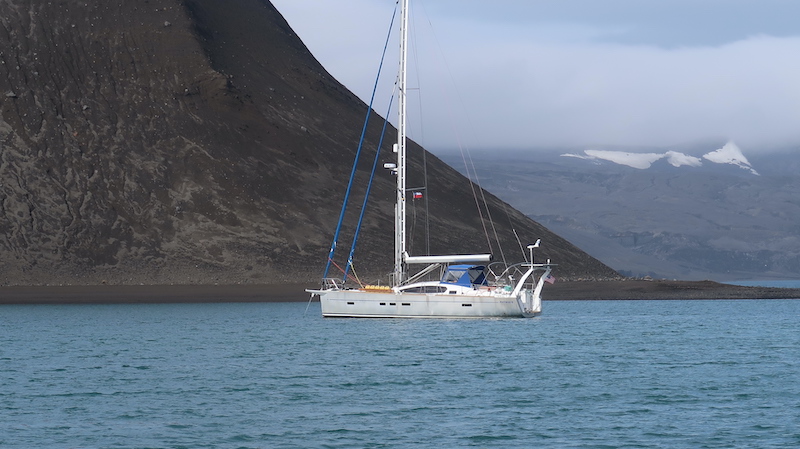
Since I was heading to Antarctica, I was determined to get an aluminum haul boat. Yeah, and and I decided I could afford to buy a new one order a new one and so I looked at there’s a French companies on the west coast of France that make these things Avni Boreal and allures Garcia and I chose the allures 40.9 mainly because the
18:47
group that sold it to me, Swift Shore, which is based in Seattle. Right. Helling and their project manager, Kevin Bray and Cherbourg, where the boat’s built, are both expert sailors. And so I looked to them for advice on how to equip it for offshore. But there are certain things that I wanted just to make my life easy, like electric winches, both the Halyard winches and primary winches were electric winches. Yeah.
19:13
So I went with the aluminum hull boats centerboard so only draws a little over a meter with the centerboard up and uh You know, it’s it’s a good boat for this kind of expedition work I also wanted a furling boom on it. So I actually ordered the boat without a boom Got the Schaefer furling boom installed when I finally got it to Annapolis Along with the force bar whisker pole. I added a 6 kilowatt northern lights generator
19:43
Watermaker, uh Dodger Bimini, of course. So there’s about two months worth of outfitting on the boat that I did after I actually had it delivered. But uh that’s the course I took on buying the boat and outfitting it. Ah, okay. Huh. Oh, that’s great. And so the furling boom too was sort of an aftermarket choice to again, keep life easy and that worked well and… Generally worked well. Yeah, yeah. I mean…
20:09
Every technology has its things. Well, it does. It’s saved a lot of work in terms of being able to reef quickly, especially with the electric winches. You didn’t have to climb up there and start pulling ropes and reefing lines and stuff. So it worked out that way. But I found it’s sort of tricky on how you wind it up and how you furl it and how you deploy it, because it can be hard on the a luff tape in terms of chafing in the zero track.
20:39
The Schaeffer boom is nice because the track actually rotates with the boom. uh It keeps those things in line so you can pretty much reef at any point of sail. That’s one of its advantages, but it turns out to be hard on the loft tape uh if you’ve got low sails. So it was a love-hate relationship with that boom, I can tell you. Boom in the sail. uh
21:05
appreciated it for its advantages, but also some of the drawbacks to it. Yeah. When you were out uh getting, mean, or trying all these things, how much sort of field testing of equipment or electronics or anything, any kind of things you added to the boat that you hadn’t had in your prior boats that was really kind of critical? Yeah, I really, you know, I familiar with the chart plotters and, you know, LORIS basically equips their boats with all B and G electronics. So uh
21:35
I was fine with that. I had to rain Marine before, but I didn’t really do any field testing on that kind of stuff. I just had confidence in the brand name and the fact that a lot of sailors use it and recommend it. The only thing, the two things I installed myself were SSB radio. And since I’m a wireless engineer, I also put an iridium go on board, which was good for the first part of the voyage.
22:04
Ultimately, when I was in Patagonia, I had installed a Starlink dish, which any cruiser that has one will tell you it’s a game changer. Yeah, yeah. It’s really extraordinary to be out in the middle of the Pacific Ocean and be able to watch college football games, right? uh I thought you were going to say a typhoon forming or the weather, you’re watching. that too. But we have our priorities, don’t we?
22:31
Well, I mean, did you ever have your AIS alarm go off while you were watching college football? Oh, I didn’t. It was far from anything in those days. Yeah, that’s that’s the Starlink, of course. You know, we got the Baja Ha Ha cruising rally coming up. And I think generally it’s all about, you know, a handful of boats every year of over 120 boats have Starlink now and the recent Transpac race that just happened.
23:00
I think all but one boat had Starlink. So it seems pretty universal almost to most, you know. Yeah, it works really well. And you just have access to a lot of stuff like weather information in particular that you can download in seconds where it would take, you know, 30 minutes or more with the Iridium GO. So uh I still have the Iridium GO on board as a backup system, but the Starlink is what I primarily use.
23:26
Yeah, actually, one of the things I was talking to someone about this and they said, you know, the one thing about Starlink is, know, if you do end up with a sunken boat and you’re in your life raft, you don’t take Starlink, you take your iridium go. You know, and it’s that is the transportable aspect of that is is probably a positive. Yeah, I think that’s what they sell it on. I actually have a separate sat phone that I’ve used that I took on my airplane, in fact. Oh, yeah. So.
23:53
Yeah, if I were to get into life raft, I’d certainly have the iridium sat phone with me. Yeah, yeah. No, that seems. Yeah, the satellite communicator hopefully keeps you out of trouble and not never, you know, maybe reduces your chance of ending up in a life raft. I Starlink maybe would help reduce it. Well, yeah, hopefully so. Yeah, it doesn’t see whales coming or whatever else. Yeah. Oh, just just for communicating, just to have video chats with friends. mean, solo sailor and you know.
24:22
you’re feeling lonely, I mean, that’s another alternative that you can get with Starlink that you can’t really get with the other. Yeah, well, that’s a different from a plane too. You can’t get lonely in the hours, but you certainly can get lonely in the weeks. Well, know, I’m actually in the process of adding a Starlink Mini to my airplane. Oh, really? Yeah. So we’ll see. I haven’t got it working yet, but I’m in that process.
24:47
Can’t bear to be away from that college football, is that it? Well, it’s another thing with weather. mean, weather and so and with the plane, because you’re moving much faster, it’s to get weather more immediately is a better choice. Sure, sure. What any favorite weather sites that you used for your with your Starlink? mean, Yeah, generally I use PredictWind. I also use Windy. I use Windy a lot flying.
25:14
You know, they both offer the same European models, uh weather models. they’re, you those just portals really to the different oh weather models. And so I would generally use the European model as my primary source in comparing predictions versus the conditions I actually experienced. uh That’s the uh most closely accurate.
25:39
And the US model, the GFS model, and I look at some of the others too, but they seem farther afield. So I really stuck with those two. I mean, they’ve as they all converge as you get closer to the prediction time. But if you’re looking 10 days out, I remember crossing the Coral Sea, Vanuatu to Australia. And I looked 10 days out. And one of the models, I think the GFS model had a had a huge typhoon.
26:10
And the European model didn’t. I said, who’s right? Who do I believe? And that typhoon actually did materialize, but it didn’t cross my path. It actually hit the north end of Vanuatu and caused some significant damage. But you look at something like that and say, well, you can hope for the best, but plan for the worst in terms of choosing a course and destination.
26:34
Yeah, well, I guess we’ve all had that experience at home where you’re sitting with your friend and saying, what’s the weather next week? And you both pull out your phone and have completely different forecasts because you’re looking at different things and or the forecast even three days out can be dramatically different than what you get. But obviously being at sea, it’s uh more important to be accurate. Sure. Yeah. your course. Yeah. What about? uh
27:02
I mean, all the places you visited, mean, I know it’s a lot, but how long did you spend in port or what was your routine for? And how long did this actually take? I mean, you sailed 350 days, but that was over a period of time? Yeah, 350 days at sea is the way I look at it. But elapsed time was really two and a half years, 30 days. So from August, 2022 to January, 2025. And so I actually took some long breaks at home.
27:29
For when I got the boat to Darwin, it was right at the beginning of the tropical storm season in the Southern Hemisphere. Yes. Took a long break. was also the wet season in Darwin, is really miserable. And so I took a long break at home several months and then came back in April to resume my voyage. But most of the time I would plan on staying in a particular destination for only about a week. Yeah. That really set me apart from other cruisers who would get someplace and they want to hang out for a long time.
27:59
And uh I was on a mission and that it was different than what other people were doing. They may have had a long term objective of sailing around the world, but doing it sort of in a leisurely fashion. Yeah. And I was really trying to get something done. Knock it off. Yeah. Exactly. How about some favorite stops or that that you went to along the way or and uh I don’t know or any any of the most
28:28
remote or interesting places you went? Yeah, I think I like Tonga, Babau in Tonga. It’s really a really popular cruises destination and there’s a lot of things to see there. I only spent a week so I didn’t get a chance to explore all the little islands and anchorages around there but I had friends who were doing that and they spent quite some time there. I also liked uh Cocos Keeling in the Indian Ocean. That beach hall is really a classic. uh
28:57
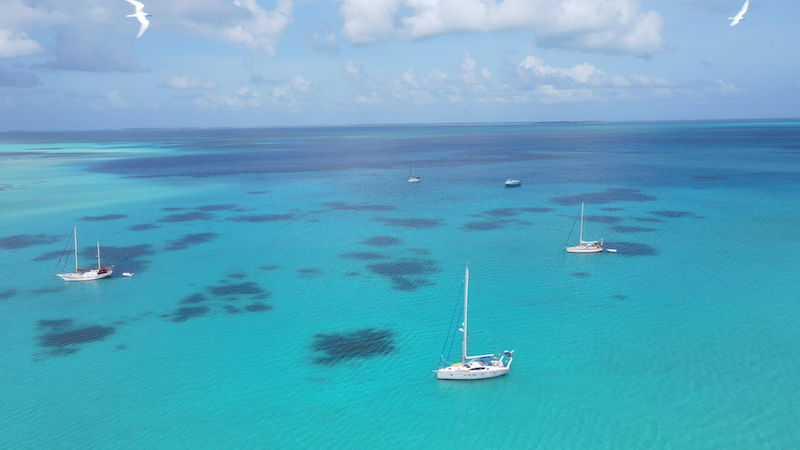
and getting in there and I had some great photos from I launched my drone there and I have some great photos of the turquoise water and white sand beaches and palm trees. It was just like a calendar. know, really? Yeah. So so yeah, those are some of the favorite places I visited. Yeah. And whether I mean when you’re out there or maybe Tonga to did it feel like there were a lot of other cruisers around or are you feeling like you’re pretty remote or what’s the sense out there?
29:25
Well, there was a lot when I got to Tonga. They had just finished oh some kind of week of sailing festival. When I got to Direction Island in Cocos, Keelan, I was the only boat there. Oh, really? And two others showed up uh a couple of days before I left. But it definitely was not crowded. And so that’s one reason I liked it. I think uh it felt like it was far away.
29:52
Yeah, those are sort of the images that everybody’s been seeking when they’re cruising. And of course, a lot of people have bought cruising boats and go cruising. And so a little harder to find. But there’s still quite a bit of that out there, it seems to me. I mean, there’s remote anchorages in Mexico. Yeah, no, mean, there’s people look at these things and say, yeah, there’s thousands of anchorages that look like this. And uh if that’s what you’re seeking, you’ll be able to find some that are remote and you can have all day yourself. Yeah, yeah.
30:20
Well, and you had already written the book on flying and you’re sailing around the world thinking about writing a book. Were you writing as you go or how do you uh how do you put the writing and sailing together and someone organize it all? Well, yeah, I wasn’t writing the book at the time. I did have a blog. Yeah. And so the blog entries became sort of a framework for the boat. uh I can’t say I use many of the passages directly, but. uh
30:47
It sort of let me know what was going on. I also, my boat’s currently in a boatyard in Chesapeake Bay. So I took the log book off and that, along with the blog and my memories is what I relied on to put the book together, which is essentially finished at this point. It should be out in November, early November. Terrific. Just in time for the holidays. I was thinking. You don’t want to come out December 26th. No. Yeah, but great.
31:16
Well, and your boats in the Chesapeake, I think I saw somewhere you’re maybe thinking of the Northwest Passage. I am. So I want to bring the boat back to the Pacific Northwest. And the most interesting way to do that is through the Northwest Passage, which is increasingly feasible now with the em rapid melting of the ice. In fact, I’m tracking a couple of solo sailors going through the Northwest Passage right now. Are you thinking of doing that solo as well? Yes.
31:45
Yeah, people have asked me about this and I say, well, you know, my solo to seven continents thing is finished, so I really don’t have a need to have, you know, go solo again. But when I think about it, I’m so comfortable on the boat by myself now. Now, I mean, another person there would be really weird. Clutter it up. Yeah, Clutter. Eat more food. Come on. Yeah, yeah. So so yeah, that’s what I’m thinking right now is to do that solo as well.
32:15
Yeah, yeah, no, mean, obviously more boats are doing that. But although ice doesn’t show up necessarily on radar or AIS, guess so it’s a little harder to sleep solo or maybe you do less nighttime traveling when you’re in the Northwest Passage. Yeah, that seems to be the case in the solo sailors I’m tracking now and what they post on Instagram and so forth. They talk about at night when it gets really dark that they will just let the boat drift.
32:44
They’ll let it drift and wait for morning to soar they can see the ice. But you’re right. mean, it can show up on radar, but definitely not AIS. Yeah. So it’s sort of picking your way through it. And that’s largely a visual task. Yeah. Well, and radar would pick up something that has a fair bit of height over the water, which you can have some big chunks of ice that actually don’t
33:13
go above the surface much at all, right? Yeah, no, I ran past some of those not very dense in Antarctica where penguins were sitting on them and stuff. yeah, they’re only above the water by a few feet. And some radars will pick those up and some won’t. But uh yeah, it’s that is the challenge for navigating those waters. Yeah. Well, and of course, the opening of the Northwest Passage has changed things. South America. mean, there’s definitely more adventurous explorers loving the high latitude
33:43
cruising. mean, I don’t know what’s the attraction versus Cocos Keeling in the clear blue waters of the Indian Ocean? Like what’s the attraction of sailing in the ice? It’s just more challenging. I mean, if you want to sit around and relax and hang out on the beach and all that, I mean, for me, that’s that’s good for a week and then I’m ready to move on. It’s just not that interesting, that compelling to me.
34:09
I’m looking for things that that feel more engaging Yeah, actively having to solve problems as I move along was the same for flying Yeah, pilots never would take the kind of international around the world adventures that I’ve had in my plane I mean, they’re comfortable flying someplace for for lunch and coming home again. So yeah, it’s really that kind of thing is looking for things that are out of the norm Yeah, well that
34:36
As I say, it’s a few more people, but it’s not that many people who want to go to Northwest Passage. Again, that’s, you people talk about the long lines of people trying to get to the top of Everest. And it’s well traveled to the top of Everest these days. But the Northwest Passage, I don’t know that you could probably, I don’t know, what is it, 100 or 200 people maybe? Well, last number I heard in terms of solo sailors, there’s just 12.
35:02
uh I heard that from somebody else. don’t know how accurate the number is, but in terms of solo around the world flights, it’s only about 150 people that have done that and over 4000 people have climbed Mount Everest. So that sort of gives you the scale of things here. yeah, for rare adventures, forget Mount Everest. well through the Northwest Passage. Yeah, no, that’s me. mean, Northwest Passage is Randall Reeves. uh You may know him, the Bay Area guy here who did the figure eight. Yeah.
35:31
around the planet and he’s done the Northwest Passage three times now, I think. think that’s right, yeah. I know his boat is down in Brazil now, I think. I did buy his book on the figure eight voyage. And so yeah, yeah, he’s the kind of guy who likes these places too. Yeah, and he chose an aluminum boat as well. he’s a yeah. And then, I don’t know if know, Matt Rutherford, he sailed or did that in a Vega 27, little 27 foot.
36:00
fiberglass. When I look at those guys doing those things and those kinds of boats and I have a modern aluminum hull boat with all the latest electronics and all this. Yeah. No, I say this, this is an advantage for me, but I really have a lot of respect for these guys that did passages in much lesser boats, even sailing across the Pacific and, know, 25 foot boats. mean, yeah.
36:24
I really can’t see it myself, but I feel like I have luxury with the boat I have. Yeah, yeah. Well, I think it’s beautiful boat, but I think most people would imagine what you’re doing is still quite daunting. mean, just being alone that long and obviously you got squalls in the middle of the night and you have to overcome. I mean, it sounds like luxury maybe in a comfortable boat, but I’m sure there’s a lot of hands on.
36:52
challenging times. Yeah, I I ran into that, you know, the first few nights in the Atlantic getting hit with a rain squall in middle of the night and having to scramble out of the rack and put my headlamp on and get up there and reduce sail and all that stuff. And then so that was sort of my baptism into offshore sailing. But the thing in terms of luxury, it’s not really luxury as much as it is reliability. Yeah, this is a really strong boat. uh
37:21
even in the worst weather and I had to actually heave to coming north across the Drake Passage from Antarctica. Okay. I did that to avoid a huge storm that was moving through north of me. I just wanted to wait for a while and let it push through. But I said, you know, as long as this boat is closed up, no water is going to get in it and it’s going to float like a cork. I don’t care what else might be happening. And uh you have that confidence that uh
37:49
You know, it’s not going to sink. It’s a strong boat. Yeah. So that’s what I mean, really, by feeling confident. And yeah. Well, actually, you also had a unique boat. had a centerboard. And of course, you know, all of us who take people sailing for their first or second time, we say, don’t worry, it’ll never tip over. There’s a keel down there. But centerboards always feel a little less comfortable that way. But but it was really solid in the boat you got.
38:15
Yeah, so yeah, I mean, this was a concern of mine because it really is a centerboard. It’s not a lifting keel. There’s really no weight in it. but there is weight. There is no weight in it. Oh, very little weight. So, you know, there’s ballast in the hall itself. And so, you know, they’ve done a lot of studies with this particular design and uh it’s stable in conditions. It will it will roll back up if it gets knocked down.
38:43
I had confidence in that. I didn’t have to take on that challenge, fortunately. But yeah, I mean, you have to believe in the design of it. the fact that it’s class in terms of CE classifications is classified as an ocean-growing boat, a Class A boat. uh But yeah, I agree with you. Having a big chunk of metal down there as a keel is certainly a comfort factor. Yeah.
39:11
With my boat, can actually beach it. Centerboard up, I’ve obviously never done it, but I’ve seen photos of it being beached, and it will sit upright on its forefoot. it’s a twin rudder boat. Yeah, twin rudder, yeah. Yeah, interesting. think that… Yeah, that gives it a…
39:30
a three-point landing if you decide to beach it, guess, is that? Hopefully, it keeps some pressure off the rudders. Yeah. One of the things I did order it with was dual autopilots. Actually, you’ve got two rudders, you’ve got two helms, you’ve got two autopilots with drive units uh to each rudder. Then there’s a big metal bar that connects the two rudders to keep them in sync.
39:56
So you’re actually in your emergency rudder situation, you disconnect the bar and just drive the boat with one side or the other. So that was another factor that when buying the boat, I chose to have the dual autopilots. Yeah. Yeah. Wow. What, do you have a, do you have a date set for your Northwest Passage? this next summer or what’s your, yeah. Yeah. It’ll be next summer. And it’s a good question. I typically boats need to leave the coast, the West coast of Greenland.
40:26
around the 1st of August and get through to Nome by the end of September. The two month window and the end of the summer is when the ice is most melted. So that’s kind of the idea and hopefully get across you could overwinter in Nome if you needed to but to get it across the Bering Sea and through the Aleutians and around the corner to Kodiak or someplace like that sand point.
40:52
ah that would be the ideal result for a Northwest Passage. So I’ll probably have to be back on the boat, get it ready um towards the end of June, uh use July to sail it up to Greenland and have a look from there. Well, maybe I grew up sailing on the coast of Maine and that’s where I spent a little time in the summer, just got back a little while ago, but if you’re coming up next summer, we’ll have to…
41:17
say hello as you head towards Greenland. Oh, that’d be fantastic. Yeah, I mean, if I go early, I’ll have some time to cruise the East Coast, which I really haven’t done. I’ve talked over it in my plane multiple times, but I never cruised it in a sailboat. Yeah, I mean, if you can plan some time along the coast of Maine, you might even delay a whole nother summer because there’s a lot to do. It’s beautiful. I know it is. I’ve got some good friends with a cabin on a lake near Camden, Maine. Oh, yeah. And so I visited them a few times and it’s really…
41:46
Really wonderful back there. Yeah, it’s pretty. And also, guess, so during Northwest Passage, there’s typically not a lot of breeze, right? And so, I mean, you have to bring a fair bit of fuel or how do you… And what’s the prevailing wind? Is it west to east, east to west? It’s west to east, generally. But not much. Yeah, but as I’ve watched these other cruisers going through the summer, I was surprised at how quickly the weather changes and how…
42:14
violent gales can spin up pretty quickly. Oh, really? directions. And so, yeah, it’s really a challenging thing from a weather standpoint. Yeah. Well, I guess since we’re almost first to September, everybody who’s doing it this year must be hopefully about halfway by now. And probably if we look at marine traffic, we can see uh who’s up there. Yeah, no, you can. And in fact, it’s kind of interesting to watch and also
42:43
I’ve been keeping track of where these people take shelter when eh strong winds come along. I’m keeping a list of, and there’s actually a nice document that sort of describes all the potential anchorages and harbors along the way that you could make use of if you needed to. Yeah. But there’s no Tiki bars ashore or anything like that. No. And you asked about fuel. That’s a really important question because the sailing is not reliable at all. And the channels are
43:11
can be fairly narrow. even tacking against a headwind is really not a very successful strategy. So on my boat, I’ve got 500 liters in the tanks on the boat, and then I keep another 200 liters in jerry cans on deck. And then I have another 200 liter fuel bladder that I actually use. And I had all of them. So I had 900 liters when I went to Antarctica. So you really need to…
43:39
plan on the fact that you may be motoring a lot. And that’s usually what happens in Northwest Passage, you motor a lot. And there’s a handful of villages where you can stop and refuel and reposition. And so those are sort of the waypoints that you plan on when you start the voyage. Yeah. And I guess, you know, because there’s a little increased traffic up there, sailors and cruisers. But is there any commercial traffic up there at this point? Is that growing or?
44:08
Yeah, I there’s freighters and container ships going through there as well as cruise ships. Oh really? In fact, one of these solo sailors that I’ve been tracking, she was invited aboard a National Geographic cruise ship. Oh, sorry. Acceleration or whatever it’s called. And to give a little talk and they gave her, know, fresh fruit and vegetables and stuff like that. Exactly what a cruiser needs. mean, those instead of eating tuna out of cans, as I’ve done many times.
44:37
So yeah, was really uh that kind of traffic is becoming uh more prevalent up there for the same reasons people want to see this remote area. Yeah, you got to just put a sign on your main so we’ll talk for food. That’s an excellent idea. Put a note on the AIS transmission. Happy to share my story.
45:07
And fruit. Yeah. Yeah. That’s great. Or maybe diesel. Yeah. Yeah, really. I mean, that’s the thing in Antarctica, I realized in reading blogs by other cruisers that they often would run out of diesel and have to beg it off of research stations down there. Yeah. I didn’t want to be caught in that situation. So yeah, yeah. It’s a it’s a it’s not a lot of places to go wandering around Antarctica with hat in hand, you know, it’s the thing is, I mean, it’s also true.
45:36
the Northwest Passage and one of the really nice things about it is how supportive cruises are of other cruisers. Yeah. So you end up with this rare group of people that are taking on this challenge and you you go park your boat in Antigua or someplace I mean everybody’s there and doing the same kinds of things and it doesn’t feel like that exclusive a group. Yeah. When you’re in Antarctica, when you’re in the Northwest Passage that’s
46:04
something I would really enjoy being part of. Yeah, yeah. in all your travels around there, how many solo sailors were on this? Or was it mostly families, couples, or did you run across many solo sailors? ah Yeah, a few. I mean, there’s one guy that’s become a YouTube sensation. That’s Barry Perens, the adventures of an old sea dog.
46:25
And so I actually ended up in Lombok, Indonesia at the same time as him. So we hung out for two or three weeks. I was fixing my engine. He was doing some other things. Yeah. He’s he’s been out nine years and he just he just returned home to Plymouth, but he’s got over 130,000 followers on YouTube. Oh, really? This is these great videos that are so engaging. He’s a nice guy. Yeah.
46:52
And he talks honestly about his experiences. And so, yeah, he’s really got quite a fan following for his YouTube channel. Yeah, that’s fun. There’s some great ones out there, of course, that allow you to live vicariously or to get inspired to take it on yourself. that’s, yeah, I don’t know any of the most dangerous moments you had on your thing. Like what was the scariest couple of things? I think the most worrisome was when I again, when I was
47:21
going north across the Drake Passage from Antarctica. Add a couple of equipment failures, significant one was a block on the main sheet, which just completely blew apart. Part of the problem with the Schaeffer boom is that it’s much heavier than a traditional boom. And so the rig they had for the main sheet was really inadequate for that weight. A boom break on there and I finally got used to using it religiously to keep them under control.
47:49
But one time it wasn’t and it completely blew this block apart and trying to fix a block and that was cold temperatures. You can’t do it with gloves on. Yeah, yeah. Bart with your bare fingers and the other thing that happened a few days after that is that the furling line for the genoa snapped, you know, and that was one of the times when it actually woke me up. You know, I had three reefs in it and three reefs in the main and so going along and six meter seas and 40 knot winds and.
48:18
I woke up and said, boat is going much faster than I remember. It’s healed over much more. I went up and I saw that the Jenna was fully deployed. Looked on the port side deck and and the furling line was laying their slack on the deck. And I said, okay, well I went back below and I said, how am going to fix this? How am I going to get the sail under control? Under a lot of breeze. Yeah. Yeah. Under a lot of breeze. And I finally crawled up to the bow.
48:45
and I realized there was still enough line left on the drum, on the furling drum, that I could get another line attached to that. That gave me enough to get the sail rolled in most of the way. So that’s how I find it. But getting up there on the deck and, you know, with six-meter weights and frigid water splashing over me like that and the bow is like this.
49:08
Well, I finally earned my stripes as an offshore sailor with my That’s the way I felt when I finally got that sail under control. Yeah, well, I think a lot of people earn their stripes. You get around Cape Horn area and do all of that. You’re definitely getting Yeah. I remember Richard, think it was two years before the mast, Richard Henry Dana’s book, Going Around Cape Horn. You know, they had to climb the rigging and bang the ice.
49:36
Off the sails, which for the ice was freezing on the sails and hold on. had to have no gloves. Yeah, yeah, because they couldn’t hold on with gloves and frozen. But grief, I can’t. Yeah, it was weird. I mean, my fingers, my hands didn’t feel right for a few weeks after that. It wasn’t like they just felt numb and stiff. Yeah, it took a couple of weeks for them to feel normal again. It was. Yeah, that hopefully you are sailing towards the tropics by then and at least.
50:05
These warmer temperatures. yeah. What about food? What did you do to cook and eat? Are you a gourmet at sea? Are you freeze-dried? Simplicity is the answer for food. I look at these cookbooks. There’s many out there about recipes for cruisers. I don’t want to read any recipes. I’m not going to do that. So mean, you start out with
50:33
with fresh food. I’ve got a great refrigerator on board, but no freezer. And it’s actually one thing I want to upgrade on the boat this summer. Yeah. So you can buy frozen food and put it in the refrigerator. So it’ll probably it’ll defrost, of course, but it will stay good for eight to 10 days. Yeah. You can buy like frozen hamburger and chicken and stuff like that. Yeah. You know, some vegetables, onions last a long time. Eggs really last a long time without being refrigerated. It’s a great resource.
51:02
um But if you’re out there long enough after for eight or 10 days, my passage from Patagonia to the Marquesas was 45 days. 45 days, wow. And so you get down to the canned stuff. So can of tuna, can of vegetables, into a soft pan, it up, that’s dinner. oh When I say simplicity, that’s what I mean. It’s that simple. You get too complicated and it’s just.
51:30
uh It’s just a bother really. Yeah. How about oh to snack food or a grab for uh when you just need something to eat? did you? Yeah, so I you know, I found oranges were good. uh Apples were too sensitive. They get bruised too easily. Oranges are much better. uh You know cookies and crackers and things like that uh were part of that chocolate bars. uh Yeah, yeah, yeah.
51:59
Good wow well for yeah 45 days. I mean yeah by the end you’re you’re you’re probably ready for a meal ashore I guess. Oh yeah anytime I could have something to eat somebody else’s food I would take advantage of that. Yeah yeah oh that’s great wow well um any any other let’s see I guess uh aspects of your trip that I haven’t asked about that we should be covering I mean uh you went around Cape Good Hope too? I did yeah I actually Cape Agulhas uh is the southernmost point in
52:29
Africa, South Africa. Yeah, so yeah, the wild coast uh is aptly named down there. And the move across from Reunion Island to Richards Bay, which is a usual starting point to move along the coast of South Africa. And so I was watching the weather. And of course, you want to choose a weather window when the wind is blowing in the same direction as the strong current and against current.
52:55
So I saw a window coming up and I said, oh, it’s, you know, it’s forecast 35 knots. And so maybe I’ll wait. And the local said, no, that’s the window. I get it. So that’s the window and it’s, uh, you know, it was on the stern of the boat. It was out of the Northwest blowing in the same direction of this current. So, so it’s a quick trip. Uh, you know, so I had a fraction of a genoa set, no other sails. And I was clipping along at seven knots and
53:25
I said, well, this is great. This is this is how it’s supposed to work. So you basically move along the coast. You have weather windows that are maybe 60 hours long and you move down to the next port, which is three or 400 miles away, and then you just move along the coast that way until you get to Cape Town. So that’s that’s the strategy everybody uses and it works out successfully, but you gotta wait for the weather window. You can’t can’t push it. Yeah, yeah, no with a. em
53:51
centerboard cruising boat like this, going downwind, do you ever raise the centerboard at all or it’s a keel down or centerboard down all the time situation? Well, I was told that I could do this. You know, they said, oh yeah, just, you know, just lift the centerboard when you’re downwind and the thing will just skate right across the water. Yeah. And, know, and I tried that and I said, well, I really didn’t feel that. And I really didn’t feel comfortable with the centerboard up.
54:19
Yeah, it’s just, I don’t know, it just has a stabilizing influence regardless of which direction you’re sailing. And so yeah, really, the only time it’s up is when I’m motoring. Yeah. Oh, okay. Yeah, pretty much. Yeah. Well, like, yeah, I think I’d feel the same way. I mean, sailing a 420 or a laser. Yeah, I might pull up my centerboard. But if I were offshore in a 41 foot boat, I think I just keep it down. Well, yeah, you got to appreciate that even with light.
54:48
down, you know, light winds on the stern, you know, the boat is going to roll around with the wave action. And that’s one of the things I discovered with offshore sailing that hadn’t sailed mostly on flat water before that with light winds, you can set the sails, but then the boat rolls down to the sails and it rolls back and the sails reset. And that really gets to be frustrating. And you almost have to sail further off the wind to keep the sails full. Yeah.
55:18
Uh, yeah, it’s, it’s, something to learn about offshore sailing that I didn’t appreciate when I started. Yeah. Yeah. Well now you’ve got 38,000 miles of it, uh, under your belt. I know a few things I didn’t know before. Yeah. Well, and, and so I don’t know, was it harder or easier than you thought? I mean, it sounds like in general, I mean, obviously you face some challenges in the Cape of good hope for Cape Horn and, and, but basically you set the boat up and went around the world.
55:49
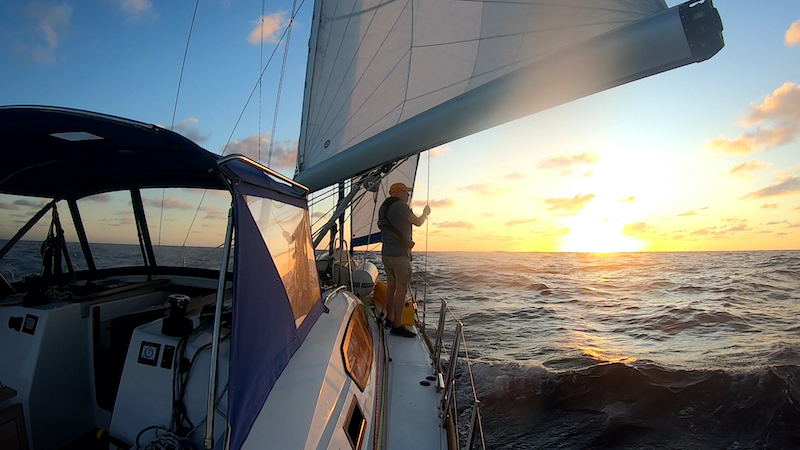
I didn’t really know what to expect. And so I felt like I was open to being a learning experience. And yeah, I mean, there were times that were really tough. There were times when you stand in the cockpit and, you know, raise your hands to the sky and say, why are you doing this to me? And but yeah, overall, there were really sublime moments sitting in the cockpit, crossing the Pacific, watching the sunset. It was it was glorious in many ways. And those are the
56:18
the greatest memories. Yeah, fantastic, fantastic.
56:24
Hey good Jibes listeners and Latitude 38 readers. Have you looked in our classy classifieds lately? It would be impossible for us to know how many boats have sold to new owners over the last 45 plus years of publishing Latitude 38. But we’re sure they have helped countless people realize their sailing dreams. Every month there are new boats listed that will fill someone’s sailing adventures. If you have a boat you want to sail or are looking for that next boat in your life, the pages of Latitude 38 will surely have something to suit your fancy.
56:55
Pick up a magazine at a local marine business or visit our classy classified pages at latitude38.com to find boats, gear, job opportunities and more. Then tell us your next sailing story.
57:09
Well, yeah, I’m going to fire a couple of quick short, short tech questions for you. But you’ve obviously seem to love the boat. But is there any other boat you’d look at or consider how uh a dream boat out there? Not really. I have to say I’m really not a boat guy. You know, I don’t really hang out at boat shows and look at this boat and that boat and that kind of stuff. I was sort of focused on the same plane with a plane. I like the plane I’ve gotten. I’m really not an airplane guy either.
57:38
people will talk about all these different planes. So yeah, really can’t look at, don’t look at other boats and say, I wish I had that one instead. There might be some features that I wish I had, but I think I did pretty well in equipping the one that I have. 338,000 miles sounds, and you’re here to tell the tale, sounds like you’ve done it all right. So that sounds good. How about any places you
58:06
didn’t get to that you’d like to get to on a sailboat. Obviously, Northwest Passage, but is there another uh place you dream of sailing to? Well, yeah, and I could almost be inclined to go back to Tierra del Fuego, to Patagonia, to those waters. I think they’re really special and rare as well. There’s similar reasons uh as the land around the Northwest Passage is. yeah, in terms of doing South Pacific Islands,
58:35
New Zealand potentially, but it’s far away. So that would be another major commitment to a long voyage. Yeah. Yeah. But looking for those remote, quieter spots on the planet sounds like distraction. How about to somebody else listening to this and contemplating like, want to do with that. would you advice you give them before they push off? Do a lot of planning. Think about your boat a lot. m
59:04
of them in terms of operationally how it’s actually going to work for you. I think, you know, just going through the motions and the setup of it, I think is something to, because again, simplicity is the watchword for me on all of this. If you make things simple and easy to do, then you’ll have time to deal with crises that may come along. Yeah.
59:28
So and the other thing is route planning and really pay attention. You know, as I mentioned, I looked at the pilot charts to really choose the best time of the year to sail from one place to the next and laid out my route for and schedule. Yeah, basis. I saw people. There was two guys in a sailboat, a father and son team that were in Cabo de Mayo on the east coast of Brazil. And they wanted to sail to Cape Town. I said.
59:55
You’re going the wrong direction. This is the wrong thing to do. You’re against the wind and current the whole way. Why are you trying that? So I saw people doing things like that that just didn’t make any sense when you looked at the information that was available. So that’s I recommend, great route planning and really thinking through how your boat’s equipped. Yeah. Well, and I guess also the pace because yeah, I mean, it’s the route planning and
01:00:24
the dates, like when you choose to make your passages. Exactly. I mean, obviously you avoid hurricane seasons in the Atlantic, you avoid tropical cyclone seasons in the South Pacific. uh Those are kind of obvious things. But I can tell you that the usual dates we have for these things when they start and stop um are getting eroded by climate change. So, you know, the and you can’t rely on those windows as being. uh
01:00:51
something that’s going to happen every year now. I mean, the typhoon I mentioned in Vanuatu actually happened in October, and the season’s supposed to start the 1st of November. So it’s very early storm. so yeah, a lot of these rules of thumb we’ve had over the years are starting to weaken. uh Interesting. What about just as a non-sailor? what’s the pleasure of just plain old sailing without big missions and voyages and explorations?
01:01:20
the pleasure of sailing. Is that something you enjoy? Yeah, mean, when the boat is so quiet when it’s sailing, I mean, that’s what I liked. That’s why I always hated to turn on the engine for whatever reason. So yeah, just the pleasure of having this boat skimming along the water and reasonable winds and reasonable seas. And it was just a pleasure to sit in the cockpit and the waves and the motion of the ocean can actually be hypnotizing.
01:01:49
It’s really amazing to sit there and just watch the waves. mean, they’re different every second. eh then animals as well, flying fish, seals, all kinds of things like whales. uh Yeah, you see all those things which uh sort of punctuate the scenery. Yeah, wow, fantastic. How about a favorite sailing themed book that you’d recommend? Is there anybody that like was a good guide for this trip or just a favorite sailing book that you’ve read?
01:02:19
Well, I like Joshua Slocum’s book, of course, the Guinessolo sailor that sort of required reading. Beyond that, I read people’s blogs in preparation for this trip. I found that useful to read people’s blogs of cruisers going anywhere in the world, really. Yeah. Experienced somewhere incredibly detailed, like, you know, tracking, you know, the wind direction every few hours. But I found it useful.
01:02:46
to read those blogs. So it was really more blogs than books. So the books get out of date so quickly that they’re not so useful. And there are some websites like NoonSight and some others that have pretty up-to-date information about entering countries and oh other details about various places that I use as a reference as well. So if I were going to a new country, selling to a new country, I check there first in terms of entry formalities and things of that sort.
01:03:16
That’s great. Harry, this has been really terrific. Great to hear your experience and you sound very well adjusted for such an adventure. You’re first one to tell me that I could tell you that. I’ll have to write that down, right? Yeah, yeah. mean, obviously, solo sailors are a unique slice of the sailing world. There’s so many different slices of the sailing world. um
01:03:46
Yeah, there’s a certain, uh I don’t know, meditation or adventuresome or whatever it is that gets people to do that. And I think it’s really, really great tales that come from people that, web trials or all these other people that have done extensive solo sailing. And it’s a, you know, it’s a small uh fraternity of people who uh actually managed to do that well, but uh it’s really terrific. So, uh well, thank you uh very much for your time. And I guess, is there anything else you’d like to add?
01:04:15
What’s the title of your book going to be? should tell you that. Yeah, actually it’s called Sailing Seven Continents Solo and going to be a detailed account of the solo voyage of seven continents, but also a lot of detailed information in the appendices like equipment lists, spares lists, tools lists, medical supplies lists, things that I wish I had found when I was planning my voyage that I never really found. People would talk in generalities about spares and tools, but
01:04:44
not really have specific list of things. And then I also have copies of all the documents I had to submit to get permission from the US to sail solo to Antarctica. Information is in there. So somebody else is interested in going to Antarctica. All the documents are in there to give them a start on how to do that. Well, yeah, so try to make it a good story as well as being informative. Yeah, terrific. What you have a website people could visit?
01:05:13
Yeah, it’s Phywave.com. And actually a funny story about that. If we have a minute is that when I was coming into Mar del Plata in Argentina, I was 10 miles out from the port and they started calling a boat. They said, if you fee-wahv-ay, I never answered.
01:05:43
And it then adorned us after a few minutes. Hey, wait a minute. I’m fee-wahv-ay. It’s a name I had for a while that was unique in the Coast Guard registry. So that’s the one I wanted to use. And actually, where does it come from? It’s just a made up word. It’s a word I made up for a consulting engineering business I started some time ago that I really don’t do any of that work anymore, but I like the name, so I stuck with it. Oh, terrific.
01:06:12
Terrific, great. All right, well, Harry, well, thank you so much again for your time and great to spend time with you here and learn more about this voyage you’ve taken. That’s an amazing, amazing voyage. Yeah, it’s been a pleasure, John. I really enjoyed this conversation!