

Episode #209: Heather Richard on Sailing the World With Your Kids
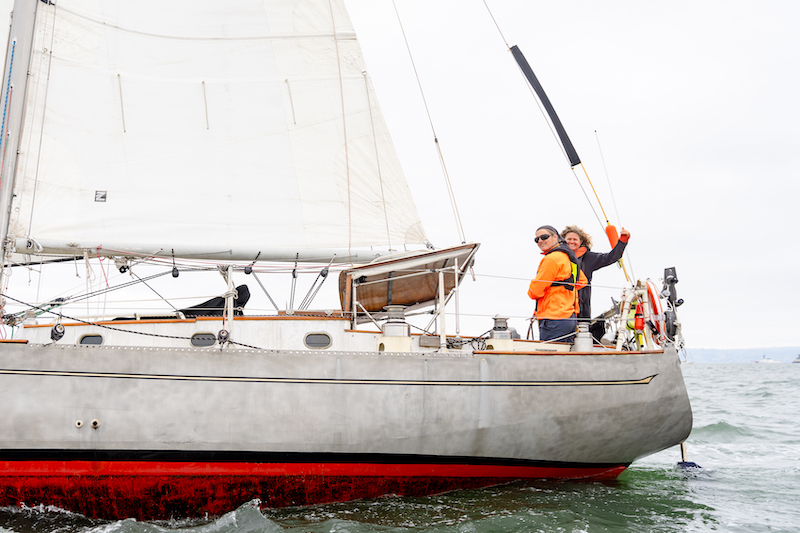
This week we chat with Heather Richard, currently in Tahiti, to chat exploring the world with her kids. Heather is a USCG 100-Ton Captain, sailing instructor, racer, cruiser, and charter owner who raised her three kids on her 43-foot sloop.
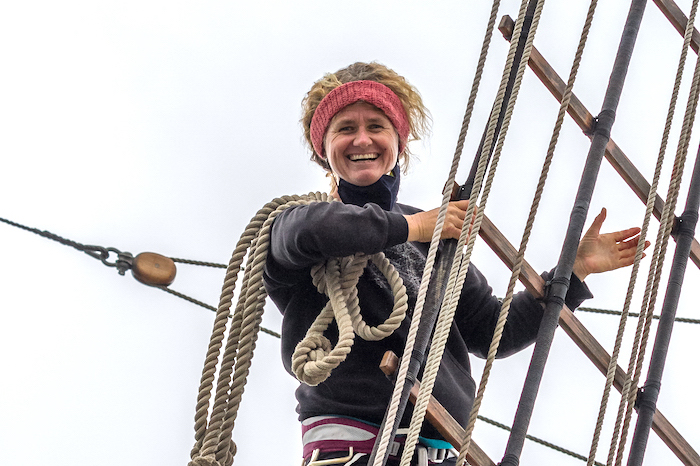
Tune in as Heather chats with Good Jibes host Moe Roddy about what it’s like living in a maritime co-op, the benefits of raising your kids in the sailing lifestyle, stories from cruising 5,000 miles with her kids, how we can make sailing more inclusive for everyone, and how rich your life is when you’re exploring the world.
Here’s a sample of what you’ll hear in this episode:
- How community boating informs an inclusive approach
- Heather’s early sailing background
- What’s Passiflor’s theme song?
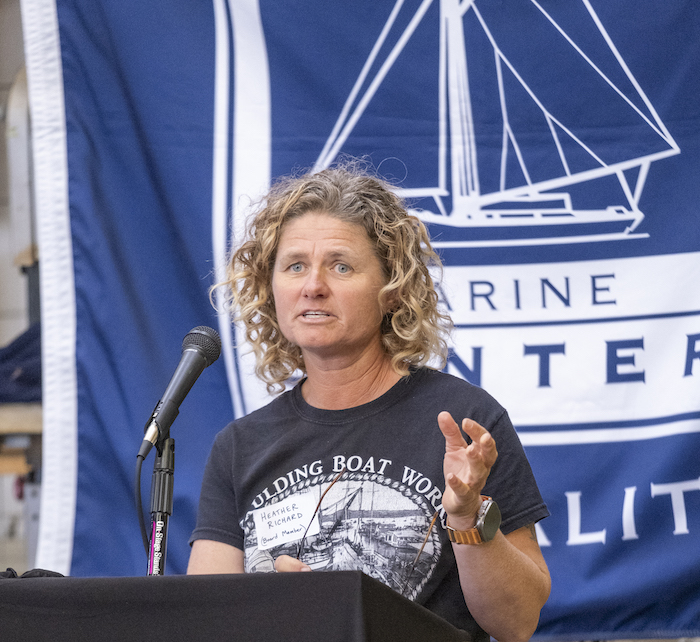
- What is Heather focused on as a board member at the Spaulding Marine Center?
- Raising kids on the water
Learn more about Heather at FineDayForSailing.com
Listen to the episode on Apple Podcasts, Spotify, and your other favorite podcast spots – follow and leave a 5-star review if you’re feeling the Good Jibes!
Check out the episode and show notes below for much more detail.
Show Notes
- Heather Richard on Sailing the World with Your Kids, with Host Moe Roddy
- [0:12] Welcome to Good Jibes with Latitude 38
- [0:38] Welcome aboard, Heather Richard!
- [1:48] Heather’s early sailing background
- [5:49] Transitioning from East Coast to West Coast
- [9:41] Living at Galilee Harbor maritime co-op in Sausalito
- [12:33] Raising kids on the water
- [17:11] How Heather’s sailing career has evolved
- [19:33] Check out the Sausalito Boat Show on September 19th-21st. Get your tickets now at SausalitoBoatShow.com and use the code GOODJIBES to save!
- New Boat Adventures & Sailing Accessibility
- [20:59] How did Heather find her 33-footer Passiflor?
- [26:46] What is Heather focused on as a board member at the Spaulding Marine Center
- [28:39] How community boating informs an inclusive approach
- [32:07] Check out the Sausalito Boat Show on September 19th-21st. Get your tickets now at SausalitoBoatShow.com and use the code GOODJIBES to save!
- Short Tacks
- [33:11] Heather’s “hell no” sailing conditions
- [35:44] What’s Passiflor’s theme song?
- [36:12] Most important safety equipment
- [38:09] What are some sailing superstitions Heather ignores?
- [39:24] A message to skeptical parents and families
- [43:48] Committing to environmental stewardships
- Make sure to follow Good Jibes with Latitude 38 on your favorite podcast spot and leave us a 5-star review on Apple Podcasts
- Check out the September 2025 issue of Latitude 38 Sailing Magazine
- Theme Song: “Pineapple Dream” by Solxis
Transcript:
Please note: this transcript is not 100% accurate.
_
00:03
We sailed about 700 miles with the rudders just last centerline in place to go straight. And then I had to steer with the sails. Ahoy, it’s time to cast off, laugh, learn, and have more fun sailing. My name is Moe Roddy and I am the host of today’s episode of Good Jibes, a podcast to help you experience the world of sailing through the eyes of the West Coast sailor. Each week.
00:31
Hear stories and tips from the West Coast Sailing Community about cruising, racing, and just sailing. Brought to you by Latitude 38, the sailing magazine for West Coast sailors since 1977. Make sure you visit our website and subscribe to Good Jives to enjoy our weekly podcasts. You won’t be sorry. I’ll remind you again at the end of this podcast today and share with you a link to subscribe.
01:00
My guest today has what I can only call an amazing relationship with sailing and boats in general. If you live in the San Francisco Bay area, then you have probably met her in one capacity or another. To say I’m in awe of her would be an understatement. I respect her so much and all that she has accomplished and all that is yet to come. Please welcome to Latitude 38’s Good Jibes podcast all the way from Tahiti, where she presently is
01:30
Captain Heather Richard. Welcome, Heather. Thanks, Moe. So I mentioned you’re in Tahiti, and we’ll get to that in a moment. But um I always like to start more at the beginning. You were born in Indiana, correct? Yes, northern Indiana. And I sort of split my childhood between there and Boston because my parents were split up when I was pretty young. So I was back and forth. So where did you learn to sail?
01:57
I started on a little lake in Northern Indiana where my grandparents had a lake cottage. We spent a lot of time there in the summers. um But I also really learned to sail at community boating in Boston on the Charles River. Oh my gosh, you’re not the first person I’ve met who credit them with learning there. That’s amazing, because I was going to ask, I know that you had a sunfish in Indiana, correct? um Yeah, and we ended up
02:22
bringing that out to Martha’s Vineyard as well. And it was this beautiful little wooden sunfish with a rainbow colored sail. I have super fun memories of it. Oh, nice. Now, that were you with your mom? Where’s your mom? Is it your mom’s family from Indiana? Both sides of my family were from there originally. And my mom and dad both grew up there. But my mother’s mother was from Boston. And as an adult, my mom returned to her mother’s kind of home.
02:52
had a long career there. And so I was really back and forth between the Midwest and Boston, all my school time breaks and everything. I was kind of sharing time with both parents. So. Where in Boston? uh We lived actually on a pier in the Charlestown Navy Yard. And I had a nice view of the USS Constitution when I walked out the door of our condo. And I was uh
03:20
right there near the courageous sailing center where I also worked, if you know that area. Yes, I do. uh That’s amazing. I didn’t know we had that in common. Your grandparents, obviously, what made them buy you guys a sunfish? I remember wanting it. It was like at a garage sale or something and it was all rigged up and sitting on someone’s lawn. And my mom said, well, okay, sure. You can have this boat. You’re going to have to learn, teach yourself how to sail it.
03:50
but you can’t take it out on the lake unless you can swim home because, you know, I’m not going to be there with you all the time. So out, she went in a little rowboat and I actually swam across the lake. I think I was only about four and a half years old and then she had to buy me the boat. So, yeah, so that’s how we got a little bit. You Four years old than you knew. And I, you know, my memory, my best memory of sailing that little boat was filling the cockpit with turtles. Tell me about that.
04:20
I remember just exploring the edges of the lake and finding all these turtles and talking to them and sailing around with them and trying not to capsize and dump them out. I think that’s really my earliest memory of sailing. But my mom also raced on sea scouts with a friend. And I also remember being ballast on one of those sea scouts. Amazing. Yeah, pretty young age. Yeah. So did your mother grow up?
04:49
through like a sailing, a junior sailing program in Boston? Anything? No, neither of my parents sailed except my mom spent a little time with that one friend and that was it. But my parents were really not into sailing. They still are not really into sailing. It was always my thing. Uh huh. Do you have siblings? No, just me. Yeah. And I think, I think at Community Boating Center in Boston, I found all of my closest friends and that kind of became my peer group and my friend group for
05:19
many years. So being an only child, you know, you’re always looking for other kids to play with. And that was an easy place to find like minded kids. Yeah. I would have been your friend. Thanks. I would have been your friend too. Yeah, that was a cool time to be there. You know, we were really free, like no cell phones. Nobody knew where you were. You just said, I’m going sailing. Off you went. Bye bye. Wow. Did you go to college in Massachusetts?
05:49
I went to Boston University and I competed really competitively on both the women’s and the co-ed team at BU. Uh huh. And how many years did you, four years for the whole four years you were racing? Yep. What did you guys race? We raced everywhere. did, you know, the team did a lot of traveling. We actually qualified for nationals and so we were, we were all over the country racing dinghies with, whatever.
06:19
Whatever the host school had is what we raised. Yeah. It’s still that way now. And what brought you out to the West Coast? I got a job at St. Francis Yacht Club as a summer sailing coach. And then that kind of morphed into a full-time year-round position. And I was supposed to go back and go to grad school and I didn’t. I stayed. So I bailed on all future plans and just
06:48
kept sailing in the Bay Area after that. Oh my gosh. You know, it’s so funny because when I think of my sailing and sailing on the East Coast versus the West Coast, if I had come out here first, I don’t think I would have gotten to sailing the way I did. I’m still drawn to the East Coast. The fact that you came out here and just grew roots or I don’t know what you would call a whole fast for, you know, macrosus plants. like you just, you just.
07:17
grew roots here where, yeah, how did that happen? um I think it had to do with not wanting to frostbite anymore and being able to sail all year round and not be like soaking my lines in antifreeze the night before I go out, know, duct taping my hat to my head so it wouldn’t fall off in the freezing cold in the middle of winter in Boston. you know, I came out and I realized like, oh, hey, there’s no real
07:47
off season. mean, there’s an off season in the Bay, but like, you can really keep sailing all year round. And that was what drew me to it. Plus the Pacific is just vast, you know, there’s so much to the Pacific coast. And I really like the chill vibe of California and the people and it’s kind of a just felt like a healthy alternative to everything that I had known previously on the East Coast. And I still love I still love Boston. I love these because I love Cape Cod. But um
08:16
I’m happy I live here now. Yeah. Well, I hope someday I can say the same. I’m happy I’m here. I don’t mean it that way, but I get homesick quite a bit. I miss my friends and I miss the sailing out there. And then what year was that? Did you come out here to work at St. Francis? 2000. And then how long were you there? Not that long. I tried to go back and work in the field that I studied, which was art.
08:44
it’s really hard to make a living as an artist. That also didn’t last very long. I did maybe two years of trying to be an artist and then I went back to sailing jobs because they just were more consistent and paid better and they kept coming up. So people kept asking me to do things in the sailing world and I eventually just made it a career. What was the first job you came back to?
09:11
That’s a good question. I was teaching at OCSE in Berkeley, actually. I think that was the first thing I did. But I also had an opportunity to run Gaslight, which is the scouts schooner during the America’s Cup years, the first America’s Cup years on the Bay. And that was really exciting. And that was kind of the first like big boat, bigger passenger vessel charter boat that I had worked on. And I really enjoyed it a lot. So.
09:41
I kind of moved more in that direction and moved away from teaching for a while. And now I’ve moved back towards teaching. Yeah, we’re going to get to that too, because I’m obviously interested. And then was that 2012? That’s the America’s Cup you were talking about? Yes. Yeah, that would have been 2012. And you also lived in a maritime co-op. What is a maritime co-op? OK, well, I still do.
10:11
Okay. And it’s awesome. It’s very, very unique. As far as I know, it’s the only one that exists. And it’s called Galilee Harbor. It’s designated housing for people who work on the waterfront and are low income. And it’s really, really hard to find affordable housing in Sausalito for the people who, you know, kind of do the rigging, the scrubbing boat bottoms, the diving, the, you know, the
10:39
the boatyard jobs, that kind of stuff, and also for artists. And so they created a community in the 80s that would allow artists and writers and musicians and all the boat people that were working in the shipyards to remain living on their boats in Sausalito. And it’s owned and operated collectively by all of the members. So there are 38 boats and some of them have, you know, one person living aboard and some have a whole family.
11:08
like mine, there’s a lot of meetings, there’s a lot of committees, we are self-governing, we make our own decisions, we raise our own money, we charge ourselves rent based on what our expenses are, we do our own work on the docks and the buildings, and we host events for the public, we host a big maritime festival the first Saturday every August, we share meals, we share birthdays, there’s a lot of shared experiences, and then
11:36
I think one of the coolest things about it is that people tend to live there um until they die. And um they have so much support and help from their neighbors that most of the folks that live there don’t end up having to move into assisted living or anything like that. We just sort of take care of them until the end of life. And there’s little kids and whole families and mixed ages. So it’s a real community.
12:04
I love that my kids have been able to grow up in a place like that. It’s really unique. Wow. When did you move there? Good question. Let’s My son was about two years old when we moved in and now he’s 19. yeah, it’s been a while. And do you bring your own boat? Yes. So everyone owns their own vessel, but the members collectively own the harbor. OK. So that’s who you pay your rent to? Yes. Yeah. OK. oh
12:33
keeps up all of your like electricity and I’m assuming there’s a sewer hookup and things like that. Yep, every boat has sewer and we have parking and we have bathrooms on shore and laundry on shore and all that sort of stuff. we maintain all that collectively. Wow, sounds wonderful actually. What kind of boat do you have? Are you guys, and are your kids still living with you? um So actually it’s funny, all three of my kids have their own boats.
13:03
My oldest just got hold of her first boat and it’s a 100 year old Dutch canal barge from the Netherlands. It’s really cute and she’s fixing it up. It needs a ton of work. She’s apprenticing welding right now and it’s a steel, it’s actually an iron hull. So she is working on that, trying to restore it. My middle son is 19. He has a little flick of 20. Cute little boat.
13:30
Um, which he will eventually take cruising, I think. and my littlest has a pram that we built during COVID. It’s like a little wood nesting pram, little sailboat. So, um, yeah. And then I have for the last 10 years had a, uh my charter boat carried on there. And now I’m bringing back this new boat that I just bought in French Polynesia. And that will be at Galilee Harbor when we arrive as well.
14:00
So what was it like for your kids? I mean, being raised, it sounds like, again, like your childhood, having that freedom to go sailing and stuff. Did they ever complain and say, well, why don’t we live in a house or things like that? um Yeah, sure. mean, kids complain about everything, right? But I don’t think they ever questioned the lifestyle. um They’re not as, I would say they’re like,
14:28
not quite as capitalistic as most kids these days. don’t see the accumulation of material things as like a goal in life. They really appreciate community and um experiences and relationships and memories. And I think that’s what they’ve gotten out of living on the boat in the boat community. they also haven’t had a lot of privacy. I think that’s the one thing that they, you know, on a boat, everyone can hear everything all the time. And
14:56
In one way, it’s made us super close. we’re very, very close, but it’s sometimes hard, especially as a teenager, not to have privacy. Yeah. Yeah. I was actually going to ask you about how do you think it’s shaped their view of the world? And I think you just answered that for me. Yeah. Yeah. I’d say that’s there. And they’re also very capable. I think both kids just learn to be hands on and capable. And they learn how to like, they just
15:25
feel at home in the world, whatever’s going on. So I think that’s a nice thing about growing up on a boat, for sure. Yeah, I think they’re very independent. I met quite a few families over the years while I lived in the Virgin Islands. You know, just a lot of cruisers coming through there. And I was like the mayor. think I met them all. That was my dream to do that. If you uh put on a hat, which feels the most like home to you, is it? uh
15:54
Racing, cruising, teaching, chartering. Okay, so this is a really hard one to answer. It’s like really hard to choose. Yeah, because I kind of have done it all. I think like all of those things gift me something. Like racing gives me a big high. get I get really competitive and you know, kind of feel a nice high from that even if I don’t do very well, it still gives me a lot of energy to race. cruising gives me
16:23
very unique view of the world and the people in the world and kind of reminds me of what’s important and what’s beautiful about the world. And then teaching, I think, gives me all of the success and confidence that my students have that they gain is like a gift to me.
16:42
and watching them start to feel confident is a big gift. And then with chartering, I just like sharing the stoke of being on the water and seeing people get stoked about it, especially if they’ve never done it before or they come from a background where it wasn’t accepted or encouraged and then they find themselves having a good time. I just, yeah, I just really like sharing that kind of stoke. Yeah, I think it makes you feel very competent when you can, when you do these things.
17:11
What kind of boat is um, Caradun? Um, well, Caradun is no longer my vessel. I sold her in January. Um, she was a Sparkman Stevens kind of knockoff, um, built by a man who, uh, was beginning his naval architecture career. He built the boat himself and, uh, it was aluminum and a very unusual construction, boat. But really I just had it set up for chartering and for, you know, taking people out on.
17:41
little two hour, three hour sunset sails. The boat I have now is completely different. Also aluminum, but that’s really the only thing that they share in common. So you went on a cruise with your kids. You went down to the sea. Five thousand miles you did with all three kids, just you and the three kids. Yeah, we had other people on board at different times for different parts of it to help out. So.
18:06
It wasn’t just entirely me and the three kids all the time, but yeah, they all were there with me for the whole 5,000 miles. And yeah, it was just a time in life when a lot had happened. I had just gone through a really rough period uh in my relationship and also with my son, my middle son had had an accident and nearly died. We almost lost him. So he was in the intensive care for a long time and multiple
18:36
know, surgeries and things. I really kind of felt like it was now or never to get the kids out cruising and life is so precious. You never know what’s going to happen. I just want to go. So we went and I think it changed them a lot. Changed me a lot. It was, it brought us a lot closer and by no means was easy, but it was so worth it. So worth it. Yeah. What stands out the most then for you from that trip?
19:04
I think just having like the undivided, uninterrupted time together and doing things, there’s just like a togetherness that was really lovely about it. Like all of us were doing this for the first time, like everywhere we went, none of us had been there. And so we were discovering and exploring together and that was a really cool thing. And the kids were different ages, but they became very, very close to each other on that trip.
19:33
And they still are. They’re still very, very close, all three of them. So it’s been nice. That’s worth its weight in gold. Right there. it is. You are listening to the Good Jobs podcast brought to you by Latitude 38. My name is Mo Roddy and we will be right back. Set against the backdrop of beautiful Clipper Yacht Harbor, the South Slido Boat Show returns for its third year, September 19th to 21st.
20:01
This is the Bay Area’s premier celebration of sailing with new and used sailboats from Nauce, Rifkin Yachts, Club Nauteek and Seattle Yachts featuring brands like Juno, Beneteau, Hanza, Lagoon and Dufour. Beyond the docks, you can explore hardware, gear and marine supply, connect with sailing schools and dive into seminars covering everything from cruising essentials to fiberglass repair, diesel maintenance, navigation and marine electronics.
20:30
Plus don’t miss our intro to sail experience with Club Naatik, a two hour sail on the bay that includes your show ticket. Get your tickets now at sausalitaboatshow.com and use the code GOODJIBES to save. Welcome back to the Good Jibes podcast. My guest today is Heather Richard, joining us all the way from French Polynesia. Welcome back. Here we are, caridunes bin sold. Yep.
20:59
Okay, and you’re in French Polynesia. They’re in the dots. Okay, so I was looking for my next boat. Like I said, the two older kids have their own boats now, so I don’t need as big of a vessel anymore. I wanted to kind of find something that was maybe a little faster, maybe a little more modern, something that would still be good for chartering, but would also be really good for long distance voyaging.
21:29
And I found Caredan to be quite heavy, just powerful boat, very powerful boat. I wanted to find something that could maybe do a little surfing. Like the real reason I needed to switch boats was because my slip in Galilee Harbor is silting in at all the time. I looked for a boat with a centerboard. It’s very hard to find a boat in the US with a centerboard because we just, Americans just don’t really believe in that.
21:58
The French seem to be the only ones, the French and the Germans build these centerboard boats and sail them everywhere. I’m in French Polynesia now, I’m seeing them all over the place. There’s tons of them here, but it’s just not something that I could find in the US easily. I looked at a few that were not in good shape and I looked at a few that were not well designed. And so I started looking further away from home and I looked at some in Europe and the Caribbean.
22:27
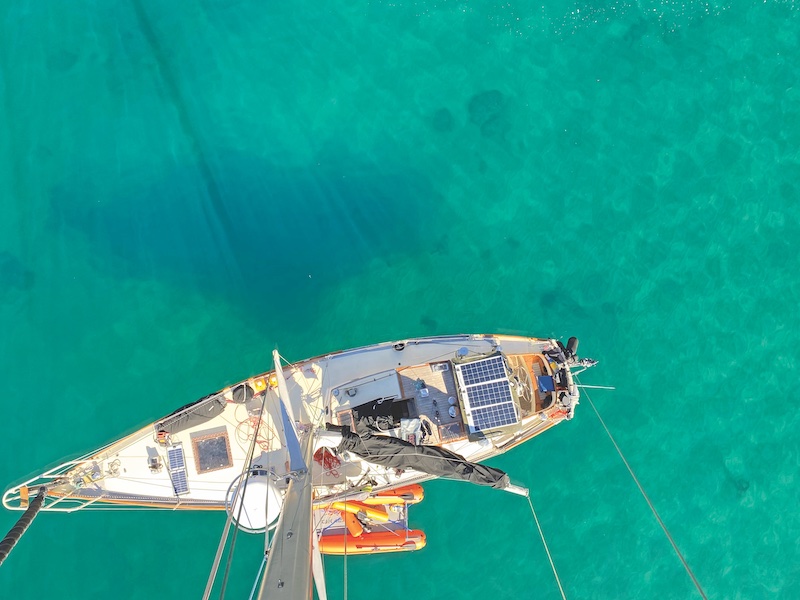
And I found this one in French Polynesia that was really intriguing. So I flew out to see it and kind of fell in love and ended up buying this boat. So she’s a, she’s a tiny little 33 foot, 10 meter centerboard, deep centerboard, seven foot centerboard, but with the board up, she only draws two feet. So it’ll be perfect for coming in and out of my slip at all tides. I won’t get stuck in the mud anymore. And I’m excited about that.
22:56
And she also is pretty light and modern with an open transom and she’s basically just like a big dinghy. So she surfs a little and seems to go upwind really well. I’m still getting to know the boat obviously, but it’s been quite an adventure because we set off to leave for Hawaii to get the boat home. And just short of the equator, we had a massive steering failure, broke the quadrant that
23:25
next two rudders together ended up having to return back to Tahiti. So we sailed about 700 miles with the rudders just last centerline in place to go straight. And then I had to steer with the sails. That’s incredible. It a challenge, but we made it. How do you sail with just your sails? mean, come on, that was pretty good seamanship.
23:55
I mean, luckily I’ve done a lot of dinghy sailing and that was a skill that I learned in college. And yeah, I just never thought I’d have to put it to use way out in the middle of the Pacific ocean. But yeah, we figured it out and there were definitely days when we were, the wind would drop and we’d lose our apparent wind and start going in circles. And that was frustrating, but we pulled it off. And then about the last hundred miles, the wind completely died. So.
24:24
The French, I had been in contact with the French Polynesian uh Coast Guard from the minute it happened. They just wasn’t sure if we would be able to make it anywhere. I mean, the closest island to us at that point would have been Kiribati or Christmas Island. But that was kind of in the wrong direction. And so we contacted the French Polynesian Coast Guard, told them that we were going to turn around and try to make it back to Tahiti, which seemed like the easiest place to get to. uh
24:53
we were able to sail, navigate between the two motus. So was a little sketchy under sail. But then once we got on the other side of the two motus, we had a tuna boat sent over to us to pick us up and tow us the last hundred miles because the wind had died at that point and we were just drifting. So yeah, it’s been an adventure. 17 days of like, whoa, are we going to make it? Are we going to make it today? Is this, is this going to happen? Are we going to need to get rescued? Yeah. So.
25:22
But you do it. Bully, but goalie. Yeah. Now you know your really well. Your new boat. I know the boat really well. Yeah, really, really well. yeah. What are your plans? I’m assuming you’re getting it all fixed and you’ll be setting off again. Now, but do you still have weather windows this time of year coming back this way? Hurricane season, right? Or typhoon season?
25:46
Yeah, it is. We’re getting into the North Pacific hurricane season, so the stretch between the equator and Hawaii is getting a little bit more dangerous. I think we’ll be able to do it. The quadrant is being machined by a local fabricator. We’re actually making a whole new quadrant. And it may show up today. It may show up in a couple days. I’m not sure. Probably to Moriah and then take off, and that’s it. And head to Hawaii again. Try again.
26:16
Are you in Morea right now? No, we’re in Papillote because this is where all the fabric solution shops are and got towed in here and we’ve been sitting at the dock for far too long. It’s only been like a week, but it feels far too long. Oh, thank you for agreeing to do this in between all of this. So now I met you obviously through Spalding Marine Center, tell me what tell me a little there. Tell our audience a bit about what you’re doing there. Yeah, so I’m a board member of Spalding and um it’s a small board and we’re all pretty
26:46
fairly hands-on with stuff. So, you know, on any given day I might come in and help out with a homeschool program or one of the summer camps or a boat building class or getting the latest project is getting Frida, which is all this boat on the West Coast, re-rigged and up and running. My main goal working there is to just try to increase access to populations that don’t have a way to access boats and boating and the water.
27:16
and just try to create community around classes and events and bring people into this life that I love and share knowledge. And we’ve got an incredible apprenticeship program that’s running at the moment. So I’ve been heavily involved in trying to shape the future of the apprenticeship program along with uh the other board members. Bill Edinger has been kind of the creator of that apprenticeship.
27:45
helping to move things forward and keep the industry alive and keep people, keep young people learning hands-on skills and how to make things and fix things and keep boats going. So we do a little bit of everything there and it’s fun. I love the place. I think, I don’t know if I told you that I was in Ireland and I came over a hill coming into.
28:12
Crosshaven and it’s the end of the road, there’s a boat yard. And I came up over the hill and all of a sudden I could smell the wood and the bottom paint and all this other stuff. was like, I could live here. It was pretty instant. This feels comfortable, familiar. Yes, love that. So I know you’re also very passionate about making it more inclusive.
28:39
I mean, and that’s not just for, leading back what you were saying, that’s not just for women, it’s for everybody. It’s for um all these other people who normally wouldn’t have uh access to the water or know that they can do something for them. I mean, where does that come from in your? Yeah, I think it just comes from growing up at community boating. I mean, my intro into sailing was through that little sunfish initially, but then…
29:06
My intro into the sailing community was through a community program, not a yacht club. And I’m not against the yacht clubs, I’ve worked at them and I, you know, spend time there, but I really think that community programs that draw in all kinds of people are good for the sport and it’s good for people. And I think there’s a lot of outreach that needs to be done to break down the barriers for getting people out on the water. And I think. uh
29:34
I think at Call of the Sea, do a pretty good job of giving school kids a little taste of it. But then once they get off the boat, there’s not much of a path forward for them. So what I really want to create is somewhere where anybody can show up. They don’t have to own a boat. They don’t have to buy anything expensive. They just need to show up and be present and soak it in and be part of it and pitch in. I think.
30:01
There’s still not a whole lot of that available in the Bay, despite some pretty valiant efforts from some really great people. uh Funding is still always the biggest issue. And then the next issue is sometimes transportation and how to get kids from their neighborhood, from their home to the place where the boating happens. And luckily on San Francisco Bay, most of the communities are near the water. So that barrier can be overcome more easily, but making
30:30
it affordable and welcoming is really tough. And it’s something that I constantly think about, and I’m still looking for answers to that as well. And I think one of the answers is to, you know, if I could wave a magic wand, I would make sailing a PE class in public schools, swimming, sailing, and water sports in general, I would make that a mandatory PE class. And then that opens the door to everyone, whether they choose to go forward with it.
30:59
in their life or not, at least they’ve been exposed. And I think that’s really important. I only recently learned I was over there and um you guys actually. So I asked what do the kids sail in in the summertime when they come over and they go out on the water. And I think it Haley Thomas told me it’s pelicans. I said, where do you get them? We build them. uh Yes, it’s great. Yeah, that’s part of it.
31:25
Yeah, so these kids that come over to learn sailing in the summer over there at Spalding, they’re learning in the boats that somebody else has built right there. And probably there are other boats, more pelicans being built as well, right? Yes, yes. Yeah, and it’s similar to what the Sea Scouts have been doing for years. And that’s kind of seeing a little bit of a renaissance as well. But it’s still, you know, just a very small group. So it would be nice to
31:52
expand that and kind of expand the reach of availability for that kind of program for even more kids. So that’s what I like about work in that. oh
32:07
The South Solito Boat Show is back for its third year, September 19th to 21st at Scenic Clipper Yacht Harbor in South Solito. There’s something for every sailor, from yacht club members to those just curious about life on the water. Step aboard sailboats from top brands, discover gear, local artists and makers, enjoy food and drink, family-friendly activities and live music on the waterfront. Learn new skills through seminars with Cruisers Academy, Spalding Marine Center, Helmets Marine,
32:35
H &M Marine, and many more, covering topics about cruising prep, Mexico sailing, fiberglass repair, diesel maintenance, and more. For a special treat, join us Friday evening for a VIP experience, Toppus and Tasting Soiree aboard three of the Bay Area’s finest luxury charter yachts, featuring tasting menus from three top chefs with local wine pairings.
33:01
Visit SouthSalidoBoatShow.com for more information and use the code GOODJIBES to save on your tickets. We hope to see you there!
33:11
Welcome back to the Good Jobs podcast. We’re gonna switch gears for a second. So this is uh something we call our short tax. And they’re just for people to get to know you, get a little bit more about you. So they’re just quick answers. uh so I’m gonna start with, what’s your hell no sailing condition? What kind of weather or situation makes you say, no way, not today? Lightning. Seriously? Definitely lightning. Okay.
33:41
It’s scary. I’ve been hit twice on it. It really, really scares me. I really don’t like lightning. Wow. You know, I used to be afraid of lightning and fog. And when I did my qualifier for the Bermuda one too, I sailed out of Newport Harbor into fog and then, actually first a lightning storm. And all I did is I just faced forward and I didn’t look any direction, just faced forward.
34:09
And then the fog. And I spent all night looking at my radar. And then in the morning, everything was cleared up. And I sat in my companion way leaning against my hat and just taking it all in on autopilot, just like, oh, this is so awesome. But like 18 hours earlier, I was peeing my pants. Yes.
34:36
Yeah, I’ve gotten used to the fog. I mean, it doesn’t really bother me so much. If I handed you a completely empty chart, where would you plot a course to go? A world chart so you can start anywhere and where would you go? Okay, so I’ve always really wanted to sail the Northwest Passage and that’s been on my bucket list for a long time. So I’ve been studying it and researching it probably for about 15 years now. Yeah. Now’s the time to be doing it too because it’s really opened up a bit.
35:06
Exactly. And that’s why I want to go because I want to see it now before it opens for cruise ship and shipping and, you know, becomes a different kind of place. So, yeah, I’m to do that one. So if your boat had a theme song, what would it be? You must have one for this boat now. Yeah, I mean, she’s she’s a French boat. So I probably pick a French song. But I’m going to go with Nina Simone’s feeling good.
35:35
What’s your favorite snack or meal underway? Or that your kids would roll their eyes at? Yeah, okay. So I spent some time in Japan and they had these really great snacks that you can just get from a vending machine. It’s just a little rice ball with a little bit of cooked fish inside wrapped in a piece of seaweed paper. And I like to make those ahead of time before a passage and just eat them for like days and days. So my kids
36:00
would roll their eyes because they’ve been fed way too many little sushi balls at this point. But I still like them. Do you have any superstitions uh that you uh ignore when you get on a boat? Well, of course I ignore the superstition that women are bad luck at sea. That’s just total BS. But I guess I kind of have some superstitions about renaming a boat. And I think I’ve been really careful to only buy boats with names that I already like.
36:29
So I don’t have to do that. Oh no, did you rename this boat, this new boat? No, her name is Posse Flor, which means passion flower. And my name is also a flower. So it just felt like, you know, karma. Nice. What do you miss most when you’re offshore? Definitely salad, like fresh, crunchy greens, cucumbers, things like that. Yeah. So if you could crew on any boat from history,
36:59
real or fictional? What would that be? I think this is going to sound really masochistic and I don’t actually like to suffer that much but I do love adventure and I would have loved to have been on Shackleton’s Endurance in Kansas City. Great answer. was what I thought maybe you’d say that. Yeah. What’s one lesson your kids have taught you on the water? My kids have taught me a lot. I think
37:29
But not just my kids, I work with a lot of kids all the time. And uh so I’m not just talking about my own, but I think that kids in general are capable of a lot more than what we think they are. And that shows up when you give them a responsibility on the boat. Put them in charge, let them make decisions. I think we need to start raising our kids to be more capable and to be more important to the society and not just be consumers of the society.
37:58
And so I think, yeah, that’s what they’ve taught me. All the kids have taught me on the water. What, in your opinion, what’s the most important piece of safety equipment on a boat? Oh, I think that would be your training. I think that would be you as crew and your ability to handle calmly whatever’s happening. there’s, you can have all the equipment in the world if you don’t know how to use it and you don’t know what to do, then you’re still screwed. Yeah.
38:27
That’s a really good answer. I always, I make it a point, I never get on a boat without a knife where I can reach it. What’s your favorite book? Oh, that’s really hard. There’s so many. I don’t know, I’m an avid reader. So sort of probably the book of the moment. You know, I actually like really love children’s books. read to, I’ve been reading to my kids for so many years that there’s some like really great.
38:55
kids books that kind of popped into my mind when you asked that question. I don’t know, I can’t pick one though. Okay, good enough. What’s the one question I didn’t ask you that you wish I had? There’s starting to be a lot more diversity in sailing, a lot more barriers coming down, but it’s kind of like one of the last places in our society that is diversifying. And I just would like really encourage other
39:24
women, especially moms, single parents, like anybody who is skeptical or like doubting, oh, can I do this? Or, you know, I don’t have enough money or I don’t have a big enough boat. No boat is too small for an adventure of some kind and you just need to get out there. Just go, just get out there and soak it all in, spend time in nature with your family, with your friends, with kids, with, you know, whoever you are close to and
39:54
I just encourage people to not think about those barriers and find a way around them because they usually always is. Yeah. I think who was it back in the, I want to say the eighties or the nineties. I can think of her name. Jada Martins, the Martins. Oh yeah, the Martins. Yeah. They had like Into the Lake. That’s a great book. Yeah. Yeah. And, they had like a little 22 foot boat, 25 foot boat. They went around the world in with the kids.
40:23
Yeah, it was tiny. Maybe that’s not the name of the book. Maybe I’m getting a different one that I just read mixed up, except that they yes, they did. And actually, their daughter Holly is now a YouTuber and sailing around the world on a very small boat as well. With pretty minimal, you know, equipment to she’s she’s been, you know, making do, but she doesn’t have a big budget and she’s just going for it. And yeah, and they spent some time I think in like,
40:53
Norway or somewhere way up high in the Arctic. They didn’t go to all the normal sort of places that most families cruise to in the tropics. They did some really interesting sailing and really immerse themselves in different cultures. Yeah, it’s a good story. So if you could talk to families, what would you say to them in terms of like, how do you do it? Like money wise, how do you prepare for these kinds of trips?
41:22
Yeah, I mean, I would say you just have to be pretty minimalistic if you don’t have a big budget and just be okay with that. It’s amazing how rich life is when you’re out there exploring the world and you don’t need as much as you think you do. It’s nice to have creature comforts, but sometimes the, you know, just getting going and get, you know, discovering what’s out there for you.
41:51
is much more fun when you don’t have the creature comforts because you learn to do something different. It like forces you into a new path that sometimes you find, okay, actually this is better, or this is actually like, you know, I can handle this. And I think if you’re making do on land and you’re raising your family on land, there’s no reason you can’t do it on a boat for the same budget.
42:21
you just have to figure out how to get there. And it’s, think sometimes in some ways even easier because being on a boat forces you to not accumulate so much stuff and be a little bit more minimalistic anyway. I I spend all my money on food, think, like feeding kids and boat parts. And we’ve never had a big budget for staying in marinas or for like, you know, doing
42:48
fancy things when we’re cruising, but we’ve seen so much and we’ve been to so many cool places. Just like the sun rises, the sun sets, the flying fish and the whales and the phosphorescence at night in the ocean and the locals that meet. It’s a lot of good stuff that you encounter out there and you don’t believe that much to make it happen. Yeah, yeah. I loved
43:18
my nights, let’s see, I had one night where I was so quiet and I just heard that swish, swish, swish. And my mother had been gone for 10 years and I remembered the sound of her voice because there was just, there was no simulation. was just, you know, the sky, my boat, me, some phosphorescence. And those are really moments that we don’t get to experience in these busy life with all of the stimulation.
43:48
coming at us all the time from every direction. Yeah, I crave going out to sea because of that peacefulness and quiet they find only there. It’s like really, really hard to get on land. Yeah. So before I end this, I wanted to give you an opportunity. there anything you want to leave our listeners with that’s something close to your heart? Be kind to the Earth, be kind to the oceans and take care of it so it’s there for the next generation.
44:18
for each other, you know? Yeah. Well, I can’t wait to see you when you get back. Yeah, me too. Let me know when you leave. I know this is really crazy busy for you right now. And I just want to say thank you to you for taking the time out to speak with us. And I also want to say thank you to our listeners because without you, there would be no Good Jibes podcast. So be sure to go to the Latitude 38 website and subscribe to both the electronic version of Latitude 38
44:48
and to the Good Jibes podcast. My name is Moe Roddy and I’ve been your host today and until next time, take the word impossible out of your vocabulary and dream big. Cheers!