

Episode #206: Kira Maixner on Coaching All-Women Racing Teams
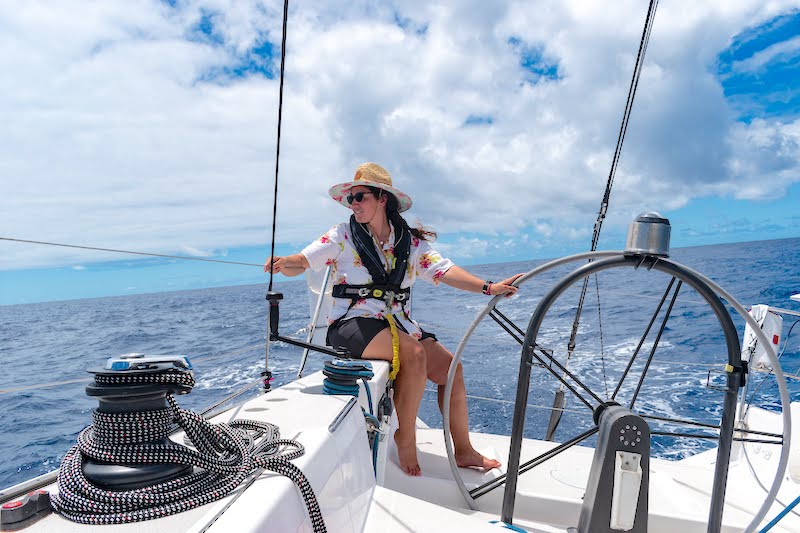
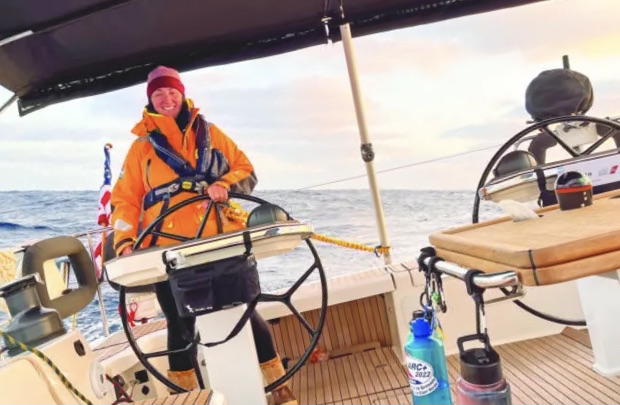
This week we chat with Kira Maixner about teaching women to sail and race. Kira is a USCG 100-Ton Master Captain and ASA Master Instructor who’s completed several crossings and races across the Pacific and Atlantic Oceans.
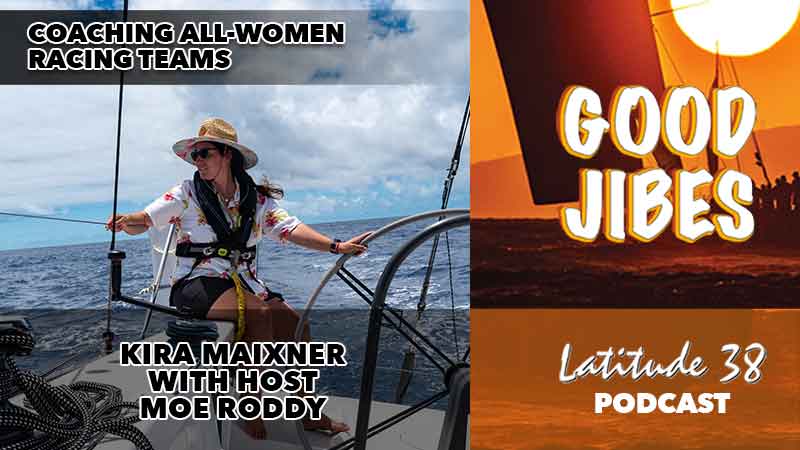
Tune in as Kira shares with Good Jibes host Moe Roddy how she transitioned from snowboarding in the Rockies to sailing the world, how to dedicate your life to sailing, how to become a Captain, the personal growth moments that happen offshore, and how to keep growing opportunities for women on the water.
Here’s a sample of what you’ll hear in this episode:
- Trusting yourself at sea
- Kira’s pre-race ritual
- The best boat snack
- What has Kira learned from offshoring?
- How Kira became a captain
Learn more about Kira at CaptainKira.com and ModernSailing.com
Listen to the episode on Apple Podcasts, Spotify, and your other favorite podcast spots — follow and leave a 5-star review if you’re feeling the Good Jibes!
Check out the episode and show notes below for much more detail.



Show Notes
- Kira Maixner on Coaching All-Women Racing Teams, with Host Moe Roddy
- [0:16] Welcome to Good Jibes with Latitude 38
- [1:00] Kira’s journey from Colorado to the sea
- [5:22] Kira’s first time on a sailboat
- [11:27] Join our crew list at Latitude38.com
- Sailing Captain
- [11:40] How Kira became a captain
- [15:55] What has Kira learned from offshoring?
- [17:01] Big races and ocean crossings
- [24:00] Trusting yourself at sea
- [26:40] Get your own copy of the magazine at Latitude38.com
- Coaching All-Women Racing Teams
- [27:24] How Kira revived Modern Sailing’s Wind & Women program
- [31:12] How is teaching different for teaching women-only vs. mixed crews
- Short Tacks
- [36:50] Kira’s favorite sailing book: A Voyage For Madmen by Peter Nichols
- [37:20] Kira’s favorite place to sail
- [37:28] Kira’s dreamboat
- [38:18] What is the best boat snack?
- [38:47] What’s the most underrated piece of gear?
- [39:33] What’s Kira’s favorite sailing weather?
- [40:10] Kira’s pre-race ritual
- [42:00] One thing Kira always brings off shore
- [43:50] Enjoy the process rather than rushing to mastery
- [45:45] What’s next for Kira?
- Make sure to follow Good Jibes with Latitude 38 on your favorite podcast spot and leave us a 5-star review on Apple Podcasts
- Check out the August 2025 issue of Latitude 38 Sailing Magazine
- Theme Song: “Pineapple Dream” by Solxis
Transcript:
Please note: this transcript is not 100% accurate.
00:03
Sailing wasn’t supposed to be mastered and checking off all the boxes, it’s supposed to be enjoyed.
00:12
Ahoy, it’s time to cast off, laugh, learn, and have more fun sailing. My name is Moe Roddy, and I am the host of today’s episode of Good Jibes, a podcast to help you experience the world of sailing through the eyes of the West Coast sailor. Each week, here’s stories and tips from the West Coast sailing community about cruising, racing, and just sailing. Brought to you by Latitude 38.
00:39
the sailing magazine for West Coast sailors since 1977. Make sure you visit our website and subscribe to Good Jives to enjoy our weekly podcasts. You won’t be sorry. I’ll remind you again at the end of this podcast today and share with you a link to subscribe.
01:00
My guest today comes to sailing not from the normal growing up by the sea and watching sailboats go by, but from deep in the Rocky Mountains with absolutely no view of the ocean. The fact that she has come so far is so inspiring and I hope those of you listening will be just as inspired as I am. Please welcome to the Good Jibes podcast, Captain Kira Maixner. Welcome Kira, welcome to the Good Jobs podcast.
01:30
Oh, thank you. Thanks, Moe. I’ve been looking forward to this all week. Oh, good. But thank you. All right. So I know you come from Colorado. So is that where you grew up? I grew up in Colorado. Were you born there? I was born there. Yeah. Oh my goodness. Yeah. Both of my parents are from Long Island. And before I was born, they moved out. And then uh my dad loves the outdoors. And so we were spent all of our time camping and
01:59
hiking and boating on all the lakes there. That’s just as far from sailing coming from Long Island as it is going from Colorado to here. What did your father do? What brought them out to Colorado? So my dad and my mom were actually in the steel fabrication business. And yeah, I guess in the 80s they came out there and I don’t know if it was so much the like welding that brought them out there, but my dad loved the great outdoors and in his childhood.
02:28
He did a whole bunch of road trips with his dad and his family. And they went through Colorado a lot and they ended up staying there and living there here and there for maybe like one year during high school or something. And he just always wanted to go back. And my mom was, you know, island city girl through and through. She, you know, when my dad proposed that they live in Colorado, she was like, heck yes, let’s go. And she does not even want to go back. Oh, nice. And do you have any siblings?
02:58
I do. have one sister, one sister. I do have three step siblings, but yeah, we all grew up in Colorado. So I would assume you’re skiers. Yes, skiers and snowboarders. I’m a snowboarder. And actually, there’s a good assumption. When I was growing up, we would go to the mountains every single chance we got. And there were five of us and we’d all just pile into someone’s car and go up some of those crazy highways and
03:27
Colorado and get to the mountains. And in college, I logged like, I don’t know, like 100 days or something, just like trying to live and be in the mountains as much as possible, night skiing and everything like that. Wow, you were dedicated. Very dedicated. Yeah. So you made a huge lifestyle pivot coming from Colorado to San Francisco. Or I don’t know, did you go someplace before San Francisco? I did.
03:55
I actually traveled for a couple of years in between college and moving to San Francisco. And what did you do then? I lived in Italy for a couple of years, like a year on and off. uh And then I actually went to India and to Vietnam. I lived in Vietnam for a year and then traveled all over Southeast Asia. And when I came back, I was actually like, I ran out of money. My parents were like, you have to come home at some point. And I was like, do I? ah
04:24
best friend actually found me a job in San Francisco. And when I was going to kind of making that transition, I knew I wanted to either be a surfer or a sailor. And I had seen a whole bunch of people sailing in Italy and a bunch of my friends were ah all sailors. And so we were really kind of connecting. I didn’t actually go sailing with them. I was there during the winter time and they’re like, it’s too cold. So next time you come. But I knew just because we talked so much about like,
04:52
nature and you’re sailing by the wind and it just seemed like such a cool lifestyle. I knew I wanted to try sailing. And then I ended up in San Francisco and I was like, I am definitely not getting in that water. I’m not going to be a surfer up here in Northern California. I guess it’s sailing. Nice. I’d say there’s great white sharks out here. So they say, right? That’s great white sharks and all those rip currents off of all the different beaches.
05:22
What was the first time you were on a boat? What’s your memory of that? Well, the first time I was on a sailboat, I was, so was working with a company called Get My Boat. I was their community management and marketing person. And I was trying to get on all the different adventures and trips that were offered really all over the world. But the ones that I could actually make it to were in San Francisco. So I sailed out or I met somebody, I forget even the name of the company. I don’t think he’s around anymore, but ah I went out on a day sail from Oakland.
05:52
and we sailed out and it was like maybe the beginning of the summer and went underneath the Golden Gate Bridge and I just remember it being so like, you know, I don’t really remember how windy it was, which is probably speaking to the talent of the captain because he’s probably hiding that like crazy healing over, you know, tendency that can happen when you’re out there. But we sailed onto the bridge and it just was a really beautiful day. have like a little video of
06:21
I was looking up at the sails as we go underneath the Golden Gate Bridge and it was sunny and I was like, man, this is it. And sunny, was salty. Captain was so nice and I had a great, great experience. Now, did he let you take the helm or did he drive the boat the whole day? I believe he let me take the helm. I don’t, I mean, I think just, you know, I remember vaguely like steering in a little bit here and there.
06:48
Don’t remember taking the helm that clearly on that trip, but I have a few other moments where I remember. That was just a day sail. That’s your first time ever in your life on a sailboat. when did you decide that this wasn’t going to be a hobby? When did you decide that you were going to dedicate your life to this? um So I had been in San Francisco. I want to say I did that trip in like a September, so maybe it was late summer.
07:16
And then I kept telling my friends like, oh, I’m going to go sailing. And I met a couple of sailors in the city and they kept telling me, you got to go to the crew list parties. You got to go to latitude 38 crew list. And then because I was doing like social media and community management, forget my boat. I’ve like had a great excuse to go to the spring crew list party that happened at Golden Gate Yacht Club. And I want to say it was like, must’ve been 2014.
07:45
And uh I remember telling my roommate, like, this is it. Like, I’ve been here for long enough. I’ve been here for like six months. have to I’ve got to make sailing like part of my life. I’m going to learn. I’m going to learn. And so I went to this crewless party. had the fortune of meeting an owner who a J88 owner who just bought the boat in like December. And he’s like, we’re going sailing. And at the time, I think he was on sabbatical or something. So he was out all the time. Invited me.
08:13
That was history in the main making. That’s when I started going and we’d go on Tuesdays to practice and then Tuesdays to race because Sausalito had their races on Tuesdays back then. And then in the middle of the week, we would make like little excursions out the gate. And then that kind of led to, okay, I want to be on more boats, more boats, more boats. That’s a very physical boat too. That’s a J88. Yeah, it really was. And I do remember, I mean, definitely having a healthy fear of healing over.
08:43
and being like, what’s happening? My mother doesn’t even know that I’m out here. Like, nobody knows. Like, I’ve got these two roommates that I met a couple of months ago. They’re the only ones who really know me here and might be concerned if I don’t show up in the next couple of days. But you never were afraid. I mean, we’ll get into more, but I mean, you’ve come so far. So obviously in the very beginning, it’s not like you were nervous or scared. Not really. I don’t remember being afraid. I remember kind of
09:13
Maybe being like nervous that I just didn’t want to get hurt. didn’t want anyone else to get hurt. I was never worried that the boat was going to flip over. And my first thought was like, okay, I love it. I need to go figure out what’s going on because everyone keeps telling me the boat’s not going to like tip over or the boat’s tipping over, but it’s supposed to do that. ah I want to know how I can control that and be safe. And that’s where you got it. You took some lessons. Yes. Yeah. So that’s where
09:42
Through the network, I uh met somebody who was a member at Modern Sailing uh and he took me and my friends and I out sailing and I was like, okay, this is it. And we just, there was some sort of promo going on at one of the boat shows that I attended and I bought the courses. I participated in all the ways that I could to kind of make the sailing dream happen. uh Did like the leukemia cup regatta and they were giving away a
10:10
103 course. So that’s how I got into taking like the next level of courses. And it just kind of, yeah, just went from there. Wow. Okay. We’re going to come back. We’re going to circle back to all of that. That’s, em I just want to make a point. Anybody out there listening that the crew parties that Latin 238 sponsors is a good way. If you want to get sailing, it’s a good way to get started. It sounds like I was already a sailor when I came out here. So I didn’t take advantage of that, but I know Stan honey speaks.
10:38
a lot about his when he got started, it was going, you know, standing on the docks and having a sail bag ready to and just hoping somebody would say, let’s go. So this is kind of a way to do that here. You are listening to latitude 38, good jives podcast. We will be right back.
10:58
Hey good jives listeners, are you looking to sail more? It’s the biggest mismatch on the California coast. There are thousands of boats not sailing because they need crew and thousands more sailors or soon to be sailors who want to sail but can’t find a boat. For over 45 years, Latitude 38 has been connecting boat owners with sailors to sail, or race the bay, or travel far over the horizon. Some connections have turned into thousands of blue water cruising miles, or race winning crews, or long term relationships.
11:27
just happy days of sailing. If you have a boat or want to crew, add your name to the Latitude 38 crew list at latitude38.com. You don’t know where such a simple act will take you.
11:40
Welcome back to the Good Jibes podcast brought to you by Latitude 38. My guest today is Captain Kara Maxner. Let’s get back to it. Can you share with us a short story that shaped you? It doesn’t have to be about sailing, but it can be that stayed with you over the years. One of the things that I think just has always stayed with me and is probably the very kind of, I guess, you know, the core memory would be sailing or
12:08
Being on a boat with my dad and my sister and my stepmom and all my siblings when we were in Colorado and we were on a powerboat. So I grew up on the powerboats and one summer we decided to go and hit every single lake. And we were just at one really cool lake and there were a whole bunch of sailboats out kind of in the distance. And I just remember being like, dad, what are they doing? Are those boats? What’s going on? And he’s like, yeah, that’s called sailing and it’s a lot of work. That’s why we have a powerboat.
12:37
And I just, that kind of always stuck with me and just kind of, you know, being able to be in the mountains and like one of my favorite kind of places when I’m in the mountains, I’m home and then having like sailboats there and knowing that you can actually bring a sailboat to the mountains and you’re, you’re using the wind to power the vessel. think it’s just something that kind of goes back to like my core. Like I’ve always been a little bit, I love nature and uh
13:05
My parents kind of instilled that. And so that’s just the kind of thing that sticks with me when I talk about getting started and why I sail. It’s because of nature. It’s because it’s something that was always like drawing curiosity, things like that. Yeah. So cool. When I think of nature on a boat, I think of 60 knots of wind and 30 foot seas. Oh, boy. That’s a whole other nature. I don’t know if I want to do this again. Moment. But of course, you.
13:33
You get in and you’re still alive and it’s like, phew, I’m ready to go again. em Take us through. So you took your progression from starting at this course that you took at Modern Sailing to becoming a captain. And in short amount of time, it wasn’t like over 30 years. So after I started taking all my lessons and the owner of the J88 was like available all the time, we would go sailing all the time.
14:00
And then I actually did go down, I heard the story. I didn’t know it was Stan Honey that uh kind of has a story where he was on the docks of the sail bag. But I did the same thing. I brought a six pack and I went down to South Beach and went and just got on a boat down there. So then I was sailing on like Fridays, Tuesdays, playing hooky, going on Wednesdays. uh I started getting involved in all the different fleets. So I just was sailing a lot. And then I took the lessons and I was able to charter after I got my 103.
14:29
And then I was just sailing as much as possible, kind of like torturing all of my friends, making them come out while I’m learning. And then eventually I started saying, okay, I want to go out and sail somewhere else other than San Francisco. This was like a pivotal moment. I told my, told my startup job that I was going to be gone for two weeks, sailing from Miami to Havana and then delivering the boat to the Bahamas. And I gave them like two days notice. Oh my God. Did you have a job when you came back? No, they actually had a
14:58
round of layoffs and I was included in those layoffs. And that was actually a moment where being in doing my very first delivery, getting on a boat, kind of doing the same thing. I I went through the, I must’ve been in the Miami like yacht club, their crew list. That’s how I found the ride to do this race. And just knowing that I could do that anywhere in the world, I was like, okay, well, maybe being in tech isn’t the thing I want to do.
15:26
I want to get my captain’s license and I want to teach people how to sail. And it’s just brought me, it brought me like so much joy to do that, to like teach and to be at the helm, not even to teach, but just to be at the helm. And I wanted to share that with like the world at large. And then I started reading, you know, part of my job at Get My Boat was to kind of do market research. So I was like reading about all the different, uh understanding kind of what the recreational boating community was like, what the market was like, understanding how many
15:55
captains were female. And at the time, I want to say this would maybe be a fact check, but I think like 6 % of commercial captains are female. And I don’t even know if that was like for smaller vessels or for big vessels and container ships and things like that. But I just remember telling my boss when I was getting laid off like that’s okay, I’m gonna, I’m gonna be a captain, don’t worry. And after I made that decision, I actually
16:23
enrolled in, I did it, went to another Latitude 38 party here at Spalding, and I met somebody who was going down to the, doing the Baja Ha Ha, and he needed to deliver the boat, so I helped him deliver the vessel down to San Diego, and on the way we stopped at Morro Bay. We got stuck in Morro Bay for like a week, with all the like really bad weather, and I, you know, was like, this is it, I’m gonna sign up for the captain’s license.
16:48
By that time I had been sailing like five times a week for almost two or three years. And because I had some time on the water from when I was growing up, when I was, I think they take it from when you’re like 16 or 18 years old. So I was able to get a couple days on the water with my dad’s like boat and things like that. Started taking the captain’s licensing courses, started working on USA 76 and.
17:14
That was another way to get out in the water. That one was, you know, back to back sales, like every day for a couple of weeks during the summertime. And I just started logging like tons of hours, however I could. I worked with San Francisco whale tours, which was so fun and started going out to the Fair Lawns a couple of times. Not a whole lot, but we would go out the gate and go in that direction looking for whales. And I just loved like every second on the water. And so I just kept going. Went down to modern and I was like, all right, you know, I’m ready to…
17:44
start teaching and I want to teach a women’s only course. And I just kept building from there. I mean, any opportunity I had to get on the water and do like a big trip, I would go for it. That’s kind of how I ended up with all the days and all the experience and things like that. So you’ve raced from Miami to Havana. um You’ve done the Big Boat series. Yeah. Which boat were you on? What have you done for the Big Boat?
18:10
Um, so I did the J 88 a couple of times. Um, and then I did.
18:17
One year, I want to say it was like an Alon 40. I don’t know. And then most recently on City Lights, which is a Santa Cruz 52. So I was helping with that campaign for the last couple of years. And that is actually how I ended up doing Pacific Cup just last year. Was that your first time across the Pacific? Well, to Hawaii? It was actually my second.
18:45
time because the year before that, 2023, ah my partner and I helped one of his friends deliver his boat from San Francisco to Hawaii. And then we went from Hawaii up to Alaska. But it was my second time going across the Pacific. I guess I don’t know. mean, from San Francisco to Hawaii, that would be my second time. Yeah. But that’s so that’s a tough trip coming back. So when we came back,
19:13
from Hawaii to California. was actually like, everyone kept saying it was gonna be a tough trip. And we did have like three days of upwind and city lights is like such a cool boat. And she just was kind of just ripping upwind. had like almost a 200 mile day going upwind in this like pretty, it was pretty intense. And I just remember being like, I can’t do it anymore. I don’t know if I want to. And then the sea settled down.
19:42
And we had the most blissful like week and a half just coming back and the high was actually kind of expanding and we had been able to sail almost to be like 500 miles off of uh San Francisco and we had plenty of fuel. So when the wind died, we were able just to motor. We got to the fairlands, wind turned back on and we just like ripped right in underneath the bowling gate. I think sailing in bad weather must be like childbirth.
20:11
It kind of is. totally would, I don’t have any children, so I actually don’t know um so much about that, but it is one of those things where you have to, like, if you remember and you love it so much, then like you kind of forget. Yeah, you swear I’m never doing this again. And then you get a perfect sale where it’s just perfect. And you have a little glass of wine. It’s like, what could be better? Yeah, no, totally. And it was just beautiful. We like, knew I was hoping we’d like get a chance to
20:39
like swim in the middle of the ocean and it happened. And then I guess last year there was like a blue whale event happening and there were lots of sightings of blue whales off the coast. And so the first kind of like wildlife that we saw like since leaving Hawaii basically were a bunch of blue whales right next to the Farallons. And actually we were like sailing along and they just came up right next to us and we got a little bit of whale snot on us.
21:09
saw a shark and then there was a humpback. But I was like, okay, I guess I could take a couple days of upwind. like we’ve been, we did make really good time. So I’ll take it. It wasn’t so bad. That’s incredible. I know when I was young, they only thought there were a handful of blue whales left on the planet. Oh really? So they’re making a comeback. Yeah. Wow. That’s great to hear. That’s awesome. Yeah. So how would you compare your Atlantic and Pacific crossings?
21:37
compared to high stakes racing. So I can make a comparison for you, which is for that. I mean, it’s so hard. mean, it’s definitely hard to compare. When I did the the arc, that was the Atlantic crossing and we had, you know, was more, it was a cruising boat. um And so, and it was with a new owner. It was my very first like ocean passage and we sailed fairly conservatively. So when we got into some big seas, I just have this kind of like image is another core memory maybe of like the Atlantic.
22:07
the ocean, like we had three days of really bad weather and it was just all from behind us and it was just kind of, I don’t know, it’s just like three days and I just remember the Atlantic being like so big and like scary and we had some really beautiful days as well with this huge swell where we were able to kind of just like surf down these giant waves and it just felt bigger than when I’ve been out in the Pacific.
22:37
And I feel like all of it’s probably, all of its timing. But when we were out there in city lights, it’s a bigger boat. It’s a boat that’s, we’re in the Pacific. That boat’s designed to race and to go fast. And we had these big seas, but they just didn’t feel quite as big. And it’s like daunting at the Atlantic. And whether that was because we were in a different boat and because we were sailing way more aggressively when we did Pat Cub.
23:04
I’m not entirely sure, but I just remember the Atlantic being a lot. And you were going downwind on the City Lights. Yeah, and we were going downwind uh for the arc as well. OK. But I just that the boat wasn’t quite set up as well, I don’t think. We were a smaller team. I would also say on City Lights, we had a fantastic team of really experienced sailors. And we had somebody on the boat who had done, I think that was his 10th Pacific Cup.
23:33
And he’d done it solo like five times. have to ask. But yeah, so they are all so experienced. And then for the Atlantic, not everyone was experienced. Like I was more experienced and we had one other person who was really experienced, but then there were only four of us as well. it just, you know, a little bit more of a daunting endeavor for a little bit more of a greener crew. you sailed in all kinds of conditions now from the Caribbean to San Francisco. Do you have a favorite type of sailing that?
24:03
keeps pulling you back? Definitely the downwinds. When they say the fundraise to Hawaii or just like the more deliveries I do, the more I understand why we only sail downwind. The gentlemen only sail downwind. I going to say, I guess that’s the phrase. The gentlewoman and the gentleman only sail downwind. But there really isn’t anything like getting those giant, especially in the ocean, you get those huge
24:32
huge rollers behind you, the big swell, and on a perfect day, which are hard to find, you don’t get them all the time. You’re just like surfing down these huge waves and it’s just like such a cool feeling. I love it. So that’s your, you like that better than the Caribbean? ah Well, the Caribbean, I will, I say, I definitely would. would, if you could find, if I went on a vacation of two weeks or like 10 days, a week even.
24:59
of just downwind sailing in perfect conditions, I totally take that over the Caribbean. But since we know that we don’t get two weeks of perfect vacay or perfect rollers, I would take the Caribbean. It’s beautiful. Yeah, sweet. You know, I lived on St. John for 23 years. Oh, did you really? I did, yeah. That’s so cool. I just went to their performance race week in St. Thomas. Oh, well, St. Thomas.
25:25
But it was so cool when we were sailing all over in between the islands. They had those little like sailboats they have over there, the IC 24. Yeah, they’re their own. They cut them up and made them. Yeah. We did. So what’s one unexpected lesson or personal growth moment that’s come out of your time offshore? Some of it is just like the like we can do hard things, right? Like you get out there and being on watch, you know, I remember the first time someone left me at the helm.
25:53
like alone and they’re like, this is the autopilot. That’s how you turn it off. I’m like, why would I need to turn it off? Like it should just be on and everything’s going to be perfect. Right. But yeah, just understanding that like you’ve got all these little pieces to the puzzle and ah they are manageable. You can’t study for all the things that are going to be thrown at you in the ocean, but you can try to prepare and you can.
26:18
gather all the information that you need to have a successful voyage and to have like a good watch and just understand, uh you know, trusting in yourself and being able to do it. like, you know, an hour on watch at night is scary, too scary, but it’s doable. Yeah. I love the nighttime watch. I like it when it’s dark out. Yeah.
26:40
You may be asking, how can I find my own copy of Latitude 38 magazine? Well, it can be as simple as walking into your marina, a Marine store, club, or any California waterfront business. You’ll likely connect with sailors when you walk in the door and you’ll also find many more sailors as you read through the pages of Latitude 38. Bringing home a copy of Latitude 38 is also a great way to redecorate your coffee table and reading one will help you unwind from the distractions of the day.
27:08
It’s almost as good as a day of sailing itself. To find a copy of Latitude 38 near you, go to latitude38.com and click on Find the Magazine at the top of the page. Then go out and meet some sailors.
27:24
Welcome back to the Good Jibes podcast brought to you by Latitude 38. Let’s talk about um women and sailing. You revived the Wind and Women program that led to an all female race team, right? Tell us about that, how it evolved and why does it matter to you so much? When I first kind of, when I got my captain’s license and I went to modern sailing and I went to Lee and I said, Hey Lee, like I want to like start a women’s sailing program. He’s like, all right, cool. Let’s do it.
27:52
And so it just kind of evolved just with having that support. And we had Bill that was there and then another woman, Mary. So I don’t know, everyone will recognize their names, but they all really supportive and Mary and I kind of worked together to create this, the program. were able to kind of write it out and she did all the marketing behind it. It just, you know, it was one of those things where you have to go slowly and carefully and, just keep.
28:19
being persistent and I guess you have to like persevere and when I was And in the persistence part because I wanted to go right in and just be like they’ll put all of the courses on the calendar I want to 101 103 104. I want 10 of them up there and He’s like it will probably won’t be able to fill them. So let’s go slow and we’re gonna do You know two 101s this season. It’s like what only two, but it was perfect and it continued to grow And so the program kept growing You know
28:48
really special for me, really close to my heart and just having women, know, some people who wouldn’t refuse to sail with their husbands, refused to, you know, were afraid of sailing in general because of some experience they’d had at some point. But they were like looking at me and seeing like how quickly I had come through the whole program or how quickly I’d gotten my license and learned how to teach. And they were just like, well, you make it feel like you make it possible. Like I see what you’re doing and I can do it too.
29:18
And I’m like, you can do it too. You absolutely can. And so then that led into your modern sailing. That was back in, I want to say 2018, but the program just started expanding. There was another woman there, Nicole, and she had been putting together her own like crews and stuff. And so she was trying to do a racing team and they needed to have a captain who raced to be in the races. And so she and I kind of banded together and
29:47
put together a women’s race team. And then that started to gain some traction. where is it now? It did take a little bit of a hiatus. And then a woman named Liz, Liz Henderson, she was in one of my racing clinics like a couple of years ago. And I just, she was so excited and I, I don’t know, she got bit by the bug. She went ahead and she bought a J 105. Oh yeah. And she put it in Modern’s program.
30:15
And then it was like the revival of the women’s sailing program, not really the program, but the race team. So that’s kind of where it is now. And Linus is off running trying to, she wants to, is really excited and I’m so excited for her. She’s putting together a team and hopes to compete in like the A fleet here in San Francisco with an all women’s team. What’s the name of the boat? It’s Chinook.
30:42
Chinook, I’ll be watching for it. Yeah, I used to race on Lulu. Oh, okay. Yeah, that was my partner’s boat. Yeah. Do you see a difference in how you teach like a group of women versus, you know, mixed company? Definitely with women, everyone has a lot to say. I will say that I do have to remind myself even, because I’ll start kind of talking about all sorts of different things. I’ll get a little bit off track, ah but it’s a little bit easier sometimes when you’re on a boat with a bunch of
31:12
a bunch of women, we’re all just talking. also wanna hear how everyone feels about something. Everyone’s really direct, which is something that I didn’t always expect. But I think because everyone’s feeling safe and like women are, uh everyone’s vocal. And so people really just say what they’re thinking. And if you have a question, the question is gonna come out and then we’re gonna really talk about that question. And we’re gonna find all the different angles and things like that.
31:41
I also always start my courses and I really started with just like the women and I’ve started bringing it into co-ed boats as well, but talking about like what we’re afraid of. And for me, when I was learning how to sail, right, I was kind of like, people keep telling me the boat’s not gonna like flip over. So like, let’s control this. Like I’m, I am afraid of that boat like flipping over. Nothing actually ever happened. I didn’t want to get hurt, but how do we control this?
32:09
And I just tell everyone like, okay, we’re going to really, we’re going to, you’re afraid of docking this boat kit. We’re going to dock it and you’re, you’re going to do it twice as much because we’re going to make it so that you’re not afraid anymore because it is controllable and we can make it easy and predictable. And there’s a lot of things that you can control here to make this a successful endeavor.
32:32
I always tell people that don’t be afraid because you’re not really going as fast as you think you are. Yeah, exactly right. That is one thing I always think about, you know, and just, you know, going through having been sailing and racing for so many years, there’s been a handful of handful of rubbing is racing, maybe a couple little accidents. uh And you always have to remind yourself, yeah, we weren’t going that fast. But the sound of that fiberglass crunching is always never hit anything that hard yet.
33:02
Yeah, right. sometimes those races. uh But what are you involved in right now that like an organizations or that you’re currently really passionate about in the sailing world? So I just accepted a position at Spalding as their programs manager. Yeah, there’s there’s a lot going on here. There’s so many events. If anyone’s ever been to Latitude 38, Baja ha ha, Prula’s party, right? That’s coming up right now. But
33:32
Lots of events like that, concerts. um Then the public education side of things, like, you know, I’ve been to lots of different, just different classes, all about different topics, everything that has to do with boating. ah So it’s just something that I’m definitely passionate about, the community. It’s really awesome to see so many people coming together. ah And Spaulding is just such a great little hub for all of that. And I’m just learning so much about all the different, like the history that’s here. Yeah.
33:59
I love the place myself. I go in there and you smell the wood that’s just been sanded off of something and the bottom paint and it’s like, oh, this is familiar. Right? It is. And right now they’re redoing Frida’s rig. So if you go upstairs, there’s just like all of the rig is there and they have all the…
34:24
You know, lots of knots are happening upstairs and so just beautiful work. It’s really cool to see that kind of history being kept alive. So you’re involved right now in the part that’s like come have an event there. Events and then uh like speaker series and public education. So we have like a varnishing workshop coming up and marine electric, things like that. So cool. So cool. You’ll see me there.
34:52
Cool, I hope so. I want to. was, you know, definitely, I suppose I’ll take an interview instead, but I was, I definitely want to chat with you and hear all about your story. How do you see your role now um continuing to build like an inclusive space on the water? I mean, you know, I hate to stereotype women, but I can remember back just speaking about myself being so afraid to try anything because I didn’t want to be.
35:21
ridiculed by my partner and I just, you know, didn’t feel comfortable. And now there’s so many wonderful women out there. You’re one of them who are just building these inclusive spaces. How do you see yourself continuing that role? This might sound just like too simple, but I just want to keep growing the opportunities. And, you know, there are a lot of women out here doing some really cool things and there’s a lot of people.
35:51
from all sorts of different backgrounds. It’s about women in sailing. It’s about making sailing accessible to everybody and coming into… I really like the idea of being able to get on a boat and knowing how to sail and being the captain. then with that kind of role of being the captain, being the primary person on the boat who’s keeping everyone safe, you want to learn a little bit more about the systems on the boat and having a space where…
36:20
There are workshops and lectures and hands-on activities for people to learn about all those different systems is like so invaluable. And I think everyone should come and do it because, and I’m excited to help like facilitate all of that and make it accessible and make sure we have a whole bunch of them in a variety of things. Nice. Involved in. All right, we’re gonna tack here. We’re gonna do a big tack. Okay. we do what we call a lightning round.
36:50
All right. So this is uh just quick answers and it’s to help people get to know you better. So, okay. So what’s your favorite book about selling? A race, avoid a race for mad men. Never remember the race. Was that for about one of the around the world races? Yes. The first one. Yep. Yep. It’s amazing. I just felt like the, I’ve actually went to school for creative writing and um the author whom I cannot remember is right now.
37:20
but it’s just really well written and it’s a really great story. Cool. What’s your favorite place to sail? Oh, I mean, I do love the Caribbean. It is beautiful. Once I left San Francisco and I spent a season in Baja and I realized, wow, you can actually like go snorkeling after you go sailing. And then we went to Grenada and I was like, oh, and now after we go snorkeling, we can have like a lobster barbecue.
37:48
Okay, yes, please. So beautiful. It’s nice. If budget was no issue, what boat would you buy? Probably some sort of like Explorer vessel. I do you know, I’ve been seeing a lot about the Garcia’s lately. And I would also probably just go for a Santa Cruz 52. So fast. Interesting. I hope Billy is going to be one of my guests at some point on on here. He designed those. Oh, yes.
38:18
I love it. What do you think is your best, the best boat snack? I really love like those little like just Reese’s peanut butter cups. Like the Trader Joe’s version of them. Nice. know I used to keep my foul weather gear packed with uh Starbucks coffee frappuccinos in a jar. Oh, uh Trail mix. And that was I always had at least two. My book pockets were full of both of those.
38:47
Especially if the weather was bad, you couldn’t eat or go down and make something, it was easy. What’s the most underrated piece of gear, do think? Right now, I’m kind of on a roll with binoculars. I don’t use them as much as I probably should, I guess. But they’re really fun to have. And if you do see whales in the distance, it’s really awesome just to be able to pull something out and get a better look. And they’re cool local brands that I’ve kind of been exploring.
39:15
Uh huh. They’re actually made for surfing waves and things like that. So they’re like waterproof and like sand proof and shock resistant. So pretty cool. I had snatch blocks. I couldn’t I wouldn’t go anywhere without them. I loved them. That was as good as a diamond ring to me. Oh my gosh. Yeah, seriously a good snatch block. Oh, I a lot with that. What’s your favorite sailing weather? The Caribbean can get a little bit too hot and humid, right? So we want to find somewhere in between.
39:42
ah I think kind of the fall in San Francisco is pretty special. It’s not really always blowing the 25 knots. You’re not always fighting with the vessel, but sometimes you just get that perfect day where it’s like cool. You get 15 to 18 knots. The tide is going in the same direction as the wind and the Bay is flat. It’s beautiful. That’s so funny. I think ours are Southern California listeners would go 18 knots.
40:10
Maybe like we’ll go 15. 15 is kind of a nice number. mean, 18 is like low for us up here, but uh, right. Do you have a go-to pre-race ritual or superstition? Like, can you have a banana on a boat? You know, you can have the banana, but you’ve had to have already eaten it. That’s kind of that. Not really. You know, I do love to keep a log. I like to keep a written log. And so I have a little book that I bring around that
40:37
Um, this is nice and I bring it on all the different boats that I’m sailing on and instructing on, um, especially for overnight things. And I just love to just keep track of it, look at the weather. Um, some of it is maybe it’s not so much of a ritual is just the things that you should do. Maybe some people might say, but yeah, just looking at all the different, making sure that I’m taking note on all the different tools that I have in front of me to use to predict the weather.
41:00
understand what kind of situation I could get myself into. Yeah, I’m gonna comment on that because that’s very interesting. When I was doing a lot of boat deliveries way back when I kept a log, my own personal log. You know, I wrote down everything, the wind direction, speed and everything where we were. And then I would write down my decisions about what I would be doing if I were the skipper. And when I would get back home, I had a really good friend who was an amazing sailor, offshore sailor.
41:30
And I would show them everything and we’d talk about, know, did I make the right decision? Would I have made the right decision? You know, what else could have been done, et cetera. And it was through that that gave me the confidence to single hand it was, you know, keeping that log and the decisions I would make versus what the decisions were that were made that really helped build my own personal confidence. So that’s a good idea. People, you know, if you’re listening to this, um keep a log, your own log.
42:00
So this isn’t really about me, so I want to move on. No, I love it. I want to hear about these decisions. So what’s the one thing that you always bring offshore with you? So, gosh, there’s so many. love, I’m definitely on the train of the Sealskin socks these days. Oh, I have a pair. them. I like wish I got on that train a long time ago. I was spending a lot of time on the rail, like totally drenched, like totally confused about what shoes should I bring? There’s so many different types.
42:27
having really heavy boots and having really light shoes or sneakers, deck shoes. And then those Sealskins really kind of bridge the difference there. And so even if it’s going to be warm or I think mostly the passage will be warm, I always have them because they always come in handy. Nice. Okay. You heard that Sealskin, you want to be one of our sponsors? I don’t try not to say it You just me a plug. No, I love them too. What’s the sailing destination still on your bucket list?
42:55
Europe. mean, I would go I’ve been a little bit in Italy. I sailed in like Sardinia, but that’s really the most sailing that I’ve done in Europe. And so I’d love to, you know, hit the Al Moffey coast. All over France, you know, going to Greece and em I mean, I’ll go anywhere over there. So just a little bit I’ve learned about you so far. I have a feeling it’s coming. Indeed, it definitely is.
43:23
What’s the first thing you do after docking after a long passage? Well, usually it’s going to the bar and having a drink. Get the crew together, have a drink. As you should. You earned it. Yeah, absolutely. So here’s the good question. What’s the one question I didn’t ask you that you wish I had? One thing that I think is maybe something I don’t talk enough about because I speak a lot about women in sailing.
43:50
But lately I’ve been reflecting a lot on teaching adults how to sail. And when I first started instructing and when I got my, I think when I moved to San Francisco, was like, I think I was like 25. And that’s when I first started my sailing journey. I got my license when I was 30. And then now I’m like, I’m not always the youngest person on the boat. So I have like lots of younger people that are getting into it, which is exciting, but a lot of adults now, and now that I’m like up there and I’m understanding kind of working with so many different
44:20
people from different ages, a lot of sailing and a lot of, I think, learning as an adult, everyone’s just so hard on themselves and we all want to be perfect and everybody wants to be the most, an expert sailor. And that could even be something that’s a symptom of San Francisco in the Bay Area. We’ve got a lot of overachievers over here, lots of really smart people who kind of get things and then want to excel and be an expert in them. But then you get people.
44:48
And a lot of adults that just come through the classes and they’re not, it takes them a second to get it and to understand the wind and the direction and how to tack and how to do this, that and the other thing. And I just want people to remember that like sailing wasn’t meant to be learned in a day. have, know, people who’ve write books and share their learnings from decades of sailing and everywhere you go, there’s something new to learn. And you know, the best part
45:15
You have all those the sayings, right? There’s nothing better than mucking around on my boat. Yeah, uh lots of like fat checking there. But and it’s true. And it’s just every time you go out there, you know, maybe you aren’t an expert, but you’re on your way. Sailing wasn’t supposed to be mastered and checking off all the boxes. It’s supposed to be enjoyed. And it’s something that you share with your loved ones, share with your friends. And it brings the world together. That’s right. I want to slow down.
45:45
So what’s next for you? Any adventures or something, any projects we should be watching that you’re involved with? Modern Sailing is doing their, they have their 108 courses that are, they’ve been putting on for the last couple of years. So I’ll be doing the first, one of the first, like the first one for this season with another female captain, which is really cool. Cause you know, everyone is, there are lots of male captains there. So.
46:11
We’re excited to get out and bring people down the coast and then land in the Channel Islands and then come back up. So I was just going to ask, what is the 108 course? 108 is offshore passage making. So we’re going to go offshore and go past the Fairlands and then just go south. And we won’t stop until we get to the Channel Islands. OK. That’s cool. And that’s a big kind of milestone for me. It’s my first 108 that I’ll be teaching. So I’m excited for that. And will you?
46:40
postpone it if the weather’s not looking good? ah I mean, right, that’s a good question. is that one we’ll have to get back to. We probably won’t postpone the whole thing, but we’ll end up harbor hopping. Maybe we won’t go as far south as the Channel Islands, but just kind of dependent. It’s a week long course. So, you know, ideally if there is bad weather, we can let some of it pass and then we will go still go out and.
47:04
But yeah, that’s, then up at Spaulding, hopefully we’ll be getting some, definitely have some cool events coming up next year. I want to, you know, definitely put some more programs on the calendar, see, you know, see what we can bring to the community. And then I do have my own courses and women’s retreats and things that I’m on. Well, my sister is a climber and she,
47:29
She can guide in Greece and I can charter boats in Greece. So we’re going to do a climbing and sailing trip. We’ll do a women’s only one and we’ll also do a co-ed, but that’s kind of one of the big trips that I have next season. So nice. Yeah. Can you come if you don’t climb? Yes, you absolutely. just want to sail and hike. Absolutely. Definitely. The idea is just like every other day we’ll stop in a new port and there’s uh climbing and then
47:58
explore some of little towns and things. Very nice. Nice. I want to take this moment to say thank you to you, Kara, my guest today, Kara Maxner, and to you, our audience. Without you tuning in here, there would be no Good Jibes podcast. Remember to go to Latitude 38 website and subscribe to the podcast so you never miss another one. While you’re there, be sure to subscribe to the ‘Lectronic Latitude 38.
48:27
I’m Moe Roddy and I’ve been your host today and until next time, take the word impossible out of your vocabulary and dream big. Cheers!