

Episode #205: Northern California Women’s Sailing Seminar
This episode we chat with Eileen Zedd, Shelli Bohrer, and Laurie Briggs ahead of the 33rd Annual Northern California Women’s Sailing Seminar. The event takes place on September 26-28, 2025 and welcomes women of all backgrounds into the sailing community by creating a fun, safe, and supportive learning environment.
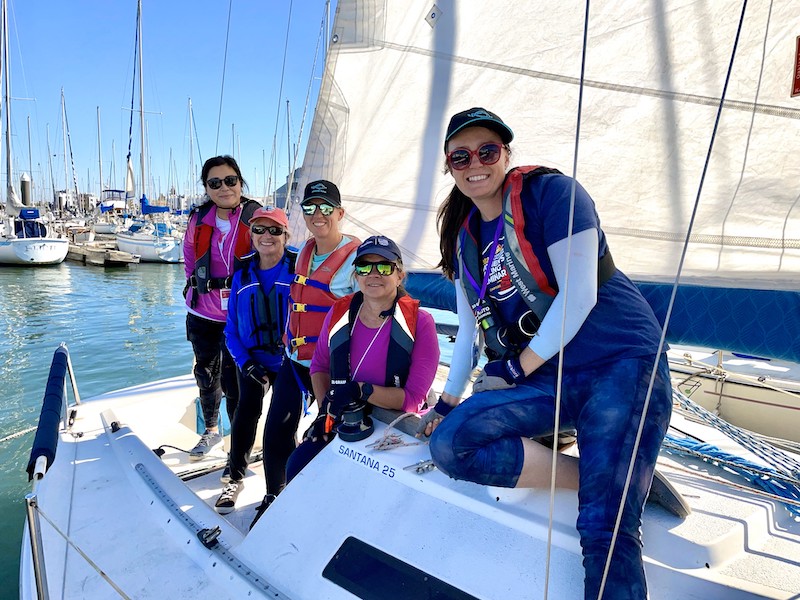
Tune in as the women share with Good Jibes host Moe Roddy how they fell in love with sailing, what stood out the first time they attended the seminar, how they went from participant to Chair, the curriculum for this year’s seminar, and what you’ll learn at the seminar.
Here’s a sample of what you’ll hear in this episode:
- How was the Women’s Sailing Seminar founded?
- The deeper why behind the Women’s Sailing Seminar
- Details about this year’s programming
- Building confidence and empowering others
- Tuna Tuesdays!
Register & learn more at WomensSailingSeminar.com.
Listen to the episode on Apple Podcasts, Spotify, and your other favorite podcast spots — follow and leave a 5-star review if you’re feeling the Good Jibes!
Check out the episode and show notes below for much more detail.


Show Notes
- Northern California Women’s Sailing Seminar, with Host Moe Roddy
- [0:16] Welcome to Good Jibes with Latitude 38
- [1:29] Welcome aboard Eileen Zedd, Shelli Bohrer, and Laurie Briggs!
- [5:41] How supportive, women-led spaces made racing feel safe and fun
- [7:06] How was the Women’s Sailing Seminar founded?
- [9:23] Each guest shares their experiences attending their first seminar
- [12:43] How Eileen, Shelli, and Laurie started taking on leadership roles in the seminar
- [18:40] Check out our Classy Classifieds at Latitude38.com
- Leadership
- [19:26] Transitioning from participant to organizer
- [25:39] Building confidence and empowering others
- [29:22] Tuna Tuesdays!
- [36:22] If you’d like to sponsor Good Jibes, email [email protected]
- Community Sailing
- [36:56] Eileen shares details about this year’s programming
- [44:35] Opening Friday night programming to the broader community
- [47:57] Short Tacks for each guest
- [49:55] Eileen, Laurie, and Shelli share their deeper why behind the Women’s Sailing Seminar
- [53:12] Register & learn more at WomensSailingSeminar.com
- Make sure to follow Good Jibes with Latitude 38 on your favorite podcast spot and leave us a 5-star review on Apple Podcasts
- Check out the August 2025 issue of Latitude 38 Sailing Magazine
- Theme Song: “Pineapple Dream” by Solxis
Transcript:
Please note: this transcript is not 100% accurate.
00:02
It’s just a wonderful event, impactful in so many amazing ways and come experience this magic. Come be a part of our community and grow with us. Ahoy. It’s time to cast off, laugh, learn, and have more fun sailing. My name is Moe Roddy and I am the host of today’s episode of Good Jibes, a podcast to help you experience the world of sailing through the eyes of the West Coast sailor. Each week.
00:31
Hear stories and tips from the West Coast Sailing Community about cruising, racing, and just sailing. Brought to you by Latitude 38, the sailing magazine for West Coast sailors since 1977. Make sure you visit our website and subscribe to Good Jibes to enjoy our weekly podcasts. You won’t be sorry. I’ll remind you again at the end of this podcast today and share with you a link to subscribe.
01:00
I have a very special show today. I have not one, not two, but three very special guests. They are Eileen Zedd, Shelli Bohrer, and Laurie Briggs. Together, they make up the past and present chairs of the Northern California Women’s Sailing Seminar. I can’t wait to hear what they have to say. Welcome to the Good Jibes podcast, Eileen, Shelli, and Laurie. Thank you. Thank you. Thank you. Thank you so much for having us, Moe.
01:29
Absolutely. think what you guys are doing is amazing. Let’s start a little bit first to find out a little bit about each of you and who you are. So, Eileen, where did you grow up? I was sailing part of your life growing up. You know, I grew up in the Bay Area, moved around a couple of places, but primarily in Oakland. I actually just got into sailing as an adult, so it wasn’t part of my childhood. I was around boats and
01:56
fishing and things like that, but not sailing. No. Okay. And what about you, Shelly? I grew up in Maryland. So my parents had a sailboat on the Chesapeake, just south of the Bay Bridge. And so they had a Bristol 32 when I was growing up. And so it made me very, very comfortable on boats, but they were not very good teachers. And then I stopped for a long time because for, you know, growing up reasons. And then I started again in the Bay Area. Nice. And Lori?
02:27
I grew up in San Diego and ironically my dad designed marinas as part of his job, but we were not boat related people. didn’t sail. We might take people on a bay cruise on one of those giant boats if somebody came to town, but sailing was something that was completely out of reach. wasn’t something people in my community did. So I didn’t get into sailing until just a few years ago up here in the Bay Area. Wow. So other than Shelly,
02:56
Eileen and Laura, you’re both pretty new to sailing in general. Yeah, yeah, I definitely am. Shelly, did you go, did you come up through a sailing program, like a junior sailing program or anything? No, I was way too shy as a child. My father totally wanted to send me to a sailing camp, but I’d like, no, because I knew it was full of boys and that scared me. So I don’t actually have a lot of formal training, I have to say. Okay, that’s kind of cool. Me neither. Well, Eileen, so let’s
03:26
How did you get interested in sailing? Really by chance. I started working at Alameda Marina. This was 2016, you know, being around boats every day. My coworker was like, you don’t know how to sail. You’ve never been out. She had a merit. No, Catalina 25 was her boat. And she was like, I’ll take you sailing after work. We went out on the estuary and I completely loved it. It was summer.
03:52
You know, got to see the sunset on the water. She’s like teaching me all these things. I was giddy. I was like a little kid in a candy store and just got hooked after that. So I have to thank my coworker for that. Oh, that’s awesome. She said who who what’s her name? Who is that? Her name is Kathy Fournier, and she’s actually a captain and she used to be a sailing instructor a few years ago. He volunteered for WSS in the past as well. So nice. Nice. And Laurie, what about you?
04:22
I took a class up at Sailing Education Adventures back in 2007, but I lived in Berkeley and I worked in like Sunnyvale. so, you know, getting up there during the weekdays to try to do evening sales, which just wasn’t possible. And then life happened and, know, I got divorced and I moved. then, you know, in 2021, I saw an ad for the women’s sailing seminar and I was like, wait a second. I liked sailing, didn’t I?
04:48
And so I was like, well, you know, I’m going to go check this out and through this seminar, I’ll know if I like it or not. And then I won’t feel like I left something unfinished. Right. And so I went to the sailing seminar and I was like, oh my God, I totally, I remember how to do stuff and this is amazing. And I love this. Um, and then I really dove in and I did go through a sailing school after that. I did, um, a couple of the sailing ASA classes through trade winds, and I still have more to do.
05:14
But that’s actually how I got into it was through the sailing seminar, which is why I’m such like so excited about supporting it because it’s it’s why I became a sailor. It’s how I became a sailor and how I met everybody. So yeah, but I like to have, you know, like formal like, yes, you know how to do this as well. So, you know, I sail with Shelly all the time and she totally knows how to do stuff. But my style is to go through instruction. And so that’s the route that I took. And I do more hands on. I was just coming to you. So, Shelly, you were shy.
05:41
You didn’t want to sail anymore. then, but now you’re back into it. So what happened? Yeah. So, well, my story, and I’ve told this at women’s sailing somewhere is that, my father was a screamer. so growing up, he yelled at us a lot. So, you know, you get to a point in your teens and you’re like, I don’t want to be yelled at anymore. And so I stopped sailing. And then when I moved here, I had a college friend who had a Ranger 23 at a Bolina Bay and started sailing with him. And then I always had work that
06:09
was really unpredictable hours. So I stopped sailing again and then women’s sailing seminar, want to say 2016 or 2017. I was like, oh, this is cool. So I was a participant for a couple of years and then really in 2020 when pandemic happened and all our people ran out and bought boats, like they bought RVs and campers, you know, lot of people went out and bought boats and they all needed crew. And so
06:38
And it was really one of the few activities that people felt okay about doing because it was outside. A lot of people were working from home. So, you know, the racing that was happening, especially in the estuary, I mean, there were so many boats out there every week, every race, it was crazy. And so it’s just tons of opportunity to be on the water. Sweet. And so you got back into it. There you are. And yeah, and I hadn’t raced until really women’s selling seminar. That was the first time I’d ever even…
07:06
thought about raising touched it and it gave me a chance to be like, what is this thing that seems so intimidating and do it in a really fun, safe environment that I wanted to keep doing it. Sweet. What was the inspiration to, I know I’d like to talk a little bit about the founding member who started this. Yeah, Eileen, why don’t you tell me about that? What are we 1992, Lyndon Newland, who’s still involved with the seminar.
07:35
she’s planning to come up this year and was there last year. For another woman, Mary Quigley, and I want to say there was a third, but I’m not too sure of the name. They went to a seminar to learn how to sail and there were a lot of men there because sailing is historically men. And they had the thought, wouldn’t this be great if there was something for women by women?
08:00
And, you know, they realized that as women, learn differently than men and we talk to each other differently. And it’s a different sense of community when it’s all women. And so they decided to try it out. They, you know, modeled it after a Southern California seminar that they went to. I believe Nancy Heard told me that that seminar is no longer, but they decided to bring it back to Island Yacht Club.
08:26
And here we are 33 years later, we’re in our 33rd year of this and Linda has been active with the seminar over the years. Um, after she stepped away, there’s been many of our other club members that took it on. Janet Frankle, Melissa Gruden, Nancy heard, um, I took over from Melissa and Nancy, um, Roz DeVry was running it for a year or two. So there’s been many women over.
08:56
the years that have taken the reins and really, you know, added to the community and kept this legacy going. Cause that’s what it is. It’s really a legacy event for Island Yacht Club. And it’s been, you know, for me, a tremendous experience. So, yeah, it’s almost a legacy event for the, for the day. Yeah, absolutely. I think we are the largest. Um, don’t, know that Corinthian they’ve done theirs. I think there are 40 something years.
09:23
But theirs isn’t as big as ours. Every year we’re bringing 100 plus women together. So. Yeah. So let me ask each of you to share story with me about the first time you attended this seminar. What stood out? What sparked something in you to get you back? The Women’s Sailing Seminar was really what I consider my introduction to sailing because it was really where
09:49
I actually landed in sailing. It’s something that I really liked. And I think the moment for me was that, you know, I had had a little bit of instruction, I guess it was like 14 years before I got back on a boat in 2021 for the seminar and things came back. They just clicked and I was, you know, I’m in a beginner boat and yet I’m at the helm and I suddenly feel very accomplished and I could do all the things and
10:16
by the end of the weekend, I just wanted to do more of it. And then all the women on the boat exchanged information and I’ve raced with some of them since then and sailed with others since then. So yeah, was very empowering. And so everything I do in the sailing community is about trying to give that to other people and especially women. Like just reduce any barriers or any hesitancy that anybody has. And I think I was very inspired to do that because
10:45
the Women’s Sailing Seminar was so welcoming. Great. Nice. And Shelly, what about you? You know, it’s interesting. There’s always going to be a group of people like me that went one year and then with the hopes of like, yeah, this is it. I’m getting into the community and then doesn’t sail until the next year. And I think that might have happened to me at least two years. It might have even happened three where it’s just like, I couldn’t figure out either how to fit it in or really how to connect with the community.
11:14
It was before we had so much digital space, which I think helps a lot with connection and community. I don’t know. And again, I think 2020, when the pandemic happened and all these people ran out and bought boats, I connected with a skipper that I, Dory and I sail with weekly still. And in 2020, we had the women’s sailing seminar as a virtual because we were not allowed to meet in person. somebody, you know, our skipper wrote in the text in the little chat, he doesn’t want to go sailing tomorrow. And I was like, yeah.
11:43
and we went sailing next day with masks on. But there was friends that I made at Women’s Sailing Seminar I’m still friends with now, still sail with now. It’s just that sense of community. I came from the motorcycling community too. And so also a very tight-knit group that’s organized around an activity. It’s just, it’s such a lovely aspect to it. And women, think generally are very supportive of other women. And so to create this safe space, to create a learning space.
12:14
It really, there’s nothing quite like it. And now you see that a lot of sailing schools, and we’ll talk about more about sailing schools this year, but a lot of sailing schools now are offering women only 101s or 103s because they see that there’s a need and a niche for that. I’m really interested in how you guys, all three of you went from not being involved at all, going to the seminar and jumping in with both feet now. Yeah.
12:43
So, Shelley and Laura, were each of you the chairwoman of this? So, it’s just Eileen, you’re the chairwoman this year, correct? Yes. So, I took over last year. Okay. Two years ago, when I was Commodore of Island Yacht Club, it was under the tutelage of Nancy Heard and Melissa Gruden, but they had already done it for maybe 10 years collectively.
13:11
And so they were looking to find someone that they could pass the reins to. And so they did the 2023 seminar, hoping that they could find, you know, someone who was willing to take it over. That didn’t happen. And so last year, you know, they’re like, you we need to pass the range. We’ve done it a long time. We’ve cemented our legacy. We want to do other things. You know, we want to travel. We want to go sailing ourselves. And I.
13:41
being involved in the club and not having, you know, the person to hand it off to, know, Shelly knows I, if there’s something that needs to be done, I’m like, yes, I’ll do it. You know, I might not know how to do it, but we’ll figure it out along the way. And so I said, sure, Nancy, train me. I’ll do it. Started last year, 2024 WSS was amazing, huge success. And
14:09
I’m someone who always talks about the magic of things and it was just a magical experience. We, we had things to work on and you know, really taking on the reins this year, but we decided, okay, how do we do this? And you know, I sail with Shelly, I sail with Lori. I’m always in contact with them. And I’m like, guys, I need help. Come on, help me. And they’re like, okay. And you know, they, helped a bunch last year and they said, you know what? We can do this. Lori, someone who’s super organized. She’s like, okay.
14:39
I’m going to make some spreadsheets. I’m going to get us a flow chart. We’re going to put together an SLP of who does what tasks and who’s going to do this. And we’re going to start a playbook. said, okay, thank you. And Shelly, she’s, you know, I say they’re my right and left brain, know, anything, any decision that’s made, I run it by them. You know, they’ve been my shoulder to cry on. They call me down when I’m stressed out about, okay.
15:05
Registration is going slow. Is this normal? What do we do? You know, or we need to do this. Help me. So they tremendous help. We we closed out 2024 WSS and we said OK. We’re going to take a month off and then we’re going to get back to work and look at what worked well. What did it work and then we’re going to get back to work and one of the things coming out of last year was we wanted to really focus on maintaining our presence throughout the year. So we.
15:34
We started to do events. started to do the women’s mixer. We started to do get out and sale days that were focused towards the WSS community. What else do we did? Do we do a couple of different? We did a first aid class, so we’ve done. We started off. We’re like, hey, we’re going to do an event once a quarter and then for awhile we’re like, OK, we’ve done something every month. We need to slow down a bit and this is all while we’re planning, right? We’re building our team. We’re planning. You know this year’s events were reaching out to sponsors. We’re bringing in people as we go.
16:04
And so it’s really been sort of like a grassroots effort with us at the top of the totem pole saying, Hey, how do we do this? What worked last year? What did it, who, who helped us out tremendously last year or did something very well that we can bring them back in to take on something else who’s new to the community that wants to step up and take a leadership position. So we’ve been planning all year. We’re almost there and it’s going to be amazing. So, and I don’t even think we waited a month. I think it was a week.
16:34
And like, because my brain was spinning and I was just like, and because it really, went off really well last year considering Eileen had never been to one and she just kind of took it and ran with it. And she saw all the things that can go wrong as well as all the things that can go right. And so while all those things were fresh, I called a meeting and said, can we just meet? Cause I knew Eileen needed a break, but I wanted to do a refresh. And we had a core group of women that are still a core group of this planning.
17:03
to kind of say, okay, like, let’s talk about it while everything’s fresh. And yeah, we’ve been meeting ever since. How many of you are meeting? I mean, I have three of you here. Are there more? Oh, yeah. There’s more. Oh, yeah. There’s a lot of us. Yeah. Yeah. It’s a pretty big group. want to say there’s like 14 maybe. Yeah, maybe like 12, 14. And everybody has like a specialization area. Because one of the things that we came away from with last year was like, hey, Eileen,
17:33
We know you’re capable of doing every single one of these things, but you’re going to go crazy and you’re not going to want to do this again if you take on everything. So let’s figure out what pieces we can give to what people. And so each person was sort of like, okay, this is the thing that I’m interested in. And then I lean kind of had to say like, okay, but are they going to follow through or are they going to, are they the person I want to lean on for this? And so it’s been great because yeah, it’s not, it’s definitely not the three of us. We just happen to be two people who.
18:03
She talks to a lot about sort of like, you know, what’s your opinion about this? like, and so she asked us if we would join her for this conversation, but yeah, it takes the village. And that’s part of this women’s sailing community in the estuary. It’s just this village of amazing people. And we get to see them all the time and work with them all the time and put this thing on. You guys sound great. I’m so, I’m feeling FOMO.
18:31
You are listening to the Good Jobs podcast. I’m your host, Mo Roddy. We will be right back.
18:40
Hey good Jibes listeners and Latitude 38 readers. Have you looked in our classy classifieds lately? It would be impossible for us to know how many boats have sold to new owners over the last 45 plus years of publishing Latitude 38. But we’re sure they have helped countless people realize their sailing dreams. Every month there are new boats listed that will fill someone’s sailing adventures. If you have a boat you want to sail or looking for that next boat in your life, the pages of Latitude 38 will surely have something to suit your fancy.
19:10
Pick up a magazine at a local marine business or visit our classy classified pages at Latitude38.com to find boats, gear, job opportunities and more. Then tell us your next sailing story.
19:26
Welcome back to Latitude 38’s Good Jives podcast. Let’s get back to it with my guests, Eileen, Shelly and Laurie. Shelly, how did you transition from being a participant to actually being part of organizing? I’m gonna ask you the same thing, Laurie. Well, one year after, I think 2021, I did both. I volunteered and I participated. And I think there was a while where the legacy members really
19:53
tried to do everything for everyone. They tried to, in a way, they tried to offer too much. And one of the things that we’ve come away with this year is like, let’s kind of pare it down. And that year was definitely one of those years. They were just like offering too much and then it kind of like, and then it just kind of becomes a little cuckoo. Really after that year, I realized like with the amount of time I’m spending on the water, like I’m getting, and mostly I will say like 80 % of who I sail with are women. The amount of time I was getting on the water and the experience I was getting.
20:23
I felt like I could put more energy into kind of helping. And there was many years where people did what Eileen tried to do last year. was like two people trying to put this whole thing on. And it was insane sometimes. And sometimes you never knew and sometimes you really do. And like with any all volunteer anything, we’ve all been there, right? Where people are really going to know and then some people drop out and some people, you know, and so it takes a lot like Lori said, you know, and so for me it felt
20:52
Like I get so much time on the water with so many women that like, how can I get more women on the water? Cause that’s always our goal and promote this thing that’s had such impactful resonance with me. Yeah. Yeah. I’m going to come back to that. So hold that thought. Cause I’m going to ask you about a moment or some, you know, that you saw somebody’s life change from learning this, but Lori, how did you transition from being a participant to being part of this and as an instructor and organizer?
21:22
For me, WSS was a springboard into sailing and into lots of other things. And I think that that’s the role that it plays for a lot of people. Some people come back and they come and take the more advanced courses. But when we look at the balance of our registrants, our goal really is to serve new sailors the most, because that’s about really bringing people in. And so for me, once I had arrived and I’m like, oh, I’m part of this community now, then
21:52
it became more important to me to keep it going and offer this to other people. And I’m also a type of person, which I think is a common trait of all of us who are involved, who if we see something and we think it could be done better, we just, we take it on. And so for me, was, I was a registration volunteer and I was like, huh, this is, okay, there could be some things done a little differently here. Just at the onsite check-in. And so I, there wasn’t really somebody
22:20
you know, leading it during the shift that I was there. And so I moved some things around and, then next thing, you know, I’m like running registration for the whole backend year, everything. so it really became like, identify something that you think that your skills can make better put in the time and then, and then make it happen. And because similarly to Shelley, you know, I had sailing time happening, you know, I was, I was racing, was sailing with people who I met through trade winds. I’d taken my classes at trade winds. So.
22:49
For me, this wasn’t a tool that I felt like I needed in addition to the other ways in which I was getting on the water, but I definitely wanted it to be available to others because I wouldn’t have originally just signed up for a sailing school. I would have been like, I don’t know. But I think this was a great introduction for me and I want that to be available to other people. And I was also like, would I rather attend a class or would I rather
23:17
make it so like a bunch of people could attend and and I was sort of like well I have other options for getting in the water so let me let me volunteer my time. Great and then I was going to ask Shelly about was there something that stands out that one of your participants said was somebody you knew have maybe changed their life with this program? So I last year sort of accidentally became the emcee.
23:44
The shy one. Let me remind my audience, this is the shy person speaking here now, Shelley. Go ahead. so the Friday night, so this year we’re going to change up a little bit. We’ll talk about that in a minute. But last year for Friday night, we have basically an optional party for people to come to. And so last year we had already decided we’re going to do a panel of women sailors. Eileen handed me a thousand questions and I said, no, I got this. And I started the panel by telling my story and how I got into sailing.
24:12
which is something that you guys do on your Latitude podcast every week. my biggest, what I wanted to see happen from that was that everybody told their stories because part of the community sharing and building is sharing your stories. What you learned that day, what you want to learn, how you’re, you know, who your skipper was, what everything. And when you, every time you get on a boat with people you don’t know, that’s what you do. You share your story. How’d you get into sailing?
24:40
You know, and women do it lot more than men because we also want to know what experience we have and men just sort of assume, you know, out of sale with other men. But we want to know what we’re, what, what, are we doing here? You know, and, um, and I, and that to me was, and then watching people do that for two days solid was totally amazing. And then I did actually have to pinch hit for an instructor last year, um, just for one day. And I ended up with advanced beginners.
25:10
And I had never instructed before. mean, I do a little bit on the small boat program, but that’s just to show people the boat. And that was actually really, really fun in terms of like, when you have to say things out loud that you know and show somebody and not, you know, and make it fun. Yeah. So that was super. That was, that was, that was a lovely day. And Eileen, since you are the organizing person for the, for last year and this year, did you get to participate at all?
25:39
You know, because you sound really busy. Did you get to like enjoy yourself? I actually had an amazing time, you know, it from putting in all the work last year and getting to the week before and a few days before and then the day of and then Friday night where all there, you know, everyone shows up.
26:04
They’re excited. They’re getting their name tags. They’re getting their registration packets. They’re meeting their instructors. You know, we had a really nice setup. We’re by the water. The weather was amazing. The sunset was gorgeous. Everyone was having a great time. And, you know, that’s one of the things that I feed off of where I’m like, okay, I like to say that I’m a connector of people. so seeing it all come to fruition.
26:31
and then looking back at all the work that it took and then holding the legacy of it and seeing, know, thinking about all the women that organized it before us and came before us and how everyone like literally from top down, every position is a volunteer. The boat owners are, you know, donating their boats time, the instructors, the boat owners, the guys that are helping us on the docks, you know, all of the organizers just seeing how amazing it is and knowing that.
26:59
we’re empowering women and getting them on the water and sailing school you have a great time like it’s amazing, know and just being in that you get sort of like an energy high and I do want to say that you know there were a lot of women who came last year for the first time who had never sailed before and who you know we’re beaming from ear to ear with smiles who had a great time Saturday we had a woman who was completely soaked from coming off the water and
27:28
She had no idea that she would actually get wet, but she had a blast. had, you know, last year during registration, we actually sold out and we had a wait list and Melissa Gruden did an amazing job of organizing our wait list and getting last minute cancellations and changes and things like that put together. But we had a woman who emailed us and said, you know, I missed it. Is there any way that I can attend this? I’m going through a divorce and I really need this.
27:58
We got her in, you know, that was all I needed to hear. We’re going to find a way to get you in at this point. And I think it was days before the seminar and she still sales. I have her on Facebook and I see her every other weekend getting out on a boat, going here to a destination and sailing and things like that. And she hadn’t sailed before. so for us to be the opportunity for her to become a part of this, but also the community for her to lean on in her time of need.
28:27
It’s just amazing to me. And, you know, they can speak to it as well. Like, yes, we’re a yacht club. Yes, we’re a sailing club and a racing club, but we also have a really, really strong and grateful community where if something happens, you need us. We’re there for you. We’re going to show up. We’re going to lean on you, you know, whether it’s a card when something’s happening with your family or
28:52
a cake for your birthday or you need to fix something on your boat or something happened with your car, whatever it is. So this has been an experience that has not only brought us together, but provided a support system in many ways on and off of the water. And so it’s really amazing. That’s really nice. That’s very powerful. What you just said. Yeah. It makes it hard for me to transition into the tuna wrangling.
29:22
That’s another branch of where, know. Yeah. Okay. So, and it’s good. Shelly’s here because she’s, she’s part of, uh, part of how I got into this because she kind of tricked me, um, at the beginning. So, um, as I understand it, there were a few, uh, Santana sailors who occasionally would try to get out for a sale on a Tuesday evening and they called it tune to Tuesday and they would send a email out to like the whole club or something and just be like, Hey, we’re meeting down at the docs.
29:51
if anybody wants to sale and that was kind of it. And at some point, Shelly reached out to me about the email list that they were using for this, which at the time had five names on it. And she was like, Hey, do you know anything about like Gmail? And, cause she knew like that’s like, Oh, ask me a tech question. I’m in, know? And so, and so I was like, Oh yeah, and somehow by the end of that conversation, I had taken on managing this event. And I basically reached out to the skippers and I was like, Hey,
30:20
If I get people down to the docks, like if I get people assigned to your boats, like will you take them? Like are you willing to tell me each week if you’re going out or not and so forth? And there were enough of these Santana 22 sailors who said yes that we went ahead and did it. So it’s been three years and now this is an event and it’s really centered around the Santana 22s, AKA the tunas.
30:47
But we also have other boats who participate, who call the Tuna Friends, who just love the event. There’s like a Catalina 22 and a Bristol 27 and a Santana 525. And we have over 170 people on the list now. And every week on Mondays, I talk to all the skippers via text, because I learned that individual is better for those skippers and find out who’s going out, who can take crew, anything special I need to know, because it’s a little bit like matchmaking with a job.
31:16
because I have to know like who not to put with who and who’s got what skills and who’s just, there’s a lot of personality stuff and in addition to the skill stuff on these boats. And then on Tuesdays, I send out the crew details, which is like where to go, who you’re with, who’s your crew, know, where to park, that kind of stuff. And then people get out on boats and it’s a range of people who’ve been sailing for their entire lives all the way down to people who, like some people, their first experience on the water is through a two and a Tuesday.
31:44
And for the other reason that I got involved in it was actually because after the women’s sailing seminar and I took my, uh, one-on-one class up at trade winds, I really wanted to get on boats. And I knew that racing was one of the ways where you could do it last minute. Cause I’d heard like, Oh, I Y C said, if you come to the race deck, we’ll put you on a boat. And I was like, okay, I’ll try that. So I went down to the race deck one night and the Commodore at the time, Roz radioed out and put me on a boat. And it happened to be a Santana 22.
32:12
And the skipper was like super nice to take me and I had a great time in race and we won, which is always fun. And through that, I met some of the other skippers and I was like, no, these are really nice skippers. These are really great boats for learning how to sail. If they’re willing to take people on, this is another opportunity A, for me to sail more selfishly, but B, for me to help other people get on the water. And the majority of that crew list that I mentioned is women.
32:41
So how does somebody find you? How do they find the tuna wrangler? If any of our listeners are listening and they want to start sailing, we’re going to talk about the seminar, but if they want to know the tuna wranglers. Yeah. So on the IYC website, there’s a link that they can write to and basically tell me that they want to join and I’ll put them on the list. And it’s like tuna Tuesdays at IYC.org. And then I just find out a little bit about them and their sailing experience.
33:10
Some weeks we can take everybody, some weeks we can’t, but it’s been a pretty great event. We get about five to 10 boats out every single week. There’s about 15 boats total that participate. That’s Tune to Tuesday. What am I forgetting, Shelly and Eileen, about Tune to Tuesdays? Oh, Alameda and Fortman are the two marinas that they tend to meet at. And it runs April through October. So every week from April through October. Every Tuesday during the summer.
33:40
It’s a casual sale and that’s what we have to just remind people. it’s a great way, especially new sailors or people that just don’t know how to connect with the sailing community. It’s a great way to sort of ease into it. Yeah. The meeting time is about 5.30. Yeah. 5.30 Tuesdays on the water by six or whenever you’re done rigging the boat and sail for a couple hours, some skippers stay out until sunset. Some
34:09
only sail for an hour or Sometimes groups meet up for a drink after or dinner and you can send an email directly to tunatuesdays at IYC.org. pitch. Nice, very good. All right, so Shelley, tell me about Divas of the Bay. What’s this? I actually I saw that in your list and that was one of our tracks that we did years ago and that was for people that wanted to do more bay sailing. We don’t actually offer that
34:39
sense, we restructured the educational tracks this year to be a little more straightforward in terms of newbie, newer beginners, then racing and cruising. so, D-Wan-Nabay was something that we offered in the past that has now evolved into something else. So if I’m going to pitch anything else about IYC, I’m going to pitch a small boat program. So we have a Santana 22 that belongs to the club.
35:08
And if you’re a member of IYC, and you do a checkout, you can have access to a Santana 22 for 500 bucks a year. And so for me, I don’t wanna own a boat, but I like to sail and I like to sail on days sometimes where there’s no races. And it’s been a great opportunity for me also to take responsibility of being on a boat and not just crewing. Cool. And IYC is that over where Sensen’s old marina was?
35:38
In Alameda Marina. So we don’t have a clubhouse anymore. Oh, that’s building is gone? Yeah, got torn down in 2020 by the development. And I think there was environmental issues as well with it. So it’s pretty amazing, though, how strong the IYC community is given that we don’t have a single physical space where we meet. Yeah. Yeah, it’s pretty awesome.
36:03
I’m a member of the Cruising Club of America and we don’t have a physical place either. It’s one of the wonderful things about it is the people are our fabric that make up the Cruising Club. You are listening to the Good Jobs Podcast. We will be right back.
36:22
Hey, listen up. We hope everyone is enjoying listening to the stories of West Coast sailors on our Good Jives podcast. We’ve heard lots of great feedback from the 150,000 listeners who’ve tuned in over the last couple of years. And if you have a marine business, we’d like to give you an opportunity to connect with them during upcoming podcasts. If you’d like to be a sponsor of future podcasts, you can email Nikki, N-I-C-K-I, Nikki at latitude38.com to learn more about how your company can benefit.
36:52
from sponsoring Good Jives.
36:56
Welcome back to Latitude 38’s Good Jives podcast. Eileen, so let’s talk a little bit about the seminar and the programming and the participant tracks. Okay. This year we have what, five different choices. We broke it down. like as Shelly mentioned, we took a look at our audience and the numbers over the years and we had two goals. One, to make sure that we’re catering to our current audience.
37:23
and sticking to our goal, but also to make things simpler, to avoid the chaos, which you can never avoid all of it, but just to make it easier planning wise. And we sort of realized that, you know, more of our advanced sailors, those are our instructors. We want you to instruct and we have a lot of people, a lot of women that come in and they’re beginners or intermediates. And so we decided that we wanted to focus on that demographic. And so we
37:52
we wanted to simplify the tracks and make it very straightforward and this is what you’re going to get. And so this year, our curriculum magician and organizer woman is Elizabeth Henderson, who took the reins last year and this is her first year organizing the curriculum and putting it together. She’s an amazing woman, a science teacher at heart.
38:21
She volunteers a lot with Sailing Science Center. And so she took on the big task of putting together our curriculum. And so she started a draft of that. We came back to the group and said, okay, this is what we want to offer. And so we decided on level zero. Zero is going to be, you know, I’ve never been on a boat before, or I haven’t sailed in a long time. So intro to sailing, welcome aboard is our first level course. And then we have.
38:51
of intro to cruising, intro to racing, and then. The second level is competent crew. Oh, competent crew. I’m like, there’s one I’m missing. So competent crew is the second level. Excuse me. Thank you, Lori. Which is basically, I’ve been on a boat before. I’ve been a crew member before, but I may not know necessarily all of the different positions. And I might not have, you know, I might not feel confident in that position. So it’s basically going to show you.
39:21
Everything you know, where you could say, you know what, this person needs crew. can hop on this boat here anywhere in the world and be competent in my ability to be a good crew member and learning all the different positions and what things mean and things like that. And then we go to intro to cruising or intro to racing. And then we have taking the helm, which is really geared towards women who want to skipper the boat.
39:50
or being confident in being able to take over if your skipper is incapacitated for whatever reason and being able to handle the boat, but also being able to handle the crew on board and really take charge of the situation. And so there’s five different classes offered this year. And then how is it structured? it, it’s over three, two days, two nights of? So the educational portion is two days. A Saturday and a Sunday.
40:21
Yeah, Saturday and Sunday. So the seminars three days, Friday evening is really optional, but we encourage all the women to come meet their instructors, meet other participants and be able to take part in the evening program, which includes the panel discussion. And then Saturday and Sunday, the educational portion starts. Saturday is actually a long day. So we provide.
40:46
meals, your registration fee includes your meals, it includes your swag, it includes all your educational materials, and any goody bag items as well. So Saturday, we hold a breakfast, classes start early in the morning around nine, you’re in class from nine until lunch, and then lunch and then you have an afternoon educational portion. So we broke up the classes into different blocks. But it’s really a long day. Saturday’s probably you’re in a classroom
41:15
format and when we say classroom that could be dockside in an actual class or group setting or on the water. And so what tends to happen is that we get women on the water in the afternoon because there’s not much wind in the morning but you’re really learning all day. And then we do an evening program ceremony. We have a guest speaker. Our keynote speaker this year is Marie Rogers. Yep. She sits on the board. Yeah.
41:43
So she’s well known in the sailing community and we’re super thankful. Her son is actually a member of Island Yacht Club as well. And so long day Saturday, breakfast, lunch, dinner, class in the morning, on the water in the afternoon. Sunday is a repeat of that, but it’s a shortened day. Breakfast, we do a skippers meeting for the racers and we do a sort of cruising seminar for the cruisers. And then we want to get women on the waters.
42:12
and as soon as possible so they can go out sailing on Sunday, sailing all day. And then we do an evening program like around six to close out the seminar, review, tell our stories, thank everyone for coming in, things like that. And then Sunday is our race day. So we actually do hold a regatta within the seminar. It’s mostly on our Santana 22s, but one of the things that we pride ourselves on is that we actually put on a race and
42:42
women get to participate in a full sailboat, sort of beer can style. And, you know, Island Yacht Club, speaking to us being, you know, not having a clubhouse, we still do all of the things. And so we kind of smirk when people say, oh, you’re a paper club. I’m saying, no, we don’t have a physical facility, but we’re not just a paper club. We do cruise outs, we do raft ups, we run races. I think last year we ran almost 30 races and the same for this year. So we have a strong racing program. support.
43:12
the other racing programs in the community. We do women’s sailing seminar. We do a lot of things. And so I personally don’t like when people say we’re a paper club because we’re a lot more than that. But yeah. And so WSS is one of those things where it’s like, all of this is packed into one weekend, but it’s amazing. So you’re, going to have, you know, your classroom time where you’re sitting in front of a whiteboard and your instructor is telling you.
43:38
you know, about sail trim and things like that. But then you’re also going to be dockside actually visualizing the different parts of the boat and how things work. And then you’re going to get out and go sailing. Last year we had cruisers. went all the way to Angel Island and they were, they didn’t want to come back because they were having so much fun and they got back late. And then we had women who had never raced before. know, just the being the energy of being in an actual race and getting to actually skipper the boat in a
44:07
actual race who had never done that before. So everyone’s riding on a high, but they’re also tired by Sunday afternoon as well. Yeah. Yeah. So this year we’re trying something really different for our Friday night, which is always optional for participants, but heavily recommended because it’s just so fun. This year we’re opening up to the entire sailing community, women, children. Anybody wants to come by Friday, we’re going to start at four in the afternoon and maybe get to eight or nine at night.
44:35
We’re gonna bring in some food trucks. We’re gonna have some merchandise there. We’re gonna have vendors from all over the community. So that’s being organized right now. So if you’re a vendor and you wanna be there, you should get in touch with us, get in touch with Eileen. And if you wanna participate, it’s free to the community. Just come by. And about how many participants do you get every year? About 100. 100? Oh gosh. Oh my gosh. Yeah. Where are they from? Where do they come from?
45:04
Oh my gosh, all over. So last year we capped registration at 100. This year we’re also capping registration at 100. We will do a wait list, but with us taking over the seminar and this being, you know, quote unquote, our second year, our goal is always to provide the value. The registration fee is $500. We do have some discounts here and there. do an early bird registration, but we want to make sure that all of the women are getting their bang for their buck.
45:33
and we want to make sure that we put on the very best program that we can. And so if our numbers allow us to go over a hundred, we absolutely will. But one hundred right now is like our sweet spot where it’s like, OK, we know we need X amount of boats. We need X amount of instructors to provide this experience and do it well for a hundred women. And so registration will dictate that. Last year we had a waiting list
46:03
We also had a few women that dropped out. Two years ago, Nancy and Melissa, ran a wait list and then they were able to push the numbers to 120. So we really just, we set a goal and then we navigate that goal based on how the numbers come out. And so there’s a lot of organizing and planning that goes into it. Sometimes, you you get someone that registers and then something comes up, life happens. So they have to drop out or.
46:32
someone missed the registration deadline and they’re like, well, can I get in? Yes, we’ll put you on a wait list. Absolutely. If something changes, we’ll get you in. Our goal is always to get anyone interested in, but we also want to make sure the ones that are in have the very best experience possible. What do you do for housing for them? Oh my gosh. Yes. So in the past we’ve done hotel room blocks, some volunteers volunteer room in their house, some boat owners let
46:59
instructors and volunteers and attendees stay on their boat. And then other women find housing. think this year we’ve been keeping track of where everyone’s coming from. We have women coming from Minnesota, Arizona. There’s about Oregon or women coming from Oregon this year. Someone’s coming from Florida. We just had our women’s mixer. What is that? Two weeks ago? I don’t even know. A woman who’s from Hawaii.
47:28
registered for the event and then local as well. San Francisco, Alameda, Oakland, Fremont, San Jose is on the list. It’s really amazing to have people coming from so far and you know far and wide who want to join us and be a part of this great community. Well you guys really rock. I think this is amazing. I can’t believe I’ve been here this long and thank you let this go by me. I’m going to change it up a little bit here but we’re going to come back. We’ll circle back.
47:57
This is just we call this the short tax and they’re just one quick answer. It’s just it’s just for people to get to know you better. Although you guys have come across really well on this podcast. I think it’s pretty clear, you know, your personalities are wonderful. But anyway, let’s let’s start with you. Yeah. What’s your favorite book about sailing? Oh, Shackleton. All right.
48:26
And Laurie, what’s your favorite book not about sailing? Oh, not about sailing. Never Let Me Go. Casuo Ishiguro. OK. And Eileen, if you could have coffee with anyone, alive or dead, who would it be? I would say my grandmother. Oh, that’s a good answer. Shelly, what’s the most important lesson you’ve learned from your professional career? Boundaries.
48:56
Ooh. I wish we had more time. Laurie, what’s the most important lesson you’ve learned about sailing? Be willing to take a little bit more risks. I’m a very safe individual. I like to know everything. But be willing to take a risk, trust other people, and it’s always been worth it. Nice. Eileen, who’s inspired you most in your life?
49:25
That is a tough one. I have to say my grandmother again. I don’t want to repeat answers, but I think she’s I think she’s the woman that has set the bar there. Nice, but there’s no rules in these questions. can can number over and over again. It’s quite quite alright. What’s the one question I didn’t ask that you wish I had and will start with you, Eileen? What’s the most important thing about WSS for you? Or why does it mean so much to you and?
49:55
I think for me, I’m someone who is very nostalgic and legacy is an important thing to me. And when I connect people, it’s always important for me to reach back because I’m always coming from a place of gratitude for the people that have come before me. And so as I’m planning WSS and putting it on and organizing and doing all the things, you know, I still talk to
50:23
Don Chesney who ran the seminar and volunteered for years and years and Melissa Gruden and Nancy heard and I make sure that we’re in touch with Linda Newland and making sure and Janet Frankel to make sure that we’re really You know one on the one hand making them proud Although we don’t do it like they did it. You know, this is our iteration of it and our interpretation, but it’s important to me that
50:51
We continue to tell their story so they’re not forgotten and that we reach back and bring them forward with us. And so that’s one of the things that I don’t take lightly. you know, it’s an honor for me to come behind them and step into the realm of this and be a part of it. So. nice. Very nice. Aw. All right, Shelley. Oh, God. Skip me. Go to Lori. OK, Lori.
51:16
The shy one wants you to go next. Okay, okay, okay. Yeah. Shelly loves to put me on the spot. I’d ask myself the question, why do you love estuary sailing so much? And for me, it’s been because it does feel like a very tight knit community. It feels very safe. It feels very comfortable. It feels very caring. But I also love it because you can go out on an estuary sail and actually see a lot.
51:43
because the wind shifts all the time and you’re not just on one tack and whatever, you actually have to move around. And so I think it’s a lot more fun than people realize once you get out there. And then the third thing is just practically speaking, I’m a parent and as a mom, I can’t be off sailing on the bay for an entire day all the time. And estuary sailing means I can go sail for two hours and see a lot and have a lot of fun. so that’s another thing is like for people who are like, oh, but I’ve got kids. I’m like, so do I.
52:13
Um, but you can totally do it. Um, so yeah, that’s the question that I would ask me. Okay. All right, Shelley, you’re up. Uh, I was going to say, where has sailing taken you? Okay. So, cause I feel like it’s such a amazing journey that I’m still in. Um, so I have become an offshore racer now. I have the privilege of doing that and I sail in the Bay a lot now too. And I was some really just amazing groups of.
52:42
people and I, know, and a lot of that began with WSS. And so we can’t stress that enough how much of an impact it’s had on our lives and our sailing and our community and our friendships and our families. Yeah. Beautiful. I’m going to leave the last word up to you, Eileen. Is there anything you’d like the listeners to, you’d like to leave them with before we wrap this up?
53:12
Yeah, sign up for WSS where registration is open. So women, women sailing seminar.com is where you can find us. Um, we are also on Facebook Island yacht club, Instagram Island yacht club. But if you go to our seminar website, um, registration is there click on register. I want to say we’re close to 70 registrants about now and.
53:39
We are planning to close registration at the end of August to help us with our planning. If we don’t hit our 100 goal, then there’ll still be spots available, but we’d like to close it out. This is a sellout every year. So register, get your tickets, come volunteer with us. Men are welcome to volunteer for the event. still, you know, are gathering instructors and boat owners and things like that. And it’s just a wonderful event.
54:10
impactful in so many amazing ways and come experience this magic come be a part of our community and grow with us. And what’s the date again? The dates? September 26 through the 28th, the last weekend in September. So it doesn’t matter if you’ve never been on a boat, if you haven’t sailed in a long time, our participants. Want to meet other women sailors? Yes, they want to meet other women sailors you’ll
54:37
You’ll find your crew come find it with us. We have a really strong and supportive community and you have to be at least 18 to participate. But the women who come range in in age from young to older generation and it doesn’t matter who you are. And I do want to say that women sailing seminar is open to anyone who identifies as a woman non-binary.
55:03
join us. You are welcome in this community and we are here for you. Eileen, Shelly, Lori, thank you so much for taking the time out today. I know you guys are all busy. There’s a lot going on. Not only do you have regular jobs, but you did this today too. So I know you’re deep into the planning for this year’s Northern California Women’s Sailing Seminar. So I really appreciate it. I’d like to check back in next year, okay? See how this year went. Oh.
55:33
That would be amazing. And thank you so much for having us. Latitude is always a great supporter of the event. So thank you. Absolutely. Thank you. So on that note, I would also like to thank you, the listener, for tuning into Latitude 38’s Good Jibes podcast. Without you, there would be no podcast. I also want to remind our listeners that they can go to Latitude38.com and subscribe to not only the Good Jibes podcast, but also to Latitude 38. My name is Moe Roddy, and I’ve been your host today.
56:02
Until next time, take the word impossible out of your vocabulary and dream big. Cheers!