

Episode #203: Michael & Michelle Polkabla on Winning the 2025 Singlehanded Transpacific Yacht Race
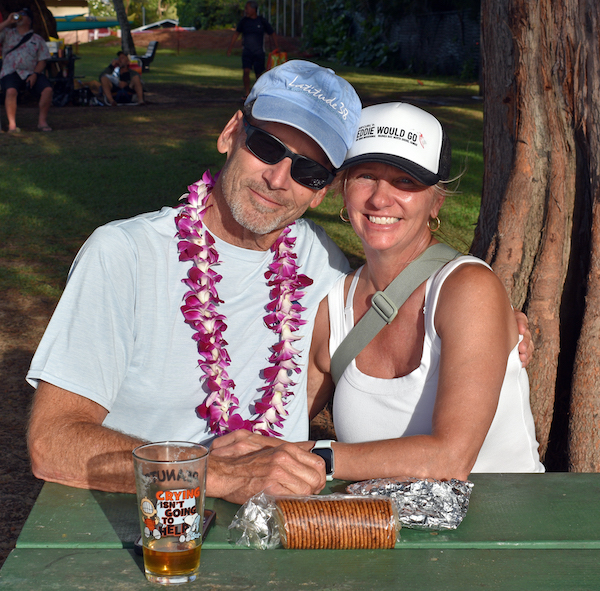
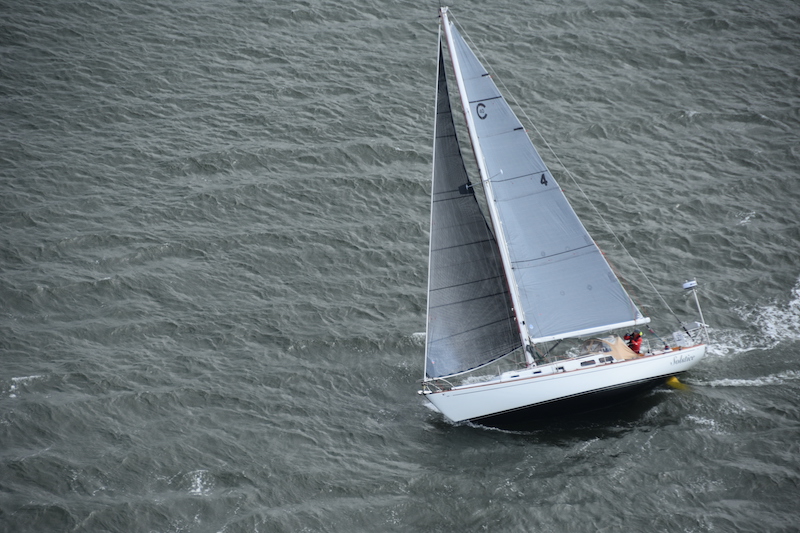
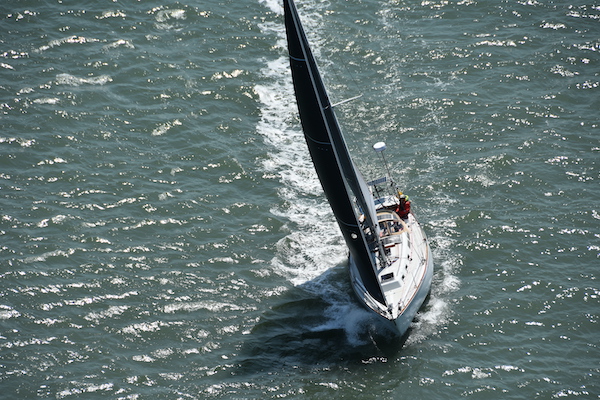
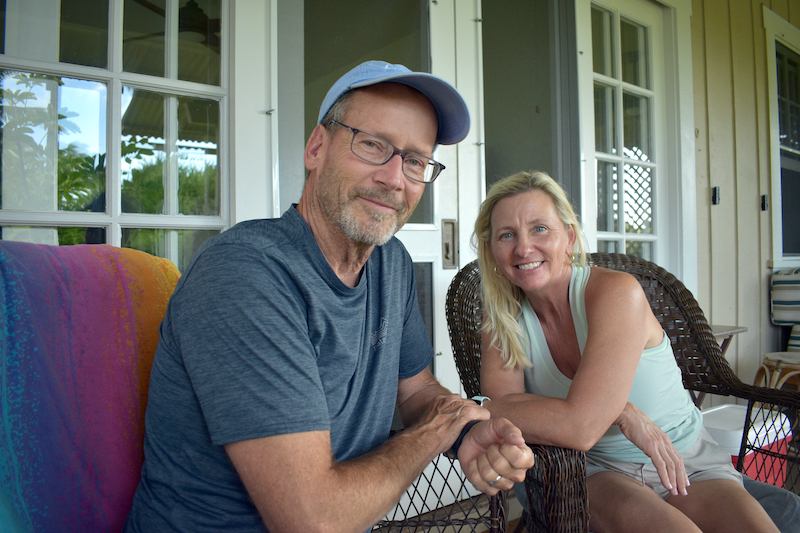
Welcome to this week’s episode of Good Jibes! Tune in to Hanalei Bay on the island Kauai, Hawaii, as host Christine Weaver chats with Michael and Michelle Polkabla right after Michael won the 2025 Singlehanded Transpacific Yacht Race. Michael finished 1st overall on his Monterey-based 1963 Cal 40 Solstice.
Hear why Michael hand-steered the last 20 hours of the race, the difficult wind and wave conditions as the race progressed, what was going through Michelle’s mind waiting for her husband’s arrival, crazy stories of hallucinations and sleep deprivation, and the most dangerous breakfast burrito of all time.
Here’s a sample of what you’ll hear in this episode:
- Michael’s sail configuration at the finish
- Why the last day of the race was the hardest?
- What was going on in Michelle’s head during the race?
- Michael’s favorite part of the race
- Why you’re never 100% ready
Learn more about Michael and Michelle at SFBaySSS.org and on Instagram @MPSinglehandedTranspac.
Listen to the episode on Apple Podcasts, Spotify, and your other favorite podcast spots — follow and leave a 5-star review if you’re feeling the Good Jibes!
Check out the episode and show notes below for much more detail.
Show Notes
- Michael & Michelle Polkabla on Winning the 2025 Singlehanded Transpacific Yacht Race, with host Chris Weaver
- [0:22] Aloha from Hawaii! Good Jibes with Latitude 38
- [0:57] Why was the last day the most difficult?
- [3:12 What were the wind and weather like during the final day of the race?
- [4:13] Michael’s sail configuration at the finish
- [6:01] What was going on in Michelle’s head during the race?
- [7:03] How did she feel when she finally saw Solstice on the horizon?
- [8:32] Michael’s favorite part of the race
- [11:22] Check out our Classy Classifieds at Latitude38.com
- Doing This For The Family
- [12:11] When Michael’s grandson called him
- [13:52] So there was a fire… flames and all
- [15:21] How does this race in 2025 compare to the SHTP in 2023?
- [18:51] You’re never 100% ready
- [19:26] If you’d like to sponsor Good Jibes, email [email protected]
- Hallucinations & Sleep Deprivation
- [20:02] What was Michael’s experience being alone during the race?
- [23:51] Michael’s favorite sailing books: The Little Island by Margaret Wise Brown and Endurance: Shackleton’s Incredible Voyage by Alfred Lansing
- [25:01] Expressing gratitude
- Make sure to follow Good Jibes with Latitude 38 on your favorite podcast spot and leave us a 5-star review on Apple Podcasts
- Check out the August 2025 issue of Latitude 38 Sailing Magazine
- Theme Song: “Pineapple Dream” by Solxis
Transcript
Please note: this transcript is not 100% accurate.
00:02
It reminded me that I’m not doing this for myself. I’m doing this for my family. I’m doing this for my fellow friends and sailors.
00:14
Aloha and welcome to Good Jibes coming to you from Hanalei Bay on the island of Kauai. We’re here for the finish of the Singlehanded Transpacific Yacht Race, the 2025 edition. I’m Christine Weaver for Latitude 38.
00:33
And I’m here with Michael and Michelle Polkabla and Michael has just completed the race and pretty much crushed the competition. So we wanted to hear a little bit about his race and it’s our understanding that the last day was the most dramatic day of the race. So why don’t we start there? It was difficult. I had some, some issues with my boat. The auto helm had failed. The electronics for the navigation had
01:03
buggered out on me and so I had to steer the last 20 hours with no auto helm and also with no navigational equipment other than my backup which was a handheld Garmin GPS. I believe that you were hand steering for the last 20 hours. It was 20 hours. I certainly calculated that when this all went out and I recognized that well you know 20 hours is doable by steering.
01:32
What was important was that I recognized that, you know, the finish line is at the end of that 20 hours. And so I was able to just let it all hang out, you know, just be spent at the end and spend my energy wisely up to that point. So I grabbed a pile of power bars from down below real quick and put them strategically located in my cockpit. Same thing with some water. And I was able to mentally
02:02
persevere and endure during that time. Obviously a lot of fatigue, to coach myself mentally in order to get to the finish. know that the competition was close. We had daily reports and Topaz, my friendly competitor, Lauren, on the Hobie 33 was coming up fast. I had a very narrow lead at that point and I knew he was there and he had a faster boat.
02:29
completely different boats. A Hobie 33 and a Cal 40 couldn’t be any different. You know, old school versus no school. And I was able to sail much more deep and on the rum line, which is dead downwind. And he had to sail more hot angles. He was going twice the speed, but the angles he was sailing at a greater distance. So as it turned out, you know, the old school won this time. what year is your Cal 40? Built in 1963.
02:57
And it’s hull number four. Hull number four. So it’s one of the very, early models of the Cal 40. That last day when you were out there hand-steering, what were the wind and wave conditions like? Well, we were fully in the trade winds. And the sea state was quite high, know, and it was variable. So the people who’ve been in the trade winds would understand that, you know, have kind of a roller coaster.
03:26
but you have a lot of these side waves as well too. So it was pretty difficult conditions. It took active steering. I have a backup autopilot, which is called a tiller pilot, which completely failed. I tried to utilize it. was just, it’s good for flat water, but from the sea state conditions and that we have, you have your big spinnaker up, the throttle is full on. It was not able to keep up. So it was a matter of disengaging trying to utilize that and just steer.
03:56
sail, drive that boat. So from a wind standpoint, was anywhere between about 15 knots of wind at the least to up to 25 at that time here and there and amongst the squalls. And what was your sail configuration at that point? I had a full mainsail. I had my symmetric spinnaker, which is my S4. So that’s the biggest one that I have. And there were times that I had my genoa stacil up.
04:23
in between in order to fill that gap. That was a very stable configuration and I think a pretty fast one. So did you finish with the asymmetrical spinnaker? It was a symmetrical spinnaker? The S4? Yes, although I took it down because I had no auto helm I was really strategically planning how to take it down because at Hanalei the winds, they head you so you’re about a
04:50
anywhere between a broad reach and a beam reach at the finish line itself. And lot of squally conditions were occurring right there. So my plan was to take that spinnaker down, but without an auto helm, I’m not going forward. So there was a lot planning going on there with that. And fortunately, I use a spinnaker snuffer. So it’s a spinnaker sock. I had let it, before this race, I had let it back aft to the cockpit. So I was able to snuff it.
05:19
in essence from the aft part of the cockpit. So I finished with just a mainsail up and a snuffed spinnaker and I kind of ghosted across the line at that point. It wasn’t pretty, but it was effective and I was able to get that spinnaker down and then cross the line. Well, in a way doesn’t matter that it wasn’t pretty because it was very dark out. You finished, I think just before midnight on July 4th.
05:48
Yay. And while you were going through all this, Michelle, your wife was here in Hanalei waiting for you and having some idea of what you were going through. What was going through your mind at that time, Michelle? Well, since I know Michael and the kind of competitor he is and the mindset that he gets into, because we didn’t have any time to have conversations. One thing that we did have was Starlink. And so we were able to communicate that way.
06:18
minimally because I didn’t want to distract him. knew he just going. He had a lot to do was I reminded him to put it all out there because when he got to the beach, don’t leave anything behind. But we had an agreement. The very first day of these races is he’s going to be safe, strategic and be safe because he has people at home that love him.
06:45
And I trust him wholeheartedly. And I know that there’s been times where he didn’t want to put on his safety gear. And he did. Didn’t matter if it was slower. And what was going through my mind is I just want to see his face. The race committee had rented a rib from the Kauai Sailing Association and the race committee would go out and meet each boat as it arrived. And you came out on the rib.
07:15
with the race committee volunteers that night at midnight in the big sea swell. And frankly, I was on there too. I thought it was a little bit scary. What went through your mind when you first saw Solstice come in and when you saw Michael aboard? Oh, yeah, there was a lot going on. Me personally, and I thought, I just looked around at the volunteers. They’re all volunteers and I felt really safe. They were amazing.
07:44
And I trusted that process. And I just looked out at Solstice, our boat, and I knew she was here. And I knew it would be okay. I was actually thankful that you came in after all the festivities at the 4th of July here on Hanalei Bay, because it was pretty crazy. I thought that actually I felt safer. Some of the flotillas that were on the beach had gone away and the fireworks had stopped. So, and I know that
08:11
Uh, Michael’s in a song. does such good self coaching. knew that he had it in him to be strategic because slow is fast. We’ve just been talking about the very last day of the race so far, but it was actually about a 12 day race, I believe for you. And what was your favorite part of the race? You know, it had so many dimensions to it. You know, a race like this has the first three days are a certain feel the middle part.
08:39
a different feel than the end was grueling and spectacular as well too. I would have to say the very end because it was a culmination where we knew what we had to do. It was to sail as hard as possible. In a way when my auto helm failed, it was the perfect time for it to fail and my electronics to go out because it forced me to grab that helm and to drive. An auto helm is only so good. It’s always catching up. Even the best of the auto helms out there.
09:08
are not as good as a human being. And we can anticipate where it reacts. So by putting my hands on the helm, I was able to sail that boat as hard as I could. to me, was, yeah, it was a job to do. It was very fulfilling. And I knew that I had to arrive. I had to rise to that occasion and do that. And I knew that all the competitors, particularly the one that was right behind me with Lauren on the Hobie 33, he was pushing as hard as he could.
09:37
And we gave each other a huge hug when we met under the tree the next day. so because we knew that each other put it all out there and left nothing on the table, just pushed and pushed. So that last part, think, was just a culmination of difficulties that had occurred. Everybody had difficulties out there. I heard the stories of a broken boom. I heard stories of lost autopilots and repairs and so forth. I had my own. had
10:06
electrical fire early on in the race. Day three, you know, had a solenoid on a propane short out and started a fire with flames and everything. I broke my tiller on the second day and the seas were really huge and it was blowing 35, you know, for that first night. And I fell on my tiller and I snapped it like a chicken bone. That had to be repaired as well too. So all of us went through that. You know, it’s a bit of a MacGyver kind of a thing where we each have difficulties and it’s how you strategically
10:36
get through them and fix them and make some corrections, which is important. that’s perseverance. That’s endurance. You know, but then again, the culmination to answer your question, the very end was, was really what it all just came down to. That had to have been my favorite. There were highs and lows throughout the race. The beauty of the sun rises as the sun sets. The peaceful time when let’s say we, you know, I did a smittaker change and I got a time up on the bow where I just sat down and just saw where I was at and soaked it up.
11:06
I was present and I looked around me and just at the magnitude, the solitude that we were all in and I embraced it. We’re going to take a little break and we’ll be right back with Good Jives.
11:21
Hey good Jibes listeners and Latitude 38 readers. Have you looked in our classy classifieds lately? It would be impossible for us to know how many boats have sold to new owners over the last 45 plus years of publishing Latitude 38. But we’re sure they have helped countless people realize their sailing dreams. Every month there are new boats listed that will fill someone’s sailing adventures. If you have a boat you want to sail or are looking for that next boat in your life, the pages of Latitude 38 will surely have something to suit your fancy.
11:51
Pick up a magazine at a local marine business or visit our classy classified pages at Latitude38.com to find boats, gear, job opportunities, and more. Then tell us your next sailing story.
12:06
FaceTime with our grandson in Canada. I did. I was on the bout just after a spinnaker change and my daughter calls me and I happen to have the Starlink on at that time. And so my phone rang, which is in my pocket, and I laughed. I go, oh my God. So I pick it up and my daughter was there FaceTiming me with our grandkids in Nova Scotia and Ashton, my oldest son, grandson, who’s three, he was leaning in looking in the picture. It’s like, what’s grandpa doing?
12:35
And I showed him the picture and then Tara, my daughter said, yeah, Ashton’s been following you on the tracker. He sees your letter G and he says, G is for grandpa. And so that just, just warm my heart so much. okay, well Ashton, you know, grandpa’s right here. I’m doing this and I’m going to do my best. And I showed him the spinnaker and I showed him around me and he was just, you could see him leaning into the camera, eyes wide open and just soaking it up.
13:03
It reminded me that I’m not doing this for myself. I’m doing this for my family. I’m doing this for my fellow friends and sailors. And what was fun is that I posted reels on Instagram through the Starlink. And I’ve never done this before. I’m not a social media guy. It was nice to share with people and to bring them along with me. And the comments that I got afterwards were that, thanks for being so organic and just real out there. And, you know, I was sometimes silly, but I’m not a professional at that. And I just…
13:32
showed him what it was like, the good, the bad, the silly, the scary parts. And it was fun. So it was good to share it that way. Well, we kind of skipped over the part about the fire, but maybe we should inquire a little bit more about that. And how did you resolve that situation? That was, guess, problem number one was the fire. I believe it was day two, the morning of day two, and I put a breakfast burrito in my oven and I had it turned on the oven. Hey, it’s a Cal Forte. You got an oven, right?
14:02
And so it was warming up and I was actually using the head to be quite honest. And so I was up front, all of sudden I’m smelling the smell and I thought, that is not breakfast burrito. That smells horrible. And so then I peek around from the front of the head and I see flames shooting out of this solenoid, which is in my galley area. And I was like, oh my God, I’ve got a fire. So I grabbed the fire extinguisher, two fire extinguishers, one next to me up near the head, one back in the galley.
14:31
I grabbed it and I come back. As the flames are coming out of this solenoid controller, I realize this is an electrical fire. You can’t just put it out with this fire extinguishing media that I have. I have to de-energize it. I recognize, all right, I gotta reach around this bulkhead and where the wires are coming out that are feeding this, I need to de-energize that. I them off from the back of the thing and the fire was still smoldering and still with flames, but I was able to control it at that point. That was a bit of excitement. And then after that, it was a matter of then
15:01
reconfiguring the propane so that it bypassed the solenoid, was direct plumbing, which was, you know, I had to kind of MacGyver things together and use the spare parts and made it work and touch bases with somebody back home, told them my plan and they said, yeah, that’ll work. I was able to do that. This was actually your second consecutive single-handed Trans-Pacific race. And I believe the 2023 edition, you came in second overall.
15:28
behind Jim Quancy on another Cal 40, Green Buffalo. I wonder how this race compared to the one in 2023. Yeah, that’s a really good question. And they were similar in certain ways, but vastly different. In 2023, was, I think, a little faster. We finished in 12 days. This was just barely over 13. The speeds were a little higher all around for 2023. I learned a lot. It was a
15:57
A similar race in that it’s multi-sectional. There’s the reaching days in the beginning. Then there’s the what we call the slot car section in the middle where you have just have a spinnaker up for a few days and you’re going from your reaching spinnakers then more to your running spinnakers when we cross what’s called the ridge. And when the ridge is crossed then it’s all downwind. That was the same. The strategy was that you you want to sail as close to the rum line as possible which is north but you don’t want to get too close to the Pacific High.
16:25
So, you we’re all looking at the same thing, which is, you know, our routing expedition is what I use and looking at that on a multiple times a day. You know, my thought on this one was I learned so much in 2023. What did, what worked, what didn’t work from a rigging standpoint, what worked and didn’t work from a sleep standpoint or nutritional standpoint physically, and also from a tactical standpoint, be patient. A person out there who’s doing these maneuvers does not need to do them quickly.
16:55
But they need to be done efficiently and they need to be done in a way that’s very safe because you want to minimize the times trips up and back from the bow to the cockpit and so forth. But I learned a lot from 2023 and I was in the boat was very much more prepared now. Now I was much more prepared now and I think preparation is just a key element to this this type of a race. You know, just be highly prepared because with contingency plans for when things go awry, when things break, you know, when you have
17:25
challenges that we all are going to face, it’s going to happen and overcome them. So my goal in 2025 now is to make fewer mistakes and be more mindful and have purpose with what I’m doing out there and to slow down and to be strategic. One thing I’ve observed is that I look at it kind of like having a baby. You’ve got the year before, two years before, you’re getting mentally prepared, you’re
17:54
getting your body or your boat or everything ready, your household. And then you go through like, okay, we got to do this, this and this. You got to take actions to get ready. But at the end, when you’re finally across that start line, you’re really never ready for what nature brings you. So what Michael is saying is like, you prepare, you prepare, you pair. However, I don’t want to see people prepare till they don’t do it because you’re never going to be fully prepared.
18:24
because life is just gonna throw you, we’re gonna say limes because we’re sailors, because it’s just there. A fire, really? A fire? So, you we could be as prepared as you possibly think you can, but I don’t wanna see someone never do something so big like this. It doesn’t have to be this, because they’re getting ready to get ready. That’s a good point. You know, you’re never 100 % ready. But where I was, I was confident.
18:53
in the fact that whatever Mother Nature was going to throw at me, that I would be as best prepared as possible to react in a way and make a good positive decision to react to whatever is given to us. And that confidence comes with, yes, a great deal of preparation, but you’re right, you can’t be prepared for everything. You just have to be willing to adapt and evolve while we’re out there. We’re going to take a little break, and we’ll be right back with good jibes.
19:22
Hey, listen up. We hope everyone is enjoying listening to the stories of West Coast sailors on our Good Jives podcast. We’ve heard lots of great feedback from the 150,000 listeners who’ve tuned in over the last couple of years. And if you have a marine business, we’d like to give you an opportunity to connect with them during upcoming podcasts. If you’d like to be a sponsor of future podcasts, you can email Nikki, N-I-C-K-I, Nikki at latitude38.com to learn more about how your company can benefit.
19:52
from sponsoring Good Jibes.
19:55
We’re back with Good Jives. I’m Christine Weaver and I’m in Hanalei Bay, Kauai talking with Michael and Michelle Pokabla. And Michael has just finished the 2025 single-handed Trans-Pacific yacht race and won it overall. And to resume our conversation, I want to bring up the topic of hallucinations and sleep deprivation because these things are very common for
20:23
long-distance solo sailors and I’m wondering what your experience was around that. It was certainly a factor. Sleep deprivation is very interesting. We’re pushing ourselves so hard and we’re getting such little rest. Myself, it was maybe 30-minute increments of some rest and then hours after that of activity. This activity was either physical or mental and navigation or a combination of both.
20:52
Yeah, for me, I was doing my best to manage it by getting some rest. And I know that 20 to 30 minutes can give a person some form of recovery. So even though when I close my eyes, I would not necessarily fall asleep, but I was in a meditative state and I’ve just tried my best to rest. What was interesting is when I would come out of that rest, whether it was an alarm going off on my B &G electronics, waking me up saying that there was a…
21:21
too high wind or there was an AIS target out there, I would snap into it really quickly. Immediately I would look over to what I would assume would be my crew on the boat and coordinate with them what’s going to happen. But there was no crew there. But I never felt alone. I always had somebody on the helm when I was taking a break. And there was somebody at the nav station. And this is more of a feeling of a presence of the people there. But it was also very comforting to know that
21:51
You know, even though I was solo sailing, you know, in my mind, I was, was never alone. Yeah. From a hallucination standpoint, I was comforted, you know, with that feeling of the spirits who were on the boat and we’re all on the same page and Solstice, the California, she was designed for the trans-Pacific race and she knows how to get there. And I talked with her a lot. She comforted me with regards to, we’re going to take care of each other and we’re going to get there in one piece. We’re to make this happen and we’re going to, you know, have some fun while we do it.
22:21
Another point as well too is that there’s a lot of sounds that are on the boat, know, the waves splashing and so forth. What the mind does when you’re very, very tired is you hear these sounds and our brains convert them into either music or noises that are recognizable. And so I was hearing the sound of the splashing of the stern waves and it sounded like a radio that was being tuned in an AM radio, an old school radio.
22:50
you know, it hits a channel and you hear a little bit of music and then you hear some, you know, a talk show. That was really interesting, you know, and I’m a scientist. And so I’m listening to this going, wow, that’s the brain taking just this mishmash of sounds and creating them into something that’s legible and you can understand. So that was comforting and also very interesting to me, you know, from a hallucination standpoint. And the other sailors, shared that as well too, around the tree at the talks at the end of the day where
23:19
And people agreed that was really common. So again, Michael and I were able to either text message or we had communication this, this voyage, which was really nice. And he texts me. I think I’m really tired. think I’m hallucinating and I’m hearing music in the waves. I’m going to go to sleep now. And that was one of those moments where I was like, okay, he’s still safe and I’m entrusting the process and I’m glad he’s going to get some rest.
23:50
I would like to conclude by asking you about maybe some books that you’ve read that have inspired your sailing career. Good question. What I’d have to say is that the first book that inspired me was a childhood book, a children’s book called The Little Island. It’s a story about a cat that travels to an island on his little sailboat and his adventures there on that island itself.
24:19
I fell in love with it. And every time I’d go to the library when I was a little boy, my dad was a school teacher and my mom was a nurse. And so they would bring us to the library and I’d always check that book out. And my dad finally purchased it. And so I have that book as well too. And that was inspirational for me. I just loved the water and sailing and so forth and an island as well too. Another book which is one that I listened to with my friend Austin book on a return voyage from the 2023 Transpac.
24:49
when we were returning the boat, we listened to the endurance, the story of Ernest Shackleton. what struck me about that boat is the magnitude of what the human drive will put people through and how just perseverance was able to allow these people to survive these incredibly difficult conditions. And during that trip back, were, of course we have our own little concerns, but those are things like…
25:18
The battery in my electric fan just needs to be recharged. Whereas these folks were just absolutely battling the elements and life threatening as well too. So it kind of put things in perspective, but to me it showed what the human spirit can go through and how with perseverance the human spirit can endure. So that was very influential for me as well too. Are there any last comments that you’d like to make before we sign off?
25:47
Certainly want to thank the race committee, all the organizers for putting this event on. It’s absolutely the top notch in every way. They’re all volunteers. They deserve such kudos for doing what they do, the passion that they bring to make us comfortable. You know, from the people who greet us at the very finish line, you know, to the organizers who put this all together for us with the zoom seminar so that we’re all best prepared as we can be and so forth. But really also the competitors, the camaraderie thoroughly impressed with.
26:16
every competitor who made this voyage, who pushed themselves just to the limit, you know, and even the ones who are not necessarily considering themselves very competitive, you know, when you get a person out on a boat, and they’re going to try to make that boat go fast, and they do, and everybody has a different boat. We have different strengths and weaknesses, and you know, playing to the strengths of your boat is important, and persevering through, you know, the mishaps and the little things that occur.
26:44
So my hats off to the competition. The competition is so solid in this type of an event. It brings the level up of everybody. I’m a better sailor because of my competitors in this race. know, so many people were pushing me hard. We were all seeing each other sometimes out on the water. You know, we see, we know where we’re at on the daily reports and we know everybody’s pushing hard and going fast. And, um, that’s what makes us all better. And so now here in Hanalei, we get to.
27:13
socialize again. And that’s really special. To hear the stories, to give each other hugs, to shake hands, to meet under the infamous tree at the pavilion, it’s a really special thing. So I just wanted to thank all the people who put this event on for all of their efforts. There’s so many of them. You know, there’s David Herigold, there’s Cynthia Petrocha, there’s Brian Reed, you know, there’s Thomas, there’s yourself.
27:38
You’re a volunteer as well. So thank you so much for doing what you do because it’s very meaningful for all of us, very fulfilling. So thank you. Well, thank you. Thank you for spending some time with us this afternoon here in beautiful Hanalei. It’s actually time to go to the tree right now. So we’ll let you go. This has been Christine Weaver with Michael and Michelle Picabla.
28:04
Michael sailed the Cal 40 Solstice all the way from San Francisco to Hanalei Bay in the 2025 Singlehanded Transpacific Yacht Race and we’re signing off. Mahalo for Good Jibes and good night!