

Episode #202: Dan Augustine on Keeping the Bay Clean
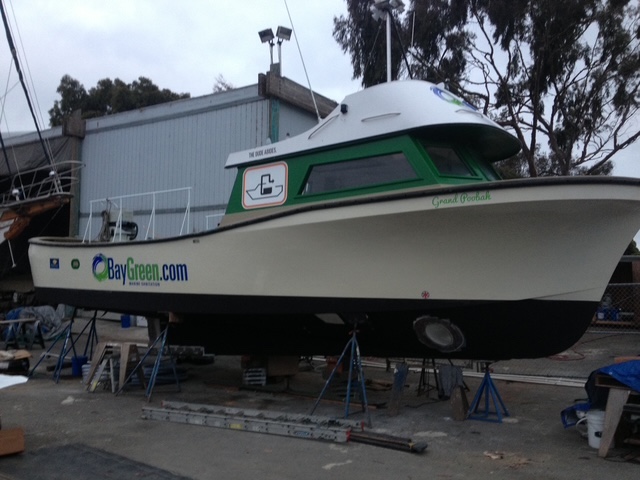
Welcome to Good Jibes Episode #202 in which we chat with ‘head guy’ Dan Augustine about doing the dirty work of keeping the Bay clean. Dan is the Owner of BayGreen, a mobile pump-out and marine sanitation service for boats, yachts and marine vessels of all sizes.
Tune in as Dan chats with Good Jibes host John Arndt about how he won free beer during his days sailing Lake Erie, his first impressions of the Gate and California, how clean the Bay truly is after he’s pumped out over 11 million gallons, how boat systems have improved over the years, and how he survived living aboard during the below-zero Cleveland winters.
Here’s a sample of what you’ll hear in this episode:
- How does teaching connect with building boats?
- Dan’s favorite spots in Mexico
- The Bay is more alive than 20 years ago
- How regulations are changing right now
- Dan’s reading recommendations
Learn more about Dan at BayGreen.net
Listen to the episode on Apple Podcasts, Spotify, and your other favorite podcast spots — follow and leave a 5-star review if you’re feeling the Good Jibes!
Check out the episode and show notes below for much more detail.
Show Notes
- Dan Augustine on Keeping the Bay Clean with John Arndt
- [0:22] Welcome to Good Jibes with Latitude 38
- [0:51] Welcome aboard, Dan Augustine!
- [1:29] How did Dan start sailing?
- [2:42] How did he end up in California?
- [4:33] How does teaching connect with building boats?
- [6:11] When did Dan get his first boat?
- [8:14] How’d they find a boat in LA?
- [10:40] Dan’s experience with offshore sailing
- [12:30] How was Dan welcomed to California?
- [15:03] What is a dock captain?
- [16:35] When did Dan get to cruise?
- [18:16] What has Dan done in the Delta?
- [18:38] Check out our Classy Classifieds at Latitude38.com
- BayGreen
- [19:36] When did they sail down to Mexico?
- [20:55] Dan’s favorite spots in Mexico
- [22:35] Where else in Mexico did he cruise?
- [23:41] What inspired BayGreen?
- [26:55] What were regulations like then?
- [30:02] The Bay is more alive than 20 years ago
- [31:22] What kind of sailing does Dan do now?
- [32:24] Are boat systems better now?
- [34:15] How does the Midwest work ethic help with sailing?
- [36:02] Is regulation changing a lot right now?
- [39:38] How does Dan spend his time lately?
- [40:34] If you’d like to sponsor Good Jibes, email [email protected]
- Short Tacks
- [41:11] Dan’s dream boat
- [44:58] Offshore excursions
- [47:13] Dan’s sailing book recommendations: Anything by Bernard Moitessier and The Care and Feeding of Sailing Crew by Lin Pardey with Larry Pardey
- Make sure to follow Good Jibes with Latitude 38 on your favorite podcast spot and leave us a 5-star review on Apple Podcasts
- Check out the July 2025 issue of Latitude 38 Sailing Magazine
- Theme Song: “Pineapple Dream” by Solxis
Transcript
Please note: this transcript is not 100% accurate.
00:03
I think that the heat of Baja and the winters of constant below zero in Cleveland just broke my internal temperature. So I’m pretty much comfortable anywhere.
00:14
Welcome aboard, everyone! It’s time to cast off for another show of Good Jibes. I’m John Arndt, publisher of Latitude 38 and the host of today’s episode of Good Jibes, where we’re going to hear stories from West Coast sailors wherever they are sailing in the world. And we welcome you aboard and do appreciate everyone’s readership of Latitude 38 and listening to Good Jibes. We’re the West Coast Sailing Magazine for West Coast sailors since 1977.
00:45
Today I have a guest, Dan Augustine, who lives aboard in Berkeley and is also owner of BayGreen, which keeps the bay clean. Welcome aboard, Dan. Hey, John, how are you? Good, good. Good to have you here. Thank you. So Dan was a teacher in the Midwest and somehow, we’re to find out how, made his way to California where he’s owned and lived aboard a hardened sea wolf, which he’s lived aboard in Berkeley and.
01:10
and also run Bay Green, which is mobile pump out service on the Bay Area and keeping the Bay clean and green. But also he spent a lot of time sailing, cruising Mexico in his boat and lots of time in the Bay. And so I want to learn more about all of that. so maybe to kick us off, Dan, maybe tell us the story of how you got started sailing or getting to Mexico. Well, sailing started, I grew up in Cleveland, also known as the Mistake on the Lake, Great Lakes there.
01:38
In college, we had a friend who had a J24 at the local Yacht Club and wealthy kid didn’t know how to sail and I didn’t know how to sail. So I went aboard his crew and basically we placed last every single race. But the great thing was that at the end of the season, because we were consistently last, we got free beer for six months at the club. They know how to encourage you to stick with it. Right, right. So, yeah, Sanlake here was it was a.
02:07
It was an adventure. really enjoyed the Great Lakes. Yeah, that’s great. Freshwater sailing, lots of black line squalls or other interesting weather patterns there. Yeah, Lake Geary is actually quite a bit like San Francisco Bay. It’s very shallow, so you get these short, steep, blocky waves. Yeah. And yeah, the squalls will come through. It’s not uncommon to be out there and seeing a water spout in the distance. You just sail around them. But
02:33
Yeah, the nice thing is you don’t have to wash the salt off the boat at the end of the day. Yeah, yeah. No, that’s pretty nice treat of the freshwater sailing. Yeah. So how did you make your way to California? I had my own insurance agency and just realized one day I got engaged and realized one day that I did not want to be eventually a middle aged guy with a bad polyester tie trying to sell a 90 year old lady homeowners insurer or I’m sorry, health insurance or life insurance as it were. And
03:02
My wife said to me, well, what do you want to do? I said, I don’t know. I have no idea. My whole family’s teachers become a teacher. So I shifted careers and just really liked the idea of helping kids. So I taught in Cleveland for a year and a half and then ended up being recruited by UCSF to join their master’s program and go teach at West Contra Costa schools with, I don’t know what the new politically correct term back then it was.
03:30
with behavioral disorders. And so basically I taught the kids in the iron triangle. I had some interesting times. What age group? Fourth, fifth and sixth grade. because the way the laws are written, every kid is entitled to an education, the district couldn’t kick them out for having a behavioral disorder. So oftentimes these were kids who just never came to school. So I would have a 15 year old who was in sixth grade. Oh, good grief. So my class went from like eight to 15.
04:00
8 to 16 sometimes. Wow, a good challenge. It was challenging. We were very hands on. I was one of a handful of teachers in the state who went through special training and was licensed to actually put my hands on a kid when they would go into crisis. You know, I had a full blown room lined with mats where we would have to like, you know, hold a kid when he’s when he’s upset and it was. It was actually a pretty successful program. I really I enjoyed it. The kids had a good time and wow.
04:27
Yeah, and the big thing that got through to him was building boats. Oh, really? Yeah. Wow. That’s great. Well, that’s how did you connect them to building boats? And of course, there’s programs around the Bay doing that kind of stuff right still today. And I think that’s one of them. There wasn’t a lot then. Yeah, that’s pretty much what it was. My classroom was performance based. And by performance, it meant you had to get along with everybody. Yeah.
04:49
So when you were doing well, you could come work on the boat and learn your fractions and learn your math and learn to read and follow directions and history in the boat project. But if you punched another kid, well, then you sat at your desk and then you had a pile of work. So I use the boats as a way to lure the kids out of that behavior. Wow. And in the end, it worked out really well. We ended up partnering with Treasure Island Sailing Center back then. Yeah. And they sponsored the kids. So
05:19
they would take them out on the weekends and teach them how to sail. And it was just a good experience for these kids who had lived by the Bay and never seen the water. Yeah, no, that’s great. I mean, I think a lot of kids, I mean, there’s so many great people doing that same kind of similar kinds of work at Baldy Marine Center, Blue Water Sailing, rocking the boat now in San Francisco or connecting kids to boat building. And I think, yeah, and I think sailing is a reward for everybody, right? I mean, that’s one of the reasons we do it. I guess they’ve got it too.
05:47
Yeah, yeah. And the kids really enjoyed it. One the things that convinced them is they all wanted to be basketball stars and most of them were pretty short. You know, you don’t have a chance to be a basketball star, but if you really want to go out there and just do one on one and stunt and show everybody what you got, you should really try sailing. Yeah. And, know, so we got them in the El Toro’s and it was a good time. Fun, fun. I really, I really loved it. Moving out here is a J-24 sailor. How do you connect to sailing or when did you got your own boat? How did you train?
06:17
Yeah, well after the J-24 incidents I ended up trading an engagement ring for a 24 foot wooden home-built wooden boat and knew nothing really about boats at that point other than how to not take direction on a J-24 and drink beer at the club. That was the extent of my ability. I bought a couple books and started putting the boat back together and two years later when it finally launched on very first night I went to lay down on my bunk and realized that my shoulders were too wide for the bunk.
06:47
So traded up for a 30 footer and then, uh, still the great lakes extensively on that, on a 31 foot y’all, you know, same thing. went to the back of a boat yard and said, Hey, how much for that thing back there? And they called the owner who was just looking to get rid of it. So I rehabbed it and fixed it up and sailed it. Wow. So that was, that was still in the great lakes or in Lake Erie. That was still in the great lakes. And then when we had the opportunity to teach out here, we came out to San Francisco and checked it out. And mind you, I was living on, it was Cleveland in nineties.
07:18
99 2000 and you know we had the upstairs of a two family house that was two bedrooms a bath and a half a big living room a dining room a kitchen a basement that we had an attic and a front and back porch with utilities with $700 a month. Wow. And then we moved out here and I was like wait wait this is what you get for I can’t afford to do that and to teach. Yeah. And I looked at my wife and said you know I’ve always wanted I’ve always wanted a cruising boat I’ve always wanted to sail the world why don’t we buy a boat live on it.
07:46
And I was blown away when she just said yes. And later she admitted to me, she just really wanted out of Cleveland and she had lived in San Francisco previously. So she really wanted to come back here. So she said, it takes living on a boat, I’ll do it. Wow. Nice. So we bought a boat in LA and sailed North and began our California story. That was the hardened sea wolf that you bought down there? Yeah, that was the hardened sea wolf. Wow. Why LA? Or there weren’t any boats locally? Or how did you end up finding a boat in LA? We were looking…
08:14
Initially, right after we were married, we went to the big show in Annapolis. And while we were there, I fell in love with the Formosa, just the old heavy teak. You didn’t see a lot of those on the East Coast or on the Great Lakes, I should say. So I never forgot it. And then when we came out, you know, I had to act like I knew what I was doing. So I told my wife, let’s look for Formosa’s. So we looked up and down the coast and found found several down south. Yeah. And flew out, made a deal on one.
08:44
It was supposed to be done in three months. He was finishing up the things we came out to buy it and we went in at night and he said we could stay on the boat. So we go down to the boat. I can’t find the electrical. So but I walk around my bare feet and I’m like, boy, the cabin soul feels kind of rough. So next morning when the sun came up, the entire boat hadn’t been touched since the first time I saw it. He was supposed to be doing it. And he looked at me and says, well, here’s the thing, kid. I know you need a boat and I’m not doing any more work and you don’t have time. So you’re to pay me full rate.
09:14
So our the head of the brokerage got wind of it and said Okay, I have something else for you and we walked down the dock and as was walking to the dock I see this beautiful boat in the distance. I was like, wow, that’s gorgeous Turns out we walked right up to it. The owner and his girlfriend had just come back from three years sailing Mexico on This was on a Tuesday. They had sailed in Saturday They listed the boat with the broker Monday and still had even begun moving out
09:41
I just walked up to him he said, it’s not really for sale yet. And I said, well, I’m pre-approved for a loan back when you could get a boat loan. And I’m buying something in the next three days. And three days later, the boat was ours and I was flying back to Ohio to get my stuff and come back out and fix it to fix it up and start heading north. Wow. That’s pretty good. I bet that owner was happy. He was. He was. We’re still friends. And the broker too. Oh, really? Still in debt. Yeah. Yeah. He’s in his nineties now living in
10:10
Snug, he’s a little place he calls Snug Harbor out in Montana. Oh really? Oh fantastic, wow. Did he get another boat after that or that was his? No, they kind of swallowed the anchor and went in. He was dealing with some health stuff, but for long time he was the librarian for the LA Maritime Museum. So the boat came with some really great stuff. Yeah, well so no wonder he also liked the historical kind of classic vessel, the teak and all of that. Yeah, yeah, exactly.
10:38
So now you’ve done offshore sailing before or mean coming north from LA can be kind of a heck of a trick. Oh, that was that was interesting. I know I hadn’t done anything offshore. I’d done. You know, I’d sailed through everything up on Lake Erie. I’ve done a little stuff down the East Coast, but you know that’s just something gunk holding as they call it on the East Coast out here. We don’t have anything we could really do that. So yeah, so a friend came out and we found some things surveyor miss so.
11:06
You know, we fixed chain plates and then sailed north and we made it LA here in just under three days. Nice. Well, was, you know, the boat was stiff and light because it been stripped of everything and we just. Yeah, we just hauled. Yeah, that’s pretty good. mean, motoring much or you’re sailing? No, we were sailing. We came around conception and as we came around conception, the engine overheated and shut down.
11:32
Boy, so it turns out we blew the head gasket So we were scooping oil out of the bottom of the boat filter it and we put it all back together and figure we had one start left So we sailed under the gate which was amazing, you you don’t see big bridges like that in the Midwest No, you’re coming you’re coming in from miles out I saw what I thought were giant bugs flying underneath the bridge and I realized they were kite, you know kite boarders But I’d never seen that before. Oh really?
11:56
You know, then these are the days before the Internet. So it was like, you know, or it was very, very early. You didn’t have this kind of, know, we had no idea. I was a farm boy. And. Yeah, so we sailed into Berkeley and. Realized we didn’t know the harbor. And we went to hit the engine and the engine didn’t do it. So it’s like three o’clock on a Saturday afternoon. We anchored off the Berkeley breakwater in July. Hounded.
12:22
just pounded for about two hours till Boat US towing or Boat US towing came and got us. Wow. Did you have a slip reserved? Yeah, we had a slip and when we got here somebody was in the slip so we had to take a different slip but the Marina was great the next day, know, they moved everybody around and got us in and I got to say I don’t remember the the name or of the towboat operator who came in the captain. Yeah, it was the greatest.
12:48
Welcome to California when he found out where I was from. He’s like, oh, do you know your way around Berkeley? said, well, I’ve been here once not really. Okay, he came back down with his Jeep two hours later. Yeah, this up took us for groceries took us to a great place showed us where to get restaurant. You know, here’s food. Here’s this here’s that basically and and then never sent me a bill for the tow and just said welcome to get welcome to California, which I thought was just a beautiful welcome. It was just it it was really really kind. That’s really nice. Yeah, yeah, that’s great to hear. Yeah, obviously.
13:17
Yeah, coming to a new state, getting a new home, and then having somebody take you around, that’s pretty cool. Yeah, it was pretty neat. So you then lived aboard, or have been living aboard since then? Ever since. Yeah. Yeah, we got here July 2002. We got here a week before my master’s program started for the education degree. Wow, that’s pretty great. So how’s, I guess you must like living in Berkeley, or how’s living in Berkeley?
13:42
It has its moments. I really like Berkeley. I lived aboard on my other boat in Cleveland for a few years and through the winters. Oh, you did? Wow. Yeah. And I was all the way up the river. I was like quarter mile down from the steel mill. So their cooling water would come down the river. So the ice on the lake would freeze and come up to within like a foot or two of my boat and then recede. So it was kind of cool. So I could keep my boat in the water all year round. But completely different living in California than living in Ohio. Yeah. What I found is
14:13
You know, people who live on boats seem to be number one. They love the lifestyle. Yeah, it’s just a good lifestyle or they’re getting ready to go cruising. Yeah, there’s a lot of people. Obviously most places that have a slips have a waiting list for their 10 % limit and obviously it’s remains an expensive place to live. But yeah, the live aboard lifestyle in the Bay Area is very cool. If you can find your spot and do it, it’s yeah, so many people love it. Yeah, we were here and I didn’t know I had to have a live aboard slip so.
14:41
We immediately had to rent like a little office and then sneak aboard and you know Berkeley got love. They were very the harbor master at that point. Anne Hardinger understood I was a teacher and was trying to help kids. They kind of turned a blind eye and then one day she came down the dock and said, hey, we’re trying to start a dock captain program around here and I would really like for you to be a dock captain. And what does that mean? Well, basically that’s what I asked her. I said, what’s that mean? She goes well, if there’s problems on the dock, you know you they tell you and then you come tell me.
15:12
Then that way, not everybody’s piling up on my door. And I thought about it and said, you know, I don’t know. It sounds like being a doc snitch and I’m kind of new around here. And she said, well, for somebody who plays so close to not being a live aboard, I would think you’d want to help. I told her, I think about it. And, know, she, she, caught me with it as I was coming over from school, from teaching. That was a little frazzled. So I went down and, know, had a beer and thought about it. And I went back up just before the end of the day and said, you know,
15:41
As a dock captain, would have to be here all the time, right? And she said, yeah, it’s like so then I’d have to be a live aboard. So I need I would need a live aboard permit to do this job right? And she said, OK, so that’s how I got a live aboard. And ever since then, you know, I’ve had a slip in Berkeley. Wow, good for you. That sounds like a fair trade. Yeah, it was. It was worthwhile. A dock captain? No, no, that program that program ended within like six months.
16:09
Yeah, it just all the captains were we just kind of end up in the middle and you can imagine between being between, you know, boaters and I was on the commercial fishing dock in Berkeley on K dock. So being between them and then the bureaucracy of the city of Berkeley, I just it wasn’t a great place. So the whole program imploded and it all kind of went by the wayside, but I still have my live aboard slip and that was good. Yeah, that sounds good.
16:32
So then you eventually got off to Mexico or did you do cruise around the Bay Area or what did, what was your cruising life? that summers off from teaching? Uh, summers off from teaching basically meant I was working on the boat. The job I had was ridiculously high stress. Yeah. So summers, I would just kind of go into a shell and work, just focus on the boat, you know, put it back together. And then, you know, I stalled the bay a little bit on Natasha, my hardened.
17:01
But my 31 foot that I had in Cleveland, I actually brought out here. So I was sailing that this little y’all regularly around the bay and I really enjoyed it. I remember seeing the I remember the first time I saw the annual article you guys put out about the great lap, you know. Oh, yeah. It’s use the bag bag. Yeah. That’s yeah. And I was like, oh, that’s brilliant. So the first chance I had, I did it. And then anytime I had friends come out, that’s exactly the route we would take. It was just they got to see the whole bay. They got to see all the microclimates.
17:28
And it was just a gorgeous day of sailing and ended with a downwind run into Berkeley. Perfect. Yeah, we should probably run that again. We haven’t run that in a while and remind new sailors that, yeah, the great Bay Lap is a really endlessly fascinating, fun and enjoyable sail. Yeah. Any kind of sailing you want is available on the Bay, which is something I really like. In Ohio, you have wind or you don’t. You know, the East Coast, it’s wind or you don’t. There aren’t a of places that have
17:57
this kind of geography to give you all the different, if you want nice easy sailing, down, you go up to the Delta. If you want to just let it rip, you just stay in the slot. Everything’s here. Yeah, no, that’s a beautiful spot and scenic as well. What have you done up in the Delta? Well, I made it to China Camp. That wasn’t really the Delta. And then I didn’t do much up there. I went up as far as Martinez.
18:23
and explored a couple little sloughs, but my y’all had a six foot draft. Oh yeah. It could get interesting. Yeah. It can get shallow up there. Yeah, a little bit. On the other hand, the tankers go all the way to Sacramento or Stockton. So they get some pretty big ships up there if you stay in the deep water channels.
18:42
Hey good Jibes listeners and Latitude 38 readers. Have you looked in our classy classifieds lately? It would be impossible for us to know how many boats have sold to new owners over the last 45 plus years of publishing Latitude 38. But we’re sure they have helped countless people realize their sailing dreams. Every month there are new boats listed that will fill someone’s sailing adventures. If you have a boat you want to sail or are looking for that next boat in your life, the pages of Latitude 38 will surely have something to suit your fancy.
19:13
Pick up a magazine at a local marine business or visit our classy classified pages at latitude 38.com to find boats, gear, job opportunities and more. Then tell us your next sailing story. And then you took the hardened down to Mexico. Yep. Yeah. We returned to Mexico. Um, 2009 I left teaching and we took off in just before, I think it was, um, like December 30th.
19:43
or right around the end of the year, beginning of year. And it was right before they issued taxes on the property underneath your slip in Berkeley. Oh, really? Yeah, because you pay property tax for the dirt underwear you’re renting. So I looked at it and said, I don’t want to spend that again. So we left. We’re just like, OK, we made a point to get out like a couple of days before that. Oh, really? Wow. So how long did you keep the boat in Mexico? We were there six years. Oh, really? Yeah.
20:13
I living down there full time or were you traveling back and forth? It started out full time the first year and then at that point I had the business going and the guy I was who was working with me that whole relationship went sideways so I was back and forth a bit. Yeah, couple weeks here months down there and then it seemed that every time I got to the point that I would start dreaming in Spanish and my language was know it was actually not. I wasn’t terrible. I would have to come back here for a couple months.
20:42
And then get back down here is like I was starting over so stumbling through the Spanish again Yeah, where did you what was your favorite spots in Mexico and cruising? What was your cruising like down there? Um, I primarily stayed up in the sea of Cortez coming from Ohio. There’s people but You know, I could drive 20 minutes and be in the middle of a field nobody around and then living in Berkeley in the middle of this metropolis of the Bay There was a lot of people so I really just kind of fell in love with just the complete desolation of Baja
21:11
Yeah, so you know we we based in La Paz and I sailed deep up into the sea, but I think East of San Francisco in the summertime when nobody is around. I mean that was my favorite time of year in Baja was June, July, August, September when it was too hot for the Gringos and it was even too hot for the locals and I would take the take the boat and I just go anchor up in East San Francisco for three weeks. I’ll be four weeks and just be up there all by myself and occasionally there be a big boat that would pull in. Yeah, but. It was pretty amazing.
21:41
Wow, for someone who’s spent life living aboard or some of life living aboard in the ice of Ohio and Lake Erie and then spending summer in in the Sea of Cortez. Now, you know, everybody says it’s just too hot then, but you found a way to manage it. I guess swim a lot or a lot of swimming. And honestly, I think that the heat of Baja and the, you know, winters of constant below zero in Cleveland just broke my internal temperature. So I’m pretty much comfortable anywhere. Wow.
22:10
That’s pretty good. you, I mean, going up there, uh, no water either, right? You had to have, you didn’t have a water maker or did you have a water maker? Oh, I did have a water maker. Ah, okay. Yeah. Cause I gonna say that’s, that’s a, you’d get parched pretty quickly up there at East of San Francisco. Yeah. Natasha had, think 140 gallons of fresh water. Oh, really? So yeah. So I mean, I was pretty luxurious. Yeah. Nice. Huh.
22:35
That’s great. then you, you did, you go down further down the coast of Mexico or where else did you travel to? No, it was, it was Baja. Um, I pretty much just, we were in Baja. I just could never get far enough away. Like I said, the business was running. So at that point I still had to have some kind of contact. Yeah. And I wasn’t sure where else I was going. At least with Baja, I could drive back and forth if I had to. Yeah. That was pretty much my, my Mexican cruising.
23:01
You’re one of the early adopters of the remote work life in Mexico. Now everybody with Starlink is doing it. Yeah, yeah, no, that was a shoot. I remember. Do you remember the days when they used to have that little? It was like a little tape recorder thing that you could upload and download email messages. Over us over a pay phone. We’re like we’re talking like late 90s mid 90s. That sounds familiar, but I don’t think I ever used anything like that, but I do. used to press it up against the phone receiver and yeah, exactly.
23:29
Yeah. Yeah. Yeah. That’s pretty different now. Yeah. So after you quit teaching and started up Bay Green, what inspired that or what? Teaching or helping or something? Yeah. I started Bay Green while I was teaching. You know, while I was in school, I was just a, I only had my temporary teaching permit. pay wasn’t great. And it took my wife a couple of years with her work to get her feet on the ground out here. So.
23:59
I just, was pretty much, I’d only been married a few years and I was raised by, you know, my grandfather always told me, take care of your wife. You know, very old school Sicilian. You got to make more than your wife. You got to dote on your wife and everything else. Well, that’s not possible. My wife was brilliant and will always make more money than I do. But even then, you know, we were scrambling living aboard and I wanted to take her out to dinner with my money. I wanted to buy her things with my money. You know, I, okay, great. I’m glad we share finances and stuff, but.
24:29
I really want to demonstrate, you know how I feel about you sometimes without you knowing I went out and bought something because you see the credit card. Yeah, right. So. I wanted something on the side and.
24:42
There was a woman who ran the parts counter at Boat US when they used to have the store over in Alameda there. Oh yeah. Or Oakland. Right by the highway. Her name was Mugsy. she always told me that she had this little business. And the one day I ran into her on my dock and she said, you really ought to consider buying this. Taking this over. I want to retire. And I’m like, oh, I don’t know. But then I looked at it and thought, hmm, well, it is an afterschool thing.
25:11
Yeah, I could work a couple days a week and bring in like an extra 500 bucks a month working a couple days every two weeks. Just doing these two marinas and huh? And then when I had my students on the dock, one of them we walked down K Doc to launch a boat and I pointed out my boat and they said Mr A, where do you go to the bathroom? I said, well, this head in the boat and he said, well, where’s the poop go? Like, oh, well, it goes into a tank and then you have to go over there. They went, does everybody go over there? I said no.
25:40
And then I realized I told all these 10 year old kids that some people poop in the water and then I couldn’t get any of them to even get wet for from from Baywater for like months. And then I put pencil to paper and it just seemed like a good thing. I already decided I wanted to try to save these kids and if I could help save the planet too, or at least just keep my little corner of a clean and take care of my wife. In a better way, it just all kind of came together and. Here we are.
26:06
Wow, that’s great. So she had a pump out business. I that was her business and she did that a couple days a week kind of thing. Muggsy? Yeah. Yeah. She did Oakland and Berkeley and Emeryville and she and her husband or partner, I forget which, they had a long time together, were both merchant marine sailors. Ah, great. So this was kind of their, this is our drinking money. This is our casino money. This is our fun stuff. But at that point,
26:34
When I ran, you when I met them, they were trying to move to Arizona to get out of the bay. Yeah. Huh. Interesting. Get even, even hotter spot. Yeah. Yeah. Well, Berkeley, yeah, Berkeley. Cool. But, uh, no, that’s pretty cool that the kids, you know, that’s the question. And you had your antenna up and are like, Hmm, that sounds good. Yeah. I mean, what were the regulations then? Or were they the same as then as now? And basically, uh, what’s compliance like these days or ability for people to do that? Obviously, um,
27:03
Richardson Bay has been a hot spot for controversy around live aborts and anchor outs and all that. I what? Yeah. How clean is the bay and how, is compliance these days? you think? Well, I can tell you, we just finished our 20th year and a couple of months ago for giggles, I went back and with the exception of the first two years in business, when I was just doing everything on paper and keeping a notebook, we’ve tracked every gallon we’ve pumped. Oh geez. And
27:32
We’re north of 11 million gallons now. Well, that you know, it’s not a pretty picture mentally, but no, no, but I mean so so seeing that knowing I’m keeping that out of the bay is great for a while We were working I was on the board of advisors for the San Francisco Estuary Partnership During that time they did a study However, if it was a five-year a ten-year study Over bacterial coliform fecal coliform, I think it was and other stuff in
28:02
the Oakland Elamite estuary. And as they noted a drop, there was a direct correlation to our growth. Oh yeah. We picked up and grew more and more and more. And correlation isn’t causation, but it still kind of, you know, it inspired me to keep going. Yeah. So the Bay seems, I mean, I’ve only been here 20 years. It seems like it’s cleaned up a bit. There are a lot of harbors.
28:30
I say a lot, there’s probably three or four that for the first five, six years I was in business, had these areas where just the water would be just be stagnant because it didn’t get a lot of tidal flush. Right. People living in there, you would just get these algae blooms. Right. And there was one in particular that was so heavy that I would have to shut off my outboard every 20, 30 minutes and flush it because it would just pull so much algae. Oh, really? And I’m not seeing that anymore, which is great. I think the water’s a lot cleaner.
29:00
And the other great thing we’ve seen in the last five, 10 years is as the older generations who weren’t used to having holding tanks have retired and moved on, younger people have come up. And now the one of the first questions people ask is, oh, gee, what do I what do I do with my sewage? Yeah, like it’s it’s not even in their head to put it over the side. Yeah. So and that’s and that’s and that’s cool. Every once in while, I’ll find somebody in the marina. You know, somebody will pull in next to me and I see him pumping over and they say it’s not a big deal. And so, all right, well, then just put your hat in that put on your head.
29:29
Get wet, put it on your head, tell me it’s not a big deal. Okay, get it? Yeah. Oh, good grief. Yeah. Well, I mean, obviously, I think the bay is a lot cleaner. Obviously, there’s a lot more impacts on the bay than people pumping out, you know, whatever the agricultural runoff and so many other factors. But it does seem like porpoises, you know, when I was first sailing the bay, we never saw the porpoises that we do now. And there have been a lot more whales, it seems. And that’s, you know, maybe different migration patterns. But
29:58
I think the Bay seems a lot more alive than it did 30 years ago. Agreed. Even over 20 years ago. mean, I don’t see it’s really nice here in Berkeley every month. There’s a trash pickup where everybody comes and they roam the they roam the riprap and they pull up all the garbage and it’s not uncommon. I won’t say it’s it’s not common, but I’ve seen otters here in Berkeley. Yeah. Yeah. And it’s like, you know, and seeing it out there, the whales right at the mouth of the gate and even coming into the Bay, like you were saying, you know, great whites. It’s just it’s
30:28
It’s nice to see the difference, so I think that’s just a just a societal effort in general. think people are more aware of how important it is to keep the water clean. Yeah, yeah, no, I think yeah, I know there’s efforts being made to get you know oysters growing again on the Bay. You know, obviously they were they were very popular food item for the indigenous people that were here before and then in the era of Jack London and you know you don’t feel like right now that the Bay Area was a home to lots of oysters, but it certainly was when.
30:58
For most of its history so and as well as you know the otters I have seen one or two in the bay, but that unfortunately that’s not so common I don’t think but maybe they’re around somewhere. Yeah, no you said they’re over one corner of the Marina here I just kind of seem to catch them as I’m walking by. Yeah, yeah, huh? That’s great. So what kind of sailing are you doing these days? Unfortunately, none. I just sold my last sailboat. had a pretty vicious car accident a couple years ago that did some damage.
31:28
So I can’t reach and look up at the same time, which means looking up and reaching out the trim sales just I can’t do. Wow. So are you still working in boats as far as doing the service? Oh, yeah. No, still Bay Green still running. We’ve got boats on the water every day. Yeah. I meant you personally with the accident, though, is that? Oh, me personally. At this point, I’m not out on the water. I’m just maintaining our boats and talking to harbor masters and help with clients and.
31:55
You know, I did all the repairs on the bay for a long time and I’ve stopped that now, but I usually talk to at least a client today. Well, I’m it. Look, this is totally fixable on your own. I can walk you through it and with the experience I’ve got 95 % of time over the phone and I can pretty much guide him through whatever system they’ve got. I don’t really. I’ll have to remember that next time I’m up to my elbows in a project. Yeah.
32:22
What’s, uh, you know, are the systems better these days in the newer boats or what’s, uh, yeah, what’s changed in the systems you’re working with? Everybody is it seems smoother, easier for people to manage than it did 20 years ago. Yeah, I think so. Um, the materials are definitely better. You have a wider variety of, know, my whole thing was just the plumbing and in that aspect, you know, heads are getting better. Electric heads last forever. Yeah. We’ve got some on our boat that we put in here in 2018 that I’ve yet to rebuild. Oh, really?
32:52
And there’s three of us using them dailies for the last seven years. And. Wow, I haven’t had the touch of it. I still have the rebuild kit. Really? Yeah, it’s it’s sitting in the head underneath the underneath the cabinet. That’s pretty. Yeah, I mean, I guess as most cruisers will say, they spend a lot of time cruising around the world looking for parts and fixing boats and, you know, avoiding those kinds of repairs, particularly that particular repair is, yeah, one people would like to avoid.
33:20
Yeah, you know the days of the old big heavy bronze, Wilcox, Crittenden, you know, those are great. They were great heads there and they’re still bulletproof. And what kind of area are you servicing these days? Oh, for Bay Green, we cover the whole bay. Yeah. Yeah, we’ve got boats from, we have boats, we have a boat station in South San Francisco. We have a boat station in San Francisco up here at 39. We have a boat in Alameda, a boat in the Oakland Estuary, and a boat in Berkeley, and a boat in Sausalito. Wow.
33:50
Wow, that’s great. Yeah. Well, I think, you know, I would say I guess people can go and get the, uh, you know, manage their own pump out on docs, but you can service you service them right at their slip. So you don’t even, they don’t even have to be there. Yeah. Yeah. Pretty much. have a friend who tells me, Oh yeah. You’re you’re, you’re the shit shuttling service. It’s one doc to the next. And, you know, it’s funny, right after I bought my boat, the broker came down and my head’s in my hands. And he sat down next to me he says, kid, are you okay? Like, no.
34:20
I just spent more on a boat than I did in a house in Ohio. I’m out here for a master’s program that I haven’t started yet on a job that, you know, I’m supposed to be getting once I get here, but no, I have no guarantee. It’s just a little panicking. He says, well, look, he says, you guys from the Midwest come out here with your work ethic and you’re going to be just fine. Just pretend you’re at home and act like you were at home and just work and everything will be okay.
34:49
And that’s kind of the way it’s all gone early. Yeah. So we just we just put in the work and try to keep the bank clean. Keep working. Yeah. When you buy your boat, did it have a holding tank? Yeah, it did. Yeah. The Natasha, the hardened. Yeah, it was a little six gallon holding tank. Six gallons. Yeah. That he called the rule beater. Oh, yeah. And so he didn’t use it much. No, he didn’t use it much. He managed to leave it full for me. And when he rebuilt
35:18
the cabinet in the head, he built it in and he left it full and then it ended up with leak on the top so I couldn’t get any vacuum to get it out. So extricating that was interesting. was well then your first time chance to get up to your elbows in the new world of, but sounds like a great operation that you’ve got going.
35:42
Yeah, we you know it was nice. had the Bay Green boat tied up next to us. So anytime that got full, I just kind of went out and hit the pump and pumped it into my, you into the workboat tank and went about my day. Perfect now that sounds good. What and so so as far as yeah regulation and or any other changes in the in the environment, I mean, you know, in some ways it’s interesting. People obviously worry about too much regulation in the world, but it certainly made a difference here. If this sort of.
36:09
often love hate with the BCDC because when that was founded, it did a lot to really improve the bay. And then, you know, it sort of is crept into areas where people would rather take it a little easier. initially the bay was pretty messy when that got going. Yeah. Some old timers have told me they did like, I remember what this place was like in the sixties. Believe me. Yeah. It’s it’s there used to be just cars sunk in the rip rap and oil slicks. And they said, it’s just, it’s just gotten better and better and better.
36:38
As far as regulations changing, I don’t know that much has changed as far as pumpouts. I know during the America’s Cup, there was a law that went in that any vessel, I think it was more than 100 tons, couldn’t discharge within 50 miles of the coast. Oh yeah. Something like that came up. And so when the America’s Cup came, we built a boat just for the America’s Cup. And we were contracted through two big logistics companies to handle
37:08
I think altogether there was over a hundred of them between super yachts and mega yachts that were supposed to be coming in. Oh, really? And then when the sailor died. Yeah, Simpson, that was tragic. You know, and all the racing was delayed. Yeah. That everything got pushed. None of the yachts showed up. And when I asked why, said, well, you know, the owners aren’t really aboard. It’s here. So they’re here for the America’s Cup. But then the boat’s already scheduled to be somewhere else.
37:36
So it delays me they’re not coming in. So, you we reacted to one regulation change and like, all right, we’re going to do this. So we built a boat that would move 3000 gallons at a time and only service like five, six boats that were here. Oh, good, great. But otherwise with the regulations, I think a lot of it is really just more societal. Yeah. Well, I remember, yeah, we used to go sailing along as a kid. We, you you’d crack your aluminum beer can and.
38:02
Bend it in half and throw it overboard. Yeah, it’s all just that was just the way life was at the time. Yeah, we didn’t know any better. Yeah, didn’t know. Yeah, exactly. And obviously now it’s and people cleaning up the shorelines in California coastal cleanup. All the great programs and yeah, it’s definitely getting better though. There’s a lot of years of history to be cleaned up. Yeah, there’s I know that there’s what surprised me was in Gas House Co. We went in there once on a piling job to sleeve pilings.
38:32
Yeah, and back before I know they’re getting ready to rebuild it now. Yeah, well, yeah, but we basically were putting plastic sleeves, these big plastic HTP pipes over the pilings, right? And as they’re going down, we found that buried in the mud beneath them were years of old tires. People would use the snubbers for their lines. Yeah, and we pull one out. We pull two out and then we get the next one and it’s covered in this black ooze.
38:58
And the Harbor master time came around and I was like, don’t touch it. Don’t touch it. Don’t touch it. Well, we had no idea. That’s why they’re going to be cleaning out gas house code is just all that pollutant from the old power plant that used to be there. Right. There’s just muck. So, you know, the fact that cleaning that kind of stuff up is that that makes me feel better about the bay, too. Now they’re taking pet, you know, they’re taking care of things that are really deep. Well, that’s yeah, you know, that’s the flip side is the worry of stirring it up again. But it is. it’s certainly nice to piece by piece things getting cleaned up.
39:28
And it’s yeah, you know, eelgrass growing back in Richardson Bay, hopefully some recovery and lots of elements of the base environment. You’re you’ve sort of gone to the dark side with the live aboard powerboat these days, but in sailing, you get out there as a recreational guest crew or anything like that anymore. You’re here. I got open invites on several boats. Unfortunately, I don’t get to take it get to do it very much. You know, I’m maintaining. Well, let’s see, we have.
39:57
One, two, three, four, five, six, six work boats in the bay. have another two up north and then my own personal boat. down to just one personal boat now. So nearly all my time is spent just maintaining boats. Yeah. I have an 11 year old daughter that just, you know, I, I did. I’m an older dad, so I just realized how precious my time with her is. Yeah. So I do my best to make sure I’ve had time for her and my wife and.
40:23
So I don’t get to sail much, I do have a couple of open invites and I expect that here in the next year I’m going to be taking people up on those. Yeah. Well, that sounds like a pretty good fleet of boats to take care of. Yeah. It keeps me busy. Hey, listen up. We hope everyone is enjoying listening to the stories of West Coast sailors on our Good Jives podcast. We’ve heard lots of great feedback from the 150,000 listeners who’ve tuned in over the last couple of years. And if you have a marine business…
40:51
we’d like to give you an opportunity to connect with them during upcoming podcasts. If you’d like to be a sponsor of future podcasts, you can email Nikki, N-I-C-K-I, Nikki at latitude38.com to learn more about how your company can benefit from sponsoring good jibes. Do some short tax and ask some quick questions here.
41:13
And just to say, you know, favorite sailboat making model. Is there a dream boat? If you were to look out at all, you’ve, you’ve boarded and serviced a lot of boats out there. there a favorite amongst them all that you would love if you were to sail again? know, and that’s funny because we we’ve worked on everything from 19 foot day sailors to 400 foot coast guard cutters. Um, I’d have to say I really enjoyed. There was a, there was a custom cholly, um, that was built for the.
41:43
chairman of Raytheon that used to be raced back and forth. A dear friend of mine bought it and he finally sold to a guy who cold molded it and then we raced it and it was just it flew. But that’s not that’s not a common one. Swans are nice. I enjoyed sailing on a swan but I think my all-time favorite would probably be just as far as how went through the water for me would either be
42:10
It’d be a three way tie between a seafare yalt, 31 foot. 31 feet with an eight and a half foot beam. It’s narrow and it just goes, lays over and just, it’s beautiful. Of course, my hardened. I sold it and I sailed it for so many years that I didn’t even really have to look up. I could just feel when something needed adjusting. And then,
42:35
My bucket list boat that I had, I bought, and then I had the accident within a couple of months and I never really got to sail it much was a North Sea 27. Oh yeah. I really enjoyed that little North Sea 27. I thought it was just a stout little ship. Yep. Yep. I had a friend with one of those and yeah, they’re great little solid boats, know, nice lines, classic. mean, you clearly, as you label these off, you have an eye for the classics, the carbon and all the other stuff. Yeah. You definitely have an eye for that.
43:05
the classic feel and look of boats. Yeah. Well, you know, I always wanted to sail because I was a kid. used to, uh, my grandpa would make root beer floats and we would watch on the old UHF channels. You would watch Sunday afternoon with super host and it was always Sinbad movies. So when I grew up, I knew when I wanted to grow up, I wanted to sail. I wanted a sword. I wanted a beautiful woman and I wanted to see the world. just, I wanted adventures. Yeah.
43:32
Sinbad’s boat. There you go. That was my favorite. I would take Sinbad’s boat if I could get Sinbad’s boat. That’s amazing. I think there’s quite a lot of people that had some, yeah, youthful cartoon or movie or something that got them out to the sea. That’s pretty funny. Well, yeah, the North Sea 27 is a great little classic boat. And I haven’t seen one around for a while, but I think they are great little boats. Yeah, they’re not common here. There are a couple here in Berkeley. fact, mine is going to stay in Berkeley. And what I really liked about that boat was the fact I could put it on a trailer. Yeah.
44:02
I thought, hey, know, all right, I’m getting older. I’m a little banged up. My wife isn’t in the she doesn’t mind the sailing. She likes being there, which is great because I can go out in middle of the ocean sail around for six months, never see land and be perfectly happy. I don’t want to see land. But with the North Sea, I thought it was a good compromise. You know, I can trail it up to Puget Sound and sail up there and she can fly up, meet me and we’ll sail there. And then it’s done. goes on a trailer and I take it to Baja.
44:26
And that was kind of our plan was to take that and then eventually end up on the East Coast where we would sail. I’d take it across the pond. How fun and then. You know, plan on doing the European canals because we can drop the mass and it’s the perfect size for the European canals, right? Right, yeah, no, that would be really fun. That’d be a great bow for that. Yeah, how about offshore? Have you done much offshore? I mean, you’ve done up and down the coast into Mexico or any other voyages? No, I mean up and down the East Coast. I mean the Great Lakes, you know.
44:56
I mean, I guess technically offshore when you’re dead in the middle. Yeah. Yeah. They’re big. I haven’t done any major passages. We were supposed to take off from our original plan was when we got the La Paz was winter there and then take off and do the Panama Canal and go to Europe. And a couple of weeks before we were supposed to leave, I stepped up on a dock and dislocated my knee and had to have knee surgery and, you know, was laid up, missed a weather window.
45:26
You know, then the business got back on my feet. Business goes sideways. So I never really had the opportunity, but I always wanted to. Yeah. Yeah. Well, life, life takes some other turns. You gotta, you know, change for the wind shifts. Yeah. Yeah. Yeah. How about you get back to the great lakes and sail or is that I haven’t, I tell people I escaped Ohio. It’s a great place, but it never clicked for me. And the one thing I noticed when I go back now,
45:54
And I’ve been out. was actually out on a friend’s boat last year and he had a tiny 37 on the lake on the lake. Yeah. Yeah. And it was nice, but coming from, never understood the difference between fresh and salt water smells. People would say Lake Erie smells funny. I never noticed it because I grew up there. Yeah. So I came to California and then I went back and realized the whole lake just smells fishy. Yeah, that’s funny. Yeah. Well, here you have the fresh salt air. There’s something about the crisp fresh salt air that
46:24
Yeah. Pretty great. Yeah. And honestly, when I go back, normally I’m catching up with old friends. And one of ways that came up on the water before I got into sailing is I’ve worked on the tugs and barges and freighters and, you know, little stuff around Cleveland. Yeah. So you got into the commercial part of the, of the Marine business pretty early on then. Yeah. It just, it was kind of one those things. I just made a friend who said, Hey, I got this old tugboat. I do side jobs. You want to come handle a line? Yeah. And then it just kind of grew to.
46:52
Hey, we need to we need a hand for this or hey, can you come do this? And then one thing led to another and. Yep. Now you’re salty character started on water like. Yeah, great. How about last question? How about a sailing theme book? Have you got any books that inspired you along the way or that you’d recommend to our readers and listeners? There’s, you know, anything by Mottessier. just all of them.
47:20
Karen feeding of the sailing crew by the parties. I like that one. And two years before the mast was good. Yeah. I just reread that recently. That’s just a great story. It’s just hard to imagine California in that era. in some ways, this seems a long time ago. And some ways, it seems like just the other day that it was that barren. Yeah. Well, when we came up the coast and I realized, looking at the chart, Dana Point. Yeah.
47:47
And then and then a couple days later at dawn, I mean, I was like, oh, the book you read in college, the book that you just have read and read and dummy look where you just were. Yeah, yeah, I know that. I think it was Dana Point when they his son went back out years later to see where his dad had sailed and went to Dana Point. He said the population, the housing population is double is going from one house to two in Dana Point. And that was like 1845 or 60 or something like that. So yeah.
48:16
It’s grown a bit since then. Well, Dan, great. Thank you so much for the time and any other maybe questions or comments, things you wish I’d asked or appreciate your time with us here now? No, no, I just appreciate you taking the time. know, we’ve been, BayGreen’s been around 20 years now and it’s just, it’s, I can’t believe it. It’s. Yeah. Well, congratulations and happy anniversary on 20 years and helping keep the bay that much cleaner. It’s certainly the results are in the, in the bay. You can see them.
48:46
I hope so. I just under-promise and over-deliver. That’s the way I was raised. And that’s kind of how our work ethic here is. We do everything we say and then some. Yeah, great. Well, next time I’m up to my elbows in a job, I’m going to give you a call for that. For sure. For sure. It’s not a great skill to claim, but it’s like, hey, I know poop better than anybody. Well, it’s one thing that’s not going to disappear in AI.
49:16
That’s for sure. No, no, that is true. I don’t know that AI is going to be able to come around and do what we do. Yeah, no, that seems like a pretty safe thing and something none of us are going to shed is a needed requirement here for our boats. So that sounds great. Well, Dan, again, thanks so much. And I want to say to our readers, listeners, thanks for listening into another episode of Good Jibes. It’s great to have Dan Augustine from BayGreen on board with us here and share some of his sailing stories and sailing life in Mexico.
49:45
If you listen to this podcast, we’d love an appreciation and thumbs up and share it with your friends. And Dan, of course, we hope you do the same. Great to have you here, share this podcast and also take a look for the magazine on the waterfront near you!